‘Interstellar’ Takes Us on an Outer Space Journey Like Few Others Can

Interstellar movie poster

Christopher Nolan’s “Interstellar” is a film which demands to be seen on the biggest screen nearest you. Like “Gravity,” seeing at home on television will not have the same effect as seeing it in a darkened theater, and that’s even if certain people around you forget to turn off their cell phones (doesn’t anyone ever learn?). Whether or not you think “Interstellar” is Nolan’s best film, you can certainly say it is his riskiest and most ambitious to date as he combines elements from Stanley Kubrick’s “2001,” Phillip Kaufman’s “The Right Stuff,” and even Robert Zemeckis’ “Contact” to make a most enthralling space adventure for us to experience.

“Interstellar” takes place in a not too distant future when Earth is unable to sustain humanity as crops are constantly ravaged by blight, dust storms keep laying waste to towns everywhere, and teachers have changed school textbooks to make children believe the Apollo moon landings were faked (blasphemy). In the middle of all this is farmer, widower, and retired astronaut Joseph Cooper (Matthew McConaughey) who spends his days tending to his farm and raising his son and daughter with the help of his father-in-law Donald (the always dependable John Lithgow). Cooper keeps going about his business but still takes the time to indulge his daughter Murph (Mackenzie Foy) in her curiosities about outer space and the ghost she believes is haunting her bedroom.

One of those curiosities ends up leading Cooper and Murph to a secret NASA space installation out in the middle of nowhere where they meet Professor Brand (Sir Michael Caine) who informs them humanity will not survive for much longer. However, scientists have discovered a wormhole orbiting Saturn, and this presents the possibility of new planets for humans to inhabit. Cooper volunteers to pilot the experimental space shuttle Endurance into the wormhole, and he is joined by a crew of three as well as a couple of multi-purpose robots on a mission which will take several years to complete. But the mission also means Cooper must leave his family behind, and this ultimately devastates Murph who begs him not to go. Cooper promises Murph he will return once the mission is complete, but this may be a promise he might not be able to keep.

I don’t want to reveal much else of what happens in “Interstellar” as it is full of surprises, and it helps to come into this movie free of expectations and knowing only so much about it. We all love his “Dark Knight” films and have been following his work ever since he made his breakthrough with “Memento,” but this is really Nolan at his most emotionally open and, dare I say, sentimental. Almost nothing he has made previously compares to what he has given us here.

The movie does take a while to achieve liftoff (pun intended), and I know many have complained about the “sluggish” pacing in the first half. The way I see it, I admired how Nolan took his time with the story as many other filmmakers would have been pushing to get into outer space a lot sooner. These days we are in such a hurry to get everywhere and nowhere, and cable channels like IFC are content to speed through the end credits of a movie as if none of the hundreds of crew members who worked on it ever mattered. It’s nice we get to know these characters to where they have enough depth which makes us want to follow them on their journey to where no one has gone before.

I also liked how “Interstellar” deals with real science and doesn’t go out of its way to heedlessly disregard the laws of physics and gravity. Granted, there’s a lot of technobabble dialogue here which is at times hard to decipher and makes certain scenes a little confusing, but considering how much work Nolan and his fellow collaborators (which includes noted theoretical physicist Kip Thorne) put into researching space travel, this movie does have the feeling of plausibility throughout. We still may be years away from the kind of space travel presented here, but Nolan and company make you believe it will become a reality at some point.

Along with cinematographer Hoyte van Hoytema, Nolan captures some exceptionally beautiful images as Cooper and company seek out new life and new civilizations. Some of the shots are bound to remind viewers of “2001,” and Kubrick’s classic film is certainly a huge influence on the story. Still, Nolan takes us on a journey which feels surprisingly unique to others captured on celluloid recently and previously.

At this point, it should go without saying that McConaughey is on a roll. When he first made his breakthrough in “A Time to Kill,” many were heralding him as the next Paul Newman when they should have just let him be Matthew McConaughey. This led him to star in a number of dopey romantic comedies which were far beneath him and his fellow co-stars, and many quickly lost faith in him. However, the last few years have seen him turn in one remarkable performance after another in “Mud” and “Dallas Buyers Club.” His work in “Interstellar” is remarkable and heart wrenching as he watches videos of his children who are growing up without him, and he grieves over the things he has missed out on.

Anne Hathaway, who previously worked with Nolan on “The Dark Knight Rises,” turns in a strong performance as Amelia (as in Earhart?) Brand, an astronaut and scientist whose heart threatens to get in the way of her duties as a scientist when hard choices have to be made. David Gyasi is also very good as physicist Romilly, and time proves to be a real burden for him throughout the movie. As for Wes Bentley who plays geographer Doyle, he is underutilized here as he has little to do other than spout off a lot of technobabble, and his character never gets much in the way of development.

But one of the best performances to be found in “Interstellar” comes from Jessica Chastain who plays the older version of Murph. Still resentful of her father for leaving, she channels her anger into her own work with NASA as she works with Professor Brand to bring him back. Even as the film threatens to be a little ridiculous with answers that may have been better left to the imagination, Chastain keeps you hooked into her character’s quiet desperation to find her father and save the world to where you are begging for these two to reunite sooner than later.

Another collaborator of Nolan’s who really challenges himself here is composer Hans Zimmer who has given us some of the most exciting music scores in the last few years. With “Interstellar,” Zimmer abandons the usual thrilling bombast of “The Dark Knight” and “Inception” for something more spiritual and Phillip Glass-sounding. His music acts as a requiem for the wonders and perils of voyaging through space and of the solitude humans are forced to endure when stuck in another galaxy. You can usually notice the Zimmer sound in each film score he does, but his work here sounds so remarkably different from what he has done in the past.

This movie does have its flaws, and there are moments towards the end which strain credibility to where things threaten to become laughable, but its strengths eventually overcome its weaknesses by a large measure. Just when it looks like the plot will go off the rails in an M. Night Shyamalan way, it doesn’t, and it speaks to how deeply Nolan feels about the story and what it implies.

In the end, “Interstellar” is not another science fiction movie about astronauts looking for little green men (it would have been a disaster if it did). It’s about the power of love and how it can transcend both time and space no matter where you are. Regardless of the laws of physics and gravity, love carries on from one galaxy to the next and can never be easily conquered. I came out of this movie happy to know that, even in the deep, dark and silent void of outer space, love can remain constant.

For the record, I saw “Interstellar” at the historic Grauman’s Chinese Theatre in Hollywood in IMAX 70mm. I am more than convinced this is the best way to see it, and it also represents one of the last chances for all of us to see a movie projected on film. I’m sure it looks great in digital, but film still works best for Nolan.

* * * * out of * * * *

‘Transformers: Revenge of the Fallen’ Belongs in the Cinematic Abyss

Transformers Revenge of the Fallen poster

To a certain extent, I have been happy to defend Michael Bay on some of his movies. “The Rock” was a kick ass action flick, and it brought Nicholas Cage to a whole new level of stardom which he has since pissed away. When he gave us “Transformers” two years ago, it seemed really good when you compared it to his other movies. It seemed like he might turn out to be better than we typically give him credit for. Heck, Steven Spielberg worked with him on it for crying out loud!

But now comes the inevitable sequel entitled “Transformers: Revenge of The Fallen,” which I thought could be the “Empire Strikes Back” of the franchise, but this not even close to being the case. If I didn’t have an intense hatred of Bay before, I sure as hell do now. I came out of this sequel cursing his name as if he had no reason to live. “Transformers: Revenge of The Fallen” may very well represent the biggest waste of money ever spent on any film I have seen since “Waterworld” or even “Norbit”. Yes, the movie has action all over the place and the effects are incredible and incredibly loud as you would expect them to be, but I came out of it wanting to spit at the screen. This is a movie with no heart or soul, and it renders all the hard work put into it as utterly meaningless. What a pathetic waste of celluloid this is! But what’s truly depressing is no matter how critically thrashed this movie gets, it will still make tons of money.

Shia LaBeouf returns as Sam Witwicky in a performance which threatens to be as utterly annoying as Ralph Macchio’s in “The Karate Kid Part III.” Despite being a hero and helping the Autobots defeat the evil Decepticons in the first movie, he still acts like a pussy whipped bitch here. I don’t think LaBeouf is a bad actor, but he needs to stop playing characters like this lest people start thinking he’s playing himself. The first “Transformers” gave his career a huge leg up, but this god-awful sequel can take him down just the same.

Megan Fox also returns as Sam’s voraciously attractive girlfriend Mikaela Banes, and she makes her entrance by leaning over a motorcycle showing off one of her best “assets.” This will probably piss people off as Bay makes good sport of objectifying women throughout, and it wouldn’t be the first time either. Still, I would be a bit of a hypocrite if I didn’t say I enjoyed this visual even if it was from a faraway distance. Hey Fox, I know you want to be taken seriously as an actress and, believe it or not, I would like to see that happen for you. All the same, if there is a third “Transformers” movie, I strongly advise you NOT to do it. I honestly think you deserve better than this.

The plot of “Transformers: Revenge of The Fallen” is… well, it’s somewhere in there. It involves… uh, some shard from that cube lodged in Sam’s clothing which…umm…well, ends up filling his head with symbols that… Jesus this is hard to describe! It makes Sam write all these symbols that…that…I don’t know, lead him to this big fight in Egypt… Oh yeah, he meets up again with Optimus Prime from the first one… Bumblebee is back too, and he threatens to be even more of a pussy than Sam is, but he kicks ass… Then they end up in Egypt and fight alongside those military dudes from the previous film…you know, Josh Duhamel and Tyrese Gibson? And then… uh, well… There’s a lot of action!

It’s clear from the start Bay is not concerned with developing a good story or giving us characters who are anything but shallow. It certainly would help to bring us into the action more on an emotional level. I have a pretty good idea what Bay is thinking: Fuck the critics! I make movies for the audience, not you snobs! But in the process of flipping the bird to film critics, he is also insulting the audience’s intelligence. And yes, this includes all those 12 and 13-year old’s who this movie was clearly made for. I can’t say I was a huge fan of the Transformers as a kid, but I bet the most die-hard fans will find much to hate about this horrid sequel, and the call for Bay’s blood will be as loud as the explosions are in this film.

All the hallmarks of a Bay movie can be found here; loud explosions every other millisecond, characters communicating by yelling at each other even when they are in earshot of each other, and inane dialogue which makes George Lucas’ sound like John Patrick Shanley’s. I’m sure there are many who will say this is a movie where you should “check your brain at the door,” but this sentiment only goes so far. There is a point where you take your audience for granted, and finding forgiveness for this transgression is a bitch. This isn’t the first time Bay has gone out of his way to intentionally piss off those critics who hate his films. “Bad Boys II,” another cinematic monstrosity, was Bay lighting a fire under the ass of many a film critic. But the maker of one god awful sequel has now succeeded in creating one which is far worse.

Bay flips the bird at us even more by introducing two Autobots which are nothing more than extremely offensive stereotypes of the blatantly racist kind. I’m talking about Mudflap and Skids, the Transformers’ answer to Jar Jar Binks. I figured by having an actor like Tyrese Gibson might balance out things here since he doesn’t descend into any stereotypical behavior, but this is a movie whose main audience will be kids for crying out loud! I usually think people look into the way certain people are portrayed in movies a little too much, but this time the criticism is more than justified as Mudflap and Skids are two infinitely misconceived characters.

Speaking of characters yelling at each other, this god forsaken sequel may very well contain the most yelling of multiple characters in any film. Do you have any idea of just how annoying it is when people TALK LIKE THIS AS IF YOU HAVE SOME HEARING DISABILITY AND THEY THINK YOU HAVE A PROBLEM WITH YOUR HEARING AID EVEN THOUGH YOU DON’T ACTUALLY HAVE ONE BUT THERE’S SO MUCH FIGHTING AND EXPLOSIONS GOING ON TO WHERE YOU DON’T HAVE THE TIME TO APOLOGIZE TO EACH OTHER BECAUSE YOU EITHER ARE RUNNING LIKE HELL FROM THOSE NASTY DECEPTICONS OR YOU HAVE TO FIGHT THEM ASSUMING YOU GOT ANY BALLS LIKE THE MILITARY DOES BUT HAVING ANY OLD GUN WON’T HELP BECAUSE YOU NEED THE EQUIVALENT OF A BAZOOKA?… I’m not sure I have seen another movie where I have been desperate to see so many tracheotomies performed in one sitting! It’s not enough to tell one person in this movie to shut the fuck up just once. You have to do it over and over, and they still will end up screaming their anxieties right out at you!

Not just that, but half the time I couldn’t even understand what the hell anyone was saying. Did Bay sneak crystal meth into everyone’s food? It’s bad enough he gave us a movie at two and a half hours long, but is this how he chooses to condense a lot of it? I wonder if Bay could actually explain to us what’s going on here. I bet the way he sees it, if he gave us all sorts of loud explosions and expensive special effects, then who are we to argue? You can get away with this in another movie, but not this one.

My reaction to this new “Transformers” movie reminds me of when I witnessed Roland Emmerich’s tragically horrific take on “Godzilla.” I went out of that movie feeling depressed and saying to myself if this is the way Hollywood is going to keep making movies, then I am not going to another one ever again. Over ten years later, it feels like we haven’t come any further. Does Bay really think this is something people will instantly embrace? In the end, it won’t really matter because “Transformers: Revenge of the Fallen” is bound to make a ton of money no matter how bad it is.

It’s not worth it wasting any more time on this movie than I already have. Seriously, I was all but ready to spit on the ground of the theater I saw it at. If you didn’t hate Bay before this movie, you will now. As I exited the theater, I quietly said to myself, “Fuck Michael Bay! Fuck him royally! Burn in hell!”

In regards to the audience I saw it with, the best piece of praise I heard from anybody about the movie was, “It’s okay.” Talk about being generous! Right now, I am sick of movies being just okay. So far, there has only been one truly great live action movie out this summer, and that’s “Star Trek.” Coincidentally, two of the screenwriters on this massive train wreck, Roberto Orci and Alex Kurtzman, also wrote the screenplay for that one. What the hell guys? Or maybe you’ll get off easy since Bay runs through your dialogue so fast to where we can’t possibly understand what anyone is saying. But don’t worry guys, Bay is taking all the heat on this one.

Michael Bay, you have just given us a great example of how NOT to make a summer blockbuster. Now if you’ll excuse me, I’m gonna go watch “No Country for Old Men” just so I won’t forget what great filmmaking looks and feels like.

ZERO out of * * * *

*This review should suffice for the “Transformers” sequel of your choice.  

Warren Beatty Searches for the Truth in ‘The Parallax View’

The Parallax View movie poster

par·al·lax

–noun

  1. The apparent displacement of an observed object due to a change in the position of the observer.
  2. Astronomy. The apparent angular displacement of a celestial body due to its being observed from the surface instead of from the center of the earth (diurnal parallax or geocentric parallax) or due to its being observed from the earth instead of from the sun (annual parallax or heliocentric parallax). Compare parallactic ellipse.
  3. The difference between the view of an object as seen through the picture-taking lens of a camera and the view as seen through a separate viewfinder.
  4. An apparent change in the position of cross hairs as viewed through a telescope, when the focusing is imperfect.

American Psychological Association (APA):

parallax. (n.d.). Dictionary.com Unabridged (v 1.1). Retrieved March 04, 2008, from Dictionary.com website: http://dictionary.reference.com/browse/parallax

I always wondered what the word parallax meant, let alone in relation to this movie. This would have come in handy during those damn SAT’s I took so many years ago. It would have brought my scores up a bit. As for what my scores were…Well, you can just figure it out on your own.

The Parallax View” is a thriller from 1974 directed by Alan J. Pakula and starring Warren Beatty. I saw it as a double feature with another Pakula thriller, “Klute.” I even remember my mom asking me to record this particular movie on the family VCR back in the 1980’s. I did succeed in getting the whole movie on tape as opposed to all those car races my dad and my brother asked me to record for them from time to time. Anyway, it’s a good thing I didn’t see this movie right away when I recorded it for my mom. They probably edited it down and cut all the good parts out.

The movie starts with an assassination of an assassination of a U.S. Senator on the Space Needle in Seattle, Washington. The movie then jumps ahead three years later to see the far-reaching circumstances this assassination has on those closely involved in it. Warren Beatty plays Joseph Frady, a reporter eager to get at the truth surrounding the assassination, and to find out why so many who were in the vicinity of the assassination have been dying. Many have been reported as dying from an embolism of some kind, but there are too many coincidences between all those dead which makes it impossible to believe they simply just died. Beatty’s character may not be able to prove it, but they were murdered. But by whom?

The movie opens with Frady getting a visit from a female friend who is convinced she will be murdered. She comes up with newspaper clippings of others present at the senator’s murder and how they died. But Frady dismisses her concerns as mere superstition, and that she cannot possibly be in danger. A couple of minutes later, we see her in the morgue, dead from an apparent overdose. This gets Frady up and running to finding out the truth as to why these people are being killed off. This drives his boss Bill Rintels (Hume Cronyn) to a lot of anxiety and irritation as he cannot get himself to believe all that is going on. Meanwhile, Frady risks life and limb literally to discover the truth behind everything. But like everything else, the truth will have a big cost.

Turns out all roads lead to The Parallax Corporation, a business which hires highly anti-social people and trains them to be assassins, and their targets usually tend to be politicians and government figures that stand in the way of making policy or a good profit. The movie escalates the tension to a high level as Beatty’s character puts himself in the most dangerous of positions. One of the most tension filled scenes comes when he realizes one of the Parallax assassins has put a bomb on board a plane with yet another politician, and Beatty boards the plane in an effort to find a way to get everyone off the plane before it detonates.

What I have come to discover about the late Alan J. Pakula is how he brought a lot of intelligence and reality to the movies he made, and there was never anything overly exaggerated in his direction. This seemed to ground the majority of his films in a world so real to where they come across as highly subversive. There is no hyper kinetic editing here, nor is there an overpowering score or adrenaline inducing sound effects. There is only the state of the world and of what’s really happening around us instead of what we are led to believe.

This movie is now over thirty years old, and yet its themes are not out of place in today’s society. The scenario of one man against the system, or of a person getting to the truth regardless of the consequences has been done over and over again. We have had “Michael Clayton” which starred George Clooney as a fixer at a law firm who suddenly develops a crisis of conscience that forces him to go against all the corruption which has engulfed the later part of his life. It’s thrillers like “The Parallax View” which gave movies like “Michael Clayton” a reason for being.

Beatty is perfectly cast here as this downtrodden reporter who is eager to not be as selfish as he has been for most of his life. The movie does not ride on his good looks to sell itself, but on the intelligence of Beatty’s performance as well of those around him. If you can’t believe Beatty in this role, then the movie is not going to work. I’m not sure of how many people today can recognize what a great actor Beatty can be if you give him the right material.

These days, we know that our government and the corporations are up to something which goes completely against what we were originally taught to believe in. What’s scary is when “The Parallax View” was first released, nothing much was different. It just keeps going on and on, and it’s almost like we are in denial about it. The question is, can we get at the truth of the matter and prove it to everyone who bothers to listen? Furthermore, can we do it in a way which doesn’t suck us into a trap that makes us look like a bad person to the rest of the world? This movie seems to say this is not really possible, but it doesn’t mean we shouldn’t try, and we can’t simply give up.

“The Parallax View” is an excellent thriller which is definitely worth a watch. Coming out of one of the truly golden ages of cinema, the 1970’s, it is an underrated work which didn’t get the same-sized audience of Pakula’s other movies like “All the President’s Men.” If you like his work as a director, you should check this out.

Just remember, the truth is out there…

* * * ½ out of * * * *

Jennifer Grey and Jason Reitman Revisit ‘Ferris Bueller’s Day Off’ at New Beverly Cinema

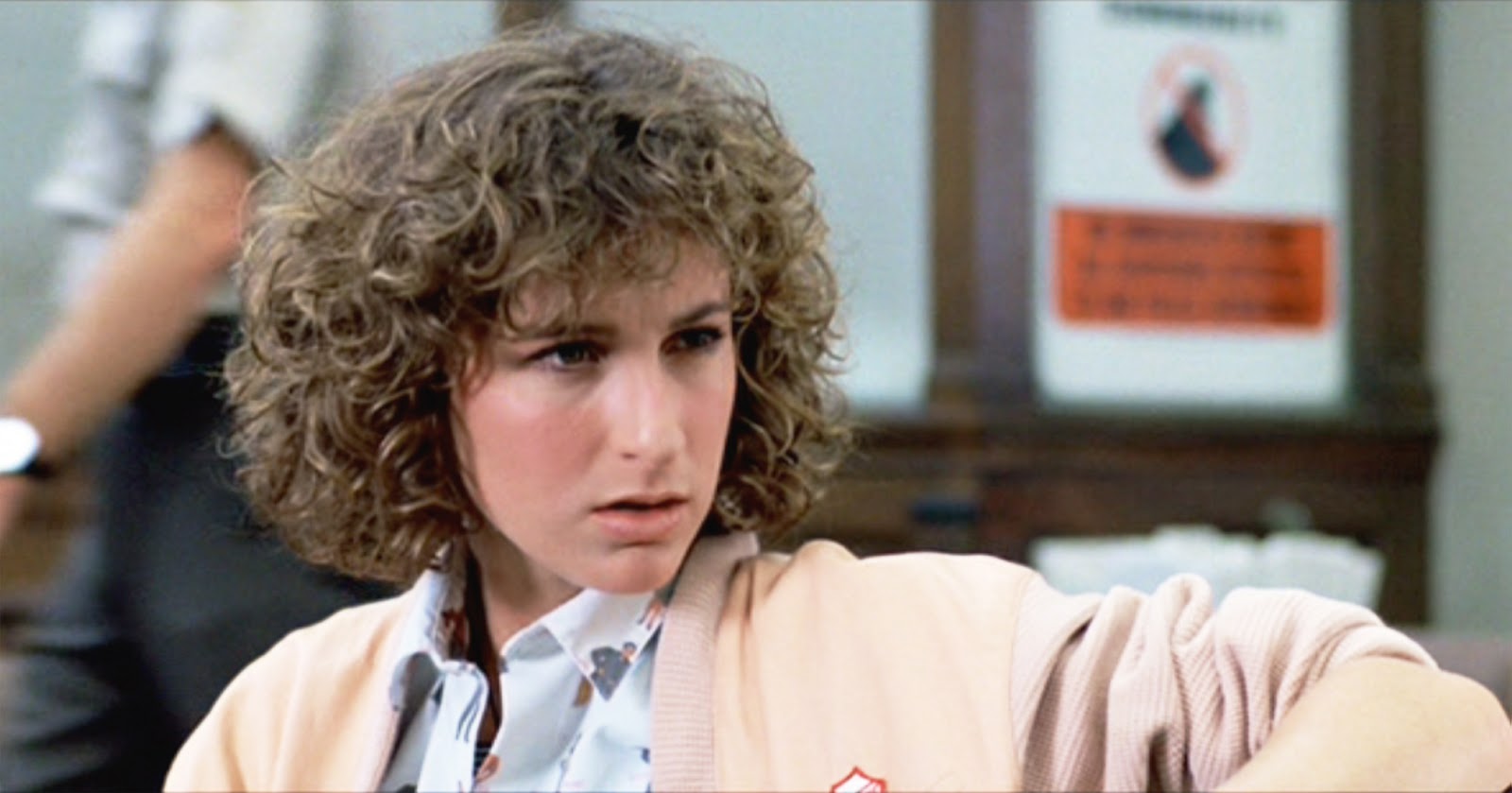
Ferris Bueller Jennifer Grey

On Friday, February 19, 2010, Jason Reitman began his program of movies at New Beverly Cinema in Los Angeles. The first double feature of his program was “Ferris Bueller’s Day Off” and “Election,” great movies dealing with high school and teenagers in an intelligent way and which starred Matthew Broderick. “Ferris Bueller’s Day Off” was one of John Hughes classic films from the 1980’s which everyone has seen at least nine times. Reitman remembered wanting to see it with his dad when it first came out, but his father, Ivan Reitman of “Ghostbusters” fame, was busy shooting “Legal Eagles” and couldn’t get away from the set. They ended up going to the movies later, but instead they watched “Big Trouble in Little China,” John Carpenter’s ode to martial arts movies which was not as successful, but later become a beloved cult film.

Ferris Bueller's Day Off poster

Reitman said he considers “Ferris Bueller’s Day Off” to be Hughes’ love letter to Chicago. Indeed, Chicago does look very beautiful as shown here. These days, it’s rare to see it without snow covering it. Richard Belzer has a brilliant quote when he played John Munch on “Homicide: Life on the Street,” “Chicago has two seasons, winter and St. Patrick’s Day.”

Reitman saw Ferris Bueller as the guy who knows everyone is dying from a terminal disease. Knowing this, he lived every day as if it were his last. He then went on to say “Ferris Bueller’s Day Off” is a movie about people dying, and the last moment of joy anyone has comes at the end of the parade when Broderick is out shaking his bod to The Beatles’ version of “Twist and Shout.” The acclaimed director was serious about this and even said, “If you came out of this movie happy, THEN YOU MISSED THE ENTIRE POINT!”

Before the movie began, Reitman brought out a special guest, Jennifer Grey. She played Jeanie Bueller, Ferris’ largely unpleasant and infinitely resentful little sister. Grey would go on to become a big star when she starred in “Dirty Dancing” opposite the late Patrick Swayze. Reitman said he asked Grey to come just this morning, and she was very gracious to appear at such short notice.

Grey warned Reitman upfront she smoked a lot of pot during the movie’s making, so she doesn’t remember a lot of it. However, during her brief time with Reitman, she did remember quite a bit, so maybe all the smoking helped.

One of the big revelations was that Grey admitted was never really a big fan of Hughes before she got cast. She had just seen “Pretty in Pink” which he wrote the screenplay for but didn’t direct, and she declared she didn’t get it. As a result, Grey went into the audition not really caring if she got the part or not. She didn’t even try to hide her attitude towards Hughes when talking to him about how she didn’t really care for his films. It was this attitude which got her cast as the bitchy little sister of Broderick’s iconic character.

Another big revelation we learned was Hughes and Broderick were always at odds with one another, and the tension between them was always high. Broderick found it very hard acting to the camera, one of the signature devices of this movie. Grey also said Broderick was “very slow” in putting a performance together, and this was certainly the case when he played Ferris. It got to where Hughes was constantly waiting for Broderick to start giving him what he wanted, and there were points where Grey said Hughes leaned over to her and said, “Is he ready now? Is he warmed up? Is he gonna give us ‘Brighton Beach Memoirs?!’”

Still, Grey recalled her experience of making “Ferris Bueller’s Day Off” as being “heaven on earth,” and she felt very safe with Hughes as a director to where she never felt self-conscious about anything she did. She admitted she loved every single experience she had making this classic, and she even developed a big crush on Hughes, describing him as being a “Baby Huey.”

Reitman asked how Charlie Sheen got cast as the drug addict who befriends Jeanie Bueller while waiting at the police station. Grey explained she was the one who got Sheen involved as she had just done “Red Dawn” with him. There was actually a lot of improvisation during the police station scene, and Grey said the moment where Jeanie says some people call her Shawna was born out of that.

One of the questions really burning on Reitman’s mind was what it was like for Grey when she worked with “her brother.” Broderick and Grey were actually dating for a time during this movie’s making, and she replied the only time you see her character and Ferris together in the same room is at the very beginning and right near the end.

Before the movie started, Grey finished by saying Hughes did such a great job in capturing the voice of the time and of teenagers in general. She pointed out what we all came to see, that Hughes very much understood the gravitas of being a teenager and of how difficult and frustrating those years can be.

It was great to see Grey come out for this special screening of one of the best and most entertaining movies of the 1980’s. Reitman went on to say we all must be wondering what became of Ferris Bueller after he graduated from high school. There was always talk of a sequel which would show Ferris as a burned-out executive of some corporation, and a day off from this kind of job is always welcome no matter what day of the week it is. What did Reitman think? For that, he said to check out Alexander Payne’s “Election.”

David Mamet Looks Back at Writing ‘The Untouchables’ on Tax Day

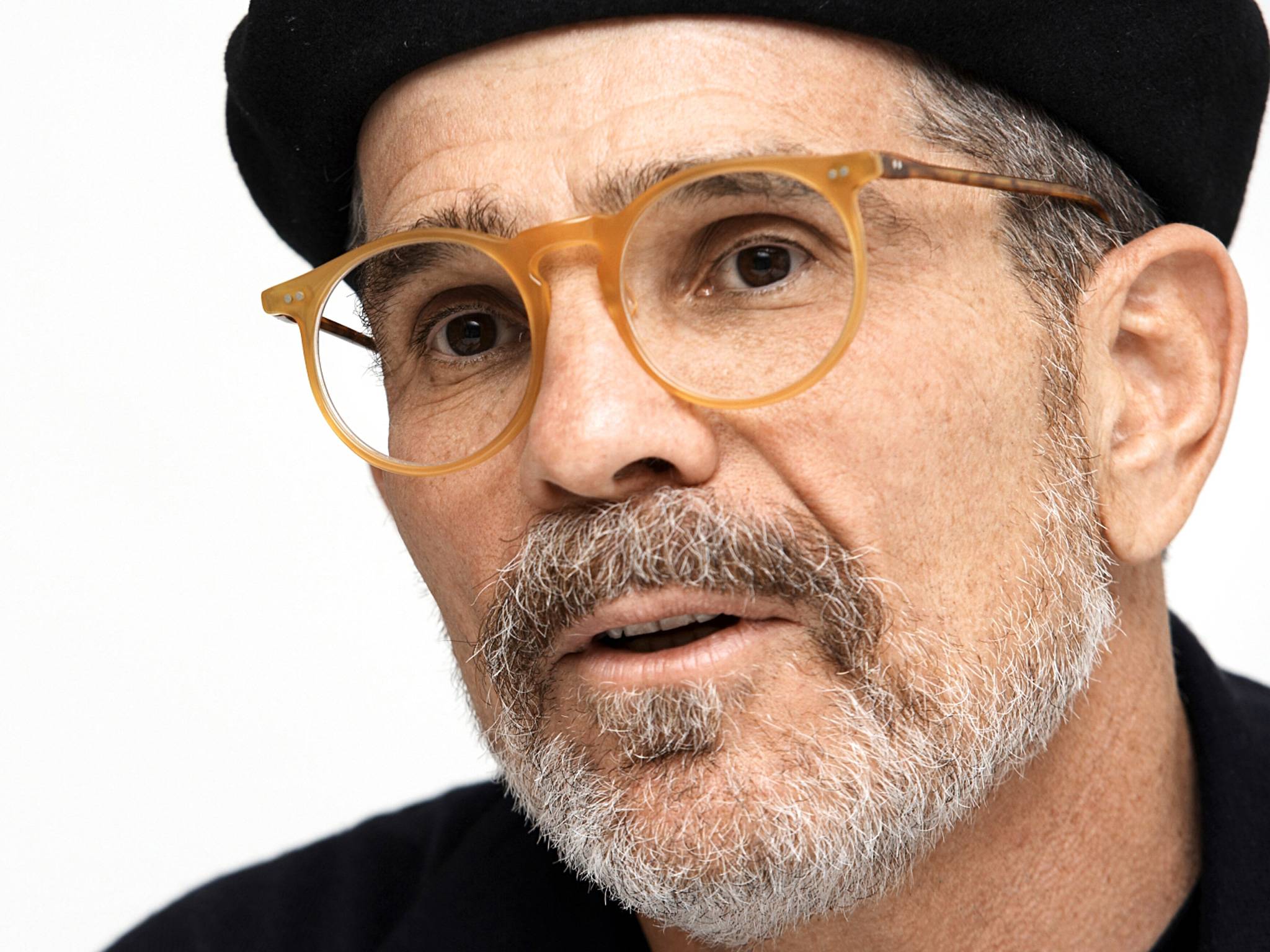
David Mamet photo

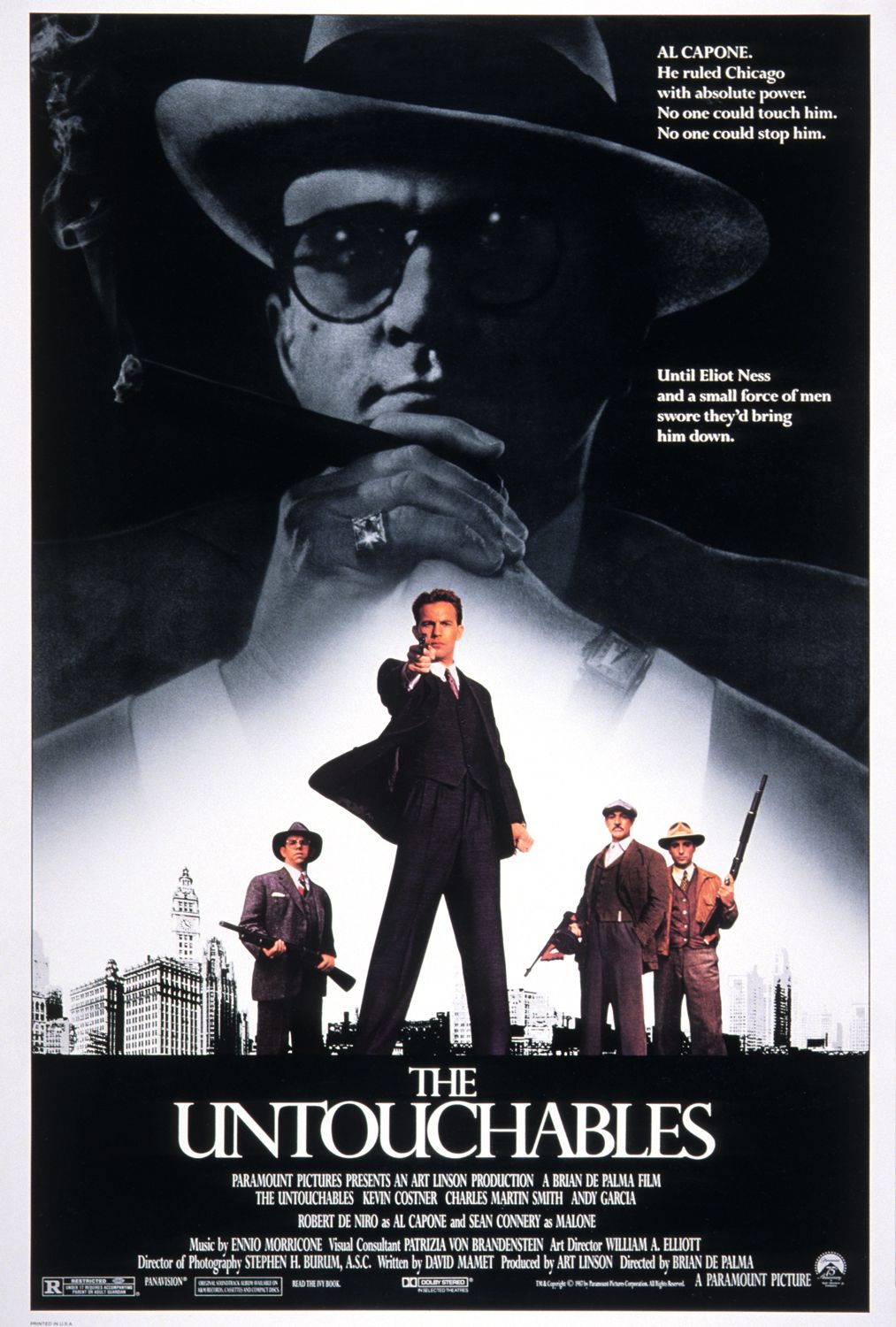
There were more than enough film buffs who filed their tax returns, or applied for an extension, on April 15, 2010, in the nick of time to check out a special screening of Brian De Palma’s 1987 classic “The Untouchables” at the Aero Theatre in Santa Monica. Following the story of how Elliot Ness and his select group of men who worked to bring down infamous crime boss Al Capone on tax evasion charges seemed like the perfect way to celebrate Tax Day. Finally seeing it on the big screen in glorious 70 mm was great after first watching it on VHS years ago.

But I do have to admit though that this movie really screwed me up for a time after I first saw it. It was one of the few times my parents let me watch an R-rated movie with them when they rented it on video. Having seen it reviewed on so many different shows like “At The Movies,” “Sneak Previews” and of course “Siskel & Ebert” (which had both hosts clashing over it passionately) had me excited about watching it eventually, and this was back in the day when I rarely, if ever, went out to the movies. But it was one of the first times where I realized the good guys didn’t always make it to the finish line. To see them get killed off in a most gruesome way was painful for a 12-year-old to take in as I always believed the good guys, those who work for justice would be the ones left standing. Back then, I was starting to learn how unfair the world can be.

The Untouchables movie poster

Anyway, this evening had a special reason for us to come out other than seeing the film in 70 mm as David Mamet, who wrote the screenplay for “The Untouchables,” was also in attendance to engage in a Q&A. Instantly recognizable in his beret and those huge yellow glasses of his, Mamet had many stories to tell regarding the making of De Palma’s film, writing the script for it and his thoughts on writing and Hollywood in general.

The first question asked was how Mamet got hired to write the script, and he replied that he got the job by default. Apparently, the job was first given to the late playwright Wendy Wasserstein who had won a Pulitzer for “The Heidi Chronicles.” She must have done quite a bit of work on it because Mamet said the Writer’s Guild of America still wanted to give her a credit. But he never hid the fact that what attracted him to writing the script was, as he said, “a lot of money.” The way Mamet described it, writing for someone else is known as “whoring.”

Being one of America’s most acclaimed playwrights and having grown up in Chicago where “The Untouchables” takes place should have made Mamet the most obvious choice for this motion picture. Mamet talked about how he grew up there with gangsters all around him and of how everyone lived and breathed the same air as them. As for the cops, he got to know them better while working as a cab driver. He also went on to say several of his family members kept telling him stories about Capone from time to time.

For years, Chicago has been known to be a city engulfed by corruption, and Mamet did nothing to hide the fact it is full of crooks. He described it as a machine that is run downstate and remarked the mayors occasionally go to jail. He also remembered a saying once told to him when he asked someone in politics what the difference was in running for one office or the other. The politician told him, “the girls get prettier.”

It seems many natives of this city have the same romantic view of Chicago as Mamet did, and he said it best, “In Chicago, we love our crooks!”

 A lot of Mamet’s inspiration for “The Untouchables” came from all of Chicago, he said. He tried to include as many famous landmarks such as The Anchors Restaurant and The Lake. Much of downtown Chicago was used to great effect throughout, and I wonder if there has been a movie since which is as superb in the way it brings Prohibition-era Chicago to life.

With De Palma directing “The Untouchables,” Mamet said he just hoped the director would stick to the script he wrote. Looking back, he said De Palma did actually stay true to his script to a certain extent, but that there were moments where he felt aliens had come down and sucked the brains out of those making the film. In terms of differences from his original script, Mamet said they took out the crawl he put at the end of what happened after the Prohibition Era ended and of how gangsters are still with us today. Mamet also said De Palma was the one who added the “cockamamie baby carriage” sequence.

During the making of “The Untouchables,” Mamet said he was never on the set. He was actually quite happy he wasn’t there which was surprising to here as you’d figure any writer would want to be there even if it annoys the hell out of the director. But while most writers want the opportunity to be on a film set, Mamet said he feels better off staying out of the way.

One of the main sources behind the screenplay was Elliot Ness’ autobiography which Ness wrote with Oscar Fraley. When an audience member asked Mamet if he believed what Ness wrote about, Mamet replied quite simply, “I don’t believe anything anymore.”

At its essence, Mamet described “The Untouchables” as a melodrama. Lest people see this as him looking down on the way De Palma shot this now classic movie, he was quick to quote from Stanislavski, “Tragedy is just heightened melodrama.” Looking at the movie as a melodramatic piece actually makes perfect sense as audiences got so swept up in the story to where it affected them more emotionally than they could have anticipated.

Other tidbits Mamet shared included that aside from Robert DeNiro’s method preparation in playing Al Capone, he ended up saying just what was in the script. The line uttered by Sean Connery’s Malone character of “here endeth the lesson” came from the book of common prayers. But the one which really stood out was what Mamet said Connery first told the producers when he came to make this movie, “Broccoli never paid me a dime to play James Bond!” As for “the Chicago way,” Mamet said it was something he just came up with. The philosophy behind it was when you take something, burn it down to the ground and then build it back up again.

Many in the audience were also eager to hear Mamet talk about the art of writing, and he had much to say on the subject. As a dramatist, he said his job is to take out the narration and go with the plot and characters. Watching the plot for him is where the enjoyment comes from. The problem is actors and directors end up wanting to put all the narration back in. They want to spell out everything for the audience, but dramatists make you want to know more about what’s going on. The way Mamet sees it, you just need a plot and an actor to get the ball rolling. A play or a movie cannot start from an ongoing situation. Of course, writing a plot can be very hard. In terms of plots, he views “Wag The Dog” as his “Casablanca” in that it was the easiest plot for him to write. Once he was finished, Barry Levinson started shooting the movie a month later, and the shoot went very quickly. As for all the other plots he has worked on, they were nightmares.

In talking about some of his other projects, Mamet said the coffee’s for closers speech with Alec Baldwin from “Glengarry Glen Ross” might have come from sitting in an office where he once worked. There was also some talk of how he wrote the script for “Ronin,” which was directed by the late John Frankenheimer, and never got credit for it. Mamet said he had always wanted to write something anonymously, and “Ronin” became that something because he was not originally hired to write it. What happened was Robert De Niro pleaded with him to do a rewrite as he felt the script was not up to speed. Mamet said he eventually caved in and rewrote the whole script in a week.

In addition to being a writer, Mamet is also a director of film and stage. When asked about his approach to directing, he said he wants to know what the story is about and how each beat contributes to the action. From there, everything comes together along with some unforeseen difficulties. When asked if movies would ever become an art form again, Mamet said, “Movies were never an art form, they were entertainment. It just evolved into an art form from there, and it’s still evolving in different ways.”

Mamet was up onstage for almost an hour at the Aero Theatre, and it still didn’t feel like he was there long enough. This writer, who grew up a working-class man and went to Kaminsky Park on a regular basis (yes, he is a Cubs fan) was full of anecdotal moments which made us want to learn more. When it comes to “The Untouchables,” he gives all the credit for its success to De Palma as he made all the elements work perfectly. He said almost everything good that happens is an accident, so it’s safe to say “The Untouchables” is a glorious accident and one which invites repeat viewing.

I personally want to thank David Mamet for saying something he once heard from a judge; that being quoted out of context is “the definition of a quote.” This makes writing articles like these so much easier! As for his line about critics being “illiterate swine taking the bread from my children,” I won’t take that one personally. Oh yeah, he also said the lizards in Hollywood will be the last ones to die, and he believes their last words will be, “I want to know more…”

The Hunt For Red October

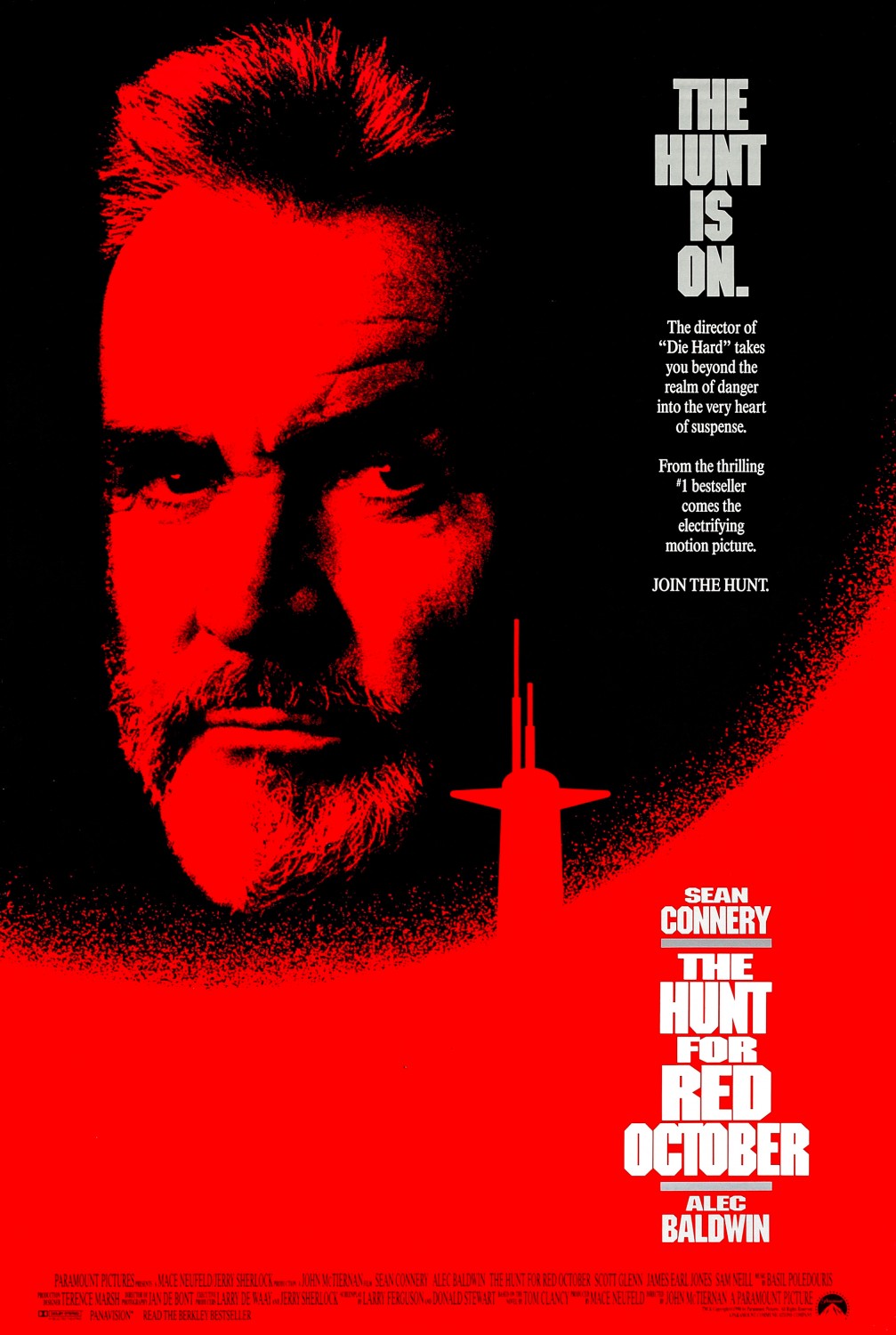
the-hunt-for-red-october-movie-poster

My dad just watched John McTiernan’s “The Hunt for Red October” for what seems like the 600th time. After all these years since it remains one of the few movies he never gets sick of watching. While I was at first annoyed with him wanting to watch it instead of something he hadn’t seen before, it didn’t take long for me to be reminded why this movie is so compulsively watchable. The cast is excellent, the direction is taut, and it is far more thrilling than the average PG-rated movie. I remember my friends not taking this movie very seriously when it came out as they were more interested in sneaking into the latest R-rated movie, but they didn’t know what they were missing.

This was the first cinematic adaptation of a Tom Clancy novel and, as a result, the first instance of him getting pissed at Hollywood for not faithfully adapting his work. I still have not read the book, so I have no idea how it differs from the movie. At this point, I’m not really sure if I care because book to film adaptations are not going to work if you’re going to be 100% faithful to the source material. Not everything transfers over to the big screen for a number of reasons, and if Clancy were still alive I’d tell him he should be happy this movie helped sell more copies of his books.

I’m not going to bore you with all the plot details. All you need to know is that it involves a new Russian submarine called the Red October which contains a propulsion system which allows it to run silently to where it cannot be detected by sonar. It is commanded by Captain Marko Ramius (Sean Connery) who lives a lonely life now that his wife has passed away, and many soon become convinced he is out to attack the United States before the country can even realize it’s under attack. CIA analyst Jack Ryan (Alec Baldwin), however, becomes convinced Ramius is actually trying to defect and becomes obsessed with proving his theory to where he’s willing to put himself in harm’s way.

On top of this being the first Clancy novel brought to the silver screen, it also served as an introduction to the hero of many of his books, Jack Ryan. Of all the actors who have played this CIA analyst to date, Baldwin remains my favorite as he makes Ryan into an accidental action hero, not a man out to save the day. But Ryan’s brilliantly analytic mind allows himself to see and understand things others cannot due to their mistrust and their Cold War obsessions, and this makes him a necessary part of the action whether he likes it or not. Unlike all the other military generals, Ryan has met Ramius and knows how his mind works.

Sean Connery is as legendary as his character of Marko Ramius is to the Russian military in this movie, and it should go without saying he is perfectly cast here. Seeing those eyes of his on the big screen at the start gives us an idea of how human Ramius is, and Connery renders him a fascinating individual whose life cannot be boiled down to one sentence. The former James Bond actor could have given a ridiculously over the top performance, but he instead underplays his role to where we truly accept him as a submarine commander and that there is more to him than we can see at first.

Seriously, McTiernan got the perfect cast for “The Hunt for Red October.” Back in the 1990’s when this movie came out, it was hard to think of another actor other than James Earl Jones who could play Ryan’s superior Vice Admiral James Greer. Jones gives each scene he’s in an immense gravity, and he makes it look like he doesn’t even have to try. Scott Glenn is coolness personified as Captain of the U.S.S. Dallas, Bart Mancuso, and watching him keep his emotions in check throughout the is fascinating. When Mancuso does lose his cool, you want to make sure you’re not the reason why he is.

Next, you have Sam Neil who plays Vasily Borodin, Ramius’ second in command. Neil has the captain’s back when others begin to doubt him, and I love the scene where he talks to Connery about the possibility of living in Montana. Neil is sublime in this role, and his last scene is a real heartbreaker.

Then you have actors like Tim Curry, Fred Dalton Thompson, Richard Jordan, Joss Ackland, Stellan Skarsgård and Jeffrey Jones inhabiting their roles to where you feel like you’re watching actual Washington officials and military personnel instead of just a bunch of performers. It’s impossible to imagine “The Hunt for Red October” without any of these actors in it. Furthermore, they are each blessed with a number of classic one-liners provided to them by screenwriters Larry Ferguson and Donald B. Stewart.

One actor I want to point out in particular is Courtney Vance who plays Sonar Technician Ronald “Jonesy” Jones. His performance ended up being this movie’s most underrated as we watch him listen to the noises he heard to where you cannot doubt the conclusion he comes to. While the computer tells Jonesy he’s listening to a “magma displacement,” he knows he really heard something which has got to be man-made. Watching Vance as Jonesy is a joy because he makes this character much more than the average petty officer aboard a ship.

McTiernan’s genius in directing “The Hunt for Red October” is in keeping things down to earth and not bombastic like you would expect to see in a Michael Bay movie. Right from the start, he’s intent on bringing us into these characters’ lives to where we don’t feel like we’re watching some ordinary film. Unlike “Die Hard” which he made before this, it is not an action-packed movie until the very end, and he has us getting far more invested in what the characters are up to. As a result, it seems unlikely this movie could be made in the same way today as studio heads would most likely expect something far more formulaic.

If there are any flaws to be found in “The Hunt for Red October,” it is with some of the special effects as the torpedoes look kind of fake. While McTiernan and his crew appear to have all the other details down perfectly, this one doesn’t work the way it should. Still, that’s just a minor thing that doesn’t do much to take away from one’s pleasure in watching this submarine classic. It really is one of those movies which is impossible to get sick of watching, and it holds up more than twenty years after its release. Outside of “Das Boot,” this remains one of the greatest submarine movies ever made.

* * * * out of * * * *

’10 Cloverfield Lane’ is an Infinitely Intense Thriller

10 Cloverfield Lane poster

A few hours after watching “10 Cloverfield Lane,” I found my nerves were still fried by what I had just witnessed. It feels like it has been ages since a movie made me feel that way, so that’s quite the compliment. Billed as a “spiritual successor” and a “blood relative” to the 2008 monster movie “Cloverfield,” this one works best if you know very little about it when you go inside the theater. Alfred Hitchcock would have gotten a kick out of this as the filmmakers play with your expectations and leave you in a suspended state of suspense throughout. It would be wise to see the movie before reading this review because it is that riveting.

The movie opens on Michelle (Mary Elizabeth Winstead) hurriedly packing her things and moving out of the apartment she shares with her fiancé Ben. While driving through rural Louisiana, she ends up getting into a very serious car accident which renders her unconscious, and she later wakes up to find herself in a concrete room chained to the wall. Eventually she meets Howard (John Goodman), a survivalist who tells her he saved her life and is nursing her back to health. However, Howard also tells her that a deadly attack has taken place and that everyone outside is dead or dying.

They end up occupying an underground bunker which Howard built himself as he always suspected that America was going to be attacked somehow, and along with fellow survivor Emmett (John Gallagher Jr.) they try to live normally by watching videos, doing puzzles, playing board games and occasionally playing a song on the jukebox. But things are never what they appear to be, and soon the bunker won’t be big enough for the three of them.

“10 Cloverfield Lane” marks the feature film directorial debut of Dan Trachtenberg whose previous work includes a short film entitled “Portal: No Escape” which caught the eye of producer J.J. Abrams. It’s a heck of a debut as Trachtenberg puts us right into Michelle’s shoes as we come to have as much an idea of what’s going on as she does. Was there really an attack? Is Howard really worth trusting? Should they stay in the bunker until it’s alright to come out? Questions keep coming up as we try to stay one step ahead of the characters, but anything is possible and nothing can be left to chance.

Trachtenberg is also well served by a strong screenplay from Josh Campbell, Matt Stuecken and “Whiplash’s” writer/director Damien Chazelle which gives us characters who are complex and easy to relate to. These three people are not cardboard idiots out to make the dumbest mistakes possible but instead complex individuals trying to navigate through their own personal issues while attempting to adjust to a possibly post-apocalyptic world. This only adds to the very palpable tension which escalates throughout as does the sharp cinematography by Jeff Cutter, the efficient editing by Stefan Grube and the pulse-pounding music score by “Battlestar Galactica” composer Bear McCreary.

Mary Elizabeth Winstead has long since proven to be a terrific actress thanks to her unforgettable turns in movies like “Live Free or Die Hard,” “Scott Pilgrim vs. The World” and in the criminally underrated “Smashed.” She is a revelation here as Michelle as her character goes from running away from trouble to being forced to confront it head on. It’s great to see Winstead portray Michelle not as some ordinary action heroine, but instead as someone trying to stay one step ahead of those who might not have her best interests in mind.

John Gallagher, Jr. is perhaps best known for his work onstage in the rock musicals “Spring Awakening” and “American Idiot” as well as for appearing on “The Newsroom.” For a moment it looks like his character of Emmett is going to be some clichéd southern dude, but Gallagher never falls into that trap as he reveals Emmett to be a man whose best days may have passed him by, but who is not about to give up on life and those he cares about.

But after coming out of “10 Cloverfield Lane,” I kept wondering if audiences realize just what a great actor John Goodman is. He has delivered one terrific performance after another for years, but has his talent been taken for granted? After serving time on “Roseanne,” he delivered a stellar performance as the seriously disturbed insurance salesman Charlie Meadows. I was reminded of that performance while watching him here as Howard as this is a character who cannot be simply described as a good or bad guy. Goodman makes him into a complex human being and one who is driven by fear more than anything else, and this makes the actions he commits all the more unnerving.

It may still be early in 2016, but Goodman most definitely deserves Oscar consideration here. He proves what a masterful actor he is in that he never has to move a muscle in certain scenes to generate severe unease in the other characters as well as the audience. Just a glare from his eyes will have you on edge as Howard is a man desperate to control his surroundings as well as the people living with him. It’s a frightening performance as Goodman makes Howard terrifyingly unpredictable in his actions. At one point Howards seems agreeable, and in the next he finds himself in a rage. If you are not convinced that Goodman is one of the best actors working in movies today, watching him here should change your mind.

Like I said, “10 Cloverfield Lane” has been described as a “blood relative” or a “spiritual successor” to “Cloverfield.” Those descriptions are very appropriate as it differs quite a bit stylistically to the 2008 movie. None of the characters from “Cloverfield” appear here, and this one is not a found footage film which means no shaky cam. In fact, it’s highly likely that “10 Cloverfield Lane” doesn’t even exist on the same timeline as “Cloverfield.” Still, this movie does share a number of thematic elements that were prominent in its predecessor. To say just how many of them it shares, however, would ruin many of the surprises in store for the audience.

While most sequels or follow ups try to outdo their predecessors by giving us something even bigger, this follow up is instead more simplistic in its approach and shows how less can be more. Trachtenberg makes you experience every claustrophobic and nerve wracking moment to an infinite degree, and it makes “10 Cloverfield Lane” blow “Cloverfield” right out of the water.

2016 has so far given some good movies and others that will be forgotten in no time at all, but “10 Cloverfield Lane” is one of the first great movies I have seen so far in this early year. It takes you on a rollercoaster ride filled with sharp turns, and keeps you guessing all the way to the end.

Copyright Ben Kenber 2016

* * * * out of * * * *

Save

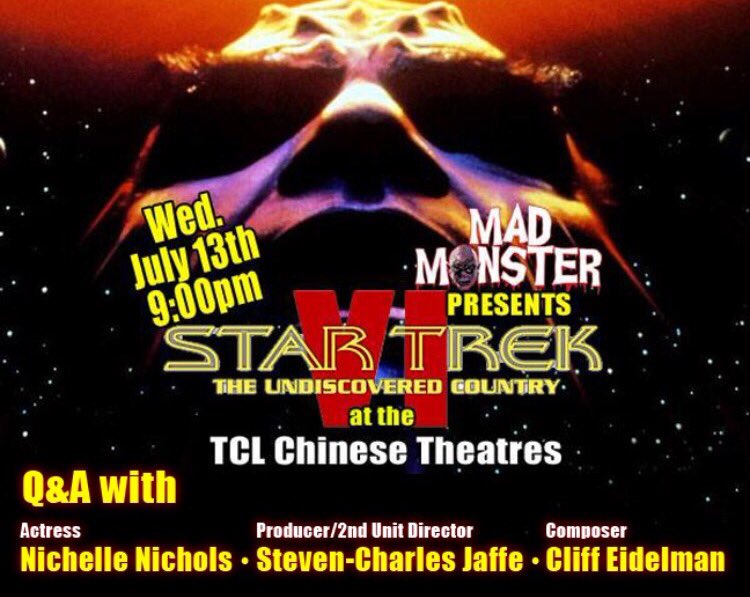
Mad Monster Celebrates The 25th Anniversary of ‘Star Trek VI’ in Hollywood


Yes, ladies and gentlemen, it has now been 25 years since “Star Trek VI: The Undiscovered Country” arrived in movie theaters. I still remember watching it with my parents at Blackhawk Cinemas like it was yesterday, thrilled that the original crew of the starship Enterprise managed to get one last adventure in space. For a time, it looked like that would not happen as “Star Trek V: The Final Frontier” almost killed the franchise, but thanks to Leonard Nimoy taking on executive producing duties and Nicholas Meyer returning to the director’s chair, Kirk, Spock, McCoy and the rest of the crew got a wonderful sendoff as they struggled to bring about a truce with their longtime enemies, the Klingons.

On July 13, 2016, Mad Monster hosted an anniversary screening of “Star Trek VI” at the TCL Chinese Theatres in Hollywood. It was the perfect place for this screening as “Star Trek VI” had made its debut at Grauman’s Chinese Theatre next door, and the cast got to write their names in the cement outside of it. Appearing for this screening were producer Steven-Charles Jaffe, composer Cliff Eidelman, and Nichelle Nichols whom we all know and love for playing Lieutenant Uhura.

Star Trek VI Nichelle Nichols

Nichols was asked how she first got cast as Uhura on the original “Star Trek” television series, and she said that she didn’t remember as that this character has been with her for so long and that she likes “the gal” and described her as “nice company.” When it came to getting cast in this iconic role, she replied that she was “just lucky I guess.”

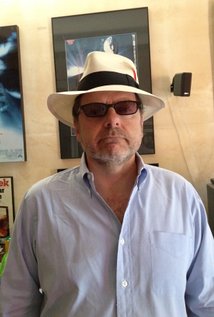
Steven Charles Jaffe

Jaffe pointed out that he previously produced “Ghost” and that Whoopi Goldberg told him if it weren’t for Nichols, she never would have become an actress. Goldberg had watched the original series and felt Nichols was such an inspiration to her and many generations of young actors as her role really represented racial diversity. Jaffe was also eager to add the following:

“The last week of shooting this movie, I was on the bridge of the Enterprise and we were setting up a shot and I was looking at the original cast, including Nichelle, and I had this very interesting flashback of being a little boy in Stanford, Connecticut in my pajamas watching ‘Star Trek’ on television with these same people, and here I am producing this movie and thinking what a lucky guy I am. I don’t know how this happened, but how special was that?”

To this Nichols added, “I was the lucky one.”

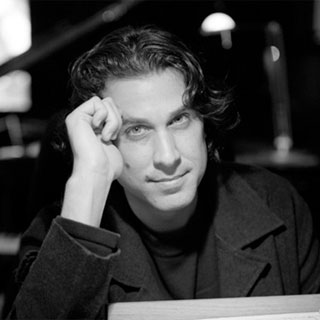
Cliff Eidelman

Eidelman’s score to “Star Trek VI” remains one of the most haunting of the franchise and helped propel the composer to new cinematic heights. But it turns out that Meyer wanted Eidelman to adapt Gustav Holst’s orchestral suite “The Planets” as opposed to creating an original score. Eidelman said he had studied that piece “a little” in college but lied to Meyer and said he studied it a lot. However, Eidelman had something else in mind.

“The truth is I didn’t want to adapt ‘The Planets,’” Eidelman said. “As a young composer I wanted to write an original score that would be original for this project, but I didn’t say that to Nick and I kind of played along. Not long after we started talking about it I started writing original themes, and at some point I think the people at Paramount started to inquire about the cost of licensing ‘The Planets’ from the Holst kids. I think the cost was apparently very expensive. But anyway, you (pointing to Jaffe) came by my apartment along with some people from Paramount and Nick, and I started to play these themes of mine on my old upright piano, and I was humming what the strings would do and what the brass would do. And at some point I think Ralph Winter or somebody turned and said, ‘Well why are we licensing ‘The Planets’ when we’ve got this theme?’ So that was the end of ‘The Planets’ and I was able to go off and write my own score.”

maf7117booklet.indd

Nichols spoke at length about Gene Roddenberry, the man who created “Star Trek” and set the whole franchise in motion.

“I knew Gene before I went on the show, and he told me what he was planning and what it was going to be and that it would be on television,” Nichols said. “He wanted me to be a part of it, and I got nervous (laughs) because I loved working for him and he is very particular. But I think that was why I liked working for him because you didn’t have to guess what was going on and you didn’t have to guess what you were going to do. If you had something that you wanted to give beyond what you thought he was talking about, he was very open to listen to it and say yes or no just like that. Fortunately, he said yes more than he said no to me.”

In addition to producing “Star Trek VI,” Jaffe was also the movie’s second unit director. He said he has directed second unit on every movie he ever produced and that this started on Meyer’s first movie, “Time After Time.” The first thing Meyer had Jaffe shoot on “Star Trek VI” was the ice planet in Alaska, and in the process he said he experienced “premature global warming.”

“I went up to Alaska on this glacier three weeks before we started filming,” Jaffe said. “I storyboarded everything, I had every shot, every location I thought locked down, and three weeks later I came back with a full crew and several helicopters and everything was gone. They said, ‘Well, glaciers do move.’ And I said, ‘They don’t move that quickly.’”

“My job was to not stand out,” Jaffe continued. “It was weird because I had never shot second unit before the movie began, and I was very nervous because the studio would see my dailies before anybody’s. I figured somebody is probably doing this to get me fired off this movie really quick. Fortunately, Leonard (Nimoy) who was one of the producers and the studio liked what I did, and that was that.”

Jaffe also talked about how he and Meyer had finished making a movie in Germany before “Star Trek VI” (“Company Business”) when the Berlin Wall came down. Unfortunately, the studio they did it for was having a hard time and the movie got a horrible release. The two of them were hanging out at Meyer’s house in London when Nimoy called and told Meyer, “I got a new idea for ‘Star Trek;’ the wall falls down in outer space!” Jaffe said Meyer hung up on Nimoy and that they were both very drunk at the time, and Jaffe encouraged Meyer to call Nimoy back.

“Wait a minute, you don’t get this opportunity too many times,” Jaffe remembered telling Meyer. “It isn’t the same movie, but it’s the same theme as the film we just made. ‘Star Trek’ will get a release. We’re crazy not to do this.”

Before the Q&A ended and the movie began, Nichols had the last word of the evening as she talked about her most important addition to the character of Uhura before the cameras were rolling on the original “Star Trek” show.

“They hadn’t named her yet and I said, ‘What about Uhuru?’ And they looked at me funny and I said, ‘It means freedom.’ They said, ‘Well it’s kind of harsh.’ And I said, ‘Well, make it Uhura.’ And he (Roddenberry) says, ‘I like that.’ And I said, ‘I do too!’ And I became then and there for the rest of my life Uhura, and I’m glad to be here with you.”

Nichelle Nichols orginal Star Trek

Technically, the 25th anniversary of “Star Trek VI: The Undiscovered Country” doesn’t occur until December 5, 2016, but it’s never too early to celebrate. This “Star Trek” movie succeeded in rejuvenating the movie franchise and helped give the original Enterprise crew the sendoff they richly deserved. After all these years it remains one of the best in the series as its themes of war, peace and change still resonate deeply in our everyday affairs. With “Star Trek Beyond” coming soon to theaters and a new “Star Trek” television series on the way, there is no doubt that this franchise will continue to live long and prosper from one generation to the next.

Star Trek Chinese Theatre

Star Trek VI last show of the crew

Star Trek VI poster