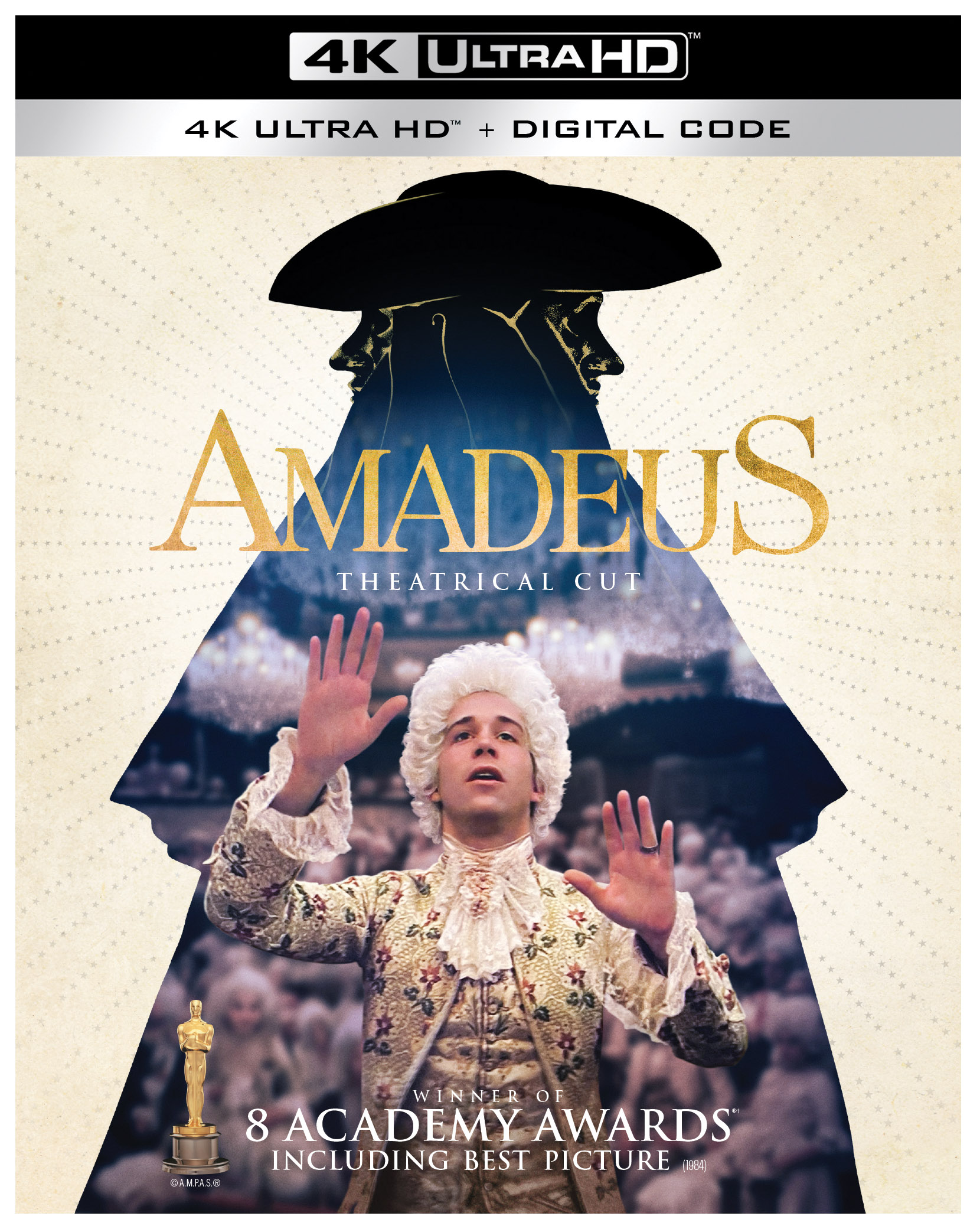
‘Amadeus’ Movie and 4K Review
The following review was written by Ultimate Rabbit correspondent, Tony Farinella.

There is a lot to like about physical media, especially when it is in the 4K format. There are the special features, the audio and video quality and, of course, the fact that you own the movie.  This means you never have to worry about a streaming platform taking it down and then having to hope your local library has a copy you can check out. It’s on your shelf, and you can pick it up and pop it in your player whenever you want to watch it.  Another positive is the fact that films like “Amadeus,” a Best Picture winner, can be discovered for the first time by a new set of eyes. In fact, this was my first time watching the film.

The reason “Amadeus” was not a film I had previously seen is because I thought it would be a boring, stuffy period piece. After sitting down to watch it, I am reminded of the old expression, “Don’t judge a book by its cover.” Even though I do not consider “Amadeus” a classic and did not fall in love with it after one viewing, it was an important film worth seeing and also worthy of my time.  I think the minute we start to become close-minded to art, we really lose our sense of self. This film deserves its day in court just like any other important and historical motion picture ever released.
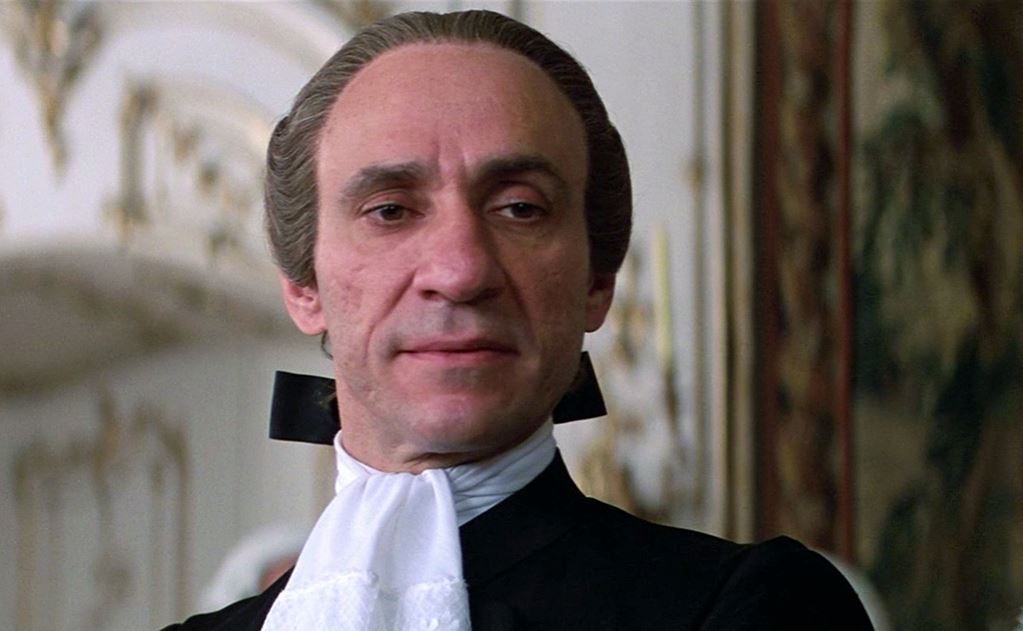
This film begins by introducing us to Antonio Salieri (F. Murray Abraham), a composer who has been put into a mental institute after an attempted suicide. A Catholic priest named Father Vogler (Richard Frank) is looking to get to the bottom of things, especially after Salieri says he is responsible for the death of Wolfgang Amadeus Mozart. While it has been over three decades since Mozart passed away, Father Vogler thinks it is a tremendous burden to carry. He sees how it is weighing on Salieri, which is what led to his suicide attempt.

From this point, the film is told from Salieri’s point-of-view as he shares how he was both envious and enamored with the work of Wolfgang Amadeus Mozart (Tom Hulce). He did not, however, think much of Mozart the person whom he found to be boorish, aloof and uncouth.  Still, he cannot deny the genius the man possessed and how he would make magic happen with his music. It was something Salieri himself was never able to achieve in his own career, and he sees it as a sin that God would give all this skill and talent to someone like Mozart. As a result, this creates a complicated relationship between the two men.
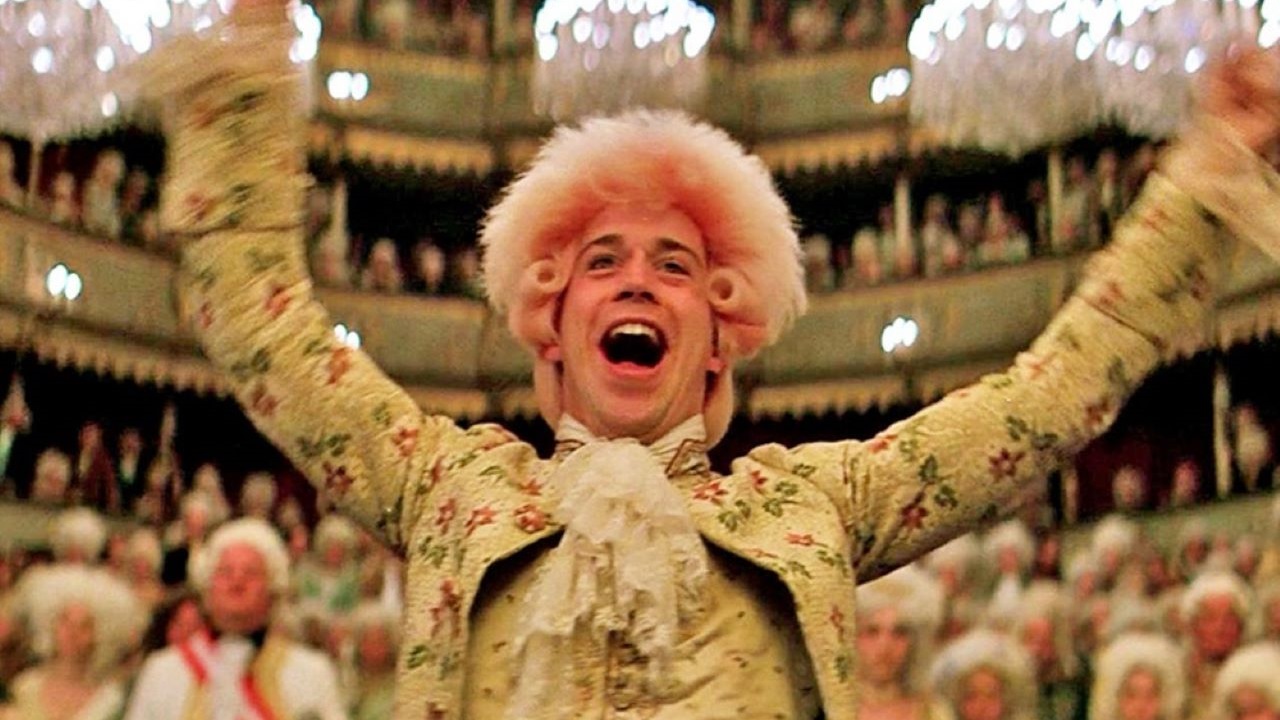
The film is fascinating in the way it explores genius and what makes someone possess the ability to do something which truly makes a positive impact on the world. There are often two lines of thinking when it comes to someone who has had enormous success or is a once-in-a-lifetime talent: it has either come naturally to them, or they have had to work very hard to hone their talent. Now, of course, there is also luck involved. It is also how you handle success if you continue to work hard at what you do, and that you don’t become complacent with your past success.

Throughout the film, no matter what is thrown Mozart’s way, he finds a way to make it work for him. This is even when Salieri is deliberately trying to sabotage him, especially when he hires Lori (Cynthia Nixon) to lend a helping hand to Mozart, as he has a wife and a child. The reason he hired Lori is to get inside information on Mozart and to stay one step ahead of him.  The thing that separates Salieri from Mozart is the fact that no matter how annoying or obscene Mozart is, he has a gift. It is a gift that will always rise to the top and make him memorable and one-of-a-kind. It is that envy and jealousy which drives Salieri mad.
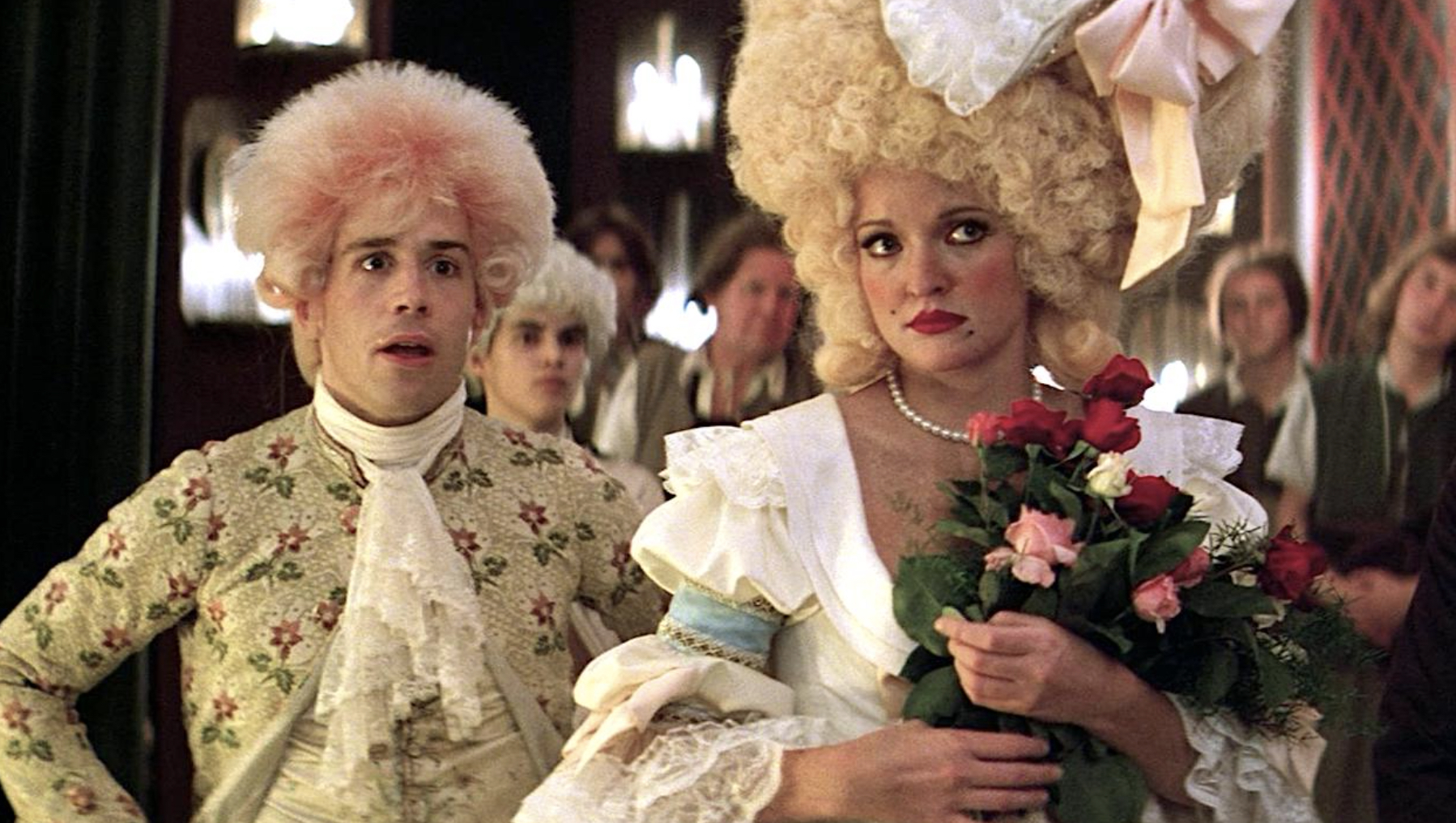
Milos Forman was the director behind “Amadeus,” and it was a big project for him to take on. From the set pieces to the musical numbers to the sheer magnitude of the story, it is a big Hollywood production, and he’s up to the challenge of making this movie look and feel big.  It is the kind of big-screen Hollywood movie that used to run the movie industry back in the day. I miss big movies like this as they play very well on the big screen. They also pop on 4K as well. As to how historically accurate the film is, I cannot begin to tell you as, I must confess, I have not studied the history of Mozart.

The performance of F. Murray Abraham as Antonio Salieri is nothing short of brilliant. His face shows the torment of a man who has had to live in the shadow of Mozart his whole life, and it has clearly done a number on him. His performance reflects this, and he also knows when to rein it in and play the character in a more low-key and understated way.   He was utterly captivating here from start to finish. In many ways, even though the film is called “Amadeus,” and it is about Mozart, it feels like Salieri’s story.  It is easy to see why Abraham won Best Actor at the Academy Awards.

Tom Hulce must perform a balancing act of portraying Mozart as someone the audience can relate to while also being over-the-top and goofy. He does a solid job here, but I was much more interested in Abraham’s performance.

“Amadeus” is a film which was a little too long for my liking, as I would have trimmed about 20 to 30 minutes from the running time of 160 minutes, but it is still a well-acted, entertaining, and monumental Hollywood film. I admired and respected it, but I did not love it or connect with it on a deeper level. It is a film I am happy to have watched, but I found the third act to be its most compelling and intriguing. The scenes I liked the most dealt with the characters of Mozart and Salieri as human beings. When the film was a character study of the two men, it captivated me. I would have liked more of the human element of the story and less of the long-drawn-out musical scenes.

* * * out of * * * *

4K Info: “Amadeus” is released on a single disc 4K from Warner Brothers Home Entertainment, and it comes with a digital copy as well. The film has a running time of 160 minutes and is rated PG. Keep in mind; this is the theatrical cut of the film. I have read there is a director’s cut of the film, which is rated R and includes twenty minutes of extra footage. I think it would have been nice to include it here, but I am not sure what transpired to where this was not able to happen.

4K Video Info: I truly enjoyed this 4K transfer, as it showed the film as I imagine it was meant to be seen. The film is over forty years old, and it looks very cinematic with a very thematic look to it. This is not a perfect HDR transfer, but it’s not supposed to look flawless. It looks like how the film was intended to look, considering its release date.

4K Audio Info: I would have liked a Dolby Atmos track here, as this seemed like the perfect film to receive this treatment. As it stands, the audio is very sharp, clear, and the dialogue is easy to understand. Subtitles are included in English, Spanish and French.

Special Features:

The Making of Amadeus (New)

Amadeus: The Making of a Masterpiece

Should You Buy It?

I will let you in on a little secret—I do not read or watch reviews before I am going to review a film myself. I do not want to be influenced by what anyone has to say, good, bad, or indifferent. Now, I am aware certain films have overwhelmingly positive, mixed or negative reviews, but I do not read the content of them. I do think a lot of people like me have put off watching “Amadeus” for the same reasons I mentioned earlier in my review. I can see why the film might not be easily accessible to a newer audience today. Still, I think modern audiences will be pleasantly surprised, just like I was when I sat down to watch “Amadeus.”  It is a period piece, yes, but it’s done in a way where you get to understand the characters, what makes them tick, and why they do the things they do throughout the course of the movie. My two issues were the run time and the fact that I wanted to spend more time with the two main characters together. Overall, it is a good film, but I do not think it is a great one. As far as the 4K is concerned, it looks terrific even though the audio would have benefited from a Dolby Atmos track. There is also a new special feature here.  If you are fine with the theatrical cut, which I imagine many fans of the film will be, this is a day one purchase, especially with the Oscars this weekend. If you are a first-time viewer, I think you might want to rent it digitally first before committing to buying it.

**Disclaimer** I received a copy of this film from Warner Brothers to review for free.  The opinions and statements in the review are mine and mine alone.
‘The Terminator’ Movie and 4K Review

The following review was written by Ultimate Rabbit correspondent, Tony Farinella.

The Terminator,” directed by James Cameron, is celebrating its 40th anniversary this year. Because of this, Warner Brothers released the film on 4K for the very first time.  This has been one of the most anticipated 4K releases in years.  James Cameron released a number of his movies this year on 4K, including “Aliens,” “True Lies” and “The Abyss.”  Many YouTubers and physical media collectors have expressed mixed opinions on the transfers of these releases, and it has caused a lot of debate in the physical media community. Cameron himself has come out and expressed his frustration with their criticism and even suggested they move out of their parent’s basements.

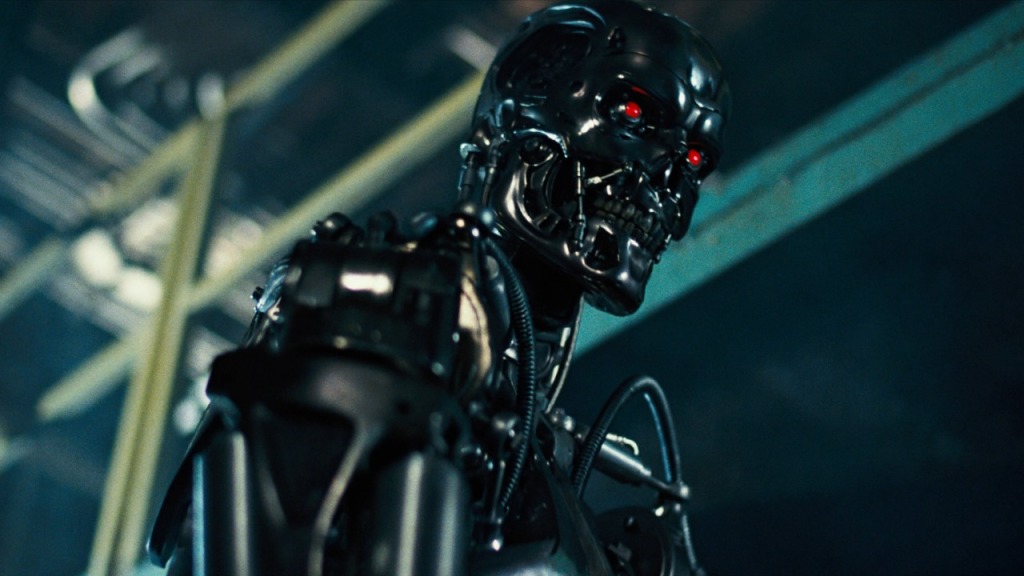
As far as the film itself, “The Terminator” opens up by introducing the audience to a cyborg (Arnold Schwarzenegger) who has been sent back in time from 2029 to 1984 to eliminate Sarah Connor (Linda Hamilton). To the untrained eye, he looks like a regular human being with his flesh, his ability to talk, and his ability to enter a room without really drawing a lot of attention to himself. Standing in the Terminator’s way is a soldier by the name of Kyle Reese (Michael Biehn).  He’s also from the future, and he has one job and one job only, which is to protect Sarah.  The Terminator’s job is to stop at nothing to eliminate Sarah because her unborn son, John Connor, is going to be the one to attempt to stop the machines from taking over after a war in the future begins.

The battle between humans and machines is one we are still battling in today’s world, especially with the introduction of artificial intelligence.  Will machines become so powerful that humans will be rendered useless and unnecessary? Cameron was way ahead of himself with 1984’s “The Terminator.”  This is a movie with big ideas and big characters.  Arnold Schwarzenegger as the Terminator is fantastic with his movements, his screen presence, and his aura.  Whenever he is on screen, you are completely captivated by him as an audience member to where you can’t keep your eyes off him.  Linda Hamilton is terrific at walking that tightrope to where she’s seen as tough but also a little vulnerable.  Michael Biehn also turns in a stellar performance as Kyle Reese.  It’s a hard role to pull off, as Kyle needs to talk about the future in a way that will not only convince Sarah he’s telling the truth but also win over the audience.

I might be in the minority on this one, but my one issue with “The Terminator” is the love story between Sarah and Kyle.  It is why I can’t give the film a perfect rating, even though I absolutely love it.  The love story feels unnecessary when all of this is going on in Sarah’s world.  In a film where I was able to suspend my disbelief for almost its entire running time, the romance came completely out of left field for me.  Besides that, there is a lot to like about this film.  It has a ton of great supporting work from actors such as Lance Henriksen, Paul Winfield, Dick Miller, and Earl Boen. Los Angeles is a character in this film, especially late at night. In many ways, “The Terminator” felt like Michael Mann directed a sci-fi thriller.  It’s a moody and dark film with an underbelly of seediness and gloom and doom.

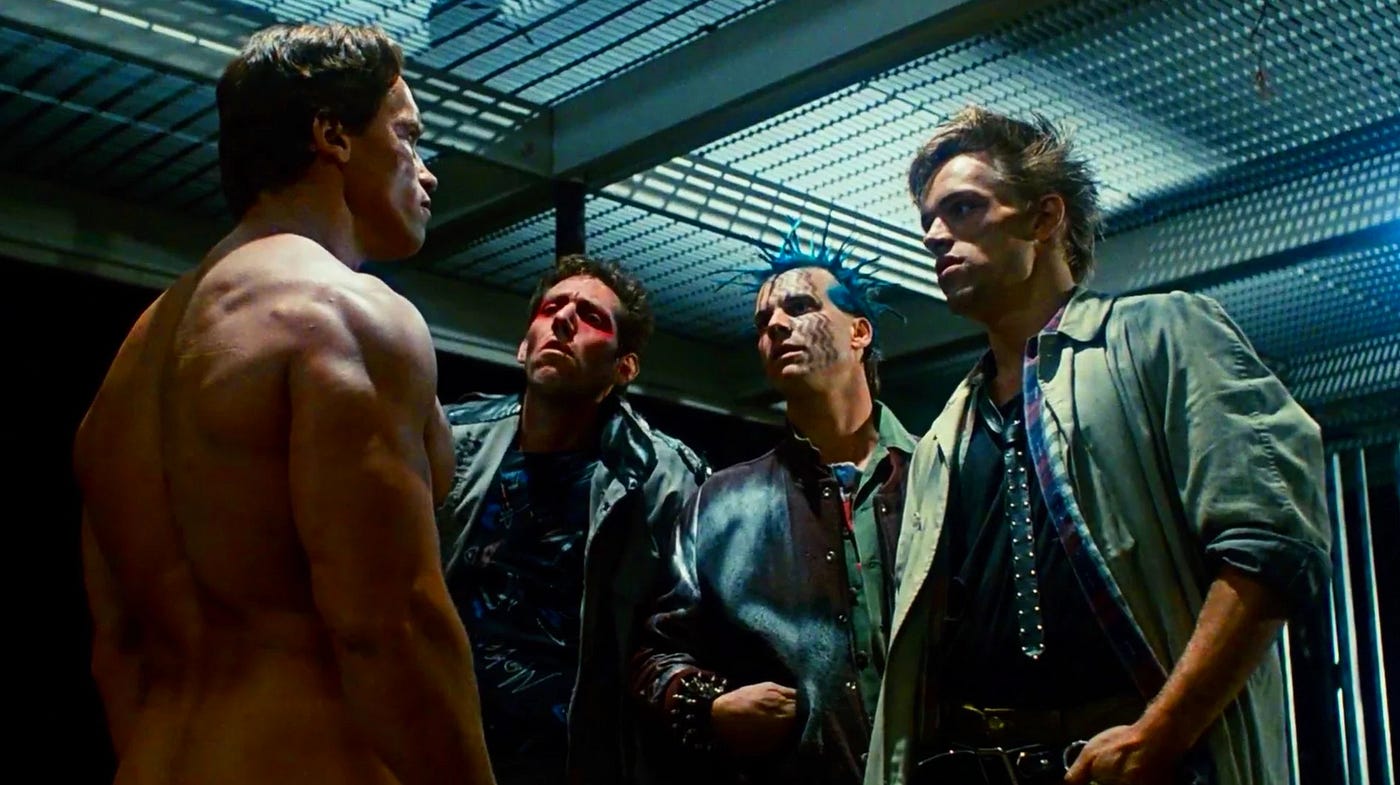
I also felt as though “The Terminator” had a sense of humor about itself without being too jokey.  When the Terminator himself encounters some street punks while he’s naked, it allows Cameron to have a little fun with his premise.  He is wise to not make the film too silly or goofy, however, as then it would be a completely different film altogether.  The comedic moments come more from the way people react to the Terminator and how he reacts to them.  Because he is so laser focused on killing Sarah Connor, he doesn’t have time for pleasantries.  He is a man on a mission and will eliminate anyone and anything in his way.  This film is able to feel like a big budget Hollywood blockbuster and a gritty, down and dirty independent film at the same time.  It was made for $6.4 million, but it looks top-notch and has a sense of danger to it as well.  “The Terminator” is an almost perfect film.

* * * ½ out of * * * *

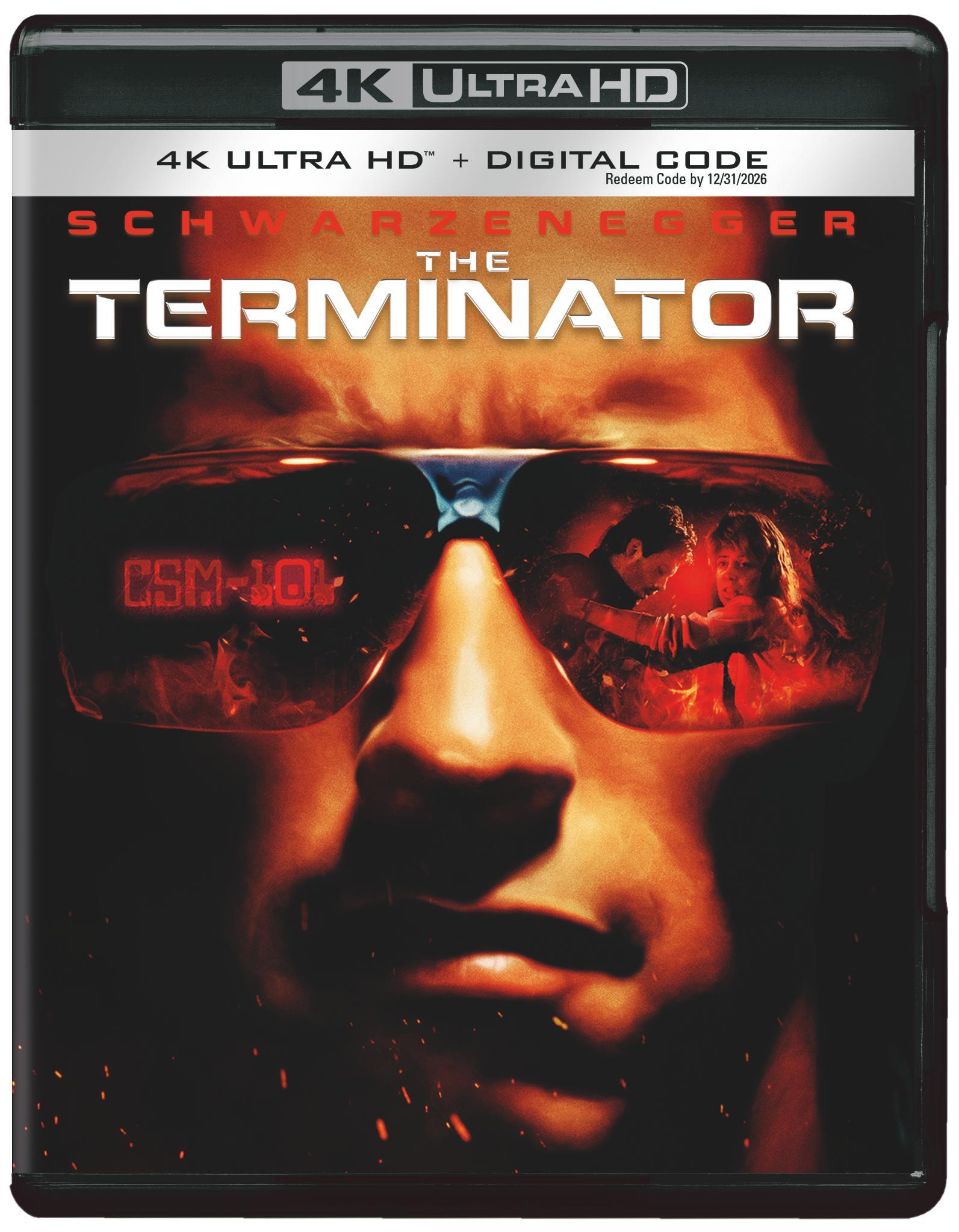
4K Info: “The Terminator” is released on a single-disc 4K from Warner Brothers Home Entertainment.  It comes with a digital copy of the film as well. The film has a running time of 107 minutes and is rated R for intense sequences of sci-fi action violence throughout, some sexuality/nudity, and strong language. You can get this film either with a 4K slipcover or a 4K steelbook.

4K Video Info:  Warner Brothers released this film on Dolby Vision HDR. It is a clean-looking transfer that doesn’t take any chances and doesn’t really need to when you consider its original source material. I thought the majority of the film looked impressive and it had a very cinematic feel to it. I don’t think there are too many things you can find wrong with this 4K video transfer.

4K Audio Info: The Dolby Atmos track is really good here.  This is a film filled with a lot of action, explosions and big moments.  Those scenes sound impressive and make for a good at-home theater experience. It wasn’t too loud or boisterous, but it made its presence known. Subtitles are included in English, Spanish and French.

Special Features:

Deleted Scenes with Optional James Cameron Commentary

Creating the Terminator: Visual Effects & Music

The Terminator: Closer to the Real Thing

Unstoppable Force: The Legacy of the Terminator

Should You Buy It?

This is one of the greatest sci-fi/action films of all time, despite my issues with the love story between Sarah and Kyle.  It comes with a stand-out 4K transfer which includes Dolby Vision and Dolby Atmos.  This is the best “The Terminator” has looked, and it looks much better than the failed “Terminator 2” 4K release from Lionsgate a few years back.  It seems like they have found a happy medium when it comes to James Cameron and his 4K transfers.  They know how to make the most out of the 4K format without changing it too much to where you don’t recognize the film you love. Much like the prior Blu-ray release, the special features are lacking, which is a disappointment. Overall, though, if you love movies, you have to have “The Terminator” on 4K in your collection.  It is a must-own, whether you get the 4K slipcover or the 4K steelbook.   It’s a revolutionary film that holds up incredibly well on repeat viewings.  This one comes highly recommended.

**Disclaimer** I received a copy of this film from Warner Brothers to review for free.  The opinions and statements in the review are mine and mine alone.
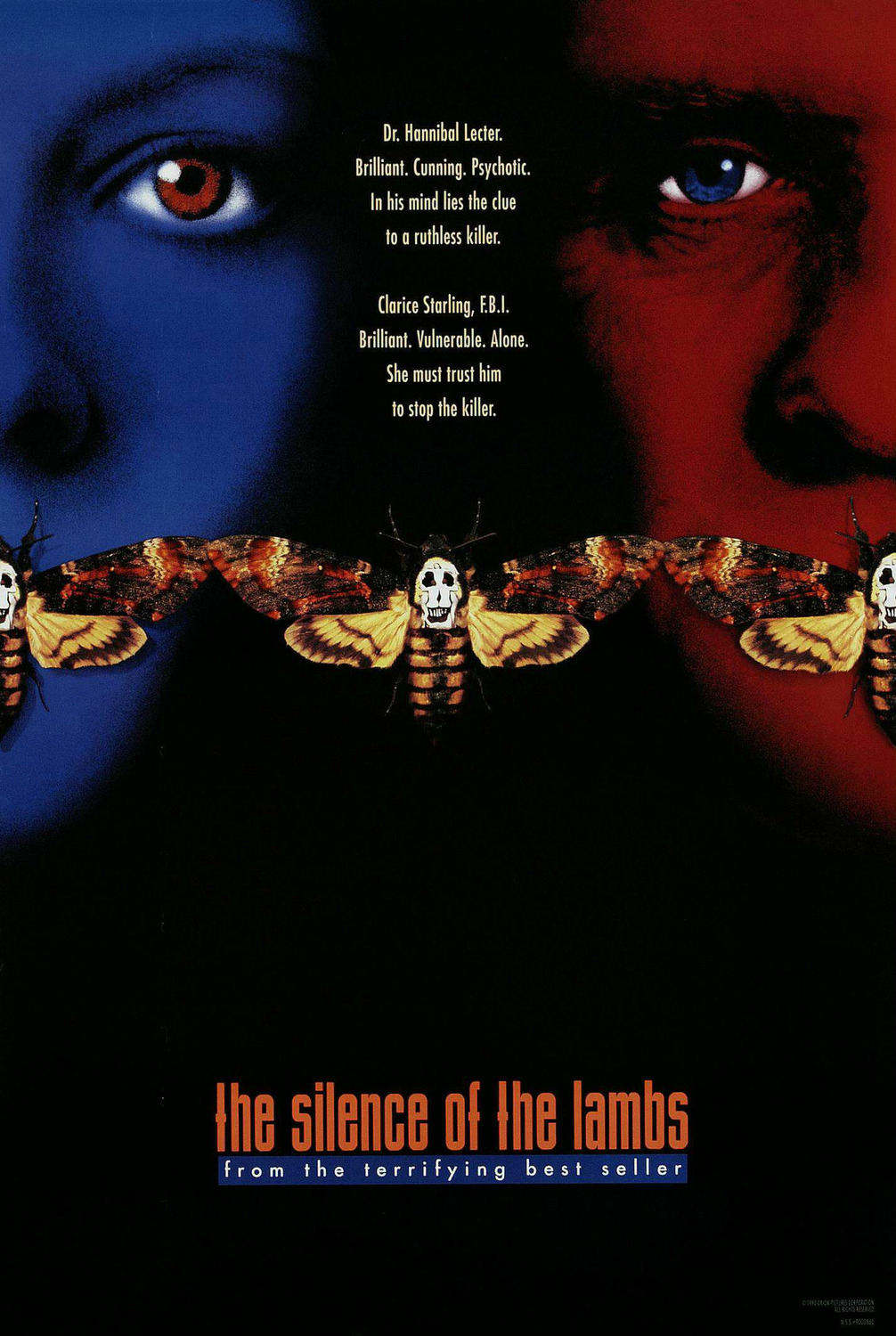
All-Time Favorite Trailers: ‘The Silence of the Lambs’

This teaser trailer for “The Silence of the Lambs” was my introduction to this film, and it immediately grabbed me in a way few trailers do. Back then, the internet had yet to be discovered by me, I only knew Jodie Foster from “The Accused” which she won an Oscar for, and I had no idea who Anthony Hopkins was in the slightest. I should also add that not once in this trailer is there any mention that this adaptation of Thomas Harris’ novel was directed by Jonathan Demme. Had Demme’s name been included here, it would have made me all the more eager to check this film out as “Married to the Mob” and “Something Wild” were still very fresh in my mind.

What I love about this particular trailer is how it gives this film a look which makes it feel like no other cinematic experience that was coming soon to a theater near you. Everything about it was full of darkness, but it was a darkness like no other. With its striking images and shrieking noises, and also Anthony Hopkins staring directly into the camera in a way few other actors could, I felt I was being promised an experience which not be average or cliched in any conceivable way. I also very much prefer it to the main theatrical trailer which, quite frankly, gave far too much of the story away to where I am so very thankful I didn’t see it before I saw this brilliant motion picture on the silver screen at Crow Canyon Cinemas.

For the record, “The Silence of the Lambs” is one of my favorite movies ever, and one which I am happy to revisit quite often. This teaser trailer is also one of my favorites as those who put it together made it clear to audiences that this was a motion picture you would be foolish to miss out on. While the darkness it presented could have frightened many audience members off, not once did it feel like your average slasher flick.

‘American Fiction’ Movie and Blu-ray Review

The following review was written by Ultimate Rabbit correspondent, Tony Farinella.

American Fiction” is the kind of adult drama which has been sorely missing from Hollywood over the past decade and a half.  Hollywood has become obsessed with the big screen blockbuster and superhero films. Now, of course, there is nothing wrong with those films, but the adult drama along with R-rated comedies are becoming harder and harder to find these days.  It is why a film like “American Fiction” is such a delightful treat for moviegoers who enjoy complex characters and well-rounded stories, and who like to be challenged when they sit down and watch a movie.

The film stars Jeffrey Wright as Thelonious ‘Monk’ Ellison, an author and teacher who is grumpy, defeated and incredibly unhappy with his life.  Thelonious is a difficult person to be around as he’s critical of not only himself but everyone else around him.  It doesn’t help that he isn’t as successful as he used to be with his writing.  He’s finding it harder and harder to connect with audiences as he sees a shift in the literary landscape. The books which are making money and selling are those which profit off the stereotypes that exist in black entertainment.

Thelonius is told to write a “black book,” which is something he wants nothing to do with at all as it goes against his principles and his beliefs. It makes him angry to see a writer like Sintara Golden (Issa Rae) selling books left and right while his own work is financially unsuccessful.  He returns home to spend time with his family, which is another source of stress in his life. His sister, Lisa (Tracee Ellis Ross), is a hard-working physician who is doing her best to get back on her feet after a painful and costly divorce. He also discovers that his mother, Agnes (Leslie Uggams), is suffering from Alzheimer’s Disease.

This is not the pick-me-up visit Thelonius needed, as he’s not exactly close with his brother, Cliff, played by Sterling K. Brown.  Cliff and Lisa have trouble getting along with him because he’s too much like their deceased father who was withdrawn, judgmental and often pushed people away.  With his mother’s health suffering, it is up to Thelonius to take care of her finances and figure out what to do with her care.  He finds a solution when he ends up writing a book under a pseudonym, which gives the public what they are looking for: a stereotypical black book which relies on the offensive and cliché-ridden tropes audiences love. As the old expression goes, “No one ever went broke underestimating the intelligence of the American public.”

Thelonius has also developed a relationship with a neighbor, Coraline, played by Erika Alexander. She likes him, but can he love himself enough to work it out with her? Can he get along with his brother? He’s also discovering through his agent, played by John Ortiz, that his book might even be turned into a movie. This is all happening very fast for him as he’s wrestling with his need to produce substantial material and also his need for money.  In many cases, the two do not go hand-in-hand. He doesn’t want to sell his soul for the almighty dollar, but he also has bills to pay in the meantime. Can his moral compass allow him to “sell out?”

“American Fiction” was my favorite film of 2023. It starts with the screenplay, which won Best Adapted Screenplay at this year’s Academy Awards.  The film has great dialogue in it along with rich and funny characters that really sizzle on screen. It’s a witty, timely and sharp script.  The film reminded me a lot of Spike Lee’s “Bamboozled,” but it’s a more upbeat film and not as bleak. It is hard to overlook how little has changed since “Bamboozled” came out back in 2000, though. The big thing that has changed is there are more platforms and outlets for this kind of material to be digested by audiences.

This film also has a tremendous cast from top-to-bottom. Everyone has effortless chemistry with one another on screen, and they are all likable, interesting and well-developed.  Even though Thelonius is a curmudgeon, he’s never boring.  There is something very quirky and funny about him, and it is because he was written with a lot of different layers to him.  As an audience, we understand his frustration and we know why he feels the way he does about his family and how African Americans are presented in mainstream media. He’s not wrong, even if he goes about it in a way that tends to grate on those closest to him.  He can be preachy and self-righteous, but it’s hard to argue with his points.  This is a man who is learning to love himself, love someone else, and reconnect with his family.  He’s a work-in-progress.

If you are like me and enjoy a film with heart, humor and a bit of edge to it, you will love “American Fiction.”  This is the kind of movie Hollywood used to make but seem to shy away from these days.  I enjoyed every single minute of this hilarious, heartfelt and intelligent piece of moviemaking.  This film allows the audience to spend time with these characters, get to know, care about, and become emotionally invested in them. The ending, without giving anything away, is also perfect. I loved “American Fiction,” and I’m confident you will love it too.

* * * * out of * * * *

Blu-ray Info: “American Fiction” is being released on a single-disc Blu-ray from Warner Brothers Home Entertainment.  It has a running time of 117 minutes and is rated R for language throughout, some drug use, sexual references, and brief violence. It also comes with a digital copy of the film as well.

Video/Audio Info: The 1080p high-definition transfer is very colorful, clear, and bright. Would I have loved a 4K transfer of my favorite film of last year? Of course! However, this is a very good-looking Blu-ray, and I can hold out hope it gets a 4K upgrade at some point as I think this film is only going to grow in popularity as more people see it on physical media. The audio on this Blu-ray is also top-of-the-line. All of the dialogue can be heard very clearly, which is important, because this is a very dialogue-driven film. Subtitles are included in English, French and Spanish.

Special Features:

None

Should You Buy It?

If you are strictly buying “American Fiction” for the movie itself, you should definitely buy it right away. However, this is only available on Blu-ray and DVD, and there are also no special features. This is a supremely bare bones Blu-ray from Warner Brothers Home Entertainment which is pretty disappointing. It does come with a slipcover, though. I’d say buy the Blu-ray with the slipcover as, from an audio and visual standpoint, it still looks and sounds really good. I always like to err on the side of caution, and I’d rather have a great movie on Blu-ray with the slipcover while I can before they stop releasing it with a slipcover. That being said, this film deserved a much better physical media release than it got,

**Disclaimer** I received a copy of this film from Warner Brothers to review for free.  The opinions and statements in the review are mine and mine alone.
‘The Return of the Living Dead’ Movie and 4K/Blu-ray Review

The following review was written by Ultimate Rabbit Correspondent, Tony Farinella.

The Return of The Living Dead” was released the same year I was born, 1985.  Even thirty-seven years later, it is clear to see the impact the film had on horror movies, specifically zombie movies.  It was a film which was truly ahead of its time. I remember watching and enjoying the Scream Factory Blu-ray when it was released many years ago, and I enjoyed it even more on 4K Ultra HD. The blood, the gore and the colors really are vibrant and stunning on this release.  This is a tremendous release from Scream Factory, and it is being released just in time for the Halloween season.  It’s a perfect addition to your 4K horror film collection.

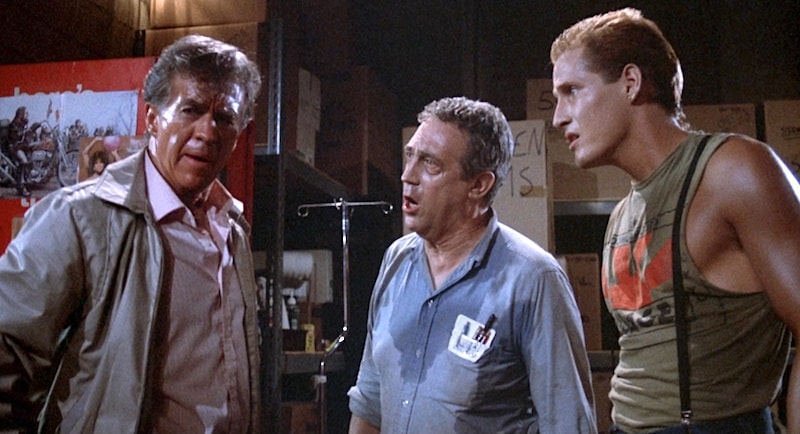
The film is just as funny as it is gory, which is truly saying something. This is not a simple task to pull off, as sometimes zombie films have a hard time with that balancing act.  “The Return of the Living Dead” opens up by introducing us to two lovable but goofy factory workers named Freddy (Thom Mathews) and Frank (James Karen), as they work together at the aptly named Uneeda medical supply warehouse. Frank is hoping to look cool in front of Freddy by showing him some of the dead zombie bodies they have lying around the warehouse. According to Frank, the filmmakers behind “Night of the Living Dead” were ordered by government officials to change certain aspects of the film in order to hide from the public that zombies are indeed real and were used for military purposes. Unfortunately for them, when toxic gas is released from one of the meat lockers, the zombies start to rise from the dead.

The only thing that will take away the pain of the zombies is eating brains.  These zombies really love brains, and they move a lot quicker than zombies we have seen in previous films.  Also, if you take off their head, the rest of the body is still mobile and able to attack.  The only way to truly kill these zombies is to burn them completely.  Before long, there are hundreds of zombies, and the police and the medics can’t keep up with them. Burt (the late Clu Gulager) is trying to navigate this situation as best as he can, but he’s also looking to save the good name of his company and not let the public know that two of his workers are responsible for this mess.

Freddy is part of a punk rock gang that likes to raise hell, listen to music and have a good time with sex, drugs, and rock n’ roll. Freddy’s gang is looking to help him, but they are also finding themselves in over their heads with all these zombies coming for them left and right. Freddy has a girlfriend named Tina along with some friends named Spider, Trash, Chuck, Casey, Scuz and Suicide. Meanwhile, Burt looks to his friend, Ernie (Don Calfa), for help in disposing of the cadaver zombie that was released thanks to his co-workers. Ernie wants to be helpful, but this is above his pay grade as a mortician.  Even though burning a zombie can kill it, it can also lead to toxic rain falling from the sky. This creates even more problems as it burns the skin and also brings more zombies to life from their graves.

This is one of many great things about “The Return of the Living Dead.”  There is nothing about the film which is cut and dry.  There might be a solution around the corner, as mentioned, but it doesn’t come without casualties or consequences. You also tend to feel a little bit of sympathy for these zombies, especially when you notice that Freddy and Frank are starting to become zombies.  They don’t want to eat brains, but it is the only thing that will stop their suffering and pain.  The zombies are also beautifully designed and look fantastic on screen.  Sometimes they pop up out of nowhere, and sometimes they come in large packs that move really, really fast.  These are complex and interesting zombies. These are not your average, run-of-the-mill zombies, and this is a big reason why this film has had such staying power.

“The Return of the Living Dead” also has a ton of quotable lines and quirky characters.  I don’t think I can keep a straight face when I hear the line, “It’s not a bad question, Burt.”  Every time I watch this film, I gain a new appreciation for it.  In my eyes, it is the perfect zombie film.  If I had to choose only one tiny issue with this film, and it is a minor one, it is the fact it ends rather abruptly.  Besides this little picadillo, this is my favorite zombie movie of all time.  Of course, I respect “Dawn of the Dead” and “Night of the Living Dead,” but from a pure entertainment standpoint and for the rewatch factor, “The Return of the Living Dead” is simply horror movie heaven for yours truly.  It is the film which keeps on giving with its gore comedy, and quirky cast of characters.

* * * * out of * * * *

4K/Blu-ray Info: “The Return of the Living Dead” is released on a 3-disc 4K and Blu-ray combo pack from Scream Factory.  One disc is the 4K of the film, another disc is the Blu-ray, and the third disc includes the special features on a Blu-ray disc.

4K Video/Audio Info: We are treated to this film on an absolutely stunning 4K Dolby Digital HDR transfer. As soon as the film started, I was sucked into how beautiful and bright it looked on my television.  They have done a brand-new 4K scan of the original camera negative, and it makes it one of the best-looking horror 4K’s of the year.  The bloody reds are a thing to behold, and the darks are also spot-on with this transfer.  Scream Factory has been on a roll lately. The audio track on the film is DTS-HD Master Audio 5.1, 2.0 with English subtitles.  I thought the audio was perfect, especially during the scenes involving some of the punk rock music.  I didn’t have to adjust my volume on this film at all. I was able to keep it at the same volume throughout the entire film.

Special Features:

DISC 1 – (Feature Film – 4K UHD)

·     NEW 2022 4K Scan of The Original Camera Negative

·     In Dolby Vision (HDR 10 Compatible)

·     DTS-HD Master Audio 5.1, 2.0

·     Audio Commentary with Gary Smart (Co-author of “The Complete History of The Return of The Living Dead”) And Chris Griffiths

·     Audio Commentary with Actors Thom Mathews, John Philbin and Make-up Effects Artist Tony Gardner

·     Audio Commentary with Director Dan O’Bannon and Production Designer William Stout

·     Audio Commentary with The Cast and Crew Featuring Production Designer William Stout and Actors Don Calfa, Linnea Quigley, Brian Peck, Beverly Randolph and Allan Trautman

·     Zombie Subtitles

·     In Their Words – The Zombies Speak

DISC 2 – (Feature Film – Blu-ray)

·     2022 4K Scan of The Original Camera Negative

·     DTS-HD Master Audio 5.1, 2.0

·     Audio Commentary with Gary Smart (Co-author of “The Complete History of The Return of The Living Dead”) and Chris Griffiths

·     Audio Commentary with Actors Thom Mathews, John Philbin and Make-up Effects Artist Tony Gardner

·     Audio Commentary with Director Dan O’Bannon and Production Designer William Stout

·     Audio Commentary with the cast and crew Featuring Production Designer William Stout and actors Don Calfa, Linnea Quigley, Brian Peck, Beverly Randolph and Allan Trautman

·     The Decade of Darkness – Featurette On ’80s Horror Films

·     Theatrical Trailers

·     TV Spots

·     Still Gallery – Posters, Lobby Cards, Movie Stills and Behind-The-Scenes Photos

·     Still Gallery – Behind-The-Scenes Photos from Special Make-up Effects Artist Kenny Myers’ Personal Collection

DISC 3 – (Special Features – Blu-ray)

·     “The Return of The Living Dead” Workprint – Includes 20 minutes of additional footage (in standard definition)

·     More Brains: A Return to The Living Dead – The Definitive Documentary on “The Return of the Living Dead.”

·     The FX of “The Return of the Living Dead” – with Production Designer William Stout, FX Make-up Artists William Munns, Tony Gardner, Kenny Myers and Craig Caton-Largnet, Visual Effects Artists Bret Mixon and Gene Warren Jr. and actor Brian Peck (Expanded Version)

·     Party Time: The Music of “The Return of The Living Dead” – with Music Consultants Budd Carr and Steve Pross and soundtrack artists plus musicians (Expanded Version)

·     The Origins of The Living Dead – An Interview with John A. Russo

·     “The Return of The Living Dead:” The Dead Have Risen – Interviews with cast members Clu Gulager, James Karen, Don Calfa, Brian Peck, Thom Mathews, Beverly Randolph, Linnea Quigley and More…

·     Designing The Dead – Interviews with Writer/Director Dan O’Bannon and Production Designer William Stout

·     HORROR’S HALLOWED GROUNDS – Revisiting the locations of this film

·     A Conversation with Dan O’Bannon – His final interview

Should You Buy It?

Do you have a perfect zombie movie? Check.  Do you have an outstanding 4K picture transfer? Check. Do you have a boat load of special features? Check.  This film is a day one purchase without any hesitation whatsoever. It comes out on October 18, and it is a great horror movie to watch during the spooky season of 2022.  If you haven’t already, you should pre-order this film from Scream Factory.  I promise you that you won’t be disappointed.  I can’t say enough glowing things about this movie or its 4K transfer.  When you factor in how rewatchable this film is (it only runs at 91 minutes), it’s the kind of film that is going to bring something new to the table for viewers each and every time.  It’s a ton of fun, gory, well-acted, cheesy in a good way, and it truly had something new to offer to the horror genre. If you have seen this film before, you have probably already pre-ordered it and can’t wait to watch it again on 4K.  If you haven’t seen it before, you are in for a big surprise when you watch this movie.  Once again, “The Return of the Living Dead” gets a top recommendation from yours truly.

No, I Haven’t Seen It Until Now: Akira Kurosawa’s ‘Ran’

I pride myself on having a vast knowledge of movies. While my many of my friends stumble across a movie they don’t recognize, I am usually quick to name it even if I have never watched it before. Everyone is amazed at how I could know such things. Still, when it comes to older movies and the great filmmakers who ever lived, there are still many I need to catch up on.

One of those filmmakers I really need to catch up on is Akira Kurosawa who is considered by many to one of the greatest of all time. Until I saw “Ran,”, the only movie of his I had previously watched was “The Seven Samurai” which really is one of greatest movies ever made. Of course, I got exposed to the American remake, “The Magnificent Seven,” beforehand, but anyway.

“Ran” was the very last movie Kurosawa made on such an epic scale, and as amazing as it looked when it was first released, this is even more the case more than 30 years later. Kurosawa clearly had the power to request literally thousands of extras, and it is easy to see well-dressed studio executives looking at him to where, had he made this movie today, would have asked him:

“Can’t you just add all these people in with CGI? Wouldn’t it be easier and cheaper just to hire like 50 guys instead of 1200?”

If they didn’t ask them that, they would obviously come up with the obvious solution:

“We’ll solve it in post!”

Looking at the title and scenes from the movie trailer, I figured the title “Ran” meant the main characters were running from certain doom throughout like it was a big chase. This should show you what I know about the Japanese language, and that is not much. “Ran” actually means “revolt” or “chaos,” and Kurosawa’s movie is filled with so much of both to where this is ends up being a cinematic experience both physically and emotionally draining.

Kurosawa based the story on the legends of the daimyo Mori Motonari and of how he had three sons who were intensely loyal to him. This led him to look at the story a little differently and say the following:

“When I read that three arrows together are invincible, that’s not true. I started doubting, and that’s when I started thinking: the house was prosperous and the sons were courageous. What if this fascinating man had bad sons?”

Of course, anyone familiar with William Shakespeare will say that “Ran” is heavily influenced by the tragedy of “King Lear.” Indeed, the story very much resembles that of “King Lear” as we watch a powerful leader abdicate his throne, and he ends up being betrayed by his own blood in the process.

The powerful leader at the center of “Ran” is Hidetora, leader of the Ichimonji clan. The story starts with Hidetora abdicating his throne to his three sons Taro, Jiro, and Saburo. The majority of the power is given to Taro who is his eldest son, and Jiro and Saburo are ordered by their father to support him no matter what. Saburo, however, does not agree with Hidetora’s decision to disperse all of his powers, reminding him how his kingdom came about through his own treachery and massacre of others. Hidetora starts acting all uppity as if he’s a superstar celebrity who is not used to hearing the word “no” much, and he banishes Saburo from the clan as well as his servant Tango who speaks in Saburo’s defense. It’s amazing what breaking three arrows together can do to a man’s ego.

From there, it is a vicious downfall for Hidetora as he is banished from his kingdom ever so coldly. Many characters here profess to believe in a god, be it Buddha or someone else, and they pray for their assistance in this little world which is quickly collapsing. If there is a god watching over them, he, or she, is blind to their sufferings or deaf to their endless prayers. Hence, this is quite a bleak movie from a thematic and visual standpoint.

After watching “Ran,” I was compelled to learn more about it. While researching the movie more deeply, It turns out “King Lear” never really entered Kurosawa’s mind until he was deep into pre-production. Along the way, he did incorporate different elements of the play into it, and he had this to say about Shakespeare’s classic tragedy:

“What has always troubled me about ‘King Lear’ is that Shakespeare gives his characters no past. … In Ran, I have tried to give Lear a history.”

Now this is what gives Hidetora, among others characters, such gravity throughout the nearly three-hour running time. He was not a leader who earned his kingdom through family succession, but through the pillaging of villages and murdering those who were against them. Perhaps he would like to forget this, but his power and family are forever stained by his deeds, and he is reminded of this in the most painful of ways.

With this in mind, it is no wonder two of Hidetora’s three sons end up turning against him. What his legacy has taught them is you can’t get anywhere in life without beating the crap out of the other guy and stealing everything he and his followers have. Only Saburo is fearless and selfless in telling him this and of pointing out the fact he will always be seen as a killer. Saburo at least cares enough to tell him this instead of just sucking up to him like his brothers do. Some people hear the word “yes” once too often when they need some others say “no” every once in a while.

As we see Hidetora losing his mind and in a state of disbelief, I was reminded of Will Munny, Clint Eastwood character from “Unforgiven.” Both these characters become sick, and in their feverish state they become haunted by the lives they ended ever so coldly. They have tried to convince themselves they are not the same people they once were, and Hidetora appears to develop amnesia in an effort to block his mind of his past deeds. But nightmares abound in his sleep reminding him of the price he has yet to pay. You could even compare this character to Anakin Skywalker who becomes the very thing he fought against in “Star Wars Episode III: Revenge of the Sith.” In the process of trying to prevent the love of his life from dying, he gives up everything he believes in. Hidetora believes that by passing the leadership duties to his oldest son his clan will continue to prosper. The more we fear of something bad happening, the more likely that bad thing will happen.

Taking this into account makes me realize one of the most important elements in the Kurosawa movies I have seen; they are very dependent on the depth of their characters as much as they are on spectacle. Granted, this is only the second movie of his I have seen, but it feels like just enough to understand why his cinematic works made such a strong impression on Steven Spielberg and George Lucas (“The Hidden Fortress” is said to have been a huge influence on “Star Wars”). Most movies today are just about spectacle, and the characters are usually a distant second to it. But it is this focus on character which makes “Ran” so involving and gives its epic scope much more meaning.

But let’s talk about the spectacle of “Ran” which is incredible to say the least. One of the key sequences is the horrific massacre which takes place at the third castle where Hidetora takes refuge. What really struck me was how Kurosawa put Tōru Takemitsu’s music score over the sounds of violence perpetrated by his sons as it gives what is being presented to us with far more emotional power. Takemitsu’s music further illustrates the immense tragedy tearing this powerful clan apart which leaves Hidetora in an endless state of shock. Without the music, it would still be a cinematic high mark of capturing battle on celluloid, but it would not have the same effect.

The bloodbath of the massacre is made all the more vivid by Kurosawa as “Ran” was made long before the advent of CGI effects. With this sequence, Kurosawa brilliantly captures the ugliness and viciousness of war, and of the cruel nature which dominates these characters’ humanity.

All the acting is nothing short of excellent from as the entire cast invests each of their characters with various complexities which allow them to surprise us in unexpected ways. Hidetora is played by Tatsuya Nakadai, and he immerses himself completely into playing a man whose own pride and self-righteousness proves to be his undoing. Without saying a word in the last half of the massacre, Hidetora communicates his utter regret of his thoughtless decision making which has led to the decimation of what he once had. Nakadai makes Hidetora’s eventual descent into madness all the more vivid, and his performance never ever descends into camp.

I also loved Mieko Harada’s performance as Lady Kaede, Kurosawa’s version of Lady Macbeth. Through her deceitful ways, viciousness and endless manipulation, she always seems to get her way and turn the men around her into quivering jelly. Harada’s moments onscreen are among my favorites as she exploits the fears of the men around her and seduces them despite their mistrust of her. Never let it be said that Kurosawa ever writes weak roles for women because it certainly isn’t the case here. Lady Kaede wants to maintain her high status in the clan, and she is ruthless in how she pursues it.

You could say they don’t make movies like “Ran” anymore, but it did come out in a time when they weren’t being made much. For many, it serves as the culmination of all his talents, of what he has accomplished in his career, and of all the struggle and tears he shed while making this movie. During the making of “Ran,” Kurosawa’s wife passed away. By the time he got around to shooting the movie after working on the script for ten years, he was almost completely blind. Regardless of these setbacks, nothing stopped him from making this movie.

Years after its release, “Ran” stands as one of the classic movies from one of the best filmmakers ever. No one can or should doubt the heart and soul Kurosawa put into it for years and years, and getting to see it on the silver screen was a real treat. When all is said and done, the silver screen is where this movie belongs.

* * * * out of * * * *

‘The Wolf of Snow Hollow’ Movie and Blu-ray Review

The following review was written by Ultimate Rabbit correspondent Tony Farinella.

Good horror is hard to find these days in Hollywood. Between the endless number of sequels, remakes and jump scare flicks, it can be quite difficult to find a horror flick truly worth of your time.  However, the beauty with cinema are the little gems like “The Wolf of Snow Hollow.”  This film is also notable for being one of the last to feature the late, great Robert Forster.  It was written and directed by its star Jim Cummings.  Thankfully for the audience, he’s up to the task of being the lead, and he has terrific comedic timing.  He knows how to balance the quirky tone of the flick, which is why it’s such a beauty to watch from beginning to end.  The film is 80 minutes when you take out the credits, but it makes the most of each and every scene and character.

“The Wolf of Snow Hollow” is set in Snow Hollow, Utah where not much of anything happens on a day-to-day basis for local police officer John Marshall (Jim Cummings). In John’s personal life, there is a lot going on as he’s trying to raise a 17-year-old daughter on her way to college despite the fact he and his ex-wife don’t get along at all.  There is also the fact his father, played by the late Robert Forster, is having health issues and struggling to stay retired from his job as Sheriff.  It also doesn’t help that some of the individuals working with him aren’t the brightest and most ambitious bunch of police officers out there.  However, there is one bright spot in Officer Julia Robson (Riki Lindhome) as she takes her job seriously and is there to help out John Marshall whenever he needs her.

In addition to these issues, John is also struggling to stay sober. He’s three years sober after being in AA for six years, but the urge to drink starts to increase when local women are showing up dead left and right in Snow Hollow.  He’s having a hard time solving the case, which is causing increased stress and an inability to sleep until he finds the killer. He also wants to prove to himself, his daughter, his father, and everyone else that he is Sheriff material.  The longer this case goes on, the more blame he is facing from the locals. There are theories out there that it’s a werewolf because of the work of the killer, and he’s not sure if he believes in werewolves or if his mind is playing tricks on him.

However, with each full moon another woman is gruesomely torn to shreds.  The stress and anxiety of the job and John’s day-to-day life is getting to him.  On paper, this might not sound like the type of material which would produce a comedy or a solid horror film.  It’s all in the tone and delivery by the actors and what I would imagine was a very specific script. The deadpan comedic moments are executed flawlessly. The beauty comes in the little moments of the film where the characters are interacting with each other.  John also has an anger problem, which produces some clever and offbeat moments.  It reminded me a lot of “Fargo” if it had werewolves.

“The Wolf of Snow Hollow” is gorgeously shot as well, and this really stands out when taking the film in as an audience member.  There are a number of overhead shots which are breathtaking. Near the end, Cummings decides to switch tones a bit, and this is a smart move because he transitions to a heartfelt conclusion that is satisfying on many levels. This is a prime example of a film with a $2 million dollar which makes the most of its script, actors and scenery.  It was a film I was not familiar with until its Blu-ray release, but I was pleasantly surprised with it.

This is the perfect cult movie which is going to find an audience as it ages and more people check it out.  With its Blu-ray release, now is the perfect time for you to discover and enjoy it.  I enjoyed the hell out of it, and I look forward to more projects from Cummings in the future.  He has shown a lot of talent and ability here as a writer, director and actor.  I had never seen anything from him before, but I’m very curious to check out his feature film debut from 2018, “Thunder Road.” He’s the kind of talent who likes to do things on his own, but he has proven it is a task not too big for him.  I highly recommend you seek out “The Wolf of Snow Hollow.” You will not be disappointed.

* * * ½ out of * * * * __________________________________________________

Blu-Ray Info: “The Wolf of Snow Hollow” is released on a single-disc Blu-ray with a digital code from Warner Brothers Home Entertainment. It has a running time of 85 minutes and is rated R for violence, bloody images, language throughoutand some drug use.

Video Info:  The film is presented in 1080p high definition. It looks outstanding, and I loved the snowy overhead shots.  For a $2 million dollar budget, as mentioned, it surely stands out on screen and there is a lot to enjoy from a visual perspective.

Audio Info: The Blu-Ray comes with a DTS-HD MA: English 5.1 audio track along with an English Descriptive Audio track. Subtitles are in English and Spanish.

Special Features:

·         The Story and the Genre

·         The Impetus

·         Working with Jim Cummings

·         The Design of the Werewolf

·         The Story and The Genre

Should You Buy It?

Yes! You need to support independent cinema which is daring, takes risks and has something unique to offer to the film world.  I have a feeling I’m going to be hearing a lot about Jim Cummings in the future.  The film also comes with some solid special features as well.  The Blu-ray looks outstanding and really adds to the atmosphere of the movie.  The more removed I was from this film and the more I thought about it, the more I liked it.  It’s also only $14.99 at most major retailers.  If you know someone who is a horror fan, this is the perfect Christmas gift to surprise them with this upcoming holiday season.  “The Wolf of Snow Hollow” is a delightful surprise. I really enjoyed every minute of this film.

**Disclaimer** I received a Blu-ray copy of this film from Warner Brothers to review for free.  The opinions and statements in the review are mine and mine alone.
‘Bill & Ted Face The Music’ Hits Just The Right Notes

After watching the trailers for “Bill & Ted Face The Music,” one question kept popping into my head: How can these two guys from San Dimas go from playing in front of the largest audience in the world to performing for a crowd of 40 in Barstow, most of whom were there for $2 taco night? At the end of “Bill & Ted’s Bogus Journey,” we saw news articles of them performing all over the place, and they even got to stage a concert on Mars of all places. Seriously, you cannot plummet from a height of fame like that, right?

Well, keep in mind that at the end of “Bogus Journey,” Bill and Ted did finally learn how to play their guitars, but they also performed a cover of “God Gave Rock and Roll to You” by KISS. We never did hear them play any original tunes. As “Face The Music” begins, we learn their debut song as writers opened big and then plummeted to the bottom of the charts in record time. Even worse, their follow up albums were ravaged by the critics, one who described their work as being “manure.” Taking this into account, it makes perfect sense they would end up performing in Barstow, a town in the middle of nowhere. Like Vanilla Ice, they shot up into the stratosphere and then saw their follow-up album being sold at a used record store for only 99 cents (and that’s on the day after it was released).

We first see Bill S. Preston (Alex Winter) and Ted Logan (Keanu Reeves) at the wedding of Missy (Amy Stoch). Yes, Missy is getting married, and just wait until you find out to who. The two use the occasion to present the world premiere of their latest work, and while they play instruments with more confidence than before, they are still unable to put together a cohesive song, and the response they get is much like the one Spinal Tap received when they told the audience they were going in a “new musical direction.”

Bill and Ted are still married to the princesses, Joanna (Jayma Mays) and Elizabeth (Erinn Hays), and they have two beautiful music-loving daughters in Theodora (Samara Weaving) and Wilhelmina (Brigette Lundy-Paine). Still, they have not yet written the song meant to unite the whole world, and it appears as if this destiny may have been misread. Furthermore, their daughters are in their 20’s and still living at home, and their wives are starting to tire of the lack of the direction in their husbands’ lives. Ted’s dad, Captain Jonathan Logan (Hal Landon Jr.), refuses to believe he and Bill could have traveled in time or gone to heaven and hell and begs them to get “real jobs.” Yes, middle age has hit Bill and Ted real hard to where they feel the need to reassess their goals.

Then into the picture comes Kelly (Kristen Schaal), daughter of the late Rufus, who takes Bill and Ted to the future to meet The Great Leader (played by Holland Taylor) who is not exactly happy with where they have ended up in life. From there, they are informed that the universe is unravelling and will be destroyed if they do not write the unifying song in the next 78 minutes. How about that? You are tasked with writing the song which will unite the world, and you have just over an hour to compose it. Talk about pressure! As we get older, 78 minutes doesn’t last as long as it used to.

Bill, however, comes up with a most excellent plan to travel with Ted into the future when they have already written the song and to take it from themselves. Ted considers this to be stealing, but Bill convinces him it isn’t as long as they are stealing from themselves. Hey, it worked for James Horner!

“Face the Music” comes to us more than 25 years after “Bogus Journey,” so it is hard to know what to expect. It reunites not only Reeves and Winter, but also screenwriters Chris Matheson and Ed Solomon who penned the previous two films as well. I am thankful to say this sequel is no “Blues Brothers 2000” which relied on an overabundance of nostalgia to where I found myself wanting to watch the original. Instead, it does come with some good laughs and a lot of heart as everyone involved has worked their damndest to bring this last chapter of Bill and Ted to the silver screen and digital streaming for dozens of years. Regardless of what you may think, no one is out to simply repeat themselves here.

Both Reeves and Winter are clearly having a blast as Bill and Ted keep traveling to different parts of the future in an effort to talk to themselves and get the song. This allows the actors to portray them in various ways to where we see them as has beens, a duo ever so in love with English culture, and hard-core prisoners who have bulked far more than you would ever have expected (nice makeup work by the way). Regardless of the many years which have passed them by, both actors slip back into their roles as if they never left them, and they keep these characters from becoming mere caricatures throughout.

Also, believe it or not, there is some evolution to Bill and Ted. Granted, they are still pretty dense when it comes to things like couple’s therapy, but they also realize how their famous sayings of “be excellent to each other” and “party on dudes” do not have the same resonance as they once did. Before they go on their latest excellent adventure, they have to realize they are at a crossroads as things cannot keep going the way they have been as things have got to change. Still, it is worth it to see them playing air guitar here and there even as they approach middle age with inescapable apprehension.

Both Weaving and Lundy-Paine are fun to watch as the daughters, and this is even though the section where they search for famous musicians to create a band is the film’s weakest. It’s a bit of an anemic retread of when Bill and Ted, on their “Excellent Adventure,” went back in time to gather historical figures for their final history exam. Regardless, it is cool to see Jimi Hendrix jam with a bewildered Mozart who has no idea what he is hearing.

It is also great to see William Sadler return as the Grim Reaper as he stole every scene he had in “Bogus Journey.” He too slips back into this hilarious character as if he just played him yesterday, and not once does he have to struggle to get a laugh out of any of us. Seeing the Reaper attempt to make peace with Bill and Ted over the fallout they had with all those 40-minute bass solos is not just one of “Face the Music’s” funniest moments, but also one of its most heartfelt.

Each of the “Bill & Ted” films have had a different director: Stephen Herek directed “Excellent Adventure,” Pete Hewitt helmed “Bogus Journey,” and behind the camera for this installment is Dean Parisot. As a result, each one has a different feel to it despite having most of the same cast and the same screenwriters. Parisot is a perfect fit for this entry as he is terrific at mining material for both laughs and heart, and he proved this with “Galaxy Quest,” one of the greatest cult movies ever made. “Face the Music” doesn’t reach the same heights as “Galaxy Quest,” but Parisot does show a lot of respect for these characters and gives this sequel the heart it deserves. More importantly, he gives it a fulfilling conclusion which truly put a big smile on my face.

Upon first watching “Bill & Ted Face the Music,” I have to admit my feelings on it were mixed as I hoped it would be funnier. But after watching it a second time, I found myself appreciating it more as speaks to the values of friendship and music, both of which we need in these crazy times. Whether or not this sequel is all you ever hoped for, it is clear everyone involved put everything they had into it, and I do hope the fans are satisfied with what they see.

Could a fourth “Bill & Ted” movie ever happen? I don’t know, and frankly this one serves as good conclusion. Seeing them rock out at the conclusion reminds me of what Neil Young once said:

“Rock and roll can never die.”

Damn right! Party on dudes!

* * * out of * * * *

‘The Cotton Club Encore’ Gives This Movie The Version it Deserves

thecottonclubencore-keyart

For years, Francis Ford Coppola’s 1984 film “The Cotton Club” was upstaged by its behind the scenes drama which included the cold-blooded murder of one of its financiers, Roy Radin. With Coppola teaming up again with producer Robert Evans and writer Mario Puzo, audiences must have been expecting another “Godfather” movie, but what they got was something quite different. Despite some good reviews, the movie proved to be a commercial failure, and far more time has spent documenting all of what went into its nightmarish making to where I am truly surprised Eleanor Coppola has never given us a documentary on it like she did with “Apocalypse Now.”

Now it is 35 years later, and Coppola has given us another version entitled “The Cotton Club Encore.” This version came about after he discovered an old Betamax video copy of his original cut which ran 25 minutes longer. From there, Coppola spent $500,000 of his own money to restore this film, and in the process he added 24 minutes and deleted 13 minutes to give us this new cut which just arrived in select theaters. For the record, I have not seen the original 1984 version, but after watching “The Cotton Club Encore,” I am certain I do not even need to bother as this cut is outstanding and absolutely exhilarating to take in. What seemed deeply flawed in the past now seems almost perfect.

In essence, “The Cotton Club” is about two men trying to navigate the hurdles life keeps throwing at them. One is cornet player Dixie Dwyer (played by Richard Gere) who arrives back in Harlem to see his family which includes his mother Tish (Gwen Verdon in an inspired piece of casting) and his brother Vincent (Nicolas Cage) who looks to be all too enthusiastic about becoming a mobster. After saving the life of gangland kingpin Dutch Schultz (James Remar), Dixie finds himself getting involved in the criminal element which, despite his better judgment, succeeds in elevating his career as a musician to a whole new level. In the process, however, he does make the mistake of falling in love with Dutch’s girlfriend, Vera Cicero (Diane Lane). Suffice to say, romances like these come with bloody endings rather than happy ones.

The other main man in this story is Delbert “Sandman” Williams (Gregory Hines) who, along with his brother Clayton “Clay” Williams (Maurice Hines, Gregory’s brother), get hired to perform at The Cotton Club, a jazz club located in Harlem which featured a roster of black (or African American if you will) performers who sang and danced their hearts out. While there, Delbert becomes infatuated with a singer named Lila Rose Oliver (Lonette McKee) to where he cannot wait to sweep her off her feet. But it doesn’t take long for the cracks to show in his personal and professional life as he gets constantly berated by club management which is intent on reminding him where his place is, and he later makes a decision which threatens to tear him and his brother apart forever.

The Cotton Club was a real club in New York which was open from 1923 to 1940, and while it did feature mostly black performers, no one of color could patronize it and the clientele was white. This irony ended up lasting all the way up this film’s making as the financiers, worried about the long running time, gave Coppola the following notes:

“Film’s too long. Too many black stories. Too much tap dancing. Too many musical numbers.”

Coppola by then was so burned out emotionally from the movie’s production that he acquiesced to the financiers and cut down many of the African-American related scenes to where the focus was more on the gangsters and the Gere/Lane love story. No wonder he sounds so weary when talking today about the changes he made and of how regretful he was about compromising his vision. It also serves as a sad statement of how things in show business did not change much as, even in the 1980’s, African-Americans were still getting the short end of the stick.

With “The Cotton Club Encore,” Coppola has restored much of the African-American storyline, and this is really where the movie is at its best. Seeing these actors and singers perform their hearts out is endlessly thrilling as is the director’s success in transporting us back to the bygone era of the 1930’s. Coppola really does take us back in time to where I felt like I lived through this era which brought with it great music, good and bad times, violence and, among other things, a stock market crash. Heaven forbid we ever go through anything like that crash again, huh?

One of the big treats of all though is watching Gregory Hines and his brother Maurice dance the night away. Both are extraordinary tap dancers, and the love they had for performing is on display throughout as they make their moves look like a piece of cake. Seeing Gregory here serves as a strong reminder of what an incredibly talented and gifted artist he was, and it is also especially bittersweet as he has long since left the land of the living. He was only 57 years old when he passed away after a battle with liver cancer, and he is still missed.

Indeed, this bittersweet feeling threatened to overwhelm me at times as “The Cotton Club Encore” features a number of actors who have since died like Bob Hoskins who portrays the ruthless club owner Owney Madden, and Fred Gwynne as his right-hand man, Frenchy Demange. The scene these two actors have together following a hostage situation is classic, and is another reminder of the talent we have lost over the years.

Another tremendous performance to be found in “The Cotton Club” comes from Lonette McKee, an actress I first became familiar with in “Brewster’s Millions.” With this new cut, Coppola has gone out of his way to restore her showstopping number of “Stormy Weather,” and watching her belt it out left me speechless. She doesn’t just sing the song, she lives through it, and it is an emotionally draining moment I still think about. It is one thing for a singer to hit all the right notes, and it is another to really perform it to where you are giving the most vulnerable performance imaginable, and McKee pulls this off beautifully.

The movie’s other main story of an illicit love affair had me worried for a bit as this tale has been told countless times on stage and screen to where we feel like we know how it will go. Regardless, it still proves to be enthralling in its own way. While it is easily upstaged by the African-American story, it is still fun to see Richard Gere and Diane Lane mix up as they prove to have a palpable chemistry which they would build on years later when they starred in Adrian Lyne’s “Unfaithful.” While it is a little weird to hear Gere’s Bronx accent at first, he quickly reminds us why he is such a magnetic leading man, and he proves to be quite the coronet player as well.

The only real problem I had with “The Cotton Club,” and this is probably the case with either version, is there are too many plot threads which meander, some of which fail to reach a fulfilling conclusion. Despite his efforts, Coppola is unable to manage these various threads to where everything fits into a cohesive whole. At times, it almost made me wish he cut more out of this version as things might have flowed better as a result. And yes, there is that fake head (you will know it when you see it) which proves to be as fake as the baby in “American Sniper.” Perhaps some CGI magic could have helped with it.

Still, when all is said and done, “The Cotton Club Encore” proves to be a stunning achievement as Coppola has finally given this film the version it truly deserves. While he may have come onto this project as a hired hand at first, it is clear to me he really fell in love with the subject matter and took joy in recreating a historical period which deserves far more than a passing glance.

It has been a big year for Coppola as he has announced plans to make his dream project “Megalopolis” a cinematic reality, and he also gave us another version of one of his classics with “Apocalypse Now: Final Cut.” With “The Cotton Club Encore,” he has righted the wrongs he made in the past, and he can now pat himself on the back instead of moan over the mistakes he made over 30 years ago. More importantly, this movie is no longer upstaged by its production stories and can now be appreciated on its own terms.

Relax Francis, you did great!

* * * * out of * * * *

Why ‘Bull Durham’ Remains My Favorite Sports Movie

Bull Durham movie poster

This was one of the few R-rated movies my parents let me see long before I turned 17. Of course, I was already sneaking into R-rated movies before I reached that age. I’d buy a ticket to “Ghost” and instead walk into the theater showing “Marked for Death.” I guess my mom and dad decided, since I was watching all these movie review shows like “Siskel & Ebert” and “Sneak Previews,” and I had seen this movie’s trailer numerous times on the Movietime Channel (long before it turned into E! Entertainment Television), that the damage to my fragile little mind had already been done. Then again, it’s not like they were exposing my brother and I to “The Texas Chainsaw Massacre.” Had they done so, it would have scarred us for life!

When I first saw “Bull Durham” on VHS, I was already very used to the Hollywood sports movie formula where the hero suffers a crushing defeat and has to build themselves back up again to an audience-pleasing finish. When I was younger, I was far more comfortable knowing how a movie would end, and I wanted them all to end the same way. It feels like this with today’s generation of audiences as they thrive on repetition in stories and of the good guys beating the villains we are led to believe good will always triumph over evil. When you’re young, you have yet to learn that in reality the bad guys get away with a lot before anyone notices, especially if they have corporate and/or political connections.

“Bull Durham,” however, forever changed the way I looked at sports movies in general. It didn’t always have to be about training montages and the build up to the big game. Instead, it was about the reality of the game itself, and of the various personalities inhabiting it. Whether or not the characters get their big moment at the end, their victories and accomplishments were never about coming out on top or being the best. The real victory came from struggling through one important stage in your life, and surviving long enough to get to the next. Or, in other words, closing one chapter in your life and moving on to the future.

Most baseball movies focus on the major leagues, but what makes “Bull Durham” especially unique is it is about the minor leagues. Writer and director Ron Shelton based this film on his own experiences in the minors which he played in for several years, and he shows it to be a much looser environment and one which is far more fun and carefree. The baseball stadium may be smaller, but the connection between the players and the fans is more intimate and not engulfed in corporate greed or network contracts. Still, all these players see getting to the majors, which they refer to as “the show,” as their holy grail, the one thing they feel destined to get to at some point. The sad thing is, many of them will never make it there.

“Bull Durham” focuses on three characters throughout: Crash “the player to be named later” Davis played by Kevin Costner, Ebby Calvin “Nuke” LaLoosh played by Tim Robbins, and Annie Savoy played by Susan Sarandon. LaLoosh is the star pitcher of the Durham Bulls and is about to make his professional debut. When he does, he ends up, as Millie (the incredibly cute Jenny Robertson) says, pitching the same way he makes love, “All over the place.”

Hence, veteran catcher Crash is brought in to teach LaLoosh how he can control his pitching, and to get him prepped for the major leagues. During this time, the two of them will meet the high priestess of baseball, Annie Savoy. Her church is the one of baseball, and she hooks with one guy a season to help them with their playing and to expand their mind. This player also gets to share her bed with her, and considering just how amazingly hot Sarandon is in this role, it looks very foolish to even consider turning her down.

At the age of 14, I may not have understood all of what “Bull Durham” was about, but it was not a movie as disposable as a McDonald’s Happy Meal. Shelton offers us a closer look into the world of baseball than I could have expected to see back in 1988. The intimate details of the minor leagues make it very unique among other films of its genre. You also get to learn the importance of the relationship between the pitcher and the catcher, and of how one better not cross the other if he is looking to win.

Aside from the main players, the other team members are individualized to where you can tell one from the other. There’s the one player who swears by the bible and wants all his fellow teammates to follow in his righteous path. Then you have another who uses a necklace with a cross to bless his baseball bat, and who later needs a live rooster to take the curse off his glove. Crash Davis also shows an alternative way to get a rainout which results in one of the movie’s funniest moments.

Kevin Costner was perfectly cast as a veteran baseball player, and he also had the athletic ability to hit a ball right out of the park during filming. In “Bull Durham,” Costner gives us a man knowledgeable of the majors and the minors, and through his eyes he shows us the yearning he has to get back to “the show” as he was there once for 20 days, the greatest days of his life. You can only imagine how much he is working to get back there, but it seems more like a mirage that gets further and further away from him as time marches on.

Looking back at Tim Robbins’ performance, it is clearer to me now he had the toughest role to play in “Bull Durham.” Throughout, he has to take LaLoosh from being a wild and crazy guy on and off the baseball to someone more mature and ready to enter the majors. Robbins makes the transition look seamless, and it was the first indication of the brilliant actor we now see him as today. Seeing him again in “Bull Durham” after all these years is a kick because he is so loose and fancy free.

But seriously, the most memorable performance comes from Susan Sarandon as Annie Savoy. To say Sarandon is sizzling hot remains an understatement as she captivates the audience in the same way she reels in Robbins and Costner. With this character, Shelton gave us one of the most original female characters ever seen on the silver screen. Annie is a strong female, and Sarandon succeeds in making Annie this and more. It may almost sound ridiculous to have a character believing in the “church of baseball” when you look at it on the page, but once Sarandon utters those words which start off “Bull Durham,” you never doubt that she fully believes in it for a second. After all these years, it is still a travesty she didn’t receive an Oscar nomination for her performance.

But the real star of “Bull Durham” is Shelton, and he sees a lot of Crash Davis in himself. After this film came out, he became the go to guy for writing sports movies. You never get a “Rocky” like movie from him, and the characters he creates are rich, complex, and they always have such fantastic dialogue coming out of their mouths. This great talent of his led him on to make “White Man Can’t Jump” where Woody Harrelson and Wesley Snipes were as brilliant at hustling on the basketball courts as they were at verbal sparring with each other and their opponents, “Tin Cup” which left me thinking Costner and him should make as many movies together as possible, and “Cobb” with Tommy Lee Jones which may very well be the definitive anti-sports biopic of all time.

Incidentally, the commentary track he did for the DVD remains one of my all-time favorites. Throughout the movie, he strips away the mythology of other baseball movies to give us an idea of what the game is really like. I also loved how he talked about the fight to get Robbins cast even though the studio didn’t view him as a big enough star. The way they saw it, the audience would never believe Sarandon would ever fall for a guy like him. This led Shelton to bring up how he is godfather to one of their sons.

Shelton also pays great respect to the other actors like the late Trey Wilson who is so good here as the coach, and to Robert Wuhl whom he cast despite him giving the worst audition of any actor he had ever seen. He also lays bare how much he loves making movies and how much he hates the business.

Shelton may have never made it to the majors, but his experiences allowed him to give us “Bull Durham,” one of the funniest and most irresistibly sexy films of all time. I still see it as my all time favorite sports movie, and I don’t care how much more acclaim “Rocky” and “Raging Bull” have over it/ Besides, where else will you find a movie about minor league baseball? Oh yeah, there’s “Major League: Back to The Minors,” but who’s in a hurry to see that?

* * * * out of * * * *