John Carpenter Looks Back at ‘Escape From New York’ and ‘Escape From LA’

John Carpenter Escape From New York photo

“Escape Artist: A Tribute to John Carpenter” continued with the exploits of Snake Plissken in the double feature of “Escape From New York” and “Escape from LA” at the Aero Theater in Santa Monica. These films featured some of the collaborations between Carpenter and Kurt Russell who first worked together on “Elvis.” They quickly became great friends and went on to work together on several other films including these two and “Big Trouble in Little China.”

The emcee warned us that the print of “Escape From New York” was pretty faded as it was an original print and the only one American Cinematheque could get their hands on. This was being generous as it looked like it had been slaughtered by countless film projectors, and the color was faded to where everything looked pink. It is astonishing it didn’t break apart in the projector. Still, the fans still enjoyed watching the film, one which they have seen hundreds of times before. They laughed when “1997 NOW” came up and when Lee Van Cleef speaks into this enormous cell phone no one would have today, let alone in 1997.

After “Escape From New York” ended, Carpenter came to the stage and was greeted with another thunderous standing ovation. Carpenter quickly acknowledged the crowd by saying, “Thank you for coming out to see the movie tonight, but I got to tell you this is the worst fucking print. My fucking God! There’s no color in it!” The audience laughed loudly as they were in complete agreement.

Escape from New York poster

The discussion started off with a question about the genesis of the project. Carpenter talked about writing the script back in the early 1970’s when there was a great sense of cynicism in America about our President and in response to the hostage crisis in Iran. He also admitted he was inspired by two of his favorite movies back then, “Dirty Harry” and “Death Wish.” Those two movies involved men driven to the brink emotionally and who took it upon themselves to wreak vengeance on those who wronged them. Like those characters, Snake Plissken gets the job done, and this brought a lot of satisfaction to audiences as nobody in the real world seemed to be accomplishing anything.

Carpenter said he initially wanted Clint Eastwood to play Snake Plissken. For one reason or another, it did not work out. He also said he had shopped this screenplay around to several studios which rejected it outright, but fortunately he had a multiple picture deal with Avco Embassy which had produced “The Fog.” Ironically, they wanted Charles Bronson for the title role. Somehow, everything came together when Russell got cast as Snake Plissken, and he portrayed the character as an asexual human being who cares about nothing more than staying alive. In the process, he created one of the most memorable anti-heroes ever seen in a movie.

Carpenter also talked about Lee Van Cleef, a favorite actor of his from Sergio Leone westerns, who played Police Commissioner Bob Hauk. Lee had seriously injured his knee during the filming of another movie and had never gotten it fixed, and as a result he was in constant pain while making “Escape from New York.”

With a budget of only $5 million dollars, “Escape From New York” needed to be filmed as quickly as possible. Carpenter said the rule of low budget filmmaking was to shoot as little film as possible and to make it as long as you can. In fact, there is actually only one real shot of New York in the entire movie which features the Statue of Liberty, and it pans from there and dissolves into a set in Los Angeles. A lot of what you see of New York in the movie are actually models and matte paintings done by artists from Roger Corman’s New World Pictures, among them James Cameron. Much of the movie was filmed in downtown St. Louis which had had a huge fire that destroyed several city blocks. The city let Carpenter and his crew film there in triple digit temperatures, and they even shut the power down for them when they filmed at night.
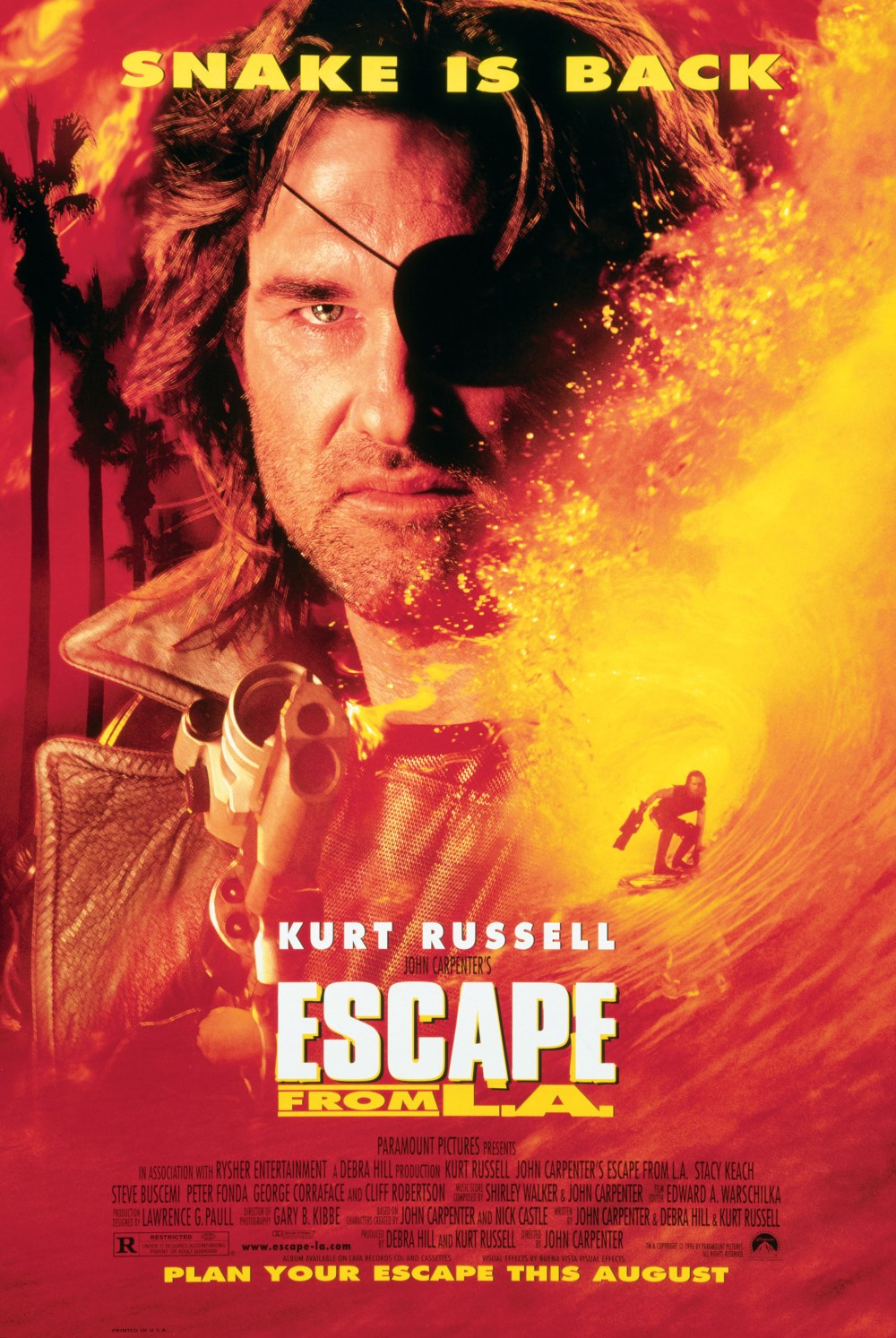
Escape from LA movie poster

When it came to making “Escape from LA,” Carpenter had a budget of around $50 million to work with. But while he and Russell had more time and money, Carpenter said he had the hardest time writing the screenplay for it because he felt that everything he was writing was “bullshit.” What got him to revisit Snake Plissken was that Russell was so keen on playing the character again, and they solved their script problem by moving the action to Los Angeles which was in a constant state of denial with all the earthquakes and natural disasters occurring there. They simply took the same scenario of the original movie and updated it to reflect the current state of the city while filming.

“Escape From New York” may have had only one real New York shot in the entire movie, but all of “Escape from LA” was filmed in Los Angeles. The sequel was shot over a period of one hundred and three nights, and Carpenter said he found filming at night to be very “soul draining” as it changes the way you see things and the darkness infects you in a very unhealthy way.

One audience member brought up how at one point it looked like Carpenter and Russell might do a third movie called, “Escape from Earth.” This never panned out because “Escape from LA” unfortunately bombed at the box office. There was also supposed to be a video game based on the movies, but the company involved with it ended up going back to the past by resurrecting Pac-Man. There was even talk of a television series which would act as a prequel to the movies and even an anime movie chronicling the further adventures of Snake Plissken, but neither of those projects became a reality. Despite the box office failure of “Escape from LA,” there are still many people out there who are intent on continuing the exploits of their favorite antihero.

These days, Carpenter said he is content to sit at home and watch the NBA Finals or play video games. He told the audience he had just finished playing “Ninja Gaiden 2” and would be moving on to “Metal Gear Solid 4” next. It doesn’t seem like he is in a big hurry to make another movie, but this could change if the studios pay him a lot of money. Carpenter feels the movie business keeps changing on him, and he does not appear to be as enthusiastic about making films as he once was.

Carpenter closed out the evening by saying he had to go meet with his drug dealer. Before he left, the moderator gave him a gift saying Carpenter had given so much to us that he wanted to give something back. This something was the “Escape from New York” board game which is, apparently, the most complicated board game ever.

After the discussion ended, he did take some time outside the theater to sign autographs and pose for pictures with fans who still see him as a big inspiration. If you look at movies of recent years, you will see Carpenter’s influence over many of them both in their visuals and the music. To this day, he remains one of the important directors of the sci-fi and horror genre, and his cult following remains as strong as ever.

As the evening wore on, many came back inside to watch “Escape from LA.” The print was in much better condition, but this didn’t stop it from breaking down during the movie’s last seconds. For those who know how this sequel ends, it only seemed comically appropriate as Snake shut down… Well, you know.
William Friedkin Discusses the Creation of ‘The French Connection’ Car Chase

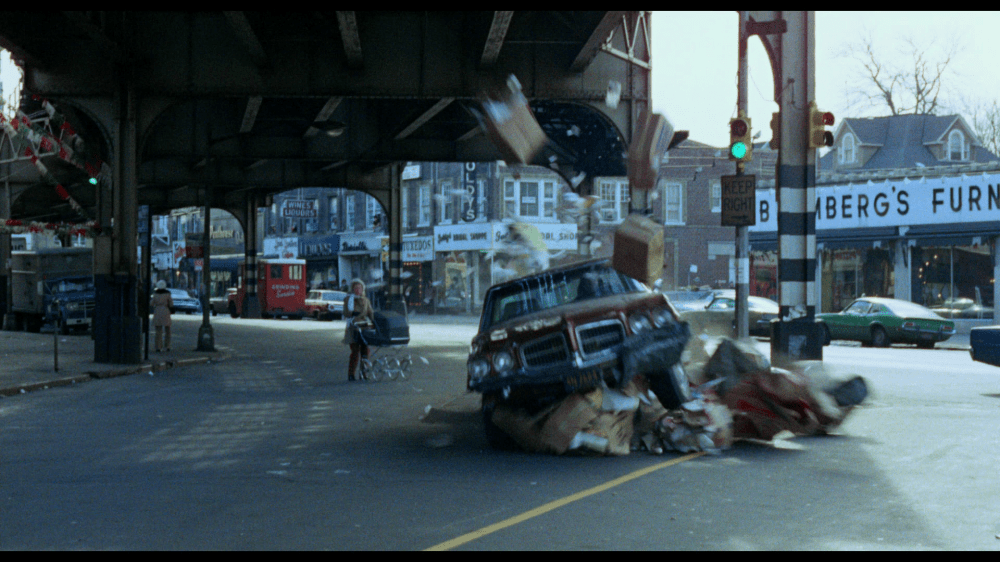
The French Connection car chase

William Friedkin’s “The French Connection” was shown as part of American Cinematheque’s tribute to him, and he went into great detail about how the famous car chase came together. It is still one of the best car chases in cinema alongside “Bullitt,” and it’s the kind Hollywood doesn’t dare do anymore.

The French Connection movie poster

Actually, it turns out there was never a car chase in the original script for “The French Connection,” but Friedkin felt it needed one as this was a police procedural, and the audience would need a temporary release from it. Also, Friedkin didn’t do any storyboards to prepare for it. In fact, he has never done storyboards for any of his movies because he feels he has to see it in his mind. The shots captured on film come together from what he sees at the time, and he doesn’t even use a second unit to shoot any footage. All that you see on screen in “The French Connection” comes from life as it happened in front of Friedkin.

In coming up with the chase, he and some crew members walked down 50 blocks of New York streets to figure out how it would work best. As Friedkin kept walking, he suddenly felt the subway under his feet. Now logistically, he couldn’t do a car chase with a subway as it was underground, but it made him wonder if there were any elevated trains left in New York. The production team ended up finding one in Brooklyn, so Friedkin went to the Transit Authority to get their cooperation in pulling this chase off.

The first thing to figure out was how fast the trains could go. Friedkin said if they went over 100 mph, they couldn’t do the chase as it would be impossible for Popeye Doyle to follow the train by car. The train supervisor he talked to said the trains go at 50 mph, so what seemed impractical suddenly became possible. Not only did Friedkin want to have a car chase the train, he also wanted to crash the train for the chase’s climax. But the train supervisor said it would be too difficult because they had never had an elevated train crash or even heisted. Having heard all this did not deter Friedkin, and he planned to steal the scene if the transit authority’s cooperation was not going to be granted.

As Friedkin and his crew headed for the exit, the train supervisor suddenly said, “Wait a second. I told you it would be difficult. I never said it would be impossible!” He told Friedkin that if he were to help him with this, then he would need $40,000 and a one-way ticket to Jamaica. His reasoning was if the movie was to be done Friedkin’s way, he would be fired, and retiring to Jamaica was always in the back of his mind. Sure enough, the supervisor was fired, and he moved to Jamaica like he said he would, so it’s safe to say he lucked out.

In filming the chase, the shots were picked up just as they happened in real life. There’s no way they would ever be able to film a chase like this today without prior approval from the city, but Friedkin and his crew were young and reckless, and they unleashed mayhem New York never saw coming. There were not supposed to be any accidents while filming it, but there ended up being many of them which forced the crew to fix the car after each take. I’m pretty sure they ended up using more than one as a result. Friedkin ended up saying they did a number of things he would never even think about doing today, and that they were very fortunate no one got hurt.

Taking all this information into account, this car chase feels even more thrilling than when I first saw it. The way it was filmed was completely insane, and the fact they pulled it off at all was a miracle. When Gene Hackman finally brings the 1971 Pontiac LeMans he is driving to a complete stop, the sold-out audience at the Aero Theatre applauded loudly which shows how powerful the sequence remains today. “The French Connection,” like many of Friedkin’s movies, has deservedly stood the test of time.

‘Spider-Man: Homecoming’ Gives the Web-Slinger a New Lease on Life

Spiderman Homecoming poster

The thought of another “Spider-Man” reboot had me rolling my eyes as this comic book character has already gotten through one too many versions already. But after watching Tom Holland portray him in “Captain America: Civil War,” I found myself getting excited about where the character could go from there. So, it’s my relief and delight to tell you all that “Spider-Man: Homecoming” proved to be a really good movie which successfully breathes new life into a franchise suffering from misdirection and too many chefs in the kitchen. With Holland, we also get the best incarnation of Spider-Man/Peter Parker yet as he gives the role a spirited turn full of youthful energy and boundless enthusiasm.

Director Jon Watts and the screenwriters, too many to name here, wisely avoid regurgitating Peter Parker’s origin story the way “The Amazing Spider-Man” did, and they instead hit the ground running. Peter has received a new Spidey suit courtesy of Tony Stark (the always welcome Robert Downey Jr.), but he is not quick to welcome Peter into the Avengers fold. Instead, Peter has to spend his days at high school like any other teenager and with his equally intelligent best friend Ned (Jacob Batalon). But when a new villain who even the Avengers don’t see coming called the Vulture starts wreaking havoc in Queens, New York, Peter finds himself too impatient to just sit on the sidelines and let him get away with his felonious deeds.

Holland really hits it out of the park here, and his boundless enthusiasm is set up perfectly through a home movie Peter Parker makes which encapsulates his time with the Avengers and battling Captain America. While the character remains the conflicted superhero who has trouble balancing out his school life with his crime stopping job, Holland makes the role his own and brings such an infectious spirit which makes the proceedings endlessly entertaining. Whereas Tobey Maguire and Andrew Garfield made Spider-Man too emo for his own good, Holland doesn’t go the same route, and his interpretation is much closer to the character we grew up reading in the comic books. I was frightened he might become too enthusiastic for Spider-Man’s own good, but his performance never becomes ingratiating and he also shows us a vulnerability which feels genuine and not easily achieved.

Of course, comic book movies need a good villain, and “Spider-Man: Homecoming” has one and, thank goodness, only one. The Vulture is an interesting choice as the person who inhabits him, Adrian Toomes, is as regular a guy as Peter Parker is a regular kid. Adrian is not so much a bad guy as he is a man who feels betrayed and left behind by those who have it all. His belief is that those in power couldn’t care less about the little man or anything he could possibly contribute to society, so he does many villainous things for his own benefit. But unlike many James Bond villains, he is not out for world domination. He just wants to provide for his family like any parent does.

It is a great pleasure to see Michael Keaton return to the world of comic book movies, and he arrives here just as “Batman Returns” celebrates its 25th anniversary. As Adrian Toomes/The Vulture, Keaton renders him into someone all too human even as he lays waste to Queens, New York and anyone foolish enough to get in his way. Even as the character sinks deeper and deeper into the criminal life, Keaton gives Vulture a humanity, albeit a corrupted one, which makes him seem more threatening and morally complex.

The rest of the cast is excellent, and it’s great to see Jon Favreau here as Happy Hogan gets more screen time here than he has in previous Marvel movies. One of the last scenes he shares with Holland is especially good as Hogan comes to see just how much attention he really should have paid to Peter. Downey Jr. continues to bring a sharp attitude to Tony Stark/Iron Man, but he also allows the character to evolve as Tony finds himself becoming a father figure to Peter, albeit a reluctant one. Even Chris Evans shows up in a cameo as Steve Rogers/Captain America, and he steals every scene he is in.

There has been a lot of talk of how Marisa Tomei was too young to play May Parker in “Spider-Man: Homecoming,” but that’s ridiculous. If May Parker is the sister to Peter’s mother, she wouldn’t be as old as Rosemary Harris now, would she? Either way, she brings a wonderful sass to this role, and she remains an enormously gifted actress after all these years. All the same, I wished we got to see more of her here as she has a wonderful chemistry in her scenes with Holland. I kept waiting for Tomei to be the Yoda to Holland just as Harris was to Tobey Maguire, but I guess we will see this come about in the inevitable sequel.

Watts previously directed “Cop Car” which was about two young kids who steal a police car from a corrupt sheriff. Essentially, that movie was about kids getting into the kind of trouble they would be smart to avoid, and “Spider-Man: Homecoming” has the same thing going on. Peter eventually comes to see he is in over his head to where Tony has to take away his Spidey suit. This sets up the third part of the movie where Peter has to see there is more to being a superhero than having a really cool suit. With great power does come great responsibilities, but this Spider-Man comes to see how great power needs to come from within as it cannot simply be co-dependent on nifty gadgets.

Some of the action scenes are a little too frenetic to where it’s hard to tell what is going on, and I was hoping for a little more in the way of emotional gravitas which highlighted Raimi’s first two “Spider-Man” movies. Still, it is a surprise to see how wonderfully inventive “Spider-Man: Homecoming” is as it gives us what appears to be a formulaic story, and yet it keeps giving us one surprise after another, all of which are too clever to spoil here. Just when you think you know how things will play out, the script veers in another direction you don’t see coming, and it makes the movie more interesting as the conflicts become increasingly intense.

I came into “Spider-Man: Homecoming” believing it could never top “Spider-Man 2” which has earned its place among the best comic book/superhero movies of all time. This one doesn’t, but it lands at number two among the “Spider-Man” movies as it is endlessly entertaining and wonderfully cast. My hat is off to the filmmakers for breathing new life into this franchise during a summer where so many others are suffering from fatigue, and I am infinitely eager to see where Spider-Man will go from here. For now, Columbia Pictures appears to have learned from the mistakes made with “Spider-Man 3” and “The Amazing Spider-Man 2” as this iteration is neither an overstuffed bird or a 2-hour long trailer for movies which never materialized. Here’s hoping the filmmakers keep from making those same mistakes in future installments.

And yes, there are two post-credit sequences, and both are worth sitting through the end credits to get to. The second one is priceless and brilliant. Trust me, you’ll see.

* * * ½ out of * * * *


Exclusive Interview with Alfred Molina about ‘Love is Strange’

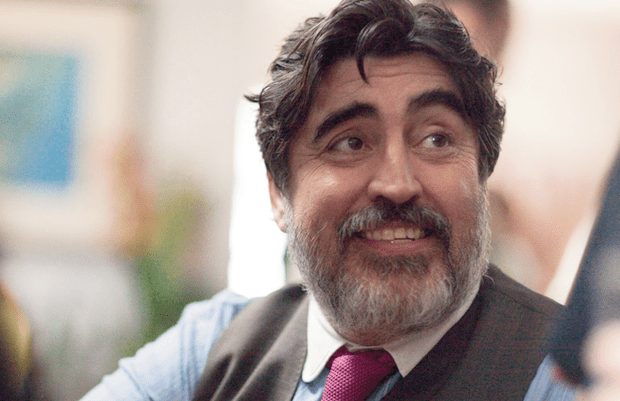
Alfred Molina Love is Strange

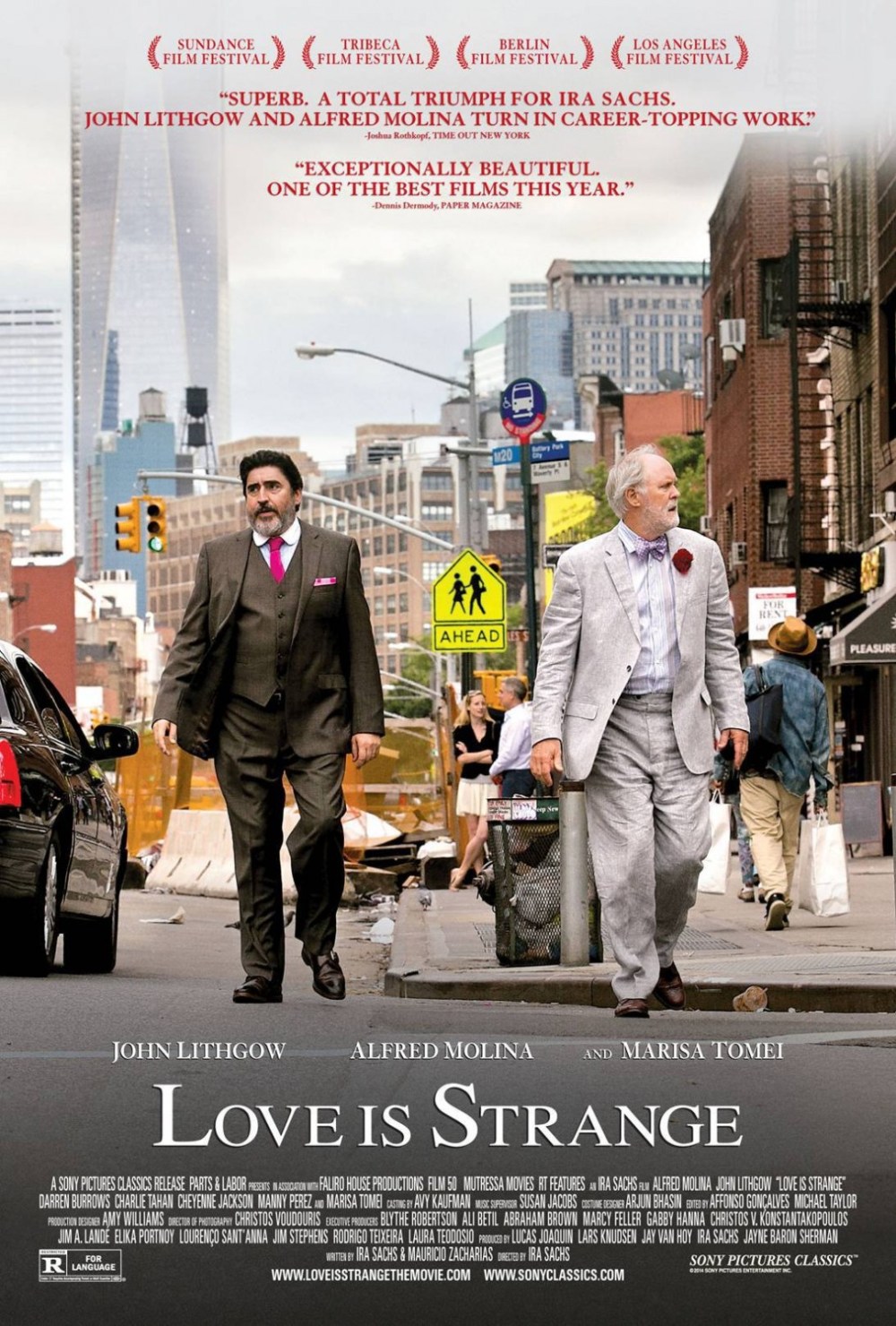
He has played a variety of characters in movies like “Raiders of the Lost Ark,” “Prick Up Your Ears,” “Boogie Nights,” “Spider-Man 2” and “Not Without My Daughter” to where it seems like he can play anybody (and he probably can). Now Alfred Molina takes on a more intimate role in Ira Sachs’ “Love Is Strange” where he plays George, a Catholic school music teacher who, as the movie starts, marries his lover of 39 years, Ben (played by John Lithgow). They have a joyous ceremony, but once word reaches the school of George’s wedding, they subsequently fire him. This leads to a great deal of upheaval in the newlyweds’ life as they are forced to sell their apartment and spend time apart for the first time in years as they search for more affordable housing. The situation weighs very heavily on George to where he feels like he’s failing Ben and everyone around him.

It was a great pleasure to speak with Molina while he was doing press for “Love Is Strange.” It turns out that he and Lithgow have been friends for many years, so the fact that they have great chemistry onscreen should be no surprise. In addition, I also asked Molina about how sees the world of independent filmmaking today, why Stanley Kubrick’s “Spartacus” inspired him to become an actor, and of what it was like to shoot this film without any rehearsals.

Love is Strange movie poster

Ben Kenber: Since you and John Lithgow have been friends for a long time, did the chemistry you two developed onscreen come easy to you?

Alfred Molina: Yes, it did. I think the advantage of being friends with John, having had a relationship as friends, helps us both in a way. For me, it just meant there was shorthand already in place. There was an ease and a rapport and a relaxation between us that was very easy and also very conducive and helpful for the roles we were playing. I think we would’ve still enjoyed the fact that we are friends if we had been playing adversaries in a movie or a good guy, bad guy. But the fact that we were playing a couple in a long-term relationship, I think our history as friends only helped and sort of aided that.

BK: What I really liked about this movie is that what the characters go through is quite ordinary, but it takes on a different feeling here. We don’t see enough movies these days about regular ordinary people, and the problems the characters go through here feel quite epic.

AM: Yeah. People lose their jobs, people lose their homes and it’s always bad news. But it happens very often for the most trivial of reasons, and I think the fact that Ira Sachs and (co-writer) Mauricio Zacharias created a couple who, by their very ordinariness, when this crisis happens to them, it takes on epic proportions. And like most crises that happen to ordinary people it becomes huge because normally in our own lives we don’t have the power or the means to overcome them quite so easily. It takes time and I think the fact that George and Ben are, for all intents and purposes, a very ordinary and a very anonymous couple adds to the strength of this story.

BK: I also wanted to congratulate you on receiving the Spotlight Award from the Creative Coalition at Sundance for your work in independent films. How do you think the world of independent films is faring today? Has it gotten easier to make them or harder?

AM: Well, I think it all depends on one’s perspective. Independent moviemaking is always a challenge. I think whenever you’re working on projects that don’t have immediate commercial appeal and you’re working outside of the studios, especially on low budget films where you’re really scrambling to raise $2 or $3 million to make a movie or however much it is, you’re working under all kinds of restrictions and challenges and the biggest one of course being time. You don’t have time. You very often don’t have time to absorb any mistakes or any accidents or anything that happens that kind of works against your schedule, so it’s always a challenge. But I think the fact that there are so many independent movies finding an eager audience means that there’s something being done right and well. There is an audience out there for good stories. There’s an audience out there for well-made, well-crafted, sincere movies about real people in real situations, and I think the reason why there’s an audience is because of the way cable TV, for instance, has welcomed movies. So many directors and writers and actors are now working on cable shows because that’s where some of the best movies are being made where young directors are getting the chance to make their films and tell their stories. The relationship between the product and the audience has changed a lot. There was a time when you were working on television that you were very much the guest in someone’s house. But now cable has changed all that because you’re paying for it. Also, our TVs have gotten bigger so it’s like watching a movie, and if you’ve got a 50-inch screen in your front room, the ratio is pretty typical of a small movie house. You can be watching movies at home and I think that changes the dynamic between the product and the audience, and there’s an audience out there for small films. The independent industry lurches from one crisis to another, and in those ups and downs there’s some great movies being made.

BK: I’ve talked with a lot of indie filmmakers recently and they usually get a shooting schedule that’s 30 days if they’re lucky, but those schedules keep getting shorter as time goes on.

AM: That’s right, yeah, because making movies gets more and more expensive. But there will always be an independent director, writer, actors who want to continue to work in that milieu because ultimately that’s where the most interesting stuff is happening. I can only speak for myself, but I think that’s where the best films are being made.

BK: Your character of George has a great line in this film where he says, “Life has its obstacles, but I’ve learned early on that they will always be lessened if faced with honesty.” I think it’s very interesting in that George teaches at a Catholic school and has for many years, but the school doesn’t always respect the individual that he is.

AM: Absolutely, and I think that’s a great shame for anyone who’s in the same position as George; losing your job or losing your home or being chastised by society in some way because of who you choose to love and who you choose to spend your life with. As a heterosexual that’s something I’ve taken completely for granted. I can take it for granted that I can love whoever the hell I want and no one can stop me, but my gay friends have only recently begun to enjoy that right. So I think that’s why lines like that in the movie are terribly important and very, very resonant not just for gay men and women but for everybody. I was talking today with John (Lithgow) about how… He’s only been to a few gay weddings in recent years, but we both found them incredibly moving. Weddings are moving anyway. Anybody who confidently stands up and says I want to spend the rest of my life with this other person is making a very dramatic and a very moving and emotional statement, but when it’s two gay people you know that it’s not just full of the romantic and emotional power of the moment. It’s full of years, sometimes decades, of struggle to reach that point, so it has even more significance.

BK: That’s a very good point. In recent years, we’ve had movies like this and “The Kids Are All Right” which are about gay couples, but the fact the couples are gay becomes irrelevant because they deal with the truth of what married life is like and the struggles which come with it.

AM: You ask anyone who’s active in any kind of human rights or equal rights campaign and I’m sure they would say that their ultimate goal is to no longer have to have conversations like this where one sexuality is no longer relevant. Whenever I come across any kind of vaguely homophobic sentiments I’ve gotten to ask people, “When did you first realize that you were straight?” It’s amazing the reaction that gets because they don’t know how to answer, and the truth is that no one should have to put up with being asked that.

BK: I once read that you said you have to believe in what you’re saying in the same way your character does. Whether it’s Mother Teresa or Adolf Hitler you’re playing, you have to portray them honestly and accurately regardless of whether they were good or bad. A lot of actors like to change material to where it suits them better, but I liked what you said because it goes the fact that the part is not about you, it’s about the character you’re playing.

AM: I’ve always regarded my job as being about serving the character regardless of who the character is. At a certain point taking on a job and then once you signed the contract and taken the money then saying “oh by the way I don’t think my character would say this” or “I don’t think my character would be like this,” that’s a conversation that one should have before you sign the contract and take the money. Once you have committed to something, you should be committing to the same things that everyone’s agreed on. Just as an act of creativity, you’ve got to give the same amount of dedication to whether you’re playing Adolf Hitler or Mother Teresa.

BK: I also read you were inspired to become an actor after watching the movie “Spartacus.” What was it specifically about the movie which inspired you so much?

AM: You know, I don’t know myself. It was so long ago and I must’ve been about nine years old when the film came out. I just remember coming out of that film just knowing that’s what I wanted to do. I don’t mean I wanted to be a gladiator, but I just wanted to be doing that; making films, being in films. I’m not quite sure what it was that prompted that, but it was a very powerful feeling.

BK: There were no rehearsals of scenes when it came to filming “Love is Strange.” How did this affect you as an actor?

AM: Well it was an interesting process really because normally you have rehearsals and work things out. I would hate for you to think that it was due to a lack of preparation; it wasn’t that. Ira Sachs, our director, came to the project impeccably prepared. What he didn’t do though was that he didn’t have us rehearse the scene and then play into the camera what we had rehearsed. He just wanted us to go into the take with the camera running and to just discover it in the moment. That was a very refreshing way to work, I loved it. I’m looking forward to doing it again. It’s very rare that directors give you that kind of freedom and also, given the fact that we were under the severe constraints in terms of time and money, it worked out well.

BK: “Love is Strange” seems to give the audience a very unique look at New York whereas other movies tend to portray it as a crime ridden place among others things. Would you say this movie gives a more accurate view of New York than other recent films have?

AM: Well, I think it’s as accurate a view of New York as any other movie. I don’t think the view of the city that the movie has is a negative one by any means. The city looks beautiful in this movie especially in that last sequence with that sunset and the two young characters on their skateboards. It’s a beautiful, beautiful ending to the film. Because it’s the most photogenic city in the world, any film that takes place in New York has to deal with New York as a character in the film. There’s nothing nondescript about New York. It’s a unique looking place. No other city in the world looks quite like it, so I think it’s something any filmmaker has to embrace.

BK: The interesting thing about the way Ira Sachs frames this movie is that it could’ve taken a huge political stance but he doesn’t which feels quite appropriate. He’s not taking issue with anybody, but he’s takes good observations of the Catholic doctrine and how it affects certain people.

AM: Yeah, absolutely. It’s not a political film; it’s not a diatribe on the state of gay culture or the Catholic Church. It’s a domestic story. It’s a love story set against some real events that happened to real people, and I think it makes some very wry observations about the city and about New York real estate and about the conditions a lot of people live under. It’s not a message movie. What drives the movie is a kind of deep humanity.

I want to thank Alfred Molina for taking the time to talk with me. “Love is Strange” is available to own and rent on DVD, Blu-ray, and Digital.


The Performances Make ‘3 Generations’ Worth a Look

3 Generations movie poster

I prefer to review movies for what they are as opposed to what I wanted them to be, but with “3 Generations,” this proves to be a bit of a challenge. For the most part, I think it is a sweet and thoughtful movie about transgender issues. But yes, it could have dug deeper into an issue many struggle with in life as this one touches on the family dynamics at play when one member decides to transition to another gender. For many, this is a volatile issue with many psychological scars being inflicted on those who do not deserve to be misunderstood, but director Gaby Dellal and her co-writer Nikole Beckwith at times take this story in a comical direction to where it borders on becoming a sitcom. Still, I can’t help but like this movie for what it is as deals with its subject matter in a sympathetic way and features three terrific performances which alone make it worth the price of admission.

Elle Fanning stars as Ramona who is now going by the name Ray because she sees herself as “a boy with tits.” Ray sees herself (excuse me, himself) as a boy trapped in a girl’s body, and he is determined to undergo gender reassignment to correct this. The main obstacle, however, is getting the consent of her parents to go through with it. His mother, Maggie (Naomi Watts), is willing to sign off on the procedure even though her anxiety and concerns over Ray’s decision make her smoke close to a full pack of cigarettes a day. His father, Craig (Tate Donovan), has been out of the picture for so long that Maggie would rather everyone believe he is dead. As for Ray’s grandmother, Dolly (Susan Sarandon), she wonders why he can’t simply be a lesbian like her.

At the center of “3 Generations” is Fanning who gives an excellent and heartwarming performance as Ray, and she fully invests in her character’s commitment to changing his identity into something far more acceptable to himself. Watching her is also a strong reminder of how teenagers are brilliant at seeing straight through their parents’ hypocrisy and bullshit to where they threaten to be more mature than those raising them. Whereas the other characters around him face an intense level of worry and anxiety, Ray knows exactly what he wants and shows zero doubt over what he feels he needs to do, and it represents the bravery I wish I had as a teenager.

You can never go wrong with Watts in anything she appears in, and she inhabits Maggie as your average mother; always wanting the best for her child while constantly worrying about the future. Maggie is almost convinced Ray will come to her one day with a beard on his face saying he made a mistake, but she is also the one closest to him willing to grant his wish to become a boy. Watts makes Maggie’s suffering all the more relatable as she reminds us all of how life is all about suffering, but through it all, we can find a happiness which a lot of times feels out of reach.

Sarandon is a wonderful presence here as Dolly who lives with her lover Frances (Linda Elmond), Maggie and Ray all under the same roof in a big apartment in New York’s West Village. This Oscar-winning actress is always great at playing the veteran mother who has seen it all and approaches her daughter’s problems like the pro she is. At the same time, her scenes tend to get overwhelmed by sitcom-like humor which threatens to take away from this movie more often than not. Still, Sarandon won me over as she always does, and the moments with Elmond remind us of the constant struggles couples go through. And by this, I mean any couple.

“3 Generations” works best when it focuses on Ray and his struggle become the boy he was always meant to be. We see him working out trying to build muscle, and he is determined to switch schools in order to get a fresh start in life once his transition is complete. At times, it focuses a little too much on the adults in this situation, and this is even though their concerns deserve our attention as well. While humor does come in handy in stories like these as they can become painfully too real, the filmmakers go a little overboard especially in a scene where Watts and Sarandon try different ways to treat Ray’s black eye.

Yes, this is a flawed movie that should have been better, but I still found myself liking “3 Generations” quite a bit as the performances are strong, and it has some surprises up its sleeve as it heads towards the finish line where we are reminded of how parents are never, ever perfect human beings. It all leads up to a final scene between a mother and her child which brought a real smile to my face as the constant struggles we face in life can lead to moments of true happiness.

Perhaps the transgender community deserves a strong movie than “3 Generations,” or maybe there are several out there we haven’t bothered to watch yet. All the same, I enjoyed this movie for what it was, and for me, that was enough. Still, it is a little hard to believe a family like this can afford such a big apartment in New York. You know the rents out there are ridiculously expensive, right?

* * * out of * * * *

“3 Generations” was originally given an R rating, but The Weinstein Company managed to succeed in getting the MPAA to give it a PG-13 which makes a lot more sense. This movie is certainly appropriate for teenagers, and this subject matter really shouldn’t be off limits to them. Then again, the MPAA has made many mistakes throughout the years, and it is unlikely this will be their last.

A Most Violent Year

a-most-violent-year-movie-poster

A Most Violent Year” takes us back to the New York City of 1981 which was statistically the most dangerous year in the city’s history. It was just before crazy hairdos, Madonna, “Miami Vice,” and MTV became a reality, and it was also a time where doing business in the Big Apple became fraught with unbearable tension. Many people fled to the safety of the suburbs as immigrants arrived who were searching for the American dream, and I don’t just mean Tony Montana. In some ways, the movie’s title is misleading as this is not one filled with wall-to-wall violence. Instead, it’s more about the violence hiding beneath the surface which is just waiting to burst out as one immigrant in particular looks to start a legitimate business, but he soon discovers that the road to success is paved with devious intentions.

Oscar Isaac stars as Abel Morales, and this movie starts with him putting a down payment on a piece of land in Brooklyn where he looks to expand his small heating-oil business to a significant degree. Abel has a strong business partner in his wife, the straight out of Brooklyn Anna (Jessica Chastain), whose father, a known gangster, he bought the business from. Abel makes it no secret that he intends to run this business in a legitimate fashion, but it doesn’t take long to see how incredibly difficult that will be for him.

Just as Abel’s plans look to be coming together, he finds himself dealing with competitors who are ever so eager to snag a bigger share of the market. On top of that, thieves keep attacking his drivers, stealing his fuel and selling it to illegitimate markets, and Assistant District Attorney Lawrence (David Oyelowo) is investigating Abel’s accounting practices which just might reveal that he’s not the law abiding citizen he constantly claims to be. Suffice to say, this man has a lot on his plate and he now has only three days to finalize his deal on the land he wants to purchase.

What’s fascinating about “A Most Violent Year” is how all the characters are stuck in a morally gray area throughout. The difference between right and wrong is impossible to sort out because the overriding concern for Abel and Anna is to close the deal before everything falls apart and their dreams are destroyed. The movie really puts you in Abel’s shoes to where you get a full sense of his desperation to keep his head above water. What he comes to discover is that he cannot depend on others in the business community to help him with his escalating troubles. In his attempt to expand his business, he finds that he’s living in a time where it’s every man for himself.

I loved watching Isaac as he imbues Abel with such a strong aura of confidence (some may say overconfidence) as he tries to gain the trust of those who are in a position to help him. To be honest, it’s that kind of confidence I would love to exude in my own life. As “A Most Violent Year” goes on, we see that confidence start to slip ever so slightly which leads to a number of intense moments Isaac has no problem delivering on. This is the same actor who so memorably broke through into our consciousness with his performance in the Coen brothers’ “Inside Llewyn Davis,” and with “A Most Violent Year” he shows just how far his range as an actor goes. Even when his character becomes desperate in his attempts to make his business expansion a reality, Isaac maintains a commanding presence throughout.

But as good as Isaac is, he almost gets the movie stolen out from under him by Jessica Chastain. Her performance as Anna is a scorcher as she makes clear who the better businessman is in the family, and Chastain molds her into a Lady Macbeth-like character who is far cleverer than anyone will ever give her credit for. Knowing she’s a native of Northern California, I thought casting her as someone born and raised in Brooklyn might be a mistake. Well shame on me for thinking that because Chastain once again proves why she is a talent to be reckoned with.

“A Most Violent Year” was written and directed J.C. Chandor who also gave us “Margin Call” and “All is Lost.” All of his films to date have dealt with people caught up in crisis situations that continue to spiral out of their control, and this one proves to be every bit as enthralling. Chandor gives us a highly specific view of 1981 that never feels clichéd or obvious to the decade, and he takes us on a very tense journey with someone who may dress far better than I ever will, but who also exhibits the same anxieties and concerns we all do. His attention to character is exemplary, and he leaves on the edge of our seats in more ways than one.

It would be so nice to do business without having to go against the things we were taught to believe in, but we eventually learn business in general is never fair (and I don’t just say this because I live in Los Angeles). I found myself never quibbling too much about the things Abel ends up doing in “A Most Violent Year” because I have a very nasty feeling I wouldn’t approach his situation all that differently. Back in a time where the established way of doing business ceased to exist, I imagine I would have made the same compromises Abel is forced to make here. Whether one can live with that is a whole other story, and “A Most Violent Year” tells it in a very compelling manner that holds your attention throughout.

* * * ½ out of * * * *

Sully

sully-movie-poster

Tom Hanks has been the go to guy for playing American heroes and for good reason; he never plays characters as people gunning to become heroes at any given opportunity. Whether it is Captain Miller in “Saving Private Ryan,” Jim Lovell in “Apollo 13,” Andrew Beckett in “Philadelphia,” Forrest Gump or even Jimmy Dugan in “A League of Their Own,” Hanks has long been the master of playing ordinary Americans who are just trying to get by in the rough and tumble real world the best way they know how. None of these characters set out for the adulation of others, but for a sense of purpose and justice in a world which at times seems devoid of it.

Now we can add Chesley Sullenberger to Hanks’ list of noble American characters with his excellent performance in “Sully,” Clint Eastwood’s dramatization of the airline pilot’s dramatic landing of US Airways Flight 1549 in the Hudson River. We all know this story of how the flight suffered dual engine failure shortly after takeoff due to a flock of Canadian geese flying straight at them, but Eastwood and Hanks dig deeper into what went on as Sullenberger and his First Officer Jeffery Skiles (Aaron Eckhart) are soon drilled by the National Transportation Safety Board as tests imply the left engine on the plane did not fail, meaning they still could have landed at LaGuardia Airport or one in New Jersey instead of on the water.

Sullenberger was quickly hailed a national hero for successfully landing the plane and saving all the lives aboard it, but this movie shows him more troubled by what he did than proud. He becomes plagued with nightmares and PTSD over how the flight could have ended in a catastrophic way. Also, with him and Skiles being thrown into instant stardom for their actions, Sullenberger ends up feeling isolated from everyone around him as people are eager to hug him or shake his hand in congratulating him for what he accomplished.

What I especially liked about “Sully” is how it shows the damaging effect sudden fame can have on an individual. While some might be super excited about appearing on “Late Night with David Letterman” or being interviewed by Katie Couric (who plays herself in this movie), Sullenberger finds him retreating from all the media attention as he never asked for it. While he constantly reaches out to his wife Lorraine (Laura Linney), they are separated by thousands of miles as she resides on the other side of the country. Even as they talk on the phone, the space between them feels quite profound and loneliness soon becomes his best friend.

Hanks’ performance as Sullenberger reminds us of why we look to him to play those people we see as American heroes; they are people not quick to jump into the spotlight and appear unsure as to what to do once they are thrust into it. Hanks never sets out to impersonate Sullenberger, but instead seeks to capture his state of mind following this unforgettable incident. The Oscar winning actor does excellent work in showing how Sullenberger is beset by tremendous self-doubt as he is forced to wonder if he made the right decision in light of all the computer generated evidence presented to him.

Hanks is also supported by a strong supporting cast of actors whom can never be expected to let him or Eastwood down at any second. Eckhart is the definition of strong support as his character of First Officer Jeff Skiles stands by Sullenberger every step of the way. There’s also Laura Linney who plays Sully’s wife, Lorraine, who does her best to support her husband over the phone any chance she gets. While in some ways Linney has a thankless role to play here, she justifies Lorraine’s presence in the film as the character is the support Sully needs through the most trying of times.

One of the key things Eastwood gets across here as a director is how the human element has to take precedence of the technological one as not everything can be solved or reasoned out completely by computers. This is especially interesting as Eastwood is best known for directing movies which deal heavily in human nature and its ever-growing complexity, but this time he has some nifty tools to work with. Eastwood got to shoot much of “Sully” with IMAX cameras, and seeing this movie on the nearest IMAX screen is a must.

The plane crash sequence is masterfully directed as we see pilots and flight attendants at their most professional during a moment of crisis. While we all know how things will turn out here, it is still a pulse pounding scene as we are with everyone on this plane from when they take off to when they land on the Hudson. The sound of the engines dying down and of silence in midair is unnerving, and it’s not every day you see a commercial jet land in the water.

Eastwood also makes us remember how the human element plays as big part in movies as do visual effects. He has not set out to give us a biopic on Sullenberger, and that’s even though there are moments sprinkled throughout which show his beginnings as a pilot and other significant experiences which molded him into the pilot he became. Instead, he is far more interested in the impact this one miraculous moment can have on a person’s life and of the obstacles it places in front of them.

Thank goodness Eastwood did not put the term “based on a true story” at the beginning of “Sully.” We all know this happened. Does Eastwood and screenwriter Todd Komarnicki play loose with the facts? Sure, but most movies like this do. The NTSB has objected to the way they have been portrayed here, and they do come across as overly villainous at times. But in terms of the story’s dramatic arc, it makes sense why they were portrayed as such here. To his credit, Sullenberger requested that the names of the real-life NTSB investigators, which were featured in the original draft, be changed as he felt it would be unfair to associate them with the changes in the story. Whatever the case, “Sully” is still a very compelling and gripping motion picture to sit through.

Some still question whether Chesley Sullenberger deserves to be called a hero as they believe he still could have landed at an airport. Others I know personally have accused him of using his pulpit to trash professional pilots for no good reason. But neither Eastwood or Hanks made this movie to deify Sullenberger as to do so would seriously cheapen the story for no good reason. They simply show us an ordinary man who was forced to make a quick decision in order to save the lives of many, and he was not out to call himself more heroic than others for his actions.

But also, “Sully” shows how an entire life can too often be boiled down, often unfairly so, to a single moment which renders all other accomplishments moot. In today’s media and technology saturated culture, people are never defined too broadly anymore but instead by specific actions more than anything else. The Buddha once said the merit of a whole life can be undone in a single moment. This could have been the fate Sullenberger would have been forced to accept, but he rose to the occasion and saved many lives in the process. As this movie shows, he was never out to be a hero. He was simply a human being doing his job.

And if nothing else, the movie shows Americans, especially those in New York, rising to the occasion and helping the passengers get to the shore safely. However which way you want to look at the story of US Airways Flight 1549, it did provide us with a happy ending we desperately wanted to have.

* * * ½ out of * * * *

Copyright Ben Kenber 2016.