Exclusive Interview with Robin Givens on ‘God’s Not Dead 2’
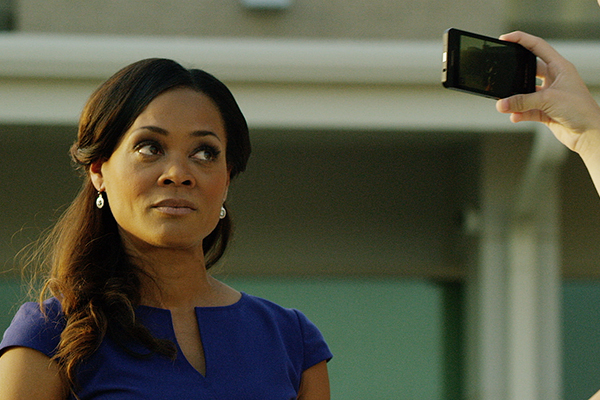
Gods Not Dead 2 Robin Givens

Robin Givens has graced us with her presence for years whether it be on television, onstage or on the silver screen. She caught Theodore Huxtable’s gaze on “The Cosby Show,” played the infinitely spoiled Diane Merriman on “Head of the Class” and gave Eddie Murphy a taste of his own medicine in “Boomerang.” Now she adds a faith based movie to her resume with “God’s Not Dead 2,” a sequel to surprise box office hit from 2014. In it she plays Principal Kinney, the chief administrator at Dr. Martin Luther King High School where a teacher, Grace Wesley (Melissa Joan Hart), becomes the center of controversy when she mentions God in a response to a student’s question. From there Principal Kinney is forced to decide whether to stand up for Grace or to stand by the school district officials who demand Grace to apologize for violating the “separation of church and state.”

I got to speak with Givens while she was in Los Angeles to do press for “God’s Not Dead,” and she could not have been nicer. Her family were huge fans of the original, and she jumped at the chance to appear in this sequel. She discussed what was most challenging about her role, how doing the movie affected her own faith and she shared her opinion about the fact that the movie not only opening on April Fool’s Day, but also National Atheist’s Day.
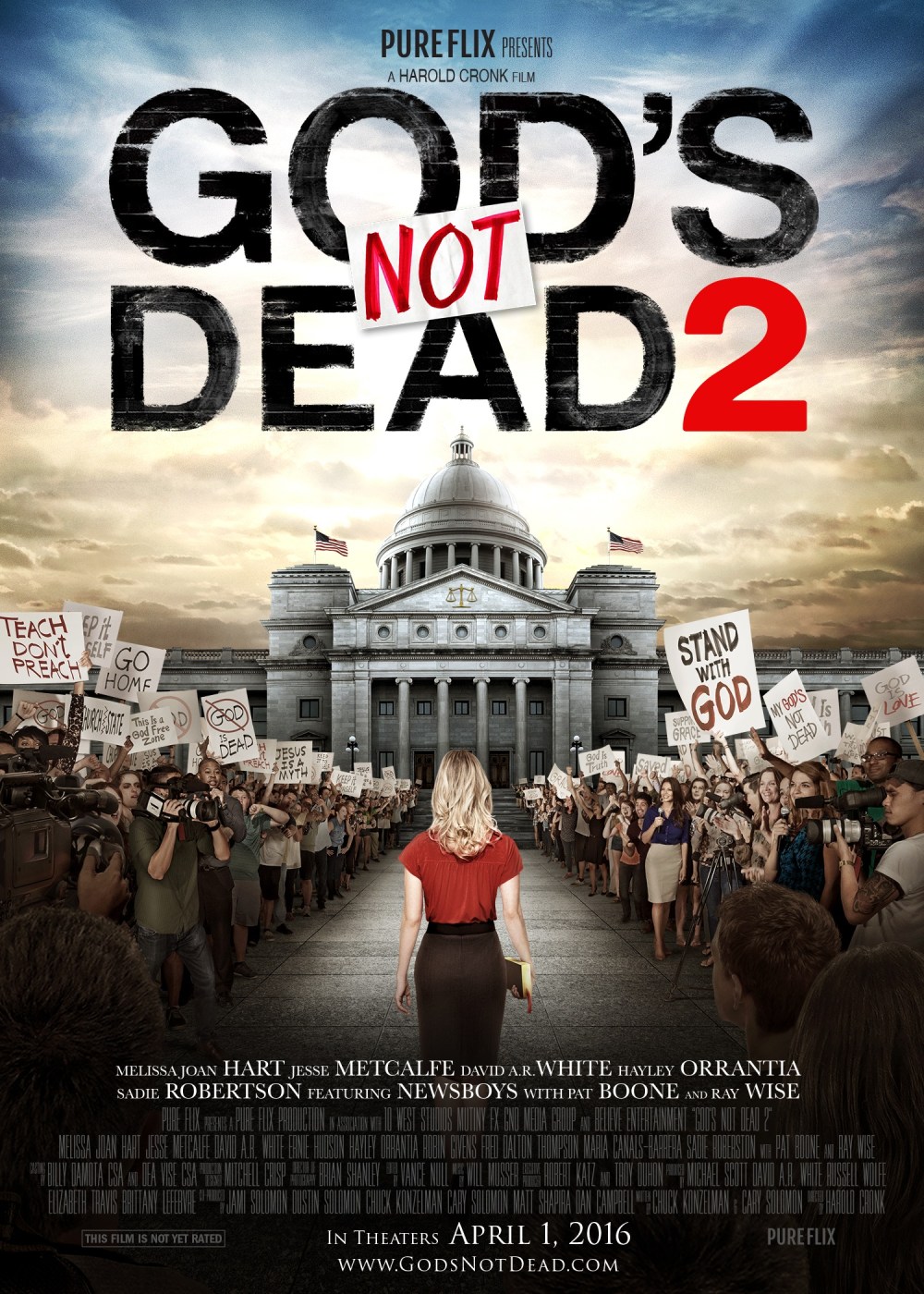
Gods Not Dead 2 movie poster

Ben Kenber: You play a high school principal in this movie. Did you do any research on principals at all?

Robin Givens:  No, I didn’t too much and I kept thinking of my own. I didn’t have a principal. I had a headmaster, Dr. Paul Firestone. I kept thinking of my children so I approached one from the students’ point of view and then one from a parents’ point of view. It’s interesting when you begin to approach the character and you are actually in the school. We were in a very, very large high school, and however big the kids were makes you assume a certain posture. You really do assume a posture even physically, so that was pretty interesting for me.

BK: This is a sequel which has the director and screenwriters returning to it, but most of the cast from the original did not return. Did that concern you at all?

RG: No, no, not at all. My family and I are very big fans of the first one. I guess I was not surprised they were doing a second one based on its success which I’m sure even surprised them. You kind of get the feeling that they were going to camp it up a little bit. When I met Harold Cronk, the director, I just loved him so much so I was not concerned about it at all.

BK: What would you say was the most challenging aspect for you in playing this character?

RG: Just for me, what I believe versus what she believes. You can play different characters that have nothing to do with you; that’s the most wonderful thing about acting. But with this one, I kind of wanted to insert myself for the first time. I wanted to be on Grace’s side in helping her along, not just sort of walking the line or concerned about following the rules. So that was the big part for me that was difficult.

BK: It can be tricky because you don’t want to judge your character.

RG: Exactly.

BK: “God’s Not Dead 2” is being released on April 1 which is not just April Fool’s Day, but also National Atheist’s Day. Do you have any thoughts on that?

RG: (Laughs) Somebody mentioned that to me and I didn’t know there was a National Atheist’s Day. I think it’s interesting that it’s also April Fool’s Day and that April Fools’ Day is different from National Atheist’s Day, but they also mentioned the irony that they didn’t know that was the day when they decided to release it, so maybe that was God intervening.

BK: Perhaps. You said your character was torn between her job and her heart, and that makes her complex as a result. What would you say were the challenges of playing those complexities?

RG: I think it was really difficult for me to get out of the way, that’s what I would say. I wanted to not judge her, but I wanted to not play the subtext of this really isn’t me and this is not what I believe. Just letting myself get out of the way of it was really hard for me. If I could go to Harold now, and now that I know him better, I would go, “Could you write a scene that actually explains the difficulties she is having?” It’s like one scene for me is missing, you know?

BK: Was there anything you brought to this movie that wasn’t in the screenplay?

RG: I try to portray the difficulty she was having, that’s the choice that I made. So I tried to bring the fact that she did believe, but she was still wanting to do her day job well. I tried to bring the conflict she was having, and I don’t know if that was originally planned but I wanted her to be conflicted.

BK: Has doing this movie strengthened your faith in your own life a lot?

RG: I feel like, for me, it was one big God wink. A friend of mine gave me a book called “God Wink” which talked about how there are no coincidences. It was such an important movie in our lives, my family personally, that to be asked to do the movie a year later was almost like a big God wink or validation of like “I’m with you.” So in some respects, not that it changed my mind about anything, it just sort of brought validation.

BK: When Melissa Joan Hart’s character of Grace Wesley talks about God in the classroom, she is really talking about him as a historical being instead of a divine one.

RG: I love that! I don’t know how you feel about that, but for me I think that was so smart. I loved how they put Christ in a historical context with Martin Luther King and Gandhi. I just love that.

BK: There seems to be a lot of confusion about when or if you should bring up God in the classroom, and the way Grace does it is not really offensive at all. But if she was forcing people and saying believe in God or you will get an F, that would be a different story.

RG: Absolutely, and also when she’s talking about it she’s just talking about it in very simple terms: tolerance, being a better person and being kind. I think because she’s talking about it in such simple terms then how can anybody complain about this, but that it still creates an uproar is interesting and shows where we are at.

BK: Christianity is still the dominant religion in America, but in “God’s Not Dead 2” it is presented more as a minority because of the way certain Christians are treated. How do you feel about that?

RG: This is America; we have freedom of religion. You can’t be persecuted for what you believe. People come from other countries to this country maybe not for only that reason, but that’s a big thing. You get to believe the way you believe here, and sometimes we get so caught up defending other people’s rights that even things that have been the fabric of our country have gotten pushed to the side. I do think Christianity is a big thing in America still, and I think that’s why these films are so successful because maybe people shouldn’t talk about, but they love that they get to see themselves or what they believe are the discussion. I think people really do love it.

BK: Was there anything in regards to religion you really wanted this movie to have?

RG: I think that probably lies a lot on Melissa’s shoulders in terms of what she wanted it to have. I was there to sort of help her in many respects to find her way and help her character find her way as opposed to my own beliefs.

BK: This movie has quite the cast with actors like Ray Wise, Ernie Hudson and Fred Dalton Thompson in what turned out to be his last role before he passed away. Did you have the opportunity to work with Fred?

RG: No I didn’t, but I always think of Fred Thompson when he was running for office which is like, it’s so cool. I’m a big fan not only of his acting but also politically. He was so thought-provoking in many respects, so I’m just happy to have been in the film with him.

BK: You mentioned that your mom goes to church every Sunday and that she saw “God’s Not Dead” and it made the family very happy. I imagine they were very happy to hear that you were involved in “God’s Not Dead 2.”

RG: Oh my God. My family doesn’t know where I’ve came from just in terms of the entertainment business. They are never too into it. But they loved it and they couldn’t believe it. It was something we did together as a family, so when she went to see it (“God’s Not Dead”) and then we all went to see it as a family there was a certain irony there. But it made them very happy.

BK: What would you say your mother got out of the first movie?

RG: It was a difficult time in our lives as a family, and I think that what everybody needs is just faith. I think certain things can always trigger what’s going on in our own lives, so just to have faith I think was a big thing.

I want to thank Robin Givens for taking the time to talk with me. “God’s Not Dead 2” is now available to rent or own on DVD and Blu-ray, and you can visit the movie’s website at www.godsnotdead.com.

Copyright Ben Kenber 2016.

Anthropoid

Anthropoid poster

Anthropoid” is kind of like a cousin to “Valkyrie,” another movie about soldiers looking to take out a high ranking Nazi. Like “Valkyrie,” it will not go down as one of the most memorable World War II movies ever made, but it is an entertaining film which engages us with noble characters, interesting questions about the price of war and a furious climax where resistance fighters make their last stand. More importantly, it deals with a true life event (yes, it is “based on a true story”) many probably don’t know about but should.

The movie starts in 1941 with two Czechoslovak exile soldiers, Jozef Gabčík (Cillian Murphy) and Jan Kubiš (Jamie Dornan), parachuting into their occupied homeland. Upon meeting the resistance fighters and their leader, “Uncle” Jan Zelenka-Hajský (Toby Jones), in Prague, they reveal that they are here to execute Operation Anthropoid which involves the assassination of Reinhard Heydrich, a high ranking Nazi who was one of the architects of the Holocaust and whom Adolf Hitler described as “the man with the iron heart.” Do they succeed in their mission? You’ll have to watch the movie to find out.

“Anthropoid” gets off to a bit of a slow start as Jozef and Jan try to settle in and not stand out among everyone else in town. They even recruit two lovely ladies, Marie Kovárníkovasá (Charlotte Le Bon) and Lenka Fafková (Anna Geislerová), to help them carry out their mission, and they are more than willing to help. Just watch as Lenka makes clear to the men how she can handle a gun.

There’s a subplot where Jan ends up getting engaged to Marie, and it just comes out of nowhere to where this section feels rather awkward. A number of characters are not developed fully enough to where “Anthropoid” threatens to feel like a missed opportunity. But what elevates the material are the performances which are very strong.

You can never go wrong with Cillian Murphy as he has yet to give a bad performance in any film he appears in. As Jozef, Murphy’s steely eyes stare into others with an intensity which wipes the smiles off their faces as he makes clear this is no ordinary mission. He also makes Jozef a most determined soldier who is infinitely determined to carry out this operation, but even he can only take so much before he falls apart emotionally.

Jamie Dornan shows more life here than he ever could have in the dreadful “Fifty Shades of Grey.” This is especially the case when his character suffers a brutal panic attack which has Jozef desperately trying to calm him down from. It’s way too easy to look like a fool when portraying such an emotional moment as the camera never lies, and it says a lot about Dornan that he was able to make this panic attack such a genuinely anxiety ridden moment.

There are also a number of other terrific performances to be found in “Anthropoid” like the one from Toby Jones. Then again, seeing him in a World War II movie these days instantly reminds us of his “Hail Hydra” character from the “Captain America” movies.

“Anthropoid” really kicks into high gear when an assassination attempt is taken and the Nazis come down hard on a particular group of people to where sympathy isn’t much of an option. It gets to where everyone wonders if killing one Nazi will have any effect on the war. With the world closing in on the main characters, the intensity keeps building and building all the way to the very end.

The last half of “Anthropoid” has the protagonists holing up in a church, and they are discovered by the Nazis to where a violent standoff ensues. Director Sean Ellis, who helmed the Oscar nominated short film “Cashback,” stages an impressive standoff which has us completely riveted. While the first half feels routine, the last half really does keep us on the edge of our seats. With “Valkyrie” we had a very good idea of things would turn out, but with “Anthropoid” we don’t. Bullets fly all over the place and emotions are shattered to where we can’t look away, and this is aided by a pounding music score composed by Guy Farley and Robin Foster.

Parts of “Anthropoid” may not stay in the conscious mind long after you have seen it, but the parts which do make it worth the price of admission. Many made tremendous sacrifices which can no longer be swept under the rug, and this movie gives those soldiers the respect they have deserved for the longest time. It also looks at the many costs of war and of how soldiers can only keep their cool for so long until they break under the pressure. It’s a bleak movie in many ways, but it also shows just how far the resistance fighters were determined to end Hitler’s genocidal reign.

* * * out of * * * *

Copyright Ben Kenber 2016.

Fury

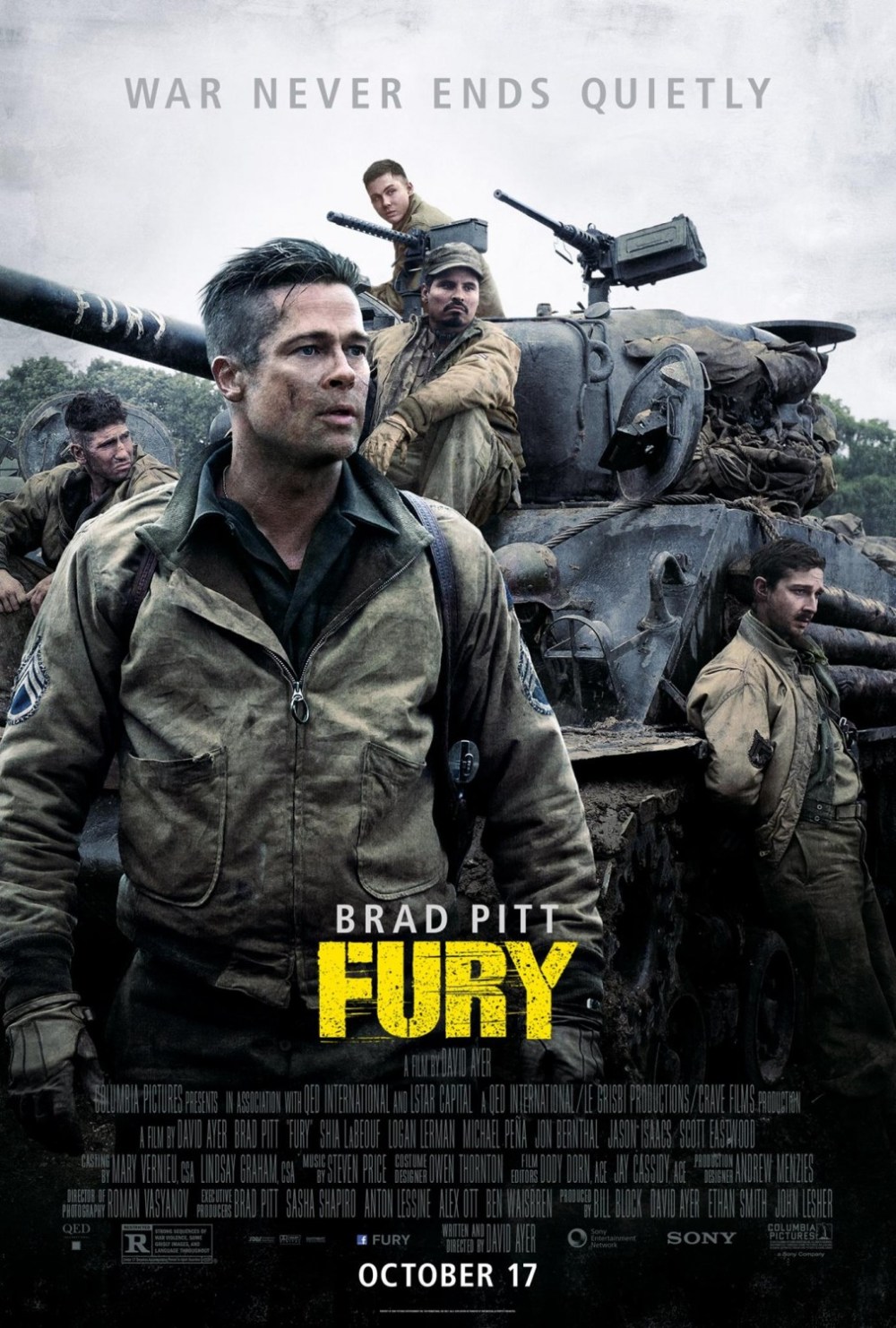
Fury movie poster

When it comes to David Ayer, you know he’s not going to slack off when it comes to researching his movie’s subject matter. His movies like the brilliant “End of Watch” and the underappreciated “Sabotage” had characters dealing with a vicious reality which they are forced to contend with on a regular basis, and Ayer makes us feel how frightening this reality is whether we want to be a part of it or not. That remains the case with “Fury,” a war film which takes us all the way back to the final days of World War II. It features all the usual characters we expect to see in a war film from the hardened Army sergeant to the innocent rookie, but you come out of it knowing what it feels like to be in a tank.

Brad Pitt stars as Don “Wardaddy” Collier, the commander of a five-man tank crew which is ordered to make a final push into Nazi Germany during World War II. Don is saddled with a battle ready crew which includes Boyd “Bible” Swan (Shia LaBeouf), Cpl. Trini “Gordo” Garcia (Michael Pena) and Grady “Coon-Ass” Travis (Jon Bernthal). After losing one of their members, they are suddenly saddled with the most baby-faced rookie imaginable in Army Private Norman Ellison (Logan Lerman). Don doesn’t like Norman’s presence one little bit as he feels it threatens everyone’s safety, but his superiors force him to take him on regardless of his objections. As a result, Don is forced to make Norman grow up a lot sooner than he wants, and it’s all in the name of survival.

For a time, I thought that Norman was going to be like Jeremy Davies’ character from “Saving Private Ryan” in that he would be the wimp who wouldn’t have the nerve to kill the enemy until the very end. Don, however, doesn’t have the patience to wait for Norman to grow a pair and forces him to kill a Nazi prisoner early on. Lerman gives a tremendous performance as Norman, and it’s fascinating to watch him go from being an anxiety ridden soldier to a hardened war veteran who doesn’t hesitate to take out as many Nazis as humanly possible.

There haven’t been many tank movies in the history of cinema. The only ones I can think of are Kevin Reynolds’ “The Beast” which came out in 1988 and the Israeli war film “Lebanon” which depicted warfare as witnessed from inside a tank. It’ll be interesting to see how they compare to Fury which puts you right into these characters’ mindsets as they lay waste to their target without the benefit of ear protection. You come to feel as battered and hardened as the crew does during their patrol through enemy territory where they find themselves outnumbered and outgunned.

It’s hard to watch “Fury” without thinking of Pitt’s performance as Aldo Raine in “Inglorious Basterds,” but he does succeed in making “Wardaddy” distinct from that character whether he is sporting facial hair or not. I always enjoy Pitt’s performances when he’s all dirtied up and free of his movie star looks, and this is one of them. You believe Pitt as a war veteran who has seen countless battles and has long since been worn down by them. But for Don, his main concern is keeping his crew alive, and Pitt is great at making you feel his character’s barely hidden vulnerability which is always on the verge of being exposed for all to see

Pena is an Ayer regular, having worked with him previously on “End of Watch,” and he has yet to disappoint in any role he takes on. As Trini, he gives us a character who was one of the many Latino military officers who fought for America back in the 1940’s. From start to finish, Pena makes Trini a war weary character who is not far from falling apart, and it makes for an intense performance.

I also give applause to Bernthal whose performance as Grady may not get all the recognition it deserves. On one hand Grady is a loathsome character we cannot stand to be around, but on the other he’s just a soldier trying to survive this war anyway he can. It’s rare to see an actor who makes you despise and sympathize with a character simultaneously, and Bernthal succeeds in pulling it off.

Another impressive performance in “Fury” comes from Shia LaBeouf as Boyd. Like Private Daniel Jackson in “Saving Private Ryan,” this guy is a trained killer but also quick to spout off passages from the Bible. Even after taking out a Nazi tank, he will still quote passages from that book with a great passion. LaBeouf got a lot of press for the method work he did on “Fury” which included pulling out a tooth, but seeing this movie is to be assured that all the work paid off for him.

Whether or not you consider “Fury” to be one of the best World War II movies ever made, it is one of the strongest to come out in the past few years. Ayer makes you feel the anxiety and exhaustion these soldiers go through while in battle, and you come out of this movie feeling as battered as they do. I very much liked what it had to offer, and I liked how Ayer didn’t try to sugarcoat reality for anyone in the slightest. That’s what makes his movies so unique and visceral.

* * * ½ out of * * * *

Copyright Ben Kenber 2014.

Krisha

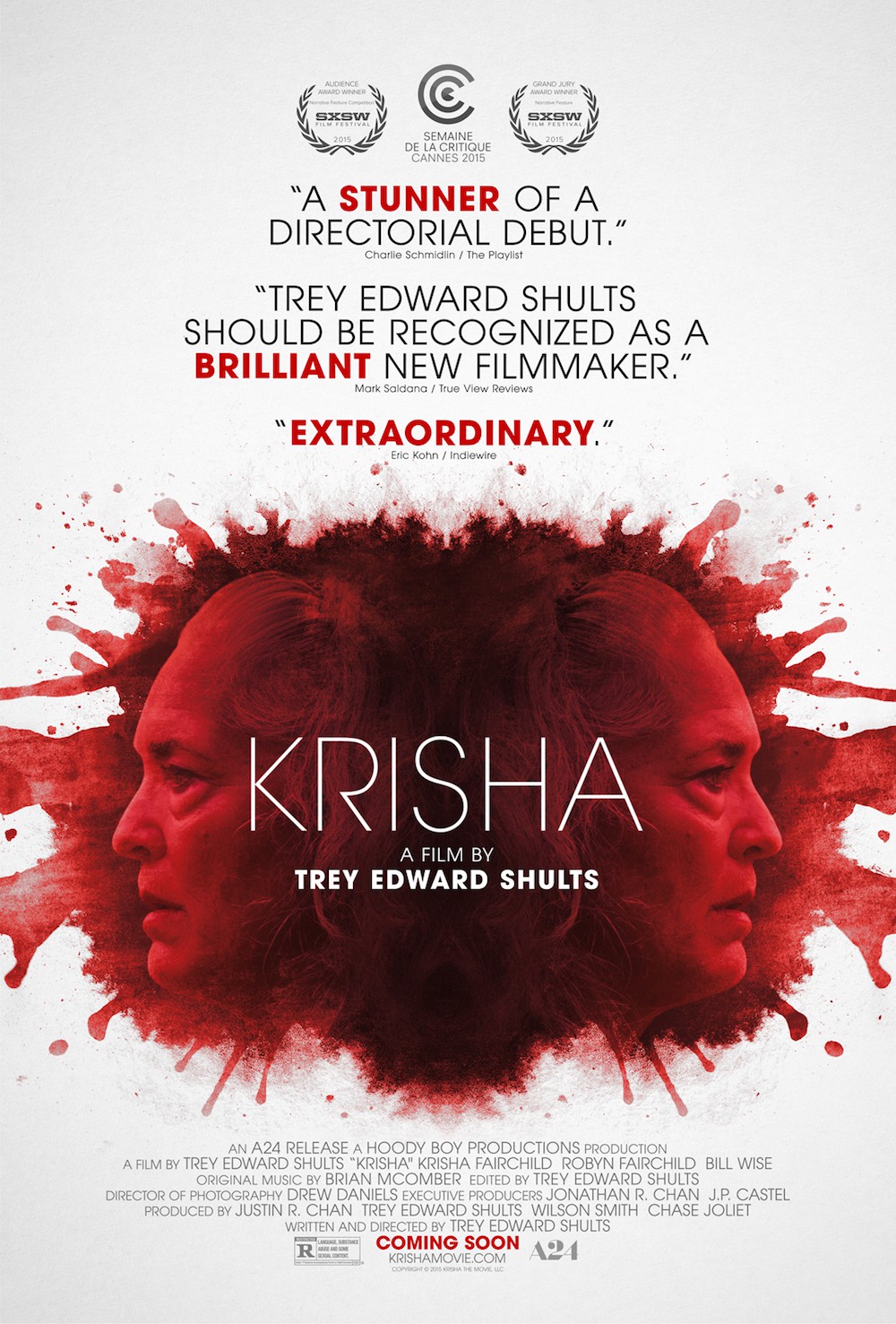
Krisha movie poster

Krisha” is one of those movies which can be best described as emotionally pulverizing. It starts off with a close up of the title character’s face as the sound builds to a feverish crescendo, and this is enough to tell everyone this movie is going to be a psychological endurance test for the audience watching it. It’s a powerful motion picture which is as emotionally cathartic as they come, and it’s one of the best movies of 2016.

Krisha Fairchild stars as the Krisha of the movie’s title, a deeply troubled woman returning home to the family she abandoned years ago for a life of drug addiction and self-destruction. It’s Thanksgiving and everyone welcomes her back with open arms, prepared to forgive her trespasses, but right from the start there is a palpable tension in the air as everything seems off. While her family is happy to see Krisha, they are still unsure of whether or not she can be trusted. As for Krisha herself, we find she is still struggling with her demons and may not make it through the night in one piece. She’s also cooking the Thanksgiving turkey, and the turkey is just a time bomb just waiting to go off.

It should be noted that the movie’s writer and director, Trey Edward Shults, based its story on a similar family situation he experienced when his cousin Nica came home for the holidays. She was in the throes of her own drug addiction which would end her life prematurely two months later. For Shults, making this movie was a way to confront this tragedy, and he cast many of his family members who had been through the same situation as well.

But the one family member who stands out here the most is Shults’ aunt, Krisha Fairchild.  Fairchild is not playing herself here even though she shares the same name of her character, but this makes her performance all the more extraordinary as she plumbs the depths of a drug addict struggling to prove to her son and family everything is okay with her now. As crazy as she gets in this movie, Fairchild still makes Krisha a sympathetic character who we cannot help but feel for. And when she puts on a red dress which looks a lot like the one Ellen Burstyn wore in “Requiem for a Dream,” she goes all out for an emotionally shattering climax.

The rest of the cast does terrific work, and this especially goes for Bill Wise who plays Doyle, the family member who proves to be its biggest personality and asshole. Doyle sees right through Krisha and tells her flat out, “You are an abandoner. You are heartbreak incarnate, lady.” And then there’s Robyn Fairchild who plays Krisha’s sister, the most stable of all the family members. When Robyn breaks down after a protracted argument with Krisha, it’s impossible not to feel her pain and emotional exhaustion as we all know strong family members who eventually reach their breaking point after holding it together for so long.

“Krisha” is Shults’ first feature film, and it is an incredible debut made all the more amazing by the fact he shot it all in just 8 days. He makes the film look like it was shot a lot longer and cost more than it did as he balances many different elements with a director’s masterful touch. Shults is also aided tremendously by the almost dreamlike cinematography by Drew Daniels and the abstract sounding music score by Brian McOmber which illustrates the increasing tension bubbling beneath the surface. This movie is an emotional powder keg just waiting to go off, and Shults never lets anyone off easy.

There have been countless movies made about drug addiction and the effect it has on the family members of the addict, and “Krisha” certainly feels like one of the most effective. It also rightly reminds the viewer that an addict will only seek help when they want to stop. We can’t make them stop. We can only hope for the best and pray for the addict to see the light and make a conscious decision to seek help. Watching this movie makes you want to see Krisha succeed and put her past behind her, but when things begin falling apart for her we can’t look away. Deep down we would like to, but her suffering is all too real to ignore.

“Krisha” shook me in a way very few movies do these days, and it marks the arrival of a gifted feature film director named Trey Edward Shults. Now that we have seen what he can do with the smallest of budgets, it will be interesting to see where he goes from here. As for Krisha Fairchild, she is an actress whose work has been under the radar for years, and here she gives one of the most unforgettable performances the world of movies has seen in some time. All good things to those who wait.

Copyright Ben Kenber 2016

* * * * out of * * * *


Exclusive Interview with Jeremy Sisto on ‘Break Point’

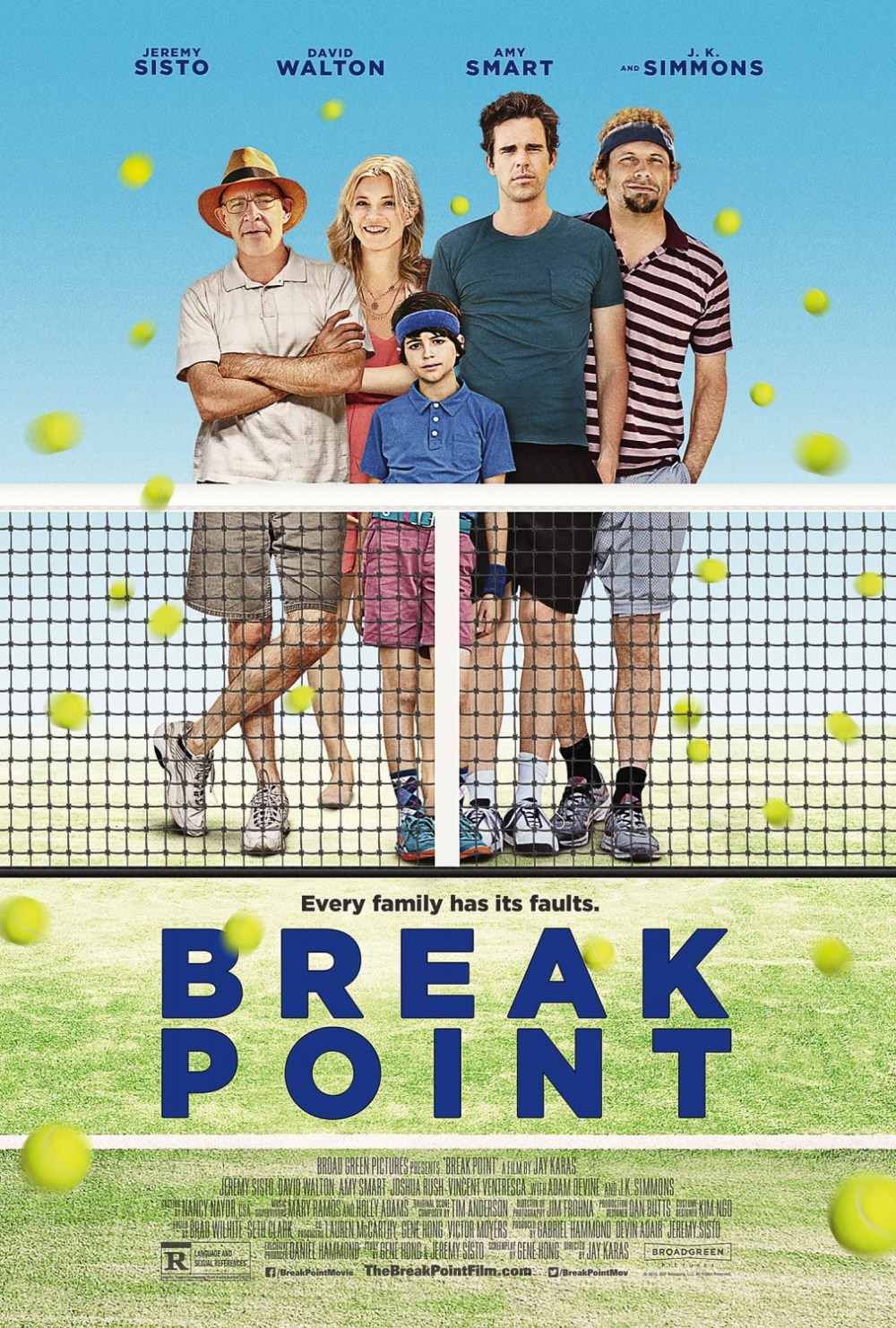
Actor Jeremy Sisto co-wrote, co-produced and stars in “Break Point” as Jimmy Price, an over the hill and unapologetically brash doubles tennis star who realizes his days in the sport are numbered. The sports comedy starts with his latest partner dropping out on him, and it doesn’t take long to see just how many bridges he has burned while on the pro circuit. His last and only chance to make it to a grand slam tournament is to partner up with his estranged brother Darren (David Walton) who used to play doubles tennis with him until they had a falling out. The question is, can they move past their deep-seated resentments of each other to work together effectively as a team? With the help of 11-year-old Barry (Joshua Rush), they just might have a chance.

Sisto has been acting since he was a kid, and he made his film debut in Lawrence Kasdan’s “Grand Canyon.” Since then we have seen him grow up before our eyes in movies like “Clueless,” “Thirteen,” and he even got to play Jesus in the television miniseries “Jesus.” Many know him best from his role as William Chenowith on the HBO series “Six Feet Under” where he played an artist suffering from bipolar disorder and occasional bouts of mania. In 2008 he joined the cast of NBC’s long-running “Law & Order” as Detective Cyrus Lupo, and he stayed with the show through its final three seasons during which he acted opposite Jesse L. Martin and Anthony Anderson.

Sisto sat down with me for an interview at the “Break Point” press day held in Los Angeles, California, and he talked about how he and the filmmakers wanted this sports movie to stand out from others like it. Sisto also discussed how he managed to make the difficult transition from child actor to adult actor, the challenges of getting “Break Point” made, and he shared his experience of working on “Grand Canyon” and of how special the making of it was for him.

Check out the interview above and enjoy! To find out how you can watch “Break Point,” please sure to visit the movie’s website for more information (www.thebreakpointfilm.com).

Break point movie poster

Copyright Ben Kenber 2015.

De Palma

De Palma poster

When it comes to interviews, filmmaker Brian De Palma always seems rather remote or looks like he would rather be somewhere else. In an interview about “Redacted,” he flat out told the interviewer he was simply there to sell his movie, and the interviewer replied perhaps De Palma was enjoying his company. To this De Palma replied, “I don’t think so.” So aside from him crushing the interviewer’s ego, his reply illustrates how uncomfortable he gets when talking about his movies. Perhaps this is why he has never done an audio commentary on any of them to date.

But this is the real joy of watching the documentary “De Palma” as he seems more than willing to spill the beans about his life and the inspirations behind his work. It also helps that it was directed by Noah Baumbach and Jake Paltrow, filmmakers De Palma has been friendly with for several years. Whether he’s talking about his greatest works like “Carrie” and “Scarface” or facing up to his critical and commercial disasters like “The Bonfire of the Vanities,” the revered filmmaker holds nothing back as he discusses each of them with a sense of humor which shows how he’s dealt with the movie industry and the way it has treated him over the years.

Now De Palma has often been accused of ripping off Alfred Hitchcock, and the documentary does start off with scenes from “Vertigo,” a movie now considered to be the greatest ever made. De Palma said he was so compelled by “Vertigo,” and we can see how this particular Hitchcock film influenced much of his work. However, the documentary gives us a deep overview of his films and how he drew inspiration from other filmmakers like Jean-Luc Goddard. He also explains the purpose of using split screen as it allows the audience to put everything together for themselves.

One of the real treats of “De Palma” is how it looks at the director’s upbringing, something we haven’t heard much about in the past. He never had much of a relationship with his dad, he says, who was an orthopedic surgeon which had him growing up around a lot of blood. This certainly explains why blood has played a big part in his movies whether it’s the prom scene in “Carrie” or the chainsaw scene in “Scarface.” We also get to see actor Robert De Niro, who appeared in De Palma’s movies “Greetings” and “Hi, Mom,” at the start of his career long before he played Al Capone in “The Untouchables.”

From there, we get to view his movies in chronological order and of how his work as a filmmaker evolved from one decade to the next. Now granted, this might make certain viewers a little impatient as they might want to skip ahead to his stories about “The Bonfire of the Vanities” or “The Untouchables,” but it’s sitting through the others before them that shows De Palma’s evolution as a filmmaker and how he managed to pull so much off despite intense pressure from studio executives and the MPAA.

Looking at these descriptions, “De Palma” may sound like just another talking head documentary. In a way it is, but to dismiss it as such would be unfair. De Palma is such an interesting guy on top of being a brilliant filmmaker, and I loved how he looks back at his triumphs and struggles with an almost gleeful sense of humor. He has been through a lot of heartbreak and struggles throughout his life, and it’s kind of a relief to see him laugh at some of the darker moments he was forced to endure.

What both Baumbach and Paltrow have pulled off is more than just the average documentary on a filmmaker you often see on cable. They present us with something which feels more like a friendly conversation with someone who is not always so open, and it’s a real pleasure to sit back and hear him talk. At the same time, “De Palma” also provides us with a look back at the great filmmaking period that was the 1970’s and how that period will never be repeated again. Then again, I have no issue with people proving me wrong there.

But perhaps most importantly, “De Palma” shows us a filmmaker who managed to stay true to his own voice despite working in a business which, as he puts it, makes you lose your own way. Even as he began working with bigger budgets and movie stars, he still tried to stay true to what he wanted to accomplish, and you come out of this documentary admiring him for that. And unlike other filmmakers who were stubbornly resistant to changes in technology, he was quick to utilize them whether it was high definition filmmaking in “Redacted” or the advent of music videos in “Body Double.”

There are many surprises and interesting bits of trivia to be found throughout “De Palma,” and I would rather you discover them for yourselves. What I can tell you is that this is one of the best movies, let alone documentaries, I have seen so far in 2016. It is infinitely interesting and a must for movie buffs and aspiring filmmakers. Whether he intended to or not, Brian De Palma has provided us with a master class in directing many would be smart to watch as the movie business is one which can tear an auteur’s vision apart out of fear or for the sake of profit. But here’s a man who, for better or worse, has done things his own way and continues to do so from one movie to the next.

And while it may be wishful thinking, here’s hoping it will give studio executives enough of a reason NOT to remake “Scarface.” We’ve already seen what others have done to “Carrie” for crying out loud.

Copyright Ben Kenber 2016.

* * * * out of * * * *

Exclusive Interview with Gusmano Cesaretti about ‘Take None Give None’

Take None Give None poster

2015 proved to be a great year for documentaries with unforgettable ones like “Amy,” “An Honest Liar” and “The Wolfpack.” Now there’s another terrific documentary to check out called “Take None Give None” which is about the Chosen Few, an outlaw motorcycle club based in South Central Los Angeles. Directed by Gusmano Cesaretti, a producer on many of Michael Mann’s films, it chronicles how this motorcycle club, the first multi-racial club of its kind, formed and is bound by the strength of their brotherhood. The documentary also follows the club’s struggles as they deal with the LAPD which raided their clubhouse and unfairly branded them as a criminal organization in the media.

“Take None Give None” had a special screening at the Museum of Contemporary Art in Los AngelesMuseum of Contemporary Art in Los Angeles, and it was sold out and filled with people of all kinds as well as members of the Chosen Few. When it ended, one of the club’s members stood up and said, “Tell people about this movie so that they can see who we really are.” This was met with a thunderous applause from everyone in attendance.

I got to speak with Cesaretti over the phone about “Take None Give None” which he filmed with co-director Kurt Mangum over a three-year period. Cesaretti described how he became acquainted with the Chosen Few, how he managed to get an interview with one of the LAPD cops who went undercover to infiltrate the club, and of how working with Michael Mann served to help him on this project.

Gusmano Cesaretti photo

Ben Kenber: Congratulations on the documentary. This proved to be a real eye opener about the Chosen Few. How did you first become acquainted with this motorcycle club?

Gusmano Cesaretti: Well I saw some of those guys riding motorcycles about 25 years ago on the Pasadena freeway and I pulled over next to them with my car and I said, “Hey! Pull over, I want to talk to you.” And they pulled over then I told them, “I like the way you look. Everything about it is great. I love the way you were riding the bike.” They weren’t just riders, they had pride for some reason. So I told them I would like to take some pictures, and they invited me to the clubhouse. I went over there and it was amazing to see all these great amounts of people and they were all nice. I walked over with the camera and everybody started looking at me and saying, “Hey what are you doing? Oh yeah take pictures of me! Take pictures of my bike!” It was really great. They were friendly, they were open to anything and to me it was fascinating. They were a great people and then I started going there every other week and kept taking photographs and so on in support. Then in 2011, because they were talking all the time about their rides and how important they were for them and being together in like a brotherhood, I said I would like to film one of your rides. So I organized a ride for them where we went through South Central and on the freeways and then through downtown, and then after the ride they started really talking to me and said that we should make a record of all this. That’s when I started doing the documentary, and we just finished (laughs).

BK: When you first started shooting the documentary, how did you envision it and how did it evolve from that point to where it is now?

GC: That’s a good question. When I first started the documentary I had no idea because when you make a documentary you really don’t know which way you’re going. I feel you’re doing it for a year or two (laughs) and then you would have all the information you ever need to create a storyline. We recorded about 48 hours (of footage), and when we finally decided to edit it was like a nightmare because you’ve got listen to all these conversations and all the recording we did. It took months but then you know what’s going on, and then we put a big roll of paper on the floor of my studio and started writing down the scenes. It was crazy. A lot of different cameras were used. It took me about a month to figure out the storyline, and then even during the process of editing there’s always changing this, putting back this and taking this off. It was a very challenging process but I learned so much.

BK: When it came to filming the documentary what formats did you utilize?

GC: We did a lot of stuff with the Super 8 riding the bikes here and there and we used other film. We used Cannon, we used Sony, etc. But the problem when we did the editing, because of all the different formats and all the different cameras, it became now we gotta do this, now we gotta change this and now we have to download everything into this. It was really crazy, but it worked because I shot it in a very cinema verite way. I didn’t want to commit to any style. And the way I interviewed those guys it was like, “Tell me the story.” I didn’t ask any questions because I wanted them to talk and tell me from their point of view. So that’s usually the way I prefer to do my photography; I connect with people and establish a relationship even if it’s for a moment, and I need to start a relationship if I want to get the image that I need.

BK: When the Chosen Few’s club gets raided, we get to see how the media really twisted their identity of proportion. Then they got evicted from their building which had a huge impact on the neighborhood because things were a lot safer when the club was around.

GC: Correct. What was interesting about the Chosen Few in South Central is that it’s really about the cultural of Los Angeles. It’s not necessarily about the bikers, it’s about their lives. The clubhouse was open for all the members and friends and people and visitors like me. There were probably a lot of undercover cops going there too, I’m sure, just to check and make sure that they were okay. But the thing is this; there were always old people there. It wasn’t just the club for the motorcycle people. It was older people who used to sit there all day long and have conversations with their friends, and when they lost the clubhouse a lot of these old people died because they didn’t have a place to go. They were like homeless people practically, and that was really sad to see that happen. All the members too, they felt homeless. They felt like the police were trying to take their identity away. They didn’t have the energy that they used to have any more, so it was extremely sad.

BK: Speaking of the police, you did manage to get an interview with one of the undercover cops who infiltrated the Chosen Few. Was that a hard interview to get?

GC: No actually. I have a friend that is a cop and I said to him, “Look I’m doing this documentary and I would like to interview the police that did the raid.” He said, “Yeah I’ll find him for you.” So he took a couple weeks and then he called me one night and said, “I got the guy.” I talked to him and he was very interested to do it, and we got together and did it. He was actually a nice cop. He was very open and he also told me the truth. What he was saying was real.

BK: It was nice to have the cop’s perspective of the raid as well as the Chosen Few’s as it manages to balance things out.

GC: Yes, yes. It’s a big club and not everybody’s an angel, you know what I mean? But that’s the same in any other big company like Google. There’s always somebody messing up things and in the club a lot of those guys come from the gangs, most of them. Being in the club was like upgrading their lifestyle and they got a job, but they are still connected with the streets and the gangs. There will always be somebody doing a little bit of this and little bit of that and a little drug dealing, but most of them are really wonderful, nice people. The theology of the Father, Lionel Ricks, is amazing. He started the club because he didn’t have a family and he wanted to have a family. That’s beautiful. What really fascinated me the most was that Lionel Ricks started the club in 1959 and then integrated it in 1960, and this was before the civil rights movement. He was able to bring blacks and whites and Mexicans and Chinese and a couple of people from Syria together without any political or powerful stuff like Malcolm X and Martin Luther King and all those people afterwards. He did it very simple and in a naïve and beautiful way with the motorcycle. That’s amazing to me. Think about it, he brought people together with a motorcycle! And that was when I said, “Okay we gotta do this,” and they were all excited about doing a documentary. We got all these great people to interview and the Father. The Father right now is very sick and in the hospital, and I hope he’s going to get better. But I did show him the documentary about a month ago when we finished editing. I went over to his house and showed it to him, and he had tears in his eyes and said, “It’s good. It’s real.” And I said, “Great! Thank you!” He really loved it.

BK: You worked a lot with Michael Mann on his movies. How did your experience working with him help you in making this documentary?

GC: Well I think making a film is completely different from making a documentary. The only help that I got on this film from that world is the camera guys that I worked with, and they are my friends and they came and helped me. With film you have a script and you got the actors and you have time to keep repeating and filming a scene a scene until it comes to where you want it. When you do a documentary the moment is right there. You are shooting this, you turn your head and you see something and you shoot that. You don’t know what’s going on and you’ve got to be aware of what is going on around you, so it’s really different. For me, this was a totally unique experience.

BK: Was there anything you wanted to include in this documentary that you were not able to?

GC: We got to a point where we said okay we gotta finish this project, so there were maybe a few more people that I wanted to interview that we never got to. There was a guy who did an amazing wheel stand. He did a wheelie and he was supposed to come over one night to do a performance for us while we were shooting in South Central, but the guy couldn’t make it and never showed up. And that was another thing that I wanted to include because it’s beautiful and its part of the art of being in control of the motorcycle. When somebody does something like that in a beautiful way it was nice to visually put it into the documentary, but at the same time it wasn’t that kind of a documentary. It was more about the feeling of the individuals and the members and everything that came from their hearts and communicating to the outside world and saying here we are. This is what we are. We are not what people think, we are what we are.

I want to thank Gusmano Cesaretti for taking the time to talk with me. Please feel free to check out the movie’s website at www.takenonegivenonethefilm.com, and be sure to check out its social media pages on Facebook and Twitter.

Copyright Ben Kenber 2015.

No, I Haven’t Seen It Until Now: ‘Rio Bravo’

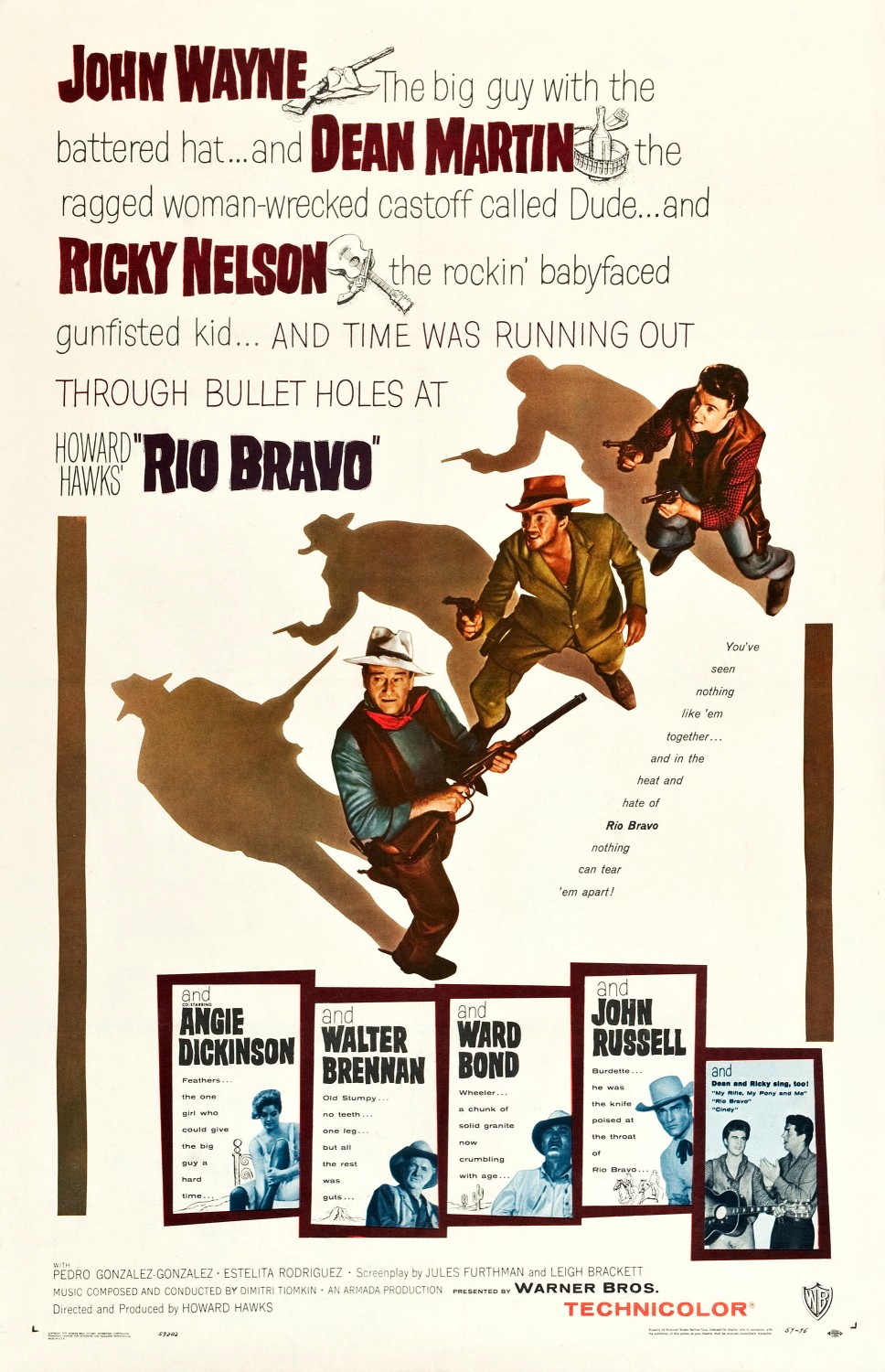
Rio Bravo movie poster

I have a confession to make; for years I had never seen a John Wayne western before. I was certainly aware of who he was and of how he is seen as an American hero to many. There is an airport in Orange County named after him, and it houses an enormous statue of him in his western gear that towers over all those taking a flight out of there. Wayne is as conservative as an actor can get in Hollywood, and there are certain people I know personally who don’t want to watch his movies because of that. But come one, we’re here to watch a movie, not debate politics! If I can sit through a Chuck Norris movie, there’s no reason why I can’t see a John Wayne movie.

Rio Bravo” was directed by Howard Hawks and it is widely regarded as one of the greatest westerns ever made. It was made by Hawks and Wayne as a “right wing response” to “High Noon” in which Gary Cooper played a sheriff who urged the townspeople to join him in defending the town they live in. In “Rio Bravo” Wayne plays Sheriff John T. Chance, a man who has no time at for amateurs and will deal only with professionals who know what they are doing. That should give you a good idea of how pissed off Wayne was at Cooper.

The plot revolves around Chance guarding a prisoner named Joe Burdette (Claude Akins) who murdered another man at a bar for no good reason. Working with Chance are an old cripple named Stumpy (Walter Brennan) who is always complaining about something, the town drunk Dude (Dean Martin) who spends the movie sobering up, and the new kid in town Colorado Ryan (Ricky Nelson) who is quick on the draw. They are waiting for the marshal to arrive to take Burdette away, but his brother Nathan (John Russell) will not rest until he is freed. Nothing beats brotherly love when you want to keep your sibling from being someone’s best friend, in a manner of speaking, behind bars.

“Rio Bravo” is essentially a big buildup to a final a violent confrontation between the Sheriff and Nathan where bullets fly in all directions. We see these characters going about their normal lives and the Sheriff starting up a subtle romance with the new woman in town, Feathers (Angie Dickinson). Most action movies today would demand filmmakers cut out the character developments and simply go right to the action. It is rare to see a movie like “Rio Bravo” made today as filmmaking gets more faster paced to where we keep losing the art of subtlety.

I see why Wayne was such an incredibly strong presence in movies. He handles the dialogue well, but his best moments come when he doesn’t say a word. There is a moment where he glares at someone he doesn’t recognize as friendly, and he keeps staring at him until the nameless man walks away. Like Chance, Wayne had a face with a lot of history written all over it, and few others could pull off a scene like that so effectively.

You could tell that, like his characters, Wayne had been through a lot in life, and this added immeasurably to the “don’t mess with me” attitude he exhibited onscreen. He was never some pretty boy actor trying to get the ladies, but a seemingly down to earth guy doing his part to serve and protect others.

The other actor who impressed me here was Dean Martin who played Dude, the once famous gunslinger who has spent way too much time drinking to ease a broken heart. Maybe it’s because I have this view of Martin being a member of the Rat Pack to where I thought it completely overshadowed him as an actor. I figured he was more of a star than an actor, but his performance here proved me wrong. Martin takes his character from what seems like an eternally drunk state to a world of sobriety he struggles to keep up with. It’s a battle he can never fully win, but he tries to stay on the right track and Martin makes you root for him throughout.

I can also see why Ricky Nelson was cast here. A big rock star at the time, he was probably cast to help this movie appeal more to women who were crazy about him at the time. Nelson may never have been a truly great actor, but he is very good here as the new kid out to help the Sheriff in times of trouble. Nelson plays it cool here, maybe too cool at times, but you believe he is quick on the trigger.

But the big scene stealer here is Walter Brennan who plays Stumpy. All Stumpy can do is guard the jail with his shotgun and from behind closed doors, and he can be seriously trigger happy if you don’t let him know you’re right outside those jail doors. Every other line he said throughout the movie had the audience I saw it with at New Beverly Cinema in hysterics. The moment where he does that quick impression of Chance had me laughing my ass off.

This is also the first movie I have ever seen directed by Howard Hawks. He shoots with an economy of style and doesn’t overburden “Rio Bravo” with too much style and overlong shots a lot of show-off directors tend to employ. His focus here is on the characters and how they interact with one another. This makes the action more exciting as we come to care about these characters to where we don’t want them to get hurt.

Director John Carpenter pointed out how one of Hawks’ strongest attributes as a filmmaker is his inclusion of strong women. The example of that in Rio Bravo is in the form of Angie Dickinson’s character of Feathers who proves to be the only person in the entire movie who can tame Chance. You never doubt Feathers to be an independent woman who can get by on her own terms. She’s tough, and yet Dickinson manages to bring some vulnerability to Feathers where she doesn’t always appear trustworthy.

The scenes Dickinson has with Wayne are strong, and she succeeds in bringing out his vulnerabilities to the point where he can’t help but appear a little goofy. This is all despite the fact that Wayne was 51 and Dickinson was 26 when they made this movie. It turns out Wayne was very nervous about the love scenes in regards to the age difference. Then again, I don’t think I would have noticed their age difference unless someone pointed it out to me.

“Rio Bravo” is filled with many memorable moments not easily forgotten. The moment where Dude takes out a shooter in a bar is a brilliant one you never see coming. The shootouts are still exciting as hell, especially when good use is made of a flower pot being hurled through a window.

One of my favorite moments comes when the men come in harmony together as they sing “My Rifle, My Pony and Me.” It reminded me of one of my favorite moments from Steven Spielberg’s “Jaws” when Roy Scheider, Richard Dreyfuss and Robert Shaw sang “Show Me the Way to Go Home.” I love those moments in films when people find a way to come together despite whatever differences keep them apart.

I found “Rio Bravo” to be an excellent western, and it’s no surprise to me that it is one of the most influential westerns ever made. It certainly holds a strong place in the cinematic history of westerns, and it endures to this very day. Of course, Hollywood in its infinite wisdom will probably end up remaking it after they have pillaged all the horror franchises they can. That’ll be the day!

* * * * out of * * * *

Copyright Ben Kenber 2016.


Exclusive Interview with Steve Hoover on ‘Almost Holy’

Almost Holy poster

Almost Holy” is one of the most harrowing documentaries I have seen in years as it follows the efforts of Gennadiy Mokhnenko, a Ukrainian pastor, who helps the drug addicted kids lost in the streets of Mariupol, Ukraine. After the Soviet Union fell, social services in Russia were severely cut to where many of its citizens fell into a life of drugs and prostitution, and Gennadiy pulls them off the street to give them the help they need at his Pilgrim Republic rehab facility. While many view him as a hero, others consider him a vigilante for his unorthodox tactics. The way he sees it, he doesn’t need anyone’s permission to do good deeds, and the documentary invites us to make up our own minds about him and what he does.

“Almost Holy” was directed by Steve Hoover whose previous works include the critically acclaimed documentaries “Blood Brother” and “Seven Days.” I got to speak with him while he was in Los Angeles.

Ben Kenber: How did you first become aware of Gennadiy?

Steve Hoover: I had friends who worked on an assignment in Ukraine doing a promotional piece for a nonprofit and they were traveling to a lot of different cities in Ukraine, and their last stop was Mariupol at Pilgrim with is Gennadiy’s rehab center. They were forewarned that this guy was fascinating and to not revert too much onto him, and the way they’ll describe is not intentionally, but he stole the show for them. They detoured from the project and followed him for several days and just filmed everything, and they described Gennadiy as having loads of stories and he just talked and captivated everybody in the room. These are friends of mine that I work with and they came back to Pittsburgh where I am based after that trip and they were like, “You have to see this guy. He’s open to being in a documentary and he has years of archival footage. Do you want to direct it?” And I was like, “Well, why don’t you direct it?” Anyway, they offered it to me to direct, so that’s how I got connected to Gennadiy and things went from there.

BK: What I found fascinating about “Almost Holy” is that you never judge Gennadiy. There are reasons to judge him especially when it comes to the way he gets kids into his rehab program. How were you able to keep a very objective perspective while making this documentary?

SH: I wanted people to have a similar experience that I had. I didn’t want them to have my exact experience. I found that I walked into this situation thinking that I knew and understood the story, but as documentaries go you never do. In general, I’m interested in people’s motives and complications of people’s motives, and I like to explore why people make the decisions they make because I find people so easily boil people’s motives down to very simple things. I just don’t think that’s ever the case. Why Gennadiy does what he does, there is not an easy answer for that. I think he’s somebody you could frame in a lot of different ways. People have made him look very heroic, and I wanted people to see what I saw and didn’t want to give people answers because I don’t ever feel confident in being like here’s how you should think or here’s how you should think about this person. You don’t have to do any work, just react emotionally to this.

BK: How would you say your vision of this documentary evolved from when you first started shooting it to when you were editing it?

SH: I think because my friends that had met Gennadiy had limited exposure to him, they thought the story was something. So what they communicated to me was what I thought the story was going to be; that Gennadiy only stays in Mariupol and pulls kids off the streets and rehabs them. That was what I thought I was walking into. I didn’t have personal correspondence with Gennadiy beforehand, so the first time I saw him was the first time I ever talked to him. Some people will do extensive talks with the subject to try to figure out if this is worth it, but I just fell into Ukraine which, for me, was fun because it was this exploration and it was very much an adventure. I quickly started to realize that the story was more interesting than that. How does he get more interesting than adopting homeless kids and rehabbing them? His story had evolved with the needs and problems of his city and what was around him, and I came to realize that adopting kids from the street through these night raids was a back story and that it was so much more ill-defined which made him more developed and interesting. When we started the conflict hadn’t happened. There wasn’t even like, “Oh now’s a good time to do something in Ukraine because there might be a conflict.” There was nothing. That all dramatically impacted the narrative of the film because the conflict forced its way into everybody’s lives in Ukraine, so for a while I wasn’t sure. In the middle of it there’s the Euromaidan revolution and I was like, I don’t think we need to get into that. But it just kept creeping closer and closer and then it just was on the doorstep and in his life and everybody’s lives. At first it was like okay, I can avoid this, but then I realized how much it actually helped the story because here you have a figure who cares deeply about Ukraine and has been an advocate, a social worker and a lot of makeshift things. Whether it’s the prettiest execution of those offices or makeshift offices doesn’t matter. He’s somebody who was trying to make a difference in his country, and all his years of work is now being threatened by a force he can’t control and that became more interesting to me. That’s how it changed.

BK: The documentary has a wonderful industrial score by Atticus Ross, Leopold Ross and Bobby Krlic. Did you work with them closely on the score, or did you let the composers just work on it on their own?

SH: We had sent Atticus some clips of Gennadiy as a work in progress and said this is what we’re doing, would you be interested in being a part of this? He took interest for his own reasons, and he’s somebody who is creatively beyond me in what I do. He has incredible sensibilities and is someone you could absolutely trust. I was interested in seeing how these visuals inspire him and what he made of them, and he would send me bits of his work and his inspiration. The way I like to work is exactly like that, where composers would give me music. My last film had six or seven different composers and I only knew one of them personally. The great thing is Atticus had been working on it at his own time and pace based out of inspiration. Atticus, Leopold and Bobby, they provided a really excellent pool of material that I felt was inspired by the industrial backdrop of Ukraine. It’s interesting because there are definitely darker, bleak and intense moments, but there also these moments of hope in the score. There are moments that bring such character to the film. It was great working with him (Atticus) creatively. It wasn’t just like, “Hey what are your thoughts on the score?” I looked to him a lot for feedback on picture and on the edit, and he was very involved and very helpful. I respect his creative sensibilities a lot.

BK: The documentary also has the wonderful privilege of being executive produced by Terrence Malick. How did Malick become involved?

SH: With our last film we had worked with Nicolas Gonda who is also an executive producer on this film, and he is Terrence Malick’s producer. So we worked with Nicolas and, similar to developing a relationship with Atticus for the film, we had some work in progress and basically pitched the idea of creating an executive producer relationship for Nicolas and Terrence Malick. They took interest, so that’s basically how it happened.

BK: How many years did you shoot this documentary over?

SH: The film covers years, and a lot of that is due to Gennadiy’s archival footage. He had footage from 2001 to roughly 2008, and then we came into the picture in 2012 and shot. I wrapped the edit at the beginning of 2015, but I was still pulling news sources and things like that. So we were with the story for three and a half years.

BK: Are there any movies for you that helped influence the style of this documentary?

SH: I think more in postproduction. There’s a movement within documentary and creative nonfiction to make documentary films seem more dramatic and entertaining or to just push the creative boundaries of documentaries, so I like those ideas and those sensibilities. My last film was kind of a happy accident. I was sort of rebelling against polished productions because I had been doing commercials and music videos for years, and I wanted to do something that didn’t matter what the picture looked like and was more heart. I didn’t know very much about documentaries towards the end of that. I was like, what if I could care about the image but still give it heart or authenticity? So that was sort of what drove a lot of my creative decisions with “Almost Holy.” I wanted it to be more classic filmmaking. I didn’t want to bring the slider or certain things. I just wanted it to feel like a classic film with just traditional lockdowns and nice shots as much as possible. We were on the go a lot so that didn’t always work out, but even with when people were talking I made sure we always had two cameras running to film it like a narrative film so that I could cut dialogue later so you could feel the conversation like you would in a film.

BK: That’s interesting because a lot of directors come from the world of music videos and commercials, and it seems to be that that world is more about style than anything else. So to escape from that has got to be very fulfilling in a sense when you come to a documentary like this. Would you say that is the case?

SH: Yeah. With the last film that was very much the case, and then with this one it was kind of like marrying the two worlds. I have these years of experience with the crew that I work with, and these guys are very talented. What if we applied all of that in a running gun setting? Everyone adapted very well to it. We were in places where we had a minute to set up our shots and we would be stuck on a lens and we just made do, but I feel like it was very rewarding. It was hard, it was really hard. It was basically five filmmakers and then six people with the translator trying to make this happen. We had an insane amount of gear, but everyone pulled their weight and I think they did a fantastic job.

I want to thank Steve Hoover for taking the time to talk with me. Please visit the “Almost Holy” website to find out how you can view it (www.almostholyfilm.com).

Copyright Ben Kenber 2016.

Green Zone

Green Zone poster

It was the teaming of Matt Damon and Paul Greengrass which made me almost completely forget that “Green Zone” was yet another movie about our war in Iraq. I find myself, as well as many, avoiding this subject at the movies because we spend our days thinking about what goes on over there and of how we want this war to be over with already. But this director and actor were major forces behind some of the most exciting action movies of the past decade with “The Bourne Supremacy” and “The Bourne Ultimatum.” Furthermore, the composer of the Bourne trilogy, John Powell, is on board as well to give “Green Zone” an even bigger kinetic kick.

“Green Zone” was apparently inspired by the 2006 non-fiction book “Imperial Life in the Emerald City” by journalist Rajiv Chandrasekaran, but the end credits state the movie is actually a work of fiction. Still, while it is not exactly “based on a true story,” “Green Zone” still feels like one of the more logical and honest commentaries about our mess of a war in the Middle East.

Matt Damon stars as Army Chief warrant officer Roy Miller, and we see him with his unit as they investigate a warehouse believed to contain WMD’s. Turns out it doesn’t, and we quickly find this is not the first time Miller and his men have come up empty. As a result, Miller begins to doubt the intelligence reports provided to the troops from a “reliable” but anonymous source. Endlessly curious about why he and every other military officer are not finding any weapons, Miller starts his own investigation into the matter. At the same time, forces around him continue to try and contain a potentially combustible situation that may soon become impossible to control.

It’s no wonder Greengrass chose to work again with Damon on this film. Ever since “The Bourne Identity,” we have had problem accepting Damon as an action hero. What makes Damon perfect for this role is that he never descends into some clichéd portrayal of a soldier who thinks he’s all badass. Roy Miller is a down to earth kind of guy who is sincere in his quest to keep America safe from enemies foreign and domestic. Never does he try to be a hero or show off how macho he is.

You have the soldiers coming up empty, you have the CIA knowing they will come up empty, and you have special intelligence officers who know far more than they are willing to let their own military know about. Also, you have investigative reporters writing articles on Saddam having started up weapons programs again even though they have never been told who their source is. They have to take the word of an official who ends up leading them around in circles.

Now there are a lot of people calling this movie “anti-American” and “anti-war,” but I couldn’t disagree more strongly with that assessment. Many recent war movies are more respectful to the troops than some bother to realize. As for those who assume that it is appallingly “anti-American” as it shows Roy Miller going rogue, I wonder if they had that problem when Jack Bauer does the same thing on “24.”

If anything, the recent war movies have been more anti-mercenary than anything else. Be it “Green Zone,” “The Hurt Locker” or even “Rambo,” mercenaries are shown stepping all over the soldiers if they have to, and we know they get paid twice of what the average soldier makes each year. The soldiers in these films have been presented as far more prepared and patriotic in their commitment to protecting our country. If that isn’t pro-troop, I don’t know what is.

There is also a complexity to both the American and Iraqi characters throughout the film. You figure everyone would be on the same team regardless of what side they are on, but you see all the infighting tearing each side apart as they delude themselves into believing they are winning. One pivotal character in “Green Zone” is Freddy (Khalid Abdalla), an Iraqi who Miller befriends and later becomes his translator. Hollywood has often been accused of presenting Middle Eastern characters as nothing more than terrorists, but Freddy is not like that. Freddy wants to help his country and risks his own life to try to help the Americans while not necessarily welcoming them. He becomes the symbol of those Iraqis that feel wronged by their leaders and of how infuriated they are about the endless damage left in their wake. From a distance, it becomes clear both sides are confused and completely unsure of what to believe.

In some ways “Green Zone” is a criticism of American military involvement in other countries, but director Greengrass doesn’t necessarily hit you over the head with that. Still, during the scene where Miller comes face to face with General Al-Rawi (Yigal Naor, who gives the role a strong menacing quality), he learns the truth of why American military forces are really in Iraq. Al-Rawi is one of the bad guys, but he is also a victim of being in the position he is in. In other words, Al-Rawi is going to take a fall because the United States government wants Saddam.

When Al-Rawi asks Roy Miller if he thinks American forces can seriously change anything in Iraq, I was reminded of a scene in Ridley Scott’s “Black Hawk Down” where a helicopter pilot is being held by Somalia warlords who question the military’s involvement in their country:

“Do you think if you get General Aidid, we will simply put down our weapons and adopt American democracy? That the killing will stop? We know this. Without victory, there will be no peace. There will always be killing, see? This is how things are in our world.”

Throughout his career, Greengrass has never been afraid of dealing with topics which are very touchy. With “Bloody Sunday,” he captured the horrible events of January 20, 1972 when British soldiers clashed with Northern Ireland protestors fighting for their freedom. Then there was “United 93” which dealt with the events of September 11th and of how the passengers on that fateful flight were the first to deal with a post-9/11 world. With “Green Zone,” he defies those who think movies should just be an escape and not a forum for national conversation. It’s an action movie designed to be as thrilling as it is enlightening. His aim is not to show how America divided itself from the rest of the world with this invasion, but of how it created sharp and highly sensitive divisions in America itself.

In addition to Damon, there are other actors who bring their considerable acting talents to “Green Zone.” Brendan Gleeson is perfectly cast as Martin Brown, the CIA Baghdad bureau chief who has seen it all. Still, he is trying to cut through the BS hindering his efforts to control the situation in Iraq. Amy Ryan is excellent as Wall Street Journal foreign correspondent Lawrie Dayne. Her character has written many articles regarding weapons programs being continued in Saddam’s regime, but we see her doubt the source given to her. Most reporters in movies these days are despicable, but Ryan makes this one empathetic as she comes to discover the truth which contradicts all she has reported. The always reliable Greg Kinnear is also well cast as Clark Poundstone, a member of Pentagon Special Intelligence who knows far more than he lets on. It’s no secret these characters are based on real people, but the names have been changed to protect the guilty.

“Green Zone” isn’t as viscerally exciting as the Jason Bourne movies, and it won’t go down as the definitive Iraq war movie (“The Hurt Locker” holds that distinctive honor), but it is still edge of your seat entertainment. But not to worry, Greengrass films the action in a way that doesn’t make it all that hard to tell what’s going on.

Another key scene that comes to mind is when Roy Miller goes out to investigate a lead, and Kinnear’s character ends up cutting him off. As he walks inside the CIA headquarters in Baghdad he tells Miller, “You shouldn’t have been playing on the wrong team.”

It makes me wonder, when was the last time all of us Americans were on the same team?

* * * ½ out of * * * *

Copyright Ben Kenber 2010.