John Krokidas and Austin Bunn Discuss ‘Kill Your Darlings’
WRITER’S NOTE: This interview took place back in 2013.

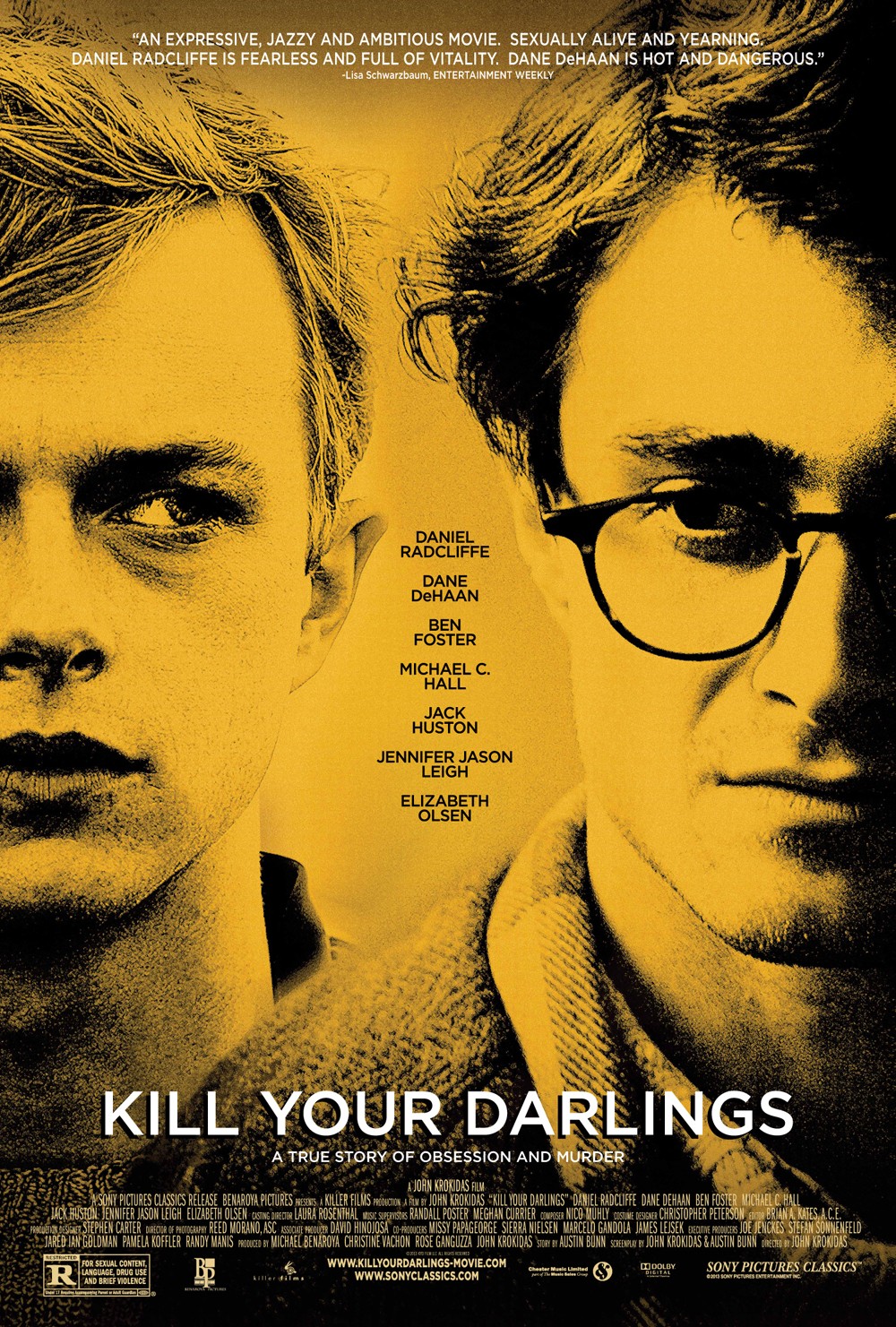
John Krokidas makes his feature film directorial debut with “Kill Your Darlings” which stars Daniel Radcliffe, Dane DeHaan and Michael C. Hall. The movie is about a murder that occurred in 1944 which brought three poets of the beat generation (Allen Ginsberg, Jack Kerouac and William Burroughs) together for the first time. Radcliffe portrays Ginsberg as a 17-year-old who is about to start college at Columbia University, and he ends up falling under the extroverted spell of fellow classmate Lucien Carr (DeHaan) who introduces him to the poets who would later bring a new vision to writers everywhere. It is when Carr murders his love David Kammerer (Hall) that their relationship starts to become unglued.

Krokidas co-wrote the script for “Kill Your Darlings” with his Yale University roommate Austin Bunn. A former magazine journalist, fiction writer and reporter, Bunn graduated from Yale and went on to get his master’s degree at the University of Iowa Writers’ Workshop. As for Krokidas, he later attended New York University’s Graduate Film Program where he made the short films “Shame No More” and “Slo-Mo.”

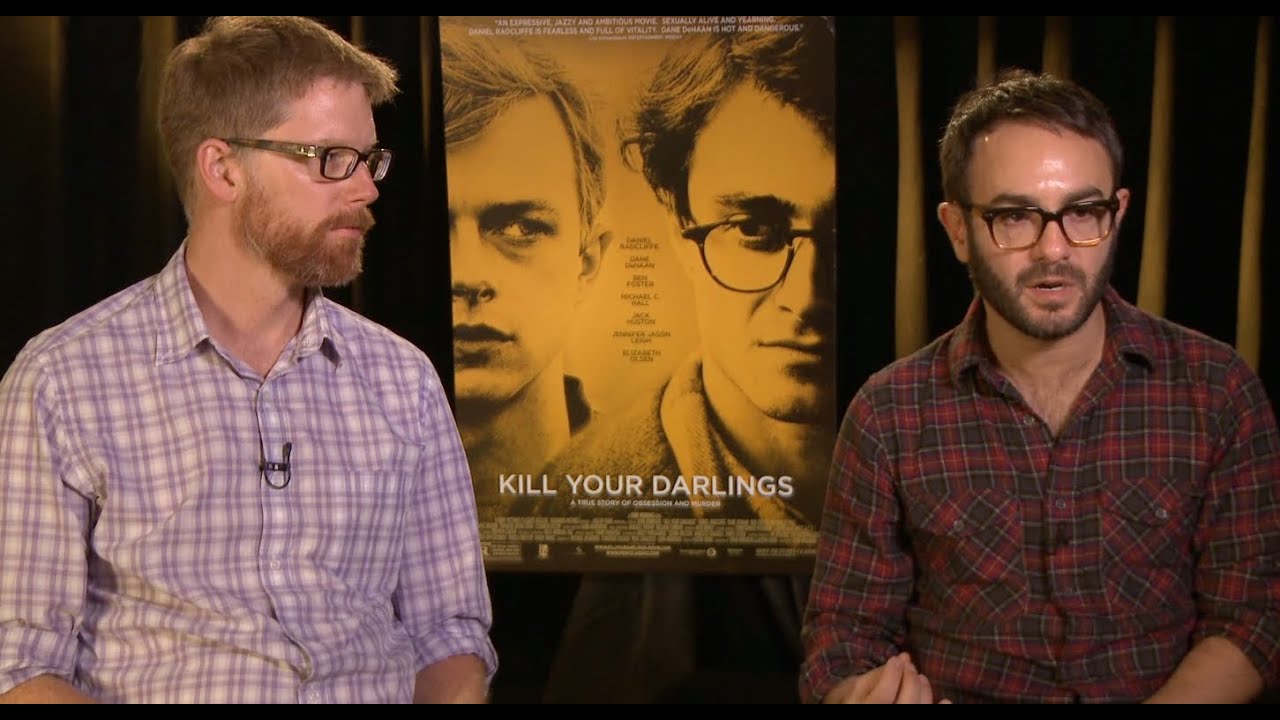
I got to hear how Krokidas and Bunn made the film under challenging circumstances when they appeared at the “Kill Your Darlings” press conference held at the Four Seasons Hotel in Los Angeles, California.
Question: What was the division of creative responsibility between you two like?

Austin Bunn: Probably like a lot of people in this room, I discovered the beats in college. I used to go to the campus bookstore and just track down the poetry collection, find Allen’s books and read them like they were some secret transmissions from the future version of myself. I was a closeted, young creative writer from New Jersey so Allen Ginsberg’s work meant the world to me. So, I had this really strong connection with Allen and of beat biographies and the history. I read a lot of the back catalog and I had come to John with the idea. So, in terms of the division of responsibility, I would write the first draft and then John would come in. The thing about John, as you will soon learn, he wanted to raise the emotional decibel level in every scene. John is one of the most riveting and vital and least hagiographic version of this story. We didn’t want to take the beats’ greatness as a given, so John sort of demanded that we write a really emotional roller coaster. Then we just went back and forth. John talks about it as the Postal Service, like the band version of producing a script. We were living in different cities at the time; I was at the University of Iowa Writers’ Workshop as a graduate student and John was in New York finishing film school.

John Krokidas: Austin wanted to do this as a play first. He was a playwright and a short story writer of some renown, and we were college roommates and we shared ideas with each other as college roommates and good friends do. But I, of course, started seeing the movie version in the back of my head and I had just gotten out of NYU film school and started convincing him that the play would be really flat and undramatic, but as a movie…

Austin Bunn: The Jedi mind trick!

John Krokidas: This would be amazing. But I would say I’m the structure guy I think, coming from NYU’s film program. I’m very traditionalist in terms of Sidney Lumet’s “find your spine,” and Austin is really wonderful with character and dialogue. If anything, he’s on a religious crusade against expository dialogue, and I would write these three paragraph monologues for each character expressing their emotion like that scene where Jennifer Jason Leigh finally turns to Allen to give him advice. I had a two-page monologue version and Austin crossed it all out (Austin laughs) and wrote the one line that’s in the movie, “The most important thing your father ever did was fail me,” which said everything.

Question: The movie is also very visual too because of the beats’ energy and such. How did you go about creating the look with cinematographer Reed Morano?

John Krokidas: I’m so proud of what we brought to this film. The movie is set in 1944 and it’s a murder story. Even in the writing process, I looked up and saw that “Double Indemnity” won Best Picture that year, and it was the year of “Laura” and “Gilda” and all these great American Film noirs. So, I said, “Why don’t we incorporate this even in just the fabric of the movie and start with the jail scene in a place of heightened tension flashback to more innocent times, and then build again to see whether or not these characters can escape or not escape their fate?” So, I started looking at noir style at first, but I thought an academic recreation of Film noir, who wants to see that? Going back to spine and theme, I thought what this piece was really about was young people finding their voice. So, what about going from conformity, the row houses of New Jersey and the pillars of Columbia, to nonconformity? And of course, where film noir went in the hands of the French was the New Wave. So I thought, “Okay well let’s start off with these controlled, composed, expressionistic-lit shots, and then as the boys go down the rabbit hole together, let’s take the camera off the tripod. Let’s get some jazzier free-form style.” So, I made this book of the 1940s. I had learned that Ang Lee, for “The Ice Storm,” did a 50 page book on the 1970s with colors, fonts and important historical events, you name it. So, I did that with the 1940s and then gave it to Reed. The great thing that I have learned on this is you can do all the academic treatises you want, but then you hire great people. She saw the goal post of what I wanted and then she showed me Jean-Pierre Melville’s films. She showed me films that meant a lot to her and then let kind of what I wanted filter through her own imagination. What I am amazed by specifically in her work is we did this movie in 24 days. Each scene was done in two hours or less, and she has the instincts to be like a documentary camera person and is able to light like that at the same time. We wanted to make sure this film felt relevant and contemporary as opposed to just being a traditional biopic.

Austin Bunn: (We didn’t want it to be) the greatest hits version of their lives.

John Krokidas: It was looking at Ryan McGinley photographs and contemporary, counterculture, young images of today and then finding what connected them to the 1940s. What was resonant in counterculture then and today at the same time.

Question: What was the direction that you were giving your actors? We were told that sometimes you would pull them aside for a more dramatic scene, but was there a consciousness you went into to direct the film and the actors? Were they any kind of specific kind of notes you gave them?

John Krokidas: Here’s the embarrassing story; Austin and I actually met freshman year because we were both acting in a production at Yale of “The Lion in Winter.”

Austin Bunn: Yes.

John Krokidas: Neither of us were the greatest actors in the world which is, I think, why we went into writing and directing. But I trained as an actor as an undergraduate and what you learn is that each actor has their own method and way. It’s whatever it takes for them to get the emotions to the surface. So, when I met with each actor that I cast, I would just simply ask them, “Have you trained? How do you like to work and what don’t you like?” Michael C. Hall gave me one of the greatest lessons in directing in which he said, “If what I am doing is not making you happy, don’t tell me that because that will make me self-conscious and it will make me think about what I’m doing. Just tell me to add whatever you want to what I’m doing.” That’s just a great lesson for life. Dan and I, when we were working together, we spent time before production (he was so generous and hard working on this) and he wanted to approach this like it was his first film which was very poignant to me. I said, “Would you like to try learning a new method and approach acting in a different style?” He said, “Absolutely!” So, with Dan, he’s so bright and in his head, and for the intellectuals Meisner works really well in focusing your action on what you are trying to do in the scene. Dane had trained extensively, and what he does is create a Bible for the character and does tons of research before production. Then he burns it and starts really becoming the character on set. Ben Foster (who plays William Burroughs) has something I’ve never seen another actor do which is, once we’ve basically got the scene up on its feet, he goes and he does the blocking of the scene by himself in the location several times. He calls it “the dance” because once he’s memorized the dance and knows the physicality (“I need to pick up the fork here, I need to put it down there”), he doesn’t have to think about it anymore and that’s completely freeing to him. So it’s like cooking this huge seven course meal where you have to get everything done at exactly the right time, but every plate needs a little bit of love in a different way. To me the greatest thing was being able to get this dream cast and then just to work with them to find how they like to work and what got the best out of them.

Austin Bunn: John had a really intuitive idea which was to keep the actors from reading past this point in the biographies, so none of the actors came in burdened by the mythology of who these guys would become. They were just 19-year-old kids. So, I think that was really smart and it released the actors from having to play the later decisions in their lives and the kinds of writers they would become. They just got to be young people, and that was a great relief I think for them.

John Krokidas: Yeah, and for us too as writers. I had a talk with Jack Huston once when he and I shared the same room and I’m saying, “Oh my god, I’m directing you as Jack Kerouac.” But we were like, “No. You are Jack who is a college student on a football scholarship who hates the other jocks, who just wrote a book which he thinks might be completely trite and he just wants to get out of college and have some real-life experience and join the war so he could begin to have real material to write his next book. That’s who you are.” That just liberated all of us.

Question: When writing the script, how much are you tied to the truth and how much are you allowed to take creative license?

John Krokidas: We did so much research for this. We felt we had to, and I think part of it’s our academic background because there’s so much in the biographies. There are so many biographies of them out there, but then also we would find different accounts online for example from David Kammerer’s friends. They said that that relationship between him and Lucien was never portrayed accurately and that Lucien actually kept coming back to David and David was asking him to end the relationship. And then we may have broken into Jack Kerouac’s college apartment together. We did the trick of pressing all the buzzers and then somebody let us in. But what’s interesting is Columbia students were living there and they had no idea that they were in Jack Kerouac’s apartment. So, we physically went to all of the locations in which this movie took place, and that just helped inform our writing process as well; getting to be able to visualize the actual spaces. Add to that, we went to Stanford University to the Allen Ginsberg archives. It wasn’t about the lack of material out there. If anything, it was about making sure that we really just focused on who they were up until the point which the movie takes place.

Austin Bunn: Just to add to that, the people that I know that have seen the film have been really surprised at how much is actually totally accurate. The day after the murder, Allen Ginsberg went to the West End Bar, “You Always Hurt the One You Love” was playing on the jukebox and he wrote the poem that ends the film. It ends with “I am a poet;” that is a line from August 20, 1944 so we worked really hard to weave it in. But like John was saying before, we didn’t want to do the dutiful, stuffy, every box checked kind of biopic that has been around for a while. We wanted to do something that felt more in line with the spirit of the beats that was more specific and honest and transgressive, and I hope we got there.

Question: Did you two have a specific goal of what you wanted to portray and what you wanted the audience to leave with either of the time or of the characters themselves?

John Krokidas: What I want the audience to leave with is that feeling of when we were 18 and 19 years old just like these guys were in the movie; when everything seemed possible and you knew that you had something important to say about with your life. That you wanted to do something different and unique and not just what your parents taught you, not just what school taught you, but you wanted to really leave your mark on the world. The fact that after the movie these guys actually did it and created the greatest counterculture movement of the twentieth century is amazing. I have had plenty of people come up to me after seeing the movie and said, “This movie made me want to be a better writer” or “this movie made me want to go back and start playing music again.” That to me means everything. That’s ultimately, deep in my heart, why I wanted to make this movie.

Austin Bunn: The pivot point was this murder. I loved Allen Ginsberg for his openness and his honesty, and to think that at one point in his life he was called upon to defend his best friend in an honor slaying of a known homosexual, the very thing that Ginsberg went on in his life to defy and radically create change about the idea of being in the closet and the shame around that issue, that contradiction was really exciting to us dramatically.

John Krokidas: You know this movie took, from the time that we started talking about this until the time that we are getting the chance to be with you all today, over 10 years to make. When I really think about it, the thing that kept me going and kept me wanting to tell this story is that there needs to be something that pisses me off at night. The fact that in 1944 you could literally get away with murder by portraying your victim as a homosexual, that pissed me off to no end. This isn’t a political movie and it’s one scene and it’s obviously what informed how Lucien Carr got away with murder, but for me that was the thing that kept me up all night that said, “No, I have to tell the story.”

Question: The movie has different kinds of music playing throughout it like jazz and contemporary music. Did you envision using different musical styles when it came to making this movie?

John Krokidas: I originally wanted a bebop jazz score similar to Miles Davis’ score for Louis Malle’s “Elevator to the Gallows” because the transition from swing to bebop at this time was exactly what these guys wanted to do with words; to go from rhythms to exploding them into something beautiful. My music supervisor, Randal Poster, said to me, “John put down your academic treatise, put down your paper. Go make your movie. Your child’s going to start becoming the person that he or she wants to be.” So I went and I made my movie, and then I put jazz music on the film and it didn’t work at all. And then I went and did only period accurate music and it felt like Woody Allen’s “Radio Days” which is a great movie but it’s not the young rebellious movie about being 19 and wanting to change the world that we wanted to make. So, I actually went back to the playlists that Austin and I used a while writing this movie and I used Sigur Rós and stuff that was timeless but contemporary, and it brought the movie to life. Then I realized that the composer Nico Muhly had arranged all of those albums and worked with Grizzly Bear and Björk and other people that we were using as temp track. So, we got the movie to Nico and just thankfully he loved it. Now that I knew that I had contemporary music in a period film, then we get to that heist sequence. I had heist period music on it, it was so corny. The sequence didn’t work, it didn’t have any stakes to it, and I can academically tell you when the beats come on, they led to the hippies which led to the punks, and the punks led to Kurt Cobain and the 90s, etc. But the truth is that while I can intellectualize it, you go with what’s visceral and what feels honest and true to you. For me, the biggest lesson in making my first film is to do all of your homework, do all your research, know what you’re doing, but then don’t be afraid to get out of the way if your movie starts to tell you what you should be doing.

Question: How did you decide on what literary quotes to put in, and how did you work with the actors in establishing the cadence and the elocution on those?

Austin Bunn: What a great question! If you know any of the beat history, this new vision was real for them and they have written volumes about it, none of which makes any sense. We couldn’t make heads or tails of it.

John Krokidas: Do you all remember your journals when you were 20 years old or those conversations you had at three in the morning with other college students? We got to read their version of it, and there’s a reason that we hide all of our journals and don’t let them see the light of day.

Austin Bunn: It was challenging. With the uninhibited, uncensored expression of the soul, that’s actually a credible quote directly from the Ginsberg new vision manifesto. So in some ways we knew we had to distill some of that material from the Ginsberg journals to help make the argument for how valuable this manifesto was and the irony honestly of what transpires in the plot which is the very thing that Allen’s called to do which is to create this censored version of history. But in terms of the poetry itself, it was really challenging because as we all know there are movies about poets and writers where recitations happen and they are really flat and they can be corny and there’s a time where you tune out of the movie when you’re waiting for the poetry to end. Specifically, I think of Allen’s first poem that happens on the boat. We were really challenged to find a poem that would speak to audiences but was genuinely an Allen Ginsberg poem written in his voice. So what we had to do was really channel Allen. His early work is quite rough and burdened by trying to impress his dad and his professors. John had the concept of this isn’t a poem that he’s just reading to impress people, it’s a poem he’s reading to Lucien Carr. The audience knows that, you know that and Lucien finds it out on the boat at that moment. That really gave me permission to kind of rethink what the poem was going to do and how we would make it, so we came upon Allen’s method which was kind of magpie; stealing from the American vernacular and going out and finding common speech and repurposing it, creating this Whitman-esque inclusion. So you hear in the poem things that you’ve already heard in the film just like Ginsberg did himself. Things like Allen in wonderland is reworked in the poem, unbloomed stalwart is the very thing that David said to him at the party. So we’re kind of hopefully paying off not just a poem that is emotionally powerful, but also something of the method that Ginsberg would use for the rest of his life.

John Krokidas: Radcliffe was such a hard worker. While he was on Broadway doing a musical, we would meet once a week for two months before even preproduction and rehearsals began to work on the accent and to work together. I have him on my iPhone reading “Howl.” We didn’t look at the later recordings, we looked at the earliest vocal recordings possible of Allen Ginsberg to make sure that we weren’t capturing the voice of who he became, but his voice at that time and what his reading voice was like. To be honest, it’s just really telling the actor, “You’re not performing a poem. You are letting Lucien know that he is loved with this poem and that you love him and that you can see inside him.” It’s playing the emotion underneath the poem which was the direction.

Question: What does it do for you when all the main characters are gay? Normally you got the female characters who can be a love interest but they are not going to be a rival. Usually, even now in films and in life, there is a separate role where as if you are all the same gender, you can all be anything to each other.

John Krokidas: I think this is a movie with every character is discovering what their sexuality is (gay, straight, bi or all over the place), and more importantly whether or not they are worthy of being loved. I personally don’t know if Lucien Carr was straight or gay, and to me it’s irrelevant because I have seen this relationship play out amongst gay people I have known so many times where an older man who is gay and a younger man of questionable sexuality develops such a close bond. The stereotype I think would be is that the young man had an absent father figure or finds the older man’s confidence and just the care and nurturing qualities of them very attractive. What happens though is that those two get so intimate that ultimately there’s nowhere else to take the relationship but sexual, and when that happens then the power position in that relationship twists and the younger man suddenly realizes that he holds the power because he’s the sexually desired one. That’s where a lot of conflict ensues. Whatever you read about that relationship between Lucien and David, everyone knew that they were codependent. Everyone knew it was toxic and going to end badly. Nobody knew it was going to end in murder.

Austin Bunn: I think a lot of the biopics we see are kind of denatured of their sexual qualities and the edginess of the relationships in them. So, I think we were trying to do something that restored some of that ambiguity, lust, desire and confusion that is genuinely in the beats’ history. We were not making that up.

Kill Your Darlings” is available to own and rent on DVD, Blu-ray and Digital.

Charlie Hunnam on Acting in ‘Deadfall’ and Portraying a Former Boxer

WRITER’S NOTE: This article was written back in 2012.

Best known for his roles in the film “Green Street Hooligans” and on the television series “Sons of Anarchy,” actor Charlie Hunnam gets to do a variation on his tough guy image in “Deadfall.” Directed by Stefan Ruzowitzky, he portrays Jay, an ex-boxer who has just been released from prison. He is contemplating going back home to have Thanksgiving dinner with his parents, but things go awry for him after he seriously injures, albeit accidentally, his former coach who had betrayed him. Fearing he will be sent back to jail, Jay flees the scene and goes on the run.

While talking with Christina Radish of Collider, Hunnam said there was “real poetry” to Zach Dean’s script when he first read it and that he related to Jay’s frustration and anger over how his life felt completely out of his control. When actors study and prepare to play a role, they are always expected to go over the similarities they share with their characters as well as how they are different from them. Hunnam found that his life as an actor was similar to Jay’s career as a boxer.

“I thought that was really interesting and I could relate to it, in a way, living in Hollywood,” Hunnam told Radish. “I’m very disciplined and I have a very clear idea of how I want to be spending my time, but I’m at the mercy of everybody else who decides how I get to spend my time and whether I get to work or not. In classic storytelling terms, with the classic hero’s journey and contemporary male narrative, a man being released from prison is a dynamic that I was predisposed to be interested in and like.”

The other interesting thing Hunnam brought up in his interview with Radish was how Jay was a successful athlete. Now in crime dramas like “Deadfall,” we typically expect boxers like Jay to have failed in their profession in one way or another, be it through drugs or some sort of gambling controversy. But here, Jay proves to be a victim of circumstance which has rendered his past achievements non-existent.

“This guy seemed like a guy who had dedicated his entire life to this goal of becoming a world class athlete and actually achieved it,” Hunnam said of Jay. “We just all inherently understand the dedication and sacrifice that is needed to achieve that because we’ve all grown up watching professional athletes on TV, so I understood that. He seemed like a guy where it was day one of the rest of his life. He had ruined the prior 30 years and he was coming out completely with nothing, at all.”

One of the best things about “Deadfall” is how beautiful the snowy landscapes look and how brutally cold they appear. I got to attend the movie’s press conference at the Four Seasons Hotel in Beverly Hills, and it was surprising to hear Hunnam say how he looked forward to working in the freezing cold. Many actors would give anything not to work in such frigid temperatures, but for Hunnam it offered a change of pace. Still, he did find the snow to be a challenging environment to work in.

“I had actually been really excited about a period in the cold weather because we shoot ‘Sons of Anarchy’ in LA through the course of the summer, and I’m a skinny guy who wants to look as big as possible so I wear several layers of clothing; it gets really old being that hot,” Hunnam said. “But I must say that a couple of days in, I was craving the sunshine. You know when you’re really hot you get miserable and a little bit grumpy, but the cold is really debilitating.”

Hunnam did take the time to train as a boxer which helped him better understand his character. It also turned out he had a unique way of getting into Jay’s psyche which he accomplished by working out a lot and then suddenly stopping. Anyone who has exercised a lot at the gym and then stopped for a period can clearly understand how difficult it is to start all over again.

“I’ve also always been interested in boxing so I put myself through an intense boxing academy where I got up and ran five miles every morning and then went and had breakfast and boxed a couple of hours and then came home and watched fights all day long and then went and swam, and I did this seven days a week for five weeks before filming this movie. Then when I got to Montreal (where the film was shot) I wanted to stop completely and feel the absence, and I knew that was going to have a very negative effect on my psychology. It’s kind of a shortcut, rather than intellectually empathizing, to actually feeling the emotion. I got into a very dark and happy place during shooting because of that preparation,” Hunnam said.

Charlie Hunnam still has “Sons of Anarchy” to work on, and many are excited at what the show’s upcoming season finale has to offer. Up next for him is Guillermo Del Toro’s “Pacific Rim” in which he will be playing Raleigh Antrobus, a washed-up former pilot who has to defend the world by piloting a giant robot and fighting monsters who are rising out of the depths of the ocean. Thar one looks to be Hunnam’s biggest movie yet.

SOURCES:

Christina Radish, “Charlie Hunnam Talks DEADFALL, SONS OF ANARCHY Season 5, PACIFIC RIM, and Writing a Movie About a Drug Lord for WB and Legendary,” Collider, December 5, 2012.

Ben Kenber, “Interview with the Cast and Director of Deadfall,” We Got This Covered, December 7, 2012.

Roger Ebert – The One Film Critic to Rule Them All

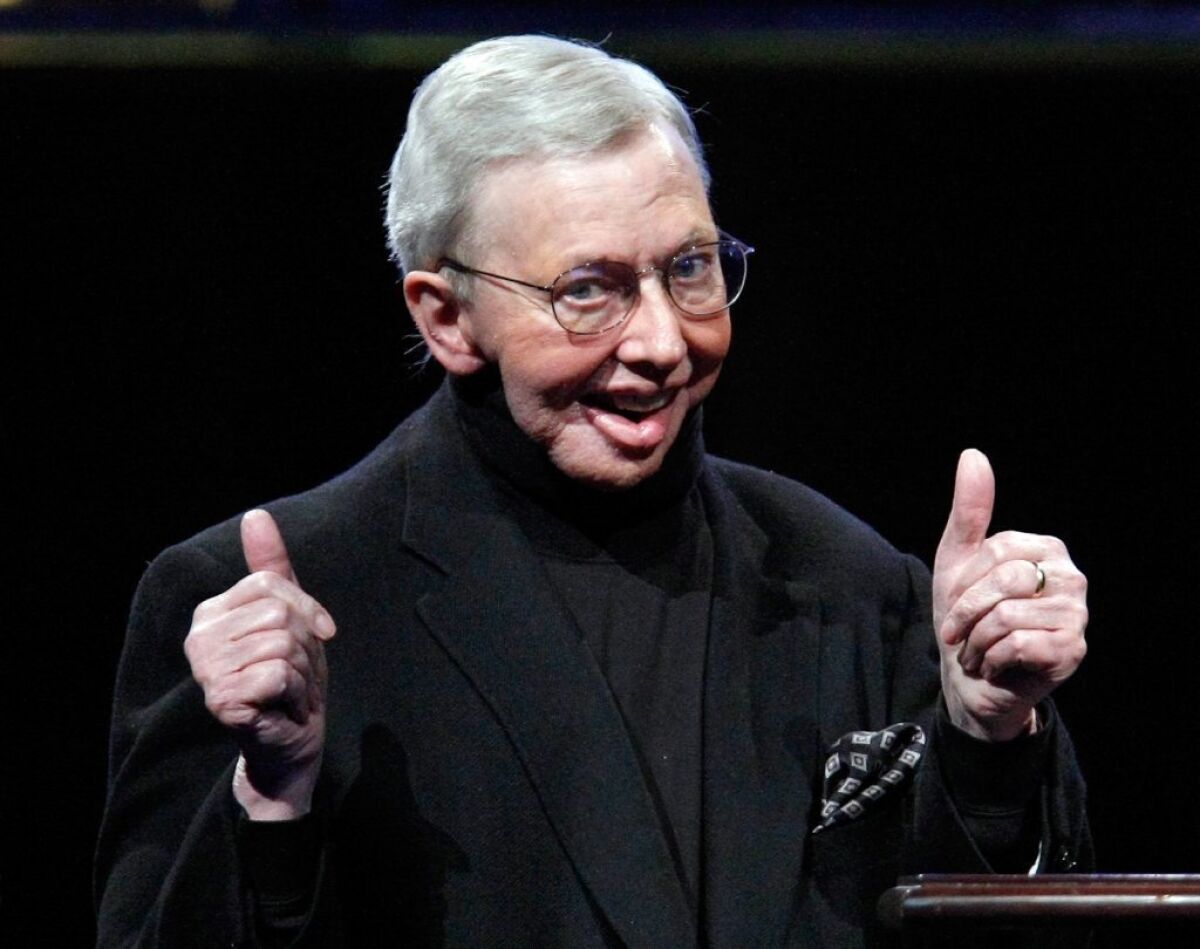
I think we all knew the end was near for Chicago Sun Times film critic Roger Ebert when he announced to the world that his cancer had returned. In his blog entitled “A Leave of Presence,” which was published just a couple of days before his death on April 4, 2013, Ebert announced he would be cutting back his workload to conquer this dreaded disease which had wreaked havoc on his body for the last decade or so. He really did fight the good fight against this indiscriminate and infuriating disease, and you had to admire how he refused to hide from the world after it robbed him of his speaking voice and made him look a little less handsome. But after all the battles, his body could only take so much. His wife Chaz described his passing as a “dignified transition,” and I am just glad it was a peaceful passing and that he was not in much pain.

Like you, I have been a big fan of Ebert’s ever since he started sharing the balcony with Gene Siskel on “At the Movies” all those years ago. Before I made going to the movies a regular event in my life, I had to settle with watching this movie review show as it was my gateway to the world of movies back when going to the local theater happened as often an eclipse of the sun. Even if they did give thumbs down to movies I loved like “Better Off Dead,” nothing could stop me from watching their show.

Eventually, I became exposed to Ebert the writer through his various “Movie Home Companion” books which later became known as his “Video Companion” and then eventually his annual “Movie Yearbook,” and I quickly purchased them year after year once they became available at my local bookstore. Sometimes I was bummed when he gave a so-so review to favorite films of mine like “Caddyshack” (he gave it * * ½ out of * * * *), but in the end he had understandably strong reasons for why he felt the way he did, and it was hard to disagree with his reasons when you thought about them.

In many ways, you did not read an Ebert review as much as you experienced one. This was the case when I read his review of the infamous “I Spit on Your Grave” which he gave one of his rare zero-star ratings to. He described it as “a vile piece of garbage” and how attending it was one of the most depressing experiences of his life. It was a review filled with spoilers as Ebert described everything which happened, and while we hate it these days when people spoil a movie for us (we have Wikipedia for that), it felt like he was doing us all a huge favor when it came to this particular film which has since become a cult classic. He even went out of his way to describe the reactions of other patrons in the theater which were very disturbing as they seemed to shamelessly cheer on the rapists, and this made his experience of seeing this dreaded movie all the more unsettling. Now while his review may have drawn more attention to this movie than he would have liked, you cannot say you were not the least bit warned as to how difficult it would be to sit through it.

As for myself, I loved how Ebert always wrote in the first person, and I am quite confident I do not need to prove to you of the effect his writing had on my own. Many websites and print publications these days do not like it in the slightest when you write in the first person, and while I understand why, it still drives me nuts. Anyone can write a movie review, but no one could write one the way Ebert did. When I first started writing my own movie reviews on the internet, I found myself writing them in the same way he did. Truth be told, it is a lot more fun to write them in the first person as there is only one of you in this universe and, the way I see it, people tend to find more enjoyment in reading those kinds of reviews anyway.

Back when I was in high school, many of my friends came to hate Ebert because, the way they saw it, he just hated movies. Now granted this made me a closeted fan of his for a while because I did not want to appear too different from everyone around me, but I was still annoyed at the summary judgment they made against him. I wanted to yell at them, “DO YOU REALLY THINK HE WOULD SPEND ALL THIS REVIEWING AND TALKING ABOUT MOVIES IF HE REALLY HATED THEM?! WHAT WORLD ARE YOU FROM ANYWAY??!!” While Ebert at times seemed to dislike more movies than he liked, it became easy to see why; many of the movies we loved as kids were no different from the ones he saw as a kid himself, and what we saw as new seemed like the same old thing to him. As we continue to get older, we have come to feel the same away about movies in general because the more things change, the more they stay the same.

Furthermore, Ebert was never a snob to me. While you may be annoyed how he gave thumbs down to “Full Metal Jacket” and yet give a thumbs up to “Cop and a Half,” he was fully aware of how not every movie could be on the same level as “Citizen Kane” or “Vertigo.” Some film critics like Rex Reed are uber snobs who revel in the power they think they have to destroy a movie, but Ebert was able to judge a movie for what it was trying to be as opposed to what he wanted it to be. “Days of Thunder” clearly earned its unofficial nickname of “’Top Gun’ on wheels,” but Ebert gave it a thumbs up because, on that level, it was effective entertainment. Sure, you could compare it to “Lawrence of Arabia,” but why?

In retrospect, if it were not for Ebert, or even Siskel, would audiences have taken the time to discover movies such as “Roger & Me” or “Hoop Dreams?” The one gift Ebert gave us was his power to give a voice to and support films which Hollywood studios were not quick to shower their attention to as they did with summer blockbusters. He made us realize it is up to us to give smaller independent movies the attention they deserve. Otherwise, they just might fall through the cracks to where they become completely obscure.

I also admired Ebert for cutting through the hyperbole which could completely engulf a film. One great example was Spike Lee’s “Do The Right Thing” which many mistakenly saw as a call to violence. Ebert, who would later declare the film to be one of the best of the 1980’s, instead saw it as a story of where race relations were at in America, and that it was a reality call we needed to wake up to. He made you see Lee was not endorsing one course of action over the other, but that he was instead showing us what happens when people do not do the right thing. A few years later, Los Angeles was besieged by riots which came about after the Rodney King verdicts, and this made “Do The Right Thing” seem like an eerily prophetic film as a result.

Now how come other film critics could not see Lee’s film in the same way Ebert did? Maybe it was because he was a much more opened minded person than others. What a critic can say about a movie often says more about them than anything else, and even if you do not agree with Ebert on a particular film, you cannot say he was a man consumed with hate or any deep-seated bias. He was never blinded by any particular ideology or thought process, and he forever remained gifted at explaining what Lee or other filmmakers were truly getting at with their work.

Ebert’s fight with cancer made me admire him even more. Once it robbed him of his voice and a good portion of his jaw, you would have expected him to hide in a cave somewhere. But he refused to do that, and his work as a film critic and a writer never suffered as a result. In fact, he wrote even more than ever before as he expanded beyond his usual movie reviews to cover current events everyone in the world were constantly caught up in discussing. You could argue with Ebert on certain points, but he was always ready to back up what he said with the facts. Your best bet, instead of trying to prove him wrong, was to outguess him at the Oscars.

Thank you, Roger, for being a hero of mine. Thanks for all your great reviews even if you badmouthed some of my favorites. Thanks for continuing to write and not hiding from the world after cancer robbed you of your voice, and thank you for sharing the balcony with Gene Siskel and Richard Roeper for all those years. But most importantly, thank you for showing me the power of the written word. Like many others, I will miss your presence in life and on the web, but you still left us with so many great articles I still have yet to read.

WRITER’S NOTE: Down below, I am including the exclusive interview I did with director Steve James and Roger’s wife, Chaz Ebert, while they were doing press for the documentary they made entitled “Life Itself.” Based on Roger’s memoir of the same name, it was an enthralling documentary I was ever so happy to sit through.

Tony Gilroy on ‘The Bourne Legacy’ and how it Differs from What Came Before

WRITER’S NOTE: As the opening paragraph indicates, this article was written over a decade ago.

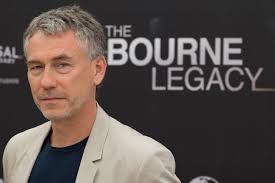
Writer/Director Tony Gilroy and actor Jeremy Renner dropped by the AMC movie theater in Century City on July 9, 2012 to answer questions regarding their upcoming summer blockbuster, “The Bourne Legacy.” The emcee of this Q&A was Dan Gilroy, Tony’s brother, who also co-wrote the screenplay for it. The film itself was not shown that evening, and the audience had to settle for its latest trailer instead, but people were allowed to ask questions about how it will differ from the “Bourne” films which came before it.

This event was presented over the internet live as well as in front of a live audience, so questions came from all over the world as well as Century City. One question came from a guy named Jose on Facebook who asked how “The Bourne Legacy” will differentiate itself from the previous three films. To this, Tony said:

“If you’ve been a casual observer of the films before, it will have an extra bit of boost. If you’re a freak, if you’re a real fan, there’s a lot of stuff that’s in there that’s designed to pay back people who have really been paying attention.”

Catherine, who submitted her question through Twitter, asked, “what does Aaron Cross bring to the Bourne franchise that makes it different from the previous movies?” Tony’s response to this was very descriptive:

“What we’re saying in this film is that there were many programs. The Treadstone program, that Jason was a part of, was an early program that was shopped out to the CIA. The program that Jeremy is in is called Outcome. The Outcome agents are not designed as assassins; they are long lead isolated people who bury down into places. So, the skill set is slightly different, and there’s an adaptive quality, there’s a verbal quality, and there’s a curiosity that we really shine on for the Outcome agents that we meet. In ‘badassery,’ the physical aspects of a lot of this are very familiar; he is a cousin to Jason Bourne in that regard. But the job is different, the design is different, and the flaws are very different. The things that go wrong are very different.”

Dan himself said, as one of the writers of this screenplay, that he was especially interested in the conspiracy side, and he asked his brother Tony how it differs from the franchise:

“Well, this time we’re pulling back (the curtain). We’re saying that what you saw before was a small piece; you watched the other three films and thought that that was the entire universe. It turns out now when we pull back the curtain that there has been a mastermind behind the entire program and these other programs, and that’s Edward Norton. In a way he’s been sitting beside you in the theater for the last 12 years watching this all go on, wondering if it’s going to cause larger problems for him and getting irritated as (“The Bourne) Ultimatum” explodes.”

Many fans of the Jason Bourne movies have been arguing loudly about the series continuing on minus Matt Damon and Paul Greengrass, but Tony Gilroy has made it clear how he made “The Bourne Legacy” with them in mind. It sounds like he has put together an exciting movie which audiences will get a kick out of, and I for one cannot wait to see it.

Jeremy Renner on ‘The Bourne Legacy’ and Preparing a Character

WRITER’S NOTE: This article was written back in 2012.

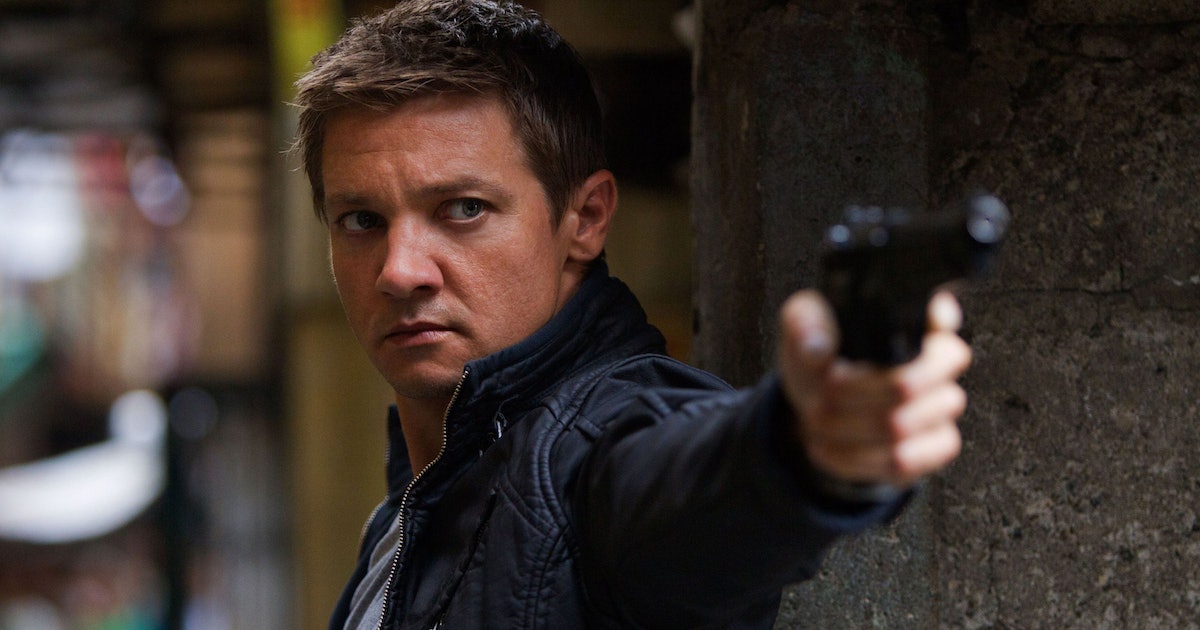
Jeremy Renner appeared at the AMC Century City on July 9, 2012 along with writer/director Tony Gilroy to talk about “The Bourne Legacy.” In addition, Renner also took time to answer questions regarding how he went about preparing to play Aaron Cross, and of his preparation for roles in general. His answers showed him to be an actor always looking to challenge himself constantly and to not get trapped in a comfort zone.

Renner has long since made a name for himself with his performances in “The Hurt Locker,” “The Town,” “Mission: Impossible – Ghost Protocol” and “The Avengers.” One person asked him which movie has required him to do the most training, and he said it was definitely “The Bourne Legacy.” Renner said this was because it required from him “a level of authenticity” the other movies did not ask of him, and that he “had to work diligently to make the fights look like I could actually do them.”

Another person quoted Renner as once saying he “makes himself uncomfortable” when he can and asked him if that has made all the difference in his life. Renner replied it makes all the difference and said it is about constantly challenging himself:

“It’s about not being complacent and not fall into the trappings of repeated behaviors and getting comfortable. As I’ve gotten older, if there are things I knew I don’t like, I would still go try them again just to make sure that I don’t like them.”

Unlike his previous movies which had him acting in a supporting role, “The Bourne Legacy” marks Renner’s first starring role in a big budget Hollywood movie. He did, however, make it clear that his preparation for this movie was no different than any other he has appeared in, and that it remains the same on each role plays. He did say, however, that his workout regimen has changed a lot from “Mission: Impossible – Ghost Protocol” to “The Bourne Legacy:”

“For ‘Mission’ I was really out of shape. I mean, I stretched for twenty minutes and that was my workout. And now I stretch for an hour and a half, fight for two hours, workout for an hour and a half, and then stretch for another hour and then go to work.”

For Renner, saying yes to “The Bourne Legacy” was actually very easy as he felt all the elements were fantastic and that he could not say no to it even if part of him wanted to. And while he may have graduated from indie films to big budget action movies, his mindset has not changed in the slightest as he compared making this sequel to movies he has done beforehand:

“For a big movie, it felt very tiny in the sense of it was not just the stunts but also the intimacy of really quiet scenes I feel I’d rather be doing as an actor. So, for me it had the balance of both; it felt like a little independent movie and a massive action movie, so I got both feels all in one.”

In answering what it was like to play Aaron Cross and how he would turn off the character at the day’s end, Renner’s response did not have any Hollywood ego in it at all:

“Oh, come on man! It’s something that’s not that far away in that we’re talking about every physical role here. I have to stick to the truth on page one to page whatever and just stick to the truths within that. There’s no turning it on or turning it off; I’m not some freak actor that way. This is a character that’s closer to me than say Jeffrey Dahmer (whom the actor played in the 2002 movie “Dahmer”), so it’s not something I have to completely lose myself in. It’s just part of my job, and I can’t explain my job.”

From this evening, we can see that Jeremy Renner is a very respectful actor who takes his craft very seriously, and he revels in his unexpected success and working with actors like Rachel Weisz and Edward Norton whom he resented for stealing so many interesting movie roles from him in the past. We look forward to what Renner has to give us not just in “The Bourne Legacy,” but in so many other performances he has yet to deliver.

Eric Bana on Portraying Such a Charming Villain in ‘Deadfall’

WRITER’S NOTE: This article was originally written in 2012.

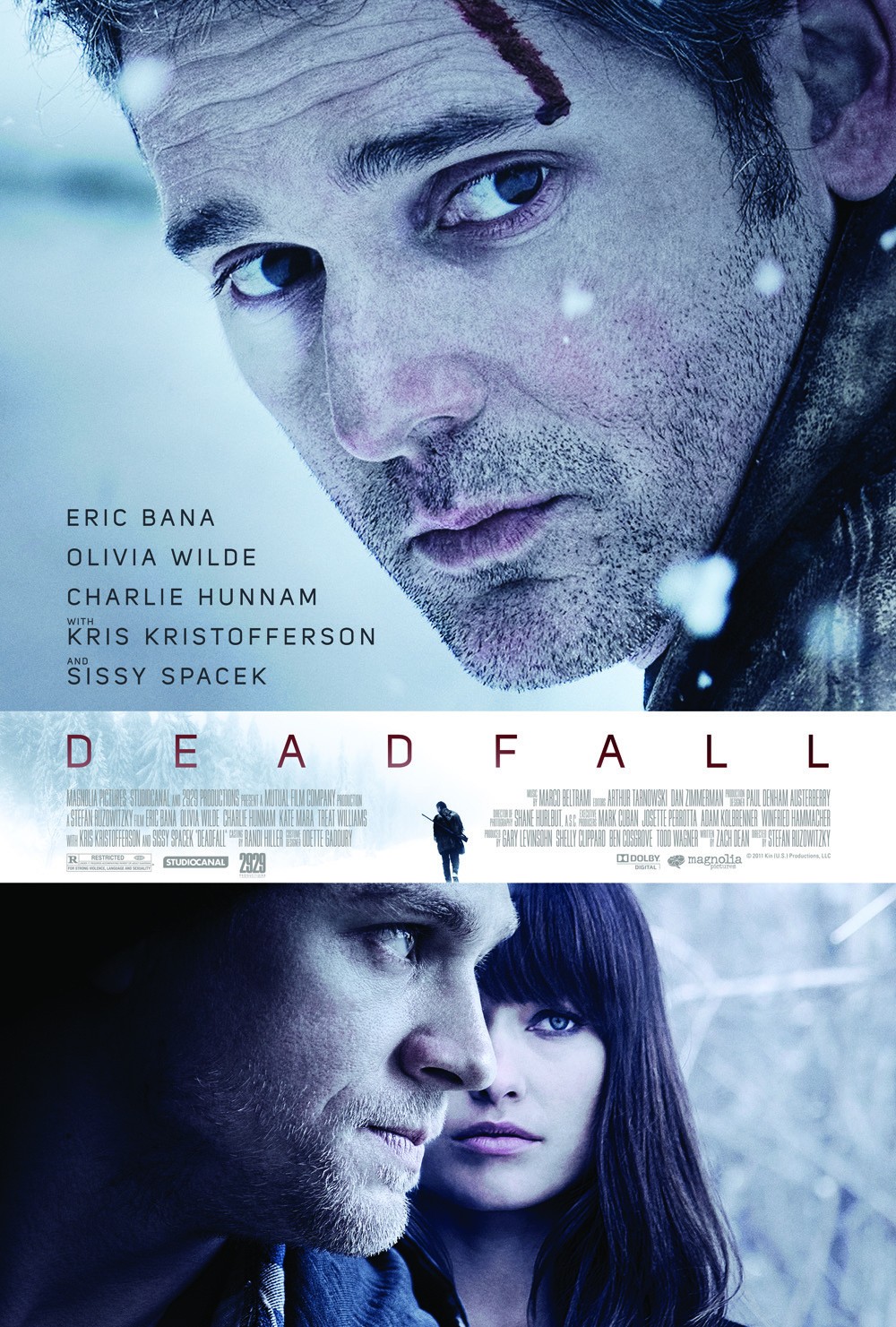
Watching Eric Bana as Addison in Stefan Ruzowitzky’s “Deadfall” will remind many of his breakthrough performance as Chopper Read in “Chopper.” Both films have him playing characters who are charming yet fearsome, and his unpredictability as an actor had us on the edge of our seats throughout. But hearing Bana talk about how he prepared to play Addison is a reminder to all actors on how to approach a role like this; the character may be a bad guy, but he’s still a human being with wants and needs like anybody else. It’s not just about acting evil all the time.

I was lucky enough to attend the “Deadfall” press conference at the Four Seasons Hotel in Beverly Hills, and Bana said he really liked Zach Dean’s screenplay and was “immediately compelled” by Addison. Bana described the character as being “quite hilarious actually,” and this was one of the main reasons he wanted to play him. It was interesting to hear him say that because funny is not an easy adjective to give to a character like Addison who can react violently without little or any notice. Bana, however, started out as a stand-up comedian and saw the opportunity to bring some darkly comedic touches to this role.

“I don’t think there was anything deliberately funny in Addison, but I think the situations that all the characters find themselves in and some of the things he does are inadvertently very funny,” Bana said. “It wasn’t like playing for laughs but I knew the audience probably would laugh at some of the ridiculous nature of what we’re all forced to do.”

Bana also went on to say he thought Addison was “morally straight” and that he really did not see the character as being a bad guy. Now while the crimes he commits in “Deadfall” certainly tell us otherwise, I really liked Bana’s approach to this role. It reminded me of a behind the scenes special on “Die Hard” where Alan Rickman talked about how he saw his character of Hans Gruber:

“As far as I’m concerned, I am not playing ‘the villain.’ I’m just playing somebody who wants certain things in life, has made certain choices and goes after them.”

The same can be said about Bana in the way he portrayed Addison.

“He had a strong sense of purpose in what he was doing and that is what makes those characters so scary, knowing you can’t really negotiate with him,” Bana said of Addison. “In his mind everything he’s doing is completely and morally correct and there’s a real reason for it. It’s not the actor’s place to judge, but I’m more than happy to be morally corrupt for a few months for the benefit of my career.”

This thought process was even more on display when Bana was interviewed by James Rocchi of MSN Entertainment. Rocchi talked about “Deadfall’s” first scene in which Addison’s car crashes and ends up shooting a state trooper in the process, and he described Addison as being spontaneous in his actions as this guy is thinking on his feet and improvising constantly. Bana explained that when the actor commits fully to their character’s actions, they should all come out naturally.

“I don’t like to think too much about what my physicality’s going to be here. I’d rather immerse myself in the character’s brain and allow my body to react accordingly,” Bana told Rocchi. “But that instance in the beginning of the film kind of sets in motion the rest of the stakes really for Liza (Addison’s sister who is played by Olivia Wilde) and Addison from that point on in that it just keeps getting worse and worse and worse. But you’re right. I mean he had no intention of shooting anybody. They got away from the casino, they got the cash, and all was going really well until that freaking deer popped out into the middle of the road and it all changed.”

Throughout “Deadfall,” Addison ends up engaging a couple of nasty fights, some of which are with Jay who is played by Charlie Hunnam (“Sons of Anarchy”). We keep hearing actors say how they did their own stunts in this or that movie, but we can never be too sure as the insurance people are usually dead set against that ever happening. But I believed Bana when he said that he did his own stunts in “Deadfall” because even he couldn’t hide the toll it took on his body.

“My neck was ruined,” Bana told Ariel Kashanchi of Screen Picks. “Charlie Hunnam beat the shit out of me. I don’t think I landed a punch. It was just like bang, bang. I remember after about five takes I was stiff all over and thinking ‘how much more can my neck take.’ I’m used to throwing punches and now I just have to just sort of take it. But it was kind of fun.”

“Deadfall” has received mixed reviews, but there is no denying Bana gives a riveting performance as Addison. Playing a charming bad guy is nothing new for this Australian actor, and he is still great at it. In a year of movies filled with truly intimidating antagonists, Bana’s performance deserves to be held up alongside the best of the bunch.

SOURCES:

Ben Kenber, “Interview with the Cast and Director of ‘Deadfall,’” We Got This Covered, December 7, 2012.

Alan Rickman: Hans Gruber is not a villain,” YouTube

James Rocchi, “Interview: Eric Bana of ‘Deadfall,’” MSN Entertainment, December 7, 2012.

Ariel Kashanchi, “Interview: Eric Bana on ‘Deadfall,'” Screen Picks, December 6, 2012.

Helen Hunt on Portraying a Sex Surrogate in ‘The Sessions’

WRITER’S NOTE: This article was written in 2012.

Ever since her Oscar win for “As Good as It Gets,” it seems like Helen Hunt has been keeping a markedly low profile. She has kept busy with other projects and even took the time to make her directorial debut with “Then She Found Me,” but we do not hear about her as much these days as we did back in the 1990s during her “Mad About You” heyday. But now she is back in a big way with her critically acclaimed performance as sex surrogate Cheryl Cohen Greene in Ben Lewin’s “The Sessions,” and it serves as a reminder of how great she can be when given the right material.

“The Sessions” is based on the true story of poet Mark O’Brien (played by John Hawkes) who hired Greene to help him lose his virginity at the age of 38. O’Brien had spent the majority of his life in an iron lung and was paralyzed from the neck down due to getting polio as a child. However, a certain part of his body below the waist still works, and Greene became the person he hired to help him exercise it.

Now playing a real-life person has its challenges because you want to honor the individual without impersonating them. For Hunt, however, the challenge became understanding Greene’s job of being a sex surrogate as she was never aware a job like this existed before. Talking with Greene opened Hunt up to how she could respectfully portray such a person onscreen.

“She used the term ‘sex positive,’ ” Hunt said of Greene. “And I went: ‘Wow, I want to be sex-positive. I want to be part of a movie that is that; I’ve never seen that.’ So, it was more her vibe about her positive, enthusiastic, nonjudgmental way of talking about this topic that is usually laden with weirdness.”

Hunt ended up doing 90% of her research for the role with Greene, and it was Greene’s enthusiasm and frankness about everything which made Hunt ever so excited to portray her in “The Sessions.”

“She (Greene) has a sense of adventure about her grandkids growing up, helping someone have an orgasm, making this movie, meeting me and my boyfriend, chocolate from the raw restaurant I took her to,” Hunt said. “All of those things light her up. I thought, ‘What if I could be like that about sex in a movie?’ That would be amazing.”

Greene also made it very clear to Hunt how her job as a sex surrogate differs greatly from being a prostitute.

“The prostitute wants your return business, and she (the sex surrogate) doesn’t. She wants you to learn what you need to learn, so you can go off and have a relationship. That’s a substantial difference,” Hunt said of Greene’s description of her work.

Director Lewin went even further in describing Greene as being “a middle-class soccer mom who has sex with strangers.” As a result, the role Hunt plays in “The Sessions” proved to be more complex than the one Hawkes plays.

“Her preoccupation was in achieving the emotional journey,” Lewin said of Hunt. “I got a real buzz talking with her because there were aspects of the character I hadn’t thought through that she had. She’s a frighteningly intelligent actor.”

The sex scenes between Hunt and Hawkes have a wonderfully awkward feel to them as his character gets to experience sexual intimacy for the very first time. Hunt said neither she nor Hawkes ever did a full read-thru of the script or even rehearsed together much. Instead, Hunt spent a lot of time on her own writing down her own feelings about sex, and what she ended up saying about the act really shows up in the film.

“Sex is never perfectly elegant: The light isn’t just right, and the underwear doesn’t fall on the floor perfectly, and the hands don’t clutch, and you don’t come at the same time. It’s all bullshit, basically,” Hunt said. “And the disability of this character renders all of that impossible, so you’re left with something much more like your own experience as a nondisabled person, which is that you’re human and that it’s good and it’s bad and it’s weird that it’s silly, and it’s embarrassing that it’s scary, so I think that the disability is just a way to get to what it’s actually like.”

Like her co-star Hawkes, Helen Hunt deserves all the accolades she has been getting for her performance in “The Sessions.” You believe her when she says that parts like this one don’t come around often enough, and you can sense her sheer excitement in playing Greene in this movie.

“She was someone who radiated this unabashedly humanistic view of what the human body is capable of,” Hunt said of Greene. “As an actress, I was hungry to play someone like that. As a person, I’m hungry to live that way.”

SOURCES:

Jordan Zakarin, “Helen Hunt, Star of ‘The Sessions,’ Wants to Be Sex Positive,” The Hollywood Reporter, October 19, 2012.

Julie Miller, “Helen Hunt on Overcoming Inhibitions for The Sessions, the Difficulty of Playing a Real Person, and ‘the Sexiest Quality There Is,'” Vanity Fair, October 18, 2012.

Marshall Fine, “Helen Hunt says intense emotional journey of sexual surrogate made ‘The Sessions’ a can’t-miss role,” NY Daily News, October 18, 2012.

John Horn, “Helen Hunt fully invests in ‘The Sessions,’” Los Angeles Times, August 31, 2012.

John Hawkes on Playing Mark O’Brien in ‘The Sessions

WRITER’S NOTE: This article was written back in 2012.

The Sessions” and John Hawkes’ performance in it as journalist and poet Mark O’Brien have earned some of the most rapturous praise of any movie in 2012. The film tells the story of how O’Brien, who was confined to an iron lung due to being stricken by polio as a child, hired sex surrogate Cheryl Cohen Greene (Helen Hunt) to help him lose his virginity at the age of 38. Hawkes, who earned an Oscar nomination for his performance in “Winter’s Bone,” has talked extensively about his concerns about taking on the role as well as the physical challenges he faced in playing O’Brien.

Hawkes’ biggest concern was whether or not it might be better for a disabled actor to play O’Brien instead of him. As a result, he’s still waiting for some sort of backlash to hit him. Ben Lewin, who directed “The Sessions” and is himself a Polio survivor, did take the time to find a disabled actor to play Mark, but he eventually became convinced Hawkes was the man for the job.

“Of course, that was my first question: Why not a disabled actor? They are a uniquely qualified group of people for this role, who are undervalued and underused,” Hawkes said. “I’ve had a lot of disabled actors come to me after screenings, and they told me to get over it.”

“It is the 800-pound gorilla in the room in a way,” Hawkes continued, “but it’s something that, Ben (Lewin) being a polio survivor himself, and the fact that he put the time in to look for disabled actors, he felt like, would it be politically correct to hire a slightly disabled actor to play a severely disabled actor? He ultimately just hadn’t found his guy. We met, and he felt like I could do it.”

Once cast, Hawkes became determined to mirror the physical condition O’Brien was stuck in for the majority of his life. To that extent, he and the props department created what was described as a “torture ball;” a soccer ball-sized foam pad that he tucked under the left side of his back to force his body to curve dramatically. In addition, he also used a mouth stick which was much like the one O’Brien used to turn the pages of a book or dial a telephone. It was this “torture ball,” however, which threatened to leave Hawkes with permanent physical damage to his body.

“Finding that position was difficult and did hurt. I’ve got a guy that I’ve been seeing for years, who is a combination massage therapist and chiropractor. I’d have 15 minutes with him, two or three times a week, or half an hour, if I was lucky. He told me that I wasn’t doing very good things to my body, but it was my choice. I’m not a martyr or masochist, but when the script says that your spine is horribly curved, you can’t just lie flat on your back and pretend,” Hawkes said.

But ultimately what makes Hawkes’ performance so good is that he doesn’t turn him into just another pity case. Filmmakers are typically expected to give us an emotionally manipulative experience when it comes to portraying physically disabled characters, making us feel sorry for them and of what they are unable to accomplish because of their limitations. Hawkes and Lewin, however, were determined not to go down this route.

“A character like that had every reason to wallow, but that’s just not interesting to watch on screen,” Hawkes said. “I’ve played a lot of underdogs and I like people who aren’t equipped to solve their problems but just keep trying anyway. There’s something really noble and interesting about watching someone keep banging their head against the wall.”

One of the other things which helped Hawkes was watching the documentary “Breathing Lessons: The Life and Work of Mark O’Brien” which won its director Jessica Yu the Oscar for Best Documentary Short Subject in 1997.

“There was Mark’s body, and there was his voice,” Hawkes said, referring to the documentary. “And so, I didn’t invent a lot. I just tried to really take as much of the Mark that I saw and tried to make it my own, to embody him.”

The effect Hawkes’ performance has had on those who were very close to O’Brien has been profound. Just ask Cheryl Cohen Greene, the sex surrogate whom Hunt’s character is based on.

“The first time I heard John I got chills,” said Greene. “I’m sitting there on the set with headphones thinking, that’s Mark. It’s scaring me. John got him completely.”

John Hawkes’ performance as Mark O’Brien looks very likely to earn him an Academy Award nomination for Best Actor, and many will agree that he deserves the recognition for his work. It marks another memorable role for this actor who first came to Hollywood over a decade ago, and he has many more great performances ahead of him.

SOURCES:

Jordan Zakarin, “John Hawkes: Hopeful, but Ready for Backlash and (Maybe) Permanent Back Pain,” The Hollywood Reporter, October 22, 2012.

Christina Radish, “John Hawkes Talks THE SESSIONS, Conveying His Performance Using Only His Face, Being Confined in an Iron Lung, and More,” Collider, October 16, 2012.

Rebecca Keegan, “John Hawkes enters virgin territory in ‘The Sessions,’” Los Angeles Times, October 11, 2012.

Oliver Gettell, “‘The Sessions’: John Hawkes and Helen Hunt on playing real people,” Los Angeles Times, October 29, 2012.

Interview with the Cast and Director of ‘The Menu’

The Menu” is an inspired black comedy featuring an incredibly talented cast of actors who play characters invited to a remote island where celebrity chef, Julian Slowik, is preparing quite the cuisine for them. As the night goes on, however, the guests come to see that Chef Slowik’s intentions are anything but gracious as he looks to punish those who cannot take enough time to taste the food they are eating. In this day and age when we are too busy shoving food into our mouths as life moves by fast, this motion picture reminds you of the importance of savoring every bite.

I got to sit in on a press conference for “The Menu” which was moderated by Rolling Stone magazine’s senior editor, David Fear. It featured actors Nicholas Hoult, Anya Taylor-Joy, John Leguizamo, Aimee Carrero, Judith Light and Hong Chau, and they were joined by then movie’s director, Mark Mylod, who is best known for helming episodes of “Succession” and “Shameless.”

When it comes to black comedies, I always wonder how they are conceived and put together. Making a comedy movie is hard enough, but putting a black comedy has got to be even harder as you are trying to get the audience to laugh as things no one would laugh at in real life. On top of that, this movie could be described as many different things such as, as Fear put it, “a broad social satire, it’s a Grand Guignol horror film, it’s a very dry comedy, and it’s a high tragedy.” Taking all this into account, one has to wonder how Mylod managed to find the right balance for everything.

Mark Mylod:   First of all, instinctive in reading the script, I think one of the things that drew us all to the project was that lovely mashup of tones that I think as quite a small target to hit. But we were all attracted to how specific that was. And then I think for me it was the few days or the week that we spent doing our version of rehearsals, which was basically to sit together or in smaller groups in a room and just talk about issues that interested us in the script and in our story and about our characters. And in doing so, it was perhaps less about what we were actually saying and more about us all tuning in by osmosis, perhaps unconsciously to get on the same level. I think it’s a Sydney Pollack quote about everybody making the same movie, so that by the time we were on set, we all tuned in together and we continued to do so with the huge benefit of shooting the film almost entirely chronologically.

One of my favorite performances in “The Menu” comes from Hong Chau who portrays the right-hand person to celebrity chef Julian Slowik (played by Ralph Fiennes), Elsa. Considering how the screenplay only gives her so much to work with, I couldn’t help but wonder how Chau managed to give us such a fascinating character in the process. Her answer to this helps illuminate the way she creates a character.

Hong Chau: I signed on not really being able to picture what the final product would look like. That was exciting to me, because I was curious to see how it would turn out and I knew that the people involved were great collaborators to take that leap of faith with. I was a huge fan of Succession and I knew that Mark (Mylod) would be able to take these characters who are unlikable for so many reasons, and somehow weave together a story where you cared about what happened, not necessarily to them, but cared about the situation. It was just surprising that I felt even some sort of heartbreak for some of the characters, and that’s just a special gift that Mark has.

Another big question I had was for John Leguizamo who plays a movie star who is washed-up, past his prime and, most importantly, has no name. This movie star could be any we know from when we were growing up or from today’s world which is filled with an endless variety of actors playing superheroes and comic-book characters. Leguizamo wrote a book back in 2007 entitled “Pimps, Hos, Playa Hatas, and All the Rest of My Hollywood Friends: My Life,” and he was more than honest about the many actors and movie stars he has worked with. When it came to his nameless character, I had to wonder which actor/movie star he based him on.

John Leguizamo: I’m not being typecast here, so because I’m not washed up and I’m not an action star, so I’m not a washed-up action star. But I’ve worked with a lot of action stars who became washed up and I modeled it after one person in particular who was a bit of an a-hole and a bully. Okay, Steven Seagal. I modeled after Steven Seagal because I did a movie with him and in rehearsals, he knocked me out and he didn’t care.

The movie Leguizamo is referring to is “Executive Decision,” an action film from 1996 directed by Stuart Baird. Leguizamo played US Army Special Forces officer, Captain Carlos “Rat” Lopez, and Seagal played his superior, Lieutenant Colonel Austin Travis. There are many stories about what happened behind the scenes on “Executive Decision,” and they all describe how Seagal slammed Leguizamo against a wall when he laughed at him for taking himself far too seriously.

John Leguizamo: (Seagal) hit me with an elbow in my solar plexus and knocked me against the wall, because I was laughing at him. I forgot to mention that part. I was a bit of a dick then. Sorry, I had to give that fact. So that’s who I was modeling after. I’d seen these privileged guys, and these guys who come into a room with so much narcissism and self, it’s like they suck the oxygen out of the room because they want all the attention and everything’s got to be on them, otherwise they turn negative. So that’s what I was trying to create, because it doesn’t naturally come to me.

And when it comes to these characters in general, what I admired most was how each actor inhabited them. These characters could have been portrayed broadly, but they were not which I thought was great. When it came to character descriptions, one of my favorites came from actress Judith Light who played Anne, a longtime fan of Chef Slowik’s who often visits his restaurant along with her husband Richard (played by Reed Birney).

Judith Light: When you watch a woman who has lived her life giving up her soul and herself in order to have the privilege that she so desperately wants, and begins to realize through the course of the film is that you think it’s one way and it’s not that way. It turns into something else and you begin to see that she wakes up as she realizes that her life is not what she wanted it to be. She’s not who she wants to be and she’s not living the way that she wants to live. And so, there is this bubbling, this cauldron that’s underneath all the time within the dynamic. And where that begins to shift and play out is in relation to Anya’s character. You begin to see that there’s a uniting of these two women in a very simple-I think maybe we say three words to each other in the entire film-but you can see the process of what’s happening within the heart and soul of this person. You don’t really see it until things begin to unfold in the most powerful, painful kinds of ways. So, between the two of us, between Reed and myself, I felt a very special and deep kind of rehearsal. Mark was saying in the beginning we all had these rehearsals with each other, and we improvised something between the two of us that was so moving and poignant and powerful because you know you walk into a restaurant and you see those two people. They’re not talking to each other; they never talk to each other. And you say to your partner, “I’m never going to be that person. I’m never going to be the person in that relationship.” And there you are, and one day you wake up and there you are and you are that person. And so, we were discovering all those things all of the time. So, Mark really gave us the depth and the breadth within the creativity of those rehearsals, and being on the set as well, our reactions to other people that really illuminated, and you begin to see this character; you see her transformation over time.

“The Menu” comes to us courtesy of Searchlight Pictures, and it opens in theaters on November 18, 2022. I highly recommend you check it out!

Paul Williams and Stephen Kessler Discuss ‘Paul Williams Still Alive’ at the Nuart

WRITER’S NOTE: As the opening paragraph indicates, this article was originally written ten years ago.

On June 27, 2012, singer and songwriter Paul Williams along with filmmaker Stephen Kessler appeared at the Nuart Theatre in support of their documentary “Paul Williams Still Alive.” After its conclusion, both men were greeted by a packed audience that had been deeply moved by what they just witnessed. The documentary follows up with Williams years after his enormous success back in the 1970s, and it finds him experiencing happiness and fulfillment in life he didn’t have back then.

Kessler has described making this documentary as “a labor of love,” but Williams quickly pointed out that it didn’t start that way. Their relationship when filming began was an uncomfortable one, but Williams eventually warmed up to Kessler, and their strong friendship proved to be very authentic as they talked with the audience at the Nuart. Kessler even went out of his way to say the following:

“I’ve never said this in front of people before, but you (Williams) were brave to do this movie.”

No one in the audience disagreed with this assessment. Williams described this as a “warts and all documentary” that shows him at his best and worst. One particular sequence, when he was co-hosting Merv Griffin’s talk show while on drugs, was one he originally wanted to be cut out as he was terribly afraid of what his kids would think about him. His son Cole, however, was in the audience, and when asked about what he thought of the documentary, he said, “It’s great dad!”

Kessler made it clear he had no intention of putting himself in this documentary, and he even said he “can’t stand movies that do that;” directors becoming the subject of their own films. His increased participation in “Paul Williams Still Alive,” however, helped to illuminate the songwriter much more than it would have without him. While Kessler keeps going back to the past, Williams looks to the future instead.

When Williams was asked when he reached his bottom as an alcoholic, he responded it happened when he started looking out the window for what he called the “tree police.” He even joked and said, “You know you’re an alcoholic when you’ve misplaced an entire decade.” What made him say this was the embarrassing truth that he forgot for a time that Ronald Reagan was once President of the United States.

Since becoming sober, Williams says he now knows what it feels like to be around people he feels safe with. He has also entered into what he calls his “Paulie Lama” period of life as he goes out of his way to pull people off of bar stools, and that he would be thrilled to work at the Betty Ford Center if asked.

1992’s “A Muppet Christmas Carol” marked the first project Williams ever did sober, and he remembered going into it feeling very scared. But after he finished working on it, he found he was able to approach his work in a more productive way:

“Success for me has to be about authenticity and honesty. Today I have to trust that I am enough. Never again will I ever let tension and my ego keep me from writing songs.” The emcee of the Nuart told us not to ask either of the two how much “Paul Williams Still Alive” cost to make or when it will come out on DVD. This is because he wants to see it again with as a big an audience in the midst of all these summer blockbusters being thrust at us. It is certainly one of the sweetest documentaries you will ever see, and to see Williams today is to see a man very comfortable with who he is and who does not need another cup of fame to feel better about himself.