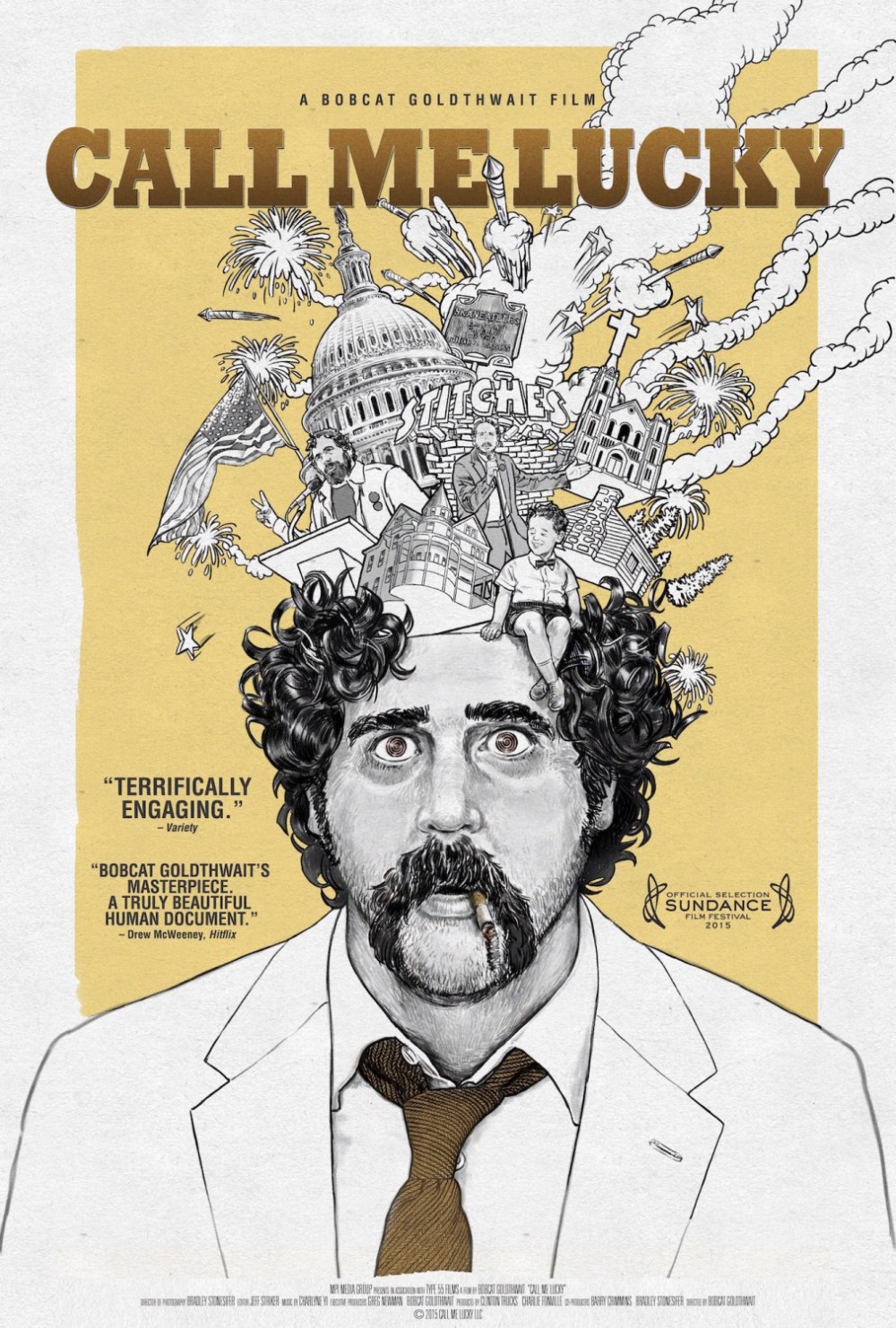
It was very sad to learn Barry Crimmins passed away on February 28, 2018 at the age of 64. Crimmins was diagnosed with cancer only a month earlier, but the disease spread through his body very rapidly. He was an American stand-up comedian, a political activist and satirist, a writer and a comedy club owner, and his comedy predated that of the late Bill Hicks. He brought the comedy scene in Boston to a new level of prominence after forming the city’s two clubs, The Ding Ho and Stitches. He has long since earned the respect of fellow comics like Bobcat Goldthwait, Steven Wright, Paula Poundstone, Kevin Meaney and many, many others who continue to sing his praises, But the thing is, I was only just getting to know him just a few years ago.
Despite Crimmins having done so much work, many people today, myself included, had never heard of him before. This changed in 2015 with Goldthwait’s acclaimed documentary “Call Me Lucky” which chronicled Crimmins’ beginnings as a comic in New York to his work in the present as a political activist. The documentary also reveals how Crimmins was a victim of sexual abuse as a child, and we even see him revisit the scene of his abuse in an effort to come to terms with what he went through. For years, he was an anti-pedophilia activist, and he went out of his way to expose pedophiles on the internet in the 1990’s before turning his evidence over to the FBI. In 1995, he testified before Congress about the need to enforce child pornography laws more than ever before.
In 2017, Crimmins married Helen Lysen, a photographer and font designer, and she was with him when he passed away peacefully. She shared the news of his death and wrote, “He would want everyone to know that he cared deeply about mankind and wants you to carry on the good fight. Peace.” Indeed, his death is a real loss as we need voices like his as the political climate we are currently dealing with in America continues to grow more volatile as days go by.
I was fortunate to talk with Crimmins and Goldthwait while they were doing press for “Call Me Lucky” a few years ago. To this interview, I wore one of my “They Live” t-shirts as I figured Crimmins was a fan of John Carpenter’s 1988 cult classic which remains one of the most politically subversive movies ever made. It turns out he had not seen it, but Goldthwait certainly did, and I hope he got Crimmins to check it out before he passed away. I am certain he would have enjoyed it immensely.
Please check out my exclusive interview with Crimmins and Goldthwait above. “Call Me Lucky” is now available to own and rent on DVD, Blu-ray and Digital.
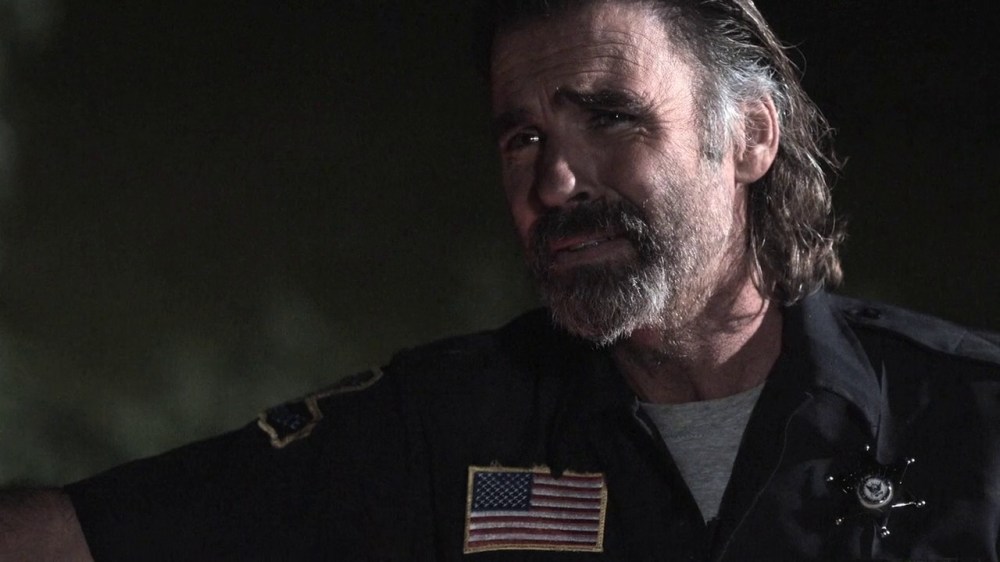
Actor Jeff Fahey is one of those actors in Hollywood who has never been lacking for work. Ever since his first major role on the soap opera “One Life to Live,” he has appeared in an endless number of movies like “Silverado,” “Psycho III,” “White Hunter Black Heart” opposite Clint Eastwood, and more recently he has starred in Robert Rodriguez’s “Planet Terror” and “Machete.” On television, he has left his mark on such shows as “Miami Vice,” “The Marshal” and “Under the Dome.” No matter what year it is, Fahey is always busy appearing in something, and it’s always great to see him onscreen.
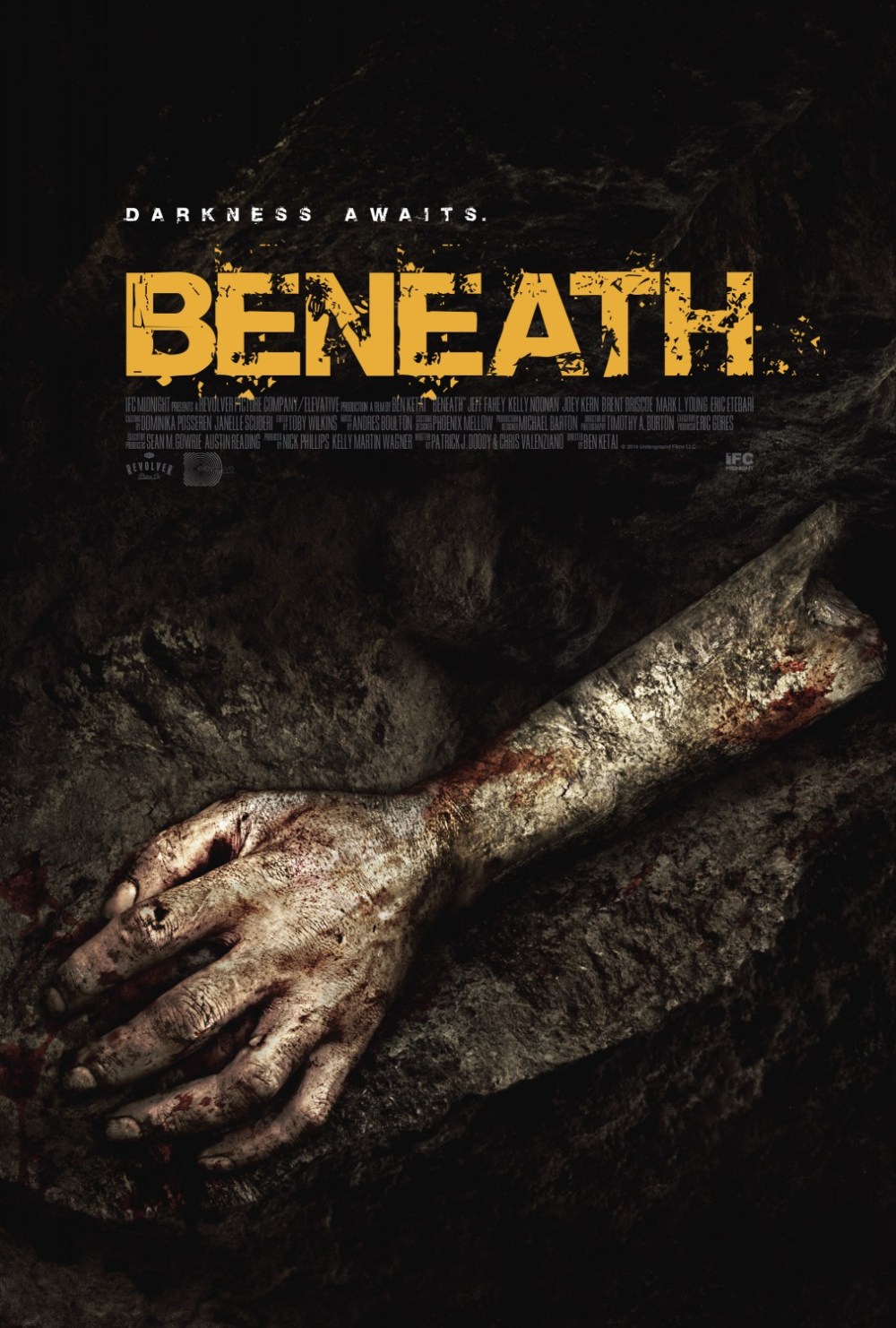
Fahey’s latest film is “Beneath,” a horror movie from director Ben Ketai which is now available to watch on VOD and will be released in theaters on July 25. In the film, Fahey plays George Marsh, a veteran coal miner who is retiring after many years on the job. But on his last day which has him taking his environmental activist daughter Samantha (Kelly Noonan) on a tour 600 feet below the ground, a disastrous mine collapse traps them and a couple other workers. They wait to be rescued but as time runs out and the air becomes more toxic, each slowly descends into madness and starts turning on one another.
I spoke with Fahey on the phone as he was in Mexico shooting the movie “Texas Rising.”
Ben Kenber: This is a very gripping film where you didn’t know how things were going to turn out, and the suspense was very well maintained from beginning to end. How did this project come to you?
Jeff Fahey: My manager actually had read the script and said, “There’s a film, they are interested in you.” I said what’s the genre and he said, “Well it’s a horror film but…” And I said I’m not interested at the moment but he said, “No I think you ought to read this one.” So, I read it and right away I called them back and I said I’d like to meet with the director and the producers because this is a nice piece. It was the psychological horror, the psychological drama that drew me to it, and it didn’t have the gore that other films of that genre would have. It read more like a short story and a psychological drama, and that’s what attracted me to it. Then when I met Ben, he very clearly showed his vision and what he wanted to do with it. That made it even more interesting.
BK: Yes, the psychological trauma is what really drives the movie I think. On the surface, “Beneath” looks like your typical horror movie but it isn’t.
JF: Yeah, and the performances those other cats brought in… Kelly’s performance was amazing, and she had to carry that film on her shoulders and she pulled it off in aces.
BK: I think all the actors in this movie were perfectly cast because they all look like they have spent a lot of time in the mine.
JF: Yes exactly, and the sets and the production design were top, top quality so you had the sense that you were really in a mine. That was a character in of itself and was equally important as the script and the performers.
BK: The set design was excellent and I really did feel like I was in a mine while watching this movie. Ben said it was shot on a soundstage but it never feels like you are on a soundstage in the slightest.
JF: Yeah.
BK: In regards to your role, did you do any of research before shooting began?
JF: No, this all happened pretty fast. We had a real miner come in and speak with the cast the day before we started shooting for a couple of hours, and then we were on the sets and everybody was getting to know each other while we were filming. That was another thing that made it so easy, that everyone got along so well.
BK: I imagine this movie had a very tight shooting schedule.
JF: Oh yeah.
BK: Was this a role where everything was on the page for you?
JF: Yeah it was there, but then the magic happens when you get with the actors and especially when you get along. So, when you’re on a tight, limited schedule or budget, you spend a lot of time together especially in a film like this where we are all in a cave together. Everybody in between filming the scenes was sitting around talking and getting to know one another or going over the scenes and talking about the scenes and the relationships. That I think helped the fact that it was a tight schedule, and we all had to be together for the duration. That created that group ensemble feeling.
BK: There are scenes where your character has some breathing problems, and they are like a ticking time bomb in this movie. How did you go about acting those scenes?
JF: Well that’s a process. Everybody has a different process and you have a process that you build up and deliver on, but a lot of the coughing I was able to lay in on post-production which I discussed with Ben. I told him I will cough, but I won’t put the full pressure on because at 12 hours a day for three or four weeks would get to you especially with that real dust. So, we were able to lay all the coughing, that heavy, heavy breathing, in post-production. Knowing that we’re able to do some of this in post-production, I didn’t have to hyperventilate 12 hours a day while I was doing the film.
BK: Have you ever been in a movie before which has had a setting that is as claustrophobic as the one in “Beneath?”
JF: I don’t think so, certainly not for the whole duration of the film. I’d have to say no. This would set the stage right now for the most claustrophobic film I’ve touched thus far, and certainly the most dusty. They had to have that real dust blowing around in a confined area hour after hour, but out here you can ride away from it sometimes.
BK: You have had a very strong acting career to where you have gone from project to project with what seems like relative ease. You don’t seem to be lacking for work at all. What’s your secret?
JF: I think it’s no great secret. I think everybody has it. You just go forward and take it project to project and grow a little bit with each one and hopefully understand the interpretation of story and the interpretation of the development of your craft and moving through the industry. But just moving from story to story and group to group, now I’m at the place where the greatest joy along with a good story and the good directors is the relationships working with people you respect and enjoy. That seems to happen more and more. I am with a wonderful group now down here in Mexico doing “Texas Rising.”
BK: One last question, I have to ask you about “Grindhouse.” What was it like filming that one?
JF: Well I love Robert Rodriguez. There were times when Robert will be operating one camera and Quentin (Tarantino) will be operating the other. So, it was fascinating that you got these two world-class filmmakers operating the two cameras while you’re doing a scene. It was fascinating. I’ll be working with Robert again. I just spoke with him the other day. And hopefully I’ll be working with Quentin. It was a great joy to be working with those guys and watching them work.
I want to thank Jeff Fahey for taking the time to talk with me. “Beneath” is now available to own and rent on DVD, Blu-ray, and Digital.
Brie Larson is best known for her performances in movies like “Short Term 12,” “Scott Pilgrim vs. The World,” “21 Jump Street” and “Trainwreck,” and she also has a singing career and released an album entitled “Finally Out of P.E.” But if you’re not familiar with whom she is, that’s alright because you won’t be able to forget her after watching her emotionally exhausting performance in Lenny Abrahamson’s “Room.” She plays Joy (a.k.a. Ma), a young woman who was kidnapped several years ago by a man who tricked her into helping him find his lost dog. Joy has since been imprisoned in that man’s garden shed located in his backyard, and she occupies it with her son Jack (Jacob Tremblay). But as time flies by, Joy becomes increasingly determined to escape the prison she and her son have been forced to grow up in, but the outside world provides them with even more challenges than they could ever have expected to endure.
Larson was at the “Room” press day held at the Four Seasons Hotel in Los Angeles, California where she was lauded by many reporters for her brave acting. I read how, when she accepted the role of Joy, she decided to lead a more reclusive life and reduce her social interaction with others in order to better understand her character’s mindset. I asked her what that preparation specifically entailed, and her answer proved to be endlessly fascinating.
Brie Larson:I really love the myth about my reclusive life (laughs). The words that have been used today have been so interesting. How it started was in trying to understand those two years of basic silence of being alone in this place, and I meditate so I was little familiar with trying to get to mental silence and how hard that is. And then I had some friends who had been on silent retreats and I was fascinated by the reactions because some of them could go 10 days and they do it every year and it’s just this time that they absolutely love. You’re not allowed to speak and you’re not allowed to look at anybody because that’s also seen as a form of communication. There’s no connection to the outside world. But I had other friends who couldn’t last 24 hours. They just panicked and left and so there was this sense of just sitting with yourself and imagining Ma at 17, 18 and 19 years old sitting with herself in the way most teenagers don’t. That’s a period of time where it’s all fleeting. It’s all just getting away from everything and wanting to move out and pushing away a parent. In some ways I felt that period of time to be this bizarrely mature experience and set in a horrible setting, but in a way that she has to come to terms with who she is now and this new individual that she’s become that is completely separate from her friends, from her home and from her parents, and it’s the time right before she has a child which becomes her next identity as being a mother. So for myself, it was just seeing what that mental chatter felt like and if it was something to feel that painful moments of it, to feel eureka moments. They were moments that I remembered from my childhood that I had forgotten that were so beautiful and other moments that I completely had forgotten that were more painful. And so having that time to just very simply reflect I felt became a huge part of getting to know her better. But it wasn’t like painful. I found it kind of fun to be honest. I didn’t mind it.
Larson later won, and deservedly so, the Oscar for Best Actress for her performance, and it has since opened up a number of opportunities I can’t wait to see her take on. “Room” is now available to own and rent on DVD, Blu-ray, and Digital.
“The Founder” recently had its press conference in Los Angeles, California, and it took place the week before President Barack Obama is set to leave the White House and Donald Trump will move in. While no one brought up their political views during this press conference, the movie felt more timely than perhaps its filmmakers intended as it illustrates the birth of unrestrained capitalism. Considering we have a die-hard capitalist set to be the next President of the United States, it’s hard not think about the corporate world and corporations as we watch Michael Keaton play Ray Kroc, a salesman from Illinois who discovered a different kind of restaurant run by Maurice and Richard McDonald and eventually turned it into a billion-dollar franchise. But in the process, Ray convinces just about everyone around him that he was the one who founded McDonald’s, and he eventually steals the brothers’ business right out from under them.
Directed by John Lee Hancock, “The Founder” deals with a number of different subjects like capitalism (sustainable and unrestrained), business, greed, the corporate world, etc. The movie also makes you wonder if it is even remotely possible to run a corporation without losing your heart and soul in the process. But most of all, it makes you see how everyone doesn’t see the American Dream in the same way.
Laura Dern also stars in the movie as Ray’s wife, Ethel, and it was fascinating to hear her talk about the elements in the story which were hiding just beneath the surface. Also, she talked about seeing the movie with her daughter and how they reacted to a key scene involving the McDonald brothers.
Laura Dern: The piece that interested me, which was probably the piece I knew about Ray Kroc or McDonald’s, was this question of the introduction of the filler. I was fascinated that the film pointed it out, but also this question of how did it turn from real food to how we can make a fast buck and potentially poison people. What is that? And the subversive question which interested me the most was this question of, can capitalism hold compassion, and what is that story? And so, that moved me so much when John (Lee Hancock) first spoke to me about it, and hearing all these amazing people were involved. I would just love to add because I thought it was so incredible, I got to see the film last night with my daughter who is just turning 12, and to hear from her perspective, because I like to think it’s politically subversive and a commentary on this question of empathy versus corporations and can there be a place for both; I was talking about my favorite shot which just brings me to tears of these two gentlemen with their arms around each other watching the McDonald’s section of their sign be removed. I was talking about it, and when we go in the car my daughter said, “Mom, you know when those brothers were holding each other at the end?” I said, “Yes.” She goes, “That’s how I felt after (President Barack Obama’s) farewell address. We just don’t know what’s next.” And that was the film to me, and I just loved for a 12-year-old the details of the story, the point was she got what I think you all intended, and I was really moved by that.
John Carroll Lynch (above on the right) co-stars as the hard-working Maurice McDonald who is excited to see his brother’s restaurant become an even bigger success than it already is. He excitedly spoke about what he knew about Ray Kroc, but more importantly, he described how Ray’s level of thinking has become the typical kind of thinking for everyone in this day and age.
John Carroll Lynch: I knew Ray Kroc in kind of the way that Michael (Keaton) was talking about. I thought of him as the founder even though I knew there were the brothers before him. I also knew that he had owned the (San Diego) Padres, and I also knew that after his death particularly that his wife gave away massive amounts of money, and I would hear her name on National Public Radio all the time. So, that was my personal relationship with it, but knowing the story a little bit and seeing the things that are absolutely bedrock, admirable American traits of entrepreneurship, of persistence, of salesmanship, of a sense of seeing something and how far it can go, of vision, all of those things are incredibly attractive. And what I love about the way the movie unfolds was how there’s a moment when he could tell the truth about the origin of the company, and you might not feel so badly about what happens if he could just give somebody else credit. If he could just be humble enough to go, there were these two brothers who had this amazing idea, and I figured out a way how to make it on every street in America with this other guy’s help. He could have said any of those things, but every moment he has any opportunity to tell the truth, he can’t do it because he needs to be the guy. There’s also a moment in the story where you watch him kind of digest the lie over time, and it becomes the truth to him. That is very indicative of where we are right now which is what we are told is in some ways, to many of us, more important than the actual truth, and we just want to believe the easy part of what’s said and not the hard parts, and I include myself in that. I don’t want to have to deal with the hard parts. I don’t want to have to deal with the fact that people are destroyed or land is destroyed. I really, really like Egg McMuffins (everybody laughs), and that’s where my dilemma is.
Now whatever you may think about McDonald’s before and after you see “The Founder,” their breakfast menu is simply delicious. Even if eating there threatens my cholesterol levels, I have to have a Sausage McMuffin with Egg or an Egg White Delight every once in a while.
Then there was Keaton who talked at length about how the meaning of the American Dream has changed drastically over time into something which is largely unrealistic. The more he talked about it, the more one had to wonder if it even exists in its most simple form anymore. With wages failing to catch with cost of living increases, you have to wonder if it is even within one’s reach these days.
Michael Keaton: I did some press early on in Europe. I heard it there and I heard it from a few journalists from outside the U.S. yesterday, and this morning on the phone they bring it up. It’s interesting because the U.S. journalists don’t bring this up, and that is the issue of the American Dream. This is fascinating to me unless I missed something. We can go on and on about consumerism, waste, greed, etc., etc. Their perception of what the American Dream is, and let me be a little more specific, not to miss the issue with such a generalization, when they talk about the American Dream, they do it in relation to billions and mansions, and they kind of make the assumption of an extravagant lifestyle of private jets, owning islands and everything. That’s fascinating to me because my concept of the American Dream, unless I missed something here, in its simplest form, is work hard enough and there will be a job available and you can buy a house, and you can buy a car to get you back and forth from work so where you can afford that house, and have couple of kids who can attend a good school, you get a good vacation maybe, and maybe a second car. Unless I missed something, that ain’t a bad thing. I think that’s what it was. That’s not what the perception is. It’s this other thing. I want to say it is an ugly thing. I have no problem with billionaires, especially billionaires like Bill Gates who do the things they do or my friend Yvon Chouinard who I keep referring to. Pick one. There are a bunch of them out there. But there’s this other perception out there. Am I nuts? That’s not what the idea was.
Now while these discussions might have taken away from talking about the making of “The Founder,” they stayed with me long after the press conference had ended. The movie is largely about capitalism and of how it can be exercised in both healthy and unhealthy ways, and it’s hard not to think about our dysfunctional relationship with the corporate world in the new millennium. Whatever way you want to look at it, “The Founder” is a compelling cinematic experience which chronicles the rise of a franchise we are all very familiar with and which plays a significant part in our lives whether we want it to or not.
“The Founder” opens in theaters this Friday, January 20th. Be sure to check it out!
Poster and photos courtesy of The Weinstein Company.
Check out the video, courtesy of Movie Maniacs, to view the entire press conference.
The late Roger Ebert proclaimed Ramin Bahrani director of the decade on the basis of his movies “Chop Shop” and “Goodbye Solo,” both of which came out in the 2000’s. His films have received tremendous critical acclaim and numerous awards from one film festival to the next, and this streak does not look to stop with his latest movie. “99 Homes” stars Andrew Garfield as an unemployed contractor who is unjustly evicted from his home and Michael Shannon as the real estate magnate who kicked him out of it and who eventually becomes his mentor in the art of home foreclosures. It’s a thriller which is unsettling as it is heartbreaking as it calls attention to the housing crisis which swept the nation and those cold-hearted and greedy men who profited greatly from it.
Bahrani gives us a story which hits close to home as it contains agonizing scenes of Garfield and his family being given only a few minutes to pack up all their belongings and leave their house. He makes you feel the searing discord between the haves and have-nots as it’s open season on homeowners who have no chance of defending what is rightfully theirs. But when Garfield comes on board with Shannon, he finds a way to dig himself out of his financial black hole so he can get back his house. But as Garfield gets deeper and deeper into Shannon’s world, he starts losing his ethical and moral bearings as he starts to others what was done to him.
Bahrani was at the Four Seasons Hotel in Los Angeles, California to do a press conference on “99 Homes.” I was one of the reporters there and told him the movie seemed to be as much about survival in an economically shaky world as it is about greed and home foreclosures. When I asked him what he felt “99 Homes” had to say about surviving in this crazy world the characters inhabit, he said the following:
Ramin Bahrani: “One of the scenes I really like, for me it was like something from Dostoyevsky in my mind, was when the two men sit at the dock at night. And I remember Michael (Shannon) came up to me and said, ‘Ramin, is this the important line in the scene?” I told him, ‘Michael, this is the important line in the whole movie.’ And that’s after Michael tells Andrew (Garfield) that he carries a gun even at two o’clock in the morning because he was almost run off the road one time when he goes to dinner with his family and all this stuff, and Andrew says, ‘Is it worth it?’ And Michael looks at him and says, ‘As opposed to what?’”
It’s a haunting question which left the reporters at the press conference speechless, and it’s one of the many reasons why you must see “99 Homes” which is now available to rent and own on DVD, Blu-ray, and Digital.
Jeff Nichols’ “Loving” is a beautiful movie from top to bottom as everyone involved in its making did an expert job of transporting us back to the 1950’s and 60’s. Based on a, yes, true story, it introduces us to Richard Loving (Joel Edgerton) and Mildred Jeter (Ruth Negga) who are deeply in love with one another. They eventually get married, but with Richard being white and Ruth being black, they are arrested and put in jail as their interracial marriage violated Virginia’s anti-miscegenation laws. As punishment, they are banned from returning to Virginia for 25 years and forced to live in Washington D.C., but they soon sue the state and their case eventually made it all the way to the Supreme Court where it was ruled banning interracial marriage is unconstitutional.
I recently got to speak with two artists who worked on “Loving” behind the scenes: Kenneth Walker and Julie Lallas. Walker was the head of the hair department, and his previous credits include “Jimi: All is By My Side,” “Munich” and Ridley Scott’s “American Gangster” which he described as the hardest film he ever worked on. Lallas headed up the makeup department and worked with Nichols previously on “Take Shelter,” and she has also worked on the set of “Enchanted,” “Nick & Norah’s Infinite Playlist” and “We Need to Talk About Kevin.” Talking with them both was very illuminating in terms of how they went about their jobs, and it also allowed me to ask them if they want their work to be showy or to instead just disappear into the framework of the movie.
Check out the interview above, and also included below is a trailer for “Loving.” Nichols’ movie is now playing in Los Angeles and New York, and it is definitely worth checking out.
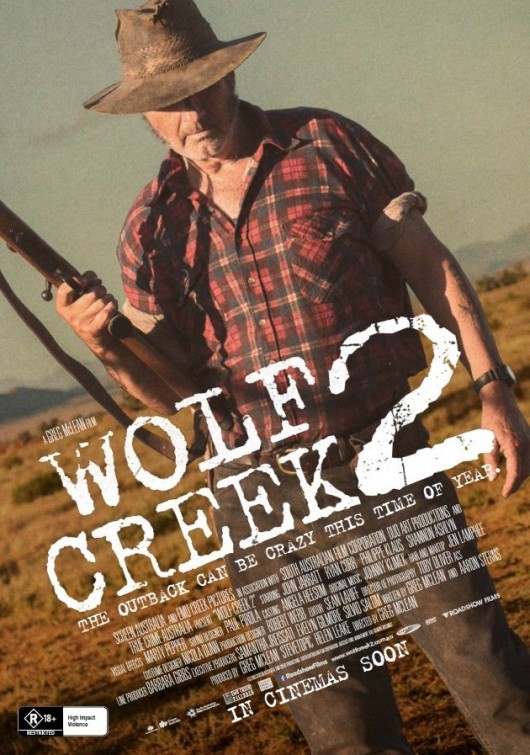
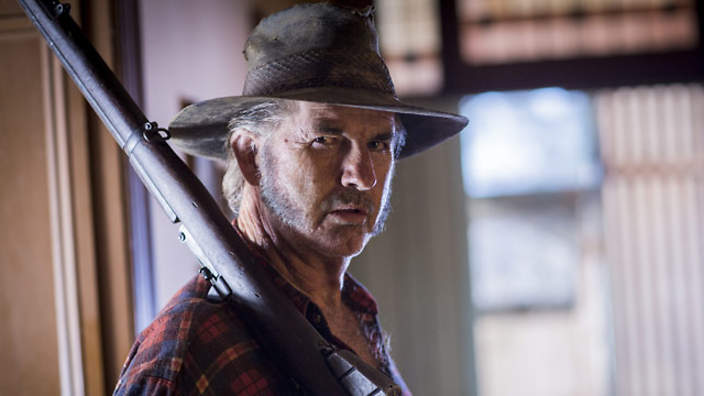
Australian film director Greg McLean returns to the scene of the crime with “Wolf Creek 2,” a movie which, supposedly anyway, is based on actual events. The original “Wolf Creek” came out in 2005 and introduced us to the relentless serial killer Mick Taylor (played by John Jarratt) who captures a group of backpackers and tortures them without any remorse. Now Mick is back to take on another group of tourists who make the mistake of crossing his path and have the serious misfortune of not being from his home country. If you are not a proud Australian and are not fully aware of the country’s rich history, pray you don’t run into Mick.
McLean also directed the killer crocodile horror film “Rogue,” and he is said to be a member of the unofficial “Splat Pack.” This term, which was created by film historian Alan Jones, refers to the modern wave of directors who make brutally violent horror films, and other members include Alexandre Aja, Neil Marshall, Eli Roth, James Wan and Rob Zombie. I spoke with McLean about “Wolf Creek 2” and he talked about how a sadistic psychopath like Mick Taylor can be strangely appealing, how this sequel differs from the original, and he pointed out the differences between making a film in Australia and the United States.
Ben Kenber: This was a terrific sequel, and it was great to see John Jarratt return as Mick Taylor. Mick is one of the most sadistic psychopaths ever put in a movie, and yet there is something about him which is undeniably appealing. Why is he so memorable and why are we drawn to characters like him?
Greg McLean: I think that people are generally fascinated with evil and true crime. A character like Mick Taylor represents a very interesting way of peering into a very, very dark psyche. People are fascinated with the nature of evil, and I think the appeal of a character like Mick Taylor is to really get a chance to examine someone who is completely devoid of any sign of humanity. He’s really incredibly dark and twisted, and he’s very terrifying. I think people who like horror films and thrillers and like being scared enjoy coming face-to-face with really disturbing personalities. There is a long history of really fascinating, evil characters and I think people are intrigued at how their personalities work.
BK: When it came to doing a sequel to “Wolf Creek,” was it something you had planned on doing all along, or did you consider doing it after the original movie was finished?
GM: My plan was always to see if the movie worked and people liked it. If people embraced the character (of Mick Taylor), then there will be a chance for another film. So it was always in my mind to do it, it just took a lot longer to get around to it than I thought it ever would (laughs).
BK: Regarding John Jarratt’s portrayal, did you develop the character with him or was it largely his creation?
GM: Well we obviously did the first film together so we had a background to how to approach the character and a discussion on what the character is about. We had been talking about this particular draft of the screenplay (for “Wolf Creek 2”) for a couple of years, so there were certain things we wanted to explore and certain aspects of the character we wanted to bring up, and we kept evolving it on set. Obviously John makes choices as an actor, and then some of those things are in the script and some are developed in the moment. When we got together, we just kind of jammed and came up with cool things to do.
BK: Since the script was in the development stage for a couple of years, did that make it easier for you to return to the character of Mick Taylor and the original movie’s setting?
GM: It certainly enabled us to mine the thematic ideas that we wouldn’t have had if we didn’t have such a long gestation period. We had a script a couple of years ago and it was good, but it just wasn’t amazing. I realized that there was an element to it that was missing and which was making me not want to pull the trigger on it, and what it didn’t have was a kind of somatic investigation into the character that I thought we needed to have. Then once I locked into that concept, then there was enough new information we revealed about his character that I thought it be worth making the film. We also wanted to make a different genre film. The first film is very much a first-person, true crime, real terror film whereas this one I wanted very much to explore the thriller film, and it’s more of an action film. It has horror elements, but it certainly is a different structure in terms of what kind of film that is.
BK: I agree, it does have a different structure and feels more like a road movie. Speaking of that, how did you manage to pull off the sequence where Mick Taylor launches the big rig truck into Paul Hammersmith’s (played by Ryan Corr) car?
GM: We just found a big hill and dropped the truck off it (laughs). It’s much easier to do stuff like that in Australia than it is in the (United) States. Doing things over there is still a bit of the Wild West. It’s interesting because I’m doing a film right now in Los Angeles and I showed that scene to some people and they were just like going, “Wow! How did you do that?” And there’s a shot after the actual truck hits where the fire is just actually continuing to burn the hillside, and everybody was freaking out about that. I said, “Why is that so weird?” They were just going, “Oh my god, how did you let the hill keep burning?” The restrictions are very intense. Obviously there are rules and regulations here and there are in Australia as well, but they were just fascinated by the idea of just literally destroying a truck and letting it burn a hole in the hill. We had fire brigades in the back, and we were able to just do some really crazy stuff. We also wanted to do it in a very practical way. I love doing CG stuff and we used a lot of CG for the kangaroo sequence, but some things I feel are just better to get onscreen practically because you see the texture of things and the physics of moving in a particular way that’s kind of cool.
BK: Yeah, I think that’s what I liked most about that sequence because it really did look real. In most American films, filmmakers would more likely film a sequence like that with CG.
GM: Yeah, I think that part of that is kind of a budgetary thing as well. When you have a low budget you have to find more practical ways of doing things. Digital effects, if you want them to, can be ultra-photorealistic and necessarily expensive. The other way to do it is to find a location you can do something like that and ask to just do it. For all the driving stuff in that sequence, we just closed down highways and did crazy driving on them for two weeks and got all the shots. It was great fun doing a sequence like that.
BK: Looking at those empty highways reminded me of “The Hitcher” with Rutger Hauer and C. Thomas Howell. You have this great open space, but still there’s something about it which is quite claustrophobic.
GM: Well I think the first movie had a very particular primary feed that it was drawing on, and this film to me was really about the fear of isolation in a desolate place. What most of the fear comes from is the primary idea of that which is quite different from the first film. The first film had a different emphasis which was more about the randomness of violence in the real terror that comes from believing someone is something and then suddenly seeing them transform. This one is really much more about exposing the audience to the real terror which comes from extreme isolation and being pursued by a character that is just relentless.
BK: What elements do you believe a horror movie should have in order for it to be successful?
GM: Two things. One, it needs to be based on a primary universal human fear that touches the psychic pressure point. Number two, the film has to have three, if not more, unique and believably memorable set pieces or things that people will talk about when they leave the cinema for hopefully weeks if not years, and that’s it.
I want to thank Greg McLean for taking the time to talk with me about “Wolf Creek 2.” The movie is now available to own and rent on DVD, Blu-ray and Digital.
It’s been a long time coming, but Australian actor John Jarratt finally returns to his famous role of serial killer Mick Taylor in “Wolf Creek 2.” When Jarratt first played this role back in the 2005 original, he succeeded in giving us one of the most terrifying psychopaths the world of cinema has ever seen. But at the same time, he also made Mick into one of the most amusing as well, and while watching him in this sequel you can’t help but laugh with him even as he becomes increasingly sadistic. Now he’s back to terrorize a new group of backpackers from other countries who don’t quite share his love for Australia.
I got to talk with Jarratt while he was doing press for “Wolf Creek 2,” and it was a real pleasure chatting with him. The sequel isn’t so much a horror movie as it is a thriller and a road movie, and Jarratt talked about the change in tone between the two movies. In addition, he also discussed how he based Mick Taylor on his father, how method he was in his approach to playing him, and of whether or not movies like this will affect tourism to Australia.
Ben Kenber: Thanks for another great performance as Mick Taylor. It was a lot of fun watching you play him once again.
John Jarratt: Thank you very much.
BK: You’re welcome. There was a long break between “Wolf Creek” and “Wolf Creek 2” (about eight years). Were there any changes for you in the way you portrayed Mick Taylor between the two movies?
JJ: No, not a bit. It was exactly the same. He’s not the kind of guy who has growth.
BK: That’s true. It was said you stayed in character during the making of “Wolf Creek.” Was this also the case on the sequel?
JJ: Not so much because I knew what worked, but you have to stay within the realms of it. You can’t be having a coffee and just fall back into John Jarratt and then some guy says, “Come over here and cut this person’s head off,” you know? So you’ve got to kind of stay in the zone if you know what I mean (laughs).
BK: But it’s not like Daniel Day-Lewis who stays in character 24 hours a day obviously.
JJ: No, I think that’s a bit of a wank, but anyway. With Mick Taylor, I tend to go a little bit method because he’s a psychopath and a serial killer, and it’s a long way from who I am, you know? So I have to work at that. People say you’re a method actor, and I just say I’m a professional actor.
BK: It was said that you based Mick Taylor on your father but that you filled in the evil bits because your father is clearly not evil. When it came to the evil bits, what exactly did you add?
JJ: Well if Mick Taylor wasn’t a psychopath and a serial killer, if he wasn’t bent, and if he was the guy you thought you knew at the hotel at the bar if you met Mick, that’s my dad. But like all serial killers he’s bent and everyone says, “He seems like such a nice guy and he’s a terrific fella. He’s quiet and he was a good neighbor and he’s mutilated 27 people, but…” The hard part for me was to find that part of Mick, that psychopath side, and find a way that he was comfortable with it, you know?
BK: Yeah. It reminds me of when Anthony Hopkins played Hannibal Lecter in “The Silence of the Lambs” where he said he wasn’t so much interested in doing research on serial killers. Instead, he worked on finding the psychopath or the crazy person within himself.
JJ: Yeah.
BK: While the original was a full out horror movie, and one of the scariest and unnerving in recent memory, “Wolf Creek 2” is more of a thriller and a road movie. How did you feel about that shift in tone this time out?
JJ: In a way, sequels are lose, lose affair, you know? If we made it pretty much the same as the first one, you’d all be complaining about that we didn’t go anywhere with it. But if you change a little, then everyone says it’s not like the first one. To me, I thought it was a good movement on the first one. The first one you wait for the monster to come out of the cage which is about halfway through the movie, and it’s the set up that’s scary and then how he becomes (who he is) and everyone freaks out. With the second one we all know who he is, so it’s a waste of time doing that so you get them from the get-go. It’s not unlike the first one much when Mick turns up because, as you may remember in the first one, they (the unlucky tourists) drive my pick up over a cliff and then I chased them in a car and I blow the girl way, and that’s the end of the movie. So there’s a bit of chase in that one, but a hell of a lot more in this one because you get the Mick thing happening from the beginning rather than halfway through.
BK: The scene where Mick Taylor sends that big rig truck rolling down a hill where it crashes into Ryan Corr’s jeep gives “Wolf Creek 2” one of its best action sequences. Were you on the set when it was shot?
JJ: Yeah, I was there. It was fantastic (laughs). The funny thing was that the jeep came down the hill and landed like nothing had happened to it. We didn’t expect that, but it says a lot about the jeep I’ve got to say. Then the big truck comes down and creams it, and it was a great day. They were 20 cameras on it watching the truck come down the hill. In real life it was quite stunning.
BK: I imagine it was. If this was an American production, I bet they would’ve used CGI effects instead, but the fact that you did the real thing makes the sequence all the more thrilling to watch.
JJ: Yeah, it was great. It was like “Mad Max” days, you know? It’s what Aussies do really well.
BK: What would you say you added to this character that wasn’t in the script or which Greg McLean didn’t come up with?
JJ: I don’t think I added anything. He (McLean) was there for the entire film. There was more opportunity for a lot more humor I suppose, but I honestly didn’t add anything. I just knew a hell of a lot more, and I thought Mick was pretty funny in the first one. I think about 90% of this film is Mick as opposed to 50%. I think that’s the difference, I really do, so I didn’t do anything differently except you see even more of what he does. I suppose that’s different.
BK: The black humor in this movie is very clever.
JJ: Yeah, you’ve got to have a laugh. You got to remember that he (Mick) is having a ball and he’s got a great sense of humor. If you met him in a bar you’d think he was a lot of fun; he’s a big barrel of happy-go-lucky and a fun kind of guy. He’s having a ball playing games with these Pommy backpackers, so I think it lends itself to comedy.
BK: A lot of people might look at a movie like this as if it will decrease tourism to Australia, but I think it will increase it because people travel to different countries for a variety of reasons. What effect do you think “Wolf Creek 2” will have on tourism?
JJ: I tend to think that tourism improves with these kinds of films and “Crocodile Dundee” kind of films. If someone gets eaten by a crocodile in the northern territory in Australia, the tourist numbers go up from the publicity it gets. So I don’t think people will be frightened (from travelling there) really.
I want to thank John Jarratt for taking the time to talk with me. “Wolf Creek 2” is now available to own or rent on DVD, Blu-ray and Digital.
I got to speak with Kim A. Snyder recently while was in Los Angeles to discuss her documentary “Newtown.” The documentary looks at the aftermath of the largest mass shooting of school children in American history which took place at Sandy Hook Elementary School on December 14, 2012. The school was located in Newtown, Connecticut, and we watch as the adults who tragically lost their children attempt to move on with their lives. But since this tragedy, these adults look to be stuck in a moment they may never get past. What they are left with is profound grief and memories which will now be forever tinged with sadness.
“Newtown” is certainly one of the most emotionally devastating documentaries to come out in some time, but it is not without hope. Not once is the killer’s name mentioned or his face shown as Snyder’s real interest is in the townspeople who struggle to move on despite all they have lost. As painful as their stories are, these are the stories which need to be heard as the media often tends to focus on the shooter more than anything else.
Snyder is an award-winning filmmaker and producer, and for a time she was a contributor to Variety Magazine. She made her directorial debut in 2000 with “I Remember Me” which chronicled her struggles with Chronic Fatigue Syndrome (CFS). She also directed “Welcome to Shelbyville” which documented the intersection between race and religion in America’s Heartland. Her other works include the short films “Alone No Love,” “One Bridge to the Next” and “Crossing Midnight.”
While talking with Snyder, she explained why the shooter’s name was never mentioned in “Newtown,” why the term “gun control” was never used, of how Atom Egoyan’s “The Sweet Hereafter” proved to be a major influence on this documentary, and of how she managed to find hope in a story filled with infinite grief.
Check out the interview above, and be sure to catch “Newtown” when it opens in Los Angeles on October 14. Also, be sure to visit the documentary’s website at www.newtownfilm.com.
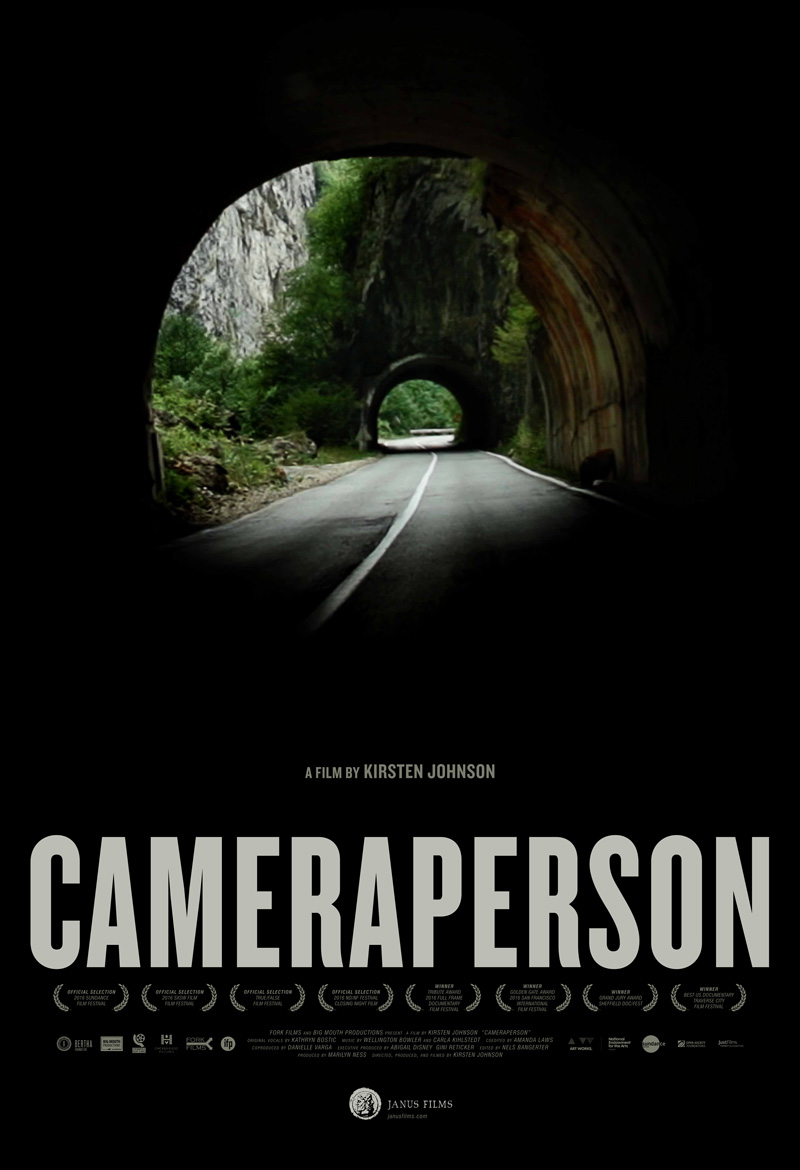
2016 has been a superb year for documentaries, and the latest example of this is “Cameraperson.” Directed by documentary filmmaker and cinematographer Kirsten Johnson, it is a series of images taken from her 20-plus year filmmaking career which she treats as a memoir of her life behind the camera. Among the visuals we get to see are of Brooklyn, a boxing match, postwar Bosnia and Herzegovina, a Nigerian midwife delivering babies as well as moments taken from Johnson’s own life as well. There is even a moment where she shoots footage of the entrance to an Iraqi prison which has a “you are there” feel to it, and it gets to where you are as eager to escape the area as they are. She presents these images to us in a movie without any narration as all these pictures tell a story all their own, and it is impossible to take your eyes off the screen. “Cameraperson” allows us to step into Johnson’s worldview as she takes us on a personal journey, and she acknowledges how complex it is to film and be filmed.
It was a real pleasure talking with Johnson while she was in Los Angeles to promote “Cameraperson,” and it resulted in one of the most fascinating interviews I have conducted this year. I was very eager to learn about how she went about constructing her documentary and of how it evolved from start to finish. This could have just been a movie with a bunch of images thrown together randomly, but there was clearly a lot of thought put into this one. Johnson also explained how she resisted the urge to put narration in her documentary, and she even shared some behind the scenes stories about “Citizenfour” which she was one of the camera people on.
Please check out the interview above, and be sure to watch “Cameraperson” which is now playing in Los Angeles at the Laemmle Royal thru September 29th.




 The Ultimate Rabbit