‘Dirty Harry’ Movie and 4K Review
The following review was written by Ultimate Rabbit correspondent, Tony Farinella.

Dirty Harry” is a film I’ve heard a lot about during my almost forty years on this planet, especially when I started to watch movies regularly in my youth. It’s long been a part of American pop culture, and it’s hard for me to believe this was my first time watching it.  I’m familiar with the “Do you feel lucky, punk?” speech that has been repeated by numerous cinephiles over the past fifty years.  “Dirty Harry” was released in 1971. The 70’s are my favorite decade of American cinema, as the films back then were raw, dirty, and unapologetically in-your-face.

Our antagonist in this film goes by the name of Scorpio (Andrew Robinson), and when he’s first introduced on screen, he’s seen killing a woman in a San Francisco pool from a rooftop. Scorpio a vicious sniper who plans on killing more innocent people unless his demands are met.  He’s looking to get $100,000, and if he doesn’t, he will kill one person a day, starting with either a Catholic priest or an African American.  Police Inspector Harry Callahan (Clint Eastwood) found his ransom letter and wants to take matters into his own hands much to the dismay of the San Francisco Police Department. He’s called Dirty Harry because he’s not afraid to get his hands dirty and do whatever is necessary to find his man. He also appears to hate everyone equally, regardless of their race.
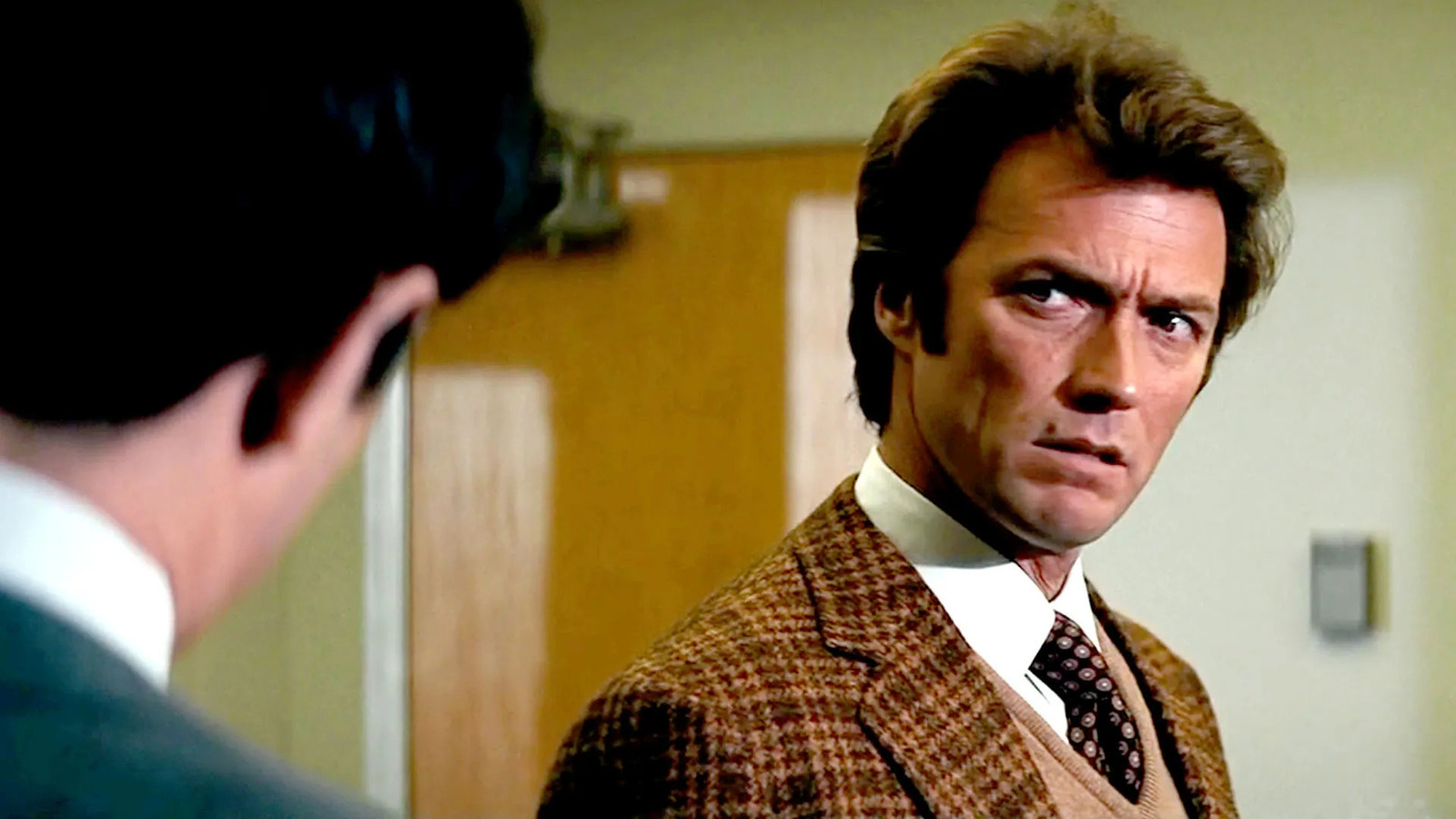
Harry is none too pleased when he’s assigned a rookie partner named Chico Gonzalez, played by Reni Santoni. Harry’s previous two partners ended up injured or dead. Before long, Scorpio decides he wants to raise the stakes–he wants $200,000 or he will kill a teenager named Ann Mary Deacon.  It’s up to Harry and Chico to put a stop to this before it gets even worse for the entire city of San Francisco. The biggest problems in Harry’s life come from his own police department, as they want him to play by the rules and follow police protocol.  Harry Callahan knows he’s dealing with a lunatic here, and you can’t reason with someone who is evil, maniacal, and cold-blooded.

My biggest issue with “Dirty Harry” is the fact the film presents an antagonist and a protagonist who are written in a bland and one-note fashion. Eastwood is known for his understated and minimalist approach to acting, and most of the time, it works. In “Dirty Harry,” for me, I wanted to learn more about what makes him tick and what his backstory is.  I didn’t need everything to be explained to me in granular detail, but we know very little about him.  The mystery of Harry Callahan doesn’t work in this film because I found myself detached from the character.  Scorpio is just an over-the-top villain. What is anyone’s motivation here?
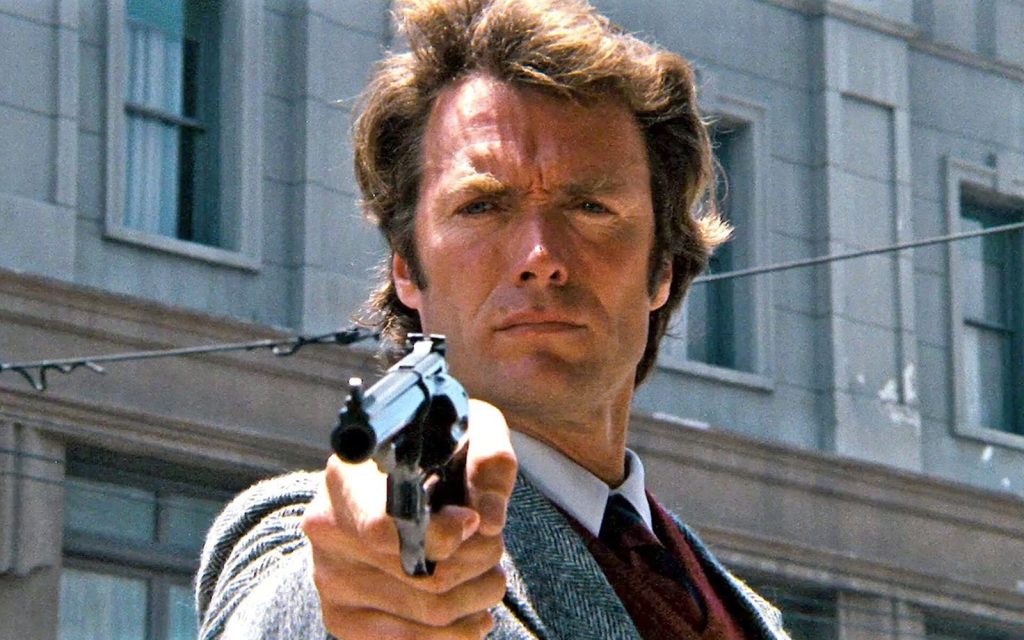
“Dirty Harry” is a film which is all about the chase.  It’s all about Harry chasing Scorpio, and it’s interesting to a degree, but it doesn’t hold up for the duration of the film.  I understand the film is making a statement about police violence and what needs to be done in order to achieve a peaceful environment for everyone involved. Do the police need to resort to a more aggressive style of police protocol? Are they letting criminals get away with too much? Do the police need to bend the rules a little bit if it allows everyone to feel safe?  I understand what the film was trying to say, and I don’t need everything to be spelled out for me perfectly, but this is a film that felt flat and uninteresting to me. I needed a little more meat on the bone here.  It’s OK to have a simple story, but you need characters with a little more depth to them than simply good guy versus bad guy.

Overall, I liked the beginning and the end of the film, but the film completely lost me in the middle when it was the back-and-forth chase between Scorpio and Harry Callahan. There is little to no dialogue going on in these scenes, and I respected the style that was on display from director Don Siegel, but I needed something else to grab me to keep my attention. “Dirty Harry” is a Hollywood classic, and I understand many filmgoers hold it in very high regard.  I was anticipating having a strong reaction to it. When it was over, I thought to myself, “That’s it?”

* * out of * * * *

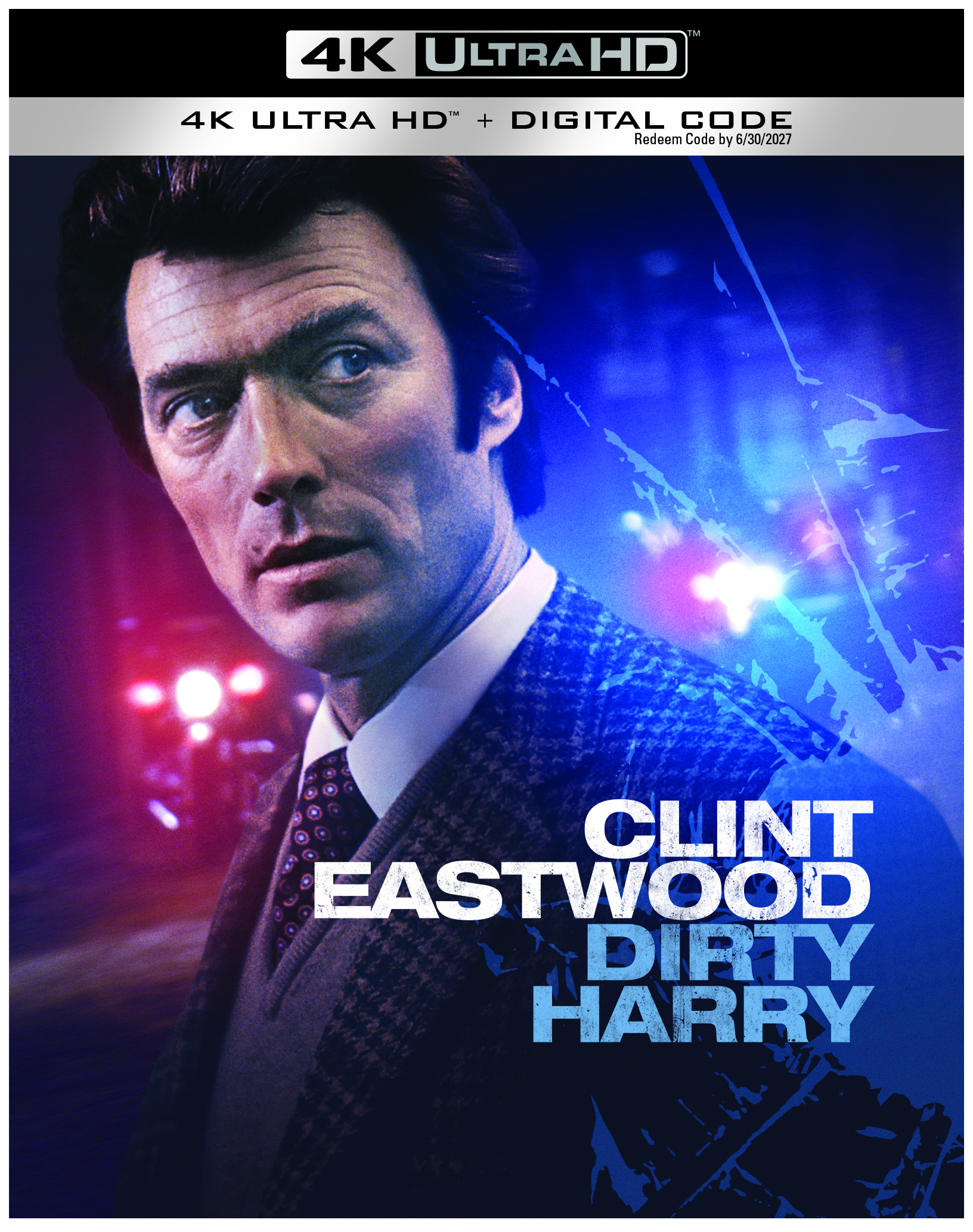
4K Info: “Dirty Harry” is released on a single-disc 4K from Warner Brothers Home Entertainment in either a slipcover version or a collector’s edition steelbook. There is also a digital copy of the film included in the set.  The film has a running time of 102 minutes and is rated R.

4K Video Info: The 4K HDR transfer here is striking and vibrant while maintaining a grimy and old-school look to it in the process. When the film is taking place during the day, the colors really pop and shine on screen. When it takes place at night, the deep blacks are on full display.

4K Audio Info: The Dolby Atmos track is sharp and solid throughout the film. It’s powerful without being overbearing. Subtitles are included in English, Spanish, and French.

Special Features:

Commentary by Richard Schickel

Generations and Dirty Harry – NEW

Lensing Justice: The Cinematography of Dirty Harry – NEW

American Masters Career Retrospective: Clint Eastwood: Out of the Shadows

Clint Eastwood: The Man from Malpaso

Clint Eastwood: A Cinematic Legacy – Fighting for Justice

Interview Gallery

Dirty Harry’s Way

Dirty Harry: The Original

Should You Buy It?

If you love “Dirty Harry” and it’s one of your favorite films, you’ll be over the moon about this 4K release, which includes over four hours of special features. They really made sure they went above and beyond for this 4K release, and I imagine a lot of people have been waiting a long time for this.  Visually, it’s a stunning release that is sure to satisfy physical media lovers out there. The Dolby Atmos track stands out on this as well. For people who haven’t seen the film before, like myself, I don’t know how well it will hold up with a modern audience or a first-time viewer. It didn’t connect with me, and I was disappointed by the majority of it. It was a film I respected, but I didn’t connect with it the way I have other Clint Eastwood films I’ve been watching lately. If you haven’t seen it before, you might want to watch it before you blind buy it.

**Disclaimer** I received a copy of this film from Warner Brothers to review for free.  The opinions and statements in the review are mine and mine alone.

‘Enter the Dragon’ Movie and 4K Review

The following review was written by Ultimate Rabbit Correspondent, Tony Farinella.

My unofficial title of a film buff might be revoked when I reveal this is the first Bruce Lee film I have ever watched. I do have “Bruce Lee: His Greatest Hits” on Blu-ray from the Criterion Collection, but I have yet to dive into those films.  “Enter the Dragon” was the last film Lee completed before his untimely death.  With it being the 100-year anniversary of Warner Brothers, they have taken it upon themselves to give this film the 4K treatment.  While I have some issues with “Enter the Dragon,” for the most part it was a decent introduction to Lee.  I look forward to checking out more of his films with my Criterion box set.  There are too many films out there and not enough hours in the day.

Bruce Lee stars as Lee, a skilled and proficient martial artist and instructor, being approached by Braithwaite (Geoffrey Weeks), a British intelligence agent, about entering a martial arts tournament. The tournament is being run on a private island by the villainous Han (Kien Shih). He needs Lee’s help as he suspects Han is involved in prostitution and illegal drug trafficking. He needs Lee to enter the tournament and find out the inside scoop on Han and his operation.  It’s also a deeply personal mission for Lee as he finds out one of Han’s goons has caused Lee’s family pain and misery.

Lee is joined in this tournament by a compulsive gambler named Roper, played by film veteran John Saxon, and the smooth-talking Williams, played by Jim Kelly. They are treated to beautiful women and told to stay in their rooms and not ruffle any feathers.  One night, Lee goes out looking for clues and evidence, which leaves Han wondering what is going on with his security team. Can he trust his men to keep Lee, Roper and Williams in line? Lee seems to be one step ahead of Han, but Han has an army of men and will stop at nothing to keep his enterprise up and running.

“Enter the Dragon,” overall, was a mixed bag for me.  The first hour of the film really lost me, and it seemed to move at a glacial pace.  I’m all for building up the story, the characters, and giving us time to digest everything before the final battle. I’m on board with that one hundred percent, and I like interesting characters and a good build-up to a grand finale. However, the first hour is tedious and rather boring.  It doesn’t really go anywhere.  When we get to the last half-hour and Lee gets to do his thing, it’s a beautiful movie to watch unfold on screen.  The martial arts sequences are put together like a work of art and are truly out of this world.

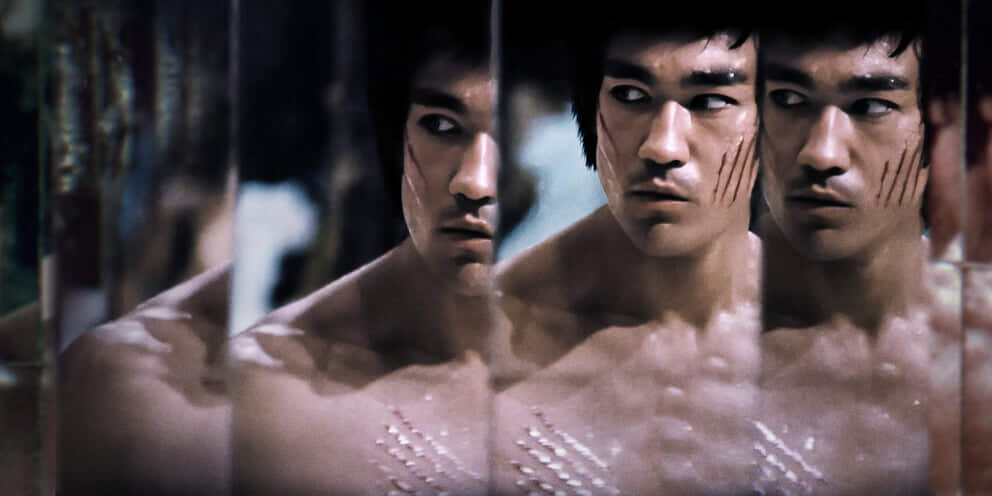
Maybe I’m asking too much for a martial arts movie to have a better story, but it’s more about the pacing.  There is no sense of urgency in a film that is only 99 minutes or 102 minutes if you watch the special edition of it.  Don’t get me wrong, I absolutely was enthralled with the last act when it comes down to Han and Lee. The way they use the mirrors and what’s around them had me on the edge of my seat, literally. Bruce choreographed the fight scenes himself, and he has a great screen presence.  I didn’t feel like he had a ton of screen time, but when he’s on screen, he really makes his scenes count. It’s remarkable how lightning fast and intense the fight sequences are, and they are flawless.  You have to give credit to Bruce for looking the part, playing the part, and putting so much into this film.

Many people have talked about the spy aspects of the film and compared it to the James Bond franchise. I didn’t really feel like they fleshed out those aspects enough.  I really wanted more of the meat and potatoes of the story. I know Lee was a silent but deadly killer in this film, but the rest of the cast can be a little too cartoonish at times.  Again, I was blown away by the final 30-40 minutes.  If they had properly built it up in the first hour, I would have considered it a classic, which many film critics and historians out there have labeled it.  Maybe I need to give this one another watch, but on my first viewing, I can’t say I see the historical significance of this film.

* * out of * * * *

4K Info: “Enter the Dragon” is released on a single disc 4K from Warner Brothers Home Entertainment.  The theatrical cut of the film runs at 99 minutes while the special-edition version runs at 102 minutes. The film is rated R for martial arts violence and brief nudity.  It also comes with a digital copy of the film.

Video/Audio Info:  The High Dynamic Range on this 4K release is very, very strong here.  The film was released in 1973, and many scenes were incredibly bright, colorful and eye-popping.  It still has a little bit of the old-school charm to it, but it’s also touched up. That being said, it isn’t so touched up that it looks too clean.  This is a prime example of a film that is improved with a 4K release, but it still keeps its classic look at the same time. The Dolby Atmos track is perfect here.  It also comes with subtitles in English, French, and Spanish.

Special Features:

Introduction by Linda Lee Cadwell

Commentary by Paul Heller and Michael Allin

Should You Buy It?

Film criticism is subjective, and I really wanted to love this film. I’ve loved what Warner Brothers has been doing lately with their restorations of classic cinema.  I’m always looking to learn about new films and classic Hollywood stars.  With that being said, I was bored and uninterested in two-thirds of this film.  For a classic, it shouldn’t be the case.  I will give credit where credit is due and say the final 30-40 minutes feature some of the best martial arts I’ve ever seen in my life.  I didn’t expect the film to be wall-to-wall action, as that wouldn’t be feasible, but I was hoping for a little bit more out of the characters, pacing and storytelling, even in a martial arts movie. If you are a Bruce Lee fan and you adore this film, you won’t be disappointed in the least by this 4K release and transfer.  I’m willing to watch this film again and see if I missed something. In the end, it’s one with a grand finale that needed a story and some build-up to accompany it.

**Disclaimer** I received a copy of this film from Warner Brothers to review for free.  The opinions and statements in the review are mine and mine alone.

Favorite Opening Titles: ‘Bullitt’

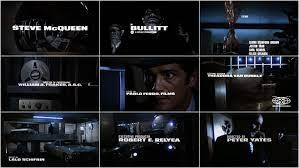
Peter Yates’ 1968 neo-noir action thriller film “Bullitt” was my introduction to one of the coolest actors and movie stars ever to inhabit this planet of ours, Steve McQueen. It also starts off with one of the most ingenious opening title sequences I have ever seen as a dozen men are waiting outside of a building for a certain individual whom we later see is waiting for them and already prepared to escape their clutches. Seeing the names of the main actors being revealed and then having them come right at us showed how creative one can get with opening titles, and they have the benefit of being scored by the man who would later create the music which Edgar Wright would call “acid jazz” for “Dirty Harry,” Lalo Schifrin.

The opening titles for “Bullitt” were designed by Cuban-American graphic and film titles designer, Pablo Ferro. His list of credits is extensive, and many of his other film titles may end up on this website at some point. What I love about his work on this particular sequence is how cool it all works and how it gives you a sense of not only characters on the move like John Ross, but also of how we are invited to look much closer at everything which goes on here. While everything might seem crystal clear on the surface, the antagonists are eventually going to get quite a rude awakening when they realize they are not as smart as they think.

Keep in mind, we do not see any of the main characters in these opening titles. What we do see is the beginning of a chase for a certain individual, and it is contained within a motion picture which has one of the greatest car chases in cinematic history. While we are left to guess how everything we see here adds up, this is perfect as the characters we are eventually introduced to such as Steve McQueen’s Frank Bullitt, Robert Vaughn’s Walter Chambers and Don Gordon’s Detective Delgetti are thrust into a situation which has more layers than they initially realize.

“Bullitt” remains one of the greatest cop movies ever this side of “The French Connection,” and I recommend you check it out if you have not yet done so. Please feel free to check out its opening titles down below.

Edgar Wright and Quentin Tarantino Look Back at ‘Dirty Harry’

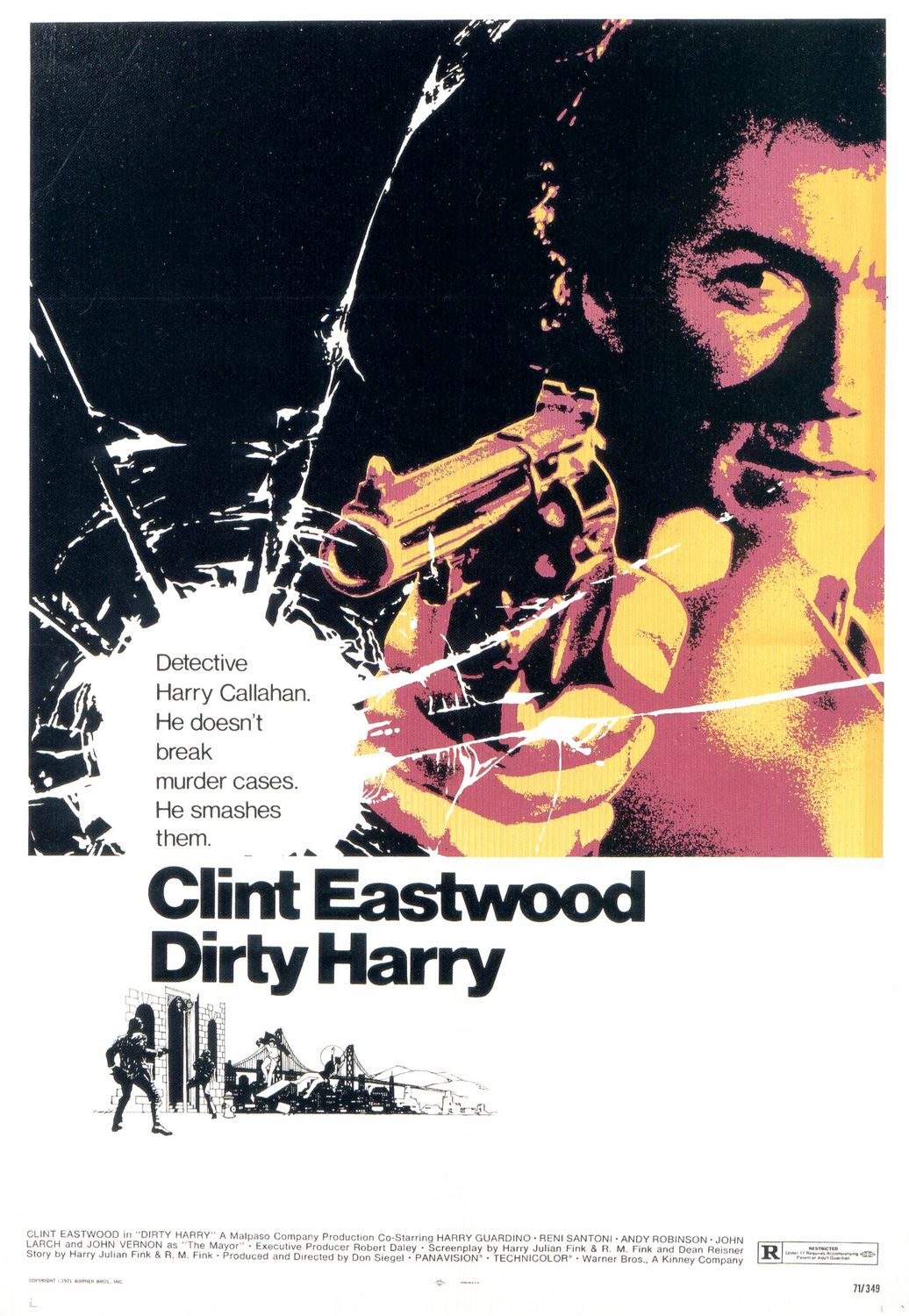
Dirty Harry poster

Of all the movies Edgar Wright selected for The Wright Stuff II Film Festival at New Beverly Cinema, “Dirty Harry” is the one he has watched the most. Wright screened a nice print of the 1971 classic along with another movie called “The Super Cops,” and joining him to talk about it was filmmaker Quentin Tarantino.

They started off riffing on trivia about how the original title for “Dirty Harry” was “Dead Right,” and how it was first going to star Frank Sinatra who later pulled out when the 44-magnum ended up injuring his wrist. It also turned out the late Irvin Kershner, who directed “The Empire Strikes Back,” was the first choice to direct the movie (Don Siegel eventually took the job). Tarantino and Wright also talked about how actor Albert Popwell played a different black stereotype in each “Dirty Harry” film except for “The Dead Pool,” and they both wished he played the mayor in that one.

For Wright, what he loved about “Dirty Harry” was the grittiness of its main character and the atmosphere of San Francisco. On the DVD for “Hot Fuzz,” Wright did a location tour where the film was made, and he even checked out the deli where Eastwood was filmed eating a hot dog when the bank robbery took place. As for the film’s score by Lalo Schifrin, he declared it his all-time favorite saying it marked the birth of “acid jazz.”

But much of the treasure trove of information came from Tarantino who said he first saw “Dirty Harry” when he was five or six years old, and he described it as a “political lightning rod” upon its release. Apparently, it got a lot of crap thrown at it by liberal critics who didn’t want a police fascist solution as well as from right wingers who got freaked out by Scorpio and the ills of society.

The way Tarantino viewed it, however, “Dirty Harry” does have a solid agenda. When Andy Robinson played Charles “Scorpio” Davis, there had never been a villain like him before in movies and, the term serial killer had not really been coined yet. The agenda was for there to be new laws for new crimes, and “Dirty Harry” was screaming for those new laws. Scorpio was not your average villain, and that he got such a kick out of his crimes was easy to see. There was no cure in store for such a psychotic character like this one.

Both Tarantino and Wright agreed “Dirty Harry” really holds up after 40 years. Much of this is due to its sequels treating the iconic character more as a superhero than a regular human being.  With “Magnum Force,” Tarantino felt it was made more for critics of the first movie than its audience as it preached against its predecessor and the character itself by having Harry go after those taking the law into their own hands. This was the same deal with the other sequels, but “Sudden Impact” is the lone exception. Wright remarked at how, along with John Carpenter’s “Halloween,” “Dirty Harry” has one of cinema’s most perfect endings which was eventually ruined by sequels.

They also talked about Siegel who had already been around for a long time before he directed “Dirty Harry.” Siegel was a B-movie genre director from the 1950’s and a Hollywood craftsman who eventually became an auteur. For the most part, Harry Callahan represented the quintessential character of his films; the cop who takes the law into his own hands. Even after directing the 1971 classic, Siegel would continue to have a long and healthy career in films, eventually reuniting with Eastwood on “Escape from Alcatraz.”

Tarantino also described “Dirty Harry” as the single most ripped off and imitated action movie of the 1970’s. He even gave a list of every single movie which stole from it: “McQ,” “Newman’s Law,” “Nightstick,” and everything from Cannon Films. The similar thing about the ripoffs was they lost all the political subtext which made “Dirty Harry” such a strong film. It became all about going after some big drug dealer or crime syndicate, and there was nothing political about that. When it came to 1970’s movies, the only others which were stolen from as much were the ones starring Bruce Lee.

“Dirty Harry” apparently also boasts the first homosexual date in cinema history as seen through Scorpio’s scope rifle. Tarantino said it was the first instance of unforced male sexuality in movies, and he still remembers the audience laughing at this scene when he first saw it. Back then he thought the audience wanted this couple killed, pointing out how they were not as enlightened as we are today, and that they were culpable for their “sinister intentions.”

Hearing these two great filmmakers talk about this Don Siegel/Clint Eastwood classic made for one of the most interesting evenings I have ever spent at New Beverly Cinema. A new generation of audiences will look at “Dirty Harry” differently and may see it as tame compared to plethora of serial killer movies we see today. With the popularity of “The Silence of the Lambs” and the “Saw” movies among others, serial killers have long been the norm in American cinema, so the accomplishments of the 1971 classic threaten to seem diluted as a result.

Thanks to Edgar Wright and Quentin Tarantino, we are reminded of “Dirty Harry’s” place in cinematic history and how it opened doors not just for Eastwood, who made the transition from westerns to other films, but for so many other movies as well for better and for worse.