WRITER’S NOTE: This article was written in 2010, back when this anniversary screening took place.
Alan Rudolph’s 1985 neo-noir movie “Trouble in Mind” reached its 25th anniversary in 2010. This is especially significant because it got lost by its distributors about twenty years ago, and they only recently found a print of it. The movie has since been restored and been released in a new special edition DVD. To celebrate its anniversary, the producer of “Trouble in Mind,” Dave Walker, showed a new print of it at New Beverly Cinema. Along with him were actors Keith Carradine who played Coop and Lori Singer who played Georgia, and they were also joined by the composer of the film’s score, Mark Isham.
In talking about working with Rudolph, both Singer and Carradine said they never really rehearsed any scenes. A lot of it came down to them meeting with Rudolph, talking about the screenplay, and getting on the same page with what he wanted to accomplish. Singer explained how he created a “very vivid atmosphere” which came about from an “organic, real feeling.” In summarizing Rudolph’s filmmaking process, Singer said, “Whatever he was shooting, he was capturing his vision. That was our rehearsal.”
Isham described Rudolph as a “jazz director” in that he wanted to get everything right in the first take. When asked how he got the job on “Trouble in Mind,” Isham explained he was being represented by CAA and his agent encouraged him to make a list of directors he wanted to work with. After seeing one of Rudolph’s other movies, “Choose Me,” Isham decided he wanted to work with him. Rudolph ended up listening to one of Mark’s albums, liked it and hired him.
One question asked of Isham was in regards to working with singer Marianne Faithful on two of the film’s songs. Isham said he knew nothing about Faithful beforehand, but that he quickly learned she was an artist of instinct, and they captured a lot of magic on tape whenever she sang. Basically, he did an acoustic piano version of each song she would sing, and he gave her the music through headphones. Isham went on to say he added synthesizers to the soundtrack afterwards.
Isham is also considered one of the best trumpet players ever, and he did perform on one here. He stated how he has been playing the trumpet since he was eight years old and is always looking to put it in any movie he works on.
Another audience member asked Carradine about Coop’s hair and why it got all funky throughout. Carradine said he contributed to the look and described it as an “expression of descent into a kind of netherworld from innocent to deeply urban sensibility he was defenseless against.” Coop saw the change of hair as him becoming beautiful, and he was convinced that Singer’s character would like it. Carradine described it as Coop’s way of trying to fit into a world he was utterly clueless about, and that the hair he used was indeed his own, and these days he doesn’t have much of it left.
Carradine and Singer also spoke of working with Divine, the actor made famous in several films directed by John Waters, “Pink Flamingos” in particular. They said they really loved him because he was the sweetest guy and wonderful to work with.
After twenty-five years, “Trouble in Mind” still holds up very well, and hopefully its DVD release will open it up to a young audience waiting to discover something new and different. Rudolph has said this films is meant to have the look of a dream, and he gave Singer all the credit for that. The dream is still a strong one even with an elongated passing of time.
WRITER’S NOTE: This article was originally written in 2012.
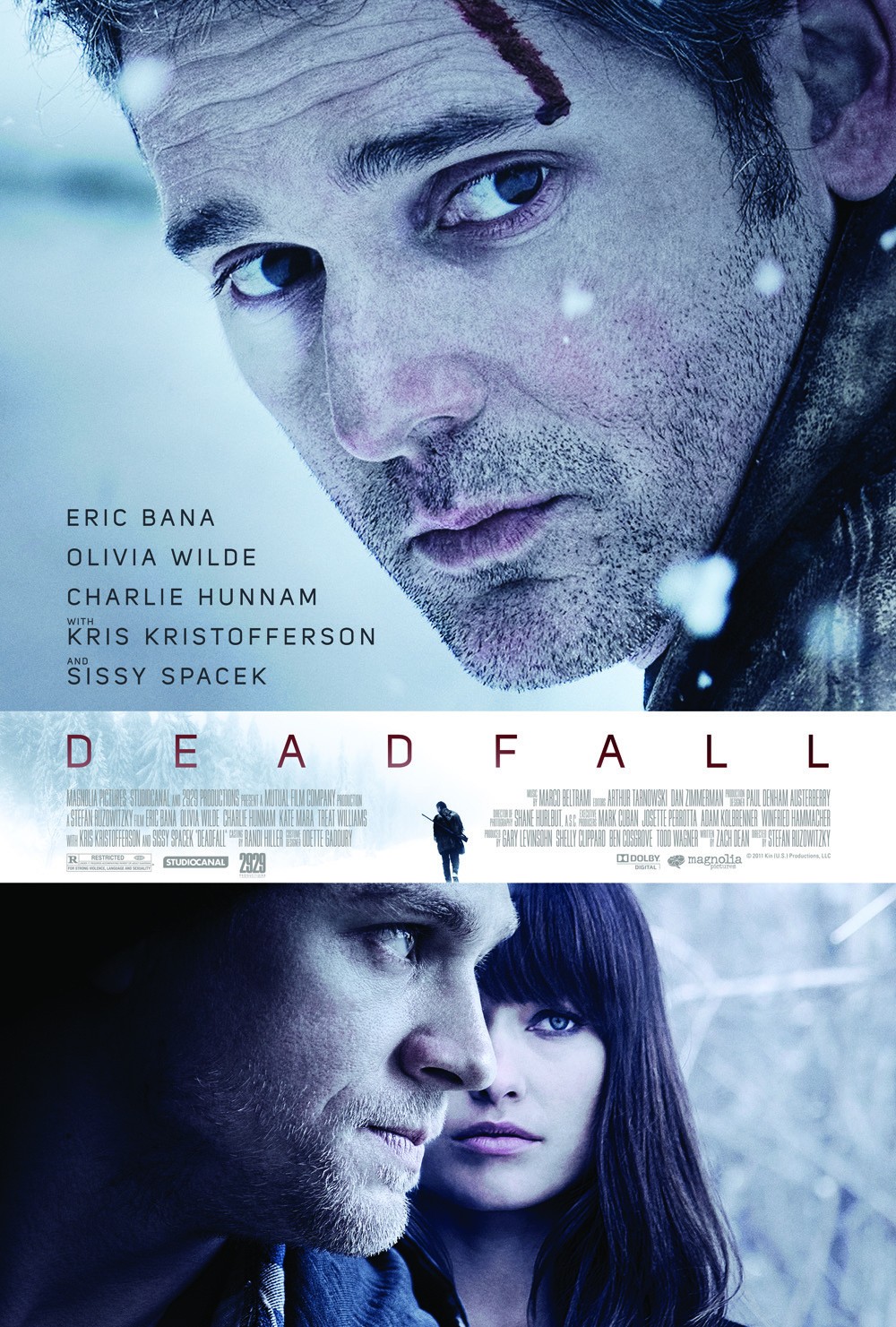
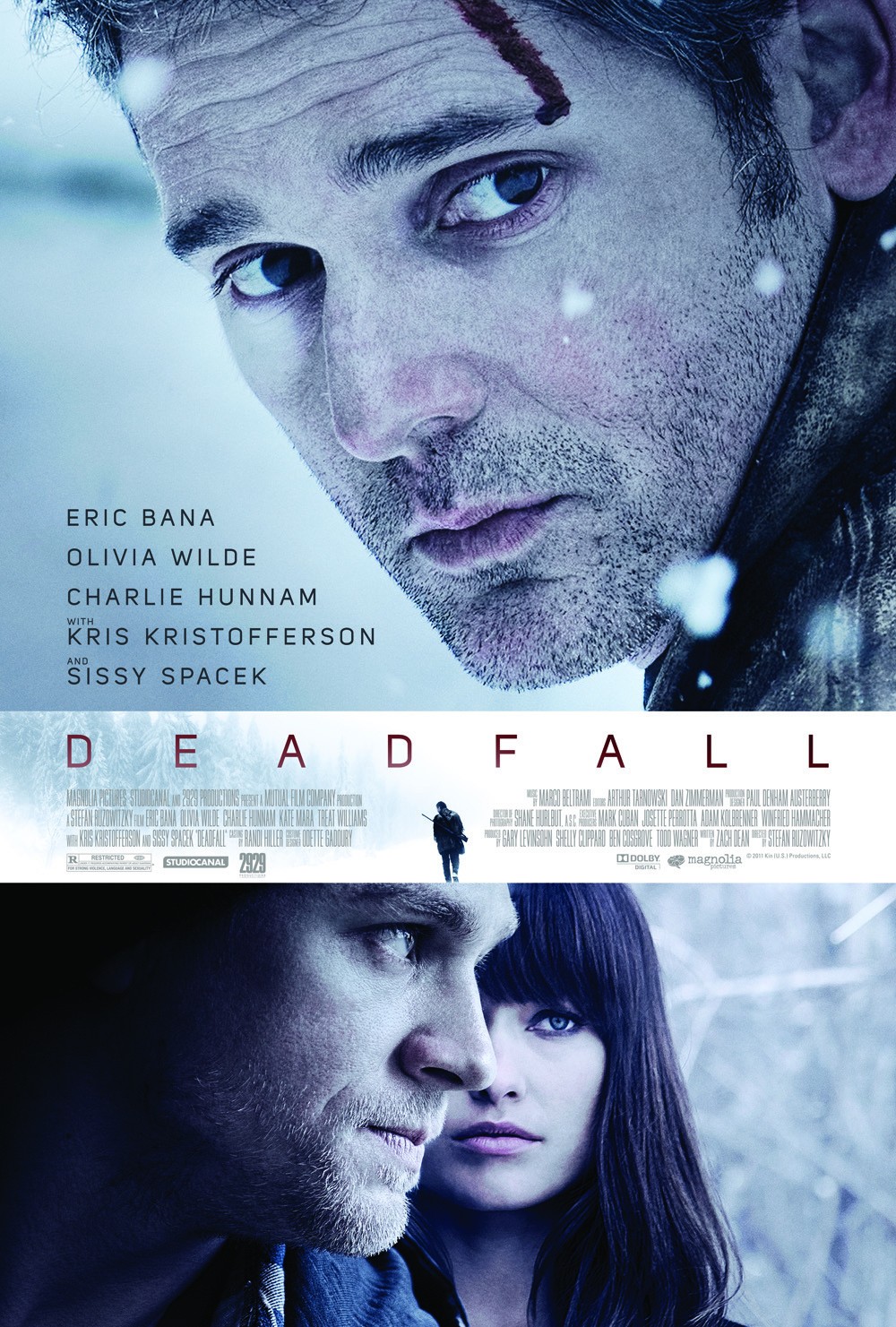
Watching Eric Bana as Addison in Stefan Ruzowitzky’s “Deadfall” will remind many of his breakthrough performance as Chopper Read in “Chopper.” Both films have him playing characters who are charming yet fearsome, and his unpredictability as an actor had us on the edge of our seats throughout. But hearing Bana talk about how he prepared to play Addison is a reminder to all actors on how to approach a role like this; the character may be a bad guy, but he’s still a human being with wants and needs like anybody else. It’s not just about acting evil all the time.
I was lucky enough to attend the “Deadfall” press conference at the Four Seasons Hotel in Beverly Hills, and Bana said he really liked Zach Dean’s screenplay and was “immediately compelled” by Addison. Bana described the character as being “quite hilarious actually,” and this was one of the main reasons he wanted to play him. It was interesting to hear him say that because funny is not an easy adjective to give to a character like Addison who can react violently without little or any notice. Bana, however, started out as a stand-up comedian and saw the opportunity to bring some darkly comedic touches to this role.
“I don’t think there was anything deliberately funny in Addison, but I think the situations that all the characters find themselves in and some of the things he does are inadvertently very funny,” Bana said. “It wasn’t like playing for laughs but I knew the audience probably would laugh at some of the ridiculous nature of what we’re all forced to do.”
Bana also went on to say he thought Addison was “morally straight” and that he really did not see the character as being a bad guy. Now while the crimes he commits in “Deadfall” certainly tell us otherwise, I really liked Bana’s approach to this role. It reminded me of a behind the scenes special on “Die Hard” where Alan Rickman talked about how he saw his character of Hans Gruber:
“As far as I’m concerned, I am not playing ‘the villain.’ I’m just playing somebody who wants certain things in life, has made certain choices and goes after them.”
The same can be said about Bana in the way he portrayed Addison.
“He had a strong sense of purpose in what he was doing and that is what makes those characters so scary, knowing you can’t really negotiate with him,” Bana said of Addison. “In his mind everything he’s doing is completely and morally correct and there’s a real reason for it. It’s not the actor’s place to judge, but I’m more than happy to be morally corrupt for a few months for the benefit of my career.”
This thought process was even more on display when Bana was interviewed by James Rocchi of MSN Entertainment. Rocchi talked about “Deadfall’s” first scene in which Addison’s car crashes and ends up shooting a state trooper in the process, and he described Addison as being spontaneous in his actions as this guy is thinking on his feet and improvising constantly. Bana explained that when the actor commits fully to their character’s actions, they should all come out naturally.
“I don’t like to think too much about what my physicality’s going to be here. I’d rather immerse myself in the character’s brain and allow my body to react accordingly,” Bana told Rocchi. “But that instance in the beginning of the film kind of sets in motion the rest of the stakes really for Liza (Addison’s sister who is played by Olivia Wilde) and Addison from that point on in that it just keeps getting worse and worse and worse. But you’re right. I mean he had no intention of shooting anybody. They got away from the casino, they got the cash, and all was going really well until that freaking deer popped out into the middle of the road and it all changed.”
Throughout “Deadfall,” Addison ends up engaging a couple of nasty fights, some of which are with Jay who is played by Charlie Hunnam (“Sons of Anarchy”). We keep hearing actors say how they did their own stunts in this or that movie, but we can never be too sure as the insurance people are usually dead set against that ever happening. But I believed Bana when he said that he did his own stunts in “Deadfall” because even he couldn’t hide the toll it took on his body.
“My neck was ruined,” Bana told Ariel Kashanchi of Screen Picks. “Charlie Hunnam beat the shit out of me. I don’t think I landed a punch. It was just like bang, bang. I remember after about five takes I was stiff all over and thinking ‘how much more can my neck take.’ I’m used to throwing punches and now I just have to just sort of take it. But it was kind of fun.”
“Deadfall” has received mixed reviews, but there is no denying Bana gives a riveting performance as Addison. Playing a charming bad guy is nothing new for this Australian actor, and he is still great at it. In a year of movies filled with truly intimidating antagonists, Bana’s performance deserves to be held up alongside the best of the bunch.
“Deadfall” is a riveting thriller which held my attention from beginning to end, and sometimes that’s all I ask of certain movies. This one came out under the radar back in 2012, premiering on VOD first and then debuting in a few theaters, and it is no surprise in didn’t catch on with audiences as a result. But while it may not break any new ground in the crime drama genre, and I did have a couple of issues with the script, I did admire the performances from the entire cast. Also, director Stefan Ruzowitzky does strong work in keeping the level of tension high throughout the proceedings, and this is enough for me to give the movie a solid recommendation.
“Deadfall” opens with Addison (Eric Bana) and his sister Liza (Olivia Wilde) driving through a snowy landscape while on their way to the Canadian border. They have just robbed a casino which didn’t go exactly as planned (things like that never do), and their situation gets even more precarious when their car crashes which forces them to split up. The car crash which opens the movie is a hair raiser and pretty nasty, and it reminded me of how deer are more fascinated with oncoming headlights than they have any right to be.
Meanwhile, Jay (Charlie Hunnam) has just been released from prison and is contemplating the possibility of meeting up with his parents June (Sissy Spacek) and Chet (Kris Kristofferson) for Thanksgiving dinner. But things get bad for him as well after he accidently injures a former colleague severely, and he ends up on the run rather than run the risk of going back to jail. While driving through blizzard conditions he comes across Liza who is shivering due to the lack of warm clothes, and he quickly saves her from freezing to death. From there, you know all these characters’ paths will eventually cross with one another by the movie’s end.
The first thing I want to point out is how beautiful the cinematography in “Deadfall” is. It was shot in Canada and director of photography Shane Hurlbut does incredible work in capturing the snow’s beauty as well as how unforgivingly punishing it can be. Even as I watched this in a very nice air-conditioned screening room, I found myself wanting to put my jacket on. This became even more so while watching poor Olivia Wilde walk through a blizzard while wearing a miniskirt. After watching her in “Deadfall,” you cannot say she is not brave actress.
As for the performances, the best one was given by Eric Bana as Addison. The actor has left an indelible impression on us in movies like “Chopper,” “Black Hawk Down” and “Munich,” and he makes Addison a very charming bad guy. There should be no doubt in anyone’s mind that Addison’s a psycho and someone we would all be best to keep our distance from but you can also understand why some of the characters in “Deadfall” hang out with him a lot longer than they should. Bana proves to be very unpredictable in the role, and you can never be sure at certain times if he’s going to be naughty or nice.
Wilde also delivers a strong performance as Liza, and she once again proves what a fiercely intelligent actress she is. Throughout “Deadfall,” we watch as she takes Liza from seeming like a lost girl to becoming a person whose confidence in their self continues to build. The relationship Liza ends up developing with Jay helps start the process of freeing her from Addison’s Svengali hold, and Wilde creates a fascinating portrait of a woman who manages to come into her own by the movie’s end.
Charlie Hunnam, best known for his work on the television show “Sons of Anarchy,” looks appropriately tough in the role of Jay. As we watch him getting released from prison at the movie’s start, he looks more than capable of boxing any opponent into complete submission. But the strength of Hunnam’s performance comes from those shades of vulnerability which his character cannot keep hidden. While prison has made him hard, it has not robbed him of his soul. Jay has made some foolish mistakes in his life, but Hunnam makes you care about him to where you cannot help but be deeply involved in his plight.
Kate Mara is also very good here as police officer Hannah, but she is unfortunately saddled with a father who treats her poorly because she’s a girl. Treat Williams plays Hannah’s dad, but while he’s always good, his character feels like an unnecessary addition to “Deadfall.” All we see him do is talk down to his daughter even when we can tell she is absolutely right about everything she sees going on. It’s the stupidity of characters like which really gets on my nerves.
You also have to give credit to Ruzowitzky for taking the time to cast Sissy Spacek and Kris Kristofferson as Jay’s parents. It’s astonishing to realize these two actors have never worked together before, and they bring an authentic down to earth flavor which helps ground the movie’s story in a reality we can recognize. Kristofferson’s part is a little underwritten, but it’s still fun to watch him here.
“Deadfall” ends on a somewhat frustrating note as there are a lot of loose ends left over and the fates of certain characters are left unresolved. Still, I found it to be a very entertaining movie thanks in large part to the terrific performances of the entire cast. And yes, the cinematography was incredibly beautiful, and especially for a movie which cost only $12 million to make. It alone reminds me to bring layers of clothing the next time I visit a blizzard-ridden city as I have been spoiled by the sunny California weather for far too long.
There have been a number of music biopics in the last few years like “Straight Outta Compton,” “Love and Mercy” and “I Saw the Light.” Looking back, I wonder if my enjoyment, or lack of, was the result of how much knowledge I had of their main subjects: the rap group N.W.A., Beach Boys singer Brian Wilson, and country singer Hank Williams. Typically, biopics focus on people we know of, and I went into them wondering if the filmmakers had anything new to say about these iconic figures. Biopics are, of course, “based on a true story,” so you can expect many liberties will be taken with the source material, so this just complicates things even more.
I bring this up because “Blaze” deals with a country singer and songwriter whom I am not familiar with, Blaze Foley. Many consider him a cult figure in the realm of country music, especially in Austin, Texas. What results here is an absorbing motion picture which delves into the life of a musician whose life, like many of his ilk, was cut short at far too young an age. Part of me wonders if my enjoyment of this movie would have been affected had I known more about Blaze Foley before I walked into the theater, but considering how much I liked it, I suppose the answer doesn’t matter much.
Based on the memoir “Living in the Woods in a Tree: Remembering Blaze” by Sybil Rosen, “Blaze” weaves together three different timelines which examines this musician in life and death. We see him develop a loving relationship with aspiring actress Sybil Rosen (Alia Shawkat) to where she becomes his muse. Then we see him being discussed post-mortem by his close friends Zee (Josh Hamilton) and Townes Van Zandt (Charlie Sexton) on a radio show, and they reflect on his life with both respect and bafflement. And then there is the Blaze’s last night on earth which is presented in an unspectacular fashion, and we come to mourn a loss which was deeper than many realized at the time.
The narrative of “Blaze” shifts back and forth quite often, but I never lost track of where the story was going. This is saying a lot as the editing job on this movie could have rendered it into a complete mess, but it instead makes “Blaze” into an especially interesting motion picture as I was never sure which direction it would end up taking. Viewing a person’s life while they were alive and after they died proves to be endlessly fascinating here as we see all sides of the man in a way which feels both subjective and objective.
While watching “Blaze,” I kept thinking of “I Saw the Light” which focused on the life of Hank Williams. While it featured a stellar performance by Loki himself, Tom Hiddleston, the movie was a narrative mess even though it was told in a linear fashion. There were moments where it took me some time to figure out what was happening as events jumped from one place to another with very little warning. “Blaze” could have been a similar mess, but Hawke never lets us lose sight of where things are going, and kept my attention throughout as I was intrigued to see where the movie would head next. I can’t say that for a lot of biopics these days.
When we first see Blaze Foley, he is a complete mess and screwing up a recording session to where a producer does little to hesitate in throwing him out of his studio. But then we rewind back to when he was an up and coming musician who showed the great love he had for music. Sybil asks him if he wants to be famous, but Blaze replies he how he instead wants to be a legend. As the movie goes on, we see him struggling with being a true musician and becoming a star in a way which he feels will dilute everything he does. When the movie started, I felt it would be like Oliver Stone’s “The Doors” which made Jim Morrison into the kind of musician you thought you would like to spend time with, but ended up wanting to avoid at all costs. Instead, the movie dares to look at Blaze’s life in a way which evokes both sympathy and pity.
In his unorthodox way of wooing Sybil, we see Blaze defying ordinary conventions in showing his love to another human being. As the movie goes on, we watch as he struggles with both his artistic ambitions and the fear he has of becoming a commodity which may make him a rich man, but will also rob him of any artistic integrity he ever hopes to have. Clearly this is a musician who wants to leave his mark on society, but like any stubborn artist, he wants to leave his mark on his own terms. The trouble is, does anyone get to leave their mark on this world on their own terms?
“Blaze” was co-written and directed by Ethan Hawke, an actor who has struggled with his place as a celebrity. We know him for acting in box office hits like “Dead Poets Society” and “Sinister,” but he is also well-known for delving into movies which defy mainstream convention like the “Before Sunrise” trilogy. I can see how the story of Blaze Foley appealed to him as Blaze is an artist who wants to be true to his art, but he is also subjected to the pressures of commercial success, or the potential for it, to such a degree that they fold under the pressure or have an overwhelming fear of being seen as a sellout. Hawke continues to walk the fine line between Hollywood and indie movies, and I believe it when he says how long it took for him to become comfortable with the fame he had achieved.
Hawke has directed a few movies previously such as “Chelsea Walls” and “The Hottest State,” both of which had their share of flaws but showed him to be a filmmaker willing to take chances even if critics questioned his methods and material. With “Blaze,” he has given us a motion picture which feels assured in its vision, and it features some of the most ingenious editing I have seen in movie in some time.
Playing Blaze Foley is musician Ben Dickey, a man who has never acted before. But in a movie like this, the actors are meant to inhabit their characters more than play him, and Dickey ends up inhabiting Blaze in a way few others could. His life is similar to Blaze’s in a number of ways as he also has music running through his blood and has traveled throughout America playing songs filled with cinematic imagery which deal with life at its most hopeful and at its darkest.
As Blaze. Dickey gives the movie its heart and soul as we see him traveling through life wanting to be pure as an artist while dealing with a past and a heartache that will never let him be. He is matched perfectly with the fantastic Alia Shawkat as Blaze’s wife and muse, Sybil. I admired her work in a movie which came out earlier this year called “Duck Butter,” and she brings same emotionally raw power to the role of a person who lives to be another’s muse until it becomes too much to bear.
My only real complaint with “Blaze” is it never digs too deep into the singer’s life. We get only hints and implications of how troubled his childhood was, but no real specifics are given so we can only guess what led him to be such a tortured soul. We do get a nice cameo from Kris Kristofferson as Blaze’s father who is seen asking everyone for a cigarette, but it only tells us so much about their relationship. Perhaps Hawke felt it was better to imply certain things without spelling everything out to audience.
Hawke has had quite the year with this and “First Reformed,” and “Blaze” shows he has long since arrived at a place where he can do passion projects like this and Hollywood films to where he can transition from one to the other with relative ease. More importantly, he makes Blaze Foley into a complex human being who may have alienated many people close to him, but we never lose our empathy for the struggles he endures. I have seen many biopics which try to present a complex portrait and have failed to get below the surface, and it says a lot that Hawke doesn’t make the same mistake here.



 The Ultimate Rabbit