Rolfe Kanefsky On His Horror Movie Satire ‘There’s Nothing Out There’
WRITER’S NOTE: This article is about a screening which took place in 2012.

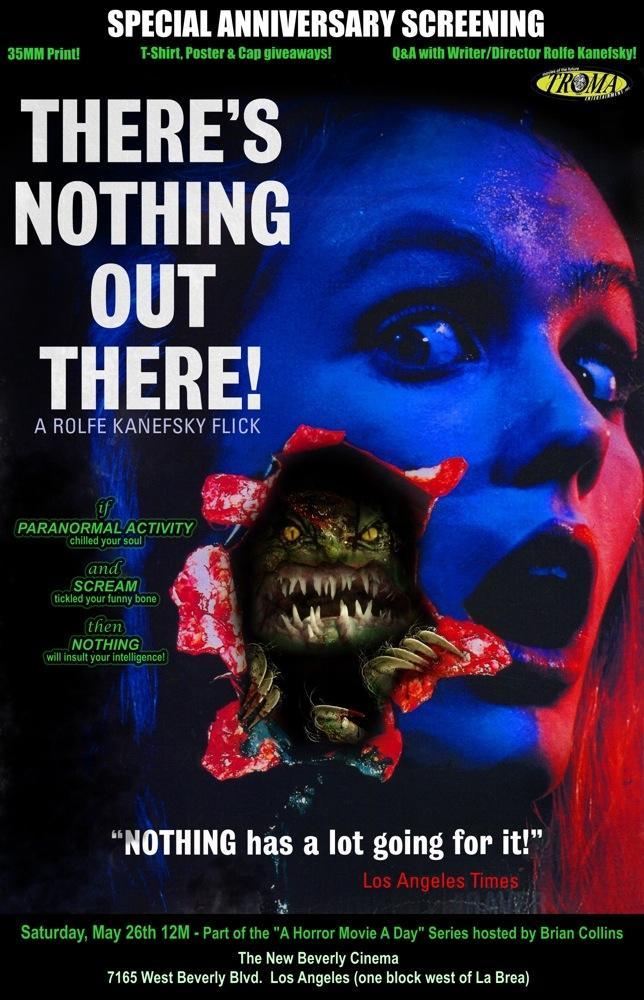
Writer and director Rolfe Kanefsky appeared at New Beverly Cinema where Brian Collins of the Horror Movie a Day website presented a special midnight screening of his directorial debut, “There’s Nothing Out There.” Joining him for this screening were two of the film’s crew members, still photographer Dave Shelton and assistant director Michael Berily. It tells the story of a group of teenagers, one of them a horror movie fan, spending spring break at a cabin in the woods, and it pre-dates Wes Craven’s “Scream” in making fun of the clichés horror movies always deal with.

Kanefsky spoke with audiences about what got him into movie making, and of what spurred the idea for this particular film of his:

Role Kanefsky: I’ve wanted to make movies since I was four years old. As I got older, I watched every horror movie that was ever made which got me to thinking about why people keep making the same mistakes in this genre over and over again. I wrote the script when I was in high school, but no one really liked it.

Kanefsky then went to college where he wrote several scripts, but then he came back to the one he wrote for “There’s Nothing Out There” after he graduated. It was 1988 when he started looking for the money to make it, and he was able to get a few private investors to help him out. He even told the audience his parents helped by selling their house, and after that he had a budget of around $150,000. One audience member asked him if his parents ever got to buy their house back with the profits and he responded:

Rolfe Kanefsky: You don’t get into movies to make money. You get into them because you love to make them.

When asked about the house used in the film, Kanefsky said a friend of his from college found it for him. It was located right near the border of New York and New Jersey, and he described what it was like filming in and around the house:

Rolfe Kanefsky: It was owned by two women who were a couple, and one of them was a sound artist which came in very handy for us. We did, however, have to use three different houses for the interior, and this forced us to cheat certain shots so that everything matched up in the end.

When it came to specific influences, Kanefsky looked mostly to 1950’s monster films, and he made several nods to them throughout. But he was also looking to make fun of the overused clichés in horror movies like the one where a cat jumps out at characters from nowhere, and of how one person warns of the danger ahead while everyone else ignores their advice. Kanefsky did, however, make one thing very clear to us:

Rolfe Kanefsky: It was never my intention to mock the (horror) genre, but instead the lazy filmmaking that has overwhelmed it.

One unique thing about “There’s Nothing Out There,” when compared to other horror movies of the time, is that what’s stalking the characters is not a deranged serial killer, but instead a monster from another planet. Keep in mind, this film was made long before the advent of CGI effects, so there was a lot of puppeteering involved in bringing this creature to life. Kanefsky was specific in what he was looking for:

Rolfe Kanefsky: I didn’t want a guy in a suit for the creature because I wanted to do something different. The way I saw it, the creature was half alligator and half octopus. I also intentionally made it a dumb creature, and you can tell it was not the smartest as there was a big learning curve going on with it. We ended up having to use crowbars just to move its tentacles around.

Kanefsky then invited his fellow crew members to share their experiences of making “There’s Nothing Out There.” Dave Shelton still has very vivid memories of how it all started:

Dave Shelton: I was working at Nickelodeon at the time and there weren’t many things being shot in New Jersey back then. When I met with Rolfe and he talked about his script, I knew right away what his vision was. He also said that no one is getting paid to make this movie and knew it was going to be good as a result. We got a lot of family and friends to be extras in the movie and we improvised a lot of stuff. Not everything worked, but we did the best with what we had. This was such a fun project to be a part of.

Michael Berily was originally hired to be the second assistant director on the set, but things changed for him very quickly:

Michael Berily: The first AD left three days into shooting, so I took over and spent a lot of time yelling and screaming at people because I didn’t know what I was doing. Still, it was an incredible experience working on it, especially when it came to raising the money. Rolfe was very ambitious then as he does a lot of set ups in one day.

Kanefsky attributed his working style of numerous set-ups a day, far more than what most Hollywood productions are able to accomplish, as he and his crew had a twenty-four-day shooting schedule. He has since made over twenty movies since “There’s Nothing Out There,” and to date it still has the longest shooting schedule of any movie he has made.

Horror Movie A Day’s screening of “There’s Nothing Out There” at New Beverly Cinema was certainly a historic one as it marked the first time a 35mm print of the movie had been shown in twenty years. Kanefsky said there were a number of reasons why this was the case:

Rolfe Kanefsky: When we showed it to studios and critics, they were all ambivalent about supporting it because they saw it as too funny to be scary and too scary to be funny. The movie ended up getting a small theatrical release back in 1992, and we managed to get some good reviews from newspapers like the Los Angeles Times. After that it began building up more and more of an audience through midnight screenings… and then the L.A. Riots (following the Rodney King verdicts) happened, and that destroyed us because no one went to the movies for a long time after that.

Kanefsky has attributed its ongoing success to cable and video and now sees this movie as an underground film which people found over the years. The studio which released “There’s Nothing Out There” never really got behind it, he said, and it really found its audience through word of mouth.

Before the evening ended, audience members asked Kanefsky if there would ever be a sequel or a Blu-ray release:

Rolfe Kanefsky: Blu-ray? Maybe, but right now it doesn’t make financial sense to do that and neither does the sequel. We do have the capabilities and original elements to remaster the movie in high definition, but the special edition DVD hasn’t sold enough copies to justify us doing that.

He does however have a title for the sequel:

Rolfe Kanefsky: There’s Still Nothing Out There.’ The tagline for it is, ‘if you were afraid of nothing before, its back!’

Well, hopefully we will get to see a Blu-ray release and a sequel become a reality. There is no doubt “There’s Nothing Out There” was a passion project for Kanefsky and his crew when they made it, and it is clear everyone involved in it worked really hard to make it a reality. That people are still talking about it twenty years later makes it a triumphant motion picture which survived in a marketplace where many other horror movies get swept under the rug, never ever making it to the silver screen.
Nicolas Roeg’s ‘Track 29’ is Bizarre and Compelling From Start to Finish

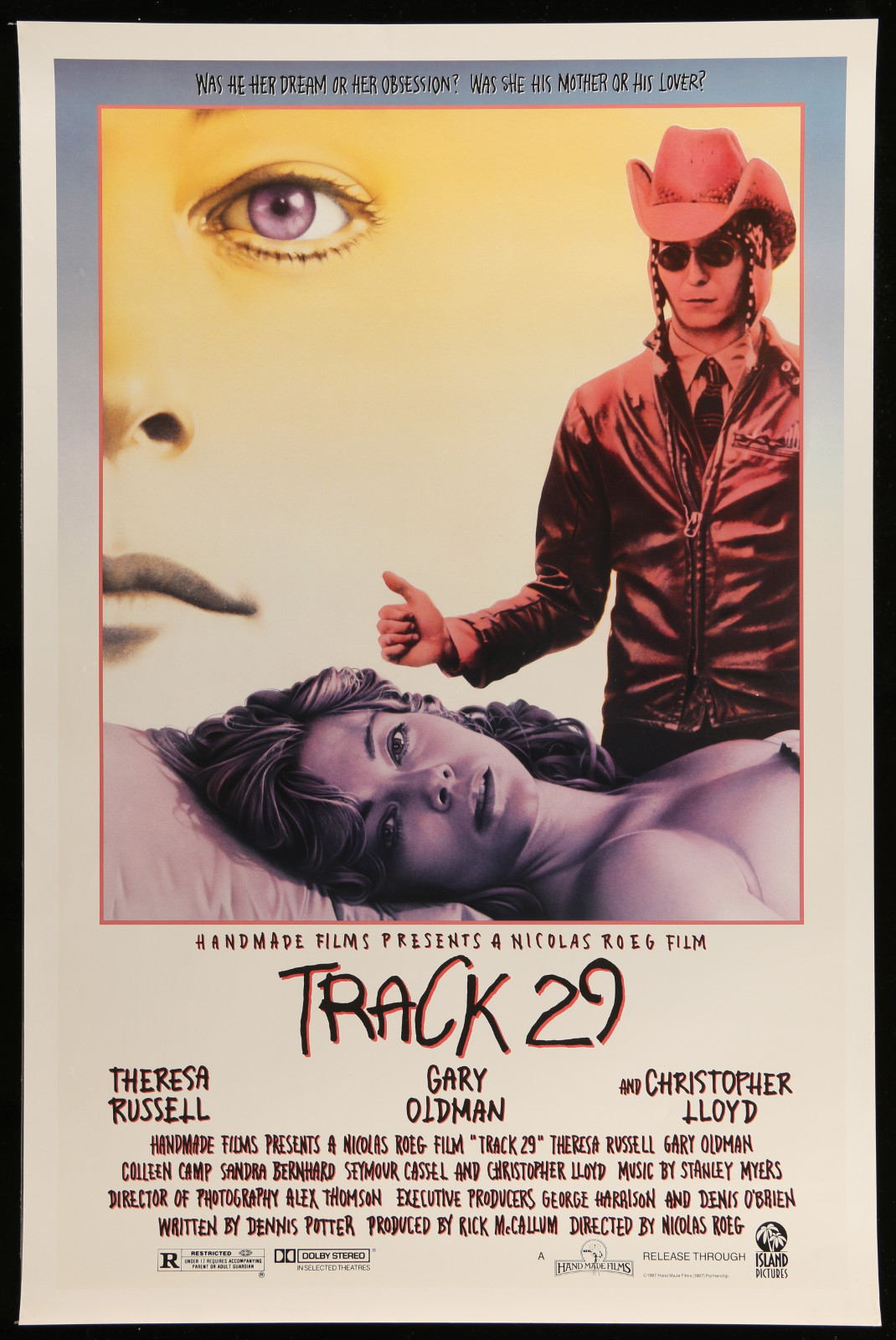
Track 29 movie poster

WRITER’S NOTE: This review was written around the time this movie was to be released on DVD by Image Entertainment back in 2012.

Track 29” is one of the strangest movies I’ve seen in a long time, but that’s probably because I am not very familiar with the work of director Nicolas Roeg. This is only the second movie of his I have seen, the last being “The Man Who Fell to Earth,” and it helps to understand his filmmaking method before watching his work. Roeg’s movies are known for their kaleidoscope of images which are typically presented out of chronological order, and it’s left up to the viewer to make sense out of all the craziness they have just witnessed. Learning this helped me understand “Track 29” better as it is one of those WTF movies which willfully defy easy categorization.

This movie came out in 1988, and its DVD release coincides with Gary Oldman’s first ever Oscar nomination for “Tinker Tailor Soldier Spy.” Oldman stars as a British orphan named Martin who has arrived in America to look for his mother. Upon meeting bored housewife Linda Henry (Theresa Russell), Martin is convinced she is his mom and tries to form the bond he has forever longed to have with her. But as the story continues, we wonder if Martin is real or if he’s just a figment of Linda’s imagination as his arrival coincides with her remembering the child she gave up for adoption years before.

The real pleasure of watching “Track 29” today is to witness Oldman at his manic best as he is a firecracker always on the verge of going off. The actor did this movie not long after he received critical raves for “Sid & Nancy” and “Prick Up Your Ears,” and watching all three movies together makes one wonder where he gets all his crazy energy from. Putting this in comparison to the more subdued work he does today as George Smiley or Commissioner Gordon in Christopher Nolan’s “Batman” movies makes one realize how amazingly far his range as an actor goes, and it makes me appreciate his work more than ever before.

Theresa Russell, who remains one of cinema’s most underrated actresses, is equally good as Linda even as she appears to be going over the top from one scene to the next. Throughout “Track 29,” Russell gives her role a strong conviction as she comes to grips with a traumatic moment in her life and a passionless marriage which has gotten to where she knows exactly what will come out of her husband’s mouth before he says it. Actors can look utterly ridiculous when they fall into the trap of playing the clichéd drunk or just running the gamut of emotions, but Russell holds your focus from beginning to end. She has always been one to take risks with each role she takes on, and this one is no exception.

Among the other actors to be found here is Christopher Lloyd who plays a role I never thought I’d see him in: the boring husband. From his roles in “Back to The Future” and “Star Trek III: The Search for Spock,” I’ve come to see Lloyd as anything but boring. But here he is amazingly bland as he takes more interest in his toy train set, which collectors of such things will be slobbering over once they see what he’s put together, than he does in his wife’s problems. Whether his character of Dr. Henry Henry (a rather unfortunate name) is having an affair with Nurse Stein (Sandra Bernhard) or making a passionate speech to the obsessive train car collectors of North Carolina, Lloyd inhabits this character fully and reminds you of what a great actor he can be.

Other excellent performances to be found in “Track 29” come from Colleen Camp as Linda’s friend Arlanda who reacts to her problems with utter bafflement, Sandra Bernhard who gets to indulge gleefully in her character’s brand of S&M, and the great Seymour Cassel as Henry’s boss Dr. Bernard Fairmont who reacts to his colleague’s bizarre behaviors with disdain and utter hilarity.

Roeg gives this movie many unforgettable images which come to illustrate the missing passion and meaning in these characters’ lives as well as the sheer violence hiding just below the surface. Watching it reminded me of “Revolutionary Road” and how Kate Winslet’s character was ever so desperate to escape the suffocating atmosphere of suburbia, but this story is given a more surrealistic quality as Oldman’s character descends into the mindset of a child who, when let loose, destroys things without a care in the world. Everything seems to act as an allusion to Linda’s unconscious desire to destroy the world she inhabits as it becomes her only way to escape it.

Image Entertainment released the DVD version of “Track 29” recently, and this is the best it has probably ever looked. As for extras and special features, this disc is frustratingly scant in those departments. It would have been nice to have a commentary track or at least some interviews with the director and cast to see how they went about making this bizarre motion picture and what their reactions were to it. The only real extras to speak of are a couple of trailers which precede the movie, and they are for the cult classic “Withnail & I,” Neil Jordan’s “Mona Lisa,” and “The Long Good Friday” starring Bob Hoskins. Coincidentally, these are three movies I still need to see.

Despite the lack of special features, “Track 29” is definitely worth a rental for fans of Oldman and to see him at his most emotionally unhinged in a motion picture. It may not reach the critical heights of Roeg’s other works like “Walkabout,” but it’s definitely for those who love films which defy conventional film narration. Lord knows we need movies like these every once in a while as things can’t stay the same forever.

* * * out of * * * *

‘Encounters at the End of the World’ Takes Werner Herzog to Antarctica

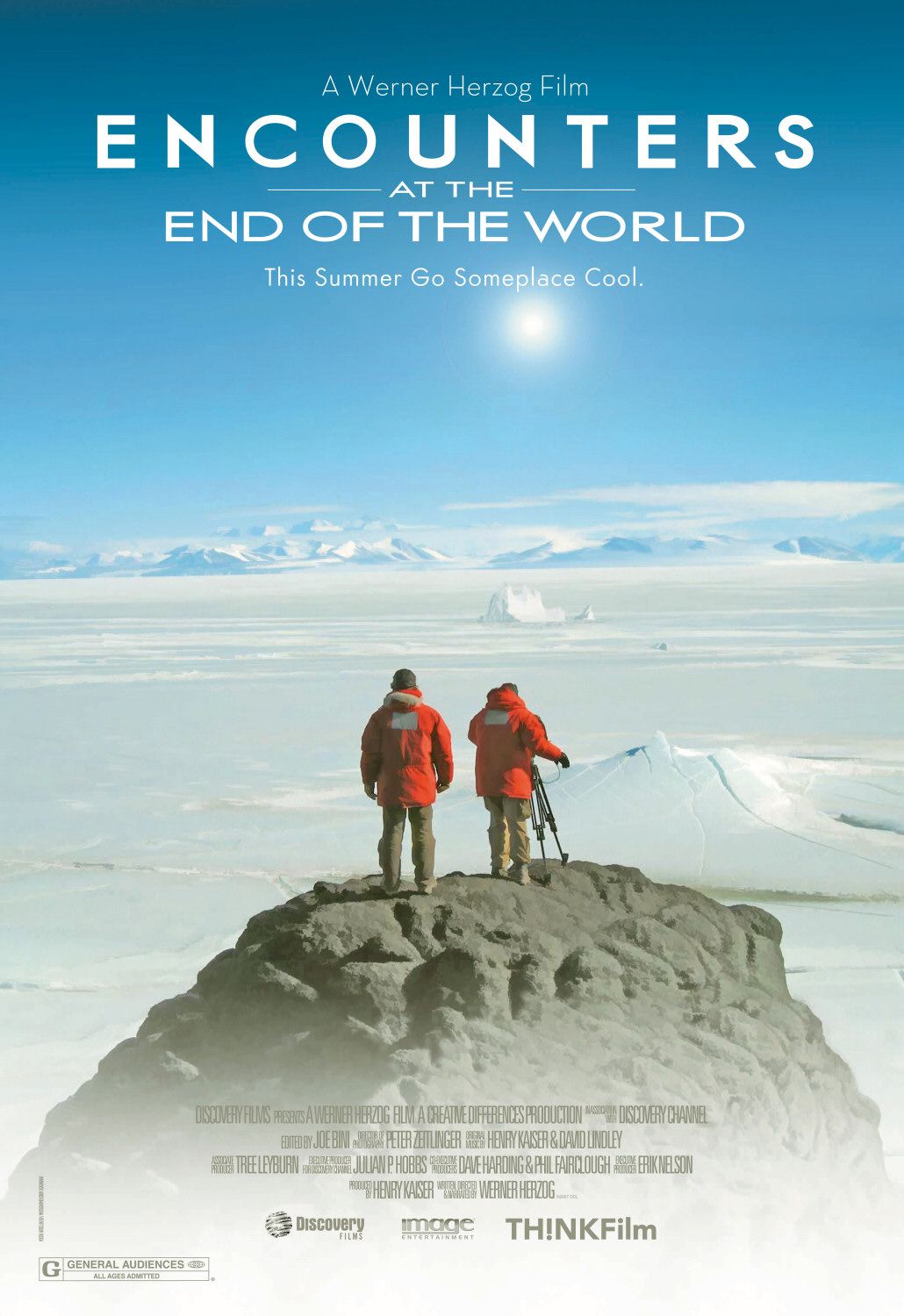
Encounters at the End of the World poster

As a movie buff, I have to admit it is shameful on my part I have not seen more movies directed by Werner Herzog. I did see “Grizzly Man,” a brilliant documentary about Timothy Treadwell and his obsession with the grizzly bears, and like all brilliant documentaries made today, it did not get an Oscar nomination for Best Documentary. Thankfully, the Oscars did not ignore his documentary “Encounters at the End of the World” which is an endlessly fascinating look at his travels and discoveries in Antarctica. It is at times an incredibly beautiful look at an icy landscape, at others a bleak look at the inevitable end of the human race. At the same time, it also a rather humorous and interesting look at the people who risk their lives by living there to study the cutting-edge world of science.

Herzog narrates “Encounters at the End of the World,” and he allows us to go inside his head on how he views the icy wilderness of Antarctica, and of how he views the people and wildlife there. He makes it clear from the onset that when he was asked by Discovery Films to do this documentary, he agreed to it on the condition he would not be forced to do a “fuzzy” movie with penguins in it (a little jab at “March of the Penguins”). The first 10 or so minutes deal with the McMurdo Research Station which is full of buildings and tractors constantly moving all over the place. Herzog finds himself wanting to get away from McMurdo right away as he feels it is corrupting the Antarctic island with the inhabitants’ own self-interests as it is filled with horrors there like “yoga classes.”

Eventually, he ventures out of the encampment and into the far-off research facilities removed from the town. We see him and others there being put through safety drills and emergency preparations to deal with the worst of circumstances. The group leader speaks of how the wind can get so bad to where you can’t see even your hand in front of your face or hear yourself talk. This lends a chilling effect to an already chilled environment, and while it is exciting to be there, you feel the danger of it throughout.

The best part of this documentary, and the reason I wanted to see it, is the underwater footage where you follow divers underneath the glaciers of Antarctica. The visuals on display here are both beautiful and extraordinary to see, and there is a unique beauty to the underwater landscape you would be hard pressed to find anywhere else. This is all reminiscent of James Cameron’s documentary “Aliens from the Deep” in which he went with scientists in submersibles down to the bottom of the ocean to see what things live down there. But while Cameron’s documentary was fascinating, this one is not encumbered with 3D effects and of looks at where the future will take us. It deals with the world we exist in right now, and it doesn’t hide from how everything will disappear in the distant future.

I was also eager to find out how these scientists were able to dive down into waters which they would not be expected to stay alive in for more than 5 minutes. They wear special suits which are heavily insulated to protect them from the cold, and they wear gloves that threaten to make them look like aliens from another planet. Herzog says the water they are diving into is -2 degrees Celsius, and the divers go in with no ropes attached to their bodies as it will give them more room to move around. Still, this is very dangerous work they are doing, and if they get lost underneath the glacier, they will become a permanently frozen resident. You feel the danger of what they are doing, but you end up getting overwhelmed by the spectacular visuals they discover underneath it all.

Another fascinating moment comes when some scientists on the island play recordings of the sounds the local seals make underwater. The seals themselves steal some scenes from the human actors as they lie back lazily in the sun and look too tired to get up and acknowledge anybody. The underwater sounds of the seals seem so unreal, and I could not help but believe they were all computer generated. But they are indeed the real thing, and you experience the sounds along with Herzog and the scientists as they put their ears down to the ground and take it all in. It’s an amazing moment to witness.

The other thing I really loved was how it was just not another average science documentary filled with talking heads telling you all the things you need to know about the environments they are studying. There is science talk throughout the documentary which is fine, but Herzog also looks at the individual personalities he comes into contact with throughout his journey. Along with Herzog, you also wonder what could make all these people come to one of the most isolated places on the face of the earth and of how they stay there for so long.

Among the people Herzog meets throughout his travels are a philosopher who has a great quote at the end of the movie about how the universe is looking at itself through our eyes, and how we give life to everything in the way we view it. We meet one of the scuba divers who has a pensive moment where he takes in the fact he is about to making his very last dive into the icy depths. Then Herzog meets up with a Russian who had escaped the Soviet Union after the fall of the Iron Curtain, and the Russian almost loses it emotionally when he tries to describe to him how bad things were when he left. This Russian also has an escape plan at the ready with a big pack of supplies in case he needs to flee once again.

There are a couple of other people in the documentary who just talk and talk about themselves and the adventures they have been on. Herzog cuts them off in his narration by saying, “To make a long story short…”

“Encounters at the End of the World” does have a bleak view of humanity’s future, and the scientists are fully aware of this as temperatures continue to rise to where it is inevitable that ice will eventually melt completely in the future. This is also shown as we see a group of scientists watching “Them,” a 1950’s B-movie about radioactive ants which have grown to an enormous size. It turns out to be one of the many apocalyptic movies they show to each other from week to week. I wonder if they have ever gotten around to watching John Carpenter’s “The Thing.”

At the center of “Encounters at the End of the World” is not just Antarctica, but Herzog himself. His narration throughout could have been annoying, but it serves to illuminate what a funny and interesting person he is. Clearly, he is attracted to madness in various forms throughout the world as is shown here and also in “Grizzly Man.” I imagine this is a big theme in all of his movies. We discover all there is to see through his eyes, and of how he views the beauty of the ice and how it forms. As a result, it does make me want to see more of his movies.

Just remember what one of the men says in this documentary, and remember it always:

“Global warming is real.”

* * * * out of * * * *