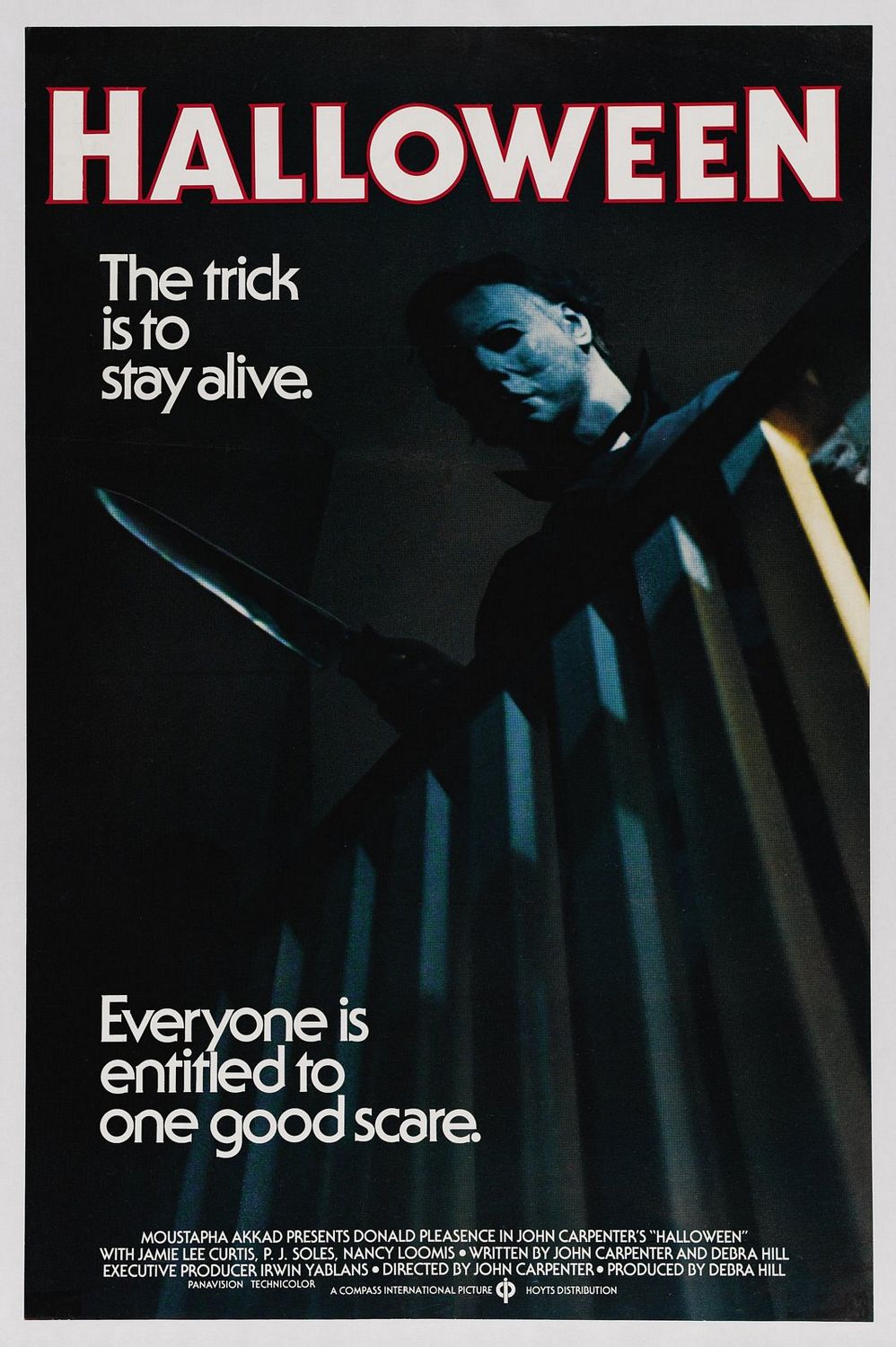
What is there to say about “Halloween” which hasn’t already been said? It has been discussed ad nauseam, and even Carpenter must be sick of talking about it all the time. Granted, he did take the time to record a new commentary track with Jamie Lee Curtis for Anchor Bay’s 35th anniversary edition, but when the 25th anniversary edition came out it just had the same commentary track from the Criterion Collection laserdisc.
We all know the story, and this is in large part due to the countless imitators who rushed to create their own psychotic killer following “Halloween’s” astonishing success. At the time of its release, it was the most successful independent movie ever made. Made for about $300,000, it ended up grossing over $50 million. “Friday The 13th” would never have existed without “Halloween,” and that franchise is far more responsible for those clichés horror movies exploit to infinity.
What I love about “Halloween” is how down to earth it is. All of these characters come across as very relatable. The way the script is written and how the actors played their roles, they easily reminded us of people from our own lives we grew up with. The only character in the whole movie who is NOT down to earth is Michael Meyers as he is a killer who has no real motive for why he heads back home to kill. As the movie goes on, we eventually stop seeing him as a person and instead as a force of evil which cannot be easily stopped.
We have all lived in a town like Haddonfield, a small town where families can raise their children in peace, or so it would seem, and the problems they face there end up paling in comparison to those they were forced to endure in the city. The parents see small town life as a home away from reality, but for the children it is reality. It is all they know. So when multiple murders occur there, it threatens to define the town more than anything else. Was there anything interesting about Haddonfield before young Michael Meyers took a knife to his sister when he was only a boy?
I also love how “Halloween” was shot. Working with Director of Photography Dean Cundey, Carpenter creates truly unnerving visuals of a killer lurking in the shadows. One moment Michael appears in the frame, and in the next he is gone. Michael could be anywhere and there is no escape from him. How does one escape from evil anyway? One of Carpenter’s main themes with “Halloween” is how evil never dies. It is a force which is with us whether we like it or not, and it is always just around the corner…
One of my favorite shots is when little Tommy is fooling around with Lindsay as they watch Howard Hawks’ version of “The Thing.” But when Tommy turns around and looks out the window, he sees a man carrying a lifeless body from the garage to the front door. The bullies at school kept warning him about the boogeyman coming, and it is an unfortunate and infuriating coincidence that they are correct. It is one of the creepiest images from “Halloween,” and it is one which always stays with me. Don’t you wonder what your neighbors are up as you look at their houses across the street?
The other brilliant thing about “Halloween” is how it was edited in such a way where you cannot be sure when or where Michael will appear next. The best example of this is when Laurie Strode is running away from Michael. Carpenter puts us right in her shoes as she desperately tries to escape the madman who wears an altered William Shatner mask. The editing plays with your emotions beautifully. You want her to escape, but you soon feel as helpless as her as she yells at Tommy to wake the hell up.
The moment where Laurie is at the front door of Tommy’s house, screaming for him to let her in, is one of the scariest scenes I have ever seen in a movie. It intercuts with her banging on the door while the Shape approaches her, and Carpenter succeeds brilliantly in leaving us stuck in a place we are desperate to escape from. Like her, we are begging for Tommy to unlock the door to where we want to yell at the movie screen, TV set or whatever device you are watching this movie on.
And who could ever forget the music? Carpenter’s score for “Halloween” ranks among the greatest horror movie scores ever composed to where I would put it up alongside Bernard Herrmann’s score for “Psycho.” Carpenter’s musical work has been done mostly in a minimalist style, very much unlike the bombastic orchestral scores from every other Hollywood composer. After all these years, the main title for “Halloween” is a piece of music I never get sick of listening to. The music succeeds in heightening the ever growing tension which never lets up even after the movie is ovr.
The final shot is unnerving and utterly perfect in the way Carpenter shows how evil never dies. We see images we have become familiar with throughout the movie, and they now have the stain of evil on them. The point is point he could be anywhere at this point.
This is definitely one of my all-time favorite movies, and the recent 35th anniversary edition Blu-ray reminded me of how I never get tired of watching it. Jamie Lee Curtis is great here as Laurie Strode, the only one who is the least bit observant about what’s going on around her. Then you have P.J. Soles and Nancy Loomis as Laurie’s so-called friends who frolic around, completely unaware of the killer stalking them from a distance. And you have Donald Pleasance, and his Dr. Loomis is a character which pretty much came to define the latter half of the franchise.
Many say “Halloween” originated the undying cliché of how teenagers who have premarital sex and do drugs are the first ones to be killed off. In the Criterion commentary, both Carpenter and the late Debra Hill make it abundantly clear they were not trying to lay any sort of judgment on these characters. Religion was not intended to shoved down our throats by anyone involved with this movie. These characters don’t get murdered because they are sinners, but because they aren’t paying attention to what is going on around them. Laurie Strode, on the other hand, is always very suspicious of her surroundings.
John Carpenter’s “Halloween” will always remain the best of all the so-called slasher movies in my humble opinion. There is no way anyone can top what he did with the 1978 classic, and this is even though Rob Zombie’s take on Michael Meyers was better than people gave his “Halloween” movies credit for. It has reached such a high level of praise in the ever growing pantheon of cinema to where duplicating its power is extremely difficult to pull off. The fact it still has the power to unsettle generations of audiences is a testament to Carpenter’s brilliance as a director, and its amazing success led him to make many other great films which continue to stay with us long after the end credits have finished.
Sooner or later the horror movie gods had to deliver this one to the fans. It took George Romero 20 years, but he finally followed up “Day of the Dead” with “Land of the Dead.” While we may have gotten an “Evil Dead” reboot instead of a third sequel to Sam Raimi’s original film, he and Bruce Campbell gave us the next best thing with “Ash vs. Evil Dead.” After giving us one of the most visceral and terrifying horror flicks ever created with “The Texas Chainsaw Massacre,” Tobe Hooper followed it up with a sequel 12 years later which has since developed a cult following. Although the filmmakers behind these movies are always keen to move on to other genres, something always seems to pull them back to horror.
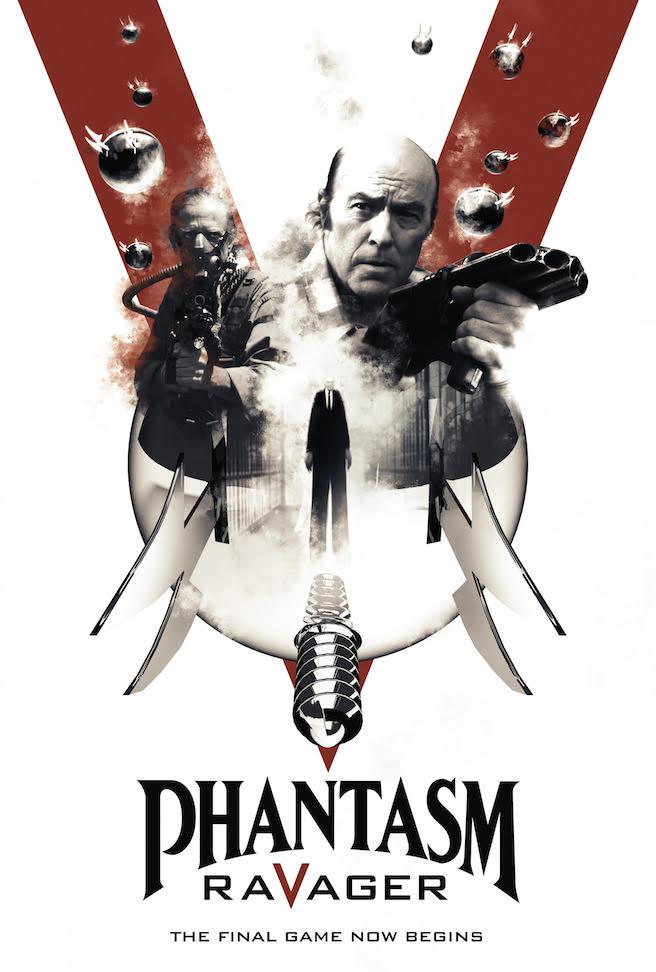
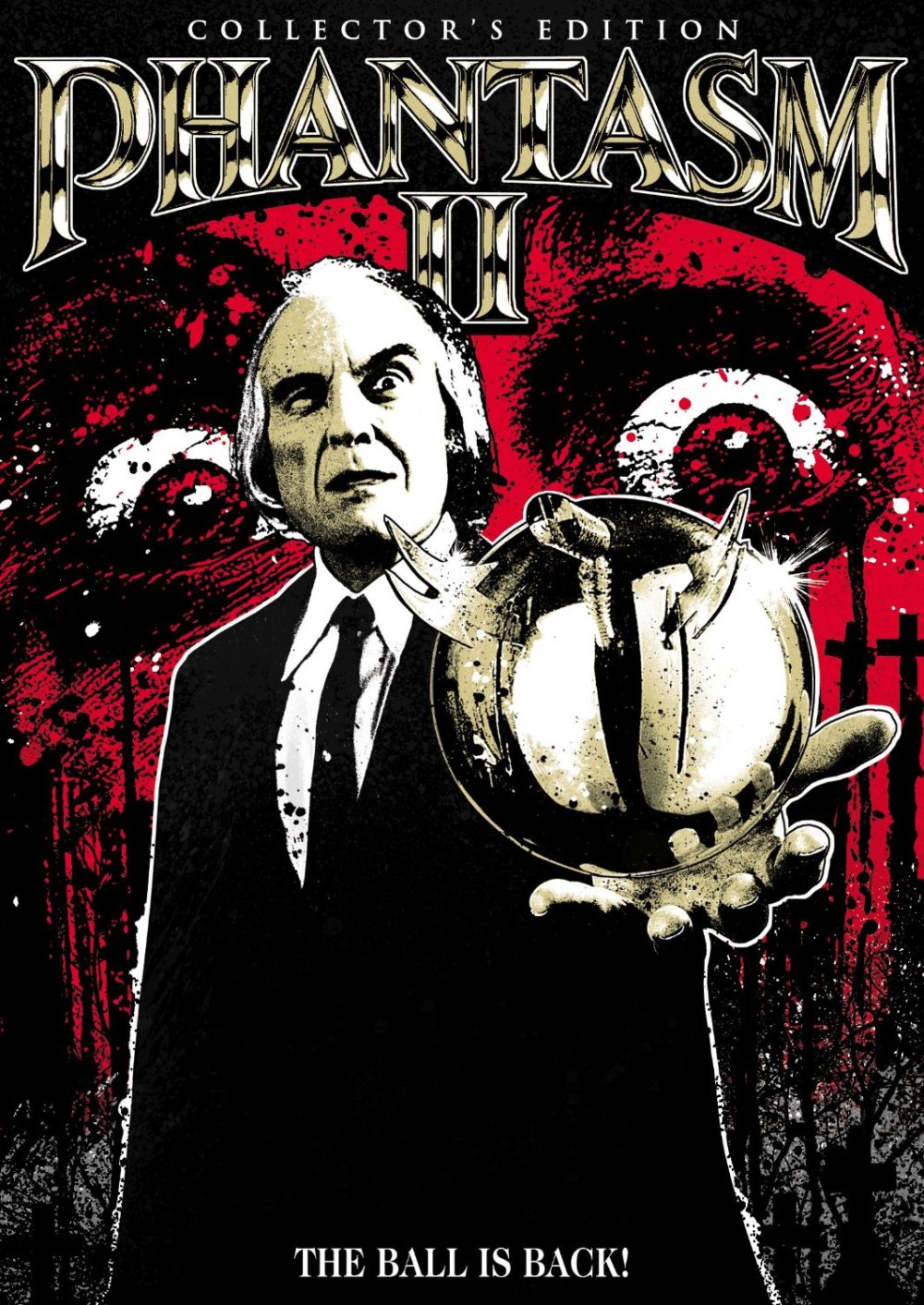
So it only makes sense we would eventually get a fifth “Phantasm” movie in this lifetime, right? Rumors abounded from year to year of how another installment featuring Mike, Reggie and The Tall Man was in pre-production, but it never became a reality. Then in 2014 we got a teaser trailer out of nowhere for “Phantasm: Ravager” which nobody saw coming. Astonishingly enough, this sequel was filmed in secret, and after an equally agonizing wait it has now arrived in theaters and VOD and serves as a conclusion to a franchise which began back in 1979. Yes, these characters and those silver spheres have been with us for a very long time.
Does “Phantasm: Ravager” give us a fitting conclusion to this never ending series? Well, it may depend on the expectations you bring to the theatre. It’s no surprise series creator Don Coscarelli made this one solely for the fans, so those “Phantasm” virgins would be best to check out the previous films or sit through the short film “Phantasm and You” which will bring them up to speed. While we get the usual silver sphere action with hapless victims getting blood sucked out of their heads as Red Cross workers watch on helplessly, we can never be fully certain as to which direction the story will take.
This installment focuses mostly on Reggie (Reggie Bannister), the former ice cream man whom we last saw entering the space gate in “Phantasm: Oblivion” in an effort to save his friend Mike (A. Michael Baldwin) from the clutches of the Tall Man (the late Angus Scrimm). At the start of “Ravager,” Reggie is walking alone in the desert and telling us in a voiceover how he can no longer tell what is real and what is not. Still, he’s got his four-barrel shotgun and, with very little effort, retrieves his Hemicuda and drives on as those silver spheres pursue him with a vengeance.
Next thing we know, Reggie wakes up in a hospital where Mike tells him he is in the early stages of dementia. From there we watch as he switches from one place to another, be it another road trip where he picks up another beautiful lady, the hospital he is confined to or a post-apocalyptic future where The Tall Man reigns supreme. It’s a lot like the series finale of “Star Trek: The Next Generation” where Captain Jean-Luc Picard finds himself traveling back and forth through time, but with Reggie it’s an even bigger battle to discover the reality he belongs in.
“Phantasm: Ravager” is billed as a horror film, but it is really more of a sci-fi action flick as this series has gone from sheer horror to something more supernatural. But more than anything else, the story here deals with aging, something Hollywood movies rarely, if ever, deal with these days. We see Reggie struggle to bring his friends together even as he is seen as a terminal case the doctors are impatiently waiting to see die. Who is the bigger culprit here, The Tall Man or Reggie’s deteriorating mind?
It’s a lot of fun to see Bannister, Baldwin, Bill Thornbury who returns as Jody Pearson and Angus Scrimm return to the roles they have long since become famous for. Bannister in particular is a gas to watch here as not even Reggie’s advancing age keeps him from trying to hit on any beautiful woman he picks up. As for Baldwin and Thornbury, it’s been fascinating to watch them grow up from one “Phantasm” movie to the next. It’s like looking at a photo album, albeit with a lot of blood and mortuaries.
Scrimm’s Tall Man remains one of the scariest characters to appear in any movie, and Scrimm gets a little more to do and say here than he has in previous installments. It’s great Scrimm got another chance to play this iconic character, but “Phantasm: Ravager” is tinged with sadness as he passed away earlier this year at the age of 89. This is the last we will ever see of The Tall Man as there is no earthly way he can ever be replaced by another actor. After all these years, Scrimm remains a frightening presence as he toys with Reggie endlessly and makes you wonder why anyone would dare to fight him when he’s so omnipotent.
An interesting move Coscarelli made here was to step out of the director’s chair and hand the reins over to another. When we first got word of this, many feared it would be a catastrophic mistake, but David Hartman, who has worked behind the scenes on other Coscarelli films like “Bubba Ho-Tep” and “John Dies at the End,” brings a fresh energy to this material, and he clearly relishes working within this franchise and with these actors. As a result, everything in “Phantasm: Ravager” feels more supercharged than I expected.
The “Phantasm” movies have come close to being perfect, but the fans never really complained much about that. Sure, this particular one relies on CGI effects a little too much, but then again the franchise has never had much money to work with (“Phantasm II” had the largest budget with $3 million). Everyone involved with “Ravager” did the best they could with the materials they were given, and like the others it is equipped with an imaginative storyline which keeps us guessing.
If “Phantasm: Ravager” is indeed the last “Phantasm” film of all, it certainly sends the series off with a strong emotional punch. These movies have always been a family affair, and it’s great to see everyone back together for another round with the Ball and the Tall Man. It’s also great to see how this series has been maintained by the same creators from start to finish in age where studios are always desperate to reboot a classic property. For myself, “Phantasm: Ravager” was a blast, and it serves as proof that there’s always a chance for another sequel no matter how long time has passed since the last one.
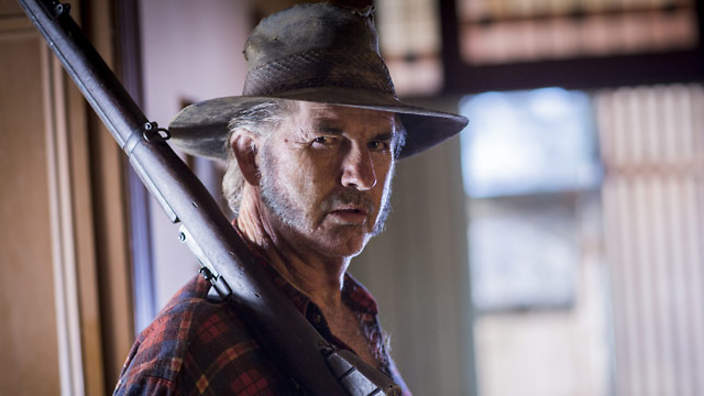
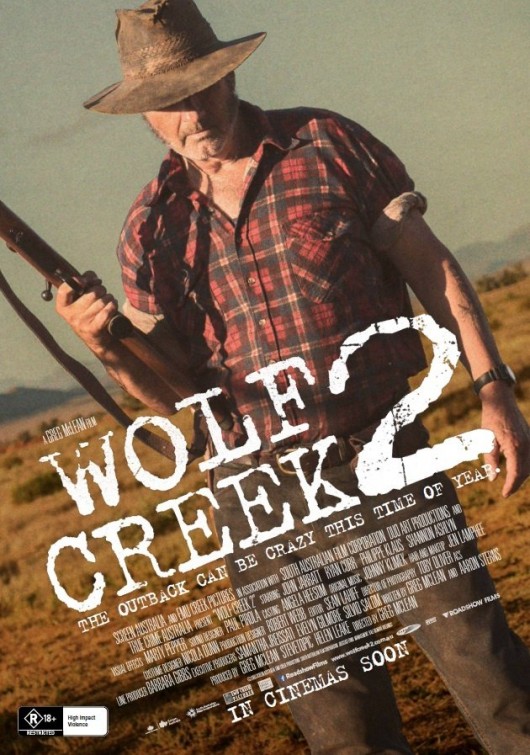
It’s been a long time coming, but Australian actor John Jarratt finally returns to his famous role of serial killer Mick Taylor in “Wolf Creek 2.” When Jarratt first played this role back in the 2005 original, he succeeded in giving us one of the most terrifying psychopaths the world of cinema has ever seen. But at the same time, he also made Mick into one of the most amusing as well, and while watching him in this sequel you can’t help but laugh with him even as he becomes increasingly sadistic. Now he’s back to terrorize a new group of backpackers from other countries who don’t quite share his love for Australia.
I got to talk with Jarratt while he was doing press for “Wolf Creek 2,” and it was a real pleasure chatting with him. The sequel isn’t so much a horror movie as it is a thriller and a road movie, and Jarratt talked about the change in tone between the two movies. In addition, he also discussed how he based Mick Taylor on his father, how method he was in his approach to playing him, and of whether or not movies like this will affect tourism to Australia.
Ben Kenber: Thanks for another great performance as Mick Taylor. It was a lot of fun watching you play him once again.
John Jarratt: Thank you very much.
BK: You’re welcome. There was a long break between “Wolf Creek” and “Wolf Creek 2” (about eight years). Were there any changes for you in the way you portrayed Mick Taylor between the two movies?
JJ: No, not a bit. It was exactly the same. He’s not the kind of guy who has growth.
BK: That’s true. It was said you stayed in character during the making of “Wolf Creek.” Was this also the case on the sequel?
JJ: Not so much because I knew what worked, but you have to stay within the realms of it. You can’t be having a coffee and just fall back into John Jarratt and then some guy says, “Come over here and cut this person’s head off,” you know? So you’ve got to kind of stay in the zone if you know what I mean (laughs).
BK: But it’s not like Daniel Day-Lewis who stays in character 24 hours a day obviously.
JJ: No, I think that’s a bit of a wank, but anyway. With Mick Taylor, I tend to go a little bit method because he’s a psychopath and a serial killer, and it’s a long way from who I am, you know? So I have to work at that. People say you’re a method actor, and I just say I’m a professional actor.
BK: It was said that you based Mick Taylor on your father but that you filled in the evil bits because your father is clearly not evil. When it came to the evil bits, what exactly did you add?
JJ: Well if Mick Taylor wasn’t a psychopath and a serial killer, if he wasn’t bent, and if he was the guy you thought you knew at the hotel at the bar if you met Mick, that’s my dad. But like all serial killers he’s bent and everyone says, “He seems like such a nice guy and he’s a terrific fella. He’s quiet and he was a good neighbor and he’s mutilated 27 people, but…” The hard part for me was to find that part of Mick, that psychopath side, and find a way that he was comfortable with it, you know?
BK: Yeah. It reminds me of when Anthony Hopkins played Hannibal Lecter in “The Silence of the Lambs” where he said he wasn’t so much interested in doing research on serial killers. Instead, he worked on finding the psychopath or the crazy person within himself.
JJ: Yeah.
BK: While the original was a full out horror movie, and one of the scariest and unnerving in recent memory, “Wolf Creek 2” is more of a thriller and a road movie. How did you feel about that shift in tone this time out?
JJ: In a way, sequels are lose, lose affair, you know? If we made it pretty much the same as the first one, you’d all be complaining about that we didn’t go anywhere with it. But if you change a little, then everyone says it’s not like the first one. To me, I thought it was a good movement on the first one. The first one you wait for the monster to come out of the cage which is about halfway through the movie, and it’s the set up that’s scary and then how he becomes (who he is) and everyone freaks out. With the second one we all know who he is, so it’s a waste of time doing that so you get them from the get-go. It’s not unlike the first one much when Mick turns up because, as you may remember in the first one, they (the unlucky tourists) drive my pick up over a cliff and then I chased them in a car and I blow the girl way, and that’s the end of the movie. So there’s a bit of chase in that one, but a hell of a lot more in this one because you get the Mick thing happening from the beginning rather than halfway through.
BK: The scene where Mick Taylor sends that big rig truck rolling down a hill where it crashes into Ryan Corr’s jeep gives “Wolf Creek 2” one of its best action sequences. Were you on the set when it was shot?
JJ: Yeah, I was there. It was fantastic (laughs). The funny thing was that the jeep came down the hill and landed like nothing had happened to it. We didn’t expect that, but it says a lot about the jeep I’ve got to say. Then the big truck comes down and creams it, and it was a great day. They were 20 cameras on it watching the truck come down the hill. In real life it was quite stunning.
BK: I imagine it was. If this was an American production, I bet they would’ve used CGI effects instead, but the fact that you did the real thing makes the sequence all the more thrilling to watch.
JJ: Yeah, it was great. It was like “Mad Max” days, you know? It’s what Aussies do really well.
BK: What would you say you added to this character that wasn’t in the script or which Greg McLean didn’t come up with?
JJ: I don’t think I added anything. He (McLean) was there for the entire film. There was more opportunity for a lot more humor I suppose, but I honestly didn’t add anything. I just knew a hell of a lot more, and I thought Mick was pretty funny in the first one. I think about 90% of this film is Mick as opposed to 50%. I think that’s the difference, I really do, so I didn’t do anything differently except you see even more of what he does. I suppose that’s different.
BK: The black humor in this movie is very clever.
JJ: Yeah, you’ve got to have a laugh. You got to remember that he (Mick) is having a ball and he’s got a great sense of humor. If you met him in a bar you’d think he was a lot of fun; he’s a big barrel of happy-go-lucky and a fun kind of guy. He’s having a ball playing games with these Pommy backpackers, so I think it lends itself to comedy.
BK: A lot of people might look at a movie like this as if it will decrease tourism to Australia, but I think it will increase it because people travel to different countries for a variety of reasons. What effect do you think “Wolf Creek 2” will have on tourism?
JJ: I tend to think that tourism improves with these kinds of films and “Crocodile Dundee” kind of films. If someone gets eaten by a crocodile in the northern territory in Australia, the tourist numbers go up from the publicity it gets. So I don’t think people will be frightened (from travelling there) really.
I want to thank John Jarratt for taking the time to talk with me. “Wolf Creek 2” is now available to own or rent on DVD, Blu-ray and Digital.
Over the years, “Phantasm II” has been treated like the illegitimate child of the “Phantasm” franchise. While Anchor Bay was able to secure the rights to the other three films in the series, they could never come to an agreement with Universal Pictures over this one. Eventually “Phantasm,” “Phantasm III: Lord of the Dead” and “Phantasm IV: Oblivion” got special editions filled with commentaries and special features, and yet “Phantasm II” still hadn’t seen the light of day on DVD. When Universal finally relented and released the sequel on DVD, all the fans got in terms of bonus features was the theatrical trailer. It looked like we would see “Phantasm V” long before any “Phantasm II” special edition became a reality, and the last “Phantasm” movie came out 15 years ago.
Well “Phantasm” fans can now rejoice because the good people at Shout Factory have come through for you with their “Phantasm II” special edition which proves to be well worth the wait. This cult sequel now looks and sounds better than ever, and we also get an audio commentary, various featurettes, a making of documentary, the theatrical trailer and a host of other goodies which fans can take their sweet time watching.
For many people including myself, “Phantasm II” was our introduction to the work of Don Coscarelli’s franchise, the Tall Man (played by Angus Scrimm) and those killer spheres which look like they’re designed to make forced deposits to your local blood bank. Even if you’re not able to understand most of what’s going on here, it was still loads of fun as “Phantasm II” proved to be far more imaginative than your average slasher movie. Watching it all those years ago made me want to check out the first film, and I became very eager to see the story continue on with a third movie which eventually came out (albeit straight to video) in 1994, six years after this one.
Unsurprisingly, “Phantasm II” looks wonderful in its Blu-ray incarnation. At the same time, I do have to point out there is a little of white noise at the top of the screen which comes and goes throughout the movie. I didn’t notice it right away, but it does become a bit of annoyance at times. This seems like a very rare error for the folks at Shout Factory to make as their previous special editions have more often than not given us pristine prints of various cult classics, and I wonder if this was something which happened on their end or if Universal Studios did something wrong. Still, the movie looks fantastic.
There is also a commentary track with Coscarelli, Angus Scrimm and Reggie Bannister who plays Reggie. It’s a terrific track which starts with Scrimm speaking as the Tall Man, wondering why this guy Scrimm keeps impersonating him in the “Phantasm” movies. From there, the participants talk non-stop about the making of “Phantasm II” and what they managed to accomplish on a budget of $3 million (the highest of any “Phantasm” movie). There’s also talk of why A. Michael Baldwin, who played Michael in the original, was replaced by James LeGros. The reasons why aren’t fully explained here, but everyone says they had a great time working with LeGros who back then was known for appearing in independent movies.
For more information on why LeGros replaced Baldwin, check out the documentary “The Ball is Back!” which gives you just about all the information you ever need to know about the production of “Phantasm II.” It turns out Universal wanted to get rid of both Bannister and Baldwin as they had not acted much since “Phantasm” came out. Coscarelli, however, managed to make a deal with Universal to where he could keep one of the actors, so while Bannister got to stay on, Baldwin had to go as the studio wanted someone who was “hunkier.”
The documentary also features other actors like Paula Irvine, Kenneth Tigar and Samantha Phillips who played the bald man-loving Alchemy. Phillips is especially fun to listen to as she talks about how she got the role of Alchemy and of how she almost talked Coscarelli out of casting her in the movie. She even talks about the sex scene she did with Bannister and of how his wife was on set that day (as if she didn’t have enough pressure to deal with).
We also get to see why, despite it making a profit, “Phantasm II” was initially considered a box office flop. It turns out Universal Pictures decided to release the sequel during the summer movie season where it faced off against “Die Hard” and “Who Framed Roger Rabbit?” As to why Universal thought it was good idea to release “Phantasm II” during this time, no one seems to have an answer.
There’s also an old featurette called “The Gory Days with Greg Nicotero” where he explains how he got involved in the world of movie makeup. These days, Nicotero is one of the best known people for doing makeup effects in film, and it’s great to see how he got his start. There’s also some vintage behind the scenes footage of makeup tests the crew performed as well as some on the set footage where they blow up a house. Seeing all the preparation the crew took in making sure the explosion, which they filmed with what seemed like a dozen cameras, anything but small makes me miss practical special effects which have since been overrun by CGI.
To round things out, there are movie trailers for the first three “Phantasm” movies, original TV spots, still galleries, additional scenes which were taken from the work print, deleted scenes from Coscarelli’s archive, and a rare short film which has Scrimm playing Abraham Lincoln.
This special edition of “Phantasm II” has been a long time coming, and despite some minor technical flaws, fans of the series should be very pleased with what Shout Factory has come up with. The cult of “Phantasm” remains strong to this day, and they are served well by this release which is evidence of this series’ enduring popularity. If things keep up, maybe we will see a “Phantasm V” in the future. Some say that’s wishful thinking, but anything is possible!
WRITER’S NOTE: This review was written back in 2013 when “Phantasm II” was released by Shout Factory on Blu-ray. “Phantasm V,” titled “Phantasm: Ravager,” is finally about to be released in theaters after a long wait.
It was very sad to learn of Polish director Marcin Wrona’s passing on September 18, 2015. He committed suicide before a screening of his latest film, “Demon,” the last in a trilogy which began with “My Flesh, My Blood” and “The Christening.” Like those two films, “Demon” deals with the nature of evil and a fate the protagonist is forced to deal with. Itay Tiran stars as Piotr (a.k.a. Python) who is on the verge of getting married to the beautiful Zaneta (Agnieszka Zulewska) and moving into a family home which has survived from one generation to the next. But on the day of his wedding, Piotr suddenly becomes possessed by a spirit which will no longer remain silent, and what should be a joyous day soon turns into the wedding from hell as the past will no longer remain buried.
While Wrona is no longer with us, his “Demon” is a tremendously well-made horror film which allowed him to leave his mark on the world of cinema, and it provides us with an interesting take on the Jewish legend of the dybbuk. It is a beautifully filmed movie with incredible vistas and an all-encompassing darkness as a bad situation gets even worse, and that’s not just because the wedding guests have drunk far too much vodka. Watching “Demon” also reminds us of the power of ambiguity as not all questions are answered here, and this forces the viewer to think more deeply about what they have just witnessed.
I got to speak with Olga Szymanska, the producer of “Demon” and Wrona’s widow, while she was in Los Angeles to promote the film. I applaud her for supporting her late husband’s work while dealing with a loss which is still hard for many to accept. She talked about what went into the making of “Demon,” how it relates to Wrona’s previous two films, if she was ever worried about people not understanding the legend of the dybbuk, and of how Wrona and his cinematographer Pawell Flis gave the film such a striking look.
Please check out the interview above, and be sure to check out “Demon” which is playing at the Nuart Theatre through September 15.
AN ULTIMATE RABBIT NOTE: This video interview was updated in 2023 to add certain visual elements and to avoid copyright issues which never intended or inferred.
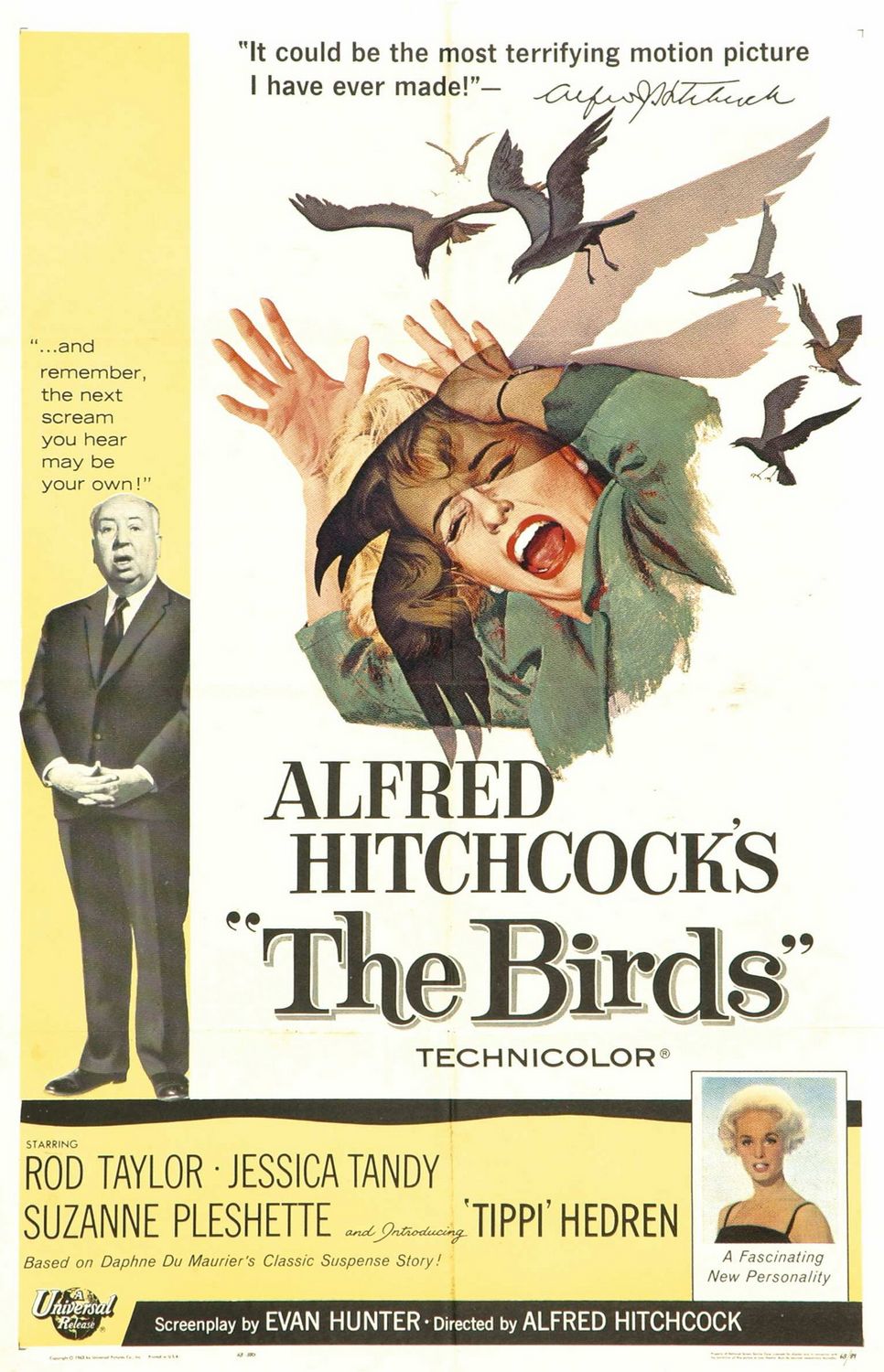
Fans of Alfred Hitchcock were in for a treat when they packed the Grauman’s Chinese Theatre in Hollywood for a screening of his 1963 horror classic “The Birds.” The movie was being shown in honor of its 50th anniversary, and among the evening’s guests were two of its stars: Tippi Hedren who played the confident socialite Melanie Daniels, and Veronica Cartwright who had one of her earliest roles as Cathy Brenner. Much of the Q&A which preceded the movie, however, was directed at Hedren who talked about how she got cast in “The Birds” and of the overall effect Hitchcock ended up having on her career.
There has been this misconception about “The Birds” where many assumed it was filmed in black and white and not color. A lot of this had to do with people first watching the movie on their black and white television sets at home, and this understandably made the experience of watching it a bit different for them. Hedren reflected on what people have told her regarding this issue.
“I’ve had people say oh, I am so delighted that they colorized ‘The Birds,’ and I said uh no, we filmed it in color.’ And they said no, no, no, I saw it in black and white. Soon the argument kept growing, and I finally said no, you saw it on a black-and-white TV! And they went, yes’ Case closed” Hedren jokingly said.
Even today “The Birds” continues to pack movie houses all over the country and Hedren admitted she remains astonished at how it has a life of its own. She still does publicity for the film and talked of how it can still draw a crowd after so many years. Some of the other screenings she spoke of actually happened not long before this one.
“It took a little while for me to realize that this movie really has something that’s unique and powerful,” Hedren said. “We had a screening at a theater in Detroit, Michigan that sold out, and it didn’t have many seats in it. In Texas I was at a theater that was built in the 30s in El Paso, a beautiful, beautiful theater with 2500 seats, and there was a film festival there. Just before the screening of ‘The Birds,’ the director of the festival came to the stage and said ‘ladies and gentlemen, this theater has been sold out four times: once for ‘Gone with the Wind,’ ‘The Wizard of Oz,’ ‘E.T.’ and tonight ‘The Birds.’”
“The Birds” actually marked Hedren’s film debut as an actress, and she previously had a very successful career as a model which later led her to do commercials. Hitchcock saw Hedren in a diet soda commercial, and this led him to cast her in the movie. This opportunity came at a crucial time for Hedren as she had just moved back to Los Angeles with her daughter Melanie Griffith and was experiencing some problems.
“I rented a very expensive home in Westwood thinking I would continue my career as a fashion model and doing commercials, and it wasn’t working and I’m thinking okay, what do I do now? I don’t know how to type,” Hedren said. “Shortly after that on Friday the 13th of October 1961, I received a phone call from Universal asking if I was the girl in the diet soda commercial, and I said yes. So I was put through a four or five-day suspense thriller of who is the producer who was interested in me. Finally, I was asked to go to MCA, a big organization or agency, and it was there that the agent said, ‘Alfred Hitchcock wants to sign you to a contract. If you agree with the terms and sign it, we will promote you.’ So we went over to his office, and he (Hitchcock) opened the door and stood looking very pleased with himself. It literally changed my life.”
One audience member asked Hedren about the very strange birthday gift Hitchcock gave her daughter Melanie. Many have heard this story over and over, and it has always sounded tremendously creepy. The question, however, gave Hedren the opportunity to set the record straight about what really happened.
“My daughter was presented with a box when Hitchcock took us to lunch, and it was a wooden box and Melanie opened it and it was an incredible doll of me in the green suit that I wore in ‘The Birds,’” Hedren said. “The face was so perfect that it scared her to the point where she kind of freaked out. Everybody made it sound like it was Hitchcock playing a dirty trick or doing something really nasty to Melanie and that wasn’t it. It was supposed be a very, very beautiful gift and it just went awry. She was so affected by it that it was put away somewhere, and I unfortunately don’t even know what happened to it.”
But the one thing which has cast a heavy shadow over the legacy of “The Birds” is the fact Hitchcock sabotaged Hedren’s career after she starred in “Marnie.” During that time, Hitchcock became deeply obsessed with her, but she kept refusing his advances which led to him exerting a control over her no director should have over anyone. Hedren explained what happened between her and Hitchcock very calmly and without a hint of regret.
“As you know, I became the object of his obsession,” Hedren said. “It started later in the filming of ‘The Birds,’ and then by the end of filming ‘Marnie’ it was to the point where I couldn’t stand it anymore. I was tired of being followed around all the time. It all came about when I was asked to go to New York to be on ‘The Tonight Show’ to accept an award, and I asked for two days off. There was a demand put on me if I chose to take those two days off, and I was so offended with it and I said I have to get out of this contract and I have to get out of it now. As soon as ‘Marnie’ is over, I am done. And he (Hitchcock) said, ‘Well you can’t. You have your little girl to support, your parents are getting older…’ And I said anybody who loves me doesn’t want me to be in a situation which I’m unhappy. I want to get out!’ And he said, ‘I’ll ruin your career,’ and he did.”
“He didn’t let me out of the contract,” Hedren continued. “He kept paying me my $600 a week, and I wouldn’t hear for a very long time after that that many directors had asked to have me in their films, and it was so easy for him. All he had to say was she isn’t available, and it was that easy and it was done. It was hurtful, but at the same time I walked away with my head held high. He ruined my career but he didn’t ruin my life.”
The audience at Grauman’s Chinese applauded her last sentence, and it was clear to everyone she never lost her pride or self-respect in spite of what Hitchcock did. While her career was never the same after “Marnie,” she still managed to keep working in both film and television.
While we may have come out of the evening very upset at the cruel way Hitchcock treated Tippi Hedren, we could not deny “The Birds” still remains a very effective and unnerving horror movie a half a century after its release. The fact it holds up so well speaks volumes of not just Hitchcock’s brilliant direction, but also of Hedren’s beautifully confident performance. She remains such a sublime presence to watch in this classic film, and she deserves as much credit as Hitchcock does for its enduring success.
It has been a year since filmmaker Wes Craven passed away after a long fight with brain cancer. Despite the fact he was 76 years old, it still feels like he left this world far too soon. The following article is about a screening of perhaps his most famous film which I attended seven years ago, and it remains one of the most enjoyable, informative and entertaining screenings I have ever attended in Southern California.
Wes Craven made a special appearance on March 29, 2009 at the Aero Theatre in Santa Monica for a special screening of the original “A Nightmare on Elm Street.” This horror classic was released back in 1984 by the then fledging distributor New Line Cinema, and it remains one of the great horror classics of all time. This screening was sold out as Craven was there to do a live commentary of the film, and he was joined by director Mick Garris who started things off by saying, “I hate those people who talk through the movie!”
What shocked everyone the most was that the 35 mm print of “A Nightmare on Elm Street” was in pristine condition to where it looked like it had never even been run through a film projector before. Both Craven and Garris gave their compliments to the Aero Theater for getting their hands on such a beautiful print, and the audience applauded in agreement.
Garris started off with the question Craven must get every single day of his life: “Where did you get the idea for this movie?”
Laughingly, Craven said the idea for “A Nightmare on Elm Street” came when he was watching late night television, and a story came on regarding a young man who had died after having horrible nightmares. This case led to a series of articles in the Los Angeles Times about the boy and how he told everyone there was a man inside his dream trying to kill him. His father, a doctor, kept giving him sleeping pills to help him rest more easily. But when the police found the boy’s lifeless body, they also found all the sleeping pills his father gave to him underneath his bed. He never took a single one.
Craven also said the film was inspired by a dream sequence he did in “The Last House on the Left” where a character named Weasel has this nightmare where he is strapped down on an operating table with the parents of one of his victims hovering over him in and dressed in scrubs. The husband ends up taking a hammer and a chisel and places the chisel right on Weasel’s front teeth. The hammer comes down with a thrashing blow, and Weasel suddenly wakes up. Craven said when people talk about “Last House on the Left,” it is always this particular scene they bring up which astonishes him. Turns out it stayed with him to the point where someone suggested he make a movie out of a dream. Guess what happened next.
Craven also made it clear that “A Nightmare on Elm Street” was not inspired by any specific episode of “The Twilight Zone.” Instead he said he was trying to establish the world of dreams as he finds them, as we all do, endlessly fascinating. Throughout the movie, he discussed the subject of dreams at length and talked of how they have no rules to them. Dreams seem to revolve around the violence and darkness we experience in the world either through the news or firsthand, and Craven discussed how they seep into our subconscious all the time by saying, “If we were ever fully conscious of all the bad things that were happening to us, it would be too painful for us to handle.”
When Craven he took his script to every studio in Hollywood, he said the executives all rejected it because they found it to be ridiculous. But even as he got more and more broke, he kept shopping it around until he met Robert Shaye, the head of New Line Cinema, at a party in New York. Back then, New Line Cinema existed merely as a storefront in downtown New York, and it would have gone bankrupt had this movie not been successful. Indeed, New Line Cinema will forever be known as the house Freddy Krueger built.
Craven also remarked about how he didn’t know much about signing contracts at the time when he signed with Shaye to “A Nightmare on Elm Street.” Since he was already so broke and filled with doubt of what he could do, he felt he had no choice but to sign the contracts given to him. But what he thought would be a 50-50 situation turned out not to be the case, and from that point on New Line Cinema owned the movie and Freddy Krueger. The realization of this brought forth many hisses from the audience.
But when he was asked to make another “Nightmare” movie, which became “Wes Craven’s New Nightmare,” Craven asked for profit participation in the franchise he did not previously have. Shaye later told Craven he agreed that he was not treated fairly, and the deal between him and New Line got restructured to where Craven got what he rightfully deserved.
Garris pointed out how “A Nightmare on Elm Street” had an amazing cast for a genre film and asked Craven about his casting process. Craven replied he looked for actors who didn’t have a lot of credits to their name in the hope of getting people who could act more naturally. This was actually Johnny Depp’s very first movie, and Craven recalled how incredibly nervous Depp was throughout the shoot. Depp did manage to get a friend of his to help him out, and that same friend got cast as a coroner.
Of all the young actors, the most experienced was Amanda Wyss who played Tina. Amanda also starred in “Better Off Dead” as the girlfriend who thoughtlessly breaks John Cusack’s heart.
In casting Heather Langenkamp as Nancy Thompson, Craven said he chose her because she was basically “solid peasant stock” (the audience was shocked at this description) and looked like an “every woman.” This was what he wanted for this part, and Langenkamp turned in an excellent performance playing a character everyone could relate to. Nancy was also the first of many strong female characters Craven would utilize in his movies.
Garris then asked Craven how he created Freddy Krueger. Craven replied the inspiration for Freddy arose when he came across a homeless guy with a bowler hat who was shuffling his way slowly down the sidewalk, his face a mask of nasty scars. He said the sight of this man creeped him out a lot, and the image of the man stayed with him long after he vanished. The name Freddy came from a kid who Craven said used to beat him up at school, and he was at one time going to be based on a janitor he remembered from school who frightened him and his classmates. He was also adamant that Freddy not have a mask since this had already been done to death in the “Halloween” and “Friday The 13th” movies.
Krueger was also originally envisioned as being older, but this changed when Robert Englund came in to read for the part. Unlike other actors who were reluctant to portray such a dark and evil character, Englund was not intimidated by it and was willing to be serious with the material. Craven said Englund took a great delight in playing Freddy, and his audition convinced him the character did not have to be an old man for it to work. When an audience member asked if there was some sort of sound device or technique used to make Freddy’s voice sound deeper, Craven answered by saying, “Robert’s voice was all Robert’s.”
The budget for “A Nightmare on Elm Street” was around $1.8 million, but a big chunk of financing fell through two weeks into the shoot, putting the cast and crew in a position where they would not get paid. But once Shaye explained the situation to them all, not one crew member left the set. When the movie opened, it earned back its $1.8 million budget in just one weekend.
Craven also described how the special effects were created and what inspired them:
During the scene where Nancy falls asleep in her high school English class and sees Tina being dragged away in a body bag, the trail Tina leaves behind her was inspired by the slime trails left by snails.
When Nancy gets stuck on the stairs while running away from Freddy, the goo she steps in was actually oatmeal.
When the centipede comes out of Tina’s mouth, it apparently got lost on the set and the bug wranglers couldn’t find it. When the crew broke for lunch, none of them came back.
When Nancy cornered Freddy in the downstairs basement and set him on fire, the man doing the stunt was Craven’s racquetball partner.
In regards to the montage of Nancy setting up the traps to take Freddy down, the book she uses as a manual was actually a World War II manual on booby trapping.
Craven didn’t hesitate to bring up the constant fights he had with the Motion Picture Association of America (MPAA). When Tina’s bloody body, after being dragged over the ceiling, is dropped on the bed, the splash of blood when she landed was quite enormous. The MPAA asked him to cut down the scene to avoid an X (now NC-17) rating. Craven recalled these experiences as both very painful and never ending for him as they occurred with just about every film he made (“Music of the Heart” might have been an exception).
Those fights with the MPAA continued on with “Scream,” and Craven admitted he was baffled why none of the members realized that it was a satire. They even suggested the third act be completely cut, and this illustrates one of the many horrendous suggestions the MPAA comes up with when they judiciously give ratings.
One audience member asked Craven why he used teenagers instead of adults in the movie, and he replied very simply, “Adults would never have watched it.”
One of the funniest moments of the evening was during the scene where Freddy attacks Nancy’s mother, and how her burnt corpse descends into the mattress beneath her. Craven didn’t even try to hide the fact this was one of the least successful special effects in the movie. Regarding John Saxon, who played Nancy’s father, and his expression in the scene, Craven said, “John’s not upset that his wife just died. It was the special effects that tore him up!”
Charles Bernstein composed the movie’s unforgettable and unnerving score, and Craven praised his work as Bernstein had very little money to work with. Craven said he wrote the “1, 2, Freddy’s coming for you” poem, and Bernstein put music to it and took it from there.
As the evening continued on, we got to know more about Craven more as a person. In regards to his career as a horror filmmaker, he told Garris it was all a roll of the dice. When his good friend Sean S. Cunningham asked him to make “The Last House on the Left,” Craven remembered telling him, “I don’t know anything about making a scary movie.”
The audience was also surprised to learn Craven was not allowed to see movies as a kid, and it was not until much later that he finally got the nerve to sneak out of his parents’ home to see one. He credits “To Kill a Mockingbird” as the movie which changed his life and said the original “Texas Chainsaw Massacre” frightened him to death and left him in an unnerved state for months. But even after he had kids of his own, Craven said he never really changed as a director or in the kind of films he made.
When a movie of his opens in theaters, Craven said he always gets out of town as soon as possible. Life can get very miserable if your movie turns out to really suck. When Garris asked Craven if he got to see “A Nightmare on Elm Street” when it opened, Craven made it clear he hates watching his movies in a theater because he is usually driven mad by problems with the sound and projection.
There has never been any doubt Craven is an extremely intelligent filmmaker and human being. To hear him talk about the themes embedded in “A Nightmare on Elm Street” as well as the importance of horror movies made this live commentary all the more fascinating. Freddy Krueger became so popular with audiences because bad guys are far more interesting than the good guys. Another way of looking at this is of how the devil is more interesting than God because he is not bound by any moral obligations, and there is no rule he is not willing to break.
The way Craven sees it, horror is good for you as it forces you to deal with the chaotic. While other filmmakers are busy making “torture porn” movies, which Craven is not a fan of, he said he never tries to make horror look cool. Eventually, we all have to deal with the chaos of life, and we cannot spend the rest of our lives hiding from reality. If you watch the news, violence surrounds us in our everyday lives and gets deeply rooted in our subconscious mind. Horror films are affected by current events of the time they were filmed in
One of the best points that Craven made was that if you don’t know what darkness is inside of you and turn a blind eye to it, then you are in deep trouble. You cannot hide away from your dark side, and you need to be fully aware of what extremes people will go to in order to survive.
In the end, this is what makes Nancy so brave; she is the only one in “A Nightmare on Elm Street” capable of dealing with reality. This is in direct contrast to Nancy’s mother, Marge (Ronee Blakley), an alcoholic who hides vodka bottles in different parts of her house. She also becomes overly protective of her daughter by having metal bars put up on the doors and windows. Her way of dealing with reality is not healthy, and it is endemic of the other characters as they are not handling it very well either. But in the end, kids need to know they have allies in their parents, and Nancy manages to find one in her father.
“A Nightmare on Elm Street” still holds up after all the years despite the dated styles and special effects. Garris said he loved how everything keeps building up and of how there is an increasing sense of dread throughout. This movie taps into those terrifying dreams we all had when we were young, and this is just one of the reasons why it remains so terrifying to this day; it deals with the never ending fascination we have with dreams, and it creates a world for them to exist where anything can happen.
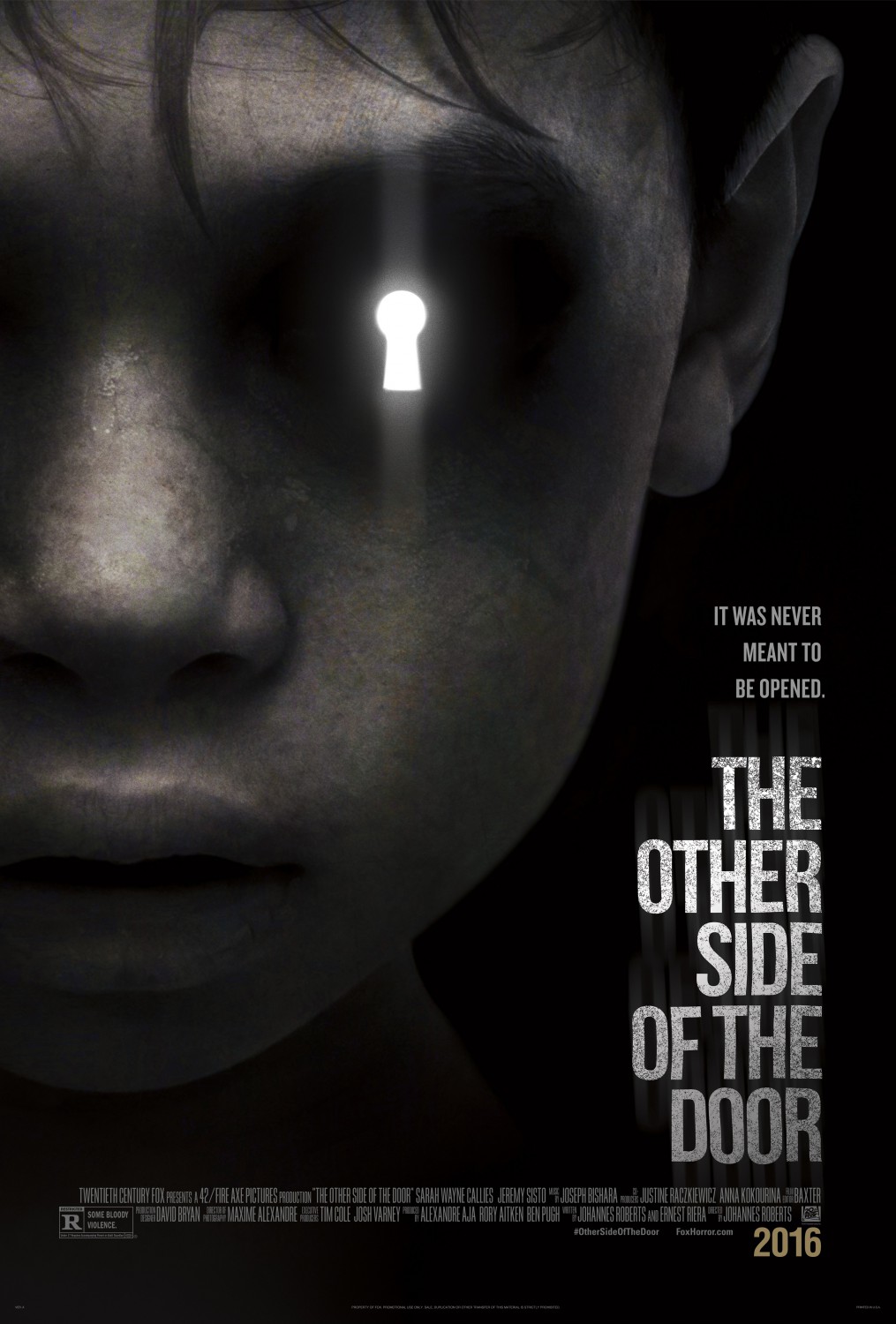
“The Other Side of the Door” is a lot like last year’s “The Lazarus Effect,” another movie dealing with the resurrection of the dead. Both movies have up and coming directors at the helm and a cast of talented actors eager to dig deep into the material. But while each movie gets off to a solid start to where we are utterly enthralled, they get weighed down by clichés and an inescapable familiarity which turns them into utter disappointments. What starts off as promising eventually becomes something stale and unoriginal, and “The Other Side of the Door” quickly becomes the kind of movie we have seen one too many times.
We are introduced to Maria (Sarah Wayne Callies) and Michael (Jeremy Sisto), a loving American couple who decide to set up roots in India. But their joy of living in a foreign country is forever destroyed when their son Oliver (Logan Creran) is killed in a tragic car accident, and Maria cannot find a way to ease the pain of such a devastating loss. Their housekeeper Piki (Suchitra Pillai-Malik), however, tells Maria of a way she can say a last farewell to Oliver, and it involves spreading his ashes on the stairs of an ancient temple which is said to be close to the underworld, and she has to close the temple’s door and spend the night there. Eventually, Maria hears Oliver’s voice on the other side of the door and gets to talk to him one last time.
There’s a little catch to this plan though; Piki tells Maria that she cannot under any circumstances open the door during this conversation. You don’t even need to guess what happens next. Maria does indeed open the door, and in the process creates an unbalance between the worlds of the living and the dead. As a result, Oliver is brought back to the living as a ghost, and a horrific god gets unleashed who will soon wreak havoc on Maria and her family.
Like I said, this movie gets off to a promising start as it takes the themes of death and resurrection and applies mystical powers to them in a way I haven’t seen before. Usually in this genre the dead are buried in a sacred Indian ground or brought back to life with some amazing potion, but “The Other Side of the Door” takes a slightly different approach as it deals with mysticism. This helps to make it stand out from other movies of its type, but unfortunately it becomes bogged down by a familiarity which renders it average at best. In these movies the dead come back, and they are never the same as when they were alive. You know the drill.
It’s a shame because the actors cast here do terrific work in creating a believable couple trying to get through the worst thing any parent could ever live through. The real standout here is Sarah Wayne Callies who plays Maria as she makes her character’s pain and vulnerabilities all the more palpable. Best known for her work on “Prison Break” and “The Walking Dead,” she gives a really strong performance which is emotionally raw to where you cannot help but feel for her even as she makes big mistakes. Callies makes this movie worth watching as she almost makes you forget about what’s wrong with it.
“The Other Side of the Door” also benefits from the presence of Jeremy Sisto who plays Maria’s husband, Michael, as he makes him the kind of loving spouse anyone would be lucky to have. Like Callies, he brings a strong human presence to this movie as Michael does what he can to rescue Maria from her infinitely deep depression. Whereas most movies would have had this character acting like an ineffectual buffoon, Sisto makes Michael a believably decent human being who is trying to do the best he can.
But after the movie’s first act which has Oliver’s ghost begging for his mother to read him Rudyard Kipling’s “The Jungle Book,” it descends into “Pet Sematary” and “The Lazarus Effect” territory as the resurrected dead end up terrorizing those who loved them the most. Director Johannes Roberts, who previously directed the critically acclaimed thriller “F” and the sci-fi horror film “Storage 24,” does give us a number of undeniably creepy moments, but even he is unable to transcend this material which is all too familiar to horror movie fans.
When “The Other Side of the Door” reaches its conclusion, it ends on an ambiguous note like many horror movies do, but it just makes the whole movie feel more routine than it already is. All these movies about bringing the dead back to life always have the most innocent characters coming back as something purely evil, and they are filled with others who constantly stare at the protagonists as if to say, “You really screwed up and we’re not going to let you forget it.” It’s a shame because the movie had a lot of promise and some terrific performances, but in the end it just feels like the same old thing and becomes much less frightening as a result. Better luck next time.
Copyright Ben Kenber 2016
* * out of * * * *
Please feel free to check out the interviews I did with the cast and director of this film down below. These interviews were done for the website We Got This Covered.
I did have the opportunity to read Stephen King’s “Cell” while I was on vacation in Hawaii. It’s not one of King’s best novels, but it was an entertaining read as it delved into our increasing obsession and dependence on technology, in particular cell phones. When the novel was released in 2006, cell phones still had a bit of a ways to go to get to where they are today; devices that can do just about everything and anything in our daily lives except make coffee. But now it’s 2016 and we have long since reached that point where we can’t bear to live without our cell phones and are a slave to them.
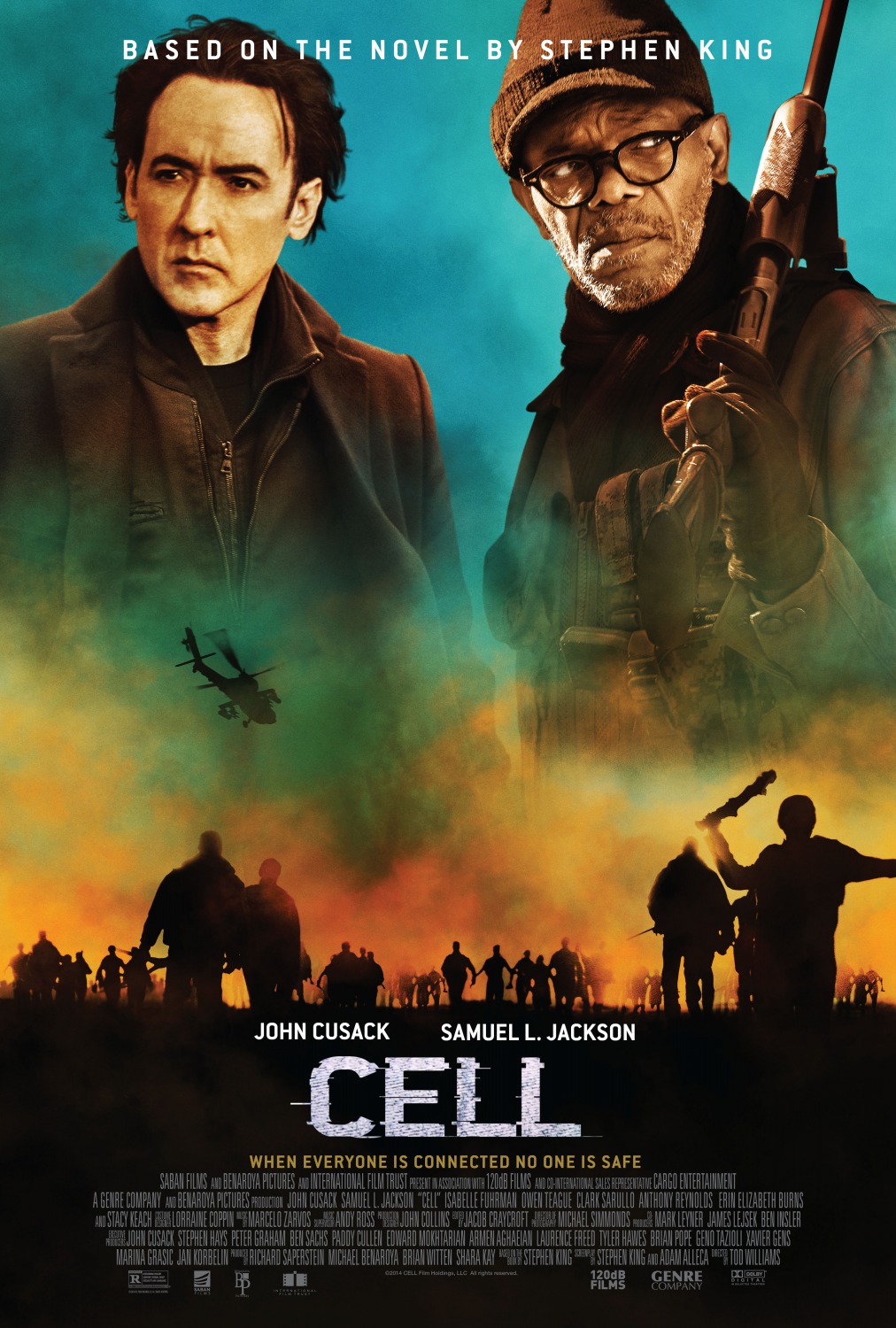
A movie adaptation of “Cell” had been in the works for years and Eli Roth was originally going to direct it, but that didn’t work out. Now it has finally arrived in theaters and can be quickly added to the garbage heap of terrible Stephen King adaptations like “Maximum Overdrive” and “The Mangler.” While its subject matter is still timely, “Cell” quickly devolves into just another zombie movie where the clichés are rampant to where we know exactly what to expect to where any suspenseful moments it hoped to have are rendered moot. In short, it is an uninspired retread of “28 Days Later,” a movie this one can only dream of being as terrifying as.
“Cell” opens up on Clayton Riddell (John Cusack) getting off his flight which has brought him back home, and he is eager to reconnect with his wife and son, both of whom he has been estranged from for too long. But it doesn’t take all that long for all the fellow travelers around him to start losing their minds and convulse to where they start attacking everyone and everything in sight. Clayton manages to escape the airport and teams up with subway worker Tom McCourt (Samuel L. Jackson) and Alice Maxwell (Isabelle Fuhrman) to find a safe haven away from those infected with the cell phone virus that controls the actions of everyone infected by it.
The movie gives us sights and sounds we have seen endlessly in one apocalyptic movie after another. We see scenes of cities in utter ruins, cars turned over, survivors travelling through empty roads and fields, etc. All this does is remind me of other movies that are far scarier and more unnerving to where it’s tempting to turn off “Cell” and watch them instead. There’s almost nothing to separate this film from others of its genre, and it becomes a glum and languid bore of a motion picture that feels too long even at 98 minutes.
Watching John Cusack here made me feel sorry for him. After suffering through a number of bad movies these past few years, he delivered a truly great performance as the elder Brian Wilson in “Love & Mercy” which proved he still has much to give to the world of acting. But here in “Cell,” Cusack just looks bored and barely interested to be a part of this particular Stephen King adaptation. His character is just another father trying to get to his child to ensure his safety, and the actor just goes through the motions with little to show for it.
Samuel L. Jackson fares a little better here as Tom McCourt as he gives a performance that is subtle instead of bombastic. The “Pulp Fiction” actor effortlessly turns his character into an everyman who has seen far too much in this lifetime to where this apocalyptic situation is no different to him than being a soldier in a foreign land. Jackson has been in countless movies over the years, many of them flat out bad, but there is no doubt that he will survive this critical catastrophe to give us great performances in the future.
What’s especially galling is that both Cusack and Jackson starred in another Stephen King cinematic adaptation almost ten years ago, “1408,” and that proved to be a scary time at the movies. Why they couldn’t bring the same enthusiasm they clearly had on that one to “Cell” almost feels like a mystery.
But then again, we shouldn’t be blaming the two stars as much as we should be blaming the director of this uninspired mess, Tod Williams. Back in 2004 he gave us the blistering drama “The Door in the Floor” which starred Jeff Bridges and Kim Basinger as a couple forever torn apart emotionally by the death of their sons. It was a breakthrough feature for Williams as he got some of the best performances out of Bridges’ and Basinger’s careers, and he dug deep into the lives of unlikable characters whose psychological wounds were too deep for us to look away from. A few years later he directed “Paranormal Activity 2,” a sequel which proved to be as terrifying as the original. And considering how terrifying the original was, that’s saying a lot.
Those two movies show Williams to be a huge talent behind the camera, so it is very hard to understand why he couldn’t make “Cell” the least bit scary or unnerving. King’s novel dealt with material that was familiar to him, but the writer made “Cell” more than just another exploration into the end of civilization as we know it. Williams doesn’t bother to do that here as he simply throws out one tired cliché after another at us, and some scenes are so badly lit to where it’s impossible to figure out what is going on. This is also not to mention the horrible CGI effects on display which illustrate how this low budget horror movie had an even lower budget than others.
This all leads to a climax which is not at all satisfying, and an ending that is unforgivably confusing. King’s conclusion to “Cell” was a bit anticlimactic and too ambiguous for many readers, but it was still a haunting conclusion that Williams doesn’t bother to include here.
Adapting Stephen King novels to the silver screen has always been tricky as filmmakers have to balance out their attention to both the gory aspects of his stories and the characters which inhabit them. Perhaps Williams tried to do both here, but he’s not able to shock us or care about the protagonists at the center of “Cell.” What we get instead is a very below average genre movie that isn’t worth anyone’s money or time. That should more than explain the studio’s decision to dump it in a handful of theaters this past weekend for a limited release. Do audiences even know “Cell” is out in theaters this weekend? Well, even if they do, I can’t blame them for not caring.