Tippi Hedren Looks Back at ‘The Birds’ and Working with Alfred Hitchcock

The Birds Tippi Hedren

Fans of Alfred Hitchcock were in for a treat when they packed the Grauman’s Chinese Theatre in Hollywood for a screening of his 1963 horror classic “The Birds.” The movie was being shown in honor of its 50th anniversary, and among the evening’s guests were two of its stars: Tippi Hedren who played the confident socialite Melanie Daniels, and Veronica Cartwright who had one of her earliest roles as Cathy Brenner. Much of the Q&A which preceded the movie, however, was directed at Hedren who talked about how she got cast in “The Birds” and of the overall effect Hitchcock ended up having on her career.

There has been this misconception about “The Birds” where many assumed it was filmed in black and white and not color. A lot of this had to do with people first watching the movie on their black and white television sets at home, and this understandably made the experience of watching it a bit different for them. Hedren reflected on what people have told her regarding this issue.

“I’ve had people say oh, I am so delighted that they colorized ‘The Birds,’ and I said uh no, we filmed it in color.’ And they said no, no, no, I saw it in black and white. Soon the argument kept growing, and I finally said no, you saw it on a black-and-white TV! And they went, yes’ Case closed” Hedren jokingly said.

Even today “The Birds” continues to pack movie houses all over the country and Hedren admitted she remains astonished at how it has a life of its own. She still does publicity for the film and talked of how it can still draw a crowd after so many years. Some of the other screenings she spoke of actually happened not long before this one.

“It took a little while for me to realize that this movie really has something that’s unique and powerful,” Hedren said. “We had a screening at a theater in Detroit, Michigan that sold out, and it didn’t have many seats in it. In Texas I was at a theater that was built in the 30s in El Paso, a beautiful, beautiful theater with 2500 seats, and there was a film festival there. Just before the screening of ‘The Birds,’ the director of the festival came to the stage and said ‘ladies and gentlemen, this theater has been sold out four times: once for ‘Gone with the Wind,’ ‘The Wizard of Oz,’ ‘E.T.’ and tonight ‘The Birds.’”

“The Birds” actually marked Hedren’s film debut as an actress, and she previously had a very successful career as a model which later led her to do commercials. Hitchcock saw Hedren in a diet soda commercial, and this led him to cast her in the movie. This opportunity came at a crucial time for Hedren as she had just moved back to Los Angeles with her daughter Melanie Griffith and was experiencing some problems.

“I rented a very expensive home in Westwood thinking I would continue my career as a fashion model and doing commercials, and it wasn’t working and I’m thinking okay, what do I do now? I don’t know how to type,” Hedren said. “Shortly after that on Friday the 13th of October 1961, I received a phone call from Universal asking if I was the girl in the diet soda commercial, and I said yes. So I was put through a four or five-day suspense thriller of who is the producer who was interested in me. Finally, I was asked to go to MCA, a big organization or agency, and it was there that the agent said, ‘Alfred Hitchcock wants to sign you to a contract. If you agree with the terms and sign it, we will promote you.’ So we went over to his office, and he (Hitchcock) opened the door and stood looking very pleased with himself. It literally changed my life.”

One audience member asked Hedren about the very strange birthday gift Hitchcock gave her daughter Melanie. Many have heard this story over and over, and it has always sounded tremendously creepy. The question, however, gave Hedren the opportunity to set the record straight about what really happened.

“My daughter was presented with a box when Hitchcock took us to lunch, and it was a wooden box and Melanie opened it and it was an incredible doll of me in the green suit that I wore in ‘The Birds,’” Hedren said. “The face was so perfect that it scared her to the point where she kind of freaked out. Everybody made it sound like it was Hitchcock playing a dirty trick or doing something really nasty to Melanie and that wasn’t it. It was supposed be a very, very beautiful gift and it just went awry. She was so affected by it that it was put away somewhere, and I unfortunately don’t even know what happened to it.”

But the one thing which has cast a heavy shadow over the legacy of “The Birds” is the fact Hitchcock sabotaged Hedren’s career after she starred in “Marnie.” During that time, Hitchcock became deeply obsessed with her, but she kept refusing his advances which led to him exerting a control over her no director should have over anyone. Hedren explained what happened between her and Hitchcock very calmly and without a hint of regret.

“As you know, I became the object of his obsession,” Hedren said. “It started later in the filming of ‘The Birds,’ and then by the end of filming ‘Marnie’ it was to the point where I couldn’t stand it anymore. I was tired of being followed around all the time. It all came about when I was asked to go to New York to be on ‘The Tonight Show’ to accept an award, and I asked for two days off. There was a demand put on me if I chose to take those two days off, and I was so offended with it and I said I have to get out of this contract and I have to get out of it now. As soon as ‘Marnie’ is over, I am done. And he (Hitchcock) said, ‘Well you can’t. You have your little girl to support, your parents are getting older…’ And I said anybody who loves me doesn’t want me to be in a situation which I’m unhappy. I want to get out!’ And he said, ‘I’ll ruin your career,’ and he did.”

“He didn’t let me out of the contract,” Hedren continued. “He kept paying me my $600 a week, and I wouldn’t hear for a very long time after that that many directors had asked to have me in their films, and it was so easy for him. All he had to say was she isn’t available, and it was that easy and it was done. It was hurtful, but at the same time I walked away with my head held high. He ruined my career but he didn’t ruin my life.”

The audience at Grauman’s Chinese applauded her last sentence, and it was clear to everyone she never lost her pride or self-respect in spite of what Hitchcock did. While her career was never the same after “Marnie,” she still managed to keep working in both film and television.

While we may have come out of the evening very upset at the cruel way Hitchcock treated Tippi Hedren, we could not deny “The Birds” still remains a very effective and unnerving horror movie a half a century after its release. The fact it holds up so well speaks volumes of not just Hitchcock’s brilliant direction, but also of Hedren’s beautifully confident performance. She remains such a sublime presence to watch in this classic film, and she deserves as much credit as Hitchcock does for its enduring success.

The Birds movie poster

Save

Wes Craven Gives a Live Commentary on ‘A Nightmare On Elm Street’

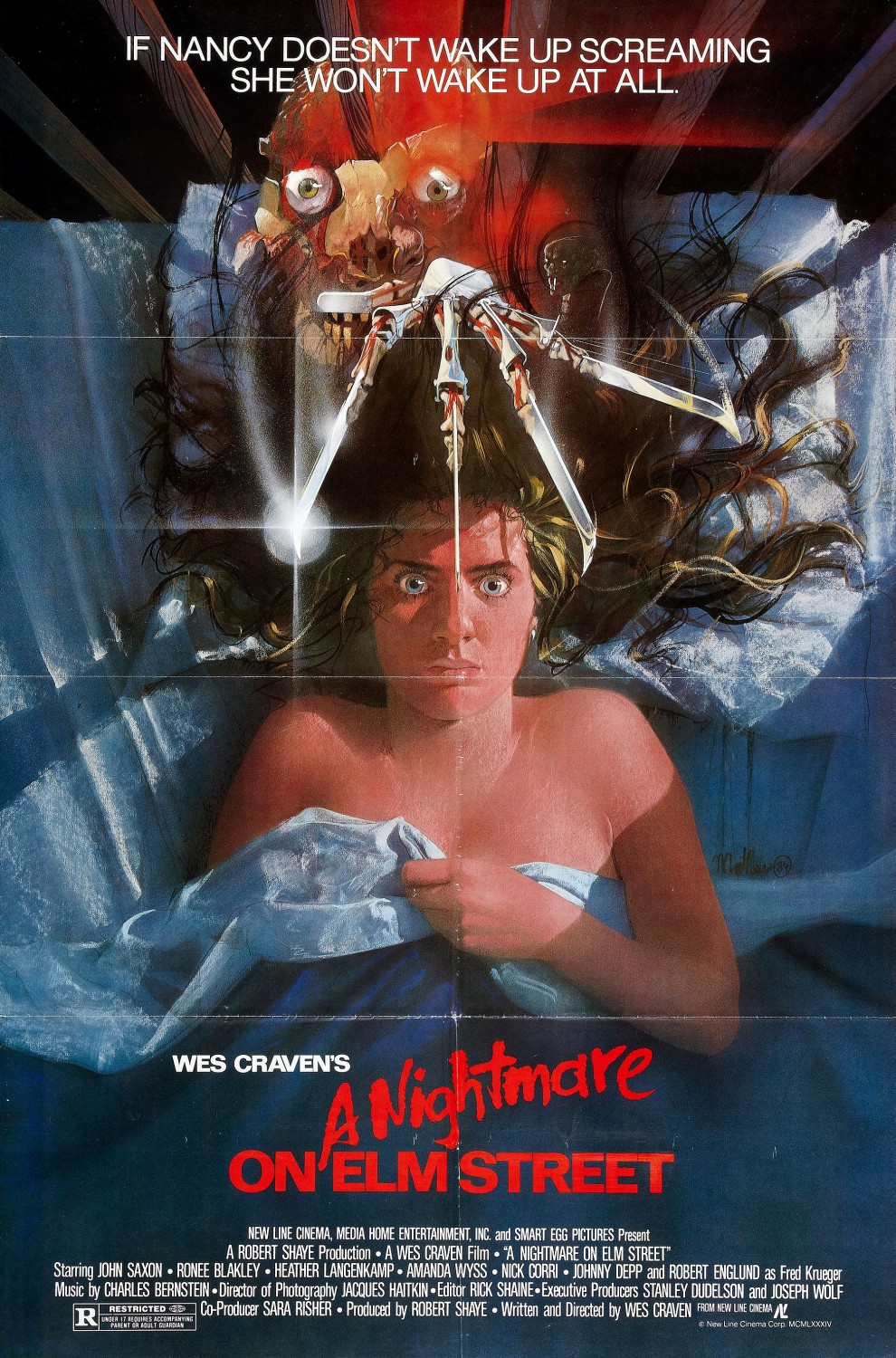
A Nightmare on Elm Street original poster

It has been a year since filmmaker Wes Craven passed away after a long fight with brain cancer. Despite the fact he was 76 years old, it still feels like he left this world far too soon. The following article is about a screening of perhaps his most famous film which I attended seven years ago, and it remains one of the most enjoyable, informative and entertaining screenings I have ever attended in Southern California.

Wes Craven made a special appearance on March 29, 2009 at the Aero Theatre in Santa Monica for a special screening of the original “A Nightmare on Elm Street.” This horror classic was released back in 1984 by the then fledging distributor New Line Cinema, and it remains one of the great horror classics of all time. This screening was sold out as Craven was there to do a live commentary of the film, and he was joined by director Mick Garris who started things off by saying, “I hate those people who talk through the movie!”

What shocked everyone the most was that the 35 mm print of “A Nightmare on Elm Street” was in pristine condition to where it looked like it had never even been run through a film projector before. Both Craven and Garris gave their compliments to the Aero Theater for getting their hands on such a beautiful print, and the audience applauded in agreement.

Garris started off with the question Craven must get every single day of his life: “Where did you get the idea for this movie?”

Laughingly, Craven said the idea for “A Nightmare on Elm Street” came when he was watching late night television, and a story came on regarding a young man who had died after having horrible nightmares. This case led to a series of articles in the Los Angeles Times about the boy and how he told everyone there was a man inside his dream trying to kill him. His father, a doctor, kept giving him sleeping pills to help him rest more easily. But when the police found the boy’s lifeless body, they also found all the sleeping pills his father gave to him underneath his bed. He never took a single one.

Craven also said the film was inspired by a dream sequence he did in “The Last House on the Left” where a character named Weasel has this nightmare where he is strapped down on an operating table with the parents of one of his victims hovering over him in and dressed in scrubs. The husband ends up taking a hammer and a chisel and places the chisel right on Weasel’s front teeth. The hammer comes down with a thrashing blow, and Weasel suddenly wakes up. Craven said when people talk about “Last House on the Left,” it is always this particular scene they bring up which astonishes him. Turns out it stayed with him to the point where someone suggested he make a movie out of a dream. Guess what happened next.

Craven also made it clear that “A Nightmare on Elm Street” was not inspired by any specific episode of “The Twilight Zone.” Instead he said he was trying to establish the world of dreams as he finds them, as we all do, endlessly fascinating. Throughout the movie, he discussed the subject of dreams at length and talked of how they have no rules to them. Dreams seem to revolve around the violence and darkness we experience in the world either through the news or firsthand, and Craven discussed how they seep into our subconscious all the time by saying, “If we were ever fully conscious of all the bad things that were happening to us, it would be too painful for us to handle.”

When Craven he took his script to every studio in Hollywood, he said the executives all rejected it because they found it to be ridiculous. But even as he got more and more broke, he kept shopping it around until he met Robert Shaye, the head of New Line Cinema, at a party in New York. Back then, New Line Cinema existed merely as a storefront in downtown New York, and it would have gone bankrupt had this movie not been successful. Indeed, New Line Cinema will forever be known as the house Freddy Krueger built.

Craven also remarked about how he didn’t know much about signing contracts at the time when he signed with Shaye to “A Nightmare on Elm Street.” Since he was already so broke and filled with doubt of what he could do, he felt he had no choice but to sign the contracts given to him. But what he thought would be a 50-50 situation turned out not to be the case, and from that point on New Line Cinema owned the movie and Freddy Krueger. The realization of this brought forth many hisses from the audience.

But when he was asked to make another “Nightmare” movie, which became “Wes Craven’s New Nightmare,” Craven asked for profit participation in the franchise he did not previously have. Shaye later told Craven he agreed that he was not treated fairly, and the deal between him and New Line got restructured to where Craven got what he rightfully deserved.

Garris pointed out how “A Nightmare on Elm Street” had an amazing cast for a genre film and asked Craven about his casting process. Craven replied he looked for actors who didn’t have a lot of credits to their name in the hope of getting people who could act more naturally. This was actually Johnny Depp’s very first movie, and Craven recalled how incredibly nervous Depp was throughout the shoot. Depp did manage to get a friend of his to help him out, and that same friend got cast as a coroner.

Of all the young actors, the most experienced was Amanda Wyss who played Tina. Amanda also starred in “Better Off Dead” as the girlfriend who thoughtlessly breaks John Cusack’s heart.

In casting Heather Langenkamp as Nancy Thompson, Craven said he chose her because she was basically “solid peasant stock” (the audience was shocked at this description) and looked like an “every woman.” This was what he wanted for this part, and Langenkamp turned in an excellent performance playing a character everyone could relate to. Nancy was also the first of many strong female characters Craven would utilize in his movies.

Garris then asked Craven how he created Freddy Krueger. Craven replied the inspiration for Freddy arose when he came across a homeless guy with a bowler hat who was shuffling his way slowly down the sidewalk, his face a mask of nasty scars. He said the sight of this man creeped him out a lot, and the image of the man stayed with him long after he vanished. The name Freddy came from a kid who Craven said used to beat him up at school, and he was at one time going to be based on a janitor he remembered from school who frightened him and his classmates. He was also adamant that Freddy not have a mask since this had already been done to death in the “Halloween” and “Friday The 13th” movies.

Krueger was also originally envisioned as being older, but this changed when Robert Englund came in to read for the part. Unlike other actors who were reluctant to portray such a dark and evil character, Englund was not intimidated by it and was willing to be serious with the material. Craven said Englund took a great delight in playing Freddy, and his audition convinced him the character did not have to be an old man for it to work. When an audience member asked if there was some sort of sound device or technique used to make Freddy’s voice sound deeper, Craven answered by saying, “Robert’s voice was all Robert’s.”

The budget for “A Nightmare on Elm Street” was around $1.8 million, but a big chunk of financing fell through two weeks into the shoot, putting the cast and crew in a position where they would not get paid. But once Shaye explained the situation to them all, not one crew member left the set. When the movie opened, it earned back its $1.8 million budget in just one weekend.

Craven also described how the special effects were created and what inspired them:

  • During the scene where Nancy falls asleep in her high school English class and sees Tina being dragged away in a body bag, the trail Tina leaves behind her was inspired by the slime trails left by snails.
  • When Nancy gets stuck on the stairs while running away from Freddy, the goo she steps in was actually oatmeal.
  • When the centipede comes out of Tina’s mouth, it apparently got lost on the set and the bug wranglers couldn’t find it. When the crew broke for lunch, none of them came back.
  • When Nancy cornered Freddy in the downstairs basement and set him on fire, the man doing the stunt was Craven’s racquetball partner.
  • In regards to the montage of Nancy setting up the traps to take Freddy down, the book she uses as a manual was actually a World War II manual on booby trapping.

Craven didn’t hesitate to bring up the constant fights he had with the Motion Picture Association of America (MPAA). When Tina’s bloody body, after being dragged over the ceiling, is dropped on the bed, the splash of blood when she landed was quite enormous. The MPAA asked him to cut down the scene to avoid an X (now NC-17) rating. Craven recalled these experiences as both very painful and never ending for him as they occurred with just about every film he made (“Music of the Heart” might have been an exception).

Those fights with the MPAA continued on with “Scream,” and Craven admitted he was baffled why none of the members realized that it was a satire. They even suggested the third act be completely cut, and this illustrates one of the many horrendous suggestions the MPAA comes up with when they judiciously give ratings.

One audience member asked Craven why he used teenagers instead of adults in the movie, and he replied very simply, “Adults would never have watched it.”

One of the funniest moments of the evening was during the scene where Freddy attacks Nancy’s mother, and how her burnt corpse descends into the mattress beneath her. Craven didn’t even try to hide the fact this was one of the least successful special effects in the movie. Regarding John Saxon, who played Nancy’s father, and his expression in the scene, Craven said, “John’s not upset that his wife just died. It was the special effects that tore him up!”

Charles Bernstein composed the movie’s unforgettable and unnerving score, and Craven praised his work as Bernstein had very little money to work with. Craven said he wrote the “1, 2, Freddy’s coming for you” poem, and Bernstein put music to it and took it from there.

As the evening continued on, we got to know more about Craven more as a person. In regards to his career as a horror filmmaker, he told Garris it was all a roll of the dice. When his good friend Sean S. Cunningham asked him to make “The Last House on the Left,” Craven remembered telling him, “I don’t know anything about making a scary movie.”

The audience was also surprised to learn Craven was not allowed to see movies as a kid, and it was not until much later that he finally got the nerve to sneak out of his parents’ home to see one. He credits “To Kill a Mockingbird” as the movie which changed his life and said the original “Texas Chainsaw Massacre” frightened him to death and left him in an unnerved state for months. But even after he had kids of his own, Craven said he never really changed as a director or in the kind of films he made.

When a movie of his opens in theaters, Craven said he always gets out of town as soon as possible. Life can get very miserable if your movie turns out to really suck. When Garris asked Craven if he got to see “A Nightmare on Elm Street” when it opened, Craven made it clear he hates watching his movies in a theater because he is usually driven mad by problems with the sound and projection.

There has never been any doubt Craven is an extremely intelligent filmmaker and human being. To hear him talk about the themes embedded in “A Nightmare on Elm Street” as well as the importance of horror movies made this live commentary all the more fascinating. Freddy Krueger became so popular with audiences because bad guys are far more interesting than the good guys. Another way of looking at this is of how the devil is more interesting than God because he is not bound by any moral obligations, and there is no rule he is not willing to break.

The way Craven sees it, horror is good for you as it forces you to deal with the chaotic. While other filmmakers are busy making “torture porn” movies, which Craven is not a fan of, he said he never tries to make horror look cool. Eventually, we all have to deal with the chaos of life, and we cannot spend the rest of our lives hiding from reality. If you watch the news, violence surrounds us in our everyday lives and gets deeply rooted in our subconscious mind. Horror films are affected by current events of the time they were filmed in

One of the best points that Craven made was that if you don’t know what darkness is inside of you and turn a blind eye to it, then you are in deep trouble. You cannot hide away from your dark side, and you need to be fully aware of what extremes people will go to in order to survive.

In the end, this is what makes Nancy so brave; she is the only one in “A Nightmare on Elm Street” capable of dealing with reality. This is in direct contrast to Nancy’s mother, Marge (Ronee Blakley), an alcoholic who hides vodka bottles in different parts of her house. She also becomes overly protective of her daughter by having metal bars put up on the doors and windows. Her way of dealing with reality is not healthy, and it is endemic of the other characters as they are not handling it very well either. But in the end, kids need to know they have allies in their parents, and Nancy manages to find one in her father.

“A Nightmare on Elm Street” still holds up after all the years despite the dated styles and special effects. Garris said he loved how everything keeps building up and of how there is an increasing sense of dread throughout. This movie taps into those terrifying dreams we all had when we were young, and this is just one of the reasons why it remains so terrifying to this day; it deals with the never ending fascination we have with dreams, and it creates a world for them to exist where anything can happen.

Rest in peace Wes Craven.

Copyright Ben Kenber 2015.

The Other Side Of The Door

The Other Side of the Door movie poster

The Other Side of the Door” is a lot like last year’s “The Lazarus Effect,” another movie dealing with the resurrection of the dead. Both movies have up and coming directors at the helm and a cast of talented actors eager to dig deep into the material. But while each movie gets off to a solid start to where we are utterly enthralled, they get weighed down by clichés and an inescapable familiarity which turns them into utter disappointments. What starts off as promising eventually becomes something stale and unoriginal, and “The Other Side of the Door” quickly becomes the kind of movie we have seen one too many times.

We are introduced to Maria (Sarah Wayne Callies) and Michael (Jeremy Sisto), a loving American couple who decide to set up roots in India. But their joy of living in a foreign country is forever destroyed when their son Oliver (Logan Creran) is killed in a tragic car accident, and Maria cannot find a way to ease the pain of such a devastating loss. Their housekeeper Piki (Suchitra Pillai-Malik), however, tells Maria of a way she can say a last farewell to Oliver, and it involves spreading his ashes on the stairs of an ancient temple which is said to be close to the underworld, and she has to close the temple’s door and spend the night there. Eventually, Maria hears Oliver’s voice on the other side of the door and gets to talk to him one last time.

There’s a little catch to this plan though; Piki tells Maria that she cannot under any circumstances open the door during this conversation. You don’t even need to guess what happens next. Maria does indeed open the door, and in the process creates an unbalance between the worlds of the living and the dead. As a result, Oliver is brought back to the living as a ghost, and a horrific god gets unleashed who will soon wreak havoc on Maria and her family.

Like I said, this movie gets off to a promising start as it takes the themes of death and resurrection and applies mystical powers to them in a way I haven’t seen before. Usually in this genre the dead are buried in a sacred Indian ground or brought back to life with some amazing potion, but “The Other Side of the Door” takes a slightly different approach as it deals with mysticism. This helps to make it stand out from other movies of its type, but unfortunately it becomes bogged down by a familiarity which renders it average at best. In these movies the dead come back, and they are never the same as when they were alive. You know the drill.

It’s a shame because the actors cast here do terrific work in creating a believable couple trying to get through the worst thing any parent could ever live through. The real standout here is Sarah Wayne Callies who plays Maria as she makes her character’s pain and vulnerabilities all the more palpable. Best known for her work on “Prison Break” and “The Walking Dead,” she gives a really strong performance which is emotionally raw to where you cannot help but feel for her even as she makes big mistakes. Callies makes this movie worth watching as she almost makes you forget about what’s wrong with it.

“The Other Side of the Door” also benefits from the presence of Jeremy Sisto who plays Maria’s husband, Michael, as he makes him the kind of loving spouse anyone would be lucky to have. Like Callies, he brings a strong human presence to this movie as Michael does what he can to rescue Maria from her infinitely deep depression. Whereas most movies would have had this character acting like an ineffectual buffoon, Sisto makes Michael a believably decent human being who is trying to do the best he can.

But after the movie’s first act which has Oliver’s ghost begging for his mother to read him Rudyard Kipling’s “The Jungle Book,” it descends into “Pet Sematary” and “The Lazarus Effect” territory as the resurrected dead end up terrorizing those who loved them the most. Director Johannes Roberts, who previously directed the critically acclaimed thriller “F” and the sci-fi horror film “Storage 24,” does give us a number of undeniably creepy moments, but even he is unable to transcend this material which is all too familiar to horror movie fans.

When “The Other Side of the Door” reaches its conclusion, it ends on an ambiguous note like many horror movies do, but it just makes the whole movie feel more routine than it already is. All these movies about bringing the dead back to life always have the most innocent characters coming back as something purely evil, and they are filled with others who constantly stare at the protagonists as if to say, “You really screwed up and we’re not going to let you forget it.” It’s a shame because the movie had a lot of promise and some terrific performances, but in the end it just feels like the same old thing and becomes much less frightening as a result. Better luck next time.

Copyright Ben Kenber 2016

* * out of * * * *

Cell

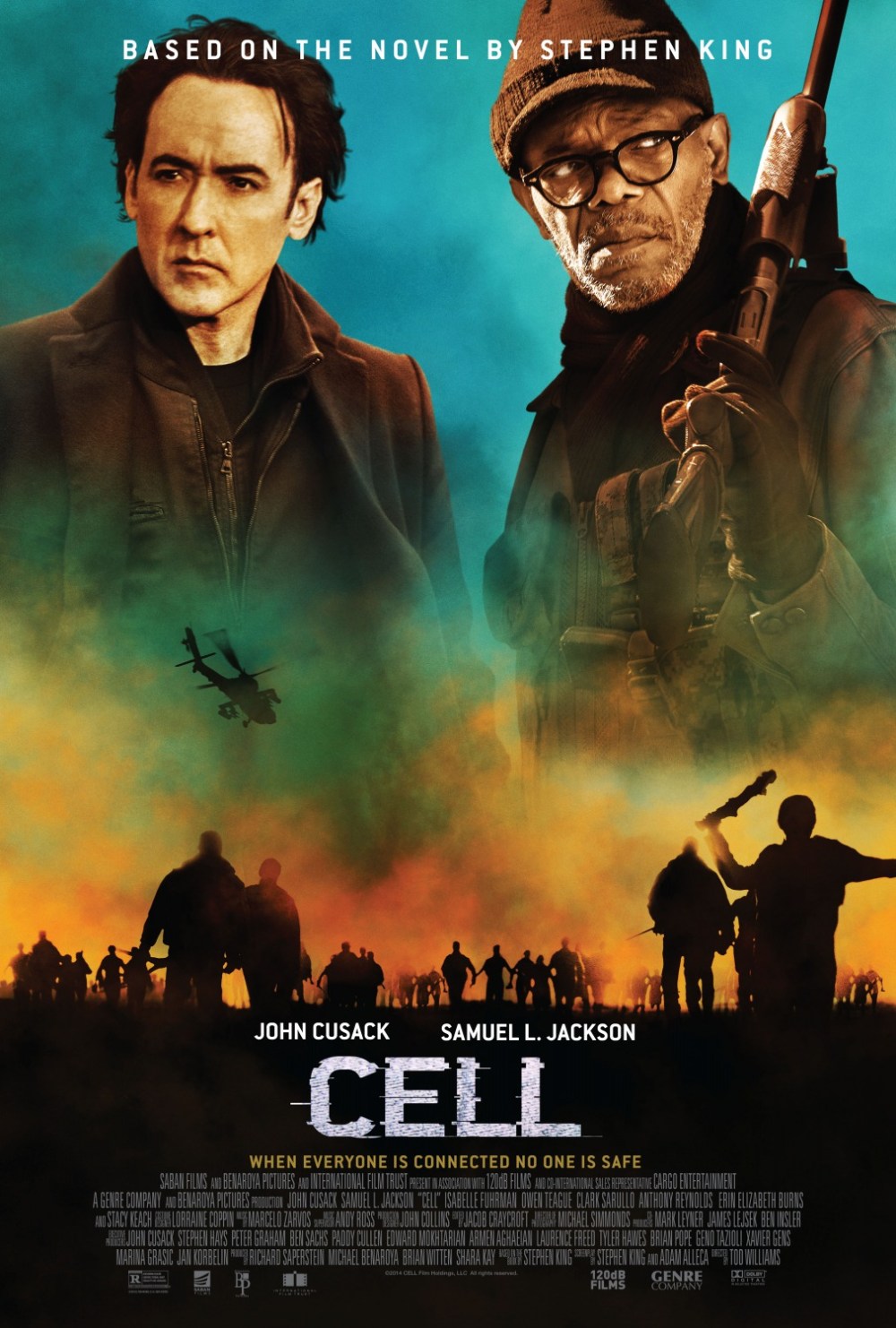
Cell movie poster

I did have the opportunity to read Stephen King’s “Cell” while I was on vacation in Hawaii. It’s not one of King’s best novels, but it was an entertaining read as it delved into our increasing obsession and dependence on technology, in particular cell phones. When the novel was released in 2006, cell phones still had a bit of a ways to go to get to where they are today; devices that can do just about everything and anything in our daily lives except make coffee. But now it’s 2016 and we have long since reached that point where we can’t bear to live without our cell phones and are a slave to them.

A movie adaptation of “Cell” had been in the works for years and Eli Roth was originally going to direct it, but that didn’t work out. Now it has finally arrived in theaters and can be quickly added to the garbage heap of terrible Stephen King adaptations like “Maximum Overdrive” and “The Mangler.” While its subject matter is still timely, “Cell” quickly devolves into just another zombie movie where the clichés are rampant to where we know exactly what to expect to where any suspenseful moments it hoped to have are rendered moot. In short, it is an uninspired retread of “28 Days Later,” a movie this one can only dream of being as terrifying as.

“Cell” opens up on Clayton Riddell (John Cusack) getting off his flight which has brought him back home, and he is eager to reconnect with his wife and son, both of whom he has been estranged from for too long. But it doesn’t take all that long for all the fellow travelers around him to start losing their minds and convulse to where they start attacking everyone and everything in sight. Clayton manages to escape the airport and teams up with subway worker Tom McCourt (Samuel L. Jackson) and Alice Maxwell (Isabelle Fuhrman) to find a safe haven away from those infected with the cell phone virus that controls the actions of everyone infected by it.

The movie gives us sights and sounds we have seen endlessly in one apocalyptic movie after another. We see scenes of cities in utter ruins, cars turned over, survivors travelling through empty roads and fields, etc. All this does is remind me of other movies that are far scarier and more unnerving to where it’s tempting to turn off “Cell” and watch them instead. There’s almost nothing to separate this film from others of its genre, and it becomes a glum and languid bore of a motion picture that feels too long even at 98 minutes.

Watching John Cusack here made me feel sorry for him. After suffering through a number of bad movies these past few years, he delivered a truly great performance as the elder Brian Wilson in “Love & Mercy” which proved he still has much to give to the world of acting. But here in “Cell,” Cusack just looks bored and barely interested to be a part of this particular Stephen King adaptation. His character is just another father trying to get to his child to ensure his safety, and the actor just goes through the motions with little to show for it.

Samuel L. Jackson fares a little better here as Tom McCourt as he gives a performance that is subtle instead of bombastic. The “Pulp Fiction” actor effortlessly turns his character into an everyman who has seen far too much in this lifetime to where this apocalyptic situation is no different to him than being a soldier in a foreign land. Jackson has been in countless movies over the years, many of them flat out bad, but there is no doubt that he will survive this critical catastrophe to give us great performances in the future.

What’s especially galling is that both Cusack and Jackson starred in another Stephen King cinematic adaptation almost ten years ago, “1408,” and that proved to be a scary time at the movies. Why they couldn’t bring the same enthusiasm they clearly had on that one to “Cell” almost feels like a mystery.

But then again, we shouldn’t be blaming the two stars as much as we should be blaming the director of this uninspired mess, Tod Williams. Back in 2004 he gave us the blistering drama “The Door in the Floor” which starred Jeff Bridges and Kim Basinger as a couple forever torn apart emotionally by the death of their sons. It was a breakthrough feature for Williams as he got some of the best performances out of Bridges’ and Basinger’s careers, and he dug deep into the lives of unlikable characters whose psychological wounds were too deep for us to look away from. A few years later he directed “Paranormal Activity 2,” a sequel which proved to be as terrifying as the original. And considering how terrifying the original was, that’s saying a lot.

Those two movies show Williams to be a huge talent behind the camera, so it is very hard to understand why he couldn’t make “Cell” the least bit scary or unnerving. King’s novel dealt with material that was familiar to him, but the writer made “Cell” more than just another exploration into the end of civilization as we know it. Williams doesn’t bother to do that here as he simply throws out one tired cliché after another at us, and some scenes are so badly lit to where it’s impossible to figure out what is going on. This is also not to mention the horrible CGI effects on display which illustrate how this low budget horror movie had an even lower budget than others.

This all leads to a climax which is not at all satisfying, and an ending that is unforgivably confusing. King’s conclusion to “Cell” was a bit anticlimactic and too ambiguous for many readers, but it was still a haunting conclusion that Williams doesn’t bother to include here.

Adapting Stephen King novels to the silver screen has always been tricky as filmmakers have to balance out their attention to both the gory aspects of his stories and the characters which inhabit them. Perhaps Williams tried to do both here, but he’s not able to shock us or care about the protagonists at the center of “Cell.” What we get instead is a very below average genre movie that isn’t worth anyone’s money or time. That should more than explain the studio’s decision to dump it in a handful of theaters this past weekend for a limited release. Do audiences even know “Cell” is out in theaters this weekend? Well, even if they do, I can’t blame them for not caring.

* out of * * * *

Copyright Ben Kenber 2016. All Rights Reserved.