John Krokidas and Austin Bunn Discuss ‘Kill Your Darlings’
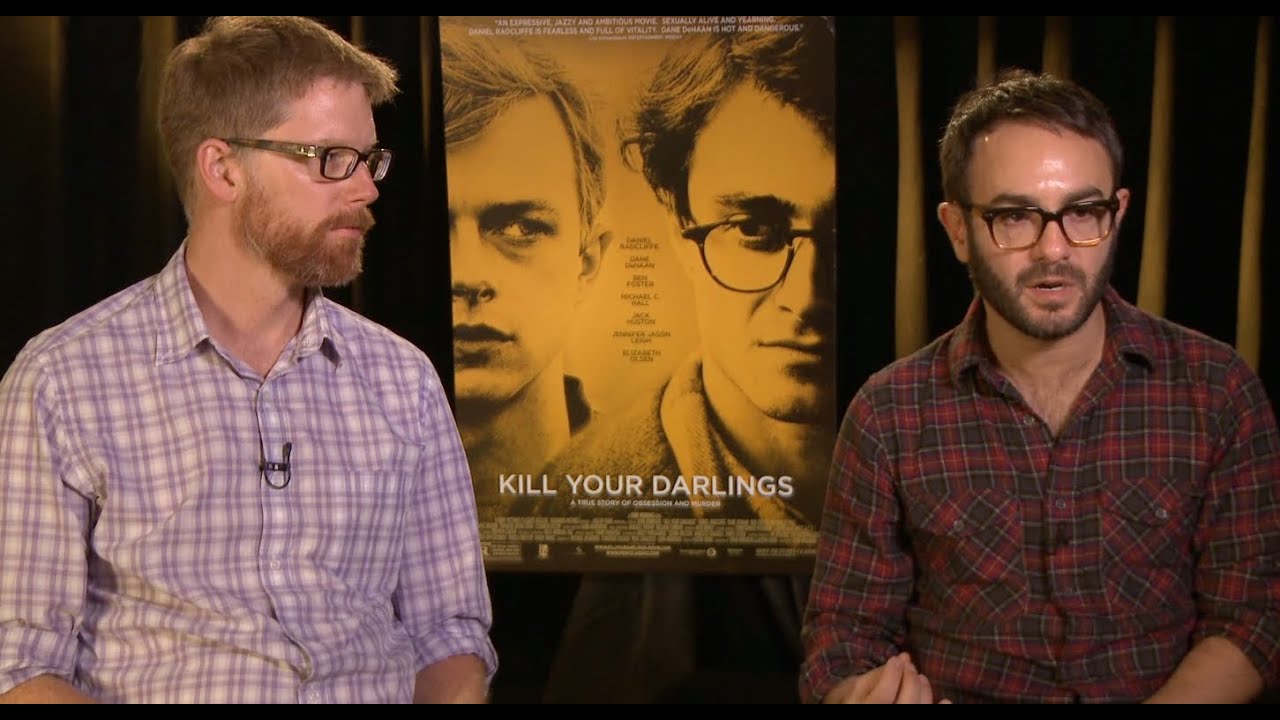
WRITER’S NOTE: This interview took place back in 2013.

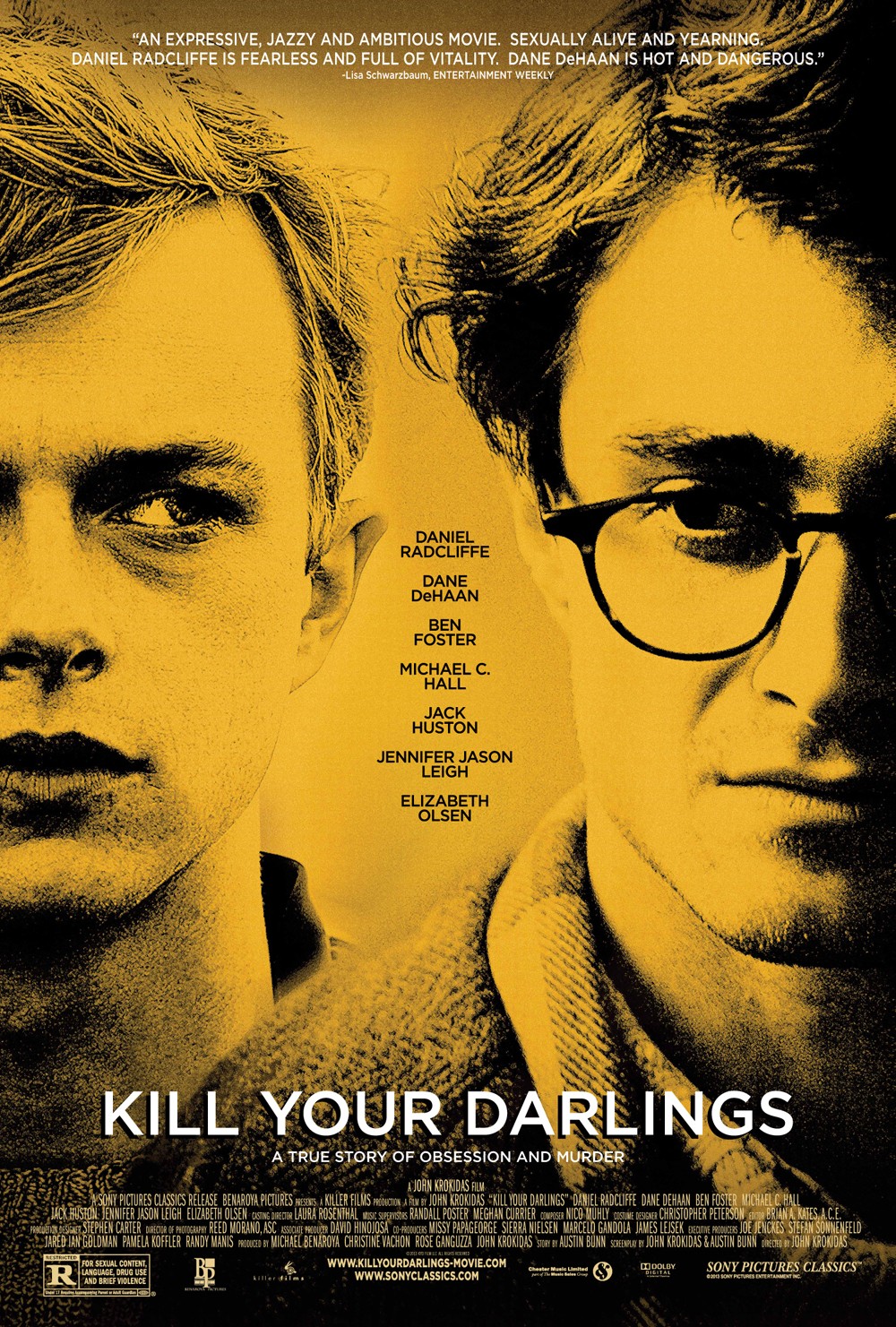
John Krokidas makes his feature film directorial debut with “Kill Your Darlings” which stars Daniel Radcliffe, Dane DeHaan and Michael C. Hall. The movie is about a murder that occurred in 1944 which brought three poets of the beat generation (Allen Ginsberg, Jack Kerouac and William Burroughs) together for the first time. Radcliffe portrays Ginsberg as a 17-year-old who is about to start college at Columbia University, and he ends up falling under the extroverted spell of fellow classmate Lucien Carr (DeHaan) who introduces him to the poets who would later bring a new vision to writers everywhere. It is when Carr murders his love David Kammerer (Hall) that their relationship starts to become unglued.

Krokidas co-wrote the script for “Kill Your Darlings” with his Yale University roommate Austin Bunn. A former magazine journalist, fiction writer and reporter, Bunn graduated from Yale and went on to get his master’s degree at the University of Iowa Writers’ Workshop. As for Krokidas, he later attended New York University’s Graduate Film Program where he made the short films “Shame No More” and “Slo-Mo.”

I got to hear how Krokidas and Bunn made the film under challenging circumstances when they appeared at the “Kill Your Darlings” press conference held at the Four Seasons Hotel in Los Angeles, California.
Question: What was the division of creative responsibility between you two like?

Austin Bunn: Probably like a lot of people in this room, I discovered the beats in college. I used to go to the campus bookstore and just track down the poetry collection, find Allen’s books and read them like they were some secret transmissions from the future version of myself. I was a closeted, young creative writer from New Jersey so Allen Ginsberg’s work meant the world to me. So, I had this really strong connection with Allen and of beat biographies and the history. I read a lot of the back catalog and I had come to John with the idea. So, in terms of the division of responsibility, I would write the first draft and then John would come in. The thing about John, as you will soon learn, he wanted to raise the emotional decibel level in every scene. John is one of the most riveting and vital and least hagiographic version of this story. We didn’t want to take the beats’ greatness as a given, so John sort of demanded that we write a really emotional roller coaster. Then we just went back and forth. John talks about it as the Postal Service, like the band version of producing a script. We were living in different cities at the time; I was at the University of Iowa Writers’ Workshop as a graduate student and John was in New York finishing film school.

John Krokidas: Austin wanted to do this as a play first. He was a playwright and a short story writer of some renown, and we were college roommates and we shared ideas with each other as college roommates and good friends do. But I, of course, started seeing the movie version in the back of my head and I had just gotten out of NYU film school and started convincing him that the play would be really flat and undramatic, but as a movie…

Austin Bunn: The Jedi mind trick!

John Krokidas: This would be amazing. But I would say I’m the structure guy I think, coming from NYU’s film program. I’m very traditionalist in terms of Sidney Lumet’s “find your spine,” and Austin is really wonderful with character and dialogue. If anything, he’s on a religious crusade against expository dialogue, and I would write these three paragraph monologues for each character expressing their emotion like that scene where Jennifer Jason Leigh finally turns to Allen to give him advice. I had a two-page monologue version and Austin crossed it all out (Austin laughs) and wrote the one line that’s in the movie, “The most important thing your father ever did was fail me,” which said everything.

Question: The movie is also very visual too because of the beats’ energy and such. How did you go about creating the look with cinematographer Reed Morano?

John Krokidas: I’m so proud of what we brought to this film. The movie is set in 1944 and it’s a murder story. Even in the writing process, I looked up and saw that “Double Indemnity” won Best Picture that year, and it was the year of “Laura” and “Gilda” and all these great American Film noirs. So, I said, “Why don’t we incorporate this even in just the fabric of the movie and start with the jail scene in a place of heightened tension flashback to more innocent times, and then build again to see whether or not these characters can escape or not escape their fate?” So, I started looking at noir style at first, but I thought an academic recreation of Film noir, who wants to see that? Going back to spine and theme, I thought what this piece was really about was young people finding their voice. So, what about going from conformity, the row houses of New Jersey and the pillars of Columbia, to nonconformity? And of course, where film noir went in the hands of the French was the New Wave. So I thought, “Okay well let’s start off with these controlled, composed, expressionistic-lit shots, and then as the boys go down the rabbit hole together, let’s take the camera off the tripod. Let’s get some jazzier free-form style.” So, I made this book of the 1940s. I had learned that Ang Lee, for “The Ice Storm,” did a 50 page book on the 1970s with colors, fonts and important historical events, you name it. So, I did that with the 1940s and then gave it to Reed. The great thing that I have learned on this is you can do all the academic treatises you want, but then you hire great people. She saw the goal post of what I wanted and then she showed me Jean-Pierre Melville’s films. She showed me films that meant a lot to her and then let kind of what I wanted filter through her own imagination. What I am amazed by specifically in her work is we did this movie in 24 days. Each scene was done in two hours or less, and she has the instincts to be like a documentary camera person and is able to light like that at the same time. We wanted to make sure this film felt relevant and contemporary as opposed to just being a traditional biopic.

Austin Bunn: (We didn’t want it to be) the greatest hits version of their lives.

John Krokidas: It was looking at Ryan McGinley photographs and contemporary, counterculture, young images of today and then finding what connected them to the 1940s. What was resonant in counterculture then and today at the same time.

Question: What was the direction that you were giving your actors? We were told that sometimes you would pull them aside for a more dramatic scene, but was there a consciousness you went into to direct the film and the actors? Were they any kind of specific kind of notes you gave them?

John Krokidas: Here’s the embarrassing story; Austin and I actually met freshman year because we were both acting in a production at Yale of “The Lion in Winter.”

Austin Bunn: Yes.

John Krokidas: Neither of us were the greatest actors in the world which is, I think, why we went into writing and directing. But I trained as an actor as an undergraduate and what you learn is that each actor has their own method and way. It’s whatever it takes for them to get the emotions to the surface. So, when I met with each actor that I cast, I would just simply ask them, “Have you trained? How do you like to work and what don’t you like?” Michael C. Hall gave me one of the greatest lessons in directing in which he said, “If what I am doing is not making you happy, don’t tell me that because that will make me self-conscious and it will make me think about what I’m doing. Just tell me to add whatever you want to what I’m doing.” That’s just a great lesson for life. Dan and I, when we were working together, we spent time before production (he was so generous and hard working on this) and he wanted to approach this like it was his first film which was very poignant to me. I said, “Would you like to try learning a new method and approach acting in a different style?” He said, “Absolutely!” So, with Dan, he’s so bright and in his head, and for the intellectuals Meisner works really well in focusing your action on what you are trying to do in the scene. Dane had trained extensively, and what he does is create a Bible for the character and does tons of research before production. Then he burns it and starts really becoming the character on set. Ben Foster (who plays William Burroughs) has something I’ve never seen another actor do which is, once we’ve basically got the scene up on its feet, he goes and he does the blocking of the scene by himself in the location several times. He calls it “the dance” because once he’s memorized the dance and knows the physicality (“I need to pick up the fork here, I need to put it down there”), he doesn’t have to think about it anymore and that’s completely freeing to him. So it’s like cooking this huge seven course meal where you have to get everything done at exactly the right time, but every plate needs a little bit of love in a different way. To me the greatest thing was being able to get this dream cast and then just to work with them to find how they like to work and what got the best out of them.

Austin Bunn: John had a really intuitive idea which was to keep the actors from reading past this point in the biographies, so none of the actors came in burdened by the mythology of who these guys would become. They were just 19-year-old kids. So, I think that was really smart and it released the actors from having to play the later decisions in their lives and the kinds of writers they would become. They just got to be young people, and that was a great relief I think for them.

John Krokidas: Yeah, and for us too as writers. I had a talk with Jack Huston once when he and I shared the same room and I’m saying, “Oh my god, I’m directing you as Jack Kerouac.” But we were like, “No. You are Jack who is a college student on a football scholarship who hates the other jocks, who just wrote a book which he thinks might be completely trite and he just wants to get out of college and have some real-life experience and join the war so he could begin to have real material to write his next book. That’s who you are.” That just liberated all of us.

Question: When writing the script, how much are you tied to the truth and how much are you allowed to take creative license?

John Krokidas: We did so much research for this. We felt we had to, and I think part of it’s our academic background because there’s so much in the biographies. There are so many biographies of them out there, but then also we would find different accounts online for example from David Kammerer’s friends. They said that that relationship between him and Lucien was never portrayed accurately and that Lucien actually kept coming back to David and David was asking him to end the relationship. And then we may have broken into Jack Kerouac’s college apartment together. We did the trick of pressing all the buzzers and then somebody let us in. But what’s interesting is Columbia students were living there and they had no idea that they were in Jack Kerouac’s apartment. So, we physically went to all of the locations in which this movie took place, and that just helped inform our writing process as well; getting to be able to visualize the actual spaces. Add to that, we went to Stanford University to the Allen Ginsberg archives. It wasn’t about the lack of material out there. If anything, it was about making sure that we really just focused on who they were up until the point which the movie takes place.

Austin Bunn: Just to add to that, the people that I know that have seen the film have been really surprised at how much is actually totally accurate. The day after the murder, Allen Ginsberg went to the West End Bar, “You Always Hurt the One You Love” was playing on the jukebox and he wrote the poem that ends the film. It ends with “I am a poet;” that is a line from August 20, 1944 so we worked really hard to weave it in. But like John was saying before, we didn’t want to do the dutiful, stuffy, every box checked kind of biopic that has been around for a while. We wanted to do something that felt more in line with the spirit of the beats that was more specific and honest and transgressive, and I hope we got there.

Question: Did you two have a specific goal of what you wanted to portray and what you wanted the audience to leave with either of the time or of the characters themselves?

John Krokidas: What I want the audience to leave with is that feeling of when we were 18 and 19 years old just like these guys were in the movie; when everything seemed possible and you knew that you had something important to say about with your life. That you wanted to do something different and unique and not just what your parents taught you, not just what school taught you, but you wanted to really leave your mark on the world. The fact that after the movie these guys actually did it and created the greatest counterculture movement of the twentieth century is amazing. I have had plenty of people come up to me after seeing the movie and said, “This movie made me want to be a better writer” or “this movie made me want to go back and start playing music again.” That to me means everything. That’s ultimately, deep in my heart, why I wanted to make this movie.

Austin Bunn: The pivot point was this murder. I loved Allen Ginsberg for his openness and his honesty, and to think that at one point in his life he was called upon to defend his best friend in an honor slaying of a known homosexual, the very thing that Ginsberg went on in his life to defy and radically create change about the idea of being in the closet and the shame around that issue, that contradiction was really exciting to us dramatically.

John Krokidas: You know this movie took, from the time that we started talking about this until the time that we are getting the chance to be with you all today, over 10 years to make. When I really think about it, the thing that kept me going and kept me wanting to tell this story is that there needs to be something that pisses me off at night. The fact that in 1944 you could literally get away with murder by portraying your victim as a homosexual, that pissed me off to no end. This isn’t a political movie and it’s one scene and it’s obviously what informed how Lucien Carr got away with murder, but for me that was the thing that kept me up all night that said, “No, I have to tell the story.”

Question: The movie has different kinds of music playing throughout it like jazz and contemporary music. Did you envision using different musical styles when it came to making this movie?

John Krokidas: I originally wanted a bebop jazz score similar to Miles Davis’ score for Louis Malle’s “Elevator to the Gallows” because the transition from swing to bebop at this time was exactly what these guys wanted to do with words; to go from rhythms to exploding them into something beautiful. My music supervisor, Randal Poster, said to me, “John put down your academic treatise, put down your paper. Go make your movie. Your child’s going to start becoming the person that he or she wants to be.” So I went and I made my movie, and then I put jazz music on the film and it didn’t work at all. And then I went and did only period accurate music and it felt like Woody Allen’s “Radio Days” which is a great movie but it’s not the young rebellious movie about being 19 and wanting to change the world that we wanted to make. So, I actually went back to the playlists that Austin and I used a while writing this movie and I used Sigur Rós and stuff that was timeless but contemporary, and it brought the movie to life. Then I realized that the composer Nico Muhly had arranged all of those albums and worked with Grizzly Bear and Björk and other people that we were using as temp track. So, we got the movie to Nico and just thankfully he loved it. Now that I knew that I had contemporary music in a period film, then we get to that heist sequence. I had heist period music on it, it was so corny. The sequence didn’t work, it didn’t have any stakes to it, and I can academically tell you when the beats come on, they led to the hippies which led to the punks, and the punks led to Kurt Cobain and the 90s, etc. But the truth is that while I can intellectualize it, you go with what’s visceral and what feels honest and true to you. For me, the biggest lesson in making my first film is to do all of your homework, do all your research, know what you’re doing, but then don’t be afraid to get out of the way if your movie starts to tell you what you should be doing.

Question: How did you decide on what literary quotes to put in, and how did you work with the actors in establishing the cadence and the elocution on those?

Austin Bunn: What a great question! If you know any of the beat history, this new vision was real for them and they have written volumes about it, none of which makes any sense. We couldn’t make heads or tails of it.

John Krokidas: Do you all remember your journals when you were 20 years old or those conversations you had at three in the morning with other college students? We got to read their version of it, and there’s a reason that we hide all of our journals and don’t let them see the light of day.

Austin Bunn: It was challenging. With the uninhibited, uncensored expression of the soul, that’s actually a credible quote directly from the Ginsberg new vision manifesto. So in some ways we knew we had to distill some of that material from the Ginsberg journals to help make the argument for how valuable this manifesto was and the irony honestly of what transpires in the plot which is the very thing that Allen’s called to do which is to create this censored version of history. But in terms of the poetry itself, it was really challenging because as we all know there are movies about poets and writers where recitations happen and they are really flat and they can be corny and there’s a time where you tune out of the movie when you’re waiting for the poetry to end. Specifically, I think of Allen’s first poem that happens on the boat. We were really challenged to find a poem that would speak to audiences but was genuinely an Allen Ginsberg poem written in his voice. So what we had to do was really channel Allen. His early work is quite rough and burdened by trying to impress his dad and his professors. John had the concept of this isn’t a poem that he’s just reading to impress people, it’s a poem he’s reading to Lucien Carr. The audience knows that, you know that and Lucien finds it out on the boat at that moment. That really gave me permission to kind of rethink what the poem was going to do and how we would make it, so we came upon Allen’s method which was kind of magpie; stealing from the American vernacular and going out and finding common speech and repurposing it, creating this Whitman-esque inclusion. So you hear in the poem things that you’ve already heard in the film just like Ginsberg did himself. Things like Allen in wonderland is reworked in the poem, unbloomed stalwart is the very thing that David said to him at the party. So we’re kind of hopefully paying off not just a poem that is emotionally powerful, but also something of the method that Ginsberg would use for the rest of his life.

John Krokidas: Radcliffe was such a hard worker. While he was on Broadway doing a musical, we would meet once a week for two months before even preproduction and rehearsals began to work on the accent and to work together. I have him on my iPhone reading “Howl.” We didn’t look at the later recordings, we looked at the earliest vocal recordings possible of Allen Ginsberg to make sure that we weren’t capturing the voice of who he became, but his voice at that time and what his reading voice was like. To be honest, it’s just really telling the actor, “You’re not performing a poem. You are letting Lucien know that he is loved with this poem and that you love him and that you can see inside him.” It’s playing the emotion underneath the poem which was the direction.

Question: What does it do for you when all the main characters are gay? Normally you got the female characters who can be a love interest but they are not going to be a rival. Usually, even now in films and in life, there is a separate role where as if you are all the same gender, you can all be anything to each other.

John Krokidas: I think this is a movie with every character is discovering what their sexuality is (gay, straight, bi or all over the place), and more importantly whether or not they are worthy of being loved. I personally don’t know if Lucien Carr was straight or gay, and to me it’s irrelevant because I have seen this relationship play out amongst gay people I have known so many times where an older man who is gay and a younger man of questionable sexuality develops such a close bond. The stereotype I think would be is that the young man had an absent father figure or finds the older man’s confidence and just the care and nurturing qualities of them very attractive. What happens though is that those two get so intimate that ultimately there’s nowhere else to take the relationship but sexual, and when that happens then the power position in that relationship twists and the younger man suddenly realizes that he holds the power because he’s the sexually desired one. That’s where a lot of conflict ensues. Whatever you read about that relationship between Lucien and David, everyone knew that they were codependent. Everyone knew it was toxic and going to end badly. Nobody knew it was going to end in murder.

Austin Bunn: I think a lot of the biopics we see are kind of denatured of their sexual qualities and the edginess of the relationships in them. So, I think we were trying to do something that restored some of that ambiguity, lust, desire and confusion that is genuinely in the beats’ history. We were not making that up.

Kill Your Darlings” is available to own and rent on DVD, Blu-ray and Digital.
‘Milk’ Celebrates the Life of a Man Who Opened Doors For Many

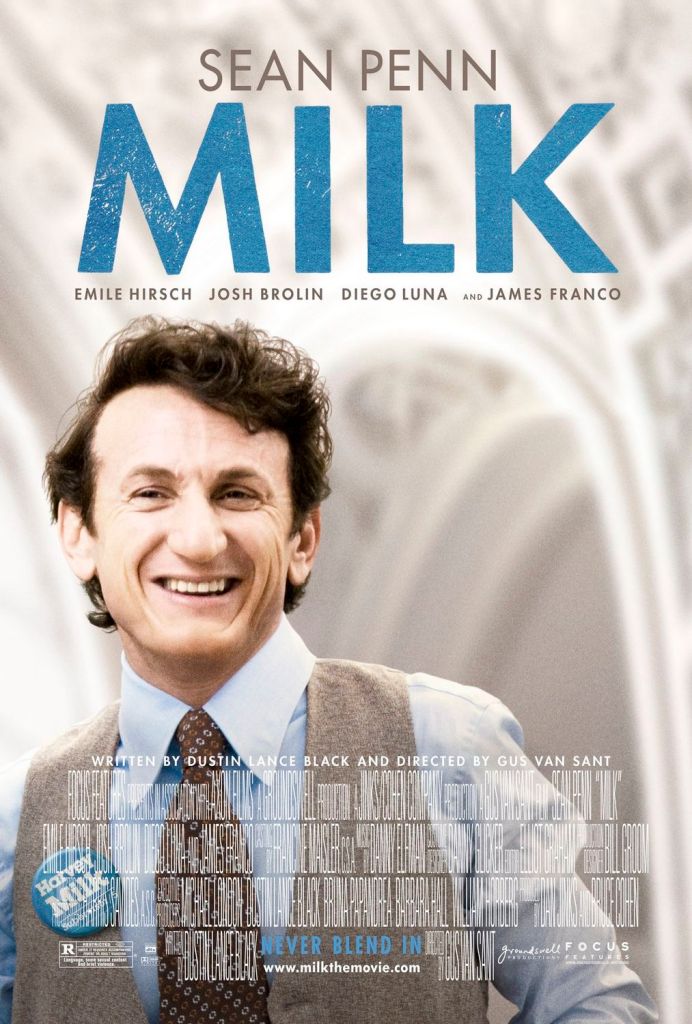
I keep hearing about how Sean Penn wants to retire from acting and just direct from now on. He keeps saying he never really enjoys acting, so it has to make you wonder why he would keep doing something he doesn’t enjoy. But after watching him give another great performance in “Milk,” I would really like to believe he really enjoyed playing the late gay rights activist and politician Harvey Milk despite the role’s emotionally draining moments. Penn gives us a man who loved life and smiled more often than not. Whether you are gay or straight, I am sure you would have like to have known the real Harvey Milk as he always seemed to be in the best of spirits no matter what he is doing.

Milk” is a longtime dream project of Gus Van Sant, and it looks at Harvey before and after he became America’s first openly gay man ever elected to political office. It follows him from when he moves from New York to the Castro district of San Francisco and the numerous political races he ran in. It culminates with his and Mayor George Moscone’s assassination at the hands of Supervisor Dan White. But don’t worry, I have not given anything away. The movie is an intimate character piece of Harvey as well as those closest to him as he fought for equal rights for all homosexuals in San Francisco and the rest of America.

It was actually quite prophetic that “Milk” was released in the same year California witnessed the depressing and infuriating passage of Proposition 8 which banned gay marriage in the state (it was later ruled unconstitutional in 2010). In the movie, we see Harvey and his friends fighting the good fight against Proposition 6 which was enacted by then California Senator John Briggs with the objective of banning gay men and women from teaching jobs in California public schools. Back then, people foolishly believed there was a connection between homosexuality and pedophilia which was and still is total crap. “Milk” came out at a time when the fight for gay rights was still far from over.

The majority of the action takes place in San Francisco in the Castro market. Anyone residing in or familiar with the history of Castro will see it is to San Francisco what West Hollywood is to Los Angeles. Harvey ends up opening a little camera shop with his lover Scott Smith (James Franco), but he is not greeted with open arms from the local merchants as they are convinced that, because he is gay, he will be closed down in record time. From there, Harvey decides to run for public office in order to find a voice for those who never had one before.

Van Sant does a great job of recreating 1970’s ever so vividly on what must have been a very tight budget. He also successfully interweaves television footage of the time with the actors to where it is not at all distracting. But his biggest accomplishment here is he does not turn Harvey Milk into some sort of superhero, and instead he treats him as a regular human being with flaws and all. Harvey helps those in need of help as much as he can, and he does this to a fault. His political life eventually overtakes his personal life and creates heartbreaking difficulties in his ability to maintain a loving relationship. He is encouraged to give up running for political office after he loses for a second time (he ran for office 4 times before he won), but with each election he makes a bigger impact with more and more voters.

Van Sant was originally planning to make this movie with Robin Williams in the lead several years before, but it did not work out. At first, it almost seems a bit odd to have Sean Penn playing Harvey Milk, but after the movie is over, you realize there is nothing odd about it at all. Penn gives this role an utterly gleeful spirit which I do not often see in his other performances. Most roles he plays are of characters in the pit of despair or of those so cynical about the world that it takes a battering ram to get through the traumatized psyche to get a genuine sense of feeling. This may very well be his most cheerful performance since he played Spicoli in “Fast Times at Ridgemont High.” Penn really captures the spirit of what made Harvey so special, that he wanted to help people and gays around him come out of the closet.

Aside from Penn, there are other great performances to be found. James Franco plays Harvey’s lover, Scott Smith, and he is excellent as he creates a link to Harvey which can never be broken, ever. Franco matches Penn step for step in showing the highs and lows of a relationship between two loving people who struggle constantly to make things work between them.

Another standout performance comes from Emile Hirsch who plays street hustler Cleve Jones, and Harvey ends up encouraging him to help run his campaign. Hirsch gives Cleve a spirit and a determination which can never be easily broken, and he shows no shame in whom he is nor should he.

Other great performances come from Alison Pill who plays campaign manager Anne Kronenberg, a proud lesbian who helps Harvey finally win an election. Diego Luna is also heartbreakingly good as Harvey’s second lover, Jack Lira. An emotionally high-strung man with needs greater than anyone, let alone Harvey, can ever satisfy, Luna holds the screen strongly as he carefully illustrates his character’s constantly unsteady state of mind.

But another truly great performance in “Milk” comes from Josh Brolin who portrays Supervisor Dan White. Ever since 2007, Brolin has made a name for himself with terrific performances in “No Country for Old Men.” With his role as Dan White, he never goes the route of simply demonizing this man whose crime is still absolutely unforgivable to so many. Along with director Van Sant, Brolin gives us a complex portrait of a man brought up through a strong religious background, and who ends up getting so caught up in it to where it blinds him to the deep dark hole he keeps digging for himself. In a sense, his outcome is tragic in its own way, and when you find at the end credits how he ended up leaving this earth, there is no cheering. There is nothing but pity for the man who got a much too lenient sentence thanks to the so called “Twinkie defense.”

You don’t come out of this movie wanting to forgive Dan White for what he did, but the filmmakers never try to make you hate him. Besides, I am not sure Harvey would have wanted anyone to hate him either.

Van Sant succeeds in making “Milk” a largely uplifting motion picture without resorting to manipulative tactics in an effort to tug at your feelings or with an overwhelmingly emotional film score which begs you to shed tears. Truth be told, composer Danny Elfman does a great job of creating music which supports the characters and the movie without ever overdoing it. Van Sant is also served well with a tremendous screenplay by Dustin Lance Black, and he introduces us to the wonderful people in Harvey’s inner circle and makes each one a unique individual worthy of attention.

If there is anything which disappointed me about “Milk,” it is the archival footage of Anita Bryant featured throughout where she talks about how she sees homosexuality as a sin. Anita speaks of how the word of God must be directed, and she is clearly one of many people who have completely misinterpreted what the bible says about homosexuality. The one scene I kept waiting for was when she got a pie thrown in her (even God knows she deserved that). The fact this footage was not shown here was a bit of a letdown.

The real triumph of “Milk” is in how Van Sant makes you see what an inspiration Harvey was to so many people. The movie starts out with him saying, as he is about to turn 40, that he has done nothing with his life. By the end, both Van Sant and Penn make it clear he did so much and is still a huge inspiration to many more than 30 years after his assassination. Come to think of it, he may even be more of an influence to people in death than he was in life.

Many may end up not seeing this movie either because of their misplaced religious views, or because we know it will end with Harvey Milk being murdered. But “Milk” is not a movie about how Harvey died. It is a movie about how he lived, and of how his life is worthy of celebration. His courage did so much for people, and it is still needed in the darkest of times. This was a career high for Van Sant and Penn, and it was one of 2008’s best movies.

* * * * out of * * * *

‘The Imitation Game’ Presents Alan Turing to a New Generation

The Imitation Game poster

Movies “based on a true story” keep coming at us like Election Day fliers in the mail, but “The Imitation Game” is one of the few that actually deserves our full attention. It portrays the life and work of Alan Turing, one of Britain’s most extraordinary heroes, whose efforts and accomplishments remained unsung for far too long. At the same time, it is a movie about secrets; how we keep them, the importance of keeping them and of the damage they can do when uncovered by others. What starts off as a typical biopic becomes something much more as we watch how Turing and his crew of code breakers helped bring an end to World War II, and of how his life came to a tragic end through needless and unwarranted intolerance.

When it came to finding the right actor to portray Alan Turing, the filmmakers could not have found one better than Benedict Cumberbatch. While other actors would have made the mistake of portraying Turing as some kind of Dr. House clone, Cumberbatch turns him into a fascinatingly complex human being who is brilliant, socially awkward, and very vulnerable in a time where being vulnerable could be a huge liability.

For those who don’t know, Turing was a brilliant mathematician and cryptanalyst who worked at Bletchley Park, the top-secret Government Code and Cypher School during World War II, where he created a machine which succeeded in breaking Germany’s seemingly unbreakable Enigma machine. Cumberbatch makes it clear just how incredibly smart Turing is during his first meeting with naval commander Alastair Denniston (Charles Dance) as he turns a hopelessly bad job interview into an unforgettable demonstration of his deduction skills.

What I loved about Cumberbatch’s performance is how he makes Turing curt with people in a way which is arrogant but not necessarily mean. It’s no surprise his fellow co-workers have a tough time warming up to him as he is determined to do things his way and has little time for anybody who doesn’t think as fast as he does. But part of the fun is watching Cumberbatch take Turing from being an anti-social human being to one who is genuinely eager to involve the rest of his crew in breaking Enigma.

One of the colleagues who came to be a big help to Turing is Joan Clarke, a Cambridge mathematics graduate played by Keira Knightley. Her entrance in the movie is great as the other men consider her to be in town only to apply for secretarial work, but Knightley makes Clarke into a very confident character who is more than ready to prove her worth in a male dominated environment. She also becomes one of Turing’s best friends through thick and thin as she helps ease him into social gatherings and become one of the guys instead of such an isolated individual. Even as Turing’s life heads down the tubes, Clarke is still there for him as she understands him in a way few others do.

I figured “The Imitation Game” would climax with Turing’s machine breaking Enigma, and the sequence where Turing and the others succeed in doing so is intensely exciting. But in a sense, it marks the beginning of the end for this group as they come to discover how the secrets they have uncovered lead to other secrets being made and kept for the good of the people. There’s even a scene where Turing’s crew discovers when a cargo ship is going to be attacked, and they debate on whether or not they will stop it as doing so risks undoing all the work they have accomplished. I love it when dramatic movies provide characters with such difficult dilemmas to solve, and this film comes with some of the most agonizing.

Again, this is a movie about secrets, and it becomes fascinating to see how the keeping of these secrets comes to deeply affect each character. True identities are revealed and compromised, and while certain secrets are kept in the dark to give England an advantage in the war, others secrets come to destroy those who had the misfortune of living in a time where certain behaviors and orientations were criminalized. Turing is the one who suffers the most as his private life is revealed to the world which forces him to face an utterly cruel and unnecessary punishment.

“The Imitation Game” was directed by Norwegian filmmaker Morten Tyldum whose previous works include “Headhunters,” “Fallen Angels” and “Buddy,” and he also directed “Passengers” starring Jennifer Lawrence and Chris Pratt. Tyldum has done an excellent job in transporting us back to the days of World War II in a way which feels unique and not overly familiar. His emphasis is on the characters just as it should be, and he succeeds in making this not just another traditional biopic. He pays great respect to Turing throughout as this is a man who made a huge difference not just in World War II but also in the development of future technologies we have become far too dependent on these days.

Cumberbatch has long since proved how great an actor he is with his work on the London Stage and on “Sherlock,” and he was prominently featured in “The Hobbit: The Desolation of Smaug” and “Star Trek into Darkness.” In “The Imitation Game,” he takes us on quite the emotional ride as we see him triumph in what he does best and suffer horribly in a time where he doesn’t quite belong. He makes you feel Turing’s pain as it is reduced to a shell of what he once was, and the scene where he is unable to even start a crossword puzzle is devastating to witness.

But Cumberbatch isn’t the whole show here as he is surrounded by a wonderful group of actors who are every bit as good. Keira Knightley does some of her best work yet as Joan Clarke, the woman who comes to understand Turing the best. Matthew Goode, so unnerving a presence in “Stoker,” is the epitome of perfect casting as Hugh Alexander; the chess champion and man about town we would all like to be in our everyday lives. Mark Strong makes Major General Stewart Menzies a deeply enigmatic (no pun intended) character who knows far more than he ever lets on. And then there’s Rory Kinnear who portrays Detective Robert Nock, the man who investigates Turing and becomes very eager to keep his life from being ruined. Kinnear is very strong as he shows us the detective’s inner conflict in convicting a man who is truly responsible for saving many lives.

Turing ended up taking his own life at the young age of 43, and it is only in recent years that he has people have acknowledged the terrible treatment he received. In August 2009, John Graham-Cumming started a petition urging the British Government to apologize for Turing’s prosecution, and then Prime Minister Gordon Brown acknowledged and described Turing’s treatment as “appalling.” A few years later, Turing received a pardon from the Queen under the Royal Prerogative of Mercy, but many are still waiting for an apology over the way he was treated chemically. This man was responsible for helping to end the Second World War, and while he was alive he was treated with derision more than respect by many. Thanks to “The Imitation Game,” people will now see the kind of person Turing really was and why he deserves to be seen and celebrated as a hero. Believe it or not, his creation of his machine became the prototype for what we today call computers.

This is a terrific film.

* * * * out of * * * *

Exclusive Interview with Alfred Molina about ‘Love is Strange’

Alfred Molina Love is Strange

He has played a variety of characters in movies like “Raiders of the Lost Ark,” “Prick Up Your Ears,” “Boogie Nights,” “Spider-Man 2” and “Not Without My Daughter” to where it seems like he can play anybody (and he probably can). Now Alfred Molina takes on a more intimate role in Ira Sachs’ “Love Is Strange” where he plays George, a Catholic school music teacher who, as the movie starts, marries his lover of 39 years, Ben (played by John Lithgow). They have a joyous ceremony, but once word reaches the school of George’s wedding, they subsequently fire him. This leads to a great deal of upheaval in the newlyweds’ life as they are forced to sell their apartment and spend time apart for the first time in years as they search for more affordable housing. The situation weighs very heavily on George to where he feels like he’s failing Ben and everyone around him.

It was a great pleasure to speak with Molina while he was doing press for “Love Is Strange.” It turns out that he and Lithgow have been friends for many years, so the fact that they have great chemistry onscreen should be no surprise. In addition, I also asked Molina about how sees the world of independent filmmaking today, why Stanley Kubrick’s “Spartacus” inspired him to become an actor, and of what it was like to shoot this film without any rehearsals.

Love is Strange movie poster

Ben Kenber: Since you and John Lithgow have been friends for a long time, did the chemistry you two developed onscreen come easy to you?

Alfred Molina: Yes, it did. I think the advantage of being friends with John, having had a relationship as friends, helps us both in a way. For me, it just meant there was shorthand already in place. There was an ease and a rapport and a relaxation between us that was very easy and also very conducive and helpful for the roles we were playing. I think we would’ve still enjoyed the fact that we are friends if we had been playing adversaries in a movie or a good guy, bad guy. But the fact that we were playing a couple in a long-term relationship, I think our history as friends only helped and sort of aided that.

BK: What I really liked about this movie is that what the characters go through is quite ordinary, but it takes on a different feeling here. We don’t see enough movies these days about regular ordinary people, and the problems the characters go through here feel quite epic.

AM: Yeah. People lose their jobs, people lose their homes and it’s always bad news. But it happens very often for the most trivial of reasons, and I think the fact that Ira Sachs and (co-writer) Mauricio Zacharias created a couple who, by their very ordinariness, when this crisis happens to them, it takes on epic proportions. And like most crises that happen to ordinary people it becomes huge because normally in our own lives we don’t have the power or the means to overcome them quite so easily. It takes time and I think the fact that George and Ben are, for all intents and purposes, a very ordinary and a very anonymous couple adds to the strength of this story.

BK: I also wanted to congratulate you on receiving the Spotlight Award from the Creative Coalition at Sundance for your work in independent films. How do you think the world of independent films is faring today? Has it gotten easier to make them or harder?

AM: Well, I think it all depends on one’s perspective. Independent moviemaking is always a challenge. I think whenever you’re working on projects that don’t have immediate commercial appeal and you’re working outside of the studios, especially on low budget films where you’re really scrambling to raise $2 or $3 million to make a movie or however much it is, you’re working under all kinds of restrictions and challenges and the biggest one of course being time. You don’t have time. You very often don’t have time to absorb any mistakes or any accidents or anything that happens that kind of works against your schedule, so it’s always a challenge. But I think the fact that there are so many independent movies finding an eager audience means that there’s something being done right and well. There is an audience out there for good stories. There’s an audience out there for well-made, well-crafted, sincere movies about real people in real situations, and I think the reason why there’s an audience is because of the way cable TV, for instance, has welcomed movies. So many directors and writers and actors are now working on cable shows because that’s where some of the best movies are being made where young directors are getting the chance to make their films and tell their stories. The relationship between the product and the audience has changed a lot. There was a time when you were working on television that you were very much the guest in someone’s house. But now cable has changed all that because you’re paying for it. Also, our TVs have gotten bigger so it’s like watching a movie, and if you’ve got a 50-inch screen in your front room, the ratio is pretty typical of a small movie house. You can be watching movies at home and I think that changes the dynamic between the product and the audience, and there’s an audience out there for small films. The independent industry lurches from one crisis to another, and in those ups and downs there’s some great movies being made.

BK: I’ve talked with a lot of indie filmmakers recently and they usually get a shooting schedule that’s 30 days if they’re lucky, but those schedules keep getting shorter as time goes on.

AM: That’s right, yeah, because making movies gets more and more expensive. But there will always be an independent director, writer, actors who want to continue to work in that milieu because ultimately that’s where the most interesting stuff is happening. I can only speak for myself, but I think that’s where the best films are being made.

BK: Your character of George has a great line in this film where he says, “Life has its obstacles, but I’ve learned early on that they will always be lessened if faced with honesty.” I think it’s very interesting in that George teaches at a Catholic school and has for many years, but the school doesn’t always respect the individual that he is.

AM: Absolutely, and I think that’s a great shame for anyone who’s in the same position as George; losing your job or losing your home or being chastised by society in some way because of who you choose to love and who you choose to spend your life with. As a heterosexual that’s something I’ve taken completely for granted. I can take it for granted that I can love whoever the hell I want and no one can stop me, but my gay friends have only recently begun to enjoy that right. So I think that’s why lines like that in the movie are terribly important and very, very resonant not just for gay men and women but for everybody. I was talking today with John (Lithgow) about how… He’s only been to a few gay weddings in recent years, but we both found them incredibly moving. Weddings are moving anyway. Anybody who confidently stands up and says I want to spend the rest of my life with this other person is making a very dramatic and a very moving and emotional statement, but when it’s two gay people you know that it’s not just full of the romantic and emotional power of the moment. It’s full of years, sometimes decades, of struggle to reach that point, so it has even more significance.

BK: That’s a very good point. In recent years, we’ve had movies like this and “The Kids Are All Right” which are about gay couples, but the fact the couples are gay becomes irrelevant because they deal with the truth of what married life is like and the struggles which come with it.

AM: You ask anyone who’s active in any kind of human rights or equal rights campaign and I’m sure they would say that their ultimate goal is to no longer have to have conversations like this where one sexuality is no longer relevant. Whenever I come across any kind of vaguely homophobic sentiments I’ve gotten to ask people, “When did you first realize that you were straight?” It’s amazing the reaction that gets because they don’t know how to answer, and the truth is that no one should have to put up with being asked that.

BK: I once read that you said you have to believe in what you’re saying in the same way your character does. Whether it’s Mother Teresa or Adolf Hitler you’re playing, you have to portray them honestly and accurately regardless of whether they were good or bad. A lot of actors like to change material to where it suits them better, but I liked what you said because it goes the fact that the part is not about you, it’s about the character you’re playing.

AM: I’ve always regarded my job as being about serving the character regardless of who the character is. At a certain point taking on a job and then once you signed the contract and taken the money then saying “oh by the way I don’t think my character would say this” or “I don’t think my character would be like this,” that’s a conversation that one should have before you sign the contract and take the money. Once you have committed to something, you should be committing to the same things that everyone’s agreed on. Just as an act of creativity, you’ve got to give the same amount of dedication to whether you’re playing Adolf Hitler or Mother Teresa.

BK: I also read you were inspired to become an actor after watching the movie “Spartacus.” What was it specifically about the movie which inspired you so much?

AM: You know, I don’t know myself. It was so long ago and I must’ve been about nine years old when the film came out. I just remember coming out of that film just knowing that’s what I wanted to do. I don’t mean I wanted to be a gladiator, but I just wanted to be doing that; making films, being in films. I’m not quite sure what it was that prompted that, but it was a very powerful feeling.

BK: There were no rehearsals of scenes when it came to filming “Love is Strange.” How did this affect you as an actor?

AM: Well it was an interesting process really because normally you have rehearsals and work things out. I would hate for you to think that it was due to a lack of preparation; it wasn’t that. Ira Sachs, our director, came to the project impeccably prepared. What he didn’t do though was that he didn’t have us rehearse the scene and then play into the camera what we had rehearsed. He just wanted us to go into the take with the camera running and to just discover it in the moment. That was a very refreshing way to work, I loved it. I’m looking forward to doing it again. It’s very rare that directors give you that kind of freedom and also, given the fact that we were under the severe constraints in terms of time and money, it worked out well.

BK: “Love is Strange” seems to give the audience a very unique look at New York whereas other movies tend to portray it as a crime ridden place among others things. Would you say this movie gives a more accurate view of New York than other recent films have?

AM: Well, I think it’s as accurate a view of New York as any other movie. I don’t think the view of the city that the movie has is a negative one by any means. The city looks beautiful in this movie especially in that last sequence with that sunset and the two young characters on their skateboards. It’s a beautiful, beautiful ending to the film. Because it’s the most photogenic city in the world, any film that takes place in New York has to deal with New York as a character in the film. There’s nothing nondescript about New York. It’s a unique looking place. No other city in the world looks quite like it, so I think it’s something any filmmaker has to embrace.

BK: The interesting thing about the way Ira Sachs frames this movie is that it could’ve taken a huge political stance but he doesn’t which feels quite appropriate. He’s not taking issue with anybody, but he’s takes good observations of the Catholic doctrine and how it affects certain people.

AM: Yeah, absolutely. It’s not a political film; it’s not a diatribe on the state of gay culture or the Catholic Church. It’s a domestic story. It’s a love story set against some real events that happened to real people, and I think it makes some very wry observations about the city and about New York real estate and about the conditions a lot of people live under. It’s not a message movie. What drives the movie is a kind of deep humanity.

I want to thank Alfred Molina for taking the time to talk with me. “Love is Strange” is available to own and rent on DVD, Blu-ray, and Digital.