‘Gravity’ is the Ultimate Outer Space Movie
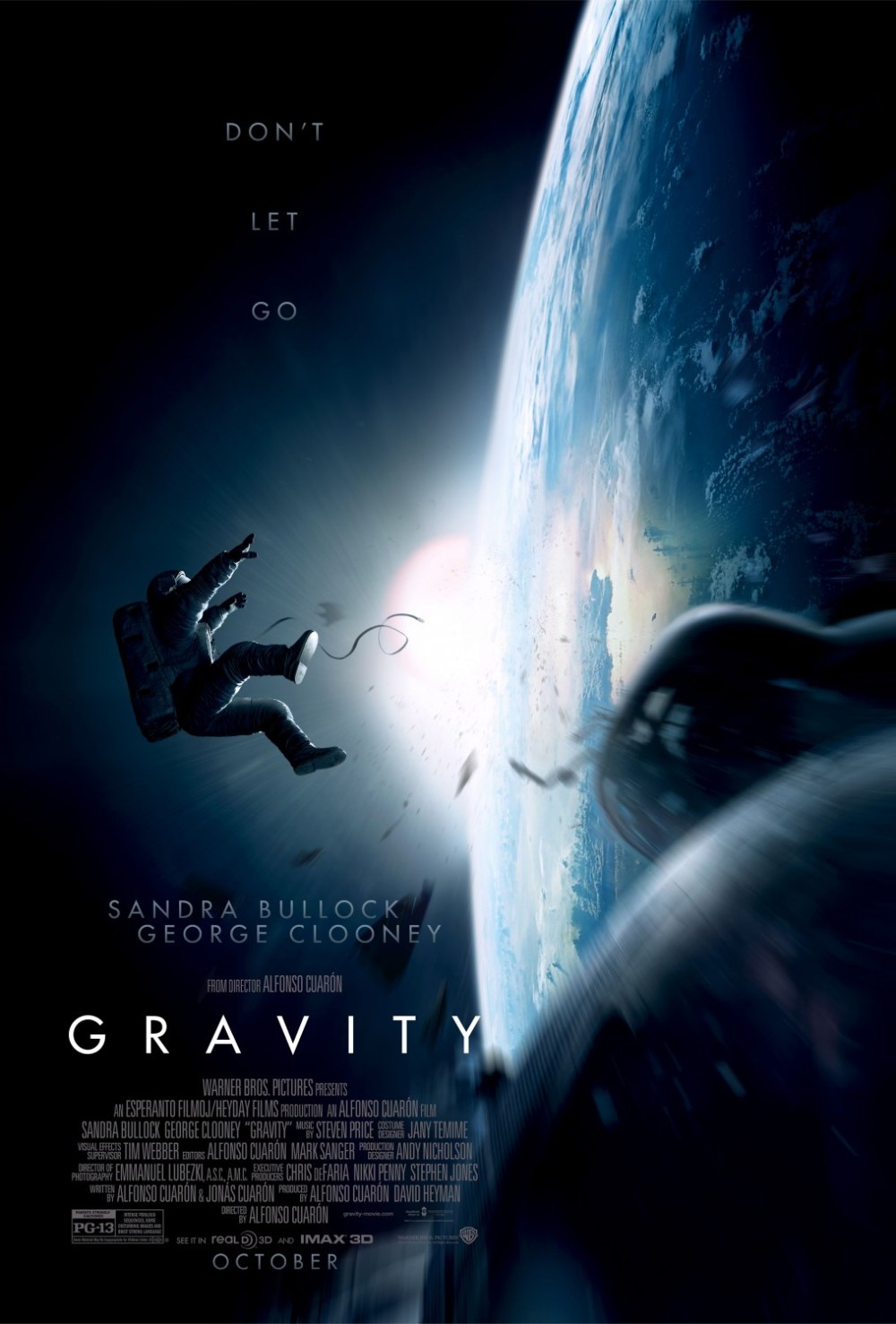
Gravity movie poster

I remember being fascinated and terrified by outer space movies when I was a young boy. Seriously, I kept getting vertigo when I saw all those stars shining brightly to where I was afraid I would fall into space and be lost forever. Of course, back then I still had a lot to learn about gravity. It’s been a long time since an outer space movie gave me this kind of sensation. The last one was Ron Howard’s “Apollo 13” which, when it came out in 1995, was perhaps the most realistic motion picture about life in space and of how dangerous it can be. But now that same sensation has come back in an exhilarating rush with Alfonso Cuarón’s “Gravity,” which may very well be the greatest movie about life in outer space I have ever seen.

“Gravity” is an amazing movie, just amazing. It left me speechless with its amazing visual effects and the tour de force performances from George Clooney and Sandra Bullock, and it made me feel like I was right up there in outer space with them both. The movie opens with the following:

At 372 miles above the Earth

There is nothing to carry sound

No air pressure

No oxygen

Life in space is impossible

For 90 minutes, Cuarón never lets you forget this as we watch astronauts Matt Kowalski (Clooney) and Dr. Ryan Stone (Bullock) struggle to survive after their space shuttle is destroyed by debris from a satellite. From there, they are floating in space with little oxygen and very few options. It may sound like a thin plot for a movie, but it’s more than enough to make “Gravity” one of the most nail biting films to sit through in some time.

I almost don’t want to know how the special effects were accomplished for fear the film’s magic will forever be ruined for me. “Gravity” reminds you of how great going to the movies can be as it sucks you right in to a world many of us have never seen up close. Cuarón shows the inherent dangers of space as well as the sheer beauty of it, and there’s no beating the view of planet Earth hundreds of miles above its surface.

Cuarón, just as he did with “Children of Men,” gives us truly brilliant scenes which look like they were all done in one shot. I’m still trying to wrap my head around how he managed to keep the camera rolling for such a long period of time. “Gravity” starts in space and pretty much ends there, and it’s the lack of gravity which makes the film seem like a new kind of roller coaster ride. I bet a number of audience members will get motion sickness while watching this movie as they’ll be struggling to find their center of balance just like Bullock does when she becomes untethered from the space shuttle. I remember all those trailers for horror movies like “Dawn of the Dead” which said the theater had barf bags available for those who needed them. Well, “Gravity” is proof movies don’t have to inhabit the horror genre for you to need a barf bag. Anyway, that’s more information than you need to know.

But as technically brilliant as “Gravity” is, it never forgets the human element which other filmmakers don’t pay as much attention to. We come to care deeply about the characters Clooney and Bullock play because they are not just a couple of stereotypical astronauts spouting clichéd dialogue. They are flesh and blood human beings with needs and desires, and they need each other to survive. Seeing them tumble through space will make you appreciate the brakes you have on your car.

Clooney rarely, if ever, lets us down as an actor, and he is perfectly cast as the veteran astronaut Matt Kowalski. He immediately gives the sense Matt has been to outer space countless times without having to point it out. From start to finish, Clooney is the calm center in the middle of the storm, and he gives the movie the positive energy it needs. Even as things get worse, he gives Dr. Stone a reason to keep on going.

But when all is said and done, “Gravity” really belongs to Bullock. She may still wonder if she deserved her Oscar for “The Blind Side,” but after watching her here, it’s clear she did, and she may be getting another one. Bullock gives the performance of her life as she reveals her character’s inner struggles which illustrate how there’s more going on with her than just trying to stay alive. The more we learn about Dr. Stone, the more we see this is not so much a movie about a woman lost in space as it is a woman trying to escape the darkness which has engulfed her soul.

Bullock can just draw you into a scene with her eyes which easily reveals much of her character’s inner torment as her oxygen continues to run out. I’ve always admired her as an actress, and her roles in “Demolition Man” and “Speed” showed her to be an unforgettable talent. In recent years, we have seen her do an endless number of romantic comedies, so it feels rare to see her in a dramatic film. But Bullock is so enthralling to watch here, and there is not a single false note to be found in her performance.

I don’t think it’s too much to say Cuarón is a magician when it comes to making a movie. He gave us an enchanting childlike vision of the world with “A Little Princess,” a marvelous coming of age story with “Y Tu Mamá También,” the first truly great Harry Potter movie with “Harry Potter and the Prisoner of Azkaban” and one of the more unique dystopian science fiction movies of recent years with “Children of Men.” From one film to the next, he has given us astonishing visions which have us in awe over what he can accomplish. Cuarón leaves you with a strong sense of wonder with “Gravity,” and it’s a quality seriously lacking in most movies these days.

Cuarón is also aided tremendously by a strong creative team which includes his son Jonás who co-wrote the screenplay with him, Steven Price who composed the movie’s hypnotic score, cinematographer Emmanuel Lubezki who makes space look as beautiful and inhospitable in equal measure, and David Heyman who makes this his first film as a producer outside of the “Harry Potter” franchise. All have come together to create something which redeems our collective hope in the possibility of cinema.

“Gravity” demands to be seen in a movie theater and, yes, I’m going to say it, in 3D. Few film going experiences have been as enthralling as this one, and it is not to be missed. Thank you Cuarón for this film and reaffirming what can be accomplished in Hollywood today. But more importantly, thanks for creating a movie which gave me the sensation of being in outer space I used to have as a child.

* * * * out of * * * *
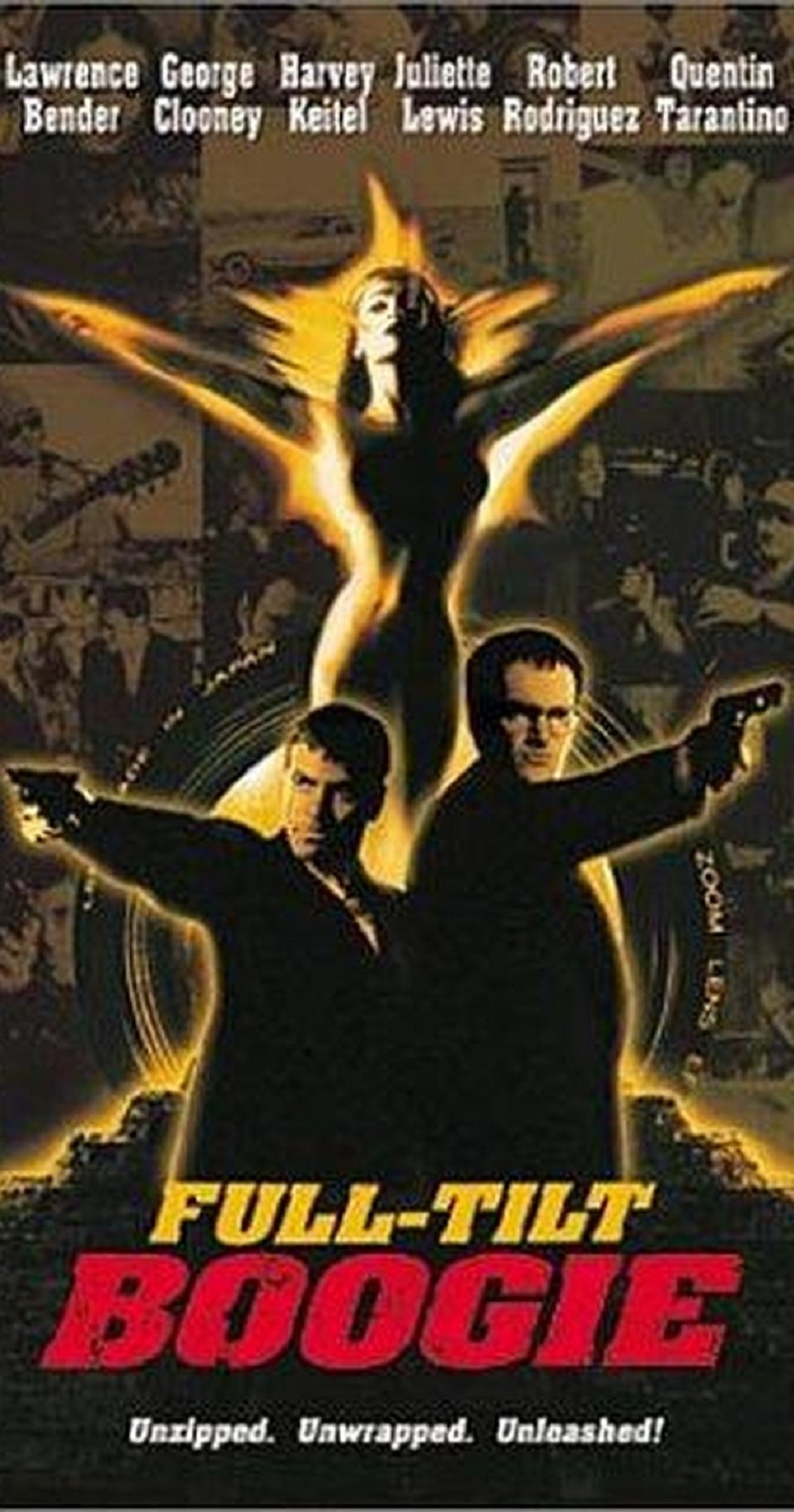
 

‘Full Tilt Boogie,’ the ‘From Dusk Till Dawn’ Documentary, Screens at New Beverly Cinema

full-tilt-boogie-poster

After a double feature of William Friedkin’s “To Live and Die in L.A.” and “Rampage,” which is not currently available on DVD, the audience members at New Beverly Cinema were in for a special midnight treat as the theater held a screening for the 20-year-old documentary “Full Tilt Boogie.” Directed by Sarah Kelly, it chronicles the making of Robert Rodriguez’s action horror cult classic “From Dusk till Dawn” which starred George Clooney and Quentin Tarantino as outlaw brothers who, along with a vacationing family, end up at a rowdy Mexican bar which turns out to be infested with vampires. The documentary introduces us to those people who worked behind the scenes on the movie, of why they want to be a part of show business, the fun they have when the cameras are not rolling, and of the complicated relationship between movie studios and unions.

Introducing this screening of “Full Tilt Boogie” was Kelly, and she was joined by her producer and friend Rana Joy Glickman. The emcee who welcomed them remarked about how cool it was this documentary was playing at the New Beverly and that it was sharing a marquee with Friedkin’s “Cruising.” To this, the emcee said about Kelly, “Whoa! She scored good!”

Kelly welcomed all the “insomniacs” who came out to see her documentary and explained how it became a reality.

“The reason this movie came about was that Robert Rodriguez and Quentin were about to start shooting ‘From Dusk till Dawn,’ and it was an $18-million-dollar independent movie and the unions were pissed,” Kelly said. “They were like, ‘What do you mean? No, you have to go union.’ And so, there was a big threat of a strike, and Quentin thought it would be cool to document it.”

“I had worked for him on a little movie called ‘Pulp Fiction’ and a couple of other movies he was involved with,” Kelly continued, “and he knew that I was studying to be a director so he gave me a shot. At the time, I was taking a break from production and I was working part-time in a law firm and I was like, ‘So is this for real? Should I quit my job?’ And he said, ‘Uh, quit your job yesterday.’ So, I did. We wrangled our little, tiny, hardcore crew and we started shooting, by the way, on 16mm film. Nobody shoots documentaries on 16mm film anymore, but we did. The union threat kind of turned into a cold war and I asked Quentin if we could keep shooting and just do a love letter to the crew. I pitched it as kind of like ‘Hearts of Darkness’ (Eleanor Coppola’s documentary on ‘Apocalypse Now’), but not that dark. Quentin said, ‘Yeah, that’s really fucking cool!’”

As for Glickman, she claimed to have hundreds of stories to tell about the documentary and “From Dusk till Dawn,” but she chose to tell only this one.

“When we finished ‘Full Tilt Boogie’ we were just so pleased that we finished and we got to make the posters for the film, not the one that Harvey Weinstein had selected,” Glickman said. “Our favorite poster is Sarah’s design, and it was Ken (Bondy), the craft service guy on ‘From Dusk till Dawn,’ standing there with a tray of lattes and it said, ‘From the maker of coffee on Pulp Fiction, we bring you Full Tilt Boogie.’”

Kelly responded, “That’s a great poster, right?”

“Full Tilt Boogie” may not be the masterpiece “Hearts of Darkness: A Filmmaker’s Apocalypse” is, but it’s still a very entertaining documentary which takes you behind the scenes of a movie’s production in a way few others do. We get to see the challenges crew members constantly face on a movie set, and we also get to take in the fun they have outside of it as well. For these people, this is a job done out of love and far more preferable than working a 9 to 5 job which has them sitting at a desk all day. Kelly certainly did create a love letter to these crew members, and we revel in the festivities they have from one day to the next.

Thanks to Sarah Kelly and Rana Joy Glickman for taking the time to come out, and at such a late hour, to talk about “Full Tilt Boogie” at New Beverly Cinema.

from-dusk-till-dawn-poster

The Ides of March

the-ides-of-march-poster

This movie’s title refers to the day Julius Caesar was assassinated by a group of senators who feared his role as a dictator would forever destroy their constitutional government. Some of these senators were close friends of his which make their actions all the more shocking. In the political arena, then and now, you would think those running for office would have their friends and loyal advisors to instill their trust in. But as history shows, the quest for power can tear friendships apart and corrupt the seemingly incorruptible. In William Shakespeare’s play of “Julius Caesar,” a soothsayer warns him before he is stabbed to death:

“Beware the Ides of March.”

George Clooney’s film is based on the play “Farragut North” by Beau Willimon, and it looks at how dangerous a political campaign can be for all those involved. They may not get stabbed in the back literally, but there is a lot of backstabbing to go around figuratively speaking. It all makes for an intense political thriller which never lets up.

Ryan Gosling stars as Stephen Meyers, a Junior Campaign Manager for Governor Mike Norris (Clooney) who is seeking the Democratic nomination for President of the United States. As the movie opens, Norris is campaigning in Ohio where a win there will all but guarantee him the nomination. Meyers is a strong believer in Norris and what he stands for, but his belief in him and the world of politics is in for a rude awakening. After a secret meeting with rival campaign manager Tom Duffy (Paul Giamatti), trust becomes a precious commodity in very short supply. Meyers also stumbles on an even bigger situation which could destroy the campaign to where it can never recover.

This is Clooney’s fourth movie as a director, and the abilities he shows behind the camera are never in doubt. “The Ides of March” doesn’t necessarily break any new ground in the political movie genre, but Clooney does great work in generating tension throughout as characters suddenly find themselves on a precipice which threatens to fall out beneath them with little warning. He also gets great performances from the entire cast as they face off against each other as if they are playing a game of chess. Everyone is holding their cards close to their chest, and only the eyes can give them away in showing where they are most vulnerable.

Gosling had a heck of a year in 2011 with this, “Crazy Stupid Love,” and “Drive.” As with the latter, he brings a smoldering intensity to his performance as he takes Meyers from a political idealist to one who sells out his values when things get rough. With one look, he can let us inside his thoughts without saying a single word.

Two of my favorite performances in “The Ides of March” come from two of the best character actors ever: Phillip Seymour Hoffman and Paul Giamatti. Playing campaign managers for their individual candidates, they brilliantly bring out the moral complexities of each person as their agendas become clear as the story continues to unfold. Both of them also make what could have been seen as convoluted actions or maneuvers completely believable as they try to get the upper hand in a fragile political environment. They essentially represent the cynical side of politics where idealism vanished a long time ago and the path Meyers may be forced to go down if he wants to continue working in this realm.

The fabulous Evan Rachel Wood is great as always as Molly Stearns, a campaign intern whose confidence collapses when her secret is realized. Seeing her go from a sexy seducer to the campaign’s most vulnerable employee is handled by her like a pro, and she makes us see Molly as a person while others view as a crippling concern which needed to be quickly and quietly removed. The cruelty of politics comes to hit her character the hardest.

And then there’s the equally fabulous Marisa Tomei who portrays New York Times reporter Ida Horowicz. She enjoys a friendly banter with Gosling from the start which draws us in on a more personal level. It’s there where Tomei traps not just Gosling, but the audience as well. She provides us with a friendly face, but she is later revealed to be a manipulative journalist who wields more power than you might expect a journalist to have. I have yet to see Tomei give a bad performance in anything she does.

What I really like about the screenplay of “The Ides of March” is it’s not about good guys and bad guys. It’s all about shades of gray and how the hope in politics can be easily and quickly worn down to a cinder of what it once was. Some of the actions in the movie almost feel like something out of the “Saw” movies as they almost seem illogical and impossible to put together, but it makes sense in regards to the political realm it takes place in. This would make a great double feature with Mike Nichols’ “Primary Colors” as both movies deal with the moral compromises made in getting your candidate elected. But while “Primary Colors” sees a light at the end of the tunnel, “The Ides of March” doesn’t let the viewer off as easy.

* * * ½ out of * * * *


Money Monster

Money Monster poster 1

2016 has been a good year for pulse-pounding thrillers, and “Money Monster” is the latest example. While not as intense as “10 Cloverfield Lane” or as viciously gruesome as “Green Room,” it certainly gets the adrenaline running thanks to taut direction and terrific acting from a star studded cast. While the handling of the material is at times scattershot and you come out feeling like it could have been better, what ended up on screen makes for solid entertainment.

“Money Monster” opens up on the set of a cable show with the same name which is hosted by wall street financial guru Lee Gates (George Clooney), a man whose ego is bigger than his knowledge of stocks. During what seems like a normal day of filming an episode filled with tips for investors as well as dancing and graphics to keep viewers entertained, Kyle Budwell (Jack O’Connell) somehow makes it onto the set, fires a gun in the air and takes Lee hostage. It turns out Kyle invested in a company Lee was especially enthusiastic about, but he ended up losing his entire savings in the process. After making Lee put on a vest filled with plastic explosives which could level a skyscraper, Kyle becomes intent on making him apologize not just to him but millions of investors who lost all their money thanks to the “advice” they received on his show.

Watching this movie reminded me of others which dealt with morally duplicitous human beings who, whether they intended to or not, ran into monsters they created out of their own greed and lack of understanding. Costa-Gavras’ “Mad City” quickly come to mind, but “Money Monster” stands above it because the filmmakers don’t deal with the subject manner in such an obvious way. There’s more going on here than what we see on the surface, and this makes what seems like an average movie one of the more intelligent ones I have seen in a while.

Clooney is perfectly cast as a man whose over confidence has long since gotten the best of him, and he shows a lot of vulnerability as his character of Lee Gates is exposed for all his falsehoods. We watch as his regularly scheduled program is interrupted in one of the worst ways possible, and it forces him to think fast on his feet in order to stay alive. Clooney excels in this kind of role as he is not afraid to show the deep cracks in this man’s façade, and this is even after he is revealed to be a three-time divorcee, the kind we see a lot of in movies.

As Kyle, Jack O’Connell brings the same fierce intensity to this role as he did in “Eden Lake,” “Starred Up” and “Harry Brown” among others. It’s almost exhausting to watch him here as his he starts at such a high pitch of energy to where he can’t allow himself to go slack for very long. This is definitely an actor to keep an eye on.

After suffering through the hideous debacle of “Mother’s Day,” Julia Roberts rebounds here as Lee’s long-suffering director, Patty Fenn. Now Patty may not be the star of the show, but she’s the one who makes it a reality on a daily basis. Roberts doesn’t need to do much to show how much of a veteran Patty is at her job as it involves dealing with dozens of people in a high pressure environment, and she truly shows grace under pressure when Kyle turns everyone’s world upside down. Patty quickly becomes the voice that keeps Lee sane as she continues directing the show which threatens to be more unpredictable than it already it is. Roberts is riveting to watch throughout as she does her best to keep her cool while everyone else loses their own much too easily.

In fact, what’s notable about “Money Monster” is how the female characters are much stronger than their male counterparts. This is the case not just with Patty, but also with Diane Lester (the excellent Caitriona Balfe), a high ranking executive who shows little hesitation in digging through her boss’ dealings in order to get to the truth. Just watch as one of her male bosses attempts to fire her; she doesn’t even break a sweat. Or how about Kyle’s pregnant girlfriend Molly (scene stealer Emily Meade) who has a show-stopping scene where she brutally berates Kyle without any hesitation.

Many of the male characters on the other hand are quick to crumble as their egos cannot handle defeat easily. Some might look at this as a bit sexist, or maybe the movie and its screenplay just exposes the reality that women are stronger because they have more to overcome both in society and in the workplace.

“Money Monster” marks Jodie Foster’s fourth film as a director, and she does a very good job of keeping the tension ratcheted up high throughout. Along with screenwriters Alan Di Fiore, Jamie Linden and “Stakeout’s” Jim Kouf, she takes what looks like a predictable story and messes around with the elements to where second guessing what’s about to happen becomes pointless. At the same time, she does have some trouble balancing out both the dramatic and comedic aspects here, and the more comedic the movie becomes, the more it loses its dramatic power. It’s a strong movie for sure, but you do come out of it thinking it could have been even better.

Still, “Money Monster” is an entertaining thriller that benefits from strong direction and terrific performances from its talented cast. It’s no “Network,” but it does have a lot to say about how money rules our lives and has us making rash decisions for the purpose of staying one step ahead of losing everything. While its ending is a bit too pat, it’s not just another mindless thriller. And in the end, it’s always nice to see wall street take a beating in any movie.

Copyright Ben Kenber 2016.

* * * ½ out of * * * *