Spike Jonze’s ‘Where the Wild Things Are’ Deserves Another Look
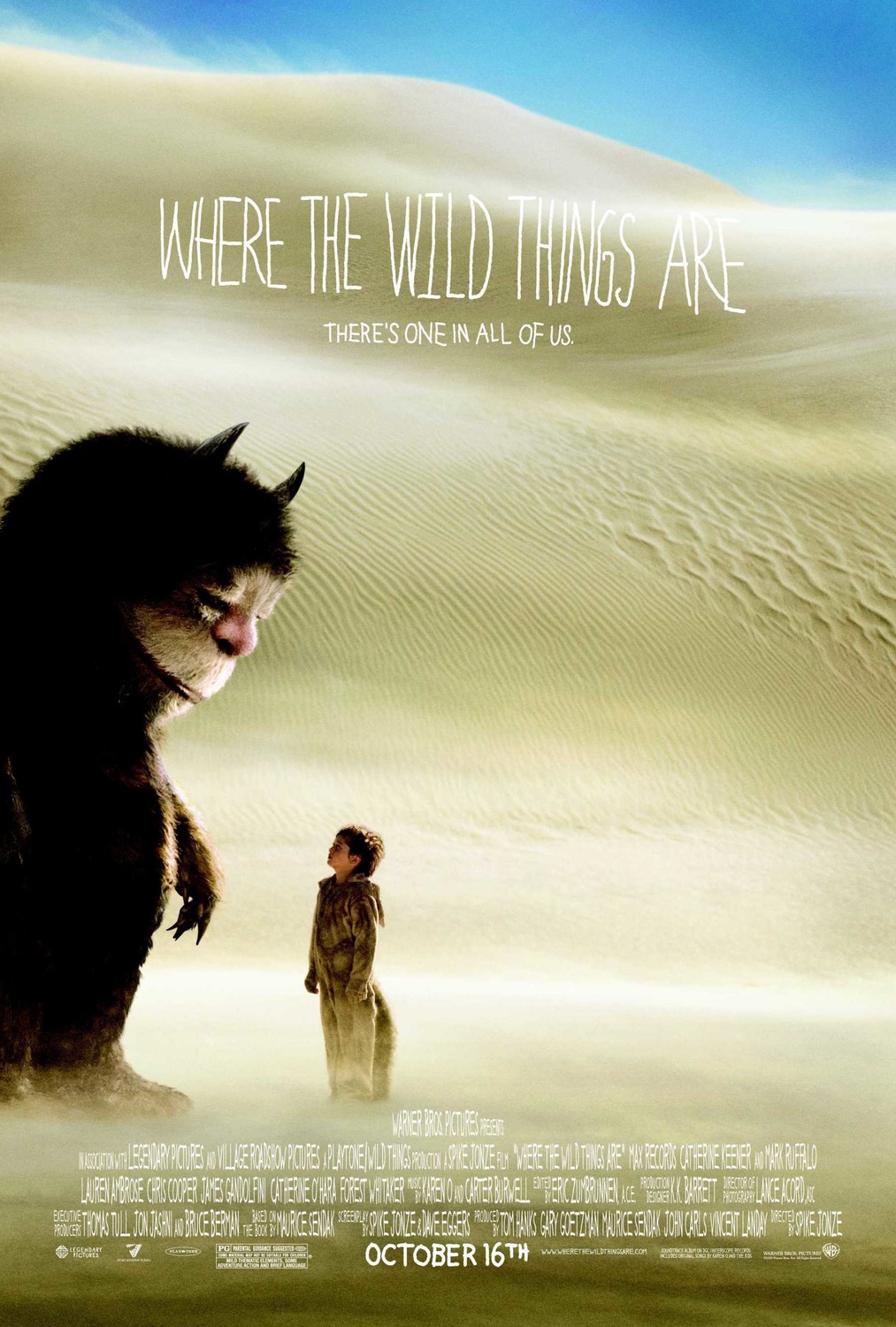
Back when I saw it in 2009, Spike Jonze’s take on Maurice Sendak’s “Where the Wild Things Are” proved to be one of the few movies which I felt really dealt with real kids instead of the cliched ones which inhabit far too many motion pictures. Here, we get a young boy who has quite a vivid imagination which he retreats to when the real world becomes too scary to deal with, and who comes from a broken family where the father is not present. It was nice to see kids, one in particular, treated as intelligent and capable of learning more than they knew, and it combines them with things which are real, imaginary and, of course, wild.

The kid here is Max, and he is played by Max Records in one of the best performances I have seen from a child actor. Seeing him build an igloo out of a snow pile or making a spaceship in his bedroom with his stuffed animals as willing passengers brought back great memories from when I was a kid. But reality rears its ugly head when other kids thoughtlessly destroy his igloo, not thinking of what it meant to him. Then we see him in elementary school as his teacher explains how the sun will die one day. This is one of the funnier moments as the teacher just can’t stop talking about all the different ways our planet will die. Granted, this won’t happen for another billion years, but when you’re a kid, this can feel like it is just around the corner.

Everything comes to a head as Max becomes very resentful of his mother (the always terrific Catherine Keener) when she brings home a new boyfriend (played by Mark Ruffalo). The bond Max shares with his mother is very strong, but when he is no longer the center of her attention, he rebels and ends up biting her on the shoulder. Horrified at what he did, Max runs away from home and sails to a distant island where he does indeed come across the Wild Things of the title, and this is where the rumpus truly begins…

The Wild Things are a combination of puppetry and CGI effects, and it makes them all the more real as a result. The visual effects are used to give them facial expressions which vividly captures their happiness and sadness. As a result, it never ever felt like I was just watching a whole bunch of special effects. It really felt like I was watching creatures I could actually interact with.

Of all the monsters, the one with the most recognizable voice is the late great James Gandolfini who plays the most prominent Wild Thing, Carol. We first see Carol destroying some dwellings he had just built. For Max, breaking things has a wonderment to it, and Carol links on to this with the upmost enthusiasm. Gandolfini is wonderful, and at times truly heartbreaking as he takes Carol from utterly enthusiastic highs to downright angry lows. This is not him doing Tony Soprano as if he was all covered with fur. Also, Carol’s last scene is one which really choked me up, and Gandolfini sells it for all it is worth.

Among the other voices are Catherine O’Hara’s, and she plays Judith, the one monster who is very mistrusting of Max. Paul Dano plays the ever so sensitive Alexander, and he captures the painfully shy nature of this monster in a very truthful way. Forest Whitaker portrays Ira, and I barely recognized his voice here which is pretty impressive. Lauren Ambrose voices KW, and the moments she shares with Max form some of the movie’s best moments.

You know the saying of how we have met the monster, and the monster is us? Well, that is very much the case here. The Wild Things clearly represent the different parts of Max’s personality, and he soon comes to see himself in all of them. As a result, Max manages to see things a little more clearly in relation to his own family, and especially his mother. By becoming the monsters’ king, he realizes he has become much like his mother.

I really mean it when I say Records gives one of the best child actor performances I have ever seen. The whole movie really rests on his shoulders, and that is a lot to put an 11-year-old through. Jonze really lucked out getting him to play this part as the young actor makes his character’s transition from being just a kid to someone who is more mature and understanding very believable, and this really shows in the movie’s last half.

Jonze shot a good portion of the action with handheld cameras to give the proceedings more of an immediacy, and he thankfully does not overdo it. Some filmmakers fail to reign this camerawork in a lot of times to where it is hard not to feel sea sick. This was only his third movie as a director, following the creative triumphs of “Being John Malkovich” and “Adaptation,” and his directorial vision remains a very original one.

“Where The Wild Things Are” was originally supposed to be released in 2008, but Warner Brothers had considered reshooting the whole thing. It turned out Jonze’s vision was a lot darker than they expected it to be for something they thought would be an average family movie. The fact that Jonze’s take on this classic children’s book did make it to the silver screen and was not buried in a deep dark dungeon like “Batgirl” feels like a miracle. While it was not the box office hit the studio hoped it would be, it continues to have a long shelf life.

It also has a wonderful soundtrack done by Karen O and the Kids. It’s one of those soundtracks which has really great songs which are never easily forgotten, and it adds vividly to the strong emotions generated throughout.

Is this movie appropriate for kids? Well, it depends. If they are 6 years or younger, you may want to see it before they do. I was sitting near a boy and his mother, and the boy did get a little freaked out at times. Still, it is nowhere as traumatic as “Watership Down” or “The Neverending Story” was. If your kid can handle “Bambi,” they can handle this one as well.

One of my favorite scenes comes when Max and the monsters are jumping all over the forest, and Carol was creating big dust clouds when he landed. This all leads to a wonderfully heartwarming moment where the wild things pile on top of each other and fall asleep. Seeing Max befriend the somewhat alienated KW is especially great because their individual differences just evaporate at that point. These are two who can relate and sympathize with one another as they both come from worlds where they feel like outcasts.

If there is one weakness to be found here, it is that the plot does not always hold together. There are some moments which drag, and it takes a bit for the pace to recover. Then again, this movie is based upon a book that is only ten sentences long. The fact Jonze and co-writer Dave Eggers were able to craft a story for a feature length movie out of it is pretty amazing. But when you read or re-read the book, I think you will find that there is more to it than its simplicity of story might imply.

There was a bookstore next to the theater I saw the film at, and I dashed in there to read the book. I can’t even remember the last time I read this Caldecott award winner, and there is a lot of different ways you can look at it. You can see it as a story of how kids do not easily separate from their parents, and of how the further away from home they get, the more they realize the importance of a home. Or maybe you will see it as a story of the one person who becomes king and gets what he wants, but then finds it deeply unfulfilling and bereft of love and family which we largely thrive upon.

I think Jonze saw “Where the Wild Things Are” as a story which clearly take in a child’s point of view. Just about everything in this movie made me feel like I a child again, and of how we become shaped by the things which make us happy and sad. It is not meant to break down the imaginary worlds we create for ourselves, but of how they can make us understand the world around us and the people who figure most prominently in our lives better. Max comes to see why his mother treated him the way he did, and he grows up a lot quicker than most others his age do in the process.

For me, this film was something of a godsend when I first watched it. We see kids treated like real kids, and there is a wealth of genuine imagination and emotions throughout. While it doesn’t always hold together, it is a much more accomplished film than many others which get passed off as “family entertainment.” Too many movies then and now are dumbed down for audiences, and they often don’t treat children like the intelligent creatures they can be,

Indeed, no one could have brought this classic book to the silver screen the way Jonze did. And after all these years, it is definitely worth another look.

* * * ½ out of * * * *

Amy Heckerling Looks Back at Fast Times at Ridgemont High

WRITER’S NOTE: This article is about a screening which took place back in July of 2011.

It is very scary to realize “Fast Times at Ridgemont High” is now at its 30-year anniversary. Although dated stylistically, what the students went through in this movie still feels very relevant to what today’s generation goes through on a regular basis. Based on the book by Cameron Crowe, who also wrote the screenplay, it follows a group of students during one year at a San Diego high school. Its director, Amy Heckerling, dropped by the Aero Theatre in Santa Monica to talk about the behind the scenes stories, and she was greeted by a sold-out audience.

“Fast Times at Ridgemont” is notable for its frank depiction of teenage sexuality and in dealing with highly sensitive topics like abortion. Heckerling said the movie was shot at a time when things were rapidly changing. The sexual revolution was ending and the era of Ronald Reagan was on the rise along with conservatism. Most teenage comedies deal with situations from the male point of view, but Heckerling was adamant about the audience seeing things from the woman’s perspective. The MPAA, however, forced her to cut scenes like when a girl talks to her mother about blow jobs in order to avoid an X-rating. After all these years, the hypocrisy of the MPAA never ceases to amaze me.

These days, the movie is known for having three future Oscar winners in its cast: Sean Penn, Forest Whitaker and Nicolas Cage, who is credited here as Nicolas Coppola. This is not to mention all the other cast members like Jennifer Jason Leigh and Phoebe Cates, both of whom went on to other successful efforts after this movie’s release.

Heckerling recalled coming into this movie at what she called an “awesome” time. Casting young kids in a movie proved to be tricky, but she loved how there was so much great talent to choose from. When asked if she thought all great actors could do comedy, Heckerling replied some have it in their makeup while others do not. In working with Penn, she said he is wonderful in everything he does, and his smile always lights up whatever room he is in.

In talking about the soundtrack, Heckerling wanted to fill it with 1980’s music and songs by Oingo Boingo and the Go-Go’s. While she got to include the songs she wanted in the movie, she was also forced to add in a lot of 1970’s rock music from bands like The Eagles. This was in large part due to one of the movie’s producers, Irving Azroff, being the personal manager of The Eagles at the time.

One audience member asked Heckerling if the studio proposed any sequels or prequels to “Fast Times at Ridgemont High.” She said when the movie was screened in Westwood, one studio executive suggested, “How about ‘Spicoli Goes to College?'”

There was a television spinoff but, like many of its kind, it proved to be short lived. There was also something of a follow up to “Fast Times” called “The Wild Life,” which was also written by Cameron Crowe and directed by Art Linson, but Heckerling said it was not strictly a sequel.

As unbelievable as it is that we are now at the 30th anniversary of “Fast Times at Ridgemont High,” it only goes to show this particular movie’s staying power. It remains as raunchy and funny as when it first came out, and it is also one of the great time capsules of the 1980’s. This is the kind of movie which really does not need a sequel or a prequel at this point to justify its success or longevity.

‘Black Panther’ Gives Us One of the Best Superheroes Yet

Black Panther poster

Complain all you want about the proliferation of superhero/comic book movies, the last year or so has given us some of the best. In 2017 we got “Logan” which saw Wolverine freed from his PG-13 shackles to where Hugh Jackman and James Mangold gave the “X-Men” character the sendoff he truly deserved. Then came “Wonder Woman” which not only filled our need for a female-led superhero movie, but also succeeded in putting the DC Extended Universe on the right track (of course, then “Justice League” arrived). And with “Thor: Ragnarok,” Marvel Studios allowed themselves to turn this particular franchise upside down and inside out, and what resulted was the most entertaining “Thor” movie yet.

Now it’s 2018 and we have “Black Panther.” You could say it provides audiences with the long overdue African-American-led superhero movie, but having watched it, this description is not entirely appropriate. T’Challa, the Black Panther of this movie, is a hero for everyone. Like Steve Rogers/Captain America, this is a character whose desire to do good in the world comes across with a powerful sincerity which no amount of cynicism can possibly take away. Along with confident direction, terrific performances and slam-bang action, “Black Panther” proves to be one of the best superhero/comic book movies ever made, a true high point in the Marvel Cinematic Universe, and one of the best movies of 2018.

As I write this review, “Black Panther” has been in general release for several weeks and has held the number one spot at the box office for as many times as James Cameron’s “Avatar” did. Clearly you have all seen it at least two or three times by now, so let’s not even bother with a plot description. Let’s just talk about what makes this particular Marvel Studios release so awesome.

Kudos to Ryan Coogler who has now graduated from low and medium-budgeted movies to full on Hollywood blockbusters with tremendous confidence. With “Fruitvale Station” he made us look at the life and tragic death of Oscar Grant in such a powerful way to where he can never be dismissed as a mere statistic. With “Creed” he brought a freshness and energy to the long running “Rocky” franchise which I never could have expected. Now with “Black Panther,” he has given us a movie which supersedes others of its genre to an outstanding degree as he combines the typical spectacle that comes with $200 million budget, and he combines it with a strong story filled with complex characters to where you cannot walk out of this one and say this was just an average motion picture.

Kudos to Chadwick Boseman for inhabiting T’Challa/Black Panther in a way to where there is no doubt he has the world’s best interests at heart, not just Wakanda’s. Through ferocity and feeling, Boseman makes T’Challa into a true hero for everyone and anyone. While this character has doubts about whether or not he is truly ready to be Wakanda’s king, something I have truly come to loathe about origin movies, Boseman never imbues him with the kind of hesitation which would easily destroy another. When the time comes to defend his people, he is most definitely up front and center.

Kudos to Michael B. Jordan for his performance as N’Jadaka / Erik “Killmonger” Stevens. N’Jadaka serves as the chief antagonist in “Black Panther,” but the character is not so much a villain as he is a victim. Jordan makes you see how N’Jadaka was wronged and of why his need for revenge is understandable if not condonable. This character was wronged and abandoned, so his bitterness at what was denied to him ends up feeling justified even when it poisons his soul. We root for N’Jadaka to fail, but we cannot help but feel empathy for him, and Jordan ends up creating a complex villain who can never be mistaken for some one-dimensional schmuck.

Kudos to every single actress in “Black Panther” as they give us badass Wakandans who refuse to run away from impending danger. Whether it’s Angela Bassett as Ramonda or Lupita Nyong’o as Nakia, they fill their characters with a strength and pride which can be wounded, but never easily broken. Special mention goes out to Danai Gurira who steals every scene she has as Okoye, a proud Wakandan who wears her pride on her face for all to see. If you threaten Okoye and she pulls a saber out on you, Gurira makes it clear you best start running in the other direction.

Kudos to Martin Freeman for making his character of CIA officer Everett K. Ross more than just mere comic relief. Even when we see him stumbling about in the midst of warriors who are prepared for conflict, Freeman allows Everett to evolve into a far more capable agent than he was at the movie’s beginning.

Kudos to Andy Serkis for his go for broke performance as gangster Ulysses Klaue. It’s a blast watching the “Planet of the Apes” actor smash through everything in his path. But even though he is not doing a motion capture performance here like he has done unforgettably in the past, he probably won’t snag an Oscar nomination for his work here anyway.

Kudos to Forest Whitaker for not just making Zuri a powerful religious and spiritual figure, but for also letting us see the cracks in the character’s façade when he reveals a burden he can never forgive himself for. Whether you see Zuri as “Black Panther’s” Yoda or Obi-Wan Kenobi, Whitaker lets us know right from the start no one could play Zuri better than he could.

Kudos to Daniel Kaluuya, currently riding high off of the tremendous success of “Get Out,” for making W’Kabi, T’Challa’s best friend, a vivid study of internal conflicts which are constantly pushed in different directions to where common sense can be thoughtlessly tossed aside.

Kudos to Winston Duke for making M’Baku into a ruthless warrior, but also one with a deep conscience. This character could have existed simply as a plot device for “Black Panther” to take advantage of when the going gets tough, but when T’Challa and his closest friends plead with M’Baku to join them in their battle of resistance, Duke makes the character’s eventual decision believable without ever seeming predictable or convoluted.

And kudos to all those filmmakers and artists behind the scenes who made Wakanda look so beautiful in “Black Panther.” Of all the places the Marvel Cinematic Universe has taken us to, this is the one I would like to visit the most. Wakanda forever? Damn straight!

Seriously, I cannot say enough great things about “Black Panther” as Coogler and company have made a film which was so well-thought out and put together. All the characters are complex and interesting, and what could have been just another superhero/comic book movie was elevated into something far more thrilling than I ever could have expected. But more importantly, “Black Panther” gives us a true superhero who everyone, and I mean everyone, can and should look up to. This, among other reasons, should explain why this movie has been such a box office behemoth since its release.

Even better, we won’t have to wait long to see this superhero again as he will appear in “Avengers: Infinity War” whose release is just around the corner.

* * * * out of * * * *

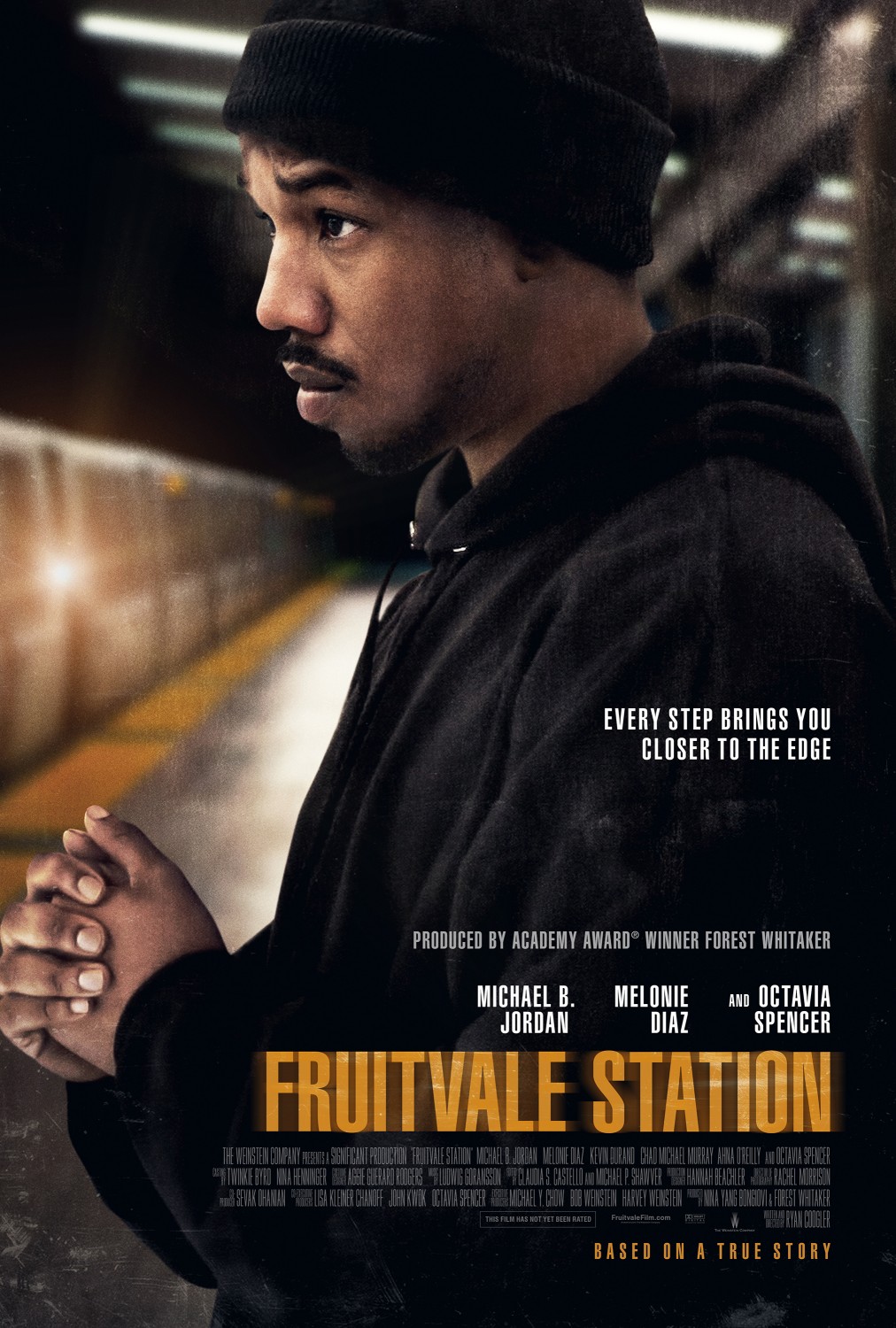
‘Fruitvale Station’ Puts a Human Face on a Tragic Shooting

Fruitvale Station movie poster

It’s a strange and cruel irony “Fruitvale Station” opened in theaters the same week George Zimmerman was found not guilty of shooting Trayvon Martin. Like Martin, Oscar Grant was a young African American male whose life was cut short under needlessly tragic circumstances. On the night of January 31, 2008, Oscar was traveling home with his girlfriend and their friends on BART (Bay Area Rapid Transit) when a fight broke out on the train which he gets caught up in. When the train arrives at the station of the movie’s title, Oscar was pulled off it by BART police officers, and one of them, either accidentally or intentionally (depending on who you ask) shot him. He died the following day, and his death brought about protests and a call for justice.

The cases of Martin and Grant appear to illustrate that, despite strides we have made in race relations, it’s still not safe to be a young black man in America. Now “Fruitvale Station” is not a movie out to offer a solution to this continuing problem, but it does put a human face on it. After watching it, Grant will no longer seem like a mere statistic to anyone.

The movie follows Oscar (Michael B. Jordan) on the last day of his life as he goes about his business while trying to survive in an unforgiving world. He still lives with his girlfriend Sophina (Melonie Diaz) and their daughter Tatiana (Ariana Neal) in a rundown part of the Bay Area, and this is despite the fact Sophina knows he cheated on her. But regardless his wayward ways, Oscar is clearly dedicated to taking care of them both and in doing what he can to give them a better life.

“Fruitvale Station” is the first feature film for director Ryan Coogler, and he made it because he wanted people to get to know Oscar as a human being instead of just another name in a newspaper. Having seen the film, I can honestly say he succeeded in doing so. Not once does Coogler try to sanctify Oscar or water him down for an easier movie going experience. Coogler presents Oscar warts and all, and while he is far from perfect, we come to respect him for what he’s trying to do with his life on this fateful day.

We see Oscar trying to get his supermarket job back even though his boss isn’t about to rehire him, and it’s the first time we see Oscar’s hair trigger temper come to life. His mission now and throughout this fateful day is to provide for his family. Of course, this may lead to him selling drugs to help pay the rent and put food on the table, the same thing which landed him in prison. While his desire to lead a good life is strong, the lure of the criminal life and the money it can generate for him keeps percolating below the surface.

Michael B. Jordan made a name for himself on television shows like “The Wire” and “Friday Night Lights,” and he also appeared in the surprise hit movie “Chronicle.” His performance in “Fruitvale Station” is nothing short of sensational, and it made him one of the great breakout stars of 2013. It’s exhilarating to watch him as he takes Oscar from the joys of being a father to his frightening lows when he begs his mother not to leave him all alone. It’s a shame Jordan didn’t get an Academy Award nomination for his performance, but then again 2013 was a year overflowing with great performances, many of which were bound to be left out.

Octavia Spencer gives another one of her great performances in this movie as well. As Wanda, she gives us a mother who tries to be strong for her wayward son, but who struggles with the reality she may need to keep her distance from him for his own good. This is not the typical clichéd mother character who goes through the usual motions of the parental ups and downs, but one who has stood up against the tides life has thrown at her and whose love for her son you never doubt for a second.

“Fruitvale Station” starts off with footage of the actual incident where Oscar was shot, but it cuts to black before we can see if the shooting was intentional or accidental. This gives the movie a certain tension as we know how things will end, but even as we get to that moment, there’s a still a part of us which wants this situation to have a different outcome. Even though the end of the movie is never in doubt, we desperately want him to survive the night and get home safe.

The other thing I really liked about this movie is how it showed us a part of the Bay Area many of us don’t get to see. I grew up in Northern California, and while much of it is not crime ridden, there are parts of it I dare not venture into. Like the brilliant documentary “Hoop Dreams,” it sheds a light on how African-Americans live and subsequently breaks a lot of the preconceptions many of us have about them.

There have been several other tragic incidents following what happened to Oscar Grant such as the death of Michael Brown in Ferguson, Missouri. It’s always depressing to see how history keeps repeating itself despite our best attempts to learn from it. What makes “Fruitvale Station” so remarkable is it’s not out to give us glib answers on how to end the violence, but it instead puts a human face on a man who didn’t deserve to die. We hear about these stories in the news far too often, and they are usually shown to us with an unnecessary amount of bias. Both Coogler and Jordan have done a great service as they force us to see Oscar Grant as a person with strengths and flaws, and this makes “Fruitvale Station” one of the very best movies of 2013.

* * * * out of * * * *