Please don’t ask me what “Eraserhead” is about because I’m still trying to make sense of it after all these years. Even David Lynch, who passed away on January 15, 2025 after battling emphysema, refused to tell anyone what it means as he prefers to let audiences come to their own interpretations. I finally got to see this surrealist body horror cult classic for the very first time at New Beverly Cinema back in 2012, and the theater was packed with fans of Lynch’s films as well as others who were also witnessing his cinematic work for the first time. We all came out of “Eraserhead” baffled as to what it all meant, but we were still endlessly mesmerized by the visuals and sounds Lynch came up with, all of which were done on a very low budget of $100,000.
When the movie’s title appeared on the screen, the audience burst into applause which gave me an idea of just how many at the New Beverly had seen “Eraserhead” before, and I imagine that have sat through it multiple times. We were sucked right in as Henry Spencer’s head floated in front of us while some weird looking guy was pulling at a bunch of levers as if he were pulling strings on a marionette. Then we got a visual of a sperm-like creature floating on the edge of Henry’s mouth which is suddenly shot forward into our world. Whatever this creature is, it was clear it would play a big part as the film unfolded before us.
It was fascinating to take in the audience’s reactions to “Eraserhead” that evening, but the most vocal reaction came when Henry Spencer (plated by Jack Nance) and his girlfriend Mary X (Charlotte Stewart) bring home their hideously deformed newborn baby. No one could tell if it was male or female, and its grotesque appearance both repulsed and enthralled everyone.
This very strange looking baby has a long pencil-thin neck, its head looks more like a giant snout, and it is limbless. To many, this is the kind of baby no parent ever hopes to have, but we feel sympathy towards this child because it breaks our hearts to see any baby suffer the way this one does. That it’s whining seriously got on the nerves of its parents is a testament to the meticulous sound design Lynch put together along with sound editor Alan Splet because it irritated us as well. Then again, we couldn’t help but laugh along with the baby when it let out a cackle as if it were belittling Henry and his feeble attempts at attending to it in a meaningful manner.
With Lynch’s films, there are times where we can’t help but laugh because the dreamlike state he invites and propels us into is at times hard to take seriously. But with every moment we laugh, there is another which has us so deeply enthralled to where we are at a loss for words and you can hear a bag of popcorn or a soda drop from someone’s hands in the theater (if it were a cellphone ringing, they would have been kicked out and banned for life). “Eraserhead” is no exception as it has many moments with a kind of beauty impossible to find in any other motion picture, and this makes Lynch an exceptionally original filmmaker.
This is especially the case with Laurel Near who played the Lady in the Radiator because, even with her horrifically bloated cheeks, she has us at hello with her rendition of the song “In Heaven.” While she may not exactly look pretty by any conventional standards, her singing voice is very sweet and gives us one of the more heart-warming scenes you might not expect this film to have.
While we came out of “Eraserhead” utterly baffled as to how to describe or interpret it, we could not say we weren’t enthralled by what Lynch presented to us. This was his debut as a movie director, and it led him to getting a career in Hollywood as one of its most daring filmmakers. I am eager to revisit this film again in the future because, like “Lost Highway,” I would like to think I can figure out what it all means. Lynch was never quick to give us any easy answers as he felt life was far too complicated and complex to do so, but I appreciate him for always bringing up some very interesting questions. Even as human beings all over the world desperately want everything spelled out to them, Lynch reminded us how we need to think about things for ourselves.
The following review was written by Ultimate Rabbit correspondent, Tony Farinella.
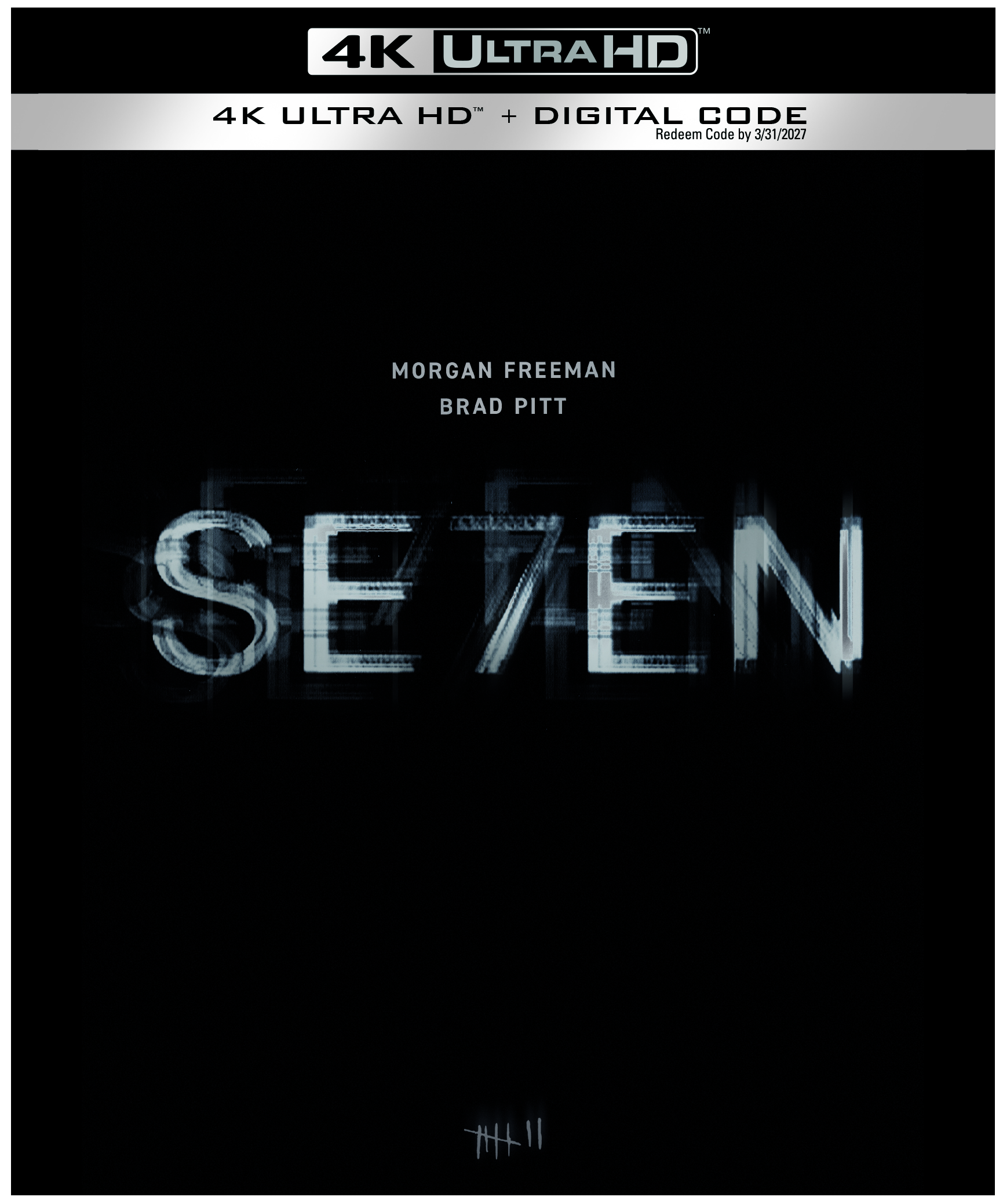
When it comes to 1990’s cinema, it’s difficult to find a film as popular or as well-received as “Se7en.” It became part of the pop-culture zeitgeist when it was released, and it still is a film which elicits a strong reaction from audiences today. Whenever people talk about it, they instantly quote Brad Pitt’s famous line of, “What’s in the box?” The film also served as inspiration for the “Saw” franchise and was ahead of its time in terms of the true crime genre. Now, the film is celebrating its 30th anniversary on 4K from Warner Brothers Home Entertainment. This is sure to be one of the most popular 4K releases of the year.
“Se7en” opens up by introducing the audience to Detective Lieutenant William Somerset (Morgan Freeman) who is one week away from his retirement before he is thrown into a case which captures his attention. It starts off with a man who is found dead after being forced to eat spaghetti over and over again until he perishes. Somerset teams up with a hot shot detective named David Mills, played by Brad Pitt. He recently moved with his wife Tracy (Gwyneth Paltrow) to the city, and he’s looking to make a name for himself. Somerset and Mills could not be more different in how they approach their jobs.
Mills has a short fuse and is ready to fly off the handle at anyone who gets in his way. He also doesn’t play by the rules. Somerset is even-keeled, a deep thinker, and someone who believes you have to look at these cases as more than just black and white, crazy and sane. Before long, more murders are occurring, and the serial killer is murdering people based on the seven deadly sins. For Mills, he simply thinks the killer is a crazy person and writes him off as someone who is going to get caught and isn’t thinking straight. Somerset, on the other hand, sees there is a clear motive and agenda by the killer.
“Se7en” was one of my favorite films growing up. I was 10 years old when it was released, and I saw it when I was 15. It was very much ahead of its time with its gritty, down and dirty filmmaking style. When I watched it in 2025, I liked the film a lot and I admire the craft and precision which went into making it, along with the incredible performance by Freeman. However, I do see some flaws in the film, such as Pitt’s performance. Of course, his “What’s in the box?” scene has become a legendary meme, but he’s way too over-the-top here. After a while, it becomes hard to spend too much time with his character.
I also wanted to learn more about Tracy, played by Gwyneth Paltrow. Paltrow is a terrific actress, and her scenes with Freeman, especially at the diner, give the film some much needed levity. Her character isn’t given enough to do though, besides stay at home and just be written as a one-note character. She and her character deserved better. Going back to Pitt for a moment, I understand what he was going for with his performance, but he plays it too big. In a serious movie like “Se7en,” it almost feels like his character doesn’t belong here. Freeman makes it look easy, and he’s able to portray all of his emotions on his face perfectly. I understand the film was showing the contrast between the two characters, but it doesn’t work as well as I remembered it.
When it comes to films like “Se7en” which rely on a twist, they don’t always hold up as well on multiple viewings because the element of surprise is gone. I still think it is a really good film though, and I enjoyed revisiting it on 4K. The atmosphere and the sense of dread is on full-display from David Fincher. The film also has a lot to say when it comes to its views on the world and the people in it. While Mills believes he can make a change and clean up the world, Somerset is more realistic on what he can do and what the world is capable of as a whole. It’s a film with some brainy ideas, but those ideas sometimes get lost in the middle of trying to solve the crime.
Overall, I still like “Se7en,” even though this might sound like a negative review. I’m just not as enthusiastic about it as I was 10 or 15 years ago. I see more of the film’s flaws than I did in the past. The second half, especially the big reveal, is still as powerful as it was upon its release. The film works best when it allows its actors room to show off their acting chops and really get into the meat and potatoes of their characters. I found the police work and the case itself not as interesting or multifaceted as I remembered it being in the past. “Se7en” is still a film worth revisiting and owning, despite some new flaws I’ve noticed along the way.
* * * out of * * * *
4K Info: “Se7en” is released on single-disc 4K Digibook or Steelbook from Warner Brothers Home Entertainment. It comes with a digital copy of the film as well. It has a running time of 127 minutes and is rated R for grisly afterviews of horrific and bizarre killings, and for strong language.
4K Video Info: “Se7en” is a dark and grisly film, and this specific visual aesthetic is perfect for the 4K format. I don’t think anyone is expecting the film to look crisp, clear and colorful in 4K. The 4K is not as washed out or bright as the Blu-ray, and this is a good thing. It has a more film-like look to it, which is what I was hoping for with this 4K release. 4K is supposed to bring out the best elements of what the director was looking to achieve with the picture, and “Se7en” is a solid 4K release.
4k Audio Info: “Se7en” comes with a DTS-HD Master Audio soundtrack for the film, which is consistent and steady throughout the course of the film. This is a pretty quiet film with moments of loud and intense dialogue, but it never feels like it’s too much. Subtitles are included in English, Spanish and French.
Special Features:
Commentaries –
The Stars: David Fincher, Brad Pitt, Morgan Freeman
The Story: Richard Dyer, Andrew Kevin Walker, Richard Francis-Bruce, Michael De Luca, David Fincher
The Picture: Darius Khondji, Arthur Max, Richard Francis-Bruce, Richard Dyer, David Fincher
The Sound: Ren Klyce, Howard Shore, Richard Dyer, David Fincher
Deleted Scenes
Alternate endings
Still Photographs (featurettes) –
Production Design (featurette)
Mastering for the Home Theater (featurette)
Exploration of the Opening Title Sequence: Early Storyboards (featurette)
Exploration of the Opening Title Sequence: Rough Version (featurette)
Exploration of the Opening Title Sequence: Final Edit (featurette)
Exploration of the Opening Title Sequence: Stereo Audio Commentary One – The Concept – Designer Kyle Cooper (featurette)
Exploration of the Opening Title Sequence: Stereo Audio Commentary Two – The Sound – Brant Biles & Robert Margouleff (featurette)
Theatrical EPK
Should You Buy It?
“Se7en” is a must-own for physical media enthusiasts out there, but there is one problem with this release: the packaging. If you are going to get the digibook, you should know the film is housed in a sleeve, which makes it very hard to take the disc out without touching the back of it. As many of you know, 4K’s are easier to scratch and damage than Blu-rays. While I appreciate the fact they tried something different with this packaging, they should have at least thought about the overall health of the disc. I would recommend you pick up the Steelbook release instead. I’ve noticed a lot of people are unhappy with the lack of updated special features, as these are the same special features that came with the Blu-ray. Special features on older films are not as prevalent in today’s releases as they were originally done during the height of DVDs and Blu-ray releases, and I think it’s important to remember that. It costs money to interview the actors, and it’s not always easy to track them down for new interviews regarding older films they have done. While it would have been a nice addition to the 4K release, I understand it isn’t cost effective. The film looks sharp and the soundtrack is impressive. For the film itself, as stated in my review, it didn’t hold up as well as I remembered it, but it’s still a really good flick. This is a day-one purchase despite the less than stellar packaging options.
**Disclaimer** I received a copy of this film from Warner Brothers to review for free. The opinions and statements in the review are mine and mine alone.
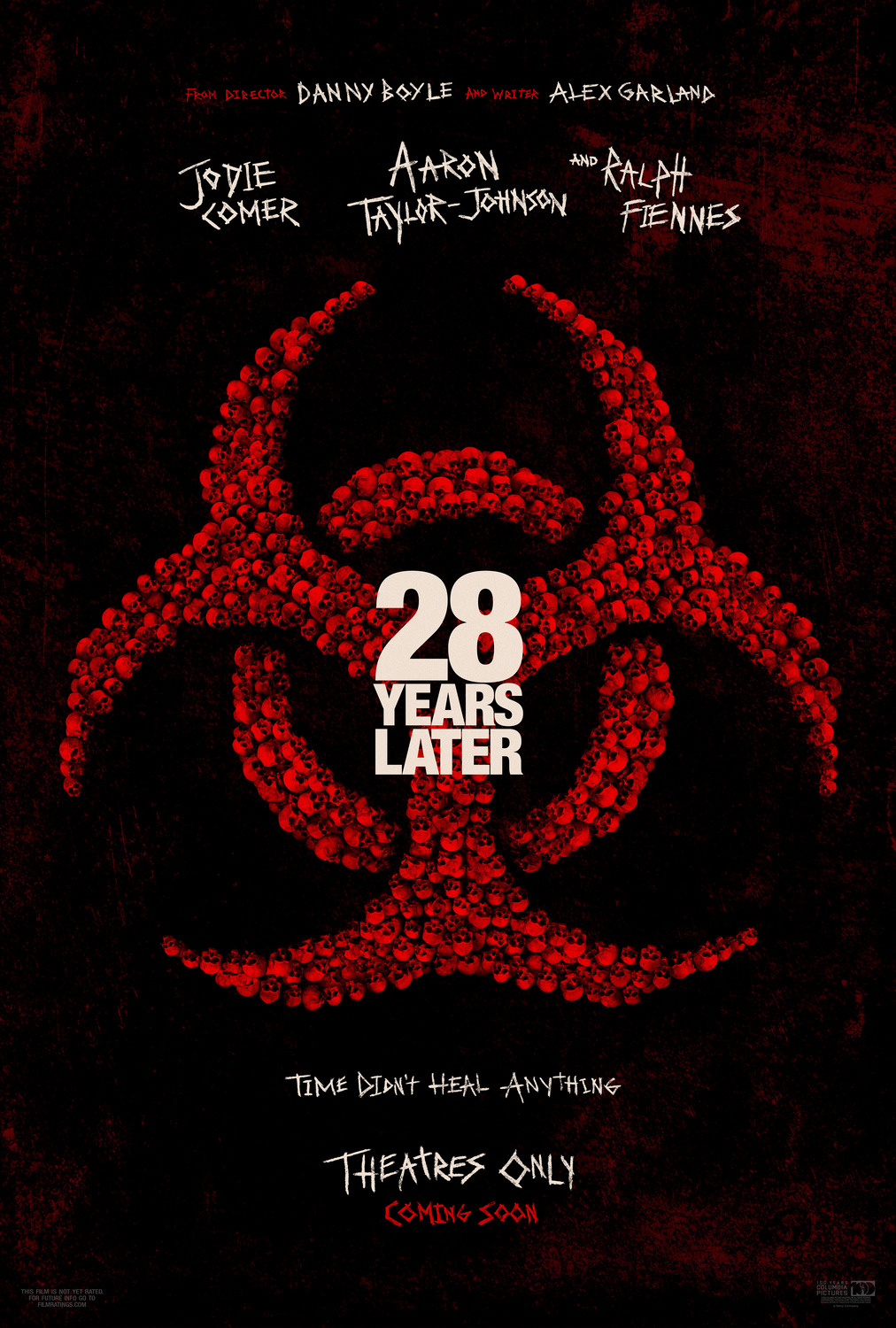
And so, it has finally arrived: the first trailer for the long-awaited sequel, “28 Years Later.” Like another sequel, “Beetlejuice Beetlejuice,” it was stuck in the deep, dark and despairing pit known as development hell. But like said sequel, this one finally emerged from its depressing depths and looks to promise us another round of infected zombies running way too fast and devouring everything in their path, and it looks to be a creative reinvigoration for Danny Boyle, the Oscar winning director of “Slumdog Millionaire.”
The story so far indicates that almost thirty years have passed since the Rage Virus was unleashed upon the world after a group of animal rights activists naively released an infected chimpanzee from its cage (the road to hell is always paved with good intentions). After what looks like a prologue in which a harried parent locks a group of children into a room where they watch the Teletubbies before blood starts flying everywhere, we are taken to an island where humans can find peace as they are surrounded by water which acts as a much-needed border between them and the infected. Like those characters from the “Dawn of the Dead” remake, they think this island will offer them a safe haven, but we all know this will not last very long.
This first “28 Years Later” trailer promises an especially visceral and bleak time at the movies as humanity still struggles in a post-Rage Virus world. But then again, remembering how “28 Weeks Later” ended with dozens of infected running towards the Eiffel Tower, we could not have expected things to get much better. And keep in mind, the tagline for this sequel states, “Time didn’t change anything.” With Boyle returning to this franchise as a director for the first time since “28 Days Later,” and Alex Garland returning as screenwriter, it will be interesting to see how life has evolved (or perhaps devolved) for the characters we see here and the virus.
Movie trailers for the longest time have been using special remixes of popular songs to get the audience’s adrenaline pumping as excitement is always promised for eager film buffs, and the hopes of a huge first weekend opening at the box office is always in the air. With “28 Years Later,” we instead get an old recording of Rudyard Kipling’s war poem “Boots” read by Taylor Holmes. Holmes’ increasing the intensity of Kipling’s words makes the images thrust at us here all the more horrifying, and it makes this one of the best and most memorable movie trailers I have seen in some time.
The big question I have, however, is this; where is Cillian Murphy? After winning the Best Actor Oscar for his role in “Oppenheimer,” it was said he would be reprising his role of Jim and also be serving as an executive producer on this sequel. While actors such as James Bond front-runner Aaron Taylor Johnson, Jodie Comer and an especially beat up Ralph Fiennes dominate this trailer to where no infected person could easily upstage them, I kept waiting to see Murphy somewhere in here. Rumor is, there is a corpse which rises up from the grass that looks a lot like him, and it makes me wonder what will become of Jim this time around.
“28 Years Later” is said to be the first of a trilogy, and the next film, “28 Years Later II: The Bone Temple” is currently being shot with “Candyman” director Nia DaCosta at the helm. Boyle’s sequel, which said to have been shot mostly on an iPhone 15 Pro Max, will be released on June 20, 2025.
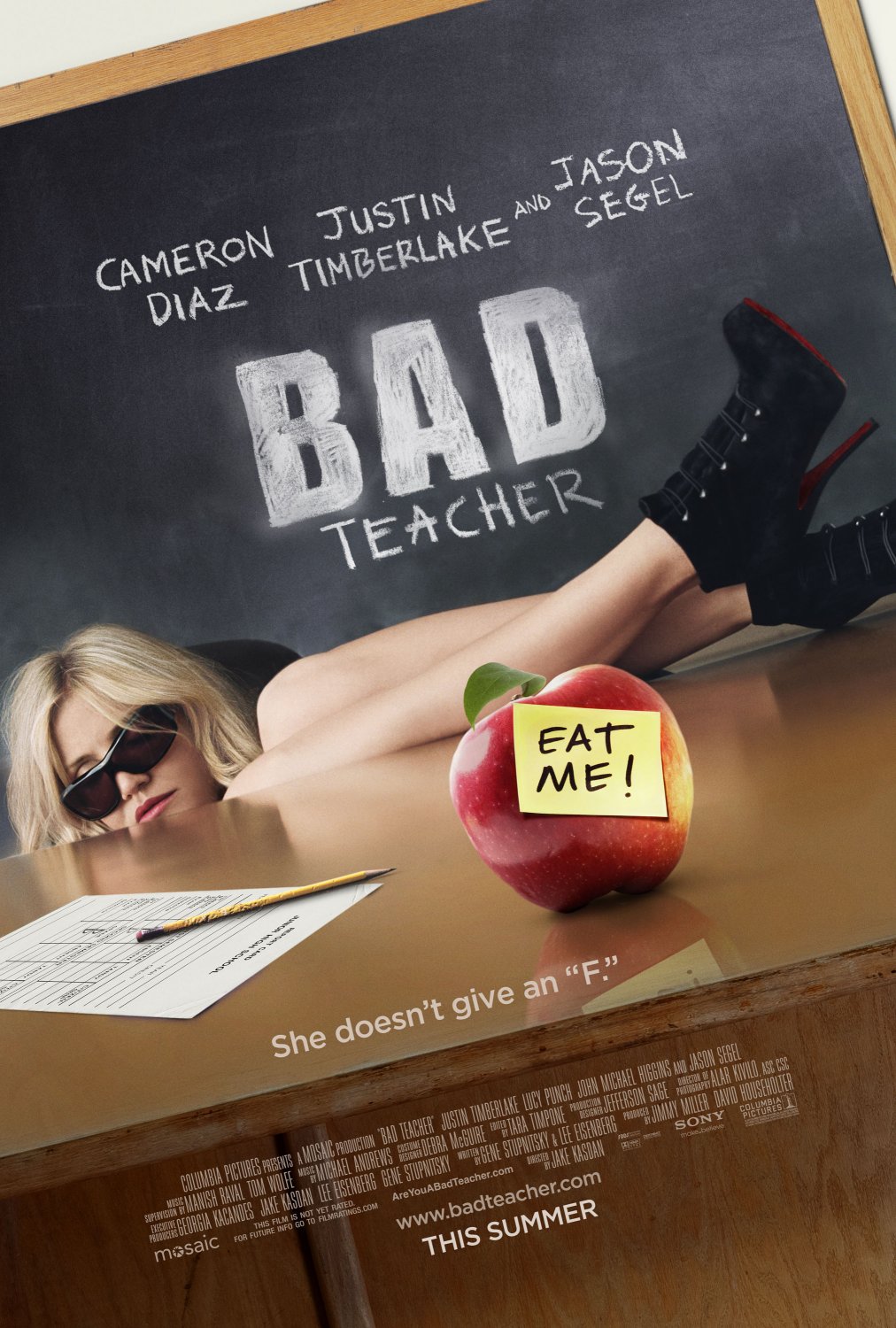
“Bad Teacher” so desperately wants to be a devious black comedy like “Bad Santa” but for teachers. Depressingly, it doesn’t even come close to reaching such devilishly hilarious heights. Despite some good laughs sprinkled throughout, this movie is a surprising bore with few surprises up its sleeve. You can see things coming long in advance, and the punch line deflates very quickly. Cameron Diaz, Jason Segel, Justin Timberlake and a talented cast do their best with a severely underwritten script, but the movie wears out its welcome within the first ten minutes.
Cameron Diaz stars as the teacher of the movie’s title, Elizabeth Halsey. She is dumped by her rich fiancé at the start as he figures out that she is only with him for his money, and this forces Elizabeth to go back to her teaching job which she claims is “the only thing I’m good at.” Her teaching style, however, consists of showing her students movies like “Stand and Deliver” and “Lean on Me” before moving on to the R-rated stuff. While they watch, she’s either nursing a hangover or working towards one with tiny little bottles of Jim Beam whiskey stashed in her desk. But while Jack Black played a somewhat similar character nursing a hangover in “School of Rock,” Diaz comes up short here.
The thing with movies like “Bad Santa” is that, as deplorable as the lead characters were in their actions and demeanor, there was something which made me want to keep watching what they went through, and in the hopes that they would reach some sort of evolution or catharsis. Whether they were likable or not, they were interesting. Billy Bob Thornton succeeded in “Bad Santa” in painting a complex portrait of a man who was as pitiful as he was cruel to others.
This brings us to a really big problem with “Bad Teacher;” Elizabeth Halsey is not an interesting character. She is essentially a shallow human being looking to manipulate those around her to get what she wants. Through schemes like school car washes and, as it is described, “extra tutoring,” Elizabeth works towards raising money to get breast implants as they seem more important than anything else. Aside from that, there’s not much to the character here. She comes across as one-dimensional without much to work with in terms of complexity or a back story, and this just sinks the film even further down into the muck.
Regardless of what has been said, I believe Diaz is a very good actress. She is endowed with great comedic talents which were put to good use in movies like “There’s Something About Mary,” and she has proven to be a strong dramatic actress in “Any Given Sunday” and “Being John Malkovich.” While she is game in making Elizabeth a despicable teacher, she never becomes like the ones everyone hated during school years, and the lack if any interesting and redeeming qualities makes this a waste of her talents. With a better screenplay, she would have been fantastic here.
“Bad Teacher” does pick up a little as it goes on, and it scores some great laughs when Elizabeth discovers that the teacher whose class gets the highest scores on the state exam gets a bonus of around $5,000. Seeing her switch her class from movie watching to reading the first 100 pages of “To Kill a Mockingbird” in one night for a quiz the next day is comedic gold. It gets even better when she uses unorthodox methods to make the students learn like standing them in a line and hurling balls at them when they give the wrong answers. Unfortunately, these are some of the highlights, and they all happen at the movie’s midpoint.
Other scenes like Elizabeth getting revenge on faculty members becomes anticlimactic as I could see long in advance how her vengeance would end. When she is running the school car wash and dresses scantily, it’s funny for a minute. I have seen so many movies over the years which have utilized this sight gag, sexy women at a car wash barely dressed, and it’s so old now. We have been there and done that, and nothing is done to make this particular gag look the least bit fresh.
One actor who fares better in this movie is Jason Segel who plays gym teacher, Russell Gettis. His humor is unforced, and he never strives too hard in making us laugh and succeeds in sneaking jokes when least expected. If only “Bad Teacher” had more of this humorous magic… I mean, I can dream, can’t I?
After all these years, I’m glad Justin Timberlake has singing career to fall back on as he has not had the greatest luck in movies despite his inspired turn in “The Social Network.” Watching him opposite Diaz is interesting in part because we all know they were once a couple, but the chemistry they had in life doesn’t quite translate to the silver screen. His character of substitute teacher Scott Delacorte is a rich guy who Elizabeth courts as she selfishly wants someone wealthy to pamper her for life. But it becomes far too obvious how this relationship will turn out, and while Timberlake does what he can with the material given to him, he can only do so much.
Other actors who have their moments include Phyllis Smith who steals scenes as the shy Lynn Davies. Her muted ways make for amusing moments as she argues about certain things bothering her at a very subdued level. Stealing even more scenes though is Lucy Punch who plays Elizabeth’s arch nemesis, Amy Squirrell. Punch fills her character with a certain joy brought on by an innocence which masks a deep resentment that eventually gets the best of her.
The director of “Bad Teacher” is Jake Kasdan who is of course the son of famed filmmaker Lawrence Kasdan, Jake’s a good director, and his movie “Walk Hard: The Dewey Cox Story” remains one of the most vastly underrated comedies of all time. But here, he is unable to find the balance between comedy and character. If the characters in this here movie were a little more down to earth and nowhere as contrived, he could have made this film truly work and give it a spark few comedies could have.
Many may watch “Bad Teacher” with high hopes that it will be a deliciously nasty comedy along the lines of “Observe and Report” or “World’s Greatest Dad,” let alone “Bad Santa.” The problem is this one is nastier than it is funny. Doing comedy is hard work, but making a black comedy is even more difficult. Hopefully, Jake will have more luck in the future with this kind of film, as he has done good work in the past. And I also say this because the recently released “Red One,” which he directed, is, like this one, far from ever being a critical darling.
Born and raised in Los Angeles, California, filmmaker David Twohy has left a strong impression on moviegoers everywhere. He got his start as a screenwriter on “Warlock,” “The Fugitive” and “Waterworld,” and he eventually proved himself to be an effective director with the underrated “The Arrival” which starred Charlie Sheen as an astronomer who discovers evidence of intelligent alien life, and the equally underrated submarine supernatural horror film “Below.”
But the movie Twohy is still best known for is “Pitch Black” which had him joining forces with “The Fast & The Furious” star Vin Diesel who played the dangerous criminal, Riddick. Its budget was only $23 million, but Twohy and Diesel created a movie that was intensely exciting and which made the most of its modest budget. So strong was the cult following for “Pitch Black” that the two later made “The Chronicles of Riddick” which had a budget of over $100 million. While the sequel was not a commercial success, fans were still craving another Riddick movie and kept pushing at Twohy and Diesel to bring this anti-hero back to the silver screen.
Fans got their wish when “Riddick,” the third movie in the “Pitch Black” franchise, opened in theaters on September 3, 2013. After dealing with a big budget and a Hollywood studio, Twohy and Diesel ended up raising the money independently to make this particular sequel a reality and maintain full creative control over it. It follows Riddick as he is left for dead on a desolate planet and ends up being sought out by bounty hunters who are prepared to bring his head back in a box. But soon they are stalked by vicious alien predators, and they are forced to join forces with Riddick in order to survive the long dark night.
I was lucky enough to attend the “Riddick” press conference at the Four Seasons Hotel in Los Angeles, California just before this sequel was released back in 2013. Twohy talked about the challenges of making this particular movie as well as what it was like working with Diesel who had just received his star on the Hollywood Walk of Fame.
Question: How did the final film compare to what you originally envisioned, and were there any big challenges you faced in terms of the look of the film?
David Twohy: Did the finished product end up like we had imagined it? Yeah, it does because really, as a responsible filmmaker, I have to imagine the whole movie. After I script the movie, I have to storyboard it out, I have to budget it, and I have to understand if I can afford all those visual effects or not. So more than anybody, it looks like the movie I had imagined, sometimes better, sometimes not quite as good depending on how we execute the visual effects. But yeah, I’m not surprised by it because it’s what I do and it’s what I set out to make. Sometimes Vin, who is not privy to everything that’s in my head and all the work that I’ve done with the concept artist (and he likes it that way), is surprised, but I don’t have the luxury of being surprised. I can’t be surprised by anything in the filmmaking process if I’m doing my job right. So, it’s very much the movie we set out to make, and we set out to make something that would fit into the budget that we had ($38 million). I think you all know that this was an independent movie this time out instead of a studio movie. So, knowing that we would have limited resources, Vin and I sat down in his kitchen and we came up with a story that would fit that budget. It couldn’t be as grand as the last movie, and it had to be more contained. It feels more like “Pitch Black” to some people. It probably is more like that at least in its tone and scope (we limited it to one world), but it’s very much the movie we set out to make, and there were not that many surprises for me along the way.
Question: It was interesting to see that Dahl (played by Katee Sackhoff) was not a love interest in this movie. Usually, the girl ends up being the love interest of someone, but instead she was this independent woman who can hold her own. Can you talk about casting Katee and why you chose to make her this independent woman who can take care of yourself?
David Twohy: I remember Ridley Scott telling me this story about the original “Alien;” Ripley was scripted to be a man, and he decided to make her a female thinking that these parts should be gender-neutral. I’ve always remembered that, and the women in my movies do stand up on their own two feet and are not pieces to anybody, and I like that. In terms of Katee, she was the first person to read for the role of about a hundred actresses, and that I remembered her throughout the whole process speaks highly of her. So finally, I said, “Who was that girl who came in the first day, she had blonde hair and she kind of killed it? Who is she?” They said, “Oh that’s Katee Sackhoff from ‘Battlestar Galactica.'” Well, I didn’t really follow “Battlestar Galactica,” so I didn’t even know her from that, so I’m not casting or for that. I just thought she was the best available actress so we cast her like that, and I’m so glad we did because she was a joy to have on the set. And clearly, like the character, she holds her own amongst the men and swears worse than any of them. Her off-screen lines are just as good.
Question: What made you bring this franchise back to R-rated territory after the PG-13 “Chronicles of Riddick,” and is there going to be another “Riddick” anime, game or ride?
David Twohy: (laughs) A Riddick ride? Well, actually we are doing some D-Box seats in theaters, the motion platform seats. I just experienced them for the first time and it’s the closest thing to a Riddick ride as you’ll get. It’s watching the movie, but it’s motion based. I don’t know what that in between thing will be, but we embrace them, and I would like to do more. We published the motion graphic novel as well which helped with the back story of how Riddick went from King of the Necromongers to a man alone on a planet. We embrace those things, and it would be great to get another game off the ground, but those things are very hard to launch. They are costly and they need a lot of lead time, so it’s hard to sync those games to the release of a movie. But we would like to do another one and we are talking about it. The R-rated movie was important to us because, as a filmmaker, I have the flexibility I need to do what I want. With PG-13 I feel like I’m pulling my punches either in the script or working with my actors on the set and coming up with stupid analogues for the word “fuck.” I’m getting tired of that. It gets to the point where people aren’t talking like people talk anymore. Just because I don’t want to pull my punches anymore, I felt this was important to me. It also plants a flag in the ground for our fans as well and lets them know we are true to the character and the nature of the series. The reason for PG-13 last time is obvious. It was because we were a big studio movie funded by a big studio, and to minimize their risk they wanted to branch out to what they think is the widest possible audience and they think that’s PG-13. There is actually a sound reason for that, but Vin and I feel more comfortable back in the R-rated universe.
Question: In “Riddick” you deal with the Necromongers briefly and just move on from there. Do you plan on going back to that story thread if this movie is successful enough to merit a sequel?
David Twohy: Yes. If it is successful and if we have a flexibility to go wherever want for the next movie, and Vin and I are talking about two more movies and probably just that (it would be good to do a closed ended franchise rather than a franchise that just keeps spitting them out just to spit them out), we would like to get back to the Necromongers. I am currently cutting the director’s cut DVD right now which includes more of an epilogue which has Riddick returning to the Necromonger empire and actually setting things right there in terms of the guy who abandoned him on this planet and left him for dead, and his search for Vaako (played by Karl Urban) who he thinks has the answer to where his home world lies. The next few weeks will be telling for us, and we want to pay off the fans who have stuck with us all this time. They have never stopped talking about this movie to us, and it was them who made us open our eyes and say it will be honestly irresponsible to leave it like it was and not make another movie.
Question: How did you and Vin get back to the savagery of the “Pitch Black” with this one and made it look like “Conan the Barbarian” as opposed to “Conan the Destroyer?”
David Twohy: That was important too, and it was also part of the character who thinks at the story’s outset that maybe he feels that he is gotten a little slow, a little soft, who has dulled his own edge as King of the Necromongers and wonders what happened to him. Did he commit the greatest crime of all? Did he get civilized? So, the exploration of him trying to get back to basics to find his edge again, to get back to the lean thing he was, it’s a good evolution for Riddick and it’s also sort of a parallel to what the franchise has undergone
Question: What do you like most about collaborating with Vin Diesel?
David Twohy: That he doesn’t shut up (laughs). He’s a guy who aims high and pushes me to aim high. He’s a guy who dreams and thinks that anything is possible, and me I’m more of a practical guy. I try to be a responsible filmmaker, living with the constraints of what I’m given to make a movie with, but Vin doesn’t think like that. Vin thinks like anything is possible and he thinks big. Sometimes that’s almost a folly but other times it can be inspiring and it can open up my ideas to other ways of doing things. What’s great about it is that he’s a guy who has all the confidence in the world and always has ever since I cast him as just a guy, an actor, in “Pitch Black.” But he had an unshakable confidence in himself even back then, and he just seems to see the future or will it into being (laughs) so that he can say “hey I was right all along!” He’s great like that and he’s inspiring like that. Just about the time you think that Vin Diesel is a guy with big muscles and a big head and your kind of willing to dismiss him as that, you realize that this is a guy with a big heart too. He dreams no small dreams, and that’s good and that rubs off on everybody else he works with.
Question: Can you talk about crafting Riddick’s voiceover in the movie?
David Twohy: Here’s how I craft it, I sit in front of my computer screen and I write it. Then I’ll rewrite it, I’ll tweak it, I’ll rewrite it and then I’ll show it to Vin and he’ll say I’m digging this or I’m digging that. When he gets in front of a microphone, he’ll say 90% of it, but every once in a while, he’ll just stick in a line. I later find out it’s because it’s too similar to something else he said in another movie. We just work it out and then I’ll spitball three alternatives and when something pops up that he likes we’ll just lay it down. We’ve built a good level of trust with each other lately. As opposed to the voiceover in “Blade Runner” where it was just filling in stuff that you needed to know about the world and it wasn’t character-based, the one in “Riddick” is character-based and it comes with Riddick’s voice and how he sees the world. It takes a while to get it right.
Question: Riddick’s relationship with the puppy is one of the best things about this movie…
David Twohy: By the way, every woman who has interviewed me today talked about the damn puppy (laughs). I cut a trailer of this movie that was all about Riddick and his relationship with the dogs and I gave it to Universal and said, “Hey maybe we want to broaden our audience a little bit and make sure we get the women in here, you know?” Then they go, “It’s a little soft for a Riddick movie Dave.” God, I wish the marketing people were listening to this! I’ve been trying to tell Universal, I’ve been trying…
Question: Since the puppy was created with CGI effects and has a lot of interactive scenes with the actors, what did they have to work with on the set?
David Twohy: All the actors have plenty of reference whether its concept art which they can paper their trailers with or I’ll show them on the morning of the shoot. The puppy has stand ins. For the puppy, I got a 12-pound silicone puppy that looks like the real puppy. It’s furred, it’s got glass eyes and everybody wants to hold it, and it just feels right. The puppy made it into the movie in a couple shots. Plus, Vin has big dogs too, so more often than not he’s telling me how to greet the dog and how to pet it (I’m a cat guy, Vin’s a dog guy). So, he says, “No you don’t pet it like a cat. If you want to say hello to your big dog, you slap it on the shoulder.” So that’s what we do in the movie.
Question: What were the differences, both positive and negative, that you found making this movie independently versus working on a studio movie?
David Twohy: Mostly positive. We shot it in 48 days which was pretty streamline. During postproduction I showed it to an audience of 50 or 60 people and didn’t score it, didn’t test it. I just wanted to know what confused them so I could go back and clear up the confusions. I showed one or two cuts to Vin and then I locked the picture. That is as atypical as it gets in the professional filmmaking world because a lot those movies you saw this summer were focus grouped, tested, scored, recut, reshot, recut, tested, scored, and after a while there is a factory-made feel to those movies. So hopefully something this simple, streamline and filmmaking pure results in something that’s at least different and maybe better just in the handcrafted sense of it.
Question: So, would you say you had more fun with less money in some ways?
David Twohy: Yeah, we did, and I’m sure most independent filmmakers will tell you that. The downside is that we staggered to the starting line. We were up, we were down, we were up, and we were down. It all comes down to, is the paperwork closed? Is the bond closed? You have to close the bond to get the bank loan. It’s a lot of stuff I don’t know much about, and I wish it didn’t affect my life but it does. We started and we were shut down, kicked out of our studios, the doors locked. We had to come back three months later and pay our bills and start over. So those are the vicissitudes of independent filmmaking.
“Riddick” is now available to own and rent on DVD, Blu-ray, 4K UHD and Digital.
As this interview was conducted in the past, it may contain outdated information.
The following review was written by Ultimate Rabbit correspondent, Tony Farinella.
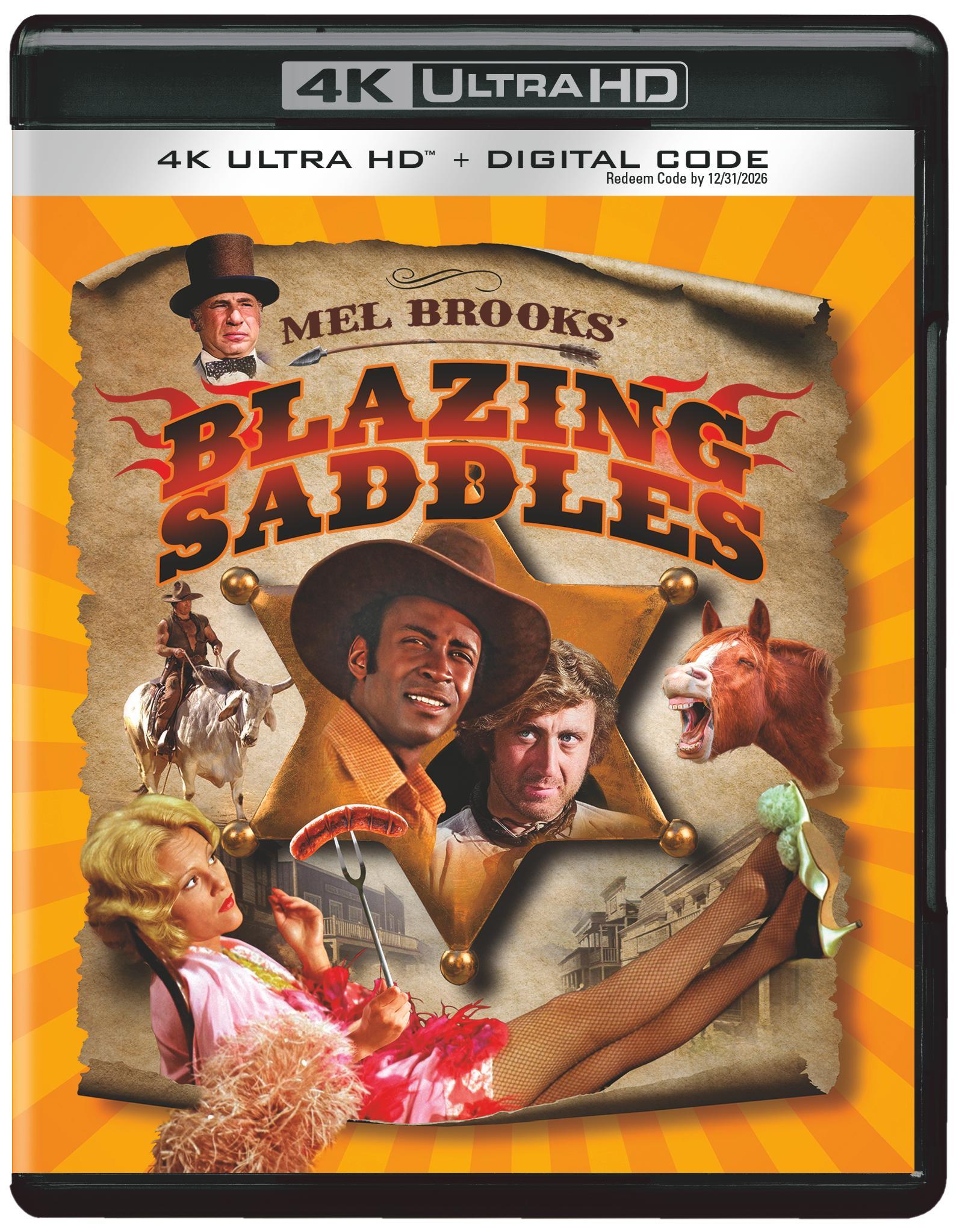
When it comes to comedy, it’s all a matter of opinion. Comedy, even more than film criticism, is subjective. For example, I’m not an Adam Sandler fan and I find his films terribly unfunny, but there is a reason why his films keep getting released by studios. There is really no right or wrong when it comes to comedy. With “Blazing Saddles,” I heard all of the praise surrounding it and how some critics considered it one of the funniest films of all time. While watching the film for the first time, I understood what they were going for and what they were looking to achieve. It wasn’t as though the film went over my head or I didn’t understand the style of comedy they were putting on screen. I just never laughed.
My first issue with “Blazing Saddles” was its lack of plot. It seems this is mostly a movie filled with random gags and one-liners that are intended to make the audience laugh. They throw everything but the kitchen sink at us. It must be said the film is filled with the N-word along with other racial and homophobic slurs. I understand this film was made in 1974, which was fifty years ago, but it’s still uncomfortable to watch. The film is not funny and the jokes don’t land. There is a way to be offensive and also be funny, but this movie did not accomplish that goal. With comedy, you can go almost anywhere if you know what you’re doing. We have seen films that pushed the comedic envelope in the past, but they have been done in a smart and clever way. This is just flat-out lazy.
The plot involves a railroad being built through the town of Rock Ridge, a railroad that will make a corrupt politician a lot of money if he is able to force the residents out of their town. One way he is hoping to do this is by having a black sheriff named Bart (Cleavon Little) come in and make some of the local residents uncomfortable. The sheriff is called Black Bart. Subtlety is not this film’s strong suit. Bart’s deputy is played by Gene Wilder. Even though they are hoping to get the locals out of Rock Ridge, they end up staying and fighting for their town. Bart must also deal with Lili Von Shtüpp, played by Madeline Kahn, who is looking to find a way to sink her teeth into him.
“Blazing Saddles” features performances from Mel Brooks, Alex Karras and Richard Collier, to name a few. However, no one can save this movie from its awful screenplay and bad jokes. It is unwatchable from start-to-finish. It took every ounce of strength in my body to not only watch this movie, but to finish watching it. I absolutely hated it in a way I haven’t hated a movie in a very long time. I understand they were trying to make a film that would be a satire on Westerns and how certain demographics view African Americans. It shows how they are exploiting African Americans because the money men are only focused on the bottom line. I know what the message was and what they were trying to do in this film. I just didn’t find it funny.
In the end, “Blazing Saddles” is considered a comedy classic and one of the funniest films of all-time. I wouldn’t be doing this film any justice if I didn’t acknowledge its reputation and its three Oscar nominations. It has clearly reasoned with a lot of people. With this being its 50th anniversary, I know a lot of people are very excited about this 4K release. One of the worst things you can do as a critic is to say a movie should not be watched by anyone, and if anyone likes this movie, they are a moron. I would never dream of doing that. I acknowledge the reputation of “Blazing Saddles,” but I simply shrug my shoulders and say, “This was not, at all, my kind of comedy.” As stated previously, comedy is subjective. If you love the film, you will love the 4K.
ZERO out of * * * *
4K Info: “Blazing Saddles” is released on a single 4K disc from Warner Brothers Home Entertainment. It also comes with a digital copy of the film. It has a running time of 93 minutes and is rated R. You can purchase either the 4K slipcover or the 4K steelbook.
4K Video: The 4K HDR transfer from Warner Brothers is fantastic and looks terrific. Westerns, when done right, can look great on 4K. This is a visual feast for the eyes, and I imagine fans of the film will be quite pleased with this 4K transfer.
4K Audio: The Dolby Atmos track is also right on cue, as it’s a strong audio mix throughout the film that hits all the right notes.
Special Features:
Inappropriate Inspiration: The Blazing Saddles Effect
Scene-Specific Commentary by Mel Brooks
Blaze of Glory: Mel Brooks’ Wild, Wild West
Back in the Saddle
Additional Scenes
Should You Buy It?
I imagine some readers might call me too sensitive or say the film went over my head. I’m a huge fan of standup comedy, and I believe just about anything in the world is fodder for comedy when it’s done right. I understood exactly what Mel Brooks was going for in this movie, and I know that one of its writers was Richard Pryor. It is my job to give my honest assessment of this film, and I thought it was painfully unfunny and wanted to turn it off after twenty minutes. Because I was reviewing it, I felt obligated to watch the entire film. If this style of comedy is not for you, you won’t find a whole lot to laugh about in “Blazing Saddles.” If you enjoy the film and it fits into your comedic sensibilities, you will be very happy with it. This is another top-notch 4K release from Warner Brothers. They are doing a great job with releasing 4K’s from their massive library. Overall, if you loved this film, buy it. If you haven’t seen it before, I’d recommend watching it and seeing how you respond to it.
**Disclaimer** I received a copy of this film from Warner Brothers to review for free. The opinions and statements in the review are mine and mine alone.
The following review was written by Ultimate Rabbit correspondent, Tony Farinella.
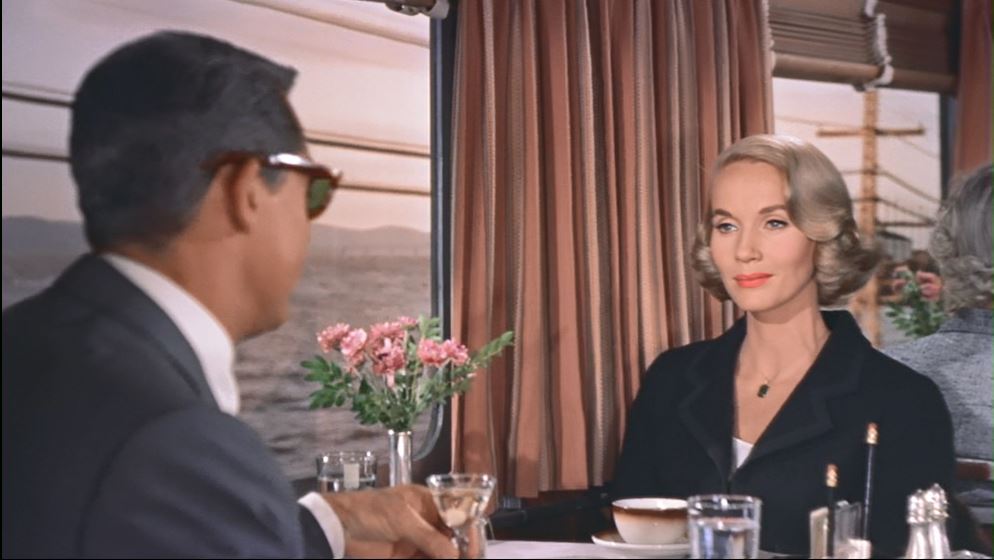
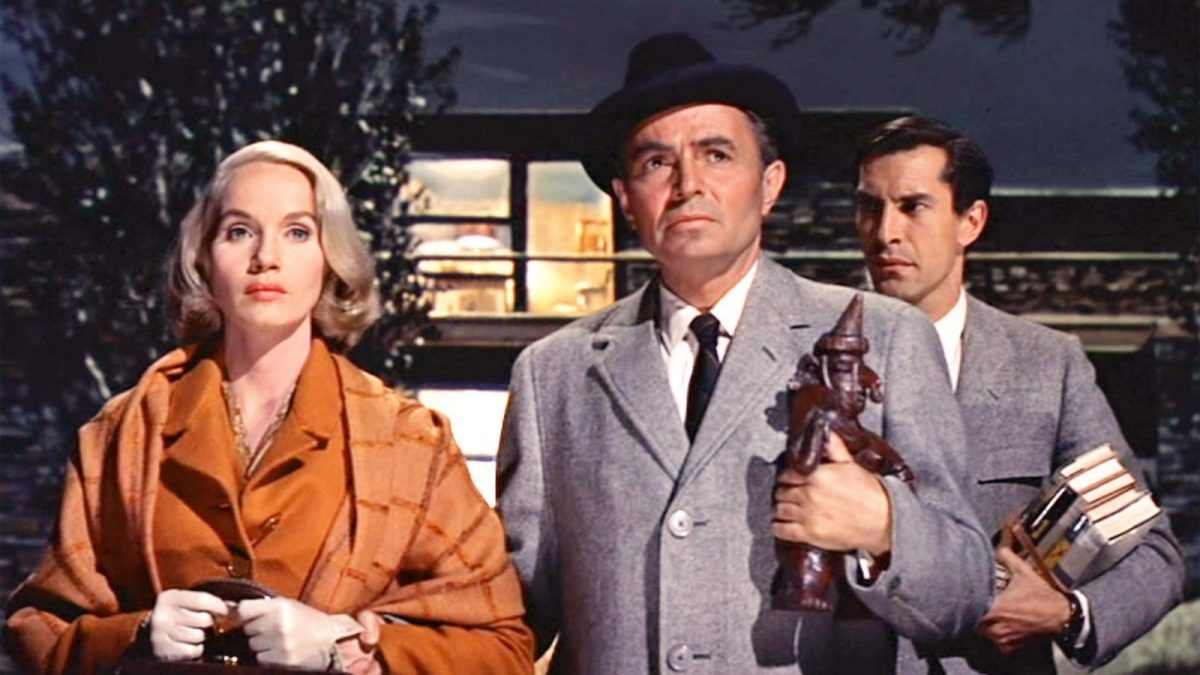
“North by Northwest” is my favorite Alfred Hitchcock film of all time, which is no small feat and it’s not hyperbole. It is my favorite film from the director because it is his most ambitious. It has a running time of over two hours, and it is never boring, not even for a second. It is wall-to-wall suspense, excitement and intrigue. The acting is also top-of-the-line. Cary Grant has given a lot of great performances in his storied career, but he’s at his best in “North by Northwest” because he’s asked to juggle a lot and he’s also on screen for basically the entire movie. He goes from being cool, calm and calculated to being overwhelmed, frantic and verklempt. He also has a terrific screen partner in Eva Marie Saint, who recently turned 100-years-old! She’s a living legend.
Grant plays Roger Thornhill, an advertising executive who is about to have his world turned upside down when he is mistaken for a man by the name of George Kaplan. A group of thugs grab him and throw him into the home of Lester Townsend, who is really Phillip Vandamm (James Mason), a foreign spy who is into importing and exporting government secrets. They set up an elaborate ploy to frame Roger by getting him drunk and putting him behind the wheel of a car, causing him to have a drunk-driving accident. In this situation, his own mother doesn’t even believe him, as it sounds made up. It’s all true, and it’s up to Roger to clear his good name and put the pieces back together in this intricate puzzle.
In his travels, he runs into a young woman by the name of Eve Kendall (Eva Marie Saint), who takes a liking to Roger, even though his picture is all over the paper for a murder he didn’t commit. Things have only gone from bad to worse for Roger at this point. She is willing to help him out and they become romantically involved. There’s more to her than meets the eye. That is the beauty of “North by Northwest;” everyone is not who they appear to be upon first glance. It keeps the audience guessing and it keeps the characters in the film guessing as well. Hitchcock made a very smart film here which is occupied with very smart people.
Even though there is a lot going on in “North by Northwest,” it never feels complicated or overly convoluted. The film doesn’t need to explain every little thing to the audience, as it trusts that the audience is smart and able to keep up with everything happening on screen. It also doesn’t hurt when you have the legendary Cary Grant on screen, who is so effortlessly charming and fascinating. He really rolls with the punches here, as Hitchcock puts him in all types of unique and challenging settings, including the crop-dusting scene and a near-death experience on Mount Rushmore. Hitchcock, who was notoriously tough on actors, has said his favorite actor to work with was Grant. It’s easy to see why as they made movie magic on screen together.
Saint is sizzling on screen with her sex appeal, confidence and charisma. She more than holds her own in her scenes with Grant. They go tit for tat with one another, and she smolders on screen. Whenever they are on-screen together, it’s impossible to ignore their charisma and chemistry. They play off each other so well. James Mason is a great bad guy with depth and complexity and he doesn’t overplay it and is never cheesy or silly. Mason knows less is more, and he knows how to read his lines in a way where he’s cooler than the other side of the pillow. He is too good of an actor to just play this role as a typical movie bad guy, and he gives this character sophistication and elegance.
“North by Northwest” is one of those rare movies where you never want it to end. As soon as it starts, it grabs you and never lets you go. I didn’t want to get up to use the bathroom during this movie, as I didn’t want to miss anything happening on screen. There is no wasted movement in this film. Everything adds up to something and means something. Every single character has a purpose, whether it is to enhance the story or the tension. I don’t like to use the word “perfect” too often, but when it comes to a movie like this one, it is absolutely perfect from start to finish. It’s one of my favorite films of all time.
* * * * out of * * * *
4K Info: “North by Northwest” is released on a single 4K disc from Warner Brothers Home Entertainment. It also comes with a digital copy of the film as well. The film has a running time of 135 minutes and is unrated. It comes with either a 4K slipcover or a 4K steelbook.
4K Video Info: This is not only one of my favorite films, but also one of my favorite 4K discs of 2024. The picture quality is stunning and breathtaking. The HDR brings out all of the beautiful colors on display. Warner Brothers has done an incredible job of making this film look vivid and colorful. Wow! It is all about the details here, and they left no stone unturned in making sure “North by Northwest” was brought to life.
4K Audio Info: The Dolby Atmos soundtrack also adds the right amount of suspense and excitement to the proceedings. It’s a great audio track which really makes you feel like you are in the film. Subtitles are included in English, Spanish and French.
North By Northwest: Cinematography, Score and the Art of the Edit Destination Hitchcock: The Making of North by Northwest
The Master’s Touch: Hitchcock’s Signature Style
North By Northwest: One for the Ages
A Guided Tour with Alfred Hitchcock
Should You Buy It?
HELL YES! This is a film that needs to be bought immediately and, lucky for you, there are two ways to own it—the standard 4K slipcover or the impressive looking 4K steelbook. Even though the special features have been ported over from the Blu-ray, these are lengthy and informative, and they add a lot of context and insight into the film. If you loved this movie, you want to know as much about it as possible. As far as the audio and the visuals of the 4K, this is why I love 4K and why I champion this format so much as a movie lover. My wife and I watched this together on a Friday night and we were transfixed by the film, the mesmerizing visuals and the incredible audio. Warner Brothers knocked it out of the park with this release. This release gets my highest level of recommendation.
**Disclaimer** I received a copy of this film from Warner Brothers to review for free. The opinions and statements in the review are mine and mine alone.
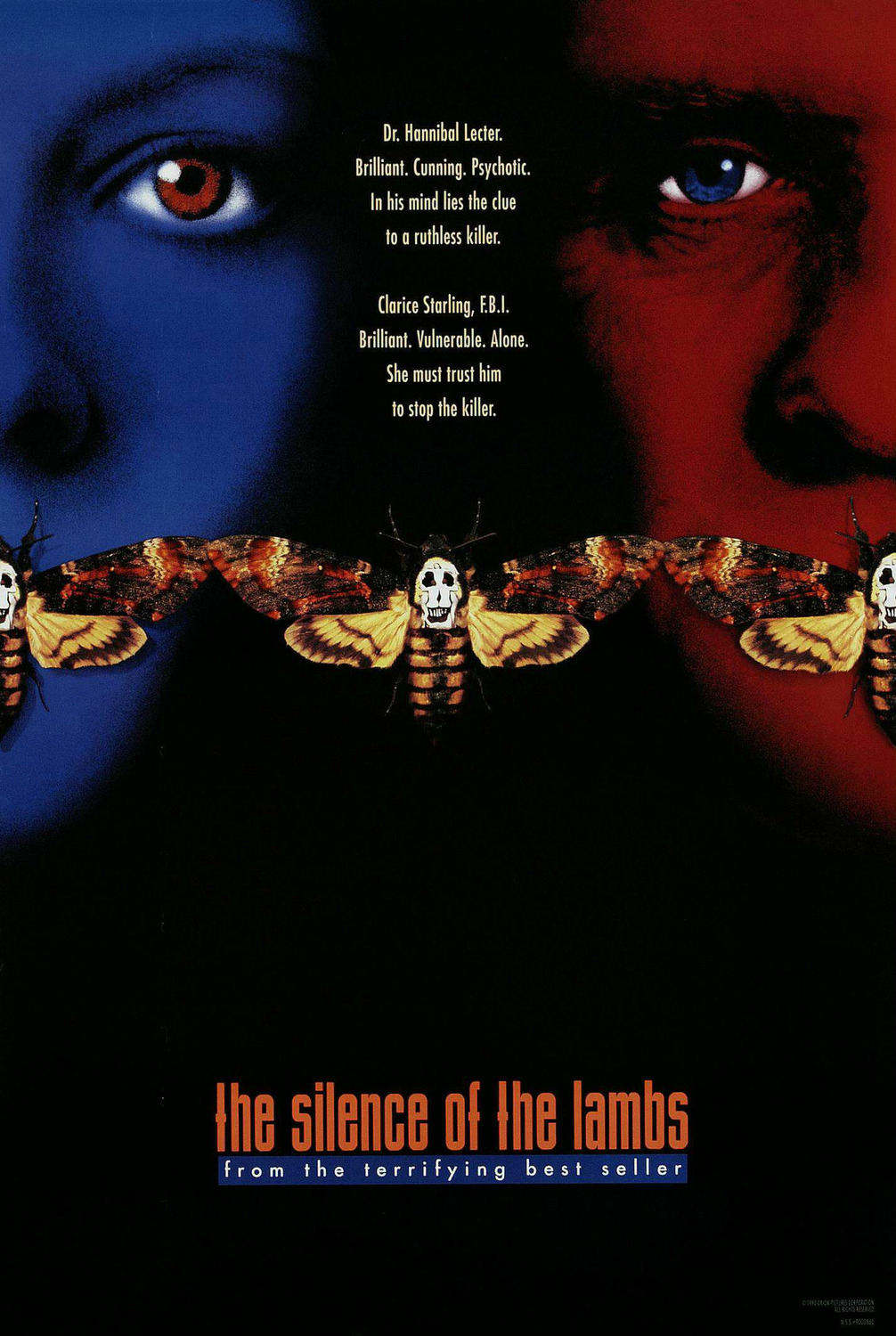
This teaser trailer for “The Silence of the Lambs” was my introduction to this film, and it immediately grabbed me in a way few trailers do. Back then, the internet had yet to be discovered by me, I only knew Jodie Foster from “The Accused” which she won an Oscar for, and I had no idea who Anthony Hopkins was in the slightest. I should also add that not once in this trailer is there any mention that this adaptation of Thomas Harris’ novel was directed by Jonathan Demme. Had Demme’s name been included here, it would have made me all the more eager to check this film out as “Married to the Mob” and “Something Wild” were still very fresh in my mind.
What I love about this particular trailer is how it gives this film a look which makes it feel like no other cinematic experience that was coming soon to a theater near you. Everything about it was full of darkness, but it was a darkness like no other. With its striking images and shrieking noises, and also Anthony Hopkins staring directly into the camera in a way few other actors could, I felt I was being promised an experience which not be average or cliched in any conceivable way. I also very much prefer it to the main theatrical trailer which, quite frankly, gave far too much of the story away to where I am so very thankful I didn’t see it before I saw this brilliant motion picture on the silver screen at Crow Canyon Cinemas.
For the record, “The Silence of the Lambs” is one of my favorite movies ever, and one which I am happy to revisit quite often. This teaser trailer is also one of my favorites as those who put it together made it clear to audiences that this was a motion picture you would be foolish to miss out on. While the darkness it presented could have frightened many audience members off, not once did it feel like your average slasher flick.
“Unhinged” was one of the first movies to be released in theaters near the end of the COVID-19 pandemic. This may very well be its biggest claim to fame as what results is an action thriller which is never boring, but hints at a motion picture which could have been so much better than it is. As much as I want to look at a movie for what it is as opposed to what I want it to be, this one has me inescapably thinking of what could have been improved with the material. Seriously, this could have been an epic thriller which stood proudly alongside Steven Spielberg’s “Duel” and “The Hitcher” (the original, not the terrible Platinum Dunes remake), but no such luck.
We are introduced to Tom Cooper (Russell Crowe) who, as “Unhinged” begins, breaks into his ex-wife’s house, murders her and her boyfriend who has the bad luck of sleeping at her place on this particular evening. These actions are preceded by Tom holding a lit match in his fingers and letting it burn right down to the tip of his skin. I kept waiting for him to flinch, but he never does. Clearly, he has already reached his D-FEN’s “Falling Down” moment, and it is all downhill for him from there.
We then meet Rachel Flynn (Caren Pistorius), a recent divorcee who, like me, sleeps in a lot later than they should. This particular morning, she is supposed to be meeting with a client, driving her son Kyle (Gabriel Bateman) to school, and figuring out what to do with her brother Fred (Austin P. McKenzie) and his girlfriend Mary (Juliene Joyner) who have taken up residence in her house due to their unfortunate financial circumstances. On top of all of this, one of Rachel’s clients coldly fires her while she drives her son to school. Clearly, she is already having a very bad day and is understandably pissed.
Then Rachel ends up behind Tom in his truck, and she becomes irate when he is not quick to step on the gas before the light turns red. She ends up passing him, more or less flips him off, and when he asks her for an apology in an effort to smooth things out, she is dismissive as she sees his problems as being no more or less important than anyone else’s. From there, Tom becomes determined to show her what it is to have a very bad day. This reminded me of when Robert De Niro told Nick Nolte that he would teach him the meaning of commitment in Martin Scorsese’s remake of “Cape Fear,” and we all came to see how vicious De Niro’s intentions were.
The first thing I should point out about “Unhinged” is Russell Crowe’s performance as Tom Cooper. The material might seem beneath him as this is the same actor who gave such epic performances in “Gladiator,” “A Beautiful Mind” and “Cinderella Man,” but he helps to give Tom a little more dimension than the screenplay might imply. Crowe helps to make Tom’s psychotic behavior all the more frightening than it might be if it were another actor taking on this role. It also helps that Crowe is playing a man who is prepared to commit suicide by cop as he has nothing left to lose, and this makes him all the more frightening as a result.
Playing Tom Cooper’s unfortunate victim is Caren Pistorius. I am not familiar with her work, but she made a breakthrough with her performance in “Slow West” in which she co-starred with Michael Fassbender and Kodi Smith-McPhee, and she appeared in Derek Cianfrance’s “Light Between Oceans.” She was also born in South Africa and raised in New Zealand, and this makes her American accent all the more impressive.
Pistorius makes Rachel Flynn into the type of protagonist you quickly come to care for. Rachel is not perfect (who is by the way?), but we root for her because the actress makes her into an everyone we have to recognize in our own lives. Like her, we would flip off any driver who would never be quick to step on the gas once the light turns green to where it is like an automatic impulse, but we don’t expect said drivers to come after us with a murderous vengeance. Watching Rachel deal with Tom’s murderous advances makes the furious emotions on display all the more brutal.
Having said all of this, “Unhinged” still has a lot of problems. Among them is that there are many plot holes throughout. Whether or not I could quickly identify these holes is not important. What is important is that I could tell they existed as much as the great white shark’s unrealistic roar of pain came about in “Jaws: The Revenge.” I mean, seriously, how does Tom get to learn about Rachel’s life through her cell phone ever so quickly?
Plus, there are many things which are telegraphed throughout like a cell phone being left in an individual’s car which you know will get stolen, and a pair of scissors which figure prominently in the climactic battle to where you wonder where in Tom’s body they will end up. Just when I thought “Unhinged” would subvert the cliches a movie like this is expected to have, it falls victim to them in ways which just kill the tension and the plausibility.
I recently came across an article on The Guardian website regarding Robert Harmon’s “The Hitcher” in which Rutger Hauer, who played the murderous psychopath John Ryder, stated that he didn’t play bad guys. This made Hauer’s performance in that film all the more fascinating to me, and it also made me want to believe Crowe had the same intentions when it came to him portraying Tom Cooper. But in the end, “Unhinged” blows a lot of opportunities to make it stand out from so many thrillers like it, and it will not last long in the memory after you have watched it.
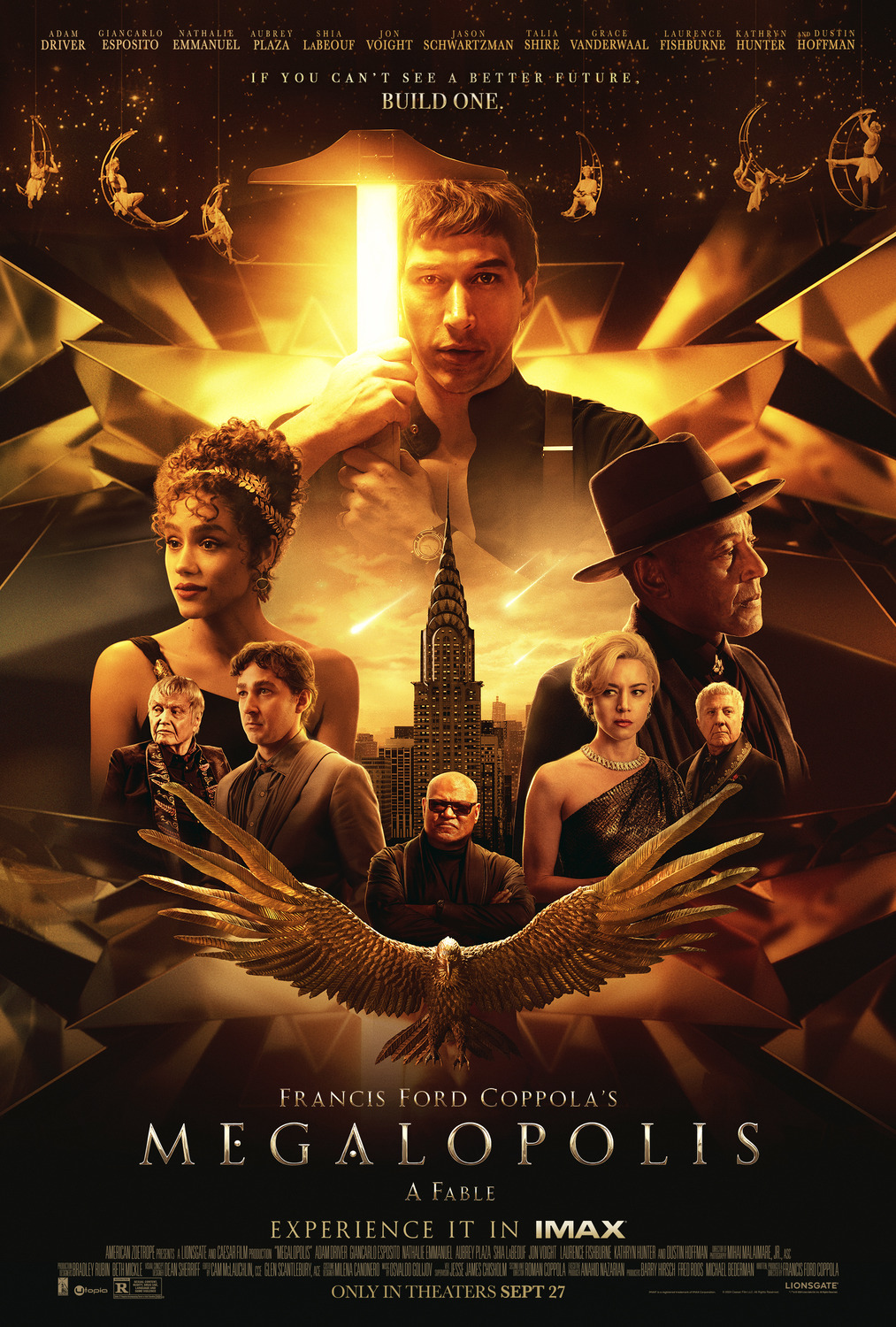
So, help me, I liked “Megalopolis.” Francis Ford Coppola’s passion project which has been decades in the making. It was finally unleashed unto the world at large, and the reviews have been incredibly polarizing as audiences were either enthralled or baffled by what they witnessed. it was pretty much considered a box office bomb in advance as studios had no idea of how to promote it, and it debuted with a terrible $4 million gross which looks horrid for a film with a $120 million budget. But while it has been met with the same critical and commercial derision as another Coppola film, “One From The Heart,” was greeted with back in 1982, it shows he has no fear or shame in taking grandiose risks with the material given to him.
Going into “Megalopolis,” I was determined to watch it with as open a mind as possible. Judging from the many Hollywood studios’ collective refusal to promote or market it, I assumed this would be a genre defying motion picture since no executive had a clear idea of how to sell it. I also did not go in expecting something along the lines of “The Godfather” or “Apocalypse Now.” Those classic films were their own things, and this one is quite another.
What I discovered was a cinematic mess, but it’s an enthralling mess with many ideas on its mind and beautiful visuals few other filmmakers could pull off. Seeing it with an audience, some of which did walk out on it, made it all the more entertaining as everyone really got into it, for better or worse. Like Richard Kelly’s “Southland Tales,” I really dug the heedless ambition Coppola brought to this long gestating project, but “Megalopolis” is a bit better as the story is a little more understandable and easier to get the gist of.
The film, which is described as a fable, is set in an alternate version of America where New York City has been rechristened as New Rome. Crime is terrible and poverty is rampant while the rich revel in their decadent desires. Then along comes Cesar Catalina (Adam Driver), a futuristic architect whose invention of the Megalon, a new bio-adaptive building material, offers a great change to the world. His plan is to use it to build a futuristic utopian city of his design. He also has the ability to stop time in its track, which gives no meaning to the term, “time stops for no one.”
But, as Nick Nolte once said at a press conference I attended, “there will always be change and there will always be resistance to change.” The resistance comes from corrupt New Rome Mayor Franklyn Cicero (Giancarlo Esposito) who prefers to keep the status quo the same as it ever was where the rich get richer, and the poor get poorer and like the average New York mayor, Cicero is constantly booed by the citizens he zealously yields power over. Even as the crowds jeer him, he still smiles that big smile of his which makes me wonder if he is ignorant, hopelessly naïve, or just a narcissist.
Now I am sure you guessed it already, but the Roman names are intentional as Coppola is comparing the fall of Rome to what America is going through, and he was influenced by the Catilinarian conspiracy when he wrote the screenplay. That conspiracy involved a coup back in 65 BC when Lucius Sergius Catilina attempted to overthrow the Roman consuls of Marcus Tullius Cicero and Gaius Antonius Hybrida, and forcibly assume control of the state. it is clear both Catalina and Cicero want a measure of power over the citizens of New Rome, and neither will let anything stand in their way in obtaining it.
Another character making a play for political power is Clodio Pulcher (Shia LaBeouf who is especially lively here), Catilina’s resentful cousin who looks to embarrass him in the most unforgettable ways possible. He looks to win the New Rome citizens over by starting a campaign which invites comparisons to the term “Make America Great Again.”
There is a lot more I can tell you about “Megalopolis’” story, but there is honestly enough for several movies here. As a result, watching it once is not nearly enough for me. There are a lot of plot threads which go in various directions, and while some may say this film does not have enough of a center, I think it does. Perhaps it will take some time to put all the pieces together when it comes to this passion project. Or, if Coppola lives long enough, we will get another cut of the film as he likes to fiddle around with his previous works.
Some have expressed fierce criticism over how the actors seem to be acting in different movies here as the performances range from natural to utterly theatrical. Indeed, there are a various number of acting styles clashing with one another here, but I was not really bothered by this. Considering how divided America has become in the past decade or so. We have citizens accepting one reality while others are accepting its polar opposite. As a result, the conflicting styles this motion picture has to offer us made a lot of sense to me.
Adam Driver makes Catilina into an especially compelling character like he always does, Jon Voight does some of his best work in a while as Catalina’s wealthy uncle, Crassus, who has more tricks up his sleeves than the actor would ever be quick to let on. Nathalie Emmanuel, who plays Julia Cicero, Catalina’s love interest and Cicero’s daughter, and does a great job of further emphasizing the intense conflict between the two men.
But if there is a most valuable player to be found in “Megalopolis.” It is Aubrey Plaza who portrays Wow Platinum, a television personality who goes from being Catalina’s mistress to Crassus’ lover and wife as she desires nothing more than money and power, and it becomes crystal clear what she will do to get them. Plaza is given free rein to chew the scenery every which way she likes. there is no forgetting her presence once you walk out of the theater as she revels in portraying such a despicable Lady Macbeth-like character.
What else can I say about “Megalopolis” that I haven’t already? Yes, it is a mess full of ideas which Coppola has spread all over the place, and there are flaws which are quite glaring. Still, it is an infinitely creative piece of work. The visual effects serve the material without overwhelming it, and there is an unforgettable beauty in the color scheme Coppola employs here.
I have no shame in giving “Megalopolis” a positive review. No, it is not Francis Ford Coppola’s masterpiece (for me, that would be “The Conversation”), but it was great fun seeing the famed filmmaker and winemaker swinging for the stars. He walks a tightrope throughout, taking risks and challenges along which most directors would never do today.
“Megalopolis” is very, very earnest in its designs as Coppola leaves us with a plea for peace and a world which everyone regardless of class and creed can fully benefit from. This may seem like a pipe dream considering how the world is currently tearing itself apart due to religious or ideological differences, but it is a memorable epitaph, should this film be his final work.
And at the very least, we will always have Adam Driver’s unforgettable delivery of “da club.”








 The Ultimate Rabbit