“Bang Gang (A Modern Love Story),” just by looking at its trailer, seems like the French version of “Kids,” but that’s not even remotely true. Based on a true story, a fact we don’t discover until the end credits, it follows a group of ordinary teenagers who live in the suburban neighborhoods of France and participate in sex parties they refer to as “bang gangs.” In the center of the sexual shenanigans is the beautiful George (Marilyn Lima), one of the main organizers of these parties and who experiences some intense inner turmoil. After being spurned by her would-be boyfriend Alex (Finnegan Oldfield) who goes after her best friend Laetitia (Daisy Broom), George begins feel increasingly isolated from everyone around her even as the parties become increasingly reckless. In short, this story will not end well. Or will it?
This movie marks the feature film directorial debut of Eva Husson whose previous credits include the short films “Hope to Die” and “Those for Whom It’s Always Complicated.” Many consider her one of many directors to emerge from the world of music videos, but she will be quick to silence you on that. Born in France, Husson earned an M.A. in English literature from the Sorbonne, and she would later move to America to pursue an M.F.A. at the American Film Institute. She did make some music videos along the way, but her focus has always been on writing and directing feature films.
With “Bang Gang,” Husson has pulled off an impressive debut filled with strong performances by a mostly non-professional cast, and she is aided by the lush cinematography of Mattias Troelstrup as well as the atmospheric music score by White Sea.
I got to talk with Husson while she was in Los Angeles to promote “Bang Gang (A Modern Love Story” which she described as “a movie about teenagers falling in love in the midst of a sexual apocalypse.” She explained how she pulled off the long tracking shot at the movie’s beginning which lasts for several minutes, why she put the term “based on a true story” at the movie’s end instead of the beginning, and she pointed out how the project was inspired by stories involving American teenagers and not French ones. She also spoke of why she had her cast watch Paul Thomas Anderson’s “Boogie Nights” and Lars Von Trier’s “Melancholia” before the film shoot began.
Please check out the interview above.
AN ULTIMATE RABBIT NOTE: This video interview was recently updated to eliminate any copyright issues which were never intended, and to make it available to the widest audience possible.
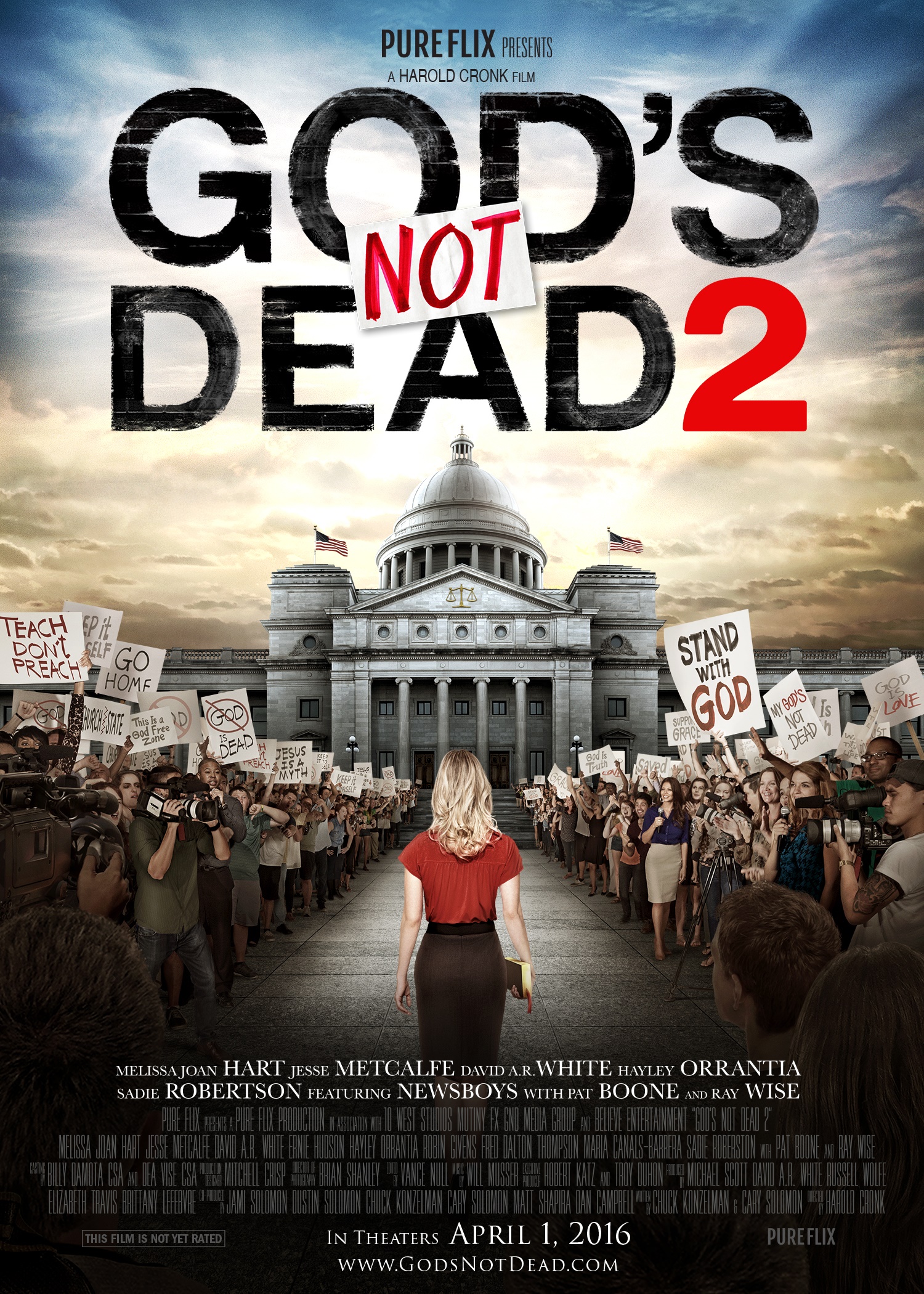
The 2014 movie “God’s Not Dead” only cost $2 million to make, but it went on to gross over $60 million and began a movement to strengthen the faith of Christians everywhere. That movement continues with “God’s Not Dead 2” which reunites director Harold Cronk with screenwriters Chuck Konzelman and Cary Solomon, but it tells a completely different story. This time the action moves to a public high school where teacher Grace Wesley (Melissa Joan Hart) encourages her students to appreciate history. But after Grace gives a reasoned response to a question about Jesus, she becomes the center of an epic court case which could end her career and expel God from the public square once and for all.
We all know Melissa Joan Hart from her popular television shows “Sabrina The Teenage Witch” and “Melissa & Joey,” and she is a veteran of show business having started at the tender age of four. I got to speak with Melissa while she was in Los Angeles, California for the “God’s Not Dead 2” press junket. She talked about joining a sequel which had none of the main cast members from the original returning to it, how social media has both helped and hindered the Christian movement, how she had to do a lot of reacting in this sequel, and why she feels likes an anomaly in today’s Hollywood.
Ben Kenber: It’s interesting how your character talks about Jesus as a historical figure and not a divine person, and yet it somehow leads to this legal case which dominates the movie.
Melissa Joan Hart: Well someone did ask us today in one of our interviews, “Is Jesus a bad word, and why has Jesus become a bad word?” You say Jesus you make people uncomfortable, especially Christians. I have become very comfortable with talking about things within my religion and within my faith. I have been a faithful person my whole life, but only in the last 5 years have I started bible study and really, really studying the word. It’s a hard thing to feel comfortable in this day and age. It’s weird that it used to be such an easy topic, and now it has become such a difficult, strained topic. You say things like “God bless you” and they look at you sideways. It is a weird situation going on these days, and so I like to make sure when someone sneezes that my kids go “God bless you” or if they see a man in military fatigues to say “thank you for your service.” People find it a little disconcerting, but when you do it they appreciate it. I was telling someone earlier about the ten commandments and someone pointed out to me and said, “Which of the ten commandments doesn’t hold up today?” The only one that seems to be fading out slightly is though shall not take my name in vain, and so I make sure I don’t, in my work, say “oh my god” or “OMG.” It really bothers me when other people do now, but in my house they don’t. My kids’ friends come over there and they are not allowed to say it and I’ll tell them why. If I feel the need to pray on an airplane because I’m terrified of flying, I’m not ashamed of that. I cross myself right there in front of whoever is watching. I had some controversy over a Christmas dinner at my house about whether everyone should go to church, and my stepfather brilliantly pointed out if anyone had gone to a Passover or any other kind of religious ceremony or holiday, you would respect that person’s wishes in their home. If you did accept that invitation to go to that event, you would be a part of it and not mock it. We are PC-ing ourselves to death here, literally. I think that’s why Trump is doing so well because he’s not correcting himself and he’s not being politically correct. He’s being completely politically incorrect, and not that I think he’s the best choice, but I can see the draw.
BK: Trump is definitely not the best choice and the fact that he has gotten as far as he has is frightening.
MJH: It’s disturbing.
BK: This is a sequel which features the same directors and some of the same writers but none of the main stars from the original returned for it. Was that ever a concern for you?
MJH: Actually I thought that was pretty exciting. I can’t recall another situation where that happened where they didn’t try to get the original cast and didn’t. I don’t think I’ve ever seen a sequel where the star didn’t go on. Well, maybe “Bruce Almighty” (laughs).
BK: There have been a few sequels like that such as “Son of the Mask” and “28 Weeks Later.”
MJH: But this is a completely different story. It’s not even the same movie. It’s a different movie with similar undertones and a few recurring characters, but really it’s a different story and so that’s kind of exciting and interesting. It was definitely a blessing to step into a leading role in a film that’s already well-established as a movement. The first movie ignited a movement across the country and I think it rallied together the Christian community, especially the youth, and they took to social media and started a movement.
BK: Speaking of social media, do you feel that it has helped the Christian movement or taken away from it?
MJH: I think it’s done both. I read somewhere that they say cell phones are the cigarette of the twenty-first century. They say that for health reasons but I think it’s toxic to families. I read a study where they were observing parents sitting in restaurants with their kids, and if they were on their phone they were more likely to be more violent towards their children and impatient and have outbursts towards their children than the ones that weren’t on their phones. I do think social media plays a big part in that because we want to be attached, but we’re not attached. I remember being in my house on a Thanksgiving and sitting around with everybody. We were watching TV and I made some comment about what was on the TV and I was like, “Can you believe he said that?” And I looked around and everybody was on their phone, but they justified it by saying, “Well we’re playing Words with Friends with each other.” And I said, “Well then why don’t we just play Scrabble?” So I do think that social media can be completely toxic. We feel like we are connected when we are totally not connected. We worry more about followers than friends. But in that way we have also found a fellowship out there of people across the world that we can relate to on certain subjects and certain topics, and Christianity is definitely a big one. I think the movement behind “God’s Not Dead” is doing amazing things on social media.
BK: You talked about how you had to do a lot of reacting in this movie, and that was great to hear because listening is one of the key things in African do especially when they are in a movie. How tough was that for you?
MJH: It was really a lesson for me. Obviously I’ve done reaction shots before, but usually I’m talking at a fast pace but trying to be funny. Usually when you’re the lead of the movie you just talk endlessly. Every other line is your line. So it was hard for me to sit there and just observe and then react, but it was also a great lesson for me to take a deep breath and enjoy not having to learn lines, but also being a part of the scene without having a voice in it and trust that the filmmaker and producers have you protected. It was a little bit for me to wrap my head around that the first week. I was like, “Well I’m not even saying anything. I barely talk.” I didn’t even realize until I get there and you start really reading the lines and you go, “I don’t have a line all day! I’m in every scene but I don’t have a line or I say three words and that’s it.” Jesse’s got six pages. It was hard for me to switch roles, but I’m excited I got the opportunity to do it obviously. If I get the opportunity to do that sort of thing again I know how to handle it better, and hopefully I’ll improve and hopefully with each project you’ll improve.
BK: The two “God’s Not Dead” movies have very different stories. It’s kind of like what’s going on with the two “Cloverfield” movies in that it deals with the same thematic elements even though they each take place on a different timeline. This makes the “God’s Not Dead” franchise seem more like an anthology than anything else.
MJH: Which is why I’m bummed because I know I won’t be in the third movie (laughs). But that’s exciting too because it gives the audience something else. They can come to the movie have knowing what to expect, but part of the fun of film beginning is not knowing the twists and turns and not knowing these characters and infuse it with some new energy. It’s about opening up the stereotypes because as Christians I feel like a lot of people, when you say Christian or the name Jesus, go oh you’re going to judge me now or I don’t go to church enough for you or I don’t know the verses of the Bible. People are always so afraid to be judged and I feel like a lot of Christian films do a little stereotyping, but I feel like in this case with this movie it’s really evolved to a place where these characters are complex. They are real people and these are real human experiences. People will hopefully relate to it more because they will find someone they identify with in this movie or they will identify with everyone.
BK: A lot of criticism that was directed at the first “God’s Not Dead” movie was that there were a lot of Christian stereotypes, but this one has characters that are a lot more complex which makes it more interesting.
MJH: Yeah, you don’t necessarily have a protagonist and an antagonist. I’m the victim in a sense, but not if you are an atheist. With Robin Givens’ character, we didn’t really know which way her character was going until the re-shoots. So I actually asked the director, “Is she bad or is she good? Is she on my side or are we hinting at that?” They decided to keep her a little bit more on the side of evil, but they do walk this nice line with everybody. It’s just a very realistic view of people, and you can’t put people in boxes and you can’t stereotype. I’m a conservative Hollywood girl, and yet I grew up in New York. I’m a Republican so I don’t really fit in with the liberal views of Hollywood, but I’m also anti-gun and pro-choice so I don’t fit into that spectrum. I feel like I’m an anomaly because people can’t figure out where to put me, you know?
BK: It’s interesting to hear you say that because in this day and age we have reduced so many things down to soundbites to where it’s far too easy to label everybody and anybody so broadly.
MJH: Yes. I said I was voting for Romney on Twitter years ago for the election, and instantly I got people saying you must be anti-gay, you must hate all other races, etc. Instantly it was like I just got pigeonholed into then you must be this way if you vote that way instead of just thinking maybe the other choice wasn’t so great (laughing).
BK: “God’s Not Dead 2” was a low budget movie that was shot in less than a month. Did the speed of that help you at all?
MJH: The speed of a movie never helps. They are trying to make movies faster and faster and faster these days which ends up putting a lot of pressure on the crew. So when you do speed these things up, the process is not helpful to the production. They say it puts more money on the screen but I don’t think it does. I think time really helps especially the performances. It’s hard to rush a performance. It’s hard to be like, “Hurry up! Cry! Okay, next scene!” But I feel like working in television you get used to a very rigid schedule and a very fast pace which also kind of kills a performance because I’m used to trying to make sure I hit my marks so I get my letting right. I don’t bang on my microphone so I don’t ruin sound. But am I really think about my performance when I’m thinking about all these other things as well? Did I hit my mark? Am I in the light? My makeup artist is telling me to keep my eye open and to keep my head up. If we had more time to rehearse it and feel it out and do everything and go through it systematically performances would be better, so I think that’s the main thing that suffers, the creativity behind the film, when you rush through it. They save a lot of money and it does get you back to your family faster, but at the same time it’s like you still can only work 12 hours a day.
I want to thank Melissa Joan Hart for taking the time to talk with me. “God’s Not Dead” is now available to own and rent on DVD and Blu-ray. Please visit the movie’s website (www.godnotdeadthemovie.com) for more information.
Actor Jeremy Sisto co-wrote, co-produced and stars in “Break Point” as Jimmy Price, an over the hill and unapologetically brash doubles tennis star who realizes his days in the sport are numbered. The sports comedy starts with his latest partner dropping out on him, and it doesn’t take long to see just how many bridges he has burned while on the pro circuit. His last and only chance to make it to a grand slam tournament is to partner up with his estranged brother Darren (David Walton) who used to play doubles tennis with him until they had a falling out. The question is, can they move past their deep-seated resentments of each other to work together effectively as a team? With the help of 11-year-old Barry (Joshua Rush), they just might have a chance.
Sisto has been acting since he was a kid, and he made his film debut in Lawrence Kasdan’s “Grand Canyon.” Since then we have seen him grow up before our eyes in movies like “Clueless,” “Thirteen,” and he even got to play Jesus in the television miniseries “Jesus.” Many know him best from his role as William Chenowith on the HBO series “Six Feet Under” where he played an artist suffering from bipolar disorder and occasional bouts of mania. In 2008 he joined the cast of NBC’s long-running “Law & Order” as Detective Cyrus Lupo, and he stayed with the show through its final three seasons during which he acted opposite Jesse L. Martin and Anthony Anderson.
Sisto sat down with me for an interview at the “Break Point” press day held in Los Angeles, California, and he talked about how he and the filmmakers wanted this sports movie to stand out from others like it. Sisto also discussed how he managed to make the difficult transition from child actor to adult actor, the challenges of getting “Break Point” made, and he shared his experience of working on “Grand Canyon” and of how special the making of it was for him.
Check out the interview above and enjoy! To find out how you can watch “Break Point,” please sure to visit the movie’s website for more information (www.thebreakpointfilm.com).
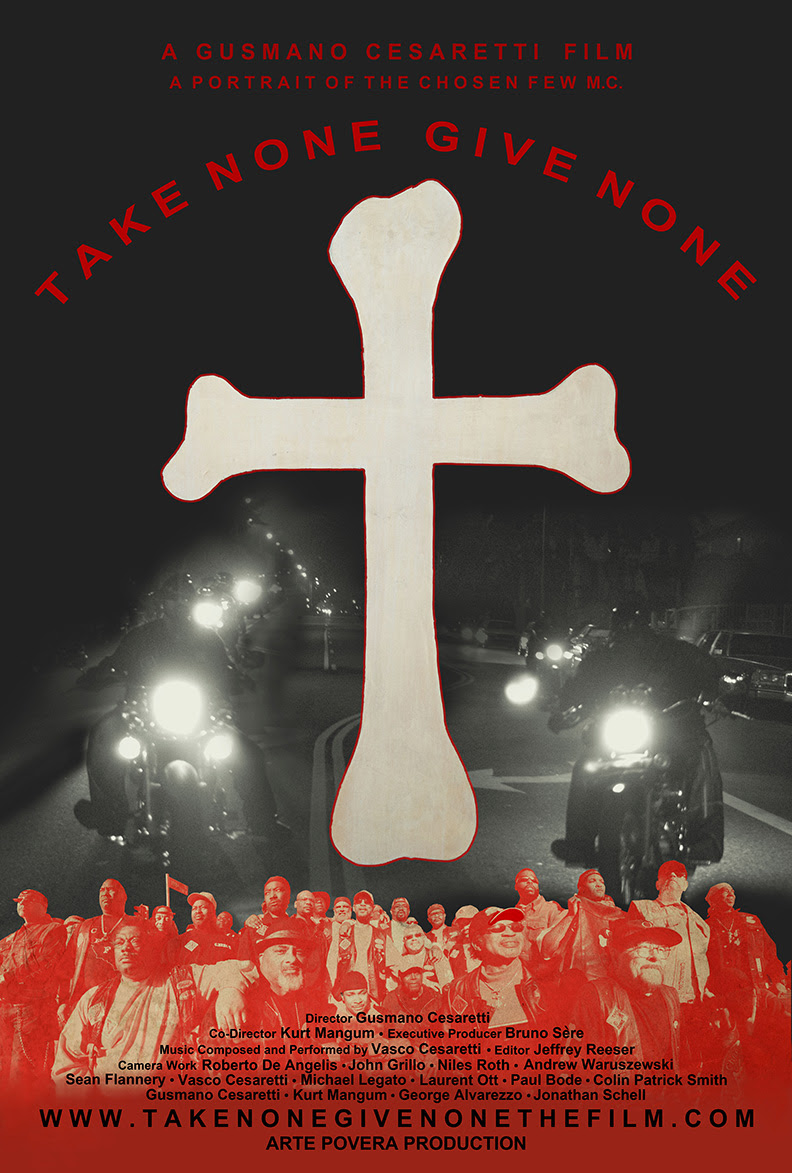
2015 proved to be a great year for documentaries with unforgettable ones like “Amy,” “An Honest Liar” and “The Wolfpack.” Now there’s another terrific documentary to check out called “Take None Give None” which is about the Chosen Few, an outlaw motorcycle club based in South Central Los Angeles. Directed by Gusmano Cesaretti, a producer on many of Michael Mann’s films, it chronicles how this motorcycle club, the first multi-racial club of its kind, formed and is bound by the strength of their brotherhood. The documentary also follows the club’s struggles as they deal with the LAPD which raided their clubhouse and unfairly branded them as a criminal organization in the media.
“Take None Give None” had a special screening at the Museum of Contemporary Art in Los AngelesMuseum of Contemporary Art in Los Angeles, and it was sold out and filled with people of all kinds as well as members of the Chosen Few. When it ended, one of the club’s members stood up and said, “Tell people about this movie so that they can see who we really are.” This was met with a thunderous applause from everyone in attendance.
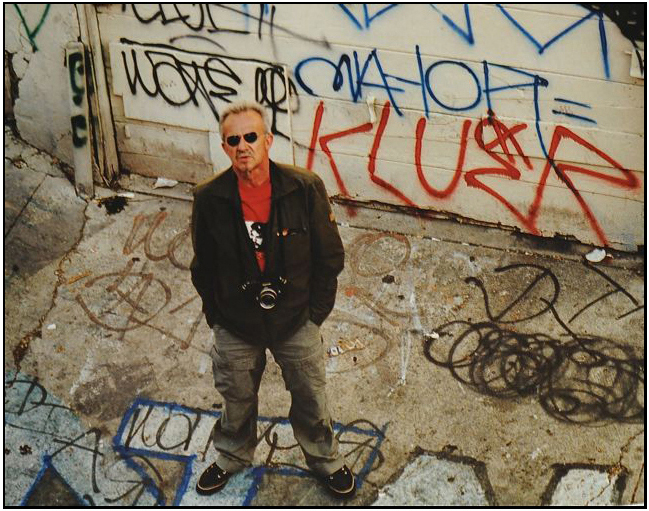
I got to speak with Cesaretti over the phone about “Take None Give None” which he filmed with co-director Kurt Mangum over a three-year period. Cesaretti described how he became acquainted with the Chosen Few, how he managed to get an interview with one of the LAPD cops who went undercover to infiltrate the club, and of how working with Michael Mann served to help him on this project.
Ben Kenber: Congratulations on the documentary. This proved to be a real eye opener about the Chosen Few. How did you first become acquainted with this motorcycle club?
Gusmano Cesaretti: Well I saw some of those guys riding motorcycles about 25 years ago on the Pasadena freeway and I pulled over next to them with my car and I said, “Hey! Pull over, I want to talk to you.” And they pulled over then I told them, “I like the way you look. Everything about it is great. I love the way you were riding the bike.” They weren’t just riders, they had pride for some reason. So I told them I would like to take some pictures, and they invited me to the clubhouse. I went over there and it was amazing to see all these great amounts of people and they were all nice. I walked over with the camera and everybody started looking at me and saying, “Hey what are you doing? Oh yeah take pictures of me! Take pictures of my bike!” It was really great. They were friendly, they were open to anything and to me it was fascinating. They were a great people and then I started going there every other week and kept taking photographs and so on in support. Then in 2011, because they were talking all the time about their rides and how important they were for them and being together in like a brotherhood, I said I would like to film one of your rides. So I organized a ride for them where we went through South Central and on the freeways and then through downtown, and then after the ride they started really talking to me and said that we should make a record of all this. That’s when I started doing the documentary, and we just finished (laughs).
BK: When you first started shooting the documentary, how did you envision it and how did it evolve from that point to where it is now?
GC: That’s a good question. When I first started the documentary I had no idea because when you make a documentary you really don’t know which way you’re going. I feel you’re doing it for a year or two (laughs) and then you would have all the information you ever need to create a storyline. We recorded about 48 hours (of footage), and when we finally decided to edit it was like a nightmare because you’ve got listen to all these conversations and all the recording we did. It took months but then you know what’s going on, and then we put a big roll of paper on the floor of my studio and started writing down the scenes. It was crazy. A lot of different cameras were used. It took me about a month to figure out the storyline, and then even during the process of editing there’s always changing this, putting back this and taking this off. It was a very challenging process but I learned so much.
BK: When it came to filming the documentary what formats did you utilize?
GC: We did a lot of stuff with the Super 8 riding the bikes here and there and we used other film. We used Cannon, we used Sony, etc. But the problem when we did the editing, because of all the different formats and all the different cameras, it became now we gotta do this, now we gotta change this and now we have to download everything into this. It was really crazy, but it worked because I shot it in a very cinema verite way. I didn’t want to commit to any style. And the way I interviewed those guys it was like, “Tell me the story.” I didn’t ask any questions because I wanted them to talk and tell me from their point of view. So that’s usually the way I prefer to do my photography; I connect with people and establish a relationship even if it’s for a moment, and I need to start a relationship if I want to get the image that I need.
BK: When the Chosen Few’s club gets raided, we get to see how the media really twisted their identity of proportion. Then they got evicted from their building which had a huge impact on the neighborhood because things were a lot safer when the club was around.
GC: Correct. What was interesting about the Chosen Few in South Central is that it’s really about the cultural of Los Angeles. It’s not necessarily about the bikers, it’s about their lives. The clubhouse was open for all the members and friends and people and visitors like me. There were probably a lot of undercover cops going there too, I’m sure, just to check and make sure that they were okay. But the thing is this; there were always old people there. It wasn’t just the club for the motorcycle people. It was older people who used to sit there all day long and have conversations with their friends, and when they lost the clubhouse a lot of these old people died because they didn’t have a place to go. They were like homeless people practically, and that was really sad to see that happen. All the members too, they felt homeless. They felt like the police were trying to take their identity away. They didn’t have the energy that they used to have any more, so it was extremely sad.
BK: Speaking of the police, you did manage to get an interview with one of the undercover cops who infiltrated the Chosen Few. Was that a hard interview to get?
GC: No actually. I have a friend that is a cop and I said to him, “Look I’m doing this documentary and I would like to interview the police that did the raid.” He said, “Yeah I’ll find him for you.” So he took a couple weeks and then he called me one night and said, “I got the guy.” I talked to him and he was very interested to do it, and we got together and did it. He was actually a nice cop. He was very open and he also told me the truth. What he was saying was real.
BK: It was nice to have the cop’s perspective of the raid as well as the Chosen Few’s as it manages to balance things out.
GC: Yes, yes. It’s a big club and not everybody’s an angel, you know what I mean? But that’s the same in any other big company like Google. There’s always somebody messing up things and in the club a lot of those guys come from the gangs, most of them. Being in the club was like upgrading their lifestyle and they got a job, but they are still connected with the streets and the gangs. There will always be somebody doing a little bit of this and little bit of that and a little drug dealing, but most of them are really wonderful, nice people. The theology of the Father, Lionel Ricks, is amazing. He started the club because he didn’t have a family and he wanted to have a family. That’s beautiful. What really fascinated me the most was that Lionel Ricks started the club in 1959 and then integrated it in 1960, and this was before the civil rights movement. He was able to bring blacks and whites and Mexicans and Chinese and a couple of people from Syria together without any political or powerful stuff like Malcolm X and Martin Luther King and all those people afterwards. He did it very simple and in a naïve and beautiful way with the motorcycle. That’s amazing to me. Think about it, he brought people together with a motorcycle! And that was when I said, “Okay we gotta do this,” and they were all excited about doing a documentary. We got all these great people to interview and the Father. The Father right now is very sick and in the hospital, and I hope he’s going to get better. But I did show him the documentary about a month ago when we finished editing. I went over to his house and showed it to him, and he had tears in his eyes and said, “It’s good. It’s real.” And I said, “Great! Thank you!” He really loved it.
BK: You worked a lot with Michael Mann on his movies. How did your experience working with him help you in making this documentary?
GC: Well I think making a film is completely different from making a documentary. The only help that I got on this film from that world is the camera guys that I worked with, and they are my friends and they came and helped me. With film you have a script and you got the actors and you have time to keep repeating and filming a scene a scene until it comes to where you want it. When you do a documentary the moment is right there. You are shooting this, you turn your head and you see something and you shoot that. You don’t know what’s going on and you’ve got to be aware of what is going on around you, so it’s really different. For me, this was a totally unique experience.
BK: Was there anything you wanted to include in this documentary that you were not able to?
GC: We got to a point where we said okay we gotta finish this project, so there were maybe a few more people that I wanted to interview that we never got to. There was a guy who did an amazing wheel stand. He did a wheelie and he was supposed to come over one night to do a performance for us while we were shooting in South Central, but the guy couldn’t make it and never showed up. And that was another thing that I wanted to include because it’s beautiful and its part of the art of being in control of the motorcycle. When somebody does something like that in a beautiful way it was nice to visually put it into the documentary, but at the same time it wasn’t that kind of a documentary. It was more about the feeling of the individuals and the members and everything that came from their hearts and communicating to the outside world and saying here we are. This is what we are. We are not what people think, we are what we are.
I want to thank Gusmano Cesaretti for taking the time to talk with me. Please feel free to check out the movie’s website at www.takenonegivenonethefilm.com, and be sure to check out its social media pages on Facebook and Twitter.