While recently going through my large archive of interviews I have done over the years, I came across the one I did with filmmaker Lorene Scafaria on her film “The Meddler.” Released in 2015, it stars the great Susan Sarandon as Marnie Minervini, an aging widow who, to cure herself of loneliness and heartbreak, moves from New Jersey to Los Angles to be closer to her daughter, Lori (Rose Byrne). In the process of trying to restart her life, Marnie starts getting a little too involved in Lori’s life to where her daughter gets increasingly aggravated, she comes to make various new friends she desperately wants to help out, and she becomes especially friendly with a retired policeman named Randall Zipper (J.K. Simmons) to where a new chapter in her life begins to form.
Born in Holmdel, New Jersey, Scafaria previously wrote and directed “Seeking a Friend for the End of the World” which stars Steve Carrell and Keira Knightley as strangers who form an unexpected bond, and she penned the screenplay for “Nick & Norah’s Infinite Playlist,” a romantic comedy starring Michael Cera and Kat Dennings. Since making ‘The Meddler,” she gave us “Hustlers” which featured a critically acclaimed performance by Jennifer Lopez which somehow got snubbed by the Oscars, and she has directed several episodes of the acclaimed HBO series “Succession.”
I had a lot of fun talking with Scafaria about “The Meddler” and how the screenplay was inspired by similar situations with her mother. We also discussed what it was like working with Sarandon and Simmons, and we even talked about the time when she used to fake book reports to get a bunch of Pizza Hut gift certificates. It turns out she was not the only one who did such a thing.
Please check out the interview below, and be sure to subscribe to our YouTube channel if you haven’t already. There are many more videos yet to come!
“The Meddler” is now available to own and rent on DVD, Blu-ray and Digital.
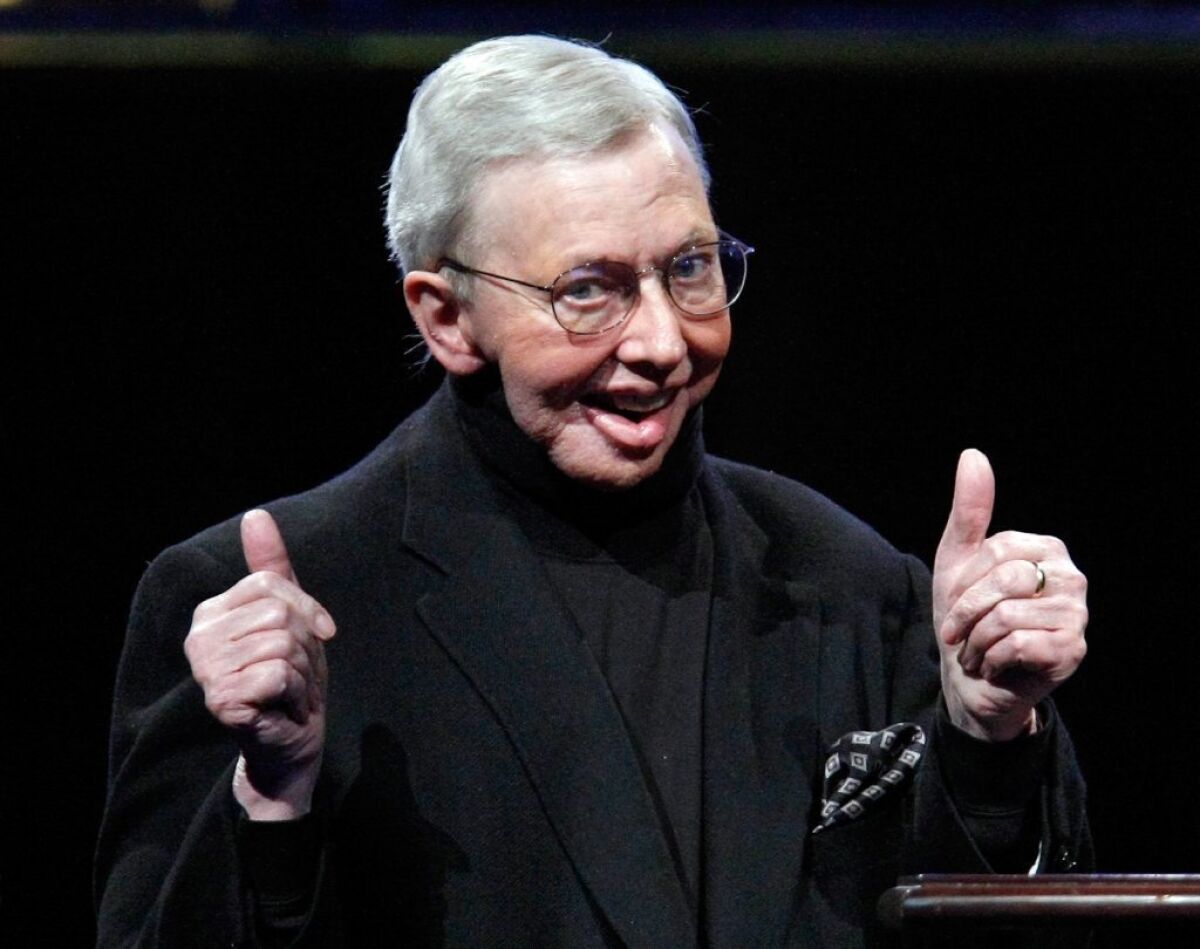
I think we all knew the end was near for Chicago Sun Times film critic Roger Ebert when he announced to the world that his cancer had returned. In his blog entitled “A Leave of Presence,” which was published just a couple of days before his death on April 4, 2013, Ebert announced he would be cutting back his workload to conquer this dreaded disease which had wreaked havoc on his body for the last decade or so. He really did fight the good fight against this indiscriminate and infuriating disease, and you had to admire how he refused to hide from the world after it robbed him of his speaking voice and made him look a little less handsome. But after all the battles, his body could only take so much. His wife Chaz described his passing as a “dignified transition,” and I am just glad it was a peaceful passing and that he was not in much pain.
Like you, I have been a big fan of Ebert’s ever since he started sharing the balcony with Gene Siskel on “At the Movies” all those years ago. Before I made going to the movies a regular event in my life, I had to settle with watching this movie review show as it was my gateway to the world of movies back when going to the local theater happened as often an eclipse of the sun. Even if they did give thumbs down to movies I loved like “Better Off Dead,” nothing could stop me from watching their show.
Eventually, I became exposed to Ebert the writer through his various “Movie Home Companion” books which later became known as his “Video Companion” and then eventually his annual “Movie Yearbook,” and I quickly purchased them year after year once they became available at my local bookstore. Sometimes I was bummed when he gave a so-so review to favorite films of mine like “Caddyshack” (he gave it * * ½ out of * * * *), but in the end he had understandably strong reasons for why he felt the way he did, and it was hard to disagree with his reasons when you thought about them.
In many ways, you did not read an Ebert review as much as you experienced one. This was the case when I read his review of the infamous “I Spit on Your Grave” which he gave one of his rare zero-star ratings to. He described it as “a vile piece of garbage” and how attending it was one of the most depressing experiences of his life. It was a review filled with spoilers as Ebert described everything which happened, and while we hate it these days when people spoil a movie for us (we have Wikipedia for that), it felt like he was doing us all a huge favor when it came to this particular film which has since become a cult classic. He even went out of his way to describe the reactions of other patrons in the theater which were very disturbing as they seemed to shamelessly cheer on the rapists, and this made his experience of seeing this dreaded movie all the more unsettling. Now while his review may have drawn more attention to this movie than he would have liked, you cannot say you were not the least bit warned as to how difficult it would be to sit through it.
As for myself, I loved how Ebert always wrote in the first person, and I am quite confident I do not need to prove to you of the effect his writing had on my own. Many websites and print publications these days do not like it in the slightest when you write in the first person, and while I understand why, it still drives me nuts. Anyone can write a movie review, but no one could write one the way Ebert did. When I first started writing my own movie reviews on the internet, I found myself writing them in the same way he did. Truth be told, it is a lot more fun to write them in the first person as there is only one of you in this universe and, the way I see it, people tend to find more enjoyment in reading those kinds of reviews anyway.
Back when I was in high school, many of my friends came to hate Ebert because, the way they saw it, he just hated movies. Now granted this made me a closeted fan of his for a while because I did not want to appear too different from everyone around me, but I was still annoyed at the summary judgment they made against him. I wanted to yell at them, “DO YOU REALLY THINK HE WOULD SPEND ALL THIS REVIEWING AND TALKING ABOUT MOVIES IF HE REALLY HATED THEM?! WHAT WORLD ARE YOU FROM ANYWAY??!!” While Ebert at times seemed to dislike more movies than he liked, it became easy to see why; many of the movies we loved as kids were no different from the ones he saw as a kid himself, and what we saw as new seemed like the same old thing to him. As we continue to get older, we have come to feel the same away about movies in general because the more things change, the more they stay the same.
Furthermore, Ebert was never a snob to me. While you may be annoyed how he gave thumbs down to “Full Metal Jacket” and yet give a thumbs up to “Cop and a Half,” he was fully aware of how not every movie could be on the same level as “Citizen Kane” or “Vertigo.” Some film critics like Rex Reed are uber snobs who revel in the power they think they have to destroy a movie, but Ebert was able to judge a movie for what it was trying to be as opposed to what he wanted it to be. “Days of Thunder” clearly earned its unofficial nickname of “’Top Gun’ on wheels,” but Ebert gave it a thumbs up because, on that level, it was effective entertainment. Sure, you could compare it to “Lawrence of Arabia,” but why?
In retrospect, if it were not for Ebert, or even Siskel, would audiences have taken the time to discover movies such as “Roger & Me” or “Hoop Dreams?” The one gift Ebert gave us was his power to give a voice to and support films which Hollywood studios were not quick to shower their attention to as they did with summer blockbusters. He made us realize it is up to us to give smaller independent movies the attention they deserve. Otherwise, they just might fall through the cracks to where they become completely obscure.
I also admired Ebert for cutting through the hyperbole which could completely engulf a film. One great example was Spike Lee’s “Do The Right Thing” which many mistakenly saw as a call to violence. Ebert, who would later declare the film to be one of the best of the 1980’s, instead saw it as a story of where race relations were at in America, and that it was a reality call we needed to wake up to. He made you see Lee was not endorsing one course of action over the other, but that he was instead showing us what happens when people do not do the right thing. A few years later, Los Angeles was besieged by riots which came about after the Rodney King verdicts, and this made “Do The Right Thing” seem like an eerily prophetic film as a result.
Now how come other film critics could not see Lee’s film in the same way Ebert did? Maybe it was because he was a much more opened minded person than others. What a critic can say about a movie often says more about them than anything else, and even if you do not agree with Ebert on a particular film, you cannot say he was a man consumed with hate or any deep-seated bias. He was never blinded by any particular ideology or thought process, and he forever remained gifted at explaining what Lee or other filmmakers were truly getting at with their work.
Ebert’s fight with cancer made me admire him even more. Once it robbed him of his voice and a good portion of his jaw, you would have expected him to hide in a cave somewhere. But he refused to do that, and his work as a film critic and a writer never suffered as a result. In fact, he wrote even more than ever before as he expanded beyond his usual movie reviews to cover current events everyone in the world were constantly caught up in discussing. You could argue with Ebert on certain points, but he was always ready to back up what he said with the facts. Your best bet, instead of trying to prove him wrong, was to outguess him at the Oscars.
Thank you, Roger, for being a hero of mine. Thanks for all your great reviews even if you badmouthed some of my favorites. Thanks for continuing to write and not hiding from the world after cancer robbed you of your voice, and thank you for sharing the balcony with Gene Siskel and Richard Roeper for all those years. But most importantly, thank you for showing me the power of the written word. Like many others, I will miss your presence in life and on the web, but you still left us with so many great articles I still have yet to read.
WRITER’S NOTE: Down below, I am including the exclusive interview I did with director Steve James and Roger’s wife, Chaz Ebert, while they were doing press for the documentary they made entitled “Life Itself.” Based on Roger’s memoir of the same name, it was an enthralling documentary I was ever so happy to sit through.
I have been a big fan of Argentine filmmaker Gaspar Noe ever since I first watched his highly controversial 2002 thriller “Irreversible.” Starring Monica Bellucci, Vincent Cassel and Albert Dupontel, it was a rape revenge film told in reverse order like Christopher Nolan’s “Memento,” and it featured, among other things, a rape scene done in one shot which lasted nine minutes, and another in which a man’s head is completely bashed in with a fire extinguisher. Many were quick to walk out of this film as they felt it promoted violence, but I can tell you few others are as anti-violent, anti-rape and anti-revenge as this one is. Moreover, it features scenes of sheer intimacy and thoughtfulness which some critics were not quick to see at first glance. Noe invites you to look beneath the surface, if you can, and see there is more to what meets the eye.
The same also goes with Noe’s other works which include “I Stand Alone,” “Enter the Void,” “Climax” and “Vortex” as he examines various issues with a thoughtfulness that often eludes his harshest critics. There is more to this director than simply shocking his audience, and he gives a lot of unforgettably surreal imagery with the help of acclaimed Belgian cinematographer Benoît Debie who can light a scene ever so beautifully. His movies do not exist just to leave a permanent psychological scar on you. They leave you with a cinematic experience few other filmmakers could ever possibly give an audience, and I am always thankful for such motion pictures.
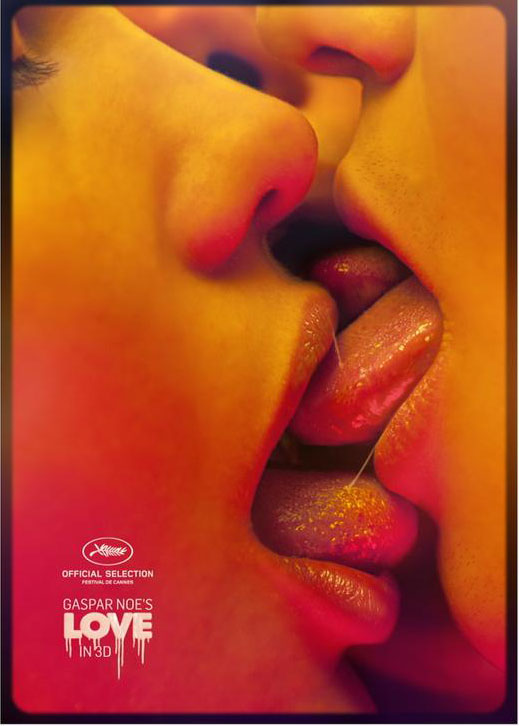
So, it was quite an honor to interview Noe back in 2016 when he was doing press for “Love” which he shot in 3D. The movie stars Karl Glusman as Murphy, an American student studying movies in Paris alongside his girlfriend, Electra (Aomi Muyock), whom he is having quite the sexual relationship with. The on one day, they come across a Danish teenager named Omi (Klara Kristin) with whom they engage in a threesome, but from there relationships take some truly powerfully emotional turns to where what was once found may forever be lost.
“Love” is, and will probably always be best known for its scenes featuring unsimulated sex, but for me this movie deals more with the emotions of love which lift us up to delirious heights, and also bring us down to such rock bottom lows we may find impossible to climb out of. Noe and I talked about these themes and other things during our time together, and he made it clear how this film should in no way be considered a porno.
Indeed, when it comes to the average filmgoer of any nation or ethnicity, I fear they will react in the following manner:
“Oh no, it’s a penis. A big hulking phallus. GET IT AWAY FROM ME! GET IT… oh wait, it’s just an AK-47. Whew! Thank goodness. I was worried for a second.”
With Andy Summers having released his latest book, a collection of his many short stories entitled “Fretted and Moaning,” I am quickly reminded of when I met him back in 2015. The documentary “Can’t Stand Losing You: Surviving The Police” had just been released, and I got to attend its press day in Los Angeles, California. Based on Summers’ memoir “One Train Later,” it follows him from his early days as a musician where he performed with The Animals during the 1960’s to meeting Stewart Copeland and Sting which led to the formation of The Police, one of the most infinitely popular bands of the 1980’s. We also get to look at Summers’ personal life and his photography, another art form he is quite gifted at, and we get reminded of how important a guitarist is to a band even when the bassist gets the most attention.
It was a real honor and privilege to meet Summers, talk to him, and have him autograph my personal Police box set of “Message in a Box: The Complete Recordings.” During our time together, we talked about how the internal conflicts and strong egos helped make the band more creative even as those same things eventually tore this trio apart. I also asked him about his song “Mother,” his solo contribution to The Police’s album, “Synchronicity.”
Joining him in this interview is one of the documentary’s producers, Norman Golightly, who has several decades of experience in movies, television and social media. Moreover, he remains committed to promoting positive social change. Golightly talked about the obstacles in getting this documentary made, and they seem surprising as a this one is about a band which had Sting as its most unforgettable member.
“Can’t Stand Losing You: Surviving The Police” is available to own and rent on DVD, Blu-ray and Digital. For fans of The Police, I could not recommend this documentary more highly.
Below is my exclusive interview with Summers and Golightly, the press conference with them, and the documentary’s trailer.
The latest “Wrong Turn” installment is now available for all to watch, but while some of the filmmakers remain the same, almost everything else has changed. Directed by Mike P. Nelson, this film acts as a reboot of the “Wrong Turn” franchise as we follow a bunch of young adults who are going on a hiking trip up in Virginia. But instead of running into bloodthirsty cannibals, they run into a clan of self-sufficient people who have lived in the mountains for years and do not take kindly to outsiders. What results may seem like another horror slasher extravaganza, but unlike its predecessors, it is grounded in a reality we all know and understand, and this makes this particular reboot stand out in the overcrowded horror genre.
Among the young adults in the cast is Dylan McTee who portrays Adam Lucas, the loudmouth jerk of the group who never knows when to shut his mouth. But while Adam may sound like the typical clichéd you find in the average horror film, McTee invest this character with intelligence, thoughtfulness and a physicality which is on full display throughout. Born in Los Angeles, California and a graduate of USC, he played Wyatt Long in the CW show “Roswell: New Mexico,” and he also co-starred in “The Wind,” a horror film which belongs on my “Underseen Movies” list.
I spoke with Dylan about the making of “Wrong Turn” and how it differs from the average film, and we also discussed other things like training at USC and why he is so inspired by Daniel Day Lewis’ acting.
Ben Kenber: How familiar were you with the “Wrong Turn” franchise before you got cast in this reboot?
Dylan McTee: I was, and part of the reason why I wanted to do it was because it (the first “Wrong Turn” film) was one of the first horror movies I ever saw. As a kid, I remember watching it with my older brother who had, obviously without my parents knowing, had turned it on. It scared the shit out of me for months and probably messed up my brain for maybe the good, right? Because I’m in the new one (laughs).
BK: I had talked to Adrian Favela recently and he said he also saw it when he was a kid and it messed him up pretty good.
DM: Yeah. I think a lot of us were the same age as kids when the first film came out, so we were given a too early exposure to it.
BK: Well, its better seeing the original “Wrong Turn” at a young age than the original “Texas Chainsaw Massacre.”
DM: Oh yeah, that was on too. I saw all of them. I watched “The Exorcist” when I was way too young. Way too young.
BK: As the movie goes on, we learn Adam and the other young adults are not all they appear to be and prove to be more intelligent than they appear on the surface. They are more complex than I expected. Did this aspect appeal to you?
DM: Yeah, of course. Certainly, there are archetypes. This isn’t like a character drama or anything. This is still a pretty classic horror slasher film, but you are very right. I play Adam who is definitely the difficult one and why I wanted to play him was because of the fact that he is the guy who, whether or not it is socially right to do so, says the truth or at least what he believes to be the truth, and he’s not afraid to fight about it. That’s sort of what the film is about. At its heart it’s a fun, fun slasher just for you to have fun while watching, but it is also sort of about social issues that we have today like division. I think that we’re all quick to judge, and in the universe of this film that is exactly what gets you killed. I think that was really fun to explore.
BK: In other interviews, you have said you are attracted to very challenging roles which explore the darker side of humanity, and we definitely get to see Adam’s dark side when he is forced to defend himself in the worst way possible. What was it like portraying that?
DM: That’s so true. I love playing the darker side of humanity for sure, just like playing the joy and all that. Adam was a particularly interesting character because he is so erratic. You don’t really quite know what’s going to happen next to him. He is deeply selfish and violent, and then he is caring and comforting, and then he lies and then he tells the truth, and to me that’s exciting when you don’t know what’s going to happen next with someone. But at the end of the day, obviously it can be argued that he is not the best person. I love to think there is a part in all of us that is deeply just mental and is willing to fight and violently fight for those assumptions we have of others. That’s, in my opinion, the lesson. It’s the weaker route to take. It’s harder to take a step back and say, well where are these people actually coming from? Where am I coming from? It’s much easier to just assume something about someone, and then that’s the job, right? At least my job in this film was to show this aspect of humanity which unfortunately we all have.
BK: Yes, we do make assumptions about people even when we shouldn’t, and this is what gets the characters in trouble.
DM: Yeah, so I really like that (Alan B.) McElroy added that. He is also the screenwriter of the original film, and I am glad that he brought that in.
BK: It must be nice to work with writers and filmmakers like McElroy who are working to freshen up the genre if only by a little bit.
DM: Yeah. This is my third film ever, so I am not going to pretend like I’m some sort of veteran. In many ways I’m starting out, but this was definitely a different experience and definitely my first experience where I realized the horror genre has really changed. I find the audiences are more sophisticated than ever before. If you are going to go about rebooting something that people like, you need to push the envelope. Sure, there’s gonna be people who are upset that maybe Three Finger is not in this iteration, but I just really respect the fact that we just did something no one is expecting really. I think that’s fun to watch, and to me that’s worth it.
BK: Another movie you were in which I really liked was “The Wind.”
DM: That was a cool movie.
BK: That’s kind of a wilderness movie as well. Were there any similarities for you in filming “The Wind” and “Wrong Turn?”
DM: Oh god, they were so different. I had a fairly small part in “The Wind,” but the characters are just opposites. In “The Wind” I was a very subdued and quiet, late 1800’s city boy. In this one, I was, well, a very violent, fighting city boy, so there you go. They were both city boys (laughs). “The Wind” was very quiet, eerily so. This one is more running and trying to solve problems and action and movement and then just fighting for survival. So (they are) very different films even though they are in the same genre. But I love Emma (Tammi) and Caitlin (Gerard). They were just genius.
BK: Speaking of running and jumping, you and the rest of the cast did a lot of that in “Wrong Turn.” How physically demanding was shooting this movie for you?
DM: Incredibly. In any film, it’s how ever much you want to put in it, and for me, at least in my experience, I put in a lot. I want it to be authentic as possible, and really at the end of the day the only way to do that is just to do it. Obviously, we followed all of the safety protocols, but I was really dragged by a chain and I really fell down a hill. I am fairly equipped just from my own experience. I am a black belt in karate, I like fight choreography, I love all that stuff. It was actually something I looked for. So, for me at least, it was a huge part of the attraction to this role and this film really.
BK: I read that you studied martial arts. Which of them would you say you are proficient?
DM: Just Kenpo, a Japanese karate, and then I also do boxing and obviously some stage combat which is very like, I’m a thespian! (Laughs) But that’s not real fighting. And then at school I got in fights, but I’m not like an MMA guy. That would be cool. Maybe I will do that for the next role.
BK: You have said you are very inspired by the acting of Daniel Day Lewis. Is there any specific performance of his which you really like?
DM: One that really hit me was “In the Name of the Father.” There’s a scene where he’s talking to his dad in a jail cell, and just the way in which he lets it rip… He’s not afraid to look ugly. That’s just something I look up to. He just gives his heart and soul, and that’s what we want to watch. That’s so inspiring to me.
BK: Yes. There are many actors out there who just want to look cool onscreen, and then there are those who are more than prepared to dirty themselves up if the role calls for it.
DM: Yeah, totally. I think most of the actors that reach the top or the ones I look up to are aware of the fact that they are servants. It’s not about me. We are here to serve the story and to represent something that someone maybe is actually watching and saying, that’s me. There is a huge responsibility to acting in my opinion.
BK: You trained at University of Sothern California (USC). What classes did you benefit most from as an actor there?
DM: My favorite class was dialects. The fact that you could find movement and bring that to the voice and how you can watch videos of people and all the research involved of finding a certain specific southern accent or Northern Irish or Southern Irish or New York or Bronx and all these different things and just how you can bring it into your body. That was huge for me and so much fun. I definitely want to do more of that character stuff. I love that element of acting.
“Wrong Turn” is now available on VOD, Digital, DVD and Blu-ray. You horror fans be sure to check it out!
He received national attention for playing the starring role of Pepe in the award-winning film “Requiescat,” and he co-starred opposite Laurence Fishburne in the upcoming theatrical release of “Under the Stadium Lights.” And now, you catch Adrian Favela in the horror film “Wrong Turn” which is debuting on digital and physical media and serves as a reboot of the long-running franchise. In it he plays Luis, a member of the LGBT community who is vacationing with his friends in Virginia where they go hiking around the Appalachian Trail. But as the title implies, they go in the wrong direction and find themselves at the mercy of a community of villagers who are not the least bit happy to deal with outsiders.
I got to speak with Adrian over the phone while he was in Los Angeles, and we talked about how this “Wrong Turn” reboot proves to be a lot more grounded in reality than its predecessors ever were. We also talked about his character and the others are a bit different from others the horror genre typically has to offer.
Ben Kenber: This “Wrong Turn” film was not at all what I expected. It feels a lot more grounded in reality, and the characters including yours are not your typical horror movie cliches. Your character of Luis Ortiz is part of the LGBT community and has a boyfriend, and this is something we do not always see in a film like this. How do you feel about that?
Adrian Favela: I think it’s really amazing. We don’t always get to see other LGBT characters represented in a non-stereotypical way. The way Alan B. McElroy wrote the script, he made the characters very normalized and I think that’s really special. I have tons and tons of fans reaching out saying how represented they felt, and I really truly feel special for that.
BK: I love the scene where the characters including yours are in the bar and this redneck-like character comes up to insult them. In the process, we come to discover how educated you and the others are.
AF: Yeah, I loved the idea behind it. Instead of the typical dumb kids in the woods doing dumb things, it was really smart everyday people in a terrible situation which I really appreciate.
BK: I expect most actors in horror films to overact or emote to a ridiculous extent. How did you and the filmmakers work at keeping your character so grounded?
AF: Originally what he (director Mike P. Nelson) did to make us all really blend into the characters is he made all of the cast hang out and become really good friends before we even started shooting, so that really grounded us in the space. So, when got to the points of huge emotions, we run into a big ravine scene with Gary and Luis, when you actually know the person next to you personally, it really opens you up to new emotions. It’s not like the fake emotions that you want to put on for show, but it is also your own personal emotions that you are able to attach to the character and magnify the extent of what Luis is going through. So, it was really cool and special. Mike also is huge on horror with heart, so he wanted us to dig within ourselves so it’s not just like, oh somebody died, let’s run away. It’s like, somebody died, let’s feel what happened.
BK: I read that when you auditioned for this film, you had to act in a blank space and pretend things were there when they were not. How did you go about doing that?
AF: Through the audition there was traps, there was the character Adam getting sucked into the hole by chains, and snakes, etc. It was one of the craziest auditions I had ever seen. So, the way I really approached it was I wanted just to take to my imagination. I really have to sell the idea these things are happening to me, but if you do it in a way which is too structured, you get lost and you’re trying to play something compared to seeing somebody living in this imaginary world. I think that’s what ultimately helped me book the role, just taking to my imagination and playing in the space.
BK: Were you at all familiar with the “Wrong Turn” franchise before you were cast in this reboot?
AF: The first one came out when I was around 10 (years old) and I remembered watching bits of it with my dad and just being absolutely horrified. It was burned into my mind. I don’t know if you’ve seen the first one where they are chopping up the person on the table. I was just remember being mind blown and horrified and had nightmares for months and months. So, when I got the audition I was like, oh my god, is that the movie which just horrified me my entire childhood? (Laughs.) It was like a full circle.
BK: This film was shot in the wilderness. What challenges did this present to you and the other actors?
AF: It was definitely really tough. I will say the terrain was really brutal. There are some real falls which made the final cut. We were out in the place called Hocking Hills. It is a state park, and it is full of caves and caverns. The trails were really, really thin, so we’re filming with tons and tons of crew and we’re just trying to act and not fall down the hill at the same time (laughs). The night shots, especially the outer foundation area, it was in the middle of the night and there were no lights. I remember being carted to set and you couldn’t see anything in front of you. It was just the headlights, and it was insane. It was brutal, but it really kept us in character for what these characters were actually going through.
BK: It really shows up onscreen. You really can’t fake that.
AF: Yeah (laughs).
BK: What I liked about the screenplay is how it does not reveal its secrets right away. When you first read it, did you get all the information you needed, or was it a situation where the filmmakers revealed things to you as production went on?
AF: The original script is a little bit different than the final cut of the film, but we still got the same idea. In the original script we found a reveal at the very end that a ton of time has passed and Jen has been in the Foundation for months. This is why she is so incredible at her kills and survival skills. I was very surprised at how they approached it. I think the approach that Michael did was absolutely perfect. It explains to the audience that there is a time lapse happening. It says right at the top that this is six weeks prior (to what we just saw in the prologue). That way we were just led in, and it all leads up to when Matthew Modine’s character finds Jen.
BK: Did you have a small role in Olivia Wilde’s “Booksmart?”
AF: Yeah, there was this casting for a bunch of party guys. The original script of “Booksmart” was supposed to be something along the lines of a female version of “Superbad.” It was a crazy (party) scene, and they ended up cutting all that out. It was definitely a bummer, but it was really cool to see everybody working and that kind of giant cast ensemble feeling and how to work in that space.
BK: “Booksmart” was one of my favorite movies of 2019, and it’s the kind of teen movie I like best as it takes the problems adolescents go through more seriously as opposed to joking about them endlessly.
AF: Yeah, ”Booksmart” was incredible. When I saw the final cut of it, I was like wow, this movie is amazing.
AF: Yeah, just a bit. I met her. She was super, super kind and loving and sweet. You don’t always get that with directors, so it was really cool to see her giving her everything.
BK: How do you feel about the response this “Wrong Turn” has received thus far?
AF: Of course, we are going to get mixed reviews. Horror always has mixed reviews (laughs).
BK: Yes, I tend to moderate my expectations when I watch any movie these days. There have been many horror movie reboots over the years, but this is really one of the better ones.
AF: Oh, thank you!
BK: This film has the same screenwriter as the original “Wrong Turn” film, Alan B. McElroy, and this is the same man who wrote “Halloween 4: The Return of Michael Myers.” This is a guy who clearly knows how to put a fresh spin on a long running horror franchise.
AF: I think the thing with “Wrong Turn” was it was moving in a single direction for so long. We had the standard of the flesh-eating cannibals and the classic tire pop as they are moving toward West Virginia. I think what Alan B. McElroy did was he flipped it on its head. Instead of giving you the same path, he flipped it in a new direction. At the end of the day, horror fans are really, really, really smart fans. They know everything. We pulled a lot of the flesh-eating cannibals and we traded it for food for thought which I think was really smart and an interesting move and something you don’t always see in horror. If you go into this film with an open mind and an open heart for something new and something fresh, I think you will find it in this film. But if you are looking for something along the lines of, I want to see a flesh-eating cannibal, you might not like it (laughs).
“Wrong Turn” will be available to own and rent on VOD, Digital, DVD and Blu-ray starting on February 23, 2021.
Pole dancing has long been associated with strip clubs, but it has since expanded from that realm to dance studios where it is taught as a form of aerobic exercise. Still, there is a strong stigma to this form of dancing as it most people refuse to see it as anything other than pornographic and debasing. But with the new documentary “Strip Down, Rise Up,” female instructors use pole dancing as a way to help women deal with traumas and body-image issues which have plagued people for far too long. Through sensual movement, the participants find themselves transforming to where they succeed in reclaiming their self-esteem and sexuality, and they find a power within themselves which can never be lost.
The director of “Strip Down, Rise Up” is Oscar-nominated filmmaker Michèle Ohayon, and her cameras capture a diverse group of women from various walks of life. Among them are Evelyn who has lost her husband and trying to deal with her grief, the successful businesswoman Patricia who is uncomfortable in her own skin, and the very brave Megan who was sexually abused and ended up testifying against her abuser. We also get to see instructors like Sheila Kelley, Amy Bond and Jenyne Butterfly whose methods differ from one another in fascinating ways.
Ohayon hails from North Africa, and she has said her films are largely about transformations. In addition to “Strip Down, Rise Up,” her work includes “Colors Straight Up” which is about at-risk youth in Los Angeles who turn their lives around through the performing arts, the hidden homeless women documentary “It Was a Wonderful Life” which had the privilege of being narrated by Jodie Foster, and the docu-comedy “Cowboy del Amor” about a cowboy who becomes a matchmaker. Her inspiration for “Strip Down, Rise Up” came about when she and her daughter attended a pole dancing class as a way to explore a new form of exercise.
I got to speak with Ohayon recently, and this marks my first ever video interview done via Zoom, so please bear with me as the video quality is a bit different from what we are all used to.
“Strip Down, Rise Up” debuts on Netflix on Friday, February 5, 2021. Please check out the interview above and be sure to check this documentary out when it drops.
WRITER’S NOTE: This interview was conducted back in 2015.
Dominik Garcia-Lorido is an actress on the rise. So far, she has turned in memorable performances in movies like “The Lost City” and “City Island” which had her co-starring with her father, Andy Garcia. On television she co-starred on the Starz television series “Magic City” (sense a trend here?) as Mercedes Lazaro, a housekeeper training to become a stewardess for Pan Am Airlines. Now she co-stars opposite Jason Statham in “Wild Card” which was directed by Simon West and written by the great William Goldman who adapted it from his novel “Heat.” It is also a remake of the 1986 film “Heat” which starred Burt Reynolds and is better known for the behind-the-scenes troubles which resulted in six directors coming and going from the production.
Garcia-Lorido plays Holly, a young woman living in Las Vegas who gets brutally assaulted and calls on her friend Nick Wild (Statham), a lethal bodyguard with a gambling problem, to help her get revenge on those who did her wrong. I got to speak with Garcia-Lorido on the phone while she was doing press for “Wild Card,” and she helped fill me in on the kind of character Holly is. In addition, she also discussed how she approaches each character she plays and described what it was like being a student at UCLA’s School of Theatre, Film and Television.
Ben Kenber: Could you tell me more about your character of Holly? We only get to know so much about her in the movie.
Dominik Garcia-Lorido: The backstory for her was just that she was a teenage runaway who came to Vegas. Nick always knew her and he says it in the movie. I think it’s still in the movie, when he says, “When I first met you, you are this kid with braces” and all that stuff. I think she’s like the love of his life and they just couldn’t make it work, but he’s still very close to her. She’s an escort in Vegas and does very well for herself, and she seen a lot and has grown up really fast and can really take care of herself. This isn’t the first time she’s probably been disrespected on the job, but to this extent was really the first time that she’s been this disrespected.
BK: I definitely get the sense that she’s grown up a lot faster than anyone should have to.
DGL: Exactly. I just never thought she was this young girl. When we went to shoot my first scene where he (Nick Wild) comes in and sees me, we shot at that location at this big house, we see that she lives a good life. She lives very well and does very well for herself. She’s not this broken down hooker doing drugs. She’s got her shit together and this is her job.
BK: Holly does get very disrespected in some scenes which I’m sure were not the least bit easy to shoot. What was it like shooting those scenes?
DGL: You know, those kinds of scenes are those kinds of scenes. Whether it’s a love scene about two people in love or whether it’s like this, they are so choreographed. That’s just like the perfect word for it; they are so choreographed. Milo (Ventimiglia) was such a nice guy and I felt really comfortable with him and he made me feel very comfortable. I felt very safe doing those scenes, but yeah that’s sort of how they are. We shot so much more than what you see of this flashback scene. And then being hauled into the hospital and on a gurney there were a couple of actors that were medics around me, but one was a real nurse and I was asking her questions before we shot in between takes about how would my breathing really be. That’s really scary. That’s a lot of acting you have to do when you’re shooting really fast. You have to show pain and that’s where you do the most acting. I was just asking her; how would I be breathing if I just experienced trauma? How would I be speaking? Would I be crying? She was very helpful with that. So that’s like always a little hard to do. You want to get that right.
BK: “Wild Card” was based on the novel “Heat” by William Goldman, which in turn was adapted into the movie “Heat” back in 1986 which starred Burt Reynolds. Were you aware of that movie before you started making this one?
DGL: Well, I wasn’t aware before I read the script, but then I knew it was a remake when I got it. But I never watched it.
BK: Did you ever get the chance to talk to William Goldman?
DGL: I never did. I don’t know if any of the actors really did unless Jason did. I don’t think any of us really have that opportunity.
BK: The making of “Heat” was said to be a very messy affair.
DGL: Yeah, that’s what I heard.
BK: I imagine the making of this movie went a lot more smoothly.
DGL: This wasn’t messy at all. I think there were a lot of difficulties with the director on the first film. I think Burt Reynolds punched him or something, I don’t know. We were really taken care of with Simon (West) and the producers. It was smooth sailing.
BK: Did you base Holly on any people you knew, and what were your influences on the role?
DGL: I didn’t base her on anyone I knew. I tried to personalize it in some way I can. With anything I play, I try to be as honest as I can. I wear my heart on my face more than Holly, but Holly wasn’t that to me. Her vulnerability is like creeping through the cracks, and she has poker face. She has to.
BK: Absolutely, she can’t let everybody see what’s going on inside her.
DGL: she still fresh from the night before, I think was important to me to show that a little bit because Nick needs to see the pain in this.
BK: I saw that you attended the UCLA School of Theatre, Film and Television. What did you learn there that really helped you the most as an actress?
DGL: UCLA was such a strenuous program. We did so much. In our first year we were constantly working. Every weekend we were seeing a play and writing a paper on some aspect of the play whether it was the lighting, the production design, the costumes, the acting or whatever. During the week we had so much work. UCLA just taught me to be a hard worker, number one. It really just has you focusing on the craft and all aspects of it. I never had done that much work before. I cruised through high school before that. So I think that’s just the training because acting is a lot of work. I had a good acting teacher there that I continued to work with for a little bit when I left named Marilyn Fox. I’ve seen her act and she’s the kind of actress you want to be. She’s so grounded and so honest. She’s just always brought that out of me. I learned a lot and I grew a lot there.
Thank you to Dominik Garcia-Lorido for taking the time to talk with me. “Wild Card” is now available to own and rent on DVD, Blu-ray and Digital.
American audiences may not know who Cristobal Tapia Montt is, but they will not be able to forget him after watching him in Guillermo Amoedo’s horror thriller “The Stranger.” A Chilean actor who has spent much of his career acting in Spanish language movies and television, this Eli Roth production marks his first ever performance in an English language movie.
In “The Stranger,” Cristobal plays Martin, a mysterious man who arrives in a small town in the southern part of Canada to find his wife, Ana. The both of them are afflicted with a horrible disease which gives them a never ending thirst for human blood, and Martin is in town to kill her. But upon discovering that she died some time ago, he decides to commit suicide so he can eradicate this disease once and for all. However, after being brutally attacked by the town bullies, his presence in the town soon creates a snowball effect which will plunge its inhabitants into a bloodbath they have little chance of escaping.
It was a real pleasure talking with Cristobal about his performance in “The Stranger” as well as his other artistic works. Many have noted his unique approach to the characters he has played, and he has also been recognized for his work as an illustrator and musician. We talked about these things and a lot more, and I invite you to read our interview below.
Ben Kenber: Your performance in “The Stranger” is really good. I liked how you managed to hold the audiences’ attention with a single stare.
Cristobal Tapia Montt: Yeah, there is a lot of staring in the movie (laughs).
BK: How do you prepare for moments where you have a close-up and stare straight into the camera?
CTM: I don’t know if there’s much preparation for that. I didn’t have a lot of lines so I knew I was going to have to work on this face and attitude where you could actually understand what I was thinking or feeling, so I just jumped into it on set. Guillermo was directing me pretty well so he really knew what he wanted, so it wasn’t really hard at all. It was really easy and everything was pretty clear from the beginning.
BK: In the production notes it says you have a very unique approach to the characters you play. Could you tell us more about your approach?
CTM: Well actually I didn’t go to acting school, so every character I portray comes from a gut feeling. Whenever I try to imagine myself being that person, I see my characters as living beings as friends or people I’ve met. I just try to understand and have empathy on whatever they are going through or what they are going through and just understand them. It’s a really weird way I guess for me because I don’t know if anyone else does it that way, I try to picture living creatures and try to understand and be them for a while. It’s very intuitive and I just play it by my gut and whatever I feel. It sounds pretty scary, but I guess acting is kind of like that for me.
BK: Your character of Martin remains a very mysterious character in this movie. He’s not necessarily a vampire, but he’s also not entirely human. Did you have to create a whole backstory for this character?
CTM: Yeah of course. Actually I asked Guillermo to help me out with that because he had a backstory already, so he shared it with me and we discussed it and I kind of added my own backstory because there was a couple of years and a couple of gaps in between with his wife and what he had gone through. I just had to come up with this whole backstory and the 16 or 17 years that passed by because you don’t really know what happens. The moment that Martin appears in this northern city in Canada I just had to fill in the gap of all those years, so that’s essentially the backstory that had to come out with because no one really knew went on during those years.
BK: I’m guessing Martin has been on this planet for a lot longer than anyone realizes.
CTM: Yeah, exactly. That was the whole idea in the beginning. That was a really interesting transition because you never hear the word vampire in the movie, but you end up understanding that this movie has a lot to do with vampires. Vampires never grow old, but what we wanted to do… You can see a transition through the years. We just wanted him to have the longer beard and we wanted him to look actually beaten up a little bit just because emotionally he got beaten up so we wanted to reflect that physically. I think you see that in the movie as well because in the flashbacks we (Martin and Ana) both look not younger but fresher in a certain way and Martin looks lighter. We wanted to portray them with this burden 16 years after, and I think you can appreciate that in the movie.
BK: Speaking of emotion, this looks like a very emotionally draining part to play. How were you able to maintain such strong emotions throughout shooting?
CTM: I guess as an actor you get trained to get into it, and when you’re on set you do it and then you just disconnect. It’s kind of like a switch, you know? So in that sense it wasn’t really hard. It was just like getting into it and then stepping out of it. We were shooting at night because most of the movie was shot during the night, so whenever I went home to the cabin where we were staying in, I would just sleep so I didn’t really have any time to even think about it. I would get there at like seven in the morning and wake up at four and just go for it again. It’s exhausting as an actor to shoot at night, but emotionally I was doing pretty much okay. It was fine. It wasn’t really that draining.
BK: What was it like shooting in that small town where the movie takes place?
CTM: It was amazing. It’s this beautiful town down in the south of Chile and it’s amazing. It’s like super green, it’s way down south, it’s rainy, it’s gloomy and it sets the perfect mood for the movie as well. I think we were there for 12 or 14 days, and just to be there and to stay at a cabin that was right off the shore of the lake and wake up to that was very inspiring. It’s easier shooting a movie when you’re in such an amazing location.
BK: What interested you most in playing Martin in “The Stranger?”
CTM: Well the fact that it was in English. It was my first opportunity to play a character in English because I’m a Chilean actor so I’ve only played characters that speak Spanish. So it was a huge opportunity acting wise to try that out and see what it was like to act in English and if I could pull it off as well. The opportunity to be in a movie that is being shown in the (United) States was just very, very attractive, and that possibility existed since the beginning of the movie. I speak English and Spanish so I wouldn’t mind trying to act in English for a while because I’m a native speaker. The story was very interesting as well. I’m a horror fan and I’ve always liked vampire movies and science fiction, and it’s my kind of genre so that was pretty cool as well. It’s like, I get to play a vampire! It was a very interesting project so I was attracted to it from the beginning.
BK: What would you say are the differences between doing a movie in English and doing a movie in another language?
CTM: I thought it was going to be very, very different and maybe more difficult, but in the end it’s the same thing. It’s the same language film wise. You’re speaking a different language but you’re still telling the story. It’s very much the same, you know? I don’t think it’s different at all. But the main difference is that you will probably reach a larger audience because English is a universal language. A lot more people speak English than Spanish I’m assuming. I could be wrong, but I guess it’s easier to show in different countries if it’s in English, and I guess that’s the main difference from acting in Spanish.
BK: I also read that you are known for your music and illustrations as well as your acting. Can you tell us more about that?
CTM: Yeah sure. I’ve been drawing since I was very young. I’ve been drawn to the artistic world in all its forms. I started playing on the piano when I was 12, so I’ve been always been playing music and drawing since an early age. I dropped out of college. I was there for three years and I was interested in studying design. I just kept on drawing and playing. I’ve played a cello, I’ve played in different bands, and I have a music project that I’ve been a part of as well. I compose and sing and play instruments. I just really enjoy art as a channel of expression. Acting is just another form of that art and it just helps me get stuff out of my system. If I didn’t have that it would drive me nuts. It’s very personal though. I’ve never really gotten my music out there. At art shows I show my drawings and I’ve had two that sold, and I play live sometimes. But it’s not something that… I feel like it’s more personal. I really don’t have the urge to just like put it out there and make everyone listen to my music. It’s more about me expressing myself and putting myself out there.
I want to thank Cristobal for taking the time to talk to me. “The Stranger” is now available to own and rent on DVD, Blu-ray and Digital.
For many of us, the events of the Apollo 11 have long since been relegated to the annals of history. Back in July 1969, astronauts Neil Armstrong, Buzz Aldrin and Michael Collins were propelled into outer space to fulfill President John F. Kennedy’s 1961 national goal of landing a man on the Moon and then returning him safely back to Earth before the end of the decade. Those who were alive back then cannot and will not forget this incredible event, but many who were born after it occurred observe it as a mere footnote in history which has long since passed them by.
This historic event was revisited recently in Damien Chazelle’s film “First Man,” but now we have the documentary “Apollo 11” which takes audiences right back to 1969 when the mission took place. Described as a “cinematic event 50 years in the making,” it has been crafted from a newly discovered treasure trove of 65mm footage and 11,000 hours on uncatalogued audio recordings. The end result is a motion picture which makes you feel as though you are watching America’s first flight to the Moon as if it just happened yesterday, and it is a movie which demands to be seen on the biggest screen near you.
“Apollo 11” was directed by Todd Douglas Miller whose previous films include “Dinosaur 13” which observed the discovery of the largest Tyrannosaurus Rex fossil ever found, and “Gahanna Bill” which chronicles the life of Bill Withrow; a middle-aged, mentally handicapped man. I spoke with Miller about the making of “Apollo 11,” and he discussed why no narration or interviews were included in the documentary, the process of restoring much of the footage, and of how the discovered audio proved to be as informative as the visuals on display.
Ben Kenber: I love how the documentary opens with the image of the rocket and the capsule being slowly moved out to the launching area. It’s a fascinating way to start as we are reminded of the immense size of the rocket and also, more importantly, what humanity is capable of creating. What made you start the documentary with this image?
Todd Douglas Miller: One of the first images that we saw when we were doing some test scanning of the original film reel was the rocket being taken out on the crawler to pad 39A. It was actually upside down because the reel was wound backwards. So, we are looking at it and the way it comes off the scanner you only see an image every three or four seconds. And then we go, wait a minute, we know this is large-format but this is actually taken from a helicopter too, so we immediately put it up on the big screen in the theater and our jaws were just on the floor. I knew that I wanted to start this film to put the audience right in the moment, and I just felt like what better moment to see this giant 300+ feet tall Saturn V rocket and this amazing machine which was created to move it. It was really a no-brainer to start the movie there.
BK: I agree. Also, the resolution of the images you have to work with here is just breathtaking.
TDM: Yeah. Originally, we had set out to just rescan all the 16 and the 35mm film which we ultimately did. But when we dealt with those materials, some of them had been used over the decades, a shot here in a shot there, so there was a fair amount of clean and prep before we actually scanned them. With the 65mm, it was just so pristine, we really treated it with kid gloves in the color correction and the conform of it. It was just something that the technicians who were working with it on the scanners, they had just never seen anything like that: the condition and the way it moves through the machinery. Important to note too, the scanner that was developed for this was a prototype scanner. There is only one in existence created for just this project, but it actually moved the film through a series of air pressures. There was never anything physically touching the film itself. It’s a real testament to the guys who developed the technology created to handle it.
BK: In addition to all the footage which was discovered, there was a wealth of audio recordings recovered as well. Which give you more information and more help in making this documentary, the video or the audio?
TDM: That’s a great question. I would say if I had to pick because I am a visual guy, seeing the large-format film obviously informs some of the edit decisions as far as the eye candy shots go. But certainly, from a story perspective and how I want the shape the narrative of the mission, there was no better resource then the audio. We knew about all the air to ground audio and all the onboard audio that existed. When Neil Armstrong, Buzz Aldrin and Michael Collins were in the command module while they were on, let’s say, the dark side of the moon and they weren’t in communication with the earth, they flipped on a recorder so we have recordings that were taken on board, and there were also on-board recordings from the lunar landing and some other key moments during the mission. But we didn’t know of and what landed in our lap was 18,000 hours of Mission Control audio that was recorded at Mission Control on 30 tracks of audio in the front room, an additional 30 tracks of audio in the back room, and 11,000 hours of the 18,000 hours was statistically Apollo 11. It was a real mishmash. It has been digitized by a team down at the University of Texas in Dallas. It was going through NASA exports control. We got it fairly early so we could rifle through it and kind of help with the effort to transcribe everything and see if there was anything questionable in there or anything we can utilize in the film. It turned out it became our main resource for shaping the structure of this story that we wanted to focus on this because there were things in there that had never been heard before, or there were lines in there that might have not ended up on the air to ground transmissions that were cleaner than this 30-track audio recording.
BK: This documentary has no narration, but it really doesn’t need it because you can tell everything that is going on. Was it always your intention to not include any narration in this documentary, or was it something which came up during the editing process?
TDM: Yeah. One thing that you discover when you listen to all the mission audio, NASA broadcast what is basically the flight directors’ loop. So, if you hear any of the four flight directors (Gene Krantz, Clifford E. Charlesworth, Gerald D. Griffin and Glynn Lunney) talking with the other guys and also the flight capsule communicator in direct communication with the capsule, that gets broadcast. But a lot of times it’s just a lot of technical jargon and numbers. They are inputting data into their local computer, the command module and the lunar module. So, what’s great for the average viewer or for a filmmaker was there was also four public affairs officers stationed in Mission Control that were of functioning as narration for the general audience that was listening via TV or the radio and would kind of dumb it down for people like me. You could get kind of a blow-by-blow, it’s almost like watching a live sportscast, of exactly what’s going on. From a filmmaking perspective it was really great that they so happened to have the voices of airline pilots. They were just this really calming influence and it certainly translated very well into utilizing them in the guise of the film.
BK: I was also really fascinated with how fast the spacecraft goes. It’s frightening when you realize what the velocity is. The scene where the astronauts land on the moon is almost terrifying because they are descending so fast and I found myself wanting to yell at the screen, hit the brakes!
TDM: (Laughs) Yeah, it was really fun to deal with all that telemetry and hours and hours spent with the consultants trying to figure out different angles and the velocities and approximate altitudes for different things. It really puts in perspective the technical accomplishments in this year expertise that these astronauts had to fly these machines and land them safely. It’s really incredible.
BK: “Apollo 11” deals with some very iconic moments, and yet it all feels like we are watching this event for the first time.
TDM: Thanks for saying that. That was definitely the intent. We joked that from the beginning we wanted this to feel like “Dunkirk” in space. It’s an analogy in that if you think about just being dropped into a situation, even though you know how it ends, that it’s definitely going to take you for a ride just by the sheer imagery involved. Some of the imagery that was captured, whether it was Buzz Aldrin operating the 16mm camera during the landing or Michael Collins during the lunar liftoff when the lunar module was coming off the surface of the moon towards the command module to dock, those two scenes we wanted them to be unbroken shots because they are two of the most iconic things ever captured on celluloid as far as I’m concerned. I think that too often it gets kind of missed on people how special that imagery really is when you just see it in bits and pieces or sped up, or it has too much flash to it. To see it as it was, it had an emotional impact on me for sure.
BK: The film score by Matt Morton helps to heighten the more dangerous aspects of the mission. Every once in a while, we are reminded of how dangerous space travel can be just as were while watching Alfonso Cuarón’s “Gravity.” What was it like working with Matt on the score?
TDM: Well I have known Matt since we were kids, and he’s my oldest collaborator. Typically, the way we work is we do post scores so I’ll temp in music to a team and then give it to him, and we talked about it and then he goes off and does his magic. With this, he told me very early on even when we were in the research phase of the film that he wanted to do a period score with modern composition and I said, what does that mean? (Laughs) He said I actually want to go out and only use instruments that were made pre-1969, one of which is a Moog synthesizer. Moog at the time was reissuing their 1968 synthesizer. They only made 25 of them and he got, I don’t know, number 13 or 14. I was scared at first but I didn’t tell them. I trust him but he didn’t know how to play one, and it’s a monster thing. It takes up an entire wall. It’s huge. He would go off and give me these hours and hours of these Moog compositions, so we ended up pre-scoring most of the film that way and it was just an absolutely wonderful way to work. It is one in which we, moving forward, want to do more of. It’s really just a testament to Matt and his skills as a composer and his versatility too. I’m just lucky that I get to work with him. I think his skill set as a composer is really in the spotlight and this one, and I’m just really proud of the work he did.
BK: “Apollo 11” is dedicated to Al and Theo. Can you tell me about those two people?
TDM: Al was Al Reinert, and he was a filmmaker. He made of film in the 80’s called “For All Mankind.” We became friends. I reached out to him when we did a short film which was really a primer for this film called “Last Steps” about Apollo 17. We just really hit it off, and he was working on a space themed film. We were doing some resource sharing and I was really looking forward to sharing this with him. Unfortunately, he passed away not too long ago before he could see the film. It’s one of the things I regret most, not showing him an early cut. Al was also the screenwriter on “Apollo 13,” and his films had at impact on me as a filmmaker. But I’m also lucky enough to call him a friend and develop a personal relationship with him towards the end of his life. Theo is Theo Kamecke, and he also passed away during the making of our film. Theo was the director of a film that’s become a cult classic among space fans called “Moonwalk One,” and a lot of the imagery that’s in our film “Apollo 11” was created for “Moonwalk One.” He was known as a really good editor too, and he actually worked on an Academy Award-winning short film called “To Be Alive!” which was produced by the Francis Thompson Company which ended up producing “Moonwalk One.” There was going to be a contingent of myself, National Archives and Maps and some of the team were going to show him some of things we discovered, and unfortunately he passed away a few weeks before this happened. So, we dedicated the film to those two filmmakers.
BK: You are known for another documentary you made previously called “Dinosaur 13.” I was curious, between that and “Apollo 11,” which was the tougher documentary to make?
TDM: That’s an interesting question. I think in terms of sheer scope, this was more difficult. We knew from the very beginning the immense responsibility we had. The fact we were transporting priceless materials up the I-95 corridor from (Washington) D.C. to New York led to a lot of sleepless and restless nights. We shot a lot on “Dinosaur 13,” but the narrative kind of set itself, and we were purely focused on just the film. With this, it wasn’t just the film. It was also the preservation and curation of all these materials that we were generating, and also the ones we were utilizing. We just felt a real pressure to get it right, so I would have to vote for this one.
BK: I imagine it’s a lot more challenging to get the details right something like this especially when you have this treasure trove of material which was left unseen for far too long.
TDM: Yeah, and I am so proud of all the work that everybody did on this, and I am proud of the work everybody did on “Dinosaur 13.” That was definitely a big project to pull that all together. We used a lot of archival material on that as well and filmed as much as we did. With “Apollo 11,” we didn’t shoot it ourselves. We had the responsibility to honor a lot of these filmmakers who are now deceased.
“Apollo 11” opens exclusively in IMAX on March 1st for one week only, and it will open in theaters everywhere on March 8th. If you can, see it in IMAX. It is an extraordinary cinematic experience.







 The Ultimate Rabbit