John Krokidas and Austin Bunn Discuss ‘Kill Your Darlings’
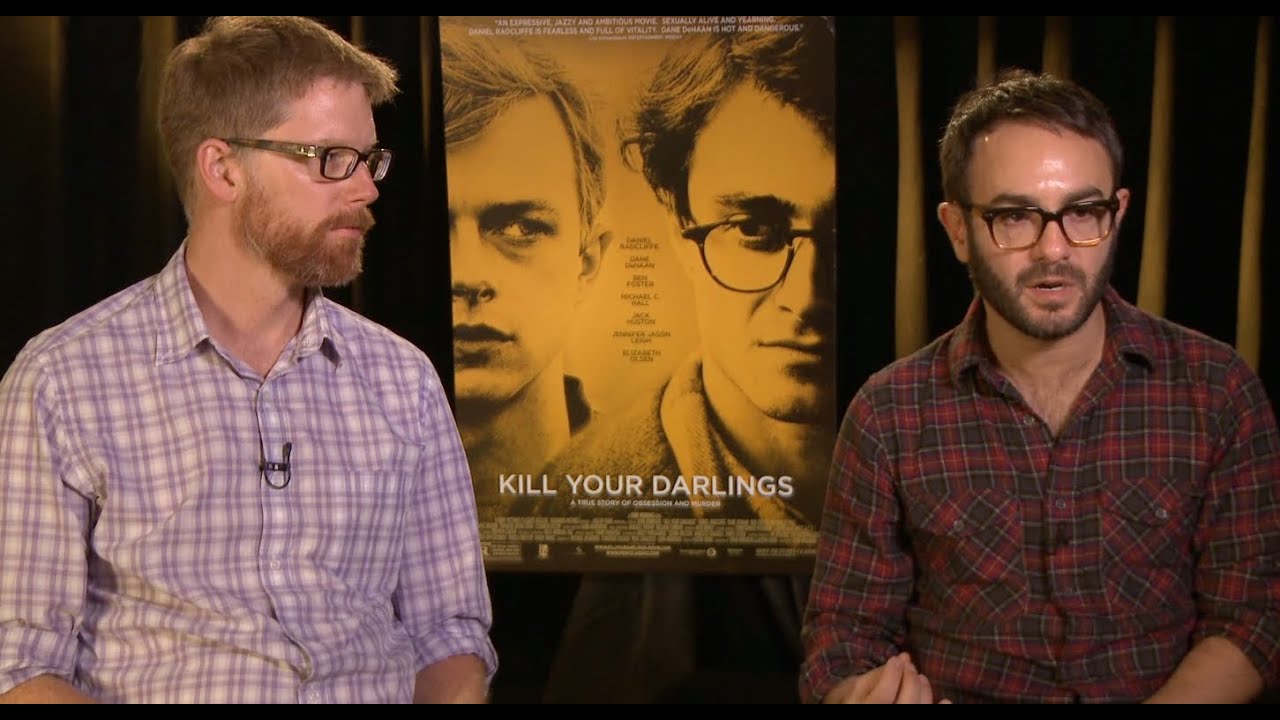
WRITER’S NOTE: This interview took place back in 2013.

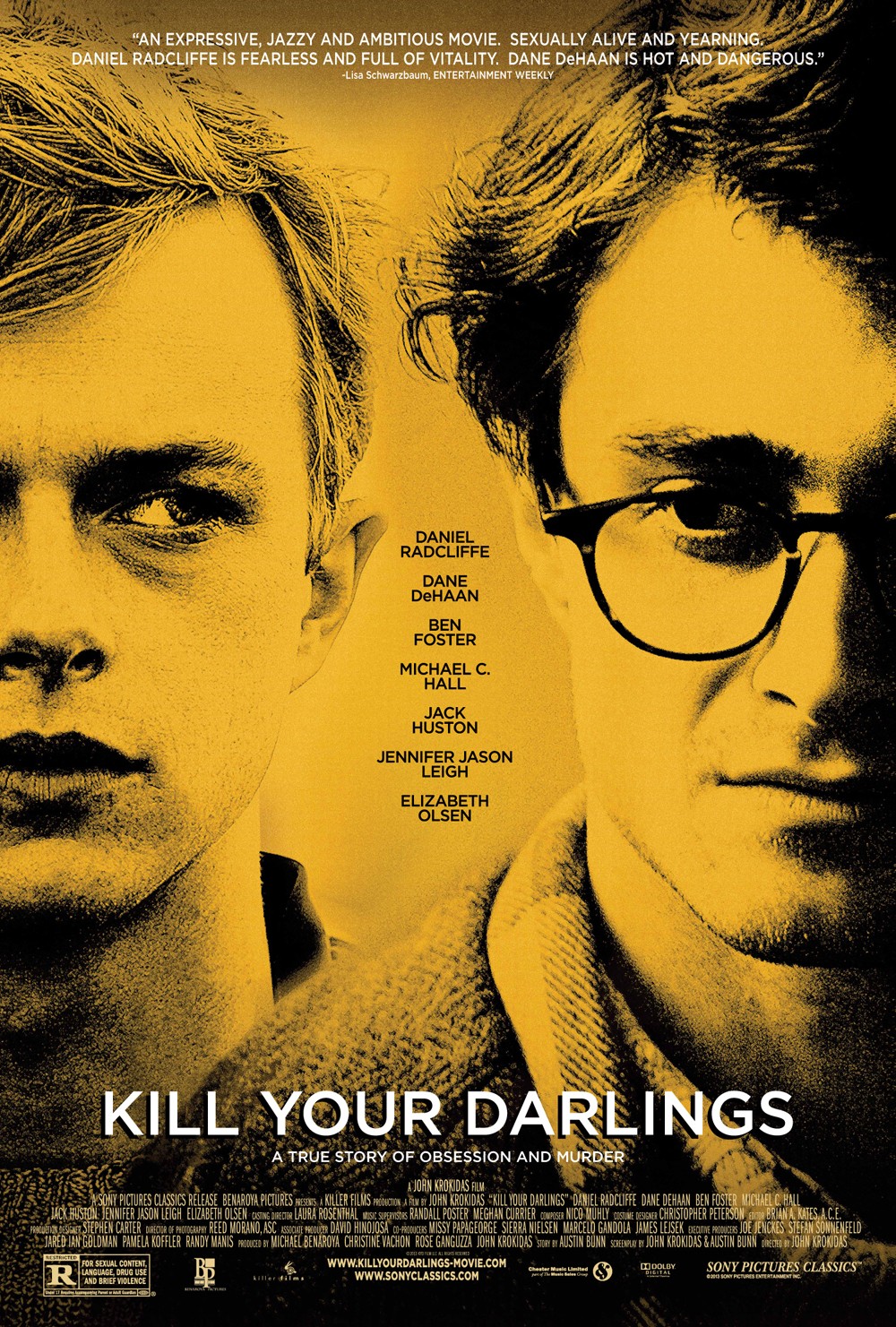
John Krokidas makes his feature film directorial debut with “Kill Your Darlings” which stars Daniel Radcliffe, Dane DeHaan and Michael C. Hall. The movie is about a murder that occurred in 1944 which brought three poets of the beat generation (Allen Ginsberg, Jack Kerouac and William Burroughs) together for the first time. Radcliffe portrays Ginsberg as a 17-year-old who is about to start college at Columbia University, and he ends up falling under the extroverted spell of fellow classmate Lucien Carr (DeHaan) who introduces him to the poets who would later bring a new vision to writers everywhere. It is when Carr murders his love David Kammerer (Hall) that their relationship starts to become unglued.

Krokidas co-wrote the script for “Kill Your Darlings” with his Yale University roommate Austin Bunn. A former magazine journalist, fiction writer and reporter, Bunn graduated from Yale and went on to get his master’s degree at the University of Iowa Writers’ Workshop. As for Krokidas, he later attended New York University’s Graduate Film Program where he made the short films “Shame No More” and “Slo-Mo.”

I got to hear how Krokidas and Bunn made the film under challenging circumstances when they appeared at the “Kill Your Darlings” press conference held at the Four Seasons Hotel in Los Angeles, California.
Question: What was the division of creative responsibility between you two like?

Austin Bunn: Probably like a lot of people in this room, I discovered the beats in college. I used to go to the campus bookstore and just track down the poetry collection, find Allen’s books and read them like they were some secret transmissions from the future version of myself. I was a closeted, young creative writer from New Jersey so Allen Ginsberg’s work meant the world to me. So, I had this really strong connection with Allen and of beat biographies and the history. I read a lot of the back catalog and I had come to John with the idea. So, in terms of the division of responsibility, I would write the first draft and then John would come in. The thing about John, as you will soon learn, he wanted to raise the emotional decibel level in every scene. John is one of the most riveting and vital and least hagiographic version of this story. We didn’t want to take the beats’ greatness as a given, so John sort of demanded that we write a really emotional roller coaster. Then we just went back and forth. John talks about it as the Postal Service, like the band version of producing a script. We were living in different cities at the time; I was at the University of Iowa Writers’ Workshop as a graduate student and John was in New York finishing film school.

John Krokidas: Austin wanted to do this as a play first. He was a playwright and a short story writer of some renown, and we were college roommates and we shared ideas with each other as college roommates and good friends do. But I, of course, started seeing the movie version in the back of my head and I had just gotten out of NYU film school and started convincing him that the play would be really flat and undramatic, but as a movie…

Austin Bunn: The Jedi mind trick!

John Krokidas: This would be amazing. But I would say I’m the structure guy I think, coming from NYU’s film program. I’m very traditionalist in terms of Sidney Lumet’s “find your spine,” and Austin is really wonderful with character and dialogue. If anything, he’s on a religious crusade against expository dialogue, and I would write these three paragraph monologues for each character expressing their emotion like that scene where Jennifer Jason Leigh finally turns to Allen to give him advice. I had a two-page monologue version and Austin crossed it all out (Austin laughs) and wrote the one line that’s in the movie, “The most important thing your father ever did was fail me,” which said everything.

Question: The movie is also very visual too because of the beats’ energy and such. How did you go about creating the look with cinematographer Reed Morano?

John Krokidas: I’m so proud of what we brought to this film. The movie is set in 1944 and it’s a murder story. Even in the writing process, I looked up and saw that “Double Indemnity” won Best Picture that year, and it was the year of “Laura” and “Gilda” and all these great American Film noirs. So, I said, “Why don’t we incorporate this even in just the fabric of the movie and start with the jail scene in a place of heightened tension flashback to more innocent times, and then build again to see whether or not these characters can escape or not escape their fate?” So, I started looking at noir style at first, but I thought an academic recreation of Film noir, who wants to see that? Going back to spine and theme, I thought what this piece was really about was young people finding their voice. So, what about going from conformity, the row houses of New Jersey and the pillars of Columbia, to nonconformity? And of course, where film noir went in the hands of the French was the New Wave. So I thought, “Okay well let’s start off with these controlled, composed, expressionistic-lit shots, and then as the boys go down the rabbit hole together, let’s take the camera off the tripod. Let’s get some jazzier free-form style.” So, I made this book of the 1940s. I had learned that Ang Lee, for “The Ice Storm,” did a 50 page book on the 1970s with colors, fonts and important historical events, you name it. So, I did that with the 1940s and then gave it to Reed. The great thing that I have learned on this is you can do all the academic treatises you want, but then you hire great people. She saw the goal post of what I wanted and then she showed me Jean-Pierre Melville’s films. She showed me films that meant a lot to her and then let kind of what I wanted filter through her own imagination. What I am amazed by specifically in her work is we did this movie in 24 days. Each scene was done in two hours or less, and she has the instincts to be like a documentary camera person and is able to light like that at the same time. We wanted to make sure this film felt relevant and contemporary as opposed to just being a traditional biopic.

Austin Bunn: (We didn’t want it to be) the greatest hits version of their lives.

John Krokidas: It was looking at Ryan McGinley photographs and contemporary, counterculture, young images of today and then finding what connected them to the 1940s. What was resonant in counterculture then and today at the same time.

Question: What was the direction that you were giving your actors? We were told that sometimes you would pull them aside for a more dramatic scene, but was there a consciousness you went into to direct the film and the actors? Were they any kind of specific kind of notes you gave them?

John Krokidas: Here’s the embarrassing story; Austin and I actually met freshman year because we were both acting in a production at Yale of “The Lion in Winter.”

Austin Bunn: Yes.

John Krokidas: Neither of us were the greatest actors in the world which is, I think, why we went into writing and directing. But I trained as an actor as an undergraduate and what you learn is that each actor has their own method and way. It’s whatever it takes for them to get the emotions to the surface. So, when I met with each actor that I cast, I would just simply ask them, “Have you trained? How do you like to work and what don’t you like?” Michael C. Hall gave me one of the greatest lessons in directing in which he said, “If what I am doing is not making you happy, don’t tell me that because that will make me self-conscious and it will make me think about what I’m doing. Just tell me to add whatever you want to what I’m doing.” That’s just a great lesson for life. Dan and I, when we were working together, we spent time before production (he was so generous and hard working on this) and he wanted to approach this like it was his first film which was very poignant to me. I said, “Would you like to try learning a new method and approach acting in a different style?” He said, “Absolutely!” So, with Dan, he’s so bright and in his head, and for the intellectuals Meisner works really well in focusing your action on what you are trying to do in the scene. Dane had trained extensively, and what he does is create a Bible for the character and does tons of research before production. Then he burns it and starts really becoming the character on set. Ben Foster (who plays William Burroughs) has something I’ve never seen another actor do which is, once we’ve basically got the scene up on its feet, he goes and he does the blocking of the scene by himself in the location several times. He calls it “the dance” because once he’s memorized the dance and knows the physicality (“I need to pick up the fork here, I need to put it down there”), he doesn’t have to think about it anymore and that’s completely freeing to him. So it’s like cooking this huge seven course meal where you have to get everything done at exactly the right time, but every plate needs a little bit of love in a different way. To me the greatest thing was being able to get this dream cast and then just to work with them to find how they like to work and what got the best out of them.

Austin Bunn: John had a really intuitive idea which was to keep the actors from reading past this point in the biographies, so none of the actors came in burdened by the mythology of who these guys would become. They were just 19-year-old kids. So, I think that was really smart and it released the actors from having to play the later decisions in their lives and the kinds of writers they would become. They just got to be young people, and that was a great relief I think for them.

John Krokidas: Yeah, and for us too as writers. I had a talk with Jack Huston once when he and I shared the same room and I’m saying, “Oh my god, I’m directing you as Jack Kerouac.” But we were like, “No. You are Jack who is a college student on a football scholarship who hates the other jocks, who just wrote a book which he thinks might be completely trite and he just wants to get out of college and have some real-life experience and join the war so he could begin to have real material to write his next book. That’s who you are.” That just liberated all of us.

Question: When writing the script, how much are you tied to the truth and how much are you allowed to take creative license?

John Krokidas: We did so much research for this. We felt we had to, and I think part of it’s our academic background because there’s so much in the biographies. There are so many biographies of them out there, but then also we would find different accounts online for example from David Kammerer’s friends. They said that that relationship between him and Lucien was never portrayed accurately and that Lucien actually kept coming back to David and David was asking him to end the relationship. And then we may have broken into Jack Kerouac’s college apartment together. We did the trick of pressing all the buzzers and then somebody let us in. But what’s interesting is Columbia students were living there and they had no idea that they were in Jack Kerouac’s apartment. So, we physically went to all of the locations in which this movie took place, and that just helped inform our writing process as well; getting to be able to visualize the actual spaces. Add to that, we went to Stanford University to the Allen Ginsberg archives. It wasn’t about the lack of material out there. If anything, it was about making sure that we really just focused on who they were up until the point which the movie takes place.

Austin Bunn: Just to add to that, the people that I know that have seen the film have been really surprised at how much is actually totally accurate. The day after the murder, Allen Ginsberg went to the West End Bar, “You Always Hurt the One You Love” was playing on the jukebox and he wrote the poem that ends the film. It ends with “I am a poet;” that is a line from August 20, 1944 so we worked really hard to weave it in. But like John was saying before, we didn’t want to do the dutiful, stuffy, every box checked kind of biopic that has been around for a while. We wanted to do something that felt more in line with the spirit of the beats that was more specific and honest and transgressive, and I hope we got there.

Question: Did you two have a specific goal of what you wanted to portray and what you wanted the audience to leave with either of the time or of the characters themselves?

John Krokidas: What I want the audience to leave with is that feeling of when we were 18 and 19 years old just like these guys were in the movie; when everything seemed possible and you knew that you had something important to say about with your life. That you wanted to do something different and unique and not just what your parents taught you, not just what school taught you, but you wanted to really leave your mark on the world. The fact that after the movie these guys actually did it and created the greatest counterculture movement of the twentieth century is amazing. I have had plenty of people come up to me after seeing the movie and said, “This movie made me want to be a better writer” or “this movie made me want to go back and start playing music again.” That to me means everything. That’s ultimately, deep in my heart, why I wanted to make this movie.

Austin Bunn: The pivot point was this murder. I loved Allen Ginsberg for his openness and his honesty, and to think that at one point in his life he was called upon to defend his best friend in an honor slaying of a known homosexual, the very thing that Ginsberg went on in his life to defy and radically create change about the idea of being in the closet and the shame around that issue, that contradiction was really exciting to us dramatically.

John Krokidas: You know this movie took, from the time that we started talking about this until the time that we are getting the chance to be with you all today, over 10 years to make. When I really think about it, the thing that kept me going and kept me wanting to tell this story is that there needs to be something that pisses me off at night. The fact that in 1944 you could literally get away with murder by portraying your victim as a homosexual, that pissed me off to no end. This isn’t a political movie and it’s one scene and it’s obviously what informed how Lucien Carr got away with murder, but for me that was the thing that kept me up all night that said, “No, I have to tell the story.”

Question: The movie has different kinds of music playing throughout it like jazz and contemporary music. Did you envision using different musical styles when it came to making this movie?

John Krokidas: I originally wanted a bebop jazz score similar to Miles Davis’ score for Louis Malle’s “Elevator to the Gallows” because the transition from swing to bebop at this time was exactly what these guys wanted to do with words; to go from rhythms to exploding them into something beautiful. My music supervisor, Randal Poster, said to me, “John put down your academic treatise, put down your paper. Go make your movie. Your child’s going to start becoming the person that he or she wants to be.” So I went and I made my movie, and then I put jazz music on the film and it didn’t work at all. And then I went and did only period accurate music and it felt like Woody Allen’s “Radio Days” which is a great movie but it’s not the young rebellious movie about being 19 and wanting to change the world that we wanted to make. So, I actually went back to the playlists that Austin and I used a while writing this movie and I used Sigur Rós and stuff that was timeless but contemporary, and it brought the movie to life. Then I realized that the composer Nico Muhly had arranged all of those albums and worked with Grizzly Bear and Björk and other people that we were using as temp track. So, we got the movie to Nico and just thankfully he loved it. Now that I knew that I had contemporary music in a period film, then we get to that heist sequence. I had heist period music on it, it was so corny. The sequence didn’t work, it didn’t have any stakes to it, and I can academically tell you when the beats come on, they led to the hippies which led to the punks, and the punks led to Kurt Cobain and the 90s, etc. But the truth is that while I can intellectualize it, you go with what’s visceral and what feels honest and true to you. For me, the biggest lesson in making my first film is to do all of your homework, do all your research, know what you’re doing, but then don’t be afraid to get out of the way if your movie starts to tell you what you should be doing.

Question: How did you decide on what literary quotes to put in, and how did you work with the actors in establishing the cadence and the elocution on those?

Austin Bunn: What a great question! If you know any of the beat history, this new vision was real for them and they have written volumes about it, none of which makes any sense. We couldn’t make heads or tails of it.

John Krokidas: Do you all remember your journals when you were 20 years old or those conversations you had at three in the morning with other college students? We got to read their version of it, and there’s a reason that we hide all of our journals and don’t let them see the light of day.

Austin Bunn: It was challenging. With the uninhibited, uncensored expression of the soul, that’s actually a credible quote directly from the Ginsberg new vision manifesto. So in some ways we knew we had to distill some of that material from the Ginsberg journals to help make the argument for how valuable this manifesto was and the irony honestly of what transpires in the plot which is the very thing that Allen’s called to do which is to create this censored version of history. But in terms of the poetry itself, it was really challenging because as we all know there are movies about poets and writers where recitations happen and they are really flat and they can be corny and there’s a time where you tune out of the movie when you’re waiting for the poetry to end. Specifically, I think of Allen’s first poem that happens on the boat. We were really challenged to find a poem that would speak to audiences but was genuinely an Allen Ginsberg poem written in his voice. So what we had to do was really channel Allen. His early work is quite rough and burdened by trying to impress his dad and his professors. John had the concept of this isn’t a poem that he’s just reading to impress people, it’s a poem he’s reading to Lucien Carr. The audience knows that, you know that and Lucien finds it out on the boat at that moment. That really gave me permission to kind of rethink what the poem was going to do and how we would make it, so we came upon Allen’s method which was kind of magpie; stealing from the American vernacular and going out and finding common speech and repurposing it, creating this Whitman-esque inclusion. So you hear in the poem things that you’ve already heard in the film just like Ginsberg did himself. Things like Allen in wonderland is reworked in the poem, unbloomed stalwart is the very thing that David said to him at the party. So we’re kind of hopefully paying off not just a poem that is emotionally powerful, but also something of the method that Ginsberg would use for the rest of his life.

John Krokidas: Radcliffe was such a hard worker. While he was on Broadway doing a musical, we would meet once a week for two months before even preproduction and rehearsals began to work on the accent and to work together. I have him on my iPhone reading “Howl.” We didn’t look at the later recordings, we looked at the earliest vocal recordings possible of Allen Ginsberg to make sure that we weren’t capturing the voice of who he became, but his voice at that time and what his reading voice was like. To be honest, it’s just really telling the actor, “You’re not performing a poem. You are letting Lucien know that he is loved with this poem and that you love him and that you can see inside him.” It’s playing the emotion underneath the poem which was the direction.

Question: What does it do for you when all the main characters are gay? Normally you got the female characters who can be a love interest but they are not going to be a rival. Usually, even now in films and in life, there is a separate role where as if you are all the same gender, you can all be anything to each other.

John Krokidas: I think this is a movie with every character is discovering what their sexuality is (gay, straight, bi or all over the place), and more importantly whether or not they are worthy of being loved. I personally don’t know if Lucien Carr was straight or gay, and to me it’s irrelevant because I have seen this relationship play out amongst gay people I have known so many times where an older man who is gay and a younger man of questionable sexuality develops such a close bond. The stereotype I think would be is that the young man had an absent father figure or finds the older man’s confidence and just the care and nurturing qualities of them very attractive. What happens though is that those two get so intimate that ultimately there’s nowhere else to take the relationship but sexual, and when that happens then the power position in that relationship twists and the younger man suddenly realizes that he holds the power because he’s the sexually desired one. That’s where a lot of conflict ensues. Whatever you read about that relationship between Lucien and David, everyone knew that they were codependent. Everyone knew it was toxic and going to end badly. Nobody knew it was going to end in murder.

Austin Bunn: I think a lot of the biopics we see are kind of denatured of their sexual qualities and the edginess of the relationships in them. So, I think we were trying to do something that restored some of that ambiguity, lust, desire and confusion that is genuinely in the beats’ history. We were not making that up.

Kill Your Darlings” is available to own and rent on DVD, Blu-ray and Digital.

‘Doctor Strange in the Multiverse of Madness’ – A Mixed Bag at Best

With Sam Raimi returning to Marvel Movies for the first time since “Spider-Man 3,” I honestly got really excited. With a title inspired by one of the many H.P. Lovecraft stories out there, and a look which makes this film seem like “The Evil Dead” as if it were produced by Kevin Feige, this “Doctor Strange” adventure looked to be more than the average superhero flick as it ventured into the horror genre, something we have not seen a Marvel movie do recently, if ever before. Plus, I was looking forward to the Bruce Campbell cameo you know is coming and to see where Raimi was going to put his classic 1973 Oldsmobile Delta 88 car on display as it has been featured in every one of his films. Come on, you know that car is going to make an appearance at some point.

Well, what stunned me about “Doctor Strange in the Multiverse of Madness” was how much of Raimi’s visual flair ended up onscreen here. When it comes to Marvel Movies, I assume they are usually made by committee to where the director does have some say, but the producers usually get final cut regardless. But watching this one made me realize how much leeway Feige and company gave this celebrated filmmaker, and that’s even though said leeway only goes so far. As for the screenplay, well, just read on.

I went into this “Doctor Strange” sequel believing it would take place after the events of “Spider-Man: No Way Home,” but some have said this one is actually a prequel to it. Is it? I don’t know and would love it if someone could give me a definitive answer on this. What I can tell you is that it starts off with Stephen Strange and America Chavez (played by Xochitl Gomez) running away from an ever so fierce demon while trying to find the Book of Vishanti, this movie’s answer to the Necronomicon. But it is soon revealed that Stephen was just having a bad dream, or was he?

America then appears to Stephen again while he attends the wedding of his beloved, Christine Palmer (Rachel McAdams), to someone other than him. After defeating an octopus demon with one eye with the help of Sorcerer Supreme Wong (Benedict Wong), they learn America is being hunted by demons because she has the power to travel through the multiverse in a way few others can only hope to.

It should be noted that this “Doctor Strange” sequel went into production without a finished screenplay, and it shows. Trying to explain everything which goes on here is very difficult as the number of universes these characters travel through is endless to where I am surprised no one had totems like those “Inception” did. Surely everyone here would eventually wonder if they were actually in the correct universe, right?

When it comes to the visual effects, I am back and forth on them. The opening featuring a lot of CGI to where I found myself not being the least bit enthralled at the action. As the show went on though, the effects became quite immersive and very clever, and there’s an absolutely brilliant scene in which Stephen and America find themselves flying through different universes which vary in colors, depth and weather. It reminded me of when Cameron Diaz chased after Catherine Keener while traveling through the mind of a celebrated actor in “Being John Malkovich.” With creativity like that, I wonder how far the imagination can stretch.

And yes, the actors are all terrific here as one would expect. I don’t even want to think about what other actors could possible inhabited have inhabited the role of Doctor Strange any better than Cumberbatch. While this is the second film where this Marvel character has the lead, Cumberbatch has already played this doctor in various other MCU adventures to where he can play a role like this in his sleep. With a simple move or inflection of his voice, this Oscar nominated actor can communicate so much even without uttering a single word.

Benedict Wong offers strong support throughout as, like Cumberbatch, is not about to let any of the visual effects upstage him in the slightest. Xochitl Gomez excels at playing a young adult who has more to deal with than the average teenager as she navigates through puberty while being afflicted with a special superpower. Rachel McAdams reminds us of what a pleasing presence she can be as Christine Palmer, the love of Stephen’s life who got away from him because superheroes can’t always have loving relationships. And there’s no leaving out the great Michael Stuhlbarg who portrays surgeon and Stephen’s one-time colleague, Nicodemus West. It doesn’t matter that he doesn’t have a lot of screen time; Stuhlbarg makes every single second he appears onscreen count for all they are worth.

But for me, the best performance in this “Doctor Strange” sequel comes from Elizabeth Olsen who returns as Wanda Maximoff, better known as the Scarlet Witch. While Wanda may have been good in the past, we see here going rogue here as she attempts to reunite with her children, and these are kids who may not actually exist if you know what I mean. While this particular character could have easily turned into a one-dimensional villain whose selfishness comes at everyone else’s expense, Olsen gives Wanda an emotional depth which makes her threat to those around her all the fiercer. If there is one reason to check out this sequel, it is for Olsen.

After writing all of this, I imagine you must wonder why I have such mixed feelings about this MCU film. Simply put, it comes down to the inescapable fact that the screenplay needed another draft or two. I would have liked it if there were some sort of Thomas Guide available for the average audience member as the story is hard to navigate through to where it is difficult to become emotionally involved in everything going on. Perhaps it is best to view the previous events which took place in both the first “Doctor Strange” movie and “Wandavision” before stepping into this latest chapter as it will help ground you in every single event going on here.

Also, the pace drags in ways it should not, and taking this into account is especially frustrating. While many complain about the average movie lasting around two hours and 30 minutes, and this is not counting the half hour or so of commercials we are forced to experience at our local AMC theater, this one only lasts 126 minutes, and yet there were still moments where I found myself almost falling asleep. This should be a sign of when something or anything drags slower than your ordinary snail as we live in an age where we have no choice but to pick up the pace.

When it comes to “Doctor Strange in the Multiverse of Madness,” I cannot help but describe it as a near miss. While there is a lot here to admire, the final cut is undone by a screenplay which needed another draft or two before production began. While some filmmakers can get away with giving us an enthralling motion picture which everyone involved made up along the way, this one does not quite qualify. It really sucks to say this, but there you go.

As for the post credit scenes, one features an Oscar-winning actress who I did not expect to see here, and the other features an actor from many cult films pointing out the bleeding obvious. I hope you enjoy what they have to offer.

* * ½ out of * * * *

Elizabeth Olsen on Playing Zibby in ‘Liberal Arts’

WRITER’S NOTE: This article was written back in 2012.

After playing an escapee from an abusive cult in “Martha Marcy May Marlene” and a young woman terrorized at her vacation home in “Silent House,” actress Elizabeth Olsen finally gets to lighten up a bit in the comedy drama “Liberal Arts.” In the movie, she plays Zibby, a 19-year-old college student who ends up falling for 35-year-old college admissions officer Jesse Fisher (Josh Radnor, who also wrote and directed it) over their love of literature. Critics have called Olsen’s performance in “Liberal Arts” enchanting, radiant and luminous.

Having seen Radnor’s last directorial effort “Happythankyoumoreplease” which she really enjoyed; Olsen was very interested in working with him on “Liberal Arts.” Her audition for him consisted of reading through every single scene their characters had together in the movie. She recalled it being a lot of fun to “just sit on the floor and read through the scenes with him,” and she really liked the way he wrote Zibby’s dialogue.

For Olsen, the role of Zibby offered a nice change of pace as she had just finished her third psychological thriller. In this movie, she got to play a character who is wise beyond her years and excited about being alive. It also gave her the opportunity to play someone whom she felt was closer to who she was.

“I just always wanted to rush things, grow up sooner, couldn’t understand why someone older couldn’t make a change,” said Olsen. “There’s something really honest and great about her. Also, I wanted to say those words really badly. The words on the page were so much fun to say out loud. That’s a really simple thing to say about wanting to do a script, but I feel like that rarely happens.”

Olsen herself is still a college student at New York University, and she still has a couple of more classes to go before she graduates. Like Zibby she shares a love of learning, and this love came to inform her character deeply. To hear her talk, Olsen has always enjoyed reading literature like Zibby does.

“I went to a really great high school and I took a few AP classes in literature and language and things like that,” Olsen said. “The only type of writing I like to do or enjoy doing is academic writing, so I’m already inherently that type of person. I’ll still remember that my senior year of high school I wrote an essay on Joseph Conrad’s ‘Heart of Darkness’ that I’m still proud of to this day, so I’m already kind of a nerd when it comes to literature and theory. I wish I could have more of that in life, but I don’t because I’m always reading scripts or things to prepare for movies when I’m reading.”

Elizabeth Olsen not only has college graduation to look forward to in the near future, but she also has some exciting movies in store for her including Spike Lee’s remake of “Oldboy.” She has given us a number of wonderful performances so far and, after watching “Liberal Arts,” it is clear she still has many more to give.

SOURCES:

Matt Joseph, “Interview with Elizabeth Olsen on Liberal Arts,” We Got This Covered, September 13, 2012.

Christopher Rosen, “Josh Radnor & Elizabeth Olsen on ‘Liberal Arts’ & Why Being Earnest Is OK,” Huffington Post, September 12, 2012.

Adam Chitwood, “Elizabeth Olsen Talks LIBERAL ARTS, Reading as Entertainment vs. Enrichment, and More; Reveals Spike Lee’s OLDBOY Starts Filming Next Month,” Collider, September 11, 2012.

‘Avengers: Infinity War’

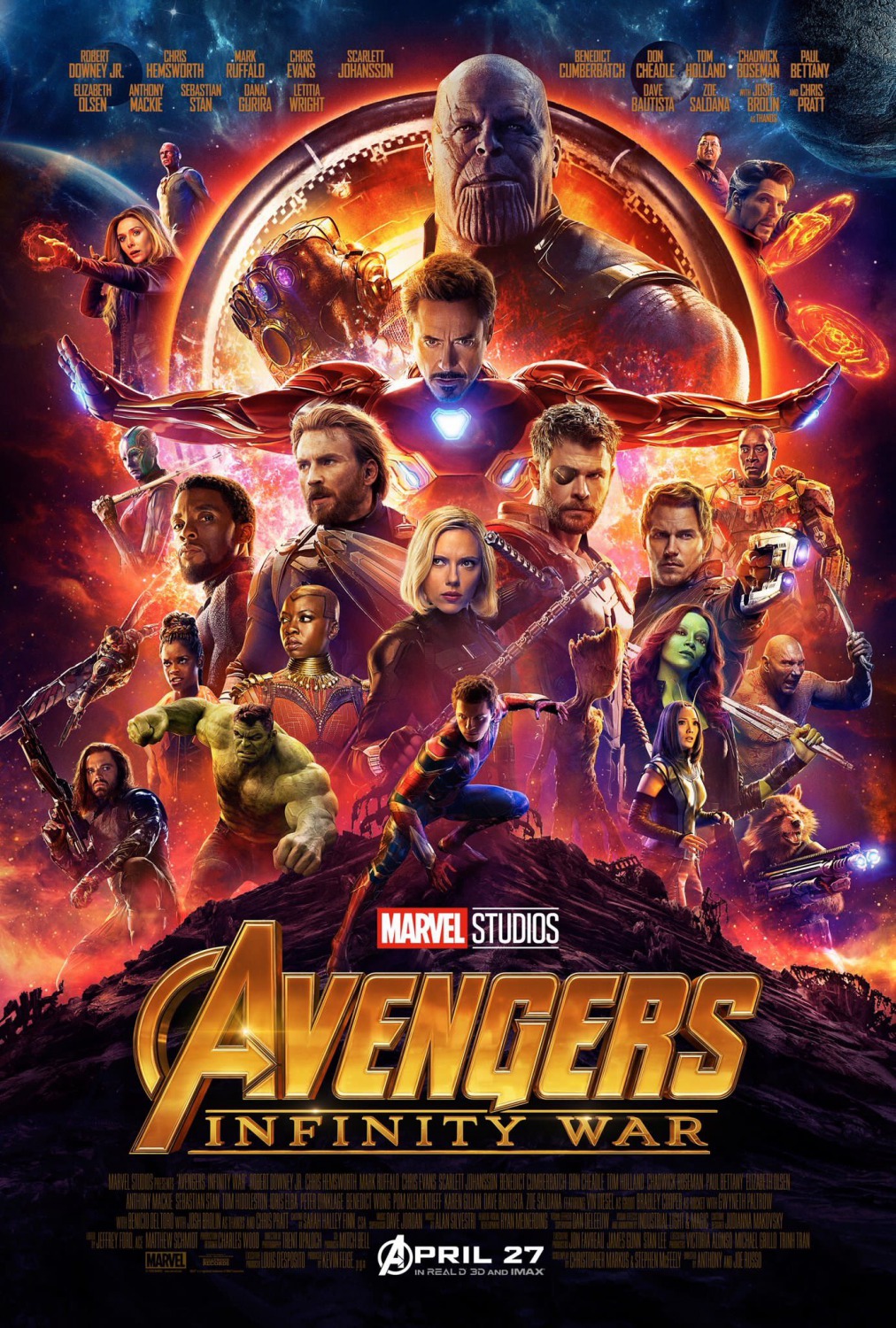
Avengers Infinity War poster

You know how many advertisements for movies say how “everything has led to this” from time to time? Well, for once, this statement makes perfect sense with “Avengers: Infinity War” which is, thus far, the biggest Marvel Cinematic Universe movie yet as it gives us their most threatening foe yet in Thanos. This particular Marvel character, an intergalactic despot from the planet Titan, has been hinted at in post-credit sequences from Marvel movies past, and now he is here to take center stage in a never-ending franchise which typically sees its greatest heroes get the majority of attention.

Thanos longs to get his hands on the Infinity Stones, six incredibly powerful, not to mention beautiful, gems which will allow him to impose his will on all of reality. Clearly, this is a character determined to gain unlimited power at any cost, and he is determined to re-balance the universe in the process. Thanos is looking to create his own version of Year Zero, and this means many characters will die whether we want them to or not.

Not only does “Avengers: Infinity War” arrive with a wealth of anticipation and expectations, but we also come into it with a sense of dread as we know some of our favorite characters may not survive this particular adventure. Then again, these Marvel movies do exist within the science fiction genre, and you can never be sure if anyone can ever truly stay dead. Spock died in “Star Trek II,” but he did come back to life in “Star Trek III.” Knowing “Avengers: Infinity War” will get a sequel, I can’t help but believe we will see some of these superheroes again. Besides, many of them have sequels in pre-production, so their fate is not exactly sealed. Who will live and die for certain? Well, we will find this out in the summer of 2019.

Directors Anthony and Joe Russo, both responsible for the “Captain America” sequels which rank among the best of the MCU, have a near impossible task with this “Avengers” movie as it features dozens upon dozens of main characters we have been introduced to in the past. The fact these characters are not all equally represented here is not a surprise, but what surprised me was how well the Russos were able to balance things out to where it felt like everyone had a good dose of representation throughout. Perhaps certain characters get more screen time than others, but I was too wrapped up with what was going on to really analyze this movie all too closely.

It is also worth noting how while these characters all inhabit the same cinematic universe, they do exist on different tonal levels. Some Marvel movies like “Iron Man” and “Thor” have their moments of levity, but they are generally serious adventures as their heroes are faced with obstacles both physical and psychological. Then again, there is “Guardians of the Galaxy” which came out at a time where Marvel movies in general were threatening to become as deadly serious as anything coming out of the DC Comics Extended Universe. James Gunn’s film of Peter Quill and his merry band of Han Solo-like bandits proved to be a comedic blast from start to finish, and it proved to be much lighter than the average superhero/comic book movie.

I bring this up because “Avengers: Infinity War” could have ended up being a very uneven motion picture in terms of tone as John Krasinski’s “The Hollars” was (granted, Krasinski did score a rebound with “A Quiet Place,” but still). The Russos, however, make everything blend together in a satisfying way to where nothing felt completely off-balance, and this is very commendable.

The way I see it “Avengers: Infinity War” gets off to a good start, but things feel just a little bit off to where this movie threatens to be more episodic than its filmmakers intended. But as it goes on, things improve to where the Avengers are given a real depth which reminds us they are as vulnerable as anyone else. Sure, they may be endowed with tremendous powers, but when faced with their greatest foe, they become as mortal as anyone else, and this makes their latest adventure all the more perilous.

There are many performances worth noting here, and this Marvel movie is overflowing with strong ones which would take forever to point out. Robert Downey Jr. continues to revel in the evolution Tony Stark/Iron Man as he gives his most soulful performance yet as this iconic comic character which got the MCU off to such a strong start. Zoe Saldana gets to take Gamora to an even more epic level as her character has a much closer relationship to Thanos than she would like to admit. The same goes for Chris Pratt who, as Peter Quill/Star Lord, finds even more depth than in the previous “Guardians of the Galaxy” movies to where it makes me look forward to the third movie in that franchise more than ever before.

But the one performance worth singling out above all others is Josh Brolin’s as Thanos. This could have been the typical one-dimensional antagonist bent on obtaining the most power any individual could ever obtain, but the “No Country for Old Men” actor makes him into an almost tragic figure who has yet to discover what price he has to pay for his quest for power, and it is a heavier one than he could ever expected. As a result, Brolin forces this character into the center stage in a way audiences could not have easily expected, and the final scene he has is a frightening reminder of the prominence Thanos has in the realm of Marvel Comics. Seeing this makes me believe no other actor could have portrayed Thanos as effectively as Brolin does here.

“Avengers: Infinity War” ends on a cliffhanger, and it feels like a bold move on the part of the Russo brothers and Marvel Studios to do so as it concludes on a note which truly left me breathless. We do get the typical post-credits sequence and the message of how so-and-so will return, but both these things take on a different meaning to where you almost wish this Marvel movie ended without them. In a year from now we will see the follow up to “Infinity War,” but until then we will be reminded of how our heroes will not always be there for us. Can they return for another round? We have yet to find out.

* * * ½ out of * * * *

Godzilla (2014)

godzilla-2014-poster

The stench which emanated from the sheer awfulness of Roland Emmerich’s “Godzilla” has haunted me ever since I saw it on the big screen in 1998. For a time, it dampened my spirits in terms of where movies were headed as I was afraid many more of them would be dumbed down like Emmerich’s movie was. Had it been an even bigger hit, I feared more summer blockbusters would look exactly like it; filled with lame one-dimensional characters and special effects which look no different from the video games we play at home. But in the end, it was so critically reviled that even Toho, the company that owns Godzilla, looked at Emmerich’s version of the monster as a separate, stand-alone character whom they renamed Zilla. It was if they were saying, “Oh no, that was so not Godzilla. That was a cousin or a step child or maybe the product of a one-night stand.”

But now that stench has vanished as Gareth Edwards has given us his version of “Godzilla,” and it makes for one of the most entertaining movies of the 2014 summer movie season. Instead of having this enormous Japanese monster chase after characters who look like they were part of a rejected sitcom pilot, he stays true to the style of the Toho series of Godzilla films and manages to weave in some commentary about nuclear power. Just as the original “Godzilla” served as a metaphor for Hiroshima, this one doesn’t dare hide away from what happened in Fukushima where nuclear accidents occurred after the massive earthquake and tsunami which occurred there.

The movie starts off with the terrifying destruction of a nuclear power plant, one which ends up dividing a father and his son. We then move to several years later when Ford Brody (Aaron Taylor-Johnson), an explosive ordnance disposal technician in the US Navy, comes home to his wife Elle (Elizabeth Olsen) and their son after a long tour of duty. Their reunion, however, is cut short as Ford gets word his father, nuclear physicist Joe Brody (Bryan Cranston), has once again been arrested in Japan for trespassing into areas blocked off to the general public as the area surrounding the power plant isn’t all that different from Chernobyl when it suffered a meltdown.

Joe is still convinced the power plant accident was really a cover up for something, and he and Ford come to discover what’s left of it has been converted into a laboratory of sorts. Scientists led by Dr. Ishiro Serizawa (Ken Watanabe) and Dr. Vivienne Graham (Sally Hawkins) reveal they have been housing a MUTO (Massive Unidentified Terrestrial Organism) and are trying to keep it contained by giving it doses of radiation. But, of course, all hell breaks loose when the MUTO breaks free of its captivity and heads out to sea, and it is then we learn another MUTO (this one a female) has been held in the United States and has also escaped and quickly laid waste to Las Vegas. Like Natasha Henstridge’s character in “Species,” she is looking to start a big family with offspring which will surely destroy all of humanity, and it’s only a matter of time before she finds her MUTO mate. Clearly, safe sex is not on their agenda.

This is where the iconic Godzilla comes in. Now in the past, this gigantic creature has been portrayed as an enemy to all of humanity and as an antihero who looks to take down any other monster who foolishly thinks it can defeat him. But in Edwards’ movie, Godzilla is really the good guy who, as Dr. Serizawa puts it, is here to “restore balance” to the world, and he doesn’t even bother the battleships which sail alongside him as he swims from one country to the next. We all know Godzilla will end up destroying a lot of expensive real estate which will cause many insurance companies to go bankrupt, but we’re still on the monster’s side as we know the military won’t have enough firepower to bring down the MUTOs.

Edwards takes his sweet time in revealing Godzilla to the audience, and we don’t really get a good look at him until almost an hour into the movie. When he does finally appear onscreen and let out the biggest of roars anyone has ever heard, the audience I saw this movie with broke into a tremendous applause. This is the fiercest Godzilla has looked in many years, and the way he towers over the tallest of buildings had me in awe. This is the way Godzilla should look and feel.

One of the many problems I had with the 1998 “Godzilla” is it never felt like I was watching a real monster on the big screen. It felt more like I was watching a big special effect to where the creature didn’t even fill the least bit threatening. But in 2014’s “Godzilla,” the creature looks and feels real to where I kept praying the human characters would keep themselves from standing underneath its feet. The thought of being crushed by a creature that big is horrifying.

As for “Godzilla’s” human element, it’s not altogether strong, but I still liked how the characters came across as relatable even if they were at times clichéd. I also have to give the screenwriters credit as the movie starts as one thing but surprisingly turns into something else. Just when I thought I knew what kind of movie this “Godzilla” was going to be, it continued to surprise me as it went along. Yes, we all know how things will end, but getting there proved to be more fun than I expected.

It also helps there is a terrific cast of actors to keep us emotionally involved in the characters before and after Godzilla makes his grand entrance. You can never go wrong with Bryan Cranston whether it’s “Breaking Bad” or anything else, and he makes his character very empathetic when he could have been easily laughable. As for Aaron Taylor-Johnson, I almost didn’t recognize him after getting so used to how he looked in those “Kick Ass” movies, and he does good work portraying the typical heroic military character we always see in “Godzilla” movies. Ken Watanabe remains a tremendously gifted actor, and even though I thought stared in horror one too many times in this movie, he is a very welcome addition to this cast. And then there’s David Strathairn who plays Admiral William Stenz, and he can always be counted on to give the military leader the gravitas and humanity a character like this deserves.

As for the female characters, their roles are a bit underwritten and I didn’t get to see as much of them as I would have liked. Still, you have actresses like Elizabeth Olsen, Juliette Binoche and Sally Hawkins making them into memorable characters when they could have been ones who were easily forgettable.

This “Godzilla” does have its problems, and there are times I wished Edwards and company had injected just a little more humor into the proceedings. Also, the big fight between Godzilla and the MUTOs never seems to come soon enough. There’s a moment where it looks like the fight will begin, but then a door closes on the characters and on our view of the monsters, and that was really frustrating. The human characters may have wanted the door shut, but everyone in the audience was clamoring for it stay open so we could see one enormous mutated creature beat the crap out of another. And yes, there probably are some plot holes and gaps in logic in the story, but I really didn’t care. You don’t always go to these movies expecting a whole lot of logic anyway.

What makes this “Godzilla” work is how it is clearly made by filmmakers who have a great love of monster movies. Edwards, whose previous directorial effort was British science fiction film “Monsters,” has talked about just how much he loves those kinds of movies, and he does an excellent job of making Godzilla a truly terrifying force of nature. After being absent from the big screen for over a decade, it is great to see this iconic monster make such a tremendous comeback.

I also got to say watching “Godzilla” makes me really happy that I do not work for an insurance company. Seeing all those destroyed buildings and roads, I can see claim adjustors going nuts as they field one phone call after another regarding totaled Hondas, decimated condos and bridges which now really lead to nowhere because they’ve been destroyed. You can bet no one’s going to take any guff from someone who tells them their insurance policy doesn’t cover attacks from giant mutated monsters!

* * * out of * * * *

Save

I Saw The Light

I Saw the Light movie poster

Watching “I Saw the Light” reminded me of when I saw Oliver Stone’s “The Doors.” Both movies have a great cast, a lead actor who perfectly embodies an iconic singer, and scenes which vividly bring to life the classic songs of the artists. At the same time, both movies keep their main subjects, in this case country singer Hank Williams, at arm’s length to where we come out feeling like we never really got to know them. Considering the talent involved, this particular music biopic proves to be a major disappointment.

Writer and director Marc Abraham, whose previous film was “Flash of Genius,” eschews Hank’s childhood and goes straight to when he married Audrey Sheppard, a divorcee and single mother. They look like the perfect couple, and this is especially the case when you consider the palpable chemistry between stars Tom Hiddleston and Elizabeth Olsen. But like many biopics, we know everything is heading downhill for these two, and Hank’s life got cut short by alcoholism and a painful medical condition. He was only 29 years old when he died, but he looked much, much older.

The movie gets off to a wonderful start as we see Williams singing one of his most famous songs in a sequence which is beautifully lit by the brilliant cinematographer Dante Spinotti. We are instantly hooked as the country icon’s lyrics capture our attention right away, and it makes us look like we’re in for quite the biopic. Unfortunately, this proves to be its high point as nothing else ever measures up.

One of the big problems with “I Saw the Light” is it is so sloppily edited to where it’s hard to tell what part of Hank’s life we are looking at. It goes from one section of his life to another before we can ever fully digest what is going on. This makes the movie very confusing, and it keeps us from getting to know Hank and the other people in his life more intimately. I felt like I never really understood what fueled his music, and he became the kind of person who is not at all fun to hang out with.

Also, the movie feels undercooked to where Abraham has his cast of actors underplay every single scene they appear in. Nothing ever comes to life in the way it should, and everything in “I Saw the Light” eventually becomes an exercise in tedium. It’s bad enough we never get deeper into Hank’s psyche, but to see this story portrayed in such a passionless way makes this whole project come across as an unforgivably missed opportunity.

“I Saw the Light” does, however, have Hiddleston as Hank Williams, and his performance is in some respects amazing. We all know him for playing Loki in the “Thor” and “The Avengers” movies, and at first he seems like an odd choice to play the man who made “Lovesick Blues” such an unforgettable song. But he succeeds not only in mastering Hank’s accent, but in getting the audience to feel the songs as much as he does when he sings them. That’s right, Hiddleston does his own singing here, and this makes his work here all the more admirable.

I was also impressed with Olsen’s performance as she makes Audrey perhaps the only human being who could possibly deal with Hank’s alcoholism and womanizing. Watching her here makes one realize what a powerful actress she can be, and she brings this movie to life in a way others are unable to.

As for the supporting characters, they are given short shrift and serve little purpose other than to further Hank and Audrey’s exploits. Cherry Jones, a tremendous actress, is wasted here as Hank’s mother Lillie as she has almost nothing to do other than sneer at any woman who grabs her son’s immediate affection. Bradley Whitford makes a bit of an impact as Fred Rose, the man who helped Hank rise to stardom, but Fred’s contributions to Hank’s career are made to feel smaller than they were. Maddie Hasson fares better as Billie Jean, the young woman who eventually becomes Hank’s second wife, and it’s a shame we didn’t get to see more of her here.

For what it’s worth, “I Saw the Light” did give me a good appreciation of Hank Williams’ songs. I have never been much of a country music fan, but the movie made me see why his music struck such a strong chord in so many people. Hank understood the pain of love in a way others didn’t want to experience firsthand, and it was not hard to connect with the feelings he so deeply expressed through music.

Still, the movie never digs deep enough into his life, and what results is a inescapably frustrating cinematic experience. This could have been one of the best biopics of recent years, but the filmmakers treat their main subject with kids’ gloves to where he feels like a complete stranger from start to finish. Coming out of “I Saw the Light,” I wanted to read more about Hank Williams on Wikipedia among other places on the internet as there’s got to be much more information on him there than what we got here.

Copyright Ben Kenber 2016

* ½ out of * * * *