Exclusive Interview with Dana Ben-Ari on her Documentary ‘Breastmilk’

breastmilk-documentary-poster

The documentary “Breastmilk” marks the directorial debut of Dana Ben-Ari, and it deals with a subject we think we know a lot but really don’t: breast feeding. It follows first-time mothers of different ages and backgrounds as they deal with the breast feeding process in various ways, and it documents the successes and struggles they are forced to endure. While some are pro-breast feeding, others find themselves relieved at not having to go through with it. But throughout “Breastmilk,” Ben-Ari never judges the families and prefers to present their stories as objectively as possible. Sure, there are a number of instructional videos, books, experts, lactation experts and do-it-yourself guides you can find on YouTube, but there really hasn’t been a film which explores real people going through this process before this one.

I got to speak with Ben-Ari while she was in town to do press for “Breastmilk,” and I congratulated her on making a documentary which will appeal to both women and men. It certainly promotes a lot of discussion on breast feeding, and it will be interesting to hear what people who see this documentary have to say about it. We talked about what drew her to make “Breastmilk,” how she went about choosing its participants, what surprised her most about the making of it, and the importance of including gay couples in this debate as well.

Ben Kenber: What was your main inspiration for wanting to make this documentary?

Dana Ben-Ari: Well I am a mother myself and I am pro-breastfeeding, and I’ve seen many women in many families struggle and go through these similar experiences. I thought that this would be fun and interesting to explore on camera because I think that it is part of a larger conversation around feminism, and I thought that voicing and making these experiences visible would be very helpful and important.

BK: In regards to the people who participated in this documentary, how did you go about selecting them?

DBA: We posted various flyers and we posted on parent sites and groups and word-of-mouth and friends. We had an overwhelming amount of emails and stories shared, and then we realized that we wanted to find pregnant women who were carrying their first child so that we could have a more immediate first time experience. We started with that, and then I wanted to have a few other families participate in the conversation because I thought that families with slightly older kids, as you see sprinkled throughout the film, just provide a little bit of a different perspective than the young families who are going through it for the first time. That’s how we came out with that balance.

BK: Have you kept in touch with the participants since you finished making this documentary?

DBA: Yeah, a few of them came to one of the Saturday night screenings and then the Sunday screening. We’ve been in touch. A few people have moved out of New York, but the ones in New York try to come to the screenings when they can.

BK: Were there any really big surprises while you were making this documentary?

DBA: I learned a lot about filmmaking because this is my first film, so that was quite interesting. I had a great cinematographer (Jake Clennell) who taught me how to be in the room but still respect the space and the experience, and we really learned a lot about being patient and giving that families time. What also stood out was how vulnerable all of these families are and how women are still oppressed.

BK: One woman talks about how women are still made to feel bad about their bodies, and that’s a shame. You get the feeling that people who say that probably don’t understand what the experience is like, and we are seeing that experience in front of us. They are doing the best they can.

DBA: Right. All of these families are doing the best that they can.

BK: One of my favorite scenes is when a white couple goes to one of the black mothers and gets bags of breast milk. It reminded me of picture I saw in a magazine where a heart from a white person was placed next to a heart from a black person, and you see that there’s no difference between them. It’s the same thing with the breast milk because, in the end, milk is milk. How did you come to get that scene?

DBA: We knew that we wanted to show some donations, and I looked for women who were looking for milk donations. One of the women that we had been following did have a lot of milk that she wanted to donate, and I asked her if she wanted us to help her find somebody. So we followed the adoptive mother through a number of attempts, and then we also had this one. We had a couple more milk donations scenes that didn’t make the cut, and we were just left with this one which was really a great scene because so much gets covered. There’s so much you can discuss from that one little moment, and that was very natural actually (those reactions).

BK: Was there anything in particular that you wanted to capture but were unable to for one reason or another?

DBA: Not so much. I’m quite happy with everything. We packed so much in. I wish we’d have more time to develop more stories, but as far as 90 minutes go I think we covered quite a lot. There’s so much there that I think people may not have thought of, and it just inspires these questions and their interest.

BK: Going back to what the cinematographer told you about respecting the space, can you talk a little bit more about that?

DBA: He is very good and very talented at what he does, but he also is very good at being very social and knows how to make people feel comfortable. But then also, as a mother myself, I had some experiences with what some of these families were going through, and I really did not get too involved in their journey. So even if some couples were arguing over a formula I really stayed out of it, and that was something he and I discussed that we were not going to get involved in. We were just going to let things play out. Of course, if somebody had asked me privately off camera certain things I would tell them, but we really didn’t want to affect their decisions and their experiences. So I think we did a good job with respecting their choices and their decisions.

BK: I also liked how the documentary dealt with gay couples, both male and female, and you sort of wonder how certain couples deal with that or not being able to give their children breast milk (men can’t, but they do keep trying). It’s great to see them in the groups because what they go through is no different from what anybody else is going through. Was that what you were hoping to show?

DBA: Yeah, I loved that too. I think it’s like dropping certain things without an editorial just to make people think about what is family and what is community and what does it mean to be male, what does it mean to be female, all of those questions. While there are some differences, the similarities sometimes are really much greater than we realize. I think that those are wonderful moments in the film, and I think it’s important to include a diverse group because our country is diverse. If we just focused on the one or two examples I think we miss a lot.

BK: A couple of days ago I saw the movie “Neighbors” which stars Seth Rogen and Rose Byrne, and there is a scene where Seth gets sprayed with Rose’s breast milk. I was reminded of that when you show the montage of women squeezing the breast to show how much milk can come out of them, and it made the scene from “Neighbors” seem more realistic as a result. What was it like filming that montage?

DBA: Oh that was a lot of fun (laughs). That was a lot of fun and a lot of women had not really had that experience before, so we left those women feeling very satisfied that they got something of the experience. But really, this movie is about community and the body and how we’ve become and how nice it is for women to get reacquainted with their bodies and also just accept themselves as women. That was one of those celebratory moments in the film and humorous as well.

BK: Are you planning a follow up documentary to “Breastmilk” or do you have different plans for the future?

DBA: Well I have some ideas but not a follow-up to this. Some people are asking if there’s going to be a “Breastmilk 2;” no, I don’t think so. But I hope to be involved in something fun again soon. I do have to see this through, you know? It’s the first film so I have to do the short film tour and be available for press as much as possible.

BK: How involved were the executive producers, Ricki Lake and Abby Epstein, in the making of this documentary?

DBA: Well they came on after everything was done, and they’ve been very helpful and supportive in promoting it. That’s really more of our relationship, promoting and reaching a wider audience. They’ve been great.

I really want to thank Dana Ben-Ari for taking the time to talk with me. “Breastmilk” is now available to watch on DVD, Blu-ray and Digital. Click here to view the movie’s website for more information.

Save

Exclusive Interview with Jeff Feuerzeig and Laura Albert on ‘Author: The JT Leroy Story’

Of the plethora of excellent documentaries to come out in 2016, one of the most fascinating to watch is “Author: The JT Leroy Story.” Directed by Jeff Feuerzeig, it chronicles the rise and fall of literary sensation JT Leroy whose rough and tumble childhood crafted him into a writer of such books as “Sarah” and “The Heart Is Deceitful Above All Things,” the latter of which was adapted into a film by Asia Argento. However, it was eventually revealed that JT Leroy did not in fact exist and was actually an avatar for former phone sex worker turned housewife, Laura Albert. Following this revelation, Albert was considered a fraud and many believed she concocted nothing more than an elaborate hoax. But with this documentary, Albert seeks to set the record straight over how JT Leroy came into existence for her, and she makes it clear that what happened was in no way a hoax.

The beauty of “Author: The JT Leroy Story” is it never judges Albert for a second. The documentary simply lets her tell her side of the story which proves to be more complex than we could ever have imagined. Considering her dysfunctional childhood, it is understandable she needed an outlet of some kind to vent her pain and frustration with life, and with JT Leroy she found a way to express things she was unable to as herself.

author-the-jt-leroy-story-poster

It was a real pleasure to talk with Feuerzeig and Albert while they were in Los Angeles, and the two of them talked at length about what possessed them to take on this project and of what went into its making. Albert’s insights into her writing process were especially fascinating as she actually found herself predicting the future through her books.

Check out the interview above, and be sure to catch “Author: The JT Leroy Story” when it arrives in theaters in Los Angeles on September 9. You can also check out a trailer for the documentary below.


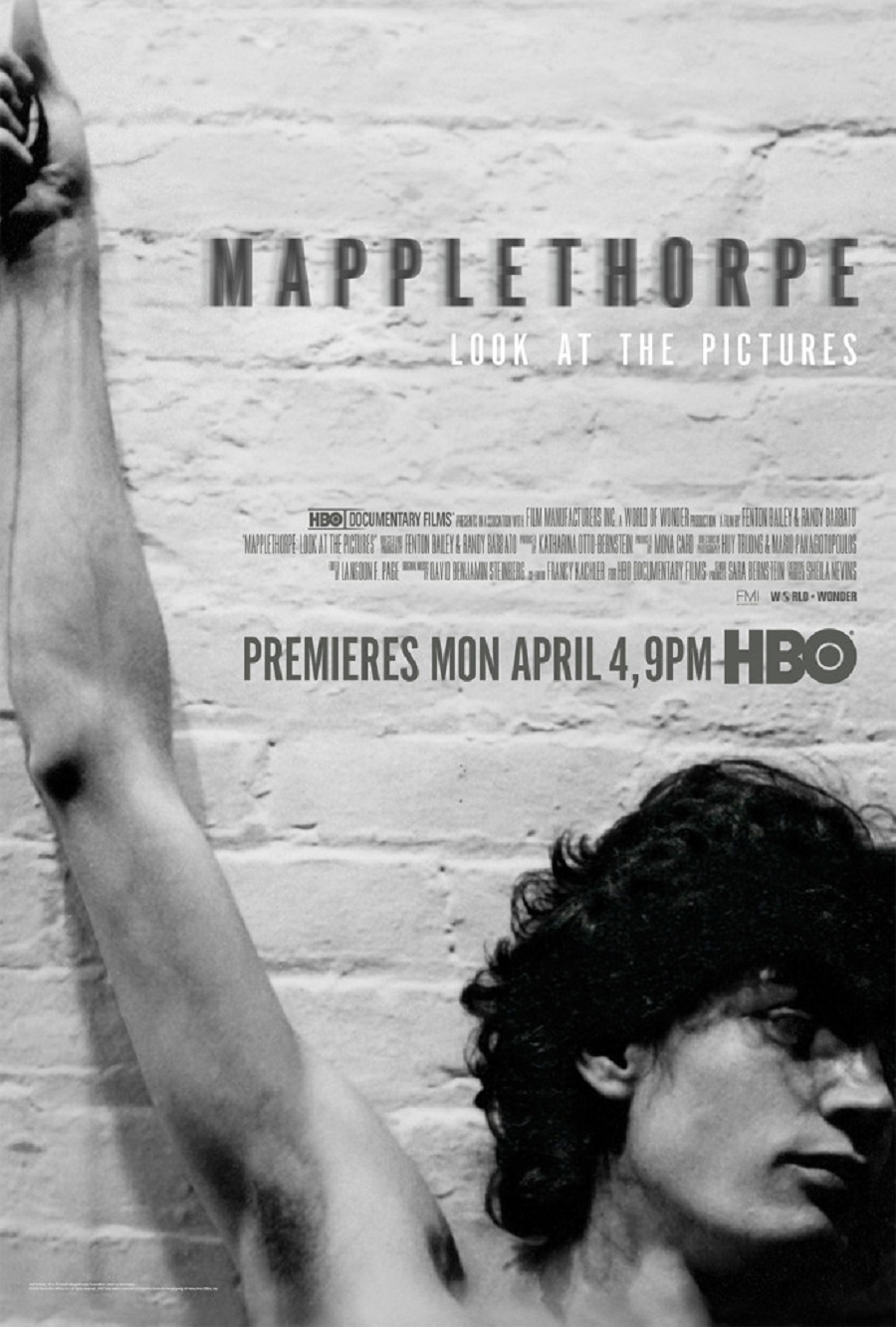
Mapplethorpe: Look At The Pictures

Mapplethorpe poster

This documentary starts off with former Senator Jesse Helms on the floor of congress back in 1989 where he denounced the controversial photography of Robert Mapplethorpe. Now Mapplethorpe’s work ended up pushing a lot of social boundaries with his frank depictions of sexuality, nudity and fetishism, and since he became known during the age of Ronald Reagan’s moral America, many saw him as nothing more than a shameless pornographer and refused to look at his photographs with any penetrating insight. What was on the surface bothered them, but like with any work of art it is about how the mind perceives it and of the effect it has on your perception of the world around you.

Helms told congress to look at the pictures as if they were done by someone possessed by the devil, but the HBO documentary “Mapplethorpe: Look at the Pictures” invites the viewer to look at them from a less biased perspective and see how this artist managed to turn contemporary art into fine art. What results is a fascinating look at an artist who in some ways is more prolific in death than in life, and it is probably the most in depth look at his life currently available.

We get scenes featuring curators at The J. Paul Getty Museum and The Los Angeles County Museum of Art as they prepare to open a landmark retrospective of Mapplethorpe’s work. Their intent is to look at him as a human being, and that intent is shared by the documentary’s directors Fenton Bailey and Randy Barbato whose previous work includes “Inside Deep Throat,” “The Eyes of Tammy Faye” and “Party Monster” (both the documentary and the feature film starring Macaulay Culkin). They dig deep into Robert’s past and never sugar coat his life for easy consumption.

It was very interesting to see Robert as a kid when he was considered the pogo stick champion of his neighborhood and somewhat unsurprising to learn he never really fit into any of the social circles in high schools (the great artists never seem to). Throughout the documentary we get to hear his voice from old recordings, and he says that he grew up in suburban America which he described as a good place to come from because it is also a good place to leave. He also admits he never set out to be a photographer as he took a course on it and hated it. And yet during his college years he found a creative spark which never left him.

“Mapplethorpe: Look at the Pictures” also features interviews with various friends, family members and celebrities who all seem to agree Robert was a largely mysterious person who was always looking to get a rise out of people.  At the same time, his brother Edward said he could be quieter than anyone else in the room. Writer Fran Lebowitz even described him as looking like a “broken Cupid,” so it’s safe to say that many people viewed him differently. As the documentary continues on, it shows us a man struggling to express himself during a time where voices which differed from the norm were quickly chastised and silenced.

One of the documentary’s most fascinating segments comes when Robert meets up with singer Patti Smith and observes the time they spent together at the famous Chelsea Hotel in New York. This segment also takes us back to a time when the Big Apple was bankrupt, corrupt and looked nothing like the insanely expensive city it is today. The two of them fed off each other creatively and created art no one else ever could have, and Mapplethorpe even shot the photograph which became the cover for her first album, “Horses.” The fact that their relationship is cut a little short in the documentary is disappointing as it would have been great to see more of them here, and it could very well make for a great documentary of its own.

Both Bailey and Barbato also might have fared a little bit better had they given equal time to the methods Robert used to create his art instead of his personal life. Many of his photographs, including his famous “Man in the Polyester Suit,” are on display here, and while we get an idea of how he messed around with his Polaroid photos to create something startlingly unique, it would have been nice to see more of his technique in how he pulled certain photographs off.

Instead, “Mapplethorpe: Look at the Pictures” spends more time than it needs to on Robert’s love life and his various lovers. Granted, hearing them talk about Robert does give us deeper insight into his psychology and how selfish he became as he got older. We even here Robert say at one point, “Life is about using people and being used by people,” so his self-centeredness is very understandable. But to hear people talk about him in this manner makes the documentary at times feel like a broken record.

However, “Mapplethorpe: Look at the Pictures” finishes on a strong note as we watch Robert putting up his last solo show entitled “The Perfect Moment.” By this time, he had been diagnosed with AIDS which back then was a death sentence, and some described this show as being a “memorial with a living corpse.” Robert was only 42 years old when he died on March 9, 1989, but he looked more like he was in his late 60’s. In his later years he sought fame like crazy, and he soon became more famous in death than in life. The effect this final show had on the general public was profound, and it served to secure his legacy after he passed away.

Despite some minor flaws, “Mapplethorpe: Look at the Pictures” is a compelling documentary which serves to look at the famous artist as more than just a controversial figure. Robert was a human being with problems like anybody else’s, but he always photographed what he loved and the people he loved to be with. He pushed all sorts of boundaries as he described art as being about “opening something up.” He certainly opened the world up to looking at things differently than ever before, and he remains a potent force in the art world today. Looking at his photographs now, one cannot help but wonder why certain parts of the human body are still considered more dangerous than a loaded gun.

Copyright Ben Kenber 2016

* * * ½ out of * * * *


Abortion: Stories Women Tell

Abortion Stories Women Tell poster

Was there ever a time when abortion didn’t seem like such a controversial issue? Well, if there was, that was certainly a long, long, long time ago. Even with the passage of Roe v. Wade in 1973, which gave every woman in the United States the right to an abortion, many have still been doing their best to get it overturned. Never mind that the Supreme Court has the final say on issues like this, never mind that Roe v. Wade was passed to stop women dying from abortions, and never mind that abortions make up a very tiny percentage of the work Planned Parenthood does; people are still swayed by their emotions more than they are by facts, and many have to be reminded of the importance of the separation between church and state.

The HBO documentary “Abortion: Stories Women Tell” is not out to take sides on this contentious debate. Instead, it gives women the opportunity to talk about their experiences with both pregnancy and abortion and to tell their own stories without any filters. Some men are heard on this too, but the focus is on women on both sides of the fence as they are the ones who have to deal not just with their decisions, but also the aftermath they are unwillingly exposed to.

The documentary starts off with a pro-life rally in Missouri where supporters chant “all in Christ,” and an elected representative tells them they are making progress in closing clinics in the state as they now “have the ability to look inside the womb.” But the focus then quickly shifts to a title card which states how since 2011, more than half of the United States have significantly restricted access to abortions, and those restrictions have increased from year to year. Abortion opponents may not be able to overturn Roe v. Wade, but they have managed to find ways around it.

Missouri at this time has only one abortion clinic which means the women who live there are more likely to drive many miles across the state border into Illinois to seek help. The documentary looks at the daily happenings at the Hope Clinic in Granite City, Illinois where employees do their best to help women in need of health care even while they are constantly harassed by protestors. None of them have any shame over the work they do, and that’s even if some consider themselves the black sheep of their family as a result.

The stories we hear cover different parts of the spectrum regarding the abortion debate. There’s Amie, a 30-year-old single mom who works 70 to 90 hours a week to make ends meet and cannot afford to have another baby right now. We get to meet Sarah who has discovered her baby will have lungs missing and won’t survive long after birth. Then there’s Kathy whose house is filled with various religious objects, and she is setting up a peaceful pro-life march to get what she sees as God’s message across to others. And there’s no forgetting Alexis who is 17 years old and pregnant, whose mother died when she was just 8 and who gets picked on at school because of her condition. It’s painful to see how isolated all these women are from the rest of society as the stigma of abortion is still all too harsh. Granted, Kathy might not seem as isolated, but there is a strong sense of loneliness about her as she pursues her quest to end abortions.

Director Tracy Droz Tragos, herself a Missouri resident, presents all these women’s stories without any judgment. She has given them a forum to speak their minds, and they all need to be heard regardless of how we feel about this infinitely taboo subject. There’s no narration to be found here as Tragos is not looking to steer the conversation one way or another, and this is even though the number of pro-lifers interview here pales in comparison to the pro-choice advocates. But for what it’s worth, the pro-life women interviewed here come across as very nice and full of much love, and this is in sharp contrast to those protestors (mostly men) who stand outside the clinic berating anybody and everybody who enters it.

But for me, the most important takeaway from “Abortion: Stories Women Tell” is that none of the women featured here take the issue of abortion lightly. Why would they? Many people who oppose abortion treat those who have had one with such disgusting disdain as if to say they never bothered to put much thought into what they were doing. But as Representative Jackie Speier said in a session of congress, the thought that anyone enters into such a decision with a cavalier attitude is just “preposterous.”

It’s impossible not to be emotionally affected by what these women go through. Plus, one cannot but be infuriated at those protestors who hold up signs featuring what looks like aborted fetuses which are disgusting and unforgivably cruel as they do nothing more than try to manipulate the actions of people they have no interest in knowing personally. Tragos briefly gets to interview one of the most outspoken pro-lifers who follows a clinic escort all the way to her car, begging her to repent. He talks about a law in California which punishes someone with not one, but two murders when they kill a pregnant woman. Whoever this person is, he may need to look at the California law book more closely.

With the United States currently entering the most contentious of Presidential elections, the future of Roe v. Wade is in more danger than ever. But watching “Abortion: Stories Women Tell” is a stark reminder of how women are still treated like a minority even though they make up more than fifty percent of the world’s population. This documentary will bring about a fury of emotions for everyone who watches it, but the one thing to keep in mind is all the women featured here are no different from one another. They believe in the same things and have more in common than they bother to realize.

I also have to quote Kenneth Turan of the Los Angeles Times here as he made an excellent point in his review I wish I had made myself:

“The key to understanding why ‘Abortion: Stories Women Tell’ is a quietly powerful documentary is not the first word in the title, but the final three.”

* * * * out of * * * *

Copyright Ben Kenber 2016.


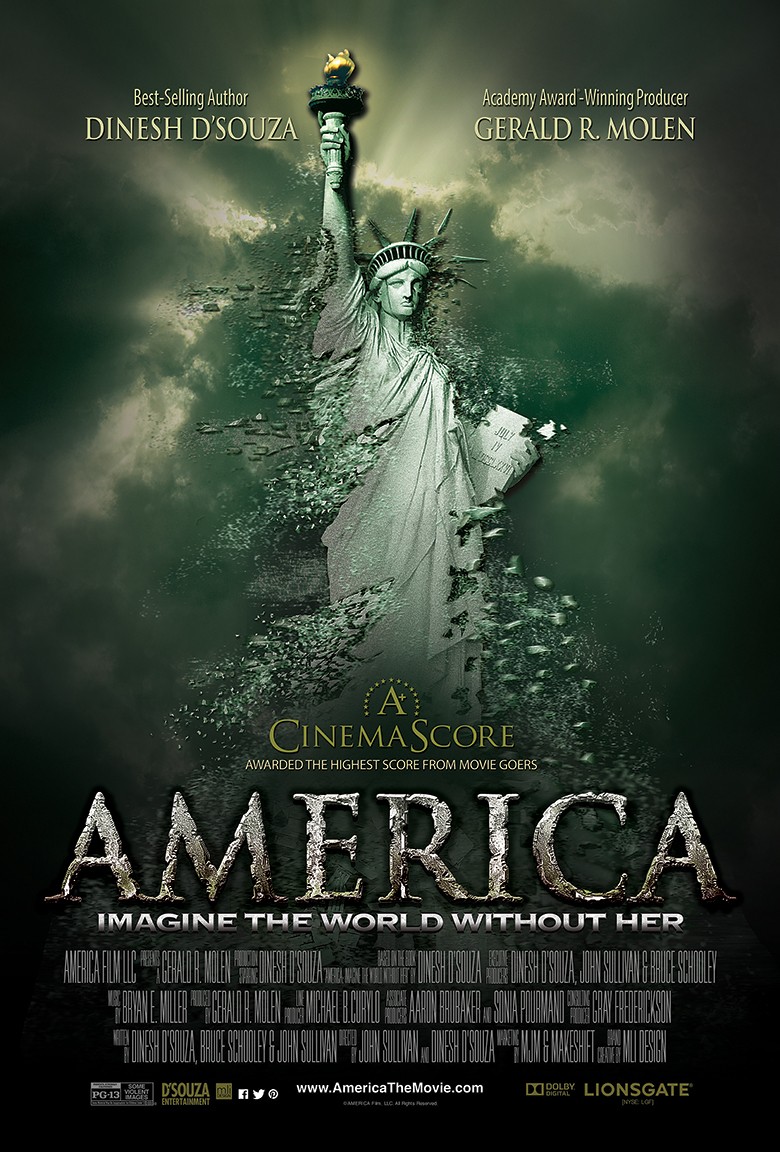
America: Imagine the World Without Her

America Imagine the World Without Her poster

Is it even possible to write a review of Dinesh D’Souza’s documentary “America: Imagine the World Without Her” without seeming the least bit biased? Many who have slammed it have been greeted by comments accusing them of being blinded by President Obama’s “socialist” brainwashing, and those who praise it get accused of watching Fox News too much among other criticisms. Is there any way to view this documentary in an objective manner? Moreover, will anyone allow those who have seen it to review it in an objective manner? Well, I’ll give it a shot, but I can already see a number of comments coming my way which are both good and bad.

“America: Imagine the World Without Her” starts off with D’Souza meditating on what this country would have been like had George Washington been killed on the battlefield, and it is followed by images of institutions like Mount Rushmore, the Statue of Liberty and the Lincoln Memorial vanishing into dust. From there, he explores the dark history of America and a number of well-known individuals whom he believes have done nothing more than shame America rather than looking at what makes it one of the best countries on Earth.

“America” gets off to a shaky start because, from its trailers, the movie looked to present an alternate reality of what the country would look like if George Washington died early on, but he all but drops this concept and instead goes on a different path. If that was the case, then why did he bring up this scenario if he never intended to explore it? Maybe he came to the conclusion that a number of different things could have happened as a result, and to narrow it down to one would be difficult if not impossible.

Now D’Souza makes it perfectly clear he loves America, and I have no doubt of that. Furthermore, I would never dream of taking his love of America away from him as it has given him much success. Having said that, there is an overabundance of shots throughout of him staring at various monuments like the White House, the Marine Corps War Memorial (a.k.a. the Iwo Jima Memorial) and Mount Rushmore which we see him looking at as if he is desperate to make his love for the United States absolutely clear and without doubt. But after a while it becomes a self-indulgent nuisance to where we want to yell at the screen, “We get it! You love America! Enough already!”

D’Souza then takes an overview of America’s dark history and uses it to criticize a number of people (particularly on the left side of politics) whom he believes have used these historical events to shame the country and make it look like an evil place. From there, his intent is to refute much of what we have been taught about American history and to demonize those he believes have taken away from this country and empowered others who are a threat to it. He does this by using old news footage, historical reenactments with notable figures like Abraham Lincoln and Frederick Douglas and interviews with experts who tell D’Souza more or less what he wants to hear.

Regarding the historical reenactments, they come across as very bland and boring and are seriously lacking in any depth. The acting is pedestrian, the staging lacks much in the way of excitement, and the special effects are ridiculously cheap. There’s even a scene where we see Christopher Columbus’ three ships, the Nina, the Pinta and the Santa Maria, sailing towards America, and it looks like someone just put three toy boats in a river and filmed them. You’d figure a documentary produced by Gerald R. Molen, a man who produced many of Steven Spielberg’s movies including “Jurassic Park” and “Minority Report,” would have higher production values to work with, but that’s not the case here.

When it comes to the genocide of American Indians, D’Souza claims much of it was the result of different Indian tribes attacking one another over land. Granted, there is some truth to this as we have seen this conflict portrayed in movies like “Dances with Wolves” and “The Last of the Mohicans,” but this argument carries only so much weight and D’Souza only skims the surface. He gives the audience a lot of graphics you would find in a power point presentation, but it all comes off like a copy of Cliff Notes which might give you just enough information, but not everything you need to hear.

On top of this, D’Souza claims the majority of Indians lost their lives because of diseases. It was at this point I started to get confused as to what D’Souza was trying to get across. Was he saying the Indians were more susceptible to diseases than others? What life has taught me is that diseases do not discriminate like humans do. As a result, what D’Souza ends up implying with this assertion feels not only baseless but completely out of line.

As for how he deals with slavery, I have to give D’Souza some credit because even he admits it was not just a problem in America but in other countries as well. But then he goes into how certain blacks, before slavery was abolished, owned slaves as well, and he brings up the story of C.J. Walker who became known as the first female self-made millionaire in America and of how she made her fortune through a successful line of beauty products for black women. On one hand it’s interesting to learn about Ms. Walker, but I wondered what D’Souza was trying to prove here. Is he saying slavery was nowhere as bad in America as it was in other countries? Looking back, I got the impression he really glossed over the barbaric treatment many slaves received. He also describes the abolition of slavery as being “uniquely western,” but considering how it had its roots in European urban culture and that the Atlantic slave trade came to an end before American slavery did, this is not altogether accurate.

Things in “America” get worse as D’Souza defends capitalism by showing a scene where we see multiple versions of him running a fast food joint and cooking hamburgers. This is a moment where he could have had some fun with his own image, but he ends up taking himself too seriously and comes off as unintentionally goofy. Furthermore, he talks about how ordering a hamburger from his faux restaurant is cheaper than making one at home with the same ingredients. This is a weak argument as I have visited many fast food joints and none of the burgers came close to equaling the price D’Souza was offering for his.

D’Souza even says America’s wealth was created and not stolen and that colonial Manhattan was purchased from the Indians for $700. Considering there is much evidence available on how the Indians, a people never to be mistaken as immigrants, were driven from their lands and killed, I can’t help but wonder if they sold this land by choice or under duress. While I was watching this segment, I was reminded of what comedian Bobcat Goldthwait once said:

“America is one of the finest countries anyone ever stole.”

D’Souza then directs his ire at a number of “leftists” such as Saul Alinsky, Hilary Clinton, Matt Damon, Howard Zinn and President Barack Obama. The way he sees it, they are responsible for exploiting the dark moments of American history and for attempting to rewrite it for their own benefit. It is from there that “America” becomes nothing more than a propaganda piece designed to deliver a lot of fear-mongering to the masses.

Look, I have no problem with Americans criticizing President Obama when it’s within reason, but many of D’Souza’s criticisms feel like they are based on deep seated fears rather than actual facts. When “America” begins, he says the three things he feared would happen under an Obama administration did happen, but those things are still open to debate as President Obama did get elected to a second term.

But D’Souza’s sights are set mostly on Hilary Clinton as he sees her as being subverted in her early years by leftists and socialists who forever corrupted her worldview, and the way he presents Hilary in a series of reenactments reeks of shameless manipulation more than anything else.

Another public figure who gets dragged over hot coals is Saul Alinsky, the legendary community organizer and writer. D’Souza portrays him as the devil in disguise and attempts to use his own words against him. He even goes out of his way to say Alinsky learned many things from Lucifer like strategies for demonization and polarization. In retrospect, the way D’Souza portrays Alinsky makes the community organizer come across as a one-dimensional villain in your typical action flick. I imagine there is more to Alinsky than what we see here, but to tell us more might take away from D’Souza’s overall argument which was pretty weak to begin with.

But perhaps the most unintentionally hilarious moment comes when D’Souza brings up how he was indicted for making illegal political contributions to a 2012 United States Senate campaign. He ended up pleading guilty to this and doesn’t deny that he committed a crime, but it all leads to a staged shot of him sitting in a holding cell with handcuffs on. The way D’Souza sees it, he’s a victim of persecution by the government due to the success of his documentary “2016: Obama’s America.” Now whether or not D’Souza was a victim of selective prosecution was up for debate, but this staged moment proves to be so shameless that it comes across as completely self-serving. Considering he knowingly committed a crime which he plead guilty to, does he really have the right to play the victim card?

Looking back at “America: Imagine the World Without Her,” my reaction to it isn’t all that different from how I react to a Michael Moore documentary. Their movies make me want to do a lot of research into the subject matter they deal with to see how accurate they are to the facts and to see what else I could possibly learn about America in the process. Many accuse Moore of playing loose with the facts, but if that’s true then D’Souza isn’t any different.

D’Souza and his co-director John Sullivan came into “America” with a lot of passion which does come across onscreen, but it is still filled with illogical arguments which don’t carry much weight. While he accuses others of trying to rewrite history, he ends pretty much does the same thing here. The movie is also weighed down by poorly directed reenactments which don’t leave much to the imagination, and D’Souza spends his time onscreen implying things rather than proving them. Seriously, if he were to turn all this in as a term paper, he would have ended up with an F or a D- if he was lucky.

I always thought it was incredibly difficult to make a bad documentary, but D’Souza and Sullivan prove it is possible with “America: Imagine the World Without Her.” In the end, the criticisms this movie receives will matter very little as it has been embraced by the crowd it was made for. But none of this changes the fact this is a poorly made film which has little to show for its arguments, and it exists as nothing more than a boring propaganda piece. D’Souza is free to make the movies he wants to make, but next time he’s got to make arguments which stand up to scrutiny and get a better understanding of American history.

* out of * * * *

Copyright Ben Kenber 2014.

Save

Hillary’s America: The Secret History of the Democratic Party

Hillary's America poster

This movie has some of the funniest scenes of any I have seen in 2016, but there’s one slight problem; it was not intended to be a comedy. “Hillary’s America: The Secret History of the Democratic Party” is the latest political screed from Dinesh D’Souza which has him, along with co-director Bruce Schooley, trying to tie the Democrats’ racist past with Hillary Clinton’s campaign for President. In short, he attempts to show how the principles of the Democratic Party have never changed, and instead succeeds in making an even worse documentary (if you want to call this a documentary) than “America: Imagine the World Without Her.

Now while Hillary’s name and face are featured prominently in this film’s poster, D’Souza doesn’t really bother with her until the last half hour. Instead, he gives us a bunch of re-enactments (and this movie is overflowing with them) which chronicle his criminal conviction, the time he spent in a halfway house, the America of the 1800’s and the 1900’s, and of Hillary while she was in college. Perhaps a better name for this would have been “Dinesh’s America” as we are looking at history through his point of view, and his POV combines a selective sprinkling of facts with an overabundance of deluded paranoia.

D’Souza re-enacts his time in a halfway house as a way to continue his ridiculous claim of being made a political martyr. He also portrays himself as a white collar criminal surrounded by vicious street criminals whose actions make his crime pale in comparison. Was this really the kind of halfway house he was sentenced to? Maybe, but he presents the inmates in such a stereotypical way that it’s hard to take much of what he shows us seriously. Plus, there’s a sequence where he befriends a fellow inmate who tells him about an insurance scam he and his friends pulled off. The re-enactment of this scam is so ridiculously directed and poorly acted that I couldn’t help but laugh out loud to where I thought I might get kicked out of the theater.

We later see D’Souza visiting the Democratic Headquarters, and when no one is looking he sneaks into an off-limits room which contains the Democrats version of Pandora’s Box. This allows him to uncover the party’s racist past which had them defending slavery instead of trying to abolish it. Seeing D’Souza, a Republican, infiltrating this “secret” room in the Democratic Headquarters brings to mind another alternate name for this movie: “50 Shades of Watergate.”

It is no secret that the Democratic Party of the 1800’s was much more KKK friendly and were never quick to pass the Thirteenth Amendment which abolished slavery. This was even shown to be the case in Steven Spielberg’s “Lincoln” where Spielberg and screenwriter Tony Kushner never hid the fact that the Republicans were the real heroes when it came to ending this barbaric practice. This gives “Hillary’s America” some weight as this is a part of history worth paying attention to as the Democratic Party of today is much different than the one of the past. But it doesn’t take long for D’Souza to shoot himself in the foot as he bombards us with historical re-enactments so one-sided to where they quickly become boring and cruelly exploitive.

These historical re-enactments are further complicated by D’Souza treating Democrats like Andrew Jackson as one-dimensional villains in a bad 80’s action movie or a supervillain from a James Bond film, albeit ones completely lacking in charisma. It doesn’t matter which era is being re-enacted, he treats every Democrat as being drunk with power or as a vampire on a day pass. D’Souza even includes an especially ludicrous scene where Woodrow Wilson is watching D. W. Griffith’s “The Birth of a Nation” at the White House when a KKK member on a ghost horse comes galloping out of the movie screen. Wilson is made to look like he is transfixed by this sudden emergence, but it’s really just a bizarre fantasy.

In trying to show how the Democratic Party has not changed from its sordid past, D’Souza completely fails to prove this without a shadow of a doubt. He doesn’t so much cherry pick facts as whitewashes and manipulates them to form a thesis which defies all reasonable logic. Anyone with half a brain can see that the Democratic and Republican parties of today are so radically different from what they once were. D’Souza even tries to convince us the big switch between the two parties in terms of their views on civil rights was a flat out lie, and he presents his evidence of this in a way which requires the use of a microscope to fully discover what he is talking about.

When D’Souza finally gets around to dealing with Hillary Clinton, he portrays her as a self-centered and snobby bitch interested in her own ambitions more than anything else. In an article, Alex Shephard described D’Souza’s portrayal of a teenage Hillary as being like Reese Witherspoon’s character of Tracy Flick from “Election” if Tracy “liked to murder small animals,” and that is spot on. D’Souza shows her laughing at one of President Richard Nixon’s speeches on television as if it were a bad thing. But the most jaw-dropping moment comes when D’Souza flat out blames Hillary for her husband Bill’s numerous infidelities. This doesn’t really speak much of Hillary as it does of D’Souza’s criticisms of feminism.

D’Souza presents himself throughout “Hillary’s America” as a truth teller no one should dare question, but he rarely backs up his arguments with much in the way of convincing evidence. In fact, he even dredges up the Benghazi attack which has been beyond thoroughly investigated, Hillary’s emails which just about everyone is sick of hearing about, and he even includes a scene from those completely debunked videos from the Center for Medical Progress. Bringing these subjects up only weakens an already deeply flawed thesis to where it feels like D’Souza is just grasping for anything which might, and I strongly stress the word might, work in his favor. Oh yeah, he also throws in Saul Alinsky for good measure, but Alinsky comes across as a caricature more than anything else.

While there are many unintentionally hilarious scenes to be found here, there are others which are simply infuriating. D’Souza portrays Margaret Sanger, the mother of Planned Parenthood, as an emotionless sociopath. Granted, there is evidence she was a proponent of eugenics, but showing her as wanting to exterminate all black people is a flat out lie. His portrayal of President Lyndon Johnson as openly racist to where he only agrees to civil rights legislation just to quell his political opponents feels deeply insulting. And in portraying America of the past, D’Souza piles on scenes of slaves being whipped and tortured which soon feel cruelly exploitive of a national tragedy.

It’s tempting to call D’Souza stupid after watching “Hillary’s America,” but that may not be altogether fair. As a director, however, he makes one stupid mistake after another as he shamelessly manipulates the audience’s emotions while bashing their heads in with information based more on his distorted worldview than reality. He employs an overly dramatic music score by Stephen Limbaugh which becomes ridiculously bombastic in no time at all. And he concludes the movie with renditions of patriotic songs to show his undying love for America. I do not doubt his fervent patriotism of the United States, but it feels truly annoying that he needs to constantly remind us of this.

It doesn’t bother me that D’Souza has made an anti-Democrat movie as no political party is beyond reproach. What bothers me is how much he believes in what he is telling us as his view of history is more revisionist than it is accurate. Watching him in “Hillary’s America” reminded me of Bill Pullman’s dialogue in “Lost Highway:”

“I like to remember things my own way. How I remembered them. Not necessarily the way they happened.”

In D’Souza’s mind, Republicans have been and still are the heroes of justice and racial equality, but if Lincoln saw the state of the party today, there’s no doubt he would be crying a river over it and not just because Donald Trump (who is barely mentioned in this movie) is their presidential nominee.

Now, this review might be greeted by various internet trolls who claim I am deeply biased or a “libertard” among other things. I’m not going to go into who I am voting for this November here. Instead, I want to leave you with a couple of things to think about. Does it make more sense to base your views on a political party on what it was like when it began or how they treat the American people in the present day? If D’Souza loves being a citizen of America so much, why did he willfully break the law? Did he even realize before committing his crime that it would cost him a right which American citizens should cherish, the right to vote? Say what you will and believe what you want, but nothing will change the fact that “Hillary’s America: The Secret History of the Democratic Party” is one of the worst documentaries ever made.

½* out of * * * *

Copyright Ben Kenber 2016.

Save

Save

Exclusive Interview with Justin Weinstein on ‘An Honest Liar’

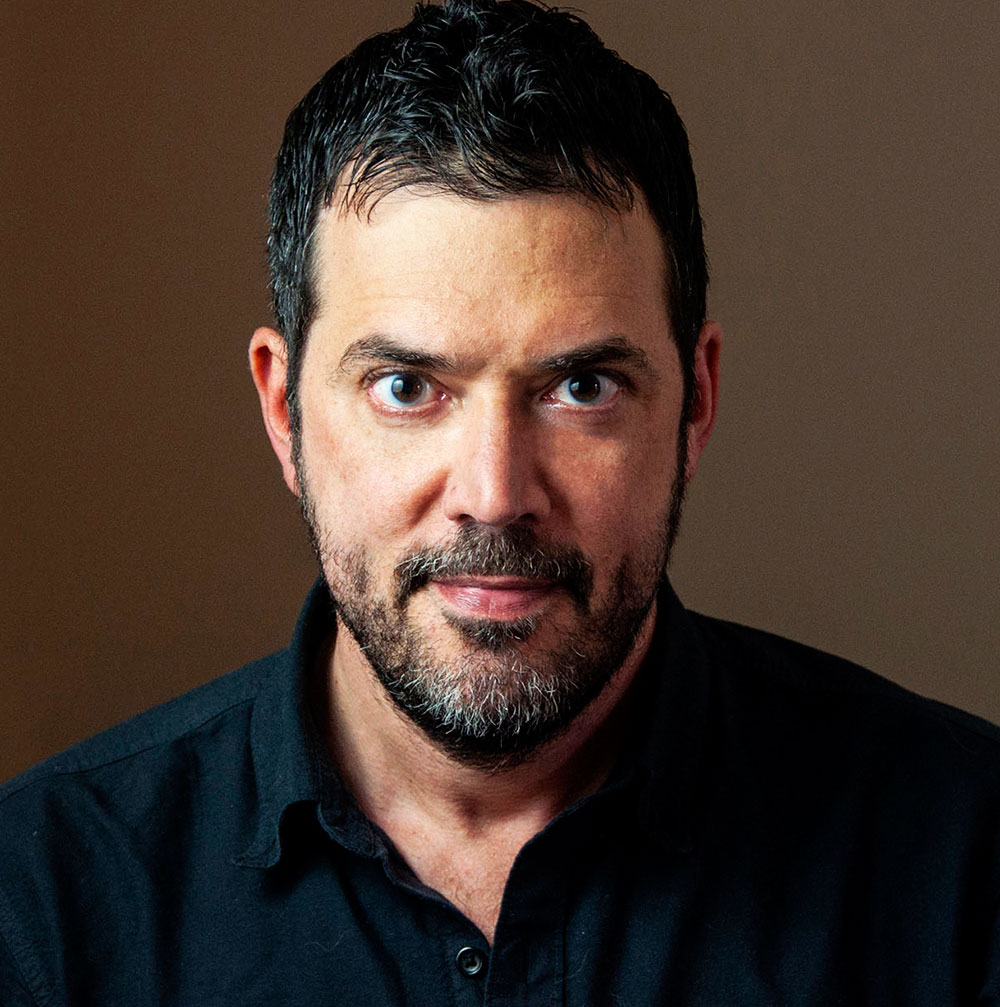
Justin Weinstein photo

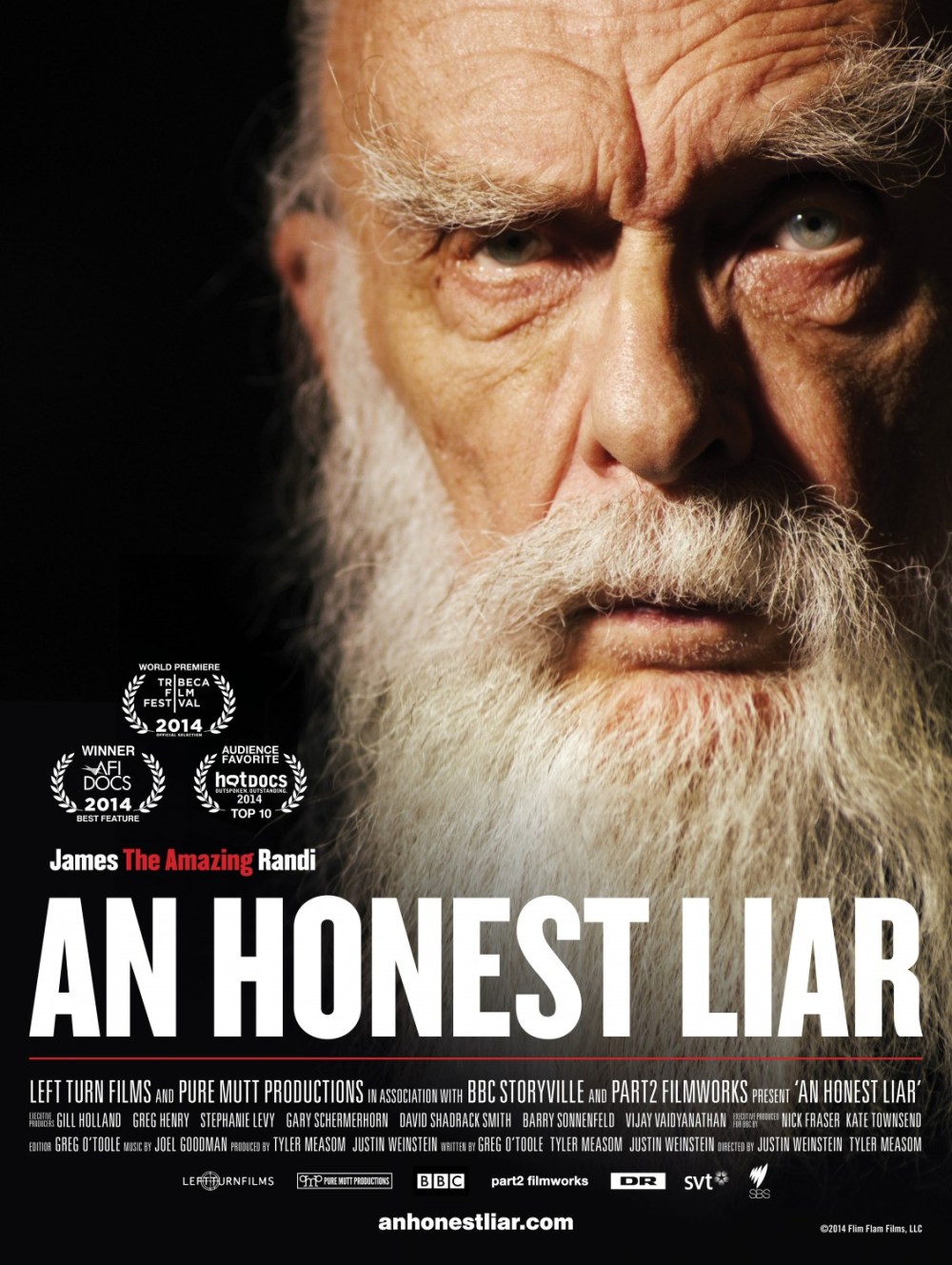
In 2015 there were many incredibly fascinating documentaries released, and one of them was Justin Weinstein’s and Tyler Measom’s “An Honest Liar.” It looks at James Randi, a world famous magician, escape artist and renowned enemy of deception. Randi started out his career as a stage magician with aspirations to be the next Houdini. After retiring he went on to publically expose famous psychics, faith healers and con artists who were deceiving people for their own benefit. But things take a shocking turn when it is revealed that Randi’s partner of 25 years is not all he appears to be, and it leaves the audience wondering if Randi is the deceiver or the deceived.

“An Honest Liar” is available to rent or own on Blu-ray and DVD, and it offers the documentary’s fans a treasure trove of special features to check out. There are two commentary tracks to listen to: one with the directors and the other with Randi himself. There’s more about Project Alpha, the elaborate hoax Randi orchestrated where two fake psychics were planted in a paranormal research project and who led others to believe they were for real. In addition, there are deleted scenes as well as extended interviews with Penn & Teller, Alice Cooper, Banachek and Ray Hyman.

I got to speak with one of the co-directors of “An Honest Liar,” Justin Weinstein, over the phone, and we had a great talk about this documentary’s making as well as the challenge of making any documentary in this day and age. Weinstein is a Brooklyn-based filmmaker who was the executive producer on “Bronx Obama,” and he was also a writer and editor on “Being Elmo: A Puppeteer’s Journey” which won the Special Jury Prize at the 2011 Sundance Film Festival.

An Honest Liar poster

Ben Kenber: How did “An Honest Liar” change from how you envisioned it before filming to what it eventually became in its finished form?

Justin Weinstein: That’s a great question. We originally started out thinking that the film would be as much about skepticism as it is about Randi. Before we even started filming we thought about what we can do here, and we were interested also in the skeptic movement because there is a very avid movement and active almost religious evangelical group of skeptics with their own charismatic leaders. So we thought that was interesting and our working title began with Skeptic. Of course we were going to deal with Randi’s history, but we were planning to look more at the contemporary skeptic movement as well. But then something happened Randi’s partner got arrested. In doing research and talking to people and going through Randi’s history, there were a lot of interesting disparities. He’s a storyteller and a performer, and when you’re a storyteller and a performer often the best stories are not exactly what happened. And so Randi has kind of bent the truth at times in order to be more effective at what he does, which ironically is being a truth teller (laughs). So we were starting to get interested in the levels of deception, truth, honesty, and a kind of inherent irony with the truth teller bending the facts. Once his partner was arrested, we realized that there is something else bigger thematically here. So we went back and watched Orson Welles’ “F is for Fake” and that really solidified our thinking about the film and that its subject is deception. Above all else that’s the through line. I mean it’s about Randi, but it’s really about truth and deception as well. I knew I wanted to play with the audience and have there be something deceptive in the nature of the film itself. Most people think that documentaries are the truth, and we all know that’s not really the case or rather that they’re one form of the truth. So all these things gelled and helped us focus the film in the direction that it ultimately took.

BK: One of the ad-lines for “An Honest Liar” is if James Randi is the deceiver or the one being deceived. We live in times right now where it feels like we are all being deceived in one way or another, so that’s an interesting way to look at it.

JW: Yeah, and it also working on a couple of levels because it’s not clear right away whether Randi was deceived by Deyvi/Jose, and there’s also a scene in the film where I apparently deceive Randi as a filmmaker. The film came out about the same time I think as “Merchants of Doubt” which is another film about deception actually. (The magician) Jamy Ian Swiss is in that as well. Deception is of fundamental importance in what, to me, forms a lot of the problems that we have today whether it’s political, self-deception or other people pretending something is true when it isn’t.

BK: “Merchants of Doubt” is another terrific documentary and almost as good as “An Honest Liar.” Doubt is a big thing now, and I have had some strong debates with people who are guided more by religion than actual facts.

JW: Well that’s what got Tyler and I interested in this to begin with. I was brought up a secular Jew and was always interested in science and film. When I went to college in Ohio, in my Freshman year I took a genetics class and people stood up and walked out and screamed at the professor, “You’re gonna go to hell for teaching this!” And I was like, “Huh? What?” I remember the first time where I actually spoke to people who believed that dinosaurs didn’t exist and that dinosaur fossils were a plot. I was like, “Wait a minute, what’s going on here?” I transferred to film school and went into doing documentaries, and a lot of my work has been around that subject. I worked on a Peter Jennings doc where I dealt with UFO believers, and it just really fascinates me how people can come to believe things that are demonstrably untrue or just hold onto faith in something for which there is no tangible evidence. Tyler, my co-director, was brought up a Mormon in Salt Lake City. He went on a mission and converted people to Mormonism before he realized that he was being duped and lied to, and he left the church. So that was definitely, as filmmakers, part of what we found fascinating about the subject and wanted to explore.

BK: One of “An Honest Liar’s” most interesting moments is when people start turning against Randi even after he has proven others to be fraudulent in their methods. It seems like many people would rather believe in the illusion rather than face up to reality.

JW: Yeah, I learned this early on when I was debating people in an academic space between creationists they know and evolutionists. At a certain point, and this was when I was 17 or 18, my professor pulled me aside and I said that I couldn’t understand it. There’s evidence. How can they not accept the evidence? What I came to understand was that people create a kind of bubble, a worldview that works for them. If you poke a hole in the bubble no matter small it is, then the whole thing will collapse. So it requires these mental gymnastics to keep the structure of that bubble intact. Over the years making this film people would come up to us, email us and offer us services. Somebody from Paramount Pictures would be like, “Come and finish your film here. I was a born again Christian and I was sucked into all of this, and then I saw one of Randi’s videos on You Tube and someone gave me a book of his and that opened my eyes and changed my life.” He’s had that effect on thousands and thousands of people and it’s always amazing to see how thankful people are. People travel for hours and days to meet him in person to thank him because he changed their lives. It’s really stunning. At the same time there is a whole population of people out there who don’t know him. He’s not the hugest star. He was famous in the 50’s and 60’s and then the 70’s and 80’s with Uri Geller. One of the things we were hoping to do with the film was also to show a fascinating and really important person people deserve to know more about.

BK: Many wonder why a biopic of Randi’s life has not been made, but it makes more sense to tell his story through a documentary because it seems to be a more honest way to introduce this “liar” to a public not familiar with him.

JW: It’s funny because a few of his stories have been stolen. There was a movie with Steve Martin about faith healing called “Leap of Faith,” and then there was something with Robert De Niro where they steal the whole “hello Petey can you hear me” (“Red Lights”), and that’s right out of Randi’s life. There have been other people who had approached him to make a documentary, but I don’t think any of them seemed right. I think both Tyler and I have some films under our belt and we are coming at it from the right angle, so he trusted us.

BK: How open was Randi to doing a documentary? Was he ever hesitant to go into certain areas of his life?

JW: He said at the very beginning, “If we’re going to do this, we’re going to do I warts and all,” and so he was very willing to be open. Right after his partner was arrested it was just unclear what would happen and what was happening. There was a little bit of caution, but as soon as things started coming out both he and his partner just decided that honesty is the best policy. He was very giving with his time. At one point he was upset and you see it in the film, but now he says that he’s glad that we included it because he wants people to see that even he sometimes grapples with the truth that we’re all human.

BK: You also managed to get an interview with Uri Geller which is amazing because he was one of Randi’s chief targets throughout the years. Was it tough getting an interview with Uri, and how open was he to talking with you?

JW: It’s funny. We sent him an email and said we were doing a documentary on Randi and that he has been a big part of Randi’s life and we would love to interview him. We got an email back from his lawyer saying, “Well my client has had a very contentious history with Randi and we want to know exactly how you are going to portray him and the questions you are going to ask.” And Tyler and I looked at each other and we were like, “Screw that!” I never write out a list of questions when I do interviews, I do it conversationally. We have enough of Geller in archive videos. We didn’t need him on camera. So we replied and said we don’t write questions, we got enough in the history to do it without him and he is open to speak for himself. So if he wants to do it great, if not no worries. And then the phone rang and it was Geller who was like, “Oh I’d love to!” So as soon as we threatened to pull the camera away, he ran toward it. Randi said the most dangerous place to be is between Uri Geller and a TV camera. He was very gracious, he was very nice and he was game.

BK: In regards to the Blu-ray/DVD release, what special features are you excited for the fans of the documentary to check out?

JW: There were so many great stories that we couldn’t fit in. With Project Alpha, the two magicians who infiltrated the paranormal study, that went on for two years and they were a couple of high school teenage boys who were away from home and getting into trouble. So there are a few stories from that we couldn’t fit in time wise to the film, but we kept them as bonus scenes. There are a few more Project Alpha tidbits, and the extended interviews are also really great. You can hear Penn and Teller, or rather just Penn, talk about his impressions of Randi because Randi is one of Penn’s biggest heroes. He is very articulate about why Randi deserves the praise that he gets and what is special about his life.

BK: Speaking of Project Alpha, Barry Sonnenfeld now has plans to make a movie about that. What are your thoughts on that?

JW: We’re thrilled. Barry saw the film and loved it, and he immediately recognized Project Alpha as its own great story. We met with him and agreed to work together. He’s a very talented filmmaker who started out as a cinematographer on the Coen brothers’ films but then did “Get Shorty” and “Men in Black.” He’s a great match for the material. It’s kind of a buddy, slightly supernatural period comedy-ish thing, so we’re thrilled to be working with him. We hope to get something up on the big screen with him.

BK: “An Honest Liar” was made with the help of Kickstarter and a lot of grassroots support. Could this documentary have been made without that grassroots support?

JW: That’s a good question. We raised a good amount of money via crowd funding, but our budget was much higher. The money we raised was not enough to make the film on its own by any means so it wouldn’t have been sufficient. However, without it, it would have been much more difficult and I’m not sure it would have been possible without it. In fact, most likely it would not have been possible without crowd funding unless we really cut a lot of corners, and it probably would have been a different film. Documentary funding is always hard to come by especially in the United States. In many other countries there are government funding programs, there’s state money, and in the United States there is no such thing. So you have to do a lot of work applying for grants, but mostly grants that are available tend to be for social issues and ideological films. They are subject oriented about underrepresented populations and minorities, so making a film like this, and it is an issue oriented film, it’s not the kind of issue that grant foundations like. It looks like a biography to most people, so we didn’t have those sources in funding available to us and it’s a shame. I think we made a decent film and I think a lot of foundations which had seen the film after it was made have said, “Oh, well that’s something we could have supported.” They prioritize their money, so crowd funding is almost essential to documentary filmmaking. It’s a shame. It really sucks.

I want to thank Justin Weinstein very much for taking the time to talk with me. Be sure to check out “An Honest Liar” on Blu-ray or DVD as those special features are every bit as entertaining as the documentary itself.

Copyright Ben Kenber 2015.

Exclusive Interview with Jonathan Gold on ‘City of Gold’

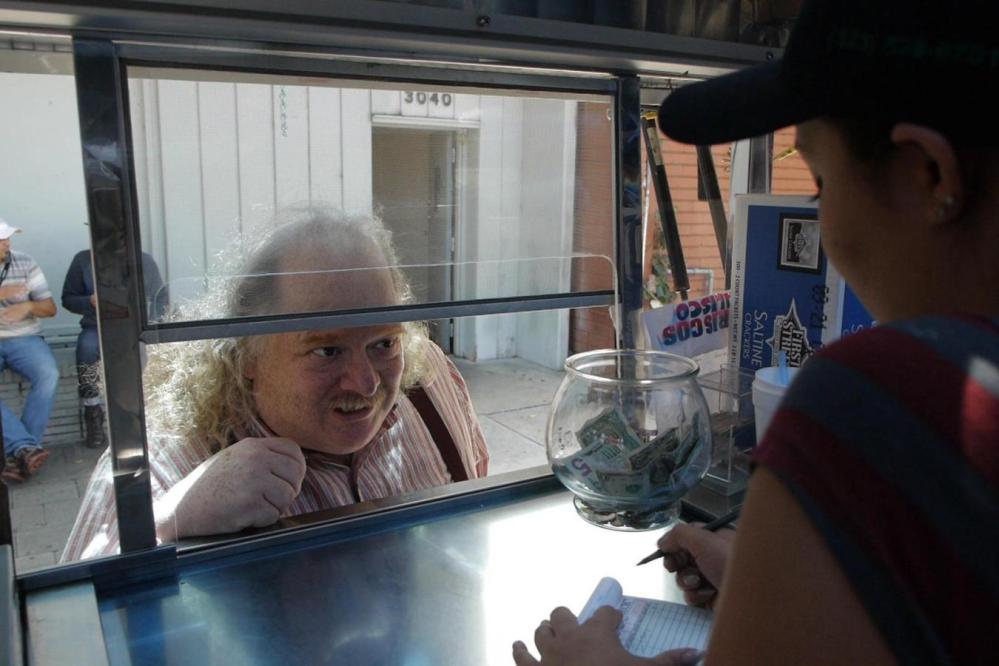
Jonathan Gold photo

For those of you who see Los Angeles as an infinitely shallow and superficial city bereft of culture, try looking at it through the eyes of Jonathan Gold. Food critic for the Los Angeles Times, LA Weekly and winner of the Pulitzer Prize, Gold is known for his robust writings of Los Angeles restaurants, and he has gone out of his way to review small family owned eateries in the city’s ethnic enclaves as well as the trendier eateries in Beverly Hills. In the process, his reviews have changed the lives of many immigrants who continue to cook the food of their countries, and they have provided readers with a deeper understanding of the cultural landscape of Los Angeles which continues to astonish new visitors and longtime locals.

Gold is the subject of the documentary “City of Gold” which was directed by Laura Gabbert whose previous works include “No Impact Man” and “Sunset Story.” It follows the award winning critic around Los Angeles as he checks out restaurants, and we get to meet many of the chefs whose careers really took off after he reviewed their restaurants. In the process, the documentary also comes to reveal Gold’s deep love of this city and of how it has brought many different kinds of people together.

It was a pleasure to speak with Gold during time off from his day job, and he talked at length about the challenges he experienced making this documentary and how it affected him as a food critic.

Ben Kenber: How were you approached to do this documentary? Was it something you were open to doing or were you hesitant about it at first?

Jonathan Gold: Oh I was absolutely not open to doing it. It’s a tradition of anonymous restaurant critics in the United States. I’ve been approached by reality TV a lot, but I always said no. The filmmaker, Laura Gabbert… It’s sort of a weird story. I donated a dinner with a critic to a silent auction at a school a friend’s kid went to and she bought it. We went out to dinner at the first iteration of LudoBites, Ludo Lefebvre’s pop-up restaurant, and she brought it up and I laughed it off, and she called and we had coffee a few times and it was still not going to happen. And then my kid ended up going to that school, and somehow when you see somebody every day at the drop off line it becomes inevitable in a certain way. I had been thinking a lot about anonymity. It had almost been an impossible concept at the moment, restaurant criticism, with the very, very, very few exceptions. The restaurants that really need to know who the critics are know who the critics are, and nobody stays anonymous for more than a couple of months. I had been reviewing restaurants for more than 20 years and I just figured that it was okay to give it up. It was less a question of actually being anonymous then pretending not to notice them pretending not to notice me noticing them and noticing me. Very meta (laughs).

BK: I have heard restaurant workers have a very high mortality rate. Is that a subject you have ever dealt with in your reviews?

JG: No, not so much, but it’s really physically demanding work. You get up really early, you’re on your feet all day, you are around things that are very sharp and are very hot, and you’re breathing in vapors and smoke and things all day. You’re in a place that has a ton of alcohol because that is why it exists. So I admire the people who could do it as much as a sports writer admires athletes. It takes a lot of stamina.

BK: In the documentary we learn early on you were originally a music critic and later became a food critic. What were the differences of being a critic for each?

JG: Well I’ve actually always done both. I would go to dinner on the way to the show, and then I would review the restaurant and I would review the show. That’s how I did it for years and years. I didn’t think they were incompatible at all (laughs). But one of the things I liked about writing about food just as a profession is that when you write about music you deal with layers and layers of publicists, and I remember I did a Rolling Stone cover on Snoop and Dre. I counted at one point because it started to get weird, but there were more than 1100 phone calls to the publicists. When you are dealing with the restaurant you just go to the restaurant, so it was easier that way. It was a good piece but man, it seemed like a full time job dealing with that.

BK: Once filming began, did it take a long time for you to get used to the cameras following you around?

JG: I wouldn’t say that it took me a long time, but it may have actually taken me a long time. It was like one day a week, one day every other week, and Laura Gabbert, the director, would show up with the cinematographer and someone doing sound and they would crowd into the back of my pickup truck and we’d drive around and we’d stop somewhere. I didn’t really know what to do at first. It’s hard to talk freely when you just have a camera pointed at you and a boom microphone like tickling you, but I think over the course of filming it, it became a little less strange and a little more natural. The people I had lunch with and dinner with never got used to it quite as much as I did just because it was an inherently awkward situation. But it must be said that I laid down guidelines at the beginning for filming. I didn’t want her to fill me actually reviewing a restaurant. She would’ve liked that and it would’ve given the movie an arc, but I didn’t want to give her an arc actually because I didn’t want anything dramatic to happen. And I put down for a long time that she couldn’t film my kids because they deserve their privacy, and of course it turned out that they wanted to be in the film so they were. There were probably a few others, but with those boundaries drawn and the fact that I wasn’t actually going to have to interview anybody, I wasn’t going to act as a journalist and I was just going to be a person doing possibly journalistic things.

BK: The movie starts with you sitting in front of your computer and looking pensive, and then you begin to type something. Were you actually writing a review at that moment?

JG: Yeah. Actually I refused to have it staged and they shot it in a lot of different ways, but I was actually always writing a piece when I was doing it. Not necessarily the piece that was coming on the voiceover because… I don’t know if you’ve done it, but pretending to type looks like somebody pretending to type, and it’s always bothersome in movies.

BK: Did you have or want any artistic control over the documentary, or were you content to have Laura just have her way with it?

JG: I had essentially no artistic control over it. I’m the subject in the way that you are interviewing people. The people that you are interviewing don’t have any input into the story you are writing and they shouldn’t, and she was committing an act of journalism and I was the subject. I saw a rough cut of it and I’m not sure there was anything I objected to. Sometimes I wish I had combed my hair (laughs) and sometimes I wish I’d said something in a more articulate fashion, but I talk the way I talk.

BK: Was there anything taken out of the documentary that you wish had stayed in?

JG: There was a scene that I loved where I was giving a presentation at the MAD conference in Copenhagen, and that’s a conference that happens every couple of years. They couldn’t send anybody but they lent my daughter a camera and she took footage and she put it together in a certain way. It’s sort of a beautiful scene, but ultimately it didn’t really fit into the narrative of the film and it was cut. I will always become exercised on behalf of my children (laughs). I think it’s almost demanded.

BK: How would you say you ever evolved as a critic over the years you have done this work?

JG: I think I understand that there’s more and I think I understand that there is less. The more I do this, the more I write, the more it feels like I actually know.

BK: You are so good at describing things in your work to where you give the reader very vivid images of the stuff you are writing about. How do you accomplish that?

JG: Actually that was maybe one thing I worked at pretty hard. I thought that describing food was my one weakness when I first started writing about food. I was good at getting you into the room and I was good at describing the context and telling you why you were there, but sometimes my descriptions of the food were a little bit tough. I actually worked at it and worked at it, and I figure it’s like Kobe Bryant taking 1000 free throws a day. It’s like eventually he’s going to figure out where the basket is.

BK: Has doing this documentary changed the way you write about food at all?

JG: No, not at all.

I want to thank Jonathan Gold for taking the time to talk with me. To find out more about “City of Gold,” be sure to visit the documentary’s website at www.cityofgolddoc.com.

De Palma

De Palma poster

When it comes to interviews, filmmaker Brian De Palma always seems rather remote or looks like he would rather be somewhere else. In an interview about “Redacted,” he flat out told the interviewer he was simply there to sell his movie, and the interviewer replied perhaps De Palma was enjoying his company. To this De Palma replied, “I don’t think so.” So aside from him crushing the interviewer’s ego, his reply illustrates how uncomfortable he gets when talking about his movies. Perhaps this is why he has never done an audio commentary on any of them to date.

But this is the real joy of watching the documentary “De Palma” as he seems more than willing to spill the beans about his life and the inspirations behind his work. It also helps that it was directed by Noah Baumbach and Jake Paltrow, filmmakers De Palma has been friendly with for several years. Whether he’s talking about his greatest works like “Carrie” and “Scarface” or facing up to his critical and commercial disasters like “The Bonfire of the Vanities,” the revered filmmaker holds nothing back as he discusses each of them with a sense of humor which shows how he’s dealt with the movie industry and the way it has treated him over the years.

Now De Palma has often been accused of ripping off Alfred Hitchcock, and the documentary does start off with scenes from “Vertigo,” a movie now considered to be the greatest ever made. De Palma said he was so compelled by “Vertigo,” and we can see how this particular Hitchcock film influenced much of his work. However, the documentary gives us a deep overview of his films and how he drew inspiration from other filmmakers like Jean-Luc Goddard. He also explains the purpose of using split screen as it allows the audience to put everything together for themselves.

One of the real treats of “De Palma” is how it looks at the director’s upbringing, something we haven’t heard much about in the past. He never had much of a relationship with his dad, he says, who was an orthopedic surgeon which had him growing up around a lot of blood. This certainly explains why blood has played a big part in his movies whether it’s the prom scene in “Carrie” or the chainsaw scene in “Scarface.” We also get to see actor Robert De Niro, who appeared in De Palma’s movies “Greetings” and “Hi, Mom,” at the start of his career long before he played Al Capone in “The Untouchables.”

From there, we get to view his movies in chronological order and of how his work as a filmmaker evolved from one decade to the next. Now granted, this might make certain viewers a little impatient as they might want to skip ahead to his stories about “The Bonfire of the Vanities” or “The Untouchables,” but it’s sitting through the others before them that shows De Palma’s evolution as a filmmaker and how he managed to pull so much off despite intense pressure from studio executives and the MPAA.

Looking at these descriptions, “De Palma” may sound like just another talking head documentary. In a way it is, but to dismiss it as such would be unfair. De Palma is such an interesting guy on top of being a brilliant filmmaker, and I loved how he looks back at his triumphs and struggles with an almost gleeful sense of humor. He has been through a lot of heartbreak and struggles throughout his life, and it’s kind of a relief to see him laugh at some of the darker moments he was forced to endure.

What both Baumbach and Paltrow have pulled off is more than just the average documentary on a filmmaker you often see on cable. They present us with something which feels more like a friendly conversation with someone who is not always so open, and it’s a real pleasure to sit back and hear him talk. At the same time, “De Palma” also provides us with a look back at the great filmmaking period that was the 1970’s and how that period will never be repeated again. Then again, I have no issue with people proving me wrong there.

But perhaps most importantly, “De Palma” shows us a filmmaker who managed to stay true to his own voice despite working in a business which, as he puts it, makes you lose your own way. Even as he began working with bigger budgets and movie stars, he still tried to stay true to what he wanted to accomplish, and you come out of this documentary admiring him for that. And unlike other filmmakers who were stubbornly resistant to changes in technology, he was quick to utilize them whether it was high definition filmmaking in “Redacted” or the advent of music videos in “Body Double.”

There are many surprises and interesting bits of trivia to be found throughout “De Palma,” and I would rather you discover them for yourselves. What I can tell you is that this is one of the best movies, let alone documentaries, I have seen so far in 2016. It is infinitely interesting and a must for movie buffs and aspiring filmmakers. Whether he intended to or not, Brian De Palma has provided us with a master class in directing many would be smart to watch as the movie business is one which can tear an auteur’s vision apart out of fear or for the sake of profit. But here’s a man who, for better or worse, has done things his own way and continues to do so from one movie to the next.

And while it may be wishful thinking, here’s hoping it will give studio executives enough of a reason NOT to remake “Scarface.” We’ve already seen what others have done to “Carrie” for crying out loud.

Copyright Ben Kenber 2016.

* * * * out of * * * *

Exclusive Interview with Gusmano Cesaretti about ‘Take None Give None’

Take None Give None poster

2015 proved to be a great year for documentaries with unforgettable ones like “Amy,” “An Honest Liar” and “The Wolfpack.” Now there’s another terrific documentary to check out called “Take None Give None” which is about the Chosen Few, an outlaw motorcycle club based in South Central Los Angeles. Directed by Gusmano Cesaretti, a producer on many of Michael Mann’s films, it chronicles how this motorcycle club, the first multi-racial club of its kind, formed and is bound by the strength of their brotherhood. The documentary also follows the club’s struggles as they deal with the LAPD which raided their clubhouse and unfairly branded them as a criminal organization in the media.

“Take None Give None” had a special screening at the Museum of Contemporary Art in Los AngelesMuseum of Contemporary Art in Los Angeles, and it was sold out and filled with people of all kinds as well as members of the Chosen Few. When it ended, one of the club’s members stood up and said, “Tell people about this movie so that they can see who we really are.” This was met with a thunderous applause from everyone in attendance.

I got to speak with Cesaretti over the phone about “Take None Give None” which he filmed with co-director Kurt Mangum over a three-year period. Cesaretti described how he became acquainted with the Chosen Few, how he managed to get an interview with one of the LAPD cops who went undercover to infiltrate the club, and of how working with Michael Mann served to help him on this project.

Gusmano Cesaretti photo

Ben Kenber: Congratulations on the documentary. This proved to be a real eye opener about the Chosen Few. How did you first become acquainted with this motorcycle club?

Gusmano Cesaretti: Well I saw some of those guys riding motorcycles about 25 years ago on the Pasadena freeway and I pulled over next to them with my car and I said, “Hey! Pull over, I want to talk to you.” And they pulled over then I told them, “I like the way you look. Everything about it is great. I love the way you were riding the bike.” They weren’t just riders, they had pride for some reason. So I told them I would like to take some pictures, and they invited me to the clubhouse. I went over there and it was amazing to see all these great amounts of people and they were all nice. I walked over with the camera and everybody started looking at me and saying, “Hey what are you doing? Oh yeah take pictures of me! Take pictures of my bike!” It was really great. They were friendly, they were open to anything and to me it was fascinating. They were a great people and then I started going there every other week and kept taking photographs and so on in support. Then in 2011, because they were talking all the time about their rides and how important they were for them and being together in like a brotherhood, I said I would like to film one of your rides. So I organized a ride for them where we went through South Central and on the freeways and then through downtown, and then after the ride they started really talking to me and said that we should make a record of all this. That’s when I started doing the documentary, and we just finished (laughs).

BK: When you first started shooting the documentary, how did you envision it and how did it evolve from that point to where it is now?

GC: That’s a good question. When I first started the documentary I had no idea because when you make a documentary you really don’t know which way you’re going. I feel you’re doing it for a year or two (laughs) and then you would have all the information you ever need to create a storyline. We recorded about 48 hours (of footage), and when we finally decided to edit it was like a nightmare because you’ve got listen to all these conversations and all the recording we did. It took months but then you know what’s going on, and then we put a big roll of paper on the floor of my studio and started writing down the scenes. It was crazy. A lot of different cameras were used. It took me about a month to figure out the storyline, and then even during the process of editing there’s always changing this, putting back this and taking this off. It was a very challenging process but I learned so much.

BK: When it came to filming the documentary what formats did you utilize?

GC: We did a lot of stuff with the Super 8 riding the bikes here and there and we used other film. We used Cannon, we used Sony, etc. But the problem when we did the editing, because of all the different formats and all the different cameras, it became now we gotta do this, now we gotta change this and now we have to download everything into this. It was really crazy, but it worked because I shot it in a very cinema verite way. I didn’t want to commit to any style. And the way I interviewed those guys it was like, “Tell me the story.” I didn’t ask any questions because I wanted them to talk and tell me from their point of view. So that’s usually the way I prefer to do my photography; I connect with people and establish a relationship even if it’s for a moment, and I need to start a relationship if I want to get the image that I need.

BK: When the Chosen Few’s club gets raided, we get to see how the media really twisted their identity of proportion. Then they got evicted from their building which had a huge impact on the neighborhood because things were a lot safer when the club was around.

GC: Correct. What was interesting about the Chosen Few in South Central is that it’s really about the cultural of Los Angeles. It’s not necessarily about the bikers, it’s about their lives. The clubhouse was open for all the members and friends and people and visitors like me. There were probably a lot of undercover cops going there too, I’m sure, just to check and make sure that they were okay. But the thing is this; there were always old people there. It wasn’t just the club for the motorcycle people. It was older people who used to sit there all day long and have conversations with their friends, and when they lost the clubhouse a lot of these old people died because they didn’t have a place to go. They were like homeless people practically, and that was really sad to see that happen. All the members too, they felt homeless. They felt like the police were trying to take their identity away. They didn’t have the energy that they used to have any more, so it was extremely sad.

BK: Speaking of the police, you did manage to get an interview with one of the undercover cops who infiltrated the Chosen Few. Was that a hard interview to get?

GC: No actually. I have a friend that is a cop and I said to him, “Look I’m doing this documentary and I would like to interview the police that did the raid.” He said, “Yeah I’ll find him for you.” So he took a couple weeks and then he called me one night and said, “I got the guy.” I talked to him and he was very interested to do it, and we got together and did it. He was actually a nice cop. He was very open and he also told me the truth. What he was saying was real.

BK: It was nice to have the cop’s perspective of the raid as well as the Chosen Few’s as it manages to balance things out.

GC: Yes, yes. It’s a big club and not everybody’s an angel, you know what I mean? But that’s the same in any other big company like Google. There’s always somebody messing up things and in the club a lot of those guys come from the gangs, most of them. Being in the club was like upgrading their lifestyle and they got a job, but they are still connected with the streets and the gangs. There will always be somebody doing a little bit of this and little bit of that and a little drug dealing, but most of them are really wonderful, nice people. The theology of the Father, Lionel Ricks, is amazing. He started the club because he didn’t have a family and he wanted to have a family. That’s beautiful. What really fascinated me the most was that Lionel Ricks started the club in 1959 and then integrated it in 1960, and this was before the civil rights movement. He was able to bring blacks and whites and Mexicans and Chinese and a couple of people from Syria together without any political or powerful stuff like Malcolm X and Martin Luther King and all those people afterwards. He did it very simple and in a naïve and beautiful way with the motorcycle. That’s amazing to me. Think about it, he brought people together with a motorcycle! And that was when I said, “Okay we gotta do this,” and they were all excited about doing a documentary. We got all these great people to interview and the Father. The Father right now is very sick and in the hospital, and I hope he’s going to get better. But I did show him the documentary about a month ago when we finished editing. I went over to his house and showed it to him, and he had tears in his eyes and said, “It’s good. It’s real.” And I said, “Great! Thank you!” He really loved it.

BK: You worked a lot with Michael Mann on his movies. How did your experience working with him help you in making this documentary?

GC: Well I think making a film is completely different from making a documentary. The only help that I got on this film from that world is the camera guys that I worked with, and they are my friends and they came and helped me. With film you have a script and you got the actors and you have time to keep repeating and filming a scene a scene until it comes to where you want it. When you do a documentary the moment is right there. You are shooting this, you turn your head and you see something and you shoot that. You don’t know what’s going on and you’ve got to be aware of what is going on around you, so it’s really different. For me, this was a totally unique experience.

BK: Was there anything you wanted to include in this documentary that you were not able to?

GC: We got to a point where we said okay we gotta finish this project, so there were maybe a few more people that I wanted to interview that we never got to. There was a guy who did an amazing wheel stand. He did a wheelie and he was supposed to come over one night to do a performance for us while we were shooting in South Central, but the guy couldn’t make it and never showed up. And that was another thing that I wanted to include because it’s beautiful and its part of the art of being in control of the motorcycle. When somebody does something like that in a beautiful way it was nice to visually put it into the documentary, but at the same time it wasn’t that kind of a documentary. It was more about the feeling of the individuals and the members and everything that came from their hearts and communicating to the outside world and saying here we are. This is what we are. We are not what people think, we are what we are.

I want to thank Gusmano Cesaretti for taking the time to talk with me. Please feel free to check out the movie’s website at www.takenonegivenonethefilm.com, and be sure to check out its social media pages on Facebook and Twitter.

Copyright Ben Kenber 2015.