Sean Combs, a.k.a. Puff Daddy, is many things in life: a rapper, mogul, actor and businessman whose strong work ethic came about when he was a young boy. Following his time as an intern at Uptown Records, he came to form his own label, Bad Boys, which became a highly influential foundation for hip-hop and developed the careers of many artists including the late Notorious B.I.G. Combs’ image in the media, however, has been constantly pigeonholed into something which is not altogether true, and with the documentary “Can’t Stop Won’t Stop: A Bad Boy Story,” he looks to correct this so the world at large can see him for who he really is.
Directed by Daniel Kaufman, “Can’t Stop Won’t Stop” shows Combs at his most open and vulnerable as we learn how he became a millionaire at the young age of 19 and learned to navigate the real of corporate business. We come to see how the Bad Boy family he helped bring about filled his need for a family as he felt he never really had one before, and discusses how his world was forever shattered when the Notorious B.I.G. was murdered. We also see Combs get a Vitamin B12 shot right in the butt, and if this doesn’t show open he is willing to be on camera, then I am not sure what will.
“Can’t Stop Won’t Stop” also documents the Bad Boy artists reuniting for a 20th anniversary concert at the Barclay Center in New York which was put together in a mere three weeks, an insanely short schedule for any show to be assembled in. Among the artists, some of whom have not performed live for years, include Lil’ Kim, Mase, Faith Evans and Mario Williams among others.
I was lucky enough to speak with Combs while he was in Los Angeles, and we talked about how challenging it was for him to let go of the control he has over his image for this documentary. In addition, he also discussed the fun he had in sending up his own image in “Get Him to the Greek” and, in echoing what Nina Simone once said about being free means having no fear, admits to the place he finds himself being the most fearless in.
Please check out the interview above. “Can’t Stop Won’t Stop: A Bad Boy Story” opens in Los Angeles and New York on June 23, and it will be shown exclusively on Apple Music starting on June 25.
I remember the first time I listened to Amy Winehouse’s album “Back to Black.” It transported me to another time and place that had long ceased to exist as her music sounded like something out of the 60’s. I actually found her album at my local library and downloaded it onto my iPod with the hopes of listening to it one day. Once I did get around to listening to it, I couldn’t turn it off as I was too captivated by her amazing vocals and heartfelt lyrics.
It was profoundly sad to see Winehouse’s life get cut short at the age of 27 from alcohol poisoning. In some ways, her death wasn’t a huge surprise as she had endured a lot of substance abuse and paparazzi harassment in the years leading up to her death. She had become a tabloid punchline as it appeared as though she had no desire to hide her debaucheries from the public eye. Many of us rooted for Winehouse to pull herself out of her downward spiral and struggled to understand why she would self-destruct on such a public level, but it only goes to show just how much we know about being famous. One person described her as being an old soul in a young woman’s body, and this became even more the case as time went on.
The documentary “Amy” succeeds in giving us a very intimate look at Winehouse not just as a public figure, but as the person she was before and after she achieved worldwide fame. Many who knew her personally are interviewed here, and it gives us a picture into a life which became irrevocably damaged by fame and substance abuse. But even though we know how her story will end, the documentary brings her back to life for a short time, and it feels like she is still with us.
“Amy’s” first image will forever burn in my memory as we see the singer at her best friend’s 13th birthday party. We see her sing the song Happy Birthday and can’t take our eyes off of her as she does such an amazing job of belting it out. This proved to be the best way to start this documentary as we see right then and there a star has been born. Listening to her makes you wish she would sing at your next birthday party, seriously.
The documentary is full of never before seen home videos and footage which helps to give her more complexity and dimension than the media ever could while she was alive, and this makes seeing “Amy” all the more necessary. The singer has long sing joined the ranks of Janis Joplin and Billie Holiday, famous singers whose lives were cut short at such an early age, and like them, she deserves to be known for more than her vices.
What “Amy” shows is how Winehouse was a woman who got into music as a form of survival. Having been a child of divorce and suffered from depression, music and singing offered her an outlet from all the psychological damage life kept inflicting on her. She never saw herself having a career as a singer, and she admits early on she didn’t set out to become famous because she didn’t think she could handle it. Those words soon prove to be prophetic.
It was great to see all the home footage of Winehouse as it gives us a side of her the public never got to see until now. She appears for a time to be a fun-loving girl eager to spend her days with friends and smoke weed, but like any famous artist she was a tortured soul whose eagerness to sing was more about getting negative energy out of her system than making millions of dollars.
The fact “Amy” is such an intimate documentary isn’t a huge surprise to me as it was directed by Asif Kapadia, the same filmmaker who gave us one of the very best documentaries of the last few years with “Senna.” Just as he did with “Senna,” Kapadia invites us to spend time with a celebrity who we previously saw through the distorted lenses of corporate media.
It also gives you an up close and personal view of how damaging fame can be. One scene has Winehouse going up to the stage to accept an award, and the noise of the audience and fans quickly becomes deafening, illustrating how her life had become a fish bowl which cut her off from everyday reality. It’s not hard to feel for her as the prying and voyeuristic eyes of the media render her private life nonexistent.
Her addictions included alcohol and hard drugs like cocaine and heroin, but perhaps her biggest drug of all was the tempestuous love affair she had with Blake Fielder-Civil. The fact she and Blake didn’t meet the same fate which greeted Sid Vicious and Nancy Spungen seems amazing considering how deeply intertwined they were in each other’s lives and vices. Woody Harrelson in “Natural Born Killers” said “love beats the demon,” but for Winehouse, love may have proven to be her biggest demon even as it fueled some of her most unforgettable songs.
“Amy” also calls into question how we deal with celebrities whose lives are spinning out of control. Winehouse became a punchline for comedians as her woes continued endlessly, and what might have seemed funny while she was alive now seems cruel in retrospect. Perhaps we are numbed to the suffering of celebrities as we have many examples of famous peoples’ lives getting cut short from one generation to the next, but it also shows the pleasure many took in her self-degradation. Now you may say she brought this all on herself, but did she really?
It’s horrifying and ultimately heartbreaking to see Winehouse in her last days as such a gaunt and unhealthy looking person. Many have called her a nasty diva but, as Kapadia shows here, she was really trying to escape the constant glare of the media and attention she never set out to get. At the last concert she did before her death, one she did not want to do, she refused to sing a single note even as the crowd mercilessly booed her. From a distance this looks like the antics of a spoiled pop star, but it was an act of defiance on her part as she was struggling to escape the famous persona which had been thrust upon her. Sadly, she found the escape through death.
Now I may be making “Amy” sound like a truly depressing cinematic experience, but while it is heartbreaking, it is also joyful as well. Winehouse was an exceptionally gifted singer, and hearing her voice when it is not being backed up by a band is jaw-dropping to witness. She really did have one hell of a voice. Also, Kapadia pays close attention to the lyrics she wrote and how autobiographical they proved to be. After watching “Amy,” it will be impossible to look at any of her songs the same way again.
There are wonderful moments when Winehouse performs in London for the Grammys after getting clean and sober, and it’s great to see her excitement when Tony Bennett comes onstage. When she ends up winning a Grammy, the theater she’s in bursts into applause and cheers, and it’s exhilarating to see everyone’s reactions as all the hard work paid off in a great way. Of course, this moment is also tinged with sadness as we know this will be the last true moment of happiness in Winehouse’s life.
Granted, “Amy” has been dealing with some controversy as her family has blasted the documentary as being inaccurate. Her father, Mitch, has been especially critical as he feels the filmmakers portrayed him in a very negative light. Mitch, in all fairness, has a right to feel this way, but Kapadia has given us an objective look at him and everyone else featured in a way which doesn’t moralize or demonize anyone. Any faults of Mitch shown onscreen are his to own up to, but at least the movie doesn’t show him as being completely absent throughout his daughter’s life.
For what it’s worth, Mitch comes off a lot better than her daughter’s ex-husband, Blake Fielder-Civil, who openly admits to introducing Winehouse to crack cocaine and heroin. The fact he admits this to Kapadia in an interview is astonishing, and it makes clear he is the one with the higher price to pay for Winehouse’s demise.
I’ve watched a number of documentaries recently which have been very entertaining, but many of them dig only so deep or touch at the surface of their subject’s life. It’s like there’s something missing which makes the whole endeavor seem like a loss opportunity when you look back on it. But “Amy” proves to be one of the very best documentaries in the past few years as it examines its subject objectively and without fear, and it leaves no stone unturned as it uncovers the many aspects of this troubled singer’s personality.
Just as he did with “Senna,” Kapadia has made “Amy” as a way to get to know this famous personality in a way we never had before. It’s like he has brought her back to life for a short time to where it feels like she never left, and it is nice to see her portrayed in such a way more befitting to who she was as an individual instead of how she was as a worldwide famous celebrity.
It was nice to meet you, Ms. Winehouse. Sorry you couldn’t stay with us a little while longer.
“We are here to tell the truth! People say if you don’t love America, then get the hell out! Well I love America!”
-Tom Cruise as Ron Kovic in “Born on The Fourth of July”
“I believe that banking institutions are more dangerous to our liberties than standing armies.”
-Thomas Jefferson
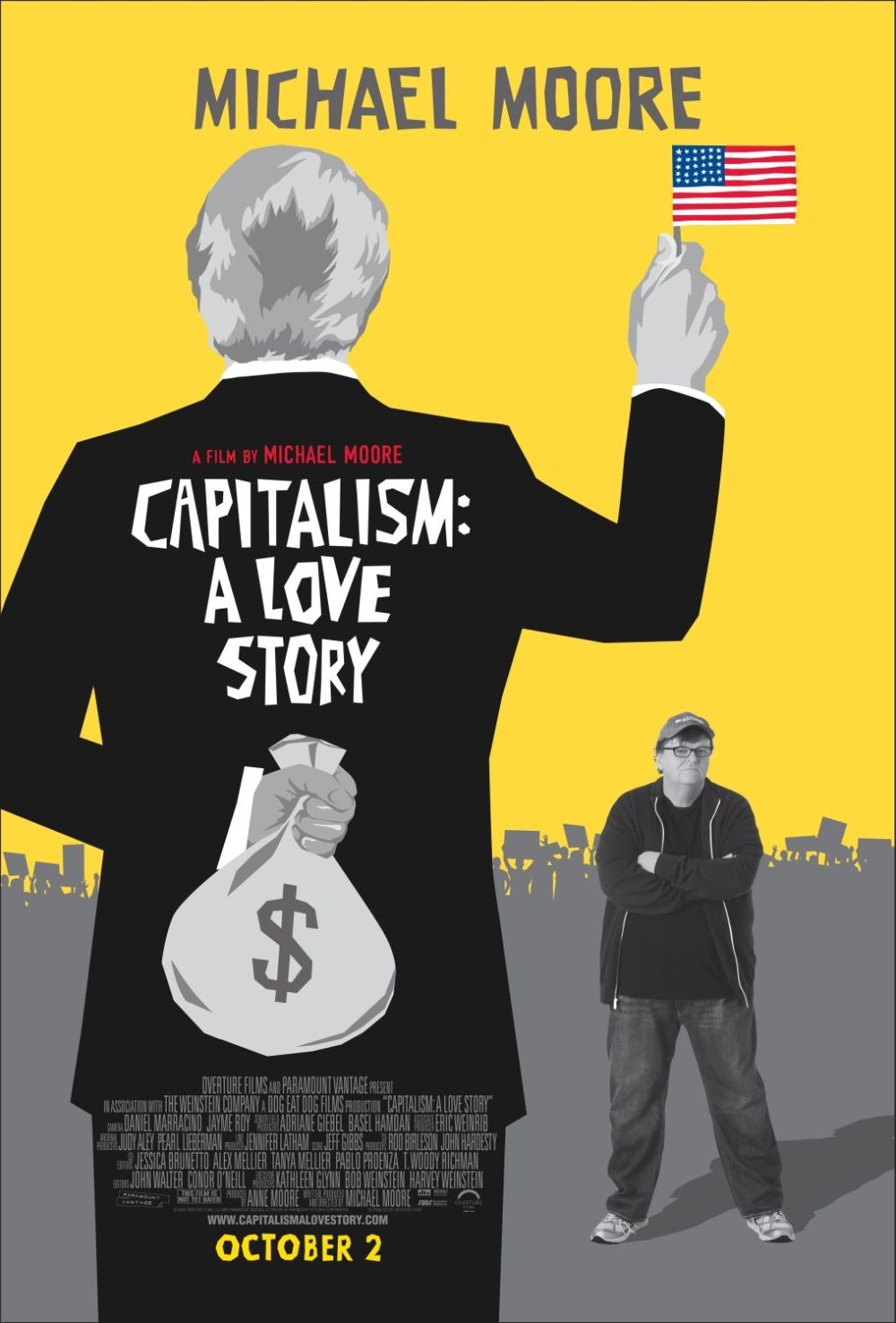
I was a little worried about Michael Moore’s film, “Capitalism: A Love Story.” It covers the catastrophic economic fallout from 2007 to 2009 and presents a very harsh indictment of the current economic order in the United States. Throughout the movie, Moore shows us families being evicted from homes which they have owned for years, and how many get swindled out of them without them realizing the trap they are ensnared in until much too late. He also looks at how Wall Street treats the country’s economy like a reckless night of gambling in Las Vegas, and at how Goldman Sachs gained a frightening amount of leverage over congress at an economically vulnerable time. In short, it is Moore’s attack on all things capitalism, and of how it is an evil which is ruining the fabric of our once great country.
While it may seem ironic how Moore would take on capitalism, especially when he has benefited so much from it over the years, he creates a very compelling case here. Whether you think he is telling the truth or simply manipulating facts to his own advantage, he remains the most entertaining documentary filmmaker in American films. “Capitalism: A Love Story” is honestly one of his best films to date, and it combines some truly devastating moments along with some very funny ones. The movie does need those humorous moments, otherwise this could have been one of the most emotionally draining cinematic experiences ever.
“Capitalism: A Love Story” starts off in a way both hilarious and frightening. Moore starts off with one of those cheesy, snicker-inducing 1950’s instructional movies about the rise and fall of the Roman Empire. It resembles all those films we were constantly subjected to throughout our school years. While the movie plays out along with the stiff narration, Moore inserts clips from the Reagan era White House, and continues all the way through the Clinton era, not to mention both of the Bushes, showing us how the fate which befell the Romans is very much alike to what is happening to America right now. Clearly, he sees us following in the footsteps of a society destroyed through endless greed and avarice, and he is amazed people want to hang on to this damaged system regardless of how bad it is.
From there, Moore takes us to a family in Peoria, Illinois getting evicted from their home. It’s one of the saddest moments in the film, and to add insult to injury, the family ends up getting thrown out of their home much earlier than they had expected. They were given a couple of weeks originally, but it turns out the bank which repossessed their home had just sold it to another family who were ever so eager to get settled in it.
I’ve been looking at these foreclosures from a distance, and I felt a good portion of them were due to owners not living up to their responsibilities. But while this may be the case to a certain extent, Moore creates a very interesting case of how the banks ended up swindling many families out of their homes because the banks continued to charge them more and more for their mortgage. For those looking to become homeowners, the movie is a reminder of how important it is to read the fine print of every contract you sign.
For Moore, capitalism seemed like such a great gift to our country when he was growing up in Flint, Michigan. The way he saw it, it provided his dad with a good job, helped give his family free health care, helped to pay for him to go to college without falling into tremendous debt over student loans, etc. But then Reagan came along and ruined it all from Moore’s perspective. “Capitalism: A Love Story” doesn’t necessarily portray Reagan as an evil man, but it views him more as a puppet for the banking industry among others. Before the star of “Bedtime for Bonzo” came along, the rich were apparently given a 90% tax on what they made, so naturally, they weren’t very happy about this. With Reagan taking over as President, the banks were able to gain control of all things money related, and they created massive tax breaks for the rich. From there, the cost of living rose faster than the cost of living, and prices on things like health care skyrocketed to an exorbitant rate. Even prisons and juvenile detention halls became for-profit businesses where the sentences turned out to be longer than you were told. In short, things were changing, and the price of those things started to get higher and higher.
Much of the American public seemed to be sold on the idea we could be rich too, and therein lays the big lie of Reganomics. In actuality, his policies throughout the 1980’s resulted in creating a bigger gap between the haves and have-nots, and the middle class at times threatened to be rendered extinct. Moore presents this as the point in our country where things started to change to where the rich benefited more than anyone else. Greed became a powerful influence on everyone, and much of America turned into a “me, me, me” society as opposed to one which sought to help the less fortunate. He also shows how it went from there to the Clinton era and, more horrifyingly so, to the George W. Bush era in which the tax cuts for the rich almost became permanent.
“Capitalism: A Love Story” is kind of a semi-sequel to Moore’s “Roger & Me” which came out 20 years ago. In that film, he pursued General Motors chairman Roger Smith for an interview over the closing of the car factory in his hometown. The closing resulted in a tremendous loss of jobs, all despite the fact GM was posting record profits. All these years later, Moore still cannot get a meeting with the CEO of GM. What occurred in Flint, Michigan all those years ago gave him a chance to tell the automotive industry, “I TOLD YOU SO!!!”Unsurprisingly, after all these years, Moore can still not get inside the doors of the GM corporate headquarters to talk to the CEO. His attempts to enter other buildings are just as unsuccessful, and when he tries to get any of the bankers to explain what a “credit derivative” is, one of them says, “Stop making movies!”
Unsurprisingly, after all these years, Moore can still not get inside the doors of the GM corporate headquarters to talk to the CEO. His attempts to enter other buildings are just as unsuccessful, and when he tries to get any of the bankers to explain what a “credit derivative” is, one of them says, “Stop making movies!”
One moment in “Capitalism: A Love Story” which really stayed with me was when President Reagan addressed the bankers on Wall Street, and one of the most powerful bankers standing right next to him told, not asked, him to “speed it up.” Wait a second, Reagan was one of the most powerful people on the planet at that time, and someone next to him was telling him to speed it up? It makes you wonder who was really in charge of America back then.
A truly heart breaking scene comes when a former Wal-Mart employee talks about how, when his wife died at a young age, the company ended up making thousands of dollars off her death. It turns out Wal-Mart took out life insurance policies on all their workers, and ended up profiting from their passing. To make matters even worse, the younger the worker, the more money they get. Now fact checkers everywhere are going to point out how Wal-Mart has since ended these policies, but Moore does mention this during the closing credits.
Another section of the film which hit close to home was when Moore points out how airline pilots are paid less than the manager of a Taco Bell; about $19,000 a year for starting pay. My brother is an airline pilot, and while he makes better wages now, those first few years were a struggle to say the least. It seems almost criminal how these huge airline companies which make millions of dollars end up paying their pilots so pitifully. Thus, we get an example here of the ever-widening gap between the rich and the poor.
Now let’s take a moment here because we all know many will be accusing Moore (many of whom will not even bother watching this film) with thoughtlessly manipulating his on-camera subjects and distorting what they say to his own advantage. Granted, there are moments where his camera focuses on crying family members a little longer than what feels comfortable. While the feeling of manipulation is hard to ignore, getting angry at Moore for showing this will be missing the point. He wants you to be mad. With “Capitalism: A Love Story,” he means to stir up your anger because he does not want you to react passively to what you are witnessing. He wants you to take action against what is happening because he is really sick and tired of doing this all by himself. Can you blame him? Many of us are viewing this economic breakdown and corruption from a distance, and we can’t spend the rest of our lives letting all this go unchecked.
But if scenes of everyday working class people getting heartlessly fleeced doesn’t frighten or enrage you, then the latter half of the movie where nerve-wracked members of congress get swayed by Goldman Sachs among other banks to bail them out so the banking industry could survive should do the trick. Nobody I know of was happy to hear about this, and we got even more pissed off when they got million dollar bonuses which were undeserved. There was a great article in Rolling Stone of how Goldman Sachs circumvented the economic crises of past and present to benefit themselves. Seeing this play out on the screen brought back my own deep feelings of unrestrained infuriation at what these bankers were doing with taxpayer dollars. Why exactly do we have to pay for the mess they created anyway? What happened to accountability?
Many still believe Moore is nothing more than an anti-American zealot who has nothing better to do than say bad things about our country. The conservative comedy “An American Carol” had a character like him trying to convince fellow citizens to abolish the Fourth of July as a holiday. But what made me really love the last half of this film is how he shows how the power of the people really did win out. If you still think he is a hater of this country after watching this, you may need to remove yourself from the cave you have been hiding in.
Moore shows how it was the will of the people which prevented the first economic stimulus, largely engineered by members of Goldman Sachs, from passing. At seeing what was about to occur, Americans everywhere contacted their representatives, urging them not to pass this bill. There were enough house representatives who saw how the banks were in the position of almost completely controlling the legal process, and they rallied against them for the sake of the country. This was all the result of American citizens speaking up loudly.
The spirit of the American people is shown even more strongly when we witness the laid off workers of Republic Windows and Doors in Chicago do an in-house protest at their place of employment. This came about because none of them were paid the severance promised from Bank of America. We also get a look at community groups like LIFFT in Miami which helped unfortunate families and “liberated” the houses they were evicted from. The police came out in force of course, but they ended up not arresting anybody probably because it wasn’t worth the trouble. Then we see Captain Chesley Burnett “Sully” Sullenberger III, the pilot who saved the lives of all 155 passengers aboard US Airways Flight 1549 when he landed it in the Hudson River, go before Congress to protest the way pilots were treated in general and how underpaid they are.
I should add when the section regarding Captain Sullenberger came up, I was afraid Moore would bash him in some way. But he actually applauds Sullenberger for taking his newfound fame and using it to help others who love their job of being a pilot. This leads to one of the movie’s funniest moments as Moore shows how the media seemed to like him more as a hero instead of someone who stands up against the companies for not paying pilots enough. Moore ends up putting some patriotic band music over the soundtrack to shut out Sullenberger, because no one really likes a Debbie Downer.
After all the films Moore has made criticizing people and polices of the United States, it seems amazing anyone would talk to him on camera. But he does get people like University of Missouri professor Bill Black, and Ohio Congresswoman Marcy Kaptur to talk about what they see as the ills of capitalism. Furthermore, he even talks to the Catholic priest who married him and his wife who says capitalism is a sin and not very Christian-like.
Kaptur is one of the movie’s most compelling voices, and she said the first economic stimulus bill would have been a disaster for democracy had it been passed. It would have allowed the banks to have more control over taxpayer money and the legislative process, hence rewriting the law books we have come to study all these years. The banks may want to concentrate the nation’s wealth among the 1% of the population who has it, but they cannot be allowed to silence the voices of the 99%.
Black himself comes off as one of the most intelligent people seen here, and it is heartbreaking to see how some of the smartest minds in America saw this economic disaster coming from miles away. He compares the fallout to a water damn which breaks apart, but of how we could see those little cracks forming. The fact many people like him were silenced or had their character smeared beyond all repair is shameful. For them, they saw it as only a matter of time before the banking industry came crashing down, so there was no way they could have been surprised by any of this.
I was also really pleased to see Moore stick it to the Democrats as well as the Republicans. While the Republicans may share the largest blame, the Democrats cannot be excluded because many of them are every bit as guilty in what transpired. It doesn’t matter what side of the political spectrum they were on, politicians of all kinds were bought out with what seemed like very little effort. Truth is, I am seriously frustrated with both major parties, and Moore taps into this because many Americans, regardless of party affiliation, feel the same way.
By the way, if you really think that Moore is this left-leaning zealot, keep in mind he has spent many years criticizing both parties, and his ire at Democrats seems much larger because he expects more from them. I’m sure if Moore had it his way, Ralph Nader would have been President by now.
As for President Barrack Obama, Moore steers clear of saying anything bad about him, probably because many still see him as a symbol of hope. If Obama does foul things up in Afghanistan, I’m sure Moore might consider doing something on it. But that coupled with the power of people made the last half of this movie seem like the feel-good movie of the year, and this is regardless of how exaggerated it all may seem to those who cannot stand this baseball cap wearing filmmaker.
In the end, Moore is not out to make you repeat everything he says or believes in like it’s the gospels. His attack against capitalism is not entirely waterproof, and much more blame could be thrown at how corporate America has become so corrupted. But it doesn’t matter because what he wants is for you to be angry, and to fight against those who would try to wrestle away the powers given to us in the Constitution.
“Capitalism: A Love Story” is really one of his best films in how he attacks many policies this country has adopted, and then counters it with proof that the power still does belong to the people. It does to the banking industry and deregulation what “Sicko” did to the health care industry, and it is informative, funny, moving, and endlessly entertaining.
For those who wonder why Michael Moore hasn’t left America yet, see this movie to find out. Like him, you may hate what this country is doing to its people, but you are not about to leave it.
It’s fascinating to see the trajectory George Lucas’ career has taken in the arena of public opinion. Here is a man who for years was beloved by everyone on the planet for creating “Star Wars,” who beat the Hollywood studios at their own game and opened us up to a world of tremendous and endless imagination. Then came the “special editions” of the original “Star Wars” trilogy which served to fund the prequels, and then the prequels followed shortly afterward, and he went from being seen as a demigod to being treated like a pariah of the worst kind. Our love for Lucas has long since turned into a vicious hatred which had us out for blood, but has he really become just another greedy CEO, or are we all just being a bunch of ungrateful bastards?
Those issues are examined in Alexandre O. Philippe’s highly entertaining documentary, “The People vs. George Lucas.” After all these years we finally get to see the filmmaker have his day in court. Granted, he only appears in past footage of interviews and behind the scenes stuff, but Philippe does make it seem like he’s giving his side of the story here.
This could have been just a one-sided portrait of Lucas and the venom he has inadvertently inspired in the most devoted fans, but what’s great about this documentary is how it gives us a multi-faceted view of him. We see Lucas’ humble beginnings and how he developed a love for film and a deep hatred for the corporations which took over Hollywood. We feel for him when he talks about how upset he was at film executives who re-cut “THX-1138” and “American Graffiti,” and we find ourselves rooting for him to gain his independence from the studio system forever. The fact he accomplished this through getting exclusive merchandise rights on “Star Wars” was a kick because no studio will ever let another filmmaker get away with such a thing ever again.
Then we see how Lucas, through gaining his independence, became the very thing he fought against. There’s a great interview with Francis Ford Coppola who talks about the filmmaker Lucas could have been and of how many great films he had inside of him, but the success of “Star Wars” ended up enslaving him for life. Lucas has said, with the conclusion of the prequel trilogy, he was going to make the smaller and more experimental films he always wanted to make, but he soon found himself drawn back to the galaxy far, far away when it became possible to do 3D versions of each “Star Wars” movie.
Philippe also shows us how Lucas is full of contradictions. On one hand, this is a filmmaker who fought against the colorization of black-and-white movies, and yet he will do nothing to save the original versions of the first “Star Wars” trilogy. Many feel like he totally ignored the fans who helped build “Star Wars” into a mighty franchise by giving them “The Phantom Menace” and Jar Jar Binks, but even he agreed with them that “The Star Wars Christmas Special” was a huge mistake.
By presenting all the different sides of Lucas, we don’t come out of this documentary loving or hating him. In the end, he’s human like the rest of us, prone to making inescapable mistakes like anybody else. While many despise him for how the “Star Wars” prequels turned out or for what he did to “Indiana Jones and the Kingdom of the Crystal Skull,” his never-ending imagination has created splendid worlds we would all love to be a part of.
One of the great things about “The People vs. George Lucas” is watching the fan made films and parodies which “Star Wars” inspired. Seeing filmmakers use stop motion animation, anime and other methods is a lot of fun to take in. Among the best bits were “Troops” which is a spoof of the TV show “Cops” but with Storm Troopers, and the “Misery” parody which has Annie Wilkes making the injured George Lucas rewrite “Revenge of the Sith” the way she wants to see it. Why she didn’t make him rewrite “The Phantom Menace” remains a mystery.
In many ways, the “Star Wars” prequels and even the last “Indiana Jones” movie were victims of our intense anticipation for them. They represented a way to once again experience the things in our childhood which made us so happy to be alive, and we would give anything to feel like a kid again when it comes to movies. But in the end, our excitement for these movies was undone not because we expected more from them, but because our anticipation proved to be more exciting than the finished product. To put it in another way, here’s a quote from Lewis Black:
“There is no better moment than this moment when we’re anticipating the actual moment itself. All of the moments that lead up to the actual moment are truly the best moments. Those are the moments that are filled with good times. Those are the moments in which you are able to think that it is going to be perfect when the moment actually happens. But, the moment is reality and reality always kind of sucks!”
The anticipation for “The Phantom Menace” was higher than any other movie before it, and there was no way it could have completely satisfied everyone. In retrospect, our excitement for the prequels proved to be far more enthralling than what ended up on the silver screen because we wanted them to be one thing, and Lucas ended up going against our expectations whether he intended to or not.
What “The People vs. George Lucas” seems to suggest in the end is that we should be thankful he continued with “Star Wars” at all. It also suggests that, despite our utter disappointment at the prequels, he still gave us a wealth of imagination we can still be deeply inspired by. Had this been just a documentary dedicated to bashing Lucas to within an inch of his life, it would have become tiresome and boring very quickly. But “The People vs. George Lucas” is great because it gives us the different dimensions of the man and shows us how the ways he fought the system ended up working against him in later years. This is a great documentary that will appeal to fans and non-fans of “Star Wars,” and that’s assuming there are any non-“Star Wars” fans on this planet or others.
There have been countless documentaries on the “Star Wars” movies, most of which feature interviews with actors who will forever be associated with the famous characters they first brought to the screen many years ago in a galaxy far, far away. But with Jon Spira’s documentary, “Elstree 1976,” we finally get to meet the supporting actors who were either hiding behind a stormtrooper mask or were on the screen for only mere seconds. Regardless of how small their roles were, they got to be part of a movie phenomenon which remains as popular as ever, and this documentary allows them to tell their stories and get out of the shadows for a change.
The documentary’s title refers to Elstree Studios where “Star Wars Episode IV: A New Hope” was filmed back in 1976. Spira takes his time to talk with 10 actors who were cast in various roles in the classic movie, and any fan of George Lucas’ space opera will find their conversations fascinating. Some of these actors played characters who are fan favorites, but we never got to see them with their masks off. Others played roles where, if you blinked, you will miss them, but Spira does take the time to capture their moments in a near-freeze frame to show their big moments for everyone to see.
Perhaps the best way to approach “Elstree 1976” is to not go in expecting a “Star Wars” documentary. Yes, “Star Wars” plays a big part here, but it’s not really the point. It’s about working class actors who don’t have the same name recognition as Harrison Ford, Carrie Fisher or Mark Hamill, and of how they managed to carve a career for themselves in a business where only a tiny few can possibly make a living. The fact they were in a “Star Wars” movie, however, has come to define their careers in more ways than one. There are scenes from “A New Hope” here as well as ones from other movies, but John Williams’ classic music is never heard.
One of the most fascinating moments comes early on as each actor discusses how they got cast in “A New Hope” and of how none of them had any idea of what they were about to be a part of. For all they knew, they were acting in some TV film or Grade Z science fiction movie which would be lucky to get any kind of distribution. While any of us would have killed to be on the set of this movie like these actors were, their reactions are easy to understand as they had yet to see the impact this one movie would have on generations of moviegoers. David Prowse, who inhabited the costume of Darth Vader, even remarked, “Maybe it won’t be as terrible as it promised to be.”
Prowse is one of the better-known actors featured here, and we learn of how he started off his career as a bodybuilder but was told he wouldn’t win any competitions because of his “ugly feet.” He would later go on to work with filmmakers like Stanley Kubrick who cast him as a bodyguard in “A Clockwork Orange,” and he played the Black Knight in Terry Gilliam’s “Jabberwocky.” But the role he is proudest of, even more so than Darth Vader, is that of the Green Cross Code man, a character used in British road safety television commercials. At least you got to see his face in those.
If there’s anything disappointing about “Elstree 1976,” it’s that I came out of it wanting to know more about what went on during the making of “A New Hope.” Again, this is not meant to be a “Star Wars” documentary, but the fan inside of me was eager to hear more behind the scenes stories of what went on. Indeed, there are a few told here such as from one actor who didn’t realize he had just asked Lucas to get him a cup of coffee, and of how the stormtroopers kept falling over one another on the set. In terms of introducing the actors to us, their names are shown next to the action figures of the characters they played, but it is hard to keep up with who is who after a while.
The last half deals with these actors’ lives after “Star Wars” as some went on to act in other movies while others found another career path for themselves. Whatever the case, many of them have gone on the convention circuit to talk with fans who want to know every single detail about the making of one of their all-time favorite movies. Just being in any “Star Wars” movie has had a major impact on their lives, but while some fans love meeting these people, others see them as nothing more than “bit part actors” which is a bit dispiriting.
But the real strength of “Elstree 1976” comes in how Spira shows us what the life of a working-class actor is like, and it’s a nice gesture how he brings these 10 people out of the shadows to give them the recognition they have long deserved. Whether they had big scenes, small scenes or scenes which sadly got left on the cutting room floor, “Star Wars” impacted their lives and for the better in many ways. They may never get the fanfare of the bigger name actors, but they still get to put this movie on their resumes which must have made a big difference.
Coming out of “Elstree 1976,” I felt like the documentary could have gone deeper in certain areas and revealed more, but we have here is still entertaining and a must for “Star Wars” fans as they will want to know about everything connected to this cinematic universe. And this is regardless of the fact it does commit the one unforgivable sin no “Star Wars” related movie has any right to make: it shows Greedo shooting first. Damn you Lucas!
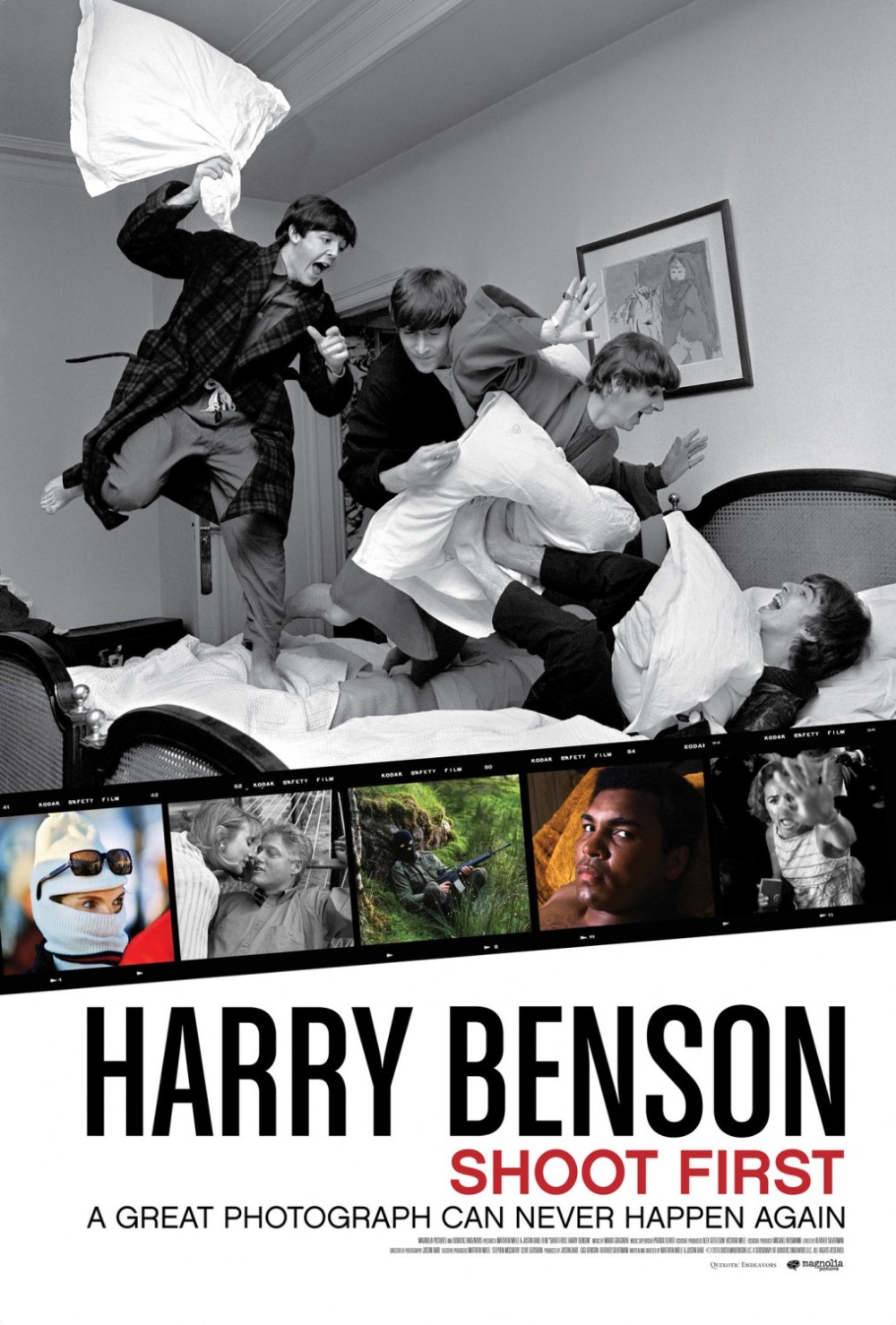
The documentary “Harry Benson: Shoot First,” directed by Matthew Miele and Justin Bare, looks at the life and work of renowned photographer Harry Benson who shot and captured unforgettable images of many famous figures such as The Beatles, Michael Jackson, Muhammad Ali, Donald Trump, and Hillary and Bill Clinton. What is especially striking about his photography is how wonderfully intimate and vivid his photos are. These are not just still images made to promote a new project of some kind, but instead are ones which show celebrities at their most natural and down to earth. Looking at Benson’s photographs today, it feels like you are going back in time and arriving at a place which feels so incredibly real.
I had the opportunity, along with Rama Tampubolon of the website Rama’s Screen, to talk with Benson and Miele about how this documentary came about and how it evolved from start to finish. Benson also told us stories of how he got the photo of Paul McCartney, John Lennon, George Harrison and Ringo Starr who were in the midst of a pillow fight, and of the haunting images he captured of Robert Kennedy before and after he was assassinated.
“Harry Benson: Shoot First” is another terrific documentary in a year filled with them, and it is a must see for pop culture fans and anyone interested in photography. It opens on December 9 at the Laemmle’s Monica Film Center in Santa Monica, and it is also available to watch on Amazon Video, VOD and iTunes.
Please check out the interview above, and be sure to watch the documentary’s trailer below.
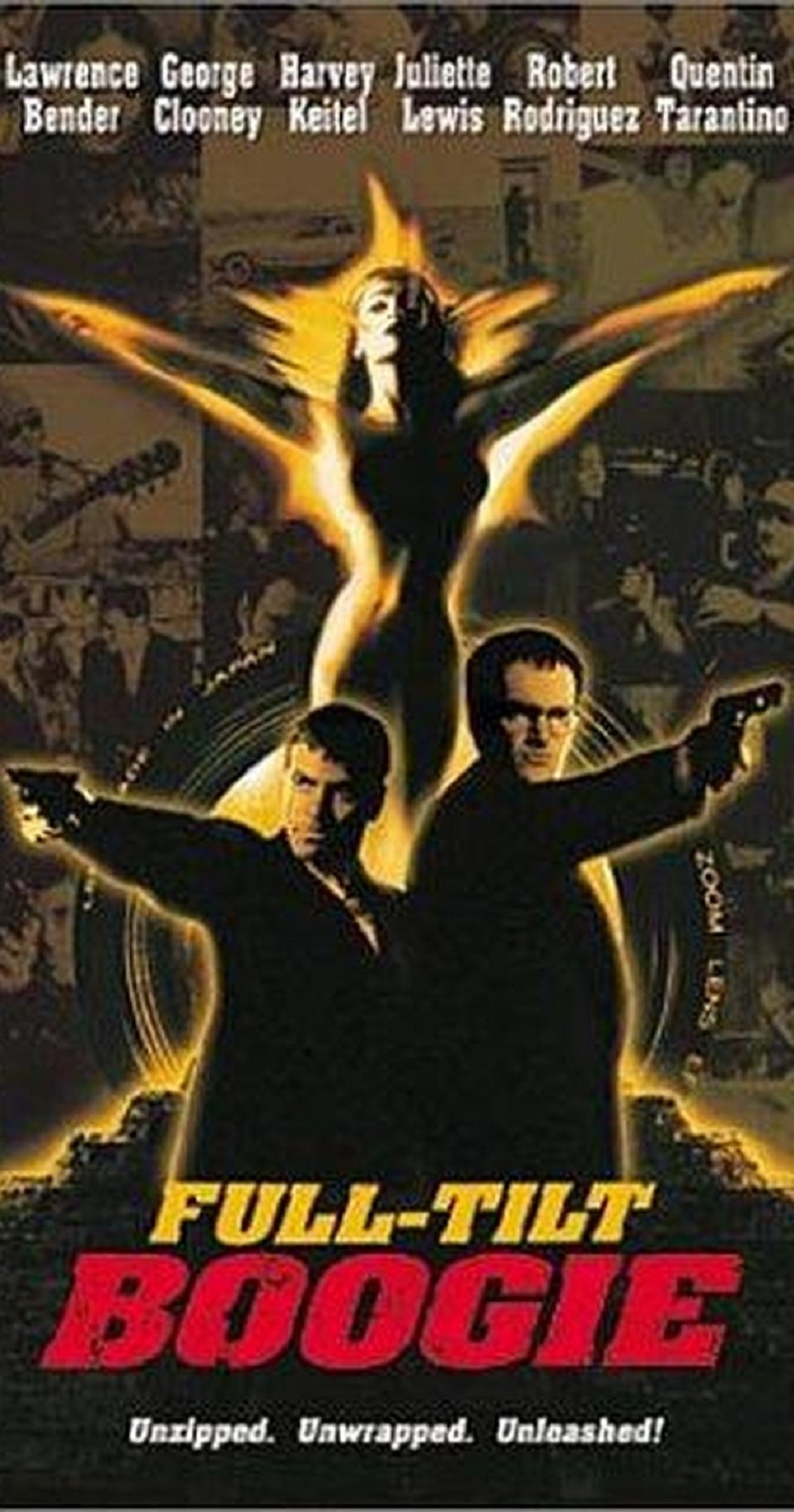
After a double feature of William Friedkin’s “To Live and Die in L.A.” and “Rampage,” which is not currently available on DVD, the audience members at New Beverly Cinema were in for a special midnight treat as the theater held a screening for the 20-year-old documentary “Full Tilt Boogie.” Directed by Sarah Kelly, it chronicles the making of Robert Rodriguez’s action horror cult classic “From Dusk till Dawn” which starred George Clooney and Quentin Tarantino as outlaw brothers who, along with a vacationing family, end up at a rowdy Mexican bar which turns out to be infested with vampires. The documentary introduces us to those people who worked behind the scenes on the movie, of why they want to be a part of show business, the fun they have when the cameras are not rolling, and of the complicated relationship between movie studios and unions.
Introducing this screening of “Full Tilt Boogie” was Kelly, and she was joined by her producer and friend Rana Joy Glickman. The emcee who welcomed them remarked about how cool it was this documentary was playing at the New Beverly and that it was sharing a marquee with Friedkin’s “Cruising.” To this, the emcee said about Kelly, “Whoa! She scored good!”
Kelly welcomed all the “insomniacs” who came out to see her documentary and explained how it became a reality.
“The reason this movie came about was that Robert Rodriguez and Quentin were about to start shooting ‘From Dusk till Dawn,’ and it was an $18-million-dollar independent movie and the unions were pissed,” Kelly said. “They were like, ‘What do you mean? No, you have to go union.’ And so, there was a big threat of a strike, and Quentin thought it would be cool to document it.”
“I had worked for him on a little movie called ‘Pulp Fiction’ and a couple of other movies he was involved with,” Kelly continued, “and he knew that I was studying to be a director so he gave me a shot. At the time, I was taking a break from production and I was working part-time in a law firm and I was like, ‘So is this for real? Should I quit my job?’ And he said, ‘Uh, quit your job yesterday.’ So, I did. We wrangled our little, tiny, hardcore crew and we started shooting, by the way, on 16mm film. Nobody shoots documentaries on 16mm film anymore, but we did. The union threat kind of turned into a cold war and I asked Quentin if we could keep shooting and just do a love letter to the crew. I pitched it as kind of like ‘Hearts of Darkness’ (Eleanor Coppola’s documentary on ‘Apocalypse Now’), but not that dark. Quentin said, ‘Yeah, that’s really fucking cool!’”
As for Glickman, she claimed to have hundreds of stories to tell about the documentary and “From Dusk till Dawn,” but she chose to tell only this one.
“When we finished ‘Full Tilt Boogie’ we were just so pleased that we finished and we got to make the posters for the film, not the one that Harvey Weinstein had selected,” Glickman said. “Our favorite poster is Sarah’s design, and it was Ken (Bondy), the craft service guy on ‘From Dusk till Dawn,’ standing there with a tray of lattes and it said, ‘From the maker of coffee on Pulp Fiction, we bring you Full Tilt Boogie.’”
Kelly responded, “That’s a great poster, right?”
“Full Tilt Boogie” may not be the masterpiece “Hearts of Darkness: A Filmmaker’s Apocalypse” is, but it’s still a very entertaining documentary which takes you behind the scenes of a movie’s production in a way few others do. We get to see the challenges crew members constantly face on a movie set, and we also get to take in the fun they have outside of it as well. For these people, this is a job done out of love and far more preferable than working a 9 to 5 job which has them sitting at a desk all day. Kelly certainly did create a love letter to these crew members, and we revel in the festivities they have from one day to the next.
Thanks to Sarah Kelly and Rana Joy Glickman for taking the time to come out, and at such a late hour, to talk about “Full Tilt Boogie” at New Beverly Cinema.
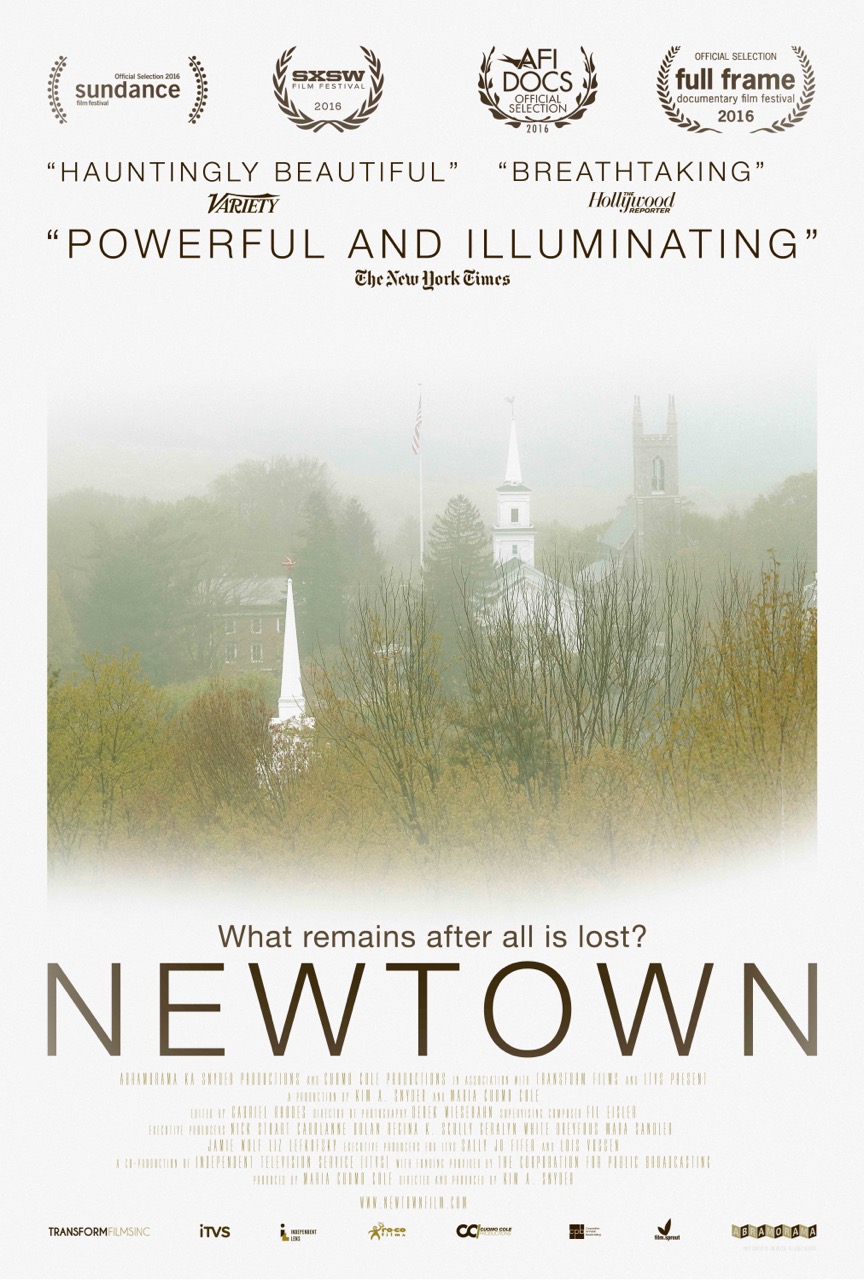
I got to speak with Kim A. Snyder recently while was in Los Angeles to discuss her documentary “Newtown.” The documentary looks at the aftermath of the largest mass shooting of school children in American history which took place at Sandy Hook Elementary School on December 14, 2012. The school was located in Newtown, Connecticut, and we watch as the adults who tragically lost their children attempt to move on with their lives. But since this tragedy, these adults look to be stuck in a moment they may never get past. What they are left with is profound grief and memories which will now be forever tinged with sadness.
“Newtown” is certainly one of the most emotionally devastating documentaries to come out in some time, but it is not without hope. Not once is the killer’s name mentioned or his face shown as Snyder’s real interest is in the townspeople who struggle to move on despite all they have lost. As painful as their stories are, these are the stories which need to be heard as the media often tends to focus on the shooter more than anything else.
Snyder is an award-winning filmmaker and producer, and for a time she was a contributor to Variety Magazine. She made her directorial debut in 2000 with “I Remember Me” which chronicled her struggles with Chronic Fatigue Syndrome (CFS). She also directed “Welcome to Shelbyville” which documented the intersection between race and religion in America’s Heartland. Her other works include the short films “Alone No Love,” “One Bridge to the Next” and “Crossing Midnight.”
While talking with Snyder, she explained why the shooter’s name was never mentioned in “Newtown,” why the term “gun control” was never used, of how Atom Egoyan’s “The Sweet Hereafter” proved to be a major influence on this documentary, and of how she managed to find hope in a story filled with infinite grief.
Check out the interview above, and be sure to catch “Newtown” when it opens in Los Angeles on October 14. Also, be sure to visit the documentary’s website at www.newtownfilm.com.
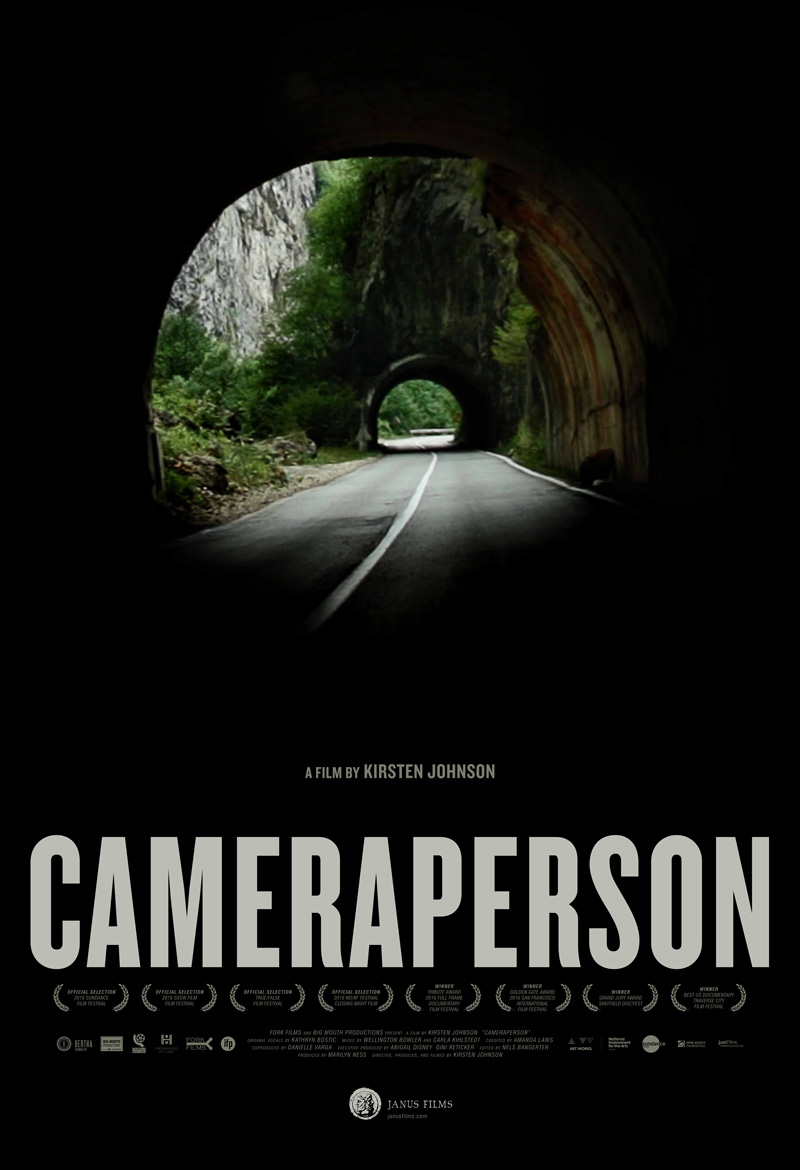
2016 has been a superb year for documentaries, and the latest example of this is “Cameraperson.” Directed by documentary filmmaker and cinematographer Kirsten Johnson, it is a series of images taken from her 20-plus year filmmaking career which she treats as a memoir of her life behind the camera. Among the visuals we get to see are of Brooklyn, a boxing match, postwar Bosnia and Herzegovina, a Nigerian midwife delivering babies as well as moments taken from Johnson’s own life as well. There is even a moment where she shoots footage of the entrance to an Iraqi prison which has a “you are there” feel to it, and it gets to where you are as eager to escape the area as they are. She presents these images to us in a movie without any narration as all these pictures tell a story all their own, and it is impossible to take your eyes off the screen. “Cameraperson” allows us to step into Johnson’s worldview as she takes us on a personal journey, and she acknowledges how complex it is to film and be filmed.
It was a real pleasure talking with Johnson while she was in Los Angeles to promote “Cameraperson,” and it resulted in one of the most fascinating interviews I have conducted this year. I was very eager to learn about how she went about constructing her documentary and of how it evolved from start to finish. This could have just been a movie with a bunch of images thrown together randomly, but there was clearly a lot of thought put into this one. Johnson also explained how she resisted the urge to put narration in her documentary, and she even shared some behind the scenes stories about “Citizenfour” which she was one of the camera people on.
Please check out the interview above, and be sure to watch “Cameraperson” which is now playing in Los Angeles at the Laemmle Royal thru September 29th.
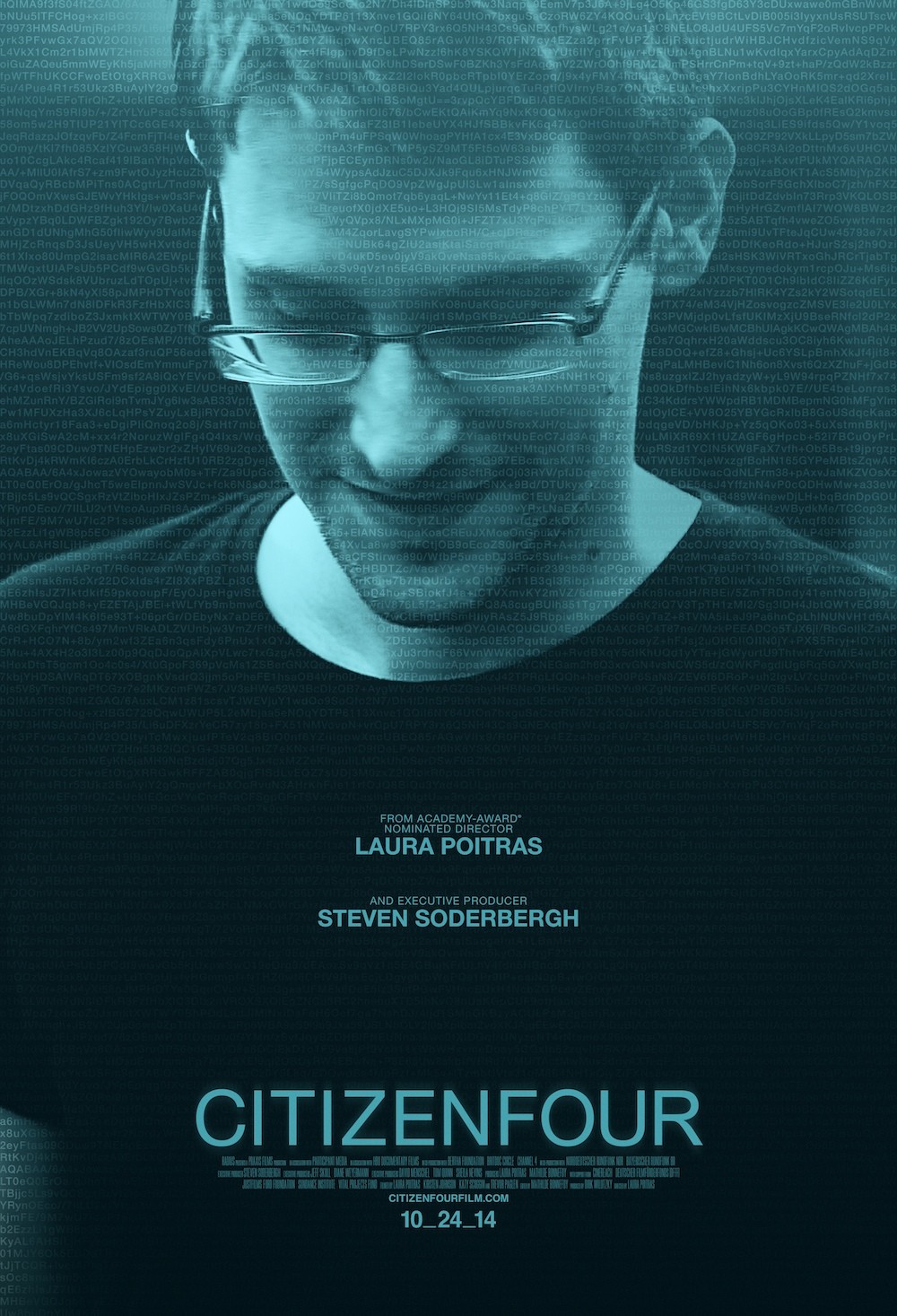
“Citizenfour” is a documentary I should have taken the time watch when it first came out in theaters back in 2014. For one reason or another, I just never got the chance to check it out and life got busier for me as it always does. As a result, my view on Edward Snowden, its chief subject, has remained neutral as I never knew what to make of him when the news of his revelations about the National Security Administration’s (NSA) illegal wiretapping were brought to the public. But with Oliver Stone’s “Snowden” now playing in theaters, the time had come to check out “Citizenfour” as it likely provides audiences with the most objective and unbiased view we could ever hope to have about this particular whistleblower.
Technically, “Citizenfour” is a documentary, but it also works as a nail-biting thriller as we watch Snowden and others doing interviews in secret, but we always wonder why the phone keeps ringing and why the fire alarm keeps going off. Is everyone in the hotel room under surveillance? Are there CIA or NSA agents ready to storm it? Might there be a government assassin prepared to take everyone out from a building across the way? In the movie “Strange Days,” Tom Sizemore told Ralph Fiennes the issue isn’t whether you’re paranoid, the issue is whether you’re paranoid enough. These days, that piece of dialogue is an amazing understatement.
This documentary was directed by Laura Poitras who knows all about being under intense government surveillance. She declares “Citizenfour” to be the final part of her post-9/11 trilogy which includes “My Country, My Country” about the U.S. invasion of Iraq, and “The Oath” which focused on Guantanamo and the “war on terror.” Since 2006, she has been placed on a secret watch list by the U.S. government and was constantly interrogated by border agents every time she traveled internationally. It got to where she had no choice but to move to Berlin in an effort to protect her footage from being confiscated. Suffice to say, “Citizenfour” is a documentary which would never have seen the light of day were these secret interviews conducted in America.
The title refers to the name Snowden used when he attempted to make contact with Poitras and journalist Glenn Greenwald. Eventually, the three meet in a Hong Kong hotel room where Snowden tells them, as well as The Guardian’s intelligence reporter Ewen MacAskill, all he knows about the U.S. government’s illegal wiretapping activities, and it is frightening to see just how far it goes.
What’s fascinating about “Citizenfour” is how calm and collected Snowden appears here as he divulges information which will eventually render him a traitor to many and a hero to others. It’s almost like a ticking time bomb as we are viewing his very last hours of anonymity as he will soon be revealed to the world as a whistleblower, and many will manipulate his image any way they can. But in this day and age, when everyone is so hooked on their cell phones and Facebook, aren’t we a little too quick to give up certain parts of our privacy? We have always felt something or somebody keeping an eye on us to where we accept the fact we are being watched, but we reveal more about ourselves now than we ever did in the past.
Poitras deserves a lot of credit for keeping a firm hand on the subject matter here as she gives “Citizenfour” a dark and ominous tone as we know how much Snowden’s revelations will rock the world. She is also aided by the use of Nine Inch Nails’ instrumental music from the “Ghosts” album which provides an electronic hum which keeps getting louder and louder as the truth is revealed and identities will be forever burned in our conscious minds.
By the time “Citizenfour” ends, the cat has been let out of the bag and Snowden finds himself living in Russia along with his girlfriend. The fact Poitras was able to get him back into the documentary before the end credits started rolling feels remarkable in hindsight. At this point, only he and Greenwald can communicate certain bits of information through pieces of paper which they later rip up. The battle to restore privacy has only just begun, and it will be a long time before it will be resolved. Whether it will be resolved fully is another story.
Poitras makes us see the reach of the U.S. government both through her own struggles and former NSA intelligence official William Binney whose own whistleblowing efforts had people bursting through his door with guns. President Barack Obama is shown in footage saying Snowden should have gone through legal channels and share his information legally, but when you take into account how other government whistleblowers have been treated, even he can’t guarantee Snowden can be brought in safely.
What is particularly frightening about “Citizenfour” is how the different parts of government are constantly watching one another to where it feels like trust in one another can seem like a rare commodity. It all brings us back to the “Watchmen” question, who watches the watchers? Everybody is watching each other, and in many ways it doesn’t matter who the President is because the NSA appears to run by their own rules and no government oversight can easily stop them in their tracks.
Opinions on Snowden still differ as some see him as a hero and others as a traitor. “Citizenfour,” however, shows him to be a selfless man eager to right the wrongs made by people who have betrayed the public’s trust. The fact that Poitras was able to get this documentary made let alone released is astounding, and it should be required viewing for all Americans. At the very least, she, Snowden and Greenwald deserve credit for bringing this wiretapping issue to light as there needs to be more discussion about it. We are still feeling the aftereffects of these revelations, and the dominoes keep on falling. While it helps to have all kinds of information to combat those who threaten our livelihood, you eventually have to wonder if it is worth the price.





 The Ultimate Rabbit