‘Dirty Harry’ Movie and 4K Review
The following review was written by Ultimate Rabbit correspondent, Tony Farinella.

Dirty Harry” is a film I’ve heard a lot about during my almost forty years on this planet, especially when I started to watch movies regularly in my youth. It’s long been a part of American pop culture, and it’s hard for me to believe this was my first time watching it.  I’m familiar with the “Do you feel lucky, punk?” speech that has been repeated by numerous cinephiles over the past fifty years.  “Dirty Harry” was released in 1971. The 70’s are my favorite decade of American cinema, as the films back then were raw, dirty, and unapologetically in-your-face.

Our antagonist in this film goes by the name of Scorpio (Andrew Robinson), and when he’s first introduced on screen, he’s seen killing a woman in a San Francisco pool from a rooftop. Scorpio a vicious sniper who plans on killing more innocent people unless his demands are met.  He’s looking to get $100,000, and if he doesn’t, he will kill one person a day, starting with either a Catholic priest or an African American.  Police Inspector Harry Callahan (Clint Eastwood) found his ransom letter and wants to take matters into his own hands much to the dismay of the San Francisco Police Department. He’s called Dirty Harry because he’s not afraid to get his hands dirty and do whatever is necessary to find his man. He also appears to hate everyone equally, regardless of their race.
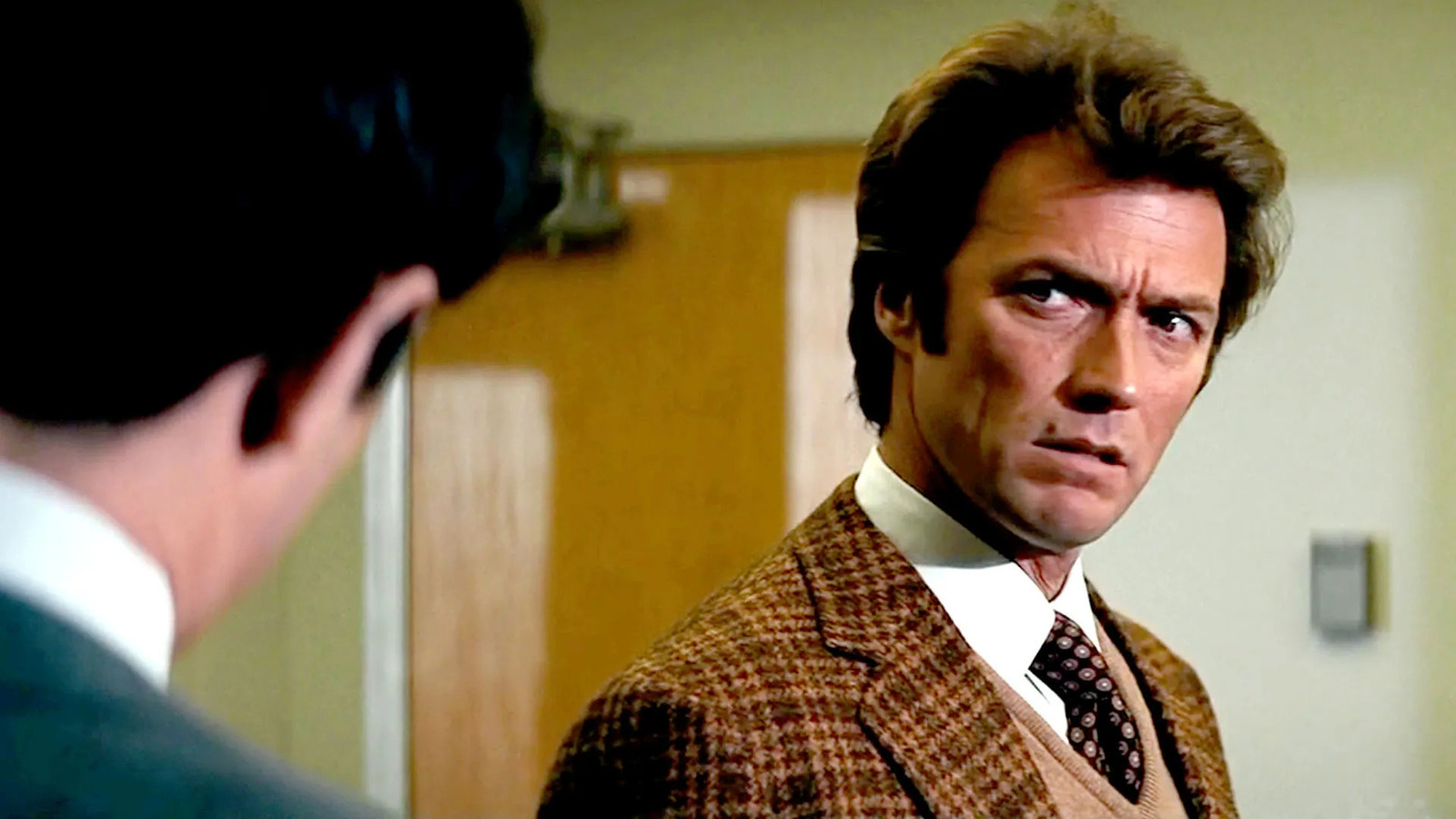
Harry is none too pleased when he’s assigned a rookie partner named Chico Gonzalez, played by Reni Santoni. Harry’s previous two partners ended up injured or dead. Before long, Scorpio decides he wants to raise the stakes–he wants $200,000 or he will kill a teenager named Ann Mary Deacon.  It’s up to Harry and Chico to put a stop to this before it gets even worse for the entire city of San Francisco. The biggest problems in Harry’s life come from his own police department, as they want him to play by the rules and follow police protocol.  Harry Callahan knows he’s dealing with a lunatic here, and you can’t reason with someone who is evil, maniacal, and cold-blooded.

My biggest issue with “Dirty Harry” is the fact the film presents an antagonist and a protagonist who are written in a bland and one-note fashion. Eastwood is known for his understated and minimalist approach to acting, and most of the time, it works. In “Dirty Harry,” for me, I wanted to learn more about what makes him tick and what his backstory is.  I didn’t need everything to be explained to me in granular detail, but we know very little about him.  The mystery of Harry Callahan doesn’t work in this film because I found myself detached from the character.  Scorpio is just an over-the-top villain. What is anyone’s motivation here?
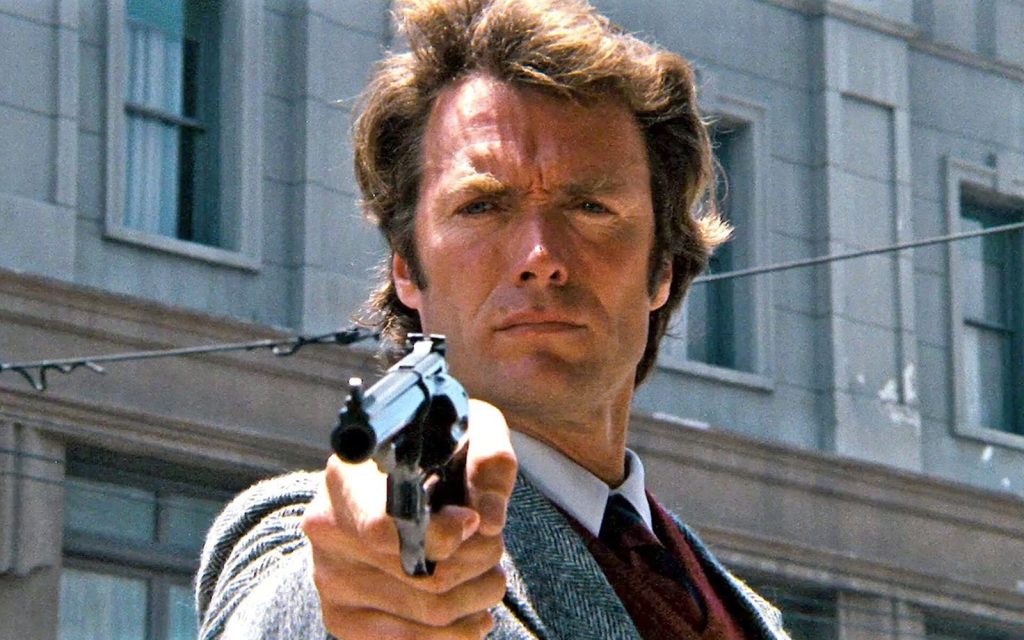
“Dirty Harry” is a film which is all about the chase.  It’s all about Harry chasing Scorpio, and it’s interesting to a degree, but it doesn’t hold up for the duration of the film.  I understand the film is making a statement about police violence and what needs to be done in order to achieve a peaceful environment for everyone involved. Do the police need to resort to a more aggressive style of police protocol? Are they letting criminals get away with too much? Do the police need to bend the rules a little bit if it allows everyone to feel safe?  I understand what the film was trying to say, and I don’t need everything to be spelled out for me perfectly, but this is a film that felt flat and uninteresting to me. I needed a little more meat on the bone here.  It’s OK to have a simple story, but you need characters with a little more depth to them than simply good guy versus bad guy.

Overall, I liked the beginning and the end of the film, but the film completely lost me in the middle when it was the back-and-forth chase between Scorpio and Harry Callahan. There is little to no dialogue going on in these scenes, and I respected the style that was on display from director Don Siegel, but I needed something else to grab me to keep my attention. “Dirty Harry” is a Hollywood classic, and I understand many filmgoers hold it in very high regard.  I was anticipating having a strong reaction to it. When it was over, I thought to myself, “That’s it?”

* * out of * * * *

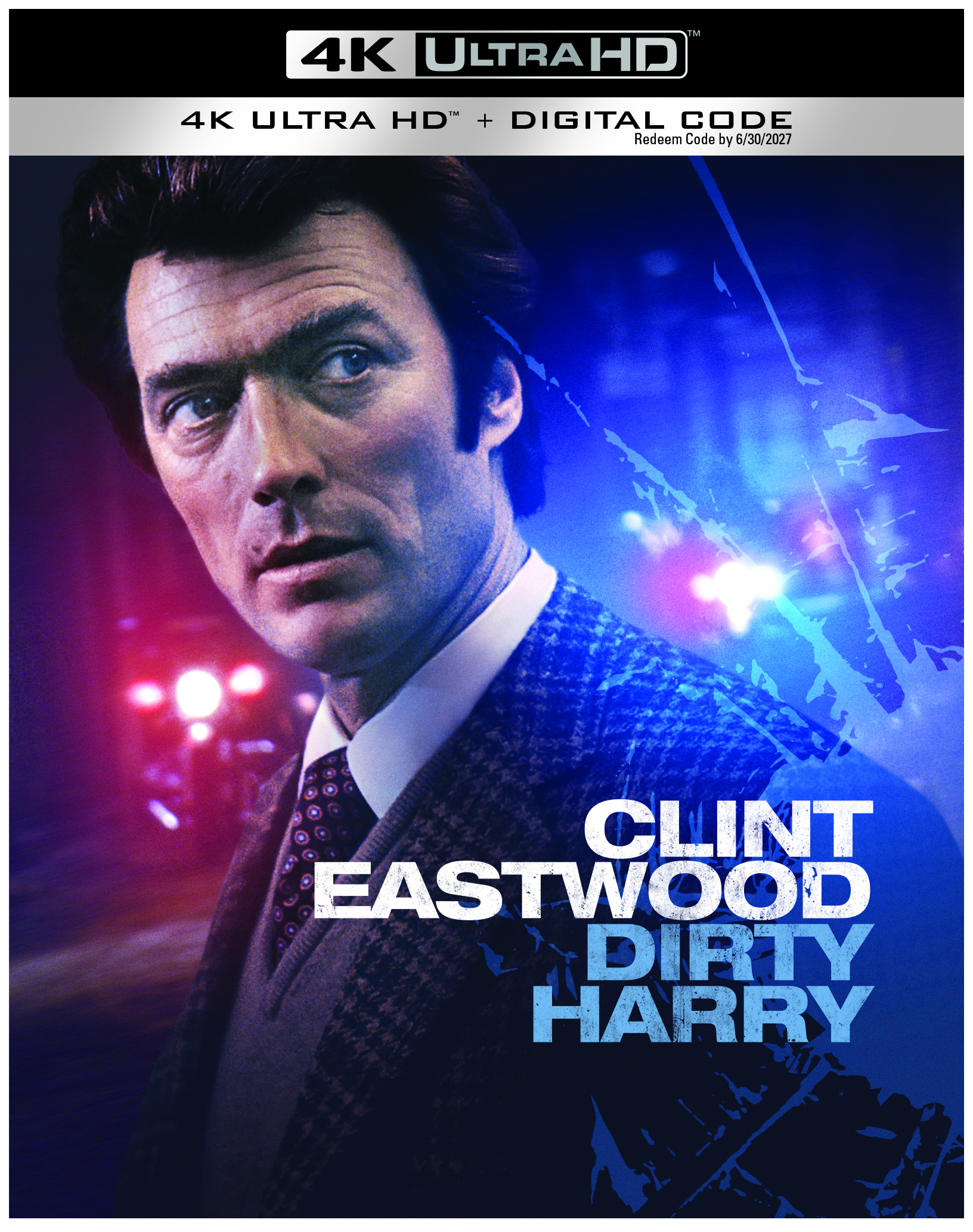
4K Info: “Dirty Harry” is released on a single-disc 4K from Warner Brothers Home Entertainment in either a slipcover version or a collector’s edition steelbook. There is also a digital copy of the film included in the set.  The film has a running time of 102 minutes and is rated R.

4K Video Info: The 4K HDR transfer here is striking and vibrant while maintaining a grimy and old-school look to it in the process. When the film is taking place during the day, the colors really pop and shine on screen. When it takes place at night, the deep blacks are on full display.

4K Audio Info: The Dolby Atmos track is sharp and solid throughout the film. It’s powerful without being overbearing. Subtitles are included in English, Spanish, and French.

Special Features:

Commentary by Richard Schickel

Generations and Dirty Harry – NEW

Lensing Justice: The Cinematography of Dirty Harry – NEW

American Masters Career Retrospective: Clint Eastwood: Out of the Shadows

Clint Eastwood: The Man from Malpaso

Clint Eastwood: A Cinematic Legacy – Fighting for Justice

Interview Gallery

Dirty Harry’s Way

Dirty Harry: The Original

Should You Buy It?

If you love “Dirty Harry” and it’s one of your favorite films, you’ll be over the moon about this 4K release, which includes over four hours of special features. They really made sure they went above and beyond for this 4K release, and I imagine a lot of people have been waiting a long time for this.  Visually, it’s a stunning release that is sure to satisfy physical media lovers out there. The Dolby Atmos track stands out on this as well. For people who haven’t seen the film before, like myself, I don’t know how well it will hold up with a modern audience or a first-time viewer. It didn’t connect with me, and I was disappointed by the majority of it. It was a film I respected, but I didn’t connect with it the way I have other Clint Eastwood films I’ve been watching lately. If you haven’t seen it before, you might want to watch it before you blind buy it.

**Disclaimer** I received a copy of this film from Warner Brothers to review for free.  The opinions and statements in the review are mine and mine alone.
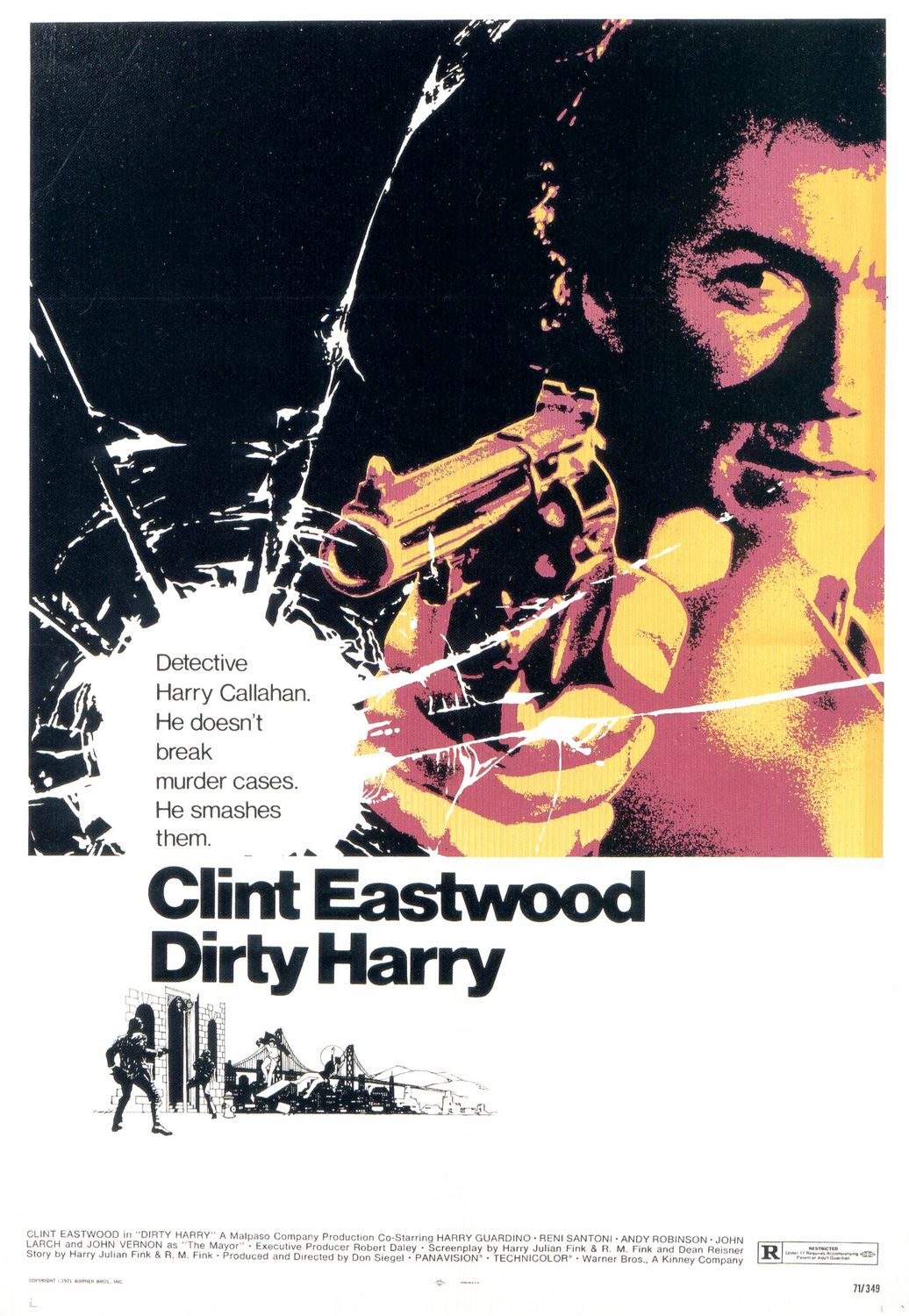
Edgar Wright and Quentin Tarantino Look Back at ‘Dirty Harry’

Dirty Harry poster

Of all the movies Edgar Wright selected for The Wright Stuff II Film Festival at New Beverly Cinema, “Dirty Harry” is the one he has watched the most. Wright screened a nice print of the 1971 classic along with another movie called “The Super Cops,” and joining him to talk about it was filmmaker Quentin Tarantino.

They started off riffing on trivia about how the original title for “Dirty Harry” was “Dead Right,” and how it was first going to star Frank Sinatra who later pulled out when the 44-magnum ended up injuring his wrist. It also turned out the late Irvin Kershner, who directed “The Empire Strikes Back,” was the first choice to direct the movie (Don Siegel eventually took the job). Tarantino and Wright also talked about how actor Albert Popwell played a different black stereotype in each “Dirty Harry” film except for “The Dead Pool,” and they both wished he played the mayor in that one.

For Wright, what he loved about “Dirty Harry” was the grittiness of its main character and the atmosphere of San Francisco. On the DVD for “Hot Fuzz,” Wright did a location tour where the film was made, and he even checked out the deli where Eastwood was filmed eating a hot dog when the bank robbery took place. As for the film’s score by Lalo Schifrin, he declared it his all-time favorite saying it marked the birth of “acid jazz.”

But much of the treasure trove of information came from Tarantino who said he first saw “Dirty Harry” when he was five or six years old, and he described it as a “political lightning rod” upon its release. Apparently, it got a lot of crap thrown at it by liberal critics who didn’t want a police fascist solution as well as from right wingers who got freaked out by Scorpio and the ills of society.

The way Tarantino viewed it, however, “Dirty Harry” does have a solid agenda. When Andy Robinson played Charles “Scorpio” Davis, there had never been a villain like him before in movies and, the term serial killer had not really been coined yet. The agenda was for there to be new laws for new crimes, and “Dirty Harry” was screaming for those new laws. Scorpio was not your average villain, and that he got such a kick out of his crimes was easy to see. There was no cure in store for such a psychotic character like this one.

Both Tarantino and Wright agreed “Dirty Harry” really holds up after 40 years. Much of this is due to its sequels treating the iconic character more as a superhero than a regular human being.  With “Magnum Force,” Tarantino felt it was made more for critics of the first movie than its audience as it preached against its predecessor and the character itself by having Harry go after those taking the law into their own hands. This was the same deal with the other sequels, but “Sudden Impact” is the lone exception. Wright remarked at how, along with John Carpenter’s “Halloween,” “Dirty Harry” has one of cinema’s most perfect endings which was eventually ruined by sequels.

They also talked about Siegel who had already been around for a long time before he directed “Dirty Harry.” Siegel was a B-movie genre director from the 1950’s and a Hollywood craftsman who eventually became an auteur. For the most part, Harry Callahan represented the quintessential character of his films; the cop who takes the law into his own hands. Even after directing the 1971 classic, Siegel would continue to have a long and healthy career in films, eventually reuniting with Eastwood on “Escape from Alcatraz.”

Tarantino also described “Dirty Harry” as the single most ripped off and imitated action movie of the 1970’s. He even gave a list of every single movie which stole from it: “McQ,” “Newman’s Law,” “Nightstick,” and everything from Cannon Films. The similar thing about the ripoffs was they lost all the political subtext which made “Dirty Harry” such a strong film. It became all about going after some big drug dealer or crime syndicate, and there was nothing political about that. When it came to 1970’s movies, the only others which were stolen from as much were the ones starring Bruce Lee.

“Dirty Harry” apparently also boasts the first homosexual date in cinema history as seen through Scorpio’s scope rifle. Tarantino said it was the first instance of unforced male sexuality in movies, and he still remembers the audience laughing at this scene when he first saw it. Back then he thought the audience wanted this couple killed, pointing out how they were not as enlightened as we are today, and that they were culpable for their “sinister intentions.”

Hearing these two great filmmakers talk about this Don Siegel/Clint Eastwood classic made for one of the most interesting evenings I have ever spent at New Beverly Cinema. A new generation of audiences will look at “Dirty Harry” differently and may see it as tame compared to plethora of serial killer movies we see today. With the popularity of “The Silence of the Lambs” and the “Saw” movies among others, serial killers have long been the norm in American cinema, so the accomplishments of the 1971 classic threaten to seem diluted as a result.

Thanks to Edgar Wright and Quentin Tarantino, we are reminded of “Dirty Harry’s” place in cinematic history and how it opened doors not just for Eastwood, who made the transition from westerns to other films, but for so many other movies as well for better and for worse.

John Carpenter Looks Back at ‘Escape From New York’ and ‘Escape From LA’

John Carpenter Escape From New York photo

“Escape Artist: A Tribute to John Carpenter” continued with the exploits of Snake Plissken in the double feature of “Escape From New York” and “Escape from LA” at the Aero Theater in Santa Monica. These films featured some of the collaborations between Carpenter and Kurt Russell who first worked together on “Elvis.” They quickly became great friends and went on to work together on several other films including these two and “Big Trouble in Little China.”

The emcee warned us that the print of “Escape From New York” was pretty faded as it was an original print and the only one American Cinematheque could get their hands on. This was being generous as it looked like it had been slaughtered by countless film projectors, and the color was faded to where everything looked pink. It is astonishing it didn’t break apart in the projector. Still, the fans still enjoyed watching the film, one which they have seen hundreds of times before. They laughed when “1997 NOW” came up and when Lee Van Cleef speaks into this enormous cell phone no one would have today, let alone in 1997.

After “Escape From New York” ended, Carpenter came to the stage and was greeted with another thunderous standing ovation. Carpenter quickly acknowledged the crowd by saying, “Thank you for coming out to see the movie tonight, but I got to tell you this is the worst fucking print. My fucking God! There’s no color in it!” The audience laughed loudly as they were in complete agreement.

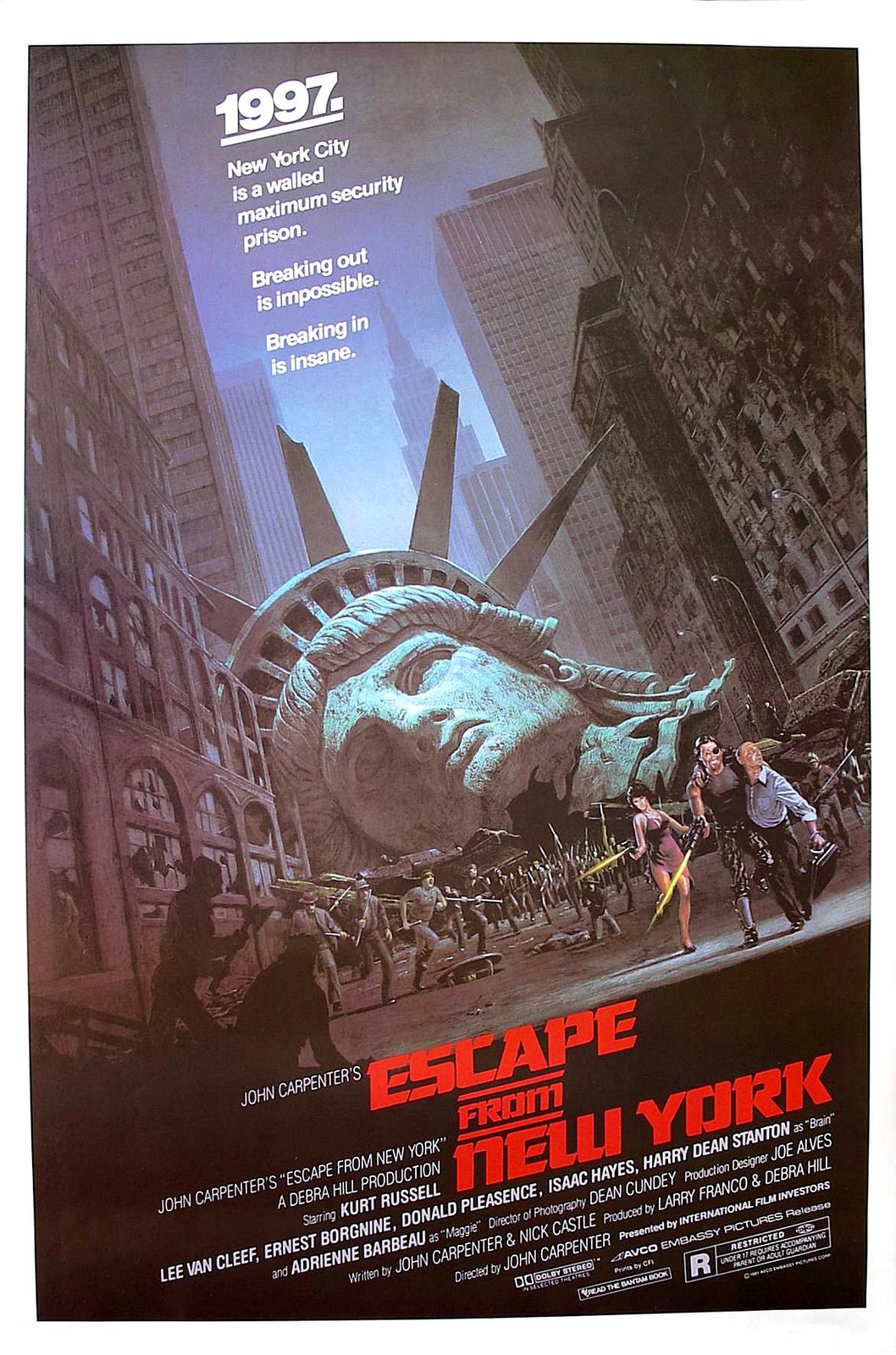
Escape from New York poster

The discussion started off with a question about the genesis of the project. Carpenter talked about writing the script back in the early 1970’s when there was a great sense of cynicism in America about our President and in response to the hostage crisis in Iran. He also admitted he was inspired by two of his favorite movies back then, “Dirty Harry” and “Death Wish.” Those two movies involved men driven to the brink emotionally and who took it upon themselves to wreak vengeance on those who wronged them. Like those characters, Snake Plissken gets the job done, and this brought a lot of satisfaction to audiences as nobody in the real world seemed to be accomplishing anything.

Carpenter said he initially wanted Clint Eastwood to play Snake Plissken. For one reason or another, it did not work out. He also said he had shopped this screenplay around to several studios which rejected it outright, but fortunately he had a multiple picture deal with Avco Embassy which had produced “The Fog.” Ironically, they wanted Charles Bronson for the title role. Somehow, everything came together when Russell got cast as Snake Plissken, and he portrayed the character as an asexual human being who cares about nothing more than staying alive. In the process, he created one of the most memorable anti-heroes ever seen in a movie.

Carpenter also talked about Lee Van Cleef, a favorite actor of his from Sergio Leone westerns, who played Police Commissioner Bob Hauk. Lee had seriously injured his knee during the filming of another movie and had never gotten it fixed, and as a result he was in constant pain while making “Escape from New York.”

With a budget of only $5 million dollars, “Escape From New York” needed to be filmed as quickly as possible. Carpenter said the rule of low budget filmmaking was to shoot as little film as possible and to make it as long as you can. In fact, there is actually only one real shot of New York in the entire movie which features the Statue of Liberty, and it pans from there and dissolves into a set in Los Angeles. A lot of what you see of New York in the movie are actually models and matte paintings done by artists from Roger Corman’s New World Pictures, among them James Cameron. Much of the movie was filmed in downtown St. Louis which had had a huge fire that destroyed several city blocks. The city let Carpenter and his crew film there in triple digit temperatures, and they even shut the power down for them when they filmed at night.

Escape from LA movie poster

When it came to making “Escape from LA,” Carpenter had a budget of around $50 million to work with. But while he and Russell had more time and money, Carpenter said he had the hardest time writing the screenplay for it because he felt that everything he was writing was “bullshit.” What got him to revisit Snake Plissken was that Russell was so keen on playing the character again, and they solved their script problem by moving the action to Los Angeles which was in a constant state of denial with all the earthquakes and natural disasters occurring there. They simply took the same scenario of the original movie and updated it to reflect the current state of the city while filming.

“Escape From New York” may have had only one real New York shot in the entire movie, but all of “Escape from LA” was filmed in Los Angeles. The sequel was shot over a period of one hundred and three nights, and Carpenter said he found filming at night to be very “soul draining” as it changes the way you see things and the darkness infects you in a very unhealthy way.

One audience member brought up how at one point it looked like Carpenter and Russell might do a third movie called, “Escape from Earth.” This never panned out because “Escape from LA” unfortunately bombed at the box office. There was also supposed to be a video game based on the movies, but the company involved with it ended up going back to the past by resurrecting Pac-Man. There was even talk of a television series which would act as a prequel to the movies and even an anime movie chronicling the further adventures of Snake Plissken, but neither of those projects became a reality. Despite the box office failure of “Escape from LA,” there are still many people out there who are intent on continuing the exploits of their favorite antihero.

These days, Carpenter said he is content to sit at home and watch the NBA Finals or play video games. He told the audience he had just finished playing “Ninja Gaiden 2” and would be moving on to “Metal Gear Solid 4” next. It doesn’t seem like he is in a big hurry to make another movie, but this could change if the studios pay him a lot of money. Carpenter feels the movie business keeps changing on him, and he does not appear to be as enthusiastic about making films as he once was.

Carpenter closed out the evening by saying he had to go meet with his drug dealer. Before he left, the moderator gave him a gift saying Carpenter had given so much to us that he wanted to give something back. This something was the “Escape from New York” board game which is, apparently, the most complicated board game ever.

After the discussion ended, he did take some time outside the theater to sign autographs and pose for pictures with fans who still see him as a big inspiration. If you look at movies of recent years, you will see Carpenter’s influence over many of them both in their visuals and the music. To this day, he remains one of the important directors of the sci-fi and horror genre, and his cult following remains as strong as ever.

As the evening wore on, many came back inside to watch “Escape from LA.” The print was in much better condition, but this didn’t stop it from breaking down during the movie’s last seconds. For those who know how this sequel ends, it only seemed comically appropriate as Snake shut down… Well, you know.