Kelly Reilly on Portraying the Ravages of Addiction in ‘Flight’
WRITER’S NOTE: This article was written back in 2012.

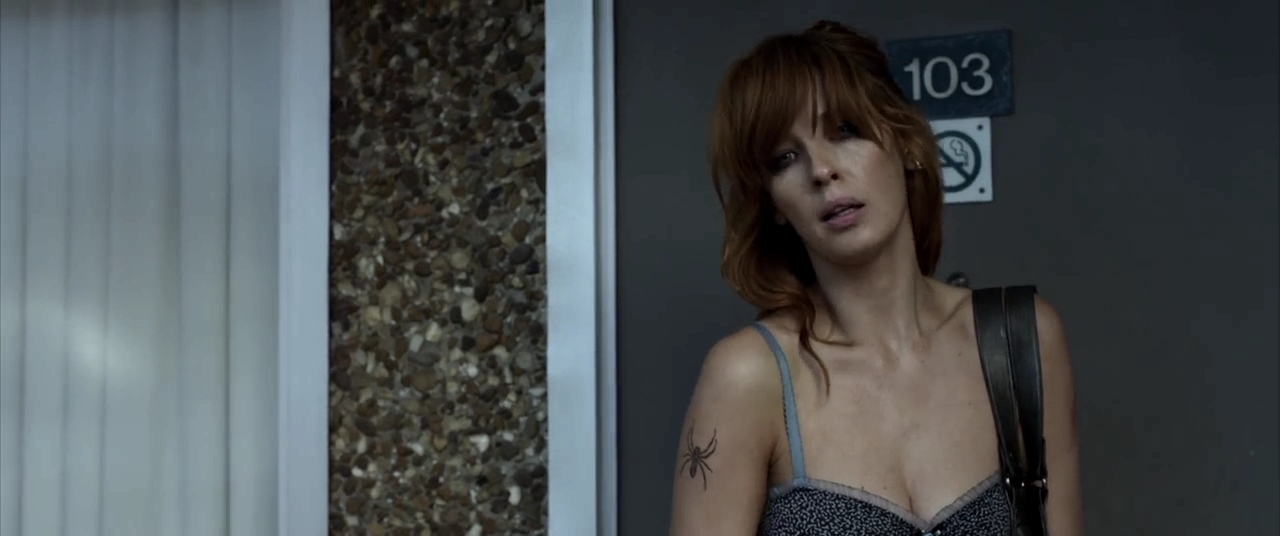
Robert Zemeckis’ “Flight” ended up surprising us all by being a riveting character driven film as opposed to your average Hollywood action movie. It is filled with a number of great performances from very talented actors, and one of the most notable is Kelly Reilly’s as former photographer Nicole Maggen. When we first meet Nicole, she is in the throes of a nasty heroin addiction that almost claims her life. While in the hospital, she meets airline pilot William “Whip” Whitaker (Denzel Washington) who is going through his own substance abuse issues and becomes a kindred spirit of sorts as they both look for ways to escape their demons.

For Reilly, “Flight” marks the first American movie she has appeared in. Before this, she was best known for playing Mary Watson in the “Sherlock Holmes” movies, and she starred opposite Michael Fassbender in the unnerving horror film “Eden Lake.” When it came to playing Nicole in “Flight,” she explained to Christopher Rosen of the Huffington Post how she goes about preparing for a role.

“If it’s there in the script it makes your life a lot easier,” Reilly said. “You’re not searching for something. You’re not trying to figure out how to make this character believable or real. You’re not trying to skirt around bad writing. This character, to me, just jumped out. I already felt a kinship to her; I wanted to play her. I knew that this sort of addiction that got hold of her so tightly was a symptom of this woman’s heartbreak. I knew there was somebody underneath worth fighting for. There are all these stereotypes of heroin addicts being junkies or dropouts or people who we shouldn’t care about. I just thought that can’t be true. They’re somebody’s son or daughter; they’re human beings. They’re just lost. That is something John Gatins got in his script. I really wanted to play that rather than the stereotype of the heroin addict.”

When it came to playing a heroin addict, Reilly explained to Rosen the amount of research she did to better understand her character. She spent a lot of time on Google learning about those addicted to this particular drug, but that only gave her so much information. But while I was at “Flight’s” press conference at the Montage Hotel in Beverly Hills, Reilly went more into depth about who gave her the answers she needed to know the most.

“I did consult a wonderful guy called Mitch in Atlanta who helped me understand the inner life of a heroin addict as much as one can without experiencing it, and he really did open up his story to me,” Reilly said. “There was a technical side of it as well as he taught me how to inject heroin without really injecting heroin. I wanted to honor the truth of somebody in that situation, and I think that was the most difficult part without ever having experienced that.”

But despite “Flight” gaining strong critical praise for its direction and performances, Reilly doesn’t see herself being nominated for an Academy Award. When it comes to the Oscars, they tend to honor the showiest performances above all others. Reilly’s performance as Nicole is powerful largely because it is an understated one which does not draw too much attention to itself. She explained this in more detail to Rosen.

“I know there is a lot of buzz around Denzel and the film. A few people have kind of suggested that it could be a possibility for me. I don’t see it myself,” Reilly said. “That’s just not me being humble or anything. I genuinely don’t imagine that to be the case. Mine is more of a quiet performance and I don’t think it’s an award winner. I still feel incredibly flattered to have people even suggest that. As much as it was never a dream of mine — a dream of mine would be to be on stage in New York — it would still be a mind-blowing thing to happen especially for something you feel proud of.”

Michael Caine once said that in the theater you play a character, but in television and film you are the character. Some of the greatest performances I see from actors in movies come from those who inhabit their characters more than play them, and Kelly Reilly’s performance in “Flight” is no exception. While we all love the showiest of performances, it is those subtle ones which deserve the most credit. My hope is that the Oscars will prove Reilly wrong and give her the credit she deserves for her work here. It’s one of the best portrayals of an addict I have seen ever since Michael Keaton played one in “Clean and Sober.”

SOURCES:

Christopher Rosen, “Kelly Reilly, ‘Flight’ Star, On Why She Probably Won’t Win an Oscar,” The Huffington Post, November 26, 2012.

Ben Kenber, “Interview with The Cast and Crew of Flight,” We Got This Covered, October 30, 2012.
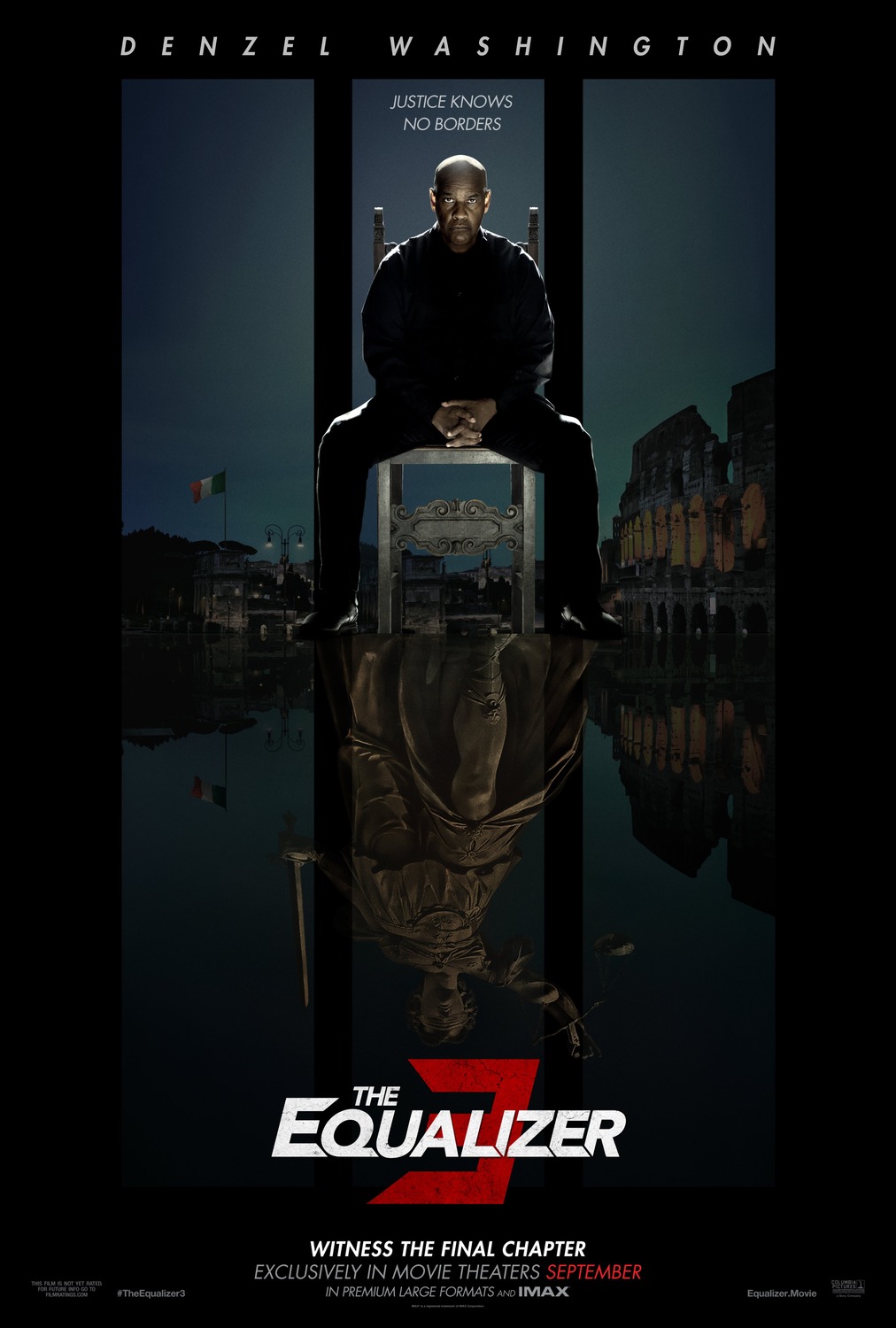
‘The Equalizer 3’ – The Best of the Trilogy

The first two “Equalizer” movies directed by Antoine Fuqua and starring Denzel Washington were effective action flicks, but much of what happened in them did not stay in my brain for very long. The most I can remember is that Denzel played Robert McCall who, when he starts the timer on his digital watch, is gifted at leaving his opponents in a world of immense pain in about five seconds’ time. And then there are others who he leaves in a world of searing pain before killing them off in a rather gruesome fashion. Other than that, few things from those films stayed with me after I watched them. They were good and did their job, but like your average fast-food meal, it only leaves so much of an aftertaste.

The same, however, cannot be said about “The Equalizer 3” as it features a storyline and action scenes which will not leave my mind for a very long time. Whereas its predecessors followed similar plotlines, this one goes in a different direction as Robert McCall wonders how he can live on after all the bloody and brutal acts he has unleashed upon others. But while he looks to have found peace, we know that peace will eventually be shattered.

This sequel starts off with an immediate bang as a drug lord drives up to his beautiful home, the kind which the average working-class individual can only dream of affording. Upon his arrival, he discovers many dead bodies littered around and inside his home, including one henchman with a hatchet buried deep in his face. For a moment, I thought “The Equalizer 3” was about to introduce us to Robert’s latest chief antagonist, but instead we find Robert has killed all these men, and we first see him sitting in a chair, held at gunpoint by the drug lord’s henchmen and looking to be on the verge of breathing his very last breath. But, of course, this is the only the movie’s beginning, and once Robert tells this nameless drug baron he has nine seconds to decide his fate, you know he is going to walk out of there and no one else will.

“The Equalizer 3” is rated R for “strong bloody violence.” Please take this rating seriously. The opening sequence alone hangs over this sequel as McCall ends up laying waste to those in his ways in an infinitely brutal fashion. He even shoots his nemesis in a very painful area before ending him ever so coldly, before rendering them dead or, as Chevy Chase described it in “Fletch,” extremely sleepy. Right from the start, this is Fuqua’s and Washington’s way of saying, “Hey, this is make believe, but all the same we ain’t playing around!”

From there, the action moves to the Amalfi Coast in Southern Italy where McCall goes to recover from life-threatening injuries, and it is there he finds a level of peace his violent past has never allowed him to have. Eventually, he is made to feel like one of the people there after he finally gets that cup of tea he ordered at the local café. Cinematographer Robert Richardson lights this town beautifully and adds to allure of it being a desirable tourist destination I would love to visit someday. Even one of my critic friends told me, after watching this movie, how she would just love to retire there. Who wouldn’t?

Nevertheless, we know this peace will eventually be shattered, and it is shattered by members of the Sicilian Mafia who are determined to turn this beautiful town into a major tourist destination with hotels and restaurants. Essentially, they are real estate investors of the most violent kind as they show no hesitation in throwing an old man out the window or beating up a local chef in order to make their presence known and never forgotten. It’s just like what John Doe said in “Seven:”

“Wanting people to listen, you can’t just tap them on the shoulder anymore. You have to hit them with a sledgehammer, and then you’ll notice you’ve got their strict attention.”

Fuqua and Washington love playing with our emotions and the situations presented to us. We know McCall is going to leave these heavily tattooed thugs in a world of pain before certain death, but we still get to have a lot of twisted fun here as these thugs try to intimidate McCall, and we revel in the fact that they have no idea what they are in for or who they are dealing with. They may delight in intimidating others, but we know they are on the verge of experiencing a level of pain which could literally make them shit their pants. There is even a certain scene in a restaurant in which McCall shows how much he knows about the human anatomy, he presents this in a painfully unforgettable way.

I have long become convinced that Denzel can do absolutely no wrong as an actor. Not once have I failed to see him give the best performance possible in any motion picture he stars in, and “The Equalizer 3” is no exception. It could have been a role where he simply could have stared his foes down, but he makes every single movement of his body, every look with his eyes and every word of dialogue he utters count for so much. He is not about to render Robert McCall into some mere one-dimensional action hero like the ones many of us grew up with in the 1980’s. Just as Matt Damon did as Jason Bourne, Keanu Reeves did with John Wick and even Tom Cruise does with Ethan Hunt, Denzel imbues McCall with a deeply wounded humanity which rings true throughout. This is one of many characters with a violent past they are hoping to make peace with, but we all know they will eventually return to the thing they do best. This is what makes them so fascinating and enthralling to watch.

The other big delight of “The Equalizer 3” is the appearance of Dakota Fanning, reuniting with Denzel for the first time in almost 20 years after “Man on Fire.” It is fascinating to watch Dakota then when she was a young girl and then watching her now as a woman, and it is great fun to see her hold her own opposite Denzel as CIA officer Emma Collins. She is a terrific presence as she carefully tries to pierce away at McCall’s hardened exterior to find out what lies underneath. My only disappointment is seeing her sidelined before the film’s third act as I would have loved to see these two team up to together to take on the mafia, but I guess her character was written to serve a different purpose.

And while the screenplay by Richard Wenk may come across as your routine and formulaic vigilante action flick, Fuqua and company end up pulling the rug right out from under us before we can even get a glimpse of what could possibly be coming our way. You know how it goes; the bad guys get hurt and embarrassed really bad, and they vow a revenge which we know will hurt even worse than what came before. But when it comes to our man McCall, he is already several steps ahead of them. So, when the pain comes, it comes fast and brutal, and you pity those who have no idea what kind of fate they are in store for.

Of all the movies in “The Equalizer” trilogy, “The Equalizer 3” is my pick for the best of the bunch. It is the most memorable, features action set pieces which must had director Mel Gibson going, “Hey, I could have done that,” and it proves to be a strong conclusion to a well-made trilogy. Again, take the R rating this movie has very seriously. If you do not like seeing someone stick a gun in an eye socket they have already shot through in order to take out another henchman with several bullets, this may not be your cup of tea. Whereas John Wick takes out his enemies before they even know what had hit them, Robert McCall wants you to first know who it was who had beaten you.

* * * ½ out of * * * *

‘Training Day’ Movie and 4K UHD Review

The following review was written by Ultimate Rabbit correspondent, Tony Farinella.

It has been a long time since I have sat down and watched “Training Day” from start to finish.  Upon hearing about its 4K release from the fine folks over at Warner Brothers, I was looking forward to sitting down and revisiting it and seeing how it would hold up twenty-two years later.  Denzel Washington can always be counted on to give a powerful performance, and he does not disappoint here in a role that earned him an Oscar.  Ethan Hawke is one of Hollywood’s most underrated actors, and the pairing of these two together was something I looked forward to with great anticipation. When you throw in the direction of Antoine Fuqua, a frequent collaborator with Washington, everything seemed to be in order for a great film.

“Training Day” opens up by introducing the audience to Jake Hoyt, played by Hawke.  Jake is a young up-and-comer on the police force who is looking to make a name for himself in the Los Angeles Police Department.   But before he’s considered for a promotion, Jake must spend a day under the watchful eye of Detective Alonzo Harris (Denzel Washington) who will see if he’s cut out for the big leagues.  Jake is looking to clean up the streets and get rid of the drugs and crime in the Los Angeles area.  He’s eager to learn from Alonzo, but he’s not exactly sure what to make of him as Alonzo has a big personality. Also, Alonzo doesn’t always play by the rules. 

In Alonzo’s mind, he has to do what is necessary to survive out there in Los Angeles as a detective.  The great director William Friedkin used to talk about how there was a fine line between the police officer and the criminal as well as the good guy and the bad guy.  Alonzo is someone who definitely falls under that category.  However, the more time Jake spends with Alonzo, the more Jake realizes he didn’t exactly sign up for Alonzo’s unique style of being a detective.  Alonzo has got an edge to him, and it is something which makes Jake quite uncomfortable at times.

Make no mistake about it, this is Washington’s movie.  It is a big performance from the actor as he finds himself in many situations where he seems to be in control of things, but he’s also losing his sense of reality.  When certain people get into a position of power, they don’t always know when to stop or reel it in before it ends up biting them in the behind. Washington is captivating on screen, and he hits all of the right notes without ever being too over-the-top.  Yes, it’s a showy, loud and in-your-face performance, but this is what the film needs in order for the character to come across the way writer David Ayer and Fuqua drew him up to be.

Hawke, on the other hand, is subdued for most of the film, but you can also see the anguish on his face.  He’s uncomfortable by this whole situation, but he’s not in a position of power where he can do anything about it.  In the last forty-minutes, Hawke gets his chance to shine, and he delivers in a meaningful and intense way. He’s one of those actors who knows how to make big moments count.  In many ways, Jake is waiting in the wings and waiting for his chance to pounce and take over. Jake is not corrupt or out for money like Alonzo.  He truly wants to be a good cop and help people.  Their car rides provide for fascinating dialogue as we see the hardened and rough Alonzo interacting with the young and prideful Jake as he tries to fight off the cynicism and charisma of Alonzo.

Overall, “Training Day” is far from a perfect film.  The acting, though, is flawless.  Every single actor on screen is at the top of their game.  We even get scenes with Snoop Dogg and Dr. Dre.  The soundtrack is also really, really good.  However, I found the script to be a little bit repetitive in certain instances.  After a while, we get the idea of what’s happening with Alonzo and his moral compass.  We know what to expect from him and, at times, it seems like it’s the same scene just played out in a different setting and with different actors.  I was looking for more character development as well from the supporting cast.  The two leads could have been fleshed out more too.

In the end, the performances from Hawke and Washington mixed with a violent and brutal final act are what make this film worth watching and worth recommending.  I think it’s a good cop movie, but it could have been a great cop movie.  It’s a good movie with great performances, and I wish it was as good as the performances from its leads.  As mentioned previously, the third act features some really, really gripping material which stayed with me.  The middle act, however, tends to drag and seems to be spinning its wheels. I liked “Training Day” a lot, but I didn’t love it.

* * * out of * * * *

4K Info: “Training Day” is released on a two-disc 4K combo pack from Warner Brothers Home Entertainment.  It comes with the 4K, Blu-ray and a digital copy of the film as well.  I found it interesting, however, that the 4K and Blu-ray are in Blu-ray packaging as opposed to a black 4K case.  It was different, and I didn’t mind it, but it is worth noting.  It also comes with a really nice slipcover. The film has a running time of 122 minutes and is rated R for strong brutal violence, pervasive language, drug content and brief nudity. The 4K looks really, really good with its HDR.  When the film gets darker, it has a really grim and moody look that makes it worth the upgrade.  This is the best I’ve seen this film look, and I was very impressed with the finished product.

Audio Info: We are treated to a Dolby Atmos track, and it really packs a big wallop here during the more intense and violent scenes.  However, it’s not so loud and overwhelming that it’s distracting or you need to look for your remote.  It’s perfect.

Special Features:

Pharoahe Monch’s “Got You” music video

Nelly’s “#1” music video

Deleted Scenes

Commentary by director Antoine Fuqua

“Training Day:” Crossing the Line Featurette

Alternative Endings

Should You Buy It?

Considering the memorable moments and performances, “Training Day” is a film I firmly believe you should add to your 4K collection.  As per usual, we get the same special features that have been transported over from the Blu-ray release.  I can’t be disappointed by this anymore, as it’s to be expected.  At this point, if you don’t own “Training Day” at all, or if you own the Blu-ray, you are wondering if you should upgrade to 4K.  In my eyes, it’s a no-brainer. I loved the dark and murky look of it.  It’s an unsettling film (in a good way) and the HDR transfer really encapsulates the dread and moodiness. If you haven’t seen the film before, there is a lot to like from Hawke and Washington on screen.  Washington shows why he is one of the greatest actors of his generation as he crushes it here.  Hawke, one of my favorite actors, gives a very subdued, conflicted and under-the-radar performance which only gets better with age.  This is a film which, if you are going to own it, you have to own it on 4K.

**Disclaimer** I received a copy of this film from Warner Brothers to review for free.  The opinions and statements in the review are mine and mine alone.

‘The Little Things’ Movie and Blu-ray Review

The following review was written by Ultimate Rabbit correspondent, Tony Farinella.

There are good/great movies out there, and then there are bad movies.  With a good or great movie, it is a dream come true for a cinephile.  There is also a category of movies that are disappointing.  Those are probably the hardest ones to digest.  With a bad movie, it’s simply bad and you move on with your day.  With a disappointing movie, it leaves behind a lot of “what ifs.” With “The Little Things,” it is a film which is filled with possibilities and even individual moments that really shine on screen.  However, when it’s all said and done, having watched it twice now, it is very forgettable and run-of-the-mill.  It’s disappointing because you expect more considering some of the participants involved.

Denzel Washington leads this cast, and he’s stellar as always in the part of deputy sheriff Joe “Deke” Deacon.  This is someone who used to be higher up on the police department food chain until he had a heart attack, a divorce, and some personal problems.  He let the job consume him and eat away at his soul.  His replacement, Jimmy Baxter (Rami Malek), has more of a calm, cool and collected approach in his role as lead detective. Their paths cross because Jimmy realizes he can lean on Deke for advice and wisdom. Deke sees it as a win-win because a case Jimmy is working is quite similar to a case he has never been able to let go of in his personal and professional life. Those around Jimmy warn him not to become like Deacon, as he is a cautionary tale of what happens when a detective gets too caught up in his work.

They are both hot on the trail of suspect Albert Sparma (Jared Leto), a crime buff who seems to enjoy toying with both Deke and Jimmy. Jimmy has a hunch that Albert checks all of his boxes, and Deacon feels the same way.  They begin to follow him and look into more of his personal life.  This is where I felt the film started to fall apart.  While I think Jared Leto is a fantastic actor, his performance here is very showy and over-the-top.  He’s an Academy Award-winning actor, which is also the case with Washington and Malek.  Washington can do this familiar role in his sleep.  I’ve never been a huge fan of Malek, and he didn’t do anything in this film to win me over.

As far as the story, we have seen an uptick in popularity when it comes to stories involving murder mysteries and crime.  It is all the rage on a number of streaming platforms.  People are fascinated by their motives and what makes them tick.  While I can understand the fascination with these stories, they are a little overdone at the moment. With “The Little Things,” it doesn’t really take any chances or add anything new to this genre.  It is your standard crime thriller.  There is only one other suspect in the film, and he’s not at all memorable or interesting.  This is a film that was solely relying on the fact it has three Academy Award winners headlining it. This story has been done before in the past with a lot more weight, depth, and intensity.

The film is also too long as it runs at 128 minutes.  It would have been just fine at one hour and forty-five minutes.  I will say I did enjoy the ending, and it’s an interesting look at the emotional trauma and stress which detectives endure when they are struggling to solve a case.  It works on that level, but it is not enough to recommend this movie as anything more than a one-time Redbox rental.  Once again, I had high hopes for “The Little Things,” but in the end, the little things here made the difference in this film being an average one instead of a good or a great one.

* * out of * * * *

Blu-Ray Info:

“The Little Things” is released on a single-disc Blu-ray which comes with a digital code from Warner Brothers Home Entertainment.  It has a running time of 128 minutes and is rated R for violent/disturbing images, language, and full nudity.

Video and Audio Info:

The 1800p high-definition transfer really brings out the eerie and moody look of the film.  This is a dark and bleak looking film, which you would expect from a film with this type of subject matter. The audio formats are DTS-HD MA: English 5.1, English Descriptive Audio, and Dolby Digital: French and Spanish. Subtitles are included in English, French, and Spanish.

Special Features:

The Little Things-Four Shades of Blue

A Contrast in Styles

Should You Buy It?

A lot of critics and film fans have compared this film to David Fincher’s “Se7en,” which is probably one of my top 25 favorite films of all time.  This film does not hold a candle to “Se7en.” Again, there were moments which really clicked and scenes that really stood out. However, for the most part, it is long, tedious and rather bland. As far as special features are concerned, we only get two of them, and they are rather quick and to the point.  The first one focuses on Washington’s work in cop films for Warner Brothers.  The second talks about the differences between the characters played by Denzel Washington and Rami Malek. I can’t recommend you go out and buy this film as I watched it on HBO Max and now on Blu-ray, and it did not improve with a second viewing. As a Redbox rental on a rainy night, it’s worth your time.

**Disclaimer** I received a Blu-Ray copy of this film from Warner Brothers to review for free.  The opinions and statements in the review are mine and mine alone.

‘The Equalizer 2’ is More of the Same, and That’s Just Fine With Me

The Equalizer 2 movie poster

It’s amazing how Denzel Washington has gone through his career without ever having made a sequel. Then again, do many of his films cry out for one? “Glory” and “Training Day,” didn’t leave much room for follow-ups as the characters he played met a very violent end. Last I checked, William Shakespeare never penned a sequel to “Much Ado About Nothing.” “The Pelican Brief,” “Philadelphia,” “Courage Under Fire” and “Crimson Tide” tell self-contained stories which are perfectly resolved at their conclusions. “Unstoppable” came to a full stop at the end to where a continuation would have insultingly involved another runaway train. As for “Remember the Titans,” we still remember them 18 years later, so there’s no need for a sequel to remind us of what we never forgot about in the first place. And regardless of what its title may imply, “Malcolm X” is not a sequel to anything.

But with “The Equalizer’s” Robert McCall, Washington has found a character whose story can last beyond one movie, and this was made clear in the final scene where he replied to someone’s plea for help over the internet. Now we have “The Equalizer 2” which reteams Washington with director Antoine Fuqua for another round of brutal retribution against those foolish enough to cross McCall’s path. While not much is different this time out, this sequel still proves to be as entertaining and thrilling as its predecessor.

We catch up with McCall who still resides in Boston, Massachusetts but now works as a driver for Lyft. This particular job allows McCall to befriend people like Sam Rubinstein (Orson Bean), a Holocaust survivor who is still trying to come to grips with what he has lost. Rubinstein also gives McCall an invaluable piece of advice which rings ever so true:

“Be nice to anyone who has access to your toothbrush.”

Among McCall’s victims this time around are a group of men who have kidnapped a little girl, and a bunch of young men afflicted with white privilege that have taken advantage of a female intern. Once again, these characters think they have McCall figured out and consider him as someone way past his prime, but we all know he is going to leave them in a world of pain because that’s why we paid money to see this sequel. The question is, will he take them out in 15 seconds or 29? Either way, McCall has found a very effective method to obtain a five-star rating from a Lyft passenger. Whether he gets a tip on top of that remains to be seen.

Things, however, get very personal for McCall when he learns his dear friend Susan Plummer (Melissa Leo) has been murdered while on assignment in Brussels, Belgium. The attack on Susan is especially brutal, but it’s nice to see her get a few punches in. With “The Equalizer 2,” Leo gets to remind us how she once portrayed one of television’s most unforgettable female police detectives, Sgt. Kay Howard, on “Homicide: Life on the Street” as she inflicts painful scars on her attackers. While at the press screening I wanted to yell out “Kay Howard lives!” But knowing from the trailers how Susan was going to meet a tragic end left me with anxiety and some despair as her fate was clearly sealed.

As you can expect, McCall goes on a mission of revenge which leads him to meet up and work with a former partner of his from the CIA, Dave York (Pedro Pascal). What he discovers is a complex web of corruption in which loose ends are being tied up to where the perpetrators are higher up the government ladder than he realized. Watching certain characters get eliminated in ways they do not see coming reminded me of what Captain James T. Kirk said in “Star Trek VI: The Undiscovered Country:”

“First rule of assassination, kill the assassins.”

Denzel is simply the best, and he return to the role of Robert McCall as if he just made the original film yesterday. Is it even possible for this Oscar-winning actor to disappoint us? Well, anything is possible, but seeing him in the scene where he takes young Miles (Ashton Sanders), an aspiring artist, aside and gives him a strong lecture about the dangers of gang life reminds us why he is one of the best actors working. We have seen this scene of an older man telling a young one not to join a gang many, many times before, but Denzel brings a raw emotional power to this one which makes it feel as visceral as when Laurence Fishburne demanded Cuba Gooding Jr. give him back his gun in “Boyz n the Hood.”

Ashton Sanders proves to be a strong addition to “The Equalizer” franchise as he portrays Miles as someone clearly caught between two worlds and unsure how to navigate either of them. We learn his brother was senselessly murdered, and he looks to be on the hustle when it comes to painting buildings and apartments, something McCall sees right through. Ashton also figures in one of this movie’s most suspenseful scenes when Miles is trapped in McCall’s apartment as a couple of assassins break in. Fuqua wrings all the suspense out of this scene to excellent effect, and it left me pinned to my seat as I began to feel as unsafe as Miles did.

Fuqua has since proven to be a top-notch action film director as he takes average set pieces in formulaic motion pictures and gives them a jolt of energy and tension. Right from the opening sequence on a train in Istanbul, Fuqua shows once again how he and Denzel mean business, and he gives us a number of thrilling moments throughout like when McCall fights a knife-wielding Lyft passenger while trying to avoid oncoming traffic, or when he faces off against a trio of bad guys whom he promises to terminate with extreme prejudice.

“The Equalizer 2” culminates in an action set piece much like the one in the first film as McCall leads his pursuers into territory he is far more familiar with than they are. Last time it was in a hardware store, and this time it’s at seaside town which is getting battered by severe winds and heavy rainfall. But whereas those Russian gangsters were too late to discover how out of their league they were, McCall now finds himself hunted by those with the same military training. As a result, the odds are even and this makes the sequel’s climax especially thrilling.

Also returning for this sequel is screenwriter Richard Wenk who infuses scenes with subversive jabs I could not ignore. When one military character talks about how he was essentially cut off by the government to where he was forced to do things he never would have done otherwise, I was reminded of how politicians kept telling us to support our troops during wartime and then would later cut their veteran benefits. Wenk is certainly not out to bash us over the head with any political statements, but it is little moments like those which provoke my consciousness to a strong extent.

And Wenk once again has McCall reading a number of classic books among which, quite appropriately, is Ralph Ellison’s “Invisible Man.”

Like I said, “The Equalizer 2” is basically more of the same, but I was fine with that as Washington and Fuqua are simply out to give us an action-packed thriller, and they have succeeded once again. If there is to be a third “Equalizer” movie with these two on board, I would certainly welcome it.

Looking back, it’s almost a shame they didn’t make McCall an Uber driver. Just imagine how he would have reacted to his earnings statement as Uber is known for taking a ridiculously high percentage from their drivers. This could have resulted in a terrific climax in which McCall visits the company’s corporate headquarters and tells the CEO, “I understand you pay more attention to your profit motive than to the safety of your drivers.” If there is anyone who could punish Uber for this and make them update their policies for the drivers’ benefit, it would definitely be McCall!

* * * out of * * * *

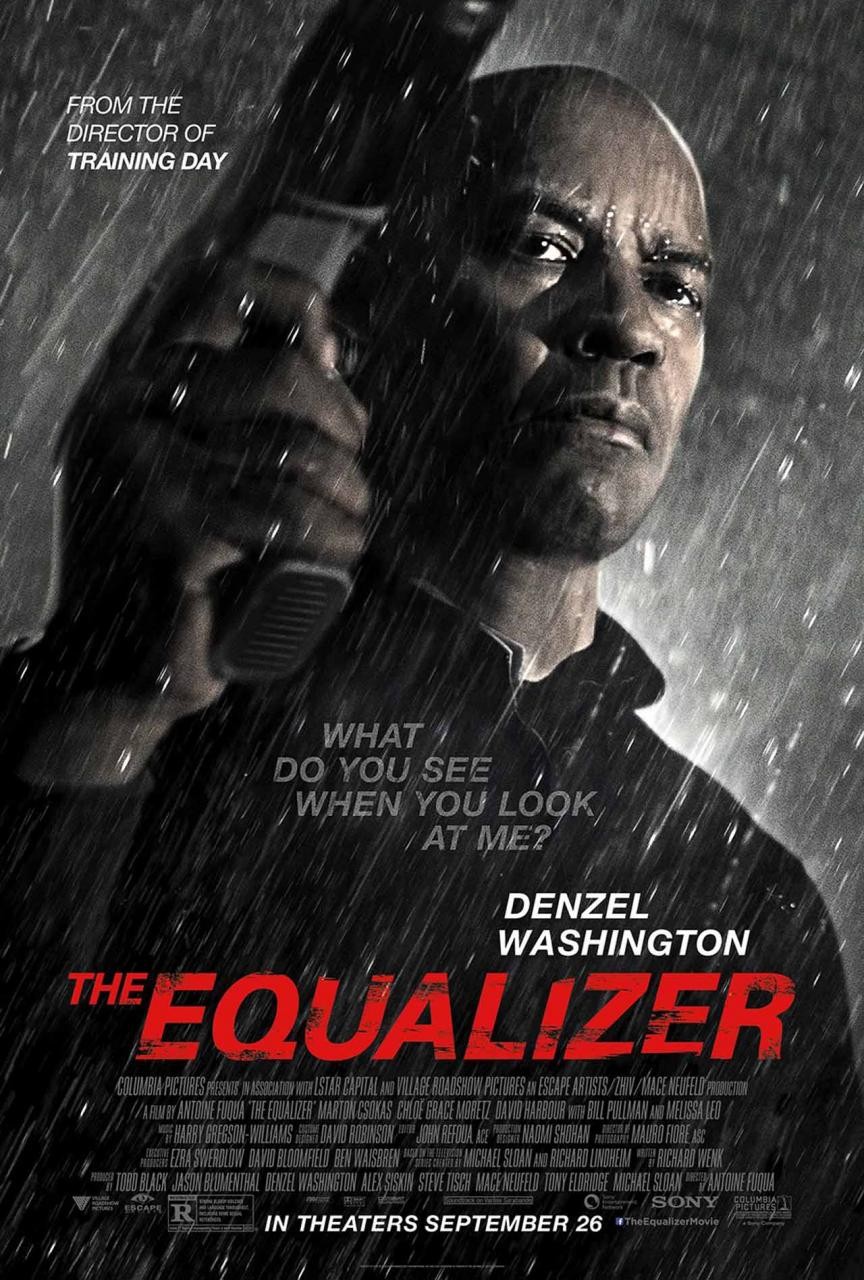
‘The Equalizer’ Reminds Us Never to Mess with Denzel Washington

The Equalizer movie poster

When actors get to a certain point, they find themselves playing older men with a violent past which they have long since renounced, but we know they will jump back into action when the occasion arises. Whether it’s Liam Neeson in “Taken,” Sean Penn in “The Gunman,” Keanu Reeves in “John Wick” or even Clint Eastwood in “Unforgiven,” these characters end up falling back into their violent ways as life has left them little else to fall back on. A song by Eminem, “Guts Over Fear,” spells this out perfectly:

“It’s too late to start over. This is the only thing I know.”

This is certainly the case for Robert McCall, the main character of “The Equalizer” which was a popular show from the 1980’s. Now Denzel Washington makes this character his own in this cinematic adaptation which shows McCall leading a decent life at a Home Depot-like store named Home Mart where he befriends its many employees, and who spends his time outside work at his bare apartment or at the local diner reading a book. But a look into his eyes tells of a dark past he would rather not tell you about, and we all know this past is going to come roaring back.

This dark past comes to the surface when Alina (Chloe Grace Moretz), a teenage prostitute McCall becomes friendly with, ends up in the hospital after a severe beating. Seeing the damage done to her, McCall goes to the Russian mobsters who employed her to beg for her freedom. Even after he presents them with an envelope filled with over nine thousand dollars in cash, they are quick to dismiss him as just some old guy who is way past his prime. Unlike the “John Wick” movies where the villains react in embarrassment upon realizing who they inadvertently pissed off, the antagonists of “The Equalizer” have yet to realize how brutal McCall as they believe youth counts for more than age. By the time they come to see their mistake, the chance to make an apology is quickly rendered moot. Just ask the man whom McCall forcefully shoves a corkscrew under his chin to where you can see it inside his mouth.

Of course, the road to hell is paved with good intentions, and McCall’s actions have infuriated the Russian Mafia to where they send out theiir chief enforcer Nicolai Itchenko (Marton Csokas) to deal with the situation. It is important to note one of the books McCall reads is Ernest Hemmingway’s “The Old Man and the Sea” which is about an aging Cuban fisherman who struggles to catch a giant marlin out in the Gulf Stream. As the book begins, the fisherman has been unable to catch a fish for over 80 days, and “The Equalizer” starts with McCall leading a peaceful life which suggests he has not beaten the crap out of anyone for a long, long time. But we all know a giant marlin of sorts will be thrown into his path, and we are left wondering just how badly his antagonists will get their due justice.

There is no denying Washington is one of the best film actors ever, and “The Equalizer” could not have come to him at a better time. His career has lasted for several decades, and he has surpassed the point where he has nothing else left to prove. Washington was 59 when he played Robert McCall, and helps him give the character more gravitas as he now has the face of a man who has seen more than any person should in life. All he has to do is give off a look with his eyes or speak words with his still smooth voice to let us know he means business. And when he starts the timer on his watch of his, we know things are about to get nasty.

Watching “The Equalizer” reminded me of “The Gunman” which starred Sean Penn as a former special forces officer and mercenary whom we see at points apologizing to others for being so good at killing people, a skill he wishes he was never taught. Penn is another one of our finest actors, but his performance was laughable as his character displayed himself in a way which felt insulting to our intelligence. Washington, however, does not make this same mistake in playing McCall. There’s a scene in which he admits he has done things he is not proud of and that he gave up on doing them out of respect for his late wife, but a look into his eyes is enough to tell us he is not about to apologize for who he is and that he accepted this part of himself a long time ago.

“The Equalizer” also allows Washington to reteam with his “Training Day” director Antoine Fuqua, and this continues to be a match made in cinematic heaven. Let’s be honest, the plot of this movie is formulaic and hits all the notes we expect it to hit throughout, and we have a good idea of how things will turn out to where expect this to be a run of the mill action thriller. As long as it delivers the goods, this is enough.

Still, both Washington and Fuqua, along with screenwriter Richard Wenk, add their little touches to the material to where “The Equalizer” proves to be anything but average. Washington sells himself easily in this role, but he also adds a strong humanity to the character as we watch him help his friend Ralph (Johnny Skourtis) pass the security guard exam and keep a fellow employee calm while she is being robbed at gunpoint. Washington makes McCall a wonderfully rounded character in a way which could have come off as inescapably cheesy in the hands of another actor.

While Nicolai Itchenko comes off as just another overconfident gangster, let alone a Russian gangster, Fuqua gives Csokas some strong moments where a look at his tattoo-covered body reveals a man who has long since been rendered into a cold-hearted bastard to where any sense of empathy within him no longer exists. Csokas also has a scene where he stares off with Washington in the same way Al Pacino and Robert De Niro did in “Heat” as their characters try to figure the other one out, and he shows how deep Nicolai’s psychosis stretches in a way we do not often see in the typical action extravaganza.

Other actors make a sizable impact in their small roles, and it reinforces the saying of how there are no small roles, only small actors. David Harbour, before he became famous on “Stranger Things,” plays a corrupt cop whom McCall gives a chance to do the right thing in a coldly calculated way. Harbour makes the most of his moment opposite Washington when he yells out how life has given little in the way of choices to where he survives the only way he knows how. Sure, it may seem like a cliched moment, but Harbour sells it for all it is worth to where you cannot dismiss his performance as you walk out of the theater.

You even have Bill Pullman and Melissa Leo, two actors you can always depend on, showing up as Brian and Susan Plummer, a married couple and former CIA employees who were instrumental in McCall’s life and remain there for him in the aftermath of the tragedy he has suffered. Leo in particular brings a strong dramatic energy to her few scenes as she makes us see how Susan sympathizes with McCall’s situation to where she understands him in a way few others can or are willing to.

What I admired about Fuqua’s direction is that he has succeeded in making a slow burn thriller and not an action movie which hits the ground running like most do these days. Fuqua takes his time and is not quick to reveal everything about McCall to where the mystery of this man empowers the ultra-violent scenes to where we are constantly left on edge. When it comes to the movie’s climax at Home Mart, Fuqua keeps us as off-guard as the bad guys to where we cannot help but feel we are in their shoes as McCall takes them out with cruel precision. Ever since “Training Day,” this filmmaker has proven to be excellent at making action set pieces feel more visceral than they usually do, and he gets away with moving the story at a pace that seems unthinkable in today’s cinematic world which overflows with superheroes and comic book characters.

I’m not sure where I would place “The Equalizer” in the pantheon of Washington’s and Fuqua’s careers. It may not be among their best works, but it shows the care and intelligence they are willing to put into a typical genre film to where we got more out of the final product than we expect. I never did get the watch the television show which had Edward Woodward starring as Robert McCall, but I think it is safe to say Washington and Fuqua have taken this story and its main character and have safely made them their own.

* * * out of * * * *

‘Flight’ is Not What I Expected it to Be

Flight movie poster

The advertisements for Robert Zemeckis’ “Flight” are actually quite deceptive. It almost looks to be a mystery movie as we wonder if Denzel Washington’s character of Whip Whitaker was drunk or not when he crash-landed the commercial airplane he was flying. Whip ended up saving a lot of lives, but is the company which owns the airline he flies for trying to make him take the blame so they can reduce their loses? Looking at the commercials and trailers for “Flight,” it looked as if the film was being sold as a relatively easygoing cinematic affair. However, it turns to be something far more complex and ambiguous than what Hollywood is used to putting out.

“Flight” isn’t a mystery in the slightest, but instead a character study about a man who is overwhelmed by his addictions and has yet to be honest not only with others, but most of all with himself. From the start, we can see Captain Whip Whitaker is one messed up dude. Waking up in his hotel room after an evening tryst with stewardess Katerina Marquez (Nadine Velazquez), we see him drink some beer, smoke a cigarette, and arguing with his ex-wife over their son’s school tuition while snorting some cocaine. All of this happens before he puts on his uniform and heads over to his plane to get ready for takeoff.

Whip clearly has no business flying an airplane under these conditions, but fly it he does. When a malfunction suddenly forces it into a vertical dive, he manages to roll the plane over to where he’s flying upside down, and he does so just long enough to stabilize the descent and land it in an open field. Next thing Whip knows, he is waking up in a hospital room only to discover the real nightmare for him is about to begin.

It says a lot about the star power of Washington and Zemeckis that they could get a movie like “Flight” made today. Made for only $30 million, far less than what it cost for Zemeckis to make “The Polar Express” or “A Christmas Carol,” this is more of a character driven drama from the 1970’s as it gives us a main character who is not particularly likable, and yet we are compelled to follow him all the way to the movie’s end.

What I loved about the screenplay by John Gatins is how it revels in the ambiguity of its characters and the situations they are stuck in. We know Whip was far from sober when flying the plane, and yet we cannot help but wonder if his heroic act can somehow excuse his personal sins. His lawyer, Hugh Lang (Don Cheadle, terrific as always), tells him how ten other pilots were placed in flight simulators which recreated the event, and of how they ended up killing everybody on board. But there is one big difference between Whip and all those pilots: they were all sober.

We can always count on Washington to give us some of the best performances in movies today, and his work in “Flight” is unsurprisingly superb. It’s also the riskiest role he has played in a long time as his character is far from likable and apparently determined to drive everyone who tries to reach him away. Heck, Detective Alonzo Harris from “Training Day” almost seems like a nicer person than Whip as Alonzo tried to have his partner killed, but we always find ourselves rooting for Washington no matter which character he plays, and he does an exceedingly brave job in uncovering this character’s wounded humanity for all of us to see.

I do have to say, however, how amazed I am at the enormous amount of alcohol Whip consumes throughout the movie. Any normal person would have likely experienced liver failure long before this story reaches its final act.

Much has been said about how this is Zemeckis’ first live action movie since the year 2000 when he made “Cast Away” and “What Lies Beneath,” but people should really take note of how this is the first R-rated movie he has directed since “Used Cars” and that one came out in 1980. Having made so many films largely geared towards the whole family, it’s tempting to think he was no longer in a position to helm one with such complex characters and issues. But with “Flight,” Zemeckis does some of his most memorable work behind the camera in some time. There are moments where he paints some dramatic strokes broader than they need to be, but he never once shies away from the ambiguous nature and fascinating questions which Gatins’ screenplay elicits. He also does a brilliant job in one crucial scene involving a minibar in a hotel room, and the suspense of it had the audience I saw the movie with absolutely enthralled. And, of course, he stages a very frightening plane crash that tops the one he put together in “Cast Away.” Even from the safety of a movie theater, this sequence is truly harrowing to sit through, and its images hang over the rest of “Flight” like an ominous shadow.

Another superb performance comes from Kelly Reilly who plays Nicole Maggen, a former photographer trying to free herself from the throes of a nasty heroin habit. Reilly may be best remembered for her role in the deeply unsettling horror film “Eden Lake,” and her portrayal here feels very honest in how she presents an addict’s day to day struggle to stay clean.

There’s also a number of other terrific supporting performances to be found here from actors like John Goodman who looks to be channeling Jeff Bridges’ Dude character from “The Big Lebowski” for his role of Harling Mays. Goodman provides the movie with its much-needed scenes of comic support, and he proves to be as entertaining here as he was in “Argo.”

Bruce Greenwood, who increasingly lends the movies he appears in a strong integrity, is also really good as Whip’s longtime friend, Charlie Anderson. Also showing up in a small but pivotal role is the great Melissa Leo whose sweet voice can’t hide her relentless pursuit of the truth as FAA investigator Ellen Block.

I didn’t think I’d see another movie in 2012 other than Paul Thomas Anderson’s “The Master” which offered an equal amount of complex characters in ambiguous situations. As a result, “Flight” turned out to be a big surprise for me as it challenges viewers in ways a strong dramatic film should. It offers us yet another great Denzel Washington performance, and it reminds us of what a terrific director Robert Zemeckis can be regardless of whether or not the characters in his films are computer generated.

* * * ½ out of * * * *