‘Rebel Without a Cause’ Movie and 4K Review

The following review was written by Ultimate Rabbit correspondent, Tony Farinella.

James Dean only made three major motion pictures in his short career: “East of Eden,” “Rebel Without a Cause” and “Giant.”  Unfortunately, he tragically passed away in a car accident at only twenty-four-years old.  He will always be remembered as one of the greatest “What ifs?” in Hollywood history.  However, when people say the name James Dean or think of the man, they think of how naturally cool he was and how he was able to connect with a younger audience that was yearning to be seen and heard.  Dean had the ability to speak their language and get across that intense emotion and pain on screen.  Perhaps no film of his does a better job of this than “Rebel Without a Cause,” which still holds up incredibly well today.

The film is set in Los Angeles during the mid-1950’s, and as soon as the audience sees Jim Stark (James Dean) on screen, they know he is troubled and dealing with a lot of issues at home.  It is one of the reasons he is arrested for public intoxication.  His father, Frank (Jim Backus), is trying to connect with his son and be there for him, but Jim doesn’t exactly look up to him.  He sees the way his father is afraid of his wife, Carol (Ann Doran), and how she bosses him around.  Quite frankly, he doesn’t see his father as much of a man. While Jim is showered with material items, he is looking for something more out of his parents, and they are unable to provide that because they are always bickering with one another.  His mother’s solution to their problems is to always move to a new city.

No matter where they live, Jim never truly feels like he fits in or is living an authentic life. There is a tremendous line in the film from Jim Stark which sums up his feelings on life, “If I had one day when I didn’t have to be all confused and I didn’t have to feel that I was ashamed of everything. If I felt that I belonged someplace. You know?”  Even though he might partake in bad behavior, Ray (Edward Platt), a police officer in the juvenile unit, sees something in Jim and wants to help him and make sure he stays on the straight and narrow. Ray knows it’s not easy considering the life Jim has at home with his parents.  On the surface, everything looks fine and dandy with his parents.  Jim, however, sees through the façade his parents show to the world, and he is not buying it. As his friend Plato puts it, Jim is sincere.
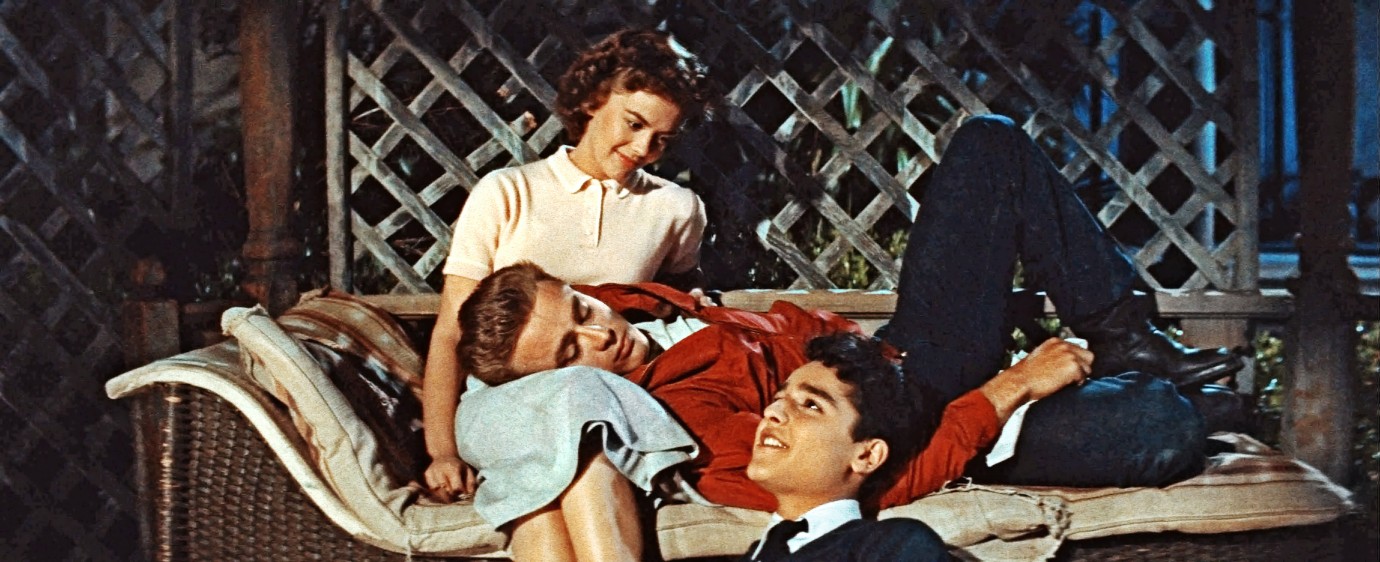
There are two other kids he connects with through the juvenile ward in prison and at Dawson High, and they are Plato (Sal Mineo) and Judy (Natalie Wood).  Plato has mental health problems and is without a family or friends.  Jim is his friend, though, and Plato looks up to him as a father figure.  Judy is dealing with problems at home as well, as her father is not too happy with the fact his sixteen-year-old daughter is growing up.  He calls her a tramp and is disconnected from her.  The three of them form a tight bond and kinship after some time. One of the other kids at Dawson High, Buzz (Corey Allen), is looking to make life a living hell for Jim, first by challenging him to a knife fight and then to a dangerous game with fatal consequences.  This does not end well for Buzz, and it leaves Jim with some serious questions about what is the right thing to do in the aftermath of this accident. When he looks to his parents for advice and guidance, they give him answers which are not in line with Jim’s strict moral code of what is right and wrong.

Buzz’s gang is looking for revenge against Jim, and they are also concerned about the consequences they might face from the police. This whole ordeal brings Judy, Plato and Jim closer together, as they all share a common bond: feeling misunderstood from the world that has been presented to them by their families.  Plato has been left behind.  Yes, he gets money, but Plato would trade it all for the love of his parents instead of living with a caregiver.  Judy wants her father to understand she is growing up and not his little girl anymore, and he is fighting this at every turn.  With Jim, he has no respect for a father with no backbone and a controlling mother.  Together, they have their own little family, and it is quite beautiful to see as an audience member.  It reminds me of the old saying, “Friends are the family you choose.” This is a very powerful motion picture in so many ways, and it really struck a chord with me considering the lack of understanding and involvement my parents had in my own life growing up.
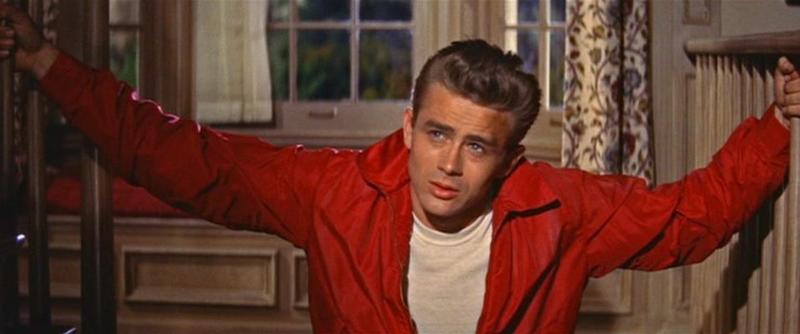
If you love acting as much as I do, you will love the acting of Dean and Wood as they are so tender and gentle together on screen.  If Dean had lived a lengthy life, there is no doubt in anyone’s mind that he would have been the next Marlon Brando.  Even though he is playing someone who is cooler than the other side of the pillow, he is also vulnerable, sensitive and relatable without ever coming across as weak.  He is simply human. Wood, in addition to being a real Hollywood beauty on screen, is tough but sweet, and she and Dean work perfectly together.  There is a scene where they are talking about love, and the way she is rubbing her chin on his face is simply beautiful and movie magic.

As soon as I finished this movie, I couldn’t wait to sit down on my laptop and start writing this review.  It was a film I had not seen in ages, so I felt like I was watching it for the first time.  It is directed by one of my favorite directors, Nicholas Ray, whose films include “In a Lonely Place,” “Bigger Than Life” and “They Live by Night.”  “Bigger Than Life,” in particular, is one of my favorite films of all time.  It deals with the side effects of medication that was way ahead of its time.  The films I’ve seen of Ray’s have all left me speechless as a viewer.  I give a slight nod to “Rebel Without a Cause,” but “Bigger Than Life” is also a really, really good film which I recommend you check out as soon as possible as it is part of the Criterion Collection.  With “Rebel Without a Cause” and “Bigger Than Life,” I almost feel like Nicholas Ray is speaking to me directly.

* * * * out of * * * *

4K Info: “Rebel Without a Cause” is released on a two-disc 4K/Blu-ray combo pack from Warner Brothers Home Entertainment.  It is rated PG-13 for some violence and thematic elements and has a running time of 111 minutes.  It also comes with a digital copy of the film.

Video Info:  This is another fantastic release from Warner Brothers as they dig deeper into their rich history of classic films for their 100th year anniversary. The film is simply electric on Ultra HD, High Dynamic Range. There were scenes here and there which looked a little grainy, but they were cleaned up quickly and did not linger, so they were not massive issues. James Dean and Natalie Wood look GREAT on 4K, and the film itself is a stunner with rich, vivid colors which pop off the screen.

Audio Info:  Thankfully, we are treated to a great Dolby Atmos track with this 4K release, and I am really happy about that because out of the three films I received to review (“Rebel Without a Case,” “Cool Hand Luke” and “The Maltese Falcon”), this film was my favorite, and it received the best audio track. All of the sizzling dialogue is on display here, and it really pops with the Dolby Atmos track. Subtitles are included in English, French and Spanish as well.

Special Features:

Commentary by Douglas L. Rathgeb

“James Dean Remembered” (1974 TV special)

“Rebel Without a Cause: Defiant Innocents” (featurette)

“Dennis Hopper: Memories from the Warner Lot” (featurette)

Screen Tests

Wardrobe Tests

Deleted Scenes

Should You Buy It?

HECK YES!! If you have never seen any of James Dean’s films, this is the place to start, without question.  As a matter of fact, after watching “Rebel Without a Cause,” I bought “Giant” on Amazon, as I want to own as many of Dean’s films in 4K as possible. I am such a fan of actors who put so much of themselves and their histories into their films.  I didn’t know a lot about Dean’s backstory, but I knew he used a lot of his childhood to tap into this performance.  It shows in each and every scene as he is so raw, real and vulnerable for the camera. He likes the camera, and the camera likes him.  This film perfectly captures the disconnect between teenagers and their parents during this era without ever being preachy or too on-the-nose.  It hits all the right notes.  The late, great Natalie Wood is also a movie star on screen.  I am such a fan of this period of Hollywood where actors were taking chances and putting their blood, sweat and tears into their performances.  The film comes with the previously released Blu-ray special features, so there is not anything new as far as documentaries on Dean. The Dolby Atmos track is a very nice touch and, despite a few rough patches, the 4K video transfer is just about perfect. It is a red-hot movie in 4K, and I loved getting to watch it in this format. This is a day-one purchase without any hesitation, whatsoever.

**Disclaimer** I received a copy of this film from Warner Brothers to review for free.  The opinions and statements in the review are mine and mine alone.

‘The Maltese Falcon’ Movie and 4K Review

The following review was written by Ultimate Rabbit correspondent, Tony Farinella.

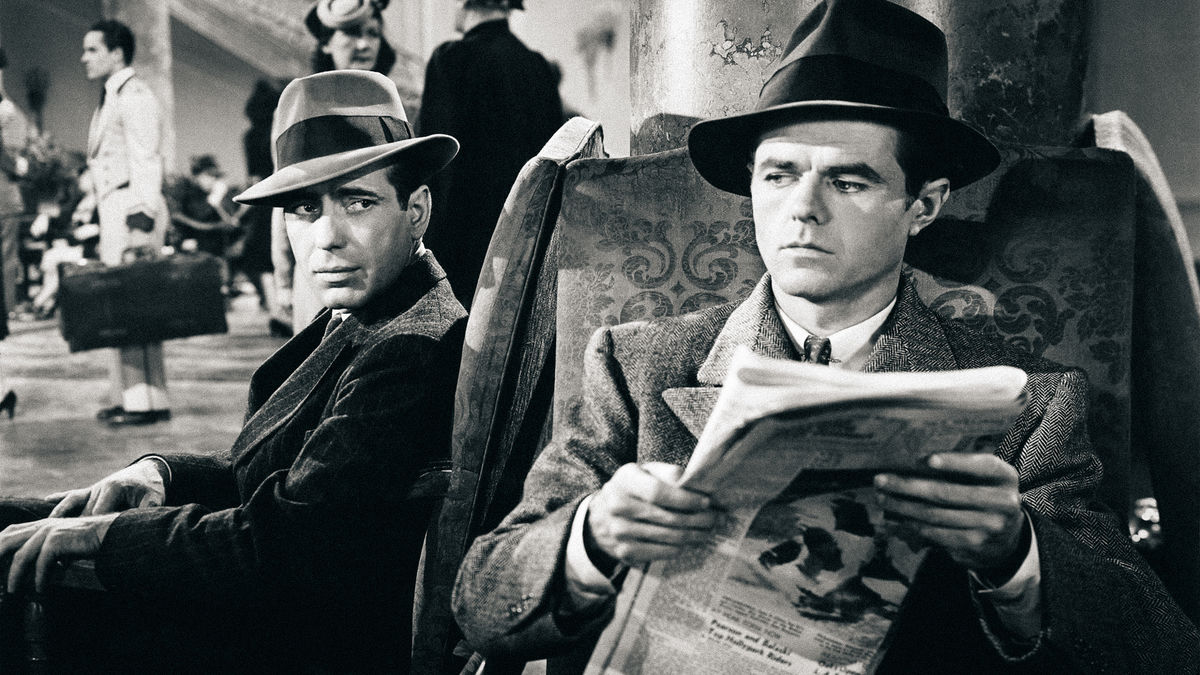
The Maltese Falcon” is a film I imagine I will enjoy a lot more on a second viewing, as this was my first time watching it. The reason I say this is because there are a lot of moving pieces in this film, and it is never boring.  However, at times, I found myself trying to follow the story and the plot instead of being as immersed in the story as I would have liked to have been.  Many people have called it the first-ever film noir.  Film noir is a genre that Humphrey Bogart excelled in throughout his career.  He had a rough look and a gruff voice.  He wasn’t going to take any nonsense from anyone, and no matter how dire a situation was, he always seemed to know what was going on, and he was not going to be rattled by the circumstances around him.

Humphrey Bogart plays a private investigator named Sam Spade.  He is in business with his partner, Miles Archer (Jerome Cowan).  One day, a woman walks into their office by the name of Ruth Wonderly (Mary Astor), claiming her sister ran off from New York to San Francisco with a man named Floyd Thursby.  She is hoping that Spade and Archer can help her find her sister.  Archer agrees to look into it, but he ends up dead along with Floyd Thursby.  This captures the attention of Sam Spade, who is beginning to wonder the validity of her story.  Before long, he discovers that her real name is actually Brigid O’Shaughnessy.

Throughout all of this mystery and intrigue, Sam finds himself in the crosshairs of Joel Cairo (Peter Lorre), who offers Sam some money for a highly valued falcon statue.  There is also a young man named Wilmer (Elisha Cook Jr.) who is keeping his eyes on Sam along with Kasper Gutman (Sydney Greenstreet), a rotund money man who will stop at nothing to get his hands on this bird. Throughout all of the twists and turns, Sam isn’t sure who to believe, who to trust, and who is telling the truth. He stays in control and makes smart decisions, even when people are pointing their guns at him or he’s suspected of murder by the police.

One of the strong points of “The Maltese Falcon” is the running time. At 100 minutes, there is not a dull moment in the film.  It is paced perfectly and directed with great skill by John Huston. It has the look and feel that one would expect from a film noir.  You have your femme fatale in Mary Astor.  She’s brilliant here, as she’s able to go from vulnerable and naïve to cunning and savvy in the blink of an eye. Of course, you have Bogart, who made a living in Hollywood playing this type of character.  Guys liked and respected him, and women were drawn to his tough exterior. As mentioned earlier, he is always able to stay level-headed, even in life-or-death circumstances.  He still seems to know what to do and what to say to get himself out of a jam.

In the end, I respected and admired “The Maltese Falcon” as a film.  I can’t say I enjoyed it a ton because of the storytelling.  It’s not an overly complicated film, but at times, there are too many twists and turns happening at once.  That being said, I think the more I watch this film, the more I will enjoy it and have a better understanding of everything.  Because of the deception happening on screen and characters coming and going, it’s not that it was hard to follow, it’s more that I was keeping up with the plot instead of getting lost in it. I look forward to watching this film many more times in the future, as I think I will gain an even greater appreciation for the skilled acting and directing on display.

* * * out of * * * *

4K Info: “The Maltese Falcon” is released on a two-disc 4K/Blu-ray combo pack from Warner Brothers Home Entertainment. The film has a running time of 100 minutes.  It also comes with a digital copy of the film. As far as the film’s rating, it is not rated, but that is not because it’s a raunchy film. It was released in 1941 and is very tame.

Video Info:  Ultra High Definition HDR always stands out on older films.  A lot of movie buffs like to talk about how older films are enhanced by a 4K transfer, and that is certainly the case here. From the swift movements of the characters to the deep blacks, this is a stunning transfer of a black and white film. Right now, 4K is doing some truly amazing work with classic Hollywood films.

Audio Info: The film is presented on the following audio formats: DTS-HD MA: English 2.0 Mono and Dolby Digital: Spanish. Subtitles are included in English and Spanish as well.  The audio is crisp, clear, and all of the great dialogue you would expect from a film noir is easy to digest while watching this film.

 Special Features:

 Commentary by Humphrey Bogart Biographer Eric Lax

“Warner Night at the Movies”

“Sergeant York” Trailer

“New Highlights of the Roosevelt Churchill Parley” (newsreel)

“The Gay Parisian” (1941 WB short)

“Meet John Doughboy” (1941 WB cartoon)

The Maltese Falcon: One Magnificent Bird

Becoming Attractions: The Trailers of Humphrey Bogart

Breakdowns of 1941 (WB short)

Make-up Tests

2/8/43 Lux Radio Theater Broadcast

9/20/43 Screen Guild Theater Broadcast

7/3/46 Academy Award Theater Broadcast

Trailers

1936 “Satan Met a Lady”

1941 “The Maltese Falcon”

Should You Buy It?

I don’t feel like I am really giving this film the credit it deserves, but keep in mind, this was my first time watching it.  I have always been a big believer that you need to watch a great film a few times in order to fully appreciate it.  It doesn’t always strike on the first chord.  There is a lot to like, especially the acting and the pacing of the plot, but the story took me out of it at times.  With all of that being said, if you are a fan of “The Maltese Falcon,” you owe it to yourself to buy it on 4K.  It looks fantastic here in black and white and in high dynamic range with its 4K transfer.  It’s such a moody film noir that truly gets a boost from 4K.  The special features are transferred over from the previously released Blu-ray, so if you are looking for anything new here, you are not going to find it, but I don’t expect anything new from a film that was released in 1941 as most, if not all, of the actors have passed away.  If you are a first-time viewer like myself, I still think you should buy it as you will get the slipcover and might enjoy it more than I did.  If you love the film and have seen it many times, you will enjoy it even more on 4K. I look forward to seeing what else Warner Brothers is going to be releasing throughout the year during their 100th year anniversary.

**Disclaimer** I received a copy of this film from Warner Brothers to review for free.  The opinions and statements in the review are mine and mine alone.
‘Cool Hand Luke’ Movie and 4K Review

WRITER’S NOTE: The following review was written by Ultimate Rabbit correspondent, Tony Farinella.

When I think of a movie star, I think of someone who possesses the “it factor” and stands above the rest of the pack.  Paul Newman was a movie star, and I would argue it was never more prevalent than in the film “Cool Hand Luke.”  Of course, many can talk about his mesmerizing performances in films such as “The Verdict,” “The Hustler,” “Slap Shot” or “The Sting.”  However, in “Cool Hand Luke,” he burns up the screen and you can’t take your eyes off of him.  It’s such a minimalistic performance, but it is captivating, spellbinding and intense.  There is no wasted moment or line of dialogue from this legendary actor here.  When I think of Newman, I think of this film.

After World War II, Luke (Paul Newman) finds himself knocking over parking meters while under the influence of alcohol, which lands him a two-year stay in prison.  Upon entering the chain gain of prison, Luke keeps to himself, but he has this unique and magnetic presence about him without even trying to do anything out of the ordinary. There is an aura about him which keeps people interested in him and talking about him.  There is a story behind the man, but the film allows those layers to unfold throughout.   Many of those working on the chain gang in this prison camp seem to fall in line and follow orders.  Luke, on the other hand, is not a fan of authority. He likes to ruffle their feathers, especially when it comes to Boss Godfrey (Morgan Woodward) and the Captain (Strother Martin).

He endears himself to his fellow prison mates by playing cards, trying to escape, and even having a contest where he says he can eat fifty eggs in an hour.  They start to see hope and light at the end of the tunnel, thanks to Luke.  As the title says, he is cool.  Every little thing about him is cool and laid-back.  Even when his attempts to escape don’t go as planned, he flashes that famous Paul Newman smile with those baby blue eyes and rolls with the punches.  He refuses to be defeated or get angry about his situation.  Instead, he is looking for solutions.  One of his closest friends there is Dragline, played by George Kennedy, in an Academy-Award winning performance.

Throughout the prison, we also see legendary actors such as Dennis Hopper and Harry Dean Stanton, which I really appreciated as I’m a huge fan of their careers. Director Stuart Rosenberg knows how to show the mundane of prison life without ever making it feel boring or uninteresting.  Much like Newman, he doesn’t waste a single scene or shot here.  Everything here has a rhyme and a reason to it. The film has a lot of outdoor scenes, and they look absolutely stunning in 4K.  This is truly one of the best-looking 4K films I’ve watched in a while.  The sunshine and the light symbolize what Luke brings to the prisoners.  He lets them know there is more to life than digging ditches.

I don’t think the anti-hero has ever been portrayed as well on screen as it is here by Newman.  The fact he’s not trying to be liked is what makes us, as an audience, like him even more.  It’s all natural.  This is a man who is in prison along with a host of prisoners that have done various crimes.  They admit that.  The film is able to make us like all of them, Dragline especially, and really root for them to get out from under the thumb of this rigid prison and its rules.  In many ways, I feel like “Cool Hand Luke” was a film in 1967 that was ahead of its time.

There are so many great quotes from the film that I could spend a good portion of my review reciting them. I’ll stick to the famous one, which is, “What we’ve got here is failure to communicate.” This quote was also used in the opening of the Guns N’ Roses song “Civil War”.  This film is a powerful masterpiece.  As someone who is a big believer in anti-establishment and someone who doesn’t always like to play by the rules, “Cool Hand Luke” is a film which resonated with me. You might knock Luke down and you might have him on the ropes, but he is not going to go down without a fight.  He is also going to smile in your face, no matter what happens to him or how much you push him.  He’s never going to lose that smile.

* * * * out of * * * *

4K Info: “Cool Hand Luke” is released on a two-disc 4K/Blu-ray combo pack from Warner Brothers Home Entertainment. The film has a running-time of 126 minutes and is rated PG.  Keep in mind, the ratings system was run much differently during this time.  It’s not an overly violent film, and I don’t recall a ton of curse words in it.  It also comes with a digital copy of the film.

Video Info: “Cool Hand Luke” never looked bad on Ultra HD, High Dynamic Range.  The film looks stunning and crystal clear.  As I mentioned, a good portion of the scenes take place outside, and it’s a colorful and bright looking film without being too bright where it’s going to hurt your eyes.  They did a tremendous job of cleaning this picture up, as I loved every second of this beautiful transfer.  I tip my cap to the fine folks over at Warner Brothers on this one.

Audio Info:  The same can be said for the audio which comes on DTS-HD MA: English 2.0 Mono and Dolby Digital: Spanish and French. Subtitles are also included in English, Spanish, and French.  The audio is crystal clear throughout, and all of the tremendous dialogue can be heard without any issues whatsoever.

Special Features:

Commentary by Historian/Paul Newman Biographer Eric Lax

A Natural-Born World-Shaker: Making Cool Hand Luke

Trailer

Should You Buy It?

You are buying this for the movie itself as well as the audio and visual aspects that Warner Brothers have put together for this tremendous release. You are not buying it for the special features, which I’ve talked about in previous reviews.  I’m a big believer in preserving film history, and I love that it is the 100th anniversary of Warner Brothers because they are digging deep into their archives with releases of some of the greatest films ever made.  They are also taking the time to make sure they are seen and heard in the highest video and audio quality possible.  They are not just upgrading these films to re-release them.  They are making sure, as a viewer, you are not only going to enjoy a classic film, but that you are going to enjoy it in 4K with a transfer worthy of the film itself.  Because of this, it is up to us, as film collectors and lovers, to support and purchase films like “Cool Hand Luke” on 4K.  It ensures us that we will get more great physical media releases in the future. I can’t recommend this film and this visual presentation any further. Buy it right now!

**Disclaimer** I received a copy of this film from Warner Brothers to review for free.  The opinions and statements in the review are mine and mine alone.

‘Casablanca’ Movie and 4K/Blu-ray Review

The following review was written by Ultimate Rabbit correspondent, Tony Farinella.

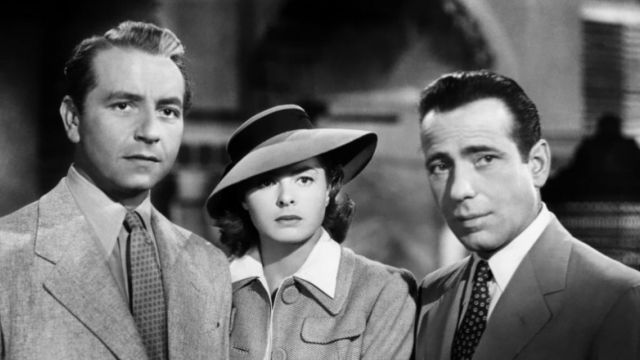
Casablanca” is a film which conjures up an immediate reaction from film fans whenever they hear the title.  It’s right up there with “Citizen Kane” as one of those films which film buffs and historians consider one of the greatest movies ever made.  There are many reasons for this, but the biggest reason is the love story between Humphrey Bogart and Ingrid Bergman.  There is also the dialogue and the many quotable lines which come to mind when thinking of this film.  I won’t be repetitive here and list all of them for you, but if you have seen “Casablanca,” you know the lines by heart.  It’s one of those films which means a lot to a great deal of people and for good reason.

Set in 1941, the film introduces the audience to Rick Blaine (Humphrey Bogart), the owner of the nightclub Rick’s Café Américain. He refuses to have drinks with any of the customers and mostly keeps to himself.  The audience can tell he’s cynical, unhappy, and something has happened to him to cause him to lose a big part of himself. He tends to stay neutral on almost every topic.  Even though he’s cynical, he’s still a good guy with a good heart.  His world gets turned upside down when his old flame, Ilsa Lund (Ingrid Bergman), shows up with her husband, Victor Laszlo (Paul Henreid), as he’s seeking protection from German Major Strasser (Conrad Veidt) who intends to arrest him.

Victor Laszlo is a fugitive Czech Resistance leader. Rick’s Café serves as a place for all sorts of types, good and bad, because of World War II.  A lot of people there are looking to keep a low profile while others are looking to find someone to arrest.  Rick has some war experience himself, but now he’s focused on his nightclub.  He starts to become very focused on Ilsa when he catches up with her again, and it’s clear there are still strong feelings between the two.  They were in love back in Paris, but when it was time to leave, she just left him hanging with a note that left him with more questions than answers.

Rick has letters of transit, which allow two individuals to get out of Casablanca safe and sound and start over without any consequences. Rick can give the letters to Ilsa, but that also means he will be giving her up as well.  Again, even though he stays neutral on most topics, he can tell the good guys from the bad guys.  He’s not afraid to lend a helping hand to someone in need. However, if he helps her and Victor out, he knows he will never see the love of his life ever again.  That was the beauty of some of the old Hollywood films: the romance felt urgent and very important.  It never felt frivolous or silly.  You can tell that two people really loved each other, and it made a huge impact on their lives.

“Casablanca” is an old-fashioned Hollywood classic in every sense of the word.  You have the black and white picture, the classic romance, and the big stars. You also have great supporting work from actors like Claude Rains, Sydney Greenstreet, and Paul Henreid.  It all feels vital and like it serves a purpose.  It’s old-fashioned Hollywood craftsmanship at its finest.  The story with the war can sometimes bog the film down a little bit, but it’s there to push the love story between the two leads.  They are the heart and soul of this beautiful picture.  Like fine wine, this is the kind of film which gets better with age.  Even if you have seen it multiple times and know how it’s going to end, you still can’t help but get swept up in the story.  “Casablanca” is the kind of movie Hollywood doesn’t make anymore, but I wish they did.

This is Bogart’s best performance in his storied career.  He has a certain vulnerability to him we don’t often get to see on film.  He’s also an everyman in this film, and it’s great to see him connecting with his black piano player, Sam (Dooley Wilson).  He respects people and does the right thing, but it doesn’t feel forced. It’s a completely natural performance. It’s not a big or showy performance, and it doesn’t need to be as we see everything in his face: all of the pain and the agony. Bergman is sweet, tough and very, very smart.  She’s the perfect actress to go toe-to-toe with Bogart in this film.  She looks absolutely stunning and gorgeous on screen.

I was sucked into “Casablanca” from start-to-finish, like I am every single time I watch it.  Even though I know how it’s going to end, I’m still on the edge of my seat when they get to the final scene.  The last line of dialogue is iconic and the perfect note to end this film on as well.  I’m a huge fan of old Hollywood when stars were stars, and they could light up the screen with their presence. It should also be noted that “Casablanca” won Best Picture in 1942 along with Best Director (Michael Curtiz) and Best Screenplay. This is Classic Hollywood at its finest!

* * * * out of * * * *

4K/Blu-ray Info: “Casablanca” is released on a two-disc 4K/Blu-ray combo pack from Warner Brothers Home Entertainment. It also comes with a digital copy of the film as well.  It has a running time of 102 minutes and is rated PG for mild violence.

4K Video Info: “Casablanca” looks pretty good on 4K.  The black and white and older films in particular play pretty well with light and darkness on HDR.  It’s not a fantastic upgrade, but I don’t know how much more they could have done to really upgrade a film from the 40’s. It’s better than the Blu-ray, but it’s not a huge improvement.

Audio Info: The audio for the film comes on DTS-HD MA: English 1.0, and Dolby Digital: French and Spanish.  It also comes with subtitles in English, French, and Spanish.  There isn’t a huge upgrade on the audio here, but it still sounds pretty solid.  I don’t really think this is the kind of film which needed a huge audio upgrade.

Special Features:

Commentary by Roger Ebert

Commentary by Rudy Behlmer

Introduction by Lauren Bacall

Warner Night at the Movies

Now, Voyager trailer

Newsreel

“Vaudeville Days” (1942 WB short)

“The Bird Came C.O.D.” (1942 WB cartoon)

“The Squawkin’ Hawk” (1942 WB cartoon)

“The Dover Boys at Pimento University” (1942 WB cartoon)

“Great Performances: Bacall on Bogart” (1988 PBS special)

Michael Curtiz: The Greatest Director You’ve Never Heard Of

Casablanca: An Unlikely Classic

You Must Remember This: A Tribute to “Casablanca” (1992 TEC documentary)

As Time Goes By: The Children Remember

Deleted Scenes

Outtakes

“Who Holds Tomorrow?” (1955 “Casablanca” TV episode)

“Carrotblanca” (1955 WB Cartoon)

Scoring Stage Sessions (audio only)

Lady Esther Screen Guild Theater Radio Broadcast – 4/26/43 (audio only)

Vox Pop Radio Broadcast – 11/19/47 (audio only)

Trailers

I can’t get too upset over the lack of updated special features, as they transported a ton of special features from previous releases. The fact you get two commentary tracks, especially one with Roger Ebert, is quite a treat.  There are A LOT of special features here.  This one is pretty simple for film buffs and physical media collectors out there—if you love classic Hollywood, you owe it to yourself to pick up this film on 4K and watch it in the best possible format.  As mentioned previously, it’s an upgrade over the Blu-Ray, even if it’s not a massive upgrade.  Nonetheless, this is a film you should add to your collection on day one with the slipcover. Personally speaking, I love a good slipcover on my favorite films, and if you want the slipcover, it’s always better to buy it sooner rather than later. This will make the film lover in your life very happy this holiday season!

**Disclaimer** I received a copy of this film from Warner Brothers to review for free.  The opinions and statements in the review are mine and mine alone.

‘Singin’ in the Rain’ Movie and 4K/Blu-ray Review

The following review was written by Ultimate Rabbit correspondent, Tony Farinella.

Even though “Singin’ in the Rain” is celebrating its 70th anniversary with this 4K release, in my 36 years on this planet, I have yet to see it until now. I was familiar with a few of the songs from the film, as they are part of cinema history, but I never sat down to view it from start to finish.  It’s better late than never!  That is the beauty of film: even if you think you have seen all of the classics out there, there is always one that slips through the cracks from time-to-time.  “Singin’ in the Rain” is one of the best 4K releases of this year so far with its vivid colors, lifelike images, and crystal-clear picture.  It is truly a treat to enjoy.

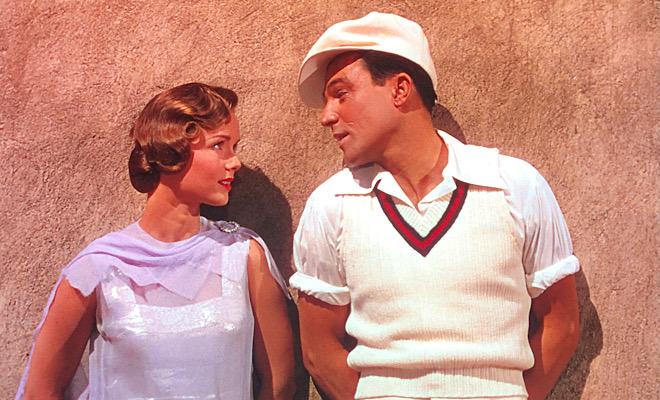
The film stars Gene Kelly as Don Lockwood, a Hollywood stuntman and hoofer.  He is quite popular in silent films and lives by the motto, “Dignity. Always dignity.”  It’s appropriate for his performance in this film, as it’s dignified and classy.  You can’t keep your eyes off him whether he is dancing, singing, or acting.  He has the “it” factor on screen in this film. He was also the co-director on the film along with Stanley Donen. Don’s leading lady, Lina Lamont (Jean Hagen) is the complete opposite of him as she’s superficial, selfish and rude throughout their time together.  Monumental Pictures, the studio behind Lockwood and Lamont, tries to put out this image of the two of them together as a happy couple in order to better increase the gate on their films together.

Don, on the other hand, sees right through Lina and tries to distance himself from her as much as possible. Don’s best friend is Cosmo Brown, played brilliantly by Donald O’Connor. He’s always there to listen, come up with ideas for Don and support him.  He understands why Don has to get as far away as possible from Lina at times.  It causes him to jump into the car of Kathy Selden (Debbie Reynolds), a stage actress who doesn’t think too highly of the movies Don Lockwood is putting out there.  She is there to tell him the truth about exactly what she thinks of him, which opens up Don’s eyes, as he’s used to people telling him how great he is all the time. He sees she is talented and smart, and he quickly takes a liking to her.

With the success of “The Jazz Singer,” talking pictures are becoming more and more popular in Hollywood.  This puts Lamont and Lockwood in a position where they have to learn a new way of doing things. Don is a natural and is also willing to put in the work to adapt to the new way of Hollywood.  Lina, on the other hand, has a voice which is rough on the ears.  However, people are used to seeing the two of them in films together.  Because of this, Cosmo comes up with the idea of dubbing over Lina’s lines with Kathy’s voice in an upcoming musical.  This idea is spawned after the public laughs at a screening when they hear Lina’s voice and mistakes throughout one of their films.

Kathy and Don start to become closer and closer, which does not make Lina happy at all.  She is still unwilling to see her flaws or work on her craft to get better.  Kathy, on the other hand, is immensely skilled and talented.  I must admit I am not the biggest fan of musicals as it’s not one of my favorite genres.  The beauty of “Singin’ in the Rain” and why it’s a classic is the fact they know when to have music and dancing, but also know when to focus on the actors and give them the space they need to act and develop their characters.  When the musical numbers hit, they are out of this world.  The songs are memorable, and they will stay in your head after the film is over.  That is huge in a musical.

The dancing is also top-notch and terrific. There are certain scenes where they keep the camera on the actors dancing, and my eyes were glued to their movements and the poetry in which they were moving.  It was truly something to behold.  The amount of work, preparation, and time it took to pull this off is why people are still interested in watching this movie 70 years later.  It holds up incredibly well.  I’ve always been a fan of old-Hollywood.  The 50’s created some of the most iconic movies, and “Singin’ in the Rain” is up there.  I’m just disappointed it took me this long to check it out.  Now, I want to watch it again and again.

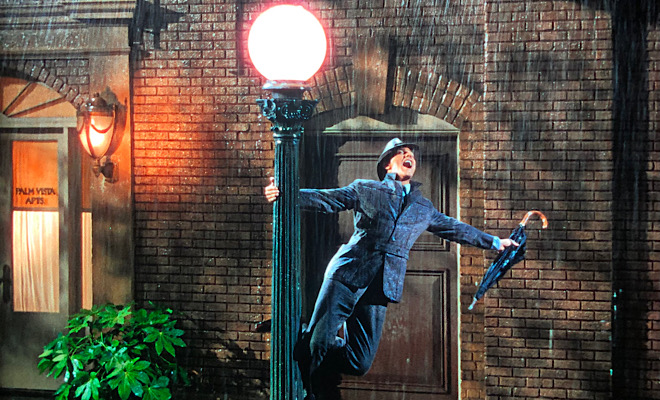
For me, the two stand-outs in the film are Gene Kelly and Debbie Reynolds.  Kelly has an effortless charm and is so darn likable.  He’s the perfect actor for this role.  Reynolds is elegant and pure class in her role.  As an audience member, I was really rooting for them to end up together. Of course, the “Singin’ in the Rain” moment is one even I was familiar with, even though I hadn’t seen the film.  It’s a gorgeous scene to watch and it just put a big smile on my face.  This film has it all: humor, romance, heart, love and great, great music. People will still be talking about “Singin’ in the Rain” 70 years from now.

* * * * out of * * * *

4K Info: “Singin’ in the Rain” is released on a two-disc combo pack from Warner Brothers Home Entertainment. It has a running time of 103 minutes and is rated G.  It comes with the 4K, Blu-ray and a digital code as well.

4K/Blu-ray Info: The film is released in 2160p High Definition, and it’s leading the way as one of the best 4K releases of 2022.  The film might be 70-years-old, but it looks incredible. With high dynamic range, you see every color come to life on screen.  This is a visual feast for the eyes.  As mentioned earlier, this film was made for 4K.  It is a huge improvement over the previous releases.

The Blu-ray comes in 1080p High Definition. The 4K comes with the following audio formats: DTS-HD MA: English 5.1, English Mono, Dolby Digital: French and Spanish. Subtitles are in English, French and Spanish. For the Blu-ray, it comes on DTS-HD MA: English 5.1 and Dolby Digital: French and Spanish. The subtitles are also in English, French, and Spanish.

Special Features:

Commentary by Debbie Reynolds, Donald O’Connor, Cyd Charisse, Kathleen Freeman, Stanley Donen, Betty Camden, Adolph Green, Baz Lurhmann and Rudy Behlmer

“Singin’ in the Rain:” Raining on a New Generation Documentary

Theatrical Trailer

Should You Buy It?

If you are a hardcore physical media collector like yours truly, this one is a no-brainer.  If you have seen the film before and don’t own it, it’s an even bigger no-brainer.  The one disappointment I always bring up with some of these 4K releases is they are still using previously released special features.  I know it’s a 70-year-old film, but I still think you can add a modern-day special feature with new interviews from film historians and actors to the 4K release instead of just recycling the old ones.  For the price point and the look of the film, Warner Brothers has knocked it out of the park with this 4K release.  It’s simply mesmerizing.  As far as the film itself, it’s one of the greatest of all-time for a reason.  If you own a 4K TV and player, this is the movie you need to buy right now.  You won’t be able to take your eyes off the screen.  This one comes highly recommended!

**Disclaimer** I received a 4K/Blu-ray copy of this film from Warner Brothers to review for free.  The opinions and statements in the review are mine and mine alone.

The Turner Classic Movies Holiday Gift Guide

The following article was written by Ultimate Rabbit correspondent, Tony Farinella.

If you are like me and love classic movies, there is one channel and company which stands out: Turner Classic Movies.  In our house, this channel is on a lot!  There is always an older film that has slipped under my radar and deserves my time and attention.

With the holidays fast approaching, now is the time to take advantage of some of the great products that are provided by Turner Classic Movies for the movie lover in your life.  They will thank you time and time again for these thoughtful and exciting gifts.

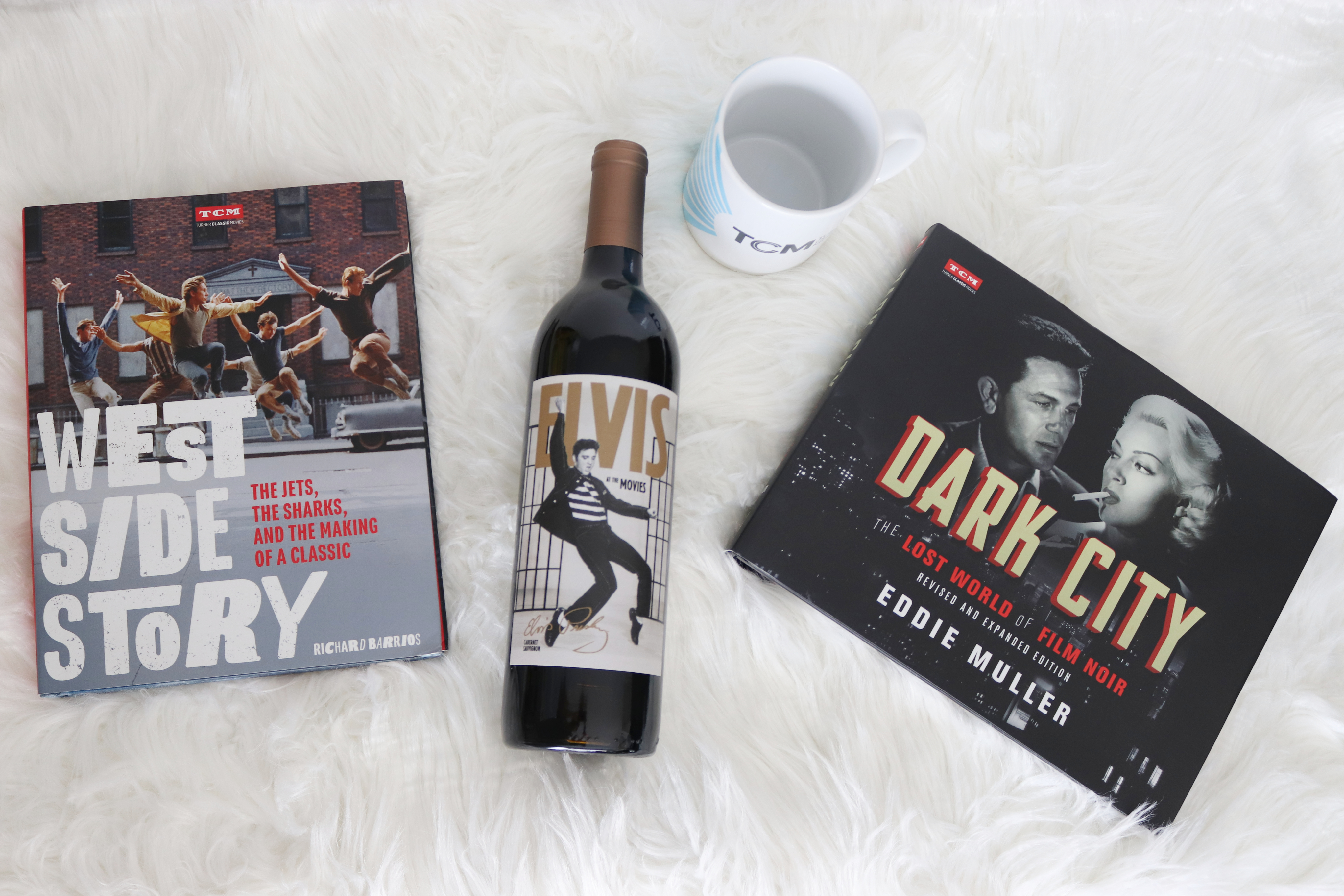
The first place you need to start is by visiting shop.tcm.com/gift. While there, you will find a variety of gifts which are suited for just about anyone in your family that loves all things classic movies. Choose from a variety of movies under $10 or pick up one of the many great books filled with tons of trivia. If you are looking for the perfect holiday movie, TCM has them in stock as well. There are also TCM exclusives such as shirts, hats and even a mug. With so many amazing options, I wanted to highlight a few of them TCM sent me to share with you all.

TCM Coffee Mugs

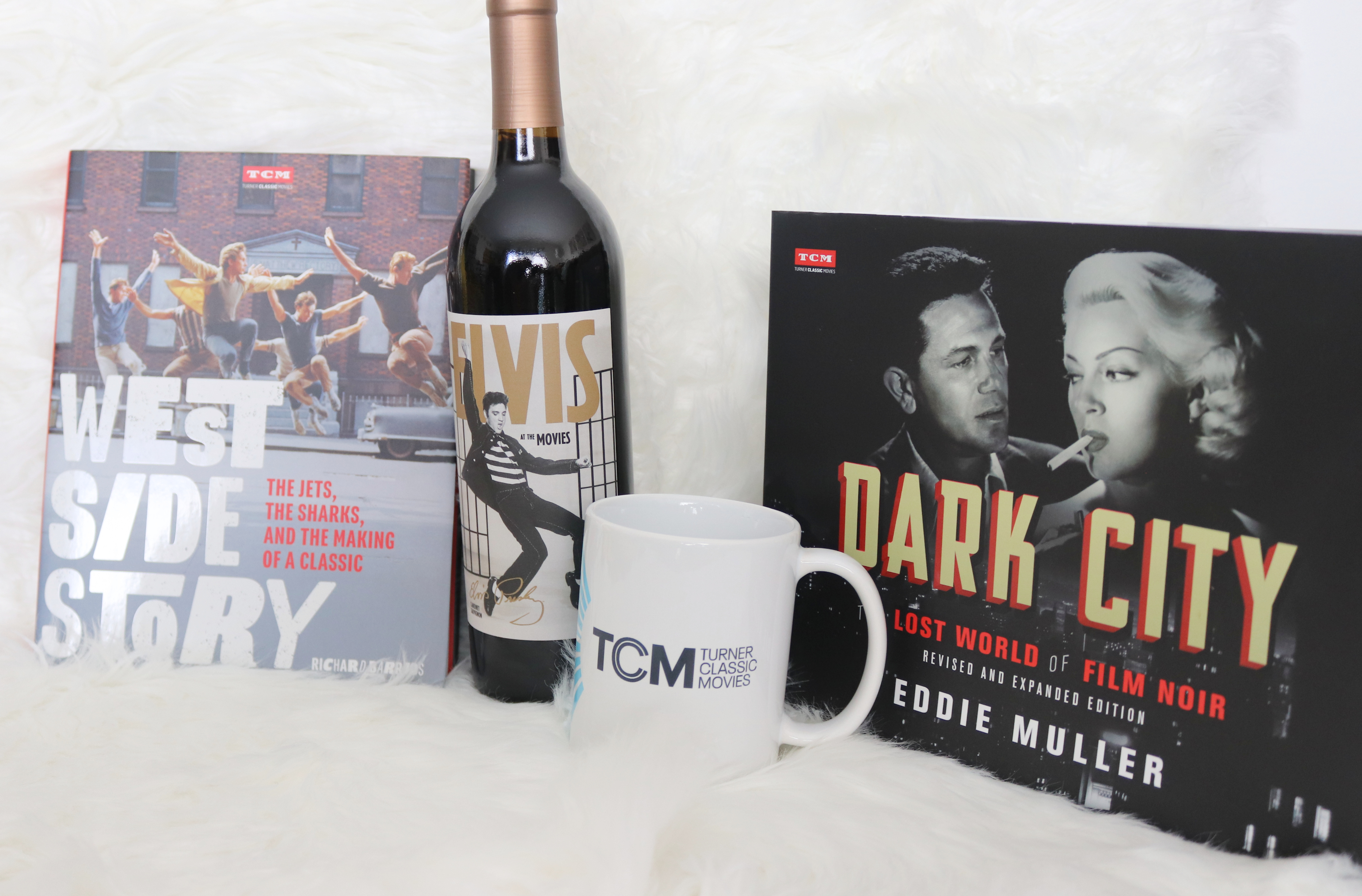
Do you love coffee, or are you more of a tea or hot chocolate fan? If so, this TCM Coffee Mug is perfect for you! This is the same mug you see your favorite hosts use in the TCM Studio. This 11oz. drinkware comes in either a black or white design and features the Turner Classic Movies logo on it. Drinking from this ceramic mug will remind you of all the great classic movies you can get lost in after a long day of work.

Black Mug ($25.95): https://shop.tcm.com/tcm-studio-mug-black/762184841106

White Mug ($18.95): https://shop.tcm.com/tcm-studio-mug-white/762184841205

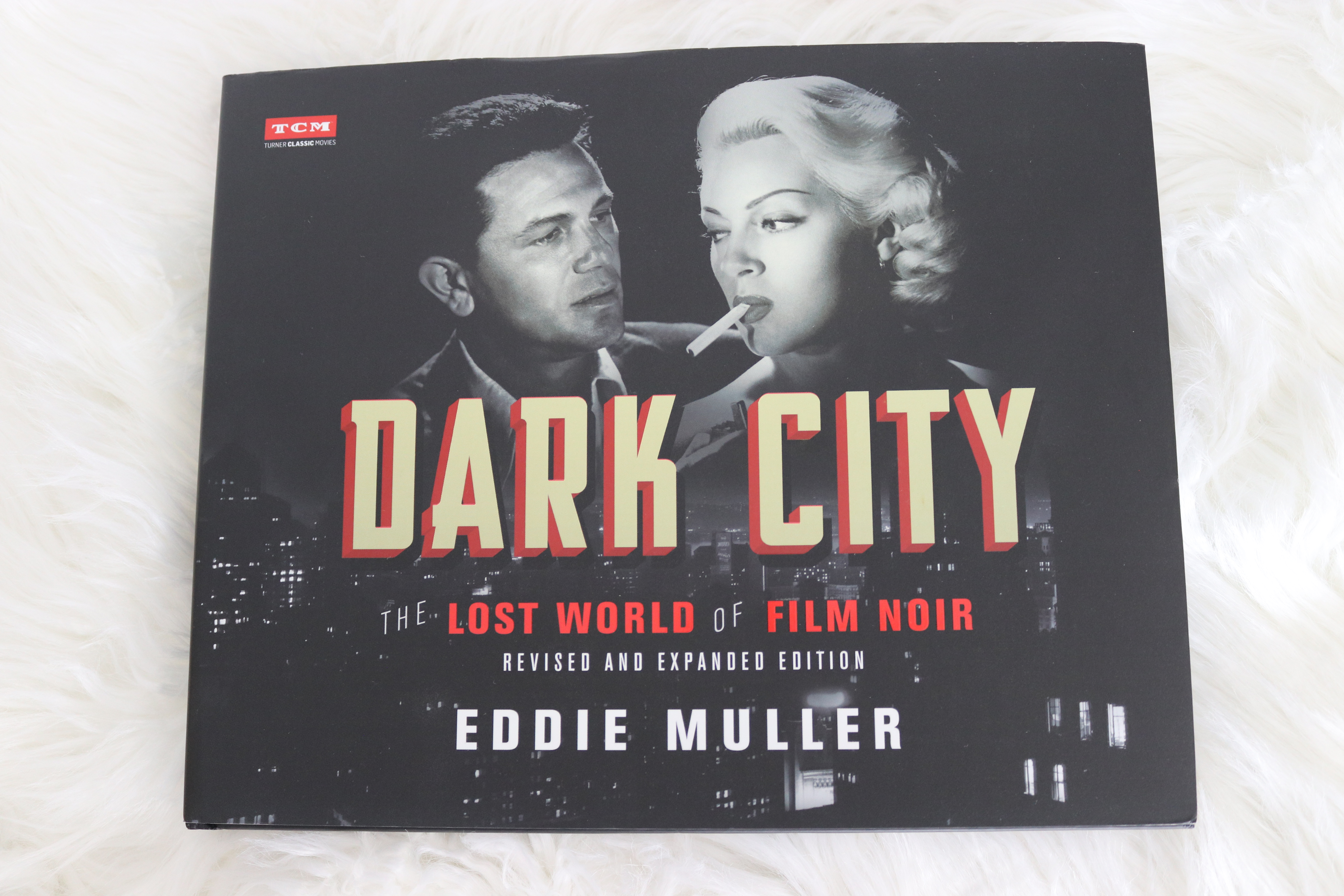
“Dark City: The Lost World of Film Noir” (Revised and Expanded Edition) by Eddie Muller

One of my favorite genres of film is film noir, especially in beautiful black and white.  There are so many great film noirs out there to look through and read about in this fantastic book.  One of the films you can learn more about is “Rear Window,” the classic Hitchcock film.  Other films discussed by this talented author include “Naked Alibi,” “Laura” and “Sudden Fear” to name a few. This is a 264-page book filled with phenomenal images and tremendous writing. I couldn’t put it down once I started reading it. This is just one of many great books they have to offer on their website. Also included is a great book on the cinematic classic, “West Side Story.”

Grab your copy of Dark City here: https://shop.tcm.com/dark-city/9780762498970 ($22.95)

Sip and Watch with TCM’s Wine Club

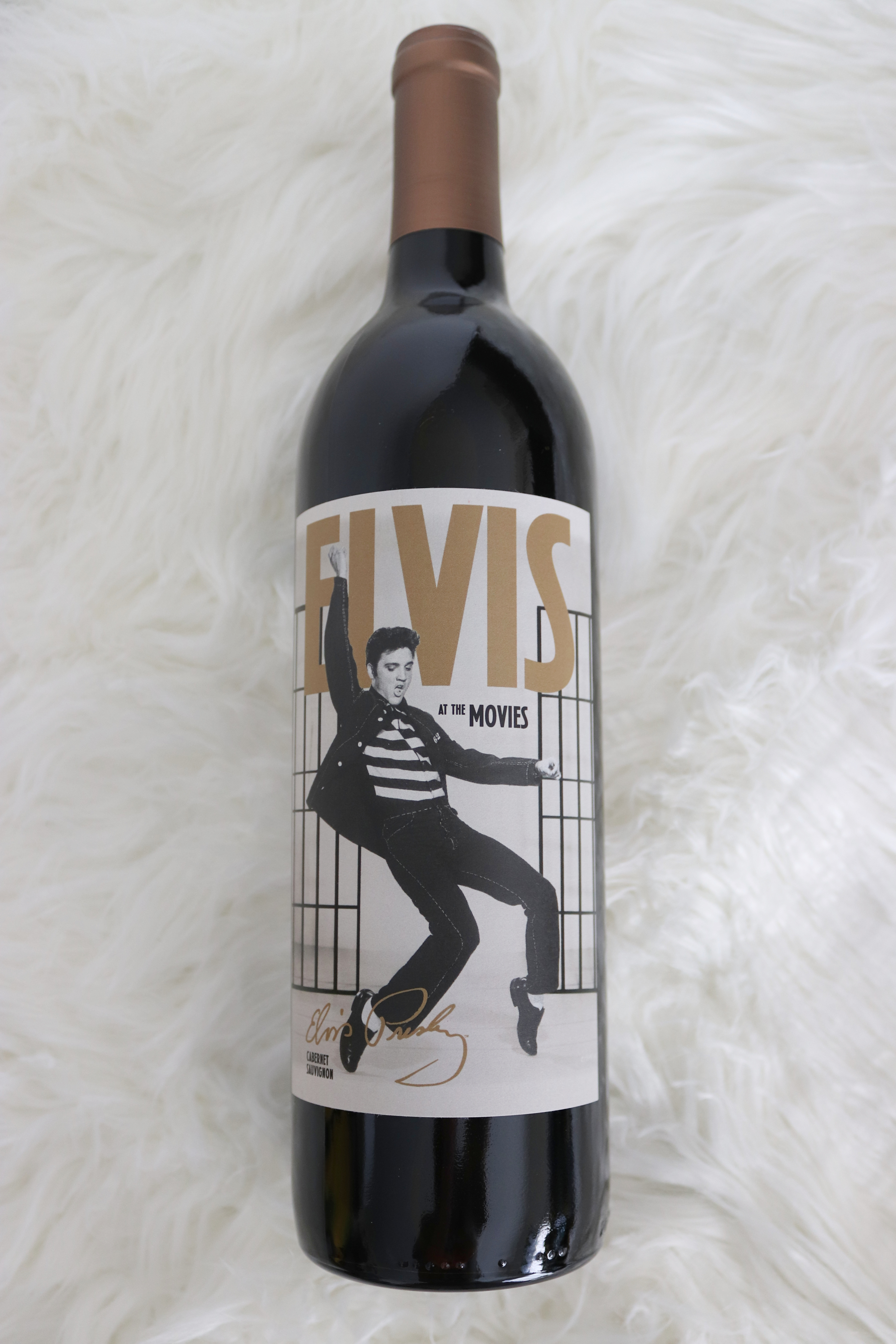
Now, even though I’m straight edge and don’t drink, I’ve heard wonderful things about the wines produced by TCM. They pair nicely with a classic film!  You can also drink your TCM Wine while enjoying one of their many amazing books. The TCM Wine Club ships out limited-production wines from around the world. You will receive your shipment quarterly. The bottles feature artwork and images from some of your favorite films and actors.  As a special introductory offer, you can save up to $160 on your very first collection. Choose between red or white wines or even a combination of both. As a special welcome, you will also receive 3 bonus classic movie wines. This is a wine lover’s dream!

TCM provided me with the Elvis wine, which my dad is absolutely going to love, as he’s a huge fan of the King!

If you’re interested in joining the TCM Wine Club or want to purchase this for a friend, check out the wine club here: http://tcmwineclub.com/holiday ($79.99 plus $19.99 shipping & tax)

I hope this TCM Holiday Gift Guide has made your holiday shopping a little bit easier!  Act fast as the holidays are quickly approaching, and you want to make sure to get your order shipped and delivered in time.  This is a great way to show the movie fan in your life how much you care about them in a variety of ways. Happy Holidays and keep watching a lot of classic movies on TCM!

Jason Reitman Talks With Dennis Christopher and Daniel Stern about ‘Breaking Away’

WRITER’S NOTE: This screening took place back in 2011.

Jason Reitman described the last double feature he presented as part of his guest programming at New Beverly Cinema by saying, “Whereas the last few movies I chose were sad in some respects, these two just make you feel good.” After dealing with the downfalls and missed opportunities which were major parts of “Shampoo” and “Boogie Nights,” he finished off his slate of favorites with “Breaking Away” and “Bottle Rocket.”

The first movie shown was “Breaking Away” which was directed by Peter Yates, the same man who made the Steve McQueen classic “Bullitt.” For years it has been considered one of the best sports movies ever made, and it’s also a movie where several young actors got their start together like in “Taps” or “Fast Times at Ridgemont High.” Among those actors were Dennis Quaid, Dennis Christopher and Daniel Stern. We even got to see a teenage Jackie Earle Haley in it, and he has since gone from career oblivion to critical acclaim for his performances in “Little Children” and “Watchmen.”

Reitman asked how many people in the audience were seeing this film for the first time, and many hands, including mine, immediately went up. To this he replied, “I am so jealous!”

On “Breaking Away,” Reitman described it as a movie you associate with watching with your father, and one which captures the lives of twenty somethings very well in the indecisions of where to go from high school; unsure of what to do with the rest of their lives. It’s also a great story about class wars in society; of those who have everything and those who never have enough. Upon looking for trivia about “Breaking Away,” Reitman found the film was originally two screenplays. One was called “The Cutters” which became the name of the people from the working-class environment, and the other one was about the bike race the characters train for.

Joining Reitman for this screening were Dennis Christopher who played the endlessly obsessive bike rider Dave Stoller, and Daniel Stern who played Cyril. Reitman usually had his guests hidden from sight before introducing them, but they were already in the theater giving autographs and posing for pictures which got posted on Facebook. Both Quaid and Stern also said they were so envious of those who were seeing this for the first time.

Reitman started off by asking them if they knew they were working on something very special. Stern was the first to reply:

That was my first movie,” Stern said. “I had never been in a movie before, and so I thought they were all like that. There is a wonderful simplicity to the movie, to the script, to the way the movie was made and the way it comes across. It does have a lot of depth to it too. I look back at it thinking, that was just an incredibly unique experience. I didn’t know what I was doing, I didn’t know where the camera was, and I didn’t know anything about that!”

Christopher, on the other hand, had worked in movies before with acclaimed directors like Robert Altman and Federico Fellini, so he knew a bit about being on big sets. The experience of making “Breaking Away” proved to be a bit different though.

“The thing that really made it special was because after that horrible first day of being a big Italian impersonator, because they made me all dark and I had my hair slicked back, black shirt, a tight waistline, etc. He was supposed to look like a ‘Saturday Night Fever’ guy,” Christopher said. “He (Yates) wanted him to be that kind of Italian. And I thought, why the fuck did they hire me? I looked like Lily Tomlin would when dressed up like men! That’s exactly what I looked like! I was waiting for them to glue hair on my chest!”

“I was so shaken, and the next day I came onto the set and I just burst into tears,” Christopher continued. “I told Peter that I just can’t do this and he said I KNOW, I KNOW! And we had a big talk with Steven (Tisch, who won an Oscar for his screenplay) and Peter, and then the character evolved; the way he looked and the way he was. So for me that was the special thing of collaborating with a director who cared about what you thought. So, for me I thought whoa, this is amazing!”

Reitman then spoke for those who had this on their minds after Christopher spoke:

“So what you’re saying is that Robert Altman really doesn’t care…”

This got a big laugh from the audience.

After making all the changes with Christopher’s character and making it more like him, they reshot everything and had to wait three weeks to see how it all looked. For those who have seen this movie, you have to agree this was one of the smartest choices Yates made. If Christopher was forced to do an Italian impersonation, it probably would have wrecked the movie.

Reitman also asked Christopher and Stern what kind of bike riding they did before production began. Christopher replied he did the “regular kind” and was never involved in any bike competitions like his character. Stern, on the other hand, said he was not a bike rider which turned out to be perfect for his character.

This led Stern to tell everyone he didn’t even audition for “Breaking Away.” He came into the office to read for Yates, and he was on a phone call nearby and saw him. Once he got off the phone, Yates handed Stern a script and was asked to be on set in a short time.

Unlike a lot of the big productions he had previously been involved in, Christopher said this film was almost completely the opposite of them. They had a very small crew working on it, and there was no overabundance of trailers parked on every street corner.

Barbara Barrie played Dave Stoller’s mother, Evelyn, and she got nominated for an Academy Award for Best Supporting Actress. However, it turns out she was a little peeved when she read the script and found there was no big scene for her. Christopher even recalled her telling Yates quite loudly, “WHERE IS MY BIG SCENE?!” So Barrie, Tisch and Yates worked together and did an improvisation which led to that wonderful moment where Evelyn talks about getting her passport and how she always keeps it handy.

People did not expect much from “Breaking Away” while it was being made, but it turned out to be a surprising success which won many awards, and it even spawned a prequel television series in which Haley and Barrie reprised their roles for. Of course, like many movies adapted to television, it lasted only one season. Stern called it “the little engine that could kind of movie,” and he even came to this screening wearing his white “Cutters” t-shirt. Christopher said this and “My Bodyguard” were the first movies for kids which were taken seriously by adults, and he and Stern said people’s overall reaction to it today is still quite powerful.

Christopher also told the audience about when he took his dad, whom he was estranged from at the time, to see “Breaking Away” when it was first released. After it was over, he said his dad came out of it “ruined” and looked quite frail. His dad could not believe how great the movie was, and when people outside the theater asked Christopher for his autograph, he got in line with the others. His dad even acted as his security chief in getting people in the line to move along.

The Q&A ended with both actors asking Reitman, “Is this a good print of the movie we’re showing tonight?”

“We’ll see,”Reitman replied.

Reitman said he had previously seen “Breaking Away” on VHS and laserdisc but seeing it with an audience was something else. The nearly sold-out crowd at New Beverly Cinema really got into the proceedings and cheered loudly throughout. You came out of the theater agreeing with Reitman that “Breaking Away” was as good as reputation has long since suggested.

Attending The ‘Die Hard’ Mural Unveilling at Fox Studios

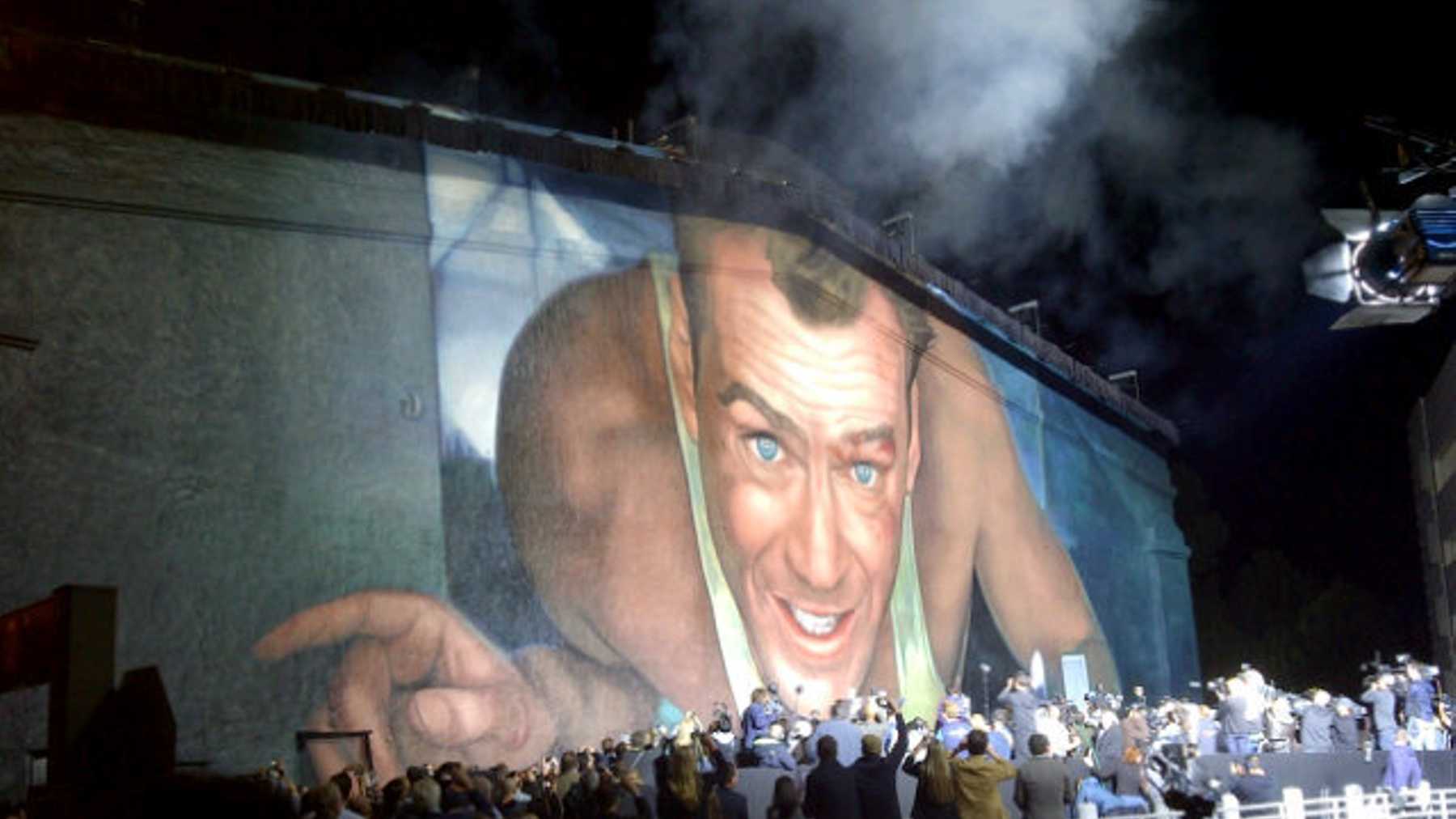
Bruce Willis attends as 20th Century Fox presents a dedication of a permanent sound stage mural celebrating 25 years of “DIE HARD” and “A GOOD DAY TO DIE HARD” in Los Angeles, CA on Thursday, January 31, 2013. (Alex J. Berliner/ABImages)

WRITER’S NOTE: As the first paragraph will indicate, this event took place back in 2013.

I was one of the lucky attendees at the Fox Studios lot on January 31, 2013 where the unveiling of a brand-new mural done in honor of “Die Hard” took place at Stage 8. The action classic which stars Bruce Willis as New York Detective John McClane has now reached its 25th anniversary, and the fifth movie in the long running series, “A Good Day to Die Hard,” is about to be released. Joining Willis in this celebration were Fox Film Entertainment chair Jim Gianopulos and the cast and director of “A Good Day to Die Hard.”

I cannot begin to tell you what a thrill it was to be a part of this historic event. Like so many, I was raised on the original “Die Hard” and its sequels, and the fact this franchise has held up so well is really a testament to the character of McClane and Willis’ portrayal of him. Before McClane, all movie action heroes were indestructible superhuman armies of one who obliterated every single bad guy while barely getting hurt in the process. McClane, however, was a different kind of action hero because he was like the rest of us; vulnerable, easily wounded, scared, and far from ever being indestructible. Gianopulos made this clear when talking about the character and his enduring status.

“While John McClane describes himself as the ‘fly in the ointment, the monkey in the wrench, the pain in the ass,’ I’d like to think his appeal is just that he’s the everyman who just has this uncanny way of being in the wrong place at the wrong time and who never, ever says die,” Gianopulos said. “So, however you try and categorize him, John McClane will live on for audiences in our hearts and the studio’s legacy and so will his ‘yippee-ki-yay…’ Well, it’s a family thing so I can’t really say it.”

Gianopulos also rightly pointed out how, unlike Batman or James Bond, John McClane has been played by the same actor in all five “Die Hard” movies. The crowd was thrilled to see Willis show up for this mural unveiling, and he looked genuinely happy to be there and to see us so excited.

“This is really very nice, really nice,” Willis said of this occasion. “I worked on this lot. I started on Stage 20 here and I moved on to bigger things here at Fox, and I just couldn’t be more pleased that you all came out here. It has been a big, great, fun time doing ‘Die Hard’ for the last twenty-five years and living to talk about it.”

Afterwards, Gianopulos gave Willis a device which looked like a detonator to a bomb and, after the 20th Century Fox Fanfare was played, he pushed the button on it. What followed were some loud pyrotechnics and the dropping of the curtain to reveal the 35- foot “Die Hard” mural which was designed by muralist Van Hecht-Nielsen and painter Fernando Cepeda. It depicts the scene where McClane makes his way through an air vent and pulls out his cigarette lighter to see what’s ahead. This of course led to one of Willis’ famous quotes from the movie:

“Come out to the coast, we’ll get together, have a few laughs…”

I personally got a huge kick out of the whole presentation as did everyone else, and it was greeted with thunderous applause from the onlookers as well as many car alarms which were inadvertently set off by the pyrotechnics (I guess they had to have their say as well). Then again, “Die Hard” did get its name from a car battery, so the irony is hard to ignore.

Following the mural presentation, we were invited to a screening of “A Good Day to Die Hard” held at the Zanuck Theatre on the Fox Lot. Introducing the movie was its director, John Moore, who added he hopes his funeral looks like this and with so many excited people in attendance. He also pointed out while this was a special screening of the new “Die Hard” movie, he also called it a “nerd screening” because of a new sound system being utilized for it.

“This is an Atmos screening of ‘A Good Day to Die Hard,'” Moore said. “To explain what that is, Atmos is a new three-dimensional sound system that Dolby is rolling out over the next few years, and this is only the eighth film to be mixed in Atmos. If I could director direction to the ceiling for a moment, you can see there is an array of nearly 40 speakers, and this creates a three-dimensional sound that’s gonna role of you like nothing you’ve ever experienced… Or since the last time something’s rolled over you.”

But for many of us, the biggest treat of the evening was when we were invited to the 21st floor of the Nakatomi Plaza where the original “Die Hard” was filmed… Okay, it’s really called Fox Plaza, but to us “Die Hard” fans it will always be known as the Nakatomi. The lobby in the building has changed only so much since 1988, and while the lighting inside was different, it still looks the same as it did back then. You should have seen us when we got into the elevators though because they looked exactly the same as they did in the movie. My friend Phillip was practically hyperventilating from all the excitement of being there, and he later claimed how he almost died of “sheer awesomeness.” We all definitely shared in that feeling, and I had a great grin on my face for the rest of the night.

The 21st floor was decked out with a DJ and food that ran from cheese and apple blintzes to bigger dishes like beef stroganoff and egg noodles, perhaps to reflect how “A Good Day to Die Hard” takes place in Russia. I loved how the floor resembled the one McClane hid out on when he set off the fire alarm and was waiting for the fire trucks to show up. This had a lot of us going up to the windows and looking out while repeating our favorite lines from “Die Hard” such as “c’mon baby, come ta’ papa, I’ll kiss ya’ fucking dalmatian” or “you macho a-holes! No! No!” We didn’t bang our hands on the windows though as that likely would have gotten us into trouble.

Actually, some of us got a really nice security guard to take us up to the 30th floor where the Christmas party in “Die Hard” took place, but it looks nothing like it did in the movie. In fact, much of what we saw in “Die Hard” was done on a soundstage, and the real 30th floor was full of empty office spaces still waiting to be occupied. We were hoping to go up to the roof where the helipad is so we could imitate the scene where McClane shot his machine gun into the air to get the hostages to run downstairs, but unfortunately the guy couldn’t do that for us (he was very nice about it though).

Still, we got to see the front parking area where Sgt. Al Powell (Reginald VelJohnson) drove around in circles before going inside, and we also got to see the place where a terrorist stole a Nestle Crunch candy bar while waiting for SWAT to break into the building. It’s all those little details which got us so excited.

Seriously, this was one of the best evenings I have had in a long time. To be a part of it was an honor, and it was an amazing thrill to go inside the Nakatomi/Fox Plaza and see where “Die Hard” was filmed. I came out to Los Angeles to be a part of the movies and to be close to those involved in their making, and this was an occasion which allowed me to do just that. I’ll never forget this evening, and I look forward to having many more of them.

‘The Goonies’ Movie and 4K/Blu-ray Review

The following review was written by Ultimate Rabbit correspondent Tony Farinella.

This was my first viewing, ever, of “The Goonies,” which might sound almost sacrilegious to film fans that love this flick and have watched it numerous times.  To many, it is considered a classic film with quotable lines and loveable characters.  I went into the film with high expectations, and I’m sad to report that I left extremely disappointed.  The film is very dated, and it is full of sound and fury, signifying nothing. However, if you are a fan of the film and have been looking to an upgrade for a while, the 4K release from Warner Brothers Home Entertainment will certainly satisfy you.  For those, like myself, who are new to the film, I don’t know if it will win over any new fans.

The film was directed by veteran Richard Donner from a story by Steven Spielberg and a screenplay by Chris Columbus.  When you factor in a young cast which includes Josh Brolin, Sean Astin and Corey Feldman, all of the ingredients were there for an enjoyable film with a cast full of wacky characters. This is one of the major problems with the film—the characters.  They are loud, screechy and supremely annoying.  It is hard to get behind this rag-tag group of misfits in the same way you would get behind the Losers Club in “It” or the friends in “Stranger Things.”  The film doesn’t waste time in getting right into the action, which ensures the character development is left with a lot to be desired.

The premise of the film follows a group of friends known as The Goonies.  They consist of Sean Astin as Mikey; his brother Brand, played by Josh Brolin; Jeff Cohen as Chunk; Corey Feldman as Mouth; Jonathan Ke Huy Quan as Data along with their female counterparts in Kerri Green as Andy and Martha Plimpton as Stef. Judging by some of their names, it doesn’t take a lot of imagination to piece together how they received their nicknames. They are about to lose their homes in the Goon Docks unless they can come up with some big money and fast.

This leads them on a treasure hunt to come up with a way to save their homes.  Hot on their tails, however, is a crime family known as the Fratellis: Mama Fratelli (Anne Ramsey), Jake Fratelli (Robert Davi), and Francis Fratelli (Joe Pantoliano).  They also have a deformed younger brother named Sloth (John Matuszak), whom is often neglected and mistreated by his family.  They are also looking to get some of the treasures on the ship, which used to belong to “One-Eyed Willy,” the original Goonie.

While “The Goonies” is never boring, and Donner keeps the action moving at a rapid-fire pace, at almost two hours, it feels like sensory overload.  As a viewer, I felt like I was on this never-ending mission that I didn’t really care about because I didn’t care for the characters.  They are likable when they are not screaming, shrieking or being completely over-the-top.  The film shines during the quieter and more tender moments. I was hoping the film would focus more on the friendships between the characters and the families.  The families are basically non-existent and played for laughs as clueless parents, which was a major problem with many young children’s/teenage films in the 1980’s.

In the end, if you enjoyed “The Goonies” in the past and it is a film you are known to watch over and over again, you will surely watch it over and over again on 4K as it looks out of this world.  If you are new to the film (in the minority like myself), I can’t really see you getting much out of this film as a first-time viewer.  Even though it is a children’s movie, I wouldn’t recommend it for young children today based on some of the language and innuendo.  While films and shows today owe a great deal of gratitude to “The Goonies,” it is very much a film of its era. I can’t say it holds up very well.

* * out of * * * *

______________________________________________________________________________

4K Info: “The Goonies” is released by Warner Brothers Home Entertainment on a 4K Ultra HD Combo Pack, which comes with the Blu-Ray and a digital code. The film has a running time of 114 minutes, and it comes in the following languages: English, Latin Spanish, Canadian French, and Brazilian Portuguese.

Video Info:  The film comes on 2160 Ultra High Definition for the 4K Version.  The Blu-Ray comes in 1080p High Definition.

Audio Info: The 4K Audio is DTS-HD MA: English 5.1 and Dolby Digital: French and Spanish.  For the Blu-Ray, it comes with Dolby TrueHD: English 5.1, Dolby Digital: English 5.1, English 2.0, French and Spanish. Subtitles for both versions are in English, French, and Spanish.

Special Features:

Commentary (with Hidden Video Treasures) by Richard Donner and select cast members.

The Making of the Goonies Featurette

Cyndi Lauper “The Goonies ‘r’ Good Enough” Music Video

Outtakes

Theatrical Trailer

My goal with this review was not to be a contrarian, but I realize I’m probably one of the few people in the world who is not in love with “The Goonies.” As mentioned, it had everything, on paper, I was looking for in a film like this.  All of the pieces just didn’t add up in the final product.  It was tough to finish this one, as even though the action is wall-to-wall, I found myself checking out of the story because of a lack of interest in the people involved in the action.  I’m glad to say I have seen it, so I can check it off my list of highly thought of films I need to see.  However, I can’t recommend this one as a purchase unless you absolutely love the film. You will be thrilled with the transfer, the 4K look of the film, which is beautiful, and the astounding high dynamic range that comes with 4K releases.  For everyone else, if you really want to see it, get it from your local library.

Alfred Hitchcock’s ‘Psycho’ – 60 Years Later and Shower Curtain Sales Have Still Not Recovered

I did not become aware of Alfred Hitchcock’s “Psycho” until its first sequel, “Psycho II,” was released back in 1983, 23 years after the original. Of course, I didn’t watch this sequel at the time as I was just a kid, but I do remember its movie trailers and the title cracking up on the big screen as it played before the feature presentation of “Return of the Jedi.” This image really freaked me out, and it was just as well I didn’t see the classic film which inspired it until many years later. When I rented and watched it on VHS with my older brother, we did not  see what the big deal was as we had long since been spoiled by the “Friday the 13th” and “Nightmare on Elm Street” movies with all the blood and gore a hormonal teenager could ever want or endure.

Well, it turns out watching it once was not nearly enough. Whether or not you think “Psycho” is Hitchcock’s best movie ever, it is often the one he is remembered best for making. After 60 years, it remains a great study of how a director can maintain suspense throughout the entire running time of a movie, and of a master playing the audience all the way up to the last frame. This becomes even more apparent when you watch it for a second and third time. Hitchcock puts you into the mindset of Marion Crane as she drives out of town after embezzling some money, and then he completely changes the dynamic of the story once Norman Bates arrives.

With “Psycho” now at its 60th Anniversary, we have another chance to go behind the scenes to see how this horror classic was made. It also represents another opportunity for Universal Pictures to release a new digital edition of the movie so they can fleece a few more dollars from our wallets. There has already been a Blu-ray release which made it look exquisite, and there has got to be a 4K Ultra HD version at some point. Anyway, looking back at the history of this classic proved to be one of the most interesting research projects I have taken on in years as there is much to be said about what went on behind the scenes.

“Psycho” originated as a novel written by Robert Bloch which itself was based on Wisconsin serial killer Ed Gein, a man whose horrific exploits would inspire many horror movies to come. Hitchcock acquired the film rights through his agent for $9,000, and he chose to film it after two projects he was working on for Paramount Pictures, “Flamingo Feather” and “No Bail for The Judge,” fell through. But Paramount did not want to help Hitchcock out on this one either as they were quoted as saying they found Bloch’s novel “too repulsive” and “impossible for films.” The executives refused to finance the production, and they even went as far as telling Hitchcock their soundstages were unavailable because they were being used for other projects. Of course, this proved to be a bold-faced lie as their production schedule was already in a slump at the time.

Undaunted, Hitchcock was still determined to bring “Psycho” to the silver screen, and he even offered to defer his normal director’s fee of $250,000 in exchange for 60% ownership of the movie’s negative. Still, executives would not grant him the financing he desired, so he continued to go through several different cost-cutting measures before getting a budget of no more than $1 million to make the movie his own way. Hitchcock had planned to make the film fast and cheap anyway, and he employed the crew members of his television series “Alfred Hitchcock Presents” who were already skilled at doing the same. He also succeeded in casting proven stars Janet Leigh and Anthony Perkins at a quarter of their usual salaries.

Bringing down the budget also meant shooting the film in black and white, but this was fine with Hitchcock as he wanted to film it that way as to make the shower scene come across as less gory, and he was also a big fan of “Les Diabolique” which was also shot in black and white.

Like “Psycho,” “Les Diabolique” was remade many years later. Unlike the originals, both were filmed in color. Even more unlike the originals, they received mercilessly scathing reviews upon their separate releases.

In filming “Psycho,” Hitchcock started off by making it as objective an experience as possible, and we feel what Marion goes through as the voices in her head fill her with guilt and doubt over what she has done. To help emphasize this effect, Hitchcock shot much of the movie with 50 mm lenses on 35 mm cameras. By doing this, the camera was said to mimic normal human vision. As a result, you are not just watching the movie, you are experiencing it. This even goes on after Marion has gone and the story turns its focus to Norman Bates. When he pushes her car into a nearby swamp, you share in his anxiety when it does not completely sink. That’s the thing; like Norman, you want the car to sink, and it makes one feel like a voyeur just as Hitchcock intended.

Then, of course, you have the famous shower scene, and after all these years it remains one of the most talked about and heavily dissected moments in cinema history. I am sure you all know the details regarding it: it was shot over six days from 77 different camera angles, and the scene features around 50 cuts in the three minutes which it lasts. Not much is shown as you never see the knife penetrating Marion’s flesh, and there is no gore other than the blood (chocolate syrup was used) going down the drain along with the water. Indeed, it is what you do not see which makes the scene feel so violent. Like Spielberg later did with “Jaws,” Hitchcock dared the audience to use their imagination in regards to what they thought they saw here. This is one of many reasons why this scene has stood the test of time, and it was also the first time a director killed off his leading lady in the middle of a movie. Back in 1960, audience members could not help but wonder where things could possibly go from there, and shower curtain sales have never been the same since.

I also cannot go on without mentioning the infamous score composed by the great Bernard Herrmann, and it remains one of the scariest pieces of music ever applied to a motion picture. Throughout his career, Hermann proved brilliant in composing film scores which really captured the psychology of the characters. This proves to be as true about “Psycho’s” score as it was with Hermann’s work on “Cape Fear” and “Taxi Driver.” It was a surprise to learn how this score almost didn’t come about as Herrmann balked at Hitchcock’s request to take the job on a reduced salary. Somehow though, Herrmann agreed to the terms and ended up writing music for a string orchestra as opposed to a full symphony which would have included brass and woodwind instruments. This is now clearly seen as a masterstroke on his part as the screeching of violins captures the sheer terror which overtakes Marion and the audience during the infamous shower scene.

Although “Psycho” is now recognized today as a classic, it actually received mixed reviews upon its release. Some admired the buildup of tension, but others questioned the psychological elements as being less effective. It even made one critic, C. A. Lejeune, so offended to where she walked out of the movie before it was even over, and she soon after resigned from her position as film critic for The Observer. Looks like Norman’s mother did not just claim victims onscreen!

When you look at the history of cinema, it is important to keep in mind how movies we see these days as classic were not necessarily treated this way upon their original release. It is over the passing of time where movies get re-evaluated or seen in a different light, and none can ever truly be perfect (although some do come very close to it). “Psycho” was a game changer as it came about during the Motion Picture Production Code which was heavy in its censorship of violence and sex in American films. With “Psycho,” Hitchcock flirted with showing nudity as well as gore, and this later opened up doors for filmmakers to exploit these elements with far more detail. Without “Psycho,” there may never have been a “Halloween” which by itself inadvertently sparked a whole wave of slasher movies. And without “Halloween,” there certainly would not have been a “Friday the 13th” as Jason Voorhees, like Norman Bates, also had serious mommy issues.

The cultural impact of “Psycho” lasts on to this very day. There are only so many movies which could have a sequel made to it several decades later. “Psycho III” followed a few years later, and a prequel came about because some just thought it would be a good idea to show how Norman Bates got to be the shy psycho we know him to be. There was even a failed television pilot called “Bates Motel” which starred Bud Cort as Alex West, an asylum inmate who befriends Norman and later inherits the motel and the house where mother lived (Anthony Perkins wanted nothing to do with that one). It also inspired a shot-for-shot remake by Gus Van Sant which seemed almost every bit as odd as Norman himself. The only purpose of it seemed to be proof of how remakes will never be able to recapture what made the original so good. But if they make money, the studios will clearly not mind the critical bashing even if it proves to be justified.

Television would later take another shot at the “Psycho” franchise with another version of “Bates Motel,” and this one starred Freddie Highmore as Norman Bates and Vera Farmiga as his mother. This version ended up lasting five seasons and proved to be very compelling as our fascination with the dark side of human nature is always stronger than we ever bother to realize. While some may have said enough already with “Psycho,” this show proved there was more life to it than we cared to initially realized.

Even today, you cannot hear screeching violins and not think of “Psycho.” Filmmakers reference it today like Wes Craven did in “Scream,” and there are dozens of movies out there which have done the same. That shower scene has been spoofed lord only knows how many times, my favorite being on “The Simpsons” where Maggie ended up attacking Homer with a mallet after watching one Itchy & Scratchy cartoon. Another great one came about during one of Billy Crystal’s Oscar montages where he was in the shower and ends up getting accosted by Kevin Spacey who plays his “American Beauty” character of Lester Burnham. Turns out it was not the same shower Marion got stabbed in, but instead the one where Lester often experienced the highlight of his day.

Leigh never looked at taking showers the same way again, and it would be ages before she ever took one. Perkins would forever be typecast in roles similar to Norman Bates, but he said he would still have done “Psycho” even if he knew this would be the case. Many filmmakers (Brian DePalma especially) have tried to use the tricks Hitchcock employed in this and his other films to varying degrees of success. Still, there is no topping what Hitchcock did with this classic 1960 movie, and it remains the one so many other suspense and horror movies are judged by. Hitchcock’s powers of manipulation remain very hard to duplicate after all these years, and this illustrates what he meant when he was quoted as saying, “I enjoy playing the audience like a piano.”

Cla