‘A Working Man’ Movie and 4K Review
The following review was written by Ultimate Rabbit correspondent, Tony Farinella.

At 57-years-old, Jason Statham has made quite a career out of playing the Jason Statham character. Some might say, “If it ain’t broke, don’t fix it.” However, I think it’s reached the point where it’s starting to become quite tedious and laborious to see him simply spinning his wheels with his film choices. Do his characters even need names or backstories? You can just call them, ‘The Jason Statham character’. His latest film, “A Working Man,” was directed by David Ayer, who collaborated with him on 2024’s “The Beekeeper.” While “The Beekeeper” was good fun, there isn’t a whole lot of entertainment value in “A Working Man.”

Statham stars as Levon Cade, a man with a background in the Royal Marines. After the death of his wife, he’s now working in construction for the Garcia family in Chicago. He is looking to keep a low profile, keep his head above water, and also spend some time with his daughter. She’s currently staying with his father-in-law who is not a fan of Levon.  As a matter of fact, he blames Levon for the death of his daughter, as she passed away while he was in combat. He’s trying to get more time with his daughter, but his father-in-law is not only extremely rich, but he’s fueled by anger and bitterness. He looks at Levon as someone who can’t control his anger and thinks violence is the only answer.
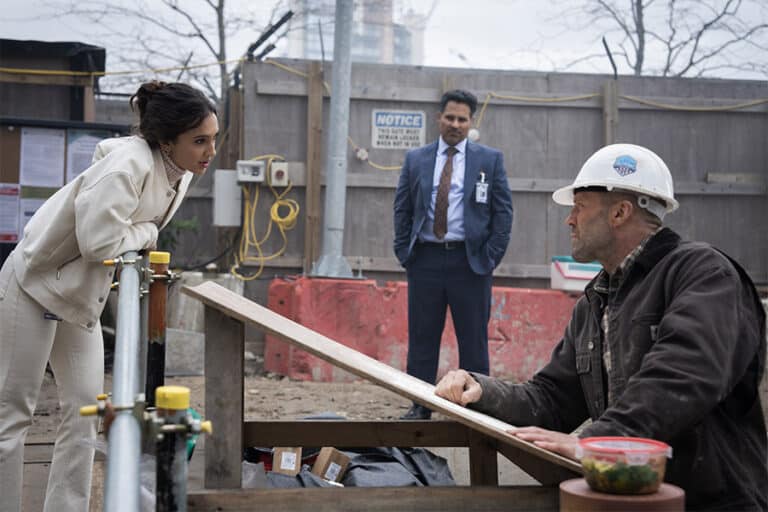
Arianna Rivas, Michael Peña and Jason Statham star in the film “A Working Man.” (OSV News photo/courtesy Dan Smith, Amazon MGM Studios)

One night, Jenny Garcia (Arianna Rivas), the only daughter of Joe and Carla (Michael Peña and Noemí González) goes missing when she goes out to celebrate an academic achievement. They suspect foul play is involved, so they look to Levon Cade for help, as they get a feeling that he has a background that might lend itself to helping them out. At first, Levon is hesitant to get himself involved in anything, as he says he’s a different person now. He decides to help them out because he’s having a battle for visitation rights over his daughter and he’s fiercely loyal to the Garcia’s who have helped and been patient with him during a difficult time in his life. 

From this point forward, you have a paint-by-numbers revenge flick where Statham is bound and determined to find the men and women responsible for Jenny’s disappearance. On paper, this might sound like a fun flick to sit back and relax while you shut off your brain. This would be true if we hadn’t seen this countless times over with Statham. Let me put it this way—Pizza is great, but if you start to have pizza every night of the week, it starts to make you feel sick. The bad guys in the film are these cheesy, over-the-top Russians who are laughable and can’t be taken seriously. You know what’s going to happen, but it takes almost two hours to reach our destination. I was long checked out of this film mentally by the time it was nearing its conclusion. 
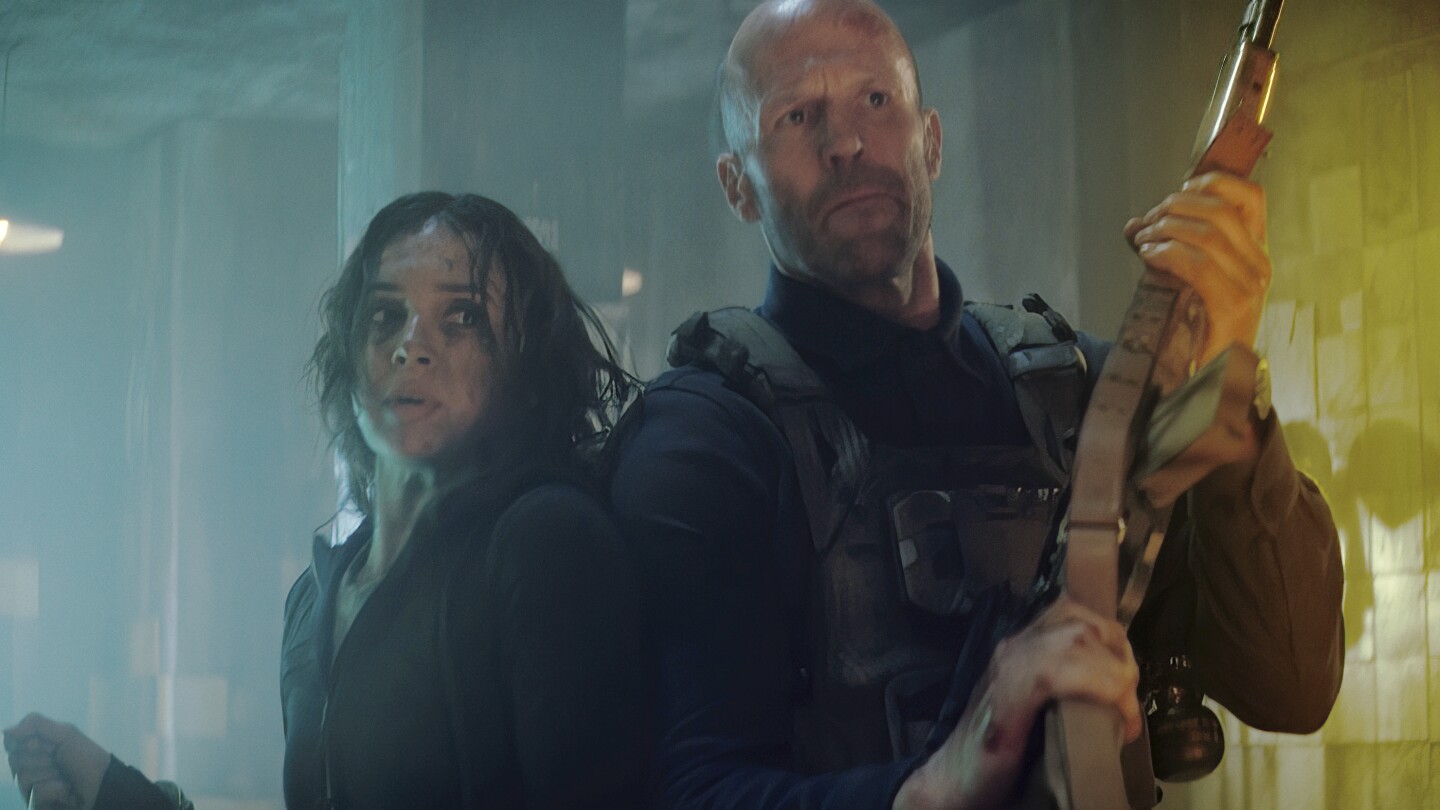
I’m a fan of movies that are so bad, they’re good, but make no mistake about it, “A Working Man” is just bad. This film is all about the action sequences, the kills, and the explosions. I can’t sit through another Jason Statham film unless he plays against type, which I don’t see happening anytime soon.  I’d be happy to be proven wrong, but “A Working Man” is only for diehard Statham fans who want to seek out his entire filmography.  For everyone else, like me, who is feeling extreme fatigue from another Statham film with no imagination, bland kills and a lazy plot, you’ll be wise to skip this one.

* out of * * * *

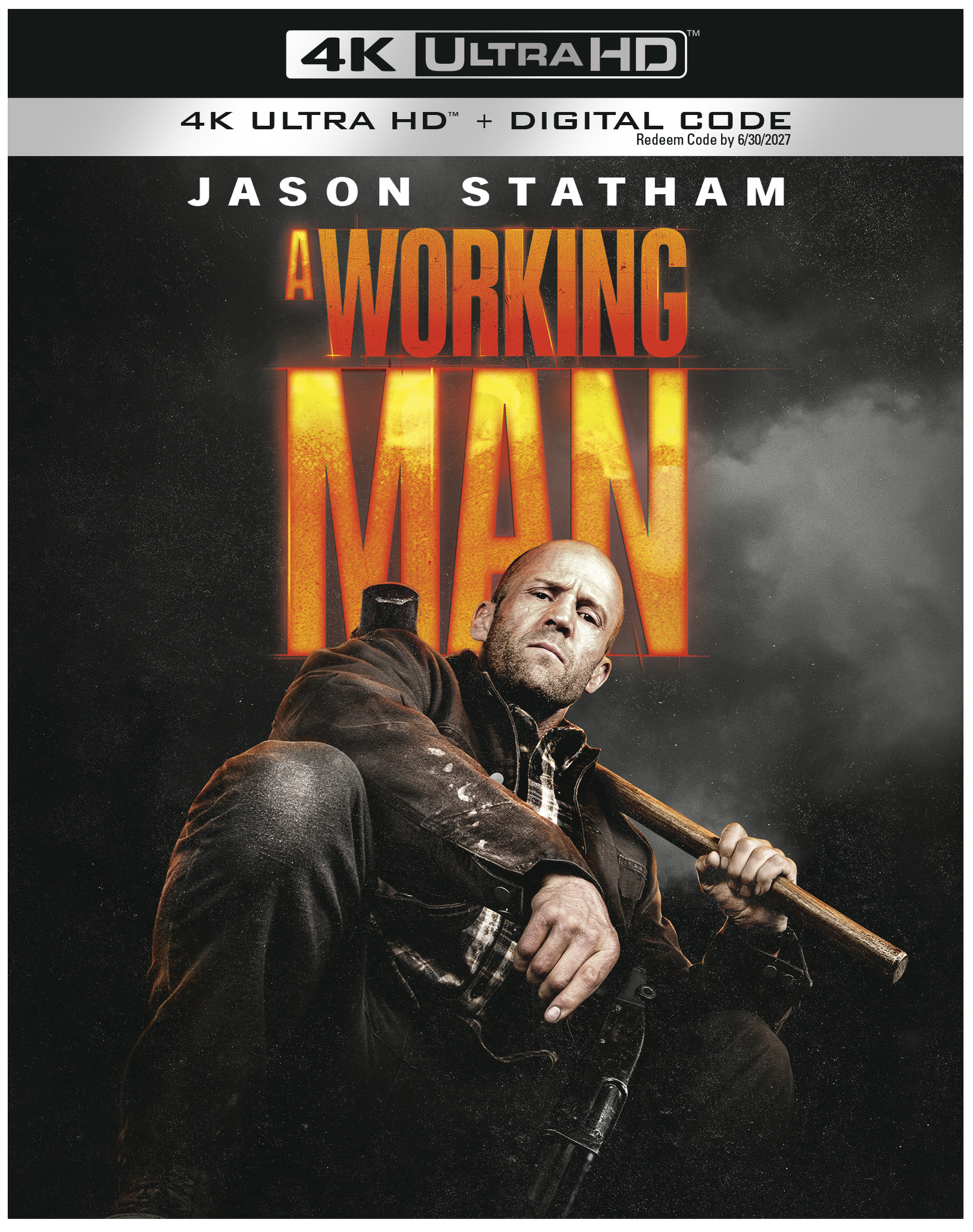
4K Info: A Working Man is being released on a single-disc 4K from Warner Brothers Home Entertainment. It has a running time of 116 minutes and is rated R for strong violence, language throughout and drug content. It also comes with a digital copy of the film.

4K Video Info: The 4K HDR transfer is incredible. The picture is clear, vivid, and full of color and life.  Even though the film isn’t much to watch from an entertainment perspective, it looks stunning in 4K.

4K Audio Info: The Dolby Atmos track really pops on this release as well, as it brings the film to life in your home theater.

Special Features:

NONE

Should You Buy It?

“A Working Man” is an A+ movie when it comes to the audio and visual aspects of this 4K release.  It looks mesmerizing, and it also sounds terrific.  Sadly, it’s a D movie.  Moving forward, unless Jason Statham makes a real effort to think outside the box with his film choices, I’m going to politely decline his future projects. I went into this movie with low expectations, as I thought it would be harmless fun, but instead, it’s just a dull, lifeless, and listless movie. Even though I enjoy the style of director David Ayer, this screenplay, which was co-written by Sylvester Stallone, is dead on arrival. The characters here are so vanilla and one-note. The writing is absolutely terrible. I don’t know if these were real Russians in the film or not, but they came across as fake and phony villains. They spend about 15 minutes setting up this plot and the rest is all in the chase, but I didn’t care about the chase because I barely had time to get to know these characters.  I know you might be tempted to seek this film out, as a late-night quality pleasure, but make no mistake about it: This film is only for fanatical Statham fans. 

**Disclaimer** I received a copy of this film from Warner Brothers to review for free.  The opinions and statements in the review are mine and mine alone.
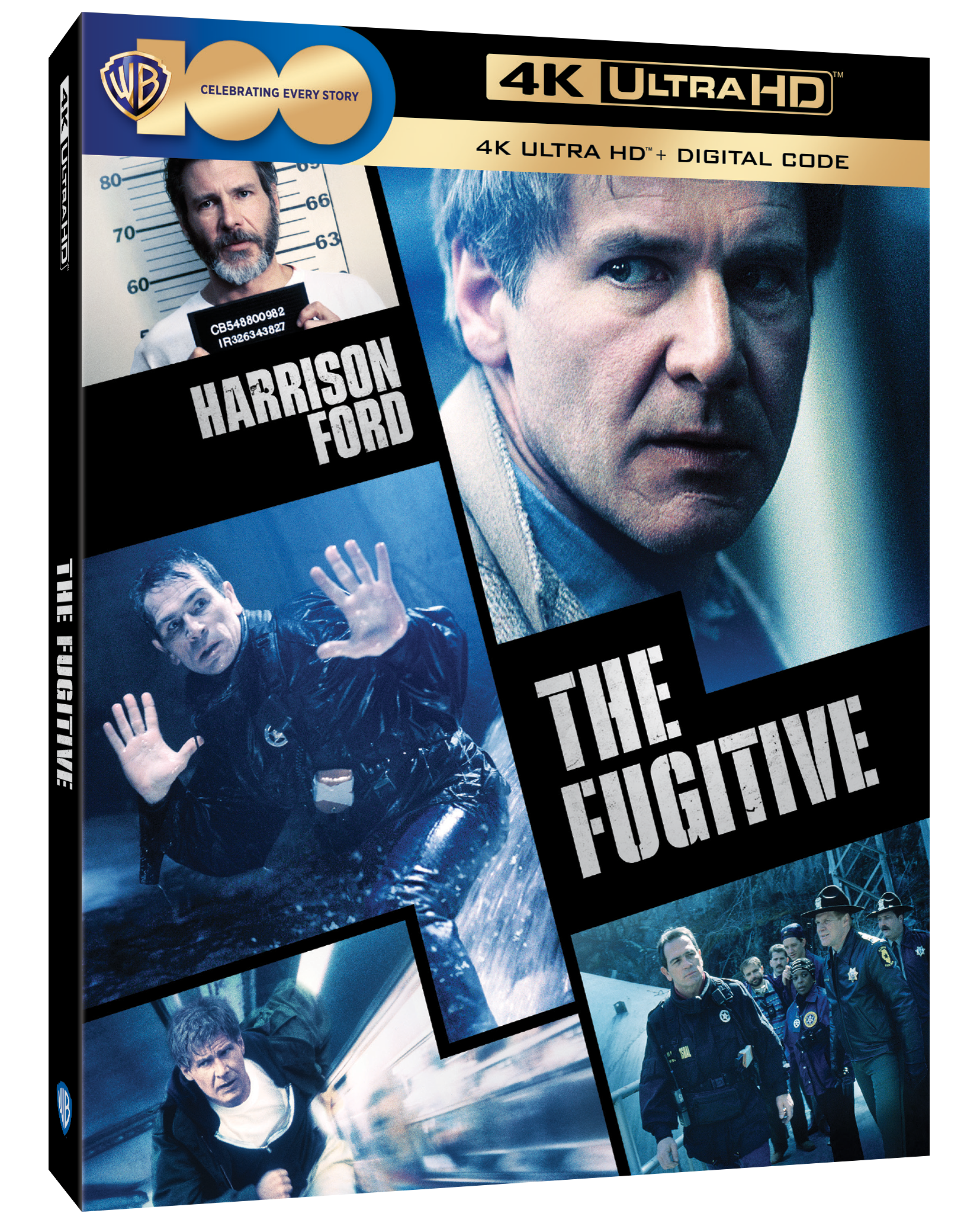
‘The Fugitive’ Movie and 4K Review

The following review was written by Ultimate Rabbit correspondent, Tony Farinella.

It’s rare I use the word perfect to describe a film, but it certainly applies to 1993’s “The Fugitive.”  Now, when I say this film is perfect, I’m not saying it is one of the greatest films in the history of cinema.  It is perfect because it is a film that is exactly what it needs to be for its genre in terms of what is expected of it and how it goes out and executes its formula.  When I’m using that as my template, it’s a perfect action/thriller flick.  The film is two hours and ten minutes, and there is not a wasted moment or scene throughout the course of its running time.  It’s one of those movies where it has you hooked in its story from start to finish.

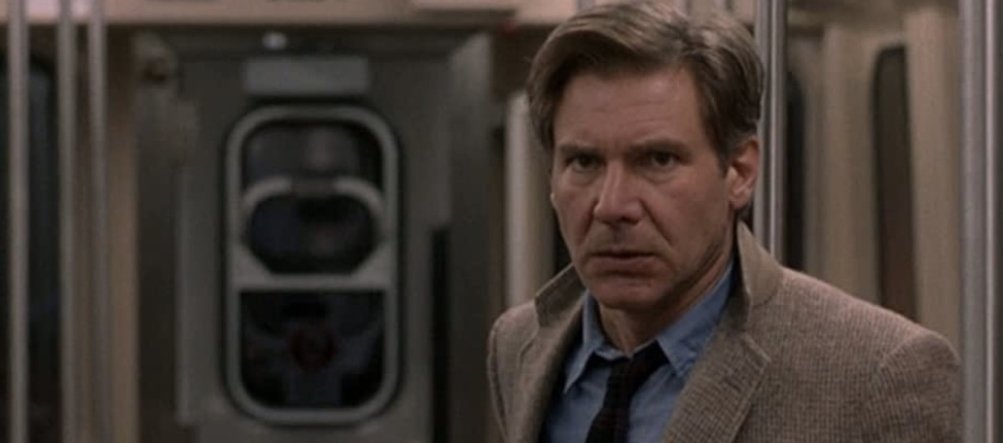
The film stars Harrison Ford as Chicago surgeon, Dr. Richard Kimble, who is thrown in prison after being falsely accused of murdering his wife, played by Sela Ward. Richard says a one-armed man did it, and he’s completely innocent.  However, all of the clues make him look guilty. The police think he did it because his wife had a lot of money and a lucrative life insurance policy. With no signs of forced entrance, all signs point to the husband.  At the moment, he doesn’t have a leg to stand on in their eyes.

Kimble is able to escape from prison when his transportation bus is hit by a train on its way to death row.  He’s now free, and he is bound and determined to prove his innocence and find this one-armed man.  Deputy US Marshal Samuel Gerard (Tommy Lee Jones) has one mission in life now: to catch Richard Kimble and bring him back to death row. From here, we are treated to a delightful game of cat and mouse between Harrison Ford and Tommy Lee Jones. Throughout the course of the movie, Ford is always one step ahead of him, even when they are face-to-face.  His character is incredibly smart and wily. Because of this, he’s not going to make any mistakes or leave himself vulnerable to getting caught.

Ford is really, really effective at being a charming and intense underdog to root for in “The Fugitive.”  On the other hand, Jones’ character is also incredibly well-written and fleshed out by the script, which was written by Jeb Stuart and David Twohy. He’s not really a bad guy or a villain. He’s just doing his job, and, at the time, is completely unaware of the fact that Richard is innocent.  He also brings great comedic timing to the role, which makes for a fun action film that doesn’t take itself too seriously. It’s a performance which relies on his perfectly timed facial reactions. Veteran action director Andrew Davis also knows how to make the big action scenes mean something, as the pacing here is terrific.  He trusts his actors, and he trusts his script as well.

The movie was partially filmed in Chicago, and Chicago plays a big part in this movie. He captures the hustle and bustle of the city with a great visual eye.  The cinematography is top-notch, as it also shows the toughness and the grit that comes from the city.  When you have great acting, great direction, a great script, and a great sense of place, you have a great action movie.  There are so many scenes that were brilliant because they never insulted the intelligence of the audience. When Ford is able to get free from Jones time after time, it makes sense because of the set-up and the execution of the scenes.

I’m embarrassed to say this, but this was my first time watching “The Fugitive,” either the movie or the TV show.  As they say, better late than never.  I wish Hollywood would do more brainy action films like this today.  It really starts with trusting your screenplay and your actors.  When you have that, everything else falls into place.  This is a great film with tons of action, suspense, and a sense of humor that is put in at just the right moments.  They didn’t overdo it with the comedy to where it was poking fun at the movie. It was done because the moment and the scene called for it.

There is also a great supporting cast here, filled with actors and actresses you have come to know and love such as Julianne Moore, Joe Pantoliano, Ron Dean, Jane Lynch and Neil Flynn. “The Fugitive” is fun with a capital F.  It is a film I look forward to revisiting many times in the future now that I own it on 4K. It’s remarkable how they were able to cram so much into this movie without it ever feeling tedious or laborious. It’s a movie where you are invested in everything happening on screen, and as Roddy Piper once said, “Just when you think you have all the answers, I change the question.” You find yourself as an audience member wondering how Dr. Richard Kimble is going to find his way out of a jam, and he does it time and time again.  Even though it took me far too long to sit down and watch “The Fugitive,” it was well worth the wait. I love this movie.

* * * * out of * * * *

4K Info: “The Fugitive” is released on a single disc 4K from Warner Brothers Home Entertainment. It comes with a digital copy of the film as well. It is rated PG-13 for a murder and other action sequences in an adventure setting. It has a running time of 130 minutes.

4K Video/Audio Info:  Let’s start with the visuals on this film: WOW! This film looks incredible on 4K. You are able to see all of the pores on the actor’s faces, and they have really brightened up the look and feel of this film without making it look too over-saturated or washed out.  They have cleaned up the picture a lot while also maintaining the cinematic grain that is part of the film’s charm.  This is one of the best looking 4K’s of 2023.  The Dolby Atmos soundtrack is also lively without being too punchy or loud. It’s perfect. I give both the audio and visuals an A+ here.

Special Features:

Introduction by Andrew Davis and Harrison Ford

Commentary by Andrew Davis and Tommy Lee Jones

“The Fugitive: Thrill of the Chase”

“On the Run with the Fugitive”

“Derailed: Anatomy of a Train Wreck”

Theatrical Trailer

Should You Buy It?

“The Fugitive” is celebrating its 30th anniversary with this 4K release on November 21st, and let me tell you right now, this is a day one purchase if you are a film historian and lover.  If you have seen the film before and own the Blu-Ray, you need to upgrade to this magnificent 4K that showcases everything that is beautiful about HDR and Dolby Atmos. If you have never seen the film before, like yours truly, you can confidently buy this film on day one without hesitation or regret.  It is worth every single penny. There is also a 4K steelbook release, which looks awesome!  Warner Brothers did a magnificent job with this 4K transfer of “The Fugitive.”  Yes, the special features are imported over from the Blu-ray, but at least you get them here, including a commentary track with Tommy Lee Jones and Director Andrew Davis. I loved this movie, and I equally loved what they did with this release. It comes HIGHLY recommended!

**Disclaimer** I received a copy of this film from Warner Brothers to review for free.  The opinions and statements in the review are mine and mine alone.
Joe Swanberg on the Making of ‘Drinking Buddies’

WRITER’S NOTE: This article was written back in 2013.

Filmmaker Joe Swanberg has been a major figure in the Mumblecore movement, a subgenre of American independent film which is characterized by low budget production values and naturalistic dialogue. Among his films is “Hannah Takes the Stairs” which stars Greta Gerwig and was actually shot without a script. The way Swanberg works, he gives his actors an outline of the plot of what he wants to film, and they improvise their scenes from there. This way of filmmaking offers actors the opportunity to take a lot of risks and make the kind of movie Hollywood studios do not want to right now.

Swanberg’s latest film, “Drinking Buddies,” stars Olivia Wilde as Kate, an employee at a Chicago craft brewery who spends her days flirting with her co-worker, Luke (Jake Johnson). They would make the perfect couple, but Kate is already going out with Chris (Ron Livingston) while Luke is seeing Jill (Anna Kendrick). But when their significant others are out of town one weekend, both Luke and Kate begin to wonder if the feelings they have for one another will eventually come to the surface.

As with “Hannah Takes the Stairs,” “Drinking Buddies” was shot without a script, and the actors improvised all their scenes. Swanberg took the time to talk with us about the experience of making the movie while at the Four Seasons Hotel in Los Angeles, California as well as the fascinating world of craft beers.

What would you say is the difference between a microbrew and craft beer?

Joe Swanberg: Same thing, different terminology. The way that the world is soused out is basically in terms of how many barrels a year that places are outputting between micro-breweries and macro breweries. I would argue that you’re either there because you’re passionate about it, or you’re there because it’s a job, and that’s the difference between the two.

You mentioned “Bob & Carol & Ted & Alice” as one of your influences on this film, and that was a studio comedy with an adult point of view. Your films always have that great point of view and you keep going back to that well time and time again. What keeps you going back there, and what was your motivation to do this film?

Joe Swanberg: Well, a lot of it has to do with operating in a space where I can carve out a little area for myself to play in. Sadly, complex contemporary adult movies, there aren’t many of them. I’ve always been allergic to just doing what everybody else was doing, so it’s kind of just remained a place where there aren’t that many other things happening. I don’t have to be nervous that we’re sort of recycling the zeitgeist or anything like that, then it’s also just one I’m fascinated by. I think if you were to catch me most days of the week and asked me what I was thinking about, it would be a conversation my wife and I had about making time for each other to both be able to do our creative things, or some friend of mine who’s going through a breakup or something. I’m interested in people in that way, how we interact with each other. It’s very easy for me to continue to generate stories that are based around that because it’s kind of always on my mind anyway.

What would you say was your favorite scene in “Drinking Buddies?”

Joe Swanberg: My favorite sequence in the movie is Jake and Olivia playing cards, he’s playing blackjack with her, and Ron and Anna are hiking in the woods. Just the start of the back-and-forth of seeing these two couples we’ve established in terms of each other sort of swapping a little bit and feeling out how to flirt with someone else. I feel like I have this experience in my own life within the context of my relationship with my wife where I’ll just be with another woman and you just sort of get to play make-believe for 45 minutes or something of “oh this is what it would be like if we were together and we went to get lunch or something. This is how we would relate to each other,” and it’s different than the relationship you’re in. These little daydream scenarios, that scene in particular is really fun to me to see play out. I also love listening to Jake and Olivia on the porch. Anna has fallen asleep and they sneak out. I’ve had a lot of those nights in my life where the floodgates open and you just start being really honest and it starts feeding into the other person’s honesty. Before you know it, you’re just talking about things you’ve never told anybody with someone you hardly know. It was fun to try get something like that into the movie and to let them share stories with each other, and I just get to bear witness to it.

Did you have this great cast in mind from the beginning?

Joe Swanberg: No. Usually I’m working with friends of mine so I do know exactly who is going to play the parts before I gear the thing up, but this was one where I just sort of had broad stroke ideas about who the characters were. It’s the first time I’ve ever done a casting process where I met with a lot of actors and try to think about chemistry and placing different people in different roles.

Why did you film in Chicago? Why not Boulder, Colorado?

Joe Swanberg: Well, I live in Chicago, so that’s a big reason. Also, there’s a specificity that I can give the movie because I know what kinds of apartments these people live in and what bars they would drink at. So, every choice gets be a real choice because I know them and I’m friends with them. I’ve been to places I’ve never been to before and done the same process, but then I either have to take somebody else’s word for it like where the hipsters drink, or where it’s just not specific at all. I’m just like choosing places that look nicer something. It was fun to do something at home where I could use the city is an indicator of certain things. Also, I have a kid now so traveling is way less appealing than it used to be. Going to sleep in my bed every night was a huge bonus.

Was the backpack scene in the woods between Ron and Anna when they have that awkward moment completely improvised?

Joe Swanberg: Yeah. It’s the first film that I’ve done where I had an art department and a props master and all these people, so it was really fun as a director to show up to the production office every day and have somebody bring in four different backpacks that I could choose from. It was just too funny to pass up. It says a lot about her (Anna Kendrick). It’s a really great use of a prop.

Beer wise, what are you drinking now especially after you’ve had this little bit of education?

Joe Swanberg: I’m still leaning on the hoppy IPA side of things, but it’s interesting because I didn’t drink at all until I was 25. On my honeymoon I had a beer. I guess I must’ve felt like “alright, I’m here,” so it’s new to me. It’s really been something that I’ve just gotten into in the last five years. It’s interesting because I remember drinking a really hoppy beer early on and just thinking it tasted disgusting, and now I really like the flavor so I’m really curious as to where my taste buds will lead me in terms of the stuff. I find that I go through cycles with it. There was a period of time where I just wanted to drink stouts and dark beers, and then I got into Belgian stuff and then went to the hoppy stuff so I don’t know what the next wave will be.

Any brands you like?

Joe Swanberg: Sure, but too many to even name. I’ll stick to the Midwest: Revolution Bar where we shot, Three Floyds, and Half Acre. We are very spoiled in Chicago. I think twelve new breweries opened this year. It’s a nice time to be in Chicago right now.

Drinking Buddies” is available to own and rent on DVD, Blu-ray and Digital.

Favorite Opening Titles: ‘Bullitt’

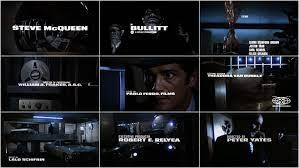
Peter Yates’ 1968 neo-noir action thriller film “Bullitt” was my introduction to one of the coolest actors and movie stars ever to inhabit this planet of ours, Steve McQueen. It also starts off with one of the most ingenious opening title sequences I have ever seen as a dozen men are waiting outside of a building for a certain individual whom we later see is waiting for them and already prepared to escape their clutches. Seeing the names of the main actors being revealed and then having them come right at us showed how creative one can get with opening titles, and they have the benefit of being scored by the man who would later create the music which Edgar Wright would call “acid jazz” for “Dirty Harry,” Lalo Schifrin.

The opening titles for “Bullitt” were designed by Cuban-American graphic and film titles designer, Pablo Ferro. His list of credits is extensive, and many of his other film titles may end up on this website at some point. What I love about his work on this particular sequence is how cool it all works and how it gives you a sense of not only characters on the move like John Ross, but also of how we are invited to look much closer at everything which goes on here. While everything might seem crystal clear on the surface, the antagonists are eventually going to get quite a rude awakening when they realize they are not as smart as they think.

Keep in mind, we do not see any of the main characters in these opening titles. What we do see is the beginning of a chase for a certain individual, and it is contained within a motion picture which has one of the greatest car chases in cinematic history. While we are left to guess how everything we see here adds up, this is perfect as the characters we are eventually introduced to such as Steve McQueen’s Frank Bullitt, Robert Vaughn’s Walter Chambers and Don Gordon’s Detective Delgetti are thrust into a situation which has more layers than they initially realize.

“Bullitt” remains one of the greatest cop movies ever this side of “The French Connection,” and I recommend you check it out if you have not yet done so. Please feel free to check out its opening titles down below.

‘Source Code’ – Like ‘Groundhog Day’ But with a Shorter Time Span

The best way to describe “Source Code?” It is “Groundhog Day” crossed with “Quantum Leap.” It stars Jake Gyllenhaal as Captain Colter Stevens, an army helicopter pilot who has been assigned to a mission which has him looking for a bomber who blew up a Chicago bound train and killed everyone onboard. The movie’s title refers to a special program which allows him to enter the body of one of the passengers on that train for the last eight minutes of their life. So, perhaps this film is more like “Groundhog Day,” except that the day is going to be a lot shorter than 24 hours, and I mean a lot shorter.

Now this is a great concept for a film as we all have those moments which can prove to be as painful as they are unforgettable. Whether we admit or not, we keep replaying certain memories in our minds over and over again, often changing the outcome to something far more pleasing to our ego and sense of well-being. Even though it does us no good to dwell on the past, we fall into those patterns when our present is not all that great, and our future is more uncertain than we would prefer it to be. And through the breakthroughs of science here, Captain Colter gets to relive a moment which, while not his own, allows him to manipulate reality whenever the opportunity presents itself.

Of course, we can replay a moment from our lives to where we can no longer remember what was real or what was not. “Source Code” explores this as well, making one believe that if our lives were predestined, they will cease to be thanks to what science can continually do for us.

This film is director Duncan Jones’ follow up to “Moon” which itself was one of the very best movies of 2009. Like “Moon,” its main character is caught up in a situation not entirely of his making, but which becomes clear as the story rolls along. Like Colter, we are making discoveries about who he is along with him, and we eagerly await the answers he comes across even if they do not produce the desired result of stopping the bombing.

From the outset, “Source Code” looks to be a whodunit, but this ceases to be the case before the film reaches its midpoint. Besides, it’s pretty easy to figure out who the bomber is, and it is only a matter of time before Colter confronts said person to learn their true intentions. In actuality, it is about a man caught up in a situation which he has no control over, and of how he gets that control back in a way no one can predict.

Gyllenhaal remains one of the most dependable actors in movies, and he does not let the audience down in this one. In many ways, his performance is not too different from others he has given in recent years, so there is not much new to what he does here. All the same, he is very good, so why complain? Gyllenhaal engages us emotionally in his character’s struggle as, like him, we do not know how we got into this and we are desperate to get answers.

Jones does great work in making each visit to the same eight minutes unique from the last Colter gets unwillingly subjected to. “Source Code” could have been redundant as hell, and certain moments and actions are repeated ad nauseam throughout, but each eight-minute period has a different theme or construction to it. There are various people Colter has to meet, and there are other things for him to take advantage of in the little time he has to work with. Colter also gets to pull the rug out from under us to where, once the bomber is found, he finds there is still work to do.

Aside from Gyllenhaal, “Source Code” features other strong performances like the one from Vera Farmiga who was so great in “The Departed” and “Up in The Air.” Her character of Captain Colleen Goodwin at first looks to be Colter’s embattled conscience, but it is really the other way around. Farmiga is great in taking a typical military stock character and giving them a heart and soul which strongly informs the decisions Colleen later makes.

Also in the film is Jeffrey Wright who plays the creator of Source Code, Dr. Rutledge. This could have been a simple obsessive doctor, one mad with power, or one who is overly cruel. Somehow, Wright succeeds in making Rutledge something of an enigma to where you are not quite sure what to make of him. He may not be a mad scientist, but he is also not the warm kind either.

And, of course, we have the infinitely lovely Michelle Monaghan here as Christina Warren, girlfriend to the man Colter inhabits. Whether it is “Mission: Impossible 3,” “Kiss Kiss Bang Bang” or “Gone Baby Gone,” she always has a wonderful presence about her, and her smile brightens our mood every time we see it. And, like many actresses I tend to have a crush on, she is already married (dammit).

Is “Source Code” an original movie? I do not know nor do I care, but it sure feels like one compared to most movies being released these days. While you could say that there is a bit of “Inception” in this film as it involves searching through the mind of another person, this one feels like its own thing. It is a pointless argument to complain about what Jones borrows from here because not much of anything is original these days. It becomes a quest to take elements from other movies or stories and make them your own, and Jones has succeeded in doing this here.

While “Source Code” is a bit confusing at times, and I did not fully buy the its concluding act, this film is an enthralling mystery with a good dose of exciting action. Hopefully, Hollywood studios will start taking the time in being more openly inventive instead of just regurgitating the blockbuster hits from the recent past.

Still, it would be nice to change some of the more painful moments from our past so that we can look at ourselves in a kinder light, one which will help make our egos rise out of the muck they too often sink into. While it is best to make peace and forgive ourselves for our foolish trespasses, science is always catching up with us. Just you wait!

* * * ½ out of * * * *

Michael Pena on Getting Real in David Ayer’s ‘End of Watch’

WRITER’S NOTE: This article was written back in 2012.

Actor Michael Peña has already played a few cops in his career, but in David Ayer’s “End of Watch” he gets to play his most realistic one yet. It also marks the biggest role Peña has had so far in a career which has seen him give excellent performances in “Crash,” “World Trade Center” and “Observe and Report.” Taking on the role of LAPD officer Mike Zavala reminded Peña of his days growing up in Chicago, and his preparation proved to be far more intense than he ever expected it to be.

Peña grew up in a particularly rough area of Chicago where the lure of gang life was always strong. The actor, however, said he “never wanted to be in a gang” and that he “didn’t want to follow anybody’s orders” as he always thought of himself as an individual even when he was really little. Still, playing Mike Zavala brought up a lot of memories of those days:

“I grew up in the ghetto, and the thing is when there were problems, I knew when to get away. But police go to the problems,” said Peña. “I didn’t do that growing up. Seeing it through Jake (Gyllenhaal’s) eyes, it re-ignited what I always knew, but I guess I had buried it. I’ve been living in Hollywood for the past 15 years. And reality just smacks you in the face – that feeling of potential danger everywhere.”

Like his co-star Jake Gyllenhaal, Peña spent five months training with the Los Angeles Police Department which included ride-alongs which lasted 12 hours a day. There was also a good dose of weapons training, martial arts, boxing workouts, and lugging around chest cameras which were also called body cams.

“We did so many damn ride-alongs, dude,” said Peña. “At first it’s brand new, it’s awesome, and it’s amazing. You almost glamorize it in a way. Then you do ten more, and you start getting a little bored. Then ten more after that, you really get into the spirit of it. It was almost like a sport. We really wanted to get into the mindset of what it’s like to be a police officer.”

As for the body cams, Peña remembered them being “so heavy” and “gnarly.” It turned out though that some of the hardest things he had to do in “End of Watch” were not actually physical.

“I was driving a whole bunch,” Peña said. “Then you have the director (David Ayer) in back, which can be pretty nerve-wracking. Sometimes I didn’t know where life began and where the acting started.”

Pena and Gyllenhaal had never worked together before making “End of Watch,” and it apparently took some time to get the sense of brotherhood two cops can have.

“It took three months to click,” said Peña. “There’s a lot of pressure to play like brothers. We had to spend a lot of time together to opening up to each other as well as tactical training, rehearsing. Three months later we had a good rapport and we put that in the movie.”

It was also all the hard-hitting dialogue which Ayer came up with that made the working relationship between Peña’s and Gyllenhaal’s characters feels like a real brotherhood. Peña also admitted he and Gyllenhaal did very little in the way of improvisation on the set as neither of them wanted to mess with the director’s script.

“Nine times out of 10, you aren’t going to come up with something better,” Peña said.

Peña has certainly earned his moment in the spotlight, having given one memorable performance after another. His terrific work in “End of Watch” is not only a major step forward for him, but it also allows him to break through certain barriers which have been placed upon actors throughout the years:

“The script was written for actors like Jake Gyllenhaal and me – a Latin dude. It had to be a Latin dude, there is so much Latin (material) in it. Ten years ago, I don’t know if that would have been the case. I don’t know if it would have been so easy to do.”

SOURCES:

Brian Brooks, “‘End of Watch’ Star Michael Peña Sees Racial Barriers Coming Down in Hollywood,” Movieline.com, September 19, 2012.

Chris Vognar, “Michael Peña on ‘End of Watch:’ ‘We did so many damn ride-alongs,’” The Dallas Morning News, September 21, 2012.

Madeleine Marr, “Talking to ‘End of Watch’ star Michael Peña,” The Miami Herald, September 20, 2012.

Underseen Movie: The Interrupters – Trying to Stop Violence in America

“The Interrupters” is a truly brilliant documentary which explores violence in America, and of a group of people working desperately to stop it. It covers a period of a year in South Side Chicago, but the events we see could be happening in any other city where violence has long since engulfed its citizens. At its center is the non-profit group CeaseFire (now known today as Cure Violence) which treats violence like an infectious disease, and those employed by it work to stop the violence before it happens. While the description of this documentary sounds bleak, it is full of hope and redemption that most fiction movies can only dream of portraying honestly.

What makes CeaseFire an especially unique group is the workers have been on the wrong side of the law in the past. These are not just citizens wanting to live peacefully, but those who were once as bad as those gang members they are working with and trying to help. They are well-meaning and working to find redemption for their wicked pasts which could easily have destroyed their lives. Among them is Ameena Matthews, whose father, Jeff Fort, was a notorious gang leader. Through finding peace in her Muslim faith and having children, she turned her life around and started helping those who are travelling down the same path she once did.

The most compelling moments in “The Interrupters” involve the workers of CeaseFire themselves. We watch as Ameena struggles desperately to get through to a deeply troubled teenage girl who seems stuck in between going into a life of crime and seriously trying to find a way out of it. Seeing Ameena working with her is understandably exhausting emotionally; we all want the best for this person, but there is only so much that can be done.

Next there’s Cobe Williams who spent much of his years in and out of prison before joining CeaseFire. Cobe manages to get some footing with the toughest of people through his genuinely good nature and disarming sense of humor. Then we have Eddie Bocanegra, who served 14 years in prison for a murder which haunts him to this very day. His attempts in teaching art to children show how sincere he is in his efforts to help them avoid the mistakes he made, some of which can never be undone.

Directing “The Interrupters” is Steven James, the same filmmaker who is responsible for one of the greatest documentaries ever made, “Hoop Dreams.” Not once does Steven try to beat us over the head with statistics showing us how bad things are. We can tell the situation is bleaker than many of us could ever imagine. In capturing the memorials of those slain (most in their teens or early 20’s), we feel the innocence cruelly deprived just by looking at the names listed underneath them.

But perhaps the most powerful scene to be found here comes when a former gang member, now released from prison, visits the barbershop he robbed with friends to apologize for what he did. It is an amazing moment, and one I do not often expect to see (but certainly hope to). You can feel the raw emotions of the employees as they respond to this most unexpected of visits, and if this does not make you believe in the power of redemption, you have a heart made of stone.

“The Interrupters” is a must-see documentary which captures moments that cannot be found elsewhere, let alone in many Hollywood movies which boast about being “based on a true story.” This is real life being shown here, and it is the kind many of us do not see up close. The hope and redemption it captures is completely genuine, and it is a one of a kind cinematic experience in this or any other year. This is a must see!

* * * * out of * * * *

Running Scared Celebrates Its 25th Anniversary at New Beverly Cinema

WRITER’S NOTE: As the opening paragraph indicates, this screening took place back in 2011.

On September 28, 2011, New Beverly Cinema played host to the 25th anniversary screening of the 1986 buddy cop action comedy film “Running Scared.” It stars Billy Crystal and the late Gregory Hines as Chicago police detectives Danny Costanzo and Ray Hughes who, after almost getting killed, decide to retire in Key West, Florida. But before they can retire, they first need to bring down a vicious drug dealer (is there any other kind?) played by Jimmy Smits. Attending the screening were the film’s director, Peter Hyams, and actress Darlanne Fluegel who played Costanzo’s ex-wife, Anna.

Hyams had just finished making “2010” for MGM, and the studio wanted to keep him there. He got offered the script for “Running Scared” which he said was originally about two “elderly” cops who want to retire. However, he instead suggested that the cops be younger guys, and he made it clear how he wanted Billy Crystal and Gregory Hines for it.

At the mention of Crystal, Hyams said “you could hear the thump in the office.” Keep in mind, this was long before Crystal became the actor and Oscar host we know him as today. Back then, he was primarily known for being a cast member on “Saturday Night Live,” and he had only done one movie previously which he would rather people forget ever existed (“Rabbit Test”).

As for Hines, an unnamed studio executive told Hyams:

“But the part’s not written for a black guy.”

To this, Hyams replied:

“Hines isn’t playing a black guy, he’s playing a guy.”

One of “Running Scared’s” biggest action scenes involves Hines’ character climbing to the top of a Chicago building on a window washer’s rig. Many of Hyams’ films feature scenes shot from great heights, and he said this is because he is highly acrophobic. The director is so terrified of heights that he keeps shooting scenes from a high elevation in order to get people as scared as he is of them. It turns out the film crew was unable to get a stuntman for this sequence, so they got the actual window washer of the building to do it.

In talking about Fluegel, Hyams said he had such a crush on her after watching “To Live and Die in L.A.” and wanted her to play Crystal’s ex-wife. Her character was the “least eccentric” in “Running Scared,” Hyams noting if the character was not made interesting, the film was going to die. Fluegel said she felt very free when working with Hyams because she could see the kind of environment he had her working in. She found herself creating things for Anna as the production went on, and you could feel the relationship between her and Crystal without words. Fluegel replied much of it came from the fact that the two of them “were just buds.”

“Running Scared” did well at the box office, and MGM of course became interested in doing a sequel. The studio wanted the cops to go to England and fight crime there, but Crystal and Hines were not particularly interested in doing a follow-up. As for Hyams, he said he didn’t want to make the same movie again as he felt it would not be interesting.

Crystal, while at a screening for “City Slickers,” remarked at how “Running Scared” was “the first interracial cop buddy movie.” After 25 years, it’s important to note this as it was released before “Lethal Weapon.” It still holds up well today, and while the studio didn’t think it would work, Hyams stayed true to his instincts on how to make it. Not bad for a man who openly admitted he is “terrified of shooting movies” and never had a confident day in his life.

‘Widows’ is a Fiery Thriller and Not Just Another Heist Movie

Widows movie poster

It’s always cool when a filmmaker sneaks something up on you when you least expect it. On the surface, “Widows” looks like an average heist movie to where I went in thinking it would be another “Ocean’s Eleven,” but I can assure you this is not the case (and we did already have “Ocean’s 8” earlier this year). While this film provides audiences with the requisite action and violence, it cannot be boiled down into one sentence as it deals with themes of class divisions, political corruption and of the lengths many will go to just to make ends meet. What results is a hell of a thriller, and it’s a timely one as the struggles these characters face is all too real in this day and age.

“Widows” starts off with an introduction to the wives before they lose their spouses. Veronica (Viola Davis) shares an especially passionate kiss with her husband Harry Rawlings (Liam Neeson), Linda Perelli (Michelle Rodriguez) haggles with Carlos (Manuel Garcia-Rulfo) over money she needs for her clothing store, Alice Gunner (Elizabeth Debicki) cannot hide the black eye her abusive husband Florek (Jon Bernthal) gave her, and Amanda Nunn (Carrie Coon) is busy with her newborn baby as her significant other Jimmy (Coburn Goss) darts out the door. These scenes are interspersed with these men pulling off a robbery which goes horribly awry and results in their fiery deaths. The editing by Joe Walker is one of the best I have seen in any 2018 movie as he interweaves the different vignettes in a way which feels especially powerful.

From there, the four women attempt to pick up the pieces of their shattered lives as reality comes down hard on them in ways they are not prepared for. Things are especially precarious for Veronica when she is visited by crime boss and aspiring politician Jamal Manning (Brian Tyree Henry) who informs her Harry robbed $2 million dollars from him, and this money was lost in the fire. Jamal demands Veronica pay back this debt sooner rather than later, and the way he holds her dog during this scene will have pet owners gripping their armrests. Following this, Veronica gets together with the other widows to carry out a robbery which will net them the money they need to pay off said debt, and we watch as they take matters into their own hands in a way they never have previously.

I have a confession to make; this is the first movie by filmmaker Steve McQueen I have watched. McQueen has previously given us “Hunger,” “Shame” and “12 Years a Slave” which won the Oscar for Best Picture a couple of years ago. I certainly need to catch up on his work as his flair for filmmaking is clearly on display in “Widows.” Some of the long shots he pulls off here are amazing as the actors are forced to maintain an intensity which is not always easy to do in front of a camera, and it results in highly suspenseful and shocking moments which had the audience I saw it with gasping audibly.

At the center of “Widows” is Viola Davis who has long since proven to be a force of nature. Ever since I first saw her in “Doubt,” she has proven to be a no-nonsense actress and her performances are never less than stunning. As Veronica, she provides the story’s center of gravity as she forces the other women to join with her in a mission no one can easily prepare for, and she does this even as her heart is shattered by a grief she cannot keep inside forever. Even in moments where she doesn’t say a word, Davis makes us see what is going on in her mind without having to spell it out for us. Watching her here, I was reminded of the lethal presence she gave off in the disastrous “Suicide Squad” and of how she would have made a better Joker than Jared Leto.

One actress who really needs to be singled out, however, is Elizabeth Debicki. As Alice, she takes her character from being an abusive pawn for her husband and her equally nasty mother Agnieska (a wickedly good Jacki Weaver) to becoming a person who finds the strength and self-confidence which has eluded her for far too long. She makes Alice’s transition both natural and subtle to where she inhabits the character to where you can never take your eyes off of her.

McQueen and co-writer Gillian Flynn of “Gone Girl” fame adapted this movie from the British miniseries of the same name, one which I’m fairly certain my parents have seen. In this movie’s 129-minute running time, they manage to fit in so many different layers to where “Widows” feels much longer than it already is, but I never lost interest in what unfolded. We get a strong sense of the desperate lives each character leads as they live in a world where no superhero can save them. The two have also moved the story from England to Chicago and, as David Mamet once said, “In Chicago, we love our crooks!”

An interesting subplot which emerges in “Widows” involves a political campaign between Jamal Manning and Jack Mulligan (Colin Farrell), for alderman of a South Side precinct. We already got a glimpse of Jamal’s criminal activities, but Jack is not free of corruption himself. Even worse, his father Tom Mulligan (Robert Duvall, great as always) does nothing to hide his racist attitudes and believes this office is theirs by blood regardless of what the voters end up saying. Farrell is terrific as Jack in showing the shadowy corners he is forced to navigate through in politics. It’s a position he doesn’t want to be in, but he is stuck in the shadow of his incumbent father who is not about to see his son lose the election, and he proves to be as morally compromised, if not more so, as his political adversary.

This also leads to a brilliant scene as McQueen follows Jack as he gets into a car with his associate, and the camera stays outside as we watch them travel from the poor neighborhood he is campaigning in over to the affluent neighborhood where he lives. Is there another scene in a 2018 movie which shows the disparity between the haves and have nots without the use of words? If there is, I haven’t seen it.

Michelle Rodriguez remains as badass as ever, and its great fun watching her hold her own opposite Davis. Cynthia Erivo, who showed us what a great voice she has in “Bad Times as the El Royale,” is furiously good as Belle, a babysitter and beautician constantly running off to the next paying gig as her desperation to keep her head above water keeps her apart from her daughter. And Daniel Kaluuya, who had scored one hell of a breakthrough with “Get Out,” is a devilish delight as Jatemme Manning, a cold as ice psychopath who doesn’t think twice about ending someone’s life, and his presence is enough to frighten the most jaded of filmgoers.

Does “Widows” have plot holes? Perhaps, but I was too caught in the story and performances to really give them any notice. Any questions this movie proved to be refrigerator questions. As for the meaning of that, look to Alfred Hitchcock. This is a thriller which digs deep into the lives of those undone by history and inequity, and it’s hard not to root for them as they take matters into their own hands in a desperate attempt to reach for the life they dreamed of but which is cruelly denied to them. It is full of surprises, many of which I did not seem coming, and McQueen holds us in his cinematic grip from start to finish.

Another thing to take into account about “Widows” is how it deals with the five stages of grief. Getting through them is never easy, but you knew this already. Seeing these characters struggle with their individual grief is not something which draws attention to itself right away, but the ending, which features a character breaking out into a smile she worked hard to get to, shows how one can get to the other side and move on. You could say this only happens in the movies, but this one does not take place in the land of superheroes and comic books. Reality can be harsh, and “Widows” never lets you forget that.

* * * ½ out of * * * *

David Mamet Looks Back at Writing ‘The Untouchables’ on Tax Day

David Mamet photo

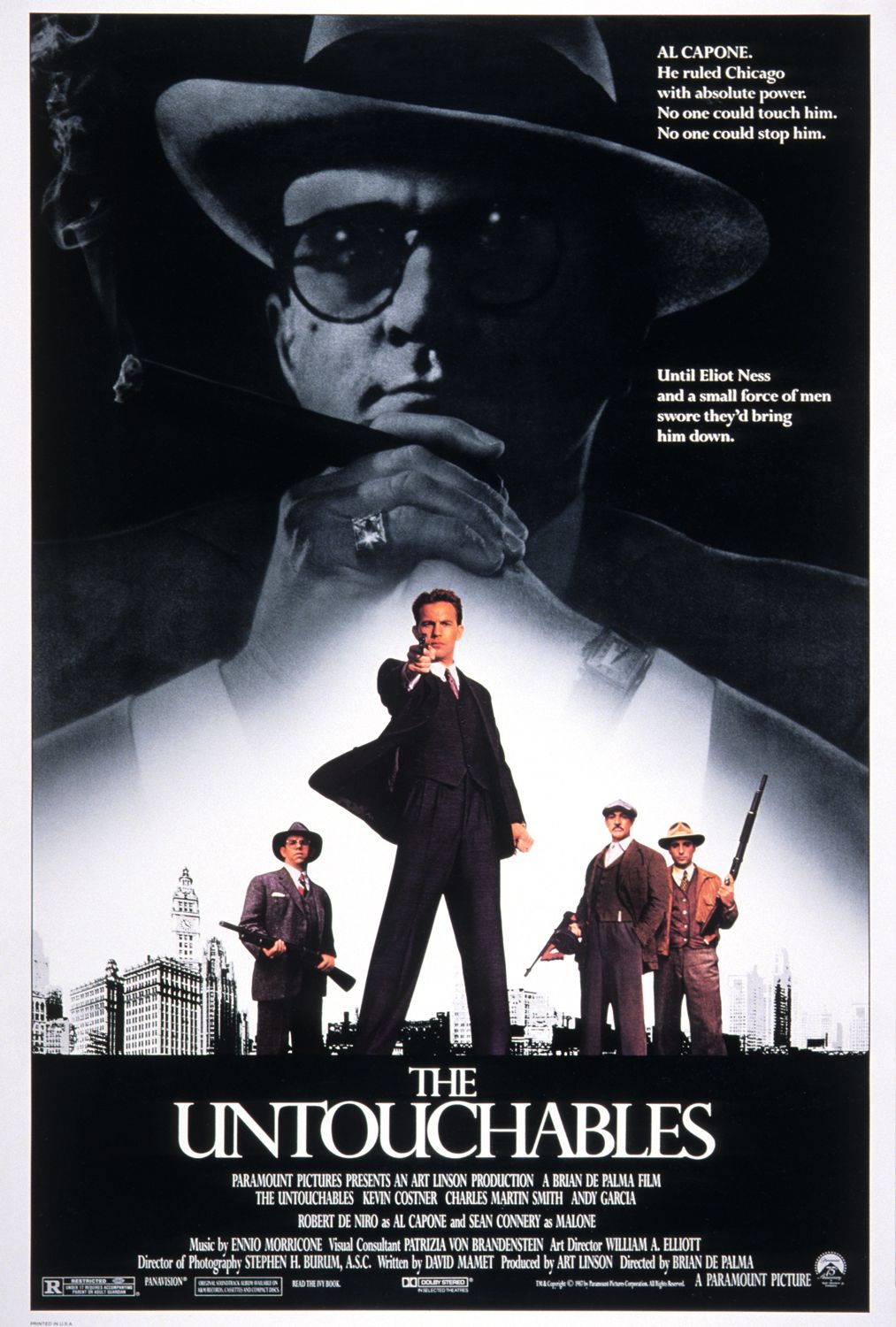
There were more than enough film buffs who filed their tax returns, or applied for an extension, on April 15, 2010, in the nick of time to check out a special screening of Brian De Palma’s 1987 classic “The Untouchables” at the Aero Theatre in Santa Monica. Following the story of how Elliot Ness and his select group of men who worked to bring down infamous crime boss Al Capone on tax evasion charges seemed like the perfect way to celebrate Tax Day. Finally seeing it on the big screen in glorious 70 mm was great after first watching it on VHS years ago.

But I do have to admit though that this movie really screwed me up for a time after I first saw it. It was one of the few times my parents let me watch an R-rated movie with them when they rented it on video. Having seen it reviewed on so many different shows like “At The Movies,” “Sneak Previews” and of course “Siskel & Ebert” (which had both hosts clashing over it passionately) had me excited about watching it eventually, and this was back in the day when I rarely, if ever, went out to the movies. But it was one of the first times where I realized the good guys didn’t always make it to the finish line. To see them get killed off in a most gruesome way was painful for a 12-year-old to take in as I always believed the good guys, those who work for justice would be the ones left standing. Back then, I was starting to learn how unfair the world can be.

The Untouchables movie poster

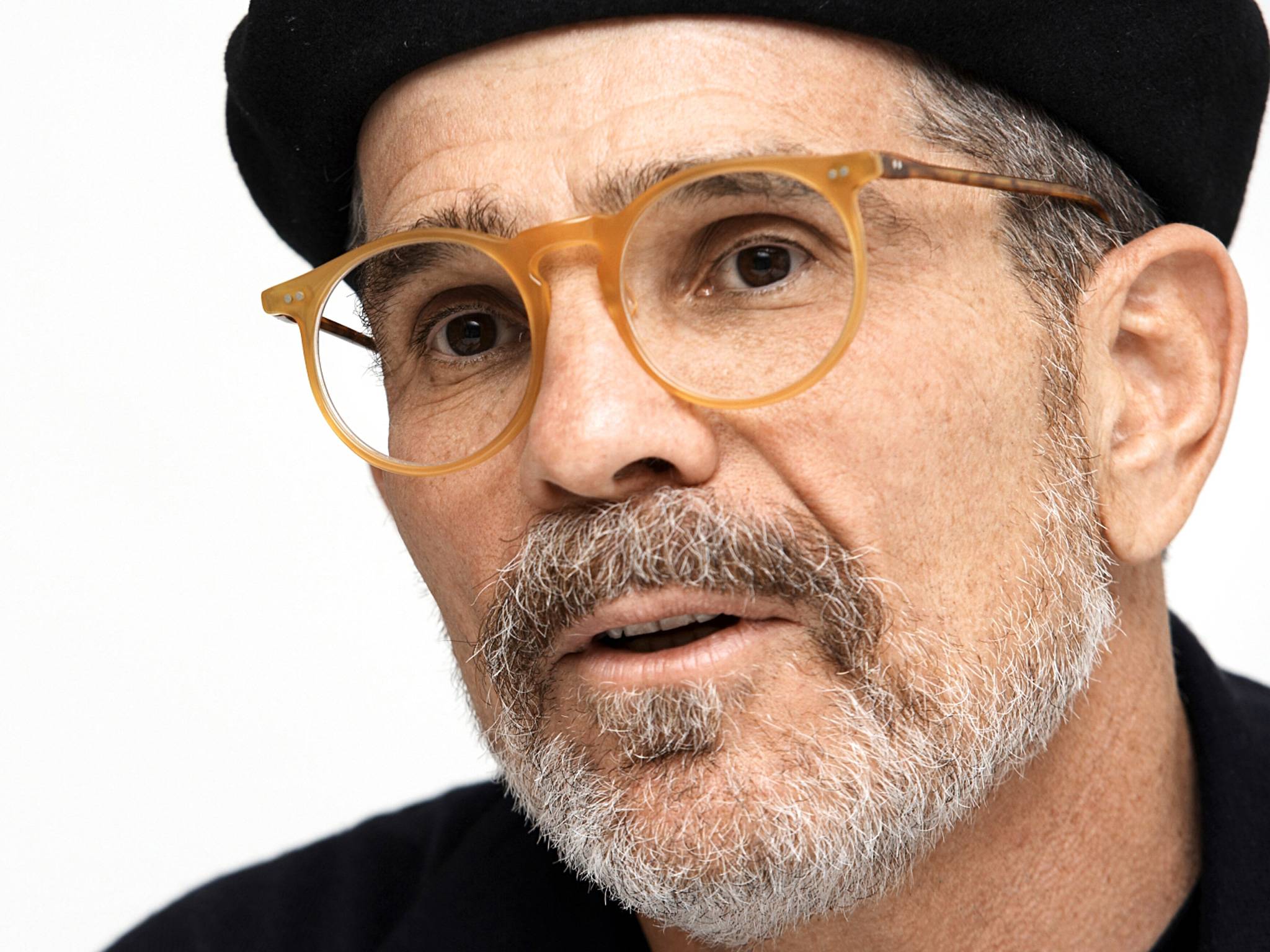
Anyway, this evening had a special reason for us to come out other than seeing the film in 70 mm as David Mamet, who wrote the screenplay for “The Untouchables,” was also in attendance to engage in a Q&A. Instantly recognizable in his beret and those huge yellow glasses of his, Mamet had many stories to tell regarding the making of De Palma’s film, writing the script for it and his thoughts on writing and Hollywood in general.

The first question asked was how Mamet got hired to write the script, and he replied that he got the job by default. Apparently, the job was first given to the late playwright Wendy Wasserstein who had won a Pulitzer for “The Heidi Chronicles.” She must have done quite a bit of work on it because Mamet said the Writer’s Guild of America still wanted to give her a credit. But he never hid the fact that what attracted him to writing the script was, as he said, “a lot of money.” The way Mamet described it, writing for someone else is known as “whoring.”

Being one of America’s most acclaimed playwrights and having grown up in Chicago where “The Untouchables” takes place should have made Mamet the most obvious choice for this motion picture. Mamet talked about how he grew up there with gangsters all around him and of how everyone lived and breathed the same air as them. As for the cops, he got to know them better while working as a cab driver. He also went on to say several of his family members kept telling him stories about Capone from time to time.

For years, Chicago has been known to be a city engulfed by corruption, and Mamet did nothing to hide the fact it is full of crooks. He described it as a machine that is run downstate and remarked the mayors occasionally go to jail. He also remembered a saying once told to him when he asked someone in politics what the difference was in running for one office or the other. The politician told him, “the girls get prettier.”

It seems many natives of this city have the same romantic view of Chicago as Mamet did, and he said it best, “In Chicago, we love our crooks!”

 A lot of Mamet’s inspiration for “The Untouchables” came from all of Chicago, he said. He tried to include as many famous landmarks such as The Anchors Restaurant and The Lake. Much of downtown Chicago was used to great effect throughout, and I wonder if there has been a movie since which is as superb in the way it brings Prohibition-era Chicago to life.

With De Palma directing “The Untouchables,” Mamet said he just hoped the director would stick to the script he wrote. Looking back, he said De Palma did actually stay true to his script to a certain extent, but that there were moments where he felt aliens had come down and sucked the brains out of those making the film. In terms of differences from his original script, Mamet said they took out the crawl he put at the end of what happened after the Prohibition Era ended and of how gangsters are still with us today. Mamet also said De Palma was the one who added the “cockamamie baby carriage” sequence.

During the making of “The Untouchables,” Mamet said he was never on the set. He was actually quite happy he wasn’t there which was surprising to here as you’d figure any writer would want to be there even if it annoys the hell out of the director. But while most writers want the opportunity to be on a film set, Mamet said he feels better off staying out of the way.

One of the main sources behind the screenplay was Elliot Ness’ autobiography which Ness wrote with Oscar Fraley. When an audience member asked Mamet if he believed what Ness wrote about, Mamet replied quite simply, “I don’t believe anything anymore.”

At its essence, Mamet described “The Untouchables” as a melodrama. Lest people see this as him looking down on the way De Palma shot this now classic movie, he was quick to quote from Stanislavski, “Tragedy is just heightened melodrama.” Looking at the movie as a melodramatic piece actually makes perfect sense as audiences got so swept up in the story to where it affected them more emotionally than they could have anticipated.

Other tidbits Mamet shared included that aside from Robert DeNiro’s method preparation in playing Al Capone, he ended up saying just what was in the script. The line uttered by Sean Connery’s Malone character of “here endeth the lesson” came from the book of common prayers. But the one which really stood out was what Mamet said Connery first told the producers when he came to make this movie, “Broccoli never paid me a dime to play James Bond!” As for “the Chicago way,” Mamet said it was something he just came up with. The philosophy behind it was when you take something, burn it down to the ground and then build it back up again.

Many in the audience were also eager to hear Mamet talk about the art of writing, and he had much to say on the subject. As a dramatist, he said his job is to take out the narration and go with the plot and characters. Watching the plot for him is where the enjoyment comes from. The problem is actors and directors end up wanting to put all the narration back in. They want to spell out everything for the audience, but dramatists make you want to know more about what’s going on. The way Mamet sees it, you just need a plot and an actor to get the ball rolling. A play or a movie cannot start from an ongoing situation. Of course, writing a plot can be very hard. In terms of plots, he views “Wag The Dog” as his “Casablanca” in that it was the easiest plot for him to write. Once he was finished, Barry Levinson started shooting the movie a month later, and the shoot went very quickly. As for all the other plots he has worked on, they were nightmares.

In talking about some of his other projects, Mamet said the coffee’s for closers speech with Alec Baldwin from “Glengarry Glen Ross” might have come from sitting in an office where he once worked. There was also some talk of how he wrote the script for “Ronin,” which was directed by the late John Frankenheimer, and never got credit for it. Mamet said he had always wanted to write something anonymously, and “Ronin” became that something because he was not originally hired to write it. What happened was Robert De Niro pleaded with him to do a rewrite as he felt the script was not up to speed. Mamet said he eventually caved in and rewrote the whole script in a week.

In addition to being a writer, Mamet is also a director of film and stage. When asked about his approach to directing, he said he wants to know what the story is about and how each beat contributes to the action. From there, everything comes together along with some unforeseen difficulties. When asked if movies would ever become an art form again, Mamet said, “Movies were never an art form, they were entertainment. It just evolved into an art form from there, and it’s still evolving in different ways.”

Mamet was up onstage for almost an hour at the Aero Theatre, and it still didn’t feel like he was there long enough. This writer, who grew up a working-class man and went to Kaminsky Park on a regular basis (yes, he is a Cubs fan) was full of anecdotal moments which made us want to learn more. When it comes to “The Untouchables,” he gives all the credit for its success to De Palma as he made all the elements work perfectly. He said almost everything good that happens is an accident, so it’s safe to say “The Untouchables” is a glorious accident and one which invites repeat viewing.

I personally want to thank David Mamet for saying something he once heard from a judge; that being quoted out of context is “the definition of a quote.” This makes writing articles like these so much easier! As for his line about critics being “illiterate swine taking the bread from my children,” I won’t take that one personally. Oh yeah, he also said the lizards in Hollywood will be the last ones to die, and he believes their last words will be, “I want to know more…”