Winnie-the-Pooh and the Bloody Movie That’s NOT for Kids
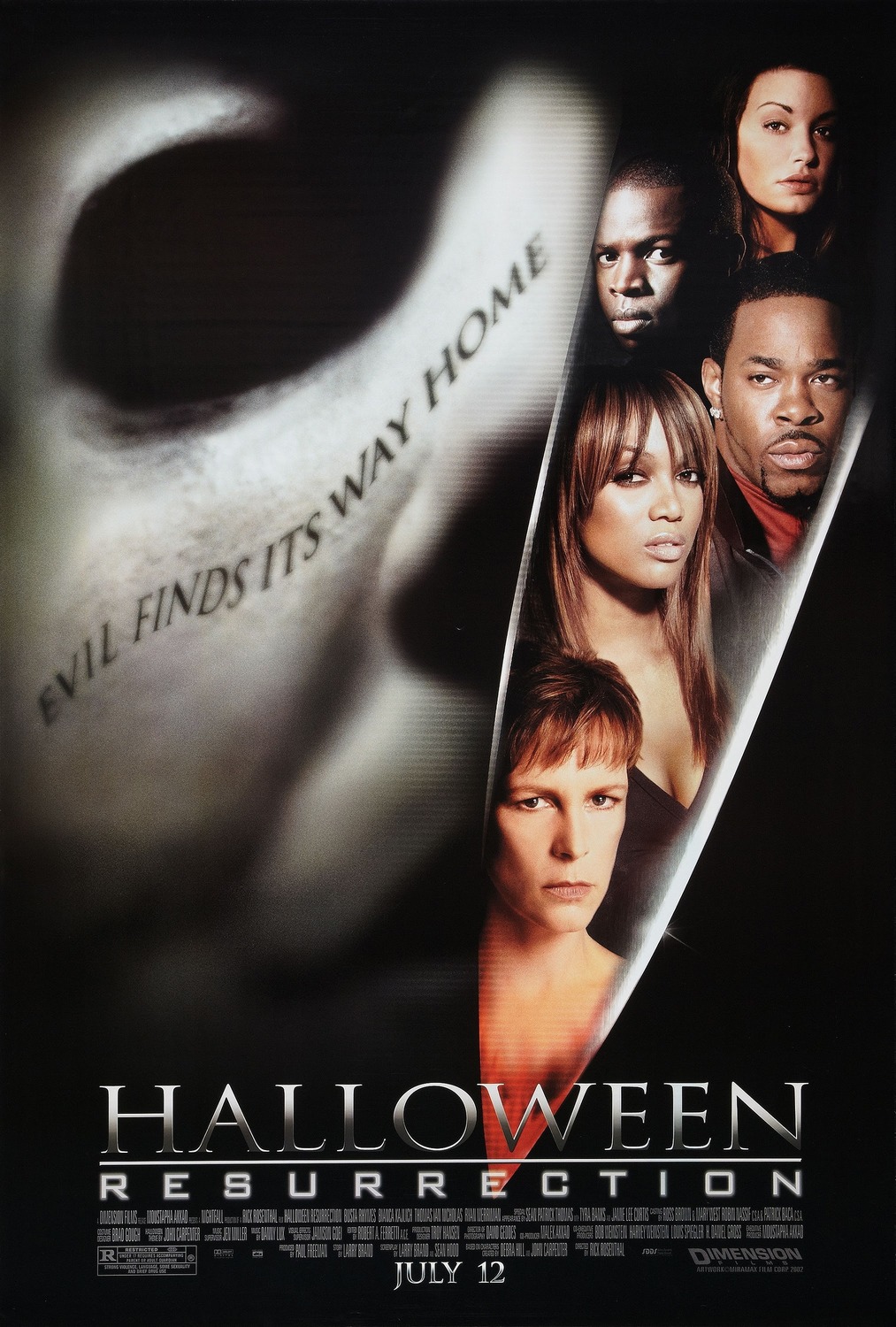
It was released back in 2023, but I still have not seen “Winnie the Pooh: Blood and Honey.” This is a horror film which came about when A.A. Milne’s “Winnie-the-Pooh” went into public domain and led filmmaker Rhys Frake-Waterfield to concoct this tale of the “silly old bear” turning into a viciously feral animal after Christopher Robin leaves the Hundred Acre Wood for college. Piglet joins Pooh on a murderous rampage when a group of young female university students make the mistake of renting a cabin in the Hundred Acre Wood.

Like I said, I have not watched “Winnie the Pooh: Blood and Honey.” While the idea of turning this chubby little cubby all stuffed with fluff into a slasher this side of Freddy Krueger, Michael Myers or Jason Voorhees seems to promise an entertaining and trashy time at the movies, watching the trailer made me believe the filmmakers did nothing more than simply give audiences another generic horror movie with the usual cliches which have defined this genre far too often. Plus, Eeyore is not in this film, and everybody who knows me knows I have been a die-hard Eeyore fan forever. Had this clinically depressed donkey had a bigger role, I would have given it a look.

Anyway, I bring this up because I was recently reminded of a news story from October 2023 when a fourth-grade teacher at a charter school in Florida, in this case The Academy of Innovative Education, ended up showing his students this poorly reviewed horror flick. From what I have been told, the teacher showed his students this film because they selected it from the various options given to them, but they eventually asked the teacher to turn it off as they in no way expected this “silly old bear” to commit heinous acts of violence.

Understandably, the children were traumatized, and the parents were very pissed off (can you blame them?). One parent, Michelle Diaz, said she felt “completely abandoned” by the school, and that it was not up to the children to decide what movie to watch in the slightest. She also added that the teacher should have researched its content before anything else, and I could not agree with her more.

Seriously, what was this teacher thinking? There are so many ways you can research a movie and its content. You can check its rating, and whether it is rated G, PG, PG-13, R or NC-17, there is a description underneath as to why the movie is rated as such. And when it comes to R-rated motion pictures, the descriptions are always tremendously entertaining. Take Rob Zombie’s magnum opus, “The Devil’s Rejects,” for example. The theatrical cut was rated R for “sadistic violence, strong sexual content, language, and drug use.” Now this should be enough of a reason to avoid taking your five-year-old to see it, and not just because you cannot afford a babysitter. For others, it may prove to be a major selling point. Horror buffs in particular will look at this description and say to one another, “Gnarly! Let’s check it out!”

Now in the case of “Winnie the Pooh: Blood and Honey,” it was released unrated, so it may not have come with such a description. I am not even sure if this cinematic work of speculative fiction was even screened for the MPA (formerly the MPAA). Had it been, I imagine they would have neutered the hell out of it as if it were the average “Friday the 13th” sequel.

In addition, you can find out so much about any film if you visit the Internet Movie Database (IMDB), you can have the plotline and events completely spoiled for you on Wikipedia, you can check on Rotten Tomatoes if it has a fresh or rotten score, and the reviews on the site should give you a solid idea if it is appropriate or not for a preschooler. There are other websites out there designed for parents to inform of them of inappropriate material for children in a movie. Please reply in the comments if you know of any specific websites like those. I know they are lurking out there somewhere on the world wide web.

Now at this point, many will say that Winnie the Pooh is in this movie’s title, and that the name brings about feelings and images of innocence, friendships and cuddly animals we all want plush toys out of. This A.A. Milne creation does not bring up any quick comparisons to “Henry: Portrait of a Serial Killer,” and seeing him wear a hockey mask like Jason Voorhees was unthinkable for decades.

But here’s the thing: the word “blood” is in this movie’s title. Doesn’t that word trigger anybody anymore? Did that Miami teacher even take this into account? I mean, how many other “Winnie the Pooh” stories, specials and movies have featured the word “blood” in the title? There was the “Blustery Day,” there was “Winnie the Pooh and Tigger Too,” there was another about the honey tree Pooh was jonesing to get into, and there is no forgetting the day with Eeyore (my personal favorite).

What else could have been implied by having the word “blood” in the title of this deeply twisted motion picture? I shudder to think as it would surely make both Walt Disney and A.A. Milne roll over in their graves, cryogenic or otherwise. Imagine the following cinematic scenario:

“Pooh, what are doing?”

“I found something sweeter than honey, Christopher Robin. It’s the blood of Christ!”

“Silly old bear!”

“No, seriously. I am here to save your soul!”

But hey, the implications of this movie title could get even worse and more unimaginable. Just think:

“Christopher Robin! What is that?”

“Kanga is menstruating Pooh. Want to take a closer look?”

“Oh bother, I have now lost my appetite for honey!”

Imagine Piglet observing this taking place. He would have ended up having the mother of all panic attacks.If he could get a word out in the process, that would have been extraordinary.

So basically, you cannot convince me that you are not being well-informed on movies being released today. All sorts of warning signs are there for you to research, and that’s regardless of whether or not you are a Miami schoolteacher. Please do not tell me you were not warned. As for the children, I hope they got the mental health talk they needed. What may seem silly and cheap to us adults is a child’s horrific horror show. Granted, “Winnie the Pooh: Blood and Honey” was made for only $50,000 dollars, and the trailer does not betray its low budget and reeks of severe cheapness, but even the cheapest character mask can be every bit as traumatizing as watching the horse Artax drown in “The Neverending Story.”

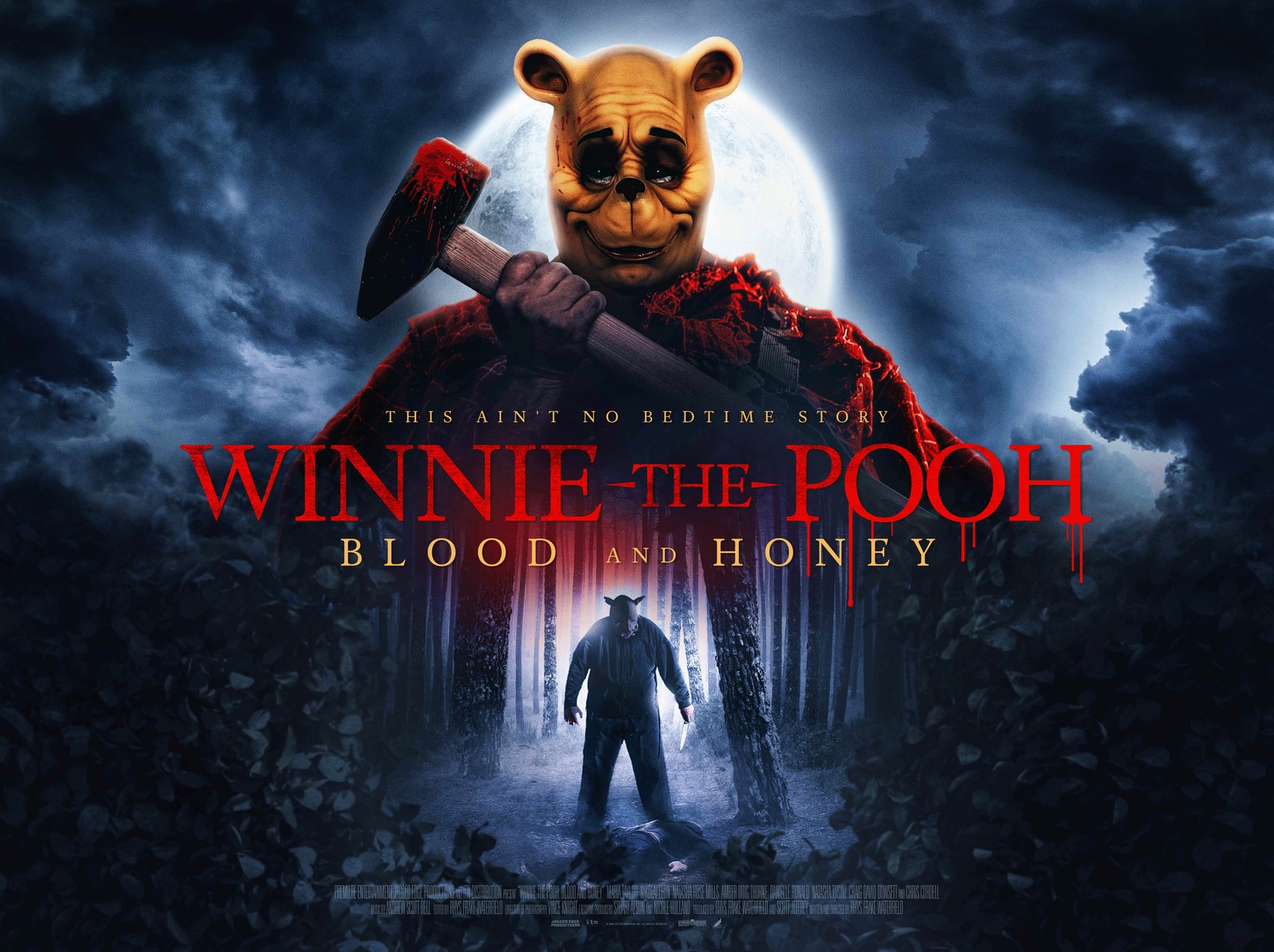
Meanwhile, “Winnie the Pooh: Blood and Honey” has come to inspire the Twisted Childhood Universe which has filmmakers taking such lovable characters from our childhood and turning them into bloodthirsty slashers. So far, we have gotten “Peter Pan’s Neverland Nightmare,” “Bambi: The Reckoning,” and “Pinocchio: Unstrung” was just released overseas. Other twisted childhood movies in development include “Awakening Sleepy Beauty,” “Snow White Returns” “Tigger’s Return,” and there is another coming featuring Mary Poppins. As for America, we have gotten “Popeye the Slayer Man,” and “Screamboat” which is a shameless reimagining of “Steamboat Willie” where a group of New Yorkers get terrified by a monstrous mouse. Canada has gifted everyone “Mickey’s Mouse Trap” which has a hypnotized manager wearing a Mickey face who terrorizes innocent people in an amusement arcade, and a sequel is currently in development.
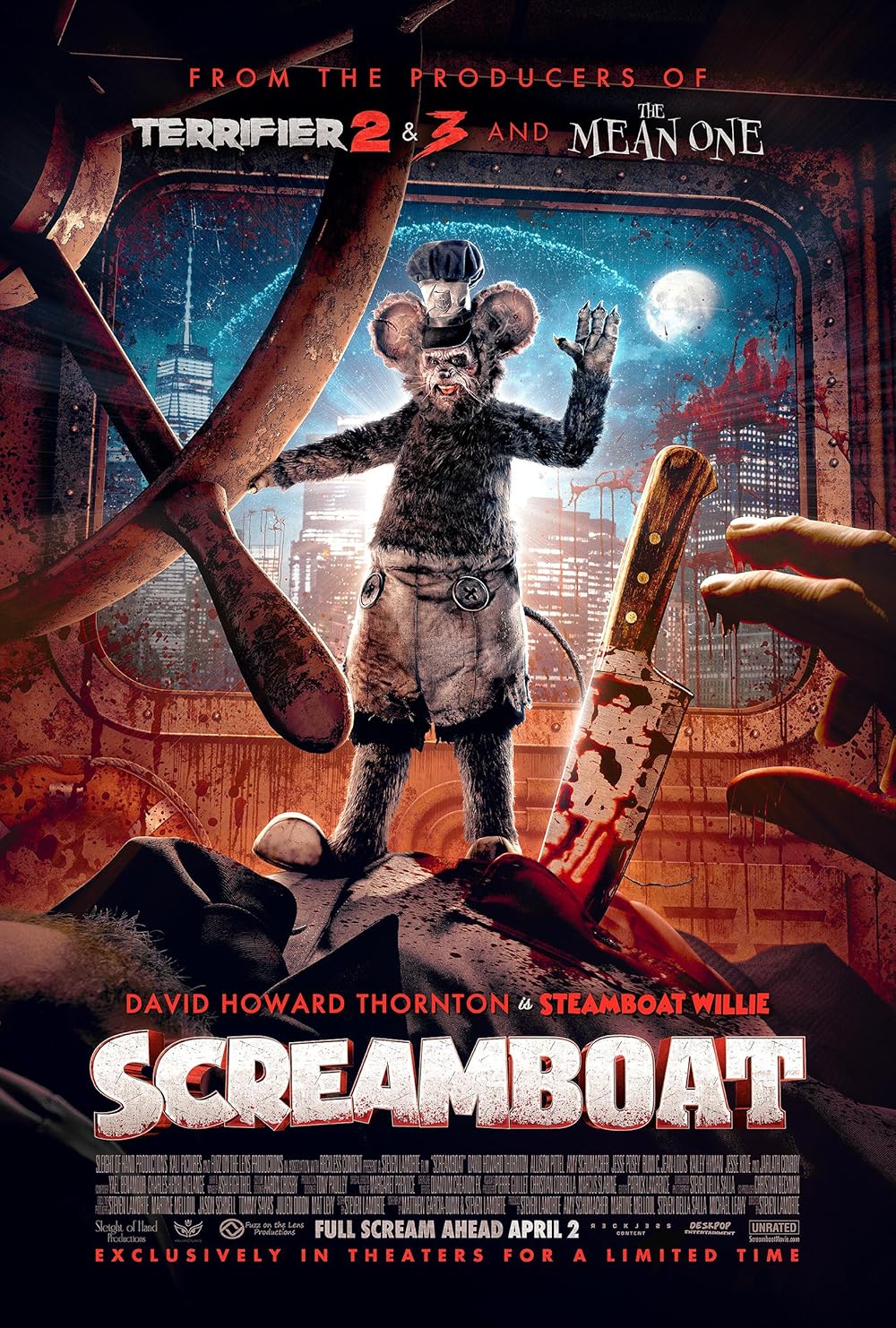
As for myself, I am waiting for “Eeyore Resurrection” which could be something along the lines of “In a Violent Nature.” Whereas the corpse of serial killer Johnny rose from the dead to reclaim the locket stolen from him, Eeyore could rise from the dead to retrieve his tail which, apparently, was used as a weapon in “Winnie the Pooh: Blood and Honey.” Eeyore could be threatening innocents with a machete, and one could be pleading for their life to where the depressed donkey could raise his machete in the air and say, “So long little butterfly!”

Or maybe Eeyore could be chasing other teenagers down in a car equipped with some kind of buzzsaw on the hood. While they try to run away from Eeyore’s death machine, he could be saying to himself, “Can’t avoid the inevitable!”

Seriously, we could have Busta Rhymes co-star in this, and it could one of the most penultimate moments a horror movie could ever have:

“Who are you?”

“I’M A HEFFALUMP, MUTHA FUCKA!!!”

But not to worry, I will make sure parents know it is not appropriate for most children. As artists, we do have the responsibility to warn others.

Seriously, have to have a strong idea of what you are about to watch.
‘Halloween: Resurrection’ – You Think ‘Halloween Ends’ is Bad? Check This One Out!

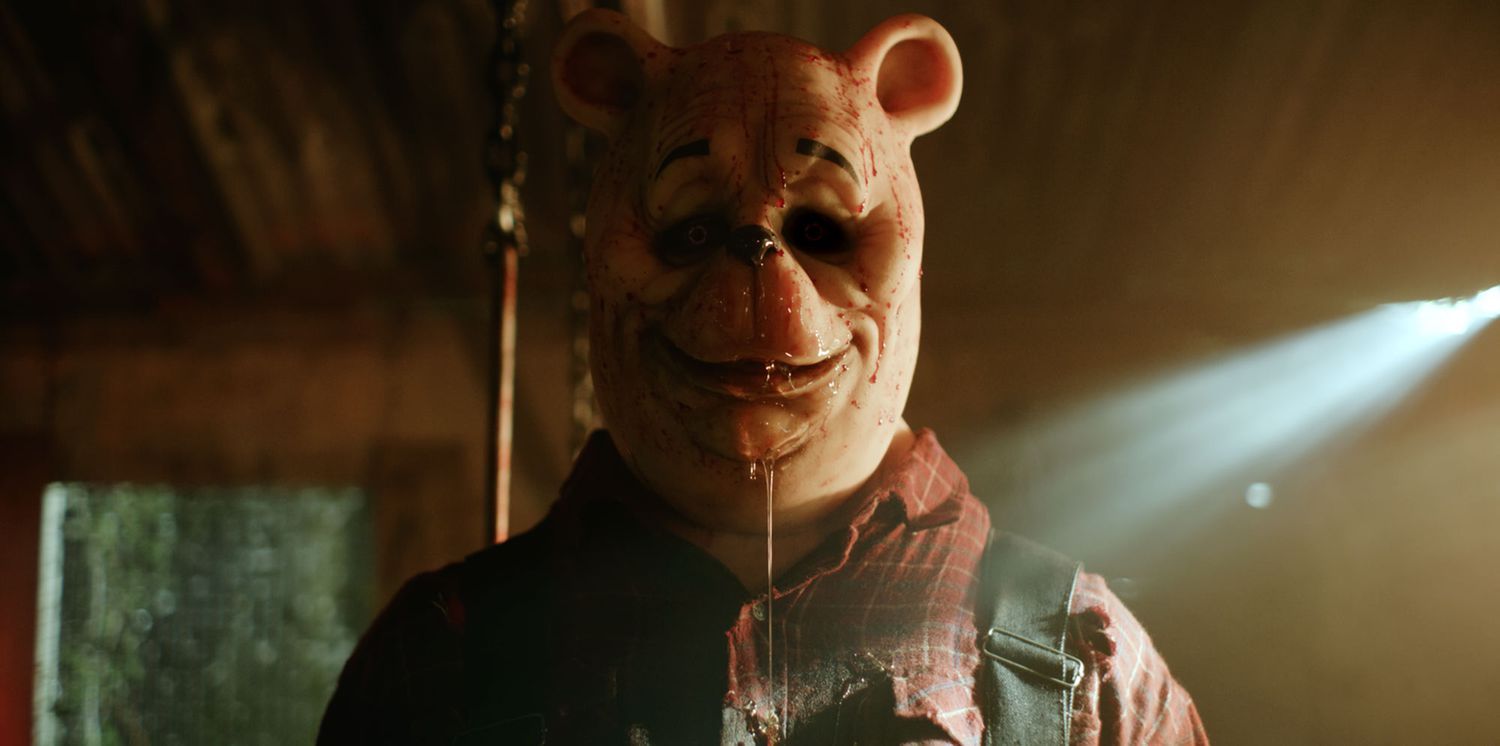
As I write this, “Halloween Ends” has earned a box office gross of over $40 million in its opening weekend. Those are great numbers, and yet many fans have been rebelling against this installment with an everlasting passion. Listening to them makes me wonder if they have seen the other sequels because, when it comes down to it, “Halloween Ends” is way better than “Halloween: Resurrection” which I actually took the time to watch over the weekend out of morbid interest. If it were not for “movie ever. While certain entries in this series may age like a fine wine, this one never will.

This ill-begotten mess begins three years after the events depicted in “Halloween H2O: 20 Years Later” which ended with Laurie Strode (Jamie-Lee Curtis) decapitating Michael Myers once and for all. But, thanks to an ironclad clause in Moustapha Akkad’s contract, Michael cannot ever be truly killed off, and it turns out the man whose head Laurie chopped off with true precision was not Michael, but instead a paramedic whom Michael attacked, crushed his larynx so he couldn’t talk, and then took his uniform to walk away from the crime scene with relative ease. Keep in mind, this development was written for “Halloween H20,” but Curtis refused to do the film if this ending was featured in the final cut.

While I knew this ending was invented to make “Halloween: Resurrection” a reality, I can’t help but wonder what was going through Michael’s mind when he took out that paramedic. I imagine he was thinking, “Okay, maybe this isn’t the time to kill my sister. Perhaps another time in the near future. In the meantime, I am getting out of town for a bit. I have a timeshare waiting for me.” Michael was so close to killing Laurie, and yet he sensed things were not going to work out for him this time around. But how did he know what asylum Laurie was going to be residing in three years later? Oh wait, you don’t ask those questions in a movie like this.

As we all know by now, Laurie gets killed by Michael even though she has the upper hand. Laurie leads him into a trap, but she still needs to look under his mask to make sure she has the right guy this time around. A knife in her belly is all the proof she needs, and her lifeless body falls to the ground. This was to be Curtis’ last time playing Laurie as she did not want to make any more “Halloween” movies, but we all know how that turned out. The promise of anything final in a horror franchise always has us rolling our eyes and laughing uncontrollably, and this one is no exception.

We then move to a year later when we arrive at the campus of Haddonfield University, and we meet the students who have just won a competition to appear on an internet reality show entitled “Dangertainment” which is operated by Freddie Harris (Busta Rhymes) and Nora Winston (Tyra Banks). They include Sara Moyer (Bianca Kajlich) who proves to be the Laurie Strode of the group as she plays with her hair in the same way Laurie did, Jennifer ‘Jen’ Danzig (Katee Sackhoff) who, like Lucy Van Pelt, keeps signing her classmates up for events they never expected to participate in, Jim Morgan (Luke Kirby) who is looking to get laid on or off camera, Rudy Grimes (Sean Patrick Thomas) who quickly proves to be quite the cook, and Bill Woodlake (Thomas Ian Nicholas of “American Pie” fame) who is looking to score even though the ladies are understandably quick to reject him. Their mission, spend a night in Michael Myer’s childhood home and determine what led him to kill so many people.

Now the key thing to keep in mind about “Halloween: Resurrection” is that these participants are being equipped with head-cameras so we can see what they see as they walk through Michael’s childhood home, and this threatens to make this sequel more promising than it has any right to be. While this one came after “The Blair Witch Project,” it came before the glut of reality shows and found footage movies like “Survivor” and “Paranormal Activity” which Hollywood burned through before the profits ran dry. Still, while this installment could have done a number of clever things with these genres, it instead devolves into the same old thing to where nothing on display feels the least bit surprising.

The one thing which got me excited about “Halloween: Resurrection” was that it was directed by Rick Rosenthal. This is the same man who directed 1981’s “Halloween II,” a sequel I came to appreciate because I first saw it years after its initial release. I thought Rosenthal deserved more credit than he was given at the time and having a veteran “Halloween” director at the helm of this installment seemed like a really smart idea.

Right from the start, however, Rosenthal quickly fumbles the ball as the art of subtlety is completely lost on him here. With his previous venture in this franchise, he knew how to keep the action and characters grounded in a reality we all knew and understood, just like with the 1978 classic. But here, the volume is turned up way too loud to where the suspense is all but neutered, and the characters are unable to speak quietly if at all. Like a certain character Will Ferrell played on “Saturday Night Live” who had vocal modulation issues, these ones make you want to turn the volume all the way down. Okay, maybe that’s pushing things a bit, but these characters got annoying ever so quickly.

The one actor I feel bad for here is Katee Sackhoff who did this film long before she broke through into our collective consciousness on SyFy’s rebooted “Battlestar Galactica.” This is not Sackhoff at her best and, like Stacy Nelkin in “Halloween III: Season of the Witch,” she has to play her last scene without a head.

I should add there is also a subplot involving a college freshman named Myles “Deckard” Barton (Ryan Merriman) who has been communicating online with Sara Moyer for months. While at a college party, he watches this virtual reality series play over the internet and invites other students to watch it with him. This could have led to some interesting moments as the characters try to disseminate what is real and what is fiction, but the performances by everyone here are too broad to where we mock these foolish characters instead of relating to them.

And there is Busta Rhymes who is the first thing anyone thinks about when it comes to “Halloween: Resurrection.” For what it’s worth, he is an entertaining presence as reality show entrepreneur Freddie Harris, but he also takes this sequel into “Batman & Robin” territory as he turns the proceedings into a complete joke, the kind which makes you wince more than laugh. Seeing him trying to take Michael Myers out via martial arts made my eyes roll, and seeing him end things by speaking to television reporters about violence in the media is insulting and a bitch slap to everything we just watched.

When it comes to the recent “Halloween” movies like “Halloween Ends,” they were made by filmmakers who wanted to try something a little different while giving fans some of the things they came to expect. “Halloween: Resurrection,” however, was made by a committee which was designed to take this installment through a number of test screenings in an effort to hopefully give audiences what they wanted and get a return on their investment in the process. If Rosenthal has any artistic aspirations with this sequel, they are all but snuffed out as soon as we realize how cheap the opening credit titles look.

It’s no wonder the Akkad family went out of there way to reboot this franchise yet again after this misbegotten entry. Sure, Michael’s eyes open wide before the screen goes to black, but who gives a shit?

* out of * * * *

Tommy Lee Wallace Talks about ‘Halloween III’ at New Beverly Cinema

halloween-iii-poster

PLEASE NOTE: THIS ARTICLE CONTAINS SPOILERS ABOUT THE MOVIE.

Tommy Lee Wallace dropped by New Beverly Cinema on October 30, 2010 to talk about his directorial debut, “Halloween III: Season of the Witch.” This is the Michael Myers-less sequel of the long running franchise and it played as a double feature with “Trick ‘r Treat.” All the “Halloween” movie fans were in for a special treat as Wallace gave us more trivia about the making of it than we ever could have ever expected.

When Wallace was brought up after the movie ended, he admitted his reaction to watching it after so many years was that it resembled one of the strangest and most bizarre movies he had ever seen. The original plan for “Halloween III” was to work from an original screenplay by Nigel Kneale, best known for his work on the “Quatermass” series. What Kneale ended up writing was, as Wallace put it, “brilliant and deeply, darkly grim” and more of a cerebral, intellectual horror movie than your typical slasher fare. But it turned out everyone thought the overall story needed work, and Wallace said he and Carpenter wanted to make it more commercial and scarier for audiences. As a result, Kneale took his name off the movie as he felt the filmmakers would simply butcher all he came up with. Wallace did say that he really liked Kneale’s script and hopes to put it online someday in its entirety for all to see.

While making the movie, Wallace described himself and the crew as being under the gun as it was a low budget affair like most horror movies. Understanding how to do work on the cheap, he said all the “el cheapo” special effects taught him a lot about simplicity which turned out to be a great virtue.

As for Carpenter’s participation, Wallace said Carpenter gave him full autonomy as he himself always expected to have it on all his movies. Joe Dante, the director of “Gremlins” and “Innerspace,” was originally set to helm “Halloween III,” but he later turned it down when something else came up. Having worked on many of Carpenter’s movies, Wallace was originally offered the gig of directing “Halloween II,” but he turned it down as he saw no way to top the original. But upon being offered “Halloween III,” Carpenter and the late Debra Hill told him neither of them wanted to do a direct sequel as Carpenter hated “Halloween II.” With that in mind, Wallace jumped at the chance to direct it.

The only real barrier Wallace had to deal with before accepting the job was getting the blessing of Dino De Laurentis. Wallace had previously written the script for a movie De Laurentis produced called “Amityville II: The Possession,” and he said the one rule everyone needed to remember was “you do not fuck with Dino.” In response to Wallace’s request, De Laurentis begged him not do the film, but Wallace said he was determined to get De Laurentis’ blessing because he would have directed it anyway.

With “Halloween III: Season of the Witch,” Carpenter and Hill wanted to turn the franchise into an anthology of movies about the occasion of Halloween. Looking back, the original was really not about Halloween at all (the original title was “The Babysitter Murders”). But when it came to releasing this particular “Halloween” movie, Wallace said Universal Pictures did not do enough to prepare audiences for it. Sadly, audiences did not want something new. They wanted Michael Myers back and breathing heavy while slashing over stimulated teenagers.

One of the biggest influences on “Halloween III” was the 1956 version of “Invasion of the Body Snatchers” directed by Don Siegel. Like that one, this sequel was meant to be a pod movie and could not be mistaken as something nice. Wallace even wanted to shoot it in Sierra Madre where Siegel’s classic was filmed, but it didn’t look good enough. The production team had driven all over Northern California looking for the perfect small town to film in, and it took forever to find it. Wallace said they were never as lucky as they were with Carpenter’s The Fog.” Also, the town’s name, Santa Mira, is the same as the one used in “Invasion of the Body Snatchers.”

But the big difference between “Invasion of the Body Snatchers” and “Halloween III” is in the way each movie ended. Siegel wanted his film to close on a highway with star Kevin McCarthy screaming frantically, “THEY’RE ALREADY HERE! YOU’RE NEXT! YOU’RE NEXT!” Instead, “Invasion” ended the same way it began, in a police station. All this did was indicate to the audience everything was going to be alright. Wallace said the ending of “Halloween III” was dedicated to Siegel for what he tried to pull off, and it leaves the fate of the world up in the air which makes things far scarier as your mind was forced to imagine what could have happened. Universal Pictures, however, put pressure on Carpenter to change the ending to something more upbeat. When Carpenter asked Wallace if he wanted to change the film’s ambiguous climax, Wallace said he refused to do so and Carpenter defended Wallace’s decision to the studio.

Tom Atkins’ name in the credits as well as his first appearance onscreen generated a huge applause from the audience. When it came to casting “Halloween III,” Wallace said Atkins was already a part of Carpenter’s company of actors, and his performance in “The Fog” served as his audition for the role of Dr. Daniel Challis. Wallace then went on to explain how horror movies can easily be ruined by “pretty boy casting,” and he felt this didn’t need to be the case here. Atkins naturalistic performance is commendable considering much of what he has to deal with is utterly ridiculous. You also have to give him credit for wasting no time in bedding the main female character, Ellie Grimbridge, played by Stacey Nelkin.

Another actor who got a lot of applause was the late Dan O’Herlihy who portrayed the movie’s chief villain, Conal Cochran. Wallace described O’Herlihy as being perfect for the part, and he was always prepared and ready to go. He also said O’Herlihy was a man from the British Isle, Irish and was someone who was never afraid of getting sentimental. O’Herlihy’s performance was a fiendish mix of a friendly persona which is a cover for his grisly nature.

As for Nelkin, the first question from the audience was whether or not her character was a robot throughout the entire movie. Wallace said he honestly didn’t know and figured Cochran’s company was really good at making robots in the first place. Nelkin was a very appealing presence in “Halloween III,” and perhaps Roget Ebert put it best in his one-and-a-half-star review of the movie: “Too bad she plays her last scene without a head.”

Then there’s the movie’s commercial for the Silver Shamrock masks which features one of those annoying jingles which, like any other commercial, you cannot get out of your head. Alan Howarth, who composed the score along with Carpenter, was given credit for doing the jingle and putting it to the tune of “London Bridge” from “My Fair Lady,” but Wallace said it was his idea more than anyone else’s.

As for the voice on the jingle, it is Wallace’s. They were originally going to hire someone else, but when they found out the guy wanted $550, it was quickly determined they couldn’t afford him. Wallace got the job soon after and said he got into the mood by doing the smooth tone of a “stupid radio voice from the 50’s.”

Another audience member asked Wallace if there were any product placements in “Halloween III,” and he said there were not. Truth be told, this wasn’t really the kind of movie which would allow for that, and it was also clarified how no one was ever asked to move the can of Miller Lite closer to the camera.

“Halloween III: Season of the Witch” was designed to be a diatribe against consumerism, and it didn’t turn out to be a very elegant one. The movie cost $2.5 million to make and grossed about $14 million at the box office. While it did make a tiny profit, the sequel was considered a critical and commercial disappointment. Wallace said he fell into an abject depression for months afterwards as he felt he did a shitty job on the sequel and figured he would be consigned to movie hell.

Years later, however, Wallace discovered “Halloween III” had developed a cult following and a new generation of fans. He was stunned to hear a lot of people telling him they watch it every single year, and he said people continue to invite him to speak at annual horror conventions about it. Having been originally released in 1982, audiences have had plenty of time to reflect on the kind of movie it was and reevaluate it critically. While still not a great film by any stretch, it’s much better than its reputation suggests.

Certainly, there are other “Halloween” sequels that are far worse (“Halloween: The Curse of Michael Meyers” is the pits), and the moderator put it best when comparing the third movie to “Halloween: Resurrection:”

“Do you prefer this or Busta Rhymes?”

Save