‘The Alto Knights’ Movie and Blu-ray Review
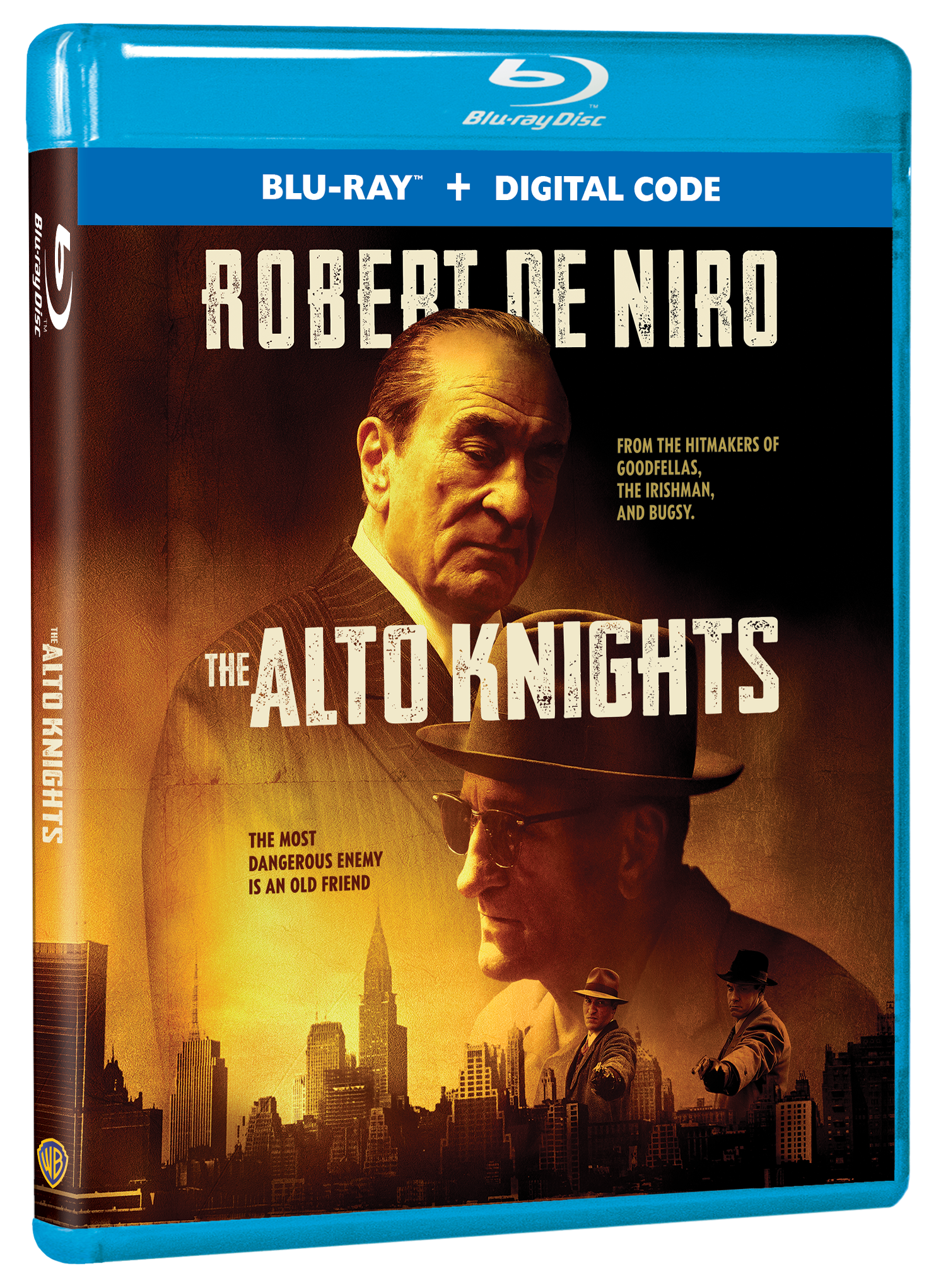
The following review was written by Ultimate Rabbit correspondent, Tony Farinella.

The Alto Knights” is a film that, on paper, should have been a big hit.  It was directed by the legendary Barry Levinson who has directed such films as “Diner,” “The Natural,” “Rain Man” and “Bugsy.” It also stars the iconic Academy Award winner Robert De Niro, and even though not all of his films are worthwhile, it’s rare you see him give an uninteresting or bland performance.  The writer was Nicholas Pileggi, who wrote “Goodfellas’ and “Casino” alongside Martin Scorsese.  The producer was Irwin Winkler, whose credits are too lengthy to list. With all the talent involved in this project, you would think they would have at least made an above average flick.

“The Alto Knights” features two performances by De Niro as he plays two separate gangsters in the 1950’s, Vito Genovese and Frank Costello. My first issue with the film is why on earth did we need to have competing gangsters played by De Niro? While it might sound like an interesting concept, having De Niro play two roles in the same film, it’s quickly obvious this is a gimmick that just doesn’t work. It has been done in other films before, such as “Mickey 17,” “Sinners” and “The Social Network,” but De Niro looks ridiculous and laughably bad with all the makeup on him.

When the film opens, Frank is recovering from a failed assassination attempt put on him by his best friend, Vito. They have been friends since they were young, but they have two very different philosophies when it comes to being gangsters. Frank is someone who doesn’t like to rock the boat, and he’s not afraid to grease some palms to keep out of trouble. He cherishes his marriage to his wife Bobbie, played by Debra Messing. Vito, on the other hand, lives by the credo of, “I take out. I don’t put in.”
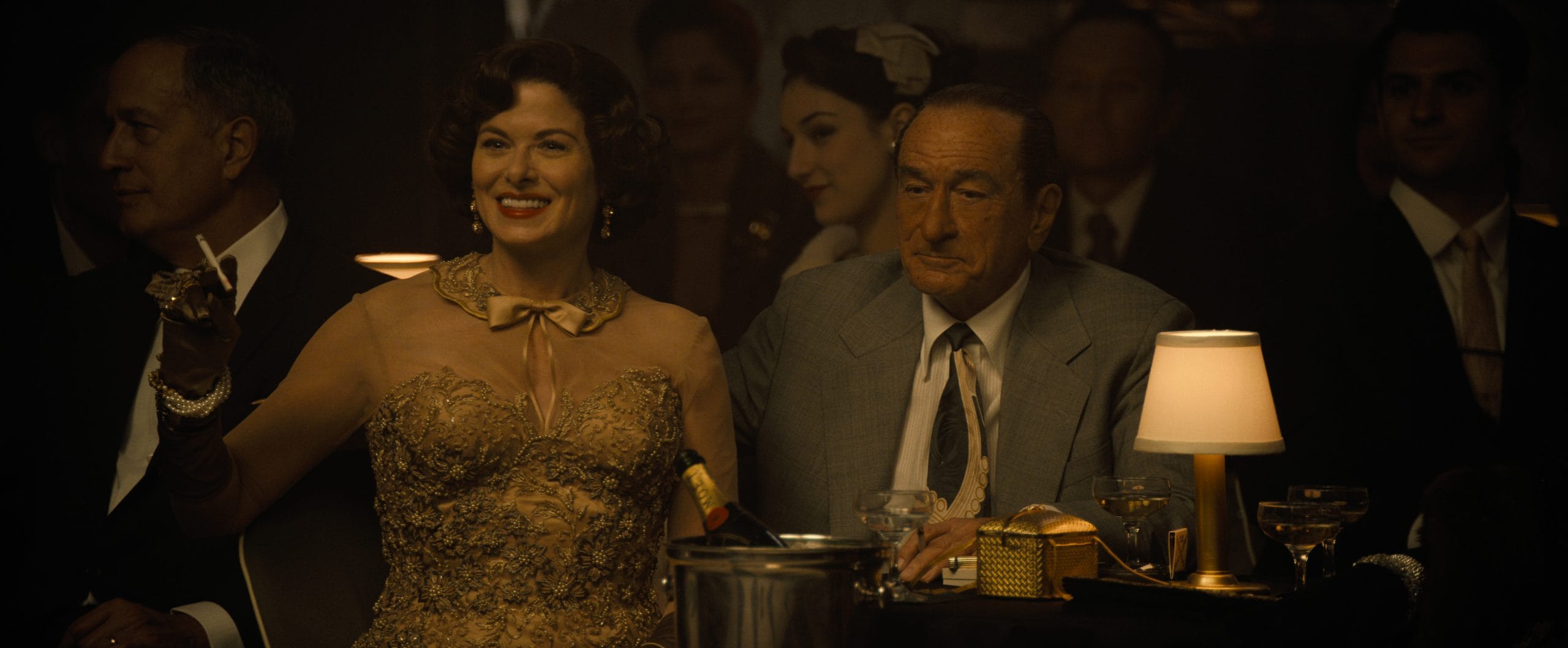
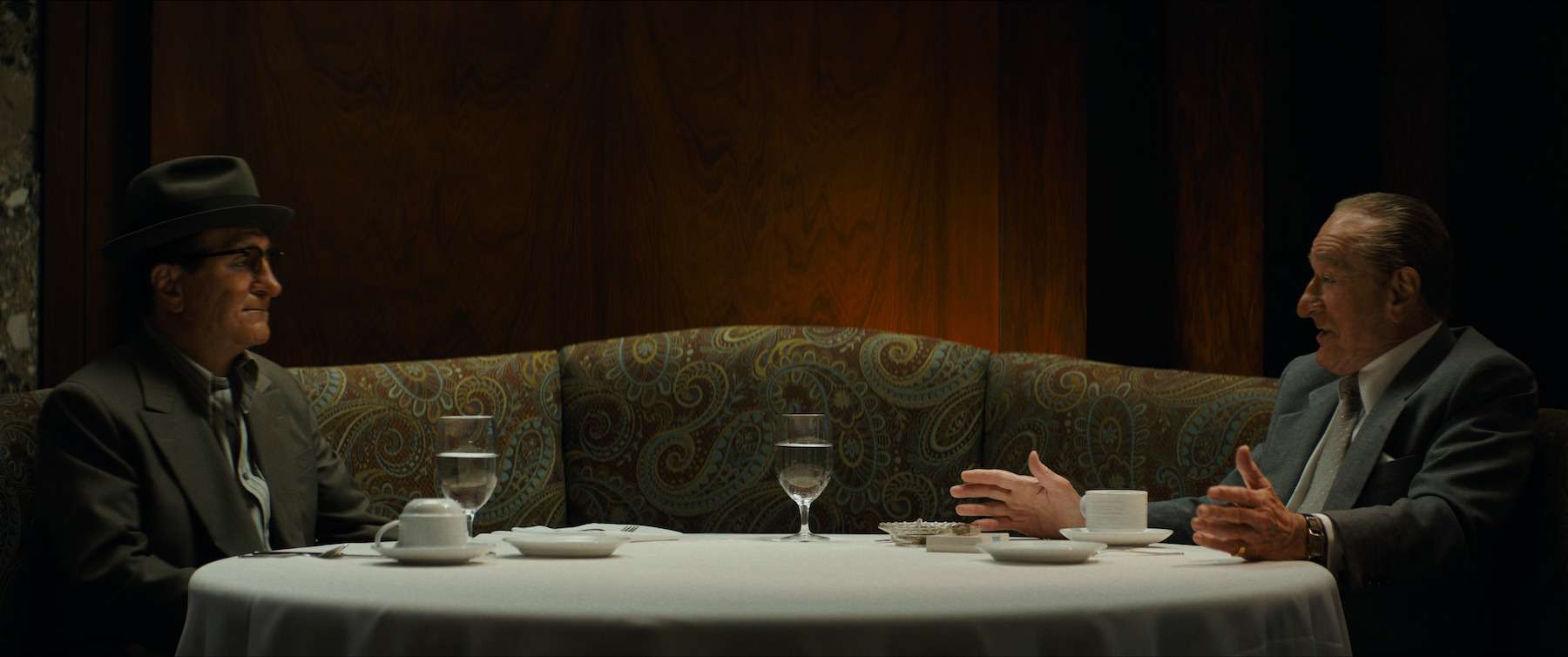
Vito doesn’t believe Frank is actually going to live a quiet life and retire as he sees him as a politician, someone who will smile to your face and stab you in the back when you aren’t looking. Frank, on the other hand, sees Vito as someone who will stop at nothing to get what he wants, and he will not go down without a fight. This leads to a war between the two men where only one can survive, and it’s about who will flinch first. One thing is clear—no matter who wins, the audience will end up being the real loser.

“The Alto Knights” is a film which made me feel sad at how bad it was, as there is no way it should have been this unwatchable and boring. All of the proceedings have a been there, done that feel to them.  Films about the mob, gangsters and the crime life have been done to death, and I don’t think there is anything new to add to the genre at this point. This is not to say they can’t come back at a later date and time with the right material, but this film feels dead on arrival as it feels like a parody of other gangster movies. This is a film that was not only a massive commercial failure, but it was a critical failure as well.

When you have seen De Niro play this role before, it’s hard not to look at this performance and think to yourself, “Why?”  Why did anyone think this was a good idea? The poster for the film says, “From the hitmakers of ‘Goodfellas,’ ‘The Irishman’ and ‘Bugsy.’” I’m going to assume they thought people would hear about De Niro in a new gangster movie from the writer of “Goodfellas” and would be interested in seeing it as a result.  It’s clear from the box office numbers they could not have been more wrong. As a matter of fact, I don’t even remember this film getting any attention or advertising when it was released only two months ago.

One of my least favorite things to do as a moviegoer is to watch the clock during a movie.  During “The Alto Knights,” I couldn’t stop looking at the clock and waiting for it to end.  As stated earlier, the film made me depressed as it felt like De Niro and Levinson were was wasting his time on rotten garbage like this. They are both in their 80’s, and we don’t know how many films they have left in them.  I’m sad they wasted their talents on this project, and I’m sad I wasted my time watching it.
* out of * * * * 

Special Features:

One Legend, Two Mobsters – Featurette

Blu Ray Audio/Video Info: The 1080p high-definition transfer is perfect for this film, and it features a clear and vivid image. The Dolby Atmos track also brings all of the classic hits of the 1950’s into your living room.

 Should You Buy It?

“The Alto Knights” is not a film you should waste your time on, unless you are absolutely obsessed with gangster movies and need to watch them all. If you have a morbid curiosity in this film, I’m here to tell you to not waste your time.  I went into it knowing it didn’t have great reviews, but I said to myself, ‘How bad could it be?’ Trust me, it’s that bad. It’s painful to watch De Niro in this film, and I just wanted it to end.  It didn’t take long for me to realize I was stuck in a bad movie, and I just had to bide my time until it was over. There are better gangster movies to see, and there is even a better gangster show to watch in “The Sopranos.” This is one of the biggest disappointments to come out of Hollywood in the past five years, and it is a hard pass.

**Disclaimer** I received a copy of this film from Warner Brothers to review for free.  The opinions and statements in the review are mine and mine alone.

An Ultimate Rabbit Video Review: ‘Napoleon’ (2023)

Hello people. My apologies, I have not been writing much recently. I kind of hit a brick wall and have been a bit depressed about my current living situation. As a result, I am trying something a little different; I will be doing a movie review on camera. Sooner or later, it had to happen.

This review will be of Ridley Scott’s historical epic “Napoleon” which stars Academy Award winner Joaquin Phoenix as Napoleon Bonaparte, the French military commander and leader who came to prominence during the French Revolution, and his brutal military campaigns during the Revolutionary War are the tales of history which are impossible to forget, especially considering how it resulted in millions of lives lost. The movie focuses on Napoleon’s rise to power, and of his all-consuming relationship with Joséphine de Beauharnais, played in a fantastic performance by Vanessa Kirby (the White Widow in the “Mission: Impossible” franchise).

Scott’s “Napoleon” works best when it focuses on the tortured relationship between Napoleon and Josephine as Phoenix and Kirby make quite the acting pair whenever they are together onscreen. Watching them face off with one another is endlessly enthralling, and it helps to make up for Scott and company do not dig enough into Napoleon’s psychology. My problem is the film tends to keep him at an arm’s length distance, and I came out of it feeling like I could have learned more about the man. Nevertheless, Scott has crafted a four-hour cut of the film which will debut on Apple TV in the near future. That’s right, it will be streaming before we all know it.

Please check out the review below and subscribe to The Ultimate Rabbit You Tube channel if you have not already. It is not too long, and I did my best to make sure it only lasts a fraction of “Napoleon’s” running time which is 157 minutes.

Anthony Hopkins on Playing the ‘Psycho’ Director in ‘Hitchcock’

WRITER’S NOTE: This article was originally written back in 2012.

Sir Anthony Hopkins has played real-life people in movies such as President Richard Nixon in “Nixon” and John Quincy Adams in “Amistad,” but he was initially hesitant about playing the brilliant filmmaker Alfred Hitchcock in “Hitchcock.” The master of suspense has been imitated so many times over the years to where it seems impossible to portray the man without it feeling like it is a joke. Hopkins, however, was won ever by the film’s director, Sacha Gervasi, who told him, “You’re not Alfred Hitchcock, you’re Anthony Hopkins playing him.” From there, Hopkins knew he would be portraying Hitchcock without ever having to do a mere impersonation of him.

Hopkins actually had the unique privilege of meeting Mr. Hitchcock while he was alive. It’s always great fun to hear from actors who have met the highly esteemed filmmaker as the majority of us have only seen him from a distance. We all wondered what Hitchcock was really like as his films generally delved into the pitch-black darkness of humanity, and that had many assuming he was a somewhat disturbed human being himself. Hopkins described the experience of meeting Hitchcock to Fox News.

“I met Hitchcock in Hollywood in 1979. He had just been awarded his knighthood and I was with my agent, and his agent in fact, George Chasen,” Hopkins said. “This was many years ago. I saw Hitchcock sitting in the restaurant and I said to my agent, ‘I’d love to meet him.’ He said ‘I’ll introduce you.’ So, we walked out of the restaurant after we finished our meal, and Hitchcock was sitting there drinking a large brandy. And George said ‘Congratulations Sir Alfred,’ and he said, ‘Thank you very much George. How are you?’ and George said, ‘This is my client Anthony Hopkins,’ and (Hitchcock) said ‘Charmed, I’m sure, very good luck to you.'”

For Hopkins, a key importance for him was getting the look of the famous filmmaker right. The fact is he is far slimmer than Hitchcock was, and Hitchcock famously known for being overweight. It was up to Academy Award-winning makeup artist Howard Berger to transform Hopkins into Hitchcock. In a conversation with Andrea Mandell of USA Today, Berger talked about doing six makeup tests with Hopkins before filming on “Hitchcock” began, and they experimented with all sorts of prosthetics to get the look right.

“I think the biggest challenge was finding the right combination of Alfred Hitchcock and Anthony Hopkins,” said Berger. “We knew from the get-go; we didn’t want to completely cover and disguise Tony. As Hopkins became more comfortable with the character, slowly we started to strip things away.”

Berger went on to describe the end result of his work as being a portrait of Hitchcock on Hopkins. The makeup process took two hours each day to complete, and this included applying a prosthetic jowl and neck pieces to Hopkins. In addition, Hopkins took to wearing a bodysuit and brown contact lenses, and he also shaved “a patch of hair at the back of his head to replicate the director’s hair pattern.” With the makeup done, it freed Hopkins to concentrate on the inner life of his role as opposed to the physical aspects of it. In the end, this is what actors need to focus on the most when playing any role.

But the one thing you will not find Hopkins doing during shooting is staying in character when the cameras are not rolling. Right now, the movie “Lincoln” is in theaters, and it stars Daniel Day Lewis as President Lincoln. Stories from that set have described Lewis as staying in character throughout the shoot to where other actors kept referring to him as Mr. Lincoln. In talking with Philip Sherwell of The Telegraph, however, Hopkins made it very clear how this method of acting is completely unnecessary for him.

“I think that’s a lot of crap,” Hopkins said. “I just don’t understand that. If actors want to do that, fine. If they want to be miserable, that’s up to them. I’m not interested. It’s a job. Who the hell wants to be with some miserable grump because he wants to get his performance right, so you have to call him this or call him that? It’s so boring. I’ve been with actors like that and… they’re unpleasant to work with and I don’t think they’re always that good either.”

With all the great performances he has given throughout his illustrious career in “Silence of The Lambs,” “Remains of the Day” and “Titus,” Anthony Hopkins doesn’t need to stay in character a whole day in order to give audiences a confident performance. His role as Alfred Hitchcock in “Hitchcock” is just the latest example of the kind of work we can always expect from an actor of his caliber. Hopkins never takes the easy way out with a role, and he understands it is the inner life of a character that the actor needs to work on. As for how he looks on the outside, that is someone else’s concern.

SOURCES:

‘Hitchcock’ star Anthony Hopkins: To get a compliment from legendary director was ‘like being given a billion dollars,'” Fox News, November 21, 2012.

Andrea Mandell, “Anthony Hopkins’ scary transformation into Hitchcock,” USA Today, November 23, 2012.

Philip Sherwell, “‘Don’t call me ‘Mr. Hitchcock’: Anthony Hopkins does not want the Daniel Day-Lewis treatment,” The Telegraph, November 24, 2012.

‘Oppenheimer’ – Seriously, One of the Best Films Ever

I had to watch Christopher Nolan’s “Oppenheimer” twice before I could sit myself down and write a review about it. There is so much going on here in front of us to where it is impossible to take everything in right away, and I kept waiting for J. Robert Oppenheimer’s head to explode before the atomic bomb did. Upon a second viewing, I came to better appreciate and understand all of what Nolan was doing here, and I continue to marvel at the brilliant editing job he and Jennifer Lame pulled off. What results is not only one of the best films of 2023, but perhaps of all time.

Like “Memento,” Nolan has constructed this biopic in a defiantly non-linear fashion as he gives us two parallel storylines which are destined to crash into one another. We have the typical biographical story of how J. Robert Oppenheimer began studying science when he was young, and of how his worldview evolved as he went about constructing the bomb which would eventually succeed in ending World War II. Then the story shifts to a few years later when Lewis Strauss (Robert Downey Jr.), one of the original members of the U.S. Atomic Energy Commission (AEC) is enduring a Senate confirmation hearing to be appointed as Secretary of Commerce. Strauss is the one who put Oppenheimer in a special position of power, and now he wants to crush Oppenheimer in a way which hurts worse than death.

I love biopics like “Oppenheimer” as they breathe life and complexity into human beings most of us have only read about in books. People like him seem so one-dimensional from a distance, but Nolan fleshes him out fully as a man who was a brilliant mind and a loving husband and father, but also a womanizer and quite the chain smoker. Nolan is also aided by a career best performance from Cillian Murphy who succeeds in embodying this historic individual both physically and emotionally.

Not for a second does this film hide away from the politics and implications of the atomic bomb. Oppenheimer and everyone working closely with him knew they were working to build a weapon of mass genocide, and this weighs heavily on everyone’s conscience. The problem, however, is that if they do not build the bomb, someone else will, and the results could have been disastrous had the Nazis beat them to it. Regardless of the intentions, the invention of the atomic bomb and the arrival of the Nuclear Age was inevitable, and nothing would ever be the same.

And, of course, Oppenheimer was turned into a hero for the world to see, and we know what happens to heroes; they are broken down and their images coldly shattered for all the world to see. Seeing him try to regulate nuclear energy in the wake of the Trinity test and the bombing of Hiroshima and Nagasaki was understandable as this was a power which needed to be reigned in and controlled. But like Dustin Hoffman said in “Outbreak” when he learned the military was still going to bomb a small town despite the doctors having a much-needed vaccine, “they want their weapon.”

Seeing Strauss and others take down Oppenheimer serves as a reminder that even decades ago, it was never about the truth as much as it was controlling the narrative. Linking Oppenheimer to communist causes, even though he never was a Communist, reeks of being guilty by association, and all you need is just a little glaring flaw to get the masses pissed at you. At one point he says, “Is anyone ever going to tell the truth about what’s happening here?” Indeed, truth is often a casualty in the realms of power, and it never is revealed right away, maybe even for decades.

There are many memorable images and moments to be found throughout this film. The explosion of the bomb is certainly a highlight as it demonstrates just how triumphant and horrifying this process of discovery was. It also reminded me of a demonstration a science teacher did one day outside of the classroom. He had a student take a pair of books with them and walk far off into a field. Once in position, he had the student slap them together, and the sound of them coming together did not happen until a second afterwards. It remains one of the most memorable science lessons I have ever witnessed, and I was reminded of this when the bomb exploded onscreen here. All you hear at first is silence as those witnessing this historical event can only hear their own baited breath. But when the sound of the explosion arrives, it proves to be quite deafening as it shakes everyone up as much as it does the theater you happen to be watching this cinematic opus in.

The other moments which stand out include those when Oppenheimer discusses theories and life in general with Albert Einstein (the remarkable Tom Conti), and the first meeting we see these two have hangs over the film throughout as we wonder what is said and why Einstein walked away looking so grim. The answer is eventually revealed to us all, and it speaks to how the more things change, the more they stay the same.

Seriously, there is not single weak performance to be found here. Even the smallest of roles carry a lot of weight throughout the film’s three-hour running time. Whether it is Casey Affleck, Jason Clarke, David Krumholtz, Kenneth Branagh, Tony Goldwin or James Remar, every cast member inhabits their roles with tremendous energy as each character has a very strong reason for being featured here. None of them should ever be accused of doing a mere cameo, and this includes the actor who portrays President Harry S. Truman.

Some performances worth singling out however include Robert Downey Jr.’s as Lewis Strauss, and it is truly one of his best ever as he plays this man as someone very knowledgeable about politics and power, but who eventually is undone by his lack of understanding as to what is really going on. Emily Blunt is at her most blunt ever (pun intended) as Oppenheimer’s wife, Katherine, who urges him to take a stand against those out to humiliate and discredit him. Florence Pugh remains an actress willing to go to emotionally raw lengths for a role, and her work here as Jean Tatlock, one of Oppenheimer’s lovers who gets swallowed up anxiety and depression is never less than impressive. And there is no leaving out Matt Damon who makes General Leslie Groves much more than the average military figure we often see in films like these.

But perhaps the real scene stealer is Alden Ehrenreich who portrays a Senate aide to Strauss. At one point he looks to be a hopelessly naïve idealist who has a lot to learn about politics, but then Ehrenreich makes this character into someone more confident and smarter than we are led to believe at first sight. More importantly, his last scene has him telling Strauss exactly what he needs to hear, and it is such a stinging moment to where I almost found myself applauding it.

Like “Goodfellas,” “Oppenheimer” proves to be many cinematic things to me: it is scary, thrilling, an important look into history, a study about the morality of the deadliest weapons mankind has ever invented, of how the narrative is often more important than the truth, and there are some laughs to be had here and there in the process. I live for motion pictures like these. Hopefully the Academy will not snub Nolan and company here when Oscar season comes around as they have in the past. “Oppenheimer” is a monumental cinematic achievement, and one which needs to be seen on the biggest screen in your neighborhood. More importantly, seeing it once will never be enough. I believe this is a film which will be studied endlessly throughout the years, and not just because of the brilliant editing job.

Oppenheimer brought us into the atomic age which eventually evolved into the Cold War involving nuclear weapons. We never really left the Cold War now, did we?

* * * * out of * * * *

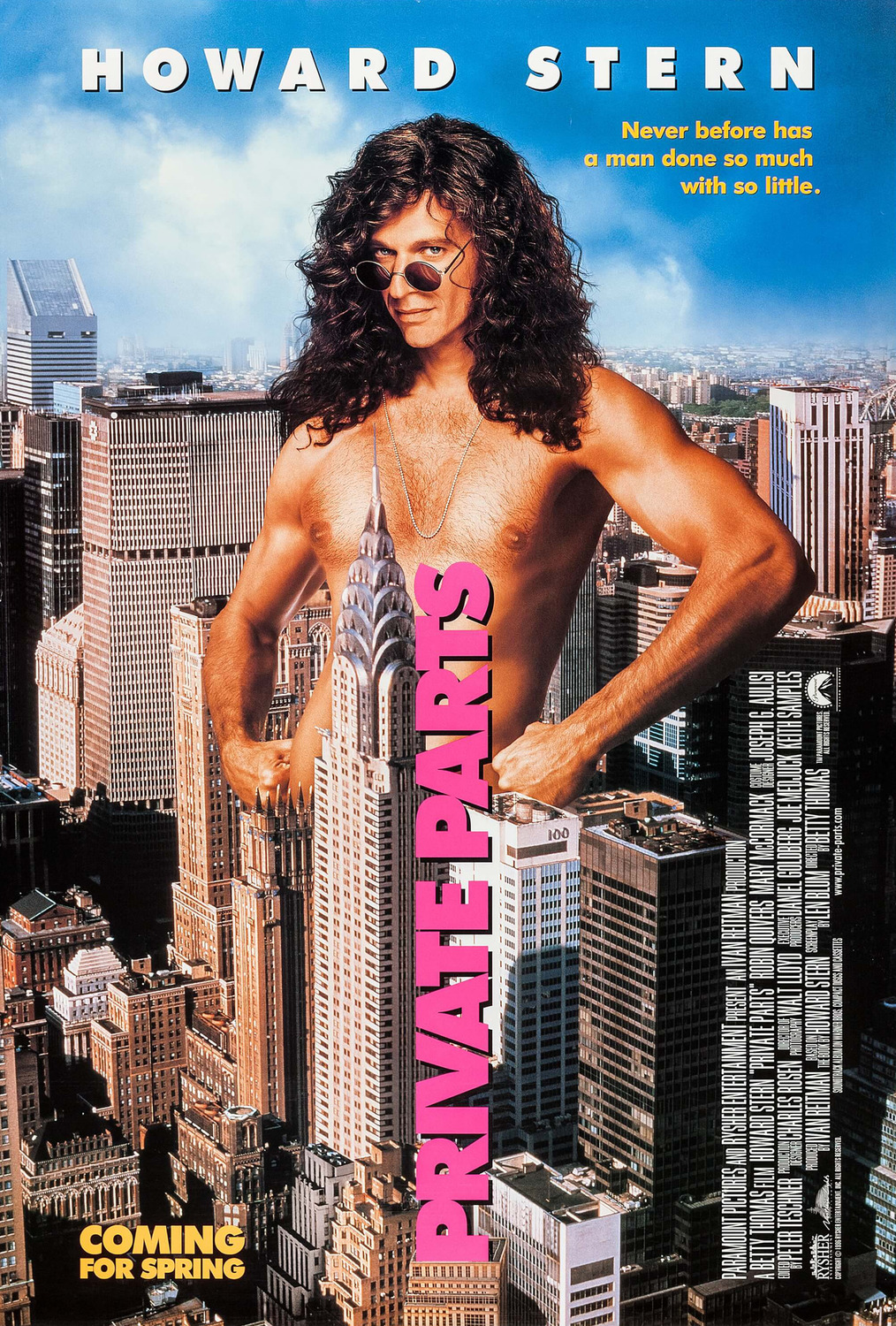
All-Time Favorite Trailers: ‘Private Parts’ (1997)

When this trailer begins, it looked like we were going to get another period piece movie. Back in the 1990’s, a lot of period movies were being released such as “Howard’s End” which my parents took me to see, and I found myself really liking it. From there, we got others such as “The Remains of the Day,” “The Age of Innocence” and “The Madness of King George,” and they contained many great performances and much more to take in. Whatever movie this trailer was for, it felt like I was in store for another period piece which would immerse me into a whole other time and place.

But the next thing I know, subliminal messages such as “SEX,” “BABES” and “CHICKS” started flashing at us from the silver screen, and I am wondering to myself, while laughing out loud, what the hell? Clearly, something far more devious was in store for audiences as these flashes of “SEE IT,” “FEEL IT” and “NUDITY” came straight at us with a thunderous guitar lick. Was this a trailer for another “Naked Gun” sequel?

Before I knew it, Howard Stern appeared onscreen making funny noises into a microphone, and I found myself getting really excited. I was not the biggest fan of Stern’s in the 1990’s but, like everyone else, I was constantly curious to see what he was going to do next. With this trailer being scored to AC/DC’s “You Shook Me All Night Long,” I found myself getting excited for it in a way Stern had not excited me before. While I wondered what was going on in his head from time to time, seeing him in a motion picture quickly seemed like a monumental event.

This trailer for “Private Parts” quickly made my list of my all-time favorites as it presented me with something highly unusual and wonderfully rebellious. This trailer went out of its way to satirize the kind which promised something to a select audience, and then proceeded to pull the rug out from under us all. It made me super excited to the film, and I loved how it twisted the form of the average movie trailer to an exhilarating extent. And, having seen this film many times since, I can confirm that the trailer delivered on what it promised audiences to great effect.

‘Elvis’ Movie and 4K/Blu-ray Review

The following review was written by Ultimate Correspondent, Tony Farinella.

Elvis Presley is, without question, one of the biggest names in music history. As a matter of fact, many think he’s the gold standard. Nearly four decades after his death, he is still worshiped and celebrated by legions of fans.  However, there has never been a true Elvis biopic worth its salt. For a man with such a historic legacy, it seemed rather unusual that a true Elvis biopic with a big studio behind it had never been released.  This changed in 2022 with the release of “Elvis,” directed by Baz Luhrmann.  If there ever was a director to bring the life of Elvis to the big screen, it was certainly Luhrmann.  He’s known for his big productions and big budgets.  There is a reason why he hasn’t directed many films. He puts everything into his work, and he’s involved in many aspects of the filmmaking process as a whole.

I remember hearing about this film back in 2020 as Tom Hanks contracted Covid-19 while filming his part as Colonel Tom Parker. When it was finally able to hit the big screen in the summer of 2022, I noticed it was getting people back in the theaters once again.  Now, it has not grossed anywhere near the level of “Top Gun: Maverick,” but it’s still playing in certain theaters to this day even though it was released in June. I credit this to the power of Elvis as he always had a way of bringing people together.  This is certainly the case with this big screen blockbuster.

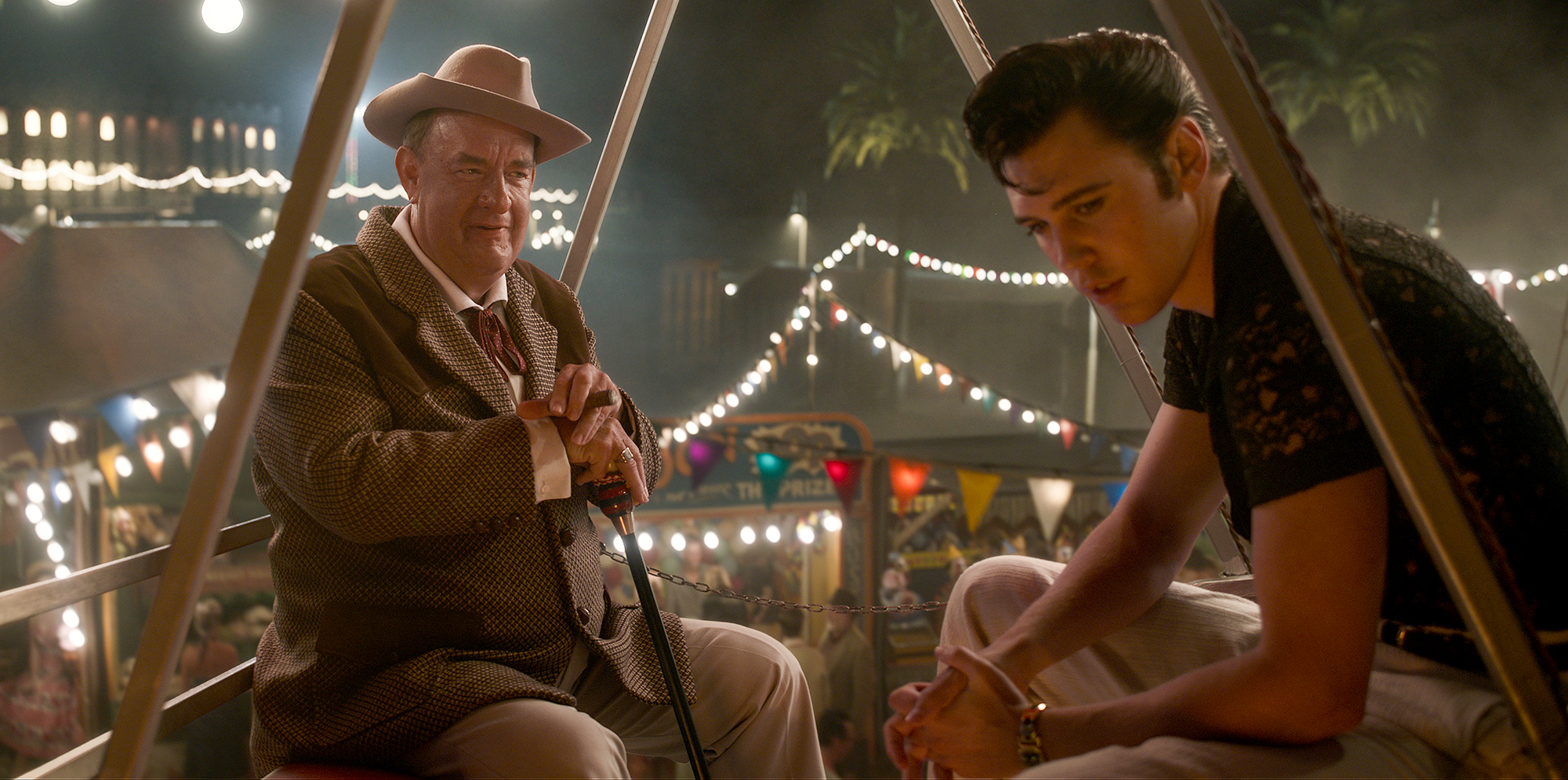
While the film is called “Elvis,” it could have easily been called Elvis and Colonel Tom Parker, as it focuses on the relationship between the two.  Colonel Tom Parker is played by Tom Hanks.  If I had to go out on a limb here, I’d say they wanted to cast a big-name actor in Hanks because not many people were familiar with Austin Butler. Prior to seeing the film, I had never heard of Butler myself.  While I understand the casting of Hanks and the reason behind Parker being such a pivotal character in the film, his performance is extremely cartoonish and silly.  Colonel Tom Parker was a character indeed, but this performance feels like Hanks in a fat suit with a forced accent.

ELVIS Copyright: © 2022 Warner Bros. Entertainment Inc. All Rights Reserved. Photo Credit: Courtesy of Warner Bros. Pictures Caption: (L-r) TOM HANKS as Colonel Tom Parker and AUSTIN BUTLER as Elvis in Warner Bros. Pictures’ drama “ELVIS,” a Warner Bros. Pictures release.

This film focuses on how Elvis was discovered by Colonel Tom Parker who took him under his wing as he saw something special in the young man.  Elvis, being loyal to his family, especially his mother, would do anything to help them out financially, so he did whatever Colonel Tom Parker told him to do even if his mother saw right through him. Elvis’ father was a bit of a simpleton and really wasn’t looking out for his son’s best interests as he had problems of his own. Colonel Parker, on the other hand, was a carney who knew how to manipulate and con Elvis into doing anything he wanted him to do.  Elvis was loyal to a fault. As a matter of fact, they had a contract where Colonel Parker would get half of Elvis’ earnings, which is unheard of in today’s entertainment industry.

Elvis was clearly influenced by African American music, and the film is wise to show that here. While many African-Americans say Elvis stole their music, others say he took from their music while adding his own touches to it. There are many opinions on the subject, but the film does give African-American artists their due and shows he was impacted and moved by their music while growing up in the South.  It’s a tricky subject but the film gives African-American artists their due and acknowledges how Elvis was in awe of what they were doing at the time and how heavily inspired he was by the musical scene on Beale Street in Tupelo, Mississippi.

Elvis Presley is also seen as dangerous because of his sexuality and dance moves.  It’s funny to think of this now because of what other artists are doing today and how far they push the envelope with their sexuality. You have to remember that when Elvis was around, it was during the late 1950’s and early 60’s, so audiences were not yet exposed to this type of artist. Some feared his music and dancing would promote sexuality amongst the younger crowd. Luhrmann also touches on Elvis’ film career, his relationship with Priscila Presley, and his time in the Army.  Luhrmann and his fellow collaborators cover a lot of ground in 159 minutes, but the film doesn’t feel too long in the tooth as there is always something happening on screen.

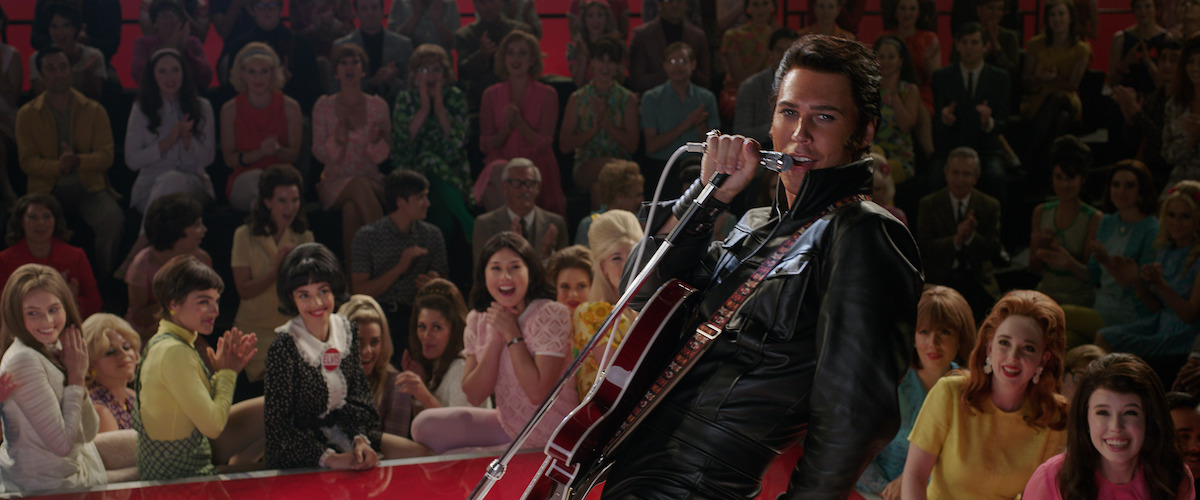
Let’s start with the pros of the film: Austin Butler is now an official movie star. It would not surprise me if he is nominated and even wins an Oscar for Best Actor. The Academy loves musical biopics, and this is the type of performance which seems right up their alley. It’s definitely one of the best performances of 2022, but there are other films yet to be released in this calendar year. It wouldn’t get my Oscar vote if I had one, but I certainly think it’s a phenomenal performance. Butler looks and sounds just like Elvis.

The film also takes the time to dive into the effect the deaths of Robert Kennedy and Martin Luther King Jr. had on Elvis as he wanted to make music about something instead of always playing it safe due to Colonel Tom Parker’s influence.  The soundtrack is also top-notch and it’s incredibly moving at times. It’s flashy, fun, in-your-face, and a real crowd-pleaser.

Now let’s talk about the cons: Tom Hanks.  What in the world is this performance? I read a comment from Scott Mendelson from Forbes who said it seemed like Hanks was trying to win an Oscar and a Razzie at the same time. That is the perfect way to describe his performance.  The film also follows the usual beats of a biopic: the young kid doesn’t believe in himself, has success, hits roadblocks, and it ends on a high-note.  The only difference here is the Elvis story doesn’t end on a high note as we all know. 

The film also seems a little too uncomfortable with criticizing Elvis and a lot of the things he did in his life and career. He was far from perfect, but the film seems content to blame it all on Parker instead of looking at Elvis for some of the blame. When all is said and done, he’s far from innocent.

I enjoyed “Elvis,” but I didn’t love it.  Luhrmann doesn’t show the ugly side of Elvis, and there was an ugly side to him.  It’s not a very deep or relatable film either.  The story could have been a little more meaningful and thought-provoking but, at times, it seems to fall in love with its star much too often.  It’s a good movie, but it’s not a great one.  I recommend you check it out, as you won’t be disappointed, but I would have liked a little more meat on the bone here.

* * * out of * * * *

4K/Blu-ray Info: “Elvis” is being released on a two-disc 4K and Blu-ray combo pack from Warner Brothers Home Entertainment which also comes with the digital copy of the film. It is rated PG-13 for substance abuse, strong language, suggestive material, and smoking.  It has a running time of 159 minutes.

Video Info: “Elvis” comes to 4K on eye-opening HDR 10+ along with Dolby Vision.  It’s a stunning movie filled with life and color, and it truly took my breath away watching it in 4K.  With some films, you don’t really notice the difference with a 4K release.  Bu this is a film where, if you have a 4K player and TV, it is the way to go without hesitation.  It came to life right before my eyes.

Audio Info: The Dolby Atmos track brings all of the great music right into your living room.  This is a great disc, and they really went all out for this release.  Subtitles are also included in English, Spanish and French.

Special Features:

Bigger Than Life: The Making of ELVIS

Rock ‘N Roll Royalty: The Music & Artists Behind ELVIS

Fit for a King; The Style of ELVIS

Viva Australia: Recreating Iconic Locations for ELVIS

“Trouble” Lyric Video

Should You Buy It?

If you are a hardcore Elvis Presley fan, and I know plenty of them in my own life, you have already made up your mind and are buying this on its release date.  If you are not an Elvis fan, I still think this is a solid and well-made flick.  Would I buy the film if I were a casual Elvis fan?  I would because of the 4K release Warner Brothers Home Entertainment has put out along with the great special features on its making.  However, I’d probably wait for the price to drop a little bit as the 4K version is going for $29.99.  This film was made for 4K. 

Elvis Presley fans, this is probably the best Elvis movie which will ever be made, and it makes me happy to see people I care about enjoying it.  From talking to the diehard Elvis fans in my life, they are in love with this film and have seen it multiple times in theaters and started watching it right away when it debuted on HBO Max. It definitely resonated with a ton of people. I liked “Elvis” and recommend it, but I wish it had a bit more of an edge.  It played it safe too often for my liking. Still, this is one of the best 4K releases of the year so far and a great use of the technology.

**Disclaimer** I received a copy of this film from Warner Brothers to review for free.  The opinions and statements in the review are mine and mine alone.

Tobey Maguire on Chess, Poker and ‘Pawn Sacrifice’

WRITER’S NOTE: This interview took place back in 2014.

Tobey Maguire brings his usual coiled intensity to the role of American chess prodigy Bobby Fischer in “Pawn Sacrifice.” Directed by Edward Zwick, the movie takes us back to the days of the Cold War where Russia and America were constantly facing down one another. Having become a master at chess at such an early age, Bobby eventually becomes determined to beat the Soviet Empire at the game as they have dominated it for decades. This puts Bobby in the crosshairs of Soviet chess grandmaster Boris Spassky (played by Liev Schreiber), and they come to face each other in what became known as the “Match of the Century,” a 21-game competition held in Iceland back in 1972.

Maguire dropped by the Four Seasons Hotel in Los Angeles, California to talk about his experience making “Pawn Sacrifice” and playing a real-life person. In addition to being an accomplished actor and producer, he is also known for being quite the poker player as he has played in various tournaments throughout the years and has won a lot of money. Front Row Features Managing Editor Angela Dawson asked him if he was able to utilize his knowledge of poker in this role.

Tobey Maguire: I think it doesn’t hurt. I mean it’s very different, and I think Bobby himself hated games if there was any element of chance. When he was six years old he would play some other games, but where there was any element of chance, whether it was cards or dice or something like that, he would get really frustrated because his skill would maybe gain him an advantage but then the chance element might take that advantage away. He almost felt that was unfair, so he no longer played games that have any element of chance and only wanted to play a strictly skilled based game which is essentially chess. He had all of the control and it was all skill, and the communication is very pure. He loved that there was this framework and essentially this pure communication with the person he was playing with. There’s no kind of manipulation or something else that could happen. It was like a safe place to communicate purely. But I also think it doesn’t hurt that I’ve played games and sort of battled with people over boards and across felt tables.

Looking at both games, it seems like there’s a similarity between them because both games require a lot of mental energy as you constantly second guess your moves and the moves you think your opponent will make. Whether you are about to move a chess piece or put down a poker bet, there’s a lot to consider beforehand as a player has to be actively concerned about making a wrong move that will have them suffering a loss they could have avoided. I brought this up to Maguire who sees similarities between the games, but he was also quick to describe how they are different from one another.

Tobey Maguire: Yeah, although with cards you’re acting on current, partial information. You have cards that I don’t see, so I’m then kind of mostly looking at your historical behaviors as it relates to betting and less on tics and moves and stuff. I think that there’s way too much put on so-called tells of poker. I think it’s much more about patterns of betting. I think that’s much more reliable than behavioral tells. I do think it’s a huge differential because in chess there is no hidden information. On a chessboard all the information is right in front of you. There is nothing hidden. The only thing you are guessing or second-guessing is really in your preparation. Bobby Fischer was extremely consistent and would play the same opening move over and over and over and over and over and over again. He actually went and I believe, although I don’t have the proof of this but based on people I talk to, that he basically studied variations that he hadn’t played before and ended up using a different opening move in game six that was very unusual for Bobby. It’s possible that he was doing what you’re talking about, kind of not counting on but anticipating that they would not have prepared to open with that. So, in that way, that’s a comparison that I could draw in relation to what you asked.

Maguire is riveting as always in “Pawn Sacrifice,” and the movie is now available to watch on DVD, Blu-ray and Digital.

You can also check out my video interview with Tobey Maguire below which I conducted for We Got This Covered.

Capone Aims For Greatness But Instead Becomes a Real Mess

Al Capone was an American gangster and businessman who became a notorious crime boss during the Prohibition Era, and he has long since become a major figure in popular culture. Many actors have portrayed him over the years like Robert De Niro, Rod Steiger, Jason Robards, Ben Gazzara, Ray Sharkey, William Forsythe and F. Murray Abraham to name a few, and it certainly is a juicy role for any actor to take on as he became a character Shakespeare would have been proud to write about. The great Tom Hardy is now the latest to play him in Josh Trank’s biographical film “Capone,” one of the many films meant to be released in theaters but, because of the Coronavirus (COVID-19) epidemic, is instead making its debut on VOD. Whether or not it deserves this particular fate will depend on what you think about the finished product, and this one does come with a lot of baggage.

Whereas many films about Capone focus on his time as a feared crime boss, this one looks at his final year of existence. “Capone” starts off informing the audience of how the famed gangster was sentenced to prison on October 17, 1931 for tax evasion and released a decade later when he was no longer deemed a threat to society. When we first see him here, he is living in Florida with his family and close friends, and we see he is also afflicted with neurosyphilis and dementia which deeply affects the way he sees reality.

Before I go on, I should point out what neurosyphilis really is. According to Wikipedia, it is an infection of the central nervous system which can occur at any age, and “Capone” looks to illustrate how bad this disease can get. While the man is resting in retirement in Palm Island, Florida, his mind is quickly rotting away to where he begins suffering from hallucinations and loses control over his bodily functions. This results in him suffering from some embarrassing situations no one would ever want to be caught in, and I wondered how long he would allow himself to endure such unbearable torture.

I have seen Capone portrayed in many movies like “The Untouchables,” “Road to Perdition” (albeit in a deleted scene), “Mobsters” and “The St. Valentine’s Day Massacre” to where I feel lI know all there is to know about him. With “Capone,” I got to see another chapter which of his life which I was not as familiar with. It may not be as cinematic a story as his days as a feared crime boss, but it does provide us with a different look at a gangster when his mental capacities were fading rapidly. I also cannot think of a single film which has dealt with syphilis this intimately or in depth. Come to think of it, I’m not sure I want to. The word syphilis is an icky word even when you don’t know its meaning.

But as “Capone” goes on, I kept wondering what everyone here was trying to accomplish. Some filmmakers prefer not to spell out the meaning of their movies, and that’s fine. When it comes to this one, however, I am at a loss because everything becomes a huge mess long before the end credits. The filmmakers go only so deep into the gangster’s addled brain, or what’s left of it, and what we are left with is a lot of unpleasantness and a screenplay which could have used a lot more depth. What exactly was the point of showing us all of this? To make us understand how bad any kind of syphilis is? To see if Capone is worthy of forgiveness and redemption. A lot of questions are brought up, but I never found any satisfying answers.

The big draw here is obviously Tom Hardy, and I am prepared to see him in anything and everything. From a distance, he looks to be the perfect actor for this role having portrayed such villainous figures in “Bronson” and “The Dark Knight Rises.” But while he certainly has inhabited Capone as much as an actor can physically, his performance here is deeply flawed as he more often than not slips into caricature which sucks all the naturalism out of what I thought would be a fully formed character. This is especially the case when you take into account how his co-stars Linda Cardellini, Matt Dillon, Kyle MacLachlan and Kathrine Narducci slip into their roles so easily to where I never caught them acting. Basically, everyone seems to be on the same wavelength except Hardy who appears to be acting in a completely different film, and his bombastic portrayal is a shock considering what a reliable actor he usually is.

But when it comes to “Capone,” the person everyone has their eyes on is writer and director Josh Trank. Back in 2012, he made his big Hollywood breakthrough with “Chronicle,” a found-footage thriller which smartly transcended its genre and provided a huge boost to the careers of Michael B. Jordan and Dane DeHaan. Then he followed it up with the “Fantastic Four” reboot which rode a tidal wave of bad press all the way up to its opening, and quickly became a critical and commercial disaster which must have had a devastating effect on him. Thanks to this nightmarish reception, and to Trank’s tweet about there being a better version of the film which may never see the light of day, he looked to be forever consigned to director jail along with other filmmakers who blew their big chance at a long-lasting career. Still, we all love a comeback, and “Capone” certainly looked like it would wipe away the stench from the rare comic book/superhero movie flop.

I certainly wanted “Capone” to be a success for Trank, but while his filmmaking skills have improved, his screenplay is full of elements which never gel into a satisfying or cohesive whole. It is tempting to believe he relates to Capone’s hellish last year as it threatens to be quite similar to the battles he had with studio executives over “Fantastic Four” as the gangster deals endlessly with paranoia over paparazzi hiding in the bushes and of people he believes may be out to kill him. But when the film finally ends, I came out of it unsure what to think. In his attempts to continually go against the Hollywood grain, Trank instead alienates any audience this film hopes to have as he becomes more interested in rubbing our faces in Capone’s diseased state of mind instead of creating a truly compelling narrative.

Well, Hardy will certainly rebound from this misfire sooner rather than later. As for Trank, there’s always a chance at another comeback. I just hope that next time he works harder at creating a motion picture which is not so much anti-Hollywood, but one which transcends another genre the way “Chronicle” did. “Capone” certainly provides us with a unique look at one of America’s best-known gangsters, but when its all over, I could not help but wonder if it was a story worth telling.

* * out of * * * *

Dolemite Is My Name – Eddie Murphy is Back!

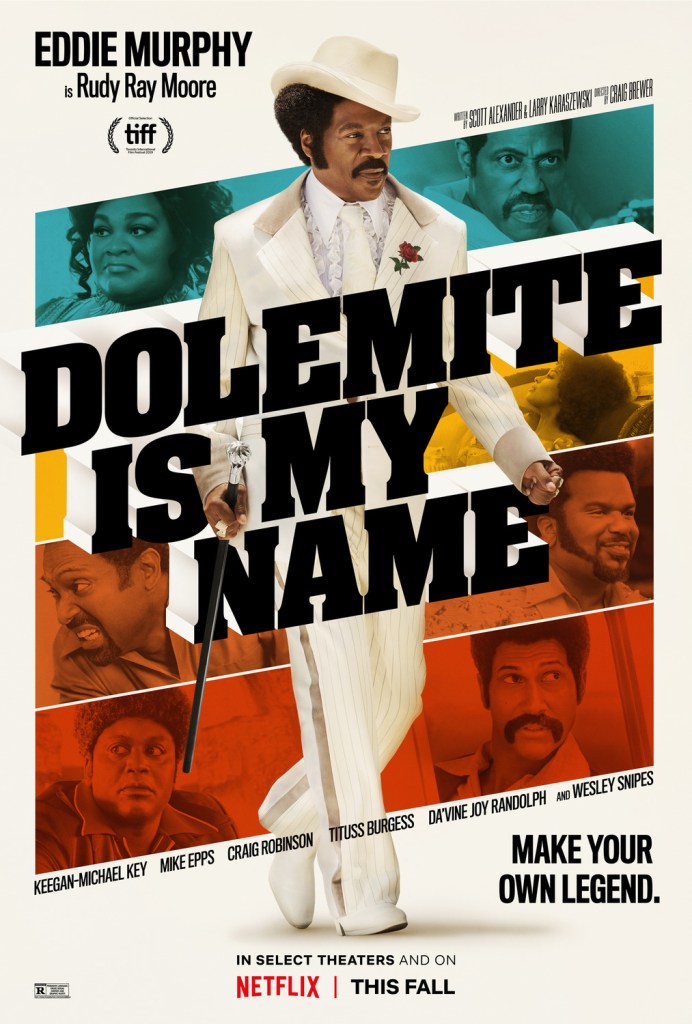
With the Coronavirus still wreaking havoc around the globe (deal with it you flat-Earthers), this mandatory quarantine has allowed me to catch up on movies which I was hoping to watch sooner. One I finally caught up with is “Dolemite is My Name,” the biographical comedy film about comedian and filmmaker Rudy Ray Moore who created the character of Dolemite, released several successful comedy albums, and then risked everything to bring his iconic character to the silver screen. What unfolds proved to be one of the best and most entertaining movies of 2020. Eddie Murphy gives us one of his greatest performances ever, Craig Brewer returns to make a film as entertaining as his best efforts, and screenwriters Scott Alexander and Larry Karaszewski have given us yet another offbeat biopic about an unlikely character who more than left their mark on the world.

When we first meet Rudy, he is a struggling artist living in 1970’s Los Angeles. We see from the start he is a natural born hustler, and his determination to become a star knows no bounds. At the same time, his life has long since fallen into a rut as he finds himself working at a record store whose manager, Roj (Snoop Dogg), refuses to play Rudy’s songs which comes with names like “Step it Up and Go” and “Below the Belt.” Despite Rudy’s eagerness, Roj freely admits none of his songs could ever compare to Marvin Gaye’s “Let’s Get it On.”

Furthermore, Rudy is past his prime, and he is starting to believe his dream of stardom has long since gone out of his reach. His stand-up bits at a local club fail to elicit a single laugh as his jokes are exquisitely lame to put it mildly. In addition, he has become quite, as someone later describes him, “portly.” Yes, even back in the 70’s, Hollywood seemed to have a problem with overweight people.

Then one day, Rudy gets accosted by a homeless man named Ricco (Ron Cephas Jones) who comes into the store making various loud proclamations which show off his superb rhyming skills, and one of them includes the name “Dolemite.” This ends up lighting a fire of inspiration in Rudy as he goes out into the streets to meet up with Ricco and his brethren to record their dialogue which prove to be poetic as it is profane. To be sure, Rudy pays these men to him their stories, but while some may be all about the Benjamins, he is more about the Washingtons.

From there, the character of “Dolemite” is born and Rudy dresses himself up for the occasion. It is an electrifying moment when we first see him take the stage even after the club owner begs him to just stick with his normal act. While he was at first ignored as an opening act, he now has the audience in stitches when he tells them, “Dolemite is my name, and fuckin’ up motherfuckers is my game!” From there, he finds the loving audience which had long eluded him, and he becomes increasingly intent on leaving his mark on the world.

Eddie Murphy certainly had a much different path to fame than Rudy Ray Moore ever did. He got cast on “Saturday Night Live” when he was 19, and film stardom came soon after when he starred in “48 Hrs.” Rudy, on the other hand, found success later in life and with a niche audience which was nowhere as big as Murphy’s. But watching Murphy here, I can see why he is a perfect fit to play Rudy as he inhabits this raunchy comedian and hustler with such an unbridled enthusiasm to where his spirit is so infectious throughout. Seeing Murphy land so many of Dolemite’s one-liners perfectly reminds us how brilliant his comedic timing is, and it is shocking to learn this is his first R-rated feature since 1999’s “Life.”

But moreover, Murphy really gives a great performance here which, in another year, might have earned him a deserved Oscar nomination. He really makes us root for Rudy even as his confidence begins to wane, and he also shows the insecurities and the past Rudy is constantly trying to stay several steps ahead of. There is one scene where we see Rudy on the phone with a prospective movie studio, and we do not even have to hear who is on the other line as Murphy shows us what rejection looks like as his face crumbles. Seriously, if this moment does not prove what a great actor can be, what will?

For Craig Brewer, “Dolemite is My Name” is his first feature film directorial effort since his 2011 remake of “Footloose.” To say this is a comeback for him is not really fair as he has spent the last few years producing several movies and directed TV episodes, so clearly he has been a busy body. However, watching this movie proves he has not missed a step as it contains the same boundless energy and enthusiasm he brought to “Hustle and Flow” and “Black Snake Moan.” Brewer clearly revels in the journey Rudy took from being a starving artist to becoming a known personality, and he makes this journey a thrilling and endlessly entertaining one for the audience.

For Scott Alexander and Larry Karaszewski, this stands proudly among their others which include “The People vs. Larry Flynt,” “Ed Wood,” “Big Eyes” and “Man on the Moon.” In some respects, Rudy’s career trajectory is a bit similar to Ed Wood’s as their talent, to put it mildly, can only go so far. But the screenwriters do make Rudy out to be an admirable go-getter who may not have gotten love from everybody, but who did get exactly what he needed. And in the end, Rudy certainly earned more success in his career than Ed ever did.

There are a couple more people I would like to single out including the mighty Da’Vine Joy Randolph who steals a number of scenes as Lady Reed, a single mother whom Rudy encourages to join him on his stand-up tour while in Mississippi. Randolph makes Lady Reed into a vulnerable individual who ends up finding the strength to make herself known to people who otherwise would might otherwise have paid her any notice. The scene she has with Murphy where Lady Reed thanks Rudy for paving the way to Hollywood for her is one of the most deeply felt as it rings so true emotionally, and there is not an ounce of sentimentality or emotional manipulation to be found.

And there is Wesley Snipes who comes close at times to stealing the show as the director of the “Dolemite” movie, D’Urville Martin. Watching Snipes here, it feels like the first time he has been this wildly energetic since “Major League.” After the cinematic debacle that was “Blade: Trinity” and his conviction for tax evasion, he seemed forever resigned to a career in direct-to-video movies where he played only deadly serious characters. But here, he gives one of his best performances in lord only knows how long as he turns D’Urville into a hilariously bewildered human being who keeps wondering how the hell he got mixed up with Rudy and his crew. It’s such a brilliantly off-the-wall performance, and just looking at his face during one of the most hilariously staged sex scenes in motion picture history is priceless.

Seriously, I get severe whiplash looking at Eddie Murphy’s career, and that’s even though its not as intense and jolting as what I get when looking at John Travolta’s. Murphy has been up and down so many times to where it hurt to wait and see him be great again. Heck, I almost gave up on him after “Beverly Hills Cop III.” But with “Dolemite is My Name” and his triumphant return to “Saturday Night Live,” he has more than earned his latest comeback, and I really hope this is one which will last for several more movies.

* * * * out of * * * *

La Vie en Rose – Marion Cotillard is Beyond Exquisite

This review is for my friend Cordell as he begged me to watch this movie constantly.

Every once in a while, you witness a performance so utterly brilliant that it leaves you in a state of total awe. It’s the kind of performance which really blurs the line between the actor and the character they are portraying. You don’t see any trace of the actor because they have succeeded in fulling inhabiting a character as opposed to just playing one. Mickey Rourke pulled this off in “The Wrestler” as did Heath Ledger in “The Dark Knight,” and this goes for every role Daniel Day Lewis played in his entire career. An actor’s job is never as easy as it looks (if you are serious about the craft of acting that is), and it involves tearing down all those protective layers we surround ourselves with to protect us emotionally. To do this requires an immeasurable amount of bravery, and if they succeed in what may seem impossible to some, they will leave you believing no other actor could have played such a role as good as they did.

You can add Marion Cotillard to this list after witnessing her extraordinary performance as Edith Piaf in Olivier Dahan’s “La Vie en Rose.” She plays Edith from when she was a teenager to her death at the age of 47, at which point she looked more like she was elderly. It’s surprising to learn Cotillard was in only her early 30’s when she took on this role, and it is a performance which feels flawless from both an emotional and a technical point of view. She gives a performance bursting with emotion, and her portrayal of Piaf at the latter part of her life is never less than believable. Her Oscar win for Best Actress was seen as a surprise by many, but this is probably because they never bothered to watch the movie when it was released.

Watching Cotillard play Edith in the different stages of her life instantly reminded me of the opening shot of Martin Scorsese’s “Raging Bull.” It showed Robert DeNiro as Jake LaMotta in his post-boxing years, overweight and smoking a cigar while he runs through his standup act before going on stage. It then goes from there to when LaMotta was in his fighting prime with DeNiro a lot slimmer and in better shape. I remember watching this transition and almost having to remind myself it was the same actor playing LaMotta. Cotillard accomplishes this feat as well in “La Vie en Rose” as she portrays Edith Piaf from when she was young to where her life was fading all too slowly. This is also in part due to the equally brilliant job by the makeup artists who were also deservedly rewarded with Oscars as well.

“La Vie en Rose” does follow the similar path of biopics as we see Edith Piaf from her lowly beginnings as a child, and of how those experiences end up informing the rest of her life as she grows up to become the singer we were so moved by. Dahan does not try to sugarcoat Edith’s life as it was not exactly an enviable one. We see her as being more or less neglected by her mother, and then later by her father when he leaves her for a time in a brothel which ironically gave her some of her happiest memories as she is cuddled constantly by the prostitutes who work there. When we are presented with a childhood which is absent of parental guidance and neglect, we know this is a life which defines the word “dysfunction.”

Edith as child is played by two young actresses: Manon Chevallier at age 5 and by Pauline Burlet at age 10. Both are wonderful, and their performances are not your average child actor performances that are full of over emoting and forced reactions. I point this out because it is incredibly difficult to pull off performances like these for young actors, and both do great work as they chronicle Edith’s young adventures and her inevitable heartbreaks as reality eventually comes crashing down on her.

Dahan moves the story back and forth in time which, in another movie, might seem distracting, but it helps break up the usual rhythm of your average biopic to where it doesn’t feel so much like others we have seen before. In seeing Edith confined to a hospital after her morphine addiction has long since ravaged her already fragile body, we know full well her story is not going to have a happy ending. Still, it made me wonder how Dahan was going to end the movie. Would it be at Edith’s dying breath, or at some other point in her life? I leave it to you to find this out.

Seriously, I cannot get over just how amazing Cotillard’s performance is. She brilliantly captures the stage fright which threatens to keep Piaf from going onstage, and we see how she slowly overcomes it through her first performance. We then see her move on to bigger houses to sing in, and it’s almost like she is becoming a different person in front of our eyes. From when she becomes an acclaimed star of stage and screen to her tragic demise, Cotillard nails every moment she has in the movie perfectly and never misses a beat. Watching her go from what seems like infinite happiness when she finds who she believes is the love of her life (the look in her eyes is beautiful) to the tragedy which takes it all away is simply enthralling. I am still thinking about her performance long after the movie ended, trying to figure out how she accomplished all of this without falling into the trap of playing a caricature.

Even as we see Edith’s body giving out, and her looking 20 years older than her actual age, Cotillard makes you believe you are seeing someone who has lived and experienced much more than the average human being does. This could have been where her performance would have suffered from overacting, but she keeps us entranced throughout the movie’s two and a half hour running time.

But a lot of credit should also go to Dahan for making one of the best biopics ever, and he surrounds Cotillard with a wonderful cast who does their best to hold their own in the wake of her ultimate tour de force. Gérard Depardieu has a nice supporting role as Louis Leplée, the nightclub owner who discovers Edith singing in the streets and gives her the opportunity to perform in front of a big audience. I also loved Emmanuelle Seigner’s heartbreaking performance as Titine, the prostitute who desperately wants to adopt Edith regardless of the odds never being in her favor.

“La Vie en Rose” may tread the familiar ground of many film biographies, but this one has an immense power all its own, and it stands way above many other films in its genre. Cotillard gives, as Peter Travers of Rolling Stone wrote, “a performance for the ages.” I can’t stop gushing over just how phenomenal she is here. I am so glad she got the Oscar.

* * * * out of * * * *