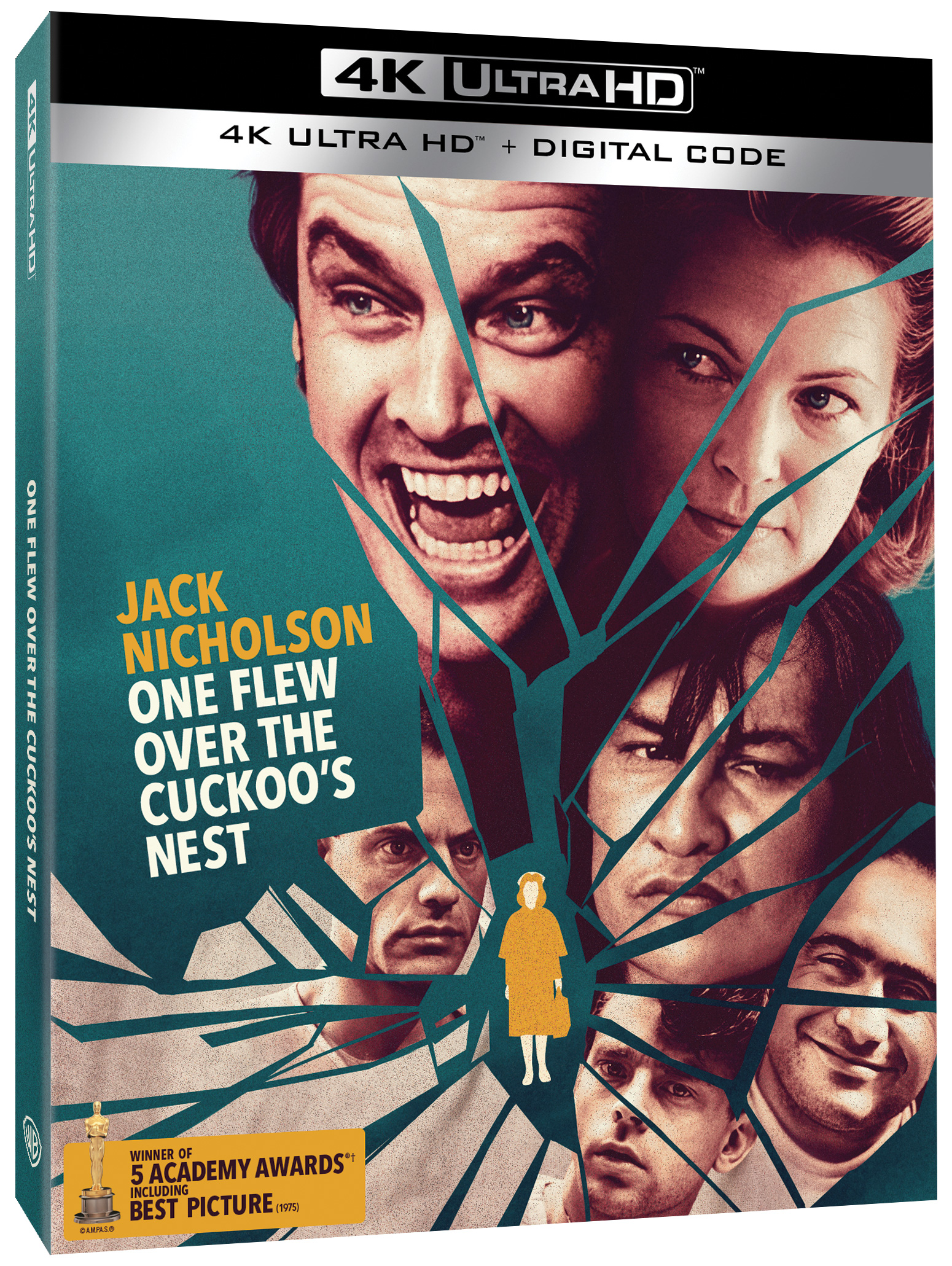
‘One Flew Over the Cuckoo’s Nest’ Movie and 4K Review
The following review was written by Ultimate Rabbit correspondent, Tony Farinella.

When it comes to 1970’s cinema, there was a sense of exploration, discovery and reflection that hasn’t been found in Hollywood since that decade. The filmmakers had a lot to get off their chests, and their way to process what they were seeing and feeling was through their moviemaking.  One of my favorite films from that decade was 1975’s “One Flew Over the Cuckoo’s Nest,” which is celebrating its 50th anniversary this year with this 4K release. I’ve always connected with films which have a powerful message and leave a lasting impression on me as a viewer long after the viewing experience has ended. “One Flew Over the Cuckoo’s Nest” is one of my favorite films of all-time, and one I find myself returning to often as a viewer.

I must confess that one of the reasons I connect with the material is because I’ve battled with mental illness for a good majority of my life, and I’ve also spent time in a psychiatric hospital. When you have a mental illness and tell people about it, they usually look at you sideways and they handle you with care. They think if they do something to upset you, rub you the wrong way, or make you unhappy, you are going to end up back in the hospital again. Friends and family “proceed with caution” when they are around you.  It’s frustrating and challenging. In Miloš Forman’s film, written by Lawrence Hauben and Bo Goldman, it challenges you to expect more out of yourself, not be put in a box, and to live and be free despite your mental illness.
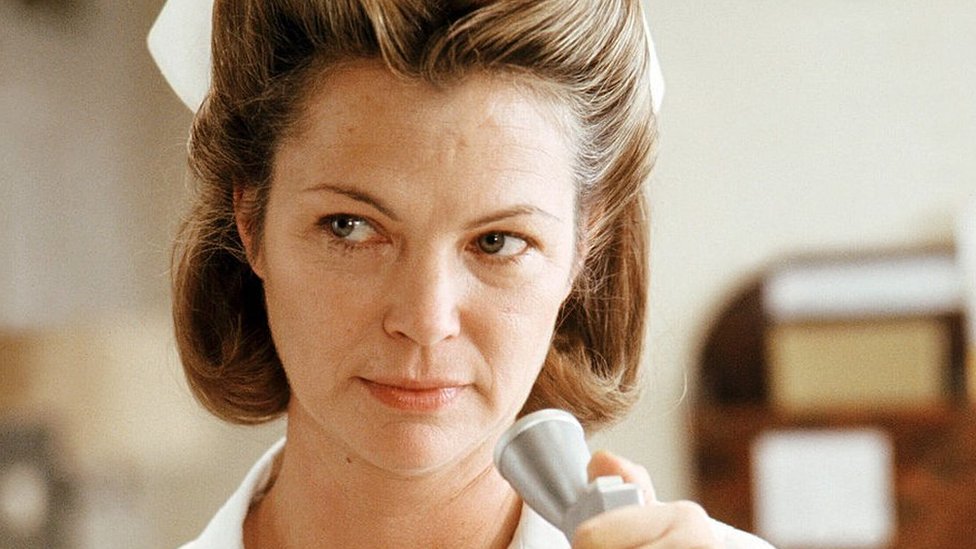
But I digress. Randle McMurphy (Jack Nicholson) ends up in a mental institution after having one too many brushes with the law. In his mind, instead of facing further punishment, it’s better to claim insanity and spend time in the mental institution.  Even though he’s a criminal, he’s no dummy. He’s charming, funny and charismatic, which immediately makes him enemies with Nurse Ratched (Louise Fletcher), who is colder than a mother-in-law’s heart with her treatment of the patients at the hospital. She knows they probably do not have the strength or energy to fight back, and she’s going to take full advantage of that.

Randle shows up, and he gives them a sense of purpose, an identity, and a reason to live. He encourages them to think for themselves, stand up for themselves, and not let their mental illness define them. The cast of actors is filled with Hollywood legends such as Christopher Lloyd, Brad Dourif and Danny DeVito. They all make their presence known with their performances without being too showy or over-the-top. In a film about people in a mental institution, it would have been easy to be loud, goofy, or to act like a complete loon. Instead, they are nuanced and unique. Another standout is Chief Bromden, played by Will Sampson. He’s a deaf-mute who is clearly processing a lot in his head, and Randle is determined to get through to him.

Another reason “One Flew Over the Cuckoo’s Nest” speaks to me is the idea of standing up to authority.  I’ve always been someone who doesn’t like being told what to do, doesn’t like following rules which don’t make any sense, and likes to challenge outdated notions. If you tell me I can’t do something, I want to know why and not just be told, “Because I told you so. These are the rules.” I want to understand the rules and why they are in place, and if they don’t add up, I’m going to speak up on that issue. I’ve never been one who likes to be silenced. This was the way of 1970’s cinema. It was about being confrontational and in-your-face without apologies or excuses.
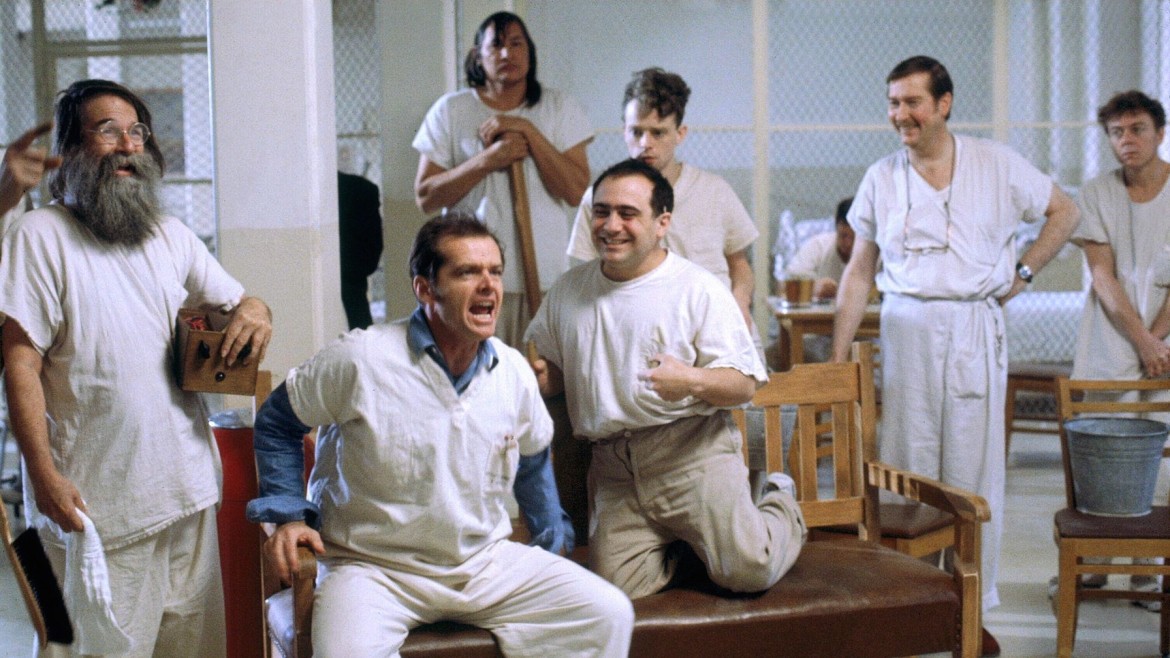
The great movies in Hollywood have been those which stand the test of time because they strike a chord with the audience. The screenplay for “One Flew Over the Cuckoo’s Nest” is absolutely perfect. I wouldn’t change a thing about it.  The performances, top to bottom, are amazing. For my money, this is Jack Nicholson’s best performance of his legendary and storied career. From his facial expressions to the way he delivers his lines, his performance is a masterpiece. You can’t take your eyes off him when he’s on screen. It reminds me of the old line from the legendary wrestler “Rowdy” Roddy Piper, “Just when you think you have the answers, I change the questions.” Louise Fletcher as Nurse Ratched is perfect to play opposite Jack, as she shows no emotion. She’s cold, matter-of-fact, and unflinching. She knows she has all of the power, and she’s not afraid to wield it. She enjoys being the puppet master.

If I’m lucky enough to live another 50 years, I’ll still enjoy “One Flew Over the Cuckoo’s Nest.” It’s a perfect example of old-school Hollywood craftsmanship. There is a reason why it is one of only three films to win Oscars in the major five categories (Best Picture, Best Actor, Best Actress, Best Director and Best Screenplay). This is a flawless piece of cinema, and it fuels me with energy, enthusiasm and passion. I’m going to sound like the old man shouting at the cloud here, but this is how Hollywood used to make movies.  This is a movie about people dealing with emotions, challenges and problems.  We are with them every step of their journey, and we are invested in them. When we are watching the movie, we forget we are watching characters.

* * * * out of * * * *

4K info: “One Flew Over the Cuckoo’s Nest” is released on a single-disc 4K from Warner Brothers Home Entertainment in celebration of its 50th anniversary. The film has a running time of 133 minutes and is rated R for language and violence.

4K Video Info: I love the way 4K HDR enhances the picture quality but still keeps the integrity of the film alive. The picture is crisp and clear, but it also knows when to be dark and moody depending on the scene and the mood.

4K Audio Info: The DTS-HD Master Audio track comes with subtitles in English, Spanish, and French. The audio track is more subdued throughout the film, as it’s in a mental hospital, but it’s not so subdued that you have to turn it up or can’t hear it.  It also knows when to make the soundtrack more powerful and intense during the impactful moments of the film.

Special Features:

Conversations on Cuckoo: Group Therapy (NEW)

Conversations on Cuckoo: Moviemaking Memories (NEW)

Completely Cuckoo

Deleted Scenes

Should You Buy It?

I would hope after reading my review, you would know the answer is a resounding HELL YES. If you haven’t picked up on that, I haven’t done a very good job in my review. The film also comes with a pair of fun new special features, with my personal favorite being the one that includes conversations with vital cast members about the casting process they went through fifty years ago. Warner Brothers is one of the few big studios that is not only releasing classic films on 4K, but they are also taking the time and effort to include some new special features as well. The film has never looked or sounded better than it does with this 4K release. You can buy the 4K in either a slipcover version or a steelbook. The film itself is a masterpiece and one of the greatest films of all time. This has been one of my favorite releases of 2025.  As a film lover, you owe it to yourself to add this film to your collection.

**Disclaimer** I received a copy of this film from Warner Brothers to review for free.  The opinions and statements in the review are mine and mine alone.
‘Anora’ – Never a Dull or Unemotional Moment In It

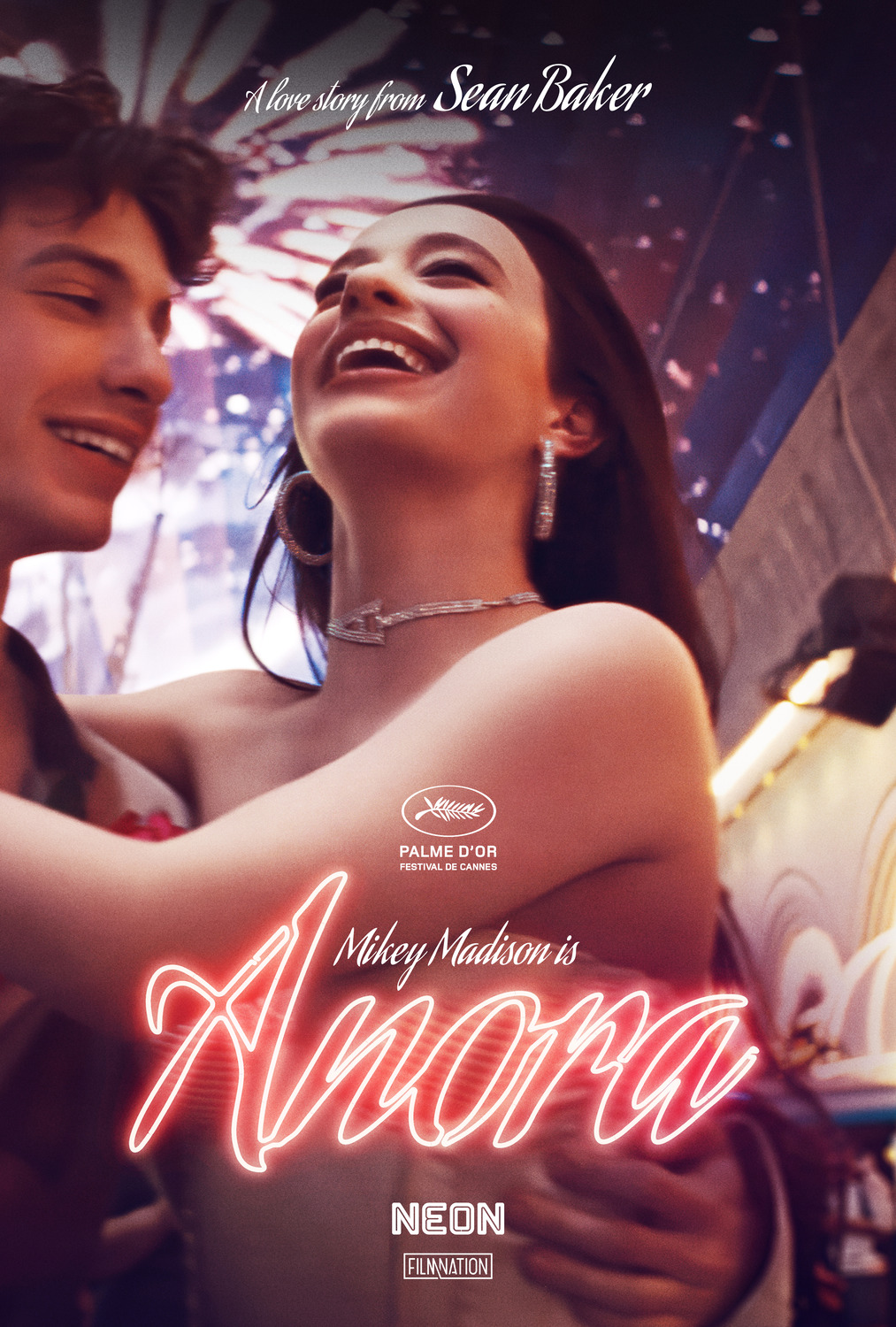
So, I finally got to see Sean Baker’s “Anora,” the Palme d’Or and Best Picture winner, and I was fortunate enough to watch it at New Beverly Cinema in 35mm. It certainly has the look of a 1970’s cinematic classic even as it seems to be a familiar story of a woman who looks to be rescued from what many might consider a sordid existence. But when all is said and done, I could not take my eyes off the screen for a single second. Seriously, I always consider this to be quite the compliment.

We are introduced to Anora “Ani” Mikheeva (Mikey Madison), a 23-year-old stripper from Brighton Beach, New York during a montage which shows a line of sex workers giving customers lap dances. Her face sticks out immediately to where we are seeing an individual instead of just another worker, and things kick into high gear from there. We see Anora moving through the strip club like a real pro as she ingratiates herself to each and every customer with a strong likability, and she effortlessly encourages patrons to come with her to the nearby ATM to get some cash for a private VIP dance. She’s so convincing to where I have no doubt that the men are quick to forget the pesky ATM fee they pay when withdrawing their funds. What is now anyway, four dollars?

Then one night, Anora meets Ivan Zakharov (Mark Eydelshteyn), the son of a Russian oligarch whom she affectionally calls Vanya. They quickly find themselves spending a lot of time with one another as they travel out with friends to Las Vegas where they indulge in an endless party atmosphere, they are clearly not the least bit enthusiastic to see end. It’s an exhilarating sequence as it felt like we the audience was being drawn into the fun, and it culminates in Vanya proposing marriage to Anora, and it feels like things have nowhere else to go for them but up from there.

I initially found myself appreciating “Anora” as a comedy because my experiencing the infectious party atmosphere led to many hilarious moments, but I also felt a certain dread as I kept thinking the roof was going to fall down at some point. And when Ivan’s parents become aware of his recent marriage, and they send men over to his luxurious mansion (it has an elevator) to get Ivan’s act together and to have the marriage annulled.

It’s hard not to think of “Pretty Woman” while watching “Anora” as it has a similar plotline of a man welcoming a woman into a life of luxury which she has never seen up close before, but this is no Disney movie. As much as Anora is experiencing the highs life and privilege have to offer, I constantly sensed she was on the verge of experiencing some serious lows to where I felt a strong need to protect myself from the heartache I was convinced would eventually be heaped upon us all.

For the record, the only other Sean Baker film I have see to date is “Tangerine,” but like that one, “Anora” is filled with such wonderfully drawn characters who, in any other film, would have come across as caricatures in a lazily written screenplay. Just when I thought these characters would be ever so easy to figure out, they came to surprise me in wonderfully unexpected ways to where it is impossible for any of them to become one-dimensional. It also helps to have actors like Yura Borisov, Karren Karagulian, Vache Tovmasyan and Aleksei Serebryakov among so many others bring these characters to such vivid life.

But make no mistake, this is far and away Mikey Madison’s show. As much as I wanted Demi Moore to take home the Best Actress Oscar for “The Substance,” I can completely understand and appreciate why Madison took home the prize. She perfectly inhabits Anora as someone who is, above all else, a survivor. Throughout, Madison exhibits just about ever conceivable emotion Ani gets put through, and she also evokes a vulnerability that her innate toughness can never fully hide. Even if Ani is not always likable, you have to respect how she handles herself as she quickly reduces many around her to mere ashes.

Another performance worth singling out is Yura Borisov’s as Igor, a Russian henchman who, at first appearance, looks like he can beat the shit out of anyone dumb enough to cross his path. But Borisov shows there is more to him than meets the eye, particularly when he is quick to complement Ani after she punches him in the face. Even when he has no dialogue, the actor shows so much humanity for this particular henchman as he too has a vulnerability he cannot hide from those around him. And most importantly, Igor is the only one who dares to treat Ani as a person rather than a piece of meat as others are quick to label her as.

What I love most about “Anora” is how alive it feels. Baker and company have given us a motion picture which feels ever so lively to where nothing about it feels the least bit staged. Some will be quick to judge the title character for the line of the work she has chosen, but I found myself not willing to do so as this film left me completely enthralled throughout. It is a tremendous motion picture which takes the viewer on a journey they may not normally go on, It is no wonder to me why this film was so acclaimed as it invites your empathy to the characters in a very genuine way.

Whether or not I feel “Anora” deserved its Best Picture win at this year’s Academy Awards ceremony, I can quickly admit it deserves a place on my list of the ten best films of 2024. In a time where Hollywood is eager to continue long running franchises even if they have long overstayed their welcome, it is very reassuring to see a $6 million dollar defy the odds and make quite the impact in an immense cinematic landscape. While this film may not have the most original plot, it does take us through quite the emotional adventure, the kind which most audiences are not quick to appreciate in this day and age.

I am very eager to see this film again very soon, as experiencing the great tapestry of emotions made this cinematic experience all the more enthralling. Even though I know how things end in “Anora,” I still want to go through all those emotions again. Also, there is no forgetting Take That’s “Greatest Day” as reworked by Calum Scott and Robin Schulz.

* * * * out of * * * *

‘Amadeus’ Movie and 4K Review

The following review was written by Ultimate Rabbit correspondent, Tony Farinella.

There is a lot to like about physical media, especially when it is in the 4K format. There are the special features, the audio and video quality and, of course, the fact that you own the movie.  This means you never have to worry about a streaming platform taking it down and then having to hope your local library has a copy you can check out. It’s on your shelf, and you can pick it up and pop it in your player whenever you want to watch it.  Another positive is the fact that films like “Amadeus,” a Best Picture winner, can be discovered for the first time by a new set of eyes. In fact, this was my first time watching the film.

The reason “Amadeus” was not a film I had previously seen is because I thought it would be a boring, stuffy period piece. After sitting down to watch it, I am reminded of the old expression, “Don’t judge a book by its cover.” Even though I do not consider “Amadeus” a classic and did not fall in love with it after one viewing, it was an important film worth seeing and also worthy of my time.  I think the minute we start to become close-minded to art, we really lose our sense of self. This film deserves its day in court just like any other important and historical motion picture ever released.

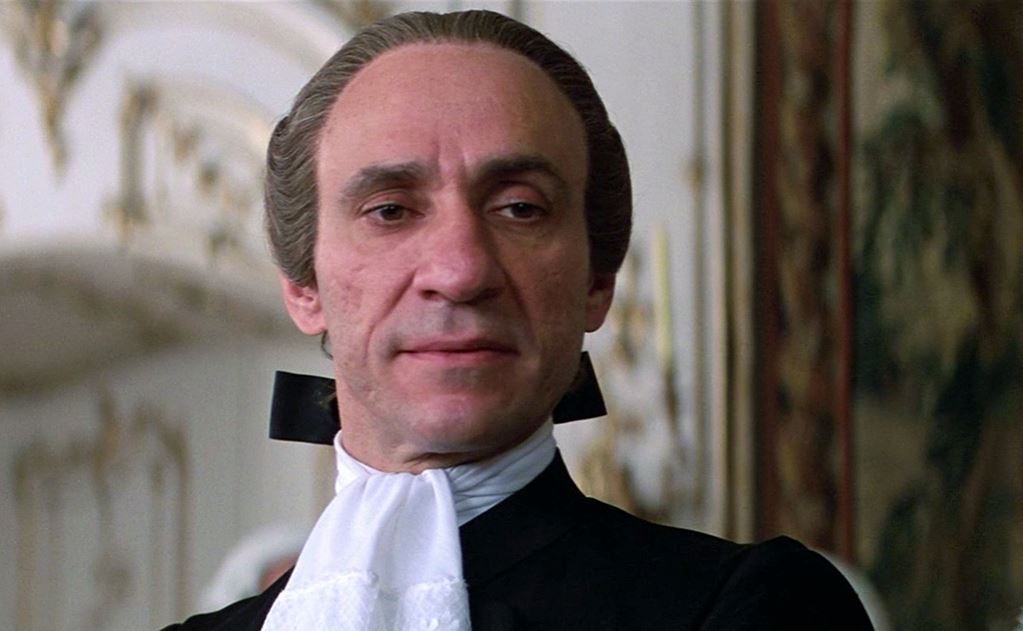
This film begins by introducing us to Antonio Salieri (F. Murray Abraham), a composer who has been put into a mental institute after an attempted suicide. A Catholic priest named Father Vogler (Richard Frank) is looking to get to the bottom of things, especially after Salieri says he is responsible for the death of Wolfgang Amadeus Mozart. While it has been over three decades since Mozart passed away, Father Vogler thinks it is a tremendous burden to carry. He sees how it is weighing on Salieri, which is what led to his suicide attempt.

From this point, the film is told from Salieri’s point-of-view as he shares how he was both envious and enamored with the work of Wolfgang Amadeus Mozart (Tom Hulce). He did not, however, think much of Mozart the person whom he found to be boorish, aloof and uncouth.  Still, he cannot deny the genius the man possessed and how he would make magic happen with his music. It was something Salieri himself was never able to achieve in his own career, and he sees it as a sin that God would give all this skill and talent to someone like Mozart. As a result, this creates a complicated relationship between the two men.

The film is fascinating in the way it explores genius and what makes someone possess the ability to do something which truly makes a positive impact on the world. There are often two lines of thinking when it comes to someone who has had enormous success or is a once-in-a-lifetime talent: it has either come naturally to them, or they have had to work very hard to hone their talent. Now, of course, there is also luck involved. It is also how you handle success if you continue to work hard at what you do, and that you don’t become complacent with your past success.

Throughout the film, no matter what is thrown Mozart’s way, he finds a way to make it work for him. This is even when Salieri is deliberately trying to sabotage him, especially when he hires Lori (Cynthia Nixon) to lend a helping hand to Mozart, as he has a wife and a child. The reason he hired Lori is to get inside information on Mozart and to stay one step ahead of him.  The thing that separates Salieri from Mozart is the fact that no matter how annoying or obscene Mozart is, he has a gift. It is a gift that will always rise to the top and make him memorable and one-of-a-kind. It is that envy and jealousy which drives Salieri mad.

Milos Forman was the director behind “Amadeus,” and it was a big project for him to take on. From the set pieces to the musical numbers to the sheer magnitude of the story, it is a big Hollywood production, and he’s up to the challenge of making this movie look and feel big.  It is the kind of big-screen Hollywood movie that used to run the movie industry back in the day. I miss big movies like this as they play very well on the big screen. They also pop on 4K as well. As to how historically accurate the film is, I cannot begin to tell you as, I must confess, I have not studied the history of Mozart.

The performance of F. Murray Abraham as Antonio Salieri is nothing short of brilliant. His face shows the torment of a man who has had to live in the shadow of Mozart his whole life, and it has clearly done a number on him. His performance reflects this, and he also knows when to rein it in and play the character in a more low-key and understated way.   He was utterly captivating here from start to finish. In many ways, even though the film is called “Amadeus,” and it is about Mozart, it feels like Salieri’s story.  It is easy to see why Abraham won Best Actor at the Academy Awards.

Tom Hulce must perform a balancing act of portraying Mozart as someone the audience can relate to while also being over-the-top and goofy. He does a solid job here, but I was much more interested in Abraham’s performance.

“Amadeus” is a film which was a little too long for my liking, as I would have trimmed about 20 to 30 minutes from the running time of 160 minutes, but it is still a well-acted, entertaining, and monumental Hollywood film. I admired and respected it, but I did not love it or connect with it on a deeper level. It is a film I am happy to have watched, but I found the third act to be its most compelling and intriguing. The scenes I liked the most dealt with the characters of Mozart and Salieri as human beings. When the film was a character study of the two men, it captivated me. I would have liked more of the human element of the story and less of the long-drawn-out musical scenes.

* * * out of * * * *

4K Info: “Amadeus” is released on a single disc 4K from Warner Brothers Home Entertainment, and it comes with a digital copy as well. The film has a running time of 160 minutes and is rated PG. Keep in mind; this is the theatrical cut of the film. I have read there is a director’s cut of the film, which is rated R and includes twenty minutes of extra footage. I think it would have been nice to include it here, but I am not sure what transpired to where this was not able to happen.

4K Video Info: I truly enjoyed this 4K transfer, as it showed the film as I imagine it was meant to be seen. The film is over forty years old, and it looks very cinematic with a very thematic look to it. This is not a perfect HDR transfer, but it’s not supposed to look flawless. It looks like how the film was intended to look, considering its release date.

4K Audio Info: I would have liked a Dolby Atmos track here, as this seemed like the perfect film to receive this treatment. As it stands, the audio is very sharp, clear, and the dialogue is easy to understand. Subtitles are included in English, Spanish and French.

Special Features:

The Making of Amadeus (New)

Amadeus: The Making of a Masterpiece

Should You Buy It?

I will let you in on a little secret—I do not read or watch reviews before I am going to review a film myself. I do not want to be influenced by what anyone has to say, good, bad, or indifferent. Now, I am aware certain films have overwhelmingly positive, mixed or negative reviews, but I do not read the content of them. I do think a lot of people like me have put off watching “Amadeus” for the same reasons I mentioned earlier in my review. I can see why the film might not be easily accessible to a newer audience today. Still, I think modern audiences will be pleasantly surprised, just like I was when I sat down to watch “Amadeus.”  It is a period piece, yes, but it’s done in a way where you get to understand the characters, what makes them tick, and why they do the things they do throughout the course of the movie. My two issues were the run time and the fact that I wanted to spend more time with the two main characters together. Overall, it is a good film, but I do not think it is a great one. As far as the 4K is concerned, it looks terrific even though the audio would have benefited from a Dolby Atmos track. There is also a new special feature here.  If you are fine with the theatrical cut, which I imagine many fans of the film will be, this is a day one purchase, especially with the Oscars this weekend. If you are a first-time viewer, I think you might want to rent it digitally first before committing to buying it.

**Disclaimer** I received a copy of this film from Warner Brothers to review for free.  The opinions and statements in the review are mine and mine alone.
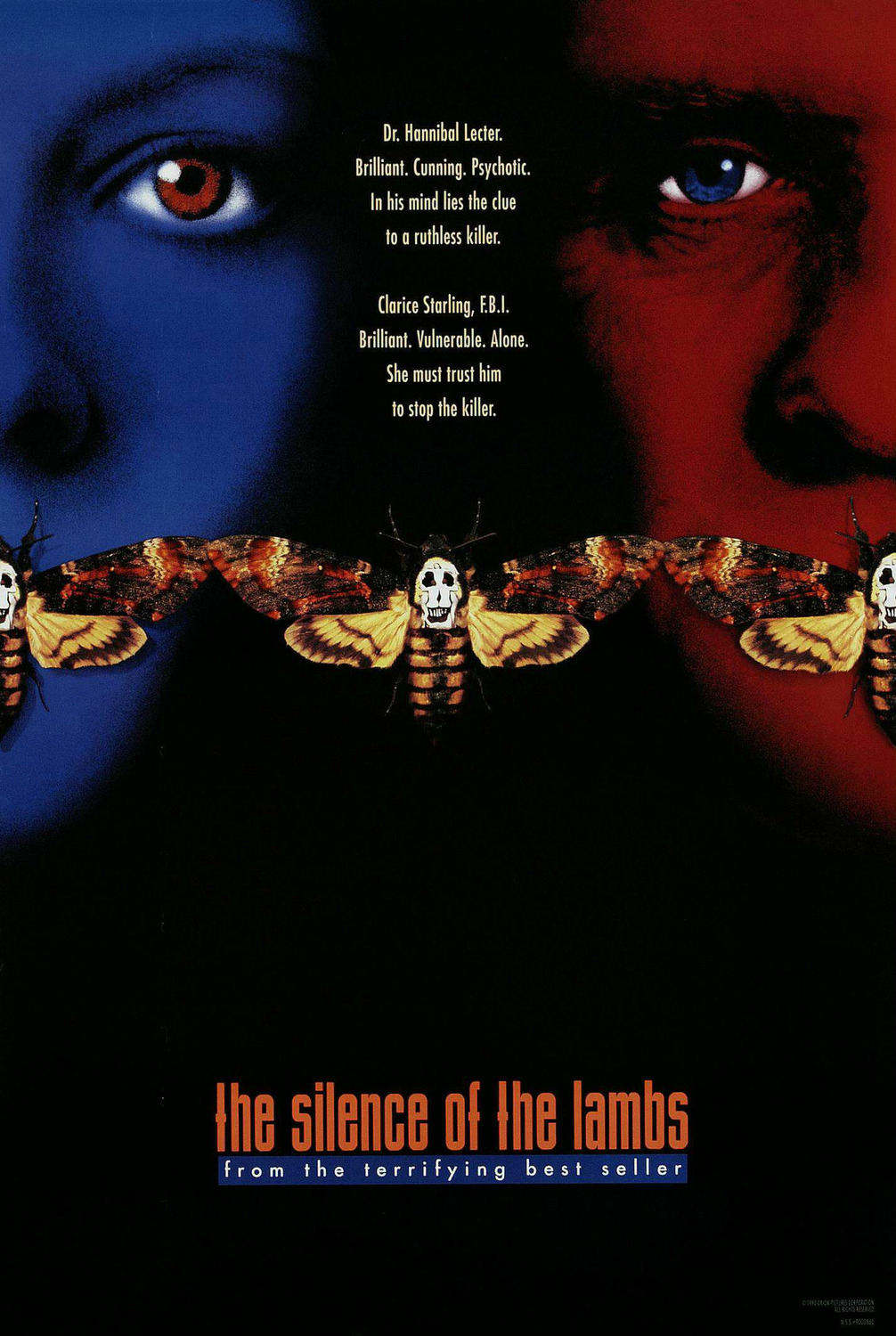
All-Time Favorite Trailers: ‘The Silence of the Lambs’

This teaser trailer for “The Silence of the Lambs” was my introduction to this film, and it immediately grabbed me in a way few trailers do. Back then, the internet had yet to be discovered by me, I only knew Jodie Foster from “The Accused” which she won an Oscar for, and I had no idea who Anthony Hopkins was in the slightest. I should also add that not once in this trailer is there any mention that this adaptation of Thomas Harris’ novel was directed by Jonathan Demme. Had Demme’s name been included here, it would have made me all the more eager to check this film out as “Married to the Mob” and “Something Wild” were still very fresh in my mind.

What I love about this particular trailer is how it gives this film a look which makes it feel like no other cinematic experience that was coming soon to a theater near you. Everything about it was full of darkness, but it was a darkness like no other. With its striking images and shrieking noises, and also Anthony Hopkins staring directly into the camera in a way few other actors could, I felt I was being promised an experience which not be average or cliched in any conceivable way. I also very much prefer it to the main theatrical trailer which, quite frankly, gave far too much of the story away to where I am so very thankful I didn’t see it before I saw this brilliant motion picture on the silver screen at Crow Canyon Cinemas.

For the record, “The Silence of the Lambs” is one of my favorite movies ever, and one which I am happy to revisit quite often. This teaser trailer is also one of my favorites as those who put it together made it clear to audiences that this was a motion picture you would be foolish to miss out on. While the darkness it presented could have frightened many audience members off, not once did it feel like your average slasher flick.

‘Rocky: The Ultimate Knockout Edition’ 4K Review

The following review was written by Ultimate Rabbit correspondent, Tony Farinella.

A little over a year ago, Warner Brothers Home Entertainment released a set which included the first four “Rocky” films along with the director’s cut of “Rocky IV.”  Many fans were dissatisfied with this release and pointed out audio and video issues along with the fact that “Rocky V” and “Rocky Balboa” were not included in the set.  Now, Warner Brothers has released a new edition of the “Rocky” films on 4K in a set entitled “Rocky: The Ultimate Knockout Edition,” and it includes replacement discs for the issues with the first four films and also includes “Rocky V,” “Rocky Balboa” and “Rocky Balboa: The Director’s Cut.” There is also a Blu-ray disc which includes special features for the first four films. I went back and looked at my review from March 2023 for “Rocky: The Knockout Collection,” and I didn’t feel as though the issues were as egregiously bad as other reviewers made them out to be.

With all six of the Rocky films now out on 4K, people are going to be wondering if this set is worth its hefty price tag.  Before I get into all of that, let’s briefly discuss the films.  The original “Rocky,” released in 1976, won Best Picture and put Sylvester Stallone on the map.  It is the ultimate underdog sports movie and a film which is quoted and remembered to this very day.  Even after Stallone is long gone, fans and historians will always remember him as Rocky Balboa.  Of course, he also played John Rambo, but people really connect with Rocky and can even see themselves in the character. It was the right film with the right actor at the right time.

There is much debate and handwringing over the sequels. I love all of the “Rocky” films, warts and all, as they play a part in the story of Rocky Balboa and his ups and downs as a character.  We see him start from nothing, rise, fall, and rise again.  I think you have to appreciate the good, bad and the ugly all of the films as they all serve a specific purpose for this franchise.  Of course, my favorite film will always be the first “Rocky.” After that, I’d probably go with “Rocky II,” “Rocky Balboa,” “Rocky IV,” “Rocky III,” and “Rocky V.”  If you ask me this question in a few months, my answer might change again.

The original “Rocky,” the one which started it all, is about a low-level boxer who is looking for a chance to prove he’s not another bum from the neighborhood.  He mostly takes outlaw fights which make little to no money. One day, Apollo Creed (Carl Weathers) is looking for an opponent in order to sell his next fight.  When he stumbles upon Rocky Balboa, an underdog fighter from Philadelphia, he figures he can use this David vs. Goliath story to sell some tickets and get an easy victory. He ends up getting more than he bargained for from Rocky Balboa, who is feeling the support of his newfound love interest, Adrian (Talia Shire) and her brother Paulie (Burt Young). All he wants is a chance to prove his self-worth.

In “Rocky II,” he needs to prepare for his rematch against Apollo Creed.  Can he defeat Apollo Creed this time, or will Creed destroy him and show that their last fight was simply a fluke? Even though Creed won the first fight by decision, Rocky showed he can last in the ring with the Heavyweight Champion of the World.

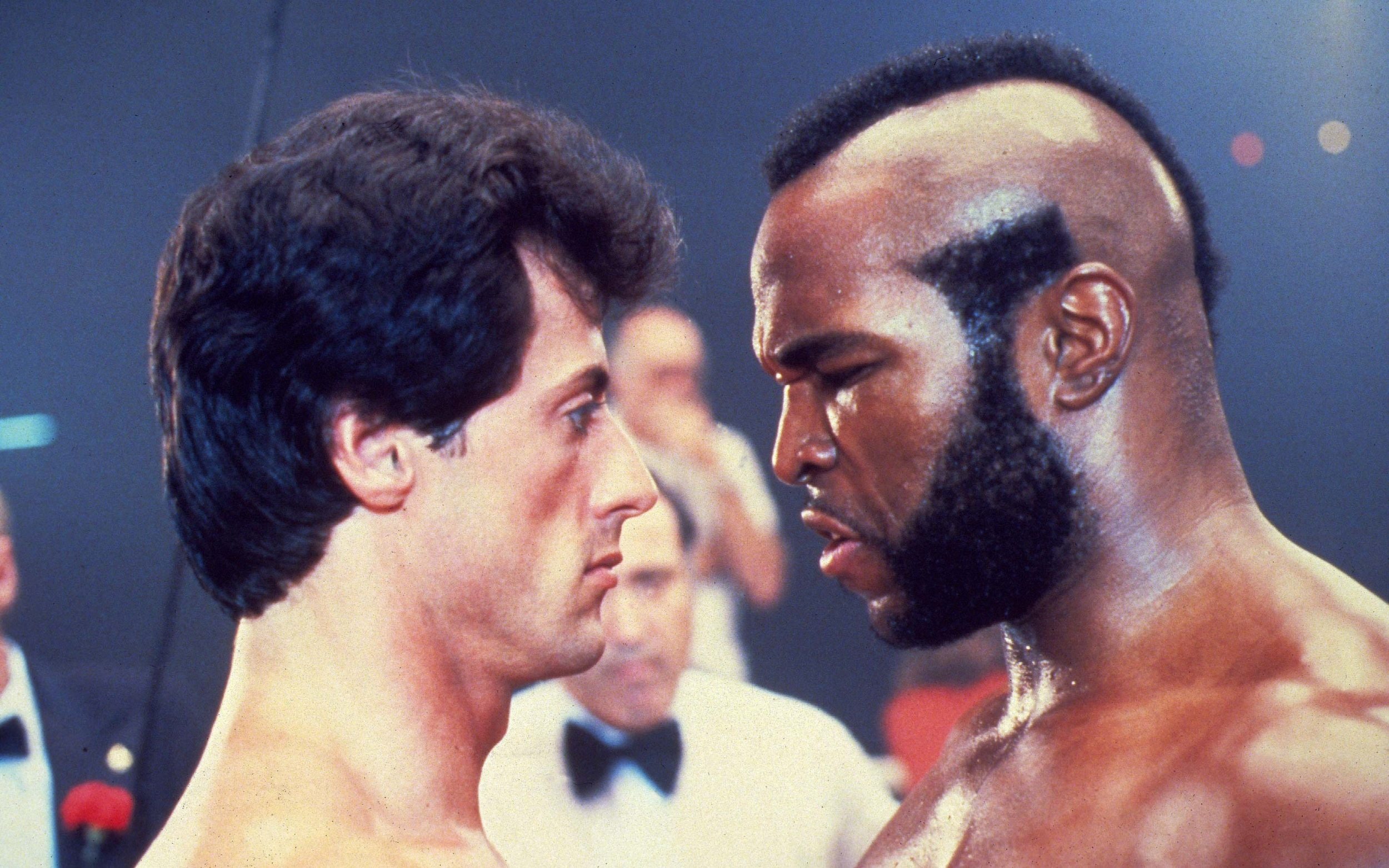
In “Rocky III,” Rocky needs to learn how to handle the biggest obstacle of all: success. How will he deal with money and fame?  He also encounters Clubber Lang, played by Mr. T and Thunderlips, played by Hulk Hogan.

In “Rocky IV,” Ivan Drago (Dolph Lundgren), a menacing Russian, awaits him. I mentioned in my initial review of the first set how I preferred “Rocky IV: Rocky vs. Drago” over the original cut of “Rocky IV.”

In “Rocky V,” he has to get a handle on being a dad and life outside of the ring.

In “Rocky Balboa,” he’s past his prime, old and beaten down, but he’s looking to find an outlet to deal with his pain.

I imagine most people reading this review are familiar with each and every film in the “Rocky” series, so I don’t imagine these are major spoilers. They simply serve as a refresher in case you haven’t seen the films in a while.  You are reading this review to see if this box set is worth the money, as mentioned previously.  The answer is both yes and no.  The 4K transfers are cinematic and an upgrade over the Blu-rays.  The “Rocky” films have never looked or sounded better in any other format.  The audio issues are also cleaned up on all of the films, even though I didn’t really notice them with the last “Rocky” set.  This is all of the “Rocky” films, as the “Creed” films are their own separate entity, even though they are in the “Rocky” universe.

This set is going for about $90 to $110 depending on where you purchase it from, as Gruv.com has it for the cheapest I’ve seen. The discs themselves are great. Warner Brothers fails massively with the packaging of this set.  It comes in a flimsy cardboard slipcover with discs that can be looked through in a flipper case.  These movies are important to me, and they are also important to a lot of film fans out there.  They went cheap with the packaging, as the cardboard slipcover is not a thick and sturdy box that can protect the films or the case.  The discs are also stuck in a flipper case which shows a lot of off-gassing, which is this greasy substance that is really difficult to remove from the back of the disc holders.

Overall, I enjoyed watching the films on 4K, and I’m happy Warner Brothers decided to release this “Ultimate Knockout Edition” of all of the “Rocky films.  At its price point, however, I would expect a lot more on the packaging side of things.  The packaging and the case are truly a mess, and it makes it hard to fully enjoy this set.  As a collector, we buy movies for the movies and also the packaging. We are not simply buying the discs of these films.  I wish they would have shown a little tender loving care to this set.  They should have released these in individual cases in a sturdy box set which holds them all together.

Ratings:

“Rocky”: * * * * out of * * * *

“Rocky II”: * * * ½ out of * * * *

“Rocky III”: * * ½ out of * * * *

“Rocky IV”: * * * out of * * * *

“Rocky IV: Rocky vs Drago – The Ultimate Director’s Cut”: * * * ½ out of * * * *

“Rocky V”: * * out of * * * *

“Rocky Balboa”: * * * ½ out of * * * *

“Rocky Balboa: Director’s Cut”: * * * out of * * * *

Video Info:  All of the films are released on Dolby Vision, which leads to some very impressive looking visuals. The best-looking films in this set, in order, are “Rocky V,” “Rocky II,” “Rocky IV: Rocky vs. Drago,” “Rocky IV,” “Rocky,” “Rocky III,” “Rocky Balboa” and “Rocky Balboa: The Director’s Cut.”  It was a bit of a surprise to me that “Rocky Balboa” was the weakest link out of all these films from a visual standpoint. It was the film I was most excited to see upgraded to 4K, but it looks rather bland and vanilla. This is probably because they put both versions of this film on one 4K, which is asking a lot out of one disc, although it didn’t affect both versions of “Rocky IV” for some reason.  It’s surprising to see that the worst film in the “Rocky” franchise, “Rocky V,” is the best-looking one out of the bunch.

Audio Info:  All of the audio issues are fixed here from the previous release, but once again, I didn’t notice a big difference the last time they released these films on 4K. I know that Warner Brothers made sure to correct the issues from the last release based on what I’ve read online.  You don’t have to worry about a disc replacement program with any of the audio tracks here. None of the films come with Dolby Atmos, which is a bit of a bummer, as the Rocky films seem perfect for Dolby Atmos.  The audio is still really good, but this would have given it that extra boost.

Special Features:

“Rocky”

• Audio Commentary with director John Avildsen and producers Irwin Winkler and Robert Chartoff, Talia Shire, Carl Weathers, Burt Young, and Garrett Brown

• Audio Commentary with Lou Duva and Bert Sugar

• Audio Commentary with Sylvester Stallone

“Rocky Balboa”

• Audio Commentary with Writer/Director Sylvester Stallone

• Deleted Scenes

• Skill vs. Will: The Making of Rocky Balboa

• Reality in the Ring: Filming Rocky’s Final Fight

• Virtual Champion: Creating the Computer Fighter

• Fight Makeup

“Rocky” Bonus Disc

• 8MM Home Movies of Rocky

• 3 Rounds with Lou Duva

• Steadicam: Then and Now with Garrett Brown

• Make-Up! The Art and Form with Michael Westmore

• Staccato: A Composer’s Notebook with Bill Conti

• The Ring of Truth

• A Tribute to Burgess Meredith

• Stallone Meets Rocky

• The Making of “Rocky vs. Drago”: Keep Punching

• Trailers

Should You Buy It?

I don’t think Warner Brothers is going to release ANOTHER “Rocky” set, so I would say buy it, but I would wait until it goes on sale.  As of right now, the price is way too high considering the packaging on this set and the lack of original special features. My feeling is this—if you are going to release a set like this, which is near and dear to so many people’s hearts, why not release it the right way and take your time? I would have loaded it up with as many special features as possible and spent a little more money on better packaging and a better case.  The films, for the most part, look good and the audio is solid.  I’m not trying to sound picky here or look a gift horse in the mouth, but this set should cost $60 and not $90 to $110, considering how they threw it all together in this packaging.  You will enjoy the films, which is the most important part, but a little quality control would have gone a long way.  This “Rocky” set on 4K does come recommended, but I recommend you wait for it to go on sale and not rush out and buy it right away.

**Disclaimer** I received a copy of this film from Warner Brothers to review for free.  The opinions and statements in the review are mine and mine alone.
‘The Departed’ Movie and 4K Review

The following review was written by Ultimate Rabbit correspondent, Tony Farinella.

When it comes to filmmaking, Martin Scorsese is not known for his brevity.  His films are lengthy and complex. However, because there are so many moving parts that are interesting and layered, it rarely feels like a slog to sit through them.  He also makes sure to assemble an all-star cast of some of the best actors in Hollywood so, as an audience, we are glued to the screen with each and every performance. It’s so hard to pick a favorite Scorsese film, as he’s trying to achieve something different and unique with each one.  From an entertainment standpoint, however, I think “The Departed” might be the most thrilling movie he’s ever made.  It was also the film which earned him his first and only Best Director and Best Picture Academy Award.

“The Departed” is initially set in 1980’s Boston and introduces us to a series of seedy and underhanded characters.  The local Mob boss is named Frank Costello, played by Jack Nicholson. He befriends a young Colin Sullivan and buys him groceries, as he knows he comes from a struggling family.  Fast forward to present day in the film, and Colin (Matt Damon) is now working on the inside for the Massachusetts State Police in their Special Investigation Unit.  Frank is still the leader of the Mob, but he has even more power because he knows Colin will keep him in the loop when the police get too close to him.

Billy Costigan (Leonardo DiCaprio), a police academy recruit, is brought in to meet Captain Queenan and Sergeant Dignam, played respectively by Martin Sheen and Mark Wahlberg. Considering Billy’s family has a criminal record a mile along, they think he’s the perfect mole to go undercover and bring Frank down once and for all. In order for Billy to gain the trust of Frank, he needs to serve some time in prison and also commit some crimes with the help of his cousin, so his cover isn’t blown.  However, Billy is starting to feel as though he’s living a double life and his mental health is suffering.  This is when he meets Madolyn (Vera Farmiga), a police psychiatrist who is also currently dating Colin Sullivan.  Needless to say, this is a messy and tricky situation for all parties involved.

The beauty of “The Departed” is that it keeps you guessing all the way until the finale. There are a lot of different characters and pieces of the puzzle here, but the film never feels overplotted or too complicated.  It’s very engaging, well-paced and highly entertaining.  As an audience member, it takes you on quite a ride from start-to-finish. Scorsese also takes his time in developing his characters, and he trusts his actors to put their own personal touches on their performances.  There are so many standout performances here to choose from, but Nicholson and DiCaprio in particular are remarkable.  Nicholson brings an unhinged charisma to his role as the mob boss while DiCaprio is tortured and powerful in his performance.  As the old adage goes, “Do Your Job.” Everyone in this film knows how to do their job, and Scorsese gives them the platform to do their jobs to the best of their abilities.

The screenplay, which was written by William Monahan, is also able to keep the audience engaged and thrilled without ever feeling too gimmicky or implausible.  These are well-written characters that are looking to stay alive and pull the wool over the eyes of those looking to bring them down.  They have to stay one step ahead of the audience and also one step ahead of the characters in the film.  “The Departed” is also a remake of the Hong Kong Film, “Infernal Affairs,” which I own as part of the Criterion Collection. I have yet to see that one, but I definitely need to check it out after having seen “The Departed” numerous times.

All in all, “The Departed” shows Scorsese at his best in a world he has inhibited many times in the past.  This time, though, he has new players to work with.  Of course, we are familiar with the Martin Scorsese/Robert De Niro films of the past such as “Casino” and “Goodfellas,” but it’s great to see him working with Nicholson for the first and only time along with Damon, Mark Wahlberg, and Alec Baldwin. Of course, his collaborations with DiCaprio have become legendary, but this was in the early stages of their working relationship, and you can see why they work so well together.

Screenshot

Hollywood has always had a fascination with crime movies and the characters who inhabit that world. Scorsese knows this world very well and how to make it accessible and fun for mainstream audiences. If I had to choose, my favorite Scorsese movies are “Raging Bull,” “The King of Comedy,” and “Taxi Driver.”  However, as stated earlier, if you are talking about pure entertainment value and pure fun, it’s hard to deny the power of “The Departed.” Even eighteen years later, this film still captivates and engages with its words, its story, and its players.   It only gets better and better with age. If you are seeing it for the first-time, you are in for a real treat.

* * * * out of * * * *

4K Info: “The Departed” is being released on a single disc 4K from Warner Brothers Home Entertainment.  There is also a steelbook version of the film as well.  Whether you pick up the steelbook or the 4K slipcover, you can’t go wrong with either copy of “The Departed.”  It also comes with a digital copy of the film. It has a running time of 151 minutes and is rated R for strong brutal violence, pervasive language, some strong sexual content and drug material.

Video Info: This is a gritty looking 4K that is able to keep the dark and moody look of Boston and its seedy characters alive while also cleaning up the dirt and artifacts to make it look sharp and vivid.  This is a solid 4K transfer. The HDR is a big improvement from the Blu-ray.

Audio Info:  I would have liked a Dolby Atmos soundtrack on this 4K release, but as it stands, this is still a powerful audio transfer. At times, the music and the action scenes can be a little too loud as the dialogue is more leveled, but that’s a minor issue.

Special Features:

Guilt and Betrayal: Looking into The Departed (new)

Stranger than Fiction: The True Story of Whitey Bulger, Southie, and The Departed

Crossing Criminal Cultures

9 Deleted Scenes with introductions by Martin Scorsese

Should You Buy It?

When great films, Academy Award winning films at that, are available on 4K, you have to buy and add them to your collection, if you are a film collector.  It is the only way studios are going to keep releasing these films on physical media. Now, more than ever, with more and more brick-and-mortar stores getting rid of physical media altogether, we have to purchase these films and add them to our collection.  “The Departed” looks really, really sharp on 4K.  There are the previously released special features from the Blu-ray along with a new special feature as well. This is a great film from the legendary Martin Scorsese being released in the best format possible to watch movies.  This is a no-brainer in my book.  You can’t go wrong with either the steelbook or the slipcover version of this film on 4K. This 4K of “The Departed” comes highly recommended!

**Disclaimer** I received a copy of this film from Warner Brothers to review for free.  The opinions and statements in the review are mine and mine alone.
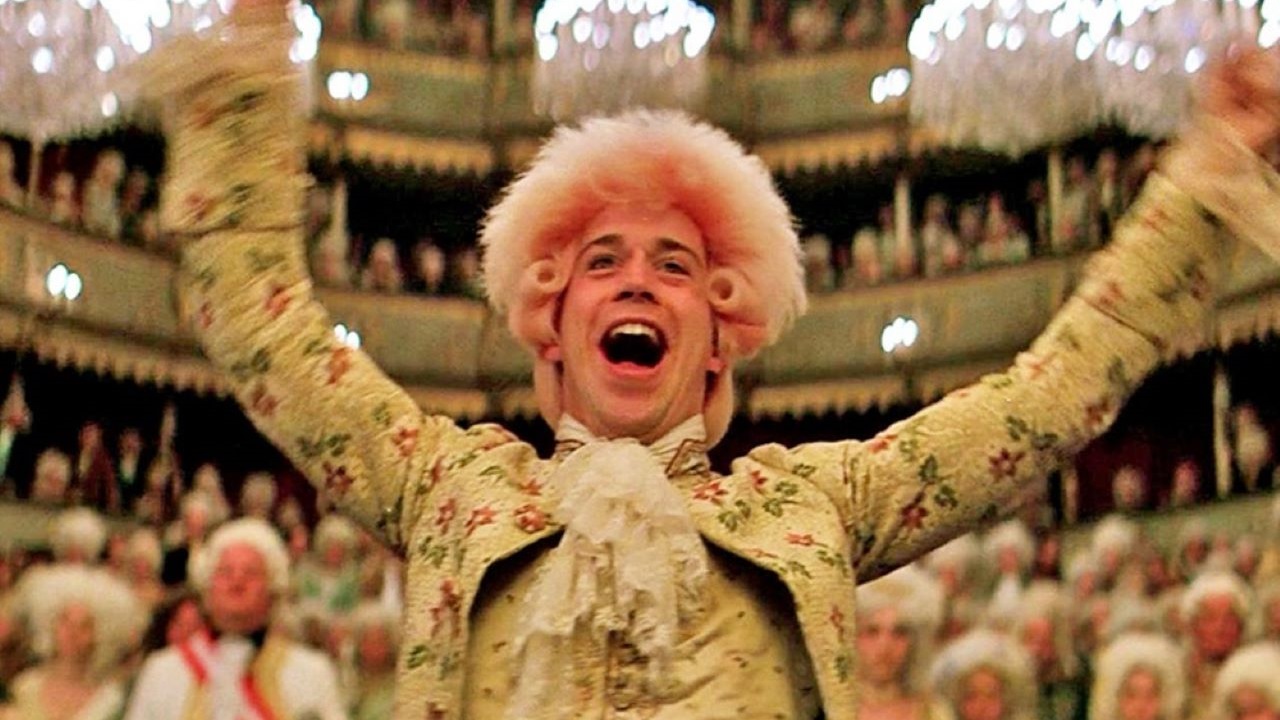
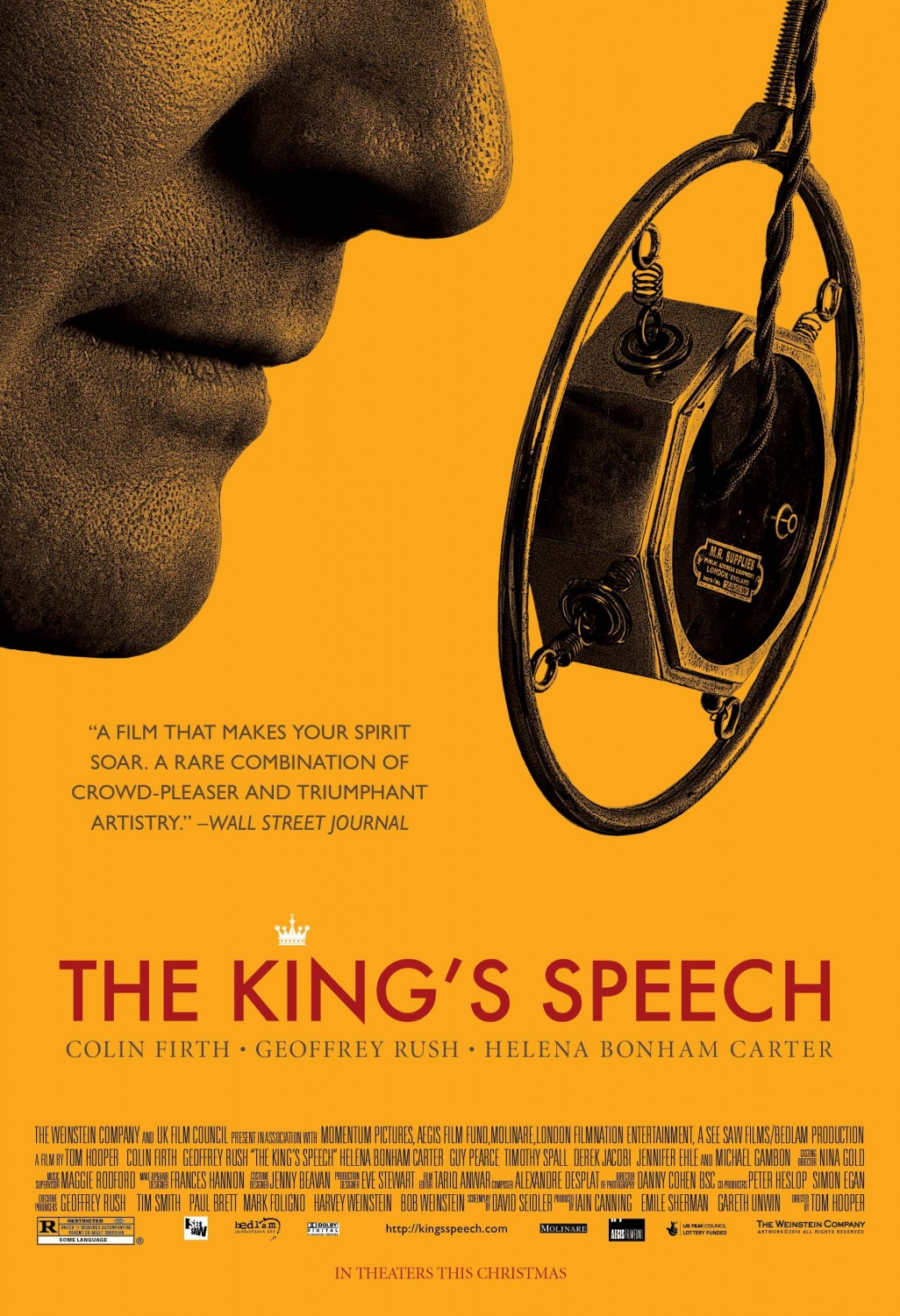
‘The King’s Speech’ – Best Picture Winner at the 83rd Academy Awards

Many will probably look at “The King’s Speech” as one of those snobby British art movies, but this of course will say so much more about its so-called critics than anything else. The story of a man who, it is said, “bloody well stammers” and works to overcome this affliction which keeps him from completing sentences let alone a whole speech sounds more like one of those formula movies where we watch a human being triumph over personal obstacles with the help of a mentor. Then again, not many of those movies are about King George VI, and with this being “based on a true story,” it all adds more dramatic heft to this particular story even as I continually tire of that overused phrase.

Formulaic or not, “The King’s Speech” is a magnificent film which takes hat seems like an easy to overcome problem (or so others might think) and turns it into compelling cinema. This is in large part thanks to a wonderful cast that includes Colin Firth, Geoffrey Rush, and Helena Bonham Carter. There’s nary a single weak performance to be found here, and this was one of the best acted films of 2010.

Seriously, I bow down to Firth after watching him here. That he gives a brilliant performance is no surprise as he has had an amazing career to date, but this particular role seems all the more difficult for him or anyone else to pull off. Mastering the technical part of it and making the stammering seem utterly believable must have been a job unto itself. How do you get an audience to suspend disbelief and get them to believe you are seriously afflicted with such a seriously irritating impediment?

Now other actors would probably try to master the stammer to where they are not thinking about it. But with Firth, he digs deep into the role to get at who King George VI was as a person and what has affected him emotionally. That he gets at the heart of this character and creates such a vivid portrait of a leader many do not know much about is what makes his performance so damn good. As for the technical aspects of the role, I am guessing Firth saw this as secondary, but it should go without saying that he perfects the stammer from start to finish.

Then there is Geoffrey Rush who also served as one of this film’s producers. As Lionel Logue, the King’s speech therapist, he serves as the Mr. Myagi of “The King’s Speech.” Lionel gets the King to do a variety of exercises which are as physical as they are vocal, but his biggest challenge is in getting George to exorcise the personal problems which affect him and his speech more than anything else. All the tongue twisters and warm ups won’t do a thing until the King confronts the emotional scars which he has endured up to this point in life.

Ever since his Oscar winning turn in “Shine,” Rush has been one of the most entertaining actors in movies. I don’t know if it is his deep voice or incredibly dry wit, but he’s never boring in any film he’s in. Whether it’s as the Queen’s servant in “Elizabeth” or Jack Sparrow’s foe in the “Pirates of The Caribbean” movies, Rush has remained such a fascinating presence in one performance after another. Sometimes all it takes is a look or a move from him to get a big response from the audience, and it was a big audience when I saw “The King’s Speech” at a nearby theater. Seriously, seeing him strike a pose in a chair Lionel has no business sitting in is enough to get a big laugh, and that is saying a lot?

When it comes to Helena Bonham Carter, just how many great performances has she given us? It still does not feel all that long since she appeared in “A Room with A View,” and that film was made back in 1985. Still, she glides effortlessly from role to role, and it truly is impossible to pigeonhole her. Whether it is “Fight Club” or Tim Burton’s disappointing remake of “Alice in Wonderland,” she has proven capable of playing any role given to her with relative ease, and not many can pull this off these days.

As the King’s wife, Queen Elizabeth, Carter is sublime throughout. She makes Elizabeth both empathetic to her husband’s problems and very strong in the role which is suddenly thrust upon her. Her performance here is actually quite subtle, and you never really catch her acting. Seeing her interact with “commoners” is a delight as she comes off as professional but very polite and never snobby. I keep talking about actors who inhabit roles more than play them and Carter proves to be one of them here.

There are also other great performances to take note of as well in “The King’s Speech.” I was surprised to see Guy Pearce on board as George’s brother, King Edward VIII, whose passion for another overcomes his royal responsibilities. Derek Jacobi shows up as Cosmo Gordon Lang, the Archbishop of Canterbury, whose advisements to the King perhaps go a bit further than they need to. I almost did not recognize Michael Gambon as King George V, his booming voice covered up by a face which is very un-Dumbledore like. Claire Bloom also is wonderful as Queen Mary, and she is also another one of those actors you never catch acting. And then you have Timothy Spall who plays the famous British Prime Minister Winston Churchill almost as well as I did back in junior high school.

The cast of this movie, when you look at it, is a roster of those British actors who were not cast in a “Harry Potter” movie, and those who had somehow managed to find a break in between those movies to pop in for a performance here.

Seriously though, the story does have that setup of a person who asks for help from a “wise old man” and then keeps coming and quitting on him before coming back again for more lessons. But director Tom Hooper and screenwriter David Seidler keep it from ever becoming a routine film, and their attention to historical accuracy throughout is very commendable. Adding to this is the chemistry of the actors who interact with each other so well. I also have to say that the process of a man giving a speech to an entire nation has never seemed so exciting before I watched this film. “The King’s Speech” may not be an action thriller per say, but the last half had me on the edge of my seat.

Hooper brilliantly sets up the tension between King George VI and his audience right from the start. As we watch George at a local race, stumbling over a speech he is forced to give, Hooper really puts us into the mindset of someone with a serious problem of speaking in front of others. We are made to feel the way Firth’s character does, and we immediately sympathize with what he is going through. That scene hangs over our heads and the main characters all the way to the end to when, I guess you could say, George has his “Rocky” moment.

“The King’s Speech” was more than deserving of the accolades which were bestowed upon it back in 2010. While “The Social Network” would have been my choice for Best Picture at the 83rd Annual Academy Awards, there is no denying just how well made Hooper’s film was, and it still holds up to this very day.

* * * * out of * * * *

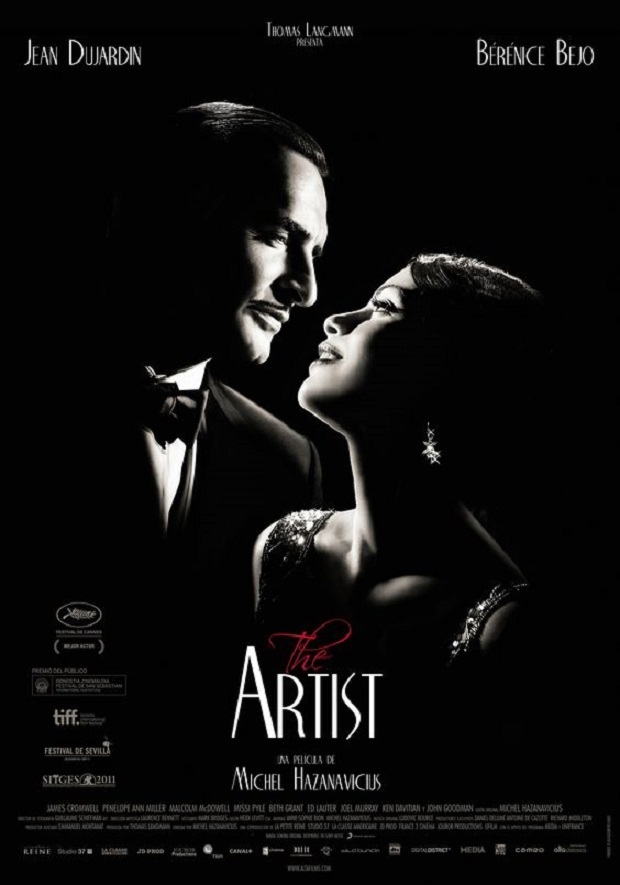
‘The Artist’ – Best Picture Winner at the 84th Academy Awards

Believe it or not, “The Artist” is only the second silent film in cinematic history to win Best Picture at the Academy Awards. The first was “Wings” which itself was the first film to win this particular award. I figured there were several other silent films which took home this award, but I guess the Oscars came about as the movie business was quickly transitioning to what was once called “talkies” when these awards began.

Looking back at “The Artist,” I have to admit it was nice to see a filmmaker reach back to a time when the movie industry was in its infancy, just like what Martin Scorsese did with “Hugo.” But while “The Artist” does not quite reach the same level of greatness that “Hugo” did, it still proves to be a compelling motion picture with great performances, a powerful story, and it serves as a reminder of how great black and white can be for certain motion pictures.

The story told here is one which has been told a million times before. George Valentin (Jean Dujardin) is a silent film star who sees his great career suddenly crash to the ground when sound is introduced into motion pictures. George initially resists this change, feeling that it is a fad which will pass by quickly before anyone knows it. Of course, we all know this is not going to be the case as change is in the air and there is no stopping it.

As George finds his career ruined by this advancement in film and technology, another actress he once befriended named Peppy Miller (Bérénice Bejo) embraces this technological change and sees her star rise to the heavens as a result. She has gotten great and truly genuine advice from George in how to make her mark as an actress, and she forever holds a special place in her heart for him. So, it comes to deeply hurt her seeing his career fall apart after what he has done for her, and then we see things for him get even more difficult with the 1929 stock-market crash. Will Peppy save George and help him make a comeback?

That the plot of “The Artist” is such an old one ended up taking away from the overall experience for me a bit as I knew where it was heading and that everything would eventually be alright. All I could hope for was that the director and actors would keep things interesting so that I was not thinking about the outcome too much. This is where this movie succeeds because the performances are so rich and the direction is nothing short of excellent to where I was caught up in the moment to where I started watching and stopped thinking so much.

Jean Dujardin looks like he walked right out of a 1920’s silent film here, and he was clearly born to play George Valentin. In doing a movie within a movie, he manages to balance out both Valentin the star and Valentin the man. Much of the acting in silent films involved a lot of mugging, and its great fun to watch Dujardin getting ready to shoot a scene as he makes clear how much he is playing for the camera. But when Valentin is not making a movie, Dujardin’s performance becomes all the more remarkable as he expresses emotions he is not in a position to verbalize onscreen or off of it.

This is the thing about screen acting; the most powerful moments in a movie can come from just one look from an actor. Being able to make clear what a character is thinking without saying it out loud is the biggest challenge, and the actors in “The Artist” have to work even harder because words will not save them, especially even when certain dialogue is put on the screen for all to see. That they do succeed in drawing us in emotionally with little in the way of sound or dialogue is a true testament to their talents.

Matching Dujardin scene for scene is Bejo who plays rising film star Peppy Miller. She is a joy to behold and an infinitely appealing presence here, and that smile of hers lit up my heart in a way few things can. Seeing Peppy rise to the level of a movie star is endless fun, but Bejo also keeps her a likable character even when success threatens to spoil her rotten. This made me like Peppy all the more as a result.

There is a slew of other great performances to be found in “The Artist” which does not have a weak one to be found in its entire cast. John Goodman looks like he’s having a marvelous time channeling his “Matinee” character for the role of studio boss Al Zimmer. James Cromwell is very touching as Valentin’s loyal butler Clifton as he becomes the conscience this fallen movie star needs to hear out. It is also great to see Penelope Ann Miller here as Valentin’s wife, Doris, a character who does not seem to be the least bit satisfied with this marriage.

But the one who upstages everyone here is Uggie who portrays George’s ever so faithful Jack Russell terrier named Jack. Uggie reminded me of Mike the Dog who stole many scenes in “Down and Out in Beverly Hills” from his human co-stars and, like Mike, he becomes as big a character as everyone else here. That he is able to convey certain emotions to where he gets a police officer to save his owner from certain death is amazing. His performance topped off what had been a great year for dogs at the movies along with another named “Beginners.” Isn’t it about time the Academy Awards gave animals special Oscars for their work onscreen?

Director Michel Hazanavicius stays very true to the way silent films were shot back in the day, and his extensive research of them certainly shows from start to finish. He makes “The Artist” look like it really came from the 1920’s as he transports you back in time to this specific cinematic period. He is also served well by a beautiful film score by Ludovic Bource which heightens the already strong emotions to great effect, and by cinematographer Guillaume Schiffman who gives “The Artist” a striking look which does not betray any of today’s technological advances which could have been used here.

Having said all this, “The Artist” would not have been my choice for Best Picture at the 84th Academy Awards (my pick was “The Tree of Life”). Plus, with such a familiar story, it feels like we are getting hit here by a case of deja vu. Regardless, it is still a fantastic piece of filmmaking which you owe it to yourself to watch if you have not already. Along with “Hugo,” many may look at 2011 as the year movies reached back in time to remind us of what a magical experience they were when they first came to exist.

* * * ½ out of * * * *

‘Casablanca’ Movie and 4K/Blu-ray Review

The following review was written by Ultimate Rabbit correspondent, Tony Farinella.

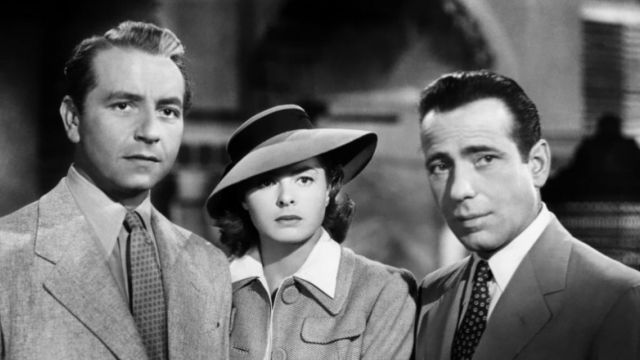
Casablanca” is a film which conjures up an immediate reaction from film fans whenever they hear the title.  It’s right up there with “Citizen Kane” as one of those films which film buffs and historians consider one of the greatest movies ever made.  There are many reasons for this, but the biggest reason is the love story between Humphrey Bogart and Ingrid Bergman.  There is also the dialogue and the many quotable lines which come to mind when thinking of this film.  I won’t be repetitive here and list all of them for you, but if you have seen “Casablanca,” you know the lines by heart.  It’s one of those films which means a lot to a great deal of people and for good reason.

Set in 1941, the film introduces the audience to Rick Blaine (Humphrey Bogart), the owner of the nightclub Rick’s Café Américain. He refuses to have drinks with any of the customers and mostly keeps to himself.  The audience can tell he’s cynical, unhappy, and something has happened to him to cause him to lose a big part of himself. He tends to stay neutral on almost every topic.  Even though he’s cynical, he’s still a good guy with a good heart.  His world gets turned upside down when his old flame, Ilsa Lund (Ingrid Bergman), shows up with her husband, Victor Laszlo (Paul Henreid), as he’s seeking protection from German Major Strasser (Conrad Veidt) who intends to arrest him.

Victor Laszlo is a fugitive Czech Resistance leader. Rick’s Café serves as a place for all sorts of types, good and bad, because of World War II.  A lot of people there are looking to keep a low profile while others are looking to find someone to arrest.  Rick has some war experience himself, but now he’s focused on his nightclub.  He starts to become very focused on Ilsa when he catches up with her again, and it’s clear there are still strong feelings between the two.  They were in love back in Paris, but when it was time to leave, she just left him hanging with a note that left him with more questions than answers.

Rick has letters of transit, which allow two individuals to get out of Casablanca safe and sound and start over without any consequences. Rick can give the letters to Ilsa, but that also means he will be giving her up as well.  Again, even though he stays neutral on most topics, he can tell the good guys from the bad guys.  He’s not afraid to lend a helping hand to someone in need. However, if he helps her and Victor out, he knows he will never see the love of his life ever again.  That was the beauty of some of the old Hollywood films: the romance felt urgent and very important.  It never felt frivolous or silly.  You can tell that two people really loved each other, and it made a huge impact on their lives.

“Casablanca” is an old-fashioned Hollywood classic in every sense of the word.  You have the black and white picture, the classic romance, and the big stars. You also have great supporting work from actors like Claude Rains, Sydney Greenstreet, and Paul Henreid.  It all feels vital and like it serves a purpose.  It’s old-fashioned Hollywood craftsmanship at its finest.  The story with the war can sometimes bog the film down a little bit, but it’s there to push the love story between the two leads.  They are the heart and soul of this beautiful picture.  Like fine wine, this is the kind of film which gets better with age.  Even if you have seen it multiple times and know how it’s going to end, you still can’t help but get swept up in the story.  “Casablanca” is the kind of movie Hollywood doesn’t make anymore, but I wish they did.

This is Bogart’s best performance in his storied career.  He has a certain vulnerability to him we don’t often get to see on film.  He’s also an everyman in this film, and it’s great to see him connecting with his black piano player, Sam (Dooley Wilson).  He respects people and does the right thing, but it doesn’t feel forced. It’s a completely natural performance. It’s not a big or showy performance, and it doesn’t need to be as we see everything in his face: all of the pain and the agony. Bergman is sweet, tough and very, very smart.  She’s the perfect actress to go toe-to-toe with Bogart in this film.  She looks absolutely stunning and gorgeous on screen.

I was sucked into “Casablanca” from start-to-finish, like I am every single time I watch it.  Even though I know how it’s going to end, I’m still on the edge of my seat when they get to the final scene.  The last line of dialogue is iconic and the perfect note to end this film on as well.  I’m a huge fan of old Hollywood when stars were stars, and they could light up the screen with their presence. It should also be noted that “Casablanca” won Best Picture in 1942 along with Best Director (Michael Curtiz) and Best Screenplay. This is Classic Hollywood at its finest!

* * * * out of * * * *

4K/Blu-ray Info: “Casablanca” is released on a two-disc 4K/Blu-ray combo pack from Warner Brothers Home Entertainment. It also comes with a digital copy of the film as well.  It has a running time of 102 minutes and is rated PG for mild violence.

4K Video Info: “Casablanca” looks pretty good on 4K.  The black and white and older films in particular play pretty well with light and darkness on HDR.  It’s not a fantastic upgrade, but I don’t know how much more they could have done to really upgrade a film from the 40’s. It’s better than the Blu-ray, but it’s not a huge improvement.

Audio Info: The audio for the film comes on DTS-HD MA: English 1.0, and Dolby Digital: French and Spanish.  It also comes with subtitles in English, French, and Spanish.  There isn’t a huge upgrade on the audio here, but it still sounds pretty solid.  I don’t really think this is the kind of film which needed a huge audio upgrade.

Special Features:

Commentary by Roger Ebert

Commentary by Rudy Behlmer

Introduction by Lauren Bacall

Warner Night at the Movies

Now, Voyager trailer

Newsreel

“Vaudeville Days” (1942 WB short)

“The Bird Came C.O.D.” (1942 WB cartoon)

“The Squawkin’ Hawk” (1942 WB cartoon)

“The Dover Boys at Pimento University” (1942 WB cartoon)

“Great Performances: Bacall on Bogart” (1988 PBS special)

Michael Curtiz: The Greatest Director You’ve Never Heard Of

Casablanca: An Unlikely Classic

You Must Remember This: A Tribute to “Casablanca” (1992 TEC documentary)

As Time Goes By: The Children Remember

Deleted Scenes

Outtakes

“Who Holds Tomorrow?” (1955 “Casablanca” TV episode)

“Carrotblanca” (1955 WB Cartoon)

Scoring Stage Sessions (audio only)

Lady Esther Screen Guild Theater Radio Broadcast – 4/26/43 (audio only)

Vox Pop Radio Broadcast – 11/19/47 (audio only)

Trailers

I can’t get too upset over the lack of updated special features, as they transported a ton of special features from previous releases. The fact you get two commentary tracks, especially one with Roger Ebert, is quite a treat.  There are A LOT of special features here.  This one is pretty simple for film buffs and physical media collectors out there—if you love classic Hollywood, you owe it to yourself to pick up this film on 4K and watch it in the best possible format.  As mentioned previously, it’s an upgrade over the Blu-Ray, even if it’s not a massive upgrade.  Nonetheless, this is a film you should add to your collection on day one with the slipcover. Personally speaking, I love a good slipcover on my favorite films, and if you want the slipcover, it’s always better to buy it sooner rather than later. This will make the film lover in your life very happy this holiday season!

**Disclaimer** I received a copy of this film from Warner Brothers to review for free.  The opinions and statements in the review are mine and mine alone.
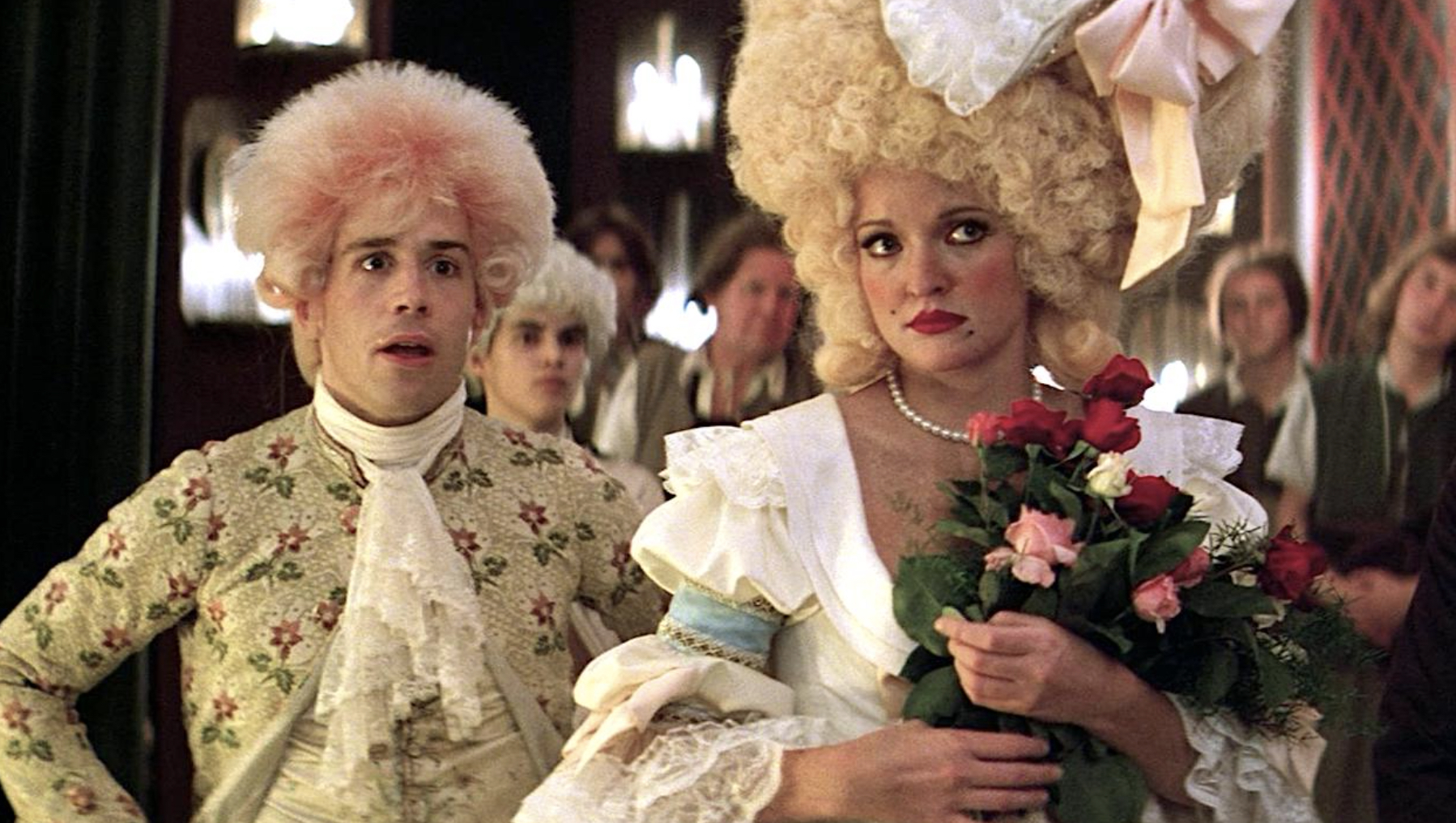
‘No Country for Old Men’ was the Best Movie of 2007

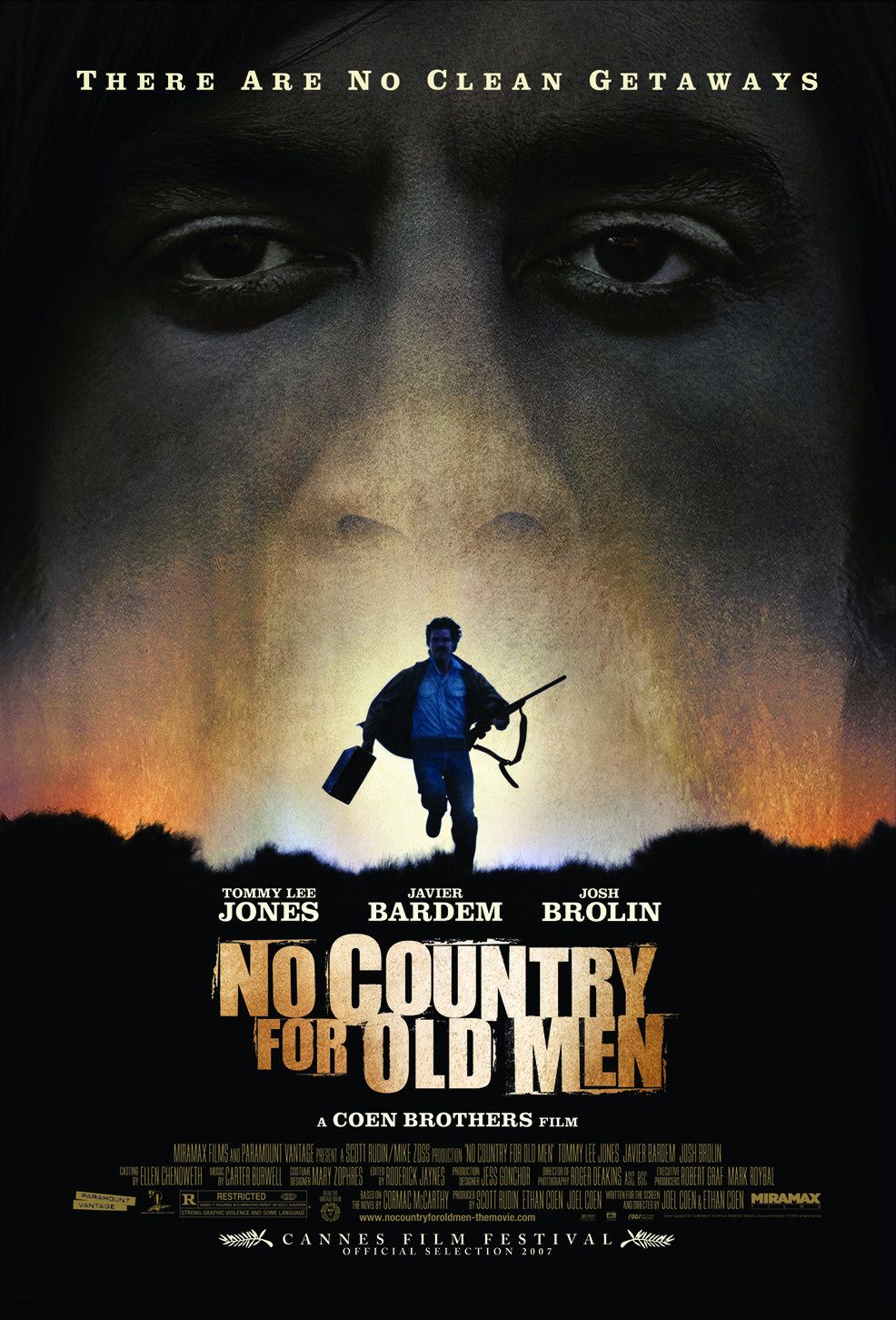
No Country for Old Men poster

WRITER’S NOTE: This review was written back in 2007.

Now this is a great movie!

No Country for Old Man” stands alongside some of Joel and Ethan Coen’s best movies including “Fargo” and “Barton Fink.” Some say it is a return to form for the brothers after their last two movies, “Intolerable Cruelty” and “The Ladykillers,” but they can’t be as bad as people say they are. Even the worst Coen brothers’ movies are far more interesting than most American movies made today. The one thing “No Country for Old Men” proves is they never lost their touch to begin with, and who are we to think that they ever did? I mean really!

This movie is based on the novel by Pulitzer Prize winning author Cormac McCarthy, and he has written a lot of great novels over the years like “All the Pretty Horses.” I have not had the opportunity to read any of his books, but my understanding is they deal with a world where the goodness of human nature is a rarity as the atmosphere is overwhelmed by cruelty. His books have also been described as “unfilmable” by many, but I guess no one told the Coen brothers this (would it have made a difference?).

It all starts off with hunter Llewelyn Moss (Josh Brolin) who stumbles upon a Mexican standoff gone bad where rotting corpses of drug runners and dogs are impossible to ignore (think of the ending of “Reservoir Dogs”). There are also a bunch of trucks laying around, and in them Llewelyn finds the only survivor who begs him for some water. But Llewelyn ends up passively avoiding his pleas as he has no water to give. Instead, he finds among the carnage a big stockpile of heroin and $2 million dollars in cash. He doesn’t bother with the drugs, but he takes the cash and stashes it back at his trailer home where he lives with his wife Carla (Kelly MacDonald).

His conscience, however, keeps him from getting any sleep, so he ends up doing what even he openly says may be “the biggest mistake” he could possibly make. He fills up a bottle of water and heads back to the site to give to that Mexican. Instead, he gets ambushed by a faceless gang who take their shots at him as he escapes away. From then on, the movie is a chase to the finish. But this isn’t simply a chase movie, but a movie where the souls of the characters threaten to be every bit as barren as the desert lands in Texas.

“No Country for Old Men” is one of those movies where everything you hear about it is absolutely true. It has great acting, directing, cinematography and a superb screenplay. There isn’t a single wasted moment in it, and it is certainly one of the most quietly intense movies I have seen in some time. I think it is safe to say the Coen brothers have faithfully adapted Cormac McCarthy’s work while adding their own flavor and dark humor to it, and they drive away at one of his main themes in the book; society getting crueler, and of the end of the world as we know it.

In a sea of great performances, the one man who steals the show here is Javier Bardem who portrays Anton Chigurh, a man who is deeply psychotic but not without principles. From start to finish, Bardem gives us one of the scariest villains in cinematic history whose mere presence forces the characters to immediately fear for their safety. Those other characters who fail to do so are either totally naïve or have no idea who they are talking to.

Josh Brolin is having one heck of a great year right now in the movies. He started 2007 off early on as Dr. Block in “Grindhouse,” then we saw him play a very corrupt cop who runs afoul of Denzel Washington in “American Gangster,” and he is probably in another movie right now which I have yet to see. Safe to say, this is the best performance he has given this year as he is perfectly cast as Llewelyn Moss, a hunter who gets in way over his head.

The other performance worth singling out is Tommy Lee Jones’, and he gives one of his very best ever as Sheriff Ed Tom Bell. His character is really the observer of human nature and the decline of it in this story. Jones was pretty much born to play just about any part of a movie adapted from one of McCarthy’s novels. Like the novelist, he clearly understands the worldly feel of Texas and human nature, and this is echoed in the voiceover he gives at movie’s start.

I am not quite sure what to make of the ending. And what is meant by the title “No Country for Old Men” anyway? Is it a metaphor for how the old way of doing things has long since passed the Sheriff Bell by? That the lessons our elders taught us will soon become insignificant? Or is the painful truth that society has no use for men once they qualify for senior citizen discounts? The Coen brothers are not quick to give us answers, but they do give us much to think about as this is a motion picture which will linger with you long after the end credits have concluded.

“No Country for Old Men” is the best movie I have seen in 2007. As I said, there is not a single wasted moment in it.

* * * * out of * * * *