WRITER’S NOTE: This article was written back in 2012.
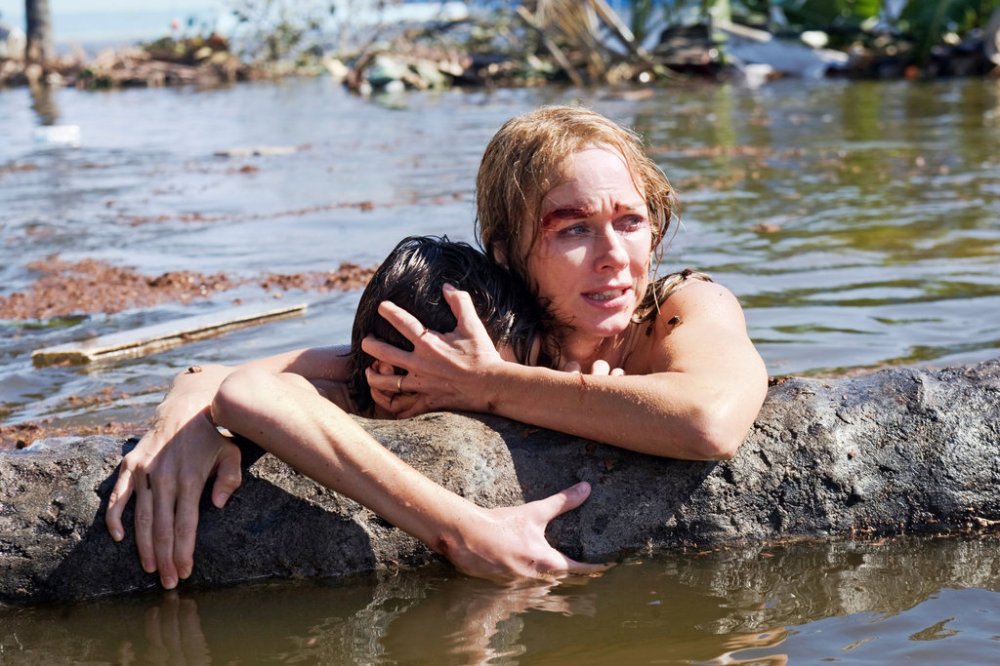
Australian actress Naomi Watts gives an emotionally pulverizing performance in J.A. Bayona’s “The Impossible,” a film which chronicles one family’s struggle for survival in the aftermath of the 2004 Indian Ocean tsunami. In it, Watts plays Maria, a doctor who is staying with her husband and children in a beautiful resort in Thailand for the Christmas holiday. This vacation comes to a horrific end when the tsunami decimates the country’s coastal zone and separates Maria and her son Lucas from the rest of her family. The role has Watts dealing with her fear of water, playing a character based on a real-life person, and the immense difficulty of shooting in not one, but two giant water tanks.
While at the movie’s press conference which was held at The Four Seasons Hotel in Beverly Hills, Watts described playing Maria as being “the most physically, emotionally draining role” she has ever taken on since “King Kong.” Considering she has played such equally draining roles in “21 Grams” and “Mulholland Drive,” that’s saying a lot. After doing “King Kong” she said she would never take on a role like that again, but even she couldn’t say no this script or working with Bayona who made the acclaimed horror movie “The Orphanage.”
Unlike the tsunami sequence in Clint Eastwood’s “Hereafter,” the one in “The Impossible” was done with real effects and no CGI. This makes the sequence all the more harrowing to watch, and seeing Watts hang onto a tree for dear life while water keeps rushing furiously by here makes for one of the most emotionally intense sequences in any 2012 movie. In an interview with Steven Rea which was featured on the Philly.com website, Watts talked about what it was like shooting the sequence which itself took four weeks to complete.
“I didn’t know it was going to be so difficult,” Watts told Rea. “They had it all very well prepared – we had allegedly the second largest water tank in the world, and they had these giant cups that we were anchored into . . . so you were just above water level, you could use your head, and you can use your arms so you looked like you were swimming. . . . And you’re on this track, and then a giant wave was coming towards you . . . and then side pumps were shooting more water, and all the garbage and debris. . ..”
“So, it got increasingly difficult, and then we noticed that we couldn’t actually act, or speak,” Watts continued. “We were lucky if we could get one word out, and that word would be ‘LU-CAS!’ It was tough, and then the underwater stuff was even more difficult. That was very scary.”
You have to give Watts a lot of credit not just for the brave performance she gives, but also for how making this movie made her deal with her fear of water. This was not the result of watching “Jaws” several dozen times, but of a near drowning accident she had when a teenager. She related this story to NPR’s Melissa Block.
“When I was about 14, my family emigrated from England to Australia, and we decided to stop in Bali on the way through. And having grown up in England, we were not great swimmers and knew nothing about riptides,” Watts told Block. “Anyway, we got caught in a riptide, and I didn’t know what to do other than swim against it, and got to the point of exhaustion, and then just about gave up. But then my mother, somehow, miraculously found sand beneath her feet and just managed to pull me in. And so, as a result of that experience, I’ve always been afraid of the waves and strong currents, so it’s quite interesting that I ended up doing this.”
It’s very interesting indeed, and it makes you admire Watts all the more for playing this character. After learning about her near-death experience, it becomes clear the fear which crosses the actress’ face onscreen was not at all faked.
Another big challenge for Watts in playing this role was it was based on a real-life person, Maria Belon, who, along with her family, amazingly survived the tsunami which claimed thousands of lives, and she herself suffered some serious injuries which had her at death’s door a few times. It’s always intimidating to portray a person from real life, especially one who’s still alive and has been through an experience we are grateful not to have gone through ourselves. While at “The Impossible” press conference, Watts talked about what it was like to meet Belon.
“Originally when I met Maria, I was incredibly nervous and I didn’t know where to begin. I felt like, I’m just an actor and you have lived through this extraordinary horrendous thing, and I just don’t know where to start,” Watts said of their first meeting. “But we sat there in front of each other for five minutes, she didn’t feel the need to speak and I couldn’t, and then she started just welling up and the story was told just through a look. I started welling up and then we just thought okay, let’s get on with this, and she continued to speak for three and a half hours and time just went by like that.”
“She stayed with me the whole time,” Watts continued. “I don’t just mean physically, but we were connected. We sent emails back and forth, and she would write endless letters about all the details that took place. The thing that she talked about was her instinct and her ability to trust herself which I think we lose so often. I feel like I am full of self-doubt and second guessing which is why this story becomes an interesting one because you wonder how you would deal with this.”
Naomi Watt’s performance in “The Impossible” deserves a Purple Heart as much as it does an Oscar. As an actress, she appears to be plumbing the depths of her soul to pull off roles like this one, and I think she’s one of the bravest actresses working today. While she may be yearning to stay away from roles like this in the future, it’s hard to think of many other actresses who can go to the places she goes to portray raw emotion so honestly.
Actor, writer and filmmaker Bryan Fogel first came to the world’s attention with “Jewtopia,” a play he co-wrote and starred in which went on to become one of the longest running shows in off-Broadway and Los Angeles history as it was seen by over a million viewers. Now he is set to reach an even larger audience with his documentary “Icarus” which will debut on Netflix on August 4.
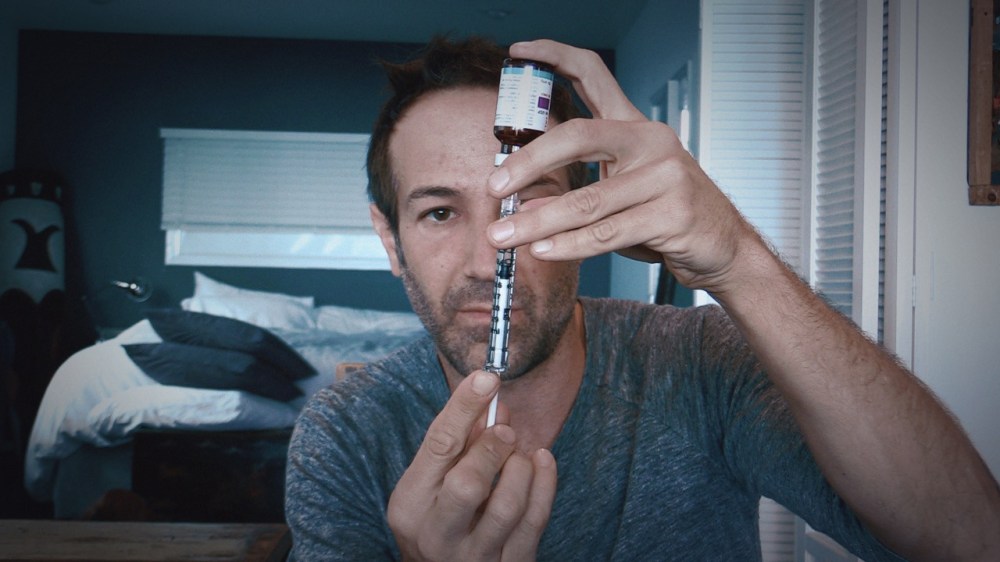
“Icarus” follows Fogel as he went on a mission to investigate doping in sports. Like Morgan Spurlock in “Super Size Me,” he becomes the main experiment of his own documentary as he dopes himself with performance enhancing drugs to observe the changes they have on his body, and to see if he can avoid detection from anti-doping officials. By doing so, he aims to prove the current process of testing athletes for performance enhancing drugs does not work in the slightest.
During this process, Fogel comes to meet Dr. Grigory Rodchenkov, a pillar of Russia’s “anti-doping” program who aids the filmmaker in avoiding doping detection through various processes which include being injected with various substances as well as collecting daily urine samples which will be smuggled from one country to another. But as Fogel becomes closer with Rodchenkov, he soon discovers the Russian is at the center of his country’s state-sponsored Olympic doping program. From there, “Icarus” goes in a different direction as it delves deep into Russia’s program and discovers the illegal activities go all the way up to the country’s highest chain of command which includes Vladimir Putin. The deeper this documentary goes, the more aware we become of how truth can be an easy casualty as others die under mysterious circumstances.
I had the opportunity to speak with Fogel about “Icarus” while he was in Los Angeles to promote it. He spoke about the documentary’s evolution from being a simple exploration into sports anti-doping programs to becoming a geopolitical thriller where witnesses are forced to go into hiding. Also, he spoke of how Lance Armstrong’s admission of using performance enhancing drugs was merely a needle in the haystack as many athletes were utilizing the same chemicals and threw him under the bus to save their own careers.
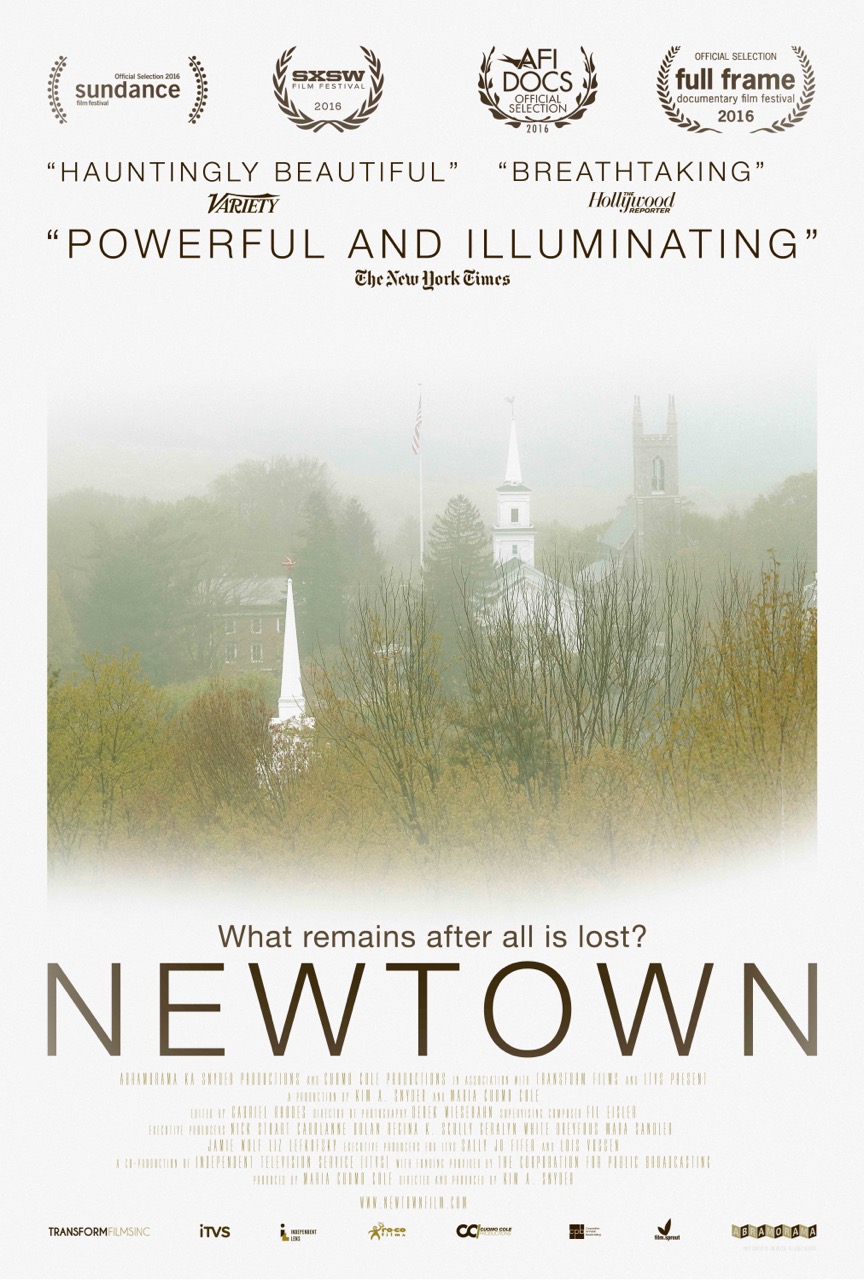
I got to speak with Kim A. Snyder recently while was in Los Angeles to discuss her documentary “Newtown.” The documentary looks at the aftermath of the largest mass shooting of school children in American history which took place at Sandy Hook Elementary School on December 14, 2012. The school was located in Newtown, Connecticut, and we watch as the adults who tragically lost their children attempt to move on with their lives. But since this tragedy, these adults look to be stuck in a moment they may never get past. What they are left with is profound grief and memories which will now be forever tinged with sadness.
“Newtown” is certainly one of the most emotionally devastating documentaries to come out in some time, but it is not without hope. Not once is the killer’s name mentioned or his face shown as Snyder’s real interest is in the townspeople who struggle to move on despite all they have lost. As painful as their stories are, these are the stories which need to be heard as the media often tends to focus on the shooter more than anything else.
Snyder is an award-winning filmmaker and producer, and for a time she was a contributor to Variety Magazine. She made her directorial debut in 2000 with “I Remember Me” which chronicled her struggles with Chronic Fatigue Syndrome (CFS). She also directed “Welcome to Shelbyville” which documented the intersection between race and religion in America’s Heartland. Her other works include the short films “Alone No Love,” “One Bridge to the Next” and “Crossing Midnight.”
While talking with Snyder, she explained why the shooter’s name was never mentioned in “Newtown,” why the term “gun control” was never used, of how Atom Egoyan’s “The Sweet Hereafter” proved to be a major influence on this documentary, and of how she managed to find hope in a story filled with infinite grief.
Check out the interview above, and be sure to catch “Newtown” when it opens in Los Angeles on October 14. Also, be sure to visit the documentary’s website at www.newtownfilm.com.
Yours truly was recently involved in a video project for The Burbank Channel. It is a PSA called “Food Waste Prevention!!!” which starred myself as a man who had the nerve to throw away an apple because it was bruised, and Stephen Ferguson as a man who transforms himself from a trash can into a person eager to put an end to food waste. This PSA was directed by the very talented Walter Lutz, and it is part of the latest episode of Burbank On Demand. Please take the time to watch the video project above, and you can also check it out below as part of an episode of Burbank on Demand. There are truly many lessons we all can learn about not wasting food, and this video makes a solid case for this.
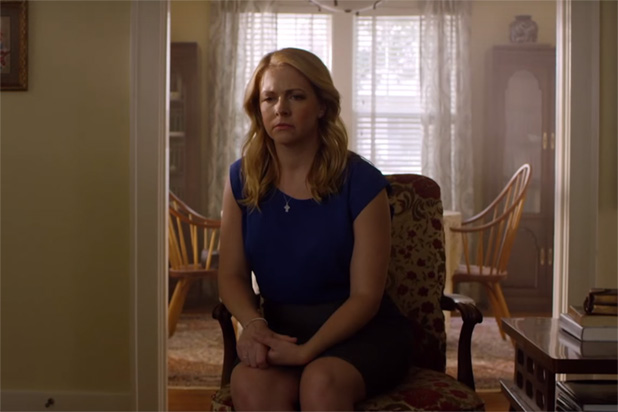
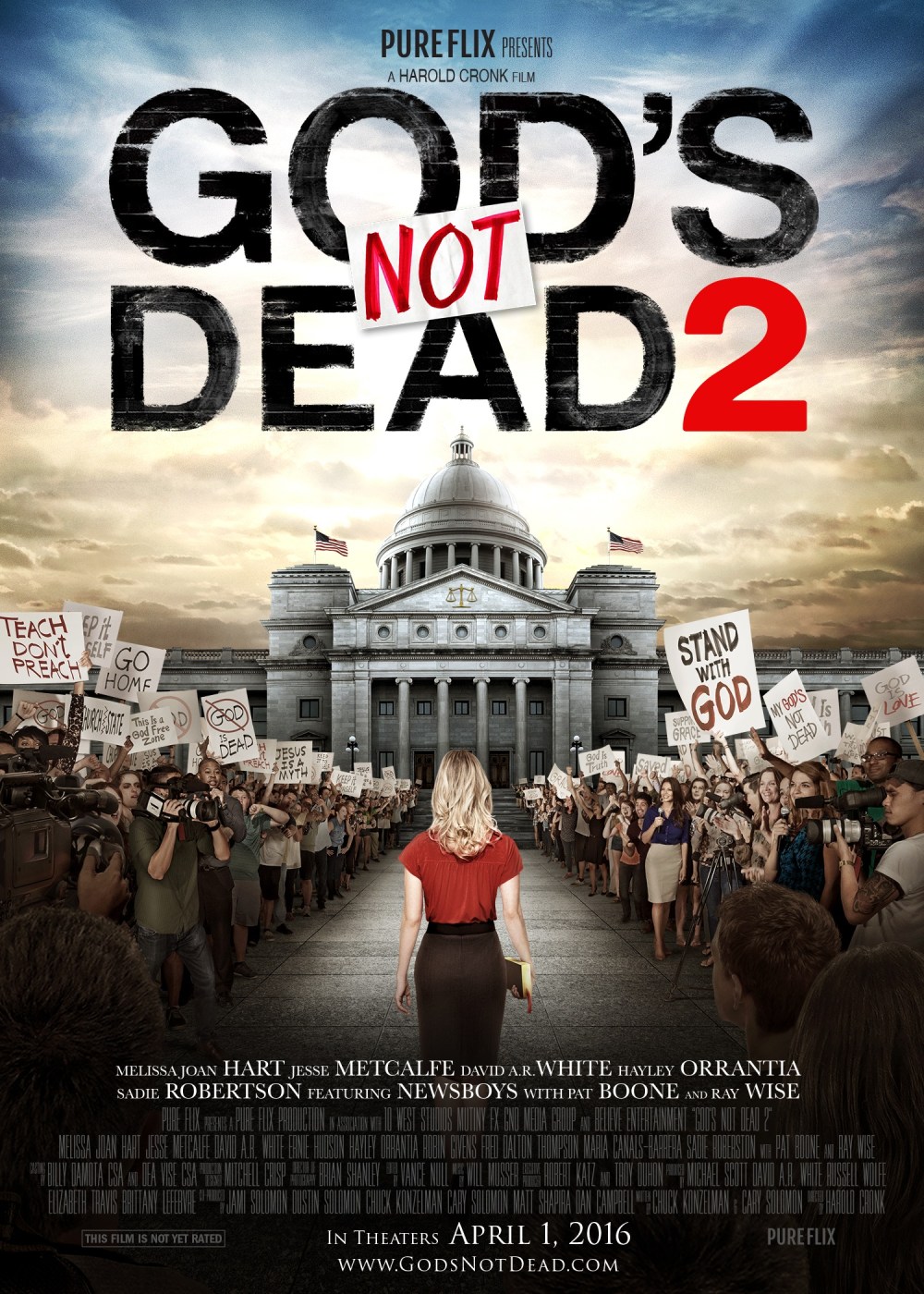
The 2014 movie “God’s Not Dead” only cost $2 million to make, but it went on to gross over $60 million and began a movement to strengthen the faith of Christians everywhere. That movement continues with “God’s Not Dead 2” which reunites director Harold Cronk with screenwriters Chuck Konzelman and Cary Solomon, but it tells a completely different story. This time the action moves to a public high school where teacher Grace Wesley (Melissa Joan Hart) encourages her students to appreciate history. But after Grace gives a reasoned response to a question about Jesus, she becomes the center of an epic court case which could end her career and expel God from the public square once and for all.
We all know Melissa Joan Hart from her popular television shows “Sabrina The Teenage Witch” and “Melissa & Joey,” and she is a veteran of show business having started at the tender age of four. I got to speak with Melissa while she was in Los Angeles, California for the “God’s Not Dead 2” press junket. She talked about joining a sequel which had none of the main cast members from the original returning to it, how social media has both helped and hindered the Christian movement, how she had to do a lot of reacting in this sequel, and why she feels likes an anomaly in today’s Hollywood.
Ben Kenber: It’s interesting how your character talks about Jesus as a historical figure and not a divine person, and yet it somehow leads to this legal case which dominates the movie.
Melissa Joan Hart: Well someone did ask us today in one of our interviews, “Is Jesus a bad word, and why has Jesus become a bad word?” You say Jesus you make people uncomfortable, especially Christians. I have become very comfortable with talking about things within my religion and within my faith. I have been a faithful person my whole life, but only in the last 5 years have I started bible study and really, really studying the word. It’s a hard thing to feel comfortable in this day and age. It’s weird that it used to be such an easy topic, and now it has become such a difficult, strained topic. You say things like “God bless you” and they look at you sideways. It is a weird situation going on these days, and so I like to make sure when someone sneezes that my kids go “God bless you” or if they see a man in military fatigues to say “thank you for your service.” People find it a little disconcerting, but when you do it they appreciate it. I was telling someone earlier about the ten commandments and someone pointed out to me and said, “Which of the ten commandments doesn’t hold up today?” The only one that seems to be fading out slightly is though shall not take my name in vain, and so I make sure I don’t, in my work, say “oh my god” or “OMG.” It really bothers me when other people do now, but in my house they don’t. My kids’ friends come over there and they are not allowed to say it and I’ll tell them why. If I feel the need to pray on an airplane because I’m terrified of flying, I’m not ashamed of that. I cross myself right there in front of whoever is watching. I had some controversy over a Christmas dinner at my house about whether everyone should go to church, and my stepfather brilliantly pointed out if anyone had gone to a Passover or any other kind of religious ceremony or holiday, you would respect that person’s wishes in their home. If you did accept that invitation to go to that event, you would be a part of it and not mock it. We are PC-ing ourselves to death here, literally. I think that’s why Trump is doing so well because he’s not correcting himself and he’s not being politically correct. He’s being completely politically incorrect, and not that I think he’s the best choice, but I can see the draw.
BK: Trump is definitely not the best choice and the fact that he has gotten as far as he has is frightening.
MJH: It’s disturbing.
BK: This is a sequel which features the same directors and some of the same writers but none of the main stars from the original returned for it. Was that ever a concern for you?
MJH: Actually I thought that was pretty exciting. I can’t recall another situation where that happened where they didn’t try to get the original cast and didn’t. I don’t think I’ve ever seen a sequel where the star didn’t go on. Well, maybe “Bruce Almighty” (laughs).
BK: There have been a few sequels like that such as “Son of the Mask” and “28 Weeks Later.”
MJH: But this is a completely different story. It’s not even the same movie. It’s a different movie with similar undertones and a few recurring characters, but really it’s a different story and so that’s kind of exciting and interesting. It was definitely a blessing to step into a leading role in a film that’s already well-established as a movement. The first movie ignited a movement across the country and I think it rallied together the Christian community, especially the youth, and they took to social media and started a movement.
BK: Speaking of social media, do you feel that it has helped the Christian movement or taken away from it?
MJH: I think it’s done both. I read somewhere that they say cell phones are the cigarette of the twenty-first century. They say that for health reasons but I think it’s toxic to families. I read a study where they were observing parents sitting in restaurants with their kids, and if they were on their phone they were more likely to be more violent towards their children and impatient and have outbursts towards their children than the ones that weren’t on their phones. I do think social media plays a big part in that because we want to be attached, but we’re not attached. I remember being in my house on a Thanksgiving and sitting around with everybody. We were watching TV and I made some comment about what was on the TV and I was like, “Can you believe he said that?” And I looked around and everybody was on their phone, but they justified it by saying, “Well we’re playing Words with Friends with each other.” And I said, “Well then why don’t we just play Scrabble?” So I do think that social media can be completely toxic. We feel like we are connected when we are totally not connected. We worry more about followers than friends. But in that way we have also found a fellowship out there of people across the world that we can relate to on certain subjects and certain topics, and Christianity is definitely a big one. I think the movement behind “God’s Not Dead” is doing amazing things on social media.
BK: You talked about how you had to do a lot of reacting in this movie, and that was great to hear because listening is one of the key things in African do especially when they are in a movie. How tough was that for you?
MJH: It was really a lesson for me. Obviously I’ve done reaction shots before, but usually I’m talking at a fast pace but trying to be funny. Usually when you’re the lead of the movie you just talk endlessly. Every other line is your line. So it was hard for me to sit there and just observe and then react, but it was also a great lesson for me to take a deep breath and enjoy not having to learn lines, but also being a part of the scene without having a voice in it and trust that the filmmaker and producers have you protected. It was a little bit for me to wrap my head around that the first week. I was like, “Well I’m not even saying anything. I barely talk.” I didn’t even realize until I get there and you start really reading the lines and you go, “I don’t have a line all day! I’m in every scene but I don’t have a line or I say three words and that’s it.” Jesse’s got six pages. It was hard for me to switch roles, but I’m excited I got the opportunity to do it obviously. If I get the opportunity to do that sort of thing again I know how to handle it better, and hopefully I’ll improve and hopefully with each project you’ll improve.
BK: The two “God’s Not Dead” movies have very different stories. It’s kind of like what’s going on with the two “Cloverfield” movies in that it deals with the same thematic elements even though they each take place on a different timeline. This makes the “God’s Not Dead” franchise seem more like an anthology than anything else.
MJH: Which is why I’m bummed because I know I won’t be in the third movie (laughs). But that’s exciting too because it gives the audience something else. They can come to the movie have knowing what to expect, but part of the fun of film beginning is not knowing the twists and turns and not knowing these characters and infuse it with some new energy. It’s about opening up the stereotypes because as Christians I feel like a lot of people, when you say Christian or the name Jesus, go oh you’re going to judge me now or I don’t go to church enough for you or I don’t know the verses of the Bible. People are always so afraid to be judged and I feel like a lot of Christian films do a little stereotyping, but I feel like in this case with this movie it’s really evolved to a place where these characters are complex. They are real people and these are real human experiences. People will hopefully relate to it more because they will find someone they identify with in this movie or they will identify with everyone.
BK: A lot of criticism that was directed at the first “God’s Not Dead” movie was that there were a lot of Christian stereotypes, but this one has characters that are a lot more complex which makes it more interesting.
MJH: Yeah, you don’t necessarily have a protagonist and an antagonist. I’m the victim in a sense, but not if you are an atheist. With Robin Givens’ character, we didn’t really know which way her character was going until the re-shoots. So I actually asked the director, “Is she bad or is she good? Is she on my side or are we hinting at that?” They decided to keep her a little bit more on the side of evil, but they do walk this nice line with everybody. It’s just a very realistic view of people, and you can’t put people in boxes and you can’t stereotype. I’m a conservative Hollywood girl, and yet I grew up in New York. I’m a Republican so I don’t really fit in with the liberal views of Hollywood, but I’m also anti-gun and pro-choice so I don’t fit into that spectrum. I feel like I’m an anomaly because people can’t figure out where to put me, you know?
BK: It’s interesting to hear you say that because in this day and age we have reduced so many things down to soundbites to where it’s far too easy to label everybody and anybody so broadly.
MJH: Yes. I said I was voting for Romney on Twitter years ago for the election, and instantly I got people saying you must be anti-gay, you must hate all other races, etc. Instantly it was like I just got pigeonholed into then you must be this way if you vote that way instead of just thinking maybe the other choice wasn’t so great (laughing).
BK: “God’s Not Dead 2” was a low budget movie that was shot in less than a month. Did the speed of that help you at all?
MJH: The speed of a movie never helps. They are trying to make movies faster and faster and faster these days which ends up putting a lot of pressure on the crew. So when you do speed these things up, the process is not helpful to the production. They say it puts more money on the screen but I don’t think it does. I think time really helps especially the performances. It’s hard to rush a performance. It’s hard to be like, “Hurry up! Cry! Okay, next scene!” But I feel like working in television you get used to a very rigid schedule and a very fast pace which also kind of kills a performance because I’m used to trying to make sure I hit my marks so I get my letting right. I don’t bang on my microphone so I don’t ruin sound. But am I really think about my performance when I’m thinking about all these other things as well? Did I hit my mark? Am I in the light? My makeup artist is telling me to keep my eye open and to keep my head up. If we had more time to rehearse it and feel it out and do everything and go through it systematically performances would be better, so I think that’s the main thing that suffers, the creativity behind the film, when you rush through it. They save a lot of money and it does get you back to your family faster, but at the same time it’s like you still can only work 12 hours a day.
I want to thank Melissa Joan Hart for taking the time to talk with me. “God’s Not Dead” is now available to own and rent on DVD and Blu-ray. Please visit the movie’s website (www.godnotdeadthemovie.com) for more information.
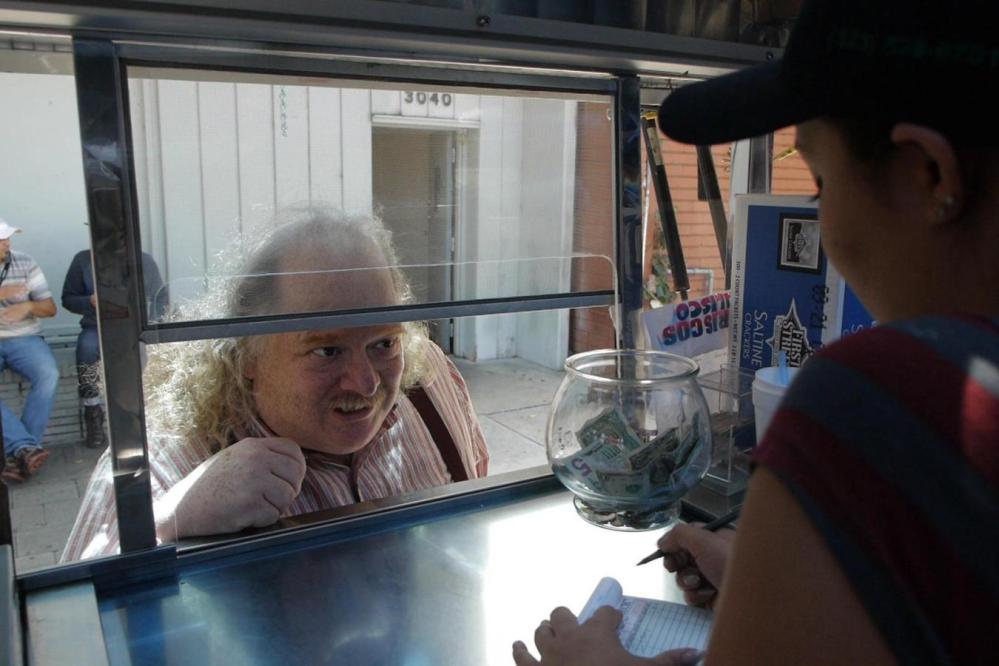
For those of you who see Los Angeles as an infinitely shallow and superficial city bereft of culture, try looking at it through the eyes of Jonathan Gold. Food critic for the Los Angeles Times, LA Weekly and winner of the Pulitzer Prize, Gold is known for his robust writings of Los Angeles restaurants, and he has gone out of his way to review small family owned eateries in the city’s ethnic enclaves as well as the trendier eateries in Beverly Hills. In the process, his reviews have changed the lives of many immigrants who continue to cook the food of their countries, and they have provided readers with a deeper understanding of the cultural landscape of Los Angeles which continues to astonish new visitors and longtime locals.
Gold is the subject of the documentary “City of Gold” which was directed by Laura Gabbert whose previous works include “No Impact Man” and “Sunset Story.” It follows the award winning critic around Los Angeles as he checks out restaurants, and we get to meet many of the chefs whose careers really took off after he reviewed their restaurants. In the process, the documentary also comes to reveal Gold’s deep love of this city and of how it has brought many different kinds of people together.
It was a pleasure to speak with Gold during time off from his day job, and he talked at length about the challenges he experienced making this documentary and how it affected him as a food critic.
Ben Kenber: How were you approached to do this documentary? Was it something you were open to doing or were you hesitant about it at first?
Jonathan Gold: Oh I was absolutely not open to doing it. It’s a tradition of anonymous restaurant critics in the United States. I’ve been approached by reality TV a lot, but I always said no. The filmmaker, Laura Gabbert… It’s sort of a weird story. I donated a dinner with a critic to a silent auction at a school a friend’s kid went to and she bought it. We went out to dinner at the first iteration of LudoBites, Ludo Lefebvre’s pop-up restaurant, and she brought it up and I laughed it off, and she called and we had coffee a few times and it was still not going to happen. And then my kid ended up going to that school, and somehow when you see somebody every day at the drop off line it becomes inevitable in a certain way. I had been thinking a lot about anonymity. It had almost been an impossible concept at the moment, restaurant criticism, with the very, very, very few exceptions. The restaurants that really need to know who the critics are know who the critics are, and nobody stays anonymous for more than a couple of months. I had been reviewing restaurants for more than 20 years and I just figured that it was okay to give it up. It was less a question of actually being anonymous then pretending not to notice them pretending not to notice me noticing them and noticing me. Very meta (laughs).
BK: I have heard restaurant workers have a very high mortality rate. Is that a subject you have ever dealt with in your reviews?
JG: No, not so much, but it’s really physically demanding work. You get up really early, you’re on your feet all day, you are around things that are very sharp and are very hot, and you’re breathing in vapors and smoke and things all day. You’re in a place that has a ton of alcohol because that is why it exists. So I admire the people who could do it as much as a sports writer admires athletes. It takes a lot of stamina.
BK: In the documentary we learn early on you were originally a music critic and later became a food critic. What were the differences of being a critic for each?
JG: Well I’ve actually always done both. I would go to dinner on the way to the show, and then I would review the restaurant and I would review the show. That’s how I did it for years and years. I didn’t think they were incompatible at all (laughs). But one of the things I liked about writing about food just as a profession is that when you write about music you deal with layers and layers of publicists, and I remember I did a Rolling Stone cover on Snoop and Dre. I counted at one point because it started to get weird, but there were more than 1100 phone calls to the publicists. When you are dealing with the restaurant you just go to the restaurant, so it was easier that way. It was a good piece but man, it seemed like a full time job dealing with that.
BK: Once filming began, did it take a long time for you to get used to the cameras following you around?
JG: I wouldn’t say that it took me a long time, but it may have actually taken me a long time. It was like one day a week, one day every other week, and Laura Gabbert, the director, would show up with the cinematographer and someone doing sound and they would crowd into the back of my pickup truck and we’d drive around and we’d stop somewhere. I didn’t really know what to do at first. It’s hard to talk freely when you just have a camera pointed at you and a boom microphone like tickling you, but I think over the course of filming it, it became a little less strange and a little more natural. The people I had lunch with and dinner with never got used to it quite as much as I did just because it was an inherently awkward situation. But it must be said that I laid down guidelines at the beginning for filming. I didn’t want her to fill me actually reviewing a restaurant. She would’ve liked that and it would’ve given the movie an arc, but I didn’t want to give her an arc actually because I didn’t want anything dramatic to happen. And I put down for a long time that she couldn’t film my kids because they deserve their privacy, and of course it turned out that they wanted to be in the film so they were. There were probably a few others, but with those boundaries drawn and the fact that I wasn’t actually going to have to interview anybody, I wasn’t going to act as a journalist and I was just going to be a person doing possibly journalistic things.
BK: The movie starts with you sitting in front of your computer and looking pensive, and then you begin to type something. Were you actually writing a review at that moment?
JG: Yeah. Actually I refused to have it staged and they shot it in a lot of different ways, but I was actually always writing a piece when I was doing it. Not necessarily the piece that was coming on the voiceover because… I don’t know if you’ve done it, but pretending to type looks like somebody pretending to type, and it’s always bothersome in movies.
BK: Did you have or want any artistic control over the documentary, or were you content to have Laura just have her way with it?
JG: I had essentially no artistic control over it. I’m the subject in the way that you are interviewing people. The people that you are interviewing don’t have any input into the story you are writing and they shouldn’t, and she was committing an act of journalism and I was the subject. I saw a rough cut of it and I’m not sure there was anything I objected to. Sometimes I wish I had combed my hair (laughs) and sometimes I wish I’d said something in a more articulate fashion, but I talk the way I talk.
BK: Was there anything taken out of the documentary that you wish had stayed in?
JG: There was a scene that I loved where I was giving a presentation at the MAD conference in Copenhagen, and that’s a conference that happens every couple of years. They couldn’t send anybody but they lent my daughter a camera and she took footage and she put it together in a certain way. It’s sort of a beautiful scene, but ultimately it didn’t really fit into the narrative of the film and it was cut. I will always become exercised on behalf of my children (laughs). I think it’s almost demanded.
BK: How would you say you ever evolved as a critic over the years you have done this work?
JG: I think I understand that there’s more and I think I understand that there is less. The more I do this, the more I write, the more it feels like I actually know.
BK: You are so good at describing things in your work to where you give the reader very vivid images of the stuff you are writing about. How do you accomplish that?
JG: Actually that was maybe one thing I worked at pretty hard. I thought that describing food was my one weakness when I first started writing about food. I was good at getting you into the room and I was good at describing the context and telling you why you were there, but sometimes my descriptions of the food were a little bit tough. I actually worked at it and worked at it, and I figure it’s like Kobe Bryant taking 1000 free throws a day. It’s like eventually he’s going to figure out where the basket is.
BK: Has doing this documentary changed the way you write about food at all?
JG: No, not at all.
I want to thank Jonathan Gold for taking the time to talk with me. To find out more about “City of Gold,” be sure to visit the documentary’s website at www.cityofgolddoc.com.
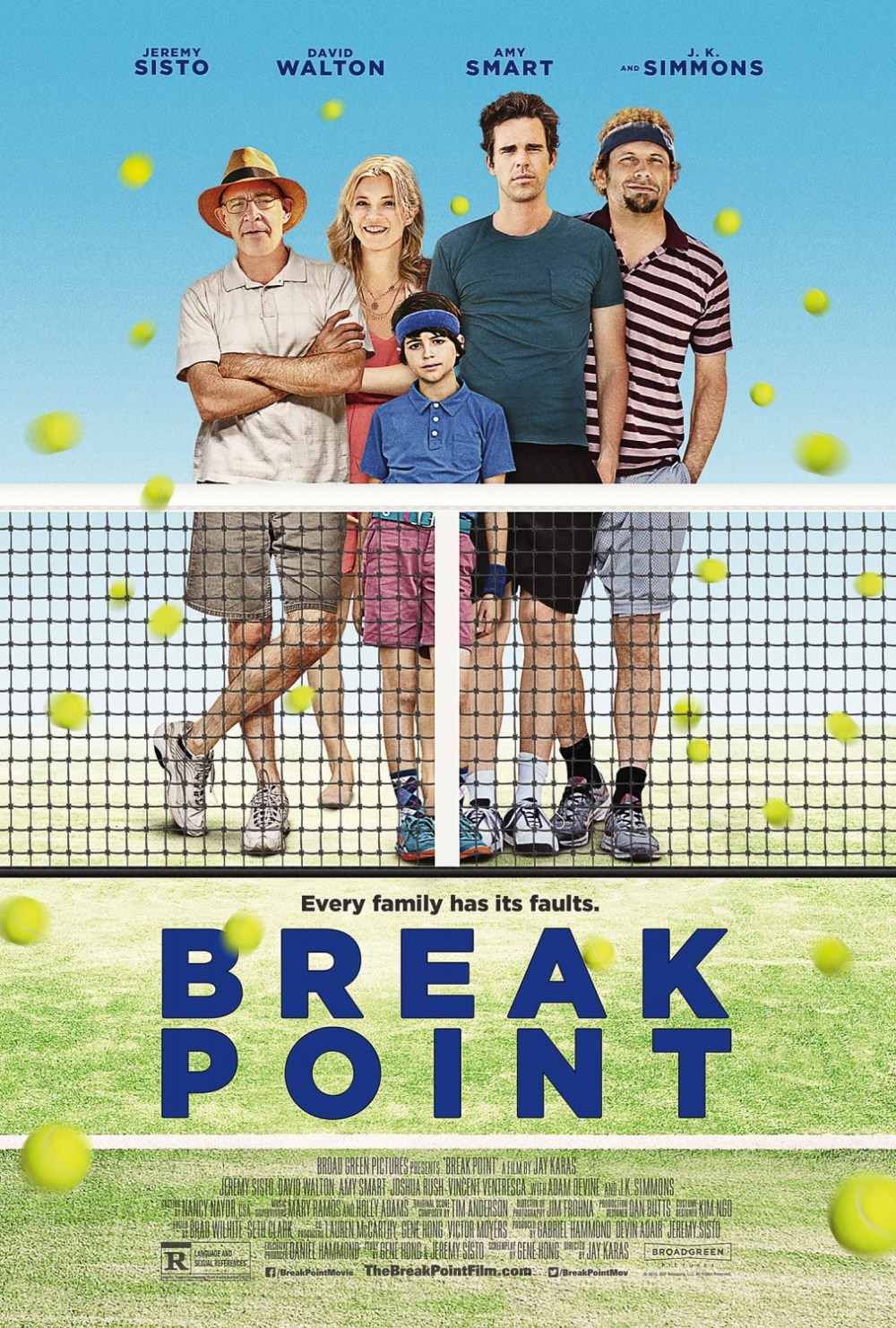
It’s been a very busy time for J.K. Simmons ever since he won an Oscar for his truly frightening performance in “Whiplash” as he has not been lacking for work in the slightest. We watched him steal scenes from Arnold Schwarzenegger in “Terminator Genisys,” and now he steals the show yet again in the sports comedy “Break Point.” In it he plays Jack Price, a veterinarian, widow and father of two boys who were once a great tennis team but have long since become estranged from one another. When the boys decide to re-team to take one last shot at winning the grand slam tournament, Jack is pleased to see his sons playing together again. But will Jack be able to keep the peace when his sons inevitably clash over who’s the better player?
Now whereas many actors would take the father role and either overplay it or underplay it, Simmons finds a middle ground to where he makes Jack a believably down to earth guy who is relatable and someone you would really like to hang out with. He is such a wonderful presence in “Break Point” to where you want his onscreen sons to thank the lord they have such a wonderful father in their lives. The actor also brings his trademark deadpan humor to the role which is always a welcome addition.
Simmons sat down with me for an interview at the “Break Point” press day held in Los Angeles, California. He talked about his approach to playing Jack Price and how making the movie helped change his view on the game of tennis. He also talked about his experience making “Terminator Genisys” which allowed him to play the kind of character he usually doesn’t get cast as: a good guy.
Check out the interview above. “Break Point” is now available to watch on various formats. To find out how you can watch it, be sure to visit the movie’s website at www.thebreakpointfilm.com.

 The Ultimate Rabbit