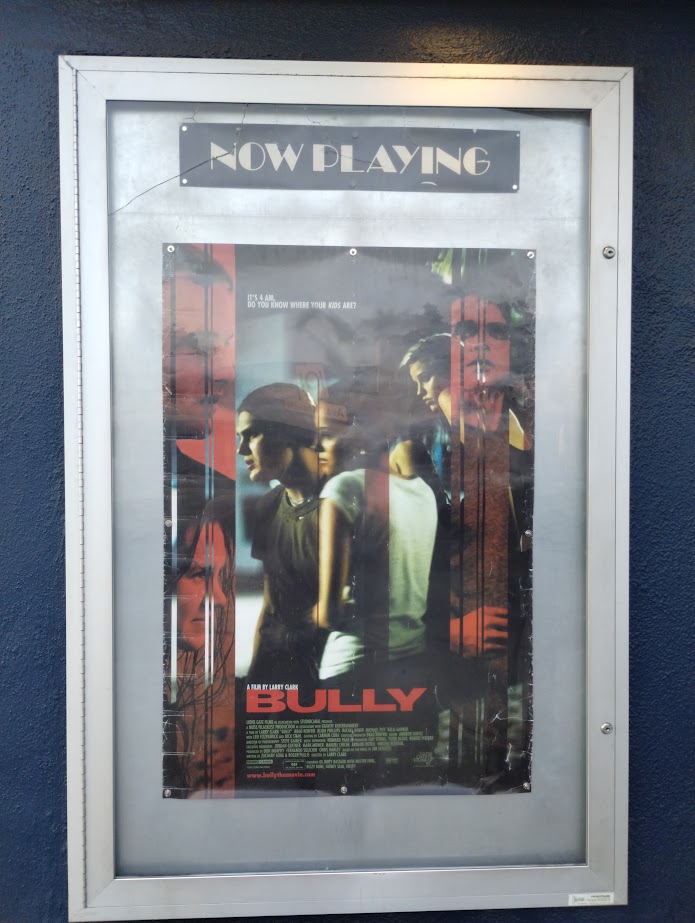
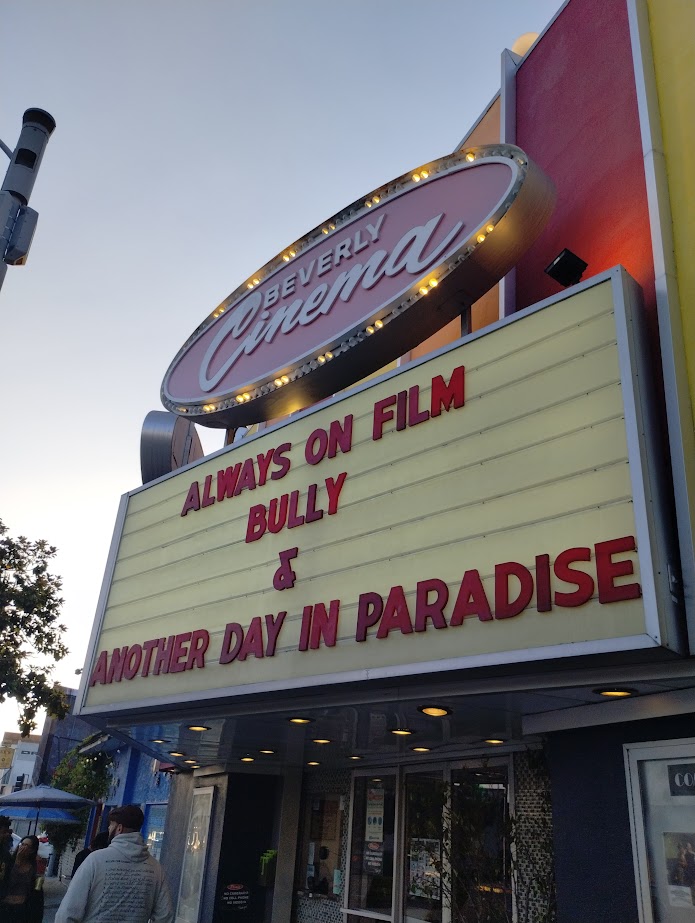
On August 12, 2025, New Beverly Cinema presented a Larry Clark double feature of two of his films: “Bully” and “Another Day in Paradise.” Before “Bully” unfolded on the silver screen, actor and filmmaker Joel Michaely brought out a special guest: Daniel Franzese who played Derek Dzvirk. “Bully” was Daniel’s film debut, and it quickly earned him his SAG card. Daniel thanked Joel for being there and remarked how he killed Joel once in a horror movie entitled “Cruel World” where he shot him in the head.
Daniel said “Bully” was the first time he ever got to hold a screenplay in his hands, and he talked about meeting the casting director, Carmen Cuba, at his audition.
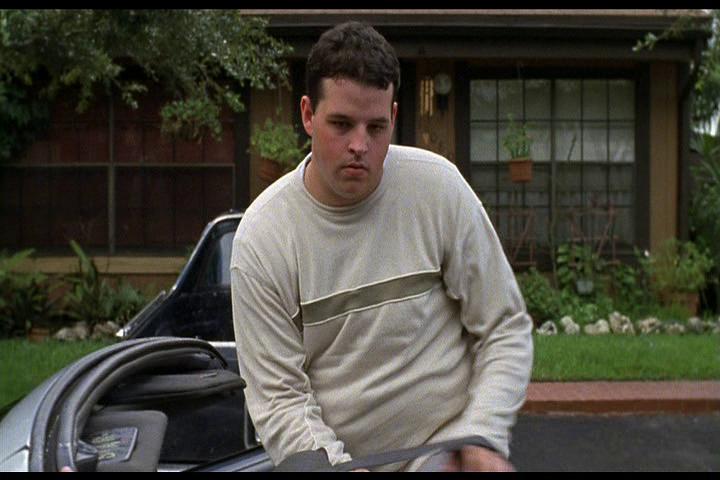
Daniel Fransese: She was like, “Do you wanna see who you are going to play?” I said okay, and she opened up the true crime novel (written by Jim Schutze), and I looked exactly like the guy. And I was just like, oh shit! I can actually get this! So, it was very scary and nerve wracking.”
Rumors are that the set of “Bully” was a crazy one, and being that this was Daniel’s first film as an actor, you can understand and appreciate his feelings at the time.
DF: I’m a pretty easy-going guy, and I am also a theatre guy and a standup comedian. I’m used to being around other people, and I am good at getting along with different personalities. But this movie was next level. we are getting ready to do fittings and start our first day of this movie, and Larry (Clark) is screaming because Brad (Renfro) was in jail for trying to steal a boat. He’s screaming, “This was three years of my life! This kid’s not going to ruin it!” He’s throwing papers and I was like, whoa! That was day one and you can just imagine how the stress level got worse from there.
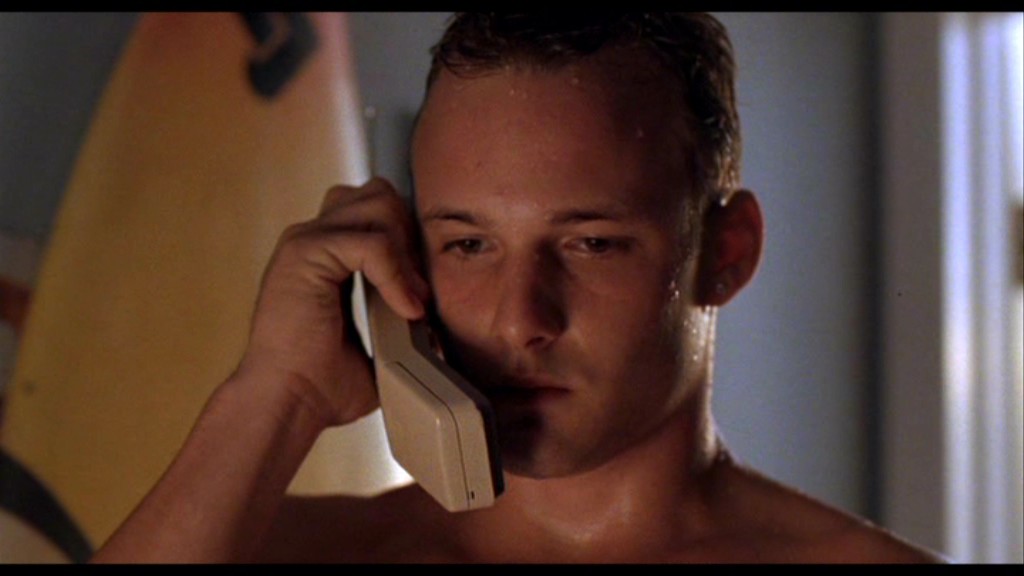
From there, the discussion went to the late Brad Renfro who played Marty Puccio in “Bully.” Brad first gained worldwide attention at the age of 12 years old when he was cast as Marcus “Mark” Sway in Joel Schumacher’s cinematic adaptation of John Grisham’s “The Client.” Like many people on this planet, let alone actors, he died at far too young an age He was only 25 years old, when he passed away after a drug overdose. Daniel talked about working with Brad.
DF: Brad was great. I think he was like one of those golden retriever type people. Not evil, but dangerous. We were doing the table read for the first time, and Brad showed up wearing a white tank top completely soaked in lighter fluid. He came in saying, “I’M TRYING TO GET THE BARBECUE TO GO!” It was like, whoa! He was from Knoxville and had like that “Jackass” sensibility where you didn’t know what he could do, but I don’t think he ever had a mean bone. His intentions were always nice. If anything, he partied too much, and he once told me that at 12, he made hundreds of thousands of dollars to do “The Client,” and he was getting a lot of his drugs and stuff from family members as a kid. I don’t think he got a fair shot. If anything, the reason why I advocate for younger people in Hollywood or talked about my experiences on this movie which were crazy, I was never speaking from a victim place. I was speaking from a place of advocating for people like Brad who didn’t have anyone saying anything for them. I just think, we’re making art. It doesn’t have to be that crazy. We don’t have to be stealing boats or going nuts on sets to produce good material.
After “Bully,” Daniel went on to appear in many films, but he may still be best remembered for playing high school social outcast Damian in 2004’s “Mean Girls.” Like Joel and myself, I wondered what it was like going from an independent film to a studio movie where everybody is expected to be on their best behavior.
DF: I just don’t think the 2000s will be looked upon as a time where it was easy for people on movie sets. I really don’t. People always ask me all the time how to get their kid in Hollywood, and I say don’t. I waited until I was at least in my 20’s (before going to Hollywood), and that’s the only thing which might have saved me. A lot of our contemporaries are not around with us anymore or are in a crazy state. It was a rough time. I can’t say it was easier or better, but I think it’s better now.
Regardless of the crazy set, Daniel made it clear to the New Beverly audience what the experience of making “Bully” was like, and of how the filmmakers strived to capture the spirit of the true story it is based on.
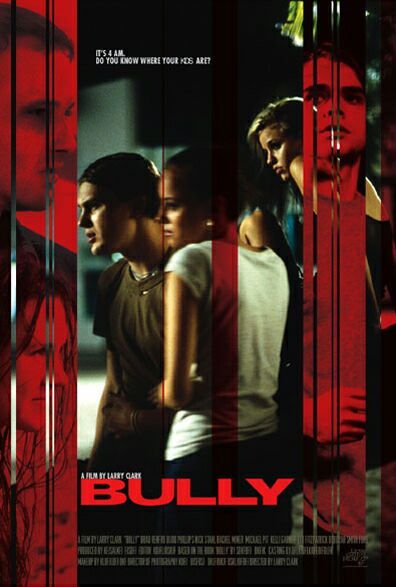
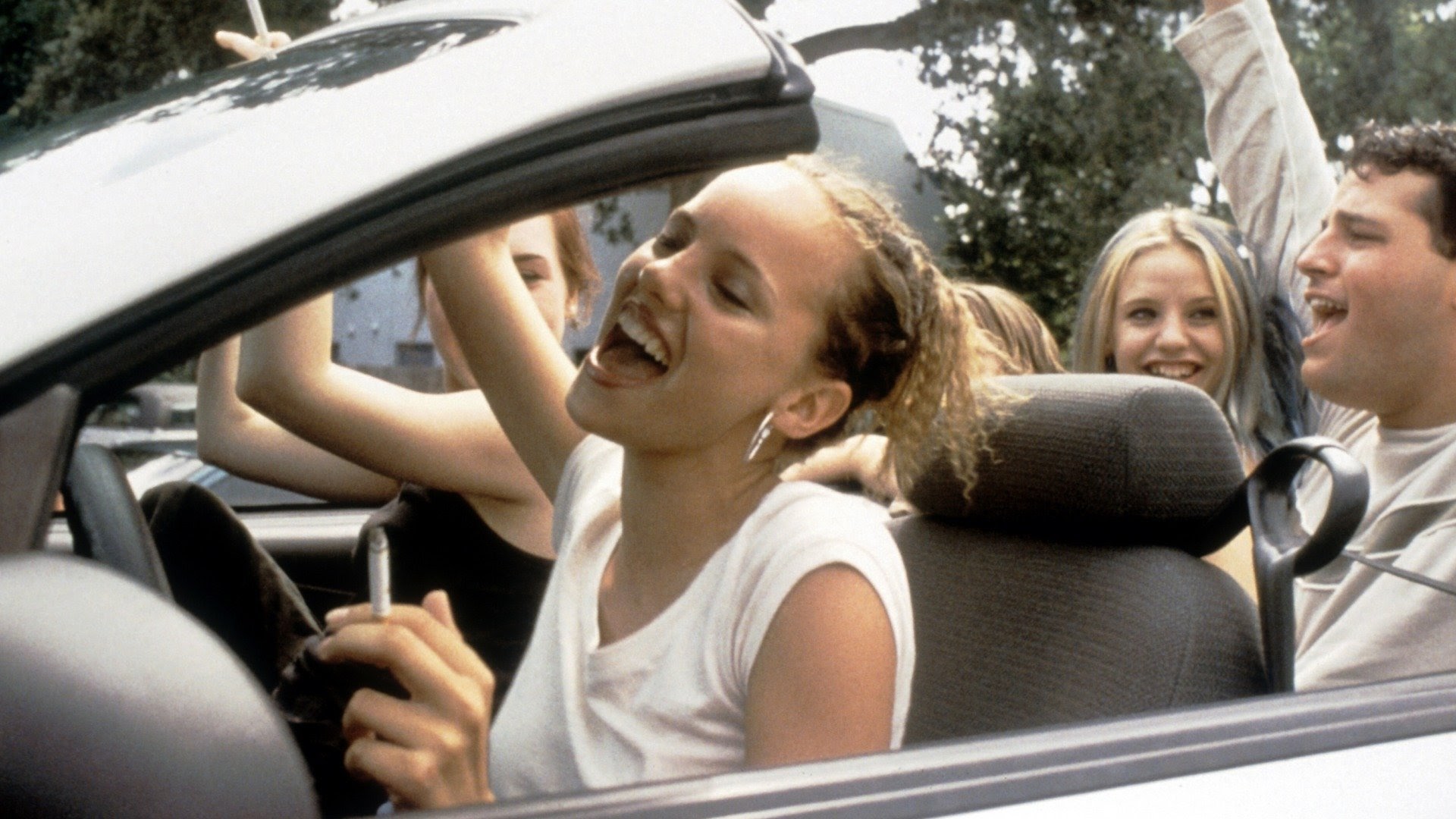
Bully (2001)
Directed by Larry Clark
Shown in foreground: Bijou Phillips
DF: On a positive note, though, this movie was awesome. It was so fun to make. Larry was cool, the people I was working with were all like people from Thrasher Magazine, it was just like bad ass people. They did shoot in the real locations; it was the real apartment complexes, and it was the real Pizza Hut (we shot in).
Daniel also made it clear how he was the only local hero for hire in Larry Clark’s “Bully.”
DF: They were scouting locations for the gay clubs, and I was just a young kid just figuring that stuff out and performing at the clubs with people I was in musical theatre with and stuff like that. They were like hey we’re making a movie, and I’m like I’m an actor! I had no idea it was going to turn into this. Carmen Cuba, she discovered a lot of people, and I give her all the credit for plucking me out of obscurity and putting me with these people.
An audience member told Daniel that he was from South Florida, and this led Daniel to talk about when he worked at The Gateway Theater in Fort Lauderdale as a kid. a year later, “Bully” premiered there. Daniel found his road from being an usher to a working actor to be honestly insane.
DF: I was there at the theater going, would you like the popcorn combo? I am a movie lover. I worked at Blockbuster (Video), I worked at movie theaters, that’s all I did. Until I was able to support myself as an actor, I was either an usher in theatre or worked at movie theaters. It (“Bully”) was shot in Fort Lauderdale and the whole crew got their premiere at the movie theater where I worked at. So, whoever served me popcorn today, keep writing your scripts.
Like many, Daniel Franzese considers New Beverly Cinema to be one of his favorite places in Los Angeles, and that it was extra special for him to see “Bully” being screened there on 35-millimeter film. To see films presented there in their original format, something often not available to movie buffs in most places, means a lot to him.
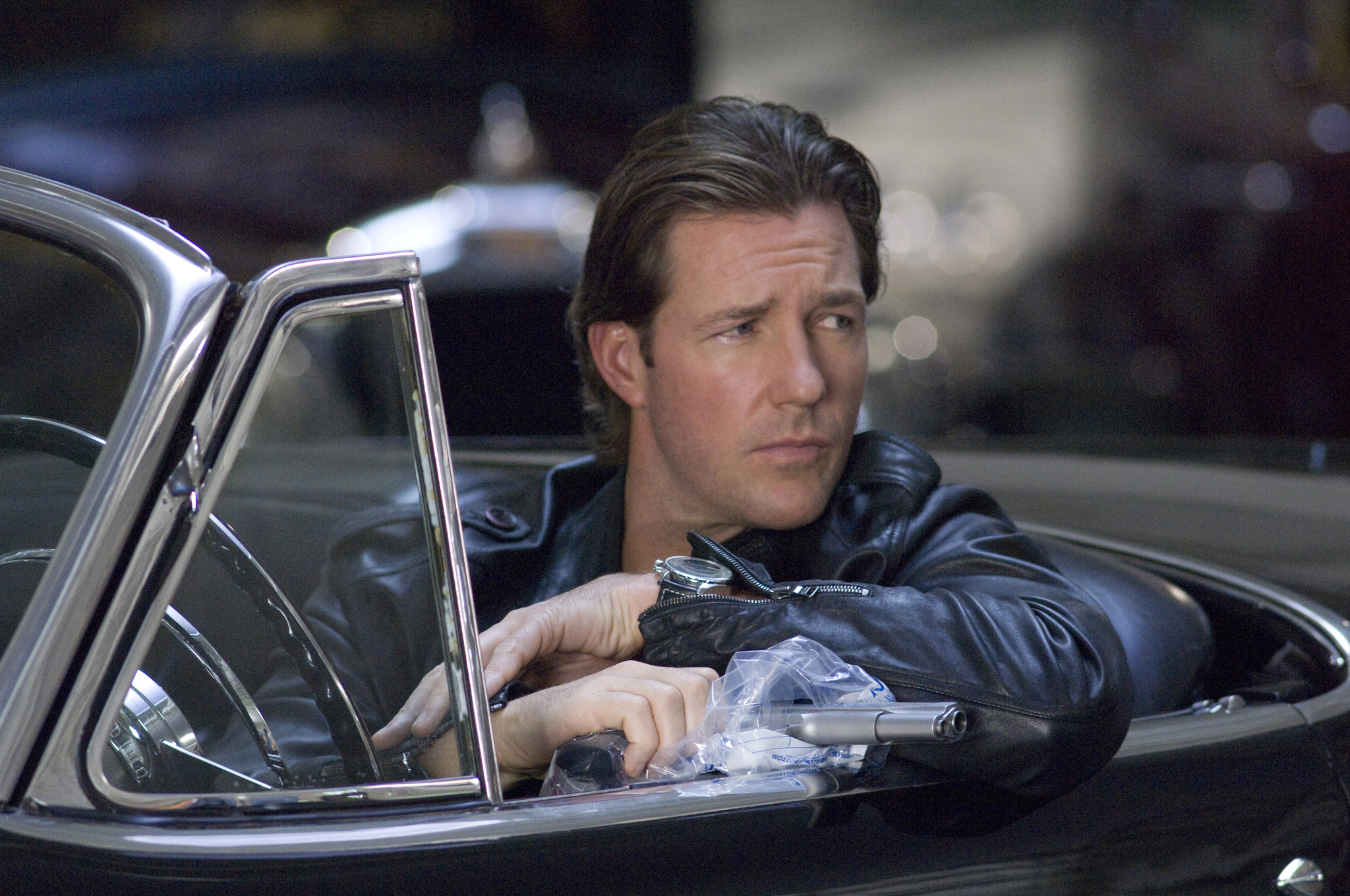
Actor and filmmaker Edward Burns comes from a family of cops, and he always relishes the opportunity to play one in a movie. In “Alex Cross,” he got to portray Detective Tommy Kane who is partner and childhood friend to Dr. Cross (played here by Tyler Perry), and the boyfriend of Detective Monica Ashe (Rachel Nichols). While at the movie’s press conference which took place at the Four Seasons Hotel in Beverly Hills back in 2012, he talked about what drew him to the role.
Burns said he was aware of James Patterson’s Alex Cross books and that he had read a few of them. The character he plays, however, is not actually in any of Patterson’s books and was an original creation for this movie. He ended up getting a call from the movie’s director, Rob Cohen, who was determined to make this particular Cross film more of an action picture than a police procedural.
Edward Burns: Rob told me that he wanted to develop this new character opposite Alex that’s sort of a best friend. He said we’ll be working on this script up until we shoot and that he’d love to have some input from me. Anytime a filmmaker says they want you to collaborate with them that gets an actor excited, so I jumped in.
When it came to establishing the relationship between Tommy and Alex, Burns said there are two scenes in the movie that give viewers insight as to when these two met and how their relationship has evolved over the years.
Edward Burns: The thinking was we became friends as kids, and when we were little, I was a little more of the protector of him. When we got older, bigger and smarter, he then became the guy that looked after me. That’s what the tone of the relationship is between these characters in the film, and in our last scene together in the car we reminisce about how our roles have changed over time.
For Burns the one fun thing about playing cops in movies is that there’s always that period of when you have to do tactical police training.
Edward Burns:We had a great time working with the guys from the Detroit SWAT team and police department, and that’s always a lot of fun. It’s amazing because you always have to keep relearning that stuff (sweeping a room and proper weapons procedure).
Some actors hate being typecast as cops, but Edward Burns appears to be happy to play as many of them as he can. We look forward to him playing as many more cops in the future, and we applaud him on his continued dedication to the realm of independent film.
“Alex Cross” is now available to own and rent on physical media and digital.
WRITER’S NOTE: This interview took place back in 2012 and may contain outdated information.
Born and raised in Los Angeles, California, filmmaker David Twohy has left a strong impression on moviegoers everywhere. He got his start as a screenwriter on “Warlock,” “The Fugitive” and “Waterworld,” and he eventually proved himself to be an effective director with the underrated “The Arrival” which starred Charlie Sheen as an astronomer who discovers evidence of intelligent alien life, and the equally underrated submarine supernatural horror film “Below.”
But the movie Twohy is still best known for is “Pitch Black” which had him joining forces with “The Fast & The Furious” star Vin Diesel who played the dangerous criminal, Riddick. Its budget was only $23 million, but Twohy and Diesel created a movie that was intensely exciting and which made the most of its modest budget. So strong was the cult following for “Pitch Black” that the two later made “The Chronicles of Riddick” which had a budget of over $100 million. While the sequel was not a commercial success, fans were still craving another Riddick movie and kept pushing at Twohy and Diesel to bring this anti-hero back to the silver screen.
Fans got their wish when “Riddick,” the third movie in the “Pitch Black” franchise, opened in theaters on September 3, 2013. After dealing with a big budget and a Hollywood studio, Twohy and Diesel ended up raising the money independently to make this particular sequel a reality and maintain full creative control over it. It follows Riddick as he is left for dead on a desolate planet and ends up being sought out by bounty hunters who are prepared to bring his head back in a box. But soon they are stalked by vicious alien predators, and they are forced to join forces with Riddick in order to survive the long dark night.
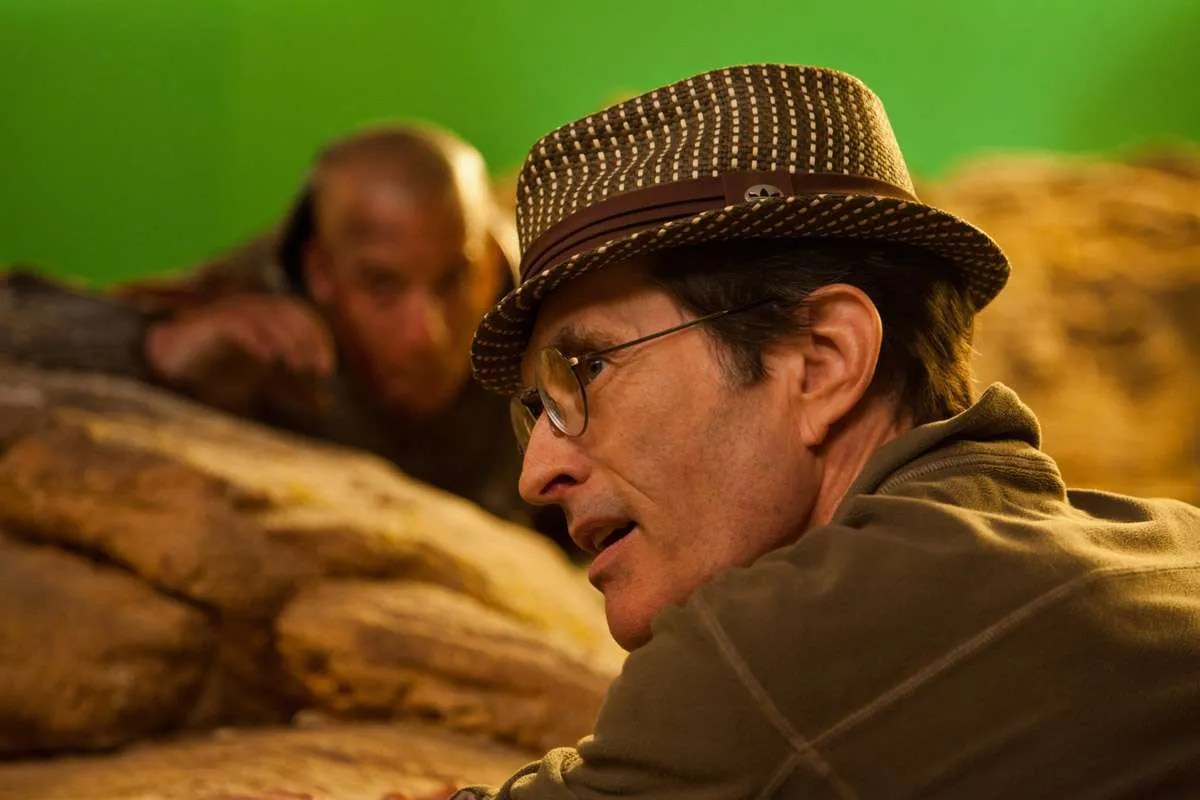
I was lucky enough to attend the “Riddick” press conference at the Four Seasons Hotel in Los Angeles, California just before this sequel was released back in 2013. Twohy talked about the challenges of making this particular movie as well as what it was like working with Diesel who had just received his star on the Hollywood Walk of Fame.
Question: How did the final film compare to what you originally envisioned, and were there any big challenges you faced in terms of the look of the film?
David Twohy: Did the finished product end up like we had imagined it? Yeah, it does because really, as a responsible filmmaker, I have to imagine the whole movie. After I script the movie, I have to storyboard it out, I have to budget it, and I have to understand if I can afford all those visual effects or not. So more than anybody, it looks like the movie I had imagined, sometimes better, sometimes not quite as good depending on how we execute the visual effects. But yeah, I’m not surprised by it because it’s what I do and it’s what I set out to make. Sometimes Vin, who is not privy to everything that’s in my head and all the work that I’ve done with the concept artist (and he likes it that way), is surprised, but I don’t have the luxury of being surprised. I can’t be surprised by anything in the filmmaking process if I’m doing my job right. So, it’s very much the movie we set out to make, and we set out to make something that would fit into the budget that we had ($38 million). I think you all know that this was an independent movie this time out instead of a studio movie. So, knowing that we would have limited resources, Vin and I sat down in his kitchen and we came up with a story that would fit that budget. It couldn’t be as grand as the last movie, and it had to be more contained. It feels more like “Pitch Black” to some people. It probably is more like that at least in its tone and scope (we limited it to one world), but it’s very much the movie we set out to make, and there were not that many surprises for me along the way.
Question: It was interesting to see that Dahl (played by Katee Sackhoff) was not a love interest in this movie. Usually, the girl ends up being the love interest of someone, but instead she was this independent woman who can hold her own. Can you talk about casting Katee and why you chose to make her this independent woman who can take care of yourself?
David Twohy: I remember Ridley Scott telling me this story about the original “Alien;” Ripley was scripted to be a man, and he decided to make her a female thinking that these parts should be gender-neutral. I’ve always remembered that, and the women in my movies do stand up on their own two feet and are not pieces to anybody, and I like that. In terms of Katee, she was the first person to read for the role of about a hundred actresses, and that I remembered her throughout the whole process speaks highly of her. So finally, I said, “Who was that girl who came in the first day, she had blonde hair and she kind of killed it? Who is she?” They said, “Oh that’s Katee Sackhoff from ‘Battlestar Galactica.'” Well, I didn’t really follow “Battlestar Galactica,” so I didn’t even know her from that, so I’m not casting or for that. I just thought she was the best available actress so we cast her like that, and I’m so glad we did because she was a joy to have on the set. And clearly, like the character, she holds her own amongst the men and swears worse than any of them. Her off-screen lines are just as good.
Question: What made you bring this franchise back to R-rated territory after the PG-13 “Chronicles of Riddick,” and is there going to be another “Riddick” anime, game or ride?
David Twohy: (laughs) A Riddick ride? Well, actually we are doing some D-Box seats in theaters, the motion platform seats. I just experienced them for the first time and it’s the closest thing to a Riddick ride as you’ll get. It’s watching the movie, but it’s motion based. I don’t know what that in between thing will be, but we embrace them, and I would like to do more. We published the motion graphic novel as well which helped with the back story of how Riddick went from King of the Necromongers to a man alone on a planet. We embrace those things, and it would be great to get another game off the ground, but those things are very hard to launch. They are costly and they need a lot of lead time, so it’s hard to sync those games to the release of a movie. But we would like to do another one and we are talking about it. The R-rated movie was important to us because, as a filmmaker, I have the flexibility I need to do what I want. With PG-13 I feel like I’m pulling my punches either in the script or working with my actors on the set and coming up with stupid analogues for the word “fuck.” I’m getting tired of that. It gets to the point where people aren’t talking like people talk anymore. Just because I don’t want to pull my punches anymore, I felt this was important to me. It also plants a flag in the ground for our fans as well and lets them know we are true to the character and the nature of the series. The reason for PG-13 last time is obvious. It was because we were a big studio movie funded by a big studio, and to minimize their risk they wanted to branch out to what they think is the widest possible audience and they think that’s PG-13. There is actually a sound reason for that, but Vin and I feel more comfortable back in the R-rated universe.
Question: In “Riddick” you deal with the Necromongers briefly and just move on from there. Do you plan on going back to that story thread if this movie is successful enough to merit a sequel?
David Twohy: Yes. If it is successful and if we have a flexibility to go wherever want for the next movie, and Vin and I are talking about two more movies and probably just that (it would be good to do a closed ended franchise rather than a franchise that just keeps spitting them out just to spit them out), we would like to get back to the Necromongers. I am currently cutting the director’s cut DVD right now which includes more of an epilogue which has Riddick returning to the Necromonger empire and actually setting things right there in terms of the guy who abandoned him on this planet and left him for dead, and his search for Vaako (played by Karl Urban) who he thinks has the answer to where his home world lies. The next few weeks will be telling for us, and we want to pay off the fans who have stuck with us all this time. They have never stopped talking about this movie to us, and it was them who made us open our eyes and say it will be honestly irresponsible to leave it like it was and not make another movie.
Question: How did you and Vin get back to the savagery of the “Pitch Black” with this one and made it look like “Conan the Barbarian” as opposed to “Conan the Destroyer?”
David Twohy: That was important too, and it was also part of the character who thinks at the story’s outset that maybe he feels that he is gotten a little slow, a little soft, who has dulled his own edge as King of the Necromongers and wonders what happened to him. Did he commit the greatest crime of all? Did he get civilized? So, the exploration of him trying to get back to basics to find his edge again, to get back to the lean thing he was, it’s a good evolution for Riddick and it’s also sort of a parallel to what the franchise has undergone
Question: What do you like most about collaborating with Vin Diesel?
David Twohy: That he doesn’t shut up (laughs). He’s a guy who aims high and pushes me to aim high. He’s a guy who dreams and thinks that anything is possible, and me I’m more of a practical guy. I try to be a responsible filmmaker, living with the constraints of what I’m given to make a movie with, but Vin doesn’t think like that. Vin thinks like anything is possible and he thinks big. Sometimes that’s almost a folly but other times it can be inspiring and it can open up my ideas to other ways of doing things. What’s great about it is that he’s a guy who has all the confidence in the world and always has ever since I cast him as just a guy, an actor, in “Pitch Black.” But he had an unshakable confidence in himself even back then, and he just seems to see the future or will it into being (laughs) so that he can say “hey I was right all along!” He’s great like that and he’s inspiring like that. Just about the time you think that Vin Diesel is a guy with big muscles and a big head and your kind of willing to dismiss him as that, you realize that this is a guy with a big heart too. He dreams no small dreams, and that’s good and that rubs off on everybody else he works with.
Question: Can you talk about crafting Riddick’s voiceover in the movie?
David Twohy: Here’s how I craft it, I sit in front of my computer screen and I write it. Then I’ll rewrite it, I’ll tweak it, I’ll rewrite it and then I’ll show it to Vin and he’ll say I’m digging this or I’m digging that. When he gets in front of a microphone, he’ll say 90% of it, but every once in a while, he’ll just stick in a line. I later find out it’s because it’s too similar to something else he said in another movie. We just work it out and then I’ll spitball three alternatives and when something pops up that he likes we’ll just lay it down. We’ve built a good level of trust with each other lately. As opposed to the voiceover in “Blade Runner” where it was just filling in stuff that you needed to know about the world and it wasn’t character-based, the one in “Riddick” is character-based and it comes with Riddick’s voice and how he sees the world. It takes a while to get it right.
Question: Riddick’s relationship with the puppy is one of the best things about this movie…
David Twohy: By the way, every woman who has interviewed me today talked about the damn puppy (laughs). I cut a trailer of this movie that was all about Riddick and his relationship with the dogs and I gave it to Universal and said, “Hey maybe we want to broaden our audience a little bit and make sure we get the women in here, you know?” Then they go, “It’s a little soft for a Riddick movie Dave.” God, I wish the marketing people were listening to this! I’ve been trying to tell Universal, I’ve been trying…
Question: Since the puppy was created with CGI effects and has a lot of interactive scenes with the actors, what did they have to work with on the set?
David Twohy: All the actors have plenty of reference whether its concept art which they can paper their trailers with or I’ll show them on the morning of the shoot. The puppy has stand ins. For the puppy, I got a 12-pound silicone puppy that looks like the real puppy. It’s furred, it’s got glass eyes and everybody wants to hold it, and it just feels right. The puppy made it into the movie in a couple shots. Plus, Vin has big dogs too, so more often than not he’s telling me how to greet the dog and how to pet it (I’m a cat guy, Vin’s a dog guy). So, he says, “No you don’t pet it like a cat. If you want to say hello to your big dog, you slap it on the shoulder.” So that’s what we do in the movie.
Question: What were the differences, both positive and negative, that you found making this movie independently versus working on a studio movie?
David Twohy: Mostly positive. We shot it in 48 days which was pretty streamline. During postproduction I showed it to an audience of 50 or 60 people and didn’t score it, didn’t test it. I just wanted to know what confused them so I could go back and clear up the confusions. I showed one or two cuts to Vin and then I locked the picture. That is as atypical as it gets in the professional filmmaking world because a lot those movies you saw this summer were focus grouped, tested, scored, recut, reshot, recut, tested, scored, and after a while there is a factory-made feel to those movies. So hopefully something this simple, streamline and filmmaking pure results in something that’s at least different and maybe better just in the handcrafted sense of it.
Question: So, would you say you had more fun with less money in some ways?
David Twohy: Yeah, we did, and I’m sure most independent filmmakers will tell you that. The downside is that we staggered to the starting line. We were up, we were down, we were up, and we were down. It all comes down to, is the paperwork closed? Is the bond closed? You have to close the bond to get the bank loan. It’s a lot of stuff I don’t know much about, and I wish it didn’t affect my life but it does. We started and we were shut down, kicked out of our studios, the doors locked. We had to come back three months later and pay our bills and start over. So those are the vicissitudes of independent filmmaking.
“Riddick” is now available to own and rent on DVD, Blu-ray, 4K UHD and Digital.
As this interview was conducted in the past, it may contain outdated information.
The following review was written by Ultimate Rabbit correspondent, Tony Farinella.
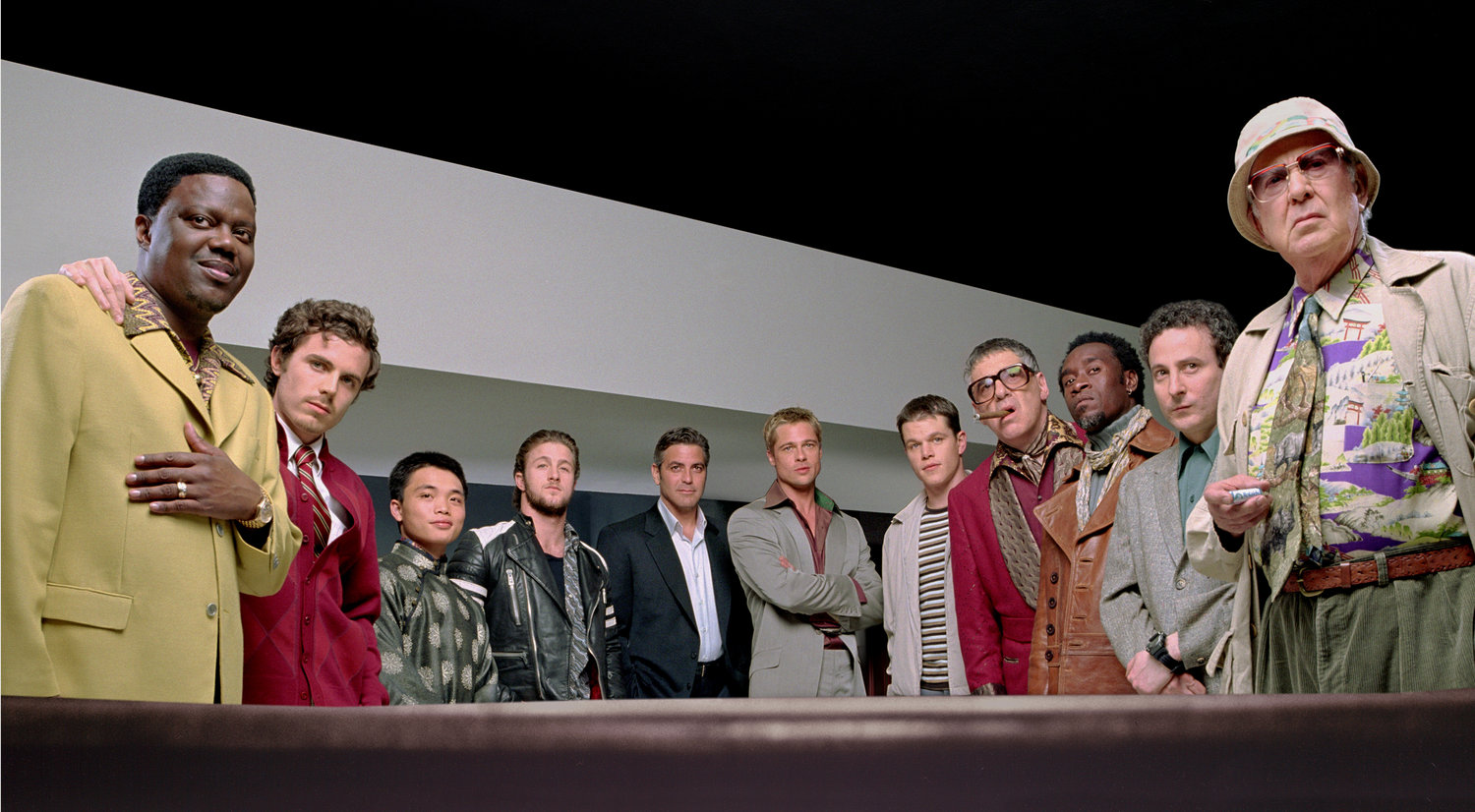
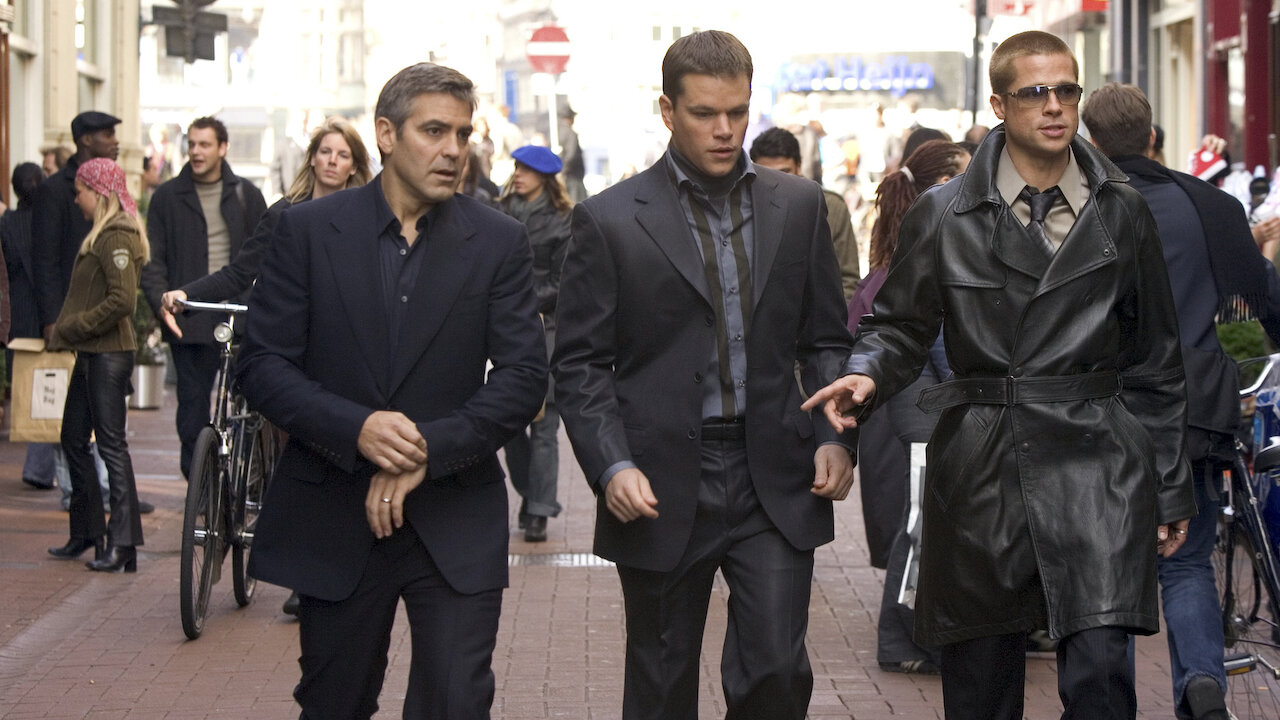
When you think of the “Ocean’s Trilogy,” you think of big movie stars, high stakes, and witty banter. These are individuals known for being con-artists and having a certain set of skills, but they bring an element of fun to the proceedings. They are interesting, layered, and unique. These are not your bargain basement crooks and thieves. These films are also aided by the direction of the stellar Steven Soderbergh. He makes everything pop and sizzle on screen. He knows how to add just the right amount of style to these films without taking away from his ensemble cast. The beauty of a Soderbergh film is the fact he can dabble in a number of genres and make a film successful both commercially and financially. He’s not just pigeonholing himself into one type of film. He can do an independent film that gets people talking or he can do blockbuster films like the “Ocean’s Trilogy.”
Let’s start with “Ocean’s Eleven,” which is, of course, a remake of the 1960 film starring Frank Sinatra, Dean Martin and Sammy Davis Jr. I don’t think it is fair to compare these two films as they are forty years apart, but I will say that both are entertaining and sleek in their own ways. Remakes in general tend to get a bad rap, but when they are done with the right people involved and the right mindset, they can really deliver the goods. It’s about taking an idea and making it your own without copying from the original source material. This is not always easy to accomplish, but they did that with “Ocean’s Eleven” in 2001.
The charming George Clooney stars as Danny Ocean, a professional thief who has recently been released from prison. Even though he served time, he’s on the lookout for his next big caper. Once he gets involved with the thrill of the chase and the risk and reward that comes with it, it’s hard to turn it down or live a normal lifestyle after that. He meets up with an old partner named Rusty Ryan (Brad Pitt), and they are looking to hit up Las Vegas for their next big heist. When it comes to a heist like this, money is important. They end up securing the money from Reuben Tishkoff (Elliott Gould), and their plan is to rob three casinos in Las Vegas, which are owned by Tishkoff’s rival. The stakes are high, at $160 million, so they need to make sure they are on their A-game.
In order for Danny and Rusty to pull this off, they will need to assemble the right team. They enlist the help of Basher Tarr (Don Cheadle), Livingston Dell (Eddie Jemison), Linus Caldwell (Matt Damon), Frank Catton (Bernie Mac), and Virgil and Turk Malloy (Casey Affleck and Scott Caan). Every one of them brings something unique and special to the table. Julia Roberts also shows up as the Danny Ocean’s ex-wife, Tess, and she has a bone to pick with Danny. Andy Garcia is in the film as well as Terry Benedict, the owner of the three casinos they are trying to rip off in the film.
For my money, “Ocean’s Eleven” is the best of the three films. The pacing is terrific, and there is never a dull moment in the film. Even though there are a lot of moving pieces, it never feels like the movie is overstuffed, boring or too long as it moves at a brisk pace. Also, when you have top-notch actors and actresses together, you know you are going to get some great performances. A big part of the fun of these films is seeing these Hollywood legends go toe-to-toe with one another.
Moving onto “Ocean’s Twelve,” which came out in 2004, I don’t want to go into too much detail on this film just in case you are watching this trilogy in order for the first time. I will say I found it to be a little bit more of a slog to sit through and a bit of a letdown after “Ocean’s Eleven.” It was merely an OK film. It was successful at the box office, but I didn’t find the story as engaging this time around. Of course, the characters are still entertaining and fun to spend time with, but since there isn’t a great story or plot to drive them, they quickly run out of steam here. It ends up being one of those films where the cast had a lot more fun making it than we had watching it.
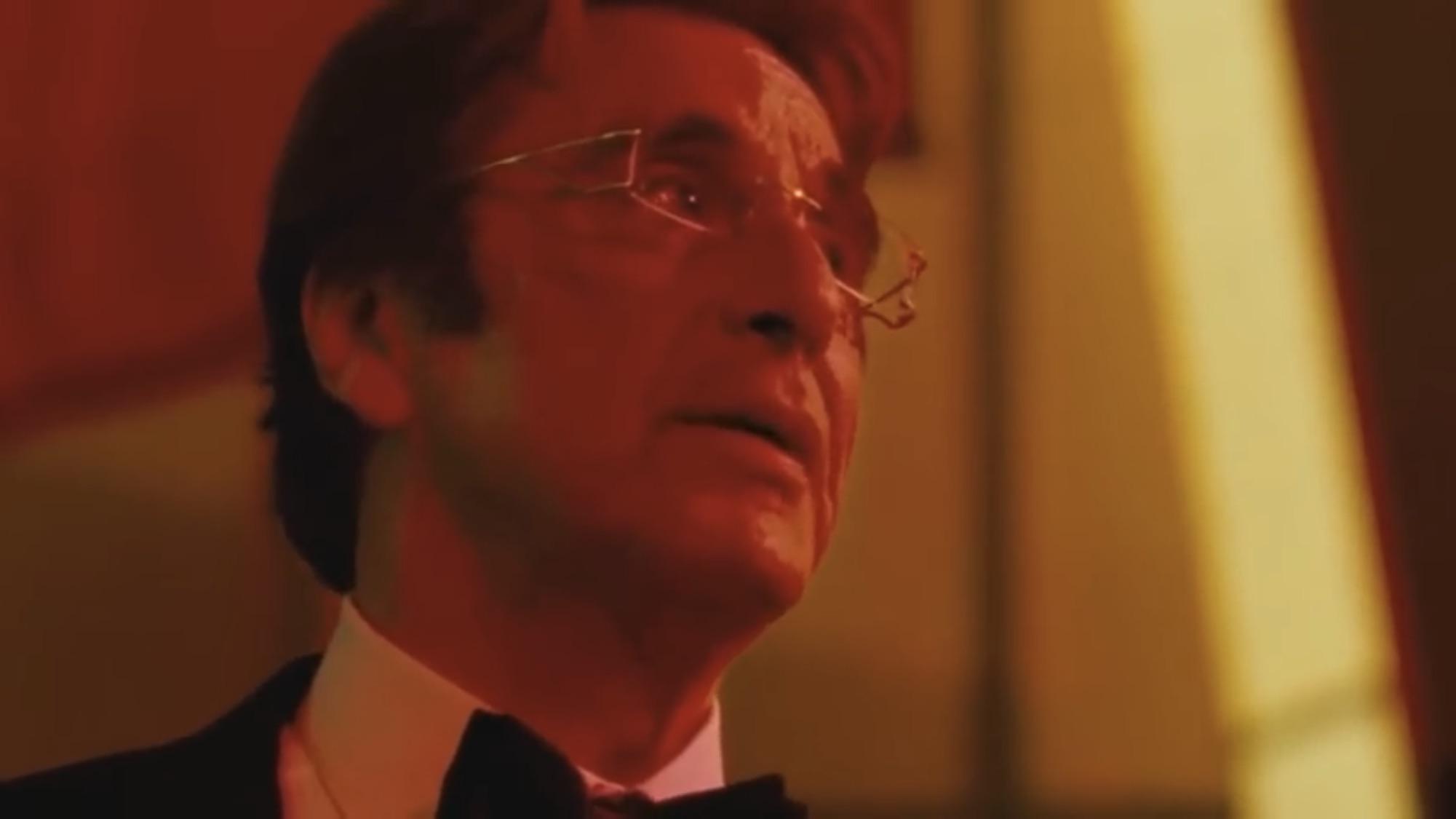
In 2007, they came back with “Ocean’s Thirteen” which introduced Al Pacino to the proceedings and was once again directed by Soderbergh. Julia Roberts and Catherine Zeta-Jones are missing here, which makes this film feel a bit off in regards to the female-male ratio. Roberts, especially, was such a big part of the first film, and Zeta-Jones was also very charming and lit up the screen in “Ocean’s Twelve.”
“Ocean’s Thirteen,” however, is a nice return to form after the lackluster and underwhelming “Ocean’s Twelve.” It’s almost as if Soderbergh sat down and realized what was missing from the last film and made sure to make up for those mistakes this time around. The addition of Al Pacino to the mix is also a juicy twist as well. What I enjoyed most about “Ocean’s Thirteen” is how it brought back the fun factor from the first film. “Ocean’s Twelve” was an entertaining film at times, but it was also a lazy one as well. This time, they work on making sure the fun is included along with a story that can hold its own in the process.
When these films work best in this franchise, it is when they realize we are just as interested in the story as we are in the characters. They go hand-in-hand. They play off each other in a sense. We love to see the characters in action and find out all of the twists and turns along the way. It was clear they put time, effort and brains into the first and third films. They lost their way a little in “Ocean’s Twelve,” which feels like a sequel they didn’t put a ton of thought into.
“Ocean’s Eleven” – * * * ½ out of * * * *
“Ocean’s Twelve” – * * out of * * * *
“Ocean’s Thirteen” – * * * out of * * * *
4K Info: The “Ocean’s Trilogy” is released on a three-disc 4K set from Warner Brothers Home Entertainment. This set only includes the 4K discs, so if you are looking for Blu-rays and 4Ks together, you will not find them here. According to the press release, the 4K remasters of “Ocean’s Eleven,” “Ocean’s Twelve” and “Ocean’s Thirteen” were completed at Warner Brothers Discovery’s Motion Picture Imaging (MPI) with the participation of Soderbergh. All of the films are rated PG-13, and their respective running times are 116 minutes, 125 minutes and 122 minutes. There is also a digital copy for each film which allows you to own all three copies of the trilogy. Subtitles are included in English, Spanish, and French.
Video Info: I really like the look of these movies on 4K. Having previously seen “Contagion” on 4K, also from Soderbergh, I’m happy to report this is another fantastic looking 4K set. Its color is vivid, bright and filled with a lot of life. It’s also dark and mysterious when things turn up a notch. All three of the films look great on 4K.
Audio Info: There is a lot of talking in these films as they are going over plans and information, and the dialogue comes in crystal clear on all three films. The soundtrack is just right in covering the dialogue, music and background noise without being too distracting. It captures the essence of each film.
Special Features:
“Ocean’s Eleven”
• Commentary by Steven Soderbergh and Ted Griffin
• Commentary by Brad Pitt, Matt Damon and Andy Garcia
• Are You In or Out? The Making of Ocean’s Eleven
• Pros & Cons: Inside Ocean’s Outfit
• The Style of Steal
• The Look of the Con
• Original Ocean’s, Original Cool
“Ocean’s Twelve”
• Commentary by Steven Soderbergh and George Nolfi
• Ready, Jet Set, Go: The Making of Ocean’s Twelve
• HBO First Look: Twelve Is the New Eleven: The Making of Ocean’s Twelve
• Deleted Scenes
“Ocean’s Thirteen”
• Commentary by Steven Soderbergh, Brian Koppelman and David Levien
• Third’s a Charm: The Making of Ocean’s Thirteen
• Ahab with a Piggyback: The Means & Machines of Ocean’s
• Jerry Weintraub Walk and Talk
• Masters of the Heist
• Deleted Scenes
Should You Buy It?
I’m seeing this set go for about $55 right now online, which is a really good price. That’s a little less than $20 for each 4K. If you enjoy a good movie collection, this one is definitely recommended. You get all of the old special features included here along with updated 4K transfers on these films as well. These are 4K transfers where it is clear they put a lot of care and effort into them. They didn’t just throw them together. If you enjoy heist movies with great casts, you really can’t go wrong with this trilogy. I’d recommend you go out and buy this set right now at its current price. You can make a weekend out of watching all three films and really enjoy yourself.
**Disclaimer** I received a copy of this film from Warner Brothers to review for free. The opinions and statements in the review are mine and mine alone.
By the time I finally got around to renting Steven Spielberg’s “Jaws” on VHS, I already knew how it ended. Heck, everyone knew the ending of all the “Jaws” movies just as we did with “Rocky” and its endless sequels, and yet we still went in droves to the nearest theater playing them when they opened. But even while the great white shark’s final moment was never in doubt, it still provided to be one hell of an exciting movie. Much of this is thanks to Spielberg and actors Roy Scheider, Richard Dreyfuss, and Robert Shaw. Its landmark success has been noted for starting the trend of summer blockbusters as well as the collective phobia of what’s in the water. 45 years later, many of us still do not feel the least bit safe about going into the water.
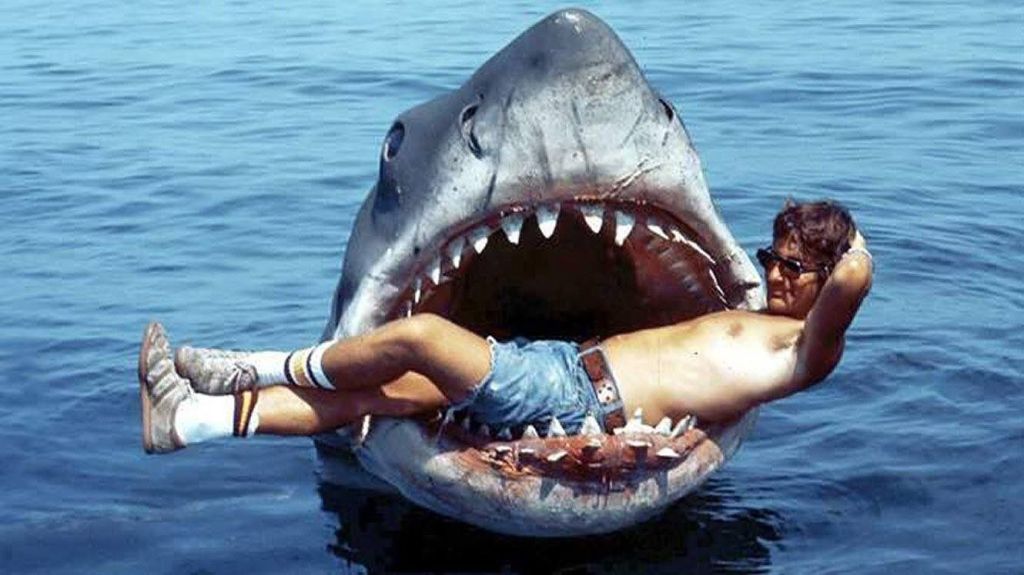
Looking back at the making of “Jaws” reveals a very troubled production which almost didn’t make it to the silver screen. From what I have read, this movie was to Steven Spielberg what “Apocalypse Now” was to Francis Ford Coppola. Remember the picture of Coppola on the set of “Apocalypse Now” with a gun to his head? Steven had one of him resting in the shark’s mouth, and he looked like he was more than ready for the shark to eat him.
The story of a great white shark terrorizing a New England island originated as a novel of the same name written by Peter Benchley which itself was inspired by several real-life incidents of shark attacks including the ones on Jersey Shore back in 1916. After buying the rights to the novel, film producers Richard D. Zanuck and David Brown tried to get John Sturges who made “The Great Escape” to bring it to the screen. When this did not happen, they went to Dick Richards who ended up calling the shark the whale, so he didn’t last long. Zanuck and Brown finally brought on Spielberg to direct, and this was just before the release of his first theatrical film “The Sugarland Express.” In adapting the novel, Spielberg focused on its main concept and took out the various subplots such as the affair between Ellen Brody and Matt Hooper. In retrospect, this was an excellent call as it would have added more stories to a movie which did not need any extra baggage.
Hearing Dreyfuss describe his take on the whole production gives one idea of the mess Spielberg and Universal got themselves into:
“We started the film without a script, without a cast and without a shark.”
When he appeared on “Inside the Actor’s Studio,” Spielberg said he invited the actors to dinner and they ended up “spit balling” the entire movie or, in other words, they made it up. Pages of the script were apparently not available to anyone until the day they were actually shot. A lot of filmmakers still work like this today even though it makes far more sense to work with a finished screenplay.
Then there was the shark itself which Spielberg nicknamed “Bruce” after his lawyer, Bruce Raimer. Three mechanical sharks were built for the production: a whole shark to be used for underwater shots, one which moved from camera-left to right as to hide the other side which completely exposed its internal machinery, and an opposite model with the right side uncovered. But while these models were tested in a pool under controlled conditions before production began, making them work in the ocean was another story. Some of them accidently sank and a team of divers were forced to retrieve them. The main mechanical model endured various malfunctions throughout, and its operation was constantly hindered by the hydraulics being corroded by salt water. Spielberg even joked about Bruce’s maiden voyage and how he sank to the bottom of the sea:
“It was a terrible sight! The shark comes out of the water tail first, wagging like Flipper! The tail comes down into the water, and then it sinks. And then there’s another explosion of white water, and all these pneumatic blue cables come out like snakes everywhere flying around! And then that got quiet, and then there was one last belch of bubbles, and that was the last we saw of the shark for about three weeks.”
Dreyfuss described the frustration everyone had with these models, and those walkie talkies being used by the crew always had the same words coming out of them:
“(static) The shark is not working, (static) the shark is not working.”
Things got even worse from there as filming at sea resulted in many delays as it would with just about any other film. Uninvited sailboats kept drifting into shots, and the Orca ended up sinking while the actors were onboard. This apparently led Spielberg to yell out as it was sinking:
“Screw the actors! Save the sound equipment!”
The crew members had absolutely no reason to believe they were filming a classic, and they instead nicknamed the film “Flaws.” Brown commented how the budget was originally $4 million, and it ended up costing $9 million. While this may sound like chump change today, this was long before the days when movies came with budgets of at least $100 million. Filming was scheduled to last 55 days, but it ended up lasting 159. Spielberg was not yet the director we know him as today, so you have to understand what was going through his mind while he was enduring this trial by fire:
“I thought my career as a filmmaker was over. I heard rumors that I would never work again because no one had ever taken a film 100 days over schedule.”
Spielberg was not even on set for the final shot when the great white meets its maker, and it was mainly because he was under the suspicion the crew would throw him into the water. This has apparently become a tradition for Spielberg on the films that he directs; not being there for the shooting of the final scene. This is regardless of the fact not all his movies take place on the water.
As we all know now, the shark malfunctioning proved to be a blessing in disguise as it gave the “Jaws” a more suspenseful tone than it had already. By filming the dorsal fin as often as he could or using those yellow barrels to indicate the shark’s location, he was able to get away with not showing the whole thing through most of the movie. In fact, he had already told the producers he would agree to direct the movie on the condition he did not have to show the shark for the first hour. Spielberg went on to explain the logic behind this decision:
“I don’t know of anything more terrifying than off-camera violence, off-camera suspense. You have to give the audience credit; they bring with them to the movie theater probably collectively more imagination than any of us behind the scenes put together. And they come in there with their imaginations and implore us as filmmakers to use it.”
Looking back at the hell Spielberg went through to finish this, it is amazing any movie came out of it. You can only imagine what he was thinking before “Jaws” was even released. One of the funniest stories he ever told about it was when he went to a preview or test screening. As he stood in the back of the theater right near the exit, he was expecting the worst:
“Around the time that little boy was killed on the raft, a man got up and began to walk out of the theater. And I said ‘well, here’s our first walk out, the movie’s too violent. I shouldn’t have done this; I shouldn’t have made it that intense.’ The guy then starts running and I go ‘oh worst the walking out, he’s running out of the theater! He’s RACING out of the theater!’ He got right next to me, went to one knee and threw up all over the carpeting of the lobby. Went to the bathroom, came out five minutes later, walked back to his seat and I said ‘IT’S A HIT!’ “
“Jaws” ended up becoming the first movie in history to gross over $100 million at the box office, and it marked a watershed moment in how movies were distributed. Since its release, it has spawned several sequels, become a memorable part of the Universal Studios tour and has spawned lord knows how many VHS, laserdisc, and DVD reissues. And, of course, it was released on Blu-ray, and it has now been released on the format 4K Ultra HD. If there is to be another new format on the horizon, you can be sure “Jaws” will be released on it.
As for the sequels, “Jaws 2” had its moments, the only saving graces of “Jaws 3-D” was its 3D effects which look awful when viewed on your television, and for the beautiful appearances of Bess Armstrong and Lea Thompson. As for “Jaws: The Revenge,” it remains one of the worst movies ever made as it contains many unforgivably glaring errors. On the upside, “Jaws: The Revenge” did inspire one of the greatest movie reviews on “Siskel & Ebert” which still has me laughing whenever I watch it. Spielberg later said he felt bad about how the franchise turned out, but he couldn’t go back to it after the frustration he had with making the first. By the time “Jaws 2” came around, Spielberg and Dreyfuss were already busy making “Close Encounters of the Third Kind.”
After all these years, “Jaws” remains one of the all-time great movies as it effortlessly taps into those fears we all have of the unknown, or of what is underneath us in the water. You could watch it a dozen times and still be thrilled by it, and it made Spielberg into the director he is today. If you are about to watch it for the first time, and you will find that the shark is indeed still working.
Here are some other interesting tidbits about “Jaws”:
Spielberg originally offered the role of Brody to Robert Duvall, but he was more interested in playing Quint.
Charlton Heston expressed interest in playing Quint, but Spielberg felt he was too big a personality and would end up overshadowing what he saw as the film’s real star: the shark.
Spielberg was initially apprehensive about casting Scheider because he feared he would play a tough guy like he did in “The French Connection.”
The role of Quint was offered to Lee Marvin and Sterling Hayden, but both turned it down.
The scene where Hooper discovers Ben Hooper’s body in the hull of his wrecked boat was actually added after an initial screening of the film. Spielberg said he was greedy for one more scream, and he ended up financing this moment with $3,000 of his own money since Universal Pictures denied him anymore financing at that point in the production.
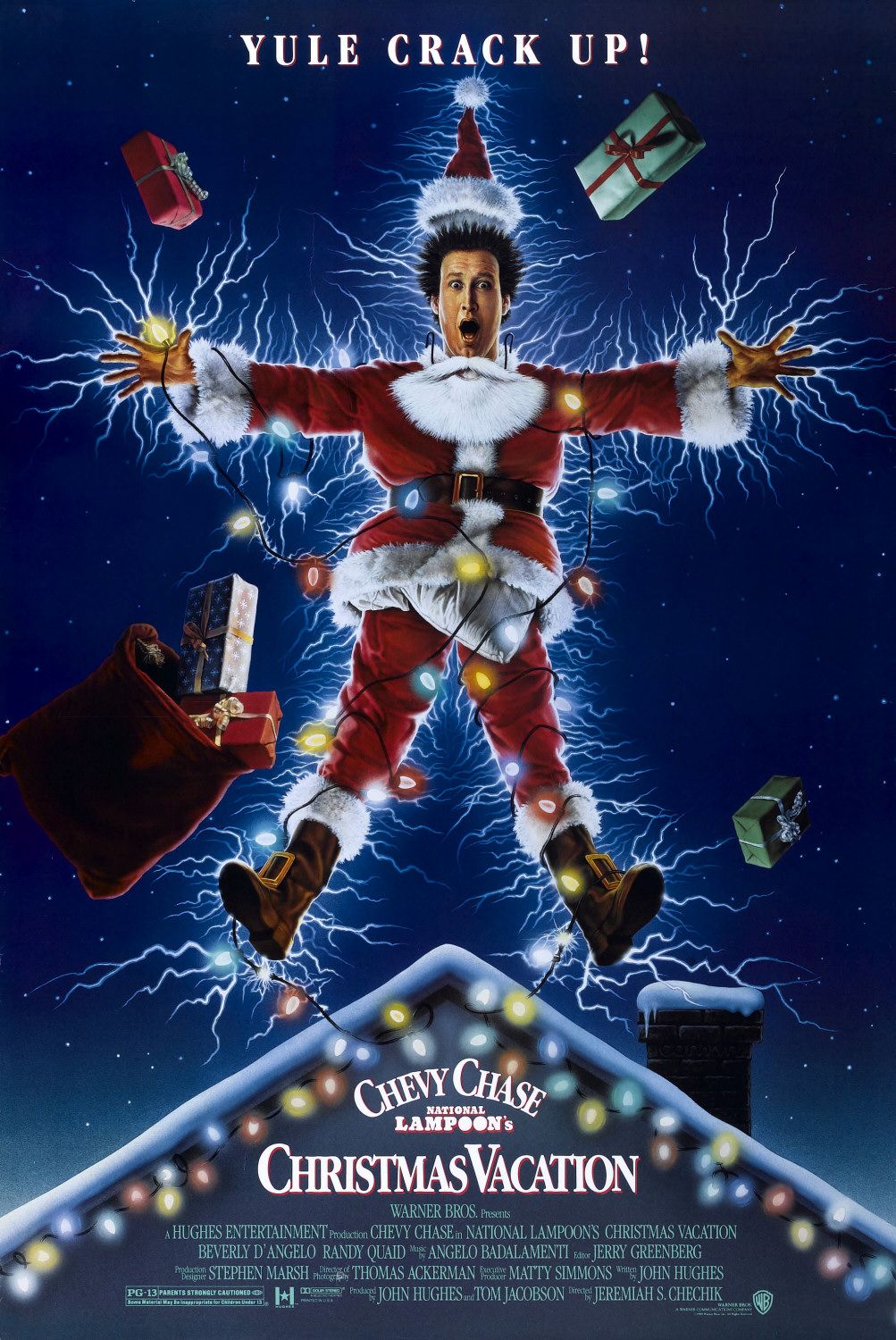
Jeremiah S. Chechik was the special guest at Arclight Studios in Hollywood a few years ago when they hosted a screening of his directorial debut, “National Lampoon’s Christmas Vacation.” The third and most beloved in the “Vacation” franchise has long since become a holiday classic, and it is the Christmas film many families watch during the holiday season instead of “A Christmas Carol” and “It’s a Wonderful Life.” After the movie was over and the end credits were all done, Chechik quickly came up to the front of the audience before anyone could introduce him and said, ”I haven’t seen it since the day it opened!”
The screenplay was written by the late John Hughes and was inspired by an article he wrote for the National Lampoon Magazine called “Christmas ’59.” Chechik tipped his hand to Hughes’ wonderful writing and went on to say it was originally written as a stand-alone movie. Warner Brothers, however, read it and immediately wanted to integrate it into the “Vacation” franchise.
When asked how he got the job to direct, Chechik explained he was directing what he described as “high profile” commercials back in a time when it was unusual to go from doing commercials to directing feature films. His work eventually got him discovered by Steven Spielberg who ended up giving him an office at Amblin Entertainment. This brought a lot of awareness to his visual style, and both Chase and Hughes soon became adamant he would be the one to direct the next “Vacation” movie.
With this being his first film, Chechik said he was determined not to back down on actors who wanted to exert their power over him. While it’s tempting to think he and Chase didn’t get along as Chase’s reputation for being hard to work will never disappear, Chechik said they actually had a great working relationship on set. This came after he admitted to not being a big fan of Chase’s comedy as he described it as being “very broad.” Chechik described Chase as having a very strong point of view, a very clear intention of what the movie is about, and they worked together to find things which worked.
Chechik did say, however, that he and Beverly D’Angelo had many arguments, some of which he described as being “very heated,” on set. Still, he said all the bad blood between them is now water under the bridge.
“Christmas Vacation’s” budget was $27 million, and its shooting schedule lasted for 60 days. Much of the movie was shot in Breckinridge, Colorado while other scenes were shot the following summer at Warner Brothers in Burbank, California. Chechik was happy to say Hughes had his back throughout the whole production. When the movie went through previews, the studio heads pressured him to cut the scene where the cat got electrocuted. Chechik claimed he resisted the pressure and kept it in because he thought it was funny (and it was) and that he was more of a dog person anyway. The test audiences also loved the scene, and the studio heads didn’t bother keeping this moment out of the movie’s trailer.
Chechik said “Christmas Vacation” worked so well because we truly cared about Clark Griswold and what he went through. The mood of certain scenes was very important to him, especially the one with Chase in the attic where he watched home movies of past Christmases with tears filling his eyes. Looking at this made Chechik point out the way comedy should be done in movies:
“Funny beats funny,” he said. “If everyone thought the set pieces were funny but they didn’t care about the main character, then the movie won’t work.”
With the squirrel scene, he said a trained squirrel was brought onto the set and there was also a trainer there for the dog featured in it as well. Chechik said the filmmakers “storyboarded the hell out of it” and were eager to start filming it, but when he arrived on set that day he was confronted with the grim faces of the trainers and line producers. After shuffling around for a bit, they informed him the squirrel had died. The squirrel trainer went on to say they don’t live for very long anyway as if that could have possibly softened the blow.
So, they went out and got another squirrel for the scene which they ended up drawing out onto the set with food. From this, Chechik said he learned how to roll with things and use improvisation. About every scene in “Christmas Vacation” had a certain amount of improvisation in it, he pointed out.
As for the most difficult scene to shoot, Chechik said it was the dinner table scene where the whole family begins their Christmas Eve celebration. He did not hesitate in telling everyone that having 9 to 11 actors in a scene is a really bad idea. The blocking proved to be very complicated, and it became such a nightmare as it took days and days for him to get the scene right.
Here are some other “Christmas Vacation” trivia Chechik let us know about:
In the scene with the two granddads snoring in front of the television, the actors playing those roles really were fast asleep.
Mae Questal, who played Aunt Bethany, was the voice of Betty Boop.
Chevy’s angry rant on his boss was done exactly as it was written in the screenplay.
It was really nice of Chechik to come out and talk with us about “Christmas Vacation,” a movie he succeeded in making a timeless classic and, as he put it, “very postcardy.” When asked why he hasn’t seen the film since it first came out, he said he just wanted to let it go and let it live. It certainly has had a long life since 1989, and the series continued on with “Vegas Vacation” and “Vacation” which starred Ed Helms and Christina Applegate. In response to one audience member who said his family watches it every year, Chechik replied, “I like your family!”
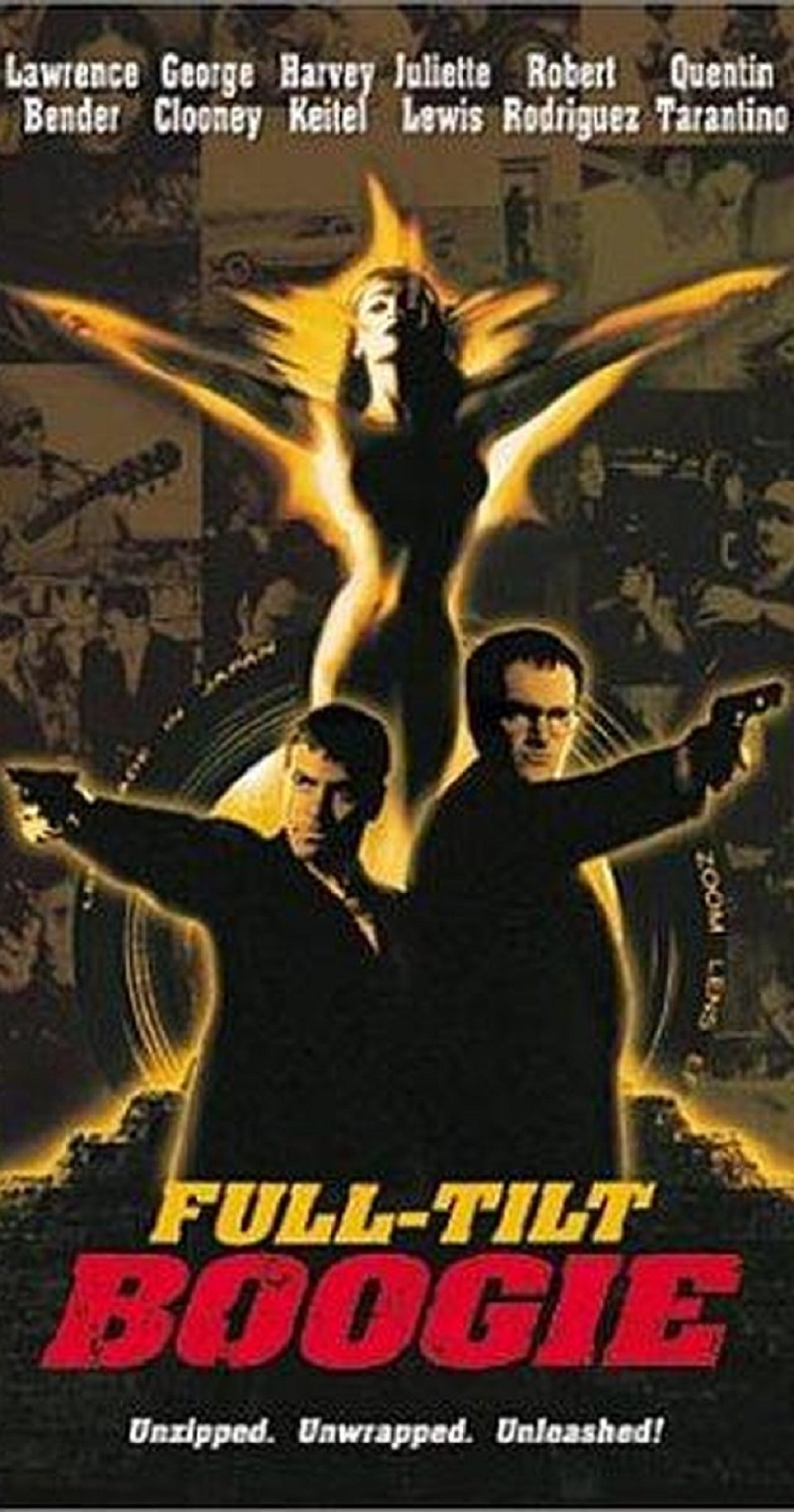
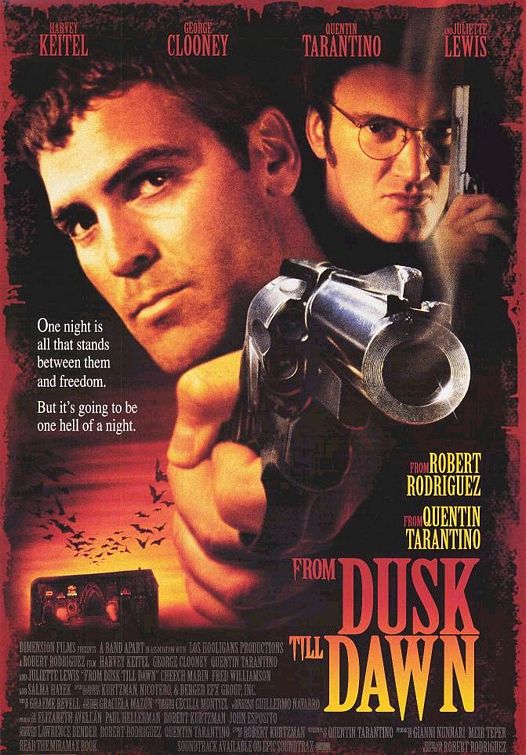
After a double feature of William Friedkin’s “To Live and Die in L.A.” and “Rampage,” which is not currently available on DVD, the audience members at New Beverly Cinema were in for a special midnight treat as the theater held a screening for the 20-year-old documentary “Full Tilt Boogie.” Directed by Sarah Kelly, it chronicles the making of Robert Rodriguez’s action horror cult classic “From Dusk till Dawn” which starred George Clooney and Quentin Tarantino as outlaw brothers who, along with a vacationing family, end up at a rowdy Mexican bar which turns out to be infested with vampires. The documentary introduces us to those people who worked behind the scenes on the movie, of why they want to be a part of show business, the fun they have when the cameras are not rolling, and of the complicated relationship between movie studios and unions.
Introducing this screening of “Full Tilt Boogie” was Kelly, and she was joined by her producer and friend Rana Joy Glickman. The emcee who welcomed them remarked about how cool it was this documentary was playing at the New Beverly and that it was sharing a marquee with Friedkin’s “Cruising.” To this, the emcee said about Kelly, “Whoa! She scored good!”
Kelly welcomed all the “insomniacs” who came out to see her documentary and explained how it became a reality.
“The reason this movie came about was that Robert Rodriguez and Quentin were about to start shooting ‘From Dusk till Dawn,’ and it was an $18-million-dollar independent movie and the unions were pissed,” Kelly said. “They were like, ‘What do you mean? No, you have to go union.’ And so, there was a big threat of a strike, and Quentin thought it would be cool to document it.”
“I had worked for him on a little movie called ‘Pulp Fiction’ and a couple of other movies he was involved with,” Kelly continued, “and he knew that I was studying to be a director so he gave me a shot. At the time, I was taking a break from production and I was working part-time in a law firm and I was like, ‘So is this for real? Should I quit my job?’ And he said, ‘Uh, quit your job yesterday.’ So, I did. We wrangled our little, tiny, hardcore crew and we started shooting, by the way, on 16mm film. Nobody shoots documentaries on 16mm film anymore, but we did. The union threat kind of turned into a cold war and I asked Quentin if we could keep shooting and just do a love letter to the crew. I pitched it as kind of like ‘Hearts of Darkness’ (Eleanor Coppola’s documentary on ‘Apocalypse Now’), but not that dark. Quentin said, ‘Yeah, that’s really fucking cool!’”
As for Glickman, she claimed to have hundreds of stories to tell about the documentary and “From Dusk till Dawn,” but she chose to tell only this one.
“When we finished ‘Full Tilt Boogie’ we were just so pleased that we finished and we got to make the posters for the film, not the one that Harvey Weinstein had selected,” Glickman said. “Our favorite poster is Sarah’s design, and it was Ken (Bondy), the craft service guy on ‘From Dusk till Dawn,’ standing there with a tray of lattes and it said, ‘From the maker of coffee on Pulp Fiction, we bring you Full Tilt Boogie.’”
Kelly responded, “That’s a great poster, right?”
“Full Tilt Boogie” may not be the masterpiece “Hearts of Darkness: A Filmmaker’s Apocalypse” is, but it’s still a very entertaining documentary which takes you behind the scenes of a movie’s production in a way few others do. We get to see the challenges crew members constantly face on a movie set, and we also get to take in the fun they have outside of it as well. For these people, this is a job done out of love and far more preferable than working a 9 to 5 job which has them sitting at a desk all day. Kelly certainly did create a love letter to these crew members, and we revel in the festivities they have from one day to the next.
Thanks to Sarah Kelly and Rana Joy Glickman for taking the time to come out, and at such a late hour, to talk about “Full Tilt Boogie” at New Beverly Cinema.
I got to speak with Costume Designer Erin Benach about her work on Jeff Nichols’ historical drama “Loving.” The movie takes us back to the late 1950’s and early 1960’s where we are introduced to Richard and Mildred Loving, an interracial couple whose marriage quickly had them banished from Virginia as it violated the state’s anti-miscegenation laws. They later sued Virginia, and their civil rights case, “Loving vs. Virginia,” eventually made it all the way to the Supreme Court which affirmed the very foundation of marriage ways and ended state laws that prohibited interracial marriage.
Benach also worked with Nichols on his other 2016 movie, “Midnight Special.” She earned a 2012 Costume Designers Guild Award nomination for her work on Nicolas Winding Refn’s “Drive,” and she reteamed with him on “The Neon Demon.” She has also worked with filmmaker Derek Cianfrance on his movies “Blue Valentine,” “The Place Beyond the Pines,” and “The Light Between Oceans.” Her other credits include Brad Furman’s “The Lincoln Lawyer,” Andrew Niccol’s “The Host,” Anna Boden and Ryan Fleck’s “Sugar,” and Ryan Gosling’s directorial debut “Lost River.” You can visit her website at www.erinbenach.com.
In my conversation with Benach, she talked about having the costumes fit into the story without overwhelming it, why the costumes could not stand out too much, and of the challenges she faced in capturing the look and feel of the years “Loving” takes place in. She also talked about the differences of working with Nichols and Refn whose films are so very different from one another.
Please check out the interview above. “Loving” is now playing in Los Angeles and New York.
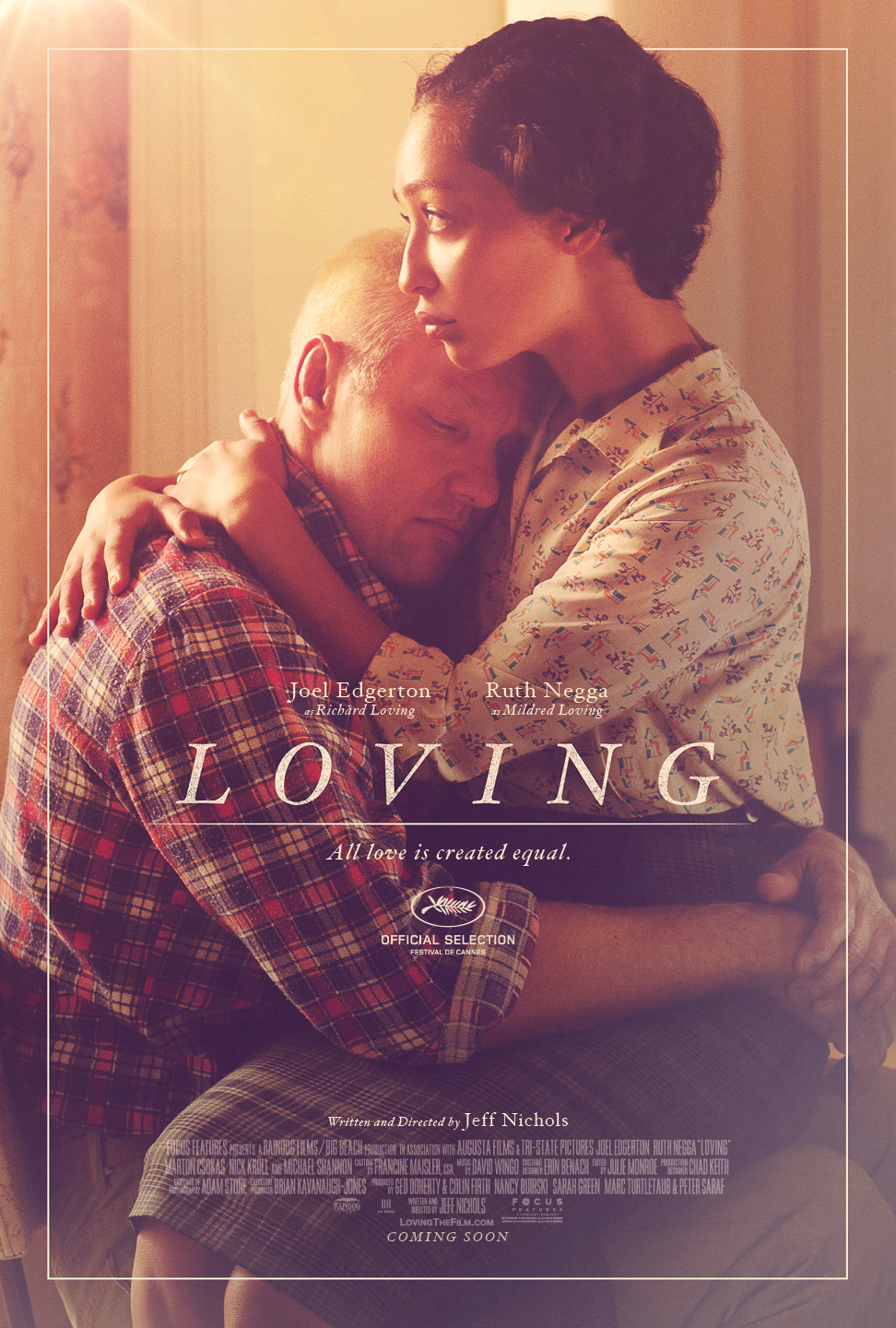
Jeff Nichols’ “Loving” is a beautiful movie from top to bottom as everyone involved in its making did an expert job of transporting us back to the 1950’s and 60’s. Based on a, yes, true story, it introduces us to Richard Loving (Joel Edgerton) and Mildred Jeter (Ruth Negga) who are deeply in love with one another. They eventually get married, but with Richard being white and Ruth being black, they are arrested and put in jail as their interracial marriage violated Virginia’s anti-miscegenation laws. As punishment, they are banned from returning to Virginia for 25 years and forced to live in Washington D.C., but they soon sue the state and their case eventually made it all the way to the Supreme Court where it was ruled banning interracial marriage is unconstitutional.
I recently got to speak with two artists who worked on “Loving” behind the scenes: Kenneth Walker and Julie Lallas. Walker was the head of the hair department, and his previous credits include “Jimi: All is By My Side,” “Munich” and Ridley Scott’s “American Gangster” which he described as the hardest film he ever worked on. Lallas headed up the makeup department and worked with Nichols previously on “Take Shelter,” and she has also worked on the set of “Enchanted,” “Nick & Norah’s Infinite Playlist” and “We Need to Talk About Kevin.” Talking with them both was very illuminating in terms of how they went about their jobs, and it also allowed me to ask them if they want their work to be showy or to instead just disappear into the framework of the movie.
Check out the interview above, and also included below is a trailer for “Loving.” Nichols’ movie is now playing in Los Angeles and New York, and it is definitely worth checking out.


 The Ultimate Rabbit