William Friedkin and Guests on Making ‘To Live and Die in L.A.’

To Live and Die in LA

Director William Friedkin declared “To Live and Die in L.A.” to be one of his personal favorites of his career when he dropped by the Aero Theatre in Santa Monica. The film was being shown as part of American Cinematheque’s tribute to him, and it played as a double feature with “The French Connection.” But while Friedkin was scheduled to be there, he brought along two of the movie’s stars as surprise guests: William Petersen who played Secret Service Agent Richard Chance, and Darlanne Fluegel who portrayed his “girlfriend” and informant Ruth Lanier.

With “To Live and Die in L.A.,“ Friedkin worked with casting director Bob Weiner who had also worked on “The French Connection.” With this film, Friedkin didn’t want any stars and could only consider no-name actors as the budget was only $6 million. In a sense though, casting unknown actors was a plus for this film as the characters they play walk a thin line between good and evil, and having recognizable stars might affect how this came across.

Known these days for “C.S.I.,” it was a shock to realize that “To Live and Die in L.A.” was Petersen’s first lead role in a movie (he previously had a small role in Michael Mann’s “Thief“). Weiner discovered the actor when he was playing the lead in a Canadian production of “A Streetcar Named Desire.” Petersen said he hadn’t done any movies nor did he have an agent at the time. All he knew about Friedkin was the films he directed, and they met in New York to do a scene together. But Petersen didn’t ever get around to finishing when Friedkin interrupted him to say, “That’s good enough for me. You got the part!”

From there, Petersen said he didn’t know what to do. Excited as he was for the opportunity, he was already scheduled to be in another play soon and wasn’t sure how to go about negotiating with Friedkin or the studio. It didn’t even occur to him he would be making $400 a week! So, he ended up talking with John Malkovich, who knew him from Steppenwolf, to get advice on what to do. Later, Petersen went back to Friedkin saying he wouldn’t be able to play Richard Chance due to his prior theatrical commitment. To this, Friedkin told him, “No problem. We’ll wait for you.”

Now how cool was that?! Seriously, how many other directors, let alone movie studios, would wait on an actor who is not even an established name yet? Considering the sheer charisma Petersen exudes onscreen just from one look on his face, it makes perfect sense why Friedkin waited on him before he started production.

Although he was used to doing theater more than film, Petersen said he found making “To Live and Die in L.A.” a “freeing, fun experience” and thought all movies would be exactly like it. This, of course, got a good dose of laughter from the audience as we know they are not. Despite the long hours on set, Petersen was never tired at day’s end.

In researching his role, Petersen worked with Gerald Petievich, the former Secret Service Agent who wrote the book this movie is based on, and with criminals including actual counterfeiters. This led Friedkin to tell the audience how Petievich ended up getting a counterfeiter paroled from jail just so he could create the fake money they needed. Friedkin even admitted he passed so many fake bills to where he concluded the government’s money was worthless and only paper. Some kids of the special effects supervisor were not as lucky as they ended up taking some of the fake money to buy candy, and a Treasury Agent got called on them in ten minutes flat.

Fluegel was shocked about getting a part in “To Live and Die In LA,” and she created one of the film’s most unforgettable characters. She said working with Petersen was “so easy,” and they both agreed there never was a moment between them which didn’t feel real. We always hear these stories about how actors don’t like doing sex scenes and how awkward they can get, but Fluegel said they were actually easy to do. She also made it clear neither of them actually had sex onscreen even though it looked like they did. When they worked together, everything always flowed perfectly.

But one great behind the scenes story Petersen told was when they were at the airport and Chance was chasing down John Turturro’s character of Carl Cody. This had Petersen jumping on top of the moving walkway while in pursuit, but in rehearsing it, security came over and told him and Friedkin it was against safety regulations and didn’t want him to do that again. Petersen, however, was insistent as it was easier for him to jump on top, and it worked better for the scene. So, when security was out of hearing range, Friedkin told Petersen to jump on top anyway when he said action, and that after he said cut, Friedkin would yell at him not do it again, making it look like he didn’t forget what security said previously. Once again, Friedkin does movies his way regardless of the warnings others throw at him.

Like several of William Friedkin’s movies which came out after his heyday with “The French Connection” and “The Exorcist,” “To Live and Die in L.A.” was not a big hit when first released. It was only after its debut on video and DVD when it gained a cult following which has gotten bigger and bigger over time. Seeing it on the big screen was a blast, and it deserves to be ranked alongside the best movies of Friedkin’s career. Besides, this is much more preferable to watching him pick his feet in Poughkeepsie.

John Carpenter Looks Back at ‘Escape From New York’ and ‘Escape From LA’

John Carpenter Escape From New York photo

“Escape Artist: A Tribute to John Carpenter” continued with the exploits of Snake Plissken in the double feature of “Escape From New York” and “Escape from LA” at the Aero Theater in Santa Monica. These films featured some of the collaborations between Carpenter and Kurt Russell who first worked together on “Elvis.” They quickly became great friends and went on to work together on several other films including these two and “Big Trouble in Little China.”

The emcee warned us that the print of “Escape From New York” was pretty faded as it was an original print and the only one American Cinematheque could get their hands on. This was being generous as it looked like it had been slaughtered by countless film projectors, and the color was faded to where everything looked pink. It is astonishing it didn’t break apart in the projector. Still, the fans still enjoyed watching the film, one which they have seen hundreds of times before. They laughed when “1997 NOW” came up and when Lee Van Cleef speaks into this enormous cell phone no one would have today, let alone in 1997.

After “Escape From New York” ended, Carpenter came to the stage and was greeted with another thunderous standing ovation. Carpenter quickly acknowledged the crowd by saying, “Thank you for coming out to see the movie tonight, but I got to tell you this is the worst fucking print. My fucking God! There’s no color in it!” The audience laughed loudly as they were in complete agreement.

Escape from New York poster

The discussion started off with a question about the genesis of the project. Carpenter talked about writing the script back in the early 1970’s when there was a great sense of cynicism in America about our President and in response to the hostage crisis in Iran. He also admitted he was inspired by two of his favorite movies back then, “Dirty Harry” and “Death Wish.” Those two movies involved men driven to the brink emotionally and who took it upon themselves to wreak vengeance on those who wronged them. Like those characters, Snake Plissken gets the job done, and this brought a lot of satisfaction to audiences as nobody in the real world seemed to be accomplishing anything.

Carpenter said he initially wanted Clint Eastwood to play Snake Plissken. For one reason or another, it did not work out. He also said he had shopped this screenplay around to several studios which rejected it outright, but fortunately he had a multiple picture deal with Avco Embassy which had produced “The Fog.” Ironically, they wanted Charles Bronson for the title role. Somehow, everything came together when Russell got cast as Snake Plissken, and he portrayed the character as an asexual human being who cares about nothing more than staying alive. In the process, he created one of the most memorable anti-heroes ever seen in a movie.

Carpenter also talked about Lee Van Cleef, a favorite actor of his from Sergio Leone westerns, who played Police Commissioner Bob Hauk. Lee had seriously injured his knee during the filming of another movie and had never gotten it fixed, and as a result he was in constant pain while making “Escape from New York.”

With a budget of only $5 million dollars, “Escape From New York” needed to be filmed as quickly as possible. Carpenter said the rule of low budget filmmaking was to shoot as little film as possible and to make it as long as you can. In fact, there is actually only one real shot of New York in the entire movie which features the Statue of Liberty, and it pans from there and dissolves into a set in Los Angeles. A lot of what you see of New York in the movie are actually models and matte paintings done by artists from Roger Corman’s New World Pictures, among them James Cameron. Much of the movie was filmed in downtown St. Louis which had had a huge fire that destroyed several city blocks. The city let Carpenter and his crew film there in triple digit temperatures, and they even shut the power down for them when they filmed at night.

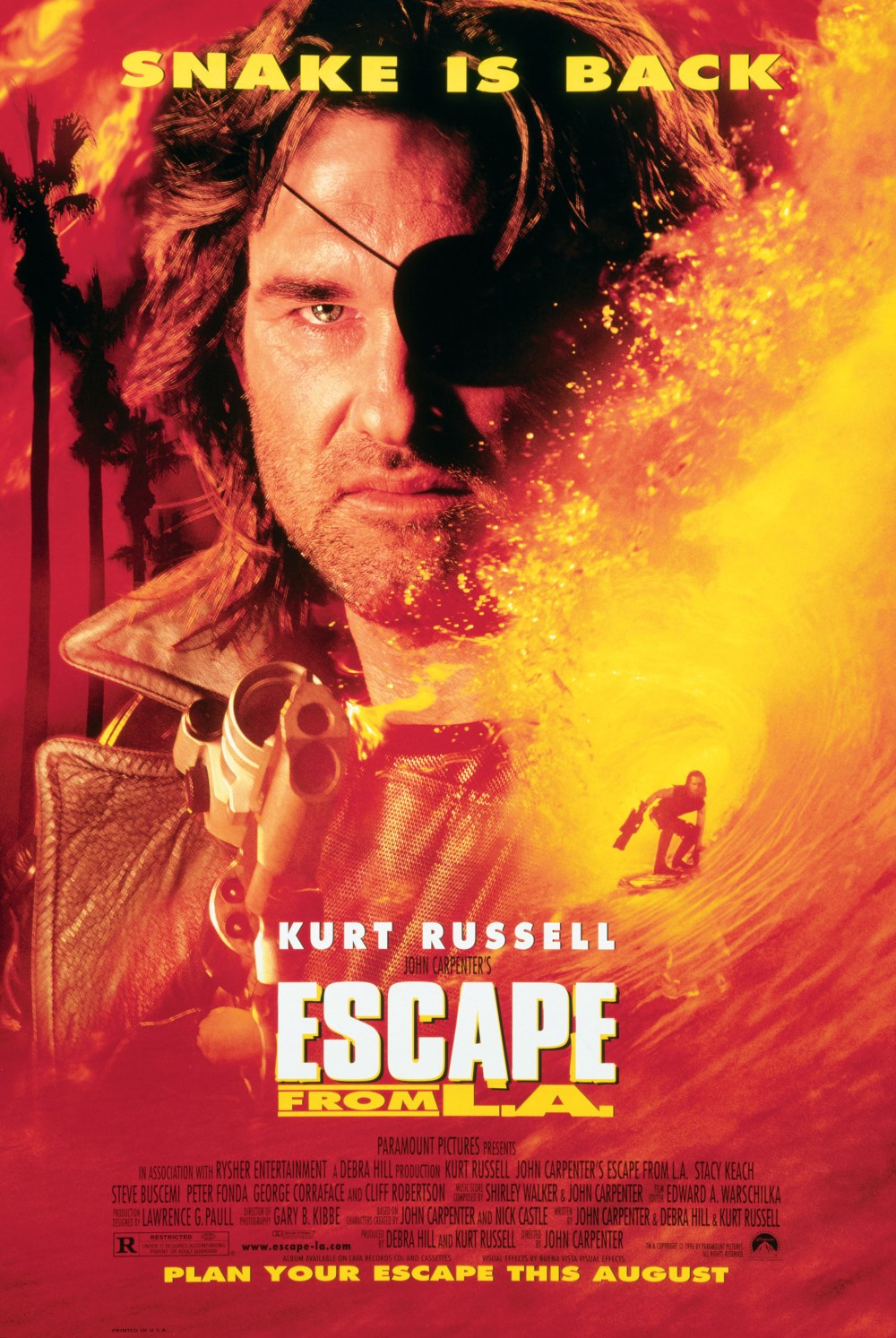
Escape from LA movie poster

When it came to making “Escape from LA,” Carpenter had a budget of around $50 million to work with. But while he and Russell had more time and money, Carpenter said he had the hardest time writing the screenplay for it because he felt that everything he was writing was “bullshit.” What got him to revisit Snake Plissken was that Russell was so keen on playing the character again, and they solved their script problem by moving the action to Los Angeles which was in a constant state of denial with all the earthquakes and natural disasters occurring there. They simply took the same scenario of the original movie and updated it to reflect the current state of the city while filming.

“Escape From New York” may have had only one real New York shot in the entire movie, but all of “Escape from LA” was filmed in Los Angeles. The sequel was shot over a period of one hundred and three nights, and Carpenter said he found filming at night to be very “soul draining” as it changes the way you see things and the darkness infects you in a very unhealthy way.

One audience member brought up how at one point it looked like Carpenter and Russell might do a third movie called, “Escape from Earth.” This never panned out because “Escape from LA” unfortunately bombed at the box office. There was also supposed to be a video game based on the movies, but the company involved with it ended up going back to the past by resurrecting Pac-Man. There was even talk of a television series which would act as a prequel to the movies and even an anime movie chronicling the further adventures of Snake Plissken, but neither of those projects became a reality. Despite the box office failure of “Escape from LA,” there are still many people out there who are intent on continuing the exploits of their favorite antihero.

These days, Carpenter said he is content to sit at home and watch the NBA Finals or play video games. He told the audience he had just finished playing “Ninja Gaiden 2” and would be moving on to “Metal Gear Solid 4” next. It doesn’t seem like he is in a big hurry to make another movie, but this could change if the studios pay him a lot of money. Carpenter feels the movie business keeps changing on him, and he does not appear to be as enthusiastic about making films as he once was.

Carpenter closed out the evening by saying he had to go meet with his drug dealer. Before he left, the moderator gave him a gift saying Carpenter had given so much to us that he wanted to give something back. This something was the “Escape from New York” board game which is, apparently, the most complicated board game ever.

After the discussion ended, he did take some time outside the theater to sign autographs and pose for pictures with fans who still see him as a big inspiration. If you look at movies of recent years, you will see Carpenter’s influence over many of them both in their visuals and the music. To this day, he remains one of the important directors of the sci-fi and horror genre, and his cult following remains as strong as ever.

As the evening wore on, many came back inside to watch “Escape from LA.” The print was in much better condition, but this didn’t stop it from breaking down during the movie’s last seconds. For those who know how this sequel ends, it only seemed comically appropriate as Snake shut down… Well, you know.

John Carpenter Revisits ‘The Thing’ at the Aero Theatre

John Carpenter Dummy Magazine photo

“Escape Artist: A Tribute to John Carpenter” was held a few years ago by American Cinematheque at the Aero Theater. In addition to being treated to a double feature of “The Thing,” which is widely regarded as his best film, and “The Fog,” the writer, director and composer also showed up in between both films to give us more insight on their making and took questions from the audience. Even though these movies are now twenty to thirty years old, they still resonate deeply for movie fans today. This was proven true by the fact these screenings were sold out and packed with Carpenter’s biggest fans.

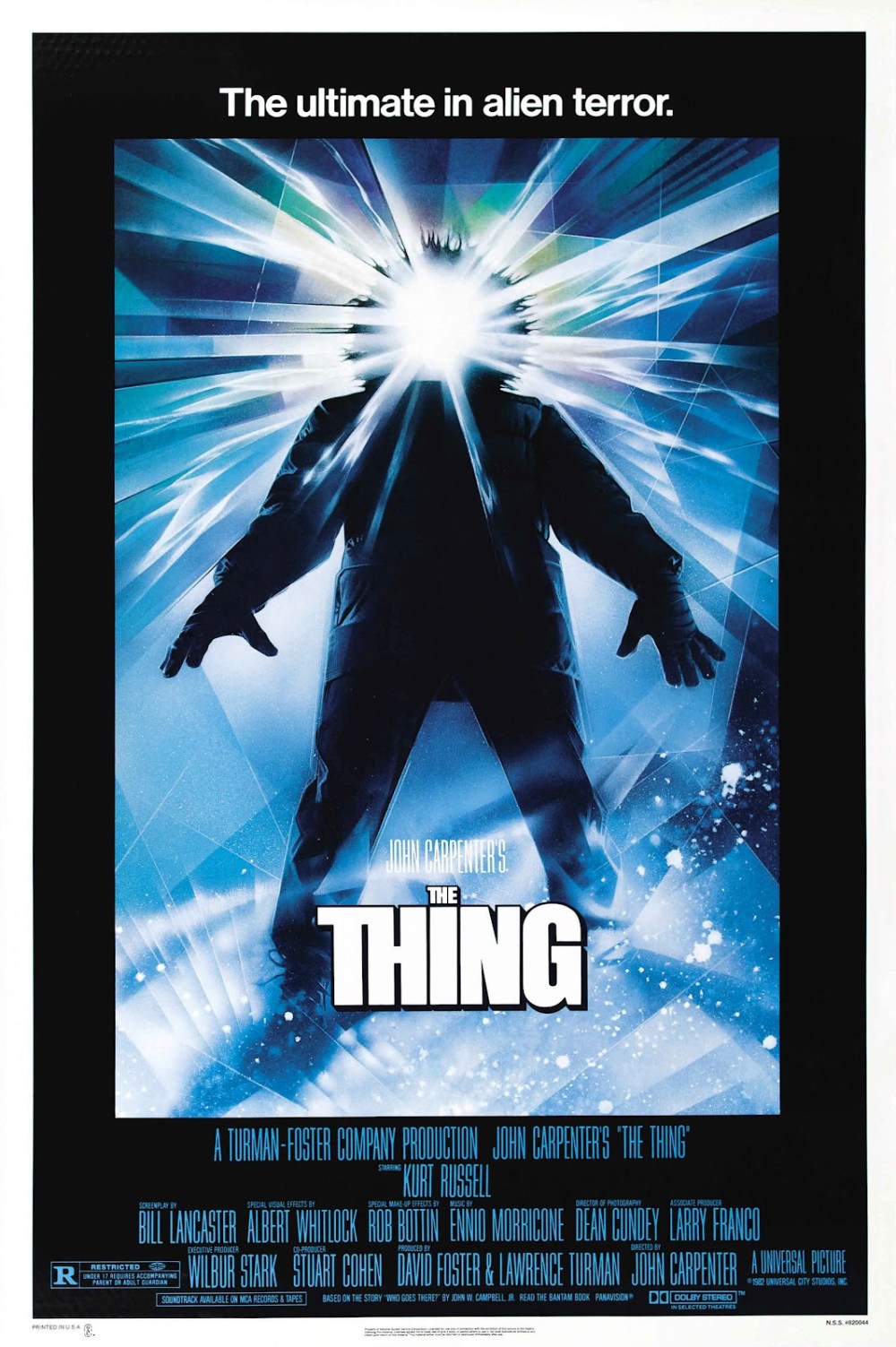
While “The Thing” was not a big hit upon its release, it has since developed a huge cult following and been critically re-evaluated as the masterpiece it always was. Eighty percent of the audience had probably seen this movie several dozen times, but they still jumped during its most shocking moments.

The Thing movie poster

After the movie ended, Carpenter came to the stage and was met with a standing ovation and thunderous applause. He thanked them for coming on out to see this movie when they could have just watched it at home. One fan in turn thanked him for coming on out to visit with us as he has millions of fans all over the world, and yet he chose to hang out with us.

Today, as the emcee pointed out, many are surprised “The Thing” was not a big hit when released back in 1982. Carpenter put it all the more bluntly:

“It tanked! 1982 was supposed to be the summer of love. It was the summer of ‘E.T.’ and it was the summer of freedom and hope, and ‘The Thing’ was about as bleak a movie as any that could have been released that year. People hated it for that, and all the sci-fi fans out there absolutely hated it and trashed it when it first came out.”

As Carpenter pointed out to actor and friend Kurt Russell on the movie’s DVD commentary, “We came out two weeks after ‘E.T.’ And while there’s was all warm and cuddly, ours was ugly and hideous.” Universal Pictures, which released both movies that summer, attempted to make it the summer of extra-terrestrials, but the timing did not work at all in Carpenter’s favor and it later cost him the job of directing the Stephen King adaptation, “Firestarter.”

One fan pointed out how “The Thing” was unique in a sense as it is one of the few Carpenter movies he did not compose the score for. While the score does have the Carpenter sound, it was actually composed by Ennio Morricone. Carpenter said Morricone is one of the greatest film composers ever, and he did point out there is one synthesizer piece of music which was not composed by Morricone. Now he wouldn’t say who composed it, but it’s safe to say he did, and in association with Alan Howarth.

Another fan pointed out several of Carpenter’s movies have been remade like “Assault on Precinct 13,” “The Fog” and “Halloween,” and a remake of “Escape From New York” is in the works. This fan said he found remakes blasphemous, and to this Carpenter replied, “I actually find it flattering. They also have to pay me a lot of money when they do that.”

Dean Cundey, director of photography on “The Thing,” worked on several of Carpenter’s movies including “Halloween.” Carpenter has not worked with Cundey for some time now, and one man asked why and if there had been a falling out between them. Carpenter replied they have not fallen out, and he recently caught up with Cundey at a movie shoot in Canada. Carpenter did, however, point out why they haven’t worked together for a while, “Dean wanted to be a director. And when you have a director on a movie, and a director of photography who wants to be a director, that’s just not going to work out.”

Everyone who knows Carpenter knows he is a big fan of westerns, and he recently recorded a commentary track for the special edition release of “Rio Bravo.” Many wonder why he still hasn’t directed a western of his own, and Carpenter replied he honestly didn’t know but that he came close several times. The closest was when he wrote the script for “El Diablo” which was made into a cable movie that earned him a Cable Ace Award. If you look closely, all of his movies do have western elements to them. The closest he has ever gotten to making a western is “Vampires” with James Woods.

Many also wondered, and it was asked, what future projects he has on tap and of what his current passions are. His reply was, “Current passions? I’m playing Ninja Gaiden, I just got Metal Gear Solid 4 for PlayStation 3… No seriously, I have a couple of things I’m looking at doing, so we’ll see what happens.”

Before he left, he did have some things to say about “The Fog,” “I have heard that the print for this movie is not in the greatest shape, and that it is pretty faded. But keep in mind that when we made this movie, we made it for only $1 million dollars, so please be kind.”

George Lazenby on Why He Played James Bond Only Once

George Lazenby as James Bond

More than 40 years after “On Her Majesty’s Secret Service” was released, George Lazenby still has the dubious distinction of having the shortest tenure as James Bond. To many, he’s the joke of the franchise and referred to by others as “the one that failed.” Whether or not you agree with this, everyone still wonders why he ended up starring in only one 007 movie. Did critics rip his performance to shreds in the press to where it was too painful to continue? Did he have other plans? Well, he told a sold-out audience at the Egyptian Theatre in Hollywood why his tenure as Bond lasted only for a single film.

Lazenby said he does and doesn’t regret doing more Bond movies and that, after all these years, he still doesn’t know why he got the part. The producers did, in fact, want him to play Bond again and even offered him a contract to do several more. The 70’s, however, were just around the corner (“On Her Majesty’s Secret Service” was released in 1969), a time of long hair and bell bottoms, and his agent informed him the Bond franchise would not last beyond the 60’s. Although we know this was clearly not the case, Lazenby listened to his agent.

Lazenby also admitted he was happier as a model in Paris and didn’t like getting up early in the morning. When the movie was released, he had already grown a beard to hide from the public. But once he became unrecognizable, he had a little trouble getting into the premiere.

The things Lazenby did enjoy included going to fine restaurants whose owners invited him back and said, “The check’s on us.” It also got him instant access to nightclubs where he fearlessly jumped onstage with the dancing girls as if it were perfectly allowable. At one club he even told the head bouncer, “Send the girls to my place for a drink!” Now he didn’t think the bouncer would honor this request, but sure enough, there were 20 girls waiting for him and his buddies at the hotel. The next morning, four of them were still hanging around.

Albert R. Broccoli remarked that had Lazenby done more James Bond films, he would have been seen as the best actor to have portrayed 007. While many still consider him the least of the Bond actors, he still has many fans who considered his performance in “On Her Majesty’s Secret Service” terrific, and he still holds the record for being the only Bond who could perfectly throw his hat onto the hook. To quote a line from the beginning of the movie, “This never happened to the other fellow.”

George Lazenby Reflects on Playing 007 in ‘On Her Majesty’s Secret Service’

On Her Majestys Secret Service movie poster

After all these years, George Lazenby is still the only actor to play James Bond in just one movie, “On Her Majesty’s Secret Service.” While nowhere as respected as Sean Connery or Daniel Craig, Lazenby still has his share of fans who gave him a standing ovation when he appeared at the Egyptian Theatre in Hollywood. The evening’s moderator, Stephen Rubin, proclaimed Lazenby was a “terrific James Bond,” and if he had to do just one Bond movie, he picked the right one to star in.

After five movies, Connery quit playing Bond as he had grown tired of what he described as “impossibly long schedules.” Lazenby was not the first choice to replace Connery as he had no acting experience other than doing commercials, and Lazenby claimed he got considered for Bond when the late Cubby Broccoli spotted him at a haberdashery getting a Connery-like haircut.

Directing this 007 adventure was Peter Hunt who apparently got the job as a Christmas present from the Broccoli family. Lazenby described him as tough and that he got his way most of the time. He also admitted lying to Hunt about being an actor, and when Lazenby later told him he wasn’t, Hunt went crazy and fell down on the floor laughing. Once he composed himself, he told Lazenby, “Stick to your story. I’ll make you the next James Bond!”

The two of them, however, had a falling out on the first day of shooting, and Lazenby said Hunt didn’t speak to him again for nine months. According to Rubin, Hunt’s challenge in getting a performance out of Lazenby was to “piss him off.” Rubin also remarked how tough the last scene must have been for Lazenby as it’s the most emotional in the Bond franchise, and Lazenby said he did one take with tears and that Diana Rigg, who plays Contessa Teresa di Vicenzo in “On Her Majesty’s Secret Service,” bit him to get the desired emotion in another which he said wasn’t needed.

One thing’s for certain, Lazenby’s work in the action sequences was nothing short of excellent. On top of holding several black belts in martial arts, he credited a lot of his toughness from living in Australia where you “smack your mate.” Sounding almost Russell Crowe-ish about his birthplace, Lazenby said he could take care of himself once he got the first hit in, and back then he was too stupid to be afraid.

Regarding his fellow cast mates, Lazenby said Rigg thought he was a “complete idiot,” and she got pissed at him after he beat her in a game of chess. She also didn’t want him mucking around with other girls during filming, a promise Lazenby admitted he was unable to keep. He was discovered having a tryst with a receptionist, and when asked if she was memorable, Lazenby replied, “She was!”

Telly Savalas played Bond’s arch nemesis Ernst Stavro Blofeld, and Lazenby described him as a “great guy who loved to gamble.” When Lazenby got a raise from $100 to $1,000 a week during shooting, Savalas saw his money and asked, “Hey, do you play poker?” Lazenby also said Savalas used to bet everything he had including his house.

Even if Lazenby is still considered the worst actor ever to portray James Bond, it certainly didn’t seem to be the case considering the standing ovation he got upon entering the Egyptian Theatre. He gave us a 007 at his most relaxed in “On Her Majesty’s Secret Service,” and this makes his interpretation of the role the most unique in the long-running franchise.

Paul Verhoeven and Company Revisit ‘Total Recall’ in Hollywood

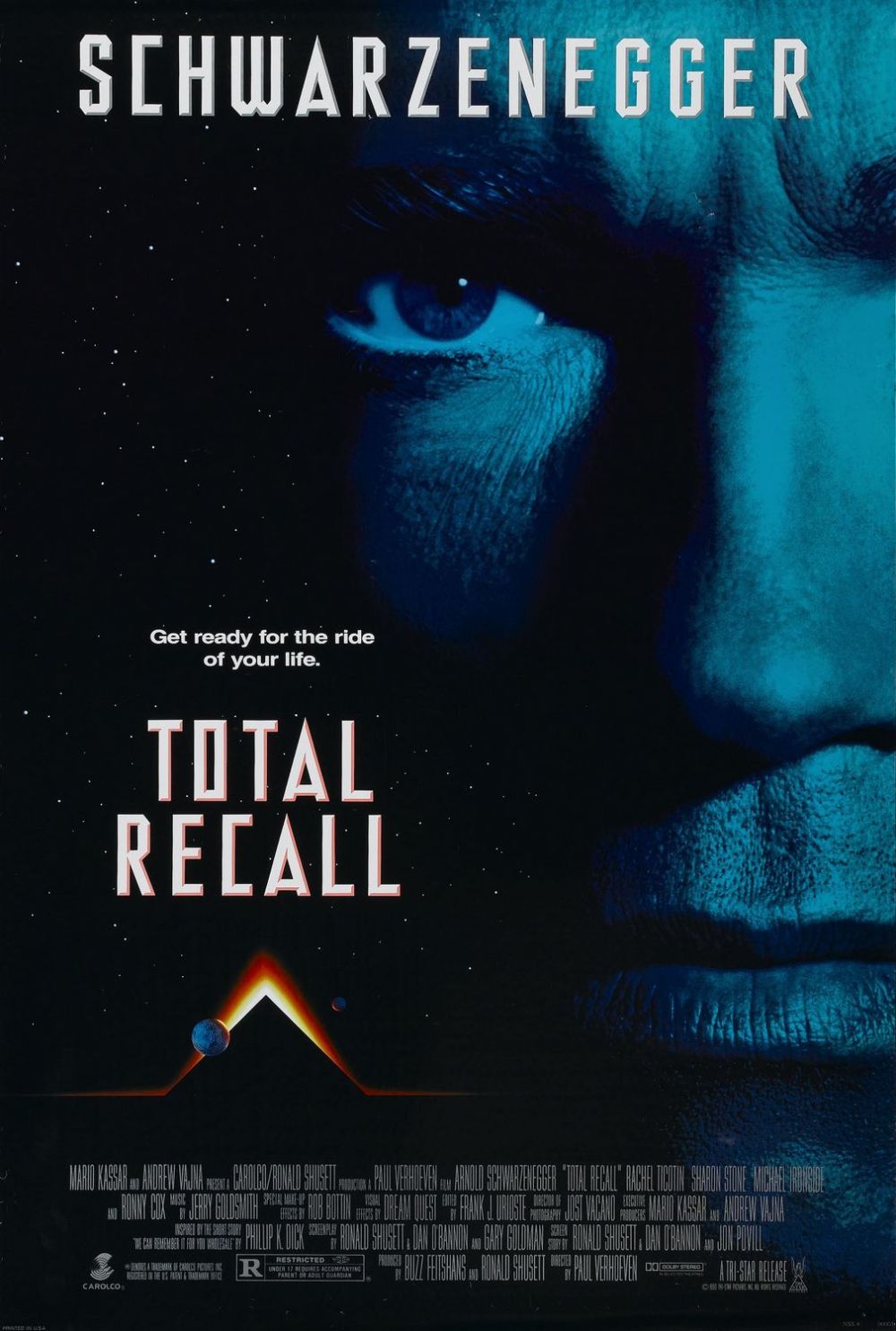
Total Recall movie poster

On Friday, August 24, 2012, Dutch filmmaker Paul Verhoeven dropped by the Egyptian Theatre in Hollywood where American Cinematheque screened a 70mm print of his 1990 movie “Total Recall.” Joining Verhoeven for a Q&A after the movie was two of its screenwriters, Ronald Shusett and Gary Goldman. They discussed the rigors of making the movie, and of how the script eventually made its way out of development hell.

As we all know by now, “Total Recall” is loosely based on the Philip K. Dick short story “We Can Remember It for You Wholesale.” Shusett said he and the late Dan O’Bannon, writer of “Dark Star” and “Alien,” bought the rights to the story back in 1974, and they completed their first draft in 1981. From there it was set to be made into a movie, but the project kept falling apart time and time again. Filmmakers like Bruce Beresford and David Cronenberg had worked on it for a long time but eventually pulled out due to creative differences or studios canceling the project because of its enormous budget.

“Everything kept falling through over and over again,” Shusett said. “Sets were built, but then the project kept getting canceled because it was too expensive. Back in 1990, this was considered to be the most expensive movie ever made. I wanted to keep all those sets that were built from being torn down, and I asked one studio executive how I could save them. He responded that I should change the movie’s name to ‘Partial Recall.’”

Verhoeven got involved in “Total Recall” because Arnold Schwarzenegger had picked him to direct after seeing “Robocop.” Schwarzenegger had actually been interested in doing the movie for a long time and had encouraged Carolco Pictures producer Mario Kassar to buy the rights to it from Dino De Laurentis whose film company had gone into bankruptcy. The movie had already gone through many drafts, and it took one specific scene to pique Verhoeven’s interest:

“I came to the scene where Dr. Edgemar (played by Roy Brocksmith) visits Arnold’s character on Mars and tells him that he’s not really here,” Verhoeven said. “In that moment you are not sure if what you’re seeing is real or a dream, and that got me really excited because none of the movies I had made in Europe ever had a scene like that. What Edgemar tells Arnold is that what he is experiencing is not true, so we had to prove it wasn’t true again.”

Working with Carolco Pictures on “Total Recall” was “paradise,” Verhoeven said, as they never forced anything on the filmmaker other than actors they hand-picked to star in their movies. He also said the beauty of Carolco is that they never subjected him or the movie to test screenings. Verhoeven went on to make “Basic Instinct” and “Showgirls” for Carolco, and then the gigantic flop that was “Cutthroat Island” ended up forcing the company into bankruptcy.

Schwarzenegger was set to be the star of “Total Recall” no matter who directed it, and Verhoeven said he was perfectly fine with that. Changes in the story had to be made though as his character was originally an accountant. Verhoeven and the screenwriters ended up changing his profession to that of a construction worker as they all agreed you could not go around Arnold.

Verhoeven also pointed out how having Schwarzenegger in “Total Recall” made the movie “very light” which was great because, as put it, “the straight way of telling the story would not have worked.” This has been further proved by Len Wiseman’s remake of the movie which even Verhoeven admitted “wasn’t good.”

The main problem with adapting any Philip K. Dick story to the silver screen is that they are basically told in two acts, and finding a third act proved to be very difficult.

“I got really scared because there had already been forty drafts written, and we could never seem to figure the third act out,” Verhoeven said. “It eventually came down to Hauser (Schwarzenegger’s secret agent character) always being the bad guy as it gave us somewhere to go.”

One audience member asked Verhoeven how Sharon Stone got cast in “Total Recall:”

“Sharon came in the first day of casting, and after a half hour I was convinced she would be perfect as Lori,” Verhoeven said. “Once we were filming the movie, however, I came to realize what she could do as an actress. After one fight scene where she almost kills Rachel Ticotin’s character and Arnold aims a gun right at her, she quickly changes moods in what seemed like a heartbeat. It was Sharon’s final scene before her character was shot that made me want to choose her for ‘Basic Instinct.’”

Goldman told the audience movies like “The Matrix” and “Inception” wouldn’t have happened without Verhoeven’s pushing the idea of the dream in “Total Recall.” The audience applauded this sentiment loudly, and the movie still holds up well more than twenty years after its release. It’s a shame the producers of the recent remake failed to realize what made the original so good as one of them described Verhoeven’s movie as being “kitsch.” That producer is now eating their own words in the wake of the remake’s critical and commercial disappointment.

David Mamet Looks Back at Writing ‘The Untouchables’ on Tax Day

David Mamet photo

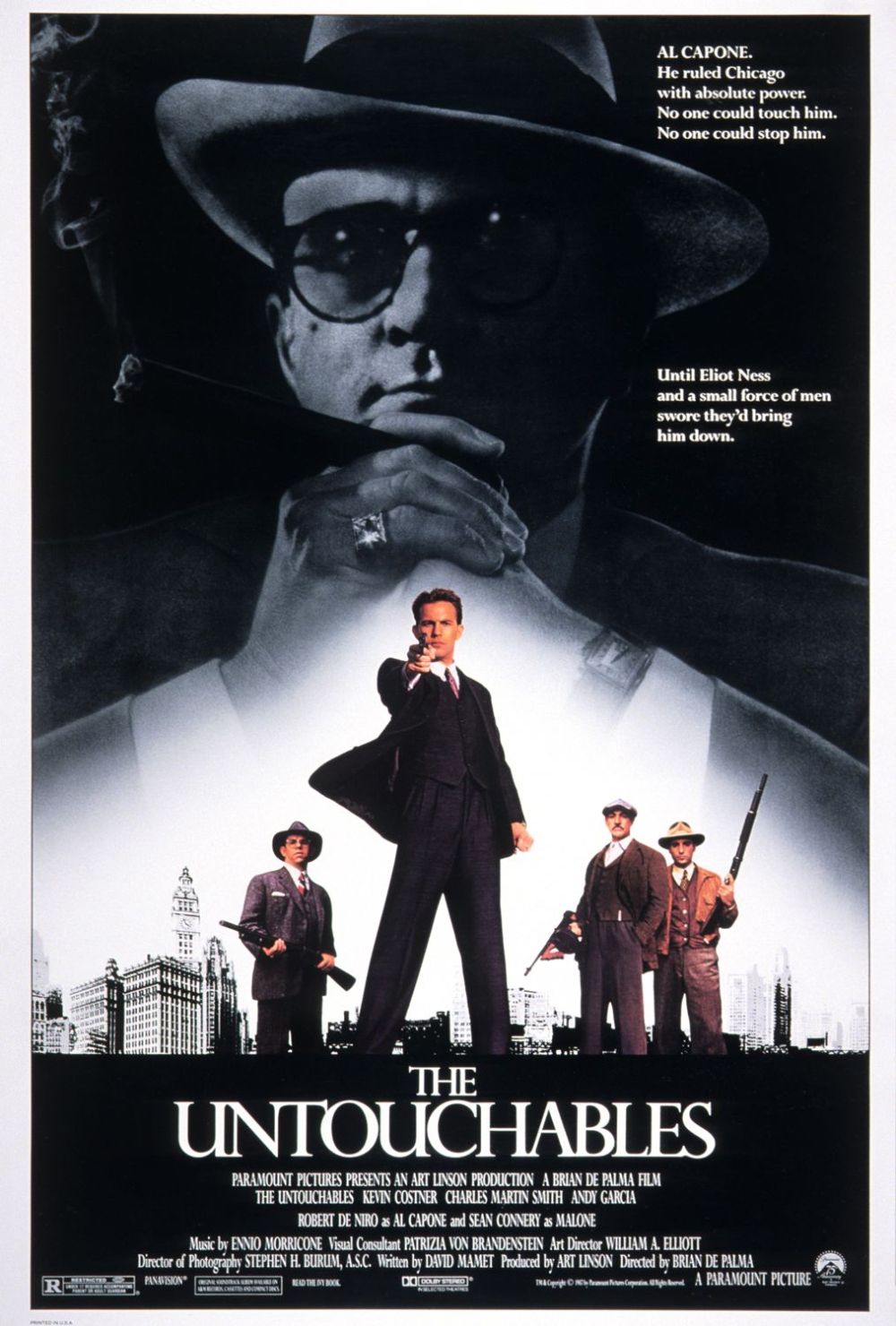
There were more than enough film buffs who filed their tax returns, or applied for an extension, on April 15, 2010, in the nick of time to check out a special screening of Brian De Palma’s 1987 classic “The Untouchables” at the Aero Theatre in Santa Monica. Following the story of how Elliot Ness and his select group of men who worked to bring down infamous crime boss Al Capone on tax evasion charges seemed like the perfect way to celebrate Tax Day. Finally seeing it on the big screen in glorious 70 mm was great after first watching it on VHS years ago.

But I do have to admit though that this movie really screwed me up for a time after I first saw it. It was one of the few times my parents let me watch an R-rated movie with them when they rented it on video. Having seen it reviewed on so many different shows like “At The Movies,” “Sneak Previews” and of course “Siskel & Ebert” (which had both hosts clashing over it passionately) had me excited about watching it eventually, and this was back in the day when I rarely, if ever, went out to the movies. But it was one of the first times where I realized the good guys didn’t always make it to the finish line. To see them get killed off in a most gruesome way was painful for a 12-year-old to take in as I always believed the good guys, those who work for justice would be the ones left standing. Back then, I was starting to learn how unfair the world can be.

The Untouchables movie poster

Anyway, this evening had a special reason for us to come out other than seeing the film in 70 mm as David Mamet, who wrote the screenplay for “The Untouchables,” was also in attendance to engage in a Q&A. Instantly recognizable in his beret and those huge yellow glasses of his, Mamet had many stories to tell regarding the making of De Palma’s film, writing the script for it and his thoughts on writing and Hollywood in general.

The first question asked was how Mamet got hired to write the script, and he replied that he got the job by default. Apparently, the job was first given to the late playwright Wendy Wasserstein who had won a Pulitzer for “The Heidi Chronicles.” She must have done quite a bit of work on it because Mamet said the Writer’s Guild of America still wanted to give her a credit. But he never hid the fact that what attracted him to writing the script was, as he said, “a lot of money.” The way Mamet described it, writing for someone else is known as “whoring.”

Being one of America’s most acclaimed playwrights and having grown up in Chicago where “The Untouchables” takes place should have made Mamet the most obvious choice for this motion picture. Mamet talked about how he grew up there with gangsters all around him and of how everyone lived and breathed the same air as them. As for the cops, he got to know them better while working as a cab driver. He also went on to say several of his family members kept telling him stories about Capone from time to time.

For years, Chicago has been known to be a city engulfed by corruption, and Mamet did nothing to hide the fact it is full of crooks. He described it as a machine that is run downstate and remarked the mayors occasionally go to jail. He also remembered a saying once told to him when he asked someone in politics what the difference was in running for one office or the other. The politician told him, “the girls get prettier.”

It seems many natives of this city have the same romantic view of Chicago as Mamet did, and he said it best, “In Chicago, we love our crooks!”

 A lot of Mamet’s inspiration for “The Untouchables” came from all of Chicago, he said. He tried to include as many famous landmarks such as The Anchors Restaurant and The Lake. Much of downtown Chicago was used to great effect throughout, and I wonder if there has been a movie since which is as superb in the way it brings Prohibition-era Chicago to life.

With De Palma directing “The Untouchables,” Mamet said he just hoped the director would stick to the script he wrote. Looking back, he said De Palma did actually stay true to his script to a certain extent, but that there were moments where he felt aliens had come down and sucked the brains out of those making the film. In terms of differences from his original script, Mamet said they took out the crawl he put at the end of what happened after the Prohibition Era ended and of how gangsters are still with us today. Mamet also said De Palma was the one who added the “cockamamie baby carriage” sequence.

During the making of “The Untouchables,” Mamet said he was never on the set. He was actually quite happy he wasn’t there which was surprising to here as you’d figure any writer would want to be there even if it annoys the hell out of the director. But while most writers want the opportunity to be on a film set, Mamet said he feels better off staying out of the way.

One of the main sources behind the screenplay was Elliot Ness’ autobiography which Ness wrote with Oscar Fraley. When an audience member asked Mamet if he believed what Ness wrote about, Mamet replied quite simply, “I don’t believe anything anymore.”

At its essence, Mamet described “The Untouchables” as a melodrama. Lest people see this as him looking down on the way De Palma shot this now classic movie, he was quick to quote from Stanislavski, “Tragedy is just heightened melodrama.” Looking at the movie as a melodramatic piece actually makes perfect sense as audiences got so swept up in the story to where it affected them more emotionally than they could have anticipated.

Other tidbits Mamet shared included that aside from Robert DeNiro’s method preparation in playing Al Capone, he ended up saying just what was in the script. The line uttered by Sean Connery’s Malone character of “here endeth the lesson” came from the book of common prayers. But the one which really stood out was what Mamet said Connery first told the producers when he came to make this movie, “Broccoli never paid me a dime to play James Bond!” As for “the Chicago way,” Mamet said it was something he just came up with. The philosophy behind it was when you take something, burn it down to the ground and then build it back up again.

Many in the audience were also eager to hear Mamet talk about the art of writing, and he had much to say on the subject. As a dramatist, he said his job is to take out the narration and go with the plot and characters. Watching the plot for him is where the enjoyment comes from. The problem is actors and directors end up wanting to put all the narration back in. They want to spell out everything for the audience, but dramatists make you want to know more about what’s going on. The way Mamet sees it, you just need a plot and an actor to get the ball rolling. A play or a movie cannot start from an ongoing situation. Of course, writing a plot can be very hard. In terms of plots, he views “Wag The Dog” as his “Casablanca” in that it was the easiest plot for him to write. Once he was finished, Barry Levinson started shooting the movie a month later, and the shoot went very quickly. As for all the other plots he has worked on, they were nightmares.

In talking about some of his other projects, Mamet said the coffee’s for closers speech with Alec Baldwin from “Glengarry Glen Ross” might have come from sitting in an office where he once worked. There was also some talk of how he wrote the script for “Ronin,” which was directed by the late John Frankenheimer, and never got credit for it. Mamet said he had always wanted to write something anonymously, and “Ronin” became that something because he was not originally hired to write it. What happened was Robert De Niro pleaded with him to do a rewrite as he felt the script was not up to speed. Mamet said he eventually caved in and rewrote the whole script in a week.

In addition to being a writer, Mamet is also a director of film and stage. When asked about his approach to directing, he said he wants to know what the story is about and how each beat contributes to the action. From there, everything comes together along with some unforeseen difficulties. When asked if movies would ever become an art form again, Mamet said, “Movies were never an art form, they were entertainment. It just evolved into an art form from there, and it’s still evolving in different ways.”

Mamet was up onstage for almost an hour at the Aero Theatre, and it still didn’t feel like he was there long enough. This writer, who grew up a working-class man and went to Kaminsky Park on a regular basis (yes, he is a Cubs fan) was full of anecdotal moments which made us want to learn more. When it comes to “The Untouchables,” he gives all the credit for its success to De Palma as he made all the elements work perfectly. He said almost everything good that happens is an accident, so it’s safe to say “The Untouchables” is a glorious accident and one which invites repeat viewing.

I personally want to thank David Mamet for saying something he once heard from a judge; that being quoted out of context is “the definition of a quote.” This makes writing articles like these so much easier! As for his line about critics being “illiterate swine taking the bread from my children,” I won’t take that one personally. Oh yeah, he also said the lizards in Hollywood will be the last ones to die, and he believes their last words will be, “I want to know more…”

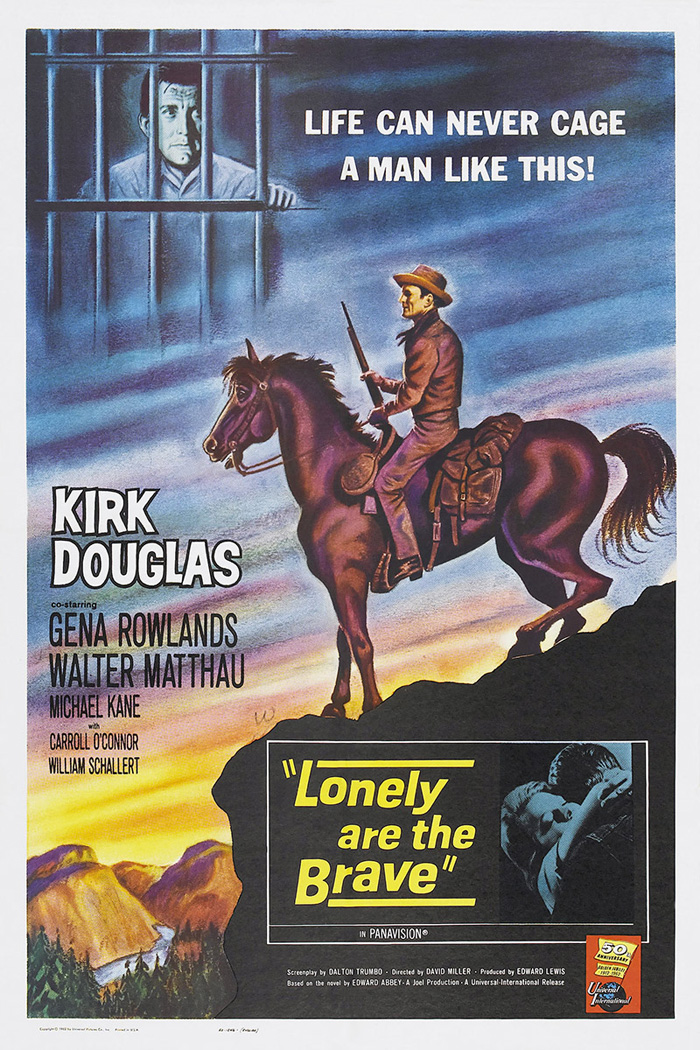
Kirk Douglas Looks Back at ‘Lonely Are The Brave’

lonely-are-the-brave-poster

The Ultimate Rabbit would like to wish Kirk Douglas a very happy 100th birthday. It is an age few people ever reach, and this is a man who has survived so much in his lifetime: Hollywood, anti-Semitism, a stroke, a helicopter crash and, tragically, the loss of a son. Still, Douglas persevered in spite of many obstacles thrown in his path, and in his 90’s he continued to work as an actor and a writer. The man who was Spartacus has reached a milestone which needs to be celebrated, but it should be no surprise he has lasted as long as he has. Happy Birthday Kirk!

The following article is of an appearance he made in Hollywood a few years ago in which he talked about one of his most enduring motion pictures.

“The best actors disappear into their roles, but icons always keep part of themselves onscreen. Every one of his characters makes hard choices as a figure of integrity. Not always a good guy, not always a bad guy, but a real guy.”

Those were the words writer Geoff Boucher used to introduce legendary actor Kirk Douglas who made a special appearance at the Egyptian Theatre on September 19, 2012. American Cinematheque was screening “Lonely are the Brave” in honor of the movie’s 50th anniversary, and Douglas was greeted with a thunderous and deserved standing ovation. Douglas thanked the audience for coming to see this movie which he made fifty years ago. He also added, “Don’t ask for your money back!”

Boucher pointed out how Douglas has made so many great movies, but this one in particular really stands out. In the movie, Douglas portrays John W. “Jack” Burns, a cowboy from the Old West who refuses to become a part of modern society. “Lonely are the Brave” is based on the book “The Brave Cowboy” written by Edward Abbey, and Douglas recalled being so intrigued by the character and his horse (Whiskey) and how the book spoke strongly about the difficulty of being an individual today. Douglas did, however, say his major problem was by the end of the movie the audience was “rooting for the horse instead of me!”

There was also talk about Dalton Trumbo who wrote the screenplay for “Lonely are the Brave” and whom Douglas had previously worked with on “Spartacus.” Trumbo was one of the Hollywood Ten who refused to answer questions from the House Committee on Un-American Activities regarding their alleged involvement with the Communist Party, and he ended up spending 11 months in prison for contempt as a result. It was Douglas who helped Trumbo get a screenwriting credit on “Spartacus,” and he said he hated the injustice of what Trumbo was put through. Douglas’ latest book “I am Spartacus! Making a Film, Breaking the Blacklist” deals with this extensively.

Douglas made it clear how after reading Abbey’s book, he felt there was no one who could do a better job of adapting it than Trumbo, and it is said he found Trumbo’s screenplay for “Lonely are the Brave” to be perfect to where he didn’t change a single word of it.

Boucher also brought up that Douglas had some problems with “Lonely are the Brave” when it came out, and this was especially the case with the movie’s title:

“The book was called ‘The Brave Cowboy’ and I didn’t want that title,” Douglas said. “I wanted to call it ‘The Last Cowboy,’ but the studio which had the money insisted on ‘Lonely are the Brave.’ And I said, what the hell does that mean?”

Douglas has more than earned his status as an acting legend in Hollywood. Old age has not slowed him down one bit as he just finished a one-man show, released a new book, and took the time to appear at the Egyptian Theatre to talk about “Lonely are the Brave” which really is one of his very best movies. He finished his talk that evening by expressing his respect for actors who help other people, and of how he finds it sad that the media prefers instead to concentrate on the more “racy” things they do.

Boucher remarked at the amazing journey that Douglas has made from being “The Ragman’s Son” to going to all the places he has been and of having worked with all the great people he has worked with, and he commended the actor’s career for being guided not just by talent but integrity. That sentiment was shared by everyone in the audience in attendance as we were all very happy to see Douglas there, and he told them he was “glad and happy” they all came to see him and “Lonely are the Brave” which came out fifty years ago.

Alan Howarth Discusses Working on Film Scores with John Carpenter

alan-howarth-photo

A screening of John Carpenter’s “Assault on Precinct 13” at the Egyptian Theatre in Hollywood brought out a number of guests such as Austin Stoker who played Lieutenant Ethan Bishop and Douglas Knapp who was the film’s director of photography. But the one guest I was really interested to hear from was Alan Howarth, the composer and sound designer who collaborated with Carpenter on a number of his film scores from “Escape From New York” to “They Live.” Howarth even took the time to do a live performance of his and Carpenter’s music, something I never thought I would ever see in my lifetime.

During the Q&A, Howarth talked about how he came to work with Carpenter, their process for scoring his films and his favorite film scores of the ones they worked on together. Howarth wasn’t actually on board for the original “Assault on Precinct 13” though he did work on a remastered version of the soundtrack for it and “Dark Star” for BuySoundtrax.com. It wasn’t until he worked on his first big film when he became inadvertently acquainted with Carpenter.

alan-howarth-and-john-carpenter

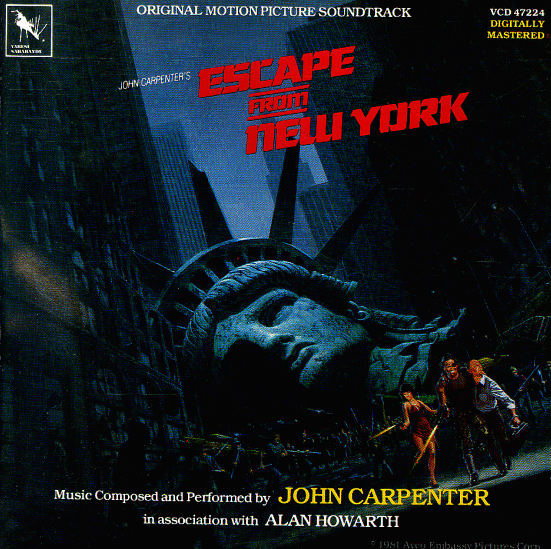
“I came on board at ‘Escape from New York,’ and that was kind of happenstance because my very first movie, less than a year earlier, was ‘Star Trek: The Motion Picture,’” Howarth said. “I had come on as the sound designer and created the sounds of the Enterprise like the warp drive and the transporters and stuff like that. The picture editor from that movie, Todd Ramsay, his next assignment was ‘Escape from New York,’ so I had slipped him some cassettes and he knew I was a musician. John had worked with another fellow on ‘Halloween,’ Dan Wyman, and there was some change up there, and so literally the guy comes over to my little, rented house in Glendale and set up in my dining room. It was nothing formal. I sat down and I played him a few things and he goes, ‘okay, let’s do it.’ That was it.”

“John always wanted somebody who knew about the technology,” Howarth continued. “In fact, a couple of times I tried to explain to him how it worked and he was all, ‘I don’t want to know that. It’s your job to make it work, make it in tune, and when I push down the note the red light is on.’ So that’s where I started, but he’s a collaborative person. I love working with people. I’m from the bands and rock & roll. I was one of those people. So, it was really great and my first film score was ‘Escape from New York.’”

escape-from-new-york-soundtrack

From there, the two of them worked on several projects all the way to “They Live.” As he continued discussing the work he did with Carpenter, we came to discover he played a larger part in Carpenter’s film scores than we ever realized.

“Next, he went off to do ‘The Thing’ and they wanted to make ‘Halloween II,’ so again John said, ‘I’m going to be busy. You’re going to have to do Halloween.’ Same thing, so I did ‘Halloween II’ and I used his original ‘Halloween’ music, overdubbed it and created new stuff.”

After “They Live,” they seemed to part ways for reasons Howarth never explained, but it gave him the confidence to start scoring films on his own. Of course, he was still eager to get Carpenter’s blessing when it came to a franchise the director never planned to start.

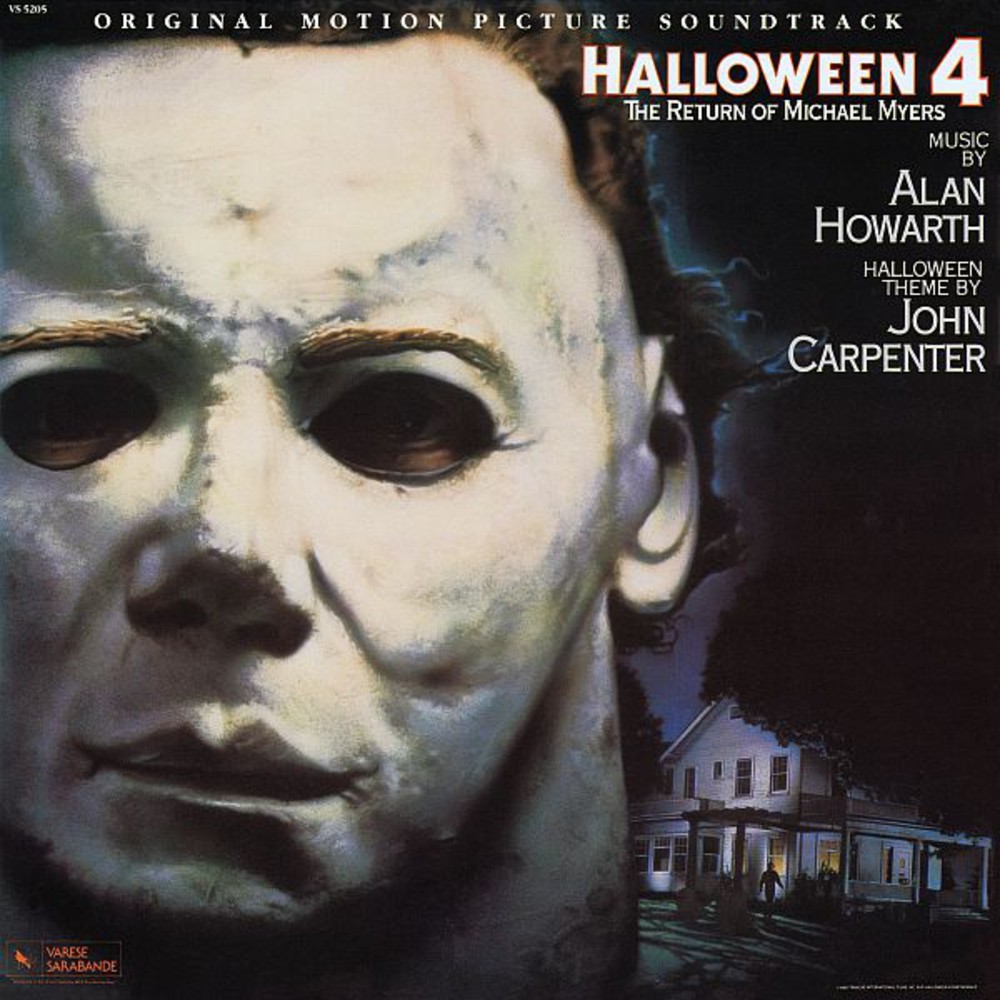
“I found out they were going to do ‘Halloween 4’ and I said to John, ‘they asked me to do this and you’re my buddy and I want to do something with this.’ He said sure, so I wound up doing ‘Halloween 4, 5 and 6’ and that really launched me as a composer which is what I love to do the most, and as we are in a world of economic stasis, I had to do it all by myself. As you see, this is my studio right here. It’s all down to a laptop and a guitar and some recorders when it used to be a million dollars’ worth of stuff. Not that that stuff isn’t valuable, but you can do without it now,” Howarth said.

halloween-4-original-soundtrack

One audience member asked which of the scores he did with Carpenter is his favorite, and the answer was a little bit of a surprise.

“I think ‘Halloween III’ because it was really an artistic departure for both of us, and ‘Big Trouble in Little China’ is the most produced and has the widest range,” said Howarth. “We had rock and roll and scary things and chases and this whole Asian influence, so it was really a broad scope of things. That’s one of my favorites.”

halloween-iii-soundtrack

Like many in the audience, I was eager to hear how Howarth and Carpenter would go about working on a score. Did they start working on it before shooting began? Did they work on it after shooting was finished? Did they think about the music while making the film? We hear how composers spend so much time preparing the perfect score for a movie, but Howarth made his process with Carpenter sound quite simple.

“It’s all one big jam. It’s improvised,” Howarth said. “Sometimes he would come in with a theme in mind. I’d set up the piano before he came over and started something. A lot of it we just made up on the spot. In fact, I introduced him, because I’m a technical person, to the synchronization between a videotape and a tape recorder. It almost seems like we were the first to do it. Before that, everything was done with a stopwatch. So, you would make a cue that was three minutes long and kind of set a tempo, and then you would go back and literally copy it on a Moviola and fool around with the scene.”

“This was the first time you could watch the movie and play at the same time, so he referred to that as the electronic coloring book which made it even easier to improvise,” Howarth continued. “Through that whole period we also benefited from the evolution of electronic music instruments, so from analog synthesizers and a 24-track machine to midi and digital sequencers, these scores had a new installation in the progress of musical instruments, so it’s almost a chronology or a music lesson in the gear.”

Another audience member asked Howarth how long he and Carpenter would jam until they found something they really liked. His answer illustrates how fast these two worked on their music.

“We did a cue a day,” Howarth said. “One quote I always get from John, and it’s just really true, he said, ‘Alan if you want to be a director you only need two important words, yes and no. Just be very decisive. Even if you say no today or yes today and tomorrow, you change your mind. You got twenty or thirty people that are taking direction, and you don’t want to leave them in a lurch, so it’s better to just be decisive.’ So, it was a couple of times we did something and came back and said that wasn’t working, but it wasn’t very often.”

Having worked in movies and music all these years, Howarth clearly has a wide knowledge of musical instruments and electronics. When asked what he would consider as the go to synthesizer, Howarth’s answer shed some light on how far musical technology has come over the years.

“I chose all the gear and I arrived at being a fan of the Prophet 5,” Howarth said. “It sounded good, but the other reason was that it was the first programmable synthesizer. Prior to that, you had to literally make little diagrams of where all the knobs and switches were to get back to the same sound, so this was the first time you could do something and save it. That really moved things forward a lot, and I brought in the programmables and the sequencers.”

One big question many had about the music Carpenter and Howarth worked on was the score to Carpenter’s remake of “The Thing.” This was Carpenter’s first big studio movie, and it allowed him to work with his all-time favorite composer Ennio Morricone. However, when you listen to the score, some it sounds like it was done by Carpenter and Howarth, and this is especially the case with the movie’s main theme. Howarth went into detail about who really composed the score to “The Thing.”

“They (Carpenter and Morricone) took a meeting, and he (Morricone) saw a little bit of the footage and he scored his score,” Howarth said. “He comes back and, of course, how does John talk to his hero about what just went down and where he wants to go? And there’s a translation issue between English and Italian and all this other stuff. So John played the stuff we did for ‘Escape from New York’ and he says, ‘Can you do something like this?’ Ennio goes back for a second pass now with keyboards, and that’s where ‘The Thing’s’ theme came from. So it’s Ennio Morricone doing John Carpenter really. At the very end after all that, there was one more pass on about four or five cues where John came over for just an afternoon and we did some cues that kind of sound like ‘Christine’ that you can tell is basically our synth stuff. So basically, it took three scoring passes on the show to get it.”

the-thing-soundtrack

It was a real treat to have Alan Howarth talk about his musical collaboration with John Carpenter. The film scores they worked on are among my favorites of all time, and I never get sick of listening to them. Howarth continues to work as a film composer, and his more recent credits include scores for “Backstabbed,” “The Dentist” and “House at the End of the Drive.” Here’s hoping we get to hear more scores from him in the near future.

‘Major League’ Cast and Crew on Working with Charlie Sheen

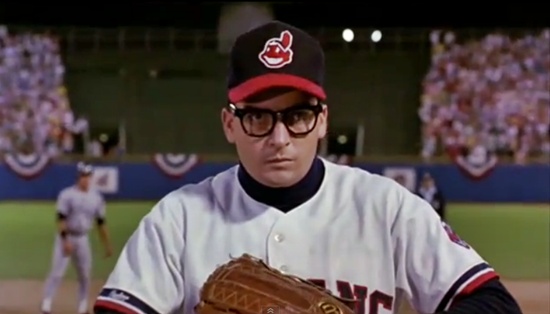
major-league-charlie-sheen

Charlie Sheen is better known these days for his bad reputation than his talents as an actor. His ouster from the CBS show “Two and a Half Men” looked to be the end of him, but he soon bounced back and filmed a plethora of episodes for the FX series “Anger Management.” Still, his bad boy image is impossible for him to shake, and it makes one wonder just how much he is like his character of Ricky Vaughn in “Major League.”

The question of what it was like working with Sheen was brought up when American Cinematheque did a special screening of “Major League” and “Major League II” at the Aero Theatre. Sheen’s role as the Cleveland Indians star pitcher Ricky “Wild Thing” Vaughn remains one of his best and most memorable roles, and his current troubles in the press can’t take away from our pleasure in watching him. Among the guests at this screening were writer/director David S. Ward, Tom Berenger, and Corbin Bernsen, and each described their memories of working with Sheen.

Ward, who wrote and directed the first two “Major League” movies, described Sheen as being the consummate pro on set and said he showed up every day on time.

“He knows his lines, he gives everything, he very seldom goes up on a line, he’s very generous with the actors and they all love to work with him,” Ward said about Sheen. “I can’t say enough about him.”

Ward even remembered a time while making “Major League II” when Sheen had a scene with David Keith who played the overly cocky Jack Parkman. It was a scene where Sheen was pitching to Keith, and it turns out that Keith had lost his contact lenses and was seeing two baseballs instead of the one being thrown to him.

“I was trying to get a shot of him (Keith) hitting a ball that looked like it got in the air enough to get out of the stadium,” Ward said. “Well he (Keith) was seeing two baseballs coming at him, and Charlie threw him 128 pitches. And I said ‘Charlie let’s stop, we can do this tomorrow, we can do this some other day’ and he said ‘no, no, no let’s do this. I’m warmed up, let’s do this.’ 128 pitches, never complained, and it took us that many for Keith to hit one in the air! That’s the way Charlie was. He gave everything, he loves baseball, he loves to play baseball, he’s a terrific baseball player, and he’s got a great arm and throws hard.”

Berenger, who had previously worked with Sheen in Oliver Stone’s “Platoon,” recalled playing ball with him at Santa Monica High School before “Major League” began filming.

“He threw ten pitches, and out of the ten one was a little outside and nine were right on the corners of the strike zone,” Berenger said. “That’s how much control he had, and he was fast too. We went down and did batting practice with the Savannah Cardinals which was a minor league team at the time, and I warmed up one of the pitchers and he threw 94 miles an hour. And I’m guessing Charlie was about 88-89 miles an hour.”

Bernsen ended up telling this story of when Sheen was working on “Major League II.” One day Sheen found out his hotel room had been robbed, and among the items stolen were his wallet, his Walkman (remember those?) which he always had on him, and his gun.

“Charlie had just flown in one of 15 women who had come in during the shoot. Charlie is Charlie, he’s still professional but Charlie is Charlie,” Bernsen said. “I got pretty close with him and I remember him saying, ‘Fuck! I don’t care about my wallet, I don’t care about my Walkman, they took my fucking gun! Whatever happens, I just don’t want that to get out!’”

“So he and his girlfriend and I walked from the hotel across this walkway because he’s got to find another Walkman to do tomorrow’s shoot with because he likes to have his music,” Bernsen continued. “And he’s gonna go into the appliance store to buy a Walkman and always going, ‘I don’t care about the money and I don’t care about the Walkman. Don’t mention the fucking gun!’ And we walk into this department store into the appliance section back in the old days where they had a hundred TVs on the same station. The news was on and as we entered the department, ‘Breaking news: Charlie Sheen was robbed while in town making ‘Major League.’ Among the things stolen was his gun…’ And I just saw him freeze.”

Whether this adds or takes away from all those crazy stories we’ve heard about Charlie Sheen over the years, it also shows him to be far more professional than we give him credit for in general. Sheen’s performance in the “Major League” movies was no fluke, and if Ward and company are serious about making another movie in the future with these characters, they would be incredibly foolish to not include Sheen in it.