Clark Duke on His Role in ‘A.C.O.D.’

WRITER’S NOTE: This interview took place in 2013.

Actor Clark Duke made his big breakthrough with his own web series “Clark and Michael” in which he played a fictional version of himself opposite Michael Cera. Since then, he has gone on to give a number of hilarious performances in movies like “Sex Drive,” “Kick Ass” and “Hot Tub Time Machine.” This past summer, he stole some scenes in the eagerly awaited sequel “Kick Ass 2″ in which he reprised his role of Marty who has now taken on the superhero identity of Battle Guy.” Clearly, he has become the guy to go to for memorable supporting roles.

In his latest movie, “A.C.O.D.” (Adult Children of Divorce), Clark plays Trey who lives in the basement of his older brother Carter’s (Adam Scott) house. Both Trey and Carter managed to survive their parents’ bitter divorce as kids, but it looks to have forever soured Carter on the thought of marriage. Trey, however, ends up getting engaged to his girlfriend and begs Carter to get their estranged parents to come to the wedding. Knowing how their parents can’t stand to be in the same with one another, Carter knows that this will be a challenge to say the least, but he goes through with the improbable reunion because that’s what his little brother wants. But as things get underway, Trey has yet to learn the real truth of what is going on behind his back.

We got to catch up with Duke during a roundtable interview which was held at the SLS Hotel in Los Angeles, California as part of the “A.C.O.D.” press conference, and he proved to be as funny off screen as he is on it.

Question: When you’re playing a character like Trey, how do you keep him grounded in reality as an actor?

Clark Duke: Well, this script was pretty grounded. We didn’t have to improv a lot. A good script makes our job a lot easier.

Question: You and Adam Scott play brothers in this movie. How did you go about establishing that chemistry and working together?

Clark Duke: Well, it probably helped that we knew each other beforehand and we were friends before the movie so there wasn’t much of an acclimation period, I guess. I have one sibling, a younger brother, so I kind of tapped into that. As to how to play it, I related more to Adam’s character while reading the script. When you have a cast that’s good, nothing’s too hard.

Question: How did this project come to you and what made you want to do it?

Clark Duke: I just read the script. You get sent scripts all the time, but ninety-nine percent of them are just unreadable and terrible. So, when you get a really good one that really stands out… That’s just the truth; most of them are just god-awful. I went to the table read in just actively wanted to do the movie, so I did (laughs).

Question: Ken Howard, the current President of the Screen Actors Guild, co-stars in this movie as well. What was it like working with the union boss?

Clark Duke: No riffraff on the set. No grace periods for lunch, just ended right on time every day (laughs). He’s a licensed deputy as the SAG-AFTRA head.

Question: Adam Scott joked that Ken Howard deputized the both of you and gave you both firearms…

Clark Duke: We immediately abused it (laughs). I would waive mine at cars. We were in Atlanta so I would go to a lot of strip clubs with the gun, and then I’d float my SAG card and they are like OK. They just had to put up with it (laughs).

“A.C.O.D.” is now available to own and rent on DVD, Blu-ray and Digital.

‘A.C.O.D.’ Interview with the Great Catherine O’Hara

Photo credit: Gary Friedman / Los Angeles Times

WRITER’S NOTE: This interview took place back in 2013, and I have indicated the specific question I asked during it.

Catherine O’Hara is one of the best comedic actresses working today, and she never fails to give a hilarious performance in anything she does. After making a name for herself on “SCTV,” O’Hara went on to a career in movies that included unforgettable roles like the self-centered Delia Deetz in “Beetlejuice” and the forgetful mother Kate McCallister in “Home Alone.” But some of her best work to date has come from her being in the hilarious mockumentaries of Christopher Guest such as “Waiting for Guffman” and “Best in Show.” O’Hara even received a number of nominations and awards for her role as Marilyn Hack in “For Your Consideration.”

In “A.C.O.D.” (an abbreviation for Adult Children of Divorce), O’Hara plays Melissa who, as the movie starts, is undergoing an extremely bitter divorce from her husband Hugh (Richard Jenkins). Since their marriage ended, Melissa has made it clear that she hates Hugh with every fiber of her being. Then she gets the news that her youngest song Trey (Clark Duke) has just gotten engaged to his girlfriend of a few months, but what she has yet to discover is that her other son Carter (Adam Scott) is working on getting her and Hugh together so that they can attend Trey’s wedding in a peaceful fashion. While you may think you know what happens from there, “A.C.O.D.” proves to have many surprises and takes you in directions you don’t see coming.

We got to meet up with O’Hara during the “A.C.O.D.” press junket which was held at the SLS Hotel in Los Angeles, California. She still looks very lovely after all these years, and her hearty laugh is more than enough proof that she hasn’t lost her sense of humor in the slightest.

Question: “A.C.O.D.” was written by Stu Zicherman and Ben Karlin who have great pedigrees as writers, and you also have Zicherman directing this movie as a first-time director. How did he do as a first-time director and what was the atmosphere like on set?

Catherine O’Hara: I wasn’t aware of him being a first-time director while we were working because he wrote it for one thing. He and Ben wrote it and they are great friends, and Ben was there all the time so you had a good support system. Stu seems like a levelheaded kind of clear, confident guy and he’s funny. When people are smart and good at what they are doing like that and have a sense of humor about everything outside of themselves and even themselves, they are not threatened by anyone giving ideas or working collaboratively. It is a collaborative venture and you can’t lose by being open to the people you’ve hired. Not in the way that it was like a free-for-all, you just knew there was a chance to discuss everything there and he’s so open and he’s a great writer. It just felt like I was in good hands.

The Ultimate Rabbit: The thing I really liked about this movie is that you really don’t know what’s going to happen next. Most comedies you kind of get a sense of the formula and where it’s going to go, but this one really had surprise after surprise. Have you read a lot of scripts like that recently?

Catherine O’Hara: No, you would have seen me in them (laughs). If I was reading them, hopefully I had a chance for them. No, there aren’t enough. They (Stu and Ben) took their time writing this and it’s based on their lives and they have been friends since they were six or seven years old. They know all their extended families and their stepparents, and they really took their time and did a great job and they really thought it out. Every character is taken care of, that’s what I love. It’s not just one or two leads and everyone else is just barely there. Where are you going now? Out of your movie…

Question: That seems to be the case with most movies, but this one gives each of its characters the attention they deserved.

Catherine O’Hara: It is, far too many. This one was really well thought out.

Question: Ken Howard who plays your second husband Gary is also President of the Screen Actors Guild. What was it like having the union leader on set?

Catherine O’Hara: There was that whole merger thing coming up (with SAG and AFTRA) and I personally was against it and he was for it.

Question: Did you talk with Ken about it?

Catherine O’Hara: I did. I asked him why is this good. He seems like a good, smart man, but I just didn’t get it. His explanation was… You could tell that he really cares about the unions and wanted the best for everyone so that was nice to hear.

Question: But you still disagree with him?

Catherine O’Hara: I’m really so not involved with the union in any way, so I had to trust him. He actually is really involved and knows what he’s talking about, so I thought okay. I just like to work and get paid (laughs).

Question: You have been in show business for a long time now. Have you seen a change because for the longest time there was this great void of roles for women over 40 and 50. Do you believe that the tide is now turning?

Catherine O’Hara: There are more and more women writing, and there are more and more good male writers who decided and learned that it’s worth writing for women. I guess the more women are present and out there in life, the more their stories will be told. Our stories have always been told on Lifetime (laughs).

Question: Have you ever thought about stepping behind the camera to direct at some point?

Catherine O’Hara: I only want to write. I don’t care about directing really. I’ve tried it and it was fun, but it’s not like something I have to do. I hate losing trust in a director, that’s awful.

Question: So, what’s coming up for you next?

Catherine O’Hara: I have a movie at the Toronto Film Festival which will hopefully come out soon and it’s called “The Right Cut of Wrong,” and I think I’m reshooting a pilot that didn’t get picked up.

Question: That’s good, and they’ll pay you to do it.

Catherine O’Hara: There you go! Work and pay. Work and get paid, and good for Ken Howard looking after us (laughs).

“A.C.O.D.” is now available to own and rent on DVD, Blu-ray and Digital.

Charlie Hunnam on Acting in ‘Deadfall’ and Portraying a Former Boxer

WRITER’S NOTE: This article was written back in 2012.

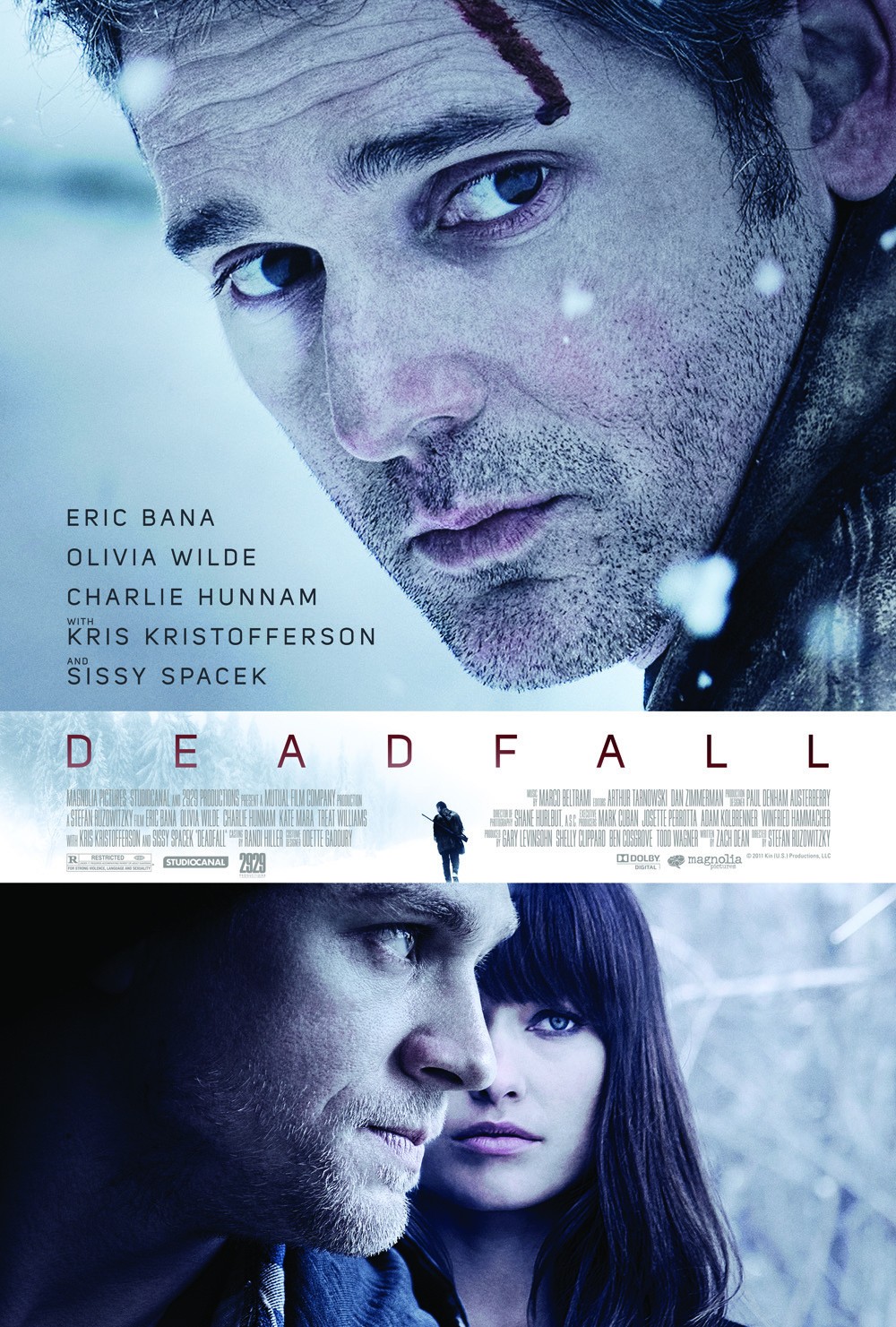
Best known for his roles in the film “Green Street Hooligans” and on the television series “Sons of Anarchy,” actor Charlie Hunnam gets to do a variation on his tough guy image in “Deadfall.” Directed by Stefan Ruzowitzky, he portrays Jay, an ex-boxer who has just been released from prison. He is contemplating going back home to have Thanksgiving dinner with his parents, but things go awry for him after he seriously injures, albeit accidentally, his former coach who had betrayed him. Fearing he will be sent back to jail, Jay flees the scene and goes on the run.

While talking with Christina Radish of Collider, Hunnam said there was “real poetry” to Zach Dean’s script when he first read it and that he related to Jay’s frustration and anger over how his life felt completely out of his control. When actors study and prepare to play a role, they are always expected to go over the similarities they share with their characters as well as how they are different from them. Hunnam found that his life as an actor was similar to Jay’s career as a boxer.

“I thought that was really interesting and I could relate to it, in a way, living in Hollywood,” Hunnam told Radish. “I’m very disciplined and I have a very clear idea of how I want to be spending my time, but I’m at the mercy of everybody else who decides how I get to spend my time and whether I get to work or not. In classic storytelling terms, with the classic hero’s journey and contemporary male narrative, a man being released from prison is a dynamic that I was predisposed to be interested in and like.”

The other interesting thing Hunnam brought up in his interview with Radish was how Jay was a successful athlete. Now in crime dramas like “Deadfall,” we typically expect boxers like Jay to have failed in their profession in one way or another, be it through drugs or some sort of gambling controversy. But here, Jay proves to be a victim of circumstance which has rendered his past achievements non-existent.

“This guy seemed like a guy who had dedicated his entire life to this goal of becoming a world class athlete and actually achieved it,” Hunnam said of Jay. “We just all inherently understand the dedication and sacrifice that is needed to achieve that because we’ve all grown up watching professional athletes on TV, so I understood that. He seemed like a guy where it was day one of the rest of his life. He had ruined the prior 30 years and he was coming out completely with nothing, at all.”

One of the best things about “Deadfall” is how beautiful the snowy landscapes look and how brutally cold they appear. I got to attend the movie’s press conference at the Four Seasons Hotel in Beverly Hills, and it was surprising to hear Hunnam say how he looked forward to working in the freezing cold. Many actors would give anything not to work in such frigid temperatures, but for Hunnam it offered a change of pace. Still, he did find the snow to be a challenging environment to work in.

“I had actually been really excited about a period in the cold weather because we shoot ‘Sons of Anarchy’ in LA through the course of the summer, and I’m a skinny guy who wants to look as big as possible so I wear several layers of clothing; it gets really old being that hot,” Hunnam said. “But I must say that a couple of days in, I was craving the sunshine. You know when you’re really hot you get miserable and a little bit grumpy, but the cold is really debilitating.”

Hunnam did take the time to train as a boxer which helped him better understand his character. It also turned out he had a unique way of getting into Jay’s psyche which he accomplished by working out a lot and then suddenly stopping. Anyone who has exercised a lot at the gym and then stopped for a period can clearly understand how difficult it is to start all over again.

“I’ve also always been interested in boxing so I put myself through an intense boxing academy where I got up and ran five miles every morning and then went and had breakfast and boxed a couple of hours and then came home and watched fights all day long and then went and swam, and I did this seven days a week for five weeks before filming this movie. Then when I got to Montreal (where the film was shot) I wanted to stop completely and feel the absence, and I knew that was going to have a very negative effect on my psychology. It’s kind of a shortcut, rather than intellectually empathizing, to actually feeling the emotion. I got into a very dark and happy place during shooting because of that preparation,” Hunnam said.

Charlie Hunnam still has “Sons of Anarchy” to work on, and many are excited at what the show’s upcoming season finale has to offer. Up next for him is Guillermo Del Toro’s “Pacific Rim” in which he will be playing Raleigh Antrobus, a washed-up former pilot who has to defend the world by piloting a giant robot and fighting monsters who are rising out of the depths of the ocean. Thar one looks to be Hunnam’s biggest movie yet.

SOURCES:

Christina Radish, “Charlie Hunnam Talks DEADFALL, SONS OF ANARCHY Season 5, PACIFIC RIM, and Writing a Movie About a Drug Lord for WB and Legendary,” Collider, December 5, 2012.

Ben Kenber, “Interview with the Cast and Director of Deadfall,” We Got This Covered, December 7, 2012.

Jeremy Renner on ‘The Bourne Legacy’ and Preparing a Character

WRITER’S NOTE: This article was written back in 2012.

Jeremy Renner appeared at the AMC Century City on July 9, 2012 along with writer/director Tony Gilroy to talk about “The Bourne Legacy.” In addition, Renner also took time to answer questions regarding how he went about preparing to play Aaron Cross, and of his preparation for roles in general. His answers showed him to be an actor always looking to challenge himself constantly and to not get trapped in a comfort zone.

Renner has long since made a name for himself with his performances in “The Hurt Locker,” “The Town,” “Mission: Impossible – Ghost Protocol” and “The Avengers.” One person asked him which movie has required him to do the most training, and he said it was definitely “The Bourne Legacy.” Renner said this was because it required from him “a level of authenticity” the other movies did not ask of him, and that he “had to work diligently to make the fights look like I could actually do them.”

Another person quoted Renner as once saying he “makes himself uncomfortable” when he can and asked him if that has made all the difference in his life. Renner replied it makes all the difference and said it is about constantly challenging himself:

“It’s about not being complacent and not fall into the trappings of repeated behaviors and getting comfortable. As I’ve gotten older, if there are things I knew I don’t like, I would still go try them again just to make sure that I don’t like them.”

Unlike his previous movies which had him acting in a supporting role, “The Bourne Legacy” marks Renner’s first starring role in a big budget Hollywood movie. He did, however, make it clear that his preparation for this movie was no different than any other he has appeared in, and that it remains the same on each role plays. He did say, however, that his workout regimen has changed a lot from “Mission: Impossible – Ghost Protocol” to “The Bourne Legacy:”

“For ‘Mission’ I was really out of shape. I mean, I stretched for twenty minutes and that was my workout. And now I stretch for an hour and a half, fight for two hours, workout for an hour and a half, and then stretch for another hour and then go to work.”

For Renner, saying yes to “The Bourne Legacy” was actually very easy as he felt all the elements were fantastic and that he could not say no to it even if part of him wanted to. And while he may have graduated from indie films to big budget action movies, his mindset has not changed in the slightest as he compared making this sequel to movies he has done beforehand:

“For a big movie, it felt very tiny in the sense of it was not just the stunts but also the intimacy of really quiet scenes I feel I’d rather be doing as an actor. So, for me it had the balance of both; it felt like a little independent movie and a massive action movie, so I got both feels all in one.”

In answering what it was like to play Aaron Cross and how he would turn off the character at the day’s end, Renner’s response did not have any Hollywood ego in it at all:

“Oh, come on man! It’s something that’s not that far away in that we’re talking about every physical role here. I have to stick to the truth on page one to page whatever and just stick to the truths within that. There’s no turning it on or turning it off; I’m not some freak actor that way. This is a character that’s closer to me than say Jeffrey Dahmer (whom the actor played in the 2002 movie “Dahmer”), so it’s not something I have to completely lose myself in. It’s just part of my job, and I can’t explain my job.”

From this evening, we can see that Jeremy Renner is a very respectful actor who takes his craft very seriously, and he revels in his unexpected success and working with actors like Rachel Weisz and Edward Norton whom he resented for stealing so many interesting movie roles from him in the past. We look forward to what Renner has to give us not just in “The Bourne Legacy,” but in so many other performances he has yet to deliver.

Eric Bana on Portraying Such a Charming Villain in ‘Deadfall’

WRITER’S NOTE: This article was originally written in 2012.

Watching Eric Bana as Addison in Stefan Ruzowitzky’s “Deadfall” will remind many of his breakthrough performance as Chopper Read in “Chopper.” Both films have him playing characters who are charming yet fearsome, and his unpredictability as an actor had us on the edge of our seats throughout. But hearing Bana talk about how he prepared to play Addison is a reminder to all actors on how to approach a role like this; the character may be a bad guy, but he’s still a human being with wants and needs like anybody else. It’s not just about acting evil all the time.

I was lucky enough to attend the “Deadfall” press conference at the Four Seasons Hotel in Beverly Hills, and Bana said he really liked Zach Dean’s screenplay and was “immediately compelled” by Addison. Bana described the character as being “quite hilarious actually,” and this was one of the main reasons he wanted to play him. It was interesting to hear him say that because funny is not an easy adjective to give to a character like Addison who can react violently without little or any notice. Bana, however, started out as a stand-up comedian and saw the opportunity to bring some darkly comedic touches to this role.

“I don’t think there was anything deliberately funny in Addison, but I think the situations that all the characters find themselves in and some of the things he does are inadvertently very funny,” Bana said. “It wasn’t like playing for laughs but I knew the audience probably would laugh at some of the ridiculous nature of what we’re all forced to do.”

Bana also went on to say he thought Addison was “morally straight” and that he really did not see the character as being a bad guy. Now while the crimes he commits in “Deadfall” certainly tell us otherwise, I really liked Bana’s approach to this role. It reminded me of a behind the scenes special on “Die Hard” where Alan Rickman talked about how he saw his character of Hans Gruber:

“As far as I’m concerned, I am not playing ‘the villain.’ I’m just playing somebody who wants certain things in life, has made certain choices and goes after them.”

The same can be said about Bana in the way he portrayed Addison.

“He had a strong sense of purpose in what he was doing and that is what makes those characters so scary, knowing you can’t really negotiate with him,” Bana said of Addison. “In his mind everything he’s doing is completely and morally correct and there’s a real reason for it. It’s not the actor’s place to judge, but I’m more than happy to be morally corrupt for a few months for the benefit of my career.”

This thought process was even more on display when Bana was interviewed by James Rocchi of MSN Entertainment. Rocchi talked about “Deadfall’s” first scene in which Addison’s car crashes and ends up shooting a state trooper in the process, and he described Addison as being spontaneous in his actions as this guy is thinking on his feet and improvising constantly. Bana explained that when the actor commits fully to their character’s actions, they should all come out naturally.

“I don’t like to think too much about what my physicality’s going to be here. I’d rather immerse myself in the character’s brain and allow my body to react accordingly,” Bana told Rocchi. “But that instance in the beginning of the film kind of sets in motion the rest of the stakes really for Liza (Addison’s sister who is played by Olivia Wilde) and Addison from that point on in that it just keeps getting worse and worse and worse. But you’re right. I mean he had no intention of shooting anybody. They got away from the casino, they got the cash, and all was going really well until that freaking deer popped out into the middle of the road and it all changed.”

Throughout “Deadfall,” Addison ends up engaging a couple of nasty fights, some of which are with Jay who is played by Charlie Hunnam (“Sons of Anarchy”). We keep hearing actors say how they did their own stunts in this or that movie, but we can never be too sure as the insurance people are usually dead set against that ever happening. But I believed Bana when he said that he did his own stunts in “Deadfall” because even he couldn’t hide the toll it took on his body.

“My neck was ruined,” Bana told Ariel Kashanchi of Screen Picks. “Charlie Hunnam beat the shit out of me. I don’t think I landed a punch. It was just like bang, bang. I remember after about five takes I was stiff all over and thinking ‘how much more can my neck take.’ I’m used to throwing punches and now I just have to just sort of take it. But it was kind of fun.”

“Deadfall” has received mixed reviews, but there is no denying Bana gives a riveting performance as Addison. Playing a charming bad guy is nothing new for this Australian actor, and he is still great at it. In a year of movies filled with truly intimidating antagonists, Bana’s performance deserves to be held up alongside the best of the bunch.

SOURCES:

Ben Kenber, “Interview with the Cast and Director of ‘Deadfall,’” We Got This Covered, December 7, 2012.

Alan Rickman: Hans Gruber is not a villain,” YouTube

James Rocchi, “Interview: Eric Bana of ‘Deadfall,’” MSN Entertainment, December 7, 2012.

Ariel Kashanchi, “Interview: Eric Bana on ‘Deadfall,'” Screen Picks, December 6, 2012.

Rachel Weisz on Playing Hester Collyer in ‘The Deep Blue Sea’

WRITER’S NOTE: As the opening sentence hints at, this article was written in 2012.

The 2012 New York Film Critics Circle Awards were recently given out, and one of the big winners was Rachel Weisz who won the Best Actress Award for her performance in “The Deep Blue Sea.” In the film she portrays Hester Collyer, the wife of a High Court judge who ends up having a passionate affair with Royal Air Force pilot Freddie Page (Tom Hiddleston), and we watch as this affair throws her life into utter turmoil. “The Deep Blue Sea” hasn’t yet found the audience in America it deserves, but hopefully Weisz’s win will bring more attention to the film which has earned tremendous critical praise since its release.

“The Deep Blue Sea” was directed by British independent filmmaker, Terence Davies. His resume includes such movies as “Distant Voices Still Lives,” “The Neon Bible” and “The House of Mirth” which featured an extraordinary performance from Gillian Anderson. In an interview with Ara Aquino of Complex, Weisz described Davies as being “very different” and “unusual” compared to most other filmmakers she has worked with. Hearing Weisz talk about Davies makes him sound both rigid and yet full of life:

“He’s probably as passionate as Hester and led by his emotions and his heart. He’s more like her than I am,” Weisz said of Davies. “He gets really carried away both in happiness and sadness and anger. He’s a very emotional person. He likes things to be incredibly controlled in terms of where the camera is; you’re the center of the frame. It’s the opposite of contemporary, hand-held reportage style films that we’re used to seeing now. He’s got real rigor as a filmmaker, but he’s also really passionate.”

Weisz then went on to tell Aquino that what interested her about playing Hester was how the character “really, kind of completely humiliated herself” and has “no pride.” Those who have seen “The Deep Blue Sea” can agree this role is a frightening and challenging one for any actress as it forces them to convincingly portray conflicting emotions and to play a character who is not exactly likable. Still, it was those challenges which made Weisz want to take on the role.

“What I found interesting about her was she just fell so completely, devastatingly, utterly in love with someone who really didn’t even love her back,” Weisz said about Hester. “She just couldn’t control it, and I thought that was really interesting to see someone lose it. She just throws herself at his feet and kind of makes a complete fool out of herself in many ways.”

Actually, one of the most refreshing things I heard Weisz say about the roles she chooses is that she does not worry about whether the character is likable or not. Many actors tend to be very self-conscious about their work and how the public will treat them for playing someone who is far from being universally loved. But they do themselves a disservice thinking like that as they cut themselves off from many interesting opportunities worth taking advantage of. Weisz made this clear in an interview she had with the Awards Line website.

“I think if you ask the audience to like you, it’s all over,” Weisz said. “The most interesting characters are those you’re drawn to, then repelled by, and then come to understand. All that tension – I live that. But I don’t plan the tension. It’s just something that should happen. I don’t judge the character at all. It’s a bit like being someone’s defense lawyer-you have to believe in their innocence in order to defend them. Did I know that Hester was a pain in the ass? Yeah.”

Another interesting story about the making of “The Deep Blue Sea” involved shooting the love scene between Weisz and her co-star Tom Hiddleston. While Weisz has been in her share of sex scenes in movies, this particular one was the first that Davies ever directed. In talking with Michael Ordoña of the Los Angeles Times, it sounded like she spent a lot of time trying to make Davies feel more comfortable about doing it which was amusing because it’s typically the other way around.

“He just said, ‘I want you to lick his shoulder.’ He had never shot a nude scene, or a sex scene,” Weisz said of Davies. “I thought for a while, ‘Maybe I’ll just keep on my slip.’ But then he said ‘Ah, no, I don’t think so …’ He was really embarrassed. He had it in his mind he wanted audiences to see their bodies together.”

“The Deep Blue Sea” may not be the kind of movie that fills up multiplexes around the globe, but it is a must see for those who love complex dramas and great acting. Rachel Weisz continues to deliver one great performance after another, and this film features one of her best yet. If she continues to choose her roles in the way she told Aquino, then we can expect many more unforgettable performances from her in the future.

“You just have to read a script and think, I’d really like to play this character,” Weisz told Aquino. “It doesn’t really matter if it’s a big movie or a small movie. You still have to say the lines and make it sound true. I just need to be intrigued or pulled in. It’s hard for me to put it into words. It’s like reading a book: Some books grab you and some books don’t. It’s the same with a character. Some things you just really connect with. It could be a really silly book or a dark tragedy.”

SOURCES:

Ara Aquino, “Interview: Rachel Weisz Talks “The Deep Blue Sea” & The Madness Of Love,” Complex, March 21, 2012.

Q&A: Rachel Weisz on Deep Blue Sea,” Awards Line, November 21, 2012.

Michael Ordoña, “How Rachel Weisz put depth in ‘Blue Sea’ performance,” Los Angeles Times, November 29, 2012.

John Hawkes on Playing Mark O’Brien in ‘The Sessions

WRITER’S NOTE: This article was written back in 2012.

The Sessions” and John Hawkes’ performance in it as journalist and poet Mark O’Brien have earned some of the most rapturous praise of any movie in 2012. The film tells the story of how O’Brien, who was confined to an iron lung due to being stricken by polio as a child, hired sex surrogate Cheryl Cohen Greene (Helen Hunt) to help him lose his virginity at the age of 38. Hawkes, who earned an Oscar nomination for his performance in “Winter’s Bone,” has talked extensively about his concerns about taking on the role as well as the physical challenges he faced in playing O’Brien.

Hawkes’ biggest concern was whether or not it might be better for a disabled actor to play O’Brien instead of him. As a result, he’s still waiting for some sort of backlash to hit him. Ben Lewin, who directed “The Sessions” and is himself a Polio survivor, did take the time to find a disabled actor to play Mark, but he eventually became convinced Hawkes was the man for the job.

“Of course, that was my first question: Why not a disabled actor? They are a uniquely qualified group of people for this role, who are undervalued and underused,” Hawkes said. “I’ve had a lot of disabled actors come to me after screenings, and they told me to get over it.”

“It is the 800-pound gorilla in the room in a way,” Hawkes continued, “but it’s something that, Ben (Lewin) being a polio survivor himself, and the fact that he put the time in to look for disabled actors, he felt like, would it be politically correct to hire a slightly disabled actor to play a severely disabled actor? He ultimately just hadn’t found his guy. We met, and he felt like I could do it.”

Once cast, Hawkes became determined to mirror the physical condition O’Brien was stuck in for the majority of his life. To that extent, he and the props department created what was described as a “torture ball;” a soccer ball-sized foam pad that he tucked under the left side of his back to force his body to curve dramatically. In addition, he also used a mouth stick which was much like the one O’Brien used to turn the pages of a book or dial a telephone. It was this “torture ball,” however, which threatened to leave Hawkes with permanent physical damage to his body.

“Finding that position was difficult and did hurt. I’ve got a guy that I’ve been seeing for years, who is a combination massage therapist and chiropractor. I’d have 15 minutes with him, two or three times a week, or half an hour, if I was lucky. He told me that I wasn’t doing very good things to my body, but it was my choice. I’m not a martyr or masochist, but when the script says that your spine is horribly curved, you can’t just lie flat on your back and pretend,” Hawkes said.

But ultimately what makes Hawkes’ performance so good is that he doesn’t turn him into just another pity case. Filmmakers are typically expected to give us an emotionally manipulative experience when it comes to portraying physically disabled characters, making us feel sorry for them and of what they are unable to accomplish because of their limitations. Hawkes and Lewin, however, were determined not to go down this route.

“A character like that had every reason to wallow, but that’s just not interesting to watch on screen,” Hawkes said. “I’ve played a lot of underdogs and I like people who aren’t equipped to solve their problems but just keep trying anyway. There’s something really noble and interesting about watching someone keep banging their head against the wall.”

One of the other things which helped Hawkes was watching the documentary “Breathing Lessons: The Life and Work of Mark O’Brien” which won its director Jessica Yu the Oscar for Best Documentary Short Subject in 1997.

“There was Mark’s body, and there was his voice,” Hawkes said, referring to the documentary. “And so, I didn’t invent a lot. I just tried to really take as much of the Mark that I saw and tried to make it my own, to embody him.”

The effect Hawkes’ performance has had on those who were very close to O’Brien has been profound. Just ask Cheryl Cohen Greene, the sex surrogate whom Hunt’s character is based on.

“The first time I heard John I got chills,” said Greene. “I’m sitting there on the set with headphones thinking, that’s Mark. It’s scaring me. John got him completely.”

John Hawkes’ performance as Mark O’Brien looks very likely to earn him an Academy Award nomination for Best Actor, and many will agree that he deserves the recognition for his work. It marks another memorable role for this actor who first came to Hollywood over a decade ago, and he has many more great performances ahead of him.

SOURCES:

Jordan Zakarin, “John Hawkes: Hopeful, but Ready for Backlash and (Maybe) Permanent Back Pain,” The Hollywood Reporter, October 22, 2012.

Christina Radish, “John Hawkes Talks THE SESSIONS, Conveying His Performance Using Only His Face, Being Confined in an Iron Lung, and More,” Collider, October 16, 2012.

Rebecca Keegan, “John Hawkes enters virgin territory in ‘The Sessions,’” Los Angeles Times, October 11, 2012.

Oliver Gettell, “‘The Sessions’: John Hawkes and Helen Hunt on playing real people,” Los Angeles Times, October 29, 2012.

Rachel Nichols Talks About the Making of ‘Alex Cross’

RACHEL NICHOLS stars in ALEX CROSS

WRITER’S NOTE: This article was originally written back in 2012.

She has had memorable roles in movies like “P2,” “Star Trek” and “G.I. Joe: The Rise of Cobra,” but it’s going to be hard to forget about Rachel Nichols after watching her in “Alex Cross.” As Detective Monica Ashe, partner to Cross and lover to Detective Tommy Kane (Ed Burns), Nichols is a strong and alluring presence as she holds her own with a very talented cast which includes Tyler Perry. While the movie is not exactly a critics’ darling according to Rotten Tomatoes, Nichols registers as one of its best assets to where you wish her character was in it a little longer.

While at the “Alex Cross” press conference which took place at the Four Seasons Hotel in Beverly Hills, Nichols said she was familiar with James Patterson’s books and the Alex Cross character, but what drew her to this project was the script.

Rachel Nichols: I read the script and I just thought to myself this is going to be sort of an interesting combination of the drama aspects and also a lot of action. I knew that Rob (Cohen) was attached and obviously everyone is familiar with his work, and I knew that he’d put a really exciting and very different spin on it and I wanted to be part of that.

As I said earlier, I really wish Nichols was in the movie longer. Her character ends up, shall we say, disappearing from it rather early on, and Nichols commented that she has a sad history of getting the “not” part in several movies. She also said her parents wish she would do a romantic comedy next where she survives and ends up happy in the end. Regardless, Nichols had a lot of fun during the filming of “Alex Cross.”

Rachel Nichols: I honestly felt that I was there for the entire film. When I watched it the first time I didn’t actually know where in the course of things that I would no longer be in the film. I like the element of surprise that comes along here. That and what happens to Cross’ wife supports the vigilante aspect of it and makes everyone get on Cross’ side.

Like her co-star Burns, Nichols has played her fair share of law enforcement officers on screen. When asked if this has helped her develop a talent for figuring out the mystery or solving the case in each movie she’s in, Nichols replied she certainly tries to.

Rachel Nichols: I don’t think I’m terribly successful at it. There is that element of trying to figure things out which is fun, but I certainly don’t think that I’ve accrued any new skills to do that.

But although she has played cops in the past, Nichols made clear that she still had to relearn the techniques of sweeping a room and proper weapons procedure while working with the Detroit Police Department in preparation for her role.

Rachel Nichols: You’d think it would be like getting back on a bicycle but it’s not.

In talking about working with Burns, she said the first thing they shot together was their love scene. It happened a month after they first met at the casting sessions, and she recalled that they looked at one another and said, “Hey, how are you? Let’s get naked!” Looking back, Nichols said this was totally the way to do it.

Rachel Nichols: I love that scene because two people sitting on a bed is not as dynamic as that scene was. We did the roundabout and it was moving and constantly emotional and he (Burns) is out the door. But thanks to Cohen, it felt very easy for us to do and we had a great day on set.

I am very serious when I say Rachel Nichols is really good in “Alex Cross,” and I think the roles she gets offered from here on out will be much bigger than what she’s received so far. Hearing her talk about her role as Monica Ashe shows us an actress who has done her research and never just walks through any part given to her. I look forward to seeing what she does next.

Emily Blunt On Portraying a Single Mother in ‘Looper’

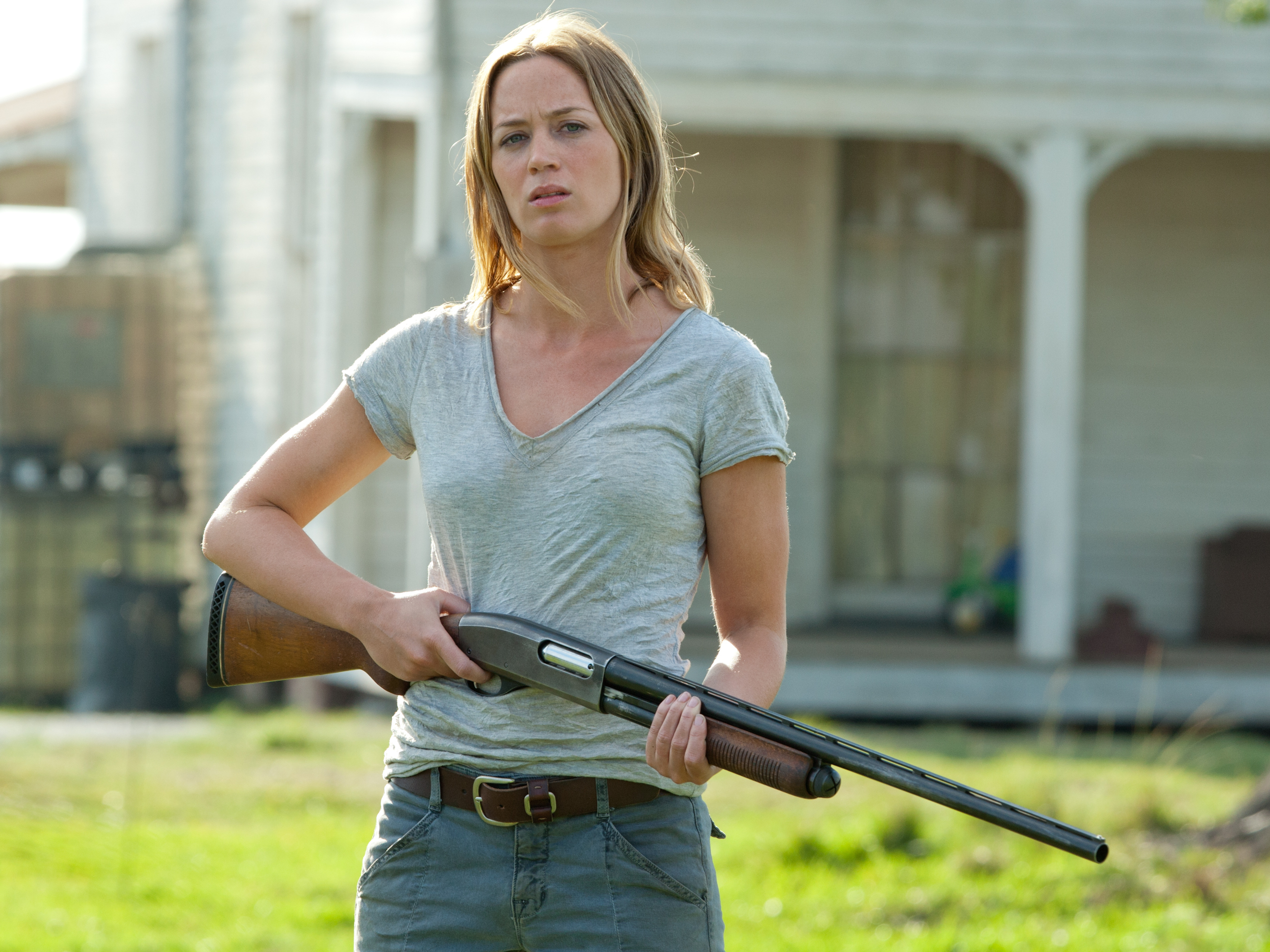
Sara (Emily Blunt) is a single mom who’s learned to stand her ground to protect her home — and her young son.

WRITER’S NOTE: This article was written in 2012.

As single mother Sara, Emily Blunt is a powerful presence in Rian Johnson’s “Looper” and she more than holds her own opposite Joseph Gordon-Levitt and Bruce Willis throughout. It’s been a busy year for the actress as she has appeared in several movies including “Salmon Fishing in the Yemen” and “The Five-Year Engagement,” but “Looper” gives her an opportunity to play a different kind of role which allows her to be tough and vulnerable all at the same time. It presents a big acting challenge for Blunt, and those who know her best know she’s always up for one.

“I think I really just want to challenge myself, more than anything,” said Blunt. “People have been asking me if I’m gravitating to these sci-fi roles, but I don’t feel I necessarily am because they’ve been sort of sporadic as to when they come out. But I do like the idea of creating a backstop that is high concept for the characters to really have stuff to play with within that.”

Blunt has described Sara as being a “very tough cookie” who lives an isolated existence on a farm out in the middle of nowhere. Sara looks to have completely shut herself from the outside world and spends the days working on her farm and taking care of her five-year old son, Cid (the amazing Pierce Gagnon). The beauty of Blunt’s performance is how she pulls back the layers of her character to show us what’s underneath.

“I think that I really loved the tough exterior with the inner guilt that she sort of torments herself with,” Blunt said. “I love that unraveling of the character that you don’t know why she’s so tough, you don’t know why she’s so protective. Gradually it unfolds throughout the course of the third act. So really what I said to Rian (Johnson) was that we’ve got to make this whole sequence in the third act like that movie ‘Witness.’ It’s got to have that sort of pastoral tension to it and the feeling of someone coming in that’s alien to your world and disrupting everything and how frightening that must be for her. So, I think really I wanted to make sure we maintain the mystique of the character as long as we could.”

In preparing to play Sara, Blunt had to resort to using what she called those “dreadful sun beds” to get the tan her character has from working outside in the sun all day. Blunt did say she took some time lay out in the sun a lot before shooting began, but also admitted it takes a really long time for her to get a tan. Still, using the sun beds and getting makeup put on top of her tanned skin proved to be preferable to getting a spray tan as she hates the smell.

Blunt also gets to ditch her British accent for a Kansas-sounding one in “Looper,” and she worked with a dialect coach and listened to people from Kansas to get it down right. But what really helped was listening to one Oscar-winning actor in particular.

“The person I listened to a lot was Chris Cooper who’s from Kansas and grew up on a farm. I loved his voice and it sounded very grounded. I found it more helpful to listen to guys than girls because of the toughness of the character,” said Blunt. “I watched ‘American Beauty’ and I watched ‘Adaptation’ but I mainly listened to his interviews, him giving interviews and stuff.”

Watching Emily Blunt from one movie to the next shows her having an understated power to completely transform herself into whatever character she plays. It’s like she almost makes her preparation look effortless, except of course for those scenes where she chops wood with a big axe. As a result, she has become one of the most interesting actresses working in movies today, and we all look forward to seeing what role she will inhabit next.

SOURCES:

Sean O’Connell, “‘Looper’ Interview: Emily Blunt Talks Shotguns, Redemption and A Nickname for Her Fans,” Cinema Blend, September 26, 2012.

Fred Topel, “Butching Out: Emily Blunt on ‘Looper’ and ‘All You Need is Kill,’” Crave Online, September 27, 2012.

Sally Field on Portraying the First Lady in Steven Spielberg’s ‘Lincoln’

WRITER’S NOTE: This article was written back in 2012.

Watching Sally Field as Mary Todd Lincoln, wife and First Lady to the 16th President of the United States, Abraham Lincoln, it’s hard to think of another actress who could have inhabited this role as well as she did in Steven Spielberg’s “Lincoln.” The director had Field in mind for the role back when Liam Neeson was originally cast as President Lincoln, but the actress almost lost it when Neeson withdrew from the project and Daniel Day-Lewis got cast. It wasn’t the first time Field had to fight for a role, and she fought long and hard for this one to where Spielberg granted her a screen test with Lewis.

“I heard commotion and looked up, and across the lobby came my darling Mr. Lincoln,” Field said of Day-Lewis when she first saw the actor walking towards her. “He smirked at me, and I smirked right back. I gave him my hand, I looked up and said ‘Mr. Lincoln,’ and he said ‘Mother.’ That’s what they said to each other. I felt this audible hush in the room.”

After Field and Day-Lewis improvised for an hour as the Lincolns, Spielberg informed her the role was hers. From there, she took the time to visit Mary Todd’s home in Lexington, Kentucky. It was actually a low-key visit for the actress, and she went about town with very few people recognizing who she was.

“What I wanted to really do was be inside of her house,” Field said. “I know what an important place that was for her in studying her, and I really wanted to step inside the house and look at all of that and have the feeling of space.”

“I had seen pictures of what it looked like in those days before, before there were like parking lots and things connected to it, so that I could have a feeling of where she came from,” Field continued. “It’s important in understanding her makeup as a person that you take a look at her home.”

Field also gained 25 pounds to authentically portray Mary Todd Lincoln, and it took seven months to add all that weight to the actress’ 5′ 2 ½” frame.

“She was much heavier, or more round, so we tried to replicate her measurements,” Field said. “We had her dress size, because it’s documented when they made dresses for her… We replicated what she was, and it wasn’t easy. It was sort of horrifying to be a woman of a certain age and to put on 25 pounds.”

After all these years, Sally Field remains a most incredible actress who works very hard to understand the psychologies of each character she portrays and you cannot, nor should you, ever accuse her of being lazy in her preparation. Her performance here is the latest example of how much we really, really like her work (sorry, I couldn’t help it). Field also does a commendable job of giving Mary Todd Lincoln the respect she deserves as she is not talked about as much as her famous President husband.

“Had there not been a Mary Todd, there would not have been an Abraham Lincoln,” said Field. “She found him when he was a young lawyer and really a bumpkin. No one knew of him but she recognized his brilliance. She was so under-examined and misunderstood, and a very important woman in American history.”

SOURCES:

Lisa Gutierrez, “Stargazing | Sally Field had long lusted for ‘Lincoln’ role; justice rules on ‘Sesame Street,'” The Kansas City Star, November 13, 2012.

Rich Copley, “To play Mary Todd Lincoln, actress Sally Field visited Lexington home,” Kentucky.com, November 15, 2012.

Sally Field’s body transformation for ‘Lincoln,’” CNN, November 1, 2012.

Andrea Mandell, “Sally Field locks on to ‘Lincoln’ role,” USA Today, November 13, 2012.