Exclusive Interview with April Mullen on Her Film ‘Wander’
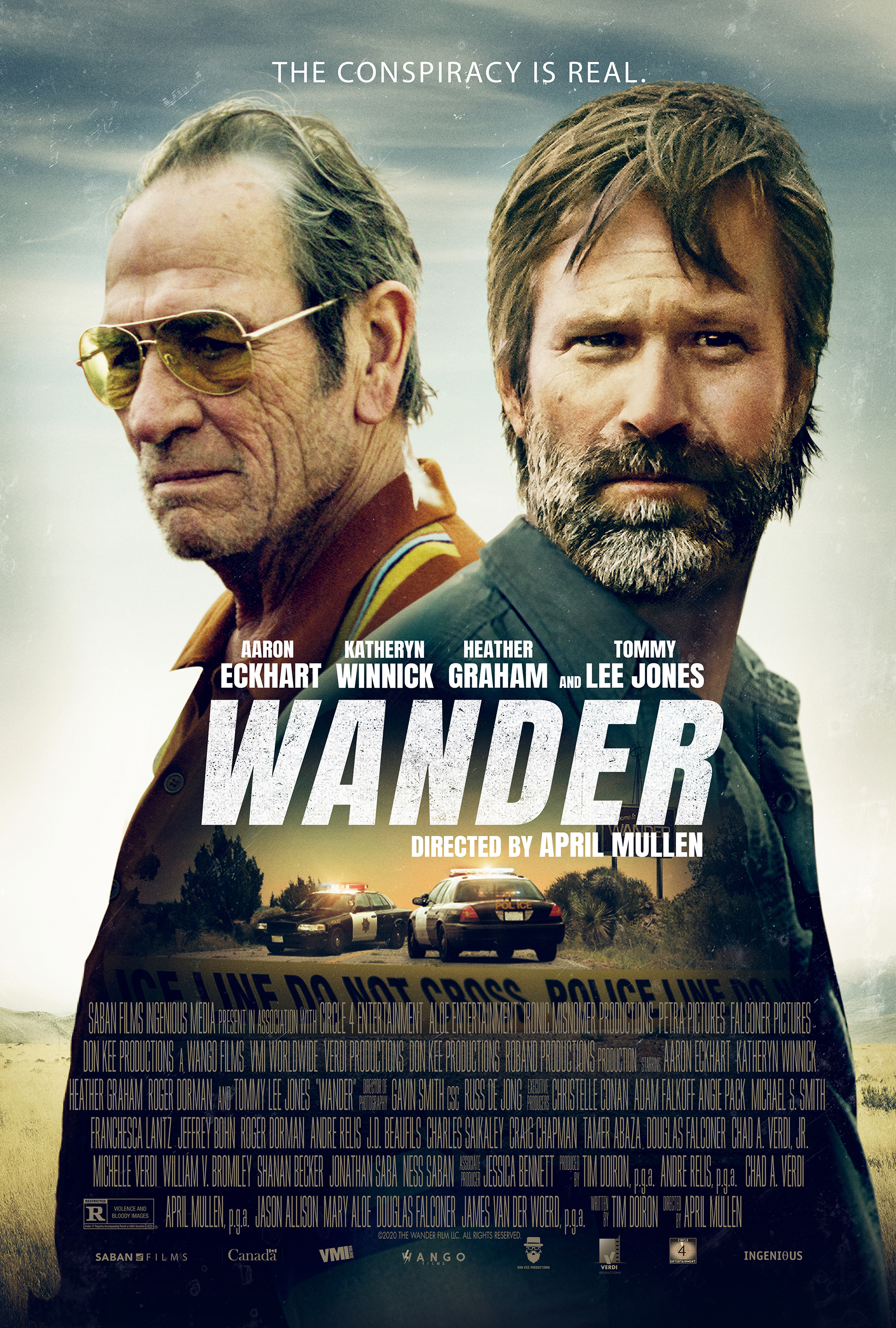
Even though we are still in the grips of the coronavirus pandemic, there are still new movies arriving to us in theaters (those which are open anyway) and/or to our own television screens thanks to On Demand and various digital platforms. One such movie is “Wander,” a thriller starring Aaron Eckhart (“The Dark Knight”) as Arthur Bretnik, a private investigator who live in a rusty old trailer out in the middle of nowhere. We soon learn he is still grieving the loss of his daughter who was killed in a horrific car accident which left his wife completely catatonic. The perpetrators of this accident were never found, and he remains determined to find them.

One day, he is met by a woman who pays him to look into the death of her daughter who also looks to have been killed in a car accident, but the mother is not convinced this was the case. In the process, he uncovers a conspiracy which links to other cases of people killed in a similar fashion as well as to his daughter’s death, and he becomes infinitely determined to uncover it for all to see. But with his troubled past and a history of mental illness, one has to wonder if Arthur is really seeing the truth out there, or if his mind is playing tricks on him. “Wander” also stars Tommy Lee Jones, Heather Graham and Katheryn Winnick.

Directing “Wander” is April Mullen, a highly creative Anishinaabe Algonquin (Indigenous) filmmaker who is known for her passion, her bold visuals, and an ambitious shooting style which is truly amazing. With “Dead Before Dawn 3D,” she became the first woman and the youngest person to direct a live action stereoscopic 3D feature film, and it was awarded the Perron Award for its technological achievement. Her other directorial efforts include the erotic romantic drama “Below Her Mouth” which she filmed with an all-female production crew, and the action thriller “88” which stars Katharine Isabelle and Christopher Lloyd.

I was lucky enough to get a chance to talk with April Mullen about “Wander” recently, and in her director’s statement, she described the film as being a journey towards a truth unseen by most, and one hard to face. In addition, she also sees it as a critique of sanctioned government surveillance which has led to the displacement of many indigenous people through no fault of their own. We talked about this and more in our interview below.
April Mullen: Are you the marathoner runner himself, or did somebody else run a marathon?

Ben Kenber: (Laughs) I am indeed the marathon runner. I have run the full Los Angeles Marathon (26.2 miles) eight years in a row.

AM: Awesome! I just had to ask. I just looked at the (website) byline (“Cinematic Musings from a Movie Lover and Marathon Runner”) and I loved it. I looked at your website and I was like, this is wicked!

BK: I did not run the LA Marathon this year, but I am hoping to come back to it once this coronavirus pandemic has finally ended.

AM: You better because it pumps me up.

BK: Thank you. “Wander” really held my attention to the very end. This is always tricky to pull off especially with one like this which deliberately messes with your mind. When were you first introduced to the screenplay by Tim Doiron?

AM: Tim Doiron and I go way back. We started working and making independent films together 20 years ago. We come together and we’re like, what do we want to make next? That’s a very messy and exciting day. Five years ago, we wanted to create something with a main character who was really dealing with grief, loss, mental health issues and a huge amount of paranoia when it comes to conspiracies and government surveillance and anxiety, and of how to over come that. And then we thought, how are we going to bring that truth and that character to a world that’s commercial and viable for the entertainment industry (laughs). The backdrop was the conspiracy, the podcast, the chip technology, border control and my inner side of the truth; that indigenous women, 2Spirited warriors, BIPOC and displaced people have always been a continual target and victim of governmental subjugation and violent practices. (We went about) exposing that in a tight narrative through the eyes of one single character which is an unreliable narrator like Arthur. So, all of those themes became our mixing pot and then the rest is history, but it wasn’t as easy or smooth as we originally thought. We were like, this movie is going to be very straight forward, but of course it is so much more complex than we had hoped. But hey, we made a movie and that’s what it’s about (laughs).

“Wander” film by Wango Films

BK: Exactly. Aaron Eckhart is terrific here. He has to run a gamut of being in a state of grief, but he is also a bit crazy as well. Did you and Aaron had to measure out crazy and grief-stricken he had to look throughout shooting?

AM: We had an unbelievable working relationship. We were attached at the hip. We could communicate through our eyes and even our physicality on set. I was never far away. I was maybe three feet away from him. He was on set every day, every second and in every frame of the movie. He brought 150% and was beyond dedicated. I think this role was so different and far removed from anything else he has ever played. When he read the script, he completely resonated with Arthur. Aaron himself is totally into conspiracies, podcasts and the dark web. He always said, if you’re not paranoid, you should be. We were riffing on conspiracies and chem trails. It was unbelievable how much material resonated with him. He came from a really strong place of truth, and then Tim’s experience with mental health issues also rang from a place of truth. So, my job was just to make all of those things come together and make Aaron feel really comfortable to take major leaps and capture that lightning in a bottle that he has. We went off script and we went off locations. Sometimes it would just be him and I. He would be in a car and I would be operating the camera. We were able to do that because the film was so small, but I knew Aaron Eckhart if that makes sense.

BK: “Wander” is kind of a mind-bending movie in the same the way movies like “Jacob’s Ladder,” “Memento” and “The Sixth Sense” were.

AM: Very much. It’s very much like a current version of “Jacob’s Ladder.” I feel like it is the 2020 version of “Jacob’s Ladder” (laughs). At least, I hope it is. We really hope it is.

BK: You have said “Wander” was created in honor of all Indigenous, black and other people who are targeted and have been displaced through border control on stolen land. Do you this is what helps to set the film apart from others of its kind like “Jacob’s Ladder?”

AM: I’m not sure. I hope so. In the statement (at the film’s beginning), there is so much truth to that. We did a lot of research with MK-Ultra and who were the victims of that and of who did the government use to test different technologies on people, and it was mortifying. In our history, what we have done to people made a huge impact on us, and we had to say something at the beginning of the film because it’s not just a fictional world although we both wish it was different. This is the world that has happened in the past and we didn’t want to ignore it, but we didn’t want to heavy-hand it either. But we just thought it was so important to recognize the truth of what has happened, and it is terrifying to think we are constantly being tested and watched. Chip technology is right around the corner (laughs). Five years ago, it felt a little bit further away, but today… What we assumed five years ago, “Wander” is way more current than we ever dreamt it would be.

BK: In the film’s opening statement, it says “Wander” was filmed on the homelands of the Pueblo Navajo and Apache peoples. What effect would you say this had on the entire production?

AM: It had a huge effect. Our very first day, we opened with a ceremony recognizing the land with an indigenous family and clan from New Mexico, very close to Carrizozo, and that set the tone of what we were about to embark on. And as a creative person, and I’m also Anishinaabe Algonquin, I just thought that to start off with the recognition of the land that is not our own and that’s where we began, I really hoped to allow for truth, vulnerability and a humbling of everyone to know our goal as a creative group of being a silent warrior; shedding a light on these subject matters whatever they might be. This one in particular was Arthur’s journey, but at the end of the day we are all creating something that we hope makes an impact and propels change. Whether you’re a grip or costumes, I just thought coming together as a group and really allowing that to begin on the right foot was important, and then every day afterwards was the same. And then on a personal note, I don’t know if you noticed, but the music throughout the film was really specific and really original and different I think than any normal psychological thriller. That was a very strong intention to collaborate with an indigenous artist out of Canada whose name is Jeremy Dutcher, and I really wanted to put indigenous language in the film to bring medicine and healing through the Ancestors’ songs on the harsh reality of what our past and our history was. Just hearing that and feeling that, whether we understand it or not, I think our spirits are ideally healing through song and language, and that was a personal goal as well in making the film.
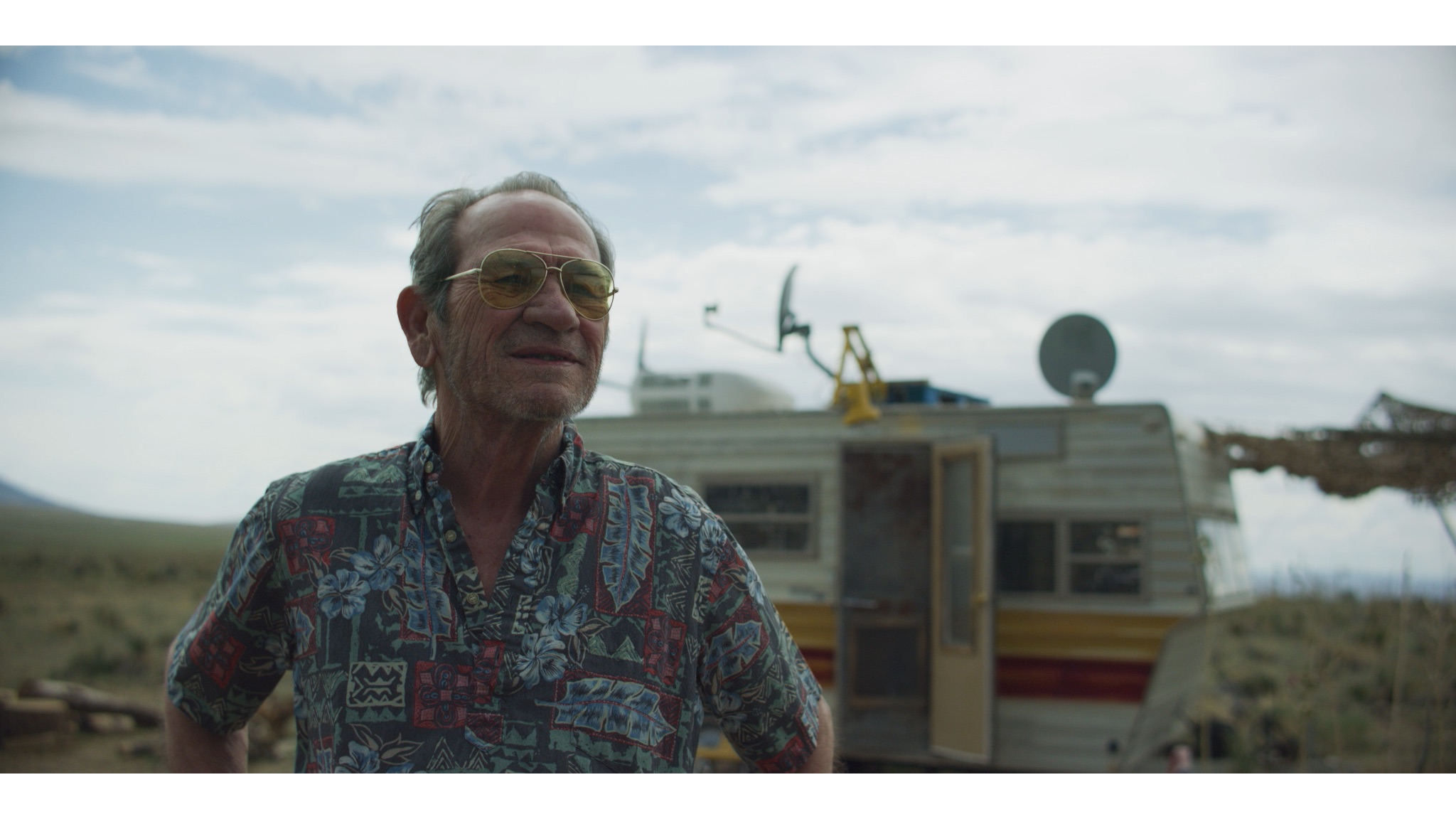
BK: The opening shot of “Wander” is brilliantly shot in how the camera comes up to the scene of a car accident and then pulls away from it to suddenly go up into a crane shot. How did you pull this off?

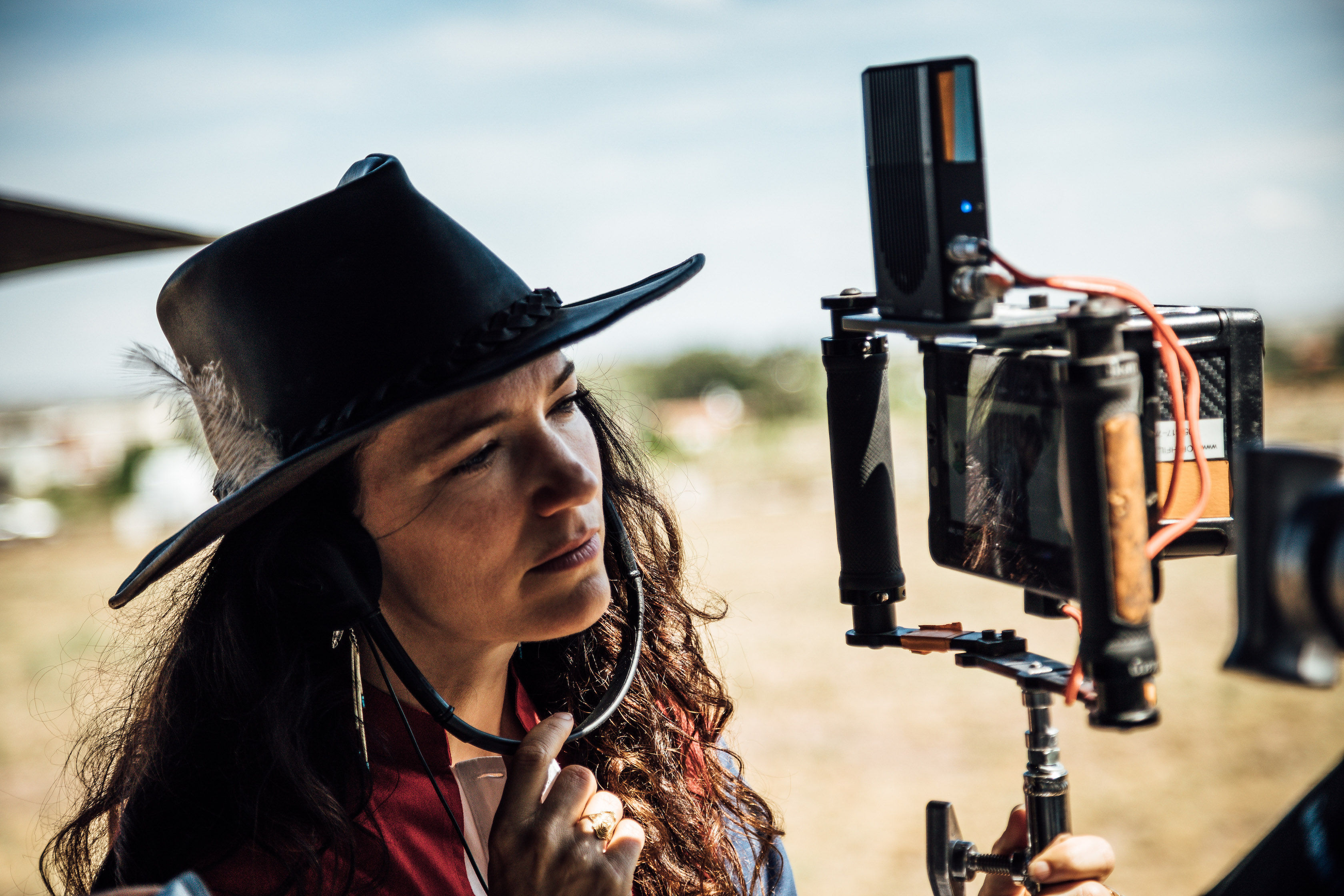
AM: You are the first person to mention this, and I have to say I loved that you did because no one has! That shot was so, so ambitious. There was only four of us. It was a (camera) operator who I have worked with on three films on the Steadicam who was rigged on the back of one of our production vans. My father was driving backwards (laughs) along a deserted road which we had full safety on each side which then came to a stop. The camera operator came up to and circled that space that you saw. He designed, which we brought from Canada to Carrizozo, a walk on/off platform which I am obsessed with. It’s used in the film a dozen times. He was able to take the Steadicam and do a walk on crane shot. It’s independent film so we have to do these things. He at the end walks backward onto a platform after which a crane lifts him up. He’s actually standing on the crane that he made a platform for, and it is all in one shot. I wanted it to be at sunrise so our window was very small. We practiced about three runs to get the timing of the lines of the road correct, and I really wanted it to be shot in one shot and not digitally faked. We shot it four times and then we got it on the second take. I’m really proud of that because it is an amazing achievement for a small crew with a small budget and being innovative together out in Carrizozo, New Mexico. We had very little resources. We built that shot with a hammer and screws (laughs).

BK: I imagine the budget on this production was very tight.

AM: Super tight. Too tight.

BK: How much time to shoot “Wander” in?

AM: 20 days, but our below the line budget was very puny because we had these incredible stars in the film, which is okay because that’s what we need for people to be able to see the film. But it really tightens the clasps on everything else. It was puny, very puny (laughs).

BK: Speaking of the cast, you have a great set of actors on display here. In addition to Aaron Eckhart, you also have Tommy Lee Jones, Heather Graham and Katheryn Winnick among others. How much direction did you have to give these actors, or did you simply leave them to their own talents?

AM: As a director I am very, very hands on, so I am always within arm’s length of them and am trying to challenge them and steer them in new directions. I think Aaron, Tommy, Heather and Kathryn are all playing roles that they are not stereotypically cast for. Heather Graham was the grounded best friend and the tether to reality for Arthur. She was not a romantic love interest. She was the voice of reason for the audience. That is something very challenging and new for her, coming up with ways in making sure she was really grounded. She loved it, I loved it and we were both up for the challenge. Tommy Lee, he doesn’t usually doesn’t get to play an eccentric, fun loving (at least on the surface), Hawaiian shirt wearing, whatever goes kind of guy. It is very different for him. There were a lot of questions and bod language and how to say certain things. We were always, always communicating and it was unbelievable work because it was such a small set and a small cast in a lot of ways. There was a lot of one on one time which was fortunate and really wonderful.

BK: Katheryn Winnick’s character always stands out in an interesting way in this film, and this is especially apparent in the first shot. Was that by your design or Katheryn’s?

AM: It was written in the script, but we also worked on the script months before she got to Carrizozo. I love that she comes prepared. We were revamping and reworking the script to cater to her and her strengths, and what she thought was more intelligent or higher stakes for her character which was fantastic. That was really unique how she brought that as a performer. When she got there, she was unbelievable. She came onto set, it was her first day, and it was the shot where she has to jump out of a window and Aaron catches her and they start running, and it is the intro where she takes off her mask. As she was coming out of the trailer, I was like, Katheryn, we have 20 minutes, the sun is setting, it’s a one-take wonder because it has to happen at magic hour. Once again, trying to way too ambitious for what I have (laughs). So I said, Kathryn, I have your stunt double here, but then I would have to cut for the lines. What do you feel? And she was like, “I’m down, I’m ready, let’s get dirty!” As big and as Hollywood as she is, she was ready to get dirty and gritty for the role because that role is undone in a lot of ways because her character carries with her a lot of weight. She is manipulating all of the puzzle pieces which is pretty cool to find out at the end. She was just such a team player and she didn’t even practice. She was like, let’s do it. I was like, are you sure about the window? Are you sure you’re gonna go through it? Are you okay? She says, “done. I’m ready.” We did it twice, she nailed it twice, Aaron caught her twice doing somersaults out of a window, both of them did their own stunts and it was unreal (laughs), and that was day one on set! They trusted each other, they trusted us, they trusted me and it was an awesome moment of just jumping off a platform and creating magic together. It was awesome.

BK: That’s one hell of a first day.

AM: Can you believe that? I know! Unbelievable.

BK: The look of this film is fantastic. How much of it is due to you, and how much of it is the result of your cinematographers, Gavin Smith and Russ De Jong?

AM: It was a huge collaboration from the beginning. Tim Doiron, the producing partner and I landed in New Mexico six months prior to shooting. We lived in Carrizozo, that little town, in those tiny motels for four months. We were isolated from reality just like Arthur which was super inspiring, and Gavin and I were coming up with that beautiful projection and trying to be innovative with the small budget and small locations we had and really branching out to try and make the film feel much bigger than what it was. I’m obsessed with every detail, every moment and every little piece of color, light, production value and design that you see onscreen. Every little detail, I wish I could say it happened by accident and that we sneezed and there it was, but it is meticulously planned (laughs). I hope it feels real. I just wanted it to feel like real life, but it was definitely very much planned including the times of day when we shot. I really wanted to take advantage of those gorgeous landscape shots and the sun setting shots. That required teamwork with the DP and also out first assistant director and our production designer, my sister Faye Mullen, and me and everybody coming together to really try and achieve what we needed to on a tight timeframe. But the look was heavily established beforehand. I started taking pictures and photographs the minute we started writing. Five years ago, I was collecting a look book for “Wander” that I brought to the DPs who I have worked with before on several projects so we had a shorthand. We just wanted to make it our best work, so we challenged each other every day than we ever made it before which is a good thing.

BK: That lightning bolt in one shot, that was real?

AM: Oh yeah it was. Nothing is effects except for the little chip. Everything is real. Every sunset, every lightning bolt, all of that is just real and I’m so proud of that.

BK: Thank you for your time April.

AM: Thank you for supporting “Wander.” Have a great day and keep running!

“Wander” will be released in theaters (whichever ones are open), On Demand and on Digital starting December 4, 2020. Please be sure to check out the trailer below. Poster and photos courtesy of Saban Films.

‘Eddie Pence: The (Un)special Comedy Special’ is Endlessly Funny

Sooner or later, every standup comedian gets their own comedy special captured on film, digital or whatever else people are using these days. Richard Pryor performed one of his most famous standup specials on the Sunset Strip at the Comedy Store, George Carlin performed many unforgettable specials on HBO, Kevin Hart got to perform to a sold-out crowd at Madison Square Garden, and Dave Chapelle has remained a comedic force to be reckoned with on Netflix along with others like Amy Schumer and John Mulaney.

And then there is Eddie Pence. You haven’t heard of him? Well, you clearly have not been paying attention like you should. Eddie has been a stand-up comic for many years in Southern California, has appeared on many different shows, and he is also the vice host of “The Ralph Report” with Ralph Garman. Still, he has not achieved the crazy level of fame others in his field have. But like many in this day and age, he has been busy fundraising in an effort to create his own comedy special, and it has finally arrived and been given the unique title, “Eddie Pence: The (Un)special Comedy Special.” What results is a solid hour of hysterics from a self-deprecating individual who is better at performing than he thinks.

With this comedy special, which Pence filmed in his hometown of Washington, D.C., he wisely sets himself up as an underdog. When rushing towards the camera in the opening moments, he is knocked over by a pedestrian who will not even allow him to say the title of this special which Comedy Dynamics took a little too long to release. As he attempts to give out free tickets to his show, he is greeted by one who mistakenly believes he is a blood relative to a certain Vice President who was recently upstaged by a housefly during a debate. Upon arriving at his appointed venue, the D.C. Comedy Loft, he is informed that the main room is hosting a comedy class on how to tell a joke, and it costs only $10 to attend. As a result, he is forced to perform in the venue’s Cellar room which I imagine is the equivalent of the Belly Room at the Comedy Store in Los Angeles. Nevertheless, Pence is so determined to jump onto the stage to give us what he has got, and he is so pumped up to where he doesn’t realize his comedy set will not start for another two hours.

The set of the Cellar is very simplistic as it features a red wallpapered wall with bland white Christmas lights adorning it. If those lights were blinking constantly, it may have looked more like the seedy bar Laura Palmer visited in “Twin Peaks: Fire Walk with Me.” But while Pence may not have the spectacular sets which adorned Carlin’s HBO specials, he is not about to let his sparse set affect his comedy set, and it quickly proves to be endlessly hilarious.

Right from the start, I could see Pence has had a lot of experience as a stand-up comedian, and he shows a lot of confidence as he goes from one joke to the next with what seems like relative ease. As he points out how strippers are doing the Lord’s work or how no one can half-ass streaking, it is clear he has long since found his own unique style of performing and trusts his own point of view implicitly. Even I have never taken into account how strippers are doing the Lord’s work.

What I also admired about Pence is how he goes from one topic to another with the understanding of not staying on the same subject for too long. He is also aided by his director, Dustin Jacobs, who keeps the proceedings moving at a steady pace. Stand-up comedy specials usually have spots where things begin to drag to where you find yourself checking your watch or looking how much time is left before the end, but this special is never undone by such problems. Everything feels smooth and I never felt my attention wavering throughout even when Pence talks about how hamsters make the worse pets.

And like all great comedians, Pence saves his best material for last. His jokes about “Star Wars” are more than welcome, and he comes up with stuff even Kevin Smith did not include in “Clerks.” Pence’s biggest jabs, however, are at “The Empire Strikes Back,” still the greatest “Star Wars” ever made. The penultimate scene in which Princess Leia tells Han Solo she loves him before he is frozen in carbonite, and he tells her “I know” remains one of the most memorable moments in a “Star Wars” film, let alone any other film in cinematic history. But in the process, Pence provides us with definitive proof of how a similar situation will never play out as well in real life. In fact, anyone with a DNR order will find their wishes completely voided if those two words are the last thing they say to their spouse.

Is “Eddie Pence: The (Un)special Comedy Special” one of the greatest stand-up comedy specials ever made? Oh please, do not go into this needlessly comparing this one to others. Simply let it stand on its own and enjoy for what it is. Besides, all these lists get everything in the wrong order. There was one which even dared to put “Bill Cosby Himself” at a much higher position than “Richard Pryor: Live in Concert.” Blasphemy! That’s like saying John Carpenter’s “Ghost of Mars” is a better motion picture than his remake of “The Thing!”

Anyway, I digress. Pence proves to be a durable stand up comedian who generates many laughs for the most enthusiastic of audiences, and his “(Un)special Comedy Special” will present viewers with a nice diversion from the apocalyptic world we have been forced to endure this past year. But by the end of 2020, I hope to have an answer as to which comedy is funnier: this or “Trump Card.”

* * * ½ out of * * * *

‘Robin’s Wish’ Sets The Record Straight About The Late Mr. Williams

As with the deaths of Jim Henson, River Phoenix and Phil Hartman, Robin Williams’ hit me like a punch in the gut and left me speechless for a time. Here is a man whose work I had followed ever since I first saw him in Robert Altman’s “Popeye,” and we have always known his brain to work at 100 miles a minute. He was an extraordinary talent who kept us laughing hard as he managed to improvise routines out of what seemed like thin air. The fact we were now living in a world without him seems unreal even today, and there are times when I think August 11, 2014 should be designated as the day the laughter died.

Among the striking images shown in the first few minutes of “Robin’s Wish,” other than the beautiful vistas of San Francisco and Marin County, are images of newspapers, magazines and tabloid rags which pondered over why the Oscar-winning comedian committed suicide. Was it because he suddenly left a 12-step program where he was dealing with alcoholism? Was he in dire financial straits? Was he upset the show which marked his return to television, “The Crazy Ones,” was cancelled after only one season? Did he really never get over the death of John Belushi? Did all those years of drug and alcohol abuse finally catch up with him? In the wake of his passing there were many questions, and they eventually became rumors which spread like wildfires. As many sought to get to the truth, the rest of us felt so far removed from it.

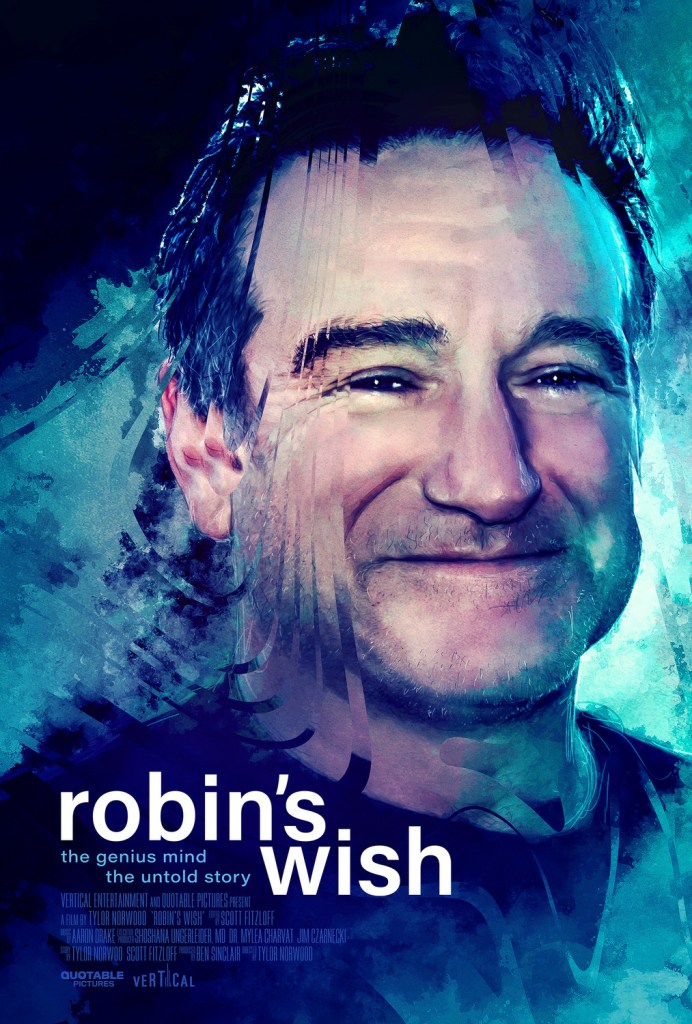
The documentary “Robin’s Wish” is filmmaker Tylor Norwood’s attempt to set the record straight about what really happened to Robin Williams and why he died. It also serves as a deep examination of disease Lewy Body dementia (LBD) which may sound new, but has actually been around for many, many years. We also get a close and personal look at Robin’s last days before his tragic death, and it proves to be both very sad and yet hopeful all at the same time.

Instead of a full-fledged biography, Norwood looks specifically at Robin’s evolution as an actor and comedian. We see Robin talk about how the brain is “an extraordinary three-and-a-half-pound gland” and that he does not have an act as much as he does a “cesspool of consciousness.” He discusses his time at Julliard in New York where he got heavy duty training as an actor, and of how he left before he could have graduated and moved back to San Francisco to find acting work. When he couldn’t find any, he started doing stand up comedy in which he succeeded in, as one close friend put it, in “demolishing” every single audience he performed in front of. Back then, everyone was in awe of his talents as his mind moved at lightning speed, and this was only the beginning. Like them, we were in awe of what he could do.

Throughout, the documentary moves back and forth from his life to the subject of the LBD which, while it may pale in comparison to Parkinson’s, Alzheimer’s or ALS, can be every bit as debilitating and deadly. UCSF Professor Bruce Miller is shown describing it as a devastating disease which is fast and progressive and a killer. It also increases mental disorders such as depression, anxiety and insomnia, and paranoia and delusions are also major symptoms. There is no none cure for this disease as of yet, and it usually ends in suicide. But even worse, is often misdiagnosed.

Robin’s widow, Susan Schneider, did not have a name for what killed her husband until she read his autopsy report. Initially, Robin was diagnosed with Parkinson’s, but this was not the case. Susan says had Robin known what he was suffering from while he was alive, then he would have at least had some peace. As for Professor Miller, he described Robin’s case as being the most devastating case of LBD he had ever seen, and he was amazed the “Good Will Hunting” actor could move or walk at all.

As “Robin’s Wish” goes on, we see how LBD came to affect the actor long before he died, and it is devastating to witness the effect it had on his comedic gifts. Whether it was on the set of “The Crazy One” or the third “Night at the Museum” movie, he started to have trouble memorizing his lines and coming up with stuff to improvise. At one point, he tells someone how he is not himself anymore, and you feel his disassociation around everyone to an infinite degree. To realize you are not who you once were has got to be horrifying.

Learning about this mental disintegration from friends and colleagues such as Rick Overton, David E. Kelley and Shawn Levy helps to shed light on what Robin was going through as LBD was already taking its toll on him. To see someone lose gifts few are ever endowed with is painful, and it also reminded me of the last time he was a presenter at the Oscars. Whereas in the past he would come up with some hilarious thing to say or take aim at Jimmy Swaggart (“Remember, there is no such word as audit in the Bible, okay?”), he simply just listed the nominees and read the winner. Many wondered why he seemed so listless, and now we know.

Schneider deserves a lot of credit for being so open about Robin’s struggles as she still feels the pain of his death from day to day. The love they had for one another was very real, and we see the two of them at their wedding and in many pictures which illustrated just how close they were to one another. She also shares why the two of them had to sleep in separate beds at one point as Robin’s insomnia worsened to where he woke up at early hours and accidentally injured her.

“Robin’s Wish” does make a solid case for how serious a disease LBD is, and after watching the documentary there is no doubt this is what killed him. It makes clear what a wonderful soul he was as he took the time to meet with soldiers who were wounded, children who were sick and others who needed a laugh during a dark time in their lives. It also makes clear of the fact Robin was clean and sober at the time of his death. Drugs and alcohol did not rob us of him.

If there is anything I feel is left out here, it is the thoughts and feelings of others close to Robin such as his children or his ex-wife Marsha Garces whom he was married to for 20 years. Their absence here makes me wonder how they feel about all of this. Perhaps they were not invited to participate or chose not to. Even though this is not meant to be a full out biography of Robin Williams, it feels like some pieces are missing which would have made this portrait more complete.

“Robin’s Wish” is not the easiest documentary or movie to sit through as we know how it ends. The void the famous comedian and actor left in his wake is still deeply felt all these years later, and it is impossible not to feel bad for his closest friends. This is especially the case for the one friend who was informed of Robin’s death over the phone by a reporter who said he died by suicide. This is not the way to inform someone of their friend’s passing.

Nevertheless, as sad as “Robin’s Wish” may seem, it also filled with hope. As debilitating as LBD was for him, he fought it like a warrior even if he did not know exactly what he was fighting. We are also reminded of his perspective on life which he earned through a lot of life experiences and mistakes he learned from. To him, life was always about other people, and he simply wanted to make everyone feel less afraid. Norwood definitely finds the right note to end this documentary on as, while Robin may be gone, he shows we can still carry on his legacy from one generation to the next. No one who knew Robin Williams will ever forget the impact he had on others, and no one ever should.

* * * ½ out of * * * *

Click here to find out how you can donate to the Lewy Body Dementia Fund of the American Brain Foundation.

‘Bill & Ted Face The Music’ Hits Just The Right Notes

After watching the trailers for “Bill & Ted Face The Music,” one question kept popping into my head: How can these two guys from San Dimas go from playing in front of the largest audience in the world to performing for a crowd of 40 in Barstow, most of whom were there for $2 taco night? At the end of “Bill & Ted’s Bogus Journey,” we saw news articles of them performing all over the place, and they even got to stage a concert on Mars of all places. Seriously, you cannot plummet from a height of fame like that, right?

Well, keep in mind that at the end of “Bogus Journey,” Bill and Ted did finally learn how to play their guitars, but they also performed a cover of “God Gave Rock and Roll to You” by KISS. We never did hear them play any original tunes. As “Face The Music” begins, we learn their debut song as writers opened big and then plummeted to the bottom of the charts in record time. Even worse, their follow up albums were ravaged by the critics, one who described their work as being “manure.” Taking this into account, it makes perfect sense they would end up performing in Barstow, a town in the middle of nowhere. Like Vanilla Ice, they shot up into the stratosphere and then saw their follow-up album being sold at a used record store for only 99 cents (and that’s on the day after it was released).

We first see Bill S. Preston (Alex Winter) and Ted Logan (Keanu Reeves) at the wedding of Missy (Amy Stoch). Yes, Missy is getting married, and just wait until you find out to who. The two use the occasion to present the world premiere of their latest work, and while they play instruments with more confidence than before, they are still unable to put together a cohesive song, and the response they get is much like the one Spinal Tap received when they told the audience they were going in a “new musical direction.”

Bill and Ted are still married to the princesses, Joanna (Jayma Mays) and Elizabeth (Erinn Hays), and they have two beautiful music-loving daughters in Theodora (Samara Weaving) and Wilhelmina (Brigette Lundy-Paine). Still, they have not yet written the song meant to unite the whole world, and it appears as if this destiny may have been misread. Furthermore, their daughters are in their 20’s and still living at home, and their wives are starting to tire of the lack of the direction in their husbands’ lives. Ted’s dad, Captain Jonathan Logan (Hal Landon Jr.), refuses to believe he and Bill could have traveled in time or gone to heaven and hell and begs them to get “real jobs.” Yes, middle age has hit Bill and Ted real hard to where they feel the need to reassess their goals.

Then into the picture comes Kelly (Kristen Schaal), daughter of the late Rufus, who takes Bill and Ted to the future to meet The Great Leader (played by Holland Taylor) who is not exactly happy with where they have ended up in life. From there, they are informed that the universe is unravelling and will be destroyed if they do not write the unifying song in the next 78 minutes. How about that? You are tasked with writing the song which will unite the world, and you have just over an hour to compose it. Talk about pressure! As we get older, 78 minutes doesn’t last as long as it used to.

Bill, however, comes up with a most excellent plan to travel with Ted into the future when they have already written the song and to take it from themselves. Ted considers this to be stealing, but Bill convinces him it isn’t as long as they are stealing from themselves. Hey, it worked for James Horner!

“Face the Music” comes to us more than 25 years after “Bogus Journey,” so it is hard to know what to expect. It reunites not only Reeves and Winter, but also screenwriters Chris Matheson and Ed Solomon who penned the previous two films as well. I am thankful to say this sequel is no “Blues Brothers 2000” which relied on an overabundance of nostalgia to where I found myself wanting to watch the original. Instead, it does come with some good laughs and a lot of heart as everyone involved has worked their damndest to bring this last chapter of Bill and Ted to the silver screen and digital streaming for dozens of years. Regardless of what you may think, no one is out to simply repeat themselves here.

Both Reeves and Winter are clearly having a blast as Bill and Ted keep traveling to different parts of the future in an effort to talk to themselves and get the song. This allows the actors to portray them in various ways to where we see them as has beens, a duo ever so in love with English culture, and hard-core prisoners who have bulked far more than you would ever have expected (nice makeup work by the way). Regardless of the many years which have passed them by, both actors slip back into their roles as if they never left them, and they keep these characters from becoming mere caricatures throughout.

Also, believe it or not, there is some evolution to Bill and Ted. Granted, they are still pretty dense when it comes to things like couple’s therapy, but they also realize how their famous sayings of “be excellent to each other” and “party on dudes” do not have the same resonance as they once did. Before they go on their latest excellent adventure, they have to realize they are at a crossroads as things cannot keep going the way they have been as things have got to change. Still, it is worth it to see them playing air guitar here and there even as they approach middle age with inescapable apprehension.

Both Weaving and Lundy-Paine are fun to watch as the daughters, and this is even though the section where they search for famous musicians to create a band is the film’s weakest. It’s a bit of an anemic retread of when Bill and Ted, on their “Excellent Adventure,” went back in time to gather historical figures for their final history exam. Regardless, it is cool to see Jimi Hendrix jam with a bewildered Mozart who has no idea what he is hearing.

It is also great to see William Sadler return as the Grim Reaper as he stole every scene he had in “Bogus Journey.” He too slips back into this hilarious character as if he just played him yesterday, and not once does he have to struggle to get a laugh out of any of us. Seeing the Reaper attempt to make peace with Bill and Ted over the fallout they had with all those 40-minute bass solos is not just one of “Face the Music’s” funniest moments, but also one of its most heartfelt.

Each of the “Bill & Ted” films have had a different director: Stephen Herek directed “Excellent Adventure,” Pete Hewitt helmed “Bogus Journey,” and behind the camera for this installment is Dean Parisot. As a result, each one has a different feel to it despite having most of the same cast and the same screenwriters. Parisot is a perfect fit for this entry as he is terrific at mining material for both laughs and heart, and he proved this with “Galaxy Quest,” one of the greatest cult movies ever made. “Face the Music” doesn’t reach the same heights as “Galaxy Quest,” but Parisot does show a lot of respect for these characters and gives this sequel the heart it deserves. More importantly, he gives it a fulfilling conclusion which truly put a big smile on my face.

Upon first watching “Bill & Ted Face the Music,” I have to admit my feelings on it were mixed as I hoped it would be funnier. But after watching it a second time, I found myself appreciating it more as speaks to the values of friendship and music, both of which we need in these crazy times. Whether or not this sequel is all you ever hoped for, it is clear everyone involved put everything they had into it, and I do hope the fans are satisfied with what they see.

Could a fourth “Bill & Ted” movie ever happen? I don’t know, and frankly this one serves as good conclusion. Seeing them rock out at the conclusion reminds me of what Neil Young once said:

“Rock and roll can never die.”

Damn right! Party on dudes!

* * * out of * * * *

The Trailer for ‘Eddie Pence: The (Un)Special Comedy Special’ Has Finally Arrived

It’s been talked about for ages to where we wondered if Comedy Dynamics, the largest independent comedy production and distribution company, would ever release Eddie Pence’s long-awaited comedy special in any format. Pence spent a good deal of time raising money on Indiegogo to help bring about the funds needed to produce it, Comedy Dynamics signed on to distribute it, and then everything turned into an elongated episode of “Waiting For Godot” as we all wondered if it would ever see the light of day.

Well, the wait is finally over as “Eddie Pence: The (Un)Special Comedy Special” is about to be released by Comedy Dynamics on September 1, 2020 on various digital platforms such as YouTube, iTunes, Amazon Prime and so many others. As for a DVD, Blu-ray or perhaps even a 4K Ultra HD release, that is still being worked on. But more importantly, the first trailer for it has now been unveiled for all the world to see, and it makes me want to watch the whole special sooner rather than later.

Pence’s “Un(Special) Comedy Special” was filmed in the comedian’s hometown of Washington D.C. at the cellar of the D.C. Comedy Loft (hence the special’s rather unique title). It is said Pence will be giving us his humorous takes on killer chihuahuas, streaking, and how he parents his young son. The trailer, however, shows him performing an unforgettable bit about “The Empire Strikes Back,” still the best “Star Wars” film ever made. We all know the famous exchange between Princess Leia and Han Solo in their penultimate scene where Han is about to be frozen in carbonite, and Leia tells him, “I love you!” To this, Han replies, “I know.” It’s a beautiful moment which none of us can ever forget, but as Pence points out, it’s a moment which will never, ever play out well in real life.

Pence has been a stand-up comic in Los Angeles for the past 20 years, and he has performed on television shows like “The Late Late Show” and various ones shown on Comedy Central. These days, he serves as the “Vice Host” of “The Ralph Report” which is hosted by Ralph Garman, and he is one of the hosts of “The Ramble” alongside Jerry Rocha and Cody Villafaña. He is also a big fan of the formerly named football team Washington Redskins, and even he thinks this NFL team has long since deserved to be renamed to something less offensive.

Please feel free to check out the trailer for “Eddie Pence: The (Un)special Comedy Special” down below. Hopefully it will be more special than the title lets on.

Capone Aims For Greatness But Instead Becomes a Real Mess

Al Capone was an American gangster and businessman who became a notorious crime boss during the Prohibition Era, and he has long since become a major figure in popular culture. Many actors have portrayed him over the years like Robert De Niro, Rod Steiger, Jason Robards, Ben Gazzara, Ray Sharkey, William Forsythe and F. Murray Abraham to name a few, and it certainly is a juicy role for any actor to take on as he became a character Shakespeare would have been proud to write about. The great Tom Hardy is now the latest to play him in Josh Trank’s biographical film “Capone,” one of the many films meant to be released in theaters but, because of the Coronavirus (COVID-19) epidemic, is instead making its debut on VOD. Whether or not it deserves this particular fate will depend on what you think about the finished product, and this one does come with a lot of baggage.

Whereas many films about Capone focus on his time as a feared crime boss, this one looks at his final year of existence. “Capone” starts off informing the audience of how the famed gangster was sentenced to prison on October 17, 1931 for tax evasion and released a decade later when he was no longer deemed a threat to society. When we first see him here, he is living in Florida with his family and close friends, and we see he is also afflicted with neurosyphilis and dementia which deeply affects the way he sees reality.

Before I go on, I should point out what neurosyphilis really is. According to Wikipedia, it is an infection of the central nervous system which can occur at any age, and “Capone” looks to illustrate how bad this disease can get. While the man is resting in retirement in Palm Island, Florida, his mind is quickly rotting away to where he begins suffering from hallucinations and loses control over his bodily functions. This results in him suffering from some embarrassing situations no one would ever want to be caught in, and I wondered how long he would allow himself to endure such unbearable torture.

I have seen Capone portrayed in many movies like “The Untouchables,” “Road to Perdition” (albeit in a deleted scene), “Mobsters” and “The St. Valentine’s Day Massacre” to where I feel lI know all there is to know about him. With “Capone,” I got to see another chapter which of his life which I was not as familiar with. It may not be as cinematic a story as his days as a feared crime boss, but it does provide us with a different look at a gangster when his mental capacities were fading rapidly. I also cannot think of a single film which has dealt with syphilis this intimately or in depth. Come to think of it, I’m not sure I want to. The word syphilis is an icky word even when you don’t know its meaning.

But as “Capone” goes on, I kept wondering what everyone here was trying to accomplish. Some filmmakers prefer not to spell out the meaning of their movies, and that’s fine. When it comes to this one, however, I am at a loss because everything becomes a huge mess long before the end credits. The filmmakers go only so deep into the gangster’s addled brain, or what’s left of it, and what we are left with is a lot of unpleasantness and a screenplay which could have used a lot more depth. What exactly was the point of showing us all of this? To make us understand how bad any kind of syphilis is? To see if Capone is worthy of forgiveness and redemption. A lot of questions are brought up, but I never found any satisfying answers.

The big draw here is obviously Tom Hardy, and I am prepared to see him in anything and everything. From a distance, he looks to be the perfect actor for this role having portrayed such villainous figures in “Bronson” and “The Dark Knight Rises.” But while he certainly has inhabited Capone as much as an actor can physically, his performance here is deeply flawed as he more often than not slips into caricature which sucks all the naturalism out of what I thought would be a fully formed character. This is especially the case when you take into account how his co-stars Linda Cardellini, Matt Dillon, Kyle MacLachlan and Kathrine Narducci slip into their roles so easily to where I never caught them acting. Basically, everyone seems to be on the same wavelength except Hardy who appears to be acting in a completely different film, and his bombastic portrayal is a shock considering what a reliable actor he usually is.

But when it comes to “Capone,” the person everyone has their eyes on is writer and director Josh Trank. Back in 2012, he made his big Hollywood breakthrough with “Chronicle,” a found-footage thriller which smartly transcended its genre and provided a huge boost to the careers of Michael B. Jordan and Dane DeHaan. Then he followed it up with the “Fantastic Four” reboot which rode a tidal wave of bad press all the way up to its opening, and quickly became a critical and commercial disaster which must have had a devastating effect on him. Thanks to this nightmarish reception, and to Trank’s tweet about there being a better version of the film which may never see the light of day, he looked to be forever consigned to director jail along with other filmmakers who blew their big chance at a long-lasting career. Still, we all love a comeback, and “Capone” certainly looked like it would wipe away the stench from the rare comic book/superhero movie flop.

I certainly wanted “Capone” to be a success for Trank, but while his filmmaking skills have improved, his screenplay is full of elements which never gel into a satisfying or cohesive whole. It is tempting to believe he relates to Capone’s hellish last year as it threatens to be quite similar to the battles he had with studio executives over “Fantastic Four” as the gangster deals endlessly with paranoia over paparazzi hiding in the bushes and of people he believes may be out to kill him. But when the film finally ends, I came out of it unsure what to think. In his attempts to continually go against the Hollywood grain, Trank instead alienates any audience this film hopes to have as he becomes more interested in rubbing our faces in Capone’s diseased state of mind instead of creating a truly compelling narrative.

Well, Hardy will certainly rebound from this misfire sooner rather than later. As for Trank, there’s always a chance at another comeback. I just hope that next time he works harder at creating a motion picture which is not so much anti-Hollywood, but one which transcends another genre the way “Chronicle” did. “Capone” certainly provides us with a unique look at one of America’s best-known gangsters, but when its all over, I could not help but wonder if it was a story worth telling.

* * out of * * * *

Bond 25 Finally Gets Its Title, and You May Be Surprised By It

No Time To Die 007 logo

We have been hearing so much about the 25th film in the 007 franchise to where it threatens to feel like we have watched it in full long before it arrives in theaters everywhere. Daniel Craig confirmed to Stephen Colbert he would return to do a fifth movie as James Bond, Danny Boyle was originally set to direct but later dropped out and was replaced by Cary Joji Fukunaga, and there were rumors Adele would return to compose this film’s theme song. Other than that, we were left with an endless set of questions: Would Christoph Waltz return as Blofeld? Who will compose the score for this one? Can they possibly get “Skyfall” cinematographer Roger Deakins to return? What kind of Bond villain is Oscar winner Rami Malek going to play? Who will be the latest Bond woman?

As fans posed these questions and several others, many including myself had one which we desperately wanted an answer to: WHAT WAS THIS BOND FILM GOING TO BE TITLED??!! In the wake of a press conference featuring the cast of Bond 25 and various behind the scenes images from the set, it seemed no one thought to give this one a name. Did longtime Bond screenwriters Neal Purvis and Robert Wade start writing it without a title in mind? Did fellow scribes Fukunaga, Scott Z. Burns or Phoebe Waller-Bridge get a chance to add their two cents to this issue? Seriously, it cannot be this difficult to generate a title for this or any other motion picture, right?

Well, after what feels like an eternity, MGM has finally given us the title of the 25th James Bond film: “No Time to Die.” My opinion regarding this title is quite mixed. A title like this one sounds like something out of an easily disposable paperback novel, while fun to read, won’t stay in the mind for too long. Granted, “Die Another Day” was already taken, but after the titles of the previous Craig Bond movies (“Casino Royale,” “Quantum of Solace,” “Skyfall” and “Spectre”) which implied quite a bit without saying so much, this one feels surprisingly ordinary. Couldn’t they have come up with something infinitely more inspired?

At the same time, perhaps it is not a bad title for this installment, likely the last to feature Craig as 007. In terms of years, Craig has now held onto this iconic role longer than any of his predecessors, and we have grown with him as we watched him make this role his own from “Casino Royale” to “Spectre.” In this installment, Bond is said to have retired from active duty and is now enjoying a leisurely life with Dr. Madeleine Swan (Lea Seydoux) in Jamaica. But the vacation quickly ends when his CIA pal, Felix Leiter (Jeffrey Wright), arrives in town and asks for Bond’s help in rescuing a kidnapped scientist. Suffice to say, retirement does not last long for Bond, and the only way for him to escape any sort of responsibility from this situation would be death. However, death would be the easy way out, and Bond is not about to go down that route.

Craig’s interpretation of James Bond reminds me a lot of Jack Bauer from “24” as both characters have sworn a loyalty to their countries of origin, and this is a loyalty which, whether they admit it or not, proves to be far more important than anything else in their lives. Still, their actions come with consequences and an inescapable case of karma which will never let them rest easy. How does one live with being someone who willingly kills if the situation calls for it and not go through life with one form of guilt or another? Craig’s Bond has numbed his consciousness more often than not with alcohol, and this is regardless of whether it is shaken or not stirred. The only way a character like this can possibly find peace is in the realm of death, and Bond is not about to choose this realm as he eventually returns to his call of duty when the circumstances call for it, and this installment makes it clear he is not about to die even if it will cease his suffering.

“No Time to Die” will arrive in theaters in April of 2020. Check out the title announcement below.


Tom Cruise Flys High Again in First Trailer for ‘Top Gun: Maverick’

The thought of a “Top Gun” sequel was laughable years ago as Tom Cruise had little reason to do a sequel to any of his films. Seriously, it seemed as likely as him doing a sequel to “Cocktail” which, while a big hit at the box office, was not exactly a critical darling. But in recent years, any movie he stars in which doesn’t have “Mission: Impossible” in its title has failed to make much of a dent at the box office, and perhaps this is why he has chosen to finally revisit his superstar-making role of Pete “Maverick” Mitchell 34 years after the original was released. Whatever the case, its first trailer honestly has me very excited for it.

From this trailer, we learn Maverick is still a Captain instead of a military general, meaning he is still unsafe and quite dangerous in the cockpit of an airplane. Whereas James Tolkan chewed him out in the original, another bald military general played by Ed Harris (give this man an Oscar already!) berates him for not allowing himself to get promoted. When we finally get our first look at Cruise here, it looks as though he hasn’t aged much since 1986, and he still has that shit-eating grin which drives everyone crazy in ways both good and bad.

What struck me most about this “Top Gun: Maverick” trailer was its flight scenes as director Joseph Kosinski, who previously directed Cruise in “Oblivion,” makes us feel like we are in the cockpit with Maverick as he takes off from an aircraft carrier in the middle of an ocean. This reminded me of how exhilarating the flight sequences from the first “Top Gun” were, and this sequel looks to have even more of them.

From there, we get glimpses of characters such as Bradley Bradshaw (Miles Teller), son of the late Nick “Goose” Bradshaw (Anthony Edwards), and he looks to be as buff and as musical as Cruise, Edwards, Val Kilmer and Rick Rossovich were in the original. Yes, there looks to be another volleyball game in store for us in which we discover how the men look without their t-shirts on.

We also see glimpses of Jennifer Connelly as Maverick’s love interest who is said to be a single mother and the owner of a bar. My guess is Kelly McGillis does not appear in this sequel as she seems determined to remain retired from acting.

Val Kilmer is also set to return as Tom “Iceman” Kazansky, but we do not see him in this trailer. I read somewhere that his Iceman is now a Vice Admiral, and I’m guessing he will still be teasing Maverick about who is going to be whose wingman.

I am also gratified to know Harold Faltermeyer is back to score this sequel, and he will be doing so along with the great Hans Zimmer. You can hear Faltermeyer’s score throughout this trailer, and it is an immediate reminder of how much it drove the action and emotion of “Top Gun” back in 1986. I can already see myself buying the soundtrack to this sequel when it arrives in theaters in the summer of 2020. Heck, I might buy the soundtrack before this sequel is released.

That’s the other thing; “Top Gun: Maverick” is being released in 2020, exactly one year from now. I know Hollywood is always serious about securing release dates for movies way ahead of time, but showing us trailers for movies which will not be released for another 12 months seems unnecessarily torturous. Remember when we got the first trailer for “The Matrix Reloaded” and “The Matrix Revolutions?” It got audiences excited as hell and yelling out with joy as soon as those green digits started descending from the top of the silver screen. This was back in 2002 when the trailer was shown before “Star Wars Episode II: Attack of the Clones,” and it ended with “2003” on the screen. As thrilled as we were with the continuation of “The Matrix” franchise, seeing the date of when the first sequel was to be released had us groaning in frustration all too loudly.

At least here, Paramount Pictures tells us “Top Gun: Maverick” will be coming out in 2020 in the middle of the trailer instead of at the end of it. After all these years, Hollywood has remembered they can tease audiences only so much before foolishly risking our wrath.

“Top Gun” may have received mixed reviews upon its release as the aerial footage proved to be more exciting than when the characters were on the ground, but damn it was an entertaining flick. A nice wave of nostalgia passed over me as I watched this first trailer for “Top Gun: Maverick,” and I patiently await its release next summer. And who knows, maybe Quentin Tarantino will come up with another memorable examination of how this sequel depicts a man’s continuing struggle with his homosexuality just as he did previously in “Sleep with Me.”

Please check out the trailer above.

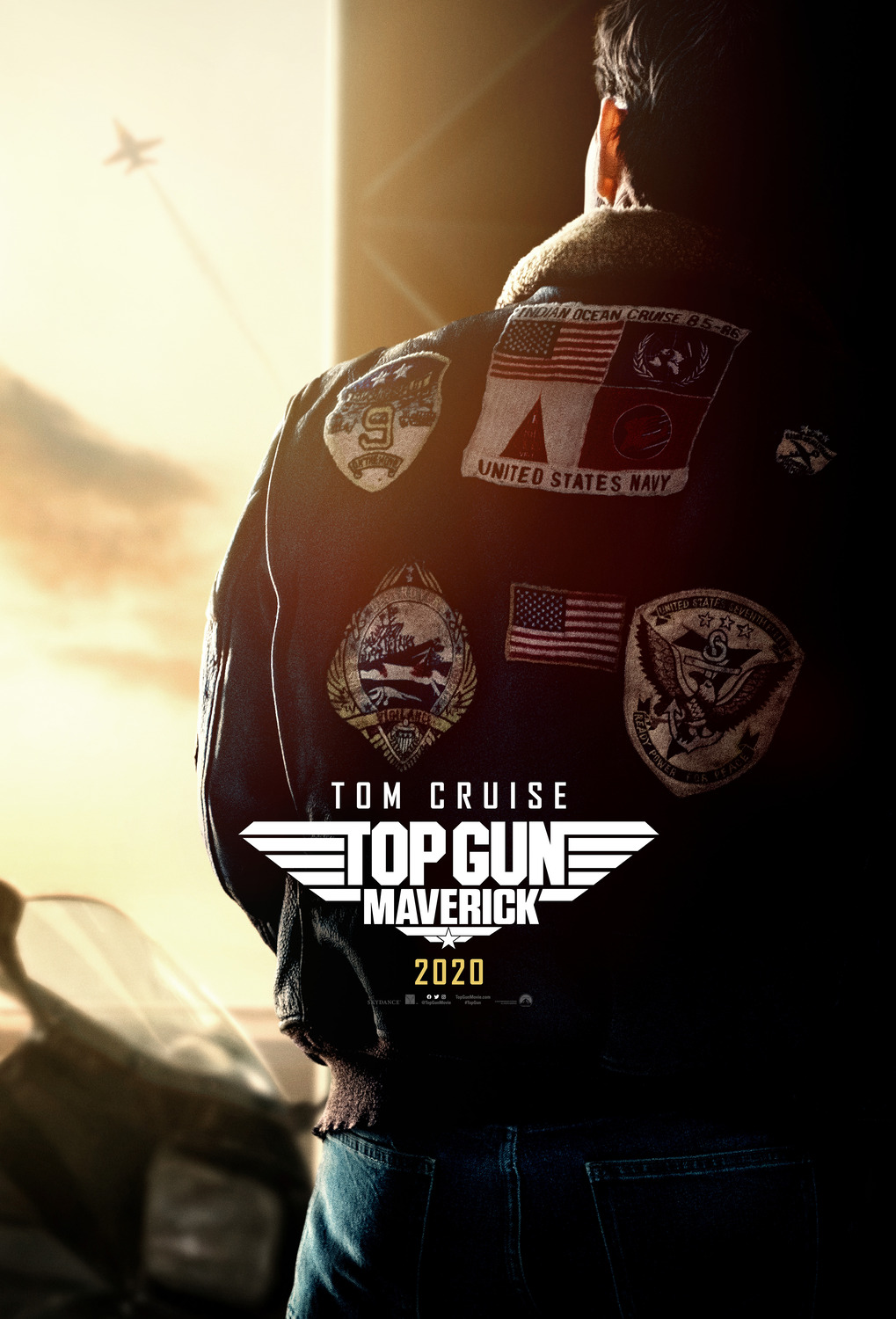
Top Gun Maverick teaser poster