Amy

amy-documentary-poster

I remember the first time I listened to Amy Winehouse’s album “Back to Black.” It transported me to another time and place that had long ceased to exist as her music sounded like something out of the 60’s. I actually found her album at my local library and downloaded it onto my iPod with the hopes of listening to it one day. Once I did get around to listening to it, I couldn’t turn it off as I was too captivated by her amazing vocals and heartfelt lyrics.

It was profoundly sad to see Winehouse’s life get cut short at the age of 27 from alcohol poisoning. In some ways, her death wasn’t a huge surprise as she had endured a lot of substance abuse and paparazzi harassment in the years leading up to her death. She had become a tabloid punchline as it appeared as though she had no desire to hide her debaucheries from the public eye. Many of us rooted for Winehouse to pull herself out of her downward spiral and struggled to understand why she would self-destruct on such a public level, but it only goes to show just how much we know about being famous. One person described her as being an old soul in a young woman’s body, and this became even more the case as time went on.

The documentary “Amy” succeeds in giving us a very intimate look at Winehouse not just as a public figure, but as the person she was before and after she achieved worldwide fame. Many who knew her personally are interviewed here, and it gives us a picture into a life which became irrevocably damaged by fame and substance abuse. But even though we know how her story will end, the documentary brings her back to life for a short time, and it feels like she is still with us.

“Amy’s” first image will forever burn in my memory as we see the singer at her best friend’s 13th birthday party. We see her sing the song Happy Birthday and can’t take our eyes off of her as she does such an amazing job of belting it out. This proved to be the best way to start this documentary as we see right then and there a star has been born. Listening to her makes you wish she would sing at your next birthday party, seriously.

The documentary is full of never before seen home videos and footage which helps to give her more complexity and dimension than the media ever could while she was alive, and this makes seeing “Amy” all the more necessary. The singer has long sing joined the ranks of Janis Joplin and Billie Holiday, famous singers whose lives were cut short at such an early age, and like them, she deserves to be known for more than her vices.

What “Amy” shows is how Winehouse was a woman who got into music as a form of survival. Having been a child of divorce and suffered from depression, music and singing offered her an outlet from all the psychological damage life kept inflicting on her. She never saw herself having a career as a singer, and she admits early on she didn’t set out to become famous because she didn’t think she could handle it. Those words soon prove to be prophetic.

It was great to see all the home footage of Winehouse as it gives us a side of her the public never got to see until now. She appears for a time to be a fun-loving girl eager to spend her days with friends and smoke weed, but like any famous artist she was a tortured soul whose eagerness to sing was more about getting negative energy out of her system than making millions of dollars.

The fact “Amy” is such an intimate documentary isn’t a huge surprise to me as it was directed by Asif Kapadia, the same filmmaker who gave us one of the very best documentaries of the last few years with “Senna.” Just as he did with “Senna,” Kapadia invites us to spend time with a celebrity who we previously saw through the distorted lenses of corporate media.

It also gives you an up close and personal view of how damaging fame can be. One scene has Winehouse going up to the stage to accept an award, and the noise of the audience and fans quickly becomes deafening, illustrating how her life had become a fish bowl which cut her off from everyday reality. It’s not hard to feel for her as the prying and voyeuristic eyes of the media render her private life nonexistent.

Her addictions included alcohol and hard drugs like cocaine and heroin, but perhaps her biggest drug of all was the tempestuous love affair she had with Blake Fielder-Civil. The fact she and Blake didn’t meet the same fate which greeted Sid Vicious and Nancy Spungen seems amazing considering how deeply intertwined they were in each other’s lives and vices. Woody Harrelson in “Natural Born Killers” said “love beats the demon,” but for Winehouse, love may have proven to be her biggest demon even as it fueled some of her most unforgettable songs.

“Amy” also calls into question how we deal with celebrities whose lives are spinning out of control. Winehouse became a punchline for comedians as her woes continued endlessly, and what might have seemed funny while she was alive now seems cruel in retrospect. Perhaps we are numbed to the suffering of celebrities as we have many examples of famous peoples’ lives getting cut short from one generation to the next, but it also shows the pleasure many took in her self-degradation. Now you may say she brought this all on herself, but did she really?

It’s horrifying and ultimately heartbreaking to see Winehouse in her last days as such a gaunt and unhealthy looking person. Many have called her a nasty diva but, as Kapadia shows here, she was really trying to escape the constant glare of the media and attention she never set out to get. At the last concert she did before her death, one she did not want to do, she refused to sing a single note even as the crowd mercilessly booed her. From a distance this looks like the antics of a spoiled pop star, but it was an act of defiance on her part as she was struggling to escape the famous persona which had been thrust upon her. Sadly, she found the escape through death.

Now I may be making “Amy” sound like a truly depressing cinematic experience, but while it is heartbreaking, it is also joyful as well. Winehouse was an exceptionally gifted singer, and hearing her voice when it is not being backed up by a band is jaw-dropping to witness. She really did have one hell of a voice. Also, Kapadia pays close attention to the lyrics she wrote and how autobiographical they proved to be. After watching “Amy,” it will be impossible to look at any of her songs the same way again.

There are wonderful moments when Winehouse performs in London for the Grammys after getting clean and sober, and it’s great to see her excitement when Tony Bennett comes onstage. When she ends up winning a Grammy, the theater she’s in bursts into applause and cheers, and it’s exhilarating to see everyone’s reactions as all the hard work paid off in a great way. Of course, this moment is also tinged with sadness as we know this will be the last true moment of happiness in Winehouse’s life.

Granted, “Amy” has been dealing with some controversy as her family has blasted the documentary as being inaccurate. Her father, Mitch, has been especially critical as he feels the filmmakers portrayed him in a very negative light. Mitch, in all fairness, has a right to feel this way, but Kapadia has given us an objective look at him and everyone else featured in a way which doesn’t moralize or demonize anyone. Any faults of Mitch shown onscreen are his to own up to, but at least the movie doesn’t show him as being completely absent throughout his daughter’s life.

For what it’s worth, Mitch comes off a lot better than her daughter’s ex-husband, Blake Fielder-Civil, who openly admits to introducing Winehouse to crack cocaine and heroin. The fact he admits this to Kapadia in an interview is astonishing, and it makes clear he is the one with the higher price to pay for Winehouse’s demise.

I’ve watched a number of documentaries recently which have been very entertaining, but many of them dig only so deep or touch at the surface of their subject’s life. It’s like there’s something missing which makes the whole endeavor seem like a loss opportunity when you look back on it. But “Amy” proves to be one of the very best documentaries in the past few years as it examines its subject objectively and without fear, and it leaves no stone unturned as it uncovers the many aspects of this troubled singer’s personality.

Just as he did with “Senna,” Kapadia has made “Amy” as a way to get to know this famous personality in a way we never had before. It’s like he has brought her back to life for a short time to where it feels like she never left, and it is nice to see her portrayed in such a way more befitting to who she was as an individual instead of how she was as a worldwide famous celebrity.

It was nice to meet you, Ms. Winehouse. Sorry you couldn’t stay with us a little while longer.

* * * * out of * * * *

Exclusive Interview with Kyle Patrick Alvarez about ‘The Stanford Prison Experiment’

kyle-patrick-alvarez-directing-stanford-prison-experiment

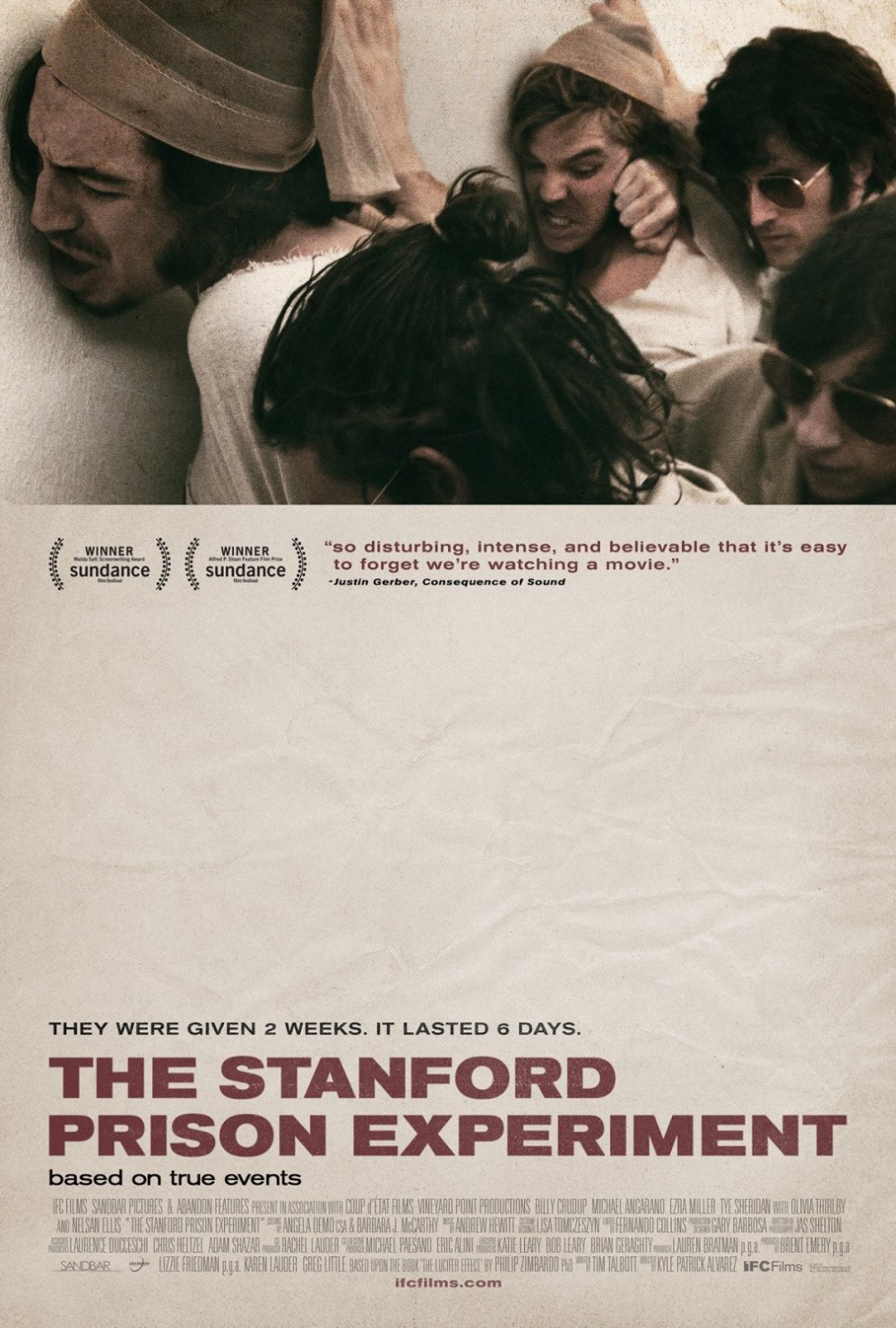
Kyle Patrick Alvarez’s “The Stanford Prison Experiment” takes us back to the year 1971 when psychology professor Philip Zimbardo (played in the movie by Billy Crudup) conducted the infamous experiment which had 24 students playing the roles of prisoners and guards in a makeshift prison located in the basement of the school’s psychology building. Things start off well, but the experiment soon goes out of control when the guards become increasingly abusive to the prisoners, and Zimbardo is unwilling to stop their brutality as he is infinitely curious to see what it will produce. Zimbardo was out to test his hypothesis of how the personality traits of prisoners and guards are the chief cause of abusive behavior between them. The experiment was supposed to last fourteen days, but it ended after 6.

What results is one of the most intense moviegoing experiences from the year 2015 as a cast of actors including Ezra Miller, Tye Sheridan, Michael Angarano, and Logan Miller find themselves caught up in the experiment’s grip to where the line between reality and fiction is completely blurred. Whereas previous films have observed this experiment from an academic standpoint, this one observes it from an emotional one.

I got to talk with Kyle while he was in Los Angeles to promote “The Stanford Prison Experiment.” His previous films as writer and director were “C.O.G.” in which a cocky young man travels to Oregon to work on an apple farm, and “Easier with Practice” which tells the tale of a novelist going on a road trip with his younger brother to promote his unpublished novel.

the-stanford-prison-experiment-movie-poster

Ben Kenber: “The Stanford Prison Experiment” is one of the most movies you don’t watch as much as you experience.

Kyle Patrick Alvarez: I’m finding that out, yeah (laughs).

BK: There are only so many movies you can say that about. “Deliverance” is a good example of that.

KPA: I was really humbled. When the movie first played I think the first question at the Q&A was, “Did you feel like this movie was an experiment on the audience?” I was so taken aback by the question not in a negative way, but because no one had seen the movie before. I was actually working so hard to not overburden the audience with the story. We even tempered it down a lot. They were stripping guys by the end of day one. I think by the end it’s supposed to become burdensome to watch, and I embrace it now that that’s the reaction, but I didn’t know that that was going to be the case. So the first time the movie screened I was like. okay, it is playing this way to people and I know I can just embrace that now which is good. I hope not every movie I make is like that, but hopefully the movie earns it and then people appreciate the challenge of the experience of watching it.

BK: I remember hearing about this particular experiment while I was in a psychology class in college, and we even watched a documentary about it as well. The one thing that stood out to me the most was when the prisoners started saying “prisoner 819 did a bad thing,” and they kept saying it over and over. I kept waiting for that moment to come up in this movie.

KPA: Oh yeah. I felt like that was one of the really iconic things that you hear. You can hear it over and over and over again in your head, and I think we even joked at one point that they could release a teaser that was just that over and over again. That was interesting to me. As I read the script I had all these things that seemed larger than life, and when you read about it or saw the footage you’re like oh these things really did happen. The Frankenstein walk, to me, is so bizarre and so odd, yet it’s a real thing. To try to make a film that embodies that sort of spirit was hopefully the aim.

BK: This movie is “based on a true story,” but you didn’t use that phrase at the start of it. I was glad you didn’t because this phrase has long since lost its meaning.

KPA: I kind of fought for that a little bit actually. My whole argument was that marketing is going to say it no matter what. I’m a firm believer that you want the movie to stand on its own regardless of marketing, but at the same time I just don’t know anyone that would go to a movie called The Stanford Prison Experiment and not know anything about it and not know it was based on a true thing. I talked about it when I first got involved in the film that “based on a true story” means nothing anymore. The movie I was using for an example was the one where Eric Bana plays a cop who is hunting demons in New York City (“Deliver Us from Evil”), and the trailer says it was “based on a true story.” There are demons in New York; we know this as fact, right? There are not people who hunt demons in New York. Maybe there’s someone who said he does once, but that doesn’t mean it is based on a true story. So, it just doesn’t mean anything to people anymore and it doesn’t carry any weight or value. I tried to think of some other vernacular it could be. I didn’t want it to be like this is a true story because then that says everything in it is true, which is a lie. As soon as you make a movie on anything, nothing in it is true anymore.

BK: With movies based on real events there are dramatic liberties taken, but with this one it sounds like that wasn’t entirely the case.

KPA: I think we reduced the dramatic liberties quite a bit. I think if you look at a movie, for example, like “Lincoln” which takes voting public record and changes it. I don’t mean to slam the film, I like the film quite a bit, but when they’re voting they change the numbers to make it more suspenseful. I don’t think we took any liberties anywhere near that extreme. Maybe some people who were in the experiment could argue that it wasn’t really that intense or something like that. Others may argue that the intensity comes from putting the camera in their faces or the artistic representation of it. Two of our biggest liberties are when Ezra (Miller) and Brett (Davern) escape the prison. In real life the guy really did take a panel off. He was a guitar player and took the panel off with a sundial, broke the lock and I think they tried to open a door, but a guard was there and admonished them and told them that they had to fix the lock. We added an extra couple hundred feet. When we were doing that we said that we were gonna add this chase sequence because the movie needs to breathe and open up a bit. I thought Tim (Talbott) had done a really good job with that in the script. But then when Phil (Zimbardo) comes around and the other guys, there’s a reason we never see them touch them because they didn’t. That was where we were embellishing a little bit for the sake of the narrative, but we’re not abandoning the fundamentals of what this experiment was about. Those guys did not touch them or physically harass them so we didn’t show that, and having Phil involved was a really good and constant reminder of what those fundamentals are that we shouldn’t change. The ending, when they called it off, actually Phil and Christina kind of said that they needed to call this off and they came up with a plan to do it professionally. For me, you show that and there is an anti-climactic nature to that. I think the emotions are real and that they were being felt, and we just put them in at different times for the ending. I was really interested in making a film that could hold up. If you sit down and watch the documentary “Quiet Rage,” you will go oh, that is actually pretty similar. I didn’t want to make a movie that would replace that or replace “The Lucifer Effect.” I wanted to make a film that would work in tandem with those where it would feel like you could gain something a little more emotional and different than if you just did the academia side.

BK: The actors are all fantastic in the movie and they each give very intense performances. Watching them made me wonder if the movie was an experiment on them.

KPA: In a weird way, I almost wish I had this story to make interviews more exciting about these kids became their characters and I became like Zimbardo. But the truth was I think I was actually overtly aware of that potential, and actually it would have worked so hard against us. If you ask any of the guys, they will say that they had a lot of fun. You only have two options: either go down the path where everyone has fun and everyone gets along, or you gotta push it to go really extreme. I am not a big manipulator. If an actor wants me to manipulate them I will work with that, but on this film it was one of those things where it’s like when the camera’s rolling we’re on, and when it’s off be respectful. Some guys might need more space and might want to stay in character a little bit more, but it never took on the form of the experiment. We did spend two and a half weeks in that hallway, and we were sick of the hallway. We were ready to be done. Sure, some feelings were created, but I told them everyone every day that this is like a soccer game where we all shake hands at the end. So if something is going on that you’re not comfortable with, just say it. I said that probably more to the guards than the prisoners, but once it came down to doing those few physical things in the movie the actors loved it. Nick and Ezra had worked together before so they already respected each other, and they would just run through their scenes and had such a blast. For me, in a weird way we actually worked against that, and I think consequently the actors look back on it very fondly. I also think we got, for the nature of the movie and the tight shooting schedule, better stuff from them because they just felt more invigorated. I would just love to be able to build a career out of actors having good experiences. That’s my favorite party of the process, working with actors. I admire what they do so much because I never could, so it’s honoring that by working to each person. But this is the first time I ever did an ensemble piece and it was a little more about telling them hey this is what it’s going to be like, hey it’s not going to get out of control, guards you are going to follow the script and if you want to push something a little bit more than we’ll talk about it as opposed to unleashing them. There have been previous iterations of this project where that had been the aim where they try to create this potboiler environment where the actors really lose it, but I think what you get with that is more of a machismo quality. I jokingly refer to it as the David Ayer effect. I like his movies so it’s not a slam on them at all, but he’s making testosterone and there’s no doubt about it. I actually was more interested in making the inverse of that. The set was like a frat house, but the aggression was coming from a more complicated place. There wasn’t any actual physical violence. When you look closely at the movie there is no drop of blood other than one or two moments. No one was physically hurt, and so we were really careful to honor that while still creating tension.

BK: One interesting scene is when Ezra Miller’s character gets arrested as part of the experiment. He treats it like it’s no big deal at first, but then the cops slam his head on the car and his mood changes instantly.

KPA: They really did get real cops and they said arrest these guys like they are really criminals. This is something we didn’t have the money to shoot, but they actually took them to the police station and fingerprinted them and booked them and took photos of them and everything. They really put them through this simulation and it really got to them. The cops were really putting paper bags on their heads. Someone criticized the film once saying that they used too much on the nose imagery from Abu Ghraib, specifically referring to the bags. I was like no, no, no, Abu Ghraib just did the same exact thing.

BK: It seems like certain audience members need to be reminded that the Stanford Prison Experiment took place long before Abu Ghraib.

KPA: Oh yeah. It’s one of those stories that’s too bizarre to be true. It’s hard to accept that it was true. I knew there was no way to succeed 100% on this but I tried to work the hardest to make a film that didn’t just always say, “Well it really did happen.” That’s not enough of an answer when you make a movie like this because you have to make the audience feel like it could have happened. I wanted it to be like, “Well I understand why it happened.”

BK: By the time the movie gets to day three, it feels like we have been with these guys for a month.

KPA: Yeah (laughs), that’s how they felt too. They really did not know how many days had passed. They weren’t sleeping which I think was the biggest thing. You can go 36 hours without sleep when you start to legitimately lose your mind, and I think that’s a huge part of what happened.

BK: The Stanford Prison Experiment was supposed to last two weeks, but it ended up being shut down after 6 days. Some have said that it wasn’t because the experiment wasn’t successful, but that it was too successful. Would you say that was the case?

KPA: I think once you talk about success of the experiment you start to bring into the question its true purpose and its ethics. I was really interested in pushing questions of things like that in the movie. At the same time, I didn’t want to fall into the question of, was this okay? People are still arguing the exact same things, so I figured we are never going to solve this. 40 years later people are still arguing whether this experiment succeeded or not or whether it should have never have ever been done in the first place. What we do know now is that the experiment would never be allowed to happen today. It was military financed. Partly because of the experiment, there are so many more checks and balances in place. When I first sat down with Billy (Crudup), one of the things he said was, “How could everyone be so naïve to not realize this would happen?” And I said, “Well of course, they could have because it hadn’t happened yet.” Now it’s easier for us to go, “Well, of course, it would have gone wrong. What were they thinking?” They were doing experiments like this all the time; simulations or recreations. This was just part of what psychologists were doing at the time. This was the time it just really imploded.

BK: That’s a good point. Ever since then we have a better understanding of the power dynamic between prisoners and guards more than ever before.

KPA: Yeah, and that’s why I added a line at the end when Billy is talking to the camera. He says, “There was no sense of precedent. We didn’t know this was going to happen.” I thought that was a really important element.

I want to thank Kyle Patrick Alvarez for taking the time to talk to me. “The Stanford Prison Experiment” is now available to own and rent on DVD, Blu-ray, and Digital.

Marielle Heller and Bel Powley Discuss ‘The Diary of a Teenage Girl’

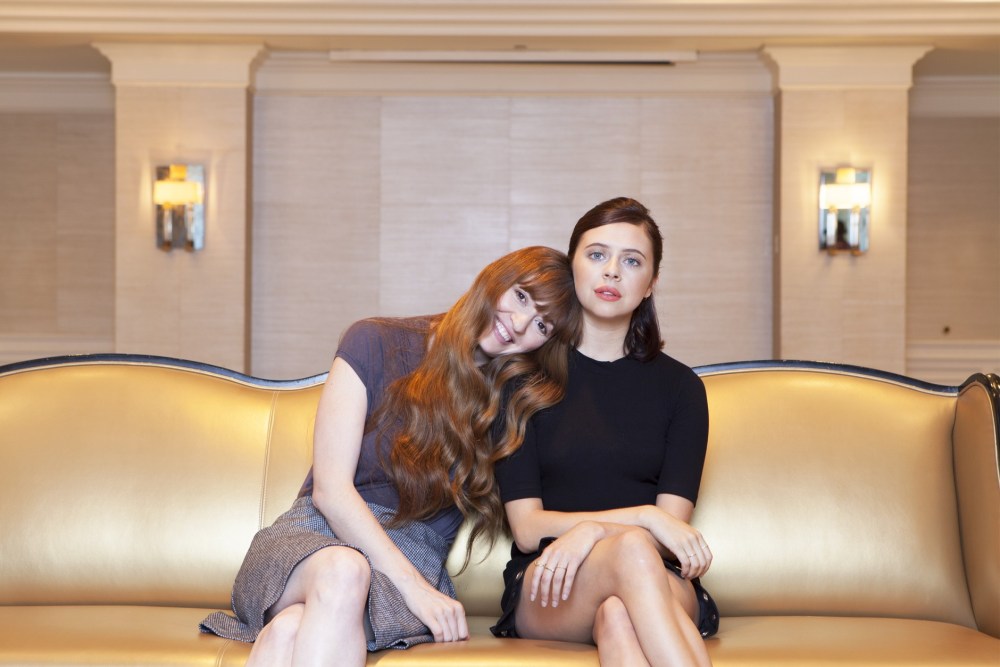
Marielle Heller Bel Powley

The Diary of a Teenage Girl,” based on the graphic novel by Phoebe Gloeckner, follows 15-year-old Minnie Goetze (Bel Powley, in a star-making performance) as she goes on a journey for love and acceptance, and as the movie begins she has already started to experience her sexual awakening. She becomes embroiled in an affair with Monroe Rutherford (Alexander Skarsgard) who also happens to be her mother’s (Kristen Wiig) boyfriend. What results is an honest version of what it’s like to be a teenage girl, and the movie isn’t so much about sex as it is about finding your own self-worth which is very important for young people making their way through this crazy world we all inhabit.

This movie marks the directorial debut of actress and writer Marielle Heller, and I got to talk with her and Bel Powley while they were at The London Hotel in West Hollywood, California. One of the things I remarked about it was how beautiful the movie looked and of how it really transported the audience back to the 70’s. Granted, “The Diary of a Teenage Girl” does take place in San Francisco, California which, after all these years, hasn’t changed much since the 70’s, but director of photography Brandon Trost still did terrific work in bringing us back to a time period which is gone but not forgotten.

the-diary-of-a-teenage-girl

Marielle Heller: I love telling people that the same person who shot this movie also shot movies like “The Interview” and “Neighbors” because they couldn’t be more different in terms of content. But he is a real artist and I think he just did the most incredible job. He was so dedicated to making this film look and feel exactly how we envisioned it which was in some ways like an old Polaroid picture, but not with a hipster grossness on it. We wanted it to be really authentic to the story and to the characters.

Those who know Heller best know that she has been in love with Gloeckner’s graphic novel ever since her sister gave her a copy of it 8 years ago. She spent a long time trying to get the rights to adapt the book into a stage play, and she performed the role of Minnie Goetze herself in an acclaimed off-Broadway production. From there, Heller went on to develop “The Diary of a Teenage Girl” into a screenplay at the Sundance Labs, and the film eventually debuted at the 2015 Sundance Film Festival.

Having spent so many years with Gloeckner’s graphic novel, I asked Heller how her view of it has evolved from when she first read the book to when she began turning it into a movie.

Marielle Heller: The film version of the book had to take on its own new life and really shift and change because the narrative structure of a film has to have a different build than a novel can. You read a book and you put it down and you pick it up and you put it down and it can have a really episodic feel, and a movie has to have a really specific kind of emotional build. I had such reverence for Phoebe’s book. I loved it more than anything I had ever read before, which is sort of a problematic place to start an adaption from. It was too much love, too much reverence, and at some point I had to sort of give myself permission to destroy parts of what I loved too and let go of it and let the reverence go away. Things changed, storylines changed, so that was a big process and luckily Phoebe really understood that because she’s such an artist herself.

Heller also remarked about a conversation she had with Gloeckner during the making of the film:

Marielle Heller: She was like, “You have to do what you have to do for this process. I took my real diaries and I wanted to make them into a piece of art. I didn’t want to write a memoir. I wanted to change them and let them become something new and let them become a book, and so I put them through this big grinder and it came out the other side hopefully with some truth intact. But it was something new, and then you took it and you put it through another kind of meat grinder and out the other end came this other project and it’s something new and hopefully that kernel of truth is still the same.” So it’s been a long process and in some ways I internalized the whole book. I got to know it inside and out and then stopped looking at it and wouldn’t let myself look at it and let the movie just grow into something totally new.

Watching “The Diary of a Teenage Girl” reminded me of my favorite movies which dealt with adolescence and being a teenager like “Pump up the Volume,” “The Breakfast Club” and “Ferris Bueller’s Day Off.” I love movies which take adolescence seriously as so many others treat it like life won’t get any better than when you’re young. I asked Heller and Powley what their favorite teen movies which they felt treated being a teenager honestly were, and their answer pointed out how those movies are missing a particular point of view.

Marielle Heller: I think there are a lot of movies that deal with adolescence in an honest way for boys. I hadn’t really come across ones that really dealt with girls in an honest way which is why I think we wanted to make this movie. I know I really related to movies like “Stand by Me” or “Harold and Maude;” movies that felt like they were, like you said, really respecting the characters and giving adolescents a voice in it. And John Hughes’ movies too like “The Breakfast Club” and “Sixteen Candles.” Movies like that really did give voice to the teenager in a real way. And I guess actually that John Hughes did make movies about girls. “Sixteen Candles” was about being a girl, but we’re a long time from “Sixteen Candles.” We’re due for another one.

Bel Powley: I was a teenager six years ago (laughs), and I don’t think I related to anything. I found it really hard, and I think it honestly made me feel like really isolated and really alone. I think young female characters are presented in such flat, two dimensional ways especially when it came to sex. Like if you did have sex then you were this high school slut, or if you didn’t then you’re either frigid or you’re like this virgin waiting for your Prince Charming. I remember being so excited when “Juno” was coming out, and then it came out and it was like, well no one speaks like that. And also, she’s made to be kind of asexual. It was just so confusing to me, and I honestly didn’t relate to anything until “Girls” (the HBO series), and that was when I was like 19.

Hearing Heller and Powley say that makes you realize how important “The Diary of a Teenage Girl” is in today’s cinematic landscape. For once we have a movie that deals with the life of a teenage girl honestly, and that makes it all the more important for audiences to seek it out in the midst of another overcrowded summer movie season. It is truly one of the best adolescent movies made in recent memory, and it deserves your attention far more than many others in this genre.

“The Diary of a Teenage Girl” is now available to own and rent on DVD, Blu-ray, and Digital.

Alexander Skarsgard talks about ‘The Diary of a Teenage Girl’

the-diary-of-a-teenage-girl-alexander-skarsgard

Alexander Skarsgard stars in “The Diary of a Teenage Girl” as Monroe, an emotionally stunted man who finds himself in San Francisco, California and in a relationship with the free-spirited Charlotte Goetze (Kristen Wiig). But then he meets her daughter Minnie (Bel Powley) who is in the midst of her own sexual awakening, and she begins a complex love affair with him that will lead to even more awakenings about each other and their own self-worth.

I got to hang out with Skarsgard along with a few other journalists while he was at The London Hotel in West Hollywood, California to do press for “The Diary of a Teenage Girl.” Greg Srisavasdi of the website Deepest Dream asked Skarsgard how he goes about preparing for a role, and his answer illustrates why his performance as Monroe is so good.

the-diary-of-a-teenage-girl

Alexander Skarsgard: The very first step is to connect with the material obviously. In this case, I thought it would be a really interesting challenge to play Monroe. I felt he could easily be a villain or just like a predator and I wanted to avoid that. I felt like I don’t think it will be interesting if you play it that way, and you make it too easy for the audience if they can just lean back and go, “Oh, bad guy,” and it’s not going to be interesting to the film. And that really intrigued me and I thought this would be a cool challenge to make this real and find moments where you might feel empathy and you might connect with him and almost like him, and moments where you don’t. I think it’s important to not have an opinion (about the character) in the beginning and to be open, and that’s when you go into that creative process of discovering and developing that character. You have to be very non-judgmental and be very open.”

Skarsgard is best known for playing the vampire Eric Northman on the HBO series “True Blood,” and he has turned in memorable performances in movies like “What Maisie Knew,” “Melancholia” and “Kill Your Darlings.” What’s interesting about him as an actor is how he is able to derive such strong complexity in each character he plays. It made me wonder just how much he brought to the role of Monroe which wasn’t in the script, and I asked him if he prefers playing characters like Monroe over others. For Skarsgard, it all comes down to one thing.

AS: It’s all about finding depth and it doesn’t matter in what genre it is. I just wrapped a movie called “War on Everyone” which is a comedy by John Michael McDonagh who did “The Guard” and “Calvary.” It’s a weird, fucked up comedy about corrupt cops in Albuquerque. I play a coke-snorting alcoholic cop who beats up criminals and steals their money with Michael Pena as my colleague. I had an amazing time. It was so much fun and, tonally, very different from “Tarzan” that I finished just before that or this one. But what it’s always about is that you need to find depth in the character even if it is comedy. You can’t play a caricature, or you can but I just don’t find it interesting. I don’t subscribe to good versus evil unless it’s within you. I think we’re all struggling with that, good and bad, and I think we’re all capable of good deeds and bad deeds. It’s interesting in literature or movies when you find characters that are struggling with that, and if there’s no inner struggle then it’s not interesting to me.

Watching “The Diary of a Teenage Girl” reminded me of just how much I love movies which take adolescence seriously. Some of my favorite examples of those movies are “Pump up the Volume” and “The Breakfast Club,” and I’m convinced that everyone has their own favorite movies which really spoke to them about life as a teenager. When I asked Skarsgard to name a movie that spoke to him about the truth about adolescence, he instead thought of a book.

AS: The most obvious example would be “Catcher in the Rye.” I guess as a boy growing up, as a teenager you’re like yeah, I get it dude. But I don’t have one movie that stands out or where watching it was a pivotal moment of my adolescence. What was I into as a teenager? It was the 80’s, so it was “Star Wars” I guess.

Watching Alexander Skarsgard in “The Diary of a Teenage Girl” is proof of just how gifted an actor he is. The role of Monroe could have been reduced to being a mere one-dimensional character, but Skarsgard dove right into the complexities of this character and made him an empathetic one even though no one can condone his actions. It’s a fascinating portrait of a man who still needs to grow up, and it’s one of the many reasons to check out this movie on DVD, Blu-ray or Digital at your earliest convenience.

Save

Fifty Shades of Grey

fifty-shades-of-grey-movie-poster

I have not read E.L. James’ book “Fifty Shades of Grey,” but I have yet to hear anyone I know say a good thing about it. But after watching Sam Taylor-Johnson’s cinematic adaptation, I think I understand why it became such a literary phenomenon. It allows its readers to visualize sexual fantasies they don’t get perform in their own lives as the two main characters engage in a sadomasochistic relationship which appears alarmingly pleasurable. The question, however, is this, can the individual erotic desires James’ book conjures up come even close to equaling what we see in this long-awaited film adaptation? The answer is no, not even close, and I’m certain you don’t have to have read the book to confirm this.

Fifty Shades of Grey” is essentially a big tease of a movie which promises so much naughty stuff but instead ends up giving you very little if anything. It’s like the girl who kept teasing you in high school, and of course, you fell for her charms when you should have known better (don’t ask me how I know this). I came in with low expectations, and it proves to be a hilarious comedy for all the wrong reasons. But long before its climax or lack of one so to speak, I found myself becoming increasingly bored and started to wonder if this movie would ever end. When it finally did, I found myself breathing a huge sigh of relief.

We come to meet college student Anastasia Steel (Dakota Johnson), an English literature major on the verge of graduating when she is offered the opportunity to conduct an interview with the infinitely wealthy business entrepreneur Christian Grey (Jamie Dornan). Sparks end up flying for them instead of the audience, and while it takes far longer for them to kiss for the first time, it eventually allows Christian to bring Anastasia into his inner sanctum which includes a room filled with all the BDSM equipment you could ever hope to find or see so beautifully maintained.

Does Anastasia end up becoming the submissive to the dominant Christian? The answer seems fairly certain, but the movie takes forever to get to that point as Christian keeps encouraging Anastasia to sign a contract which will allow him to do the craziest things to her. It got to where I wanted to yell at the screen, “SIGN THE DAMN CONTRACT ALREADY!!!” Granted, Anastasia’s hesitation to do so is understandable and smart, but it just makes her inaction all the more tedious to endure. To encourage her, Christian does several things like buying her a new computer and a new car, selling her old one off in the process, and showing off the cars in his building’s garage. I kept waiting for Christian to reveal himself as a serial killer, but to do so would have threatened to make this movie interesting.

Perhaps it’s a mistake to come into “Fifty Shades of Grey” expecting anything truly realistic as it seems to exist more in a fantasy world than the real one. Still, I can’t help but wonder how Christian Grey finds the time to engage in any kind of sadomasochistic activity when he runs the kind of business which should keep him fully occupied 24/7. Then again, he does have plenty of time to work out at the gym so he can show off those six-pack abs you know he has hidden underneath his shirt.

Regardless of how I feel about Anastasia as a character and of her foolish descent into Christian’s twisted lifestyle, Dakota Johnson, the daughter of Don Johnson and Melanie Griffith, proves to be quite a good actress. I liked how she was able to convey a variety of emotions without having to say a word, and she is able to show her character’s longing while her co-star is unable to do so, which is putting it nicely. With the right role in the right movie, she may end up with quite the career as an actress, and she looks to be capable of doing so much better than appearing in this piece of dreck.

As for her co-star, Jamie Dornan who plays Christian Grey, watching him reminded me of a scene in “The Shawshank Redemption” when Red described Andy Dufresne as a guy who “looked like a stiff breeze would blow him over.” Watching “Fifty Shades of Grey,” I can’t help but think Dornan was cast just for his good looks. From start to finish, he comes across as so emotionally vacant to where I wondered if he was capable of exhibiting any kind of emotion at all. His face looks like it is frozen in place, and not even sex can seem to thaw it. Dornan does, however, have the best line when he says he’s “fifty shades of f**ked up,” and that line effectively sums up this whole movie.

Among the other things which cripple “Fifty Shades of Grey” is the fact that Johnson and Dornan don’t have much chemistry. Romantic relationships in movies thrive on the stars having some form of it, and this isn’t the case here. Rumor has it that they didn’t get along behind the scenes, and this shows here regardless of the studio’s efforts to hide the truth. Then again, it must be somewhat difficult to have chemistry when one lover punishes the other lover physically in order to feel anything.

Director Sam Taylor-Johnson only has one previous credit which is “Nowhere Boy,” a film which chronicles the childhood experiences of John Lennon. I haven’t seen it, but I’m certain my friend Trevor, a huge John Lennon fan, has many great things to say about it. But whatever great things she was able to accomplish with “Nowhere Boy” is not on display here as she succeeds in making the most sleep-inducing erotic movie ever. The sex scenes come way too late and are very unimaginative. Christian running an ice cube down Anastasia’s stomach? We’ve seen that before. As for Taylor-Johnson’s song selections which include “I Put a Spell on You” and “Beast of Burden,” they are far too obvious even if the former is sung by Annie Lennox.

“Fifty Shades of Grey” marks the first erotic studio movie Hollywood has released since “Unfaithful” which came out back in 2002. This movie represented a chance for Hollywood to deal with sexual relationships more frankly than others have in recent years, but it instead proves to be an astonishingly chaste motion picture which seems stunning considering the source material. Late night movies on Cinemax and Showtime have far more erotic power than this one (don’t ask me how I know this either), and the sex scenes are so sterile looking that it feels like they were shot in Irvine, California. The marketing department did a brilliant job in titillating moviegoers into thinking they were getting some sexy stuff they won’t find on the internet (unless they look in the right places, of course), but we went through the same thing with “Showgirls” and look what happened there. “Fifty Shades of Grey” ends up making Paul Verhoeven’s camp classic look like “Vertigo.”

Seriously, there are so many other movies that are far better than this piece of crap and which deal with sadomasochistic relationships in a healthier and far more sensual way like “Secretary” which starred James Spader and Maggie Gyllenhaal, and “The Duke of Burgundy” which is from the director of “Berberian Sound Studio,” Peter Strickland. What depresses me is audiences are going to flock out to this adaptation than they will to other movies far more worthy of their time and money. Some books translate well to the silver screen, but this one should have stayed on the written page. Then again, when a book like “Fifty Shades of Grey” sells an incredible amount of copies, why stop there?

* out of * * * *

James Vanderbilt on Making His Directorial Debut with ‘Truth’

james-vanderbilt-on-truth

James Vanderbilt has been a prolific writer and producer in Hollywood for several years. His screenplay credits include Peter Berg’s “The Rundown” which remains one of Dwayne Johnson’s best action films, David Fincher’s “Zodiac” which was about the notorious serial killer who terrorized San Francisco back in the 1970’s and Roland Emmerich’s “White House Down” which dealt with terrorists attacking the White House. In addition, he was a writer and producer on “The Amazing Spider-Man” movies and “Independence Day: Resurgence.”

Vanderbilt now makes his directorial debut with “Truth,” the political docudrama about the 2004 “60 Minutes” news report on George W. Bush’s military service and the subsequent controversy which came to engulf it and destroyed several careers in the process. It is based on the memoir “Truth and Duty: The Press, The President and The Privilege of Power” written by Mary Mapes, a noted American journalist who was the producer of Bush news story, and she is played by Oscar winner Cate Blanchett. The movie details meticulously the research Mapes and her team did on this story and of how many came to sharply criticize the veracity of the information given. What started out as an expose of Bush’s service, or lack thereof, in the Texas Air National Guard becomes focused solely on the reporters involved to where broadcast journalism would never be the same.

I got to sit in on a roundtable interview with Vanderbilt at the Four Seasons Hotel in Los Angeles, California while he was in town to promote “Truth.” His desire to adapt this memoir into a film came from his infinite curiosity about broadcast journalism and how people in a newsroom work and put a story together.

truth-movie-poster

Ben Kenber: What made you decide that the time had come for you to step behind the camera to direct?

James Vanderbilt: I don’t know. Uh, foolishness? No, I was at a film school with all these people who really, really wanted to direct, and I always wanted to be a writer. It seemed like they were all looking at screenwriting as the stepping stone for the real job and so, being an angry young film student, I was totally resentful of them. Screenwriting is a craft and it’s got a great history, so I wasn’t the guy who was like “what I really want to do is direct.” I was lucky enough to have some films made and to produce some films and work with some really great directors, and watching them was actually the thing that made me go, I’d be curious to know if I could do that” Watching directors work with actors was actually the biggest thing which was fun for me to see and wanting to be a part of that, but as the writer and producer you want there always to be one voice to the actor. You never want the producer to come in and go, “You know what would also be great?” So, I always wondered if I could do that, carry the ball all the way down the field, and it came out of a very misguided desire to see if it would even be a possibility for me and if I would enjoy it.

BK: Did you enjoy it?

JV: I really loved it. I really loved every part of the process. It was just so exciting and fun.

BK: Doubt has become such a powerful tool over the years, and it really came down hard on this particular news story when it aired on television. Were you ever worried as a writer or as a director of getting caught up in that realm of doubt to where it was hard to distinguish between both sides of the argument?

JV: I don’t know about worried. We tried to present a bunch of different arguments in the film. It was important to us and important to me that the film was, although some might characterize it as trying to prove a point, not a film that’s trying to prove a point. What I love is seeing people come out of it discussing it and arguing about it, and that’s great to me. Seeing a married couple come out of it and one of them saying absolutely she should’ve been fired, and the other one going, “What are you crazy?” Apparently, I just enjoy discordant marriages (laughs). But the goal for me first and foremost was just to tell a really interesting story about this woman and what she went through and make it an emotional story. We didn’t want it to be homework. You want it to be a real tale and an emotional story. If audiences go on that journey and then maybe if they also think a little bit about media and where we are right now, all of that would-be gravy.

Enough time has passed since this “60 Minutes” news story premiered to where we should be able to view it more objectively, and “Truth” will give audiences a lot to think about as it is not so much about whether or Mapes got the story right or not, but of how much a casualty truth can be when it comes to presidential politics and personal bias.

“Truth” is now available to own and rent on DVD, Blu-ray, and Digital.

Anna Kendrick on Singing Take After Take in ‘The Last Five Years’

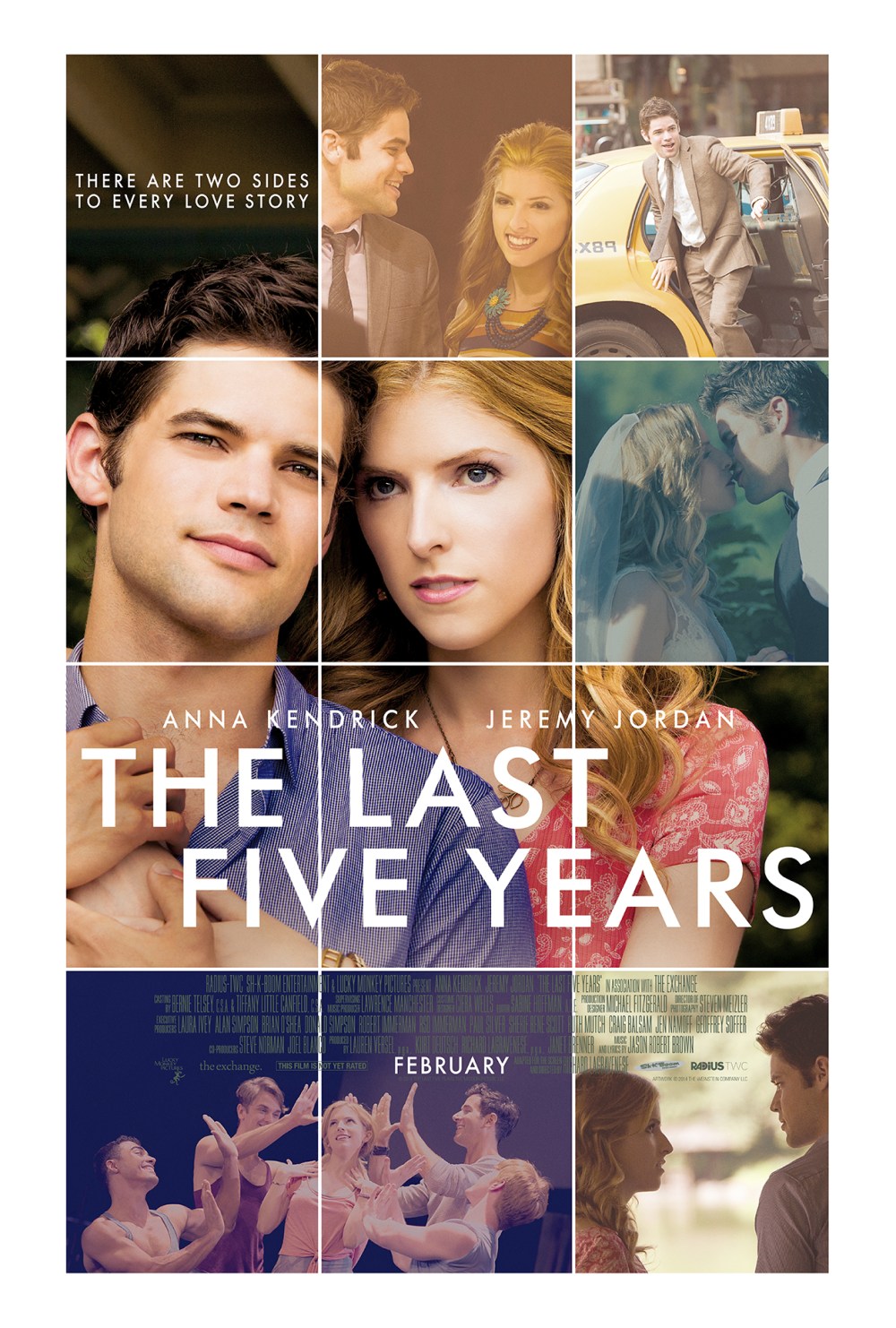
the-last-five-years-movie-poster

It should be no secret by now that Anna Kendrick has quite the singing voice. Whether it’s the independent musical film “Camp,” “Pitch Perfect,” “Pitch Perfect 2” or “Into the Woods,” she consistently dazzles us with her singing whether she’s appearing on the silver screen or on Broadway. In “The Last Five Years,” Richard LaGravenese’s adaptation of Jason Robert Brown’s Off-Broadway show, she plays Cathy Hiatt, an aspiring actress who falls madly in love with the very talented writer Jamie Wellerstein (played by Jeremy Jordan). But as Jamie’s star quickly rises, Cathy finds herself struggling in her acting career to where she begins to feel invisible around Jamie. Essentially, “The Last Five Years” looks at a relationship’s exhilarating highs and its emotionally draining lows, and it proves to be a musical which is far more character driven than one which thrives on spectacle.

I was lucky enough to attend the press conference for “The Last Five Years” held at the Four Seasons Hotel in Los Angeles, California, and Kendrick was in attendance along with Jordan and LaGravenese. I was particularly interested in how Kendrick was able to keep the songs she sang fresh for her in each take. By this, I mean how she kept the songs alive for her to where she wasn’t just giving us something which felt emotionally dead or sounded over-rehearsed. You can perform a song or a monologue so many times before it becomes stale and uninteresting, and you have to keep shaking things up so you don’t end up looking like a robot.

According to “The Last Five Years’” IMDB page, Kendrick had to sing “Still Hurting” 17 times straight through. I brought this up during the press conference and LaGravenese quickly said it was because of all the different camera setups which had to be done for the scene, and this led Kendrick to joke about how much easier it would be to make movies without the camera. When it came to keeping “Still Hurting” fresh from take to take, her answer was complex to where it sounded like she is still trying to figure out how to do that.

Anna Kendrick: You know, if I trained at RADA I might actually be able to verbalize that kind of thing and the fact is I didn’t and I have only learned by working, and I’ve been working since I was a kid,” Kendrick said. “I don’t know and to try to put it into the words would be to destroy the thing. I guess you try to find a balance between going into the material and going to a personal place because you never want to tip it too much in one direction. I feel like I drew a lot of energy from the support of the crew who were unbelievably compassionate and understanding, and nothing gave me greater inspiration than seeing the 40-year old dolly operator in his classic Hawaiian t-shirt listening in. He had the same earpiece in his ear that I had, and watching his face as he counted and I could feel his body counting, all these people are honoring a thing that you’re trying to do and that gives you an unbelievable reserve of energy.

So, after all these years as an actress, it still sounds like this is something she is still working on, and that’s okay. An actor’s, or actress,’ work is never done as the best ones continue to work at their craft year after year to improve upon it dramatically (no pun intended), and it was refreshing to hear Kendrick admit she doesn’t have all the answers because most actors do not. If you think you’re the only one who is struggling with trying to keep a piece you have performed several times fresh and meaningful for yourself, you’re not. Every actor does whether it’s a movie, a play or a TV show they’re working on, but they keep going because they’re passionate about their work. Kendrick may have accomplished a lot as an actress so far, but her work as an actor is never done. Once it is, she may have to retire.

“The Last Five Years” is now available to own and rent on DVD, Blu-ray, and Digital.

Joan Allen on Playing the Mother of a Kidnapped Child in ‘Room’

joan-allen-in-room

Whether she has the lead in a movie or is just playing a supporting role, you can always count on Joan Allen to give a compelling performance. In ‘Room’ she plays Nancy, a mother reunited with her daughter, Joy (Brie Larson), who was kidnapped years before. She also discovers Joy is now a mother herself to five-year-old Jack (Jacob Tremblay), a product of the abuse she suffered while in captivity. As thrilled as she is to have her daughter back in her life, Nancy now has to face the immense struggle of acclimating Joy back into the life she was taken away from and forging a relationship with her surprise grandson. It’s a journey full of awkwardness, but also one which comes to be filled with hope.

Allen appeared at the “Room” press day held at the Four Seasons Hotel in Los Angeles, California and talked about her experience making the movie which was one of the most acclaimed movies of 2015. While it deals with such dark themes as kidnapping, abuse and captivity, she also feels “Room” examines the many truths of parenthood. I asked her what kind of research she did to better understand her character and the nightmarish situation she is forced to endure.

Joan Allen: I just did some reading about abductions and parents. I looked up in particular Terry Probyn who is Jaycee Dugard’s mother. I was hoping to speak with her but I wasn’t able to make that happen, but she had some YouTube footage of what it was like to be reunified. She said one thing that was very helpful to me, that it was a very difficult thing to reunify and you need a lot of help in order to do it. In fact, she and her daughter have created a foundation that helps people and families in this situation unify not only from abduction cases but veterans who had long periods away in the war zone where they’ve been traumatized. It’s very difficult for families to find a way when they’ve had such radically different experiences for extended periods of time and are sad and traumatized by them. And I’m a mother of a 21-year-old and have been sufficiently scared enough by various choices she’s made in life (laughs) to understand what that’s like, to feel that scared for your child and how it’s a ripple effect. It’s certainly not an ouch contest. If it were, the mom would have the biggest ouch. But everybody has huge ouches and that’s just the way it is, and what I’m so moved about by all the characters including Jack is that everybody is trying to move forward and they don’t really know how. They are just not really a throw in the towel kind of people. There is that forward movement, no matter how hard it is, to try and figure it out and to be loving and to try and understand the best way to move forward and get closer to a whole family life back because it’s a tremendous loss. It’s a tremendous devastation to not have that. But they are characters that do try and that do move forward and there’s a tremendous amount of love there, and that’s why I think that the story really reflects that.

“Room” is now available to own and rent on DVD, Blu-ray, and Digital.

room-movie-poster

Brie Larson on preparing for her role in ‘Room’

brie-larson-in-room

Brie Larson is best known for her performances in movies like “Short Term 12,” “Scott Pilgrim vs. The World,” “21 Jump Street” and “Trainwreck,” and she also has a singing career and released an album entitled “Finally Out of P.E.” But if you’re not familiar with whom she is, that’s alright because you won’t be able to forget her after watching her emotionally exhausting performance in Lenny Abrahamson’s “Room.” She plays Joy (a.k.a. Ma), a young woman who was kidnapped several years ago by a man who tricked her into helping him find his lost dog. Joy has since been imprisoned in that man’s garden shed located in his backyard, and she occupies it with her son Jack (Jacob Tremblay). But as time flies by, Joy becomes increasingly determined to escape the prison she and her son have been forced to grow up in, but the outside world provides them with even more challenges than they could ever have expected to endure.

Larson was at the “Room” press day held at the Four Seasons Hotel in Los Angeles, California where she was lauded by many reporters for her brave acting. I read how, when she accepted the role of Joy, she decided to lead a more reclusive life and reduce her social interaction with others in order to better understand her character’s mindset. I asked her what that preparation specifically entailed, and her answer proved to be endlessly fascinating.

Brie Larson: I really love the myth about my reclusive life (laughs). The words that have been used today have been so interesting. How it started was in trying to understand those two years of basic silence of being alone in this place, and I meditate so I was little familiar with trying to get to mental silence and how hard that is. And then I had some friends who had been on silent retreats and I was fascinated by the reactions because some of them could go 10 days and they do it every year and it’s just this time that they absolutely love. You’re not allowed to speak and you’re not allowed to look at anybody because that’s also seen as a form of communication. There’s no connection to the outside world. But I had other friends who couldn’t last 24 hours. They just panicked and left and so there was this sense of just sitting with yourself and imagining Ma at 17, 18 and 19 years old sitting with herself in the way most teenagers don’t. That’s a period of time where it’s all fleeting. It’s all just getting away from everything and wanting to move out and pushing away a parent. In some ways I felt that period of time to be this bizarrely mature experience and set in a horrible setting, but in a way that she has to come to terms with who she is now and this new individual that she’s become that is completely separate from her friends, from her home and from her parents, and it’s the time right before she has a child which becomes her next identity as being a mother. So for myself, it was just seeing what that mental chatter felt like and if it was something to feel that painful moments of it, to feel eureka moments. They were moments that I remembered from my childhood that I had forgotten that were so beautiful and other moments that I completely had forgotten that were more painful. And so having that time to just very simply reflect I felt became a huge part of getting to know her better. But it wasn’t like painful. I found it kind of fun to be honest. I didn’t mind it.

Larson later won, and deservedly so, the Oscar for Best Actress for her performance, and it has since opened up a number of opportunities I can’t wait to see her take on. “Room” is now available to own and rent on DVD, Blu-ray, and Digital.

room-movie-poster

The Fourth Noble Truth

the-fourth-noble-truth-movie-poster

Watching “The Fourth Noble Truth” quickly reminded me of how much I personally benefit from doing meditation, and of how I need to get back into the habit of doing it on a regular basis. It’s very beneficial as it allows your brain to have a rest from all the thoughts and concerns which constantly run through it, and it helped me during a time where I suffered deeply from anxiety and depression. Gary T. McDonald’s film explores meditation from a Buddhist perspective as two people come together while searching for true happiness, and the end result feels emotionally honest about a topic some would be loath to take seriously.

Before we get to the movie’s opening title, we are introduced to movie star Aaron Redmond (Harry Hamlin) who does a Jack Nicholson and bashes another person’s car with a golf club. This is all it takes for the audience to see that this guy has serious anger management issues, and the movie wastes little time in showing him driving out to the home of a Buddhist meditation teacher named Rachel (the lovely Kristen Kerr) as it is part of his sentence for being convicted of road rage.

The way Aaron sees it, he has everything a person could ever want, so how can he be the least bit unhappy? Rachel, however, is not impressed with his bad boy movie star persona and sets about teaching him each of the noble truths while guiding him through meditations. However, his constant flirtations end up getting the best of her, and they end up spending the night together. From there they are both forced to reassess their life choices or risk losing the love and happiness they strive for.

In case you are wondering what the four noble truths are, they express the basic orientation of Buddhism which says this worldly existence is fundamentally unsatisfactory, but there is a path to liberation from repeated worldly existence. The truths are as follows:

Life is full of psychic suffering, such as stress, angst, discontent, and unhappiness.

The cause of this suffering is desire. Not the fleeting kind, but a clinging or attachment for things like material possessions, people, and validation.

If you end these fixations, you will stop suffering.

You end suffering by walking the Eightfold Path, which is a way of life embodying these virtues:

Right Understanding

Right Intention

Right Speech

Right Action

Right Livelihood

Right Effort

Right Mindfulness

Right Concentration

The Buddha taught that developing the virtues of the fourth noble truth is the key to happiness. Of course, getting to the last truth is always the hard part.

I liked how Hamlin’s character evolves throughout the film. His skepticism over meditation is understandable as most people, including myself, come into it with a lot of doubt over if it will do them any good. Also, getting the handle of meditation takes some time because you are bound to start off feeling like you’re not doing it right. His character of Aaron refuses to take meditation seriously at first, and he is mostly interested in getting the judge in his case off his back more than anything else. But while he appears to be confident in being the man he is, we can see from the start he is one seriously unhappy dude.

Hamlin has been around for a long time, and my generation knows him best for his roles in “Clash of the Titans” (the original, not the remake) and the TV show “LA Law.” These days he is better known for his work on the shows “Mad Men,” “Glee,” and “Shameless.” At 63, he still has an effortless charisma about him which makes him perfect for this role of an over the hill celebrity who has yet to realize material possessions do not equal happiness.

I’m not familiar with Kristen Kerr’s work, but she left quite the impression on me as Rachel. When we first meet her, she appears to be a master in the ways of meditation and has reached a great place in her life where everything seems balanced. But as the movie goes on, she comes to see how uncertain she is of whether or not she has reached the fourth noble truth as she makes the biggest mistake a meditation teacher can make.

It should go without saying how nobody is perfect, but this threatens to do a disservice to Rachel as she quickly realizes the errors of her ways. Kerr makes Rachel a fascinating character as a result because we really root for her to hold onto her bearings and not give up on her pursuit to achieve happiness. It’s never an easy road as life is full of endless trials and tribulations, and we come out of this movie relieved Rachel has not lost her way. Kerr is a wonderfully appealing presence from start to finish, and she makes us believe in the benefits of meditation in a way few other actors could.

McDonald’s previous directorial credits include “The Sea Wolf” and the documentary “Rape/Crisis,” movies I have yet to see. He does a commendable job of taking this relationship story and makes it feel down to earth and not the least bit contrived. When Aaron and Rachel fall for one another, I thought the movie was going to shoot itself in the foot and lose all credibility, but their relationship serves to give “The Fourth Noble Truth” more complex issues to explore. What I admired most was how the movie explored meditation and the relationship issues these two characters experience to where it feels emotionally honest in a very satisfying way.

In some ways, “The Fourth Noble Truth” is somewhat undone by its understandably low budget, and I hate to say that because movies like these are forced to deal with whatever resources they can get a hold of. I could see this script being done as a play onstage, so it doesn’t feel as cinematic as a movie should. But despite its flaws, it serves as a nice introduction to what meditation can do for your own well-being. It’s not meant to be an instructional manual on meditation, but if it were then it wouldn’t be as effective.

“The Fourth Noble Truth” is coming in well below the radar amidst all the big blockbusters which threaten to occupy our local multiplexes at the expense of everything else. My hope is more people get exposed to it on the big screen long before it becomes available on DVD, Blu-ray and Digital.

* * * out of * * * *