WRITER’S NOTE: This interview took place back in 2015.
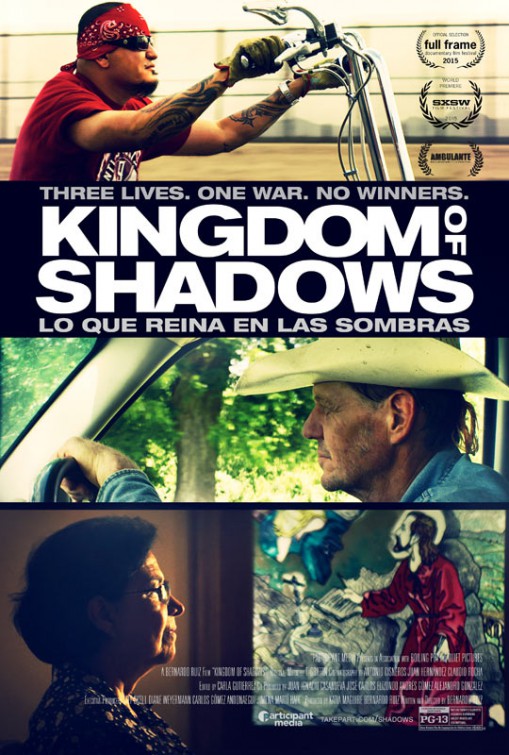
The U.S.-Mexico drug war is one many of us watch from a distance, but the documentary “Kingdom of Shadows” forces you to look at the war more closely than usual as it puts a human face on the damage left in its path. Director Bernardo Ruiz observes the ongoing conflict through the perspectives of three individuals: activist nun Sister Consuelo Morales who prods government officials to take action against the drug cartels who have kidnapped many people, Texas rancher and former drug smuggler Don Henry Ford Jr. who offers a descriptive context for the evolution of drug trafficking, and undercover agent turned Homeland Security officer Oscar Hagelsieb who offers a unique perspective on America’s role in the drug war. The majority of what we see takes place in Monterrey, a devastated and violence scarred town in Mexico that Oscar felt less safe to be in than when he was a soldier in the Middle East.
Watching “Kingdom of Shadows” is deeply moving and unsettling as we see how vicious the war on drugs has become, and it makes the intense thriller “Sicario” feel all the more real and unnerving in retrospect. Bernardo takes a real close look at the cost of this war from both the U.S. and Mexico sides, and he gives us an unflinching look at the human rights crisis it has generated and which only recently made international headlines.
I was among a group of reporters who got to sit in on an interview with Bernardo Ruiz and Oscar Hagelsieb while they were in Los Angeles to promote “Kingdom of Shadows.” Bernardo also directed the documentary “Reportero” which chronicled a veteran reporter and his colleagues at a weekly newspaper challenging drug cartels and corrupt local officials during an unprecedented wave of violence against journalists in Mexico. Oscar’s life began in a drug infested neighborhood where he was raised by undocumented parents, and despite having been an undercover officer for several years, he explained why he was more than willing to show his face in this documentary.
Bernardo talked about the kind of resistance and challenges he faced in making “Kingdom of Shadows,” and he explained why he introduced Oscar the way he did. Oscar was asked how he manages not to take his work home with him, and he explained why the legalization of marijuana will cause the drug war to become even more violent.
Please check out the interview below, and you can also check out the trailer as well. “Kingdom of Shadows” is now available to own and rent on DVD, Blu-ray and Digital.
Looking through my vast collection of movie interviews, I came across this one which I did with the cast of “The Gallows.” Released back in 2015, it is a found footage horror film written and directed by Chris Lofing and Travis Cluff, and it opens up on a production of a play called, coincidentally, “The Gallows” which was done at Beatrice High School back in 1993. Everything looks to be going smoothly, but then an actor named Charlie Grimille is accidentally hanged and killed when the prop noose around his neck ends up malfunctioning, and the students and parents look on in horror.
The film then moves forward twenty years later to 2013 when the school attempts to put on a new performance of “The Gallows” in honor of Charlie’s memory. But, as you can expect, the road to hell is paved with good intentions, and the young adults who are part of this production soon find that they are not alone as something ominous is hiding in the shadows. Suffice to say, they find themselves in fear for their lives, and some learn in the worst way how certain things are better left alone.
This interview took place at Hollywood High School in Los Angeles, California, and it quickly proved to be one of the most cinematic press days I have ever been a part of. “The Gallows” stars Cassidy Gifford (the daughter of Frank and Kathie Lee Gifford), Reese Mishler, Pfeifer Brown who would go on to appear in “The Gallows Part II,” and Ryan Shoos who co-starred in “The Red Tie Massacre.” We had fun talking about the improvisation they did on set, working with the video cameras given to them, and of the advantage of playing characters with the same first names as theirs.
Please check out the interview below. “The Gallows” is now available to own and rent on DVD, Blu-ray and Digital. Watch it if you dare…
Continuing my explorations of interviews I have conducted in the past, I came across this one with Tye Sheridan and his performance in “Last Days in the Desert.” Written and directed by Rodrigo Garcia, it focuses on an imagined chapter of when Jesus (played by Ewan McGregor) went on a fasting and praying journey for forty days in the desert. Among the people he encounters on his travels is a character known as The Boy who is portrayed by Sheridan. The Boy is taking care of his ailing mother and building a house for her and his father to live in. But while he is eager to help his parents, he really wants to visit Jerusalem and hopes Jesus can lead the way for him.
I got to talk with Sheridan back in 2015 when he was promoting “Last Days in the Desert.” These days he is best known for playing the young Scott Summers/Cyclops in some of the “X-Men” movies and the lead role in Steven Spielberg’s “Ready Player One.” When I talked with him all those years ago, he was coming off of “The Tree of Life” in which he made his film debut, Jeff Nichols’ “Mud,” “The Stanford Prison Experiment” and “Entertainment” where he played an actor doing an unorthodox clown act.
While talking with Sheridan, I discussed how interesting his resume was in how it led up to him playing his character in “Last Days in the Desert.” We also talked about how he prepared for this role and how his costume helped to inform his performance. In addition, we discussed the challenges of filming in the California desert, and it gave me a strong appreciation of those who have experienced the hottest of summers Texas has to offer.
Please check out this exclusive interview below. “Last Days in the Desert” is now available to own and rent on DVD, Blu-ray and Digital.
While recently going through my large archive of interviews I have done over the years, I came across the one I did with filmmaker Lorene Scafaria on her film “The Meddler.” Released in 2015, it stars the great Susan Sarandon as Marnie Minervini, an aging widow who, to cure herself of loneliness and heartbreak, moves from New Jersey to Los Angles to be closer to her daughter, Lori (Rose Byrne). In the process of trying to restart her life, Marnie starts getting a little too involved in Lori’s life to where her daughter gets increasingly aggravated, she comes to make various new friends she desperately wants to help out, and she becomes especially friendly with a retired policeman named Randall Zipper (J.K. Simmons) to where a new chapter in her life begins to form.
Born in Holmdel, New Jersey, Scafaria previously wrote and directed “Seeking a Friend for the End of the World” which stars Steve Carrell and Keira Knightley as strangers who form an unexpected bond, and she penned the screenplay for “Nick & Norah’s Infinite Playlist,” a romantic comedy starring Michael Cera and Kat Dennings. Since making ‘The Meddler,” she gave us “Hustlers” which featured a critically acclaimed performance by Jennifer Lopez which somehow got snubbed by the Oscars, and she has directed several episodes of the acclaimed HBO series “Succession.”
I had a lot of fun talking with Scafaria about “The Meddler” and how the screenplay was inspired by similar situations with her mother. We also discussed what it was like working with Sarandon and Simmons, and we even talked about the time when she used to fake book reports to get a bunch of Pizza Hut gift certificates. It turns out she was not the only one who did such a thing.
Please check out the interview below, and be sure to subscribe to our YouTube channel if you haven’t already. There are many more videos yet to come!
“The Meddler” is now available to own and rent on DVD, Blu-ray and Digital.
I have been a big fan of Argentine filmmaker Gaspar Noe ever since I first watched his highly controversial 2002 thriller “Irreversible.” Starring Monica Bellucci, Vincent Cassel and Albert Dupontel, it was a rape revenge film told in reverse order like Christopher Nolan’s “Memento,” and it featured, among other things, a rape scene done in one shot which lasted nine minutes, and another in which a man’s head is completely bashed in with a fire extinguisher. Many were quick to walk out of this film as they felt it promoted violence, but I can tell you few others are as anti-violent, anti-rape and anti-revenge as this one is. Moreover, it features scenes of sheer intimacy and thoughtfulness which some critics were not quick to see at first glance. Noe invites you to look beneath the surface, if you can, and see there is more to what meets the eye.
The same also goes with Noe’s other works which include “I Stand Alone,” “Enter the Void,” “Climax” and “Vortex” as he examines various issues with a thoughtfulness that often eludes his harshest critics. There is more to this director than simply shocking his audience, and he gives a lot of unforgettably surreal imagery with the help of acclaimed Belgian cinematographer Benoît Debie who can light a scene ever so beautifully. His movies do not exist just to leave a permanent psychological scar on you. They leave you with a cinematic experience few other filmmakers could ever possibly give an audience, and I am always thankful for such motion pictures.
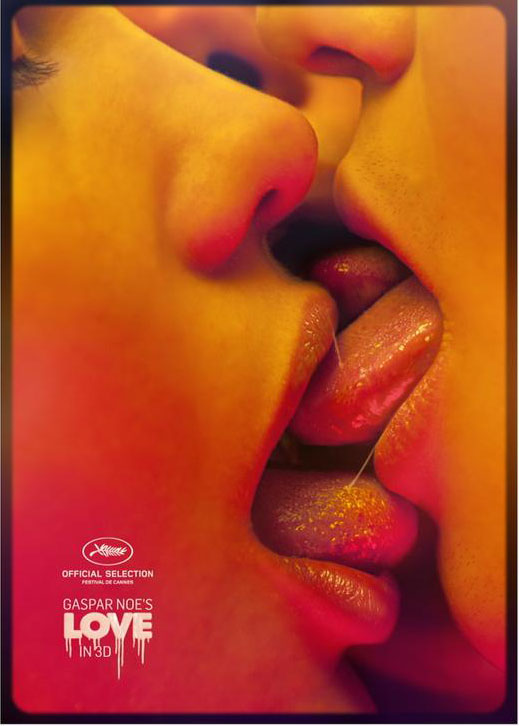
So, it was quite an honor to interview Noe back in 2016 when he was doing press for “Love” which he shot in 3D. The movie stars Karl Glusman as Murphy, an American student studying movies in Paris alongside his girlfriend, Electra (Aomi Muyock), whom he is having quite the sexual relationship with. The on one day, they come across a Danish teenager named Omi (Klara Kristin) with whom they engage in a threesome, but from there relationships take some truly powerfully emotional turns to where what was once found may forever be lost.
“Love” is, and will probably always be best known for its scenes featuring unsimulated sex, but for me this movie deals more with the emotions of love which lift us up to delirious heights, and also bring us down to such rock bottom lows we may find impossible to climb out of. Noe and I talked about these themes and other things during our time together, and he made it clear how this film should in no way be considered a porno.
Indeed, when it comes to the average filmgoer of any nation or ethnicity, I fear they will react in the following manner:
“Oh no, it’s a penis. A big hulking phallus. GET IT AWAY FROM ME! GET IT… oh wait, it’s just an AK-47. Whew! Thank goodness. I was worried for a second.”
WRITER’S NOTE: The following review was written in 2015.
James Bond fans will be thrilled to know that the gun barrel sequence has been returned to the opening of this latest 007 adventure. For the past few Bond films, it has been relegated to the end to make clear just how rebooted this long running franchise became when Daniel Craig came on board to fill that tuxedo and enjoy the shaken, not stirred martinis. But now it precedes the action-packed prologue, and it’s just as well because “Spectre” aims to be more along the lines of the classic 007 adventures where the suave spy does battle with a secret organization which is bent on world domination and ends up seeing so much more than the NSA does on a daily basis. Still, it does have a strong focus on character as the past continues to haunt Bond to where the dead are not really dead.
First, let us get this out of the way: Is “Spectre” better than or as good as “Skyfall?” No, but this was kind of a given since the previous installment reached such extraordinary heights which the average Bond film usually never reaches, and this includes grossing over a billion dollars at the box office. In the end this did not matter much to me because, on its own, “Spectre” is a compelling and thrilling movie which reunites Craig with the brilliant Sam Mendes whose work on the last installment was impeccable. With this latest Bond film, they both are determined to dig even deeper into 007’s fractured and turbulent history, and it reintroduces us to certain character types and criminal organizations which defined many of the early Bond adventures.
After a thrilling action-packed opening sequence in Mexico, one of this franchise’s very best by the way, Bond is informed by M (Ralph Fiennes) he is being suspended from duty as his mission there was not authorized by him or the British government. However, we later learn he received a cryptic message from a previous mentor informed him to kill a man in Mexico and attend his funeral in Rome, and this is just the beginning to his uncovering the criminal organization whose name is an acronym for Special Executive for Counter-intelligence, Terrorism, Revenge and Extortion. Suffice to say, they got everything covered.
Mendes hasn’t lost a step here, and he is also served well by cinematographer Hoyte van Hoytema (“Interstellar”) who gives even the dirtiest scenes an inescapable beauty. This movie also has a great opening and unbroken shot which lasts several minutes as we watch Bond attend a Day of the Dead parade, head upstairs with a lovely lady presumably to bed, and then he suddenly goes out the window in pursuit of his latest nemesis who has seriously pissed off her majesty’s secret service.
The main villain is Franz Oberhauser, and he is portrayed by the brilliant and endlessly entertaining Christoph Waltz. This is the same actor who gave us one of the most fiendish villains in cinematic history in Quentin Tarantino’s “Inglourious Basterds,” but he’s not out to replay Hans Landa here. When we first see Franz, he doesn’t even have to speak up or raise his voice to show how powerful he is. Everyone simply stands at attention, and no one questions his decision making at any point. This makes Waltz’s job even easier as his character clearly exerts a power very few bother to question. Some claim he is too quiet in his first scene, but for him to yell at everyone or shout to keep everyone in place would strike me as being desperate to keep everything under control. Franz doesn’t need to do this because everything has long since come under his control.
As for the Bond women (calling them Bond girls does not feel the least bit appropriate anymore), they are played by Monica Bellucci and Lea Seydoux. Bellucci plays Lucia Sciarra, the widow of an assassin killed by Bond, and she mesmerizes us in the far too few minutes she appears onscreen. Bellucci is said to be the oldest Bond woman ever, but does this really need to be pointed out? I don’t care how old she is because she still sizzles and holds her own against Craig even as he seduces her to the audience’s delight.
Seydoux is best remembered from her role as the beautiful but cold-hearted assassin in “Mission: Impossible – Ghost Protocol,” and here she plays Dr. Madeleine Swann, a psychologist who has a link to a person Bond dealt with in the past. She proves to be a strong Bond woman here as she brings up her tragic upbringing which has informed her defensiveness around those she doesn’t know very well, and she makes clear of how she has a strong dislike of guns. She’s a wonderful presence here, and she and Craig make quite the couple.
Dave Bautista co-stars as Mr. Hinx, a character designed to spark our nostalgic memories of Oddjob. Mr. Hinx is a henchman of few words, but his actions speak a lot louder than his words and leave a lot of damage in his path. This is not a henchman content with throwing a hat around as his hands do all the work and leave quite the impression.
Ralph Fiennes confidently fills the shoes of Dame Judi Dench’s M as Mallory, and like the previous head of MI6, Mallory finds he can control Bond as well as she could, which is to say only so much. Naomie Harris returns as Eve Moneypenny who has since settled in to becoming M’s assistant, Rory Kinnear remains reliable as always as Chief of Staff Bill Tanner, Jesper Christensen reprises his role as Mr. White from previous installments, and Ben Whishaw steals every single scene he’s in as Q. Seriously, watching Whishaw is such a delight this time out as he infuses the role with a wonderfully dry sense of humor as he reminds Bond of how he has a mortgage and two cats to feed.
And, of course, Mendes brings back composer Thomas Newman to give “Spectre” an emotional and propulsive film score which will has me eagerly awaiting its release on compact disc. I especially enjoyed his collaboration with the Mexican contemporary classical percussion group Tambuco on the music they composed for the Day of the Dead scenes. As for the theme song “The Writing’s on The Wall” which is performed by Sam Smith, it’s good but nowhere as priceless as Adele’s “Skyfall.”
But let’s not leave out the man of the hour, Daniel Craig. Ever since he made his debut as 007 in “Casino Royale” he has not only made this iconic role his own, but has also given Ian Fleming’s classic character a humanity and a depth his predecessors hoped to give as much of. His respect for Bond is never in doubt as he brings 007 around full circle to where we learn even more about his past than we did previously, and how it has come to define his present state in life. It’s still up in the air as to whether this will be Craig’s last time playing the famous British secret agent who likes his martinis shaken, not stirred, but I have to believe he has at least one more Bond film left in him.
How you come to view “Spectre” may depend on the kind of expectations you bring to it, and it’s hard not to have high expectations after the brilliant “Skyfall.” Do yourself a favor and leave them at the door and just enjoy it for what it is; a gorgeous and extravagant Bond film which, while a bit too long (editor Stuart Baird is missed here), has us wondering where 007, a man who another character describes as being a “kite dancing in a hurricane,” will go from here.
WRITER’S NOTE: This interview was conducted back in 2015.
Dominik Garcia-Lorido is an actress on the rise. So far, she has turned in memorable performances in movies like “The Lost City” and “City Island” which had her co-starring with her father, Andy Garcia. On television she co-starred on the Starz television series “Magic City” (sense a trend here?) as Mercedes Lazaro, a housekeeper training to become a stewardess for Pan Am Airlines. Now she co-stars opposite Jason Statham in “Wild Card” which was directed by Simon West and written by the great William Goldman who adapted it from his novel “Heat.” It is also a remake of the 1986 film “Heat” which starred Burt Reynolds and is better known for the behind-the-scenes troubles which resulted in six directors coming and going from the production.
Garcia-Lorido plays Holly, a young woman living in Las Vegas who gets brutally assaulted and calls on her friend Nick Wild (Statham), a lethal bodyguard with a gambling problem, to help her get revenge on those who did her wrong. I got to speak with Garcia-Lorido on the phone while she was doing press for “Wild Card,” and she helped fill me in on the kind of character Holly is. In addition, she also discussed how she approaches each character she plays and described what it was like being a student at UCLA’s School of Theatre, Film and Television.
Ben Kenber: Could you tell me more about your character of Holly? We only get to know so much about her in the movie.
Dominik Garcia-Lorido: The backstory for her was just that she was a teenage runaway who came to Vegas. Nick always knew her and he says it in the movie. I think it’s still in the movie, when he says, “When I first met you, you are this kid with braces” and all that stuff. I think she’s like the love of his life and they just couldn’t make it work, but he’s still very close to her. She’s an escort in Vegas and does very well for herself, and she seen a lot and has grown up really fast and can really take care of herself. This isn’t the first time she’s probably been disrespected on the job, but to this extent was really the first time that she’s been this disrespected.
BK: I definitely get the sense that she’s grown up a lot faster than anyone should have to.
DGL: Exactly. I just never thought she was this young girl. When we went to shoot my first scene where he (Nick Wild) comes in and sees me, we shot at that location at this big house, we see that she lives a good life. She lives very well and does very well for herself. She’s not this broken down hooker doing drugs. She’s got her shit together and this is her job.
BK: Holly does get very disrespected in some scenes which I’m sure were not the least bit easy to shoot. What was it like shooting those scenes?
DGL: You know, those kinds of scenes are those kinds of scenes. Whether it’s a love scene about two people in love or whether it’s like this, they are so choreographed. That’s just like the perfect word for it; they are so choreographed. Milo (Ventimiglia) was such a nice guy and I felt really comfortable with him and he made me feel very comfortable. I felt very safe doing those scenes, but yeah that’s sort of how they are. We shot so much more than what you see of this flashback scene. And then being hauled into the hospital and on a gurney there were a couple of actors that were medics around me, but one was a real nurse and I was asking her questions before we shot in between takes about how would my breathing really be. That’s really scary. That’s a lot of acting you have to do when you’re shooting really fast. You have to show pain and that’s where you do the most acting. I was just asking her; how would I be breathing if I just experienced trauma? How would I be speaking? Would I be crying? She was very helpful with that. So that’s like always a little hard to do. You want to get that right.
BK: “Wild Card” was based on the novel “Heat” by William Goldman, which in turn was adapted into the movie “Heat” back in 1986 which starred Burt Reynolds. Were you aware of that movie before you started making this one?
DGL: Well, I wasn’t aware before I read the script, but then I knew it was a remake when I got it. But I never watched it.
BK: Did you ever get the chance to talk to William Goldman?
DGL: I never did. I don’t know if any of the actors really did unless Jason did. I don’t think any of us really have that opportunity.
BK: The making of “Heat” was said to be a very messy affair.
DGL: Yeah, that’s what I heard.
BK: I imagine the making of this movie went a lot more smoothly.
DGL: This wasn’t messy at all. I think there were a lot of difficulties with the director on the first film. I think Burt Reynolds punched him or something, I don’t know. We were really taken care of with Simon (West) and the producers. It was smooth sailing.
BK: Did you base Holly on any people you knew, and what were your influences on the role?
DGL: I didn’t base her on anyone I knew. I tried to personalize it in some way I can. With anything I play, I try to be as honest as I can. I wear my heart on my face more than Holly, but Holly wasn’t that to me. Her vulnerability is like creeping through the cracks, and she has poker face. She has to.
BK: Absolutely, she can’t let everybody see what’s going on inside her.
DGL: she still fresh from the night before, I think was important to me to show that a little bit because Nick needs to see the pain in this.
BK: I saw that you attended the UCLA School of Theatre, Film and Television. What did you learn there that really helped you the most as an actress?
DGL: UCLA was such a strenuous program. We did so much. In our first year we were constantly working. Every weekend we were seeing a play and writing a paper on some aspect of the play whether it was the lighting, the production design, the costumes, the acting or whatever. During the week we had so much work. UCLA just taught me to be a hard worker, number one. It really just has you focusing on the craft and all aspects of it. I never had done that much work before. I cruised through high school before that. So I think that’s just the training because acting is a lot of work. I had a good acting teacher there that I continued to work with for a little bit when I left named Marilyn Fox. I’ve seen her act and she’s the kind of actress you want to be. She’s so grounded and so honest. She’s just always brought that out of me. I learned a lot and I grew a lot there.
Thank you to Dominik Garcia-Lorido for taking the time to talk with me. “Wild Card” is now available to own and rent on DVD, Blu-ray and Digital.
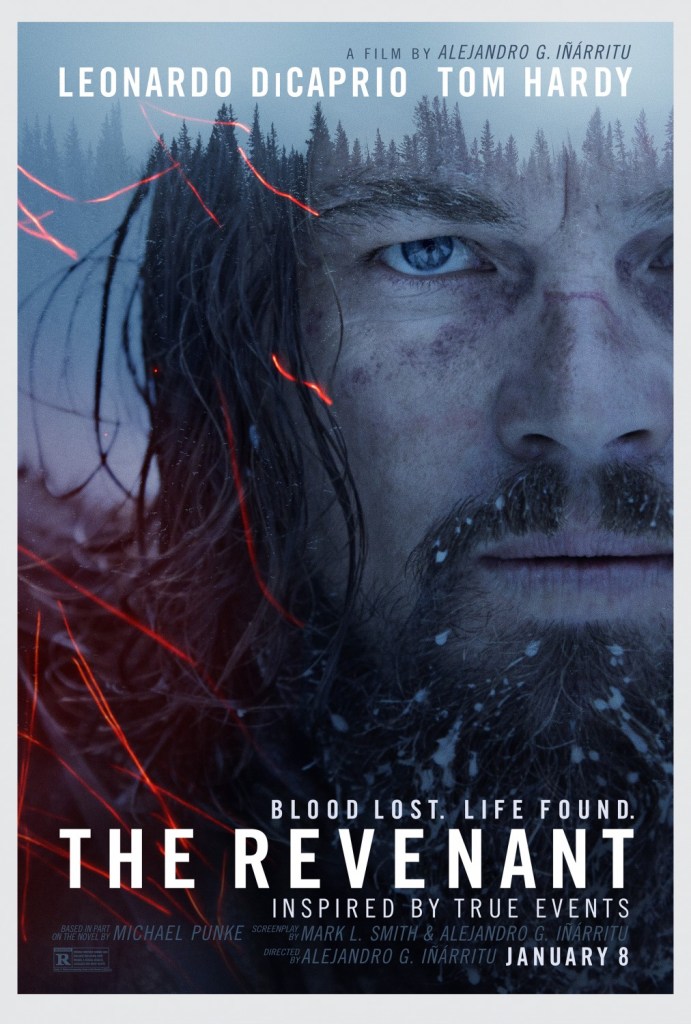
Alejandro Inarritu pushed cinematic boundaries in 2014 with “Birdman,” and now he did it again in 2015 with “The Revenant.” Based on the novel by Michael Punke, the movie transports us back to 1823 when frontiersmen and fur trappers traveled the states of Montana and South Dakota, and some of them soon came to discover just how unforgiving nature could be.
Leonardo DiCaprio portrays Hugh Glass, a member of a hunting party searching the land for animal pelts. In a seriously intense scene, Hugh ends up getting mauled by a bear to where he looks to be on the verge of breathing his last breath. One party member, John Fitzgerald (Tom Hardy), becomes insistent on killing Hugh as dragging his seriously wounded body through the elements threatens to slow everyone down and put them all in the crosshairs of Indian tribes looking for revenge.
Fitzgerald ends up trying to smother Hugh to death, but he is interrupted by Hugh’s Native American son Hawk (Forrest Goodluck) who calls out for help. But Fitzgerald, overwhelmed by a fear of dying, ends up stabbing Hawk to death and gets the rest of the group to leave Hugh for dead and move on to safer grounds. But despite being so mortally wounded, Hugh rises up and pursues Fitzgerald over thousands of miles as he is driven by an unshakable force known as vengeance.
Inarritu, along with the brilliant cinematographer Emmanuel Lubezki, puts us right in the middle of the action to where we, like the characters, never feel safe for a second. Arrows are flying everywhere and we are in an environment which we are not as familiar with as we would like to think, so the specter of death is always just around the corner.
What’s especially brilliant about “The Revenant” is how it captures both the beauty and unforgiving nature of the wilderness. The vistas captured are incredible to take in but this is also a movie you will want to put on a heavy coat while watching what Inarritu has caught on camera. The weather is so fierce here to where you can’t help but wonder how anyone could possibly survive it. Heck, I cannot help but wonder what watching it would be like in a 4DX theater. Could theater owners bring the temperature to subzero levels and provide audience members with parkas?
With “The Revenant,” DiCaprio finally nabbed the Best Actor Oscar which had eluded him. While I wished he had gotten his first one for his go-for-broke performance in “The Wolf of Wall Street,” it seems very fitting he got it for a performance which has him suffering through the worst a human being could ever be forced to experience. In movies like “What’s Eating Gilbert Grape,” “The Aviator,” “The Departed” and even “The Basketball Diaries,” he has shown a fearlessness in delving into a character’s dark side or a part of them which can never be easily controlled.
DiCaprio makes you feel every ache, pain and broken bone Hugh experiences in his infinitely long journey. Much has been said about how incredibly difficult it was to make “The Revenant,” and it looks like few had it harder than this actor did. We watch DiCaprio traverse a viciously cold landscape while lacking the ability to talk, and he even resorts to an “Empire Strikes Back” form of survival by keeping warm in a dead animal’s carcass. DiCaprio has never been an actor to fake an emotion or deliver a moment less than truthfully, and he certainly doesn’t do that here.
Also excellent in “The Revenant” is Tom Hardy who, just like he did in “Mad Max: Fury Road,” portrays a character forced to survive in the harshest and most unforgiving of environments. Fitzgerald could have been just another one-dimensional villain in this movie, but Hardy imbues him with a wounded humanity that makes him far more lethal and frightening. Just watch the scene in which Hardy faces down the barrel of a gun and just try to think of another actor who could be as convincing as him in a moment like this.
Tremendous performances, amazing cinematography, the most vicious bear attack in recent cinematic history along with a haunting music score by Ryuichi Sakamoto, Bryce Dessner and Alva Noto help to make “The Revenant” one of the best and most unforgettable movies of 2015. Inarritu remains unwavering in his directorial vision and he has given us a movie that grabs you and never lets you go until the credits start rolling. While some motion pictures get overshadowed by their behind the scenes struggles, this one does not. Of course, this will not stop people from talking about the making of “The Revenant” for years to come.
Oh by the way, this movie is “inspired by true events.” This is much more honest and fitting than saying it is “based on a true story.”
* * * * out of * * * *
WRITER’S NOTE: When this movie was released, some were under the mistaken impression that Leonardo DiCaprio’s character got raped by a bear in one scene. This rumor ended up spreading like a wildfire, but anyone who has seen “The Revenant” can attest this is not what happened at all. DiCaprio gets attacked because he accidentally comes across some bear cubs, and this shows that you never ever mess with the mama bear.
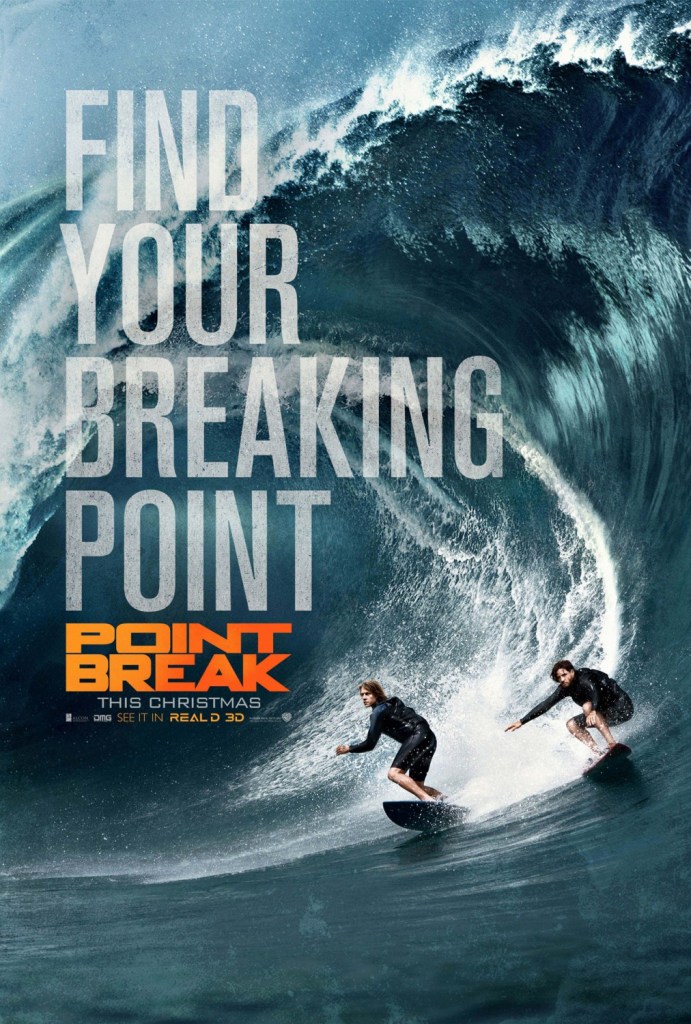
Was the world really pining for a “Point Break” remake back in 2015, especially when it already got an unofficial remake back in 2001? That remake was called “The Fast and The Furious,” and its director Rob Cohen freely admitted on many occasions how its plot was lifted directly from Kathryn Bigelow’s 1991 action film. Nevertheless, the good people at Alcon Entertainment felt an official remake was needed. What results is a film of spectacular visuals, but they all come with a screenplay which is dramatically inert and with actors who barely look like they are having much fun even after all the surfing, rock climbing, snowboarding and wingsuit flying we see them do.
The plot is basically the same as the original, but the characters led by Bodhi (Edgar Ramirez) are not thrill seekers robbing banks to fund their exploits, but instead ecoterrorists who look to play a Robin Hood role in society. Moreover, they are trying to complete the Ozaki 8, a list of eight extreme ordeals designed to honor the forces of nature. FBI agent and extreme sport athlete Johnny Utah (Luke Bracey) picks up on this and becomes determined to infiltrate this gang and bring them down. Of course, this has him going undercover, and we all know what happens to undercover agents in movies like these.
I should note how this “Point Break” starts off with a prologue which has Johnny Utah racing over a steep ridgeline on a motorbike with his friend Jeff (Max Thieriot). But while Johnny lands successfully onto a lone stone column, Jeff does not and ends up falling to his death. As a character in “Cliffhanger” once said, “gravity is a bitch.” Did this remake need such a scene? I think not as the original didn’t. Seriously, how many times have we seen this scenario played out?
One thing I have to say about this remake is it does look spectacular on a visual level. It was directed by Ericson Core who, quite ironically, was the director of photography on “The Fast and The Furious.” He also serves as his own cinematographer here, and he captures some amazing sights whether it’s the waves surfed at Teahupoʻo in Tahiti, the wingsuit flying sequence in Walenstadt, Switzerland, the snowboarding scene shot on the Italian side of Aiguille de la Grande Sassière in Aosta Valley, or the rock climbing which takes place at Angel Falls in Venezuela, Throughout, Core captures the beauty of each location to where I am compelled to visit them as soon as this Coronavirus epidemic is resolved. Yes, I am willing to wait that long.
But while the look of this “Point Break” is spectacular, it does not feel particularly the least bit exhilarating. The beauty of Bigelow’s film was she made you, as an audience member, part of the action. This was especially the case during the skydiving scenes as you felt like you were falling from the sky with the characters. With Core’s remake, I felt like I was watching everything from a distance to where I admired the view, but was never really enthralled by it.
Seriously, none of the actors look like they are having much fun here as they all seem so deadly serious to where you wonder if any of them has a mere understanding of what an adrenaline rush is. Luke Bracey may be a good actor, but his performance as Johnny Utah makes Reeves’ in the original appear all the more stellar. Reeves’ Utah had the good sense to know how scary and thrilling his adventures were to where his screaming while skydiving made complete sense. But to see Bracey remain calm while he falls from a mountaintop so high up makes his silence during such a descent utterly ridiculous and unbelievable.
Then there is Edgar Ramirez who has turned in memorable performances in “The Bourne Ultimatum,” “Zero Dark Thirty” and most especially in the biopic “Carlos.” But as strong an actor as he is, he does not succeed in making Bodhi a compelling character in this remake. Throughout, his face looks like it is etched in stone, and I kept waiting for him to show a little more excitement about his death-defying exploits. Patrick Swayze’s performance in the 1991 film was my favorite of his even if everyone thinks his penultimate role was in “Dirty Dancing,” and Ramirez does not come even close to matching the late actor’s charisma. This is especially evident in the scene where is sailing through some insanely high waves which are the same kind George Clooney and Mark Wahlberg attempted to traverse over in “The Perfect Storm.” Ramirez looks far too collected as he is facing death at any second, and the fact he is able to even get on his surfboard to travel that one last perfect wave is completely unbelievable. Come on, you have to be the least bit scared in a situation like this.
You also have Delroy Lindo and Ray Winstone here as FBI Instructor Hall and Special Agent Angelo Pappas (Gary Busey played Pappas in the original). Both are also playing characters who look like they are having a miserable time due to the challenges and endless frustrations of their jobs, but they should be forgiven as their characters were written as such. Besides, with actors like these two, you can never go wrong.
If there is a bright spot in this remake, it is Teresa Palmer who portrays Utah’s girlfriend, Samsara. She is such a luminous presence in any movie she appears in whether it is “The Choice,” one of the many misbegotten cinematic adaptations of a Nicholas Sparks novel, or “Hacksaw Ridge.” Her first appearance here is unforgettable as she dives into the ocean to where Utah is as compelled to dive after her as we are. Seeing her lay back into Bracey’s arms while in the ocean made me infinitely envious of him as I would have loved to been in his position. Palmer, however, is barely in this movie and is wasted in a role which demands more of her than the screenplay is willing to give. This is a real shame considering she gives this remake its most lively presence.
Bigelow’s “Point Break” cost only $24 million to make while this remake had a budget of around $100 million. Money may buy you impressive sights, but it cannot guarantee any audience an adrenaline ride. Besides, when it comes to filmmakers, male or female, can any of them compete with what Bigelow has to offer? Seriously, there is a reason why she was the first female to win the Best Director Academy Award for her work on “The Hurt Locker.”
When it comes to remakes, filmmakers and studio heads these days seem determined to play things straight. But looking at this remake of “Point Break” serves as a reminder of how it helps to not take things ever so seriously. Furthermore, Bigelow’s film has aged well over the years to where we are more than ready to accept Reeves as an action hero. While it helps to have a ton of money to make any motion picture, the budget on this remake did little to keep us on the edge of our seats. Just remember this the next time you feel like the budget for your flick is not nearly enough.
By the way, James LeGros who played Roach in the original “Point Break” appears here as FBI Deputy Director #2. I just thought you might be interested to know this.
I re-watched the original “Mad Max” just before I checked this sequel out, and I was amazed at what spectacular stunts director George Miller was able to pull off on a budget of less than $1 million. Even today, the 1979 movie is exhilarating to watch as Max Rockatansky lays waste to the gang of bikers who coldly and viciously murdered his wife and son. After watching it, I had to wonder what Miller could do with an even bigger budget. Of course, we all came to see exactly what he could with the next two “Mad Max” movies as well as with his segment of “Twilight Zone: The Movie,” “Happy Feet” and the highly underrated “Babe: Pig in the City.”
But all of his previous works came close to completely paling in comparison to “Mad Max: Fury Road,” the first “Mad Max” movie in 30 years, which had Miller working with a reported budget of $150 million and giving us the kind of action movie which effectively redefines the words thrilling, exhilaration, non-stop and spectacle. It’s as furious as movies get, and the real lack of CGI effects makes the action feel all the more wonderfully brutal. For a follow-up which got stuck in development hell for what seemed like an eternity, it was well worth the wait.
There’s a bit of confusion as to whether “Fury Road” is meant to be a franchise reboot or a sequel, but even with Tom Hardy taking over the role made famous by Mel Gibson, I’m just going to consider this a straightforward sequel. And like many of the best sequels, this one does not require you to have seen the previous three movies to understand all of what is going on.
Once again, Max travels the wretched wasteland of planet Earth in his car equipped with the kind of horsepower we would love to convince others we have under the hoods of our own cars, and it doesn’t take him long at all to get captured by people who have long since been driven mad by the desecration and lawlessness surrounding them. Max ends up being brought to a place called the Citadel which is ruled over by Immortan Joe (Hugh Keays-Byrne) and his army of War Boys. Max eventually escapes (it wouldn’t be much of a movie if he didn’t) and comes into contact with Imperator Furiosa (Charlize Theron), a hardened warrior who drives a heavily armed truck known as the War Rig. It is eventually revealed that Furiosa has absconded with Joe’s Five Wives, women selected for the purpose of breeding, and Joe will stop at nothing to retrieve what is now considered Earth’s most valuable property: no oil, not water, but human bodies.
“Mad Max: Fury Road” wastes no time in putting the pedal to metal as it is essentially one long chase movie which never lets up. The plot is fairly thin, but it’s still thick enough to support the tremendous action sequences which involve some of the craziest stunts and crashes this side of a John Woo or a James Cameron film. Seeing real cars actually crash and get demolished provides us with the visceral thrills I don’t get enough of at the local cinema these days. The fact Miller was able to give us such an amazing spectacle even at the age of 70 more than raises the bar for the next generation of filmmakers who have a lot of catching up to do.
I do have to admit I’m a little bummed Gibson didn’t return to play Max. It’s certainly not hard to understand why he was absent this time around, but coming back to play the role which made him a worldwide star would have been the icing on the cake for “Fury Road.” Having said that, Hardy does a terrific job of making this iconic role his own, and he proves to be furiously mad in his own crazy way.
But seriously, “Mad Max: Fury Road” really belongs to Charlize Theron who steals the show as Imperator Furiosa. There should be no doubt as to how phenomenal an actress Theron is as she has given us amazing performances in “Monster” (and no, the makeup did not do the work for her), “North Country” and “Young Adult” and she deserves far more credit than she typically gets. Her toughened up performance as Furiosa brings to mind Sigourney Weaver’s in “Aliens” as she dominates the special effects in a way few actors get the chance to do.
When it was released, many said “Fury Road” had a strong feminist angle to it, and they said this as if it were a bad thing. Then again, those who urged us to boycott this movie for that reason still have not bothered to watch it, so their hypocrisy remains as infinite as ever. What they need to understand is women cannot and should no longer be considered the weaker sex. The fact is they never were.
I also liked how Miller brought back Hugh Keays-Byrne to play Immortan Joe here as he is the same actor who portrayed Toecutter, the villain of the original “Mad Max.” Byrne ends up having to wear this scary looking mask throughout “Fury Road,” so his eyes and his voice do most of the acting for him. But even with these given limitations, Byrne gives us a very threatening and mesmerizing antagonist who is bent on dominating anyone and everyone who has the misfortune of being in his path.
And let’s not forget Nicholas Hoult who plays Nux, the sick war boy who comes to discover what really matters to him in such a desolate world. It’s been fun watching him go from his early days as a child actor in “About a Boy” to where he is presently, and it has been a voyage full of memorable performances. As Nux, he looks to be having the time of his life as he shouts out loud, “Oh what a glorious day!” His energy never lets up from start to finish, and he succeeds in making us care about Nux even though he is not entirely trustworthy when we first meet him.
There are many images here which have stayed with me long after I first saw it on the silver screen. The design of the cars the characters roam the desert in, the Darth Vader-like mask Immortan Joe wears, those guys hanging tightly to totem poles as the vehicles they are tied to travel at breakneck speeds, and, of course, the travelling guitarist known as the Doof Warrior (iOTA) who plays his instrument and shoots fire out of it with reckless abandon. All of this amazing imagery is done to the thunderous score composed by Thomas Holkenborg (a.k.a. Junkie XL) which proves to be as furious as the onscreen spectacle.
It has now been five years since “Mad Max: Fury Road” was first released, and there should be no doubt that it is one of the best action movies ever made. Time has not taken away from the pure adrenaline rush Miller provides us here, nor does the frustration of him losing the Best Director Academy Award to Alejandro G. Iñárritu who won instead for “The Revenant.” For an action movie, this one is a real work of art.
Seriously, there is something to be said for a movie which brought cinematographer John Seale out of retirement to work on it.





 The Ultimate Rabbit