WRITER’S NOTE: This interview took place back in 2013, and I have indicated the specific question I asked during it.
Catherine O’Hara is one of the best comedic actresses working today, and she never fails to give a hilarious performance in anything she does. After making a name for herself on “SCTV,” O’Hara went on to a career in movies that included unforgettable roles like the self-centered Delia Deetz in “Beetlejuice” and the forgetful mother Kate McCallister in “Home Alone.” But some of her best work to date has come from her being in the hilarious mockumentaries of Christopher Guest such as “Waiting for Guffman” and “Best in Show.” O’Hara even received a number of nominations and awards for her role as Marilyn Hack in “For Your Consideration.”
In “A.C.O.D.” (an abbreviation for Adult Children of Divorce), O’Hara plays Melissa who, as the movie starts, is undergoing an extremely bitter divorce from her husband Hugh (Richard Jenkins). Since their marriage ended, Melissa has made it clear that she hates Hugh with every fiber of her being. Then she gets the news that her youngest song Trey (Clark Duke) has just gotten engaged to his girlfriend of a few months, but what she has yet to discover is that her other son Carter (Adam Scott) is working on getting her and Hugh together so that they can attend Trey’s wedding in a peaceful fashion. While you may think you know what happens from there, “A.C.O.D.” proves to have many surprises and takes you in directions you don’t see coming.
We got to meet up with O’Hara during the “A.C.O.D.” press junket which was held at the SLS Hotel in Los Angeles, California. She still looks very lovely after all these years, and her hearty laugh is more than enough proof that she hasn’t lost her sense of humor in the slightest.
Question: “A.C.O.D.” was written by Stu Zicherman and Ben Karlin who have great pedigrees as writers, and you also have Zicherman directing this movie as a first-time director. How did he do as a first-time director and what was the atmosphere like on set?
Catherine O’Hara: I wasn’t aware of him being a first-time director while we were working because he wrote it for one thing. He and Ben wrote it and they are great friends, and Ben was there all the time so you had a good support system. Stu seems like a levelheaded kind of clear, confident guy and he’s funny. When people are smart and good at what they are doing like that and have a sense of humor about everything outside of themselves and even themselves, they are not threatened by anyone giving ideas or working collaboratively. It is a collaborative venture and you can’t lose by being open to the people you’ve hired. Not in the way that it was like a free-for-all, you just knew there was a chance to discuss everything there and he’s so open and he’s a great writer. It just felt like I was in good hands.
The Ultimate Rabbit: The thing I really liked about this movie is that you really don’t know what’s going to happen next. Most comedies you kind of get a sense of the formula and where it’s going to go, but this one really had surprise after surprise. Have you read a lot of scripts like that recently?
Catherine O’Hara: No, you would have seen me in them (laughs). If I was reading them, hopefully I had a chance for them. No, there aren’t enough. They (Stu and Ben) took their time writing this and it’s based on their lives and they have been friends since they were six or seven years old. They know all their extended families and their stepparents, and they really took their time and did a great job and they really thought it out. Every character is taken care of, that’s what I love. It’s not just one or two leads and everyone else is just barely there. Where are you going now? Out of your movie…
Question: That seems to be the case with most movies, but this one gives each of its characters the attention they deserved.
Catherine O’Hara: It is, far too many. This one was really well thought out.
Question: Ken Howard who plays your second husband Gary is also President of the Screen Actors Guild. What was it like having the union leader on set?
Catherine O’Hara: There was that whole merger thing coming up (with SAG and AFTRA) and I personally was against it and he was for it.
Question: Did you talk with Ken about it?
Catherine O’Hara: I did. I asked him why is this good. He seems like a good, smart man, but I just didn’t get it. His explanation was… You could tell that he really cares about the unions and wanted the best for everyone so that was nice to hear.
Question: But you still disagree with him?
Catherine O’Hara: I’m really so not involved with the union in any way, so I had to trust him. He actually is really involved and knows what he’s talking about, so I thought okay. I just like to work and get paid (laughs).
Question: You have been in show business for a long time now. Have you seen a change because for the longest time there was this great void of roles for women over 40 and 50. Do you believe that the tide is now turning?
Catherine O’Hara: There are more and more women writing, and there are more and more good male writers who decided and learned that it’s worth writing for women. I guess the more women are present and out there in life, the more their stories will be told. Our stories have always been told on Lifetime (laughs).
Question: Have you ever thought about stepping behind the camera to direct at some point?
Catherine O’Hara: I only want to write. I don’t care about directing really. I’ve tried it and it was fun, but it’s not like something I have to do. I hate losing trust in a director, that’s awful.
Question: So, what’s coming up for you next?
Catherine O’Hara: I have a movie at the Toronto Film Festival which will hopefully come out soon and it’s called “The Right Cut of Wrong,” and I think I’m reshooting a pilot that didn’t get picked up.
Question: That’s good, and they’ll pay you to do it.
Catherine O’Hara: There you go! Work and pay. Work and get paid, and good for Ken Howard looking after us (laughs).
“A.C.O.D.” is now available to own and rent on DVD, Blu-ray and Digital.
WRITER’S NOTE: This article was written in 2013, and it contains spoilers for this film.
Stu Zicherman and Ben Karlin are best known for their work as writers in film and television. Zicherman was one of the screenwriters on “Elektra” which he did not even try to hide his disappointment over, and the Hong Kong action film “2000 AD,” and he is currently working on the FX show “The Americans.” Karlin made a name for himself as a writer and executive producer on “The Daily Show with Jon Stewart” and “The Colbert Report,” and these days he serves as one of the writers for the acclaimed ABC comedy “Modern Family.” But what you may not know is these two were best friends when they were growing up, and they are also children of divorce.
When they reunited as adults, Zicherman and Karlin began working together on the screenplay for “A.C.O.D.” which tells the story of when Carter (Adam Scott) is tasked to get his bitterly divorced parents, Hugh (Richard Jenkins) and Melissa (Catherine O’Hara), to come to their youngest son Trey’s (Clark Duke) wedding. Writing the script allowed Zicherman and Karlin to deal with their own memories of their parents separating, but they also manage to find humor in a situation which is usually filled with tremendous sadness and anger. In the process, they both succeed in turning a lot of comedy conventions on their heads and give us a movie full of endless surprises.
I got to participate in a roundtable interview with Zicherman and Karlin when they appeared for the “A.C.O.D.” press junket held at the SLS Hotel in Los Angeles, California.
Question: What was the genesis for this movie?
Stu Zicherman: Ben and I have actually been friends since we were born. What’s the quickest way to explain this? Basically, my mom was friends with Ben’s parents, and Ben’s parents were friends with my mom’s first husband who I didn’t even know about. We’ve been friends our whole lives. I have always wanted to do something with this subject matter, this generation of divorced kids. We’re both part of this generation.
Ben Karlin: Yeah. We were friends growing up and our families were friends growing up, but then, when his parents got divorced and shortly thereafter my parents got divorced, we stopped hanging out because that was the end of our families getting together and doing things.
Stu Zicherman: It was a very romantic journey where our families used to go on vacations together.
Ben Karlin: So, when we were both professional and we were established as adults in our careers, I moved to New York, and Stu was working there already and he said, “Hey, I want to write a movie about how messed up we all are” (laughs). I went, “I’m in!”
Stu Zicherman: We grew up on movies like “Kramer vs. Kramer” and dramas that were kind of tragic. Ben and I talked about this when we first started working on the movie. Our parents’ divorces were tragic and sad in their own way, but they were also not to be believed at times (laughs). They were irreverent, funny and weird. We wanted to try and find a way to make light of it and make a comedy that still had some gravity to it because it’s something that people don’t laugh about. What’s been really fun about making this movie and about taking it around and showing it at Sundance and all these places is that people are excited and relate to it. People will come up to me after screenings and want to tell their stories like, “My parents got divorced when I was 8.” We’re almost giving them license to laugh about it.
Ben Karlin: We were shooting in Atlanta, and the night before production started, it was just us. It was me, Stu, a couple of the actors, a couple of the producers, and we were out in the bar at the hotel. There was a wedding going on and there was the after party for the wedding. There was the groom, the bride, the whole bridal party. Everyone was in tuxedoes. So, it was like these two worlds. We were about to make this movie about divorce and these people who were just starting. And they were great. They were lovely people. We closed the bar down with them. And then, a week later, I got a letter from one of the bridesmaids who I had been chatting with, and she told me this long story about her family’s divorce and how it affected her. It was just so weird. Even in that moment, people were just connecting to what we were trying to do, and we found that throughout the whole process, that there seems to be something that everyone can relate to about this subject.
Question: So, everybody is trying to figure out who got married at the movie’s end…
Stu Zicherman: Well, you know, we didn’t really want to give it away. Ben and I always talked about the movie as being an anti-romantic comedy. There were certain beats we would get to in the movie as we were writing it. There’s the obvious romantic comedy beat. We were trying to turn away from that wherever we could, not to the detriment of the movie, but the end of the movie was not so much about who got married. It was more important to us that the characters, especially those three men, have evolved through the movie to a point where it could be any of them. When pressed, I always say it’s all three of them, but we like the idea of leaving it open-ended because it didn’t matter.
Ben Karlin: It didn’t really trouble us, I have to say. We wanted to create a scenario where all three characters were repaired to the point where you’d be just okay with any of them. And it could be all three of them or none of them. The point is that whatever was waiting for them in there in the church was okay.
Stu Zicherman: And it’s funny too, when editing the movie, every single time I would adjust frames or tried a different shot and put it in front of an audience, people always guessed a different person. It was bizarre. I started to lose track of why people felt what. We had to calibrate it so that it’s pretty hard to tell now. We’d had a version where there was a faceless bride running through the background.
Ben Karlin: Oh, deep, deep background. A limo, a bride, the whole thing.
Stu Zicherman: Again, it distracted from the movie. It’s such a nice, clean moment with the three of them walking in, and we like it.
Question: Everyone seems to have their own version of the movie’s ending, and that really serves as a testament to your writing because you got us so deeply invested in every single character to where we really want to know what happens to them
Ben Karlin: It’s a very hard thing to do. You want to give in. You want to give people what they want. And then, there’s the creative jerk part of you that’s like, “I know better.”
Stu Zicherman: But also, we thought about a lot of this when we were writing the movie that we didn’t want people to be right or wrong. It’s not a right or wrong thing. It’s the dad who does this impetuous thing and they get back together. He’s not wrong. He’s following his heart. What’s wrong with following your heart? And again, at the end of the movie, I always say to people it’s not a movie about divorce per se. I don’t want people just to think it’s about that. It’s really about if you’re married, if you’re not married, divorced, whatever kind of family you’re from, you’re not destined to repeat the patterns of your parents. You’re free to make your own mistakes. You’re free to live your life. That’s why I always love the word “adult” being in the movie. I always felt like you become an adult when you actually can put your past into perspective. That’s when you really start becoming an adult. And I like that about the ending because, up to that point, everybody is acting like a child.
Question: You have said the script is loosely based on your families. Have you gotten any flak from them about it?
Ben Karlin: We’ve done a pretty good job of hiding or changing details. There used to be more stuff in the script that was literally word for word from our lives. There was an incident in his family and a specific incident in mine that involved the handing off of kids on a bridge, like a prisoner transfer, but it was between the parents. And it literally, at this moment, happened to me in Cape Cod where it was my dad’s new wife actually and her children and her ex-husband, and they had to exchange and they decided the exact mid-point. It was like North Korea-South Korea. Here’s the DMZ and we’re going to trade these children over that line, and we had that exact scene in the movie for years. That probably wouldn’t have gone over so well.
Stu Zicherman: And then there was a thing in my family called the hysterectomy conspiracy that was so absurd that when it was in the script, people would read it and be like…
Ben Karlin: “That’s not real.”
Stu Zicherman: They didn’t believe it. “No, no. It’s real.” We had to take it out because people didn’t believe it. But that happened to me. There’s one moment in the movie that is sort of torn from my life and its funny. It’s the one where Carter sits his parents down. My sister was getting married, and my parents would not agree to come to the same wedding. My brother-in-law and I sat them down. What’s hilarious about that is my parents don’t remember that. They block it out.
Question: How long did it take you two to get this film made?
Ben Karlin: Oh my God! I was just talking about this the other day. I was living here (in Los Angeles) and I moved to New York in 1999, and Stu was already living there at that time. He probably approached me in 2000 or 2001 to start working on it. Obviously, we had other jobs.
Stu Zicherman: Yeah. We had other jobs, so we were working on it nights and on weekends and vacations.
Ben Karlin: The amazing thing is we were both single when we started working on this movie. I have since gotten married, had children, and gotten divorced (laughs).
Stu Zicherman: It’s crazy. We were both single when we started this thing, and now I’m married with two kids and he’s got two kids, which I think helped inform the movie a little bit.
Ben Karlin: Yes, definitely.
Stu Zicherman: It’s been a long process. It’s funny though. The movie almost got going at one point. It came really close to get going. What was great about it was once we committed to Adam Scott, the movie started to finally roll. Finally, eventually, you get so frustrated with all the games you have to play to try and get a movie made. The thing is that we always loved Adam for this. And again, it fits in a little bit with the anti-romantic idea. He’s got an anti-romantic lead in a way because he’s got a very cynical humor and perspective on life. It just worked really well. And once we got Adam, then we got Richard Jenkins. It just started to roll.
Ben Karlin: Once you have those first few pieces in place, it starts to gain a terminal velocity.
Stu Zicherman: Right. The phone starts to ring and all of a sudden people want to be in your movie. That was very exciting.
Question: What I like about the script is that you don’t know where it’s going to go. From a distance, it looks like your typical formulaic comedy, but it really isn’t. How did you go about that? Were you looking to avoid certain things that you see in a lot of comedies like this?
Ben Karlin: Yes. There are so many tropes to these kinds of movies. Because we always were around, we were like, “How do we deal with the subject of a wedding in a movie that’s essentially about divorce?” We were very resolute that if we were going to have a wedding, we were going to do it differently than that typical moment at the end of the movie where people are walking down the aisle. So, we knew we wanted that outside the wedding moment to end it. We just were acutely aware of convention and trying to understand why those conventions worked and why they existed, and then trying wherever we could to tiptoe around the obvious thing.
Stu Zicherman: But the big thing was stakes. I mean, there were so many times where we were hyperconscious with the movie, and we would do readings just to find out where we were with it. The main character, Carter, is in every single scene of the movie and he doesn’t have cancer. He isn’t beaten. It’s the kind of thing, at a certain point, where the audience could be looking at him and go, “Hey dude, get over it.” And so, there were scenes we really liked but we felt like we were going to lose the audience. We said, “We have to keep the audience rooting for him.”
Ben Karlin: We didn’t want to turn the guy into a jerk.
Stu Zicherman: So, it was this balance. At times, people would read the script and say, “Why doesn’t he want his parents to get back together?” We just had to find a way and we kept trying to find ways in through relationships. But we did at times always try to move away from the tropes like the scene with the ring that turns into the key, and moments like that. It was funny. I did a Q&A; in New York the other night and someone asked me about the whole cheating thing with Jessica Alba and how he never gets caught. In the classic romantic comedy, you always get that scene where she’s like, “What were you doing with that girl?” It never crossed our minds to go there, and the truth is because in real life most people don’t get caught. You’re just forced to live with it. And that was the great liberty of making this movie independently. We’re not beholden to a studio to hit certain tropes. Also, it made the tone what it is, because the movie is funny but it’s also got some gravity to it and it’s got this balance. I’m excited. The fact that the movie is finally coming out, I’m excited for people to see it, but I’m also going to miss it because we’ve just been carrying it around like this for so long.
“A.C.O.D.” is now available to own and rent on DVD, Blu-ray and Digital.
WRITER’S NOTE: This interview took place back in 2013.
John Krokidas makes his feature film directorial debut with “Kill Your Darlings” which stars Daniel Radcliffe, Dane DeHaan and Michael C. Hall. The movie is about a murder that occurred in 1944 which brought three poets of the beat generation (Allen Ginsberg, Jack Kerouac and William Burroughs) together for the first time. Radcliffe portrays Ginsberg as a 17-year-old who is about to start college at Columbia University, and he ends up falling under the extroverted spell of fellow classmate Lucien Carr (DeHaan) who introduces him to the poets who would later bring a new vision to writers everywhere. It is when Carr murders his love David Kammerer (Hall) that their relationship starts to become unglued.
Krokidas co-wrote the script for “Kill Your Darlings” with his Yale University roommate Austin Bunn. A former magazine journalist, fiction writer and reporter, Bunn graduated from Yale and went on to get his master’s degree at the University of Iowa Writers’ Workshop. As for Krokidas, he later attended New York University’s Graduate Film Program where he made the short films “Shame No More” and “Slo-Mo.”
I got to hear how Krokidas and Bunn made the film under challenging circumstances when they appeared at the “Kill Your Darlings” press conference held at the Four Seasons Hotel in Los Angeles, California.
Question: What was the division of creative responsibility between you two like?
Austin Bunn: Probably like a lot of people in this room, I discovered the beats in college. I used to go to the campus bookstore and just track down the poetry collection, find Allen’s books and read them like they were some secret transmissions from the future version of myself. I was a closeted, young creative writer from New Jersey so Allen Ginsberg’s work meant the world to me. So, I had this really strong connection with Allen and of beat biographies and the history. I read a lot of the back catalog and I had come to John with the idea. So, in terms of the division of responsibility, I would write the first draft and then John would come in. The thing about John, as you will soon learn, he wanted to raise the emotional decibel level in every scene. John is one of the most riveting and vital and least hagiographic version of this story. We didn’t want to take the beats’ greatness as a given, so John sort of demanded that we write a really emotional roller coaster. Then we just went back and forth. John talks about it as the Postal Service, like the band version of producing a script. We were living in different cities at the time; I was at the University of Iowa Writers’ Workshop as a graduate student and John was in New York finishing film school.
John Krokidas: Austin wanted to do this as a play first. He was a playwright and a short story writer of some renown, and we were college roommates and we shared ideas with each other as college roommates and good friends do. But I, of course, started seeing the movie version in the back of my head and I had just gotten out of NYU film school and started convincing him that the play would be really flat and undramatic, but as a movie…
Austin Bunn: The Jedi mind trick!
John Krokidas: This would be amazing. But I would say I’m the structure guy I think, coming from NYU’s film program. I’m very traditionalist in terms of Sidney Lumet’s “find your spine,” and Austin is really wonderful with character and dialogue. If anything, he’s on a religious crusade against expository dialogue, and I would write these three paragraph monologues for each character expressing their emotion like that scene where Jennifer Jason Leigh finally turns to Allen to give him advice. I had a two-page monologue version and Austin crossed it all out (Austin laughs) and wrote the one line that’s in the movie, “The most important thing your father ever did was fail me,” which said everything.
Question: The movie is also very visual too because of the beats’ energy and such. How did you go about creating the look with cinematographer Reed Morano?
John Krokidas: I’m so proud of what we brought to this film. The movie is set in 1944 and it’s a murder story. Even in the writing process, I looked up and saw that “Double Indemnity” won Best Picture that year, and it was the year of “Laura” and “Gilda” and all these great American Film noirs. So, I said, “Why don’t we incorporate this even in just the fabric of the movie and start with the jail scene in a place of heightened tension flashback to more innocent times, and then build again to see whether or not these characters can escape or not escape their fate?” So, I started looking at noir style at first, but I thought an academic recreation of Film noir, who wants to see that? Going back to spine and theme, I thought what this piece was really about was young people finding their voice. So, what about going from conformity, the row houses of New Jersey and the pillars of Columbia, to nonconformity? And of course, where film noir went in the hands of the French was the New Wave. So I thought, “Okay well let’s start off with these controlled, composed, expressionistic-lit shots, and then as the boys go down the rabbit hole together, let’s take the camera off the tripod. Let’s get some jazzier free-form style.” So, I made this book of the 1940s. I had learned that Ang Lee, for “The Ice Storm,” did a 50 page book on the 1970s with colors, fonts and important historical events, you name it. So, I did that with the 1940s and then gave it to Reed. The great thing that I have learned on this is you can do all the academic treatises you want, but then you hire great people. She saw the goal post of what I wanted and then she showed me Jean-Pierre Melville’s films. She showed me films that meant a lot to her and then let kind of what I wanted filter through her own imagination. What I am amazed by specifically in her work is we did this movie in 24 days. Each scene was done in two hours or less, and she has the instincts to be like a documentary camera person and is able to light like that at the same time. We wanted to make sure this film felt relevant and contemporary as opposed to just being a traditional biopic.
Austin Bunn: (We didn’t want it to be) the greatest hits version of their lives.
John Krokidas: It was looking at Ryan McGinley photographs and contemporary, counterculture, young images of today and then finding what connected them to the 1940s. What was resonant in counterculture then and today at the same time.
Question: What was the direction that you were giving your actors? We were told that sometimes you would pull them aside for a more dramatic scene, but was there a consciousness you went into to direct the film and the actors? Were they any kind of specific kind of notes you gave them?
John Krokidas: Here’s the embarrassing story; Austin and I actually met freshman year because we were both acting in a production at Yale of “The Lion in Winter.”
Austin Bunn: Yes.
John Krokidas: Neither of us were the greatest actors in the world which is, I think, why we went into writing and directing. But I trained as an actor as an undergraduate and what you learn is that each actor has their own method and way. It’s whatever it takes for them to get the emotions to the surface. So, when I met with each actor that I cast, I would just simply ask them, “Have you trained? How do you like to work and what don’t you like?” Michael C. Hall gave me one of the greatest lessons in directing in which he said, “If what I am doing is not making you happy, don’t tell me that because that will make me self-conscious and it will make me think about what I’m doing. Just tell me to add whatever you want to what I’m doing.” That’s just a great lesson for life. Dan and I, when we were working together, we spent time before production (he was so generous and hard working on this) and he wanted to approach this like it was his first film which was very poignant to me. I said, “Would you like to try learning a new method and approach acting in a different style?” He said, “Absolutely!” So, with Dan, he’s so bright and in his head, and for the intellectuals Meisner works really well in focusing your action on what you are trying to do in the scene. Dane had trained extensively, and what he does is create a Bible for the character and does tons of research before production. Then he burns it and starts really becoming the character on set. Ben Foster (who plays William Burroughs) has something I’ve never seen another actor do which is, once we’ve basically got the scene up on its feet, he goes and he does the blocking of the scene by himself in the location several times. He calls it “the dance” because once he’s memorized the dance and knows the physicality (“I need to pick up the fork here, I need to put it down there”), he doesn’t have to think about it anymore and that’s completely freeing to him. So it’s like cooking this huge seven course meal where you have to get everything done at exactly the right time, but every plate needs a little bit of love in a different way. To me the greatest thing was being able to get this dream cast and then just to work with them to find how they like to work and what got the best out of them.
Austin Bunn: John had a really intuitive idea which was to keep the actors from reading past this point in the biographies, so none of the actors came in burdened by the mythology of who these guys would become. They were just 19-year-old kids. So, I think that was really smart and it released the actors from having to play the later decisions in their lives and the kinds of writers they would become. They just got to be young people, and that was a great relief I think for them.
John Krokidas: Yeah, and for us too as writers. I had a talk with Jack Huston once when he and I shared the same room and I’m saying, “Oh my god, I’m directing you as Jack Kerouac.” But we were like, “No. You are Jack who is a college student on a football scholarship who hates the other jocks, who just wrote a book which he thinks might be completely trite and he just wants to get out of college and have some real-life experience and join the war so he could begin to have real material to write his next book. That’s who you are.” That just liberated all of us.
Question: When writing the script, how much are you tied to the truth and how much are you allowed to take creative license?
John Krokidas: We did so much research for this. We felt we had to, and I think part of it’s our academic background because there’s so much in the biographies. There are so many biographies of them out there, but then also we would find different accounts online for example from David Kammerer’s friends. They said that that relationship between him and Lucien was never portrayed accurately and that Lucien actually kept coming back to David and David was asking him to end the relationship. And then we may have broken into Jack Kerouac’s college apartment together. We did the trick of pressing all the buzzers and then somebody let us in. But what’s interesting is Columbia students were living there and they had no idea that they were in Jack Kerouac’s apartment. So, we physically went to all of the locations in which this movie took place, and that just helped inform our writing process as well; getting to be able to visualize the actual spaces. Add to that, we went to Stanford University to the Allen Ginsberg archives. It wasn’t about the lack of material out there. If anything, it was about making sure that we really just focused on who they were up until the point which the movie takes place.
Austin Bunn: Just to add to that, the people that I know that have seen the film have been really surprised at how much is actually totally accurate. The day after the murder, Allen Ginsberg went to the West End Bar, “You Always Hurt the One You Love” was playing on the jukebox and he wrote the poem that ends the film. It ends with “I am a poet;” that is a line from August 20, 1944 so we worked really hard to weave it in. But like John was saying before, we didn’t want to do the dutiful, stuffy, every box checked kind of biopic that has been around for a while. We wanted to do something that felt more in line with the spirit of the beats that was more specific and honest and transgressive, and I hope we got there.
Question: Did you two have a specific goal of what you wanted to portray and what you wanted the audience to leave with either of the time or of the characters themselves?
John Krokidas: What I want the audience to leave with is that feeling of when we were 18 and 19 years old just like these guys were in the movie; when everything seemed possible and you knew that you had something important to say about with your life. That you wanted to do something different and unique and not just what your parents taught you, not just what school taught you, but you wanted to really leave your mark on the world. The fact that after the movie these guys actually did it and created the greatest counterculture movement of the twentieth century is amazing. I have had plenty of people come up to me after seeing the movie and said, “This movie made me want to be a better writer” or “this movie made me want to go back and start playing music again.” That to me means everything. That’s ultimately, deep in my heart, why I wanted to make this movie.
Austin Bunn: The pivot point was this murder. I loved Allen Ginsberg for his openness and his honesty, and to think that at one point in his life he was called upon to defend his best friend in an honor slaying of a known homosexual, the very thing that Ginsberg went on in his life to defy and radically create change about the idea of being in the closet and the shame around that issue, that contradiction was really exciting to us dramatically.
John Krokidas: You know this movie took, from the time that we started talking about this until the time that we are getting the chance to be with you all today, over 10 years to make. When I really think about it, the thing that kept me going and kept me wanting to tell this story is that there needs to be something that pisses me off at night. The fact that in 1944 you could literally get away with murder by portraying your victim as a homosexual, that pissed me off to no end. This isn’t a political movie and it’s one scene and it’s obviously what informed how Lucien Carr got away with murder, but for me that was the thing that kept me up all night that said, “No, I have to tell the story.”
Question: The movie has different kinds of music playing throughout it like jazz and contemporary music. Did you envision using different musical styles when it came to making this movie?
John Krokidas: I originally wanted a bebop jazz score similar to Miles Davis’ score for Louis Malle’s “Elevator to the Gallows” because the transition from swing to bebop at this time was exactly what these guys wanted to do with words; to go from rhythms to exploding them into something beautiful. My music supervisor, Randal Poster, said to me, “John put down your academic treatise, put down your paper. Go make your movie. Your child’s going to start becoming the person that he or she wants to be.” So I went and I made my movie, and then I put jazz music on the film and it didn’t work at all. And then I went and did only period accurate music and it felt like Woody Allen’s “Radio Days” which is a great movie but it’s not the young rebellious movie about being 19 and wanting to change the world that we wanted to make. So, I actually went back to the playlists that Austin and I used a while writing this movie and I used Sigur Rós and stuff that was timeless but contemporary, and it brought the movie to life. Then I realized that the composer Nico Muhly had arranged all of those albums and worked with Grizzly Bear and Björk and other people that we were using as temp track. So, we got the movie to Nico and just thankfully he loved it. Now that I knew that I had contemporary music in a period film, then we get to that heist sequence. I had heist period music on it, it was so corny. The sequence didn’t work, it didn’t have any stakes to it, and I can academically tell you when the beats come on, they led to the hippies which led to the punks, and the punks led to Kurt Cobain and the 90s, etc. But the truth is that while I can intellectualize it, you go with what’s visceral and what feels honest and true to you. For me, the biggest lesson in making my first film is to do all of your homework, do all your research, know what you’re doing, but then don’t be afraid to get out of the way if your movie starts to tell you what you should be doing.
Question: How did you decide on what literary quotes to put in, and how did you work with the actors in establishing the cadence and the elocution on those?
Austin Bunn: What a great question! If you know any of the beat history, this new vision was real for them and they have written volumes about it, none of which makes any sense. We couldn’t make heads or tails of it.
John Krokidas: Do you all remember your journals when you were 20 years old or those conversations you had at three in the morning with other college students? We got to read their version of it, and there’s a reason that we hide all of our journals and don’t let them see the light of day.
Austin Bunn: It was challenging. With the uninhibited, uncensored expression of the soul, that’s actually a credible quote directly from the Ginsberg new vision manifesto. So in some ways we knew we had to distill some of that material from the Ginsberg journals to help make the argument for how valuable this manifesto was and the irony honestly of what transpires in the plot which is the very thing that Allen’s called to do which is to create this censored version of history. But in terms of the poetry itself, it was really challenging because as we all know there are movies about poets and writers where recitations happen and they are really flat and they can be corny and there’s a time where you tune out of the movie when you’re waiting for the poetry to end. Specifically, I think of Allen’s first poem that happens on the boat. We were really challenged to find a poem that would speak to audiences but was genuinely an Allen Ginsberg poem written in his voice. So what we had to do was really channel Allen. His early work is quite rough and burdened by trying to impress his dad and his professors. John had the concept of this isn’t a poem that he’s just reading to impress people, it’s a poem he’s reading to Lucien Carr. The audience knows that, you know that and Lucien finds it out on the boat at that moment. That really gave me permission to kind of rethink what the poem was going to do and how we would make it, so we came upon Allen’s method which was kind of magpie; stealing from the American vernacular and going out and finding common speech and repurposing it, creating this Whitman-esque inclusion. So you hear in the poem things that you’ve already heard in the film just like Ginsberg did himself. Things like Allen in wonderland is reworked in the poem, unbloomed stalwart is the very thing that David said to him at the party. So we’re kind of hopefully paying off not just a poem that is emotionally powerful, but also something of the method that Ginsberg would use for the rest of his life.
John Krokidas: Radcliffe was such a hard worker. While he was on Broadway doing a musical, we would meet once a week for two months before even preproduction and rehearsals began to work on the accent and to work together. I have him on my iPhone reading “Howl.” We didn’t look at the later recordings, we looked at the earliest vocal recordings possible of Allen Ginsberg to make sure that we weren’t capturing the voice of who he became, but his voice at that time and what his reading voice was like. To be honest, it’s just really telling the actor, “You’re not performing a poem. You are letting Lucien know that he is loved with this poem and that you love him and that you can see inside him.” It’s playing the emotion underneath the poem which was the direction.
Question: What does it do for you when all the main characters are gay? Normally you got the female characters who can be a love interest but they are not going to be a rival. Usually, even now in films and in life, there is a separate role where as if you are all the same gender, you can all be anything to each other.
John Krokidas: I think this is a movie with every character is discovering what their sexuality is (gay, straight, bi or all over the place), and more importantly whether or not they are worthy of being loved. I personally don’t know if Lucien Carr was straight or gay, and to me it’s irrelevant because I have seen this relationship play out amongst gay people I have known so many times where an older man who is gay and a younger man of questionable sexuality develops such a close bond. The stereotype I think would be is that the young man had an absent father figure or finds the older man’s confidence and just the care and nurturing qualities of them very attractive. What happens though is that those two get so intimate that ultimately there’s nowhere else to take the relationship but sexual, and when that happens then the power position in that relationship twists and the younger man suddenly realizes that he holds the power because he’s the sexually desired one. That’s where a lot of conflict ensues. Whatever you read about that relationship between Lucien and David, everyone knew that they were codependent. Everyone knew it was toxic and going to end badly. Nobody knew it was going to end in murder.
Austin Bunn: I think a lot of the biopics we see are kind of denatured of their sexual qualities and the edginess of the relationships in them. So, I think we were trying to do something that restored some of that ambiguity, lust, desire and confusion that is genuinely in the beats’ history. We were not making that up.
“Kill Your Darlings” is available to own and rent on DVD, Blu-ray and Digital.
Seriously, I really wanted to love this remake of “Evil Dead” the way my fellow horror fans did. They seem to be thrilled about this one in ways they usually are not when it comes to remakes of any kind, and we knew way in advance that this remake was designed to be an incredibly gory delight. But while the filmmakers did their best to not just do the same old thing with their take on Sam Raimi’s immortal cult classic from 1981, the story of a group of young adults trapped in an old cabin and being terrorized by demons has now been told one too many times for it to thrill me anymore. Furthermore, they spent more time making this movie look bloody as hell instead of truly scary, and this is why it fell apart for me.
The character of Ash was wisely left out of this interpretation as no one would dare try to replace Bruce Campbell in this unforgettable role. Heck, even if Campbell was dead, no one would be recklessly stupid as to attempt such a foolish feat as replacing him in this role would be like replacing the late Richard Belzer as John Munch. Instead, the story centers around a young woman named Mia (Jane Levy) who has come to that horrific cabin in the woods to kick her opiate addiction once and for all. She is joined by her brother, David (Shiloh Fernandez), with whom she has not always had the best relationship, and his sexy girlfriend, because guys like him just have to have one, Natalie (Elizabeth Blackmore). Also present are her friends Eric (Lou Taylor Pucci) and Olivia (Jessica Lucas) who have watched Mia go through detox before, and they are not sure they can handle her going through it again.
This “Evil Dead” takes its sweet time setting up the characters and their backstories before they discover the Naturom Demonto, best known as being the Book of the Dead. I loved how so many of the pages had things written on it such as DON’T SAY THESE WORDS OUT LOUD, and yet Eric, whose job as a high school teacher has made him quite cynical, just has to read them anyway. Besides, how is a horror movie supposed to work if nobody does anything incredibly stupid? Those faceless demons then make their way to the isolated cabin with the sole intention of possessing its inhabitants and then killing them off one by one. The question is, which one of them will be left standing at the end?
This remake was directed by Fede Alvarez who made the short film “Ataque de Pánico!” (aka “Panic Attack!”) which was a big hit on You Tube, and he would later go on to make the terrific horror thriller “Don’t Breathe.” He does not seem the least bit shy about giving us tons of blood and gore, and it made me wonder what graphic images he had to cut out in order to avoid an NC-17 rating. You have one character slicing their tongue in half, another tearing chunks of flesh out of their face, and yet another using a nail gun the same way Danny Glover used one in “Lethal Weapon 2.” And let us not forgot that one person who gets a chainsaw shoved into a part of their body which would eliminate the need for a tonsillectomy. Still, no NC-17. Perhaps this is because in this version, no one gets raped by a tree.
But while Alvarez and company put a lot of work into the gory effects, I wished they had put just as much effort into the story. Things are played a lot more seriously here than they need to be, and it would have been great if they included more of the original’s sense of humor which helped to make it so memorable. With this remake, the filmmakers are already at a disadvantage because this kind of story has been told to death far too many times already. We quickly know where the characters are heading once they mistake of unlocking the door to that darn cabin, and all we can do is wonder who will be the first to die and how.
Also, there is way too much shaky camerawork going and, when this remake came out, I was getting to the point where I can no longer defend anyone going overboard with this kind filmmaking. I used to get a kick out of shaky cam, but I have since come to believe this technique is best to Paul Greengrass.
As for the actors, the majority of them are just okay. Not that the cast of the original gave Oscar worthy performances, but they were a lot livelier than this bunch. The strongest performance comes from Jane Levy, best known for her work on the television shows “Shameless” and “Suburgatory,” as Mia. While her character is one messed up individual, Levy makes you get deeply involved in Mia’s plight from start to finish to where we never want to abandon her.
When all is said and done, it is impossible not to have had high expectations for this particular horror remake as Raimi, Campbell and Robert G. Tapert (producer of the original “Evil Dead”) were on board to make sure the fans got all the blood and gore they wanted. As a result, I knew this version would not be dumbed down into some lame PG-13 flick where all the edge was rendered moot for mass consumption. I did enjoy parts of it, and it did keep me entertained for the most part. But considering the talent involved, I expected it to be a lot more than what it was.
The great thing about the original “Evil Dead” was how Raimi was able to pull off so many clever and innovative shots on such a low budget. Alvarez was able to work with a much larger budget this time around ($17 million), but while he certainly does try his hardest, he cannot top what Raimi did or bring much of anything new to this material. I do have to give him some credit as he gets away with using practical special effects instead of throwing a bunch of cheap CGI crap at us. This is what helps to keep the goings on more entertaining than they should be. In no way should this remake seem like a total loss as it did give us filmmakers and actors who have since moved on to bigger and better things, and they deserve to be where they are at. Still, I wished I liked this version much more than I did.
I came out of this “Evil Dead” remake with some hope despite my mixed reaction to it as I wondered if it could possibly give Hollywood enough of a reason to give us a fourth film with Ash Williams following the events of “Army of Darkness.” People had been praying for a fourth “Evil Dead” film for years, and we finally got one in the form of a cable series entitled “Ash vs Evil Dead.” This proved to be loads of fun, but when it was all over, Campbell made it clear he was retiring the character once and for all as he could no longer tackle the physical and emotional punishment, but we have a new one entitled “Evil Dead Rise” which looks to reinvigorate the franchise in a whole other way. Here is hoping it is worth the wait.
By the way, for those of you who have not yet watched this “Evil Dead” remake, I implore you to sit through the end credits as there is a special surprise at the very end. Trust me, it is worth the wait. And, sad to say, it was my favorite part of this film.
WRITER’S NOTE: THIS REVIEW WILL CONTAIN SPOILERS AS IT HAS BECOME IMPOSSIBLE TO TALK ABOUT THIS FILM WITHOUT GIVING CERTAIN THINGS AWAY. IF YOU DO NOT WANT IT RUINED FOR YOU, SEE IT BEFORE READING THIS REVIEW.
I must confess, I have not read any of Nicholas Sparks’ books nor have I seen any other cinematic adaptations of them before I sat down to watch “Safe Haven.” As a result, I am not sure whether to blame him or the screenwriters for ripping off the plot of “Sleeping with the Enemy” for this misbegotten effort. Those expecting this to equal the greatest of Sparks’ cinematic adaptations, “The Notebook,” will be severely disappointed as even those who have not seen that Julia Roberts starring vehicle will be confident in admitting this one falls way short. “Safe Haven” lacks any sense of originality, and it is completely undone by a couple of ludicrous plot twists which sink any legitimate reason for this film to exist at all. Furthermore, watching it reminded me of why I typically avoid romance movies in general.
Julianne Hough from the “Footloose” remake and “Dancing with the Stars” stars as Katie Feldman, and at the start we see Katie running for her life for reasons which are later made clear. Katie is ever so desperate to avoid police detective Kevin Tierney (David Lyons) to where she even makes herself look pregnant in the hopes it will throw him off. She ends up escaping his clutches and takes a bus out to the small town of Southport, North Carolina where she hopes to start a new life.
Look, I love how people want to escape a dark past by moving to a new town, but for some immensely stupid reason they move to one which is not all that far away from the place they used to live. Word to the wise: if you want to move away to where no one can find you, try moving to another state or country. Even with the advances in today’s technology which typically render anonymity a joke, you have a better chance of not being found out if you go to a place you cannot drive to in one day’s time.
Anyway, Katie gets a job as a waitress at a local restaurant and ends up leasing a beautiful apartment out in the woods. Of course, where she found the money for such a place is beyond me and every other audience member. We know she is looking to avoid any personal connections as the last one she was involved in caused her a lot of psychological damage, but someone as adorably cute as her is bound to find a suitor whether she wants one or not. That suitor comes in the form of Alex Wheatley (Josh Duhamel from the god awful “Transformers” movies), a widow with two kids. Alex lost his wife to cancer a few years ago, and he is having trouble relating to his kids, especially his son. Guess who fills the missing part of his life…
Okay, as much as I despised “Safe Haven,” I do have to admit that Hough and Duhamel have good chemistry together and make a cute couple here. Hough herself has a wonderful earthiness which makes her seem more down to earth than other actresses I could quickly think of while watching this film. Even if her range as an actress goes only so far, she has a very appealing presence here even if it might seem a bit too vanilla for some.
As for Duhamel, he does himself good by not giving an emotive performance as Alex. I expected him to be overdoing it for the whole film, but he doesn’t make his character a whiny little bitch or the typical self-pitying widow who often inhabits the romance genre. Alex has suffered a terrible tragedy in his life by losing his wife far too soon, but we see him moving on as well as he can, and he does not waste much time bemoaning what is missing in his life.
Now I mentioned at the start of this review how this film is essentially a rip off of “Sleeping with the Enemy,” and this proves to be the case even before the first big twist is revealed. We watch as the Kevin becomes increasingly obsessive in discovering where Katie is hiding out as it becomes implied that she is wanted for first degree murder. But it eventually becomes to light that Katie is actually Kevin’s husband, and from there I knew exactly where the story was heading which had me rolling my eyes endlessly as a result.
There is a flashback sequence in which we see what drove Katie and Kevin apart, and watching it made me wonder what Katie ever saw in this creep in the first place. In a lot of ways, I feel sorry for Lyons, best known for his work on the television series “ER” and “Revolution,” because I am sure he came into this project believing he was not just playing any ordinary villain, but this is essentially what Kevin Tierney is. The character is here to give us someone to despise, and he really serves no other purpose to this film beyond that.
I was also amazed at how Katie stabbed Kevin pretty hard with a kitchen knife. We do not see where he has been stabbed exactly as this is a PG-13 movie, and yet he somehow recovers from this knife wound in record time. Maybe the American health care system is slightly more effective than we think, but even the smallest of stab wounds still require an extended period of time to recover from. No one just jumps out of bed a day after a sharp object is inserted into their body as the word “ouch” takes on a very significant meaning when this happens.
Furthermore, Kevin spends a good portion of “Safe Haven” being drunk as a skunk. Now maybe this explains how he copes with the pain he is forced to endure from that knife wound, but seeing Kevin trying to outdrink Denzel Washington’s character in “Flight” renders him unintentionally hilarious as a result. While this character is meant to be a frightening presence in “Safe Haven,” all he really ends up being is an abysmal idiot who is lucky to have survived as long as he has. The fact he still has a pulse by this film’s midpoint is quite astonishing to say the least.
But then comes “Safe Haven’s” second big plot twist, and this one is ripped off from “The Sixth Sense.” At the end, we come to discover one of Katie’s friends whom she has confided in throughout is actually not alive and died some time ago. As a result, I kept waiting for Katie to say “I see dead people.” This ludicrous revelation calls into question everything we have seen up to this point. Are certain characters here meant to be delusional, or is it just circumstance that they are talking to a walking corpse? If the filmmakers wanted to make “Safe Haven” the romantic movie answer to “The Usual Suspects” or any of what my friends would call “mind fuck” motion pictures, they failed miserably.
Speaking of which, the director of “Safe Haven” is Lasse Hallström, and his career as a director has always fascinated me. He has gone from directing such great movies like “My Life as a Dog,” “The Cider House Rules” and “What’s Eating Gilbert Grape” to pure drivel like this and “Dear John.” You are never sure if his next film is going to be way too sentimental or not sentimental enough, but this time he outdoes him by being cloyingly manipulative. While he still does an admirable job of getting good performances from his cast, I came out of this film hating him for playing with the audience’s emotions so shamelessly.
I don’t know, maybe I should read Sparks’ novels to see if what did not work in a movie actually works better on the written page. I am sure there are a lot of reasons why he remains a best-selling author after so many years, but watching “Safe Haven” makes me wonder what those reasons are. This film is far too silly to be taken seriously, and the absurdity of its plot twists makes the whole endeavor feel like a pointless cinematic adventure.
Following this misbegotten motion picture, I did my best to avoid any kind of romantic movies. Granted, there have been some like “What If?” which surprised me, but there have been others such as “The Choice” which was also based on one of Sparks’ novels. If you do not see many reviews of romantic movies or romantic comedies on this website, I am sure you will understand why.
I once had a teacher in college who told me filmmakers keep making the same movie over again and again without even realizing it, and Baz Luhrmann is a prime example of this. His “Romeo & Juliet” and “Moulin Rouge” dealt with characters looking back at a past they can never return to and of love affairs which ended tragically. His adaptation of F. Scott Fitzgerald’s classic novel “The Great Gatsby” is not any different from those two films, and it is filled with extravagant scenes that dazzle us with amazing choreography and beautiful images. But while it is a beautiful movie to look at, this film lacks the heart and soul I usually expect Luhrmann’s works to have in an infinite degree.
This “Gatsby” adaptation starts with Nick Carraway (Tobey Maguire), a writer and bond broker, telling us about his time in New York during the 1920s (better known in the history books as the “Roaring 20s”). Right there I knew the movie was in trouble as Luhrmann started “Moulin Rouge” off with Ewan McGregor reflecting on an exhilarating past and a great love which has long since passed him by, and Maguire is a very similar character in that respect. From there, it is clear that this movie will not have a happy ending, and the characters we see enjoying themselves will soon experience a suffering which will be endless. We’re not even five minutes into this cinematic adaptation, and already I can tell this will be familiar territory for Luhrmann, way too familiar.
The 1920s were a time of great wealth and endless partying which came to a crashing halt the following decade when the stock market crashed and Americans found themselves out of a job (sound familiar?). Carraway finds himself caught up in all the hoopla which came with those times, and it’s at an especially over the top party where he meets Jay Gatsby (Leonardo DiCaprio), a man as rich as he is mysterious. From there they become inseparable friends as Gatsby shows Carraway around town and introduces him to the most influential people one could ever hope to meet. But it’s when Gatsby takes a strong interest in Carraway’s cousin, Daisy (Carey Mulligan), that things start changing and not for the better. It turns out Gatsby knew Daisy in the past, and now Gatsby will do everything in his power to win Daisy back from her suspicious husband, polo player Tom Buchanan (Joel Edgerton).
“The Great Gatsby” has the same problem Luhrmann’s “Romeo & Juliet” had during its first half; it thrust a lot of style and flash cuts at us at an alarming rate to where I was desperate for things to slow down so I could breathe and actually everything in on a deeper level. Now Luhrmann did slow things down in “Romeo & Juliet” to where we connected emotionally with the story and its characters, and he successfully reinvigorated one of William Shakespeare’s most overdone plays to where it felt fresh and exciting again. But this time he gets so caught up in the spectacle he is putting up for us all to see to where it became impossible for me to connect with anything or anybody here. The sensory overload I got in his previous films was exhilarating, but here everything feels so exhausting and artificial to where it doesn’t matter if you watch this film in 2D or 3D (I watched it in 2D because I refused to spend the extra money). The characters may be starving for emotion, but it’s the audience that needs it even more.
Whether or not you have read Fitzgerald’s classic novel, it’s easy to see the direction this movie was going to take. As a result, I found myself getting very bored and impatient as I knew Gatsby would eventually stumble over his own ambitions, and I just wanted see him get his ass kicked sooner rather than later. Heck, I even got up and went to the bathroom at one point, and that should you give you an idea of how frustrating this movie was for me. I was able to sit through “Star Trek V: The Final Frontier” despite needing to pee really bad, but this one I could not hold it in. Yes, that’s too much information for you readers, but anyway…
On the upside, the actors acquit themselves very nicely. You can’t really go wrong with DiCaprio, and he does make quite the dashing Gatsby, but there should be a drinking game based on how many times he calls people “old sport” throughout, and I seriously got sick of him saying that. His good friend Tobey Maguire has his back as Nick Carraway, and he does a lovely job of reading Fitzgerald’s words to where I’d like to hear him do a reading of the novel as he brings us a lot closer to the author’s dialogue than Luhrmann does.
Carey Mulligan, however, is seriously miscast as Daisy Buchanan. She still gets to do her whole woefully vulnerable lady act which she played to perfection in “An Education,” but Mulligan is not able to nail the other complexities this role has to offer. Yes, she is a lovely presence to watch in this or in any other movie, but this is not enough to save her performance here.
Clearly a tremendous amount of effort was put forth by the cast and crew on “The Great Gatsby,” but it doesn’t change the fact that the movie is a profound disappointment. Fitzgerald’s novel has been adapted several times with limited success, and many say it is an exceedingly hard book to translate to the silver screen. Luhrmann looked like he was the man who could do it justice, but he doesn’t come close. What a shame. We can always count on him to give us spectacle as well as substance, but this movie is all spectacle and not enough substance.
William Shakespeare’s “Romeo and Juliet” is a play which has been done to death. Keeping track of all the adaptations is aggravating, but on top of that, there are other plays or musicals which were, at the very least, inspired by this classic tragedy (“West Side Story” is the most obvious example). Since Shakespeare’s time, “Romeo and Juliet” has been done in many different styles and taken place in various time periods. It seems the only way to do a production of it these days is to break free of the way it was done during Shakespeare’s time. Baz Luhrmann’s modern take on “Romeo and Juliet” was absolutely entrancing in how it made us feel like we were watching the doomed story of two young lovers for the first time, and Leonardo DiCaprio and Claire Danes never had a shortage of chemistry between them.
Taking all of that into account, that makes this “Romeo and Juliet,” directed by Carlo Carlei and adapted to the screen by Julian Fellowes, come across as a renegade version for they have instead brought Shakespeare’s work back to its traditional and romantic version. It is filled with medieval costumes, balcony scenes and duels, and the filmmakers even got the opportunity to shoot it at the story’s original location of Verona, Italy. But for all the effort put into this umpteenth film adaptation of this famous tragedy, the whole endeavor feels like it is severely lacking in passion.
Perhaps the main problem is the lack of chemistry between the two leads, Douglas Booth and Hailee Steinfeld, who play Romeo and Juliet. When they first meet at the dance, their attraction to one another is not all that palpable and feels rather forced. While both actors do their best to connect with one another, their relationship never felt believable enough for me to really care about what happens to them. In fact, towards the end, I started to get impatient and kept waiting for Romeo to do himself in already.
Steinfeld is a wonderful actress, having deservedly received an Oscar nomination for her performance in “True Grit” (though she should have been for Best Actress, not Best Supporting Actress). As Juliet, she does well and has quite a radiant smile which lights up the screen. At the same time, she seems miscast in this role when paired with Booth. While Steinfeld is around the same age as Juliet, she seems too young to be taking on this famous role now. It’s a shame to say this because she isn’t bad, but I came out of this movie thinking an actress a few years older might have fit this role more realistically.
As for Booth, it takes too long for him to come to life as Romeo. When we first see him, he doesn’t seem all that crazy about Rosalind even after we see him making a bust of her likeness. When it comes to the classic balcony scene, the attraction between him and Juliet feels awkward as they still don’t seem as madly in love as they are supposed to be. Booth’s performance does get stronger as the movie goes on, but he never digs deep enough into the character to where it seems like he is only touching the surface of Romeo’s dilemmas.
Carlei, whose work as a director I am not familiar with, does capture the beauty of Verona, Italy to where it made me want to get on a plane and visit it. His handling of the conflict between the Capulets and the Montagues, however, is not clearly defined, and we never quite get a full idea of what made them hate each other in the first place. This is the original gang story for crying out loud! As for the battle scenes, they feel a bit too staged and could have been far more exciting.
Fellowes is best known for creating the popular show “Downton Abbey,” and he seems a natural to adapt any Shakespeare play let alone “Romeo and Juliet.” He preserves the dialogue for the most part, and it’s clear he has a deep love and understanding for the Bard’s words. At the same time, this film has been severely affected by a misleading advertisement which stated it would not be using Shakespeare’s traditional dialogue but would still follow the play’s plot. But having been exposed to this play many times myself, I could not tell the difference between what Shakespeare wrote and what Fellowes came up with. Go figure.
It is a real shame because this “Romeo & Juliet” has a number of great supporting performances which almost make it worth watching. Ed Westwick makes a fierce antagonist out of Tybalt, his eyes filled with rage over a betrayal he can never forgive. Lesley Manville, best known for work with Mike Leigh, is priceless as the Nurse and succeeds in taking this character from her ecstatic highs to her tragic lows. Manville never misses a beat every time she appears onscreen.
There’s also Damian Lewis as Lord Capulet, and he gives the character of Juliet’s father a twisted feel which really makes his performance stand out. Kodi-Smit McPhee is very strong as Romeo’s good friend Benvolio, Natascha McElhone gives us a sympathetic Lady Capulet, and Stellan Skarsgård is a welcome presence as the Prince.
But it should be no surprise to see Paul Giamatti stealing the show as Friar Laurence, as it’s truly one of the best interpretations of this role I have ever seen. Friar Laurence is the moral center of “Romeo & Juliet,” and he sees the union between the two lovers as a way of bringing peace between the Capulets and the Montagues. I could tell just how much Giamatti put his heart and soul into this role, and I wept with him when his well-intentioned plans fall apart so tragically.
Still, despite all the great performances, this “Romeo & Juliet” never really comes to life in the way a truly great Shakespearean production does. The language in his plays is so rich, and it can be so intoxicating to take in when done right. This is how I felt after watching Kenneth Branagh’s cinematic adaptations of Shakespeare’s work, but Carlei is not as successful in making this famous playwright’s words come alive, and he is working from a script by Fellowes for crying out loud!
Every generation definitely deserves their own version of “Romeo and Juliet,” but this one is not going to do it. They will be better off with Baz Luhrmann’s version which ended up breaking my heart as it made me wonder if things might take a different turn from what we remember. Or perhaps it was just that big crush I had on Clare Danes which made Baz Luhrmann’s movie affect me so much. Oh well…
WRITER’S NOTE: This is from a press day which took place in 2013.
With “About Time,” writer/director Richard Curtis once again proves that he is the master of making romantic movies. While romantic films are currently a dying breed in America, Curtis gives the genre a much-needed re-invigoration. This is the same man who wrote the screenplays for “Four Weddings and a Funeral,” “Notting Hill” and “Bridget Jones’s Diary,” and he also wrote and directed “Love Actually” which has become everyone’s favorite movie to watch at Christmastime. Curtis populates his films with characters we can all relate to, and he shows us how the simplest things in life can be so wonderful.
I got to meet up with Curtis when he appeared for the “About Time” press conference at the Four Seasons Hotel in Los Angeles, California, and he proved to be as charming and funny as many of the characters who inhabit his films. During the roundtable interview he talked about “About Time” differs from other romantic films, how he came to cast Domhnall Gleeson and Rachel McAdams, and why this will be his last movie as a director.
While these questions came from several reporters, I did take the time to put my name to the questions I asked Richard. You will find them eventually.
Question: Why did you not tear Tim (Domhnall Gleeson) and Mary (Rachel McAdams) apart in the middle of the movie only to bring them back together?
Richard Curtis: Well, I quite liked the idea in the film. There is a kind of habit in romantic films of getting people who hate each other when they meet; he’s a Nazi and she’s a member of the Socialist Worker’s Party (laughs), however will they fall in love? But most of us, when we bump into the people we are going to spend the rest of our life with, quite like them when we first meet them. I quite liked the idea that you could do something where people like each other, and then there was the time travel and then they liked each other again. I’m interested in if you can do it. I was writing about sort of a happiness in a funny way and writing about the interesting business of how things work rather than being really interested in the way things don’t work.
Q: Speaking of the time travel aspect, it’s something that people keep watching these movies for. They’re always keeping an eye out for the loophole or plot holes. Did that make it harder writing the script?
Richard Curtis: Look, you know you’re gonna fail, that’s the thing. I know where I failed in this so you just do your best and the people and the production keep you up to it, and anybody who spots anything that’s wrong will always say it to you because it’s a fun thing to spot when they’re reading the script. So, you know you’re getting closer to true without actually getting there, and it was fun to play with it. It’s also a thing where when you decide you’re going to do a time travel movie, it is something that is in your head as you’re walking around. The thing about not being able to go past the birth of your child was definitely the result of another conversation I was having with someone about how weird it is that you commit your entire life to people who you have no ability to choose, and then I thought that’s so true. And not only that, if I had sex four seconds later, I’d have a different child and then immediately I thought that would become a key plot point.
Q: This movie has two love stories in it. It has the father and son and it has the man and the woman. How were you able to find the balance so that one didn’t overshadow the other?
Richard Curtis: On the whole you try and rig films to make sure they turn out as you want them to turn out, but I think it seems as though perhaps the strength of the Bill Nighy story is more than I expected. It’s turned out to be more emotional than I expected, and I think that’s all down to the way Bill chose to play it. He chose to play it in such a sort of gentle way that I think, when you see the film, you can insert your own father into the space that Bill creates. Oddly enough, this film is in some ways less manipulative. If you’re doing a movie that ends in a big kiss and a romance, your kind of playing the cards all the way through to try and get the maximum emotion at the end. In this one I always knew that I was always aiming for this bizarrely simple final moment which was just gonna be a guy doing the most banal things in the course of an ordinary day. So, I didn’t think so much about the dynamics of the film, perhaps I have in others. But one of the ways of doing it was by getting them to get married halfway through, so that film’s done and there’s another film to rely on.
Q: Has it affected sort of the carpe diem qualities, or is that something you practiced before you started writing the script?
Richard Curtis: No. Oddly enough I think, and Bill and I talk about, because I’ve done the movie, I am thinking about that a lot more, I really am. My girlfriend, who never makes any concessions to me, says I always work far too hard and I always think that I’m not working as hard as I used to and always am. But even she is saying that she’s noticed that I seem to be creating more space and enjoying things a little bit more and making more time for normal things. So that’s why I have said I am not going to direct another film because I think that directing a movie is not a good way to have a happy life.
Q: Is that a Steven Soderbergh promise or are you just gonna keep coming back?
Richard Curtis: Anyone who says that, Steven is their hero because it means you can change your mind. It is becoming a great tradition; the great heroes like Jay-Z, doesn’t he resign? If I come back, I’m part of a noble tradition, but that is my intention at the moment.
Q: Can you talk about Comic Relief and how that came to you at a young age?
Richard Curtis: Wow, do other people know about that side of my life? Well, it started off by an almost comical mistake in that a girl I know asked if I would like to go with her to Africa, and I just said I would go to keep her company and then the charities decided to send us to different countries. They said we would cover more ground, so that was a mistake. So, I was in Ethiopia at a very bad time and that could not but change my life. That’s something I have to carry. We did a stage show and then we did a TV show, and the TV show made so much more money than was expected that I couldn’t not do it again, and I have just gone on doing it. Every time we do it, we make more money than I will earn in my entire career. I think of it as my difficult child, it takes exactly half my time, it changes its nature so I now, and after doing it now for 25 years I got a feeling that the money we’ve raised might be less important than the education or part of it. Kids in England have always grown up knowing a lot about poverty in Africa and problems at home, and that educational thing may have actually turned out to be the function of it. The next thing I’m doing is doing a year and a half trying to be part of making the new declaration by the United Nations in 2015 to end poverty, so it’s a never-ending big subject. I think the way it’s bounced off on my career is that I haven’t written my seven bad films. I do think a lot of times when people, when they finish the thing, say have I got any other ideas whereas I’m always a year behind. I thought of this film in 2005, and then I chose to do the pirate movie (“Pirate Radio”) because I wanted to be a bit older by the time I made it. It’s actually given me breathing time and let things stew longer, so I always believe quite a lot in the projects I do by the time I get to them.
Q: Fighting poverty seems like an even bigger challenge now with the gap between the rich and poor growing bigger and bigger. Do you feel sometimes like it’s a never-ending battle and how we are going to do this?
Richard Curtis: Well, you have to be realistic about that. Actually, statistically speaking, the lives of the very poorest people on the planet have never gotten better quicker than in the last 15 years. It’s been extraordinary so I’m paying more attention to that. But the rich and poor inside countries, I’d just think it increases your responsibility to try and make sure that people like me who do live in the bubble of comfort are really aware of how peoples’ lives are at the other end of the scale. I made all my children watch a documentary called “Poor Kids” the other day. It’s just a really brilliant, very sweet-natured documentary about four really poor kids in the UK, and they literally could not believe what they saw and that increases the desire to communicate this.
Q: You also focus a lot on the joy of real people like with the Heathrow Airport scenes in “Love Actually,” and then there are scenes in “About Time” that look like they had regular people in them. Where did you find those people?
Richard Curtis: Well with “Love Actually” we put up a little black box with curtains in Heathrow and just filmed and then sent assistants rushing around and saying do you mind signing this release. It’s very weird, you haven’t seen your mom for 17 years and somebody’s saying we’ve just filmed you crying embarrassingly. The strange thing is when we edited that, over half of what I wanted in that sequence I couldn’t use because it turned out we hadn’t got the permissions. The bit at the end of this one was sort of the same thing. Quite a lot of it was sort of staged. There are some things that weren’t. Most of that was directed by my girlfriend. That was the weird thing. It was the final day of the shoot. I woke up and I was in the most astonishing pain. I thought I had kidney stones or whatever, and she leapt out of bed in the highest of spirits and said she would ring a doctor on the way to the set (laughs). Some of the loveliest images there were got by her which I think sort of shows because she is full of an energy and joy about her. It was interesting how ordinary those images had to be. I didn’t shoot them at the beginning, so I didn’t quite know how it was going to end. When I thought that I would end with a series of just normal images, I took a film by a friend of mine called Kevin McDonald called “Life in a Day” which is a movie he made about YouTube, and I cut like ten favorite images from that in and showed that to friends and it was a disaster because they were good. They were so definitive, so beautiful, so picturesque, and everyone said the movie’s all been about ordinariness and you can’t then say that every day is a beautiful sunset and every day is an astonishing child framed perfectly in a window in Milan. So, I did try and keep those end bits as sort of banal as they could be, but still joyful.
Ben Kenber: “Love Actually” is my family’s favorite movie to watch every Christmas Eve. I love it too but I’m always hoping we can add “Bad Santa” as a double feature though.
Richard Curtis: Lauren Graham’s in “Bad Santa!” I love her!
Ben Kenber: I’m not usually a big fan of romantic movies, but what I love about your movies is that the people and what they go through feels so real and relatable. A lot of American romantic films are manipulative but your films never feel like they are. Your movies touch on issues that most other filmmakers don’t really take seriously.
Richard Curtis: Well, thank you very much. I don’t have an answer for that, but don’t down American filmmakers because I think there’s a kind of feeling that romantic films may not be in a good place at the moment. “(500) Days of Summer” I thought was an incredible movie, “Like Crazy” is an amazing movie about love, and “Lost in Translation” is the greatest ever romantic comedy even though it’s not a romantic comedy. I’ve been looking back because I’m thinking about finishing and thinking why did I write all these films on this subject and then suddenly realizing it is because it is the context of my life and what matters to me. How your family treats you, who you love, how you get on with your kids and your friends are what fills most of your emotional time, and I’m just trying to hang on to that and write about normal things because I never, never bump into serial killers.
Q: A lot of people don’t seem to realize that “Love Actually” is a Christmas movie because the holiday gets so pushed into the background.
Richard Curtis: I think the funny thing about “Love Actually” is the casting is now out of whack. Originally it was 50% well known and 50% not, and now the naked guy is in “The Hobbit,” January Jones is Betty Draper on “Mad Men,” and even the boy is now in “Game of Thrones.” Liam Neeson is the greatest action hero in the world and Andrew Lincoln is on “The Walking Dead,” so it’s a hell of a cast now.
Q: You are obviously a believer in love. Do you have thoughts on marriage?
Richard Curtis: Well in a way “Four Weddings and a Funeral” was a long way of explaining to my mum why I wasn’t married. She always found it hard to accept. I haven’t gotten married for particular, peculiar reasons, but I’m sure that marriage is a wonderful thing.
Q: You make great use of music and songs in your movies. Can you give us an insight into what your playlists are?
Richard Curtis: Well, the insight I would say is that I really do have to use music in order to get through the process of writing. It really is part of me learning what I’m trying to do, and sometimes that takes very specific forms. When I handed this movie in, it said on the front cover “About Time” or “The Luckiest” or “Golden Lapels.” I thought about those two so much and was so sure I was going to use them, and I thought I might even name the movie after them. So, in this movie, all the cues were there as I was writing and helped me write the right scenes and work out what I wanted to say. There’s a version of “Downtown Train,” a Tom Waits song, by Everything But The Girl, an English group which was all I listened to while I was writing “Notting Hill.” That was all I was trying to do in the whole of that movie was reproduce the emotional temperature of that song which I knew could not be in the movie, but it was my sort of guide. And then I just use pop music to cheer me up, so I got different playlists on my computer. I’m trying to make my tastes more modern. My sons are pushing me hard in that direction. My 16-year-old says he can’t listen to traditional pop music anymore because the lyrics of the songs he listens to by people like Jay-Z are so much better than normal pop songs. Normal pop songs are so thin and so repetitive, he says, that he can’t listen to them anymore.
Q: The scene in the underground subway station is one of the best in this movie. Your use of music in all your movies is great.
Richard Curtis: Well, thank you. That was a really interesting day because sometimes you hope something works but you don’t know how. I couldn’t work out as I was shooting it how it was going to be possible to edit it because he’s always going to be singing the wrong words of the song. It was never going to be correctly timed so I just shot all night and hoped the editor could work it out, and the editor said there was no problem when we got to it.
Q: Can you talk about casting the two main parts? How did that come about?
Richard Curtis: There are completely different ways that casting works. My friend, Mike Newell, said to me, “When the movie is cast, the movie is made.” He was extraordinary when we were casting Vicar #3 in “Four Weddings and a Funeral.” The guy came in and Mike said, “So tell him about Vicar #3,” and I said, “Well the leading character is trying to decide whether to get married and the vicar comes in and…” And Mike said, “No, no, tell me why did he join the church” (laughs). That level of detail and three dimensionality, I think that casting is hugely important. Rachel, having always loved her work and having picked up a sort of vibe about her as a human being and being very interested in this part about sort of contentment and in the idea of going from someone you meet on the first date and, by the end of the film, she is the mother of three, was based on trust and faith and things that she had seen and things I had also heard about her from the people who had worked with her. Domhnall on the other hand was seen as one of the top 25 young actors in the country, and I saw lots of them as often happens when I audition. Unless it’s the right actor, there doesn’t seem to be anything there at all. That was very much the case with the sister’s part until we found Lydia Wilson. It seemed as though there wasn’t anything there, and then we got Lydia with all her complicated emotions and Domhnall instantly made it funny which is absolutely key because he’s actually interested in comedy. So many young actors, you know, aren’t. They’re actually trying not to be funny and they’re trying to make people take them more seriously and think them cool or attractive, and he was really happy to be stupid and loving. He’s a lovely actor and a very sweet man. It was complicated because he was wearing his “Anna Karenina” beard so he looked like he’d stumbled out of the woods in “Deliverance” (laughs). The beard looked great if you’re wearing a military uniform, but if you’re wearing a t-shirt and jeans you look like you’re too fond of farmyard animals. It was a real act of faith, and then I made him do a whole day on camera, still with the beard, actually acting out the part and stuff. So, he worked very hard for it and was then sort of perfect.
Q: There’s a lot of Hugh Grant in Domhnall’s role, sort of like the younger version of him in “Notting Hill.” Was there any kind of connection made there?
Richard Curtis: I wasn’t aiming for Hugh at all. It’s obviously a voice that comes out when I write that part. I actually voted against Hugh in “Four Weddings and a Funeral” when it came down to it and I was, thank God, defeated 2 to 1 because Hugh was brilliant. But I think there’s something about Domhnall that’s much closer to my original inspiration when I started writing films. I was really inspired by “Gregory’s Girl,” “Breaking Away,” “Diner” and the guys in that except Mickey Rourke, and Woody Allen really. I was always looking for awkward, normal people, and I think when you first sit down with him at the party you don’t think that he’s the guy. You think he’ll be lucky to ever get a girlfriend. I like that side of him whereas with Hugh, girls would like him.
“About Time” is available to own and rent on DVD, Blu-ray and Digital. Please feel free to check out some other “About Time” interviews I covered for the website We Got This Covered by clicking on the names below:
This image released by Sony Pictures Classics shows Tilda Swinton in a scene from “Only Lovers Left Alive.” (AP Photo/Sony Pictures Classics, Sandro Kopp)
WRITER’S NOTE: This article is in regards to a press day which took place back in 2014.
Scottish actress Tilda Swinton is not just an excellent actress but a unique one as well. She doesn’t invite easy comparisons amongst her peers because she stands out in a way few other actresses do. She is lovely in the way she portrays a character, lovely in the way she moves onscreen, and, as we learned when she appeared at the Four Seasons Hotel for the press conference on “Only Lovers Left Alive,” she speaks lovely about her work and of the vampire she portrays in this film.
Written and directed by acclaimed independent filmmaker Jim Jarmusch, “Only Lovers Left Alive” tells the tale of two vampires who have lived through countless centuries and, as the movie starts, have reunited after being apart on different continents. Swinton plays Eve who remains optimistic about the world’s future even after all she has seen, and her lover Adam is played by Tom Hiddleston (Loki of “Thor” fame) who is more pessimistic about where things are heading. You might mistakenly dismiss Jarmusch’s film as just another vampire film, but it proves to be much more than that as it deals with love and death in equal measure.
Everyone was understandably interested in what attracted Swinton to the role of Eve, and she went out of her to explain what her favorite characteristic of Eve was.
Tilda Swinton: She has this perspective, that she doesn’t sweat the small, the medium or the big stuff, and that she’s full of wonder. She’s always looking up which feels to me pretty much the prerogative of people who have lived that length of time.
This film also marks the third time collaboration between Swinton and Jarmusch. She previously appeared in “Broken Flowers” and “The Limits of Control,” and off-screen she is really good friends with the filmmaker as well. We all wondered what kind of direction Jarmusch gave Swinton on this particular movie. This led Swinton to discuss the number of years it took to get “Only Lovers Left Alive” made, and how this length of time benefited both her and Jarmusch.
TS: We talk all the time. Whether we talk about anything that’s pertinent to the making of the movie, I don’t know. We’re friends now and part of the reason that I love to work with him is it means that I get to hang out with my pal for longer than if I wasn’t shooting with him. This one was another long gestation. It was seven or eight years since now when he first rang me up and said, Hey there, let’s make a vampire film. So that means a lot of conjuring, many breakfasts when I was flying through New York saying so where are we, many moments on the phone and many conversations in dark corners about where we were going to go next over the years. When we came to shoot, the lovely thing about those long developments is that when you come to shoot, it’s just grace. You’re so relieved to finally be putting it down and you’ve also had that length of time to talk about it. You really don’t need to talk about that much.
One truly unforgettable thing about Swinton in this role, or in any other role she has played thus far, is how beautifully she moves. The physicality she shows off from moment to moment is incredible, and we all wanted to know how she came up with it. The fact she’s playing a vampire here makes her performance all the more fascinating as a result.
TS: We talked a lot about what it would be if you were that unsocialized because they’ve kind of been lifted out of human society, and very quickly we started to talk about them as lone wolves so we talked about them as animals. When we were putting together the look, we ended up filling those wigs with yaks’ hair and wolves’ hair, and there’s a heartbeat in the film that comes up and down in the soundtrack which is actually a wolf’s heart. So, I thought a lot about wolves when we were thinking about how Eve would walk about. If you’re not in the pack, if you’re alone at night, you can take your time. You can pick your rhythm. The music is very important life blood, but also the camera, the move and the feeling of the movement is always very important to Jim, and this one particularly because of this passage through these two different wildernesses.
After watching “Only Lovers Left Alive,” many wondered about the relationship between Adam and Eve and how they have lasted so long as a couple. At the start, they reside on different continents before they reunite. We asked Swinton what she did to create the really comfortable long-term bond between Eve and Adam. In the process, she brought up one of Jarmusch’s main inspirations.
TS: One of the first bits of sand in the oyster for Jim, which he immediately told me about on that telephone call eight years ago, was this book by Mark Twain, “The Diaries of Adam and Eve,” which is so delightful and playful. It’s sort of fictional or maybe not diaries of the original Adam and Eve which spells out very clearly that this is an enormous love affair between two opposites. That was a foundation in stone for us that they would be in it for the long haul, but completely different. That I find really enticing, to show two people really loving each other, but not being like each other at all. So, we talked a lot about that and that was fun because that feels really human, playing with that. Also, as you notice, we wanted it to be about a marriage in which they talk as long relationships do. There’s a sort of tradition of showing people coming together and then the end, and you never really see them actually living it out and living the ups and the downs and talking it through. We really spent a lot of time wanting to get that tone of two people who were family. It’s a long, long marriage. They are family, and that’s why they still dig each other even though they are so different and he is so tricky to live with and she is such a space cadet. They have this communication thing going and they really like talking about stuff. We really wanted to show that it felt like it was something we haven’t necessarily seen before.
Another big relationship Eve has is with playwright Christopher Marlowe, played here by John Hurt. In the universe this film takes place in, Marlowe has been proven to be the real writer of William Shakespeare’s plays, and he at one point ends up calling Shakespeare an illiterate at best. When Swinton asked about how she and Hurt established the rhythm of their characters’ relationship, she pointed how this relationship differed between the one Eve has with Adam.
TS: The relationship with Marlowe is a very precious part of the film for me. Honestly, partly because it felt very close to my own experience having a very close relationship with, in particular, Derek Jarman whose disappearance from the building I had to witness. But him being a partner, a different kind of partner for her, he’s her neighbor and he’s her companion in a way that Adam isn’t. It just felt completely alive and fresh. I just know that relationship inside out, and John does too and he was the perfect dance partner to play that out with. Our references are kind of similar. He feels like family and we just put that into the film.
One of the great joys of watching “Only Lovers Left Alive” is realizing it is not a “Twilight” wannabe. Then again, we should know Jarmusch is the last kind of filmmaker to follow current trends. The characters of Adam and Eve are unlike any vampires we have seen, and their love affair is proof of how opposites attract. While Eve is more optimistic and lives to celebrate each and every period of Earth’s history, Adam is far more cynical about the present day. We all wondered how Eve could stay so upbeat even when in Adam’s company, and her explanation of why was both fascinating and amusing.
TS: Well, he’s very young. He has yet to learn. He’s only 500 years old. She’s 3,000 years old. She seen it all and she knows that survival is possible if one keeps one’s eyes open and takes it all in. It’s not like she’s recommending a journey one space away. She talks about witnessing the Inquisition and the Middle Ages. She’s witnessed all the holocausts there have been, and yet she’s still seen humanity and spirit and nature survive those things. So, she knows that as long as one keeps looking up and as long as one keeps breathing and keeps one’s perspective, survival is possible. She’s got her priorities right. I love the fact that what Jim’s looking at here is how one goes on living, how one goes on loving, how one goes on renewing and, as they say, rebooting one’s sense of wonder and engagement. It feels strangely radical and unfashionable; the very fact that they are trying not to be young, but instead they are trying to survive youth.
Another thing that stood out to me is how the fact Adam and Eve were vampires really became secondary to the story. After a while, you don’t see them as vampires but more as a loving couple dealing with the trials and tribulations of life. Also, Adam has a heartbeat which is something we usually don’t expect vampires to have. Swinton explained this was done intentionally.
TS: We were slightly messing with the form. We’ve all seen a lot of vampire films and we like the idea of disconnecting some of the myths, some of the tropes and then also inventing some new ones. So, we’re hoping that all the vampire films from now on would involve these gloves that we actually put out there in the first place. I think we all felt the same that being vampires, very evolved vampires, very humane, virtually vegetarian vampires is secondary I would say to the idea of them being immortal and being lovers in a way that only lovers can really be immortal because they live on in each other’s spirits.
Another big question was why Detroit and Tangier were chosen as the main locations. Both prove to be major characters as they come to inform Adam’s and Eve’s individual worldviews. Detroit, which is better known these days for its problems more than anything else, suits Adam’s sensibilities perfectly while Tangier appeals to Eve in a whole other way.
TS: Detroit was always going to be a very important character in the film. My sense is that Detroit was like the Emerald City for Jim, so for him it’s really a love story to make a film there. Tangier was a kind of newer idea. There was a moment where we were going to make it Rome, and for all sorts of reasons Rome sort of detached. And then we wanted very much to making a home on the African continent, and then it became Tangier. Tangier seems to be such a natural home for her. It’s a different kind of wilderness. It’s packed full of people from all corners of this particular planet and probably others and from all particular centuries. It’s got that sense of all corners of time and space, end and start in Tangier, and you can also walk around Tangier at night and cause absolutely no ripples at all even with a massive, great wolf’s hair wig on and fantastic pants. It’s just a sort of hot spot of spirit, and it felt like a very nice partner to this relatively unpopulated Detroit where people are rare and relative to empty windows and grass and wolves. Once we settled on Tangier that really felt like the right place for her.
Tilda Swinton remains one of the best and most fascinating actresses working today, and she will continue to be as long as filmmakers are smart enough to give her free reign. She has been able to go from making independent films to studio movies with relative ease, and she still has an endless number of great performances to give. Some actors might get stifled when going from the indies to a film with an enormous budget, but this doesn’t look like it will happen to Swinton anytime soon.
TS: It’s all endlessly fascinating. It’s just a different caliber. It’s like getting a finer tooth to it. It’s only relatively rare because I come from a kind of cinema that grew out of the art world. Working with a sort of naturalistic grain is something I’ve rarely done, but when I have done it, I’ve really enjoyed it and found it just a special atmosphere. For example, in something like “Michael Clayton” or even “We Need to Talk about Kevin,” that sort of realism, just trying to spin the realism, has been really interesting. Maybe I’d always want to spin it, but to spin it with that kind of naturalistic grain like deep cover. It has been very interesting although I’ve done it very seldomly. It’s all fun to me. It’s all dressing up and playing whether it’s dressing up as a corporate lawyer or dressing up as someone of 96.
More power to you Tilda!
PLEASE CHECK OUT THE EXCLUSIVE VIDEO INTERVIEW I DID WITH TILDA SWINTON FOR WE GOT THIS COVERED DOWN BELOW:
WHILE WE ARE AT IT, CHECK OUT TILDA’S REACTION TO ME COMPLETING THE 2014 LOS ANGELES MARATHON THE DAY BEFORE THIS INTERVIEW:
“Gimme Shelter” gives audiences one of the most intimate looks at life inside a shelter for those in need they could ever hope to see. It stars Vanessa Hudgens who turns in an astonishing performance as Apple Bailey, the child of an abusive and drug addicted mother. At the film’s beginning, Apple runs away from home and seeks out her biological father, a Wall Street banker named Tom Fitzpatrick (played by Brendan Fraser) who does what he can to help her out, but she ends up running away upon discovering she’s pregnant, and because Tom isn’t excited about her wanting to keep the baby. After a couple of nights on the streets and a nasty car accident, Apple finds her way to a shelter for young pregnant women run which is run by a spiritual woman, and it is there that she begins to feel a sense of hope for the first time in her life.
“Gimme Shelter” was written and directed by Ronald Krauss who actually spent some time in an actual women’s shelter run by Kathy DiFiore, a once homeless woman who eventually turned her life around and founded Several Sources Shelters which is dedicated to helping women in need. Krauss’ original plan was to make a documentary out of all the interviews he did with residents of the shelter, but in an attempt to show the world of the importance of the work DiFiore has done and to keep her legacy going, he decided to make a feature length movie instead.
I got to meet with Krauss and DiFiore during a roundtable interview at the “Gimme Shelter’s” press day held at the SLS Hotel in Beverly Hills, California. It was especially nice to see DiFiore there as she does not do a lot of publicity. DiFiore talked about why she decided to let Krauss make this movie which was inspired by her work. Krauss went into detail about his experiences at the shelter, and he also explained how he came to cast Hudgens in the lead role.
Question: How are you?
Kathy DiFiore: Good but a little tired. I’ve never been to so many interviews (everyone laughs).
Question: Welcome to our world. So, what did you think when this guy (Ronald Krauss) shows up on your doorstep? I guess you’re used to having people show up on your doorstep, but this guy…
Kathy DiFiore: Usually they’re pregnant women (laughs).
Question: Yeah right. This guy shows up and I doubt it went like, “Uh, can I stay here because I’m doing research for a movie.” But how did you feel when he proposes the idea of doing a movie based on your thing?
Kathy DiFiore: Well, it didn’t happen that way. It happened more like he was visiting his brother who happens to live a mile and a half from the shelter, and he had heard about my work through a friend of a friend of a friend of a friend of a friend, and he volunteered. It was Christmas time and I let people come in to volunteer all the time, especially someone that has the talents he has. He eventually said, “Maybe I could film some of what you’re doing” which I wasn’t fond of because of the $10,000 fine. I didn’t want any publicity. I thought, let me just go quietly. No public relations. Over the course of time, and it took several months as he was doing the work speaking with the young mothers and they got to know him, they would come to me and tell me how much they respected him and how much he respected them. He felt they were giving him private information, but he was treating them with such dignity. You don’t hear those types of words coming out of the women that come to me. They’ve been abused and abandoned and are really confused by so many, particularly men, in their lives. And then I heard a little voice inside my head, I’m a very prayerful woman and I was asking God for guidance, and I heard, “Trust him.” And when I heard “trust him,” it kept going on. Trust him, trust him, trust him. I thought, okay holy spirit, okay, and then he and I talked about some of the things he looked at.
Ronald Krauss: I didn’t really have any sort of agenda when I met Kathy. I wasn’t really setting out to make a film. It just so happened that her shelter was a mile from my brother’s house and it was at Christmas time. Usually during the holidays I’m, like a lot of people, at food banks or something or shelters just reaching out to people who are less fortunate. I remember the first time I was there visiting Kathy and walked into that shelter for the first time and saw mothers and children walking around and it was really fascinating. It’s exactly what you see in the film because we shot the film at the real place. I had learned that Kathy had not done any publicity in her work. For the last 30 years she remained anonymous other than when she started with the $10,000 fine, and that was news of a woman who was homeless and was trying to give back to society by turning her own home into a shelter. The state came down on her, and that’s a whole other story. She reached out to Mother Teresa, and Mother Teresa came by her side and together they changed the laws in the state of New Jersey, and she was honored in the White House with Ronald Reagan. I learned all of this which was fascinating and I was sort of intrigued by her, but I was more intrigued by… the young women that struggled and were finding their way in life and the woman that was sort of selflessly helping them with her work in this shelter and five shelters she has now; some just for homeless women and some for teenagers and different things. My first thing was to sort of really help her organize so that her legacy and her work would continue. I didn’t realize that I was planting the seeds for a film that I was really trying to say that people need to learn about your work. I was thinking at first that I was going to document her work just for her own purpose so people could find out later. With any device that I found there, and I actually borrowed her camera, I started to interview the girls and record the girls and go through her boxes and look at all her old videotapes. It was a lot of stuff. I started filming one girl after the next, one after the next, interview and asking where they were from, how they ended up here, where’s their parents, where’s all these things and the tapes started piling up. I would put them in Kathy’s office in the back, and before I know it there was a whole stack of tapes of these girls and their stories and they were all very similar. They were all stories of abuse and neglect and abandonment. It was both something like a bad mother, bad father, nobody cared and the thing they had in common is that they didn’t pick this life. They didn’t pick these parents. They didn’t pick up parent who was a drug addict or an alcoholic, it just happened. And what do people do when these things happen? They just get abused and they struggle in life, and they think there’s no hope. A lot of times the will of the parents and the people who are bad, it gets thrown onto the kids and they become angry and bitter and they fight and rebel and they run away and become homeless, and so it’s a vicious cycle. I think the turning point of the whole thing for me was I kept going back and back and weeks were passing and peoples’ lives were passing through my life, and they were touching me but I was sort of a little bit removed in a sense. Then one day I showed up at the shelter at about 7 o’clock at night and there was a young girl standing there in front of the shelter; an African American girl about 18 years old. It was about 15 degrees out, she had no jacket on and she was just standing there and I said, “Can I help you? Why don’t you come inside? What are you doing out here?” I thought she lived in the shelter but she didn’t and she thought I worked there and I didn’t obviously work there, so we were kind of misleading each other. Then Kathy shows up and I’m standing in the living room with this girl and Kathy says, “Who’s this girl?” And I said, “I don’t know. She was in front of the shelter.” And she comes over and says, “Never let anybody in the shelter. These are the rules here.” She kind of dug into me a little bit, you know? And I was like, “Okay but this girl, she didn’t have a place to go. She’s by herself, she doesn’t have a jacket, she has nothing.” And she says, “Let me talk to her.” Kathy’s very seasoned obviously and knows what to look for in these people because they could be deceiving, and she interviewed her and she came back to me and said, “It just so happens that we have one bed left in the shelter. Why don’t you tell this girl that she could stay here.” And so I went up to her, her name was Darlecia, and I said, “Hey Darlecia, they have an extra bed here for you to stay. You can stay here” and this girl… I’m sorry (Ronald started to get teary eyed) … Anyway, this girl, she hugged me so hard that she almost knocked me over.
Question: Is she the one that you based Vanessa Hudgens’ character on?
Ronald Krauss: Yeah. It was a jolt into my heart about that there were many young girls like this out there and that could use help. That’s what inspired me and made me think if I was to make a film it could create awareness for other people. I asked Kathy about it and she said absolutely not, of course. And then time went on and she came to me and said, “You know the girls really respect you and trust you in terms of the care of what you’ve been doing, and perhaps you’re right. Maybe some sort of film could really help to spread the word that shelters like this exist and that other people can be kind, and maybe someone will open a shelter if they see a film like this.” But no one ever anticipated it would be a film like this.
Question: What made you choose Vanessa Hudgens for the role of Apple Bailey and what was it like to work with her?
Ronald Krauss: I never thought that a Hollywood actress could really play the role like this after living there for like a year. I lived there for a year writing this script. And there are a lot of famous actors that wanted to do it and had auditioned and some of them were really well known, and then someone mentioned Vanessa Hudgens and I didn’t really know who she was. I met with her and she was very passionate to play this role. She believed in herself that she could really do it. There was something inside of her. She turned in a great audition, she was persistent, and the turning point was that I had taken all the auditions, there was about seven or eight that I liked, and I sent them to the shelter. I didn’t tell them who I was thinking about. And when they saw the link of the girls, they unanimously picked Vanessa. They said this is the girl who should play this part, and that was the confirmation. She dove into this thing, she lived in the shelter, cut her hair off, she gained 15 pounds and besides the physical transformation, she transformed inside and she bonded with Kathy and the girls and they trusted her and they opened up to her.
Question: Kathy, what did you think of the final film?
Kathy DiFiore: (It’s) perfect. It still makes me cry when I watch it. There are women who have left Several Sources that want to come and see it and I can’t wait for that. It’s a legacy for us.
“Gimme Shelter” is now available to own and rent on DVD, Blu-ray and Digital.


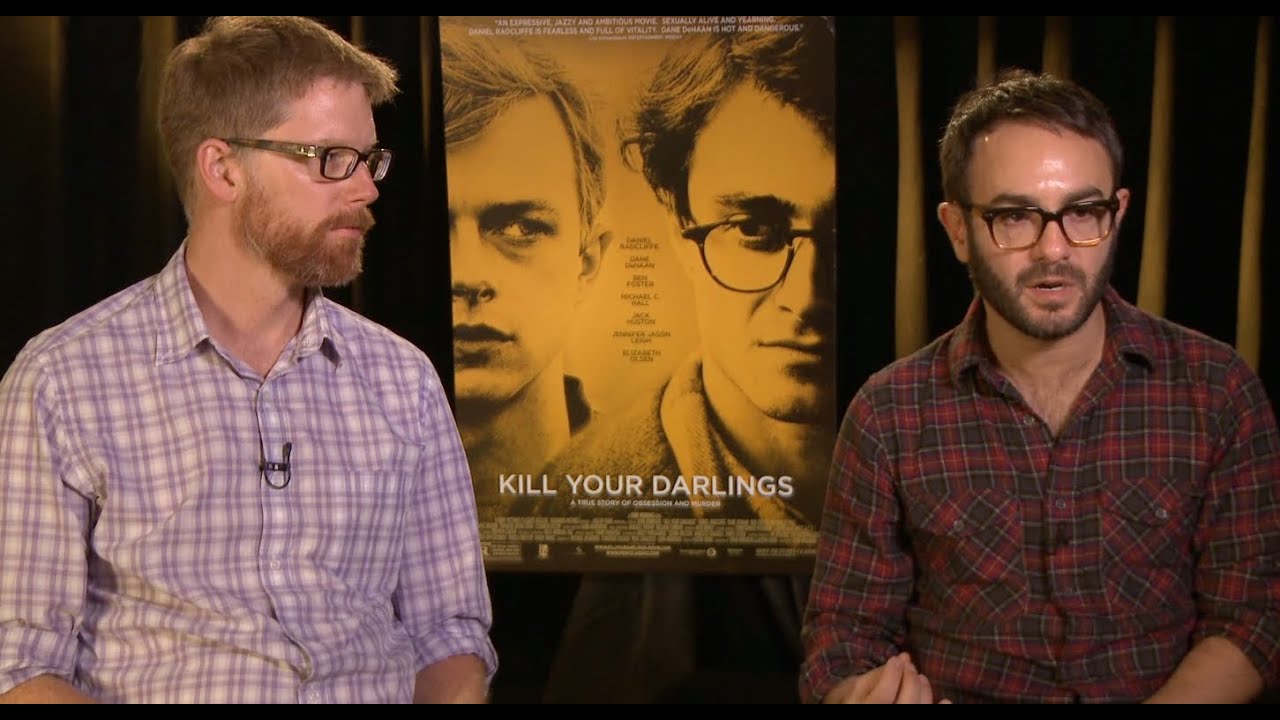
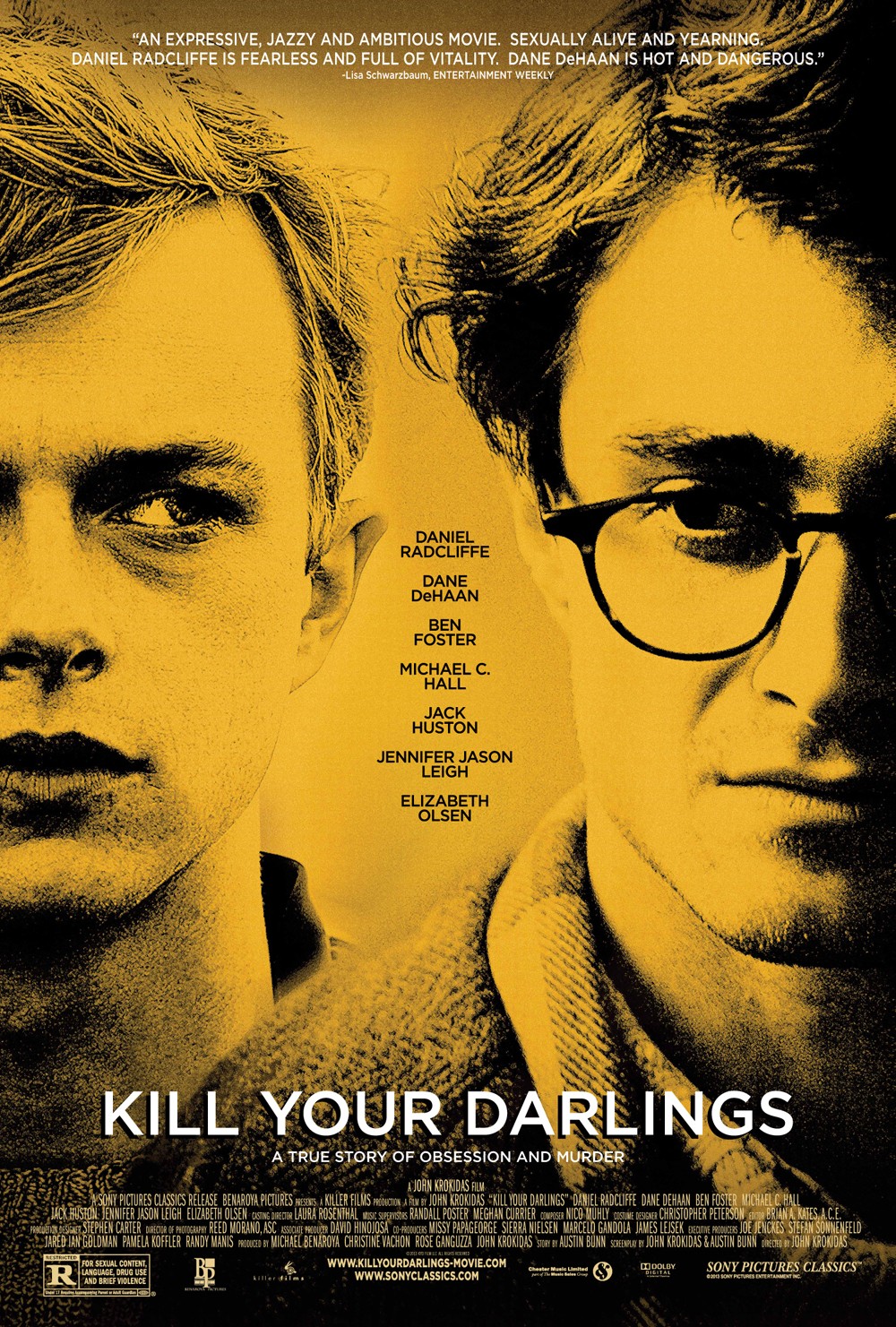
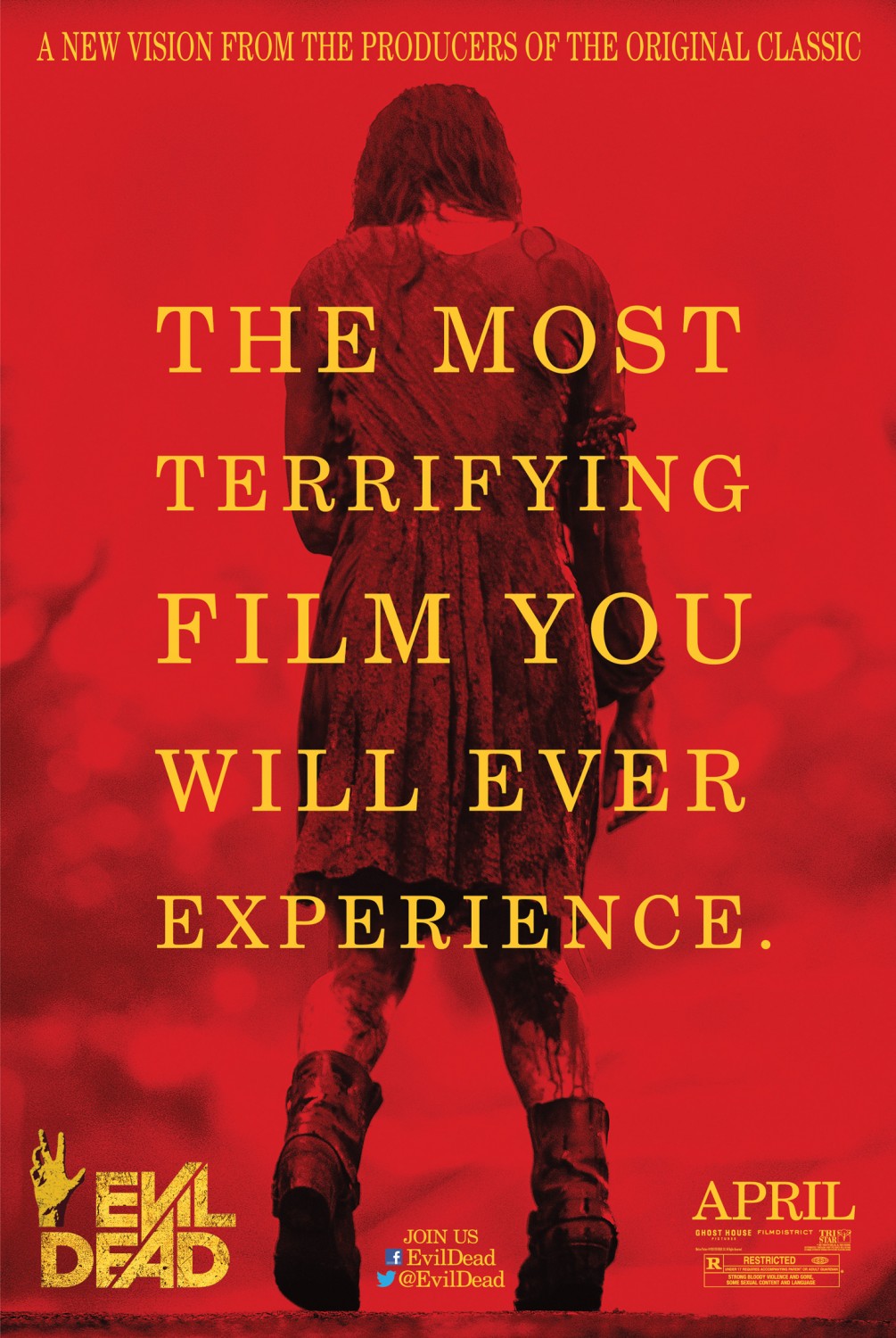


 The Ultimate Rabbit