Underseen Movie: ‘Premium Rush’ Lives Up to Its Name

WRITER’S NOTE: This review was written back in 2012.

David Koepp’s “Premium Rush” is the best cycling movie in some time. Come to think of it, when was the last time a cycling movie was made and released? I keep thinking it was Hal Needham’s “Rad,” but that came out in 1986. There’s also no topping the classic “Breaking Away,” the cycling movie many aspire to be like. There was also “American Flyers” which was released in 1985 and was written by Steve Tesich, the same one who wrote the screenplay for “Breaking Away.” But when it comes to “American Flyers,” I think its fantastic music score easily upstaged the film itself.

Anyway, none of that matters because “Premium Rush” delivers the goods like any cycling film should, and it does so with terrific acting, sharp writing and what looks like the real thing with a wonderfully severe lack of CGI as we watch these daredevil bike messengers throttle their way through the insanely busy streets of New York City.

Joseph Gordon-Levitt stars as Wilee, one of the very best bicycle messengers in New York who gets things to where they need to be and on schedule. Of course, this requires him to travel at breakneck speeds through busy traffic where a car can break down at the most inconvenient time, and he also has to deal with various members of the NYPD who have it in for him and others in his line of work. One other thing, Wilee’s bike of choice has only one gear, and he’s taken the brakes off of so that nothing will slow him down. Seriously, that is how he rolls.

Taking this into account, I wonder if Wilee has a death wish or if he’s just an adrenaline junkie. What we do learn about him is that he came close to becoming a lawyer, but the idea of sitting behind a desk in some office did not appeal to him in the slightest. Of course, it probably wouldn’t appeal to anyone who has seen “Office Space.”

His ex-girlfriend, Vanessa (Dania Ramirez), however, entertains thoughts of working in an office as she doesn’t want to be a bike messenger forever, and that’s even though she says it beats waiting tables. There’s also Tito (Anthony Chisholm) who doesn’t let his advanced age make him any less useful in this line of work (nor should it by the way), and Manny (Wolé Parks) who competes with Wilee not just on a bike but for Vanessa as well.

On this one particular day in which this movie takes place, Wilee is delivering a package that has caught the attention of NYPD cop Bobby Monday (Michael Shannon). Now Bobby wants what Wilee has, but while Wilee is not always one to obey the rules of the road, he does follow the strict guidelines of his job which states messengers will not hand over the package they are delivering to anyone other than who it is meant for. As a result, Bobby begins chasing Wilee down as we find out that this NYPD cop, like any other stupid gambling addict, has a ridiculously high debt to pay off.

The film’s director, David Koepp, is best known as a screenwriter, having written such exciting movies like “Jurassic Park,” “Spider-Man” and “Panic Room.” Along with co-writer John Kamps, Koepp has great fun telling the story of “Premium Rush” in a non-linear fashion. The story goes back and forth in time as the characters’ actions are made very understandable and given more depth throughout. This way of storytelling may alienate certain audience members, but I liked it as it plays around with our perceptions of what we believe to be true. Just when you think you know what’s going on to happen, something comes along which obliterates your predictions.

As a director, Koepp has had varying degrees of success with movies like “The Trigger Effect,” “Stir of Echoes” and “Secret Window,” but here he manages to keep the action exciting and never lets it drag for a second. It also helps that the cycling we see here is done for real, and it makes me wonder how it was choreographed and who these stunt people are. Clearly, they dared to pedal fast while cars come at them in various directions, and even the best cyclists have to be scared in these situations.

Now people may debate about whether or not “Premium Rush” might serve as a recruitment gig for bike messengers, but it also shows how painful it can be when you crash into something, and odds are you will. There’s also a scene during the end credits which shows Levitt’s arm all bloody after he hit the back window of a taxi cab, and that makes up for the lack of a disclaimer.

Levitt has had great success in the last few years with “(500) Days of Summer,” “Inception” and “The Dark Knight Rises,” and he is fantastic here as a character named after that coyote who chased the Road Runner endlessly. This role could have been given to some actor who would have annoyed us with their overwhelming ego, but Levitt makes this character likable despite his insane bike-riding habits.

You also have ace character actor Michael Shannon on board as an undeniably dirty cop. It doesn’t matter what movie he’s in because Shannon never disappoints in giving us a great performance. As Bobby Monday, he makes what could have been a mere one-dimensional villain all the more colorful and threatening. We have seen corrupt cops like this one in so many different movies, but Shannon makes him seem more intriguing than what must have originally appeared on the written page.

The rest of the cast includes Dania Ramirez (whom you may remember as AJ’s girlfriend on “The Sopranos”) to the always entertaining Aasif Mandvi, and they succeed in making this movie all the more entertaining to watch. The action is also given an exciting and propulsive score by David Sardy and a beautifully sunny look by cinematographer Mitchell Amundsen. Heck, watching this movie makes you very sweaty even if you are viewing it in a theater or in the comfort of your air-conditioned home.

“Premium Rush” is nothing spectacular, but it is fun to watch. It’s a shame it did not do better business at the box office, but Columbia Pictures did kind of screw up its release. Watching it reminds those of us who do not ride bikes anymore how much fun and very dangerous cycling can be. If nothing else, it does make wearing a helmet while riding a bike far more appealing than it ever has been in the past.

* * * out of * * * *

Emily Blunt On Portraying a Single Mother in ‘Looper’

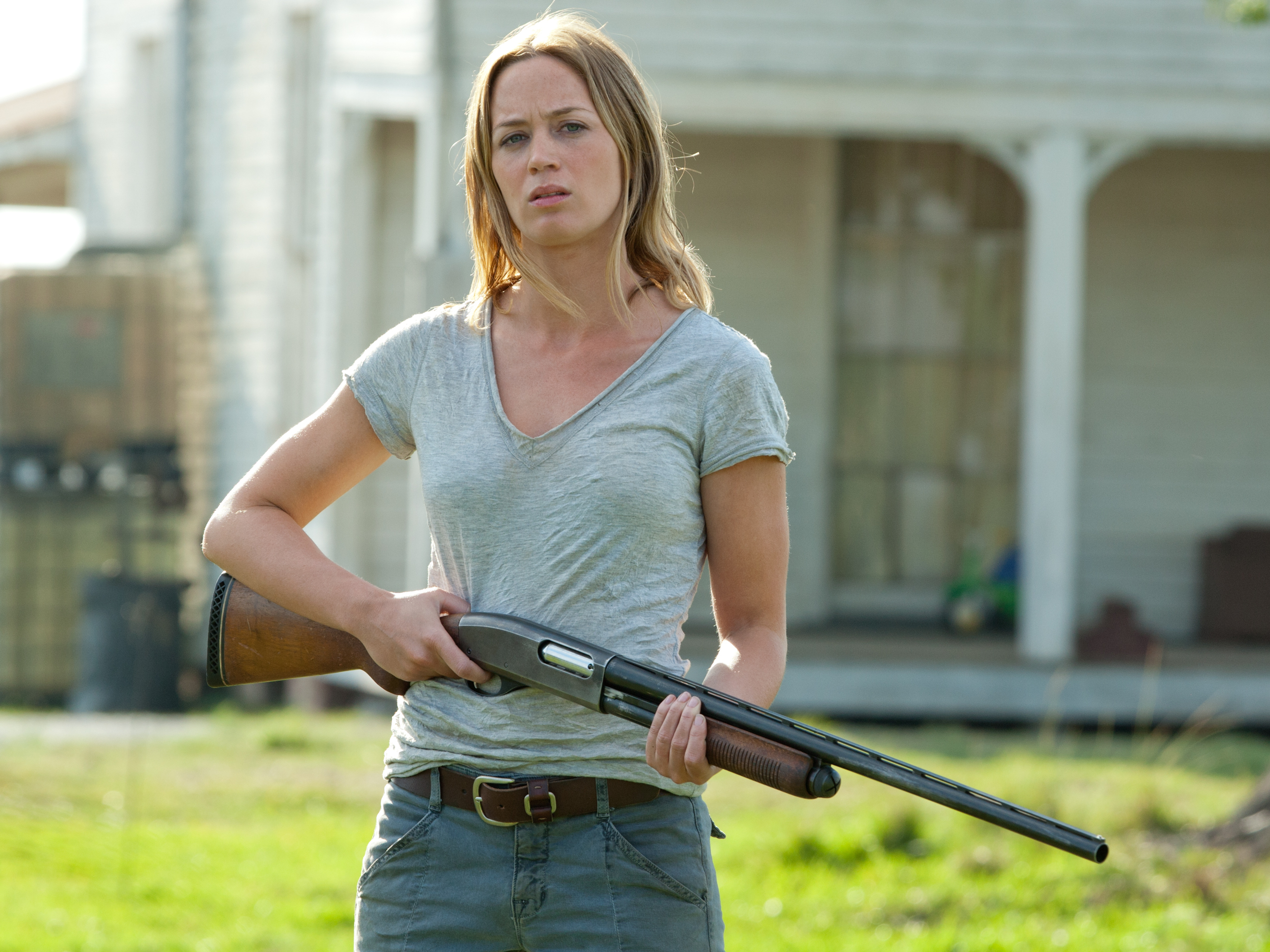
Sara (Emily Blunt) is a single mom who’s learned to stand her ground to protect her home — and her young son.

WRITER’S NOTE: This article was written in 2012.

As single mother Sara, Emily Blunt is a powerful presence in Rian Johnson’s “Looper” and she more than holds her own opposite Joseph Gordon-Levitt and Bruce Willis throughout. It’s been a busy year for the actress as she has appeared in several movies including “Salmon Fishing in the Yemen” and “The Five-Year Engagement,” but “Looper” gives her an opportunity to play a different kind of role which allows her to be tough and vulnerable all at the same time. It presents a big acting challenge for Blunt, and those who know her best know she’s always up for one.

“I think I really just want to challenge myself, more than anything,” said Blunt. “People have been asking me if I’m gravitating to these sci-fi roles, but I don’t feel I necessarily am because they’ve been sort of sporadic as to when they come out. But I do like the idea of creating a backstop that is high concept for the characters to really have stuff to play with within that.”

Blunt has described Sara as being a “very tough cookie” who lives an isolated existence on a farm out in the middle of nowhere. Sara looks to have completely shut herself from the outside world and spends the days working on her farm and taking care of her five-year old son, Cid (the amazing Pierce Gagnon). The beauty of Blunt’s performance is how she pulls back the layers of her character to show us what’s underneath.

“I think that I really loved the tough exterior with the inner guilt that she sort of torments herself with,” Blunt said. “I love that unraveling of the character that you don’t know why she’s so tough, you don’t know why she’s so protective. Gradually it unfolds throughout the course of the third act. So really what I said to Rian (Johnson) was that we’ve got to make this whole sequence in the third act like that movie ‘Witness.’ It’s got to have that sort of pastoral tension to it and the feeling of someone coming in that’s alien to your world and disrupting everything and how frightening that must be for her. So, I think really I wanted to make sure we maintain the mystique of the character as long as we could.”

In preparing to play Sara, Blunt had to resort to using what she called those “dreadful sun beds” to get the tan her character has from working outside in the sun all day. Blunt did say she took some time lay out in the sun a lot before shooting began, but also admitted it takes a really long time for her to get a tan. Still, using the sun beds and getting makeup put on top of her tanned skin proved to be preferable to getting a spray tan as she hates the smell.

Blunt also gets to ditch her British accent for a Kansas-sounding one in “Looper,” and she worked with a dialect coach and listened to people from Kansas to get it down right. But what really helped was listening to one Oscar-winning actor in particular.

“The person I listened to a lot was Chris Cooper who’s from Kansas and grew up on a farm. I loved his voice and it sounded very grounded. I found it more helpful to listen to guys than girls because of the toughness of the character,” said Blunt. “I watched ‘American Beauty’ and I watched ‘Adaptation’ but I mainly listened to his interviews, him giving interviews and stuff.”

Watching Emily Blunt from one movie to the next shows her having an understated power to completely transform herself into whatever character she plays. It’s like she almost makes her preparation look effortless, except of course for those scenes where she chops wood with a big axe. As a result, she has become one of the most interesting actresses working in movies today, and we all look forward to seeing what role she will inhabit next.

SOURCES:

Sean O’Connell, “‘Looper’ Interview: Emily Blunt Talks Shotguns, Redemption and A Nickname for Her Fans,” Cinema Blend, September 26, 2012.

Fred Topel, “Butching Out: Emily Blunt on ‘Looper’ and ‘All You Need is Kill,’” Crave Online, September 27, 2012.

Tommy Lee Jones on Playing a Fiery Congressman in ‘Lincoln’

WRITER’S NOTE: This article was written in 2012.

t’s not just Daniel Day-Lewis and Sally Field who give excellent performances in Steven Spielberg’s well-received “Lincoln.” The entire cast is superb in a variety of roles which helped bring to life the tale of how the Thirteenth Amendment of the United States Constitution was passed. One performance which really stands out in particular is Tommy Lee Jones’ as fiery abolitionist congressman Thaddeus Stevens. Time Magazine put Jones at number nine on their list of the Top 10 Movie Performances of 2012 with Richard Corliss describing him as giving “a flinty, inspiring turn.”

Whenever Jones is onscreen, he is a powerful presence and injects this role with both seriousness and a sense of humor as we watch him disassemble the egos of his fellow congressmen for daring to go against the idea of abolishing slavery. Stevens proves to be as obsessed about getting the Thirteenth Amendment passed as U.S. Marshal Samuel Gerard was about capturing Dr. Richard Kimble in “The Fugitive,” and Jones is as entertaining to watch in “Lincoln” as he is intense.

While most people are aware of whom Abraham Lincoln is, many are not as familiar with Thaddeus Stevens. Known as a Republican and one of the most powerful members of the House of Representatives, Stevens was described as being witty, sarcastic and quite the flamboyant speaker. Jones did a lot of research on Stevens and described him to Bill Goodykoontz of AZcentral.com as “a radical Republican abolitionist during the (Civil) War, with a very severe policy of Reconstruction during the war.” But Jones really got at the heart of his character when he described Stevens to Randee Dawn of Variety.

“Stevens was looked on as a wild man for his belief in freedom,” Jones told Dawn. “It was a backward time. It doesn’t surprise me that he had to fight the way he did.”

History also states how Stevens suffered from alopecia, a disease which results in the loss of body hair and baldness. This explains Jones’ use of his black wig to portray Stevens, a wig which in any other movie would look completely out of place on any other actor. Learning of Stevens’ unfortunate ailment, Jones wanted to shave much of the hair off his body to present a more honest portrayal of this congressman. A certain person, however, was deeply involved in making “Lincoln” to put an understandable stop to that.

“I originally suggested that we shave my eyebrows,” Jones told Chris Lee of the Los Angeles Times. “Steven (Spielberg) would have nothing to do with that. He said, ‘Your eyebrows are the most expressive part of your face.'”

It goes without saying Jones deserves serious awards consideration for his performance in “Lincoln” but, like Anthony Hopkins who is currently earning praise for “Hitchcock,” he is not interested in mounting any sort of Oscar campaign. As Jones bluntly told Lee, he doesn’t think about or even talk about it. All the same, it is a rousing performance that reminds us of the great actor Jones can be when he is given top rate material. The actor’s talent is certainly not lost on Spielberg who ended up describing Jones quite beautifully.

“Tommy is not just a subtle solo instrument,” Spielberg said. “There is an entire symphony orchestra inside that man, and I knew this when I cast him in the hope that he would represent the Thaddeus Stevens that history tells us was flamboyant, volatile, radically determined and, to some, even tender-hearted. Tommy gave me everything I asked for and much, much more.”

When it comes to talking about the endeavor of making “Lincoln,” Jones described it to Madeleine Marr of The Miami Herald in a way that was both respectful of the movie and very down to earth in regards to his profession.

“It’s a fine undertaking – entertaining and educational with a great respect for American history,” Jones says of the movie, adding, “But I’m always happy to have a job.”

SOURCES:

Richard Corliss, “Top 10 Movie Performances: Tommy Lee Jones as Thaddeus Stevens in ‘Lincoln,’” Time Magazine, December 4, 2012.

Bill Goodykoontz, “Q&A: Tommy Lee Jones, in time, talks ‘Lincoln,'” AZcentral.com, November 15, 2012.

Randee Dawn, “Tommy Lee Jones in ‘Lincoln,'” Variety, December 1, 2012.

Chris Lee, “Tommy Lee Jones on playing a real firebrand, in fake hair,” Los Angeles Times, November 29, 2012.

Madeleine Marr, “Tommy Lee Jones talks ‘Lincoln,’ his career and charity,” The Miami Herald, November 6, 2012.

Sally Field on Portraying the First Lady in Steven Spielberg’s ‘Lincoln’

WRITER’S NOTE: This article was written back in 2012.

Watching Sally Field as Mary Todd Lincoln, wife and First Lady to the 16th President of the United States, Abraham Lincoln, it’s hard to think of another actress who could have inhabited this role as well as she did in Steven Spielberg’s “Lincoln.” The director had Field in mind for the role back when Liam Neeson was originally cast as President Lincoln, but the actress almost lost it when Neeson withdrew from the project and Daniel Day-Lewis got cast. It wasn’t the first time Field had to fight for a role, and she fought long and hard for this one to where Spielberg granted her a screen test with Lewis.

“I heard commotion and looked up, and across the lobby came my darling Mr. Lincoln,” Field said of Day-Lewis when she first saw the actor walking towards her. “He smirked at me, and I smirked right back. I gave him my hand, I looked up and said ‘Mr. Lincoln,’ and he said ‘Mother.’ That’s what they said to each other. I felt this audible hush in the room.”

After Field and Day-Lewis improvised for an hour as the Lincolns, Spielberg informed her the role was hers. From there, she took the time to visit Mary Todd’s home in Lexington, Kentucky. It was actually a low-key visit for the actress, and she went about town with very few people recognizing who she was.

“What I wanted to really do was be inside of her house,” Field said. “I know what an important place that was for her in studying her, and I really wanted to step inside the house and look at all of that and have the feeling of space.”

“I had seen pictures of what it looked like in those days before, before there were like parking lots and things connected to it, so that I could have a feeling of where she came from,” Field continued. “It’s important in understanding her makeup as a person that you take a look at her home.”

Field also gained 25 pounds to authentically portray Mary Todd Lincoln, and it took seven months to add all that weight to the actress’ 5′ 2 ½” frame.

“She was much heavier, or more round, so we tried to replicate her measurements,” Field said. “We had her dress size, because it’s documented when they made dresses for her… We replicated what she was, and it wasn’t easy. It was sort of horrifying to be a woman of a certain age and to put on 25 pounds.”

After all these years, Sally Field remains a most incredible actress who works very hard to understand the psychologies of each character she portrays and you cannot, nor should you, ever accuse her of being lazy in her preparation. Her performance here is the latest example of how much we really, really like her work (sorry, I couldn’t help it). Field also does a commendable job of giving Mary Todd Lincoln the respect she deserves as she is not talked about as much as her famous President husband.

“Had there not been a Mary Todd, there would not have been an Abraham Lincoln,” said Field. “She found him when he was a young lawyer and really a bumpkin. No one knew of him but she recognized his brilliance. She was so under-examined and misunderstood, and a very important woman in American history.”

SOURCES:

Lisa Gutierrez, “Stargazing | Sally Field had long lusted for ‘Lincoln’ role; justice rules on ‘Sesame Street,'” The Kansas City Star, November 13, 2012.

Rich Copley, “To play Mary Todd Lincoln, actress Sally Field visited Lexington home,” Kentucky.com, November 15, 2012.

Sally Field’s body transformation for ‘Lincoln,’” CNN, November 1, 2012.

Andrea Mandell, “Sally Field locks on to ‘Lincoln’ role,” USA Today, November 13, 2012.

Daniel Day-Lewis on Portraying the 16th American President in ‘Lincoln’

WRITER’S NOTE: This article was written back in 2012.

While there are many actors who physically and mentally transform themselves for a role, none are as fascinating to watch or as serious in their concentration as two-time Oscar winner Daniel Day-Lewis. Whether he’s playing poet Christy Brown in “My Left Foot” or portraying Daniel Plainview in “There Will Be Blood,” Lewis disappears so deeply into each character he takes on to where it’s almost like he ceases to exist. With “Lincoln,” he gets his biggest challenge yet as director Steven Spielberg convinced him to portray the 16th President of the United States, Abraham Lincoln.

Lewis spent a full year preparing to play President Lincoln by reading through his speeches and writings. The actor also lost quite a bit of weight to look more like the rail-thin leader, and he took a tour of Lincoln’s home and law office in Springfield, Illinois along with historian Doris Kearns Goodwin. As for the physical side of playing Lincoln, Spielberg indicated Day-Lewis had many of the President’s features when he arrived on set.

“That was his hair, his beard, he had very light makeup on his face. And we added the mole, of course,” Spielberg said of Day-Lewis. “I don’t know how much (weight he lost), but he was as lean as I’ve ever seen him.”

In the process of reading Lincoln’s writings and speeches, Day-Lewis became delighted at his use of certain words like “disenthrall.” The actor’s father was once England’s poet laureate, and he taught his son a great love of language which lasts to this very day. As a result, Day-Lewis strongly encouraged Tony Kushner, who wrote the screenplay for “Lincoln,” to include those words into the script.

“I’d never seen that word (disenthrall) before and I’m always looking for a context ever since where I can use that word, I love it so much,” Day-Lewis said. “The richest source, which creates a very broad, illuminated avenue towards an understanding of Lincoln and his life is through his own words and his own language.”

One aspect of Day-Lewis’ performance people are desperate to know more about was how he came up with Lincoln’s voice. Since Lincoln died long before audio recording became a reality, no one can ever truly be certain of what this American President sounded like. Looking at him in historical pictures, most people came to assume Lincoln had a deep booming voice. Day-Lewis, however, went with a high-pitched tone instead which came about when he read Lincoln’s writing aloud.

“I began to hear a voice that, as I grew closer to the man, that seemed to give me the full expression of his character,” Day-Lewis said. “You look for the clues, as within any aspect of the work, you search for the clues, and there were plenty of them, but for me, if I’m very lucky, at a given moment, I begin to hear a voice, not in the supernatural sense, but in my inner ear, and then the work begins to try to reproduce that sound.”

As with his previous roles, Day-Lewis stayed in character and kept the accent even when the cameras were not rolling. This was not lost on his fellow co-stars which included James Spader who plays political operative William N. Bilbo.

“He’s doing an accent and voice that he held onto all day because I think that’s really the only way one could do that,” Spader said of Lewis.

While doing his research, Day-Lewis’ biggest surprise was discovering Lincoln’s sense of humor and what an important aspect of his personality it was.

“I think it was tactical (Lincoln’s humor), in the political sense. At times, it was undoubtedly used in a conscious sense, for some purpose and to make some point,” Lewis said. “There were accounts of people that came to ask him a question of great importance to them, found themselves in his presence, got a handshake and a story, and were out of the room before they even realized [they never asked it]. That’s good politics. But I think that was innately part of him.”

Daniel Day-Lewis never ceases to amaze us with his unsurprisingly brilliant performances, and the one he gives us in “Lincoln” is just the latest example. While he was initially reluctant to play this American President in Spielberg’s film at first, it is clear he did his homework which led to his unique interpretation of this unforgettable historical figure. It would be utterly shocking if he were to be denied an Oscar nomination for his intense efforts here.

SOURCES:

Bryan Alexander, “Daniel Day-Lewis: A true ‘Lincoln’ transformation,” USA Today, November 9, 2012.

Rebecca Keegan, “‘Lincoln’ was a tall order for Spielberg, Day-Lewis,” Los Angeles Times, October 31, 2012.

Daniel Day-Lewis’ ‘Lincoln’ voice historically accurate?” CBS News, November 9, 2012.

Christina Radish, “Daniel Day-Lewis and Steven Spielberg Talk LINCOLN, Showing Lincoln as Politician and Father, and Release Timing around the Election,” Collider, November 10, 2012.

‘Cloud Atlas’ Has Cult Classic Written All Over It

With a movie like “Cloud Atlas,” I go into it expecting to be overwhelmed by the visual spectacle and unable to understand all of what is going on in the story. On this level, the movie does not disappoint as you kind of need a road map to tell you who’s who and what’s what. Then again, what matters most when watching something like this for the first time (and watching it once is never enough) is you get the gist of what’s going on. The gist of this story here is that everything and everyone is connected in one way or another, and once you understand this. then the film becomes a fascinating movie going experience.

Some will say “Cloud Atlas” is too damn ambitious, and we need to stop saying it like it’s a bad thing. What’s wrong with being too ambitious in this day and age? It may cause filmmakers to take a wrong step from time to time, but it also guarantees we will get a cinematic experience unlike many others we often watch. This project brings together the Wachowski siblings who gave us “The Matrix” trilogy and Tom Tykwer who directed the brilliantly kinetic “Run Lola Run,” and “Cloud Atlas” represents some of the best work they have ever done.

The film is based on the book of the same name by David Mitchell, and it interweaves six stories which take place in different time periods: the Pacific Ocean circa 1850, Zedelgem, Belgium 1931, San Francisco, California 1975, the United Kingdom in 2012, Neo Seoul (Korea) in the 22nd century, and the last story takes place on a beautiful ocean island in a time which could be our past but might actually be our future. Guessing which time period the island story takes place in is one of the film’s great mysteries right up to the end.

The characters range from 65-year-old publisher Timothy Cavendish who flees from the associates of a jailed gangster to Sonmi-451, a genetically-engineered clone who is freed from her servitude as a fast-food restaurant server to explore a world which she discovers lives to exploit her kind. “Cloud Atlas” travels back and forth through these stories, and once everything is set up the film becomes an exploration of how the actions of individual lives impact one another in the past, present and future. One person ends up going from being a killer in one life to being a hero in another, and one act of kindness ripples across centuries to inspire a revolution.

Tom Hanks, Halle Berry, Susan Sarandon, Jim Broadbent, Hugh Grant and many other actors here end up playing many different roles. They will be recognizable in some, and others will only become clear when you stay through the end credits. I can’t help but wonder how they kept track of all the different characters they played, some which are of a gender opposite their own.

Hanks’ performance in “Cloud Atlas” goes all over the map as he plays characters as varied as a tribesman trying to rebuild his life in a post-apocalyptic world to a doctor who looks to steal from a patient more than help him. I especially liked his role as Isaac Sachs, a worker at a nuclear power plant in the San Francisco story. Hanks is always so good when he underplays a role, and Isaac was the one character of his I wish was expanded on a bit more. At the same time, I think he is miscast as Scottish gangster Dermot Hoggins which has him doing a lot of bombastic acting for no really good reason. Where’s Jason Statham when you need him?

Berry’s career since her Oscar win for “Monster’s Ball” has seen a lot of peaks and valleys, but she also does strong work here as a variety of characters. Like Hanks, she is especially good in the San Francisco story as reporter Luisa Rey. She also has some strong moments as Meronym, a member of a technologically advanced civilization who may not be all she appears to be.

Jim Broadbent, as always, is a blast to watch in each role as he is so delightfully animated whether he’s playing a publisher in hiding or a composer as famous as he is vindictive. Ben Whishaw, who played Q in “Skyfall,” “Spectre” and “No Time to Die,” is heartbreaking as Robert Frobisher whose artistic ambitions are unforgivably shattered. And Hugo Weaving channels his Agent Smith energy from “The Matrix” to portray a number of nasty antagonists, one of which threatens to give Nurse Ratched from “One Flew over the Cuckoo’s Nest” a run for her money.

But the best performance comes from Doona Bae who portrays the engineered clone Sonmi-451. Although she is not really a human being, Bae infuses this character with such a strong humanity to where she makes you feel the emotions she soon experiences herself. Just a look into those piercing eyes of hers is enough to melt one’s heart as Sonmi-451 finds a power no mere mortal can easily obtain, and one of her last moments onscreen speaks to a truth which no one person or a government can ever simply wipe away.

For the Wachowskis, “Cloud Atlas” represents a big comeback after the boring fiasco which was “Speed Racer.” I’m also thankful it doesn’t have the same kind of ending “The Matrix Revolutions” had because that would have driven me nuts. For Tykwer, the film represents a chance for us to re-evaluate him as a filmmaker. Ever since his incredible success with “Run Lola Run,” people have taken him to task (perhaps more so than they should have) for not making a film as good as that one was. But together, these three have created a visual feast which has you glued to your seat and at attention for almost three hours (yes, it’s long, but you won’t really notice).

“Cloud Atlas” was an independently made film, and an expensive one at that with a budget of over $100 million. It’s easy to see why no major movie studio would take the whole thing on themselves; it has a dense narrative which goes all over the place, and it forces the audience to pay close attention in a way most movies never demand them to. The fact it was not a big hit at the box office is sad because you want audiences to embrace films like this more as they try to do something different from the norm.

Regardless of its flaws, “Cloud Atlas” looks to be one of those films which will have a long shelf life. It invites repeated viewings so you can take in new meaning s you didn’t see the first time around, and you will come out of it wondering how the filmmakers put the whole thing together. This one definitely has cult classic written all over it.

* * * ½ out of * * * *

‘Skyfall’ – One of the Best James Bond Films Ever Made

WRITER’S NOTE: This review was written in 2012.

“American Beauty” director Sam Mendes has just accomplished the impossible; he made a better James Bond movie than “Casino Royale.” That one set the bar for so high to where it should not have been a surprise “Quantum of Solace” was not as good, but “Skyfall” gets my vote for being one of the very best in the 007 franchise. This installment continues in giving us a darker and edgier Bond as portrayed by the excellent Daniel Craig, and it also brings back some of the things many felt were missing from the last two films like the gadgets, the one-liners and, of all people, Q.

“Skyfall” starts off with a bang as we catch up with Bond in Turkey where he is on the trail of a man who has stolen the hard drive containing the identities of undercover agents. While trying to retrieve the drive, Bond is accidentally shot by fellow British agent Eve (Naomie Harris) and presumed dead. But being this all happens at the movie’s beginning, we know he will not stay dead for very long. While we watch him use his presumed death to go into retirement where he gets drunk off his ass while remaining deeply resentful of M’s (Dame Judi Dench) order for Eve to “take the bloody shot,” MI6 is suddenly destroyed and his love of England forces him to return to active duty. Upon his return, he soon discovers M’s nemesis has a very personal connection to her which makes him all the more dangerous.

This film does take its time to get going, but in retrospect it was worth it. Craig’s Bond has never been a superhero, but instead a vulnerable agent with weaknesses he cannot hide from others. As we watch him retrain, Craig shows us his Bond is deeply troubled and almost bent on self-destruction. It’s his duty to the country of England which manages to keep him relatively sane. This is Craig’s third outing as 007, and I still think he’s the best thing to happen to this franchise in a long time, and he looks to be having more fun this time around as he cracks a joke or two.

Thankfully, Craig never lets 007 descend into camp or tries to turn him into a standup comedian with a gun. While his take on this iconic role feels like it been deadly serious, seeing him loosen is a real gift as he has long since come to own this character. In a perfect world, Craig would get an Oscar nomination for his performance, but since the other actors who inhabited Bond never did, it is unlikely he will break tradition in this circumstance.

Now when it comes to my favorite Bond films, they usually are the ones where things get very personal for 007 and those around him. When this happens, they become more emotionally involving and exciting for me to watch as there is more at stake than just defeating a villain bent on world domination. This is especially the case with “Skyfall” as it delves into the past of its main characters in a way I don’t think any Bond movie has done before. The script by Neal Purvis, Robert Wade and John Logan (“Hugo,” “Coriolanus” and “Gladiator”) places most of its emphasis on relationships, especially on the one between Bond and M. It is that emphasis that makes this film all the more riveting to watch.

Dame Judi Dench, who has played M since Pierce Brosnan first played 007 in “Goldeneye,” benefits here especially as her character is given a more severe complexity than what we have seen previously. Dench has always been superb as M, but ever since Craig came into the series she has been a fireball as she starts out with a powerfully brazen attitude which never ever lets up. But here we see the seams in her controlled nature as the past catches up with her in an especially nasty way. Dench nails every moment she has in “Skyfall” perfectly, and she makes M an especially fascinating character to watch this time around.

“Skyfall” also has the advantage of having not just one, but two terrific Bond girls: Naomie Harris and Bérénice Marlohe. Harris, best known for her roles in “28 Days Later” and the “Pirates of the Caribbean” movies, shares a sizzling chemistry and playfulness with Craig, especially in the scene where she gives him a very close shave. As for Marlohe, she’s a knockout as she makes her character of Sévérine as enigmatic as she is beautiful. When Bond asks for the name of her employer, the look of utter fear which crosses her face is an unforgettable moment as it sets up the grand introduction of this film’s Bond villain.

The Bond villain of this piece is Raoul Silva, and he is played by Javier Bardem in a deliciously evil performance. It should be no surprise how brilliantly unnerving he is here as this is the same actor who won an Oscar for playing Anton Chigurh in “No Country for Old Men.” But when it comes to Silva, he is an especially twisted soul to witness in action. This isn’t a villain bent on world domination, but instead on avenging a betrayal which made him what he is today. Bardem actually doesn’t make his first appearance until well into the film, but he has an unforgettable entrance where he tells a story involving rats. The Bond villains always have great stories to tell, and Silva’s proves to be one of this franchise’s most memorable.

And yes, we do get to see the return of Q, and he is played here by Ben Whishaw (“Cloud Atlas”). Whishaw is splendid in the role as he skillfully underplays this classic character to where he makes it his own. Unlike the late, and still missed, Desmond Llewellyn, this Q is not quite in a position to admonish Bond on a regular basis. Whishaw, however, is able to match wits with Craig and hold his own in a way Q has not always been able to do previously, and he is a lot of fun to watch as a result.

Mendes remains a masterful filmmaker as he manages to balance out the action and the story in “Skyfall” to great effect. I also applaud him for not letting this Bond adventure turn into a clone of a Jason Bourne movie. This proved to be a big problem with “Quantum of Solace” as the shaky cam got to be a bit too much, but Mendes is perfectly aware that while Jason Bourne is Jason Bourne, Bond has been around long enough to where he doesn’t need to copy anyone. The opening sequence gets things off to a thrilling start, and it shows how Mendes has a talent for filming adrenaline pumping action scenes as he does in directing actors to great performances.

“Skyfall” also features a terrific music score by Thomas Newman and one of the best Bond theme songs in a long time performed by Adele. The title song brings back the classic Bond song sound which singers like Shirley Bassey made famous with “Goldfinger,” and it fits the movie’s story perfectly. While I miss David Arnold who has composed the scores for the Bond movies since “Tomorrow Never Dies,” Newman’s work here is exceptional as it sounds unlike any score he has done previously. It’s always a thrill to see a composer step outside of their comfort zone to do something a little different.

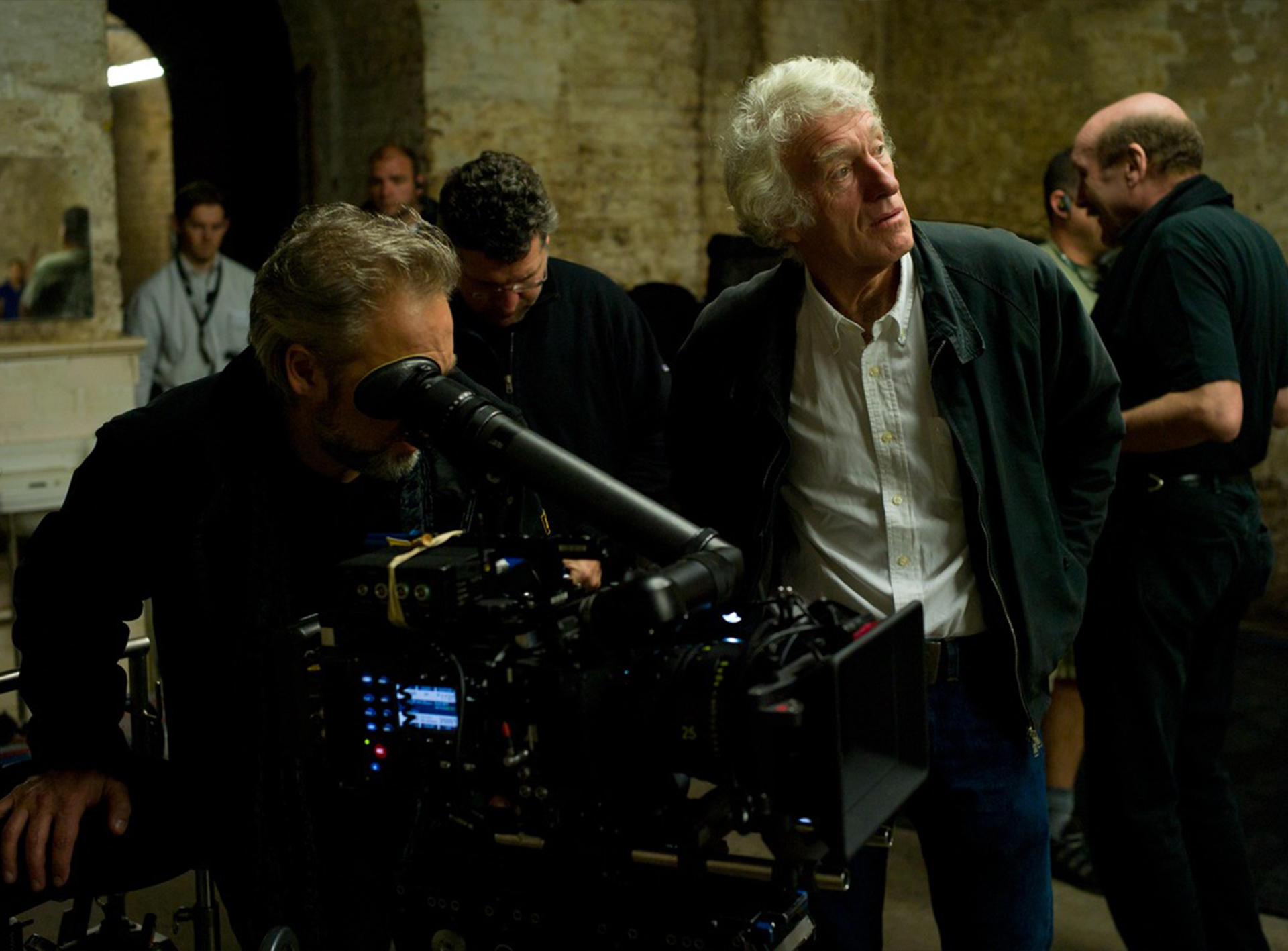
But another star of this film I have to single out among others is its cinematographer, Roger Deakins. While I was previously familiar with his work in “The Shawshank Redemption,” “Fargo” and “Revolutionary Road,” the lighting in “Skyfall” is infinitely beautiful to where I am certain few other cinematographers could never accomplish like he did here. Whether it is Bond’s memorable entrance in Istanbul, his time in Shanghai or the climax in Scotland, he gives us visuals no other director of photography could ever give us.

I don’t think I have ever seen a 007 movie I didn’t like, and even the worst of them prove to be very entertaining to watch. Having said that, it is such a thrill to see a Bond movie where all the elements come together in such a truly fulfilling way. “Skyfall” is not only one of the best Bond movies ever, but also one of best films of 2012. It took four years to get one to the big screen, but it was well worth the wait.

* * * * out of * * * *

‘Skyfall’ Cast and Crew on Cinematographer Roger Deakins

WRITER’S NOTE: This article was originally written back in 2012.

Skyfall” has earned the respect of both critics and audiences around the world as they rightfully hail it as one of the best James Bond movies ever made. But while Daniel Craig and Sam Mendes have received tremendous praise for their terrific work, there is another man working behind the scenes who is equally deserving: Roger Deakins. Thanks to him, “Skyfall” features such unforgettably beautiful images like the assassination scene in Shanghai and the cold and barren landscape of Scotland. None of this is lost on the cast and crew as they spoke highly of Deakins’ work at the film’s press conference in Beverly Hills.

Deakins is best known for his work on many of the Coen Brothers’ movies such as “True Grit” and “No Country for Old Men.” He had previously worked with Mendes on “Revolutionary Road” and “Jarhead,” and the director attributes the look of “Skyfall” solely to Deakins.

Sam Mendes: He contributes what a great cinematographer contributes which is an unbelievable eye, an extraordinary skill in lighting, and for doing an immense amount of work in prep. (He showed) huge care and dedication from day minus 100 to the last day of timing which was only a few weeks ago. He’s a very shy man and he expresses himself through his work, and you just put a camera in front of Roger’s eye and point him in the direction of something interesting and he’s a very happy man. He’s one of the greats and it’s a privilege to have him on the movie.

Daniel Craig: There is an incredibly consistency in his work. He has a surety and you feel like it’s a Sam Mendes movie but it’s also a Roger Deakins movie as well. He has put his stamp on it, it’s not intrusive and it’s very magical.

Bérénice Marlohe, who plays the mysterious Bond girl Sévérine in “Skyfall,” spoke lovingly of Deakins and his work on this film.

Bérénice Marlohe: I have this concept that I’ve always believed in that hugely talented people are hugely humble. When I was on that set, I saw that with Sam, Daniel and him. He’s such a pure, beautiful man and just very focused on his work, and then when I got to see the movie, I would never expect that. The first thing that struck me was that mix of reality, a real story with real human beings, and with each picture it felt like you were having a journey in a dream. It was all so surprising and beautiful.

Naomie Harris, who portrays Eve, also described Deakins as being shy, humble and also added that he was quite “self-effacing.” This made him much different compared to the cinematographers she has worked with in the past.

Naomie Harris: It was a very different experience for me than working with most DPs because they can be very strong characters who really make their presence known on sets, and he’s the complete opposite. He’s really quiet and doesn’t interfere with your process at all, and he’s very respectful of actors’ spaces. For me it was an amazing pleasure to work with him.

To hear all this said about Roger Deakins makes him seem highly unique among the cinematographers of the world. I couldn’t agree more with everyone’s individual assessments of his work as the look of “Skyfall” is indeed gorgeous especially for an action movie. The greatest directors of photography have a look which is all their own and the kind you can notice right away, and Deakins has earned his place among them. Hopefully the Academy Awards will recognize his work here with an Oscar nomination when the time comes around.

Bérénice Marlohe on Playing an Especially Haunted Bond Woman in ‘Skyfall’

WRITER’S NOTE: This article was written in 2012.

French actress Bérénice Marlohe leaves quite the impression with her performance as Sévérine in the James Bond movie “Skyfall.” Like many “Bond girls” (or “Bond women” as many would prefer to call them), Sévérine is beautiful and glamorous, but she also proves to be very enigmatic as she shows a sleek confidence which soon becomes undone at the mention of her employer Raoul Silva (Javier Bardem). Marlohe is a knockout in the role, and she makes Sévérine one of the more unique and mysterious of Bond girls in this franchise’s history.

Marlohe appeared at the “Skyfall” press conference held at the Four Seasons Hotel in Beverly Hills, California to answer questions regarding her role as Sévérine. When asked what the notion of being a Bond girl meant to her, Marlohe responded about how what excited her was the mix of “male attitude of power and danger” and “a very glamorous feminine figure” this particular one had to offer.

Bérénice Marlohe: They are theatrical characters, bigger and more colorful than in life like any of the Bond characters. I sensed that I would have a lot of freedom on set, and after the experience I was happy that I could be in those iconic scenes in the casino (where she and Bond meet over a shaken martini) that you find a lot of the time in Bond movies. For me, they are very meaningful in the history of the series so I was very happy to get to be in one of them.

When asked about the audition process, Marlohe said she heard about a friend who encouraged her to go after the role, which she did.

Bérénice Marlohe: I felt so connected with the Bond universe that I spent two days in front of my computer trying to find the contact information of anyone I could possibly find who was involved with the movie. I even found Sam Mendes’ agent Facebook account! And then I found Debbie McWilliams’ (the movie’s casting director) email, and I was so happy that she saw and liked my reel. They auditioned me in Paris on two scenes from “Skyfall,” and they called me back in London and I auditioned again with Sam Mendes. And then I did the third audition with Daniel (Craig) and Sam as well as Barbara Broccoli and Michael G. Wilson, and then Sam told me I was chosen. I felt extremely peaceful and had a huge feeling of happiness in my stomach over getting the part because I felt very connected with the Bond universe. I called my father and family, and they were very happy for me.

Upon getting cast, Marlohe was determined to create “a real human being” out of the character of Sévérine. It involved a lot of digging inside herself to see what moves her as a human being, and also questioning herself about her own ancestors whom she never got to know. Being in “Skyfall” has also allowed her to speak out for causes she truly believes in as well

Bérénice Marlohe: Researching that character just had me become even more aware of the condition of the world and mainly of what happened in Cambodia years ago. I always wanted to be a voice to fight against the injustice, but I could never do that before. Now I have this ability to be heard, and I just learned that there is a very important trial going on in Cambodia where leaders of Pol Pot’s genocide 37 years ago are being judged. This is what I connected with. I wanted to be a voice for that. This is the incredible advantage I got from doing this movie; the connections I had as a human being and the revelations I had on the set.

Marlohe described her preparation as being very serious, but it was especially important to her that she be relaxed when on set. She also recalled joking around a lot with Craig on a daily basis.

Bérénice Marlohe: You have to be very relaxed and build your connections to the other actors so that it shows onscreen. The shower scene for instance, we (Daniel and I) were so relaxed that I would sing in the shower and he would be like, what? Daniel was doing some impersonations and other stuff in between takes, and the six months we worked together were like that so it was fabulous.

When it comes to Bond’s relationship with women, many still debate if he is still the love them or leave them type, or if 007 has evolved in this three movies Craig has starred in. Marlohe herself hopes that it her character’s destiny were different in “Skyfall,” a huge love story would have come about between Bond and Sévérine. Still, she describes Craig as succeeding in making Bond seem like a real human being.

Bérénice Marlohe: You can see that through his relationship with M (Judi Dench) that he has a sensitivity. They have a very beautiful and pure relationship that is very human and moving.

Some Bond girls develop a great career after they have appeared in a 007 movie while others have somehow vanished without much of a trace. Watching Bérénice Marlohe in “Skyfall” makes me believe we will be seeing a lot more of this French actress in the near future.

Naomie Harris on Portraying a Bond Woman in ‘Skyfall’

WRITER’S NOTE: This article was written in 2012.

She thrilled us as a hardened survivor in “28 Days Later” and wowed us with mystical powers in the “Pirates of the Caribbean” movies, so it was only a matter of time before English actress Naomie Harris got the chance to play a Bond girl. She finally gets the opportunity in the 007 adventure “Skyfall” where she plays Eve, an MI6 field agent who works hard at being Bond’s equal. She shares a sizzling chemistry with actor Daniel Craig in certain scenes, and it’s the kind of chemistry you want to see last for more than one Bond film.

Harris appeared at the “Skyfall” press conference held at the Four Seasons Hotel in Beverly Hills, California where she talked about her role as Eve. Being a Bond girl carries with it a weight of expectations, and some still consider a character like this to be sexist in its design. Harris was asked what being a Bond girl meant to her and she said it meant being alluring and beautiful, and she initially found it to be constraining as a result.

Naomie Harris: I usually don’t play roles like that. In fact, I don’t know if I have ever played a role like that before, so I felt confined by all those set ideals. But then a friend of mine gave me a great piece of advice which was, just forget about all of that and imagine you are a part of a low budget movie where you can do whatever you want with this role and just make it your own. And that ultimately is how I come to see Bond girls. In terms of Bond girl terminology, I think we’re just women in Bond movies and women now in Bond movies can be anything so you’re totally free to create. That’s what makes it an interesting role.

Now Bond has a reputation of loving women and leaving them, and this has made being a Bond girl seem less appealing to many people. For Harris, however, playing Eve in “Skyfall” represented an opportunity to portray a new generation of them, and it’s just as well as the Bond franchise is now celebrating its 50th anniversary.

Naomie Harris: They certainly said that to me when I auditioned. They said, we want you to create a modern woman that women can respect and admire and look up to, and this is something we’re creating that’s new and different. That was one of the reasons why I was so excited about taking on the challenge of this role.

When asked if people should say Bond girl or Bond woman, Harris replied we can call it whatever we want.

Harris was asked to audition for the role of Eve after director Sam Mendes and casting director Debbie McWilliams saw her in a production of “Frankenstein” directed by Danny Boyle. She had no idea they were in the audience, and her agent later told Harris they wanted to meet with her about being in “Skyfall.”

Naomie Harris: I had two auditions and I didn’t really take it seriously because I never ever saw myself as a Bond girl. I wasn’t really very nervous at all because I know they auditioned hundreds of girls all around the world, and I thought this is right at the beginning of their casting process so they’re not going to cast me. It wasn’t until the third audition when Sam said, “It’s down between you and just two others” that I realized this is actually serious and could actually really happen. That was the first time I got really nervous. Thankfully I got the role and largely because of Boyle because Mendes called him and asked what I was like to work with, and he gave me a glowing report.

Doing “Skyfall” gave Harris a great respect for action heroes because before this she had no idea of the amount of training which goes into getting prepared for a film like this one. Harris even said Craig would do a 15-hour day and then train for 2 hours afterwards, and she doesn’t know of anybody else who works as hard or has that dedication to a particular role.

Naomie Harris: Movies like these are emotionally and hugely physically demanding. For someone like me who’s incredibly lazy and doesn’t exercise at all, it was a big change for me to be exercising for two months before doing the movie. I was out five days a week with a personal trainer, I was on the gun range three days a week, and I was even doing stunt driving and developing all these other skills that I didn’t have before. I really got in touch with my body in a way that I never had before.

When it came to talking about working with Craig, Harris couldn’t have spoken of him more highly.

Naomie Harris: Daniel definitely remembers what it was like coming into this franchise and how intimidating and overwhelming it was for him. It’s amazing that in his third Bond movie he remembers that and he really goes out of his way to make sure that you don’t feel that weight of pressure and that it is shared. He kind of holds your hand and says ‘we’ll get through this together’ throughout the whole thing, and he is an incredibly generous man.

Talking about Craig also let Harris to tell one of the most memorable stories from that press conference.

Naomie Harris: For me the story that sums up Daniel was the first time that I met him. He was having a costume fitting and I was being walked down the hallway and I was asked whether I wanted to meet him. I was very intimidated and I thought I don’t want to bother him while he’s having a costume fitting as that wouldn’t be a great first time to meet him. So, I kept on walking down the hall and he saw me walk past, and as he ran out of his costume fitting, he hit me over the head and said, “Where are you going stupid?” And then he gave me this massive hug and said, “Welcome aboard,” and that for me really sums up Daniel because he’s incredibly down to earth and incredibly warm and also quite silly as well.

In closing, Harris leaves an everlasting impression as Eve in “Skyfall,” and this will become clearer to audiences around the world once they have seen this 007 movie. She is not your average Bond girl who pales in comparison to him, but instead one who can say she’s in many ways his equal.

Naomie Harris: Eve is very capable in the field. She is a very competent field agent but she’s working on this mission with the ultimate field agent who is Bond. She’s never going to be able to live up to him, and no man and no woman can. That’s why he is Bond and so it’s understandable that she needs a bit of help, but I was not happy about having to shoot him. I thought I really wanted to be a better shot than that.