‘Lethal Weapon’ Movie and 4K Review
The following review was written by Ultimate Rabbit correspondent, Tony Farinella.

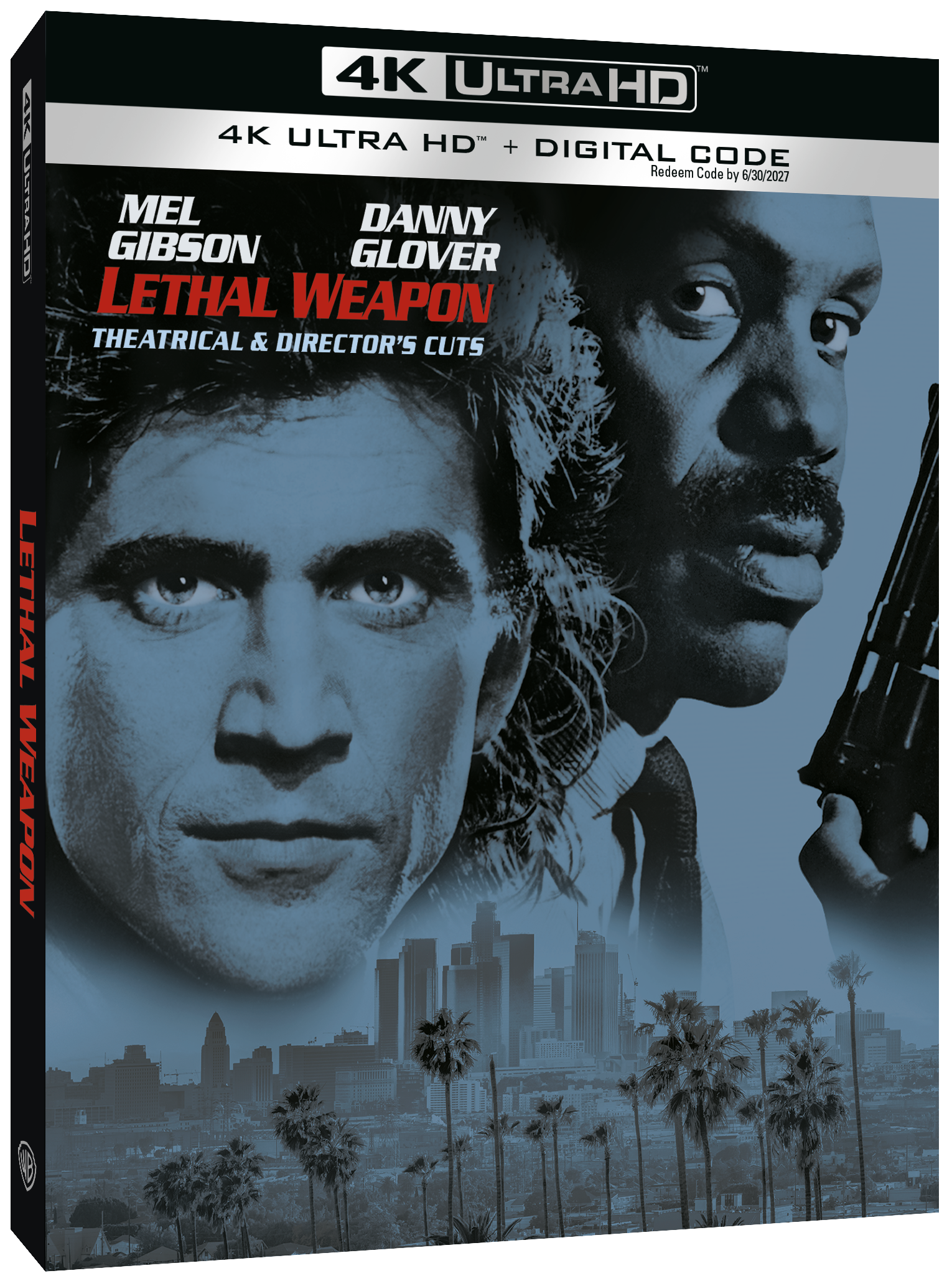
Hollywood has long been a fan of buddy cop movies, as people love to see big action, memorable villains and witty repartee between the polar opposite main characters.  “Lethal Weapon” is a film I’ve heard about ever since I started watching movies, especially the famous line, “I’m too old for this shit,” delivered perfectly by Danny Glover. Now, thanks to the 4K release of this film from Warner Brothers, I’ve finally had a chance to sit down and watch it in its entirety.  It is certainly one of the better buddy cop movies to have ever been released in Hollywood, thanks to the tremendous on-screen chemistry shared between Mel Gibson and Danny Glover.  They make it look effortless. I’m happy to report I’m not too old to sit down and watch “Lethal Weapon” for the first time. 

The film opens with a naked young woman snorting a line of cocaine and jumping off her balcony to her impending death.  This occurs on the day of Roger Murtaugh’s (Danny Glover) 50th birthday, as we see him trying to navigate through his happy yet chaotic homelife. He’s been assigned a new partner, Martin Riggs (Mel Gibson), an unhinged and wildly unpredictable cop who has unconventional methods, but you can’t argue with his success. It’s been 11 years since the death of his wife, and he struggles every day with thoughts of suicide. Indeed, it’s easy to see why Murtaugh feels like he is too old for this shit, as the two of them are as opposite as fire and ice.
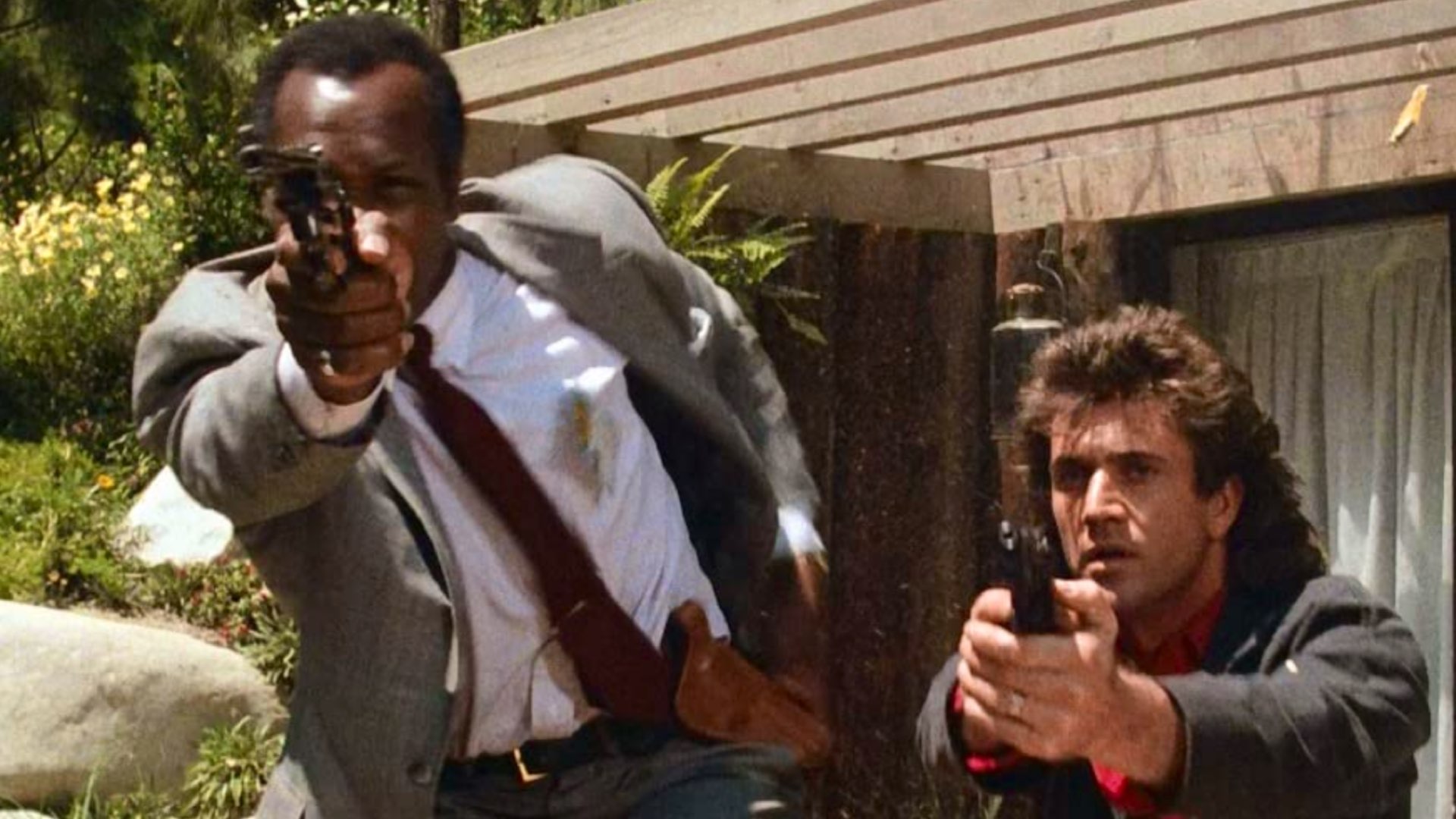
Murtaugh and Riggs must put their heads together and find out the real reason why this young woman, Amanda Hunsaker (Jackie Swanson) committed suicide. Murtaugh gets a call from an old war buddy Michael (Tom Atkins), Amanda’s father, and Michael reminds Murtaugh that he saved his life when they were in battle. There are definitely some nefarious individuals behind this, and Riggs sees the complexity of these cases and isn’t afraid to dig deeper or get his hands dirty. Murtaugh, on the other hand, looks for the simplest and easiest solution to these cases. He has too much at stake because he’s married and has children at home. Riggs, on the other hand, has nothing to lose and doesn’t care if he dies, so he will do what needs to be done, consequences be damned.

Lethal Weapon” was directed by the legendary Richard Donner (“Superman,” “The Goonies,” and “The Omen”), and was written by Shane Black (“The Nice Guys” and “The Monster Squad”). They collaborated with Gibson and Glover to create a memorable piece of cinema.  I do think the first hour of the film is absolutely perfect as it moves quickly, introduces the main characters and the villains, including a memorable performance by Gary Busey, and it’s a lot of fun.  It’s clear they are comfortable taking their time in allowing these characters to grow on screen, as we get to know them, inside and out. Because of this, the stakes matter that much more when the shit hits the fan.  The comedy is also effortless and never forced.
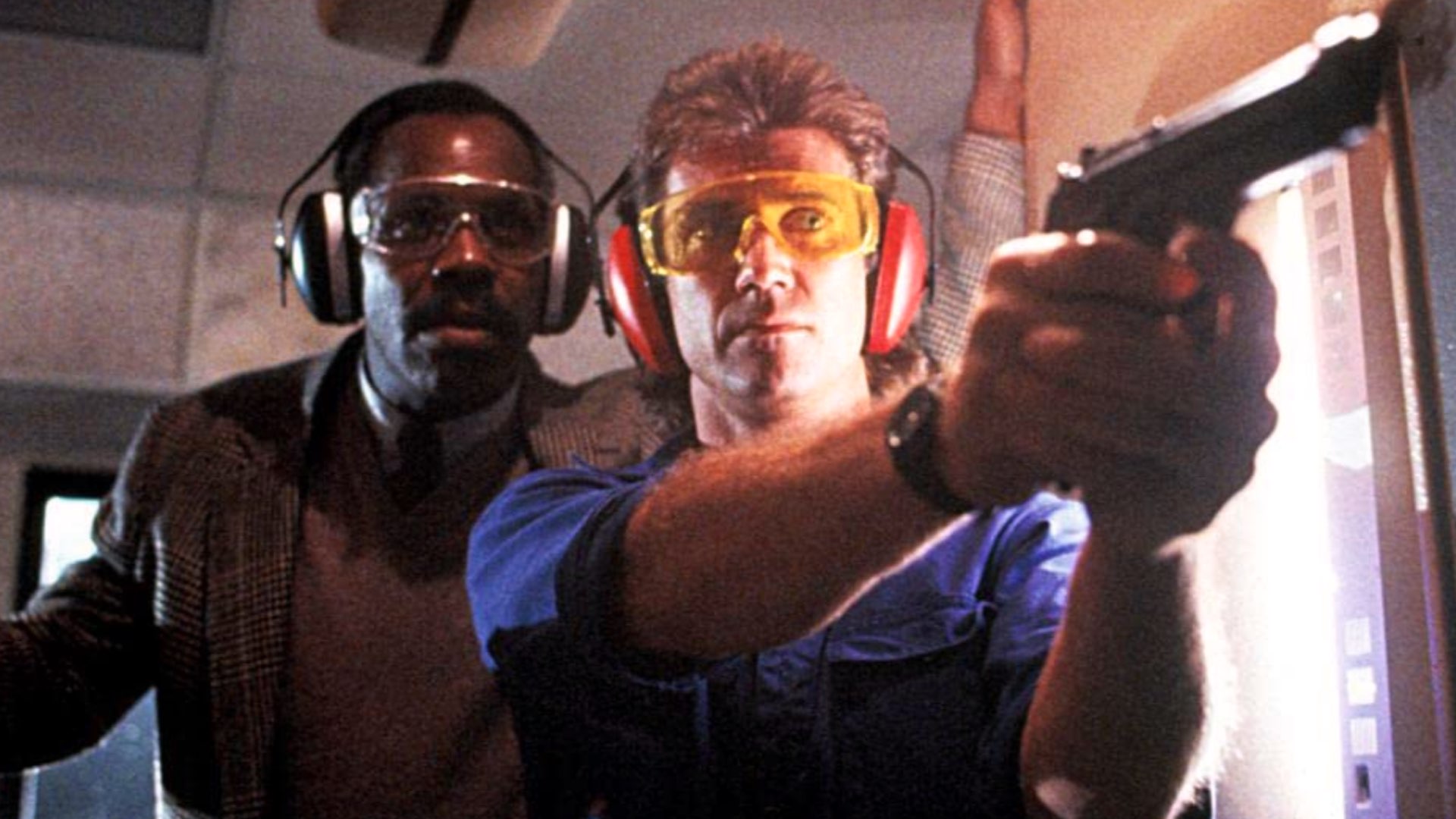
I did feel like the second half hit a bit of a lull when the good guys met up with the bad guys.  Of course, it was the 1980’s, so there needed to be big action (in addition to big hair and big outfits) and special effects, but they could have done probably half of what they did and it would have been even more effective.  There is also a wild karate battle between Busey and Gibson, which made me laugh but for all the wrong reasons. It seemed odd to go in that direction at the very end. The film starts out by letting the audience know it’s going to be a different type of action comedy, and I enjoyed the balance of seriousness and comedy. I was hoping the film would have kept that tone a little bit more in the second half, but it turns into a bit of a silly action movie. Still, “Lethal Weapon” has a good script, a top-notch cast, and skilled direction. It’s a good movie, but I don’t think it’s a great movie because of the issues I’ve mentioned.

It should be noted that I watched the director’s cut of “Lethal Weapon,” so I’m not sure how much of a difference there is between it and the theatrical cut, as this was my first time watching the film. The director’s cut is 117 minutes, and the theatrical cut is 110 minutes. I’d be curious to hear from those who have seen both cuts as to how much of a difference there is between them. I think the film should have been around 100 minutes, and it would have been just about perfect. I can’t speak for the sequels, but I can see why audiences wanted to see more of these two, as they had some of the best onscreen chemistry I’ve seen in a buddy cop comedy. Glover is smart, tough, and vulnerable while Gibson is crazed and determined, but there’s also a method to his madness. I loved these two characters.

* * * out of * * * *

4K Info: “Lethal Weapon” is released on a single-disc 4K from Warner Brothers Home Entertainment in either a 4K slipcover or a 4K steelbook. As mentioned in my review, the 4K comes with both the theatrical cut and the director’s cut. The film is rated R for strong violence, strong language, brief drug use, and some nudity. There is also a digital copy included.

4K Video/Audio Info: The film was nominated for an Academy Award for Best Sound, and wow, this is quite a Dolby Atmos soundtrack. The film is LOUD, and I do mean LOUD. At times, I found it to be a little too loud, which must mean I’m too old, but in all seriousness, if you enjoy your action flicks loud and in-your-face, you won’t be disappointed with the audio here. I did enjoy the 1980’s saxophone that was present throughout the movie. It’s a jaunty soundtrack that stayed in my head. As far as the video here, the HDR is splendid on this release, and it makes the film look sharp, vivid, and lively without losing its 80’s aesthetic. Hey, I was born in the 80’s, and I appreciate that decade very much, especially the music that was released then!

Special Features:

·   A Legacy of Inspiration: Remembering Richard Donner

· “I’m Too Old for This…”

Should You Buy It?

Yes! Personally speaking, I’m a big fan of a crisp 4K slipcover, and the slipcover release of Lethal Weapon is a thing of beauty. I really enjoyed the home theater experience of watching this movie, as it left me drained in the best possible way. The film presents a multitude of elements to the viewer, and while not all of them resonated with me, they were more effective than not. The film is memorable and stands out because of the performances of Mel Gibson and Danny Glover. In some ways, they look at one another and they see what they are missing in themselves. Murtaugh sees Riggs as someone who is not afraid to think outside the box, take risks, and find his man. Riggs sees Murtaugh as having the family life he wishes he could have had if his wife hadn’t died. The film is, at times, heartfelt, without trying too hard or being sugary sweet. Gary Busey is a kick-ass bad guy because he’s as cold as ice and doesn’t flinch. I wish the film was about 10-15 minutes shorter, depending on the release you watch, but it’s still a good flick. Warner Brothers also includes two new special features on this release, and they are one of the only studios that is releasing classic Hollywood films with new special features. I think physical media collectors will be VERY happy with the 4K release of “Lethal Weapon.”

**Disclaimer** I received a copy of this film from Warner Brothers to review for free.  The opinions and statements in the review are mine and mine alone.

Worst Opening Titles: ‘Superman IV – The Quest for Peace’

The opening credits to “Superman” and “Superman II” are among the best when it comes to movies. When Bryan Singer used this format for his “Superman Returns,” it felt like the return of a friend who had been gone for far too long, and the theme by John Williams is among the finest he has ever composed.

But then came “Superman IV: The Quest for Peace,” a sequel which was supposed to put this movie franchise back on track after the critical and commercial disappointments of both “Superman III” and “Supergirl.” Instead, we got a sequel which quickly became labeled as one of the worst motion pictures of all time. With the Salkind family abandoning the franchise and Cannon Pictures taking over, the budget got slashed in half do to their money problems, and everything came to look liken nothing but bargain basement deals or useless stuff which had been long since thrown in the trash.

As soon as the opening titles for “Superman IV” begin, we know it is going to be a rough ride even as Williams’ famous theme, conducted this time by Alexander Courage, is not enough to make our spirits soar. Even co-screenwriter Mark Rosenthal, whose audio commentary for this sequel I highly recommend, is quick to say the following in his opening remarks:

“You can tell from the very first credit that says Warner Brothers that something is terribly wrong in Metropolis.”

This is the Wal Mart, 99 Cent Store or Dollar Tree of opening credits as they look ridiculously cheap in ways the ones for the previous installments never did, and this proved to be quite the shock. Then again, perhaps they fit this sequel perfectly as the visual effects and sets look every bit as cheap as the opening titles. Watching them is heart breaking as they make clear that it is all downhill from here. No wonder this sequel was such a big bomb at the box office.

If you must, please feel free to check out the opening titles to “Superman IV: The Quest for Peace” down below:

‘The Lost Boys’ Movie and 4K/Blu-ray Review

The following review was written by Ultimate Rabbit correspondent, Tony Farinella.

The Lost Boys” falls into the category of a great horror film I have never seen before until now.  With its release on 4K and Halloween a little over a month away, I couldn’t wait to take a bite into this movie (see what I did there?).  Vampires, zombies and werewolves are familiar creatures used in horror films.  The thing which separates the good films from the bad are two things: the characters and the story.  Are we invested in the characters? Is there a compelling story? In the case of “The Lost Boys,” the answer is a resounding yes.  I loved this film, and even though I’m late to the party in watching it, it’s better late than never.

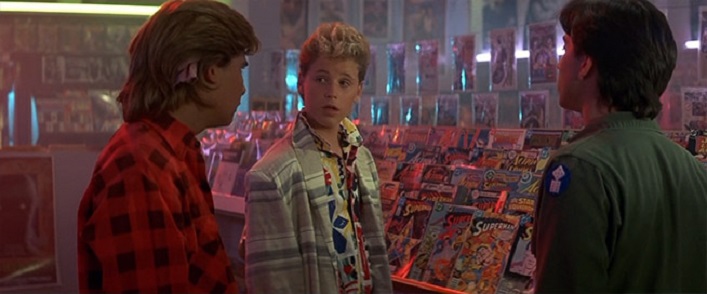
Lucy (Dianne Wiest) and her two sons Michael (Jason Patric) and Sam (Corey Haim) have relocated to Santa Carla, California following her divorce.  They end up living with her eccentric, oddball father played brilliantly by Barnard Hughes, and he doesn’t want anyone to touch his root beer or his Oreos.  He also spends a lot of time dabbling in taxidermy and often gives Sam some unwanted presents.  Sam is also flanked by his loyal dog Nanook, an Alaskan Malamute. Sam is doing his best to adjust to this beach town by catching up on some comic books. He ends up getting to know the Frog Brothers, Edgar and Allan, played by Corey Feldman and Jamison Newlander, who know a lot about vampires and comic books.  Their performances are comedy gold in this film, and they are their own little “Strangers Things” group here.

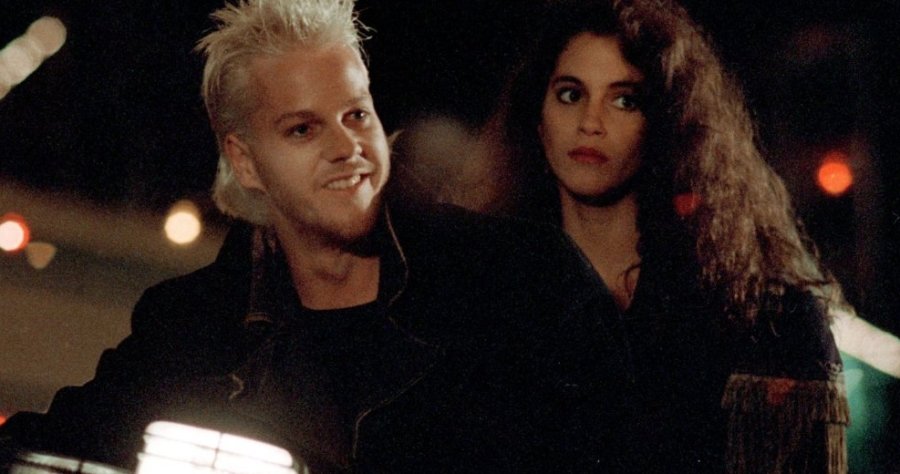
Michael ends up falling for a young lady named Star, played by Jami Gertz. She hangs around a biker gang led by David (Kiefer Sutherland).  Something is clearly unusual and odd about them, but Michael is hoping that if they accept him, he can get to know Star.  Lucy ends up getting a job at the local video store which is owned by Max (Edward Herrmann).  Max is a dorky putz, but he means well and seems genuinely interested in getting to know Lucy.  This in spite of the fact that their dates usually always end up in disaster because Sam is convinced something is off with Michael.  Sam wants to protect Michael because that’s his brother, but he’s not entirely happy with how he’s acting lately.  Michael is sleeping all the time and coming home very late now that he has his new friends.

There is plenty to enjoy with “The Lost Boys,” but the key ingredient is the cast.  The actors really sell this material with just the right amount of humor and terror.  Director Joel Schumacher also knows how to get the most out of every single scene.  This film is 97 minutes and frankly, it is the perfect running time for a film like this. We get to know the characters, their dilemma unfolds, and it ends with a bang, literally and figuratively speaking. I really enjoyed the fact the filmmakers went with an R rating.  They build up to the violence, so it really means something when the bodies start to explode and heads begin flying off.  The special effects and make-up are top notch.  When you add in the fact this is a 4K release, everything is enhanced to an even greater degree.

The film also doesn’t lean in too heavily with the vampire gimmick.  Yes, there are characters who are vampires and there are rules to follow, but at the end of the day, it’s a film about a mother and her two sons trying to survive.  Dianne Wiest, a favorite actress of mine, is perfect as the concerned but confused mother.  The late Corey Haim is also top-notch here.  I know I’m singling out their work, but there is not a bad performance in this film.  It also helps that the atmosphere goes back and forth between day and night.  It’s an atmospheric and intense flick which hits all of the right notes you would want in a film like this. I went into it not knowing what to expect, and I ended up having a big smile on my face when the credits were rolling at the end.

“The Lost Boys” is an 80’s gem which deserves to be seen on 4K.  It’s one of those rare examples of a film where everything falls into place: the cast, the acting, the director, the writing, the blood and guts and the twists and turns.  The comedy is done at just the right moments without being too hokey or phony. The action and violence are really turned up a notch without being too much or overdone. This is the perfect Halloween movie to pick up in time to watch for the holiday.  Trust me when I tell you this: You won’t regret it, and you will love it. If you have already seen it, you will love it even more with the 4K upgrade.

* * * * out of * * * *

4K/Blu-Ray: “The Lost Boys” is being released on a two-disc 4K and Blu-ray combo pack from Warner Brothers Home Entertainment. It also comes with a digital copy of the film as well.  It is rated R and has a running time of 97 minutes.

Video Info: The 4K of this film comes with stunning High Dynamic Range (HDR), and it looks incredible.  As I mentioned earlier in my review, the outdoor shots of California are absolutely stunning. When the film is darker and more brooding, it switches to that tone with its color palette.  This is a terrific-looking 4K, and I enjoyed taking it all in for the first time.

Audio Info:  I was hoping they would have a Dolby Atmos track as the audio is good but it’s a little inconsistent at times. It comes on a DTS-HD MA: English 5.1 audio track along with Dolby Digital audio tracks in French and Spanish. Subtitles are in English, French, and Spanish.

Special Features:

4K UHD Disc

·           Commentary by Joel Schumacher

Blu-ray Disc

·           Commentary by Joel Schumacher

·           “The Lost Boys: A Retrospective”: 24:00

·           “Inside the Vampire’s Cave: A Director’s Vision”: 6:58

·           “Inside the Vampire’s Cave: Comedy vs. Horror”: 4:44

·           “Inside the Vampire’s Cave: Fresh Blood-A New Look at Vampires”: 4:23

·           “Inside the Vampire’s Cave: The Lost Boys Sequel?”: 2:25

·           “Vamping Out: The Undead Creations of Greg Cannon”: 14:02

·           “The Return of Sam and the Frog Brothers: Haimster & Feldog-The Story of the 2 Coreys”: 4:30

·           “The Return of Sam and the Frog Brothers: Multi-Angle Video Commentary by Corey Haim, Corey Feldman and Jamison Newlander”: 18:23

·           The Lost Scenes: 15:16

·           Lou Gramm “Lost in the Shadows” Music Video: 4:35

·           Trailer: 1:26

Normally, I would complain about the fact they don’t have any new special features for the 4K here, but considering this was my first time watching the film, all of the special features were new to me.  There is a commentary track with the director and plenty of lengthy special features discussing the film.  Based on the quality of the movie, the 4K upgrade, and the special features, this one comes highly recommended as a day-one purchase.  If you are a horror enthusiast, you owe it to yourself to watch this film at the highest quality available.  As far as the film itself, there is so much to like about it. Even though the film is a vampire film, it doesn’t feel like a vampire film.  I felt the vibes of It and Stranger Things mixed with a family drama.  The acting is really, really good, and it’s a big reason why it’s such an effective film.  The kills featured in the film are also really grisly and blood-soaked.  I loved this movie! I’m really enjoying the fact that Warner Brothers Home Entertainment is going into their vault and releasing a lot of their older titles on 4K.  This is a top-of-the-line upgrade with bright colors and a vivid picture. If you are like me and haven’t seen this movie, you owe it to yourself to add it to your collection.

**Disclaimer** I received a copy of this film from Warner Brothers to review for free.  The opinions and statements in the review are mine and mine alone.

Alan Parker’s ‘Angel Heart’ is a Devastating Descent Into Hell

Angel Heart” is a heavily atmospheric movie which makes you feel the coldness of New York and the never-ending heat of Louisiana in the summertime which makes you sweat like nothing else can. It is not a loud slam bang movie, and it does take its sweet time in setting up the story and the locations which the characters exist in. Each city proves to be an important character, and they reflect the nightmares and dreams of the main characters. If this movie were made today, I imagine the studios would want the actors cast in it to be younger and hipper and take away some of the dark stuff. I hope this is one Hollywood can leave off of the remake table.

Back when this was made, Mickey Rourke was a much bigger star, and this is one of the many movies he starred in without shampooing his hair beforehand. As Harry Angel, he does excellent work in making this New York City private investigator seem tough and sleazy, yet resourceful and vulnerable. Harry’s life unravels faster and faster as he digs deeper and deeper into the mystery which surrounds him. Watching Rourke here reminds me of what a strong and brave actor he can be when given the right material. Back then, he was not afraid to play someone whose dark side could often prove to be overpowering. His off-screen antics seemed to get the best of him over the years, but thanks to his performances in “Sin City” and “The Wrestler,” there is no forgetting who he is.

The movie credits itself for having “a special appearance” by Robert De Niro. Special appearance? This seems to imply you see him in the movie only once. On point of fact, we see him several times throughout as Louis Cyphre (pay close attention to this name). It is one of the few performances where De Niro never goes over the top and becomes a threatening force without ever having to put much effort into doing so. As Cyphre, De Niro gives a delicious performance of a man endlessly fascinated by the corruption and decay of the soul, and it appears he finds this as delicious as the hard-boiled eggs he always has on hand to eat. When he says the egg is the symbol of the soul and then slowly bites into it in front of Harry, it is a very chilling moment.

Lisa Bonet was deep into playing Denise Huxtable on “The Cosby Show” when she was cast in “Angel Heart.” I imagine the MPAA tricked themselves into giving this film an adults only rating because they got all hot and bothered at one Cosby’s television daughters showing her breasts. I can see them now:

“We can’t let kids see this movie! They will never look at one of television’s famous daughters the same again! This will destroy their innocence!! Won’t somebody think of the children?!”

Alan Parker, who directed “Angel Heart,” ended up cutting out ten seconds of the sex scene between Rourke and Bonet in order to secure an R rating. Upon its release on video and laserdisc, those ten seconds were restored. I first saw this film at New Beverly Cinema which prides itself on showing everything in 35mm, so I can only assume I was watching the theatrical version. But seriously, you cannot convince me this deserved to be an NC-17 movie even with those extra seconds. People can be so testy for all the wrong reasons.

A lot of the controversy surrounding “Angel Heart” almost hides the fact Bonet is actually really good here. A lot of people probably assumed she got the role of Epiphany Proudfoot because of her success on “The Cosby Show,” but Parker made it clear to everyone he picked her because he felt she was right for the part. Having seen this movie, I completely agree. I also have to admit it was fun seeing her naked, but anyway. Epiphany (perfectly named by the way) is a mysterious person who seems to say everything yet reveals nothing, and Bonet captures her character’s mystery very well to where she keeps us guessing.

Parker made many great movies over the years like “Birdy” and the cinematic experience which is “Midnight Express” to name a few. Like “Angel Heart,” they deal with lost souls trying desperately to free themselves of whatever is holding them back. There is a lot holding Harry Angel back, but when he finally gets to the truth, he will find that being held back was actually a blessing he could never see. Parker gives the movie a distinctive look as it takes place in the 1950’s, and he directs the actors very well and gives each a memorable moment which sticks with you long after the lights come up.

Trevor Jones composed the music score, and he does great work capturing the tension and atmosphere. Right from the start, he aids the filmmakers in realizing the horrifying truth Harry has spent the entire movie trying to find.

The first official trailer for “Angel Heart” goes out of its way to make it look like this is the second coming of horror by comparing it to “The Exorcist” and “Chinatown.” This proved to be a bit misleading as this film does not quite reach the heights of those two classics, and it really stands out as being from them. Still, it is a very good film which once against demonstrates Parker’s unique gifts as a filmmaker.

It did not receive much of an audience upon its release which almost led to me putting this in my “Underseen Movies” category, but it has since received a significant cult following throughout the years. Here is hoping that cult following will continue to grow, and that the remake train will leave this one off its passenger list. Seriously, Hollywood really needs to try more original stuff.

* * * ½ out of * * * *

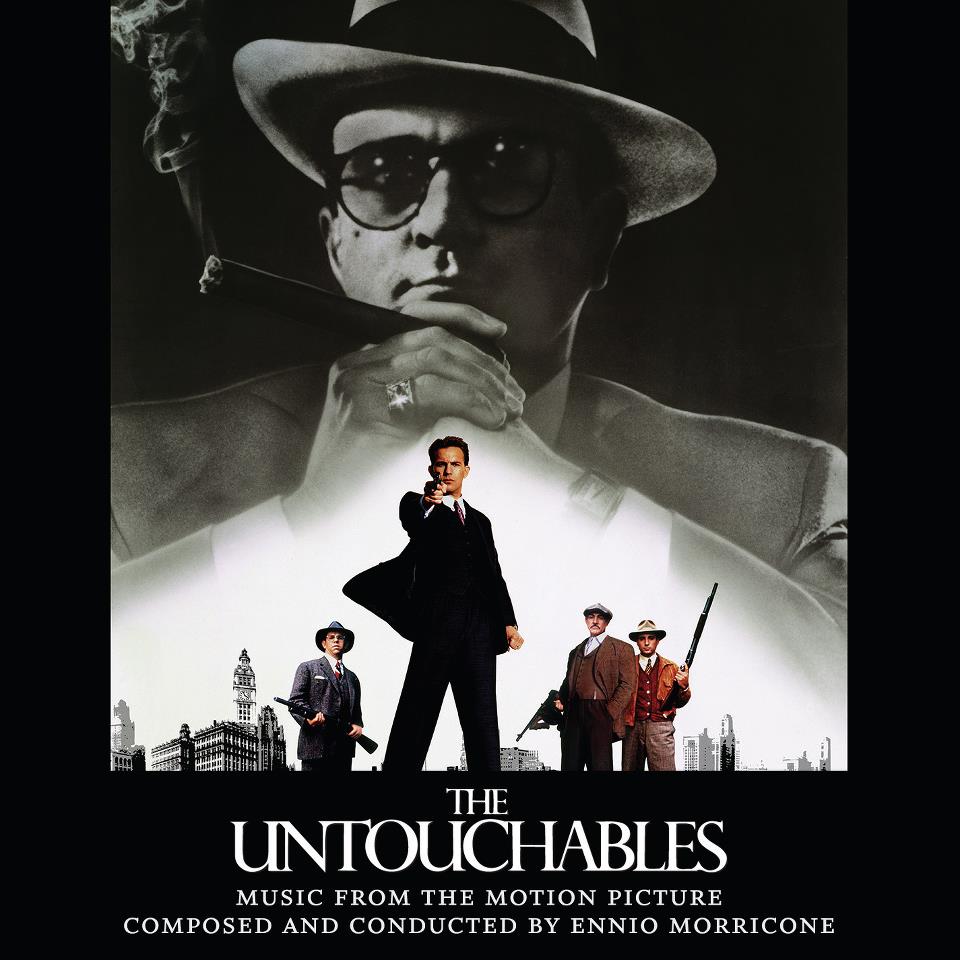
Soundtrack Review: Ennio Morricone’s Score to ‘The Untouchables’

WRITER’S NOTE: I wrote this review back in 2012 when this limited edition of the soundtrack was released. This edition has since sold out, but it can be found on websites such as eBay, Amazon and Discogs. Of course, this edition does not come at a cheap price, so be sure to do your research. I am presenting this review here out of respect for the great Ennio Morricone who passed away on July 6, 2020 at the age of 91 years old.

Ennio Morricone’s film score for Brian DePalma’s “The Untouchables” remains one of my favorites of his from the 1980’s. It covers the gamut of musical themes from victory to tragedy, and it captures the corruptness of the city our heroic characters played by Kevin Costner, Sean Connery, Andy Garcia and Charles Martin Smith have to fight against. Now, La La Land Records has put together a long-awaited remastered edition of this soundtrack which has Morricone’s music sounding better than ever. It features two discs, has over two hours of music and contains an informative booklet written by Jeff Bond, all of which makes for a release fans of Morricone will be pleased to add to their collection.

The first disc contains the original motion picture score for “The Untouchables,” and the tracks are sequenced in the order in which they appeared. This was not the case when the original soundtrack was released in 1987. That version started with the movie’s end title for some odd reason. There’s still no beating “The Strength of the Righteous” which gets the movie off to a thrilling start, and it’s one of those pieces of film music I never get sick of listening to. “Al Capone” perfectly illustrates the obscene wealth and greedy nature of a man who is more than willing to use violent means to achieve his goals.

Listening to this soundtrack for “The Untouchables” also reminded me of how beautiful Morricone’s music is. He captures the idyllic home life of Elliot Ness (played by Kevin Costner) and his family so well to where it makes you wonder if your own family life can ever compare. Other tracks like “Four Friends” help to elevate the tragedies the main characters suffer. I remember watching “The Untouchables” when it came out on VHS, and it was the first film I saw where the heroes do not make it to the end with a pulse. This shocked and saddened me, and Morricone’s “Four Friends” emphasizes not only the loss of life but of what that life meant to those who remember him dearly. Some of my other favorite tracks include “Waiting at the Border” which has Ness and company waiting in Canada for the arrival of Capone’s liquor shipment, and I love how the track starts soft and continues to build dramatically throughout. There’s “Courthouse Chase” which adds a lot to the big action scene between Ness and Frank Nitti (played by Billy Drago). The end title of “The Untouchables” is also one of those thrilling pieces of music as it celebrates the victory of those characters who scored one for justice, and listening to it always raises my spirits.

There is also no forgetting Morricone’s masterpiece of this score which is “Machine Gun Lullaby,” and it shows his brilliance in how he escalates the suspense and tension of certain scenes in DePalma’s movie. The first disc also contains tracks of Morricone’s which were not used, most of which are short transitional cues. The second disc contains the remastered version of the original soundtrack release from A&M Records, and the order of the tracks remains the same. Hearing it again might seem redundant for those who spent an hour listening to the first disc, but some still hold the original release of “The Untouchables” as sacred so it is here for them to enjoy with a better sound quality than ever before. The second disc also has several bonus tracks which include different versions of “Machine Gun Lullaby” and “On The Rooftops” among others. There’s also the “Love Theme from The Untouchables” which is sung by Randy Edelman and did not make it into the movie.

Jeff Bond, who has written informative booklets for many special edition soundtrack releases, writes us another great one for this release of “The Untouchables” which is entitled “The Strength of the Righteous and the Triumph of the Police.” Most of Bond’s booklets are usually written in two halves; one half details the making of a movie, and the other half details how its soundtrack came together. With “The Untouchables,” however, Bond is more interested in focusing on Morricone and the working relationship he had with DePalma. Bond even takes the time to write about every single track on each disc and the specific instruments which stand out and help to define certain characters and scenes.

“The Untouchables” actually marked the first collaboration between Morricone and DePalma, and the composer came to work with DePalma again on “Casualties of War” and “Mission to Mars.” In the booklet, Bond quotes from an interview with Morricone in which he describes DePalma as being “a great film director” and “wonderful to work with.”

“At a human level, too, he is a wonderful person, even if he gives the appearance of being a very reserved sort,” Morricone said of DePalma. “Behind that gruff exterior is a very kind soul.”

Morricone has still never won an Oscar for any of his scores, but he did deservedly receive one for lifetime achievement in 2007. Then again, he does not need one to prove to the world what a prolific film composer he is, and his output of work over the decades is amazing. “The Untouchables” remains one of my favorite film scores of his and it takes listeners through a wave of different emotions, some sad and others which make you happy and fulfilled.

La La Land Records has limited this special edition of “The Untouchables” to only 3500 copies, so be sure to get yours soon before it sells out. They have once again put together a great release of a truly unforgettable film score.

ADDITIONAL WRITER’S NOTE: Morricone finally won the Best Original Score Oscar which had long eluded him in 2016 for his work on Quentin Tarantino’s “The Hateful Eight.” To say this was deserved is to point out the bleeding obvious.

Rest in peace Ennio.

Richard Tyson on Playing Buddy Revell in Three O’Clock High

WRITER’S NOTE: This article is about a screening which took place back in 2012.

“Every day of my life for the last twenty years, people come up to me, look me in the eyes and say ‘Buddy Revell!'”

That’s what actor Richard Tyson told the audience at New Beverly Cinema in Los Angeles where the theater was showing “Three O’Clock High” in honor of its 25th anniversary. The 1987 high school comedy marked Tyson’s film debut, and his character of Buddy Revell was the school bully who threatens the meek Jerry Mitchell (Casey Siemaszko) to a fight after Jerry touches him on his leather jacket. From that point on, it is clear you never ever touch Buddy Revell at any time.

Around the time the movie was headed into pre-production, Tyson had just graduated with a Master of Theater Arts degree from Cornell University and was living out of his truck when he heard about it. Apparently, he went through about 14 callbacks before he got cast as Buddy, but the film’s director Phil Joanou was always convinced Tyson was the only one for the role.

Phil Joanou: While Jerry is so manic and nervous and flopping like a fish on the deck, Buddy is like an iceberg floating across. Just cool, he sits in the class, he just looks over at Jerry then he looks back. Buddy’s almost expressionless, and so many other actors would have been expressionless, but what was so cool about what Richard did is that he’s doing nothing but he’s doing something. That’s really hard to do, but you can see that there’s something going on behind this guy’s eyes.

In talking about how he established Buddy Revell’s physicality, Tyson brought up the scene where Buddy gets in a fight with the jock in the library. Joanou asked Tyson what he would do if someone came up and poked him in you the chest the way Buddy gets poked, and Tyson responded he would “break his fucking finger” and then showed him how he would do so. Once he was convinced, Joanou asked Tyson if he could throw a right cross punch after breaking the finger and Tyson had no problem doing so.

It’s important to note that the screenwriters of “Three O’Clock High,” Richard Christian Matheson and Thomas Szollosi, were on set the day the library scene was being shot. Matheson and Szollosi had their doubts about Tyson at first, but after watching him in action, they were convinced the filmmakers got the right guy to play Buddy.

In comparison to all the bullies we see and hear about on school campuses these days, Tyson said he didn’t think Buddy was really a bully.

Richard Tyson: I think the system, the school and the environment were worse than him. It’s not just the guy in the leather jacket. The leather jacket guys are usually left alone. Just don’t touch them in the bathroom!

What was great about Tyson’s performance in “Three O’Clock High,” and Joanou pointed this out, was in showing how Buddy was always in control and of what happened when he loses control. When Jerry manages to punch Buddy in the nose, you suddenly see the rage in his face as he registers this is the first time he has ever been hit and drawn blood. Seeing that look of rage which crosses his face shows what makes Tyson’s performance so damn good: he shows you the character’s emotions without ever having to spell it out for you.

Richard Tyson went from “Three O’Clock High” to starring in such movies as “Two Moon Junction,” “Kindergarten Cop” where he played Arnold Schwarzenegger’s nemesis, and “There’s Something About Mary” in which he banged Ben Stiller’s head on a table several times. Tyson’s still got a lot of great work ahead of him, but we will never ever forget his performance as Buddy Revell.

Joe Dante Talks About the Making of ‘Innerspace’ at New Beverly Cinema

Innerspace movie poster

On August 22, 2012, UCLA’s Association of Movie Archivists (AMIA) student chapter concluded its “Something Old, Something New” festival at New Beverly Cinema with a double feature of “The Incredible Shrinking Man” and “Innerspace.” The audience also got a special treat when the director of “Innerspace,” Joe Dante, stopped by, and he took great delight in sharing his experiences in making the 1987 science fiction comedy.

Dante pointed out how both movies actually have something in common; William Schallert, who played Grant Williams’ doctor in “The Incredible Shrinking Man,” also plays Martin Short’s doctor in “Innerspace.”

“Innerspace” was originally meant to be a “serious spy movie” when Dante first heard about it, but he said wasn’t interested in directing it. Warner Brothers at one point even thought about making it into a movie about a crew exploring the human body, and Dante said he didn’t have the heart to tell the executives there was already a movie about this subject which was called “Fantastic Voyage.”

But when Jeffrey Boam, who would later write the screenplay for “Indiana Jones and the Last Crusade,” rewrote the script, he turned it into a comedy. Boam described his script to Dante as “Dean Martin being shrunk and then put into Jerry Lewis,” and this got Dante interested in making the movie. The only thing was Steven Spielberg’s production company, Amblin Entertainment, was making the movie, and Spielberg wanted his protégé Robert Zemeckis to direct it. Zemeckis, however, decided he didn’t want to direct, and Dante said he “inherited it” as a result.

Dante said he had a “wonderful experience” making “Innerspace” mainly because of the cast which included actors Dennis Quaid, Martin Short, and Meg Ryan among others. The movie was shot in San Francisco, and things went fine even though Senator Dianne Feinstein apparently hates it when filmmakers come up north to shoot there.

In talking about working with Short, Dante said the actor “liked doing many takes” and that he “did a lot of improvisation” throughout. But when Dante had to tell Short that they had “more than enough takes” to work with, Short got on his knees and told him in his Katherine Hepburn voice, “No Joe! Please let me do just one more!”

What made “Innerspace” less fun for Dante, however, was that the studio found it to be “not funny.” After one particular day of filming, Dante recalled studio executives from Warner Brothers invited him out to lunch and told him what he was doing wasn’t funny and they thought he “should know that.” They also described Short as being “not very attractive” and wanted to recast the role with someone like Dennis Quaid instead. Upon hearing this, Dante asked them, “Did you even read the script?!”

Dante reflected there are many executives involved in the making of any movie, and they all want to “have their say” in what ends up onscreen. After hearing what they had to say, Dante said he wondered if he was the only one on the set who thought what he was doing was funny. While this conversation left him with a lot of anxiety, he decided to “plow on” and just make the movie he always intended to make.

When it came to test screenings, Dante said “Innerspace” got “one of the best previews” of any movie he had ever worked on. He even recalled how the studio executives who once doubted him were “high-fiving each other” and believed they had such a hit to where “they didn’t think it needed any advertising as a result.”

“Innerspace,” however, ended up flopping at the box office in the summer of 1987, and Dante said this was because Warner Brothers did not know how to promote it and that the original poster failed to include the movie’s actors on it. Dante even recalled the review from Los Angeles Times which said the movie “crashed and burned.” Regardless, it later became one of the first movies to find the audience it deserved on videotape and DVD, and it has since developed a strong cult following. It also won the Oscar for Best Visual Effects, and this was back when CGI effects were far from ever becoming a reality. Film critic Roger Ebert apparently thought the red blood cells we see in the movie were actually real, and Dante ended up having to tell him they were not.

Joe Dante said most comedies don’t work unless they are seen in a movie theater, and “Innerspace” is definitely proof of this. The audience at New Beverly Cinema was laughing constantly throughout, and the movie still holds up very well to this day. It was great to see Dante this evening as his presence was once again a reminder of how delightfully entertaining a filmmaker he truly is.

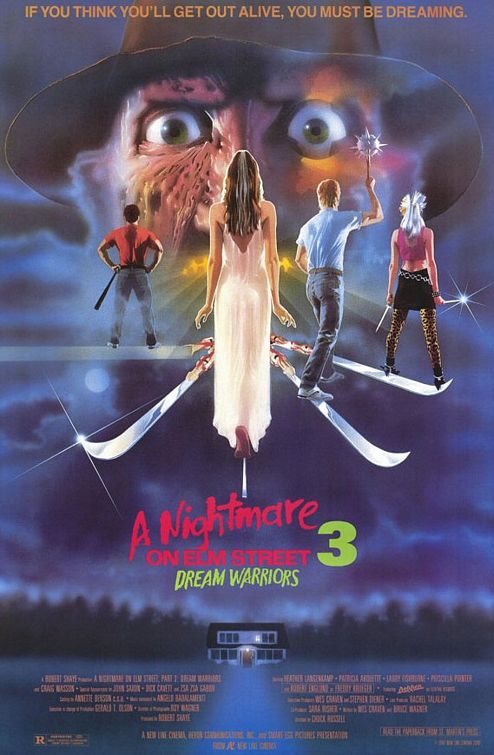
All-Time Favorite Trailers: ‘A Nightmare on Elm Street 3 – Dream Warriors’

Back when this particular horror sequel was released, Freddy Krueger was still a very frightening character. The burnt serial killer had yet to devolve into a stand-up comic, and just the thought of him hiding in the shadows of your dreams waiting to strike was enough to leave you unnerved. It’s a shame we have not yet seen a scene in any of the “Nightmare on Elm Street” movies where a teenager goes up to someone suffering from insomnia and tells them, “I envy you.”

Following this sequel, he ceased to be scary and became more of a cut-up than anything else, and we had to wait for “Wes Craven’s New Nightmare” to see him as a truly threatening presence once again. But I never forgot what a haunting character Freddy was back in the 1980’s, and what I love about this teaser trailer for “A Nightmare on Elm Street 3: Dream Warriors” is it seizes on how fearful we were of him to where we didn’t even need to see his face to know he was just around the corner. Just hearing that little girl singing “1, 2, Freddy’s coming for you” was enough to make your hairs stand on end. And once we got a look at the model of Nancy Thompson’s old house which resides on Genesee Avenue on Los Angeles, my eyes went wide upon the realization this was indeed a trailer for another “Nightmare on Elm Street” movie. And then the hand with the claws burst out of the model, and I wanted to hide my eyes from the screen…

This teaser trailer for “Dream Warriors” remains one of my favorite trailers as it proved to be one of the scariest ever, and it piqued my interest in a character I would become more intrigued with as I got older.

A Nightmare on Elm Street 3 Dream Warriors poster

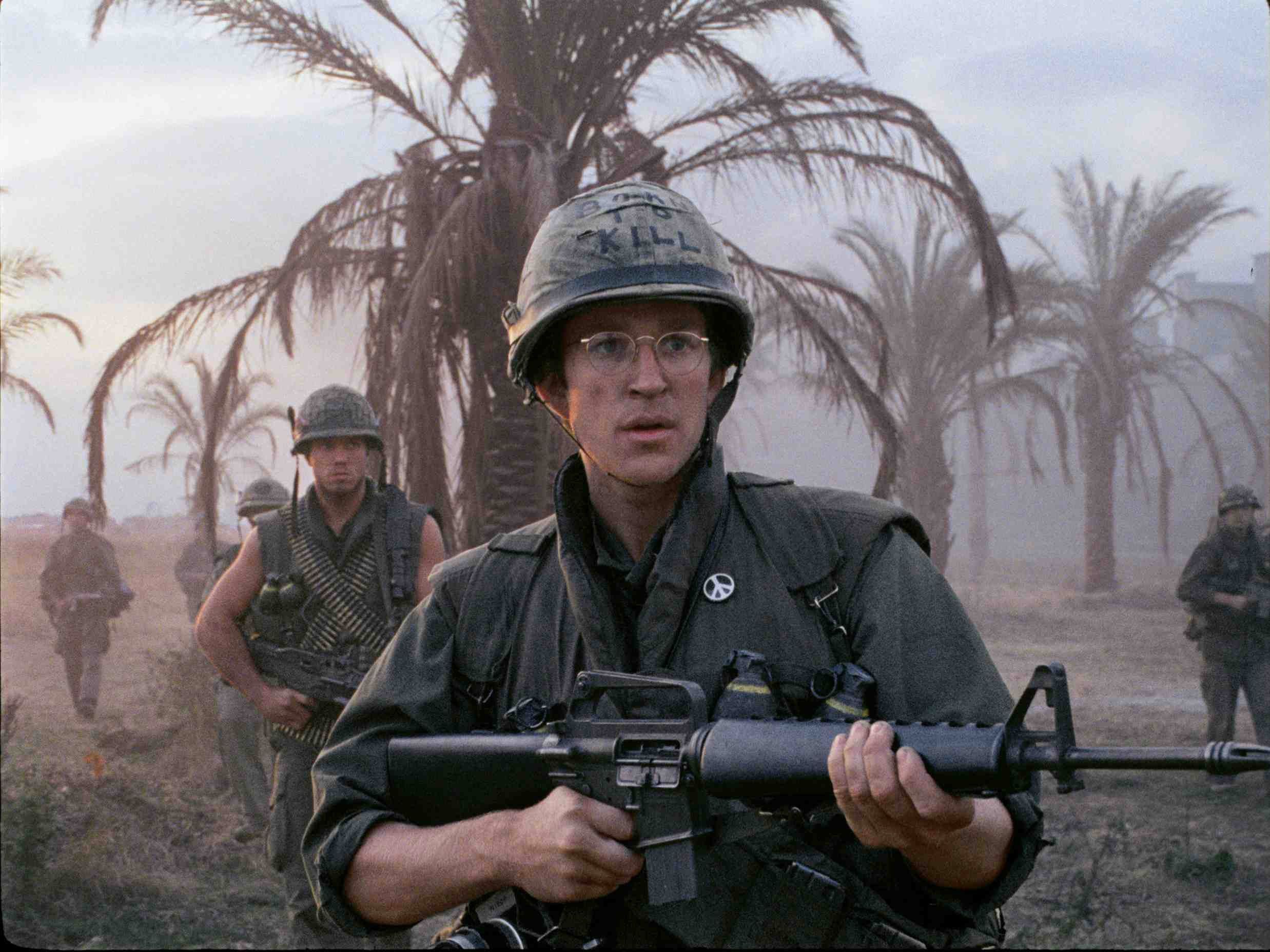
Matthew Modine Shares Stories About the Making of ‘Full Metal Jacket’

Full Metal Jacket Matthew Modine

While moderating a Q&A session with Leon Vitali and Tony Zierra about “Filmworker” at the Nuart Theatre in Los Angeles, actor Matthew Modine shared some stories about the making of Stanley Kubrick’s “Full Metal Jacket.” In the 1987 war film, Modine plays Private Joker, one of a dozen soldiers who endure Marine Corp basic training under the brutal and abrasive instruction of their drill instructor, Gunnery Sergeant Hartman (the late R. Lee Ermey). Following graduation, he heads to South Vietnam to work as a war correspondent for the Stars & Stripes newspaper, and it is there he witnesses the atrocities of war up close. The question is, how much of his humanity can hold onto in the face of death and destruction?

The stories of Kubrick’s behavior and work ethic have long since become legendary in regards to the methods he used to get an actor into a specific emotional state and the number of takes he puts his cast through. The first story Modine shared with us about Kubrick, however, proved to be a bit unexpected.

Stanley liked to carry a walkie talkie because he wanted to be a part of every aspect of the filmmaking,” Modine said. “Why shouldn’t he have a walkie talkie and know what the assistant directors were saying and what kind of movements were happening? We broke for lunch and the assistant director, Terry Needham, got a call from Stanley, and Stanley asked Terry to come over here. Terry said, ‘Okay, but where is here?’ He said, ‘I’m over here,’ and Terry said come out of the tent where we were having lunch. Terry didn’t want to say on the radio that he was stuck in the portapotty. He couldn’t get the door open. So that’s just a little window into a different part of Stanley that doesn’t appear in the documentary.”

During the Q&A, we learned how the crew on a Kubrick film was actually very small, and the one on “Full Metal Jacket” totaled about 15 people. Vitali even said there was only one electrician, and his job was simly operate the lights on a dimmer. Modine ended up adding a nice bit of trivia to this story.

The one electrician that we had working on the film, because of the union, he would come in and turn the lights on, and then Stanley would tell him to fuck off to his house because there was some wiring problem in his house,” Modine said. “He had to pay him for the day so he said go wire my house.”

Perhaps the most bizarre and hilarious story Modine shared with us was when he talked about Dorian Harewood who played Eightball, the soldier who experiences an especially brutal and bloody death which is captured in slow motion. The way this scene was shot, however, makes sense when Modine discussed what Harewood demanded from Kubrick.

Dorian Harewood is a wonderful actor,” Modine said. “We were originally contracted for about six months I think, and the contracts were coming to an end. So they wanted to renegotiate the contracts, and it wasn’t a renegotiation. It was just a reupping to continue the contracts for a longer period of time, and Dorian came to Stanley and said, ‘I want to renegotiate. I want more money,” and Stanley couldn’t believe the audacity of this young guy. He’s like, ‘You’re working for Stanley Kubrick and you are asking me to pay you more money?’ And he (Harewood) said, ‘Well yeah, I have to go back to Los Angeles. I have a singing career, I have an acting career, there’s other jobs, and if you want me to stay here, you’re gonna have to pay for it.’ Stanley couldn’t believe it, and I remember him stumbling around for hours furious with that crazy look on his face, and then he turned and he said, ‘I’m gonna kill him!’ I really thought, oh fuck, Stanley’s gonna commit murder. He’s going to kill Dorian Harewood. I said, ‘What do you mean?’ He goes, ‘I’m going to kill him.’ Remember when Dorian gets shot all over the body? It was because however number of days were left upon Dorian Harewood’s contract, Stanley was going to put in all the bullet hits he could. It was really cold. You could see Stanley wearing that hat and two coats, and we were wearing Vietnam khakis. It was freezing cold and snowing in London, and we were dressed up for North Vietnam. He killed him for as many days left that he had on the contract, and he had five days left lying on the cold earth with bullet hits. He (Stanley) would say, ‘Nah, we have to do it again. Put more bullet hits on him.’ And they were full loads full of exploding blood and everything.”

It was great to hear Matthew Modine share his stories about “Full Metal Jacket” as it remains one of Kubrick’s most memorable films. Many critics have called it the best war film ever made, and it features images which are impossible to forget. The actor also left us with something he wanted to share with all the directors in the audience.

My favorite direction from a director ever was from Stanley Kubrick,” Modine said. “He would clear his throat and pull on his beard and say, ‘Matthew, you’re not going to do it that way, are you?’ It’s my favorite direction because it’s so specific.”

In 2005, Modine published “Full Metal Jacket Diary,” a collection of photographs he took and of diary entries of his experiences which he kept during filming. Please click here to get more information about it.

Full Metal Jacket movie poster

Blu-ray Review: ‘Prince of Darkness’

Prince of Darkness blu-ray poster

It continually amazes me how the movies of John Carpenter have endured years after their release. Many of them were critical and commercial disappointments when they first came out, and it seemed for the longest time that Carpenter would forever be trapped in the shadow of his most successful movie, “Halloween.” “Prince of Darkness” was one of those movies, but it has long since gained a cult following to where the original DVD release became a very valuable collector’s item once it went out of print. Now, Shout Factory has released a special collector’s edition of it on Blu-ray, and it shows us why this movie has lingered in our minds long after we first saw it.

“Prince of Darkness” is about a research team of academics, students and a priest who discover an ancient canister in the basement of an abandoned church. This canister contains a liquid which ends up turning people into zombies, and the team eventually realize they have unknowingly unleashed the evilest thing imaginable as it could destroy anything and everything. It is not your typical horror movie as it deals with theoretical physics and atomic theory, but once you get into the story and look closely at the theories being explored, everything becomes quite terrifying.

I won’t bother going into how great the audio and visual elements of this Blu-ray are because it goes without saying “Prince of Darkness” has never looked as good as it does here. Let’s just skip ahead to the special features on the disc as the ones included here will provide fans with a wealth of information.

First off, the Blu-ray case states there is a commentary track with John Carpenter, but what it neglects to mention is that he is joined on this track by actor Peter Jason. Jason plays Dr. Leahy in “Prince of Darkness,” and he has appeared in many of Carpenter’s movies from this one to “Ghosts of Mars.” Carpenter’s commentary tracks are always great fun to listen to, but they are even more entertaining when he’s pared with someone else, and the conversations he has with Jason are tremendous fun as they discuss what it was like making a horror film with a budget of only $3 million dollars. Actually, this track was originally included in the Region 2 DVD release of “Prince of Darkness,” so it’s nice for those us who lack multi-region players to finally get the opportunity to listen to it.

Another special feature to is a brand-new interview with Carpenter called “Sympathy for the Devil.” In it, Carpenter explains how he had been making big budget studio movies before “Prince of Darkness” and had gotten tired of making them. With “Prince of Darkness,” he got the opportunity to go back to making low budget features where he had complete creative control. Carpenter speaks of how a book on quantum physics inspired him to write the script for this movie, under the name of Martin Quatermass, and of how he loves to view the apocalypse through movies even though he does not look forward to it in real life.

There’s also a brand-new interview with musician Alice Cooper who plays the leader of the street people who surround the abandoned church (he is billed as “street schizo”). The interview is called “Alice at the Apocalypse,” and Cooper talks about how he grew up on black and white horror movies like “Creature from the Black Lagoon” which he said “scared him appropriately.” He even admits he was glad his character had no dialogue, and I loved how he described how his songs get at how Satan’s greatest trick is in getting you to believe he doesn’t exist.

Then there’s “The Messenger,” an interview with actor and Special Visual Effects Supervisor Robert Grasmere. Grasmere portrays Frank Wyndham, the one guy who thinks that the research team’s job at the abandoned church is just a bunch of hooey. He starts off the interview talking about the practical effects used in “Prince of Darkness” and of how much of a nightmare the canister was to move around the set. Then he goes into how he got cast as an actor in it, and of how he ended up speaking some of the movie’s most famous lines of dialogue.

I want to take this time to tell you “Prince of Darkness” features of my favorite scores by Carpenter and Alan Howarth. Howarth himself shows up for the interview “Hell on Earth” in which he discusses how they worked on the music for this movie. Howarth has done interviews on other Shout Factory releases like “Halloween II” and “Halloween III: Season of the Witch,” but this feels like the most detailed interview he has given on working with Carpenter yet. It’s also fascinating to hear what it was like to make a film score before everything was recorded digitally.

Other special features on this collector’s edition include an episode of “Horror’s Hallowed Grounds” in which host Sean Clark toured the locations where “Prince of Darkness” was shot. Some of it was filmed at Carpenter’s Alma mater USC, and the church used is located in downtown Los Angeles and is now known as The David Henry Hwang Theatre. The scenes of the church were shot in a deserted ballroom in Santa Barbara which has long since been demolished.

You will also find the movie’s theatrical trailer which seems to imply things were supposed to end a little differently than it did. There are also radio spots which are amusing to listen to, a still gallery, and the alternate opening from the movie’s television version. Regarding the alternate opening, it makes the whole film look like it was all a dream in Jameson Parker’s head, and I never quite understood why Universal Pictures did this (it was definitely not Carpenter’s idea).

In addition, there is an easter egg to be found on this Blu-ray. When you click on the Bonus menu, you will see a cross on the right side. Click on it, and you can watch a Q&A with Carpenter at Screamfest 2012 where “Prince of Darkness” was screened in honor of its 25th anniversary. The whole thing was shot on iPhone so you will need to pump up the volume a bit to hear what is being said.

“Prince of Darkness” is by no means a perfect movie. Some of the acting is weak and the special effects do show their age, but it is still a very compelling horror film which deals with scientific theories that give the story more of an edge. Those of you who are big John Carpenter fans would do yourselves a disservice by not checking out this release. Those who really like this film will agree Shout Factory has given it the respect it deserves.