‘The 4:30 Movie’ Review by Tony Farinella

As the title spells out, this review was written by Ultimate Rabbit correspondent Tony Farinella.

Kevin Smith has developed a loyal and dedicated following amongst the film community because he’s a film lover at heart. He’s someone who appreciates cinema and the magic that can occur when you create something powerful on screen. He’s one of the few directors out there where people will see his movies based on his reputation. When they see “Directed by Kevin Smith,” they know they are in good hands. He’s also shown he can dabble in various genres with budgets of all sizes.  His latest film, “The 4:30 Movie,” feels more like an early Smith film in terms of its budget, heart and humor.  It’s a delightful slice of life about growing up, falling in love, and falling in love with the movies.

“The 4:30 Movie” is described as semi-autobiographical and is said to be loosely based on Smith’s early adventures of going to the movies along with his early romantic escapades.  The film’s main character is named Brian David, and he’s played by Austin Zajur. Brian has a huge crush on Melody Barnegat, played by Siena Agudong. He had a chance to take things further with Melody the previous summer, but he was a little too shy and timid. He’s lived with that regret for a full year, so he’s looking forward to connecting with her when he invites her to the movies with his two buddies, Burny (Nicholas Cirillo) and Belly (Reed Northrup). This is a big moment for Brian, one that he has been waiting for and thinking about for a full year.

Of course, Brian and his buddies run into a unique cast of characters along the way, including a pro-wrestler named Major Murder (Sam Richardson), a power-hungry theater manager (played perfectly by Ken Jeong), and an Emo Usher (Adam Pally). The film also includes cameos by Jason Lee, Rachel Dratch, Diedrich Bader, Jenny Mollen, Jason Biggs, Justin Long, Rosario Dawson, and Method Man.  Even if they’re only in the film for a minute or less, they help populate the unique and quirky world of “The 4:30 Movie.”  It reminded me of the classic teen comedies I grew up with in the late 1990’s. Smith is able to make an R-rated teen comedy with just the right amount of R-rated humor and sweetness it needs to succeed.

I’m really glad Smith decided to stick with an R-rating here.  Even though there is nothing in the film which is offensive or obscene, they need to be able to talk how teenagers talked in the 1980’s.  When you try to put a muzzle on that, the audience is going to notice it.  The film is simplistic in its moviemaking approach, but that is exactly what the story calls for, as it’s about friendship, romance, love, humor, and finding yourself.  It is clear that Smith trusts his actors and also his script, so he allows it to unfold in a very authentic way.  The film is barely over eighty-minutes long, when you take away the credits, but that’s exactly what I wanted out of an end-of-summer teen comedy/romance.

The script is also razor sharp with a lot of great winking-at-the-camera moments and references.  Smith is a terrific writer, and he knows how to write dialogue for his characters.  It’s safe to say Brian David is based on a young Kevin Smith: funny, awkward, goofy, and with a lot of passion for cinema. Everyone in the film is also interesting and likable, even the evil goofy manager. This is very much a film that has a sense of place and time.  It feels a lot like “Stranger Things” without the horror elements.  It is about young people in the 80’s who are figuring things out together as a group and also as individuals.

“The 4:30 Movie” is a fun, sweet and heartfelt flick.  It reminded me of being a young teenager who had a crush on a girl, and all I could think about was that girl.  I was also a movie nerd and still am.  The idea of going to the movies with a girl you were crushing on in high school was the ultimate dream at that time.  You also had your buddies you went to the movies with, and you would go each and every Friday to check out a new release.  It was a simpler time in life, and it’s something I would imagine many people are nostalgic for these days. In today’s day and age of streaming and instant access to movies, the big screen experience has lost its luster.  When you factor in dating websites and social media, it’s also not the same when it comes to dating. We live in a world of swiping left or right to pick our next partner in life.
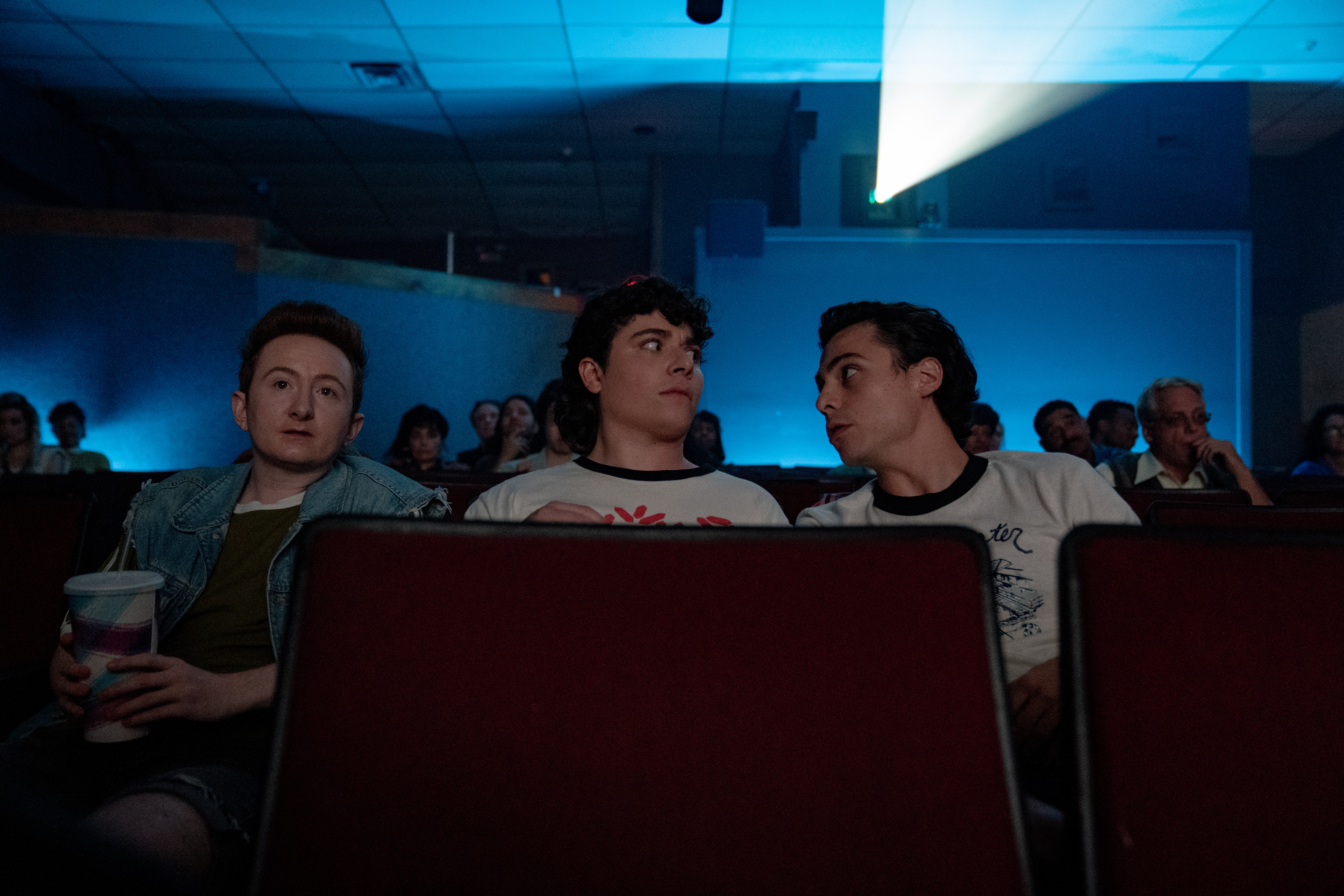
“The 4:30 Movie” is old-school Kevin Smith at his finest.  I had a blast with this movie, especially the fun soundtrack composed by the very talented Bear McCreary, who has made a name for himself in the horror genre with his tremendous musical stylings.  He did a great song in 2019 for the “Child’s Play” remake called “The Buddi Song” with Mark Hamill which I really enjoyed.  There’s also a song in this movie which is sure to be stuck in your head after you hear it.  You have great acting from the young actors, fun cameos, and a witty and sweet script. All of the ingredients are working here to make this one of the best Kevin Smith films in years.

* * * ½ out of * * * *

Should You See It?

“The 4:30 Movie” is opening in theaters on September 13th.  Considering the film is very much a love letter to the big screen experience, I would recommend you see it with some friends at the theater. I’ve noticed the film is playing in a lot of independent theaters around my area, which is the perfect way to see a film like this one. I loved this movie, and it left me with a big fat smile on my face.  It reminded me of why I go to the movies and why I love them in the first place.  It’s a feel-good movie as well.  This one comes highly recommended.

‘The Color Purple’ Movie and 4K Review

The following review was written by Ultimate Rabbit correspondent, Tony Farinella.

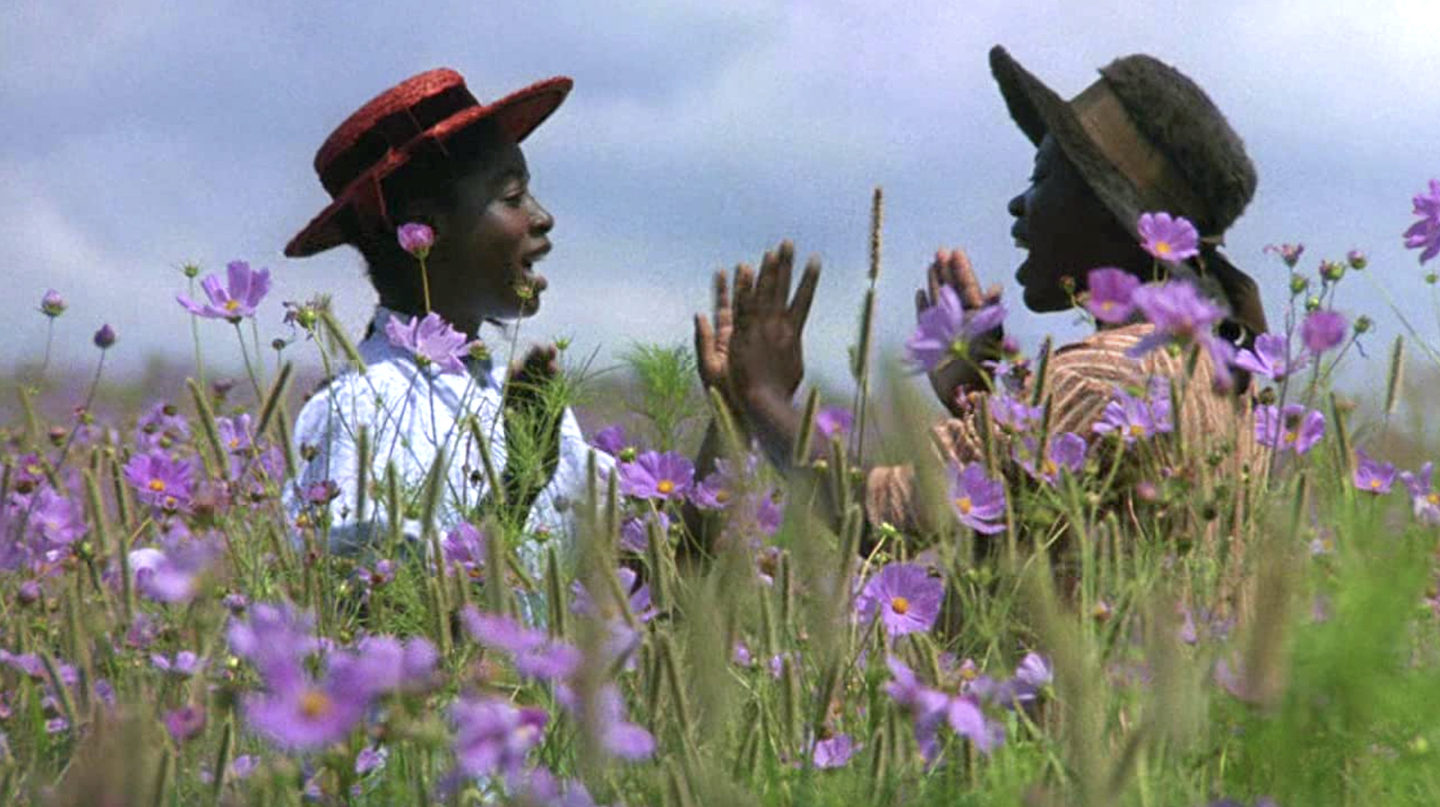
This was my first time having the pleasure of sitting down to watch “The Color Purple,” directed by the legendary Steven Spielberg. This is a director who has never been afraid to tackle any type of film project.  When watching this film, his trademark heart is clearly on display.  What makes it stand out and be as memorable as it is, though, is the terrific acting, especially from Whoopi Goldberg and Oprah Winfrey.  “The Color Purple” is based on the novel by Alice Walker, which I have not read, so my film review will be solely based on the film itself. I have no frame of reference to compare it to, and I think that is more than OK. Too often, people get caught up in comparing films to books, and in the end, they are two totally different mediums.  You will never be able to cover everything from the book because you are limited by the running time of the film.

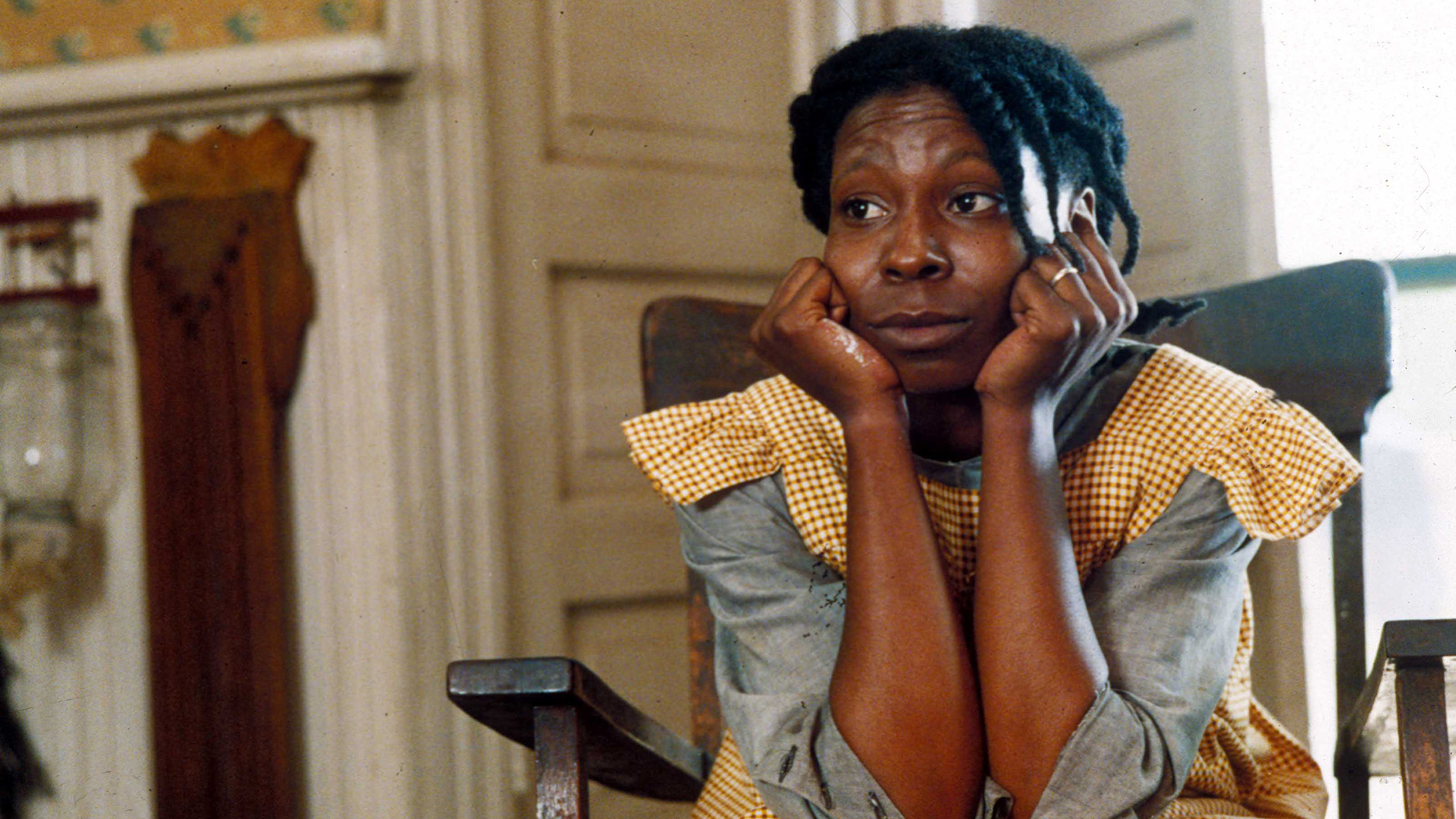
The film takes place from 1909 to 1943 in Georgia where we are introduced to Celie Harris (Whoopi Goldberg), a young teenager who already has two children, a boy and a girl, because she was raped by her father. Her father took the children from her and has essentially sold them off for profit.  Celie wonders where her children are and worries about them constantly, as any mother would when they are abruptly taken.  She was also married off, thanks to her father, to Albert Johnson (Danny Glover), an abusive man who makes her do anything and everything for him.  He beats her, forces her to have sex with him, and controls every aspect of her life. In his eyes, this woman serves one purpose and one purpose only, which is to take care of him. She even has to call him “Mister.”

During this time, she was separated from her sister, Nettie, played by Akosua Busia. When Albert came looking for a wife, he was initially interested in Nettie, but their father would not part with her and insisted on Celie going with Albert.  Celie is often told she is too skinny and ugly.  She sees inspiration in the strong-willed Sofia, played by Oprah Winfrey.  Sofia is not one to take guff from anyone in her life, but you wonder how long this will last before she is beaten down by the rampant racism she experiences.  We get to know another woman named Shug Avery, played by Margaret Avery, a flamboyant performer who has Albert Johnson’s full attention. Even though Shug comes with some baggage, she seems to know how to hold her own and capture the attention of men while remaining independent and tough. Celie is hoping to receive some letters from her sister Nettie, but she starts to wonder why they never show up and if her sister is even alive after they were separated.

“The Color Purple” covers a great deal of time and because of the amount of time it covers, four decades, it makes sense that the film is 153 minutes. This was one of those films where I rarely noticed the running time because it was a prime example of good old-fashioned Hollywood craftsmanship. When film critics and fans say things like, “They don’t make ‘em like they used to,” in my eyes, they are talking about films like this one, which was released in 1985.  It’s a drama made by adults for adults.  This is a serious subject matter, but it’s handled with Spielberg’s trademark warmth, tenderness and care. Because we spend so much time with Celie on her journey, we can’t help but root for her to overcome her circumstances.  We get to know her and the women close to her as they have made an impact on her life.

The film is incredibly patient in allowing things to slowly build up to its climax without ever feeling like it’s taking too long to get there. Goldberg is tremendous here.  She expresses a plethora of emotions on her face without ever overacting or doing too much. You can look in her eyes and see the pain and heartache of her character.  It’s a terrific performance, and I think people forget what a great actress she is when given the chance to show off her range of emotions. Of course, she won an Oscar for “Ghost” in 1991.  However, this is clearly the film she should have won an Oscar for, with all due respect to Geraldine Page.

“The Color Purple” does sometimes go off the beaten path with its narrative plot and, at times, it can spend too much time with one character in a specific time and place instead of sticking with Goldberg and her character’s story.  I was very, very close to giving this film four stars, especially because of the emotional weight which was incredibly powerful.  It earns the tears of the audience here by allowing things to build up and develop.  Winfrey is also really, really good here and earned an Oscar nomination for her performance in this film along with Avery.

One of the biggest criticisms of this film is that it was directed by a white director in Steven Spielberg. This is a film populated with a cast which is 95% Black.  I can see why audiences would take issue with that, but Spielberg is wise to stay out of the way of the material and the actors.  Even though some of his familiar touches are here, as mentioned earlier, it doesn’t feel like a typical Spielberg film.  He is sensitive to the story, and he does a terrific job of allowing the performances of his cast and the story itself to take center stage.  He’s more in the background here and, for once, it isn’t a bad thing.

* * * ½ out of * * * *

4K Info: “The Color Purple” is released on a single 4K disc from Warner Brothers Home Entertainment.  It also comes with a digital copy of the film.  The film is rated PG-13 and has a running time of 153 minutes.

4K Video/Audio Info:  This is another top-notch transfer from the folks over at Warner Brothers Home Entertainment. The HDR here really shines in some of the outdoor scenes which are lively and colorful.  It has a cinematic feel to it while also cleaning up the picture as well.  The audio track is also really solid, as this is a dialogue heavy film, and it’s easy to understand everything that is being said with a clean and crisp audio track here. Subtitles are included in English, Spanish and French.

Special Features:

Conversations with the Ancestors: The Color Purple from Book to Screen

A Collaboration of Spirits: Casting and Acting The Color Purple

Cultivating a Classic: The Making of The Color Purple

The Color Purple: The Musical

Teaser #1

Teaser #2

Trailer

Should You Buy It?

If you read my 4K reviews (and thank you if you do), you know what a big proponent I am of film history and preservation. In the year 2023, Warner Brothers has done their job in going through their extensive catalogue of films and bringing them to 4K and making them look bigger and better than ever.  There are a ton of important films in the Warner Brothers library that have received their day in court this year. In order for them to continue doing their job, we need to support their restorations of classic cinema, especially when they are done in such a magnificent manner, leaving no stone unturned. “The Color Purple” pops off the TV here and looks better than it ever has, thanks to this 4K transfer.  It sounds great as well. The film itself is an important piece of cinematic history that shows off great acting and tells a vital story with a great cast of actors and one of the best directors of all-time. At its current price point, which is around $23, this is a day one purchase on its December 5th release date.

**Disclaimer** I received a copy of this film from Warner Brothers to review for free.  The opinions and statements in the review are mine and mine alone.

‘The Return of the Living Dead’ Movie and 4K/Blu-ray Review

The following review was written by Ultimate Rabbit Correspondent, Tony Farinella.

The Return of The Living Dead” was released the same year I was born, 1985.  Even thirty-seven years later, it is clear to see the impact the film had on horror movies, specifically zombie movies.  It was a film which was truly ahead of its time. I remember watching and enjoying the Scream Factory Blu-ray when it was released many years ago, and I enjoyed it even more on 4K Ultra HD. The blood, the gore and the colors really are vibrant and stunning on this release.  This is a tremendous release from Scream Factory, and it is being released just in time for the Halloween season.  It’s a perfect addition to your 4K horror film collection.

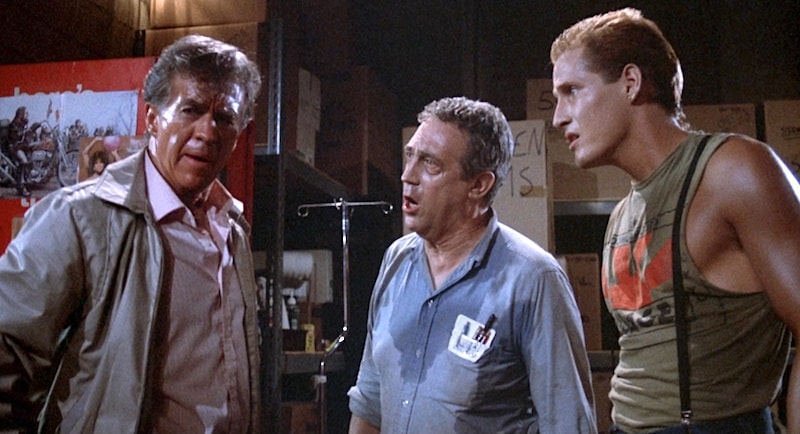
The film is just as funny as it is gory, which is truly saying something. This is not a simple task to pull off, as sometimes zombie films have a hard time with that balancing act.  “The Return of the Living Dead” opens up by introducing us to two lovable but goofy factory workers named Freddy (Thom Mathews) and Frank (James Karen), as they work together at the aptly named Uneeda medical supply warehouse. Frank is hoping to look cool in front of Freddy by showing him some of the dead zombie bodies they have lying around the warehouse. According to Frank, the filmmakers behind “Night of the Living Dead” were ordered by government officials to change certain aspects of the film in order to hide from the public that zombies are indeed real and were used for military purposes. Unfortunately for them, when toxic gas is released from one of the meat lockers, the zombies start to rise from the dead.

The only thing that will take away the pain of the zombies is eating brains.  These zombies really love brains, and they move a lot quicker than zombies we have seen in previous films.  Also, if you take off their head, the rest of the body is still mobile and able to attack.  The only way to truly kill these zombies is to burn them completely.  Before long, there are hundreds of zombies, and the police and the medics can’t keep up with them. Burt (the late Clu Gulager) is trying to navigate this situation as best as he can, but he’s also looking to save the good name of his company and not let the public know that two of his workers are responsible for this mess.

Freddy is part of a punk rock gang that likes to raise hell, listen to music and have a good time with sex, drugs, and rock n’ roll. Freddy’s gang is looking to help him, but they are also finding themselves in over their heads with all these zombies coming for them left and right. Freddy has a girlfriend named Tina along with some friends named Spider, Trash, Chuck, Casey, Scuz and Suicide. Meanwhile, Burt looks to his friend, Ernie (Don Calfa), for help in disposing of the cadaver zombie that was released thanks to his co-workers. Ernie wants to be helpful, but this is above his pay grade as a mortician.  Even though burning a zombie can kill it, it can also lead to toxic rain falling from the sky. This creates even more problems as it burns the skin and also brings more zombies to life from their graves.

This is one of many great things about “The Return of the Living Dead.”  There is nothing about the film which is cut and dry.  There might be a solution around the corner, as mentioned, but it doesn’t come without casualties or consequences. You also tend to feel a little bit of sympathy for these zombies, especially when you notice that Freddy and Frank are starting to become zombies.  They don’t want to eat brains, but it is the only thing that will stop their suffering and pain.  The zombies are also beautifully designed and look fantastic on screen.  Sometimes they pop up out of nowhere, and sometimes they come in large packs that move really, really fast.  These are complex and interesting zombies. These are not your average, run-of-the-mill zombies, and this is a big reason why this film has had such staying power.

“The Return of the Living Dead” also has a ton of quotable lines and quirky characters.  I don’t think I can keep a straight face when I hear the line, “It’s not a bad question, Burt.”  Every time I watch this film, I gain a new appreciation for it.  In my eyes, it is the perfect zombie film.  If I had to choose only one tiny issue with this film, and it is a minor one, it is the fact it ends rather abruptly.  Besides this little picadillo, this is my favorite zombie movie of all time.  Of course, I respect “Dawn of the Dead” and “Night of the Living Dead,” but from a pure entertainment standpoint and for the rewatch factor, “The Return of the Living Dead” is simply horror movie heaven for yours truly.  It is the film which keeps on giving with its gore comedy, and quirky cast of characters.

* * * * out of * * * *

4K/Blu-ray Info: “The Return of the Living Dead” is released on a 3-disc 4K and Blu-ray combo pack from Scream Factory.  One disc is the 4K of the film, another disc is the Blu-ray, and the third disc includes the special features on a Blu-ray disc.

4K Video/Audio Info: We are treated to this film on an absolutely stunning 4K Dolby Digital HDR transfer. As soon as the film started, I was sucked into how beautiful and bright it looked on my television.  They have done a brand-new 4K scan of the original camera negative, and it makes it one of the best-looking horror 4K’s of the year.  The bloody reds are a thing to behold, and the darks are also spot-on with this transfer.  Scream Factory has been on a roll lately. The audio track on the film is DTS-HD Master Audio 5.1, 2.0 with English subtitles.  I thought the audio was perfect, especially during the scenes involving some of the punk rock music.  I didn’t have to adjust my volume on this film at all. I was able to keep it at the same volume throughout the entire film.

Special Features:

DISC 1 – (Feature Film – 4K UHD)

·     NEW 2022 4K Scan of The Original Camera Negative

·     In Dolby Vision (HDR 10 Compatible)

·     DTS-HD Master Audio 5.1, 2.0

·     Audio Commentary with Gary Smart (Co-author of “The Complete History of The Return of The Living Dead”) And Chris Griffiths

·     Audio Commentary with Actors Thom Mathews, John Philbin and Make-up Effects Artist Tony Gardner

·     Audio Commentary with Director Dan O’Bannon and Production Designer William Stout

·     Audio Commentary with The Cast and Crew Featuring Production Designer William Stout and Actors Don Calfa, Linnea Quigley, Brian Peck, Beverly Randolph and Allan Trautman

·     Zombie Subtitles

·     In Their Words – The Zombies Speak

DISC 2 – (Feature Film – Blu-ray)

·     2022 4K Scan of The Original Camera Negative

·     DTS-HD Master Audio 5.1, 2.0

·     Audio Commentary with Gary Smart (Co-author of “The Complete History of The Return of The Living Dead”) and Chris Griffiths

·     Audio Commentary with Actors Thom Mathews, John Philbin and Make-up Effects Artist Tony Gardner

·     Audio Commentary with Director Dan O’Bannon and Production Designer William Stout

·     Audio Commentary with the cast and crew Featuring Production Designer William Stout and actors Don Calfa, Linnea Quigley, Brian Peck, Beverly Randolph and Allan Trautman

·     The Decade of Darkness – Featurette On ’80s Horror Films

·     Theatrical Trailers

·     TV Spots

·     Still Gallery – Posters, Lobby Cards, Movie Stills and Behind-The-Scenes Photos

·     Still Gallery – Behind-The-Scenes Photos from Special Make-up Effects Artist Kenny Myers’ Personal Collection

DISC 3 – (Special Features – Blu-ray)

·     “The Return of The Living Dead” Workprint – Includes 20 minutes of additional footage (in standard definition)

·     More Brains: A Return to The Living Dead – The Definitive Documentary on “The Return of the Living Dead.”

·     The FX of “The Return of the Living Dead” – with Production Designer William Stout, FX Make-up Artists William Munns, Tony Gardner, Kenny Myers and Craig Caton-Largnet, Visual Effects Artists Bret Mixon and Gene Warren Jr. and actor Brian Peck (Expanded Version)

·     Party Time: The Music of “The Return of The Living Dead” – with Music Consultants Budd Carr and Steve Pross and soundtrack artists plus musicians (Expanded Version)

·     The Origins of The Living Dead – An Interview with John A. Russo

·     “The Return of The Living Dead:” The Dead Have Risen – Interviews with cast members Clu Gulager, James Karen, Don Calfa, Brian Peck, Thom Mathews, Beverly Randolph, Linnea Quigley and More…

·     Designing The Dead – Interviews with Writer/Director Dan O’Bannon and Production Designer William Stout

·     HORROR’S HALLOWED GROUNDS – Revisiting the locations of this film

·     A Conversation with Dan O’Bannon – His final interview

Should You Buy It?

Do you have a perfect zombie movie? Check.  Do you have an outstanding 4K picture transfer? Check. Do you have a boat load of special features? Check.  This film is a day one purchase without any hesitation whatsoever. It comes out on October 18, and it is a great horror movie to watch during the spooky season of 2022.  If you haven’t already, you should pre-order this film from Scream Factory.  I promise you that you won’t be disappointed.  I can’t say enough glowing things about this movie or its 4K transfer.  When you factor in how rewatchable this film is (it only runs at 91 minutes), it’s the kind of film that is going to bring something new to the table for viewers each and every time.  It’s a ton of fun, gory, well-acted, cheesy in a good way, and it truly had something new to offer to the horror genre. If you have seen this film before, you have probably already pre-ordered it and can’t wait to watch it again on 4K.  If you haven’t seen it before, you are in for a big surprise when you watch this movie.  Once again, “The Return of the Living Dead” gets a top recommendation from yours truly.

Underseen Movie: ‘Let Me In’ – A Better Than Expected Remake

Let The Right One In” did not need a remake. The 2008 Swedish film was a brilliant atmospheric piece of cinema, and I find it endlessly frustrating when American audiences can’t embrace foreign movies more often. Do subtitles really have to be an impediment when they come across so much better than dopey English dubbing?

Regardless, its American remake “Let Me In” turns out to be a big surprise. Just when I was convinced Hollywood studios would simply dumb the story down to attract a youthful demographic, Matt Reeves’ take on John Ajvide Lindqvist’s novel, which in turn inspired Tomas Alfredson’s movie, is amazingly respectful to its source material. Moreover, you can see throughout how the story deeply affected Reeves and how he personalized the actions of the characters on screen.

The story remains the same, but the characters’ names have been changed to protect the original. The setting has been moved to Los Alamos, New Mexico which, amazingly enough, appears to be as snowy as Sweden. The year is 1983 and Ronald Reagan is President of the United States, talking about the “evil empire” on television. The advantage of this film being set in the 1980’s, however, is that the characters don’t have to worry about not getting any cell phone reception because they don’t own cell phones. This makes it especially lucky for the filmmakers because they won’t have to make any stupid excuses for cell phones not working.

Owen (Kodi Smit-McPhee) is a 12-year-old boy who lives with his alcoholic mother (we never get a clear view of her face) and has no real friends to speak of. At school, he is constantly harassed by bullies who thoughtlessly subject him to even more humiliating tortures than what Oskar dealt with in “Let The Right One In.” Eventually, he comes in contact with Abby (Chloë Grace Moretz), a girl who looks to be around his age, who has moved into his apartment building next door to him. Although she tells Owen they can’t be friends, a strong bond soon forms once he gives her his Rubik’s Cube to play with. She ends up solving it in a way which doesn’t involve cheating. My brother would have just taken the stickers off the cube and put them back on with the colors altogether.

I really do mean it when I say the humiliations Owen endures here are even worse than what Oskar went through to where I came out of this remake believing Oskar had it easy. Reeves, who has directed “Cloverfield,” “Dawn of the Planet of the Apes” and “War of the Planet of the Apes,” really captures how kids can be utterly cruel to one another, and it will bring back memories for those of us who were humiliated in ways which left a wealth of psychological scars. Seeing him practice his revenge on the bullies all by his lonesome makes made me sadder as what we imagine doesn’t always jive with reality. While the kids at times put up a tough façade, their vulnerability is clearly evident in their eyes.

As the movie goes on, the fact Abby is a vampire, or a bloodsucker if you want to call her that, becomes a side issue. She and Owen are just two kids, one whom is older than they appear, who are struggling through the painful awkwardness of growing up. When they come in contact, they for once have someone they can relate to. Both Kodi Smit-McPhee and Chloë Grace Moretz are perfectly cast, and each has moments where their faces say more than words ever could.

McPhee previously starred in for “The Road” where he played Viggo Mortensen’s’ son, and he inhabits Owen with all the isolation and helplessness the role has to offer. Chloë Grace Moretz did this after her amazing breakout performance in “Kick Ass,” and as Abby shows a strong maturity beyond her years. But I really have to applaud the adult actors who, while they don’t have as much screen time as their younger colleagues, give depth to characters that could have just been simple clichés. Richard Jenkins, still one of the most dependable character actors, plays Abby’s guardian, Thomas. Through his scenes with Moretz, he shows a caring man whose relationship with this girl has lasted longer than we could ever imagine. Jenkins makes us sympathize with this man even as he commits horrible acts for the sake of Abby’s survival. When we first meet Thomas, he has become wearier with the passing of time and the dark deeds which have weigh heavy on his soul.

Equally impressive is Elias Koteas who plays a police detective whose name never gets mentioned. The beauty of his acting here is how incredibly subtle he is to where he fully inhabits his character with what seems like relative ease. This could just have been the typical policeman whom the audience is manipulated into despising, doing all the stupid things cops do in movies. But Koteas instead gives the character a deep humanity to where you respect him even as you fear what he will do this Romeo & Juliet couple in the making. This is just a regular guy doing his job, and this makes his eventual fate all the more tragic.

“Let Me In” is not your typical jump-out-of-your-seat horror movie. There are a few jump scares, but the horror comes out of what cruelty people are subjected to, be it on the playground or anywhere else in town where you get your blood drained (and not by the Red Cross mind you). It also comes from where the line between what’s right and wrong becomes blurred as we ask ourselves if we can pull away from the people we love so much just to set things straight. What would we give up in the process?

As an American remake of a foreign film, I figured Hollywood would just change the story to where the good guys get the bad guys and justice wins out in the end. You know, the typical kind of plot designed to make us all feel good. To my astonishment, Reeves never veers in that direction once, and he has made a film whose climax is left up to the viewer to interpret. Nothing is ever easily spelled out for the audience, and I admired him for staying true to the source material.

If there is a drawback to “Let Me In,” it’s that in being respectful to “Let The Right One In,” not much has changed. For those who loved the 2008 movie as much as I did, there is much to admire but few surprises to be had. Many of the situations remain the same as before while certain characters in the background get more or less depth than they previously did. And there is all that snow like before, but it looks very beautiful and it’s a character of sorts in this movie. While Reeves doesn’t break new ground with this interpretation, we can see how deeply he relates to Lindqvist’s novel and its characters. In the end, “Let Me In”’ is not a vampire movie as much as it is one about childhood and how rocky a road it is for some more than others, especially for those who don’t grow old. It’s Reeves’ depth of feeling which informs this film, and it gives this remake a power I never expected it to have.

Oh yeah, there is 1980’s music to be heard throughout, but I kind of wished they put some more of it in here. I still love listening to music from that crazy decade, and it would have been cool to see some bloodletting done to the music of REO Speedwagon, Hall & Oates, or even Journey. How about something by Air Supply or Chicago? Oh well…

* * * ½ out of * * * *

‘Private Eyes’ by Hall & Oates – My First Vinyl Album

Private Eyes album cover

Hall & Oates’ 1981 album “Private Eyes” was actually the first vinyl record I ever got which I could call my own. Years ago, my mother offered to buy me and my brother one vinyl record each, and we were both really excited at the prospect of having one of our own since our parents owned several dozens of them, many of them by Fleetwood Mac and The Beatles (they have great taste in music). I don’t remember exactly why my mom did this. Maybe we were well behaved or something (a rarity for the two of us as kids).

Anyway, my brother got this KTEL album (remember those?) called “Radioactive‘ which featured popular songs of the moment from Devo (their cover of “Working in a Coalmine” is one of my favorites), REO Speedwagon, Rick Springfield and Blondie among others. “Radioactive” was the equivalent of those “Now That’s Music” CD’s which get released every other month, but the music on this particular album was excellent and never groan inducing, and it was a good selection by my older brother.

But for me, my choice was clear from the start, and it represents one of my most decisive decisions at a video or music store.

I first got exposed to “Private Eyes” when I was in Kindergarten thanks to my friend Matthew who lived down the street from me in Marietta, Georgia. Matthew had the album on cassette and we kept listening to the title track endlessly, and when those claps came into play, I made it look like I was punching myself. This made the two of us laugh hysterically, and we didn’t listen to much else on the album at the time. That one song seemed to be enough for the two of us.

But later, we started to listen to “I Can’t Go for That (No Can Do)” which I had heard on the radio, but I didn’t realize right away it was also on the “Private Eyes” album. Cool, I thought, this tape must have a lot of good songs on it. Sure enough, it did! Just before I got the album on vinyl, “Did It in A Minute” became Hall & Oates’ latest hit song. Getting “Private Eyes” at that point seemed like a do or die mission in retrospect. Come to think of it, it was!

I still have a lot of memories from listening to this definitive Hall & Oates album after all these years. My brother and I were dancing without a care to these songs, especially to “Did It in a Minute.” This was back before we both became saddled with those inhibitions which more or less came to define the adults we are today. Sometime later, my family moved from Marietta, Georgia to Thousand Oaks, California, and “Your Imagination” started playing on KIIS FM, back when Rick Dees was the morning disc jockey. I thought it was a very cool song, and I later realized it was also on the “Private Eyes” album as well. For me, this album now seemed so magical because it had so many great songs on it, and if there was a song I heard on the radio which I liked, it had to be from this album!

“Private Eyes” was just an infinitely fun album to listen to, and this is still the case more than 30 years after its release. It is one of several records from the 1980’s I can never get sick of listening to, and it always brightens my mood whenever I put it on. Hall & Oates went on to become a dominant musical duo during the 80’s with this album as well as “H2O” and “Big Bam Boom,” but neither of those albums, despite having some awesome tracks, could hold up as well as “Private Eyes” did.

Of all the songs here, I still think the best one is “I Can’t Go for That (No Can Do).” While the other songs might seem stylistically dated, this one feels timeless and could fit in with the music of today. For a time, it was the ring tone on my cell phone, and when went off in the office I used to work in, a fellow colleague remarked about how Hall & Oates once auditioned for Smokey Robinson. Robinson ended up not hiring the duo, and he later admitted it was one of the biggest mistakes of his life.

Of course, I don’t want to leave out other songs like “Did It in a Minute” which ends the first side of the record. A great up-tempo song, it was one which got me really excited about life when I listened to it (I was 5 or 6 at the time, so what did I know?). Going onto the second side, we have “Head Above the Water” which proves to be an appropriate selection to listen to during aerobic exercises. Lesser known songs like “Tell Me What You Want” and “Some Men” resonated strongly for me even when I didn’t understand the lyrics. Then again, it took me a long, long, long time after the first grade to really pay attention to a song’s lyrics. The music itself was all that mattered to me at the time.

I always kept wondering about John Oates though. Daryl Hall was always the most prominent of the duo, and John seemed to be there mostly as backup. I wonder if Mr. Oates ever got seriously resentful of Mr. Hall in a “Fatal Attraction” kind of way. But they are still together, so I guess it never got quite that bad. John, however, proved he is every bit as good a singer on songs like “Mano a Mano” and “Friday Let Me Down,” a song title which would have a depressing significance on me during my adolescent years. It didn’t even matter how I had no idea what “Mano a Mano” meant (it would be several years before I took my first Spanish class) because the song itself has a catchy rhythm which every decent 80’s song needed to have.

It should also be noted how Hall & Oates were a big hit on the R&B charts with their music back then, and this was a rare feat displayed by what some would call a “white act.” While many of us today may laugh at white people doing what others simply saw as “black music,” this musical duo was never seen as a joke, and they were respectful of the influences which inspired their musical choices. The song “Looking for a Good Sign” was actually dedicated to the original lineup of The Temptations, a huge influence on their work. The duo would later perform with two of the vocalists from The Temptations on the “Live at The Apollo” album.

“Private Eyes” is not an album with any big theme to hold all these songs together. It is not a concept album like Pink Floyd’s “The Wall,” an album which took me many years to fully appreciate. In the end, “Private Eyes” is still an endlessly entertaining album which can never be construed as boring, and it holds up really well. I still love listening to this album to this very day, and it remains one of my favorite albums of all time. Considering how it was my first vinyl record, it will forever hold a special place in my heart.

Years later, I did purchase the remastered CD of “Private Eyes, but I do still have the original vinyl record in my possession. Believe me, I will never get rid of it. Ever.


‘Ready Player One’ Revels More in the Virtual World Than in Reality

Ready Pkayer One movie poster

Ernest Cline’s “Ready Player One” is a novel I could see a lot of directors being ever so eager to turn into a motion picture. Edgar Wright, Guillermo Del Toro, Robert Zemeckis and even (gasp) Michael Bay would have had a blast bringing to life the virtual world Cline wrote about to where the possibilities of what they could bring to the silver screen seem infinite. In the end, it makes perfect sense Steven Spielberg was the one to adapt it as no other filmmaker has captured our collective imaginations as much as he has.

The year is 2045, and Earth has long since become consumed by pollution, corruption and climate change (which is real folks, don’t let anyone tell you different), and its inhabitants, those situated in the middle or lower classes, are consigned to mobile trailers which are stacked on top of one another. While this cannot be mistaken for a glamorous lifestyle, many clueless politicians and wives of U.S. Presidents would be quick to describe them as FEMA luxury suites. Looking at how barren their existence has become, it’s no wonder these characters prefer a virtual reality as opposed to the one they are forced to live in and endure on a daily basis.

Everyone, and I mean everyone, manages to escape their depressing reality in the OASIS (Ontologically Anthropocentric Sensory Immersive Simulation), a VR world which allows its users to engage in activities of either an educational, entertaining, or a profitable kind. You can be any avatar you want to be whether it’s Freddy Krueger or Godzilla, and you go into it believing it will allow you to be a somebody instead of a nobody. But eventually, even its most devoted users need to find a way to better deal with the real world as a line between the two needs to be drawn.

One of the OASIS’ most devoted users is Wade Watts (Tye Sheridan), an 18-year-old who lives in the slums of Columbus, Ohio with his aunt. It’s no surprise how quick he is to dive into this virtual world, but his reasons for doing so run much deeper than we initially realize. We learn the OASIS was created by James Halliday (Mark Rylance), an eccentric computer genius with an incredible love for 80’s pop culture. Halliday has since passed away, but he has left behind a trail of bread crumbs in the form of Easter eggs for his fans to discover. The first to find all these eggs is promised full ownership of the OASIS among other desirable gifts. Of course, there is a corporation, or a video game conglomerate if you will, named Innovative Online Industries (IOI) which is determined to gain ownership of the OASIS before anyone else. Will the rebellious users beat the greedy corporation to the finish line? Well, the answer might have seen obvious in the past, but these days it looks like the bad guys get away with far too much in the real world.

“Ready Player One” is essentially a combination of “Willy Wonka and the Chocolate Factory” and “Tron” as our protagonists are on the search for something which will fulfill their wildest dreams, but they have to find it in a world where the laws of nature do not necessarily apply. And when it comes down to it, the winner will not be someone who is the best at gaming, but someone with a good heart who wants to do the right thing, and who has a strong spirit. Finding someone like that in this day and age, let alone in the future, is an ambitious task as everyone appears susceptible to greed and corruption, but the filmmakers went into this project with the full belief such a person still exists, and a world without hope is not one we should be quick to live in.

The challenge Spielberg has with “Ready Player One” is balancing out the real world with the wondrous virtual world the characters are ever so eager to inhabit. But with all the tools he and his fellow filmmakers had at their disposal, it is easy to see how lopsided the balance is here. Spielberg clearly revels in amazing visual effects he can put onscreen. Watching this movie just once is not enough as there are an infinite number of Easter eggs to discover and acknowledge. While you may easily recognize such pop culture artifacts like Freddy Kruger and the DeLorean time machine from “Back to the Future,” there are so many others to acknowledge here to where you will be very surprised at what Spielberg and company were able to fit into a PG-13 movie.

When it comes to the real world, I feel Spielberg could have done more to distinguish it from the OASIS. This man did give us “Jaws,” “Close Encounters of the Third Kind,” “Raiders of the Lost Ark” and “E.T.,” movies which exceeded anything our imaginations could conjure up. Years later, however, he gave us “Schindler’s List,” “Saving Private Ryan” and “Munich,” films which did not shy away from the horrifying reality people are forced to endure. Surely Spielberg would be able to balance out the real world from the imaginary one to where we can see the difference between them or at least determine which one is more important to live in, right?

Well, “Ready Player One” functions a lot like the original “Jurassic Park” in that the spectacle gets the majority of attention while the human element suffers in comparison. But like “Jurassic Park,” Spielberg still has us captivated with incredible visual effects which leave us in complete awe. As the movie goes on, the avatars of the main characters start to look and feel more real than I expected, and this makes up for the limited character development they receive throughout. Cline co-wrote the screenplay with Zak Penn, but it feels like everyone could have gone a bit deeper with the material.

On a personal note, I loved how Spielberg digs deep into 1980’s nostalgia. Being a child of this decade, I still very much enjoy the music and movies which came out of it. To his credit, Spielberg doesn’t reference his own movies here, regardless of the fact they play a big part in Cline’s book. It’s also great to hear the music of Alan Silvestri here as his themes from the 80’s, particularly those from “Back to the Future,” never grow old. Silvestri’s score here references a number of pop culture classics, and I’m sure you will recognize many of them.

Tye Sheridan has turned in terrific performances in “The Tree of Life,” “Mud” and “Joe,” and he fits comfortably into the role of the typical young Spielberg hero who is wise beyond his years and smarter than the average adult. Olivia Cooke is a wonderful and strong presence as Samantha Cook, a fellow OASIS player whose avatar goes by the name of Art3mis. Ben Mendelsohn also shows up as Nolan Sorrento, the infinitely greedy CEO of IOI who is determined to gain full control over the OASIS. It’s a lot like the character Mendelsohn played in “The Dark Knight Rises,” but this time he is playing someone who believes they are in charge and actually is.

But if there is one performance worth singling out here, it is Mark Rylance’s as James Halliday, the main creator of the OASIS. Rylance makes Halliday into a wonderfully eccentric character whose social skills could use a bit of work, but whose heart shines through in everything he has created and accomplished. Not once does this Oscar-winning actor make Halliday into a caricature of Steve Jobs and instead presents us with a human being desperate to find someone in this world who has not been completely corrupted by the powers that be.

“Ready Player One” will not go down as one of Spielberg’s best movies, but it is far from being one of his worst. The visuals alone are worth the price of admission and watching it once will not be enough as there are so many Easter eggs to identify. Heck, if you close enough, you can even spot a poster with Wil Wheaton on it. While its message of how important it is to spend more time in the real world than the virtual one might seem a bit hypocritical, this movie was directed by a man who knows the difference between the two to where he doesn’t have to prove to us that he knows this. Still, on a story and character level, this could have dug deeper beneath the surface.

* * * out of * * * *


‘It’ Proves To Be one of the Best Stephen King Movies in a Long Time

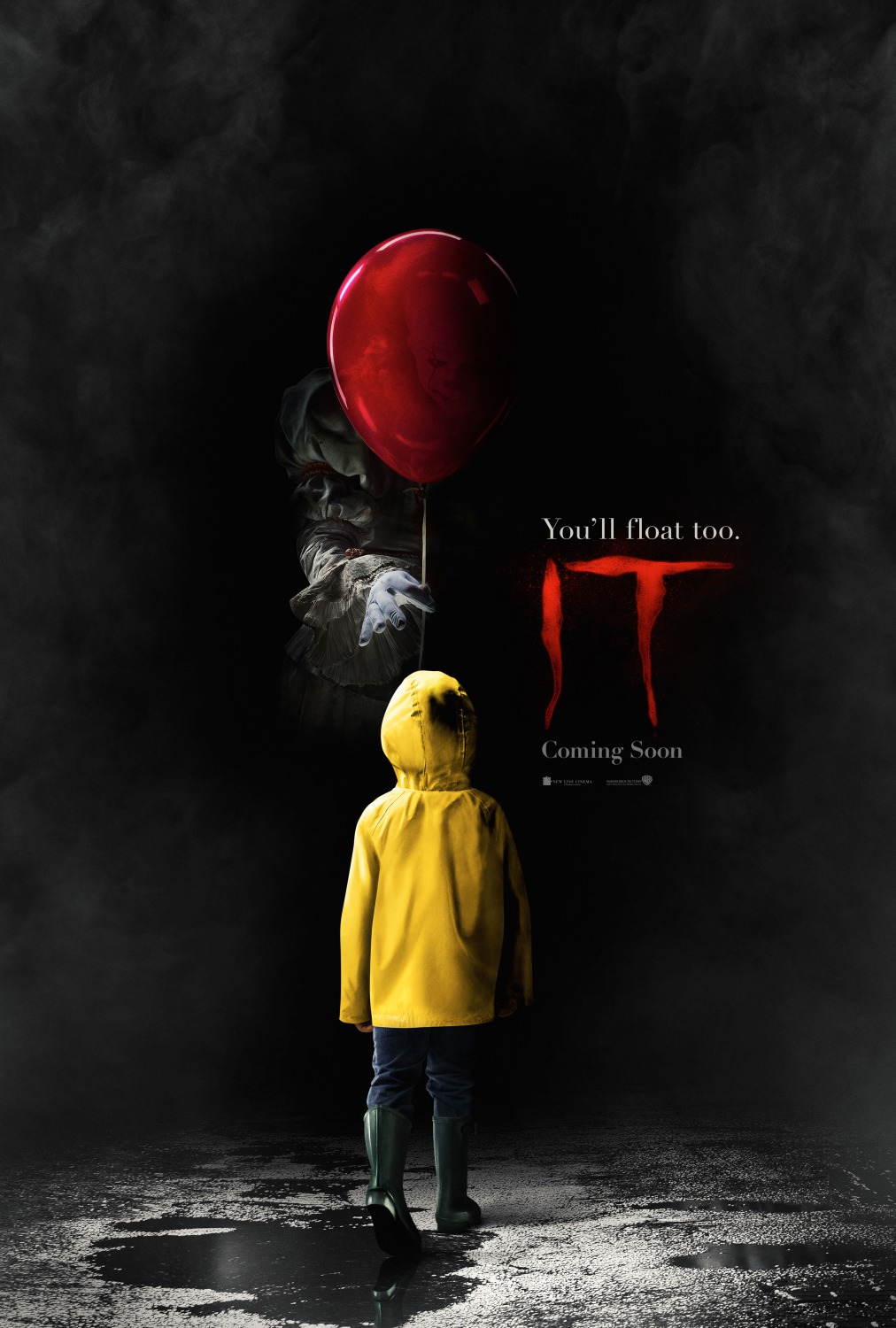
It teaser poster

It” isn’t just one of my favorite Stephen King novels, it’s also one of my favorite books ever. On one hand, it is a terrifying tale of a malevolent force who takes the form of a clown and feeds on the fearful children living in Derry, Maine. On the other, it is a thoughtful and deeply felt examination of kids who are forced to endure a tougher childhood than anyone ever should. I read King’s massive novel (1,138 pages) back when I was a teenager, and it made me realize it was okay to be different than others. Looking back, it also reminded me of a line of dialogue from one of my all-time favorite movies, “Pump Up the Volume:”

“High school is the bottom. Being a teenager sucks, but that’s the point. Surviving it is the whole point.”

For those who have read this novel, you can see how it is more about the kids than it is about Pennywise the Dancing (not to mention incredibly vicious) clown. Thank goodness director Andy Muschietti realized this when he came on to direct the long-awaited film version of “It.” While Muschietti delivers the requisite thrills and chills a horror film like this one demands, he keeps a very observant eye on the kids and the conflicts they are forced to endure, and I don’t just mean Pennywise.

The film focuses on the book’s first half when the members of “The Losers’ Club” were suffering the slings and arrows of daily life at school. But while King set this half in the 1950’s, Muschietti moves things up to the 1980’s, a time of Ronald Reagan, calculator watches, New Kids on the Block, and movies like “Gremlins” and “Beetlejuice” which, like “It,” were released by Warner Brothers. This was a decade defined by greed, but for these kids, it was a time of innocence which would be destroyed for them far too quickly.

“It” was previously made into a wonderfully entertaining television miniseries by Tommy Lee Wallace, but Muschietti lets you know right from the start how the censorship of American television was not going to apply here. Little Georgie Denbrough suffers a most terrible fate when Pennywise bites his arm off and drags his body into the sewer, and even if you know this event is coming, it is still chilling to witness as this is the kind of thing movies typically avoid showing. From there, I couldn’t help but remain in a state of heightened anxiety as while I knew what was going to happen, the safety of network television was not around to reassure me about the horrors I was going to witness.

The misery and sufferings of The Losers’ Club feel much more unnerving on the silver screen than on television. It’s especially galling to see poor Beverly Marsh get wet garbage poured all over her in the bathroom as she has become the victim of unsubstantiated rumors that she is promiscuous. But judging from the moment she when she puts her backpack over her head for protection, she has been dealing with this stigma for a very long time. Or how about Ben Hanscom, the overweight new kid in town who has zero signatures in his yearbook, one of the saddest sights the audience is forced to take in here. While these kids’ sufferings don’t feel as raw as what Sissy Spacek endured in “Carrie,” it’s still easy to feel for these kids who have been cast out of what is perceived to be the realm of normal.

Heck, even their parents prove to be an emotionally distant, and if they are not, they instead prove to be ridiculously overprotective. Beverly’s father seems to care for her a little too much, and this care seems to imply crimes more insidious than our imaginations can ever handle. Eddie Kaspbrak’s mother is determined to keep him safe from any and every germ planet Earth has to offer, and at times she threatens to be as scary as Pennywise due her raising her son as if he is the reincarnation of Howard Hughes. As for William Denbrough, things will never be the same between him and his parents following the death of his brother Georgie.

There’s some passage in the Bible which says God only gives you what you can handle, but the members of The Losers’ Club have far more than anyone should ever be made to handle, and this is made clear before Pennywise begins to disrupt their unfairly depressing lives. As a result, they need each other to get from one day to the next, and the strength they have together allows them to be a formidable force against Pennywise. Muschietti’s attention to these kids’ struggles makes this film very effective as we come to care for them deeply, and this makes their stand against this homicidal clown all the more involving.

Speaking of Pennywise, Bill Skarsgard makes him into the freakiest clown and scarier than any clown Rod Zombie could come up with. Whereas Tim Curry’s Pennywise was at first approachable and then murderous, Skarsgard’s is vicious right from the get go whether the kids realize it or not. Even before those set of jaws come out, Skarsgard more than reminds the audience of how clowns have always been creepy, and he makes Pennywise into the clown who gleefully inhabits all our nightmares.

So where do I rank this particular Stephen King adaptation among the many already unleashed on the public? Hard to say. It is easily one of the best King adaptations in a while, but it is not as scary as “The Shining” or “Carrie.” This is not a motion picture filled with jump scares every 5 minutes as Muschietti is more in creating something which is infinitely chilling and suspenseful. What results is a highly entertaining movie which never feels like a simple remake of the miniseries. He is also blessed with a terrific cast of actors who are not afraid to embrace the depressing natures of their characters. I just hope none of them have to deal with this shit in real life.

I’m also thrilled no one tried to fit the whole book into one movie. There’s no way you could have done that without messing everything up. There was already talk of a sequel long before this movie even opened, and this is a sequel I am more eager to see than any “Star Wars” movie which has yet to be released. It’ll be interesting to see how The Losers’ Club will transition from childhood to adulthood as they attempt to put the past behind them. But as Peter Gabriel once sang, “Nothing fades as fast the future. Nothing clings like the past.”

* * * ½ out of * * * *

Oliver Robins Looks Back on ‘Poltergeist’ at New Beverly Cinema

oliver-robins-photo

On Thursday, August 16, 2012, Oliver Robins dropped by New Beverly Cinema to talk about the making of “Poltergeist.” Robins played Robbie Freeling, the boy who was terrified of that weird looking tree looming outside his bedroom window. These days Robins works as a filmmaker, but he explained how his time on the set of “Poltergeist” truly inspired him to make movies, and he helped debunk certain myths which continue to surround it years after its release.

Robins came up to the front of the audience after “Poltergeist” finished showing, and he talked about how he grew up at the New Beverly and discovered many movies which he might not have seen otherwise. He also remarked at how Steven Spielberg, who wrote and produced “Poltergeist,” gave him an 8mm camera as a present, and how the camera and the movie inspired him to become a filmmaker.

poltergeist-movie-poster

In talking about how he got cast, Robins said he had no real acting experience beforehand and that his only previous acting job was in a fertilizer commercial. The audition for “Poltergeist” was actually an open call which had hundreds of people coming down to be considered. Robins recalled having to wait for hours before he got inside to talk with the casting directors. When he did, they looked at him as being the true incarnation of Robbie as he talked about how he had lived in a haunted house while in New York.

Spielberg and director Tobe Hooper, however, were concerned because Robins couldn’t really scream, and they ended up getting a coach to help him learn how to. It got to where Robins was practicing his screams in his closet, and the neighbors began to wonder if there was any child abuse going on in his home. When he proved to the filmmakers he could indeed scream, Robins was informed he got the part.

When asked if a bond had formed between him and his fellow cast members, Robins told the audience “Poltergeist” was rushed into production and that there was no time for rehearsal. He did say, however, that JoBeth Williams, who played his mother Diane, really was a mother to him throughout the production.

One scene which really stands out is when Robbie’s father, Steven (played by Craig T. Nelson), teaches him how to count after lightning strikes to determine the distance between it and the sound of thunder. Robins remarked how Nelson was a comedy writer before he became an actor and that he made the set of “Poltergeist” very light-hearted as a result. Robins even remarked how working on the movie allowed him to stay up all night which he loved, and Nelson ended up telling him after one crazy night of filmmaking, “This is just another night in Simi Valley!”

Another famous scene from “Poltergeist” is when the tree comes through the window. Robins explained what ended up being 30 seconds of screen time where he got attacked by the tree ended up taking two weeks to film. Now this was back when digital effects were far from being a reality, so all the effects we see in the movie are real. Robins also pointed out there were several different trees being used for this sequence; one with roots, one where the branches reached out at him, and another which tried to eat him.

Robins described the tree sequence as being the most tedious and complex to film, and that he ended up spending much of the time being covered in molasses. He said being covered in that substance makes your body temperature drop precipitously and that he had to emote in his scenes in order create believability.

oliver-robins-in-poltergeist

Now there is an infamous story on IMDB of how when Robins gets attacked by the toy clown, he got choked for real and yet Hooper and Spielberg thought he was really acting. It was later said that when Robins face began turning purple, the filmmakers rushed over to remove the clown’s hands from around his neck. To this, Robins response was, “Maybe that did happen, but I can’t remember. Maybe I blocked it out of my conscious mind.”

When asked what it was like working with his sisters who were played by Heather O’Rourke and Dominique Dunne, Robins said it was great and that they both felt like real sisters to him. He also remarked at how Hooper and Spielberg were cool to him and other actors about wanting to change their dialogue. As a result, there proved to be a lot of ad-libbing on the set of “Poltergeist.”

There is also this ongoing story of how there were two directors on the set of “Poltergeist.” While Hooper’s name is listed as the film’s director, many believe Spielberg had the most influence. Robins, however, cleared up these rumors once and for all:

“There was only one director on set, and that was Tobe Hooper. Spielberg did write the story, but Hooper was the only one who directed me. It does feel like a Spielberg movie and he did work closely with Hooper on this project. In many ways it was a team effort, but Hooper was the true director of ‘Poltergeist.’”

Robins was also asked what it was like filming the scene between him and Beatrice Straight who plays Dr. Lesh where she tells him what she felt the true nature of ghosts were. He said Straight made him feel like he was really talking with someone who knows about ghosts, and this kept their performances from ever feeling forced.

It was great to hear Oliver Robins talk about the making of “Poltergeist” and to hear him dispel several myths about the 1982 movie. Since making that classic movie, Robins has retired from acting and went on to graduate from USC’s film school to where he has since become a very gifted filmmaker in his own right. His work in the Tobe Hooper-directed movie will continue to stand the test of time.


Save

X-Men: Apocalypse

X Men Apocalypse poster

In the whirlwind of superhero movies which have come out in 2016, “X-Men: Apocalypse” ends up being sandwiched between “Captain America: Civil War” and “Batman vs. Superman: Dawn of Justice.” Like those two, “X-Men: Apocalypse” has far too many characters and plotlines to deal with, and its running time is much longer than it needs to be. But while this “X-Men” might not reach thrilling heights of “Captain America: Civil War,” it is far more enjoyable than the dour affair that was “Batman vs. Superman.” Still, after “X-Men: Days of Future Past,” this entry does feel like a comedown for the long running franchise.

The movie takes place in the 1980’s; a time of synth pop, “Knight Rider,” Ronald Reagan and “Return of the Jedi” among other things. The newest threat to both humans and mutants alike is En Sabah Nur, better known as Apocalypse, the world’s first and most powerful mutant. The movie starts off with him being entombed in a rocky grave after being betrayed by his followers, but he is awakened in 1983 and finds humanity has lost its way because, as he sees it, humanity was without his presence. As a result, he vows to destroy the world and remake it, and this time the X-Men may have a foe too powerful for them to defeat.

Playing Apocalypse is Oscar Isaac who enters yet another incredibly successful franchise after leaving his mark on another in “Star Wars: The Force Awakens.” In a way he is undone here by the large amount of makeup he is forced to wear as it threatens to rob him of his charisma. Seriously, the less makeup you put on Isaac the better as he can lock you in place with just a look from his eyes. Regardless, he is still very good here as he holds his own opposite actors who have been veterans of this franchise for quite some time.

Many of the “X-Men: First Class” cast return as well like James McAvoy, Jennifer Lawrence, Nicholas Hout, Michael Fassbender, Rose Byrne and Evan Peters. It’s great to see them all back as they are still deeply invested in these famous comic book characters as always. McAvoy, portraying Professor Charles Xavier/Professor X, shows just how mentally exhausting it is to fight an antagonist with only your mind. We also get to see how Charles lost his hair, and we leave the theater wondering how his eyebrows managed to remain intact.

Lawrence remains an enthralling presence in any movie she appears in, and she makes Raven/Mystique another in a long line of wounded warriors. The Oscar winning actress makes this comic book character into a hero as reluctant as Katniss Everdeen, and we feel for even as she feels she deserves no respect because of her regretful mistakes. While Raven/Mystique has been an antagonist for many of the “X-Men” movies, Lawrence makes her a complex character who comes to see what she must fight for most.

Erik Lehnsherr/Magneto has a setup like Logan/Wolverine had in “X-Men Origins: Wolverine” in which he’s found peace but eventually sees it completely destroyed to where the only thing on his mind is vengeance. It’s a familiar setup we have seen many times, but whether or not you know how Magneto will end up in this mutant tug of war, it’s worth just seeing Fassbender inhabit this role once again as he is riveting for every second he appears onscreen. Compare him all you want to Sir Ian McKellen, Fassbender imbues this iconic comic book character with a lot of raw emotion which will not leave you unmoved.

Evan Peters steals the show once again as Peter Maximoff/Quicksilver, the man who can move at supersonic speeds and yet still lives in his mother’s basement. Peters had one of “Days of Future Past’s” best scenes which was set to the tune of a classic 70’s song, and he does his thing here yet again to an 80’s song. It has been said that the next “X-Men” movie will take place in the 90’s, so we’ll have some time to guess what classic grunge song he will be saving the day to.

A number of other X-Men return as well, but this time played different actors. Kurt Wagner/Nightcrawler finally returns to the franchise for the first time since “X-Men 2: X-Men United,” and he is played by Kodi Smit-McPhee who gives the character a good dose of humor. Alexandra Shipp takes on Storm and sports a mohawk which is as fierce as her attitude, so watch out. The terrific Tye Sheridan portrays Scott Summers/Cyclops, and this character gets fleshed out in a way we have not seen previously. “Game of Thrones” star Sophie Turner appears here as Jean Grey, and it’s great to see the actress portray Jean’s dark side which is her gift and her possible undoing in the future.

With Bryan Singer returning to the director’s chair for his fourth “X-Men” movie, you can’t help but walk into “Apocalypse” with high expectations. Both he and screenwriter Simon Kinberg have too many characters to deal with to where several are not developed fully enough to be satisfying, and others are simply there for dramatic conflict. The mutant hating William Stryker returns, but the character barely registers this time around. We also get introduced to new mutants like Psylocke whose talents seem no different from others like her, and more could have been done to make her stand out. However, it should be noted that Olivia Munn fills out Psylocke’s uniform very well.

But even with its inescapable flaws, Singer still makes “X-Men: Apocalypse” a summer blockbuster packed with action, and the movie also hits you on a deep emotional level. We’ve been following these characters now for nearly a dozen movies, and we still care about their predicaments regardless of whatever timeline they are living through. Other directors in this franchise, with the exception of Matthew Vaughn, have not had the same success in engaging us as Singer has, and he continues to set the bar high for others looking to helm the next entry. And once again, Singer is served well here by his longtime editor and composer John Ottman who gives us yet another rousing music score.

So yeah, “X-Men: Apocalypse” could have been better, but it still works for what it is. It has a serious yet playful tone which has been the mark of many comic book movies in recent years, and it’s better than its score on Rotten Tomatoes would suggest. Regardless of how you feel about this movie, there’s still a lot of life left in this franchise and I am eager to see how the next “Wolverine” movie turns out.

Oh by the way, the filmmakers do pull off a none-too-subtle dig at “X-Men: The Last Stand.” Trust me, you will know it when you see it. Suffice to say, I don’t think Brett Ratner will be returning to this franchise anytime soon.

Copyright Ben Kenber 2016.

* * * out of * * * *