‘Dirty Harry’ Movie and 4K Review
The following review was written by Ultimate Rabbit correspondent, Tony Farinella.

Dirty Harry” is a film I’ve heard a lot about during my almost forty years on this planet, especially when I started to watch movies regularly in my youth. It’s long been a part of American pop culture, and it’s hard for me to believe this was my first time watching it.  I’m familiar with the “Do you feel lucky, punk?” speech that has been repeated by numerous cinephiles over the past fifty years.  “Dirty Harry” was released in 1971. The 70’s are my favorite decade of American cinema, as the films back then were raw, dirty, and unapologetically in-your-face.

Our antagonist in this film goes by the name of Scorpio (Andrew Robinson), and when he’s first introduced on screen, he’s seen killing a woman in a San Francisco pool from a rooftop. Scorpio a vicious sniper who plans on killing more innocent people unless his demands are met.  He’s looking to get $100,000, and if he doesn’t, he will kill one person a day, starting with either a Catholic priest or an African American.  Police Inspector Harry Callahan (Clint Eastwood) found his ransom letter and wants to take matters into his own hands much to the dismay of the San Francisco Police Department. He’s called Dirty Harry because he’s not afraid to get his hands dirty and do whatever is necessary to find his man. He also appears to hate everyone equally, regardless of their race.
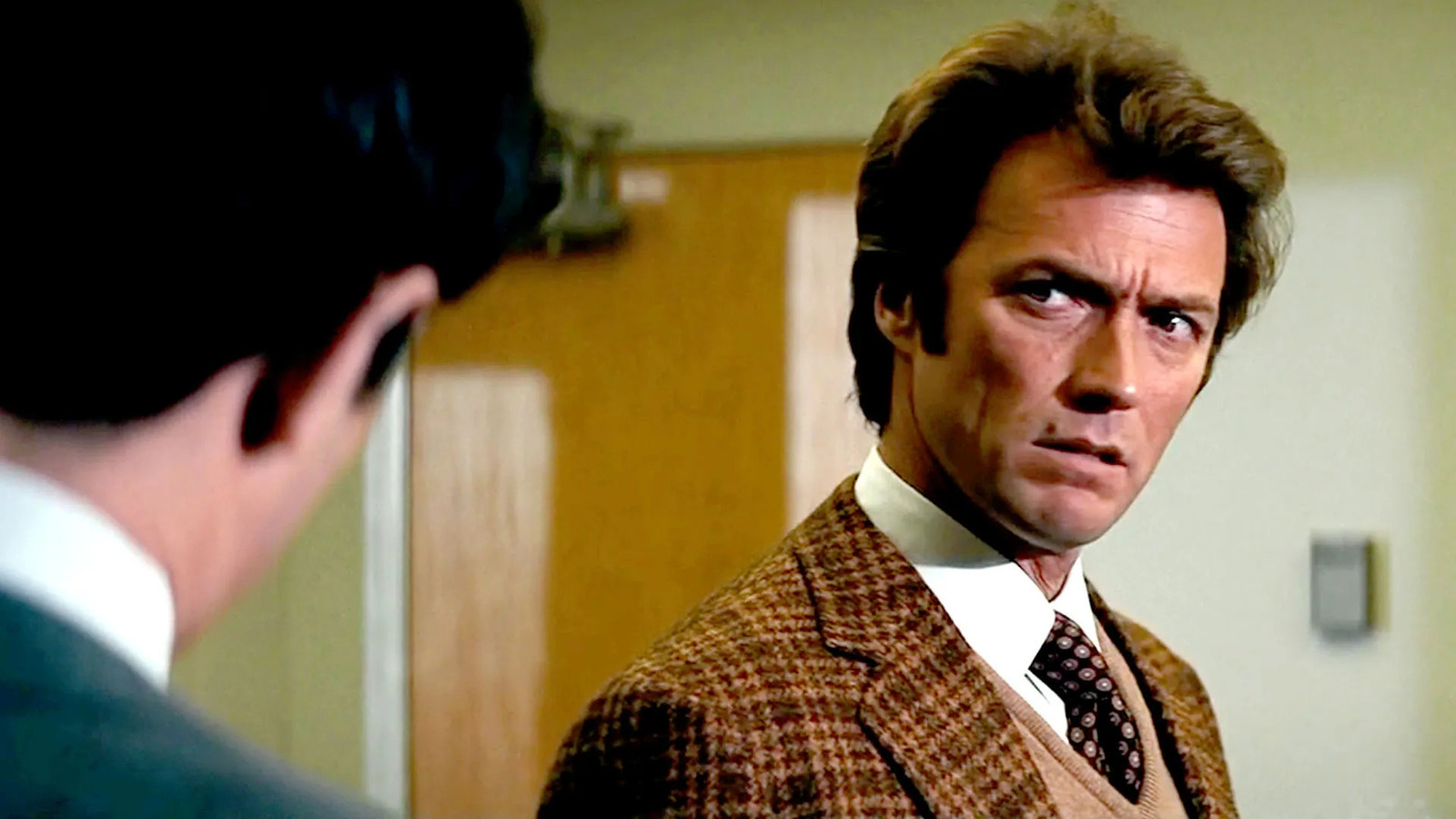
Harry is none too pleased when he’s assigned a rookie partner named Chico Gonzalez, played by Reni Santoni. Harry’s previous two partners ended up injured or dead. Before long, Scorpio decides he wants to raise the stakes–he wants $200,000 or he will kill a teenager named Ann Mary Deacon.  It’s up to Harry and Chico to put a stop to this before it gets even worse for the entire city of San Francisco. The biggest problems in Harry’s life come from his own police department, as they want him to play by the rules and follow police protocol.  Harry Callahan knows he’s dealing with a lunatic here, and you can’t reason with someone who is evil, maniacal, and cold-blooded.

My biggest issue with “Dirty Harry” is the fact the film presents an antagonist and a protagonist who are written in a bland and one-note fashion. Eastwood is known for his understated and minimalist approach to acting, and most of the time, it works. In “Dirty Harry,” for me, I wanted to learn more about what makes him tick and what his backstory is.  I didn’t need everything to be explained to me in granular detail, but we know very little about him.  The mystery of Harry Callahan doesn’t work in this film because I found myself detached from the character.  Scorpio is just an over-the-top villain. What is anyone’s motivation here?
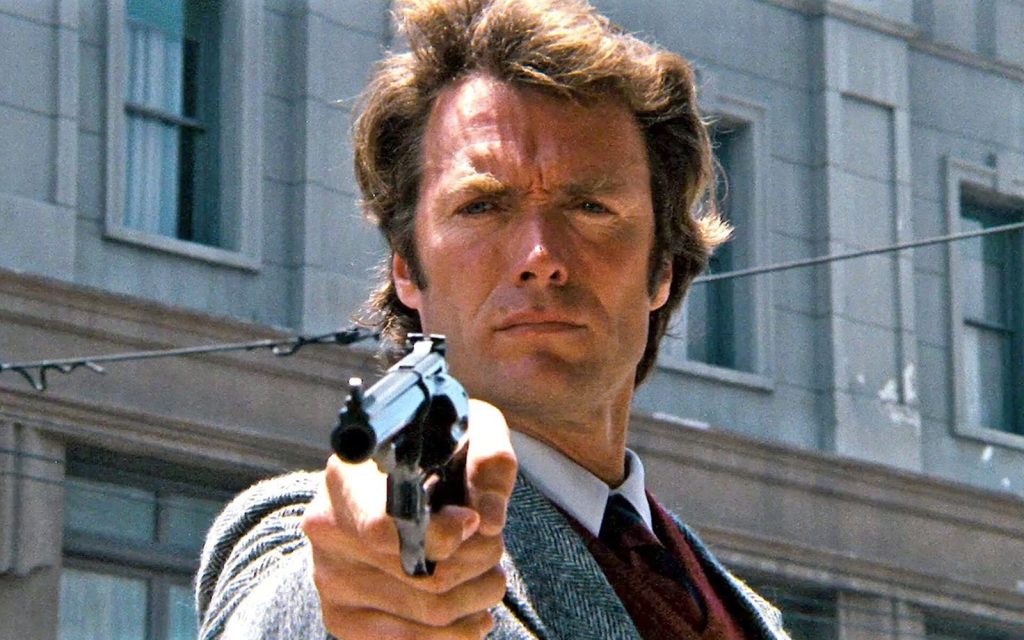
“Dirty Harry” is a film which is all about the chase.  It’s all about Harry chasing Scorpio, and it’s interesting to a degree, but it doesn’t hold up for the duration of the film.  I understand the film is making a statement about police violence and what needs to be done in order to achieve a peaceful environment for everyone involved. Do the police need to resort to a more aggressive style of police protocol? Are they letting criminals get away with too much? Do the police need to bend the rules a little bit if it allows everyone to feel safe?  I understand what the film was trying to say, and I don’t need everything to be spelled out for me perfectly, but this is a film that felt flat and uninteresting to me. I needed a little more meat on the bone here.  It’s OK to have a simple story, but you need characters with a little more depth to them than simply good guy versus bad guy.

Overall, I liked the beginning and the end of the film, but the film completely lost me in the middle when it was the back-and-forth chase between Scorpio and Harry Callahan. There is little to no dialogue going on in these scenes, and I respected the style that was on display from director Don Siegel, but I needed something else to grab me to keep my attention. “Dirty Harry” is a Hollywood classic, and I understand many filmgoers hold it in very high regard.  I was anticipating having a strong reaction to it. When it was over, I thought to myself, “That’s it?”

* * out of * * * *

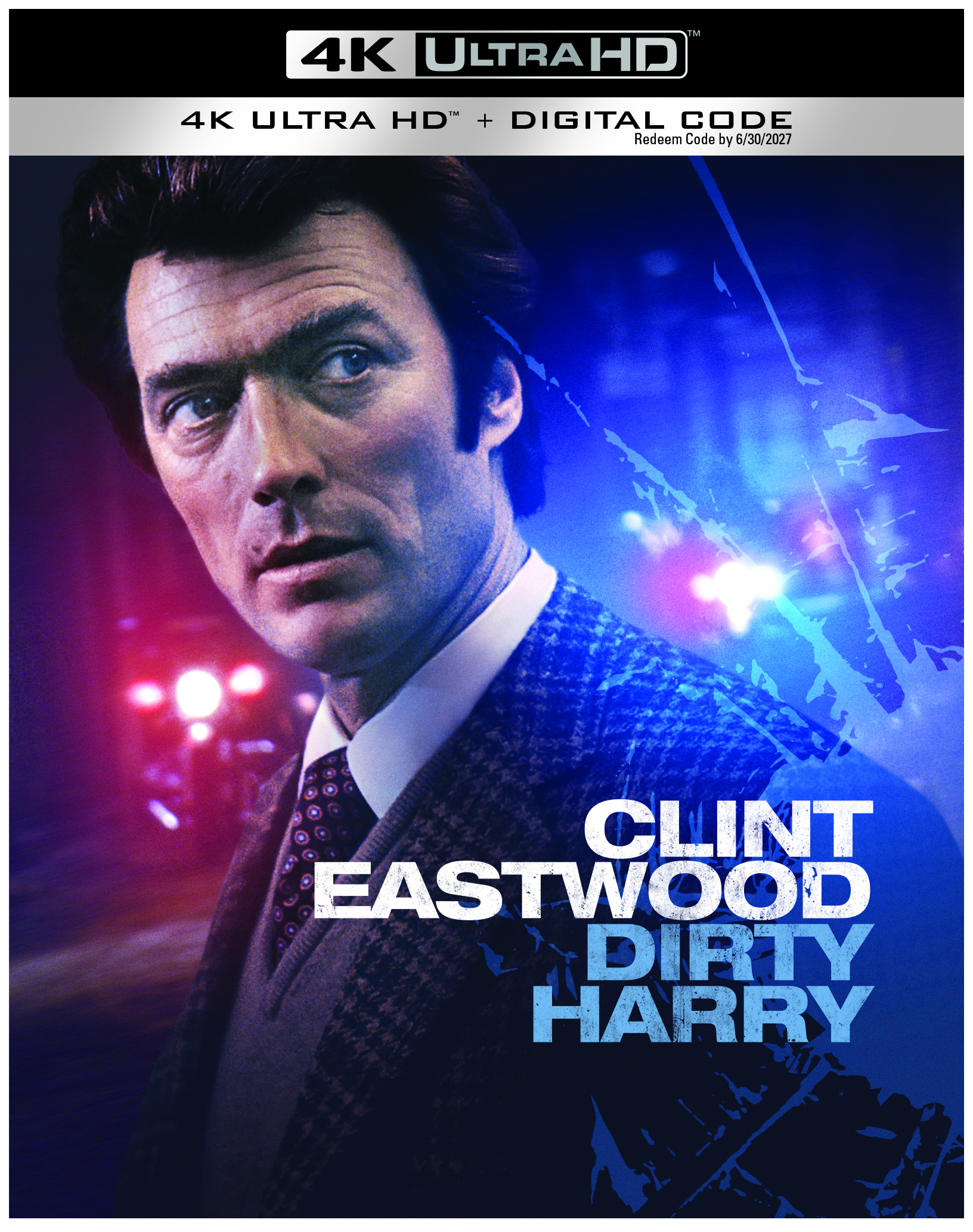
4K Info: “Dirty Harry” is released on a single-disc 4K from Warner Brothers Home Entertainment in either a slipcover version or a collector’s edition steelbook. There is also a digital copy of the film included in the set.  The film has a running time of 102 minutes and is rated R.

4K Video Info: The 4K HDR transfer here is striking and vibrant while maintaining a grimy and old-school look to it in the process. When the film is taking place during the day, the colors really pop and shine on screen. When it takes place at night, the deep blacks are on full display.

4K Audio Info: The Dolby Atmos track is sharp and solid throughout the film. It’s powerful without being overbearing. Subtitles are included in English, Spanish, and French.

Special Features:

Commentary by Richard Schickel

Generations and Dirty Harry – NEW

Lensing Justice: The Cinematography of Dirty Harry – NEW

American Masters Career Retrospective: Clint Eastwood: Out of the Shadows

Clint Eastwood: The Man from Malpaso

Clint Eastwood: A Cinematic Legacy – Fighting for Justice

Interview Gallery

Dirty Harry’s Way

Dirty Harry: The Original

Should You Buy It?

If you love “Dirty Harry” and it’s one of your favorite films, you’ll be over the moon about this 4K release, which includes over four hours of special features. They really made sure they went above and beyond for this 4K release, and I imagine a lot of people have been waiting a long time for this.  Visually, it’s a stunning release that is sure to satisfy physical media lovers out there. The Dolby Atmos track stands out on this as well. For people who haven’t seen the film before, like myself, I don’t know how well it will hold up with a modern audience or a first-time viewer. It didn’t connect with me, and I was disappointed by the majority of it. It was a film I respected, but I didn’t connect with it the way I have other Clint Eastwood films I’ve been watching lately. If you haven’t seen it before, you might want to watch it before you blind buy it.

**Disclaimer** I received a copy of this film from Warner Brothers to review for free.  The opinions and statements in the review are mine and mine alone.

Who is Billy Jack?

“Billy Jack” is a movie I have heard about time and time again, and it was on July 30, 2012, when I finally got to see it for the first time. Billy Jack is a half-Indian Green Beret Vietnam veteran whose experiences have molded him into this protector who is out to defend those who cannot defend themselves. Tom Laughlin, who played Billy Jack and directed all the movies this character was in, seems inseparable from Billy Jack as both are out to protect those individuals who were sworn by their government to protect them, but which have failed to do so. While no more “Billy Jack” movies have been made in the longest time, Laughlin still fought for the rights of others throughout his life.

The character of Billy Jack was first introduced to audiences “The Born Losers” which was inspired by the real-life incident where members of the Hell Angels got arrested for raping five teenage girls. “The Born Losers” proved to be the first of Laughlin’s movies which was embedded with a layer of social criticism and an anti-authority tone which remained constant throughout each “Billy Jack” film ever made.

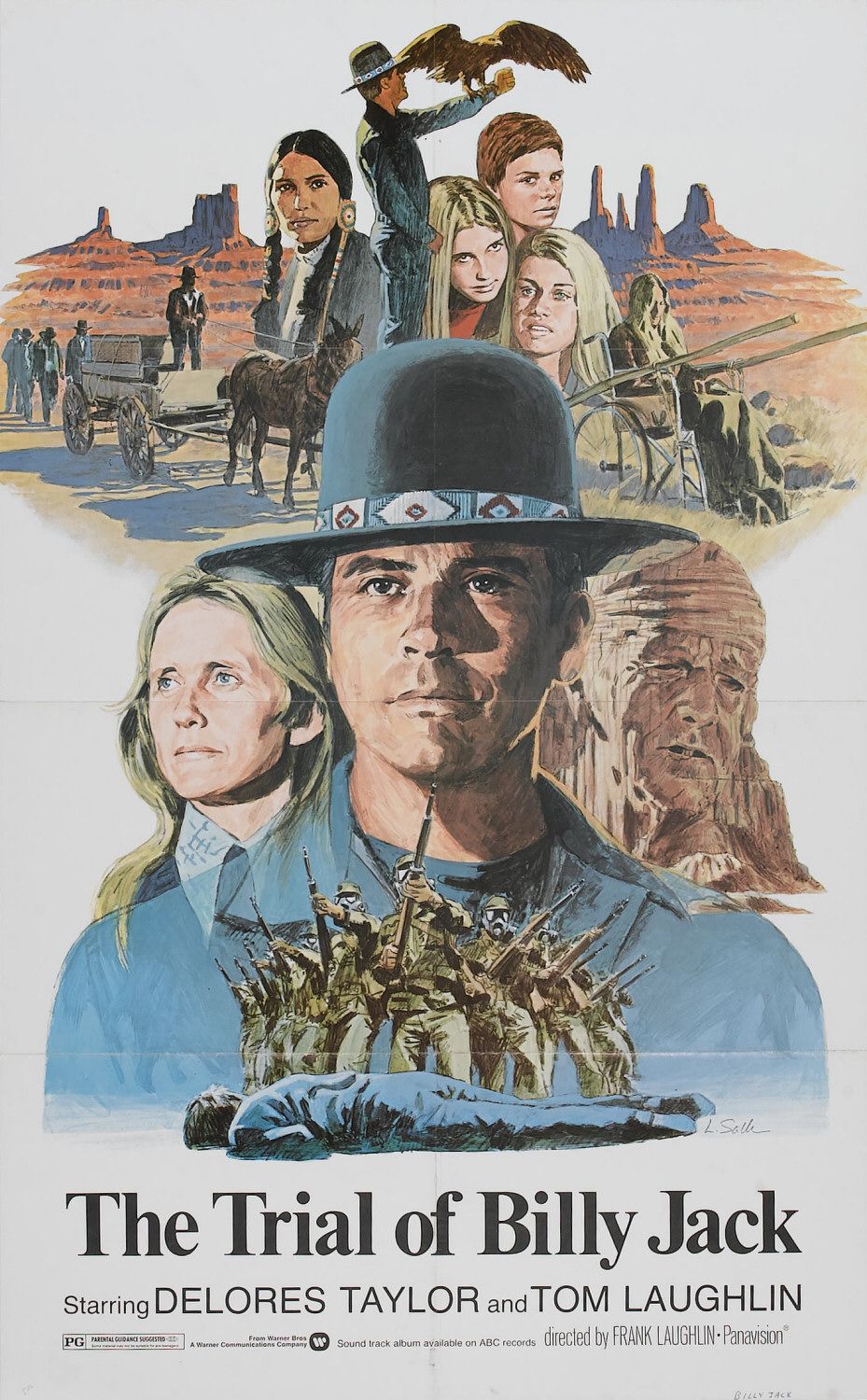
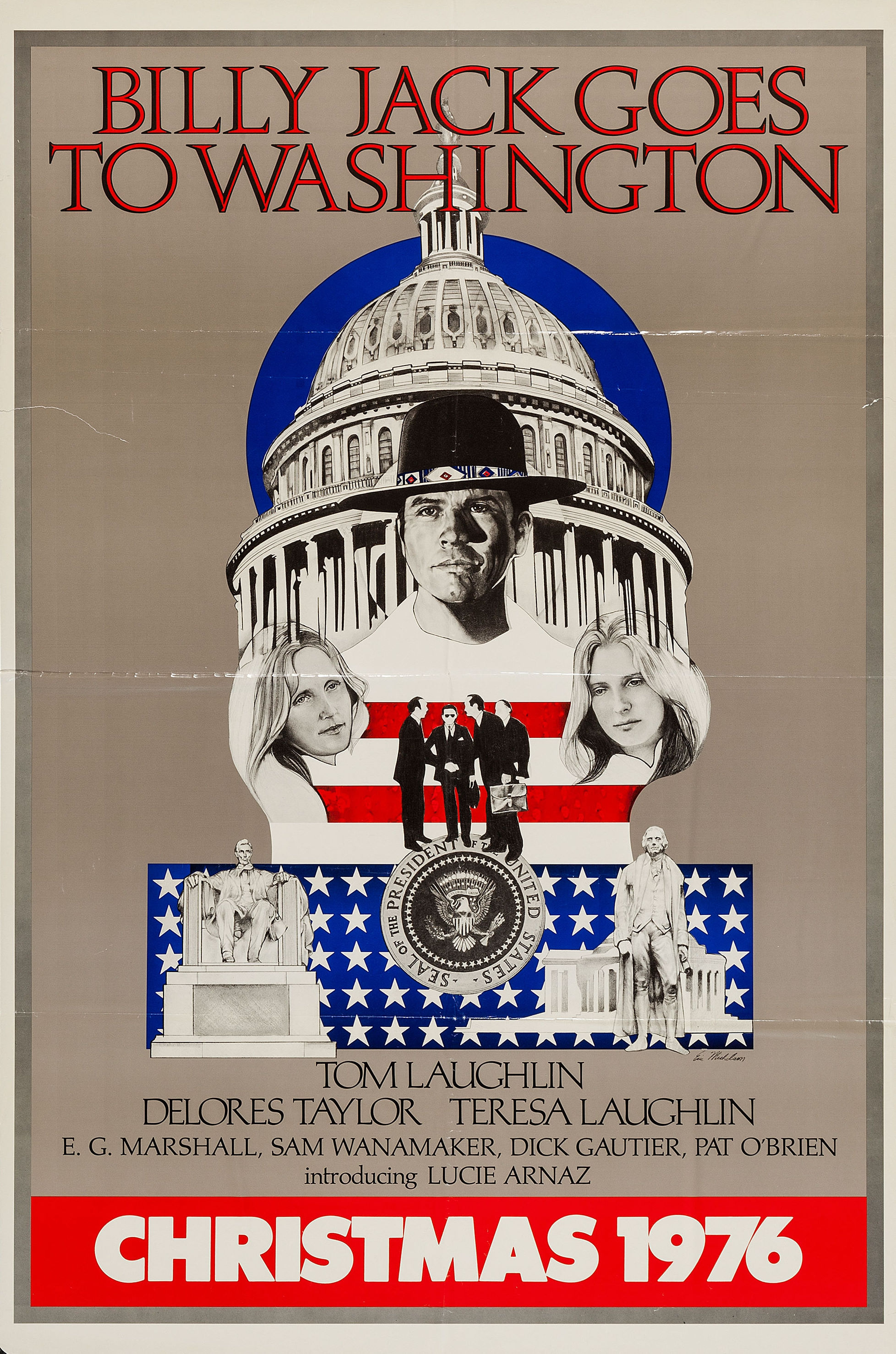
The movie “Billy Jack” came after “The Born Losers,” and it was a response to the conflicts Native Americans often found themselves caught up in. Its sequel, “The Trial of Billy Jack,” was a comment on the anti-war protests which were met by violence from the National Guardsmen who fired upon those protesters, and its follow up, “Billy Jack Goes to Washington,” has the title character battling against senators who are more interested in representing the interest of those representing nuclear power than the people. Even his unfinished sequel, “The Return of Billy Jack,” had political overtones as Billy went to New York to fight those supporting child pornography.

Taking this into account, Laughlin appears to be the first liberal action movie hero as his politics played a big part in each film he made. Then again, calling him a liberal may not be entirely fair as he has gone from one political affiliation to another over the years. In the end, he does not need a particular political label as his goals remain the same; fighting for the rights of ordinary Americans who are not always heard in the way they should be.

All these political and human rights interests greatly informed each movie Laughlin did, and this of course led to many conflicts between him and movie studios. When it came to “Billy Jack,” the movie’s original distributor, American International Pictures (AIP), refused to release it unless Laughlin removed all the political references featured in it. Laughlin, of course, refused to remove them, and he and his wife Delores Taylor, who played Jack’s girlfriend and schoolteacher Jean Roberts, ended up stealing the movie’s sound reels and held them hostage until AIP gave them back their movie.

Warner Brothers ended up releasing “Billy Jack” in 1971, but it failed at the box office and Laughlin sued the studio to get back the rights as he was upset at the way it was promoted. He ended up re-releasing the film himself, and it ended up grossing over $40 million at the box office against a budget of $800,000. Adjusted for inflation, it remains one of the highest grossing independent films ever made.

“Billy Jack,” however, was not without controversies as critics assailed its apparent hypocrisy. In his review of the movie, Roger Ebert said that “Billy Jack seems to be saying that a gun is better than a constitution in the enforcement of justice. Is democracy totally obsolete, then? Is our only hope that the good fascists defeat the bad fascists?” Leonard Maltin ended up saying about the movie that “seen today, its politics are highly questionable, and its ‘message’ of peace looks ridiculous, considering the amount of violence in the film.”

Still, many embrace Billy Jack as a character and the movies he appears in, and this was proven by the large turnout at New Beverly Cinema which cheered him on as soon as he made his first entrance in the movie which is named after him. Seeing Billy grimace at and intimidate the bad guys who were foolish enough to end up in his path had us endlessly entertained, and this remains the case so many years after the film’s initial release.

Laughlin ended up leaving Hollywood to found a Montessori preschool in Santa Monica, California which later became largest school of its kind in the United States. He would eventually turn his attention to politics and psychology as they became the tools with which he could fight injustice. Looking at his life back then and now, it becomes clear how Laughlin and Billy Jack are in many ways the same person as they fight for those whose rights are in danger of disappearing.

Laughlin passed away in 2013 in Thousand Oaks, California at the age of 82. Back in 2007, he announced he was planning to make another film featuring Billy Jack, but this did not happen for a number of reasons. Still, had he made another film with that character, I have no doubt many filmgoers would have welcomed it with open arms.

‘A Clockwork Orange’ Movie and 4K/Blu-ray Review

The following review was written by Ultimate Rabbit correspondent, Tony Farinella.

As a film lover and someone who considers themselves well-versed in the world of cinema, I’m sad to report this was my first-time watching “A Clockwork Orange.” I feel like no matter how many films you have seen, there are usually a dozen or so that have just slipped through the cracks. This is the 50th anniversary of this Stanley Kubrick classic and, as a first-time viewer, I can’t imagine the impact it had on viewers when it first came out. I know from reading up on it, it was quite controversial and misunderstood, but it ended up gaining a cult following. After watching it last night, I can’t wait to watch it again.  Kubrick is truly a genius when it comes to cinema. There is always so much happening in his films, but everything is happening for a specific purpose.

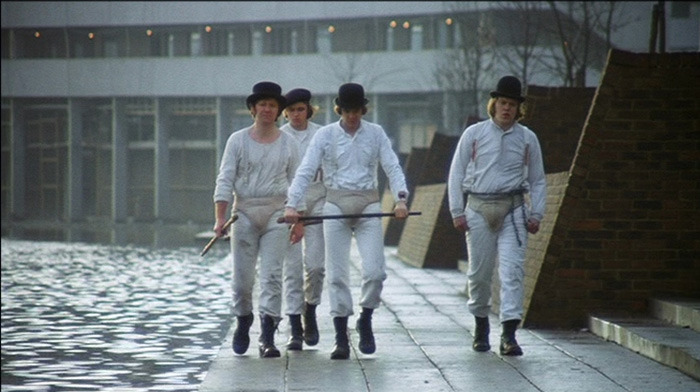
The first forty-five minutes or so of “A Clockwork Orange” are a little out there and a little frustrating from a narrative perspective. The film is set in a dystopian Britain where a group of young gang members run around terrorizing anyone who gets in their path. For example, when they run into a homeless man, they beat him up simply because they find it amusing and comical.  In another instance, they go out of their way to create chaos and havoc for a writer and his wife by attacking them in the middle of the night.  One night, this group of four young men takes it too far when one of their members, Alex (Malcolm McDowell) ends up killing a wealthy woman. His three fellow gang members leave him behind, the police catch him, and he is sentenced to fourteen years in prison.

The early part of “A Clockwork Orange” is not necessarily hard to watch as I’m used to movie violence, and it takes a lot to upset me or really get under my skin.  It’s more so that Alex and his “droogs” are unpleasant to spend time with, which I would venture to guess was Kubrick’s intent as a filmmaker. This film is based on the novel by Anthony Burgess. I think they could have trimmed out some of their antics in the film as, at times, it’s beating the audience over the head with violence and becomes repetitive and dull.  However, when Alex is sent to prison, it is when the film becomes really, really interesting and takes off.

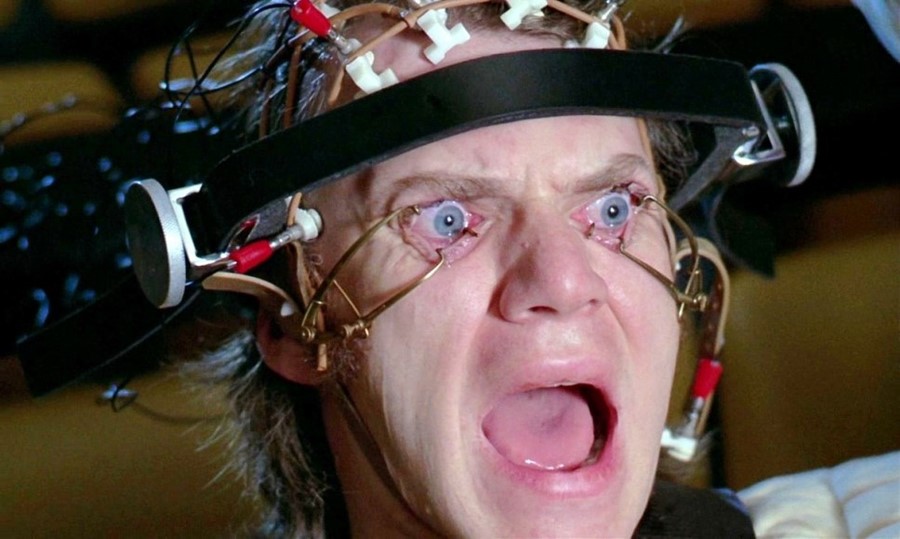
After being well-behaved in prison for two years, Alex hears about this experiment which allows someone to be cured almost instantly of their bad thoughts and impulses. They start to think and behave without any lust or violence.  The experiment exposes them to footage of violence, rape, and other heinous acts.  When they see this footage, they start to become sick.  Because of this, if they ever have the urge to misbehave again, it is quickly stopped because of how they feel after the aversion therapy.  The prison chaplain tries to warn Alex against it by telling him the good should come from inside of him and the choices he makes.

What happens from there makes for an incredibly thrilling and intense final act. The beauty of a Kubrick film is the details all around you that are happening in a scene.  For example, when Alex returns home, the way his house is shot is gorgeous.  Kubrick is never afraid to use colors and lots of them. He knows the beauty of imagery, color and scenery, and it makes the scenes much more effective. There is also his use of music.  I don’t think I’ll ever be able to listen to “Singing in the Rain” or anything from Beethoven again without thinking of this film. There is a purpose for everything in his films from a visual and audio standpoint.

I could go on and on about “A Clockwork Orange.”  The best praise I could give the film is that I want to watch it again and again.  Kubrick was a true visionary of cinema.  This film also has a lot to say about politics, drugs (think of the milk featured here), violence, sex, karma and so much more.  After I woke up today to write this review, the film was still in my head.  His films really stay with you and mess with your head in the best possible way.  On 4K, the brightness is taken to a whole new level.  I know I’m stating the obvious here, but Kubrick’s “A Clockwork Orange” is a masterpiece. I absolutely loved this film.  It’s a great reminder of how great movies will always stand the test of time, no matter when they were released.

* * * * out of * * * *

4K/Blu-Ray Info: “A Clockwork Orange” is released on a 4K/Blu-ray combo pack from Warner Brothers Home Entertainment. It comes with the 4K, Blu-ray, and also a digital copy of the film as well. It has a running time of 137 minutes and is rated R.

Video Info: The 4K of the film comes in 2160p Ultra High Definition with a ratio of 16×9 1.66:1.  If any film ever deserved the 4K treatment, it is “A Clockwork Orange.” I plan on watching the Blu-ray of the film at some point, but the high dynamic range and the colors are on full-display with the 4K.  The film is mesmerizing to watch on 4K. This is the reason why more and more people are getting 4K TV’s and players for films like this. They were made for 4K.  There is no other way to watch it at home. The Blu-ray of the film comes in 1080p High Definition with a ratio of 16×9 1.66:1.

Audio Info: The audio for the film is presented in DTS-HD MA: English 5.1, Dolby Digital: English, French and Spanish. Subtitles are in English, French, and Spanish as well. This applies to both the 4K and Blu-ray discs.

Special Features:

Commentary by Malcolm McDowell and Nick Redman

Still Tickin’: The Return of Clockwork Orange [2000 Channel 4 Documentary]

Great Bolshy Yarblockos! Making A Clockwork Orange

Turning Like Clockwork

Malcolm McDowell Looks Back

O Lucky Malcolm!

Should You Buy It?

According to the press release, the special features are the same released on the previous Blu-ray of the film, which is a bit of a bummer.  One would have hoped they would have done an updated version of the special features, especially with it being the 50th anniversary of this film.  If you haven’t seen “A Clockwork Orange” before, you are missing out! I can vouch for that.  This one is a no-brainer to add to your collection for the film itself and the visual aspects of 4K. 

This film is going to stay with me for a long, long time, and I get to watch it again on Blu-ray and 4K.  I can even watch it on my iPad because of the digital copy which comes with this combo pack.  However, as Spike Lee says, do the right thing and watch it on 4K. There will never be another director like Kubrick.  Kudos as well to Warner Brothers for their recent upgrades of classic films like “A Clockwork Orange” and “The Shawshank Redemption.” They are on a roll lately!

**Disclaimer** I received a Blu-ray copy of this film from Warner Brothers to review for free.  The opinions and statements in the review are mine and mine alone.

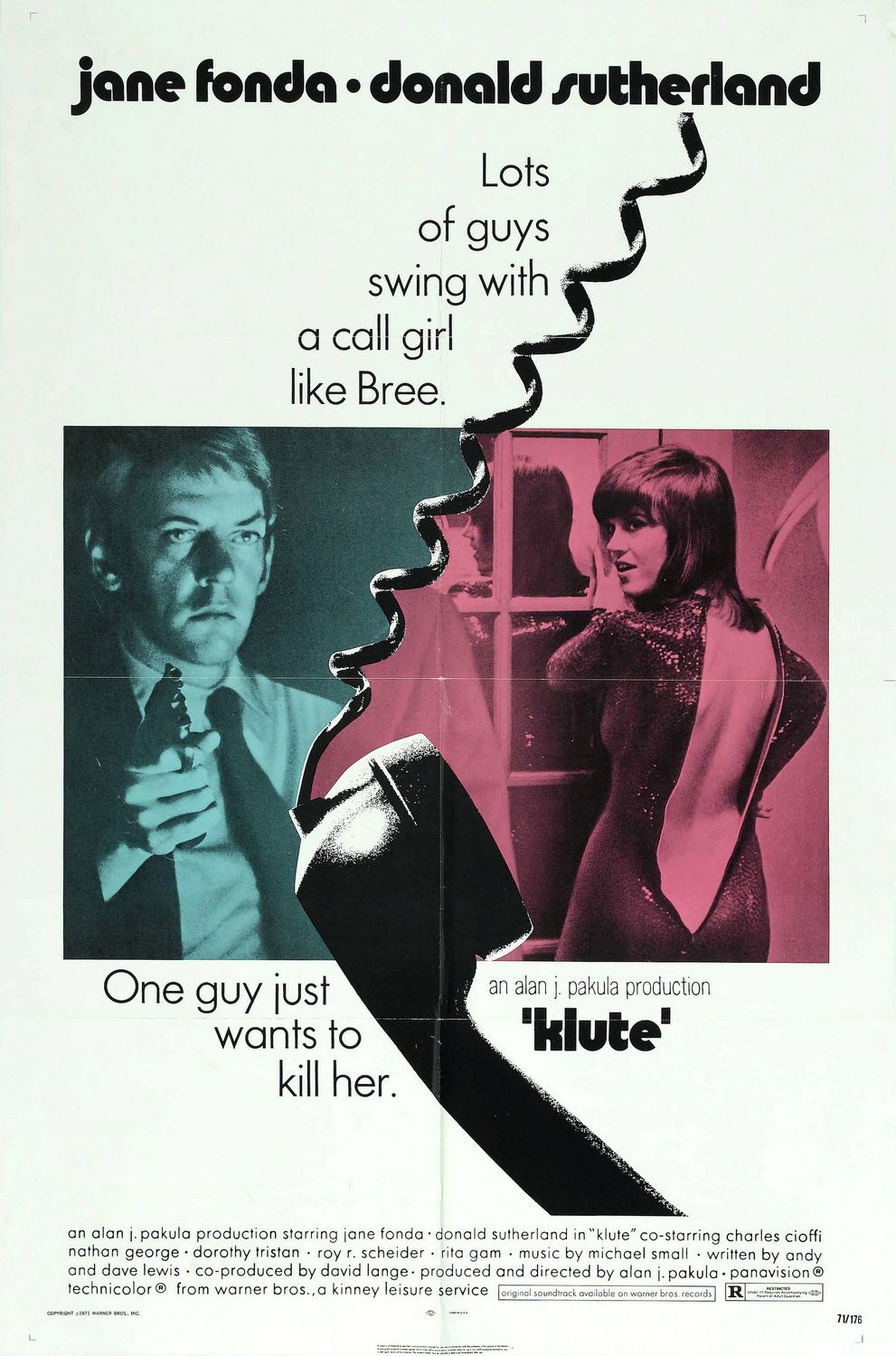
‘Klute’ Features One of Jane Fonda’s Best Performances on Film

Klute movie poster

Many keep wondering what draws people, and not just women, to prostitution. It seems such a sordid profession which offers nothing but degradation and humiliation to those involved in it. Other than money, what does draw people into a lifestyle like this one which has been around for so long? From a physical point of view, it’s got to get tiresome after a while. Maybe it is appealing from a psychological point of view; people profiting off the needs and weaknesses of others may very well be its selling point. To have control over another person is always an appealing prospect.

This is made clear in “Klute” which was directed by Alan J. Pakula who had a talent for taking familiar stories and populating them with characters you can recognize from real life. The movie revolves around the case of a missing man and a private detective named John Klute (Donald Sutherland) who has been assigned to find him. The only lead he has is a prostitute named Bree Daniels, and she is played by Jane Fonda in one of her best roles.

Fonda won one of her two Oscars for her performance in this classic 1970’s thriller. It is a wonderfully complex role for an actress to play as Bree is a struggling actress and model who finds a power and control as a call girl she doesn’t have elsewhere in life. In one of several meetings with her psychiatrist, Bree admits she doesn’t enjoy the physical part, but she does enjoy the act she plays for all her clients. When she is with them, she considers herself to be the greatest actress in the world and brilliantly exploits their weaknesses to gain a higher price for her services.

Bree, however, ends up finding a different view on life with John, a man as straitlaced and upstanding as they come. Donald Sutherland has one of his best roles here, and while his character ends up succumbing to Bree’s charms, he never completely loses himself in his desires. Throughout the movie, he remains the source of hope and strength Bree needs when she finds out someone wants to kill her.

When Bree does ends up sleeping with John, she thinks she has him right where she wants him. She quickly intuits her strength over him as a result of him not making her orgasm as a weakness on his part, but later finds herself losing this power she has over men while she is with him. Bree finds she likes being with him, and this scares her because love is not something anyone can have any control over. There is a beautiful moment when she is shopping with John at a local farmer’s market, and you can see the insecurity on her face. She feels strongly for John, and it frightens her as the addiction she has for being a call girl may overwhelm her true love for him.

Pakula does a great job of increasing tension throughout “Klute,” and this is heightened by the characters being very relatable and down to earth. This has been the case with the majority of his movies like “All the President’s Men,” “The Parallax View” and even “Presumed Innocent.” Even if the plots of some of his movies seem far-fetched, it is the reality of the characters and the world they inhabit which sucks us in.

“Klute” also features another great performance by the late Roy Scheider as Frank Ligourin, a pimp disguised as a record producer. Scheider makes him unlike other pimps we have seen in “Taxi Driver” or “Street Smart” as he makes his character much more casual in his cruelty and control over those who work for him. He doesn’t deal too much in force because it doesn’t suit him well, and it would affect the relationships he has with his employees.

We do find out who’s threatening Bree early on, so the whodunit element of “Klute” disappears rather quickly. This could have really sunk the movie, but Pakula gets away with it because we find it is integral to the themes the movie explores: perversity, sexuality and the mentality behind them. Many think they are above perversity, but there is a darkness inside of us which often goes unchecked. The more we repress it, the more explosive it becomes when finally released. There are no good or bad guys in this movie, just people trying to measure out what they feel is right and wrong, and some do a better job of figuring this out than others.

“Klute” does have an anticlimactic ending, but that’s probably because the one we expect a movie like this to have would have just taken away from the reality of the story. Either way, it proves to be one of the most memorable movies of the 1970’s.

* * * * out of * * * *

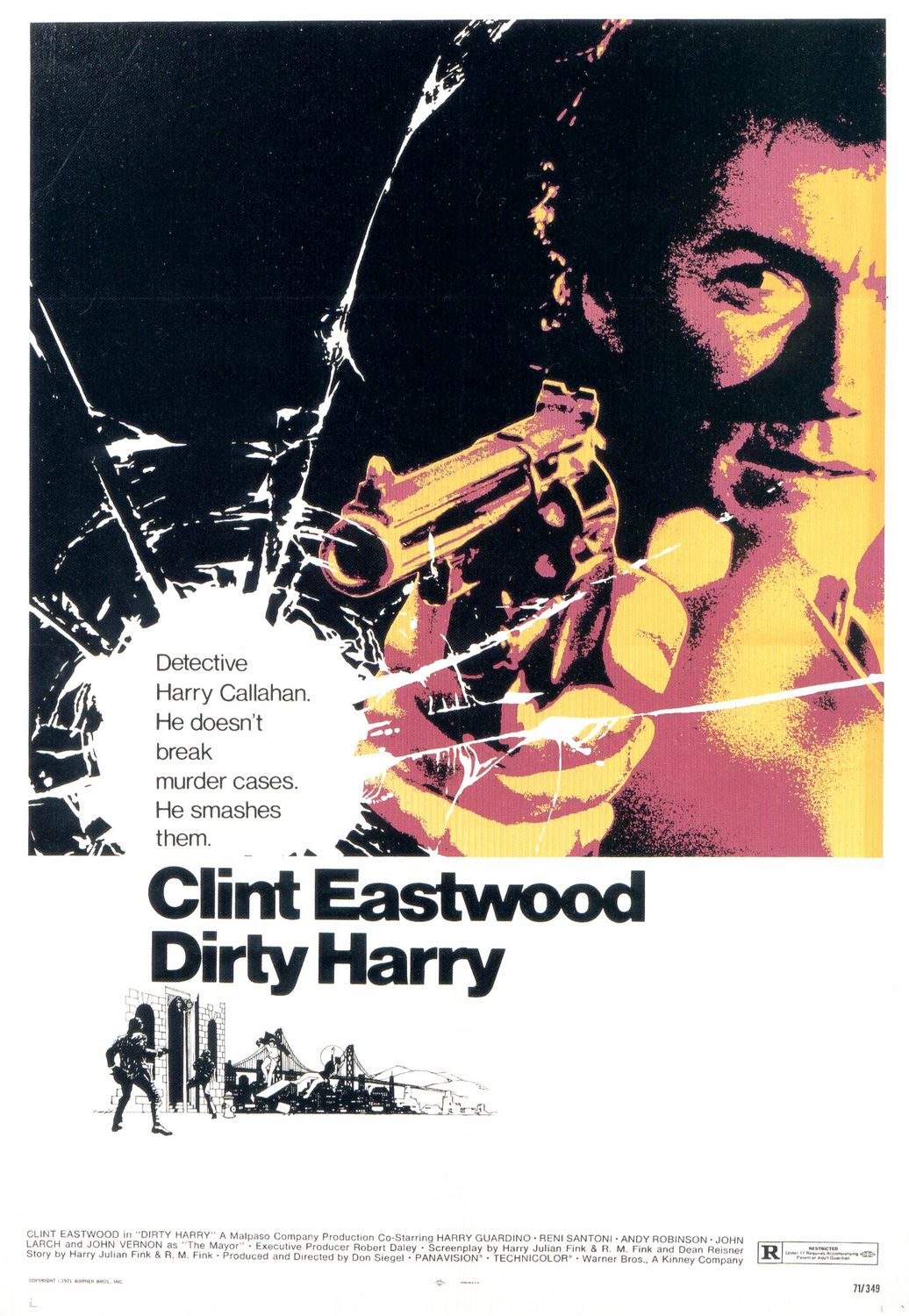
Edgar Wright and Quentin Tarantino Look Back at ‘Dirty Harry’

Dirty Harry poster

Of all the movies Edgar Wright selected for The Wright Stuff II Film Festival at New Beverly Cinema, “Dirty Harry” is the one he has watched the most. Wright screened a nice print of the 1971 classic along with another movie called “The Super Cops,” and joining him to talk about it was filmmaker Quentin Tarantino.

They started off riffing on trivia about how the original title for “Dirty Harry” was “Dead Right,” and how it was first going to star Frank Sinatra who later pulled out when the 44-magnum ended up injuring his wrist. It also turned out the late Irvin Kershner, who directed “The Empire Strikes Back,” was the first choice to direct the movie (Don Siegel eventually took the job). Tarantino and Wright also talked about how actor Albert Popwell played a different black stereotype in each “Dirty Harry” film except for “The Dead Pool,” and they both wished he played the mayor in that one.

For Wright, what he loved about “Dirty Harry” was the grittiness of its main character and the atmosphere of San Francisco. On the DVD for “Hot Fuzz,” Wright did a location tour where the film was made, and he even checked out the deli where Eastwood was filmed eating a hot dog when the bank robbery took place. As for the film’s score by Lalo Schifrin, he declared it his all-time favorite saying it marked the birth of “acid jazz.”

But much of the treasure trove of information came from Tarantino who said he first saw “Dirty Harry” when he was five or six years old, and he described it as a “political lightning rod” upon its release. Apparently, it got a lot of crap thrown at it by liberal critics who didn’t want a police fascist solution as well as from right wingers who got freaked out by Scorpio and the ills of society.

The way Tarantino viewed it, however, “Dirty Harry” does have a solid agenda. When Andy Robinson played Charles “Scorpio” Davis, there had never been a villain like him before in movies and, the term serial killer had not really been coined yet. The agenda was for there to be new laws for new crimes, and “Dirty Harry” was screaming for those new laws. Scorpio was not your average villain, and that he got such a kick out of his crimes was easy to see. There was no cure in store for such a psychotic character like this one.

Both Tarantino and Wright agreed “Dirty Harry” really holds up after 40 years. Much of this is due to its sequels treating the iconic character more as a superhero than a regular human being.  With “Magnum Force,” Tarantino felt it was made more for critics of the first movie than its audience as it preached against its predecessor and the character itself by having Harry go after those taking the law into their own hands. This was the same deal with the other sequels, but “Sudden Impact” is the lone exception. Wright remarked at how, along with John Carpenter’s “Halloween,” “Dirty Harry” has one of cinema’s most perfect endings which was eventually ruined by sequels.

They also talked about Siegel who had already been around for a long time before he directed “Dirty Harry.” Siegel was a B-movie genre director from the 1950’s and a Hollywood craftsman who eventually became an auteur. For the most part, Harry Callahan represented the quintessential character of his films; the cop who takes the law into his own hands. Even after directing the 1971 classic, Siegel would continue to have a long and healthy career in films, eventually reuniting with Eastwood on “Escape from Alcatraz.”

Tarantino also described “Dirty Harry” as the single most ripped off and imitated action movie of the 1970’s. He even gave a list of every single movie which stole from it: “McQ,” “Newman’s Law,” “Nightstick,” and everything from Cannon Films. The similar thing about the ripoffs was they lost all the political subtext which made “Dirty Harry” such a strong film. It became all about going after some big drug dealer or crime syndicate, and there was nothing political about that. When it came to 1970’s movies, the only others which were stolen from as much were the ones starring Bruce Lee.

“Dirty Harry” apparently also boasts the first homosexual date in cinema history as seen through Scorpio’s scope rifle. Tarantino said it was the first instance of unforced male sexuality in movies, and he still remembers the audience laughing at this scene when he first saw it. Back then he thought the audience wanted this couple killed, pointing out how they were not as enlightened as we are today, and that they were culpable for their “sinister intentions.”

Hearing these two great filmmakers talk about this Don Siegel/Clint Eastwood classic made for one of the most interesting evenings I have ever spent at New Beverly Cinema. A new generation of audiences will look at “Dirty Harry” differently and may see it as tame compared to plethora of serial killer movies we see today. With the popularity of “The Silence of the Lambs” and the “Saw” movies among others, serial killers have long been the norm in American cinema, so the accomplishments of the 1971 classic threaten to seem diluted as a result.

Thanks to Edgar Wright and Quentin Tarantino, we are reminded of “Dirty Harry’s” place in cinematic history and how it opened doors not just for Eastwood, who made the transition from westerns to other films, but for so many other movies as well for better and for worse.

William Friedkin Discusses the Creation of ‘The French Connection’ Car Chase

The French Connection car chase

William Friedkin’s “The French Connection” was shown as part of American Cinematheque’s tribute to him, and he went into great detail about how the famous car chase came together. It is still one of the best car chases in cinema alongside “Bullitt,” and it’s the kind Hollywood doesn’t dare do anymore.

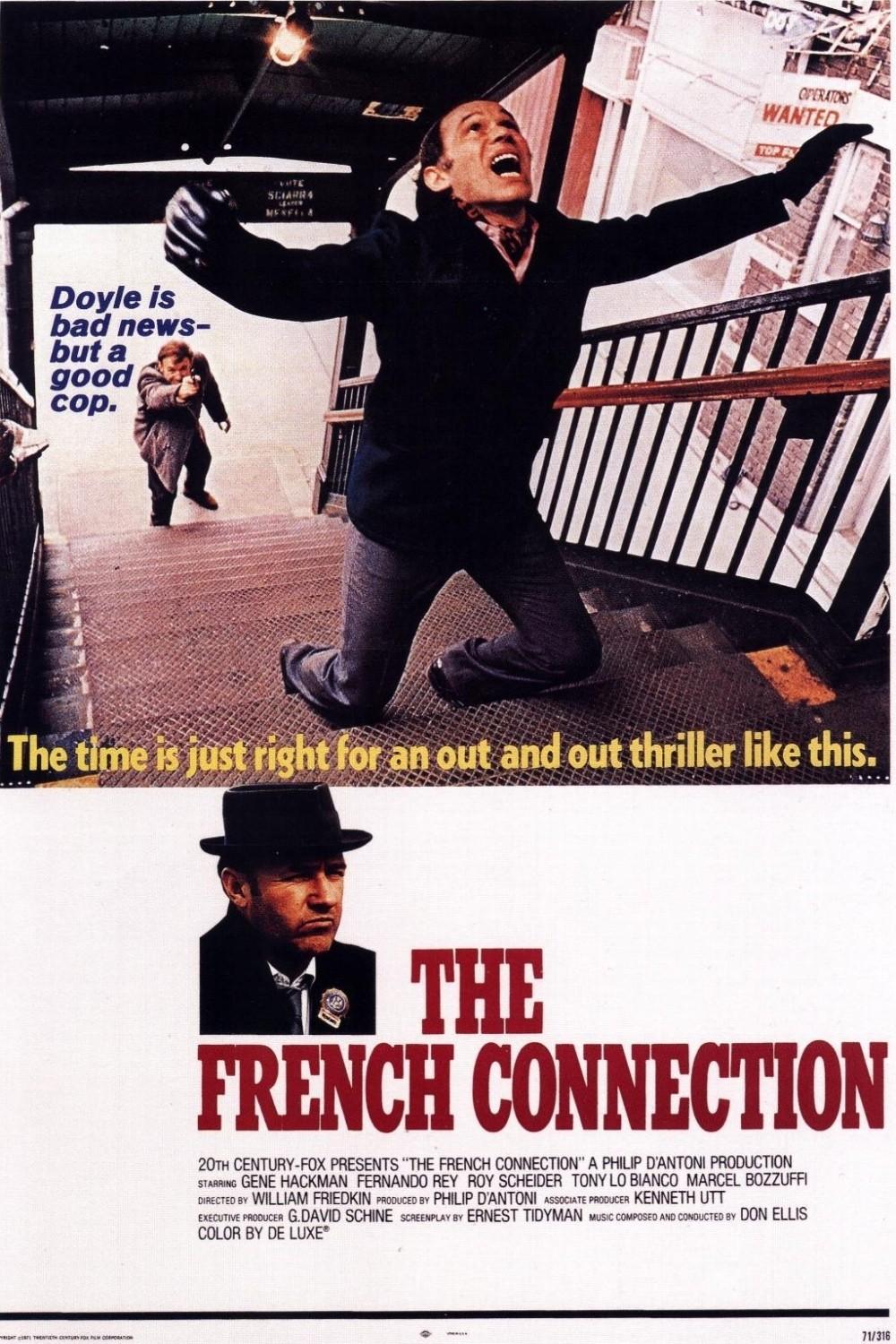
The French Connection movie poster

Actually, it turns out there was never a car chase in the original script for “The French Connection,” but Friedkin felt it needed one as this was a police procedural, and the audience would need a temporary release from it. Also, Friedkin didn’t do any storyboards to prepare for it. In fact, he has never done storyboards for any of his movies because he feels he has to see it in his mind. The shots captured on film come together from what he sees at the time, and he doesn’t even use a second unit to shoot any footage. All that you see on screen in “The French Connection” comes from life as it happened in front of Friedkin.

In coming up with the chase, he and some crew members walked down 50 blocks of New York streets to figure out how it would work best. As Friedkin kept walking, he suddenly felt the subway under his feet. Now logistically, he couldn’t do a car chase with a subway as it was underground, but it made him wonder if there were any elevated trains left in New York. The production team ended up finding one in Brooklyn, so Friedkin went to the Transit Authority to get their cooperation in pulling this chase off.

The first thing to figure out was how fast the trains could go. Friedkin said if they went over 100 mph, they couldn’t do the chase as it would be impossible for Popeye Doyle to follow the train by car. The train supervisor he talked to said the trains go at 50 mph, so what seemed impractical suddenly became possible. Not only did Friedkin want to have a car chase the train, he also wanted to crash the train for the chase’s climax. But the train supervisor said it would be too difficult because they had never had an elevated train crash or even heisted. Having heard all this did not deter Friedkin, and he planned to steal the scene if the transit authority’s cooperation was not going to be granted.

As Friedkin and his crew headed for the exit, the train supervisor suddenly said, “Wait a second. I told you it would be difficult. I never said it would be impossible!” He told Friedkin that if he were to help him with this, then he would need $40,000 and a one-way ticket to Jamaica. His reasoning was if the movie was to be done Friedkin’s way, he would be fired, and retiring to Jamaica was always in the back of his mind. Sure enough, the supervisor was fired, and he moved to Jamaica like he said he would, so it’s safe to say he lucked out.

In filming the chase, the shots were picked up just as they happened in real life. There’s no way they would ever be able to film a chase like this today without prior approval from the city, but Friedkin and his crew were young and reckless, and they unleashed mayhem New York never saw coming. There were not supposed to be any accidents while filming it, but there ended up being many of them which forced the crew to fix the car after each take. I’m pretty sure they ended up using more than one as a result. Friedkin ended up saying they did a number of things he would never even think about doing today, and that they were very fortunate no one got hurt.

Taking all this information into account, this car chase feels even more thrilling than when I first saw it. The way it was filmed was completely insane, and the fact they pulled it off at all was a miracle. When Gene Hackman finally brings the 1971 Pontiac LeMans he is driving to a complete stop, the sold-out audience at the Aero Theatre applauded loudly which shows how powerful the sequence remains today. “The French Connection,” like many of Friedkin’s movies, has deservedly stood the test of time.