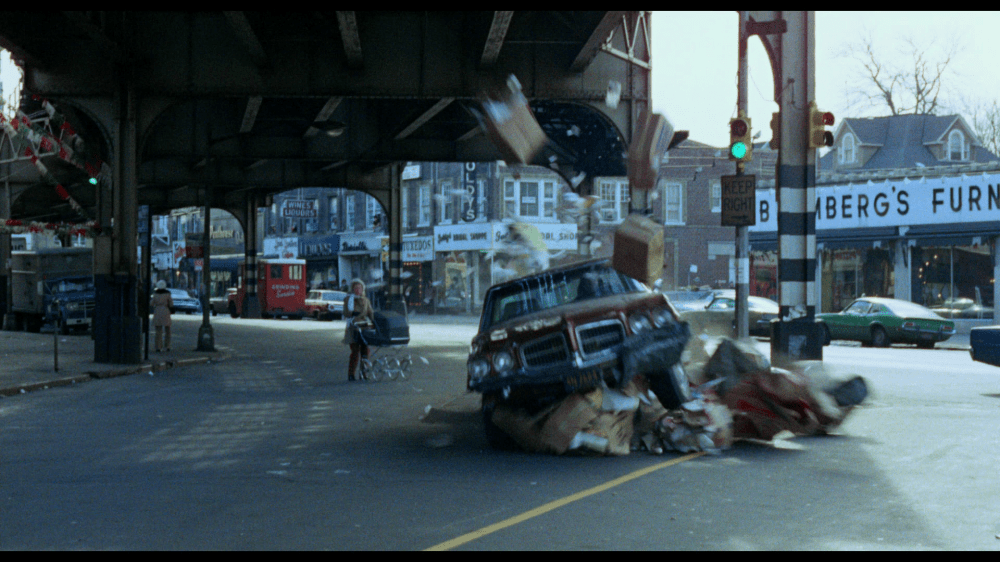
William Friedkin’s “The French Connection” was shown as part of American Cinematheque’s tribute to him, and he went into great detail about how the famous car chase came together. It is still one of the best car chases in cinema alongside “Bullitt,” and it’s the kind Hollywood doesn’t dare do anymore.
Actually, it turns out there was never a car chase in the original script for “The French Connection,” but Friedkin felt it needed one as this was a police procedural, and the audience would need a temporary release from it. Also, Friedkin didn’t do any storyboards to prepare for it. In fact, he has never done storyboards for any of his movies because he feels he has to see it in his mind. The shots captured on film come together from what he sees at the time, and he doesn’t even use a second unit to shoot any footage. All that you see on screen in “The French Connection” comes from life as it happened in front of Friedkin.
In coming up with the chase, he and some crew members walked down 50 blocks of New York streets to figure out how it would work best. As Friedkin kept walking, he suddenly felt the subway under his feet. Now logistically, he couldn’t do a car chase with a subway as it was underground, but it made him wonder if there were any elevated trains left in New York. The production team ended up finding one in Brooklyn, so Friedkin went to the Transit Authority to get their cooperation in pulling this chase off.
The first thing to figure out was how fast the trains could go. Friedkin said if they went over 100 mph, they couldn’t do the chase as it would be impossible for Popeye Doyle to follow the train by car. The train supervisor he talked to said the trains go at 50 mph, so what seemed impractical suddenly became possible. Not only did Friedkin want to have a car chase the train, he also wanted to crash the train for the chase’s climax. But the train supervisor said it would be too difficult because they had never had an elevated train crash or even heisted. Having heard all this did not deter Friedkin, and he planned to steal the scene if the transit authority’s cooperation was not going to be granted.
As Friedkin and his crew headed for the exit, the train supervisor suddenly said, “Wait a second. I told you it would be difficult. I never said it would be impossible!” He told Friedkin that if he were to help him with this, then he would need $40,000 and a one-way ticket to Jamaica. His reasoning was if the movie was to be done Friedkin’s way, he would be fired, and retiring to Jamaica was always in the back of his mind. Sure enough, the supervisor was fired, and he moved to Jamaica like he said he would, so it’s safe to say he lucked out.
In filming the chase, the shots were picked up just as they happened in real life. There’s no way they would ever be able to film a chase like this today without prior approval from the city, but Friedkin and his crew were young and reckless, and they unleashed mayhem New York never saw coming. There were not supposed to be any accidents while filming it, but there ended up being many of them which forced the crew to fix the car after each take. I’m pretty sure they ended up using more than one as a result. Friedkin ended up saying they did a number of things he would never even think about doing today, and that they were very fortunate no one got hurt.
Taking all this information into account, this car chase feels even more thrilling than when I first saw it. The way it was filmed was completely insane, and the fact they pulled it off at all was a miracle. When Gene Hackman finally brings the 1971 Pontiac LeMans he is driving to a complete stop, the sold-out audience at the Aero Theatre applauded loudly which shows how powerful the sequence remains today. “The French Connection,” like many of Friedkin’s movies, has deservedly stood the test of time.
It has been eight years since “Hostel: Part II,” and the phrase “directed by Eli Roth” has been largely absent as the horror filmmaker has focused more on producing and acting, but 2015 saw him return to the director’s chair with a vengeance. First, he gave us the cannibal horror film “The Green Inferno” which saw its release delayed for a couple of years, and he quickly followed it up with the home invasion thriller “Knock Knock.” Keanu Reeves stars as Evan Webber, an architect and happily married husband and father whose family leaves him alone at home one weekend so he can work on his latest project. But Evan soon makes the biggest mistake of his life when he lets two young women into his home after they claim to be lost, and they come to play a number of psychosexual games which have him begging for his life.
Roth was at the Four Seasons Hotel in Los Angeles, California to do a press conference on “Knock Knock,” and he was very verbose in discussing what motivated him to make this film. Now whereas his previous movies “Cabin Fever,” “Hostel” and “The Green Inferno” featured young adults heading out of their comfort zones and into the world for a dose of excitement and danger, “Knock Knock” is very different in that it rarely strays from Evan’s comfort zone which is his home. I asked Roth if this scenario presented any new challenges for him as a writer, and his answer was far more descriptive than I expected.
Eli Roth: No, I mean I liked the idea. Obviously I was very interested, probably because I grew up in Massachusetts with that kind of over sheltered, over-privileged and overeducated upper middle-class kid image that yearns for that life experience. In “Cabin Fever” they want irresponsible partying and drinking and drugs, in “Hostel” they want sex they think they can’t find, and in “The Green Inferno” they want validation through this vanity act and they want Twitter followers and it all comes back to bite them in the ass, literally in “Green Inferno.” But with this one, it is about what happens when you let that force into your life that you’re suddenly like, oh my God there’s a crazy person in my house. What have I done? You realize that, because you’re smart, that’s actually what makes you vulnerable. You think well I know how to handle this situation because I’m a smart person and look how well I’ve done so far, and then you drop your guard and then maybe there is some situation where someone’s in your home for whatever reason and you realize, oh my God, this person could take my stuff. There are my alarm codes and they could just really unravel me, and they could do it in such a short amount of time. And then Nicolas (Lopez) and I decided to add the social media aspect. We also were interested in the generational difference in sexuality. Girls in their teens or their 20’s, they must be so much crazier because of internet pornography. There is this grass is always greener mentality and looking at the way teenagers sexualize themselves on Instagram for likes and follows, we’re looking at some people like, in the cast and crew, their young sisters that are 15 or 16 and looking at their friends. You can’t tell in your 40’s if that girl is 16 or 36, and I’m playing on that difference of the sexuality in generations. Now nothing is private anymore, so when we were writing it we just thought about all of the things about modern fears. I wrote “Cabin Fever” when I was 22, I wrote “Hostel” when I was 32, and I wrote “Knock Knock” when I was 42, so they are all very much written about my fears at those ages.
Well, whether he is directing a movie or just producing or acting in one, Roth is certainly not a filmmaker you should ever call lazy. He remains as prolific as ever, and he has a large number of projects he is working on. Among them is “Meg,” an adaptation of Steve Alten’s science fiction novel about an ancient 60-foot long shark which terrorizes a small coastal town. Some critics have described the book as the “Moby Dick” of killer shark novels, so it will be interesting to see Roth’s take on it.
“Knock Knock” is now available to own and rent on DVD, Blu-ray, and Digital.
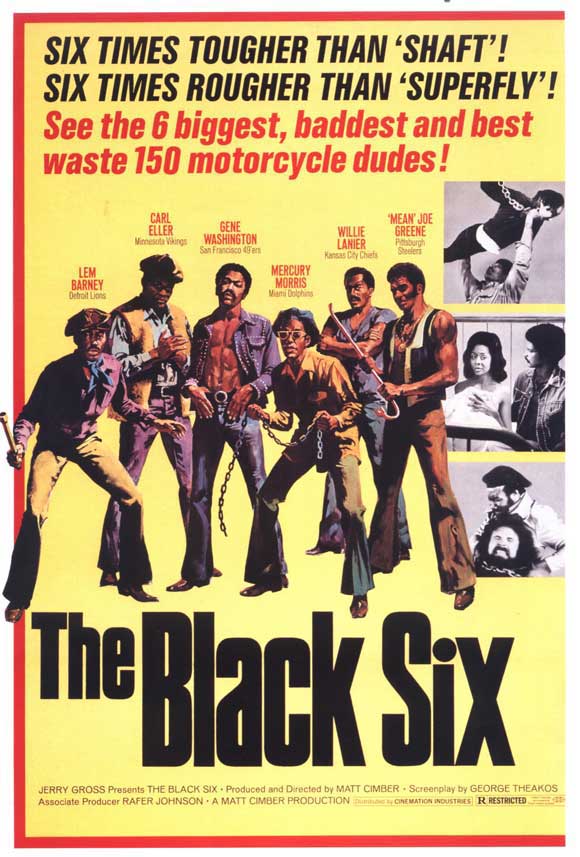
On February 22, 2011, the Grindhouse Film Festival presented their answer to Black History Month with the blaxploitation classic “The Black Six.” This took place at New Beverly Cinema, and the organizers of the festival, Eric Caidin and Brian Quinn, had this to say, “As white guys, we find this an important part of black culture.”
Joining them was the director of “The Black Six,” Matt Cimber. He announced to the audience this was the first time he has seen the movie in 40 years, and he said he “suffered through it.” The film is best known for starring football players who were at their peak: Gene Washington, Mean Joe Greene (his name generated the biggest applause), Mercury Morris, Lem Barney, Willie Lanier, and Carl Eller. Cimber’s agent at the time told him he could put together a bunch of football players if he could put together a movie. The only catch was there could be no drugs, no swearing, and no naked women.
Cimber said all the guys were game and that he wrote a good script for them to work with. When he started as filmmaker, he was encouraged by a friend to make “black films” because the thought was most people didn’t understand black people. It was fun making “black pictures” for him because there was a lot of great talent in the black community, and many actors weren’t really getting hired.
“The Black Six” also had actual members of the Hell’s Angels in it, and they had to be paid at the end of each day in cash. But there was an even bigger problem: they didn’t like blacks. However, it turned out they were also big NFL fans, and everyone ended up getting along great. The film crew had to work hard though to keep the Hell’s Angels quiet during takes. One of them ended up driving his motorcycle through a hotel!
This film had a budget of $90,000, but each of the NFL players got $10,000 each. Cimber ended up being forced to cut corners wherever he could. The lady playing the farm owner was actually the one who owned the farm they filmed at, and that’s why she’s in the film. Triumph also gave the production some motorcycles to work with although the players said they looked like “little toys.”
The movie came out in 1974 long before the days of VHS, DVD, or any other kind of home entertainment. Back then, if you didn’t get your movie into theaters, you didn’t get your money back and you were dead. When it opened on Broadway in New York, many other movies were opening at the same time, but Cimber proudly said this was the only one with a line around the block.
Matt Cimber went from “The Black Six” to create a “varied” resume which was the result of him never focusing on just one idea or one thing. He also created and directed the successful TV series “GLOW: Gorgeous Ladies of Wrestling” which was a satire of the sport (Quentin Tarantino is said to be a big fan of it). While his work may not cry out for an Oscar, he has had a strong career which has lasted several decades and shows no signs of stopping anytime soon.
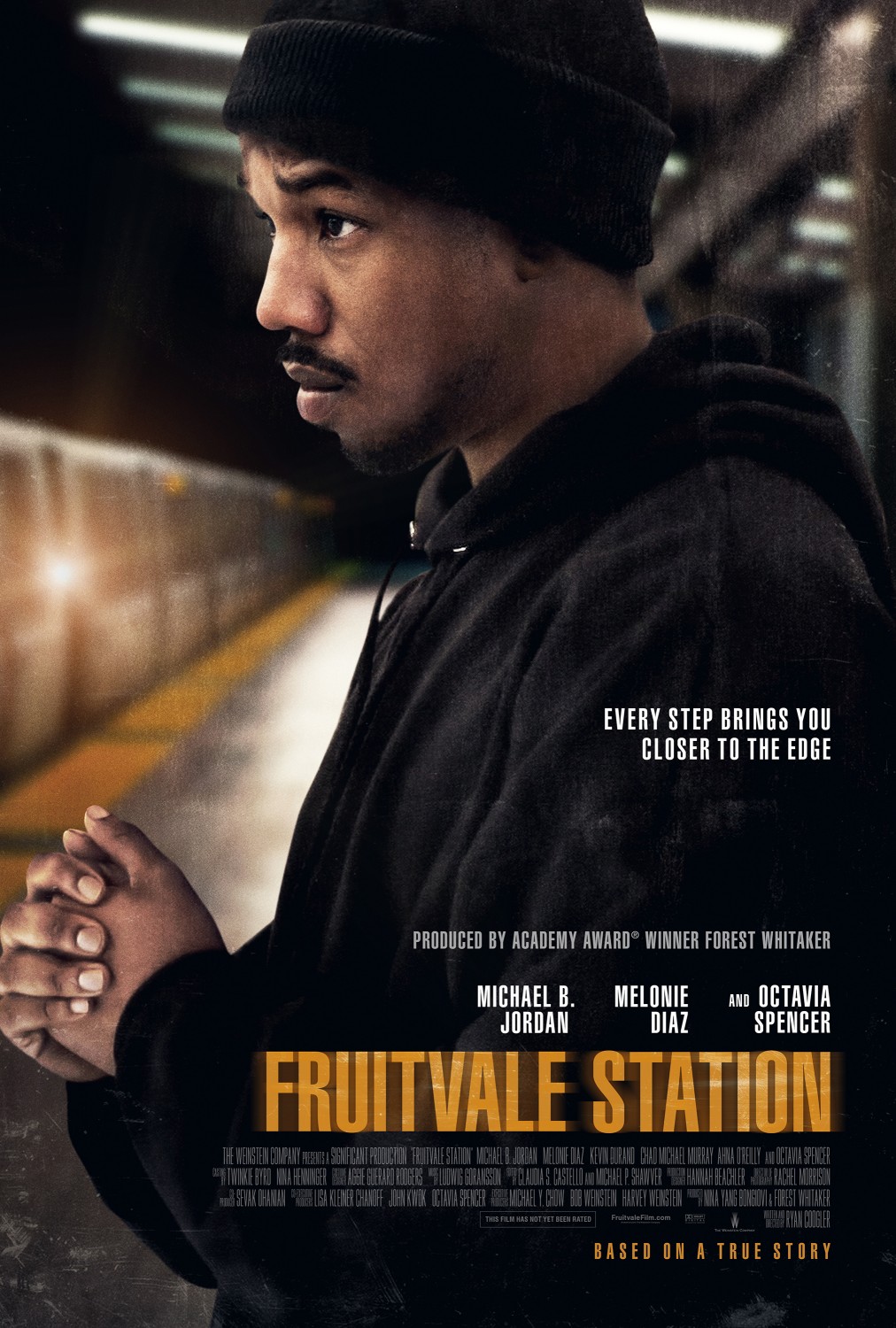
It’s a strange and cruel irony “Fruitvale Station” opened in theaters the same week George Zimmerman was found not guilty of shooting Trayvon Martin. Like Martin, Oscar Grant was a young African American male whose life was cut short under needlessly tragic circumstances. On the night of January 31, 2008, Oscar was traveling home with his girlfriend and their friends on BART (Bay Area Rapid Transit) when a fight broke out on the train which he gets caught up in. When the train arrives at the station of the movie’s title, Oscar was pulled off it by BART police officers, and one of them, either accidentally or intentionally (depending on who you ask) shot him. He died the following day, and his death brought about protests and a call for justice.
The cases of Martin and Grant appear to illustrate that, despite strides we have made in race relations, it’s still not safe to be a young black man in America. Now “Fruitvale Station” is not a movie out to offer a solution to this continuing problem, but it does put a human face on it. After watching it, Grant will no longer seem like a mere statistic to anyone.
The movie follows Oscar (Michael B. Jordan) on the last day of his life as he goes about his business while trying to survive in an unforgiving world. He still lives with his girlfriend Sophina (Melonie Diaz) and their daughter Tatiana (Ariana Neal) in a rundown part of the Bay Area, and this is despite the fact Sophina knows he cheated on her. But regardless his wayward ways, Oscar is clearly dedicated to taking care of them both and in doing what he can to give them a better life.
“Fruitvale Station” is the first feature film for director Ryan Coogler, and he made it because he wanted people to get to know Oscar as a human being instead of just another name in a newspaper. Having seen the film, I can honestly say he succeeded in doing so. Not once does Coogler try to sanctify Oscar or water him down for an easier movie going experience. Coogler presents Oscar warts and all, and while he is far from perfect, we come to respect him for what he’s trying to do with his life on this fateful day.
We see Oscar trying to get his supermarket job back even though his boss isn’t about to rehire him, and it’s the first time we see Oscar’s hair trigger temper come to life. His mission now and throughout this fateful day is to provide for his family. Of course, this may lead to him selling drugs to help pay the rent and put food on the table, the same thing which landed him in prison. While his desire to lead a good life is strong, the lure of the criminal life and the money it can generate for him keeps percolating below the surface.
Michael B. Jordan made a name for himself on television shows like “The Wire” and “Friday Night Lights,” and he also appeared in the surprise hit movie “Chronicle.” His performance in “Fruitvale Station” is nothing short of sensational, and it made him one of the great breakout stars of 2013. It’s exhilarating to watch him as he takes Oscar from the joys of being a father to his frightening lows when he begs his mother not to leave him all alone. It’s a shame Jordan didn’t get an Academy Award nomination for his performance, but then again 2013 was a year overflowing with great performances, many of which were bound to be left out.
Octavia Spencer gives another one of her great performances in this movie as well. As Wanda, she gives us a mother who tries to be strong for her wayward son, but who struggles with the reality she may need to keep her distance from him for his own good. This is not the typical clichéd mother character who goes through the usual motions of the parental ups and downs, but one who has stood up against the tides life has thrown at her and whose love for her son you never doubt for a second.
“Fruitvale Station” starts off with footage of the actual incident where Oscar was shot, but it cuts to black before we can see if the shooting was intentional or accidental. This gives the movie a certain tension as we know how things will end, but even as we get to that moment, there’s a still a part of us which wants this situation to have a different outcome. Even though the end of the movie is never in doubt, we desperately want him to survive the night and get home safe.
The other thing I really liked about this movie is how it showed us a part of the Bay Area many of us don’t get to see. I grew up in Northern California, and while much of it is not crime ridden, there are parts of it I dare not venture into. Like the brilliant documentary “Hoop Dreams,” it sheds a light on how African-Americans live and subsequently breaks a lot of the preconceptions many of us have about them.
There have been several other tragic incidents following what happened to Oscar Grant such as the death of Michael Brown in Ferguson, Missouri. It’s always depressing to see how history keeps repeating itself despite our best attempts to learn from it. What makes “Fruitvale Station” so remarkable is it’s not out to give us glib answers on how to end the violence, but it instead puts a human face on a man who didn’t deserve to die. We hear about these stories in the news far too often, and they are usually shown to us with an unnecessary amount of bias. Both Coogler and Jordan have done a great service as they force us to see Oscar Grant as a person with strengths and flaws, and this makes “Fruitvale Station” one of the very best movies of 2013.
Kathryn Bigelow’s “The Hurt Locker” is one of the most intense war movies I have ever seen. It follows an elite Army EOD bomb squad in Iraq assigned with the task of disarming IED’s, or explosive devices designed to create the most damage possible. Chris Hedges was once quoted as saying war is a drug, and this perfectly the movie we are about to witness. Every time these soldiers go out into the field, it’s either life or death, and no one has any idea how it will turn out. We get to view things from the soldier’s perspective, and the result is a film of wished it was.
The movie stars Jeremy Renner as Staff Sergeant William James, a highly experienced bomb technician who takes over a bomb disposal team after its previous leader is killed in combat. Aside from William, the team is also made up of Sergeant J.T. Sanborn (Anthony Mackie) and Specialist Owen Eldridge (Brian Geraghty) who are immediately taken aback by William’s seemingly reckless tactics. From the moment he steps onscreen, it is clear William finds much more excitement in this most dangerous of jobs than any human being should ever be allowed to experience. It ends up being more important for him than anything else in his life, including raising a child his girlfriend just gave birth to.
When this movie was released, it was already past the point where Bigelow should have gotten her due as one of the best action directors working in movies today, and “The Hurt Locker” may very well be her masterpiece. As I walked out of the movie theater, my nerves still jangling from this intense experience, I was just waiting for someone, anyone to say they never realized a woman could direct an action movie so effectively. It’s like I was almost daring someone to say this. For those of you who are surprised at seeing a female director pull this off, I got a few things to tell you about: “Near Dark,” a vampire-western hybrid, “Blue Steel” with Jaime Lee Curtis, “Point Break” with Keanu Reeves and Patrick Swayze, “Strange Days” with Ralph Fiennes and Angela Basset and directing from a script by ex-husband James Cameron, and the vastly underrated “K-19: The Widowmaker” with Harrison Ford and Liam Neeson. Bigelow directed all of these movies. She didn’t start yesterday folks!
By using four or more hand-held 16 mm cameras, Bigelow gives “The Hurt Locker” a documentary feel which makes it seem all the more real. You are down in the dirt and heat with these troops as it sears away at their bodies during their tour of duty. Their current tour lasts about a month, but when this movie is finished, it will certainly feel like a long month. Bigelow also shows the majority of the action from the soldiers POV and, like them, we are not able tell for sure whether the Iraqis staring at them from a distance are friendly or if they are terrorists waiting to push a button to set off a bomb which could very well be under our feet. She is clearly more interested in seeing how American troops survive in a land overwhelmingly hostile to their presence. Every moment these soldiers are out there is a matter of life and death, and the unpredictability of it all keeps them on their toes and at full attention 100% of the time.
The script was written by Mark Boal who also wrote the script for Paul Haggis’ “In the Valley of Elah,” another film dealing with the Iraq war and its effect on those who fought in it. Boal also spent some time in Iraq embedded with a real military bomb squad which became the source of this screenplay. What makes this unique among other Iraq war movies is it’s, thank god, not concerned with the politics of it all. Neither Boal nor Bigelow are interested in getting into a debate over whether or not we should have invaded Iraq, but instead in getting the detail to the letter of how this army squad does its job, and they appear to have captured this line of work perfectly. There is an authenticity here we cannot and should not question in the slightest.
Jeremy Renner is perfectly cast as William James, a military sergeant who seems to have gotten far past the realm of fear. The way the movie is designed, it could have tumbled into the clichés of “Top Gun” with Renner “grinning like an idiot every 15 minutes”. The fact it doesn’t descend into the kind of a film you’ve seen a hundred times is a credit not only to the filmmakers, but the actors as well. Renner gives us a character who is not entirely trustworthy, but not without a soul. His character perfectly personifies what Hedges talked about when he said war is a drug. He succeeds in showing us without words what effect this war has had on him. It has given him a strong sense of being alive he has not previously experienced anywhere else. But at the same time, he soon realizes how destructive it is not only to himself, but to others around him.
Another great performance comes from Anthony Mackie who plays Sergeant J.T. Sanborn. He is actually one step away from wearing that bomb suit William wears, but the more he comes close to human life lost so horrifically in this war, the more it brings him into full view of the things he really wants in life. What William takes for granted, Sanborn wants for himself. This could have been a role where Mackie could have easily become that drill instructor who is by the book and one dimensional. But instead, he gives us a character who is almost intimidated by what his new leader is able to accomplish as he is angered at his insubordination.
It’s amazing to see what Bigelow pulled off with “The Hurt Locker.” With a budget of only $11 million, she made a movie more intense, exciting, and thrilling than male directors could have made with multimillion budgets. The answer is not to give audiences tons of special effects with no discernable story or characters, but to give us a movie which draws us in emotionally no matter what the budget is. Perhaps if Hollywood ever bothered to realize this, then maybe there wouldn’t be so many bad movies or unnecessary remakes constantly being hurled at us.
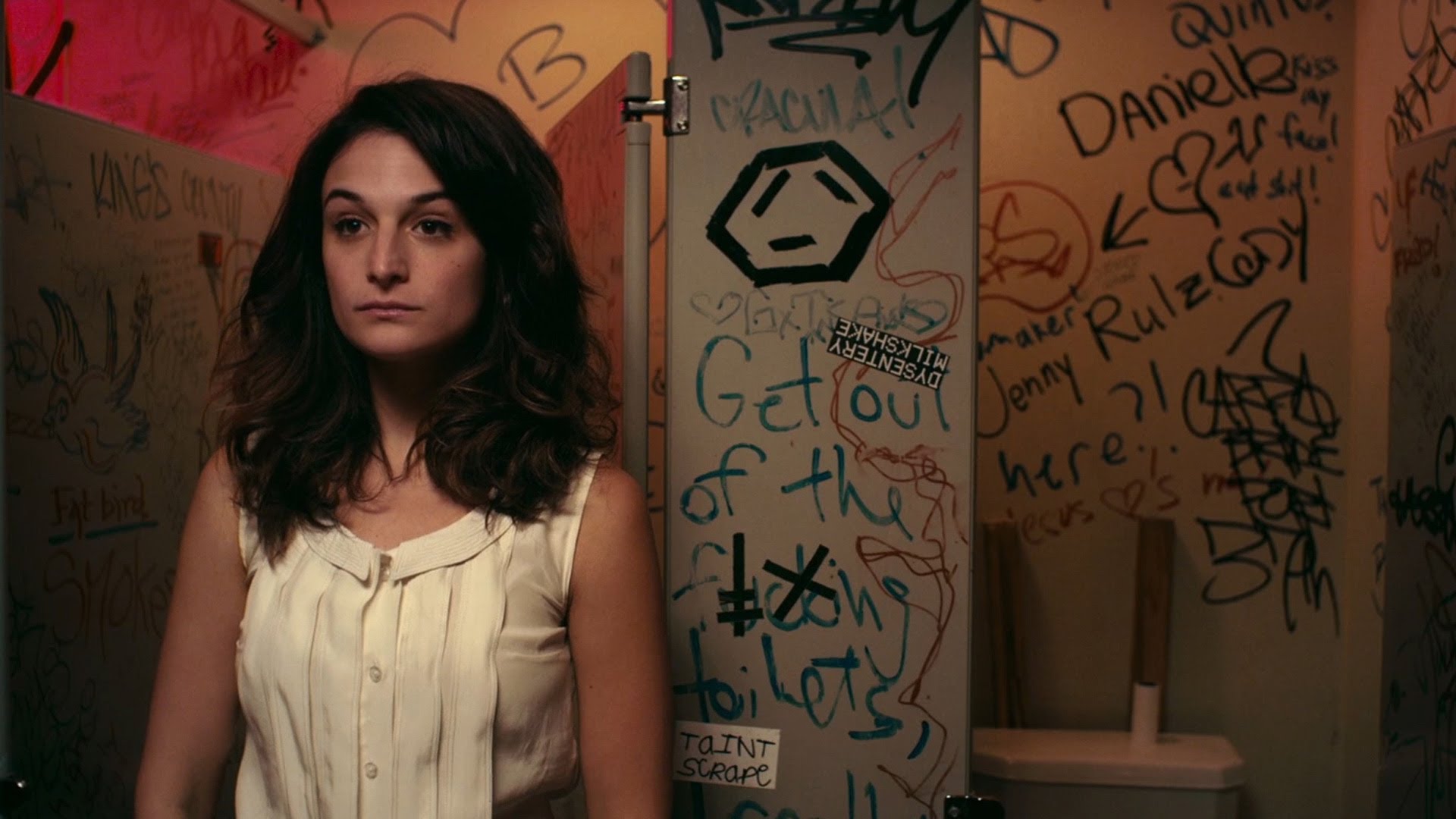
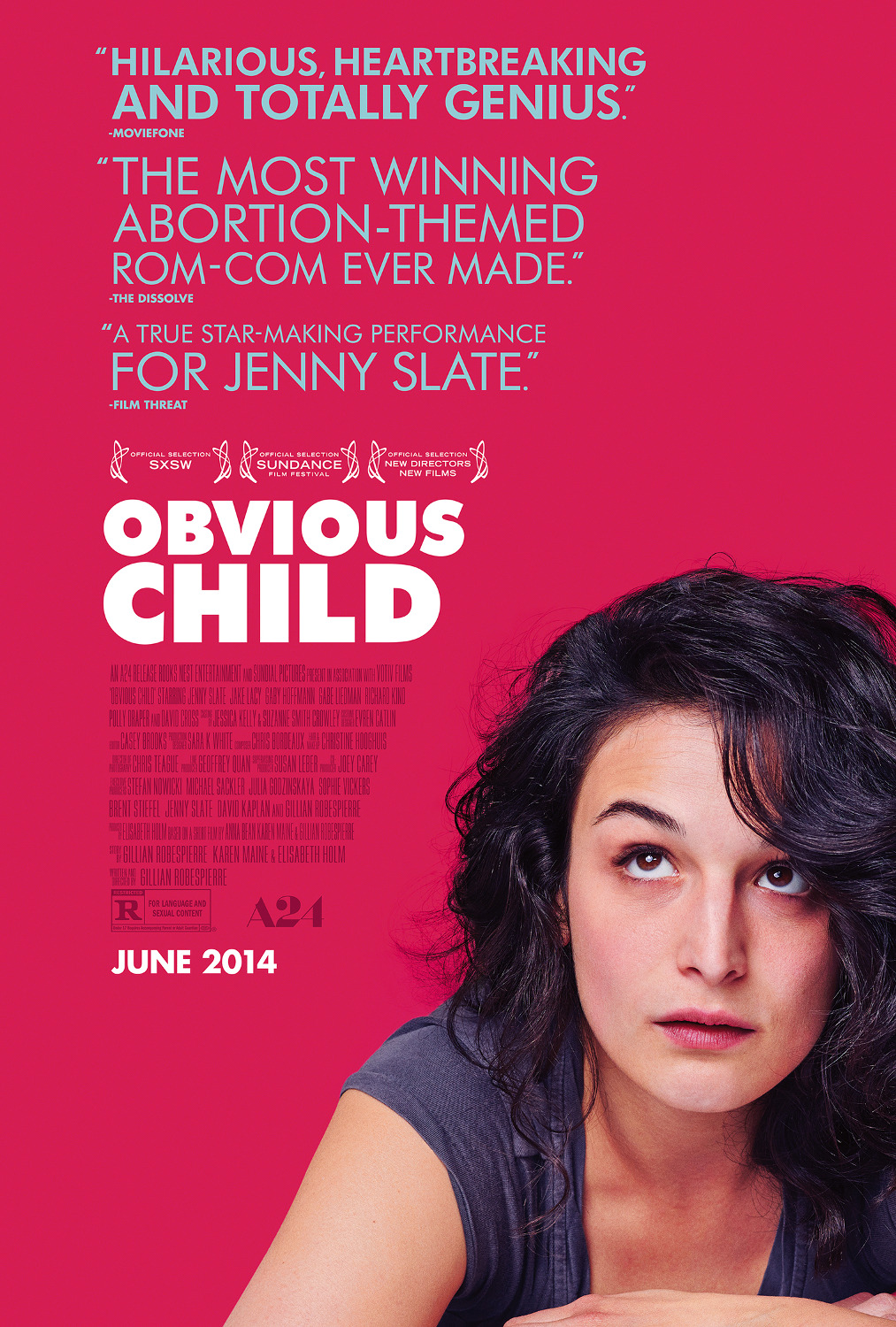
We all know Jenny Slate from her brief tenure on “Saturday Night Live,” and she has since left an impression on us with “Marcel the Shell with Shoes On” and on episodes of “Parks and Recreation.” But in Gillian Robespierre’s “Obvious Child,” Slate gives one of the best breakout performances of 2014 which will stay with you long after the movie has ended. As comedian Donna Stern, we watch as her life hits rock bottom after she gets dumped by her boyfriend and fired from her job in rapid succession. Then after a one-night stand with a really nice guy named Max (Jake Lacy), she finds herself dealing with an unplanned pregnancy. She decides to get an abortion, and it all leads up to the best/worst Valentine’s Day she’s ever had.
I was very excited to meet Slate when she arrived for a roundtable interview at the “Obvious Child” press day held at the Four Seasons Hotel in Los Angeles, California. I told her I came out of the movie wanting to hug her character, and she replied that was great and exactly the way we were supposed to feel (I couldn’t agree more). The movie is advertised as being the first “abortion comedy” ever, but that’s far too simplistic a description. To me, it was about how Donna learns how to empower herself and trust people again after having her heart broken, and Slate felt the same way.
Jenny Slate: It’s not representative of what the film actually does or how it unfolds. I guess, trying to look on the positive side, if people think that’s all that it is when they go and see the film, they will be delighted to see how complex and thoughtful it is and funny. If you think about it as just the story of one woman trying to understand the process of going from passive to active and trying to understand how to make choices you’d think, well why would I try to shy away from that? That’s a human story and I should just tell it.
“Obvious Child” derives its title from the song of the same name by Paul Simon. The discussion about the song led Slate to talk about when she used to ride the subway while she was a college student living in New York. She reminisced about how, when the train went through a tunnel, the window across from her would become a mirror, and this usually happened when she had headphones on.
JS: I remember sophomore year of college I would listen to, on repeat, the “Amelie” soundtrack and just imagine myself as a woman in a movie that was about a woman. It’s pretty interesting that I got to do it. I think a lot of people connected music that way. It makes them feel like they’re in a movie.
In the movie, Slate’s character is a comedian who does a stand-up act at a club in Brooklyn. The way Slate performs Donna’s act, you can’t help but think all her material was improvised, but Slate made it clear those scenes were the result of her collaboration with Robespierre.
JS: Gillian wrote this stand up based off of the style that I perform in; sort of loose storytelling, very instant with the audience, a conversation that’s evolving and not clubby or anything like that. She wrote it, we cut it down, we did some workshopping where I improvised a set based off of what she had written, and she recorded that, rewrote it, and then on the day of the shoot the shooting draft of the film had that stand-up set that we turned into bullet points so that I was not memorized and that it could be natural. You would have the feel of Donna feeling it out, and we talked about it and then I went up and went through these subjects that Gillian had set out and some of them are exact lines of her writing and some of them are lines that came up during it, and she would also call out to me during the shooting and be like, you know, circle back to talking about dirty underwear or whatever. And then I would go back and, during that time of walking backwards, new material would come in. I think if somebody says to me that it’s okay to work and it’s okay to be loose then I go with that. It’s in my nature to be playful and it’s my nature to feel a little bit claustrophobic with the rules, and that’s something I often just have to deal with and work through. You can’t improvise on every job, and you should be good enough at acting that you can say your lines. But for Gillian to say you can be a little looser and for her to be comfortable enough in what she had written to be flexible was an amazing testament to her. We are just a good pair.
One actress who was brought up with much excitement during this interview was Gaby Hoffman who plays Donna’s roommate, Nellie. Hoffman is best known for playing Kevin Costner’s daughter in “Field of Dreams” and for playing Maizy Russell in “Uncle Buck.” The interesting thing is that Slate and Hoffman actually look a lot alike to where you want to see them play sisters in a movie together. As it turns out, Hoffman’s career proved to have a major effect on Slate’s.
JS: I have always wanted to be an actress since I was young and can’t remember anything else. It was my ultimate desire, and she was my age and acting when I was growing up. I used to think I looked like her and was just like, oh I want to be like that girl. And when I got to meet her in my adulthood, I was like totally blown away in general just because I was such a huge fan. After getting past that, the real ultimate moment of just like being totally floored was discovering her personality. She’s very wise, really open and just like really no nonsense. She’s very fearless and I think she sets the bar really high for performance, and I felt that in a good way. I wanted to impress her, and I just think she’s the closest you can get to like a goddess. She’s got that real mythical vibe.
Now many people may say Slate is just playing herself in this movie, but this is the kind of unfair assumption we tend to make about actors in general. We may think we know an actor from reading about them in magazines or seeing them on the countless talk shows on television, but while Slate is a stand-up comedian like Donna, she was quick to point out the differences between herself and her character. Most importantly, she does not expound endlessly on her personal life like Donna does.
JS: I don’t do it. It just never seems right to me, but I’m not Donna. I know my boundaries and I think, although my standup is about like being horny and diarrhea and things like that, I still feel like it’s paired with really nice manners. I think the cornerstone of having nice manners is to have an equal exchange. Someone says how are you, and I say fine how are you, and Donna does not understand boundaries and limits at the beginning of the film. For me, I get it. My relationships are precious and I don’t talk about my husband on stage unless it’s something flattering. But even if it was something flattering that was going to embarrass him, I wouldn’t do it because there’s just too much to talk about.
Seriously, Jenny Slate’s performance in “Obvious Child” is one of the best and most moving I saw in 2014, and it’s a must see even for those who, like me, are not fans of romantic comedies. Regardless of how you feel about the Valentine’s Day Donna ends up having, it’s a lot better than the one Slate told us about from her past.
JS: I had a really bad Valentine’s Day one year because I had a really shitty boyfriend who forgot that it was Valentine’s Day, and he gave me his digital camera in a sock. Wow, thanks! Such a bummer, the worst present ever. That’s like a present that a baby would give to somebody. I never wanted a digital camera in general. I don’t care, I don’t like technology. I just wanted some fucking chocolate. Look around you! There’s hearts everywhere! Fucking get it right! Dammit! My husband is so good at Valentine’s Day. He rules at it. No socks.
Actor, writer and filmmaker Bryan Fogel first came to the world’s attention with “Jewtopia,” a play he co-wrote and starred in which went on to become one of the longest running shows in off-Broadway and Los Angeles history as it was seen by over a million viewers. Now he is set to reach an even larger audience with his documentary “Icarus” which will debut on Netflix on August 4.
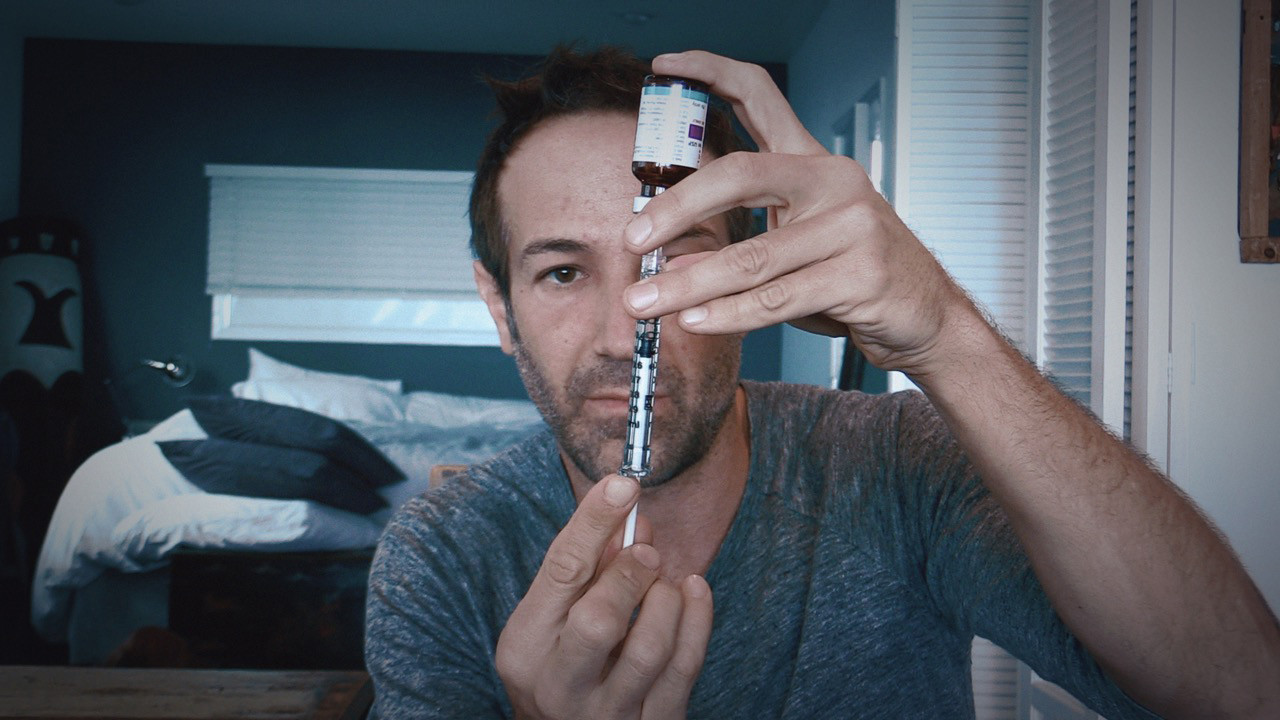
“Icarus” follows Fogel as he went on a mission to investigate doping in sports. Like Morgan Spurlock in “Super Size Me,” he becomes the main experiment of his own documentary as he dopes himself with performance enhancing drugs to observe the changes they have on his body, and to see if he can avoid detection from anti-doping officials. By doing so, he aims to prove the current process of testing athletes for performance enhancing drugs does not work in the slightest.
During this process, Fogel comes to meet Dr. Grigory Rodchenkov, a pillar of Russia’s “anti-doping” program who aids the filmmaker in avoiding doping detection through various processes which include being injected with various substances as well as collecting daily urine samples which will be smuggled from one country to another. But as Fogel becomes closer with Rodchenkov, he soon discovers the Russian is at the center of his country’s state-sponsored Olympic doping program. From there, “Icarus” goes in a different direction as it delves deep into Russia’s program and discovers the illegal activities go all the way up to the country’s highest chain of command which includes Vladimir Putin. The deeper this documentary goes, the more aware we become of how truth can be an easy casualty as others die under mysterious circumstances.
I had the opportunity to speak with Fogel about “Icarus” while he was in Los Angeles to promote it. He spoke about the documentary’s evolution from being a simple exploration into sports anti-doping programs to becoming a geopolitical thriller where witnesses are forced to go into hiding. Also, he spoke of how Lance Armstrong’s admission of using performance enhancing drugs was merely a needle in the haystack as many athletes were utilizing the same chemicals and threw him under the bus to save their own careers.
“Obvious Child” marks the feature film directorial debut of Gillian Robespierre, and it is one of the most assured directorial debuts I have seen in some time. It tells the story of aspiring stand-up comedian Donna Stern (Jenny Slate in a star making performance) whose life has just hit rock bottom. As the movie starts, she gets dumped by her boyfriend, fired from her job, and then finds herself pregnant after a one-night stand. Suffice to say, this is not the best of times for her. But at the same time, what happens from there results in one of the best romantic comedies you could ever hope to see.
Now since Donna decides to get an abortion, “Obvious Child” has been labeled by many as the first ever “abortion comedy.” But while Robespierre is glad this has given her movie far more attention than she ever expected, she does not share this point of view. During an interview at the Four Seasons Hotel in Los Angeles, she made this very clear.
Gillian Robespierre: That’s not why we made this movie, to be called an abortion comedy, because we don’t think it is. I don’t think abortions are funny or hilarious, and I think that shorthand leads to believe we’ve been flippant or glib with the topic. We wanted to accomplish a couple of things with making this movie, and one was making a romantic comedy that was very entertaining, had a lot of romance, had a really funny leading lady, and had somebody who was recognizable onscreen who felt like she could be you or your sister or your best friend. And her parents were recognizable and her best friends were recognizable in a genre that sometimes doesn’t seem relatable. That’s what we wanted to do and really wanted to show. And we wanted to take some stigma away from abortion at the same time and show a procedure that was not full of regret and shame. Donna doesn’t put it on herself and her friends and the characters around her don’t put it on her either. That’s simply all we wanted to accomplish.
Indeed, the movie is really about how Donna picks herself up from her depressed state, comes to empower herself, and eventually learns to trust other people again after getting her heart shattered. This allows Robespierre to find humor in the more serious moments, and at the same time she succeeds in keeping things both human and intimate. These days it seems incredibly difficult to make a movie with such down to earth characters, but she pulls this off with what seems like relative ease.
GR: I think when we talk sometimes even in one sentence, offstage or on stage in a movie or in real life, sometimes we write comedy and tragedy in one beat. I think we’re just trying to take that sort of natural tone that we have and put it on the screen and cut out all the fat that movies and romantic comedies have and have the tone just be very realistic. Donna is a naturally funny character so in one beat she’ll be saying something very self-deprecating, and in the next second she’ll be saying something very sweet and heartfelt. I think that’s just how we interact with each other. To me, it’s just a realistic portrayal of how modern people speak to each other.
When it came to the movie’s title, Robespierre admitted it came from the song of the same name by Paul Simon. She explained why she chose it.
GR: I don’t think Donna is a child or an obvious child. I think Donna is somebody who’s not ready for what the late 20’s is giving her, and she thought she would be someplace else,” Robespierre said. “She didn’t know that the late 20’s is just as hard as her early 20’s, and she’s just trying to figure out how to be confident in where her voice is on and offstage. She’s just trying to figure out how to take over this passivity that seems to be a running narrative in her life, and I think she’s mature and thoughtful, and I think she’s doing something that needs to be done.
The fact Robespierre chose the title of a Paul Simon song for her movie made me wonder if the lyrics played a big part in her decision.
GR: I’m a rhythm girl. I do know the lyrics to the song, I’ve read the liner notes, and I think that determines the feel of the song. It’s not just like drum and bass, it’s obviously Paul Simon’s beautiful poetry that he’s written. But I just liked it for nostalgic reasons and I’m a sucker for nostalgia. I listened to that song a lot when I was little in my car looking out the window, making up my little movie ideas; ‘Oh look at that tree, I feel like I’m in a movie.’
Of course, with this movie being a comedy, you come out of it wondering how many of its scenes were improvised instead of scripted. When you have a strong comedic talent heading your cast, we are quick to believe the director had no choice but to let their main star rewrite the screenplay themselves. But to hear Robespierre say it, the job of a director is to work with people instead of for them.
GR: I think filmmaking makes me really excited about being a filmmaker, and wanting to do this in the first place is that you get the chance to collaborate with a lot of smart, creative, intelligent actors, cinematographers, and editors. Every step of the way is collaboration, and what Jenny and I found in each other was a tone of how we like to speak with one another, and a comfortability of where our parameters are. I was very comfortable with letting Jenny go because she knows Donna just as well as I do, and we were really on the same page. So if a word didn’t feel true and if a sentence would have been funnier this way, I was very malleable. I have an ego, but it’s a different kind of ego.
“Obvious Child” started off as a short film Robespierre made, and it made me wonder about the differences between making a short as opposed to a feature length movie. Her immediate response was time and money as she never had enough of either, but she did go into more detail about what she had to deal with this time around.
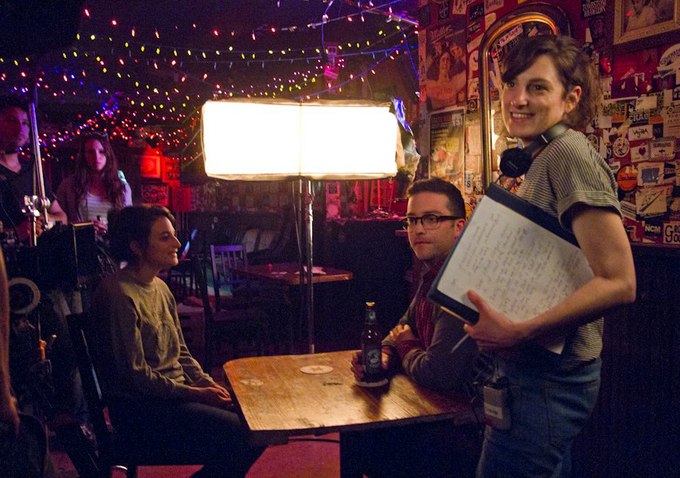
GR: We had a crew of 30 people which was very new for me. The short was just four or five people all from film school. This was a real movie set where my producer Elizabeth (Holm) and I worked really hard to hire a crew. We were a boss and paid thirty people, and there’s something really exciting about that and really scary about that. To be somebody’s employer comes with, I think, a lot of heaviness and respect for the people who work for you and who were coming in every day and bringing in so much of themselves to their roles whether it’s Jenny coming in every day focused, but also the crafty person and the DP and the gaffer. Everybody was full-fucking focused.
Still, with “Obvious Child” dealing with the divisive issue of abortion, people can’t help but think pro-life supporters have been giving the filmmakers and actors a lot of grief. Robespierre responded she hasn’t personally received any feedback from any pro-life groups, and she again reiterated her movie is not an abortion comedy. In my opinion, I liked how it dealt with abortion in an intelligent and refreshing manner. Movies like “Juno” and “Knocked Up,” both which I loved, sidestep abortion in favor of dealing with unplanned pregnancies in another way. But in this post Roe vs. Wade world, it’s surprising we haven’t had more movies like “Obvious Child.” But while it may seem like a revolutionary movie, Robespierre made it clear she wasn’t out to reinvent the wheel.
GR: There’s room for other storytellers out there. I think just because one movie is tackling unplanned pregnancy that ends in childbirth, that’s a real narrative and that’s a story that happens. We’re tackling it in a different way but also making it a comedy using a genre that we love which is the romantic comedy. I was just watching “Knocked Up” last night, it was on TBS, and I laughed my head off.
“Obvious Child” was, in my opinion, one of the ten best movies of 2014. While Jenny Slate is getting the praise she deserves for her performance, the movie’s success is really thanks to Gillian Robespierre whose work here bodes well for the great future she has ahead of her. In a sea of independent films which constantly get lost in the shuffle of all the superhero blockbusters being unleashed on us, it’s great to see a movie like this get the attention it deserves.
So sue me, I still enjoy watching “The Cannonball Run” after all these years. The critics eviscerated it upon its release, especially Roger Ebert who awarded this movie half a star out of four, but my enjoyment for it has only dampened so much. I was just a kid when I saw first watched it with my brother, and I had yet see “Smokey and the Bandit” which we can all agree is a better movie. Looking back, I dug Burt Reynolds’ ever so cool demeanor, Dom DeLuise’s over the top performance, the ever so beautiful Farrah Fawcett who makes you want to love trees as much as she does, Roger Moore gleefully spoofing his role as James Bond, and Jackie Chan kicking Peter Fonda’s butt among others. Hal Needham may have never directed a motion picture worthy of being compared to “Vertigo” or “Citizen Kane,” but he sure did know how to give audiences a fun time (this time around anyway).
recently got to revisit “The Cannonball Run” when New Beverly Cinema screened it as part of a tribute to the late Roger Moore. This offered me my first chance to see it on the big screen after seeing it on television time and time again, and I couldn’t resist the opportunity. After all this time, I still have a blast seeing the filmmakers have fun with the 20th Century Fox logo as a couple of cars keep crashing into those famous spotlights.
For those who have avoided “The Cannonball Run” because of the dreadful reviews, it is about a variety of different personalities who participate in a highly illegal cross-country race which takes them from Connecticut all the way to California. For these drivers, the speed limit of 55 miles per hour means nothing, and they have their own individual plans for reaching the finish line before everyone else. The most prominent of these drivers is J.J. McClure (Burt Reynolds) who is joined by his best friend Victor Prinzi (DeLuise) who at times breaks out into his alter ego of Captain Chaos when times get rough.
Watching “The Cannonball Run” today, I am reminded of what filmmakers used to get away with in a PG-rated movie. You have Terry Bradshaw and Mel Tillis driving their Chevrolet Malibu NASCAR Grand National race car with a pathetic paint job while having dozens of Budweiser Beer cans clearly visible in the back seat. When they are intercepted by the uptight antagonist Arthur J. Foyt (George Furth) at a road block, it’s astonishing they get busted for participating in the Cannonball instead of having an infinite supply of Budweiser on display, let alone open cans in their hands. Foyt is determined to stop the race, but drunk driving doesn’t appear to be as big a concern to him. Go figure.
Heck, most of the drivers we see here are as interested in getting hopelessly inebriated as they are in winning this illegal race. Jamie Blake (Dean Martin) and his partner Morris Fenderbaum (Sammy Davis Jr.) are unsure of who should be at the wheel as they are both sloshed to the point where they should get a designated driver like Richard Petty. J.J. McClure is flying a plane and becomes pissed upon realizing he and Victor are out of beer and ends up landing in the middle of a street near a convenience store where Victor can rush in to get a 6-pack. Seriously, the last 80’s movie I can remember its characters having too much alcohol was “Star Trek V: The Final Frontier,” and that also had a PG-rating.
The first time I saw Jackie Chan in anything was in “The Cannonball Run” where he played a version of himself as a talented race car driver who, along with Michael Hui, navigates a super high-tech Subaru across America. Seeing Chan beating up members of a motorcycle gang was awesome to a 10-year-old like myself, and it was hysterical watching him cover up the rips in his jeans after knocking two guys out. Chan also showed us the future of texting while driving as he watched the Marilyn Chambers porn classic “Behind the Green Door” while behind the wheel. I would like to think this movie predicted the future where drivers stopped paying much attention to what was on the road ahead of them, but I’m pretty sure few would be willing to give Needham and company the credit.
“The Cannonball Run” was also my introduction to Rick Aviles, an actor and comedian who would later become famous for doing the unthinkable in a 1990’s movie, killing Patrick Swayze in “Ghost.” We get a taste of his comedic acting here which wasn’t as present in other movies he appeared in, and he does a Richard Nixon impersonation which still has me in hysterics. What a shame Aviles’ life was cut short at the age of 42.
Burt Reynolds has gone on the record to say “The Cannonball Run” is not one of his favorite movies, and to be honest, he does look to be coasting on his natural charisma as J.J. McClure. Regardless, I still loved how he coasted on it here as it makes his job seem ever so easy. All he needs to do is give you a certain look, make a certain sound, or just twist his mustache in a certain direction to get your full attention. Now how cool would it be to go through life being so cool without putting too much effort into it? Like Rod Stewart said, some guys have all the luck.
It’s a shame Dom DeLuise is no longer with us. Whether he was in the best of movies or the worst of movies, he was such a delightful presence in them all. His character of Victor Prinzim has an upbeat attitude about himself even as J.J. tries to keep it under control, especially when Victor talks about “him.” The him is Captain Chaos, Victor’s alter ego who jumps into action when things get threatening or when he finds himself falling behind in the race. Watching DeLuise become Captain Chaos is a blast, and this is even though he saves the day one time too many near the finish line.
For me, Roger Moore was the James Bond I grew up on, and seeing him here shows what a great sense of humor he had about his tenure as 007. Moore never ever plays his role of Seymour Goldfarb, a Jewish heir to a family fortune pretending to be a movie star named Roger Moore, as if he is in on the joke. Seeing him keep his cool even as the police pursue his speeding silver Aston Martin is great fun, and you know Sean Connery and Daniel Craig would never be quick to do the same thing. George Lazenby maybe, but never Connery.
Watching Jamie Farr as the oil-rich Middle-Eastern sheikh Abdul ben Falafel serves as a reminder of how there is more to this actor than him playing Maxwell Klinger on “M*A*S*H.” Some may consider his performance to be an offensive caricature, but he is so wonderfully over the top here as he proclaims his driving is only rivaled by the lightning bolts from the heavens to where it is a waste of time to take what he does here seriously. Farr makes his character’s unchecked ego all the more palpable, and the scene where he essentially flips the bird to the cops is one to cheer for if you have ever been given a speeding ticket. And yes, Farr makes you believe this is a character who knows when you have had too much couscous.
Was there anything I saw in “The Cannonball Run” that I had not seen before when watching it at New Beverly Cinema? Yes, a few actually. The grotesque Doctor Nikolas Van Helsing (Jack Elam) announces himself to be a proctologist to where a certain finger on his hand becomes far more frightening to me now than ever before. Then again, I had no business knowing what a proctologist does when I was a pre-teen.
Also, Farrah Fawcett’s nipples are much more present as they poke prominently through her dress during the scene where she first catches the attention of Reynolds. Then again, there is an enormous amount of cleavage on display from start to finish, much of it courtesy of Adrienne Barbeau and Tara Buckman who use their sex appeal to avoid the much-deserved speeding tickets which should automatically come with the purchase of a Lamborghini, any Lamborghini.
But after all these years, I still get won over with moments like when Fawcett bonds with DeLuise as he talks about the first appearance of Captain Chaos in his life, or when Reynolds tells Fawcett why he races cars. This might seem like a movie too shallow to contain moments like these, but they were pretty deep to me when I watched “The Cannonball Run” back in the 1980’s, and today they still are.
I don’t know, maybe my opinion of this movie would be different had I seen “Cannonball” or “The Gumball Rally” beforehand, both of which are said to be much better than “The Cannonball Run.” Well, fate had it that I would watch Needham’s 1981 comedy ahead of them, and I still enjoy watching it despite the numerous detractors it has. For those who think this is a prime example of lazy filmmaking, check out “Cannonball Run II” which is exactly that (or better yet, don’t bother).
I feel like I should apologize liking “The Cannonball Run” as much as I do, but I am sick and tired of apologizing for who I am. Besides, this movie remains a prime example of the things filmmakers could get away with in a PG-rated movie back in the 80’s. They wouldn’t get away with any of this today.
Uh-oh, I think I’m becoming a fan of romantic comedies. For the longest time, I have been avoiding them like the plague as they feature characters whose problems don’t even compare to what I go through, dialogue which makes me cringe in such an incredibly painful way, and acting that is embarrassing and flat. But just as the genre looks to be finally dying out, 2014 brought us movies like “What If” and “The One I Love” which succeed in reinvigorating it to where I got surprised in a way I didn’t expect. But moreover, these movies have provided us with down to earth characters we can actually relate to instead of sneer at in bitterness.
Of all the romantic comedies released in 2014, I doubt I will see one better than “Obvious Child.” It marks the feature film directorial debut of Gillian Robespierre, and it’s a very confident and assured debut as she follows the trials and tribulations of a twenty-something woman whose life hits a low point which leaves her in a depressed funk. It also deals with a very touchy subject in a way both intelligent and very refreshing, and that makes this rom com a brilliantly subversive one.
Former “Saturday Night Live” star Jenny Slate stars as Donna Stern, a comedian and bookstore employee who is about to go through one of the worst periods of her life. “Obvious Child” starts with Donna’s boyfriend dumping her which leaves her utterly devastated, and then she is informed the bookstore she works at will be closing which will leave her out of a job. This leads her sinking into a depressed state which results in one of her worst stand up gigs ever, but on that same night she meets a really nice guy named Max (Jake Lacy) with whom she strikes up an easy-going conversation. From there, the two of them have a night of fun where Max accidentally farts in Donna’s face, and they end up having sex after an exuberant dancing session to Paul Simon’s “The Obvious Child,” a song from which this movie gets its name.
Not long afterwards, Donna discovers this one-night stand has gotten her pregnant, something she is not the least bit prepared for. As a result, she decides to get an abortion but finds she has to wait a few days before the doctors can perform the procedure. During this time, she wonders about whether or not to tell Max about her decision, and the movie chronicles her journey towards the best/worst Valentine’s Day she has ever had.
Many have been describing “Obvious Child” as the first ever abortion comedy, but that description doesn’t do it justice. Yes, abortion is a theme here, but it’s not what this movie is about. The main focus is on how Donna’s unplanned pregnancy forces her to confront the realities of independent womanhood for the first time in her life, and it proves to be a journey both rough and, at times, truly hilarious.
Many of us remember Slate from her brief stint on “SNL” where she accidentally let the F-word slip out of her mouth. She left after only season, but she has since made a name for herself on “Parks & Recreations” and “Marcel the Shell with Shoes On.” Slate’s performance in “Obvious Child” proves to be a huge breakthrough for her, and you just want to hug her after watching this movie. She infuses Donna with a lot of heart and makes you relate to her struggles as life constantly throws an endless number of curveballs in her direction, and we get so emotionally absorbed in Donna’s journey as she faces up to her responsibilities and rises above her misery which threatens to consume her completely. Slate is both warm and funny at the same time, and that’s not always an easy combination to pull off. It’s one of the best performances from an actress I have seen this year.
Slate is also backed up by a terrific supporting cast which features characters who come to reveal things about themselves we wouldn’t otherwise have known. Gaby Hoffmann is wonderful as Donna’s friend and roommate Nellie, Richard Kind is drolly amusing as Donna’s father Jacob, Polly Draper has some very moving moments as Donna’s mother Nancy, Gabe Liedman is a hoot as everyone’s gay best friend Joey, and David Cross has some hilarious scenes as Sam, a comedian and a guy who just doesn’t get what’s going on around him.
I also have to give Jake Lacy a lot of credit as he makes Max a truly nice guy we never find ourselves snickering at. Roles like these are often very bland and don’t give actors a lot to work with, but Lacy makes you believe Max is the real deal and the kind of significant other we all hope to find in our own lives. Max could have been the most boring and thankless character in “Obvious Child,” but Lacy keeps him from becoming this with a lot of humor and charm.
When it comes to the abortion issue, which has already split people on “Obvious Child” (particularly those who haven’t even bothered to see it), Robespierre handles it in a manner which is actually very refreshing. She’s not out to demonize abortion, but she also doesn’t make light of it either. In this Roe vs. Wade world we have been living in for the past few decades, I’m surprised we haven’t had more movies like this one.
Robespierre has created a truly wonderful film I am very eager to see again soon, and it’s one of the most intelligent rom-coms to come out in some time. “Obvious Child” really left a smile on my face as I walked out of the theater. Regardless of whether or not you have gone through what Donna has, or whether you’re a man or a woman for that matter, you can sympathize with what she goes through as we have all hit a rocky point in our lives. What’s great is how she rises above her problems and becomes a stronger person as a result. Robespierre and company confront the painful moments in these characters lives with a lot of intelligence and warmth, and it’s also really funny. It’s deep, but it also had me laughing a lot.





 The Ultimate Rabbit