‘We Need to Talk About Kevin’ Features Tilda Swinton at Her Most Devastating

We Need to Talk Kevin poster 4

I think “We Need to Talk About Kevin” would make an interesting double feature with “Rosemary’s Baby” as both prove to be cautionary tales for prospective parents. But unlike Polanski’s classic film which dealt with the occult and supernatural, the horrors of “We Need to Talk About Kevin” are rooted in real life. Stories of kids going on murderous rampages at their schools have gotten far more media coverage than they deserve, but Lynne Ramsay’s film is not out to exploit this subject but to explore what could have triggered such a massacre.

Acting goddess Tilda Swinton plays Eva Khatchadourian (good luck trying to pronounce that last name), a successful travel writer who is picking up the pieces of her life after a tragic event people have come to blame her for. The movie shifts back and forth in time as we see Eva finding happiness with her husband Franklin (the always great John C. Reilly) to becoming pregnant with her first child, and then back to present day where she tries to make sense of the crimes her son committed. We see her as a pariah of the community, and everyone constantly stares at her as if to say, “How do you live with yourself?”

I’m not sure I’ve ever seen a character look less forward to motherhood in a movie before this one. Eva’s face of happiness is wiped away almost permanently by her new role in life, and while her husband is thrilled at being a parent, she just looks on despondently as if her life just came to a shocking end. Without words, you immediately get the impression she has no interest in being a parent, and she never really forms an affectionate bond with Kevin. Eventually, Eva sees the parts of herself she doesn’t like in Kevin’s cold, dark eyes as he glares at her as if to say she resembles everything wrong in the world.

Swinton has never been an actress content to fall victim to overly emotive acting or chewing the scenery for an Oscar moment. She inhabits her characters more than plays them, and her performance as Eva ranks among the very best of her career. She creates such an unforgettably human portrait of a mother whose superficial behavior towards her son isn’t fooling anyone, especially him. But at the same time, Swinton makes you feel deeply for Eva as she forces you to confront what you would do if you were in this unimaginable situation.

While we see Eva losing her temper at Kevin when he does bad things, we also see she’s the only person who realizes something is seriously wrong with him. Franklin, on the other hand, is either completely oblivious to his son’s nastiness or just doesn’t want to see the truth of how troubled he is. To everyone else, Kevin is just a boy doing boyish things, and this leaves Eva feeling even more isolated as she feels completely helpless in her attempts to repair the fractured relationship she has with him.

Kevin is played by three actors at different parts of his life: Rocky Duer, Jasper Newell and Ezra Miller. All do great work in making Kevin the kind of child none of us ever hope to have, and each manages to perfect the wicked glare Kevin gives off to where you would think they were auditioning for a Stanley Kubrick movie, hoping to outdo Vincent D’Onofrio’s piercing glare in “Full Metal Jacket.” But of those three actors, the one who deserves the most praise is Miller as he makes Kevin into one of the scariest sociopaths I have ever seen in a movie. Damien from “The Omen” has got nothing on this guy, and it’s tempting to think he could give Alex from “A Clockwork Orange” a run for his money. Miller never portrays Kevin as a simple one-dimensional villain, but as one whose meaning in life has been corrupted to where he doesn’t see much good in anything.

Director Ramsay previously made “Ratcatcher” and “Morvern Callar,” and her work behind the camera has been justly acclaimed. With “We Need to Talk About Kevin,” she shares in Swinton’s fearlessness in delving into subject matter many would choose to avoid if they could. Not once does she judge the characters here, and she leaves their actions up for us to judge. She is not out to provide answers to a situation like this because none are ever easy to come by.

The movie’s opening shot has Eva participating with dozens of people in some Italian tomato festival to where it looks like they are all bathing in blood, and it symbolizes what will eventually become of her life. Ramsay makes great use of the color red throughout as it acts as a stain on Eva’s conscience which cannot be washed away. The movie is beautifully shot to where the sterile setting Eva and her family lives in is just asking to be forever dirtied, and the film score by Jonny Greenwood, who composed the score for “There Will Be Blood,” illustrates the violence just underneath the surface that will eventually explode for all to see.

“We Need to Talk About Kevin” could easily have been an exploitive feature, but it never falls victim to that. There’s actually very little violence shown as Ramsay is far more interested in the aftermath of what has happened, and the movie ends on a surprising note of possible redemption for some of the main characters. Having seen it, I can now safely say Tilda Swinton was most definitely robbed of an Oscar nomination for her performance here. What she does is truly astounding as well as completely brave. Not many actors would easily venture into a topic which hits too close to home, but Swinton is never one to back down from a challenge.

Coming out of this bruising film experience, I kept thinking about this line of dialogue said by Augustus Hill on the HBO series “OZ:”

“One of the last things Jesus did on Earth was to invite a prisoner to join him in heaven. He loved that criminal. I say he loved that criminal as much as he loved anyone. Jesus knew in his heart it takes a lot to love a sinner. But the sinner, he needs it all the more…”

* * * * out of * * * *

Exclusive Interview with Dragan Bjelogrlic about ‘See You in Montevideo’

Dragan Bjelogrlic photo

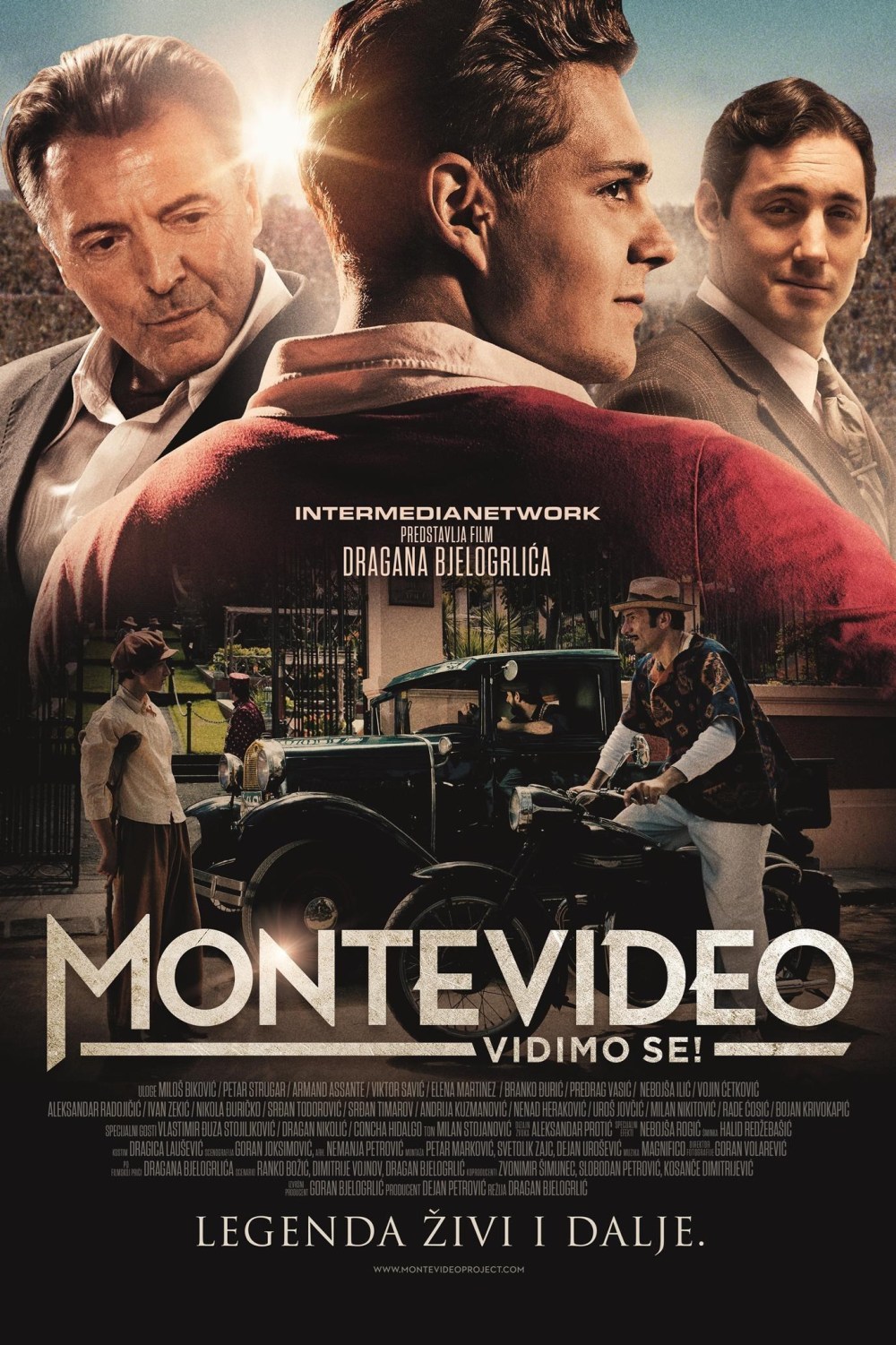
See You in Montevideo” was the Serbian entry in the Best Foreign Language Film for the 87th Academy Awards, and it is a sequel to “Montevideo: Taste of a Dream.” It takes us back in time to the first World Cup which was held in Montevideo, Uruguay and follows the national soccer team of Yugoslavia. These players have never been outside of their home country before, and everyone else views them as outsiders to where many of their competitors treat them with utter disdain. However, they eventually win people over thanks to their youthful enthusiasm and their love of soccer. But as the games go on, we see how their love of soccer threatens to be crushed by corrupt forces beyond their control.

Both “Montevideo: Taste of a Dream” and “See You in Montevideo” were directed by the same director, Dragan Bjelogrlic. In addition to being a filmmaker, he is also an actor who is considered by many in his country to be a “Serbian Robert Redford” as he is typically cast in roles where he plays a charismatic criminal like Čika Kure in “The Wounds.”

Bjelogrlic was in Los Angeles for a screening of “See You in Montevideo” at the Landmark Theatres back in 2015, and I was lucky enough to spend a few minutes with him afterwards to talk about it.

See You in Montevideo poster

Ben Kenber: This was a wonderful movie. I have to apologize because I haven’t seen the first movie yet.

Dragan Bjelogrlic: Oh no, no. I prefer people who have not watched the first movie because my whole idea was to make a totally independent second movie and totally independent story which is the global story. When we decided to make two movies about the same subject, I organized all of that and I said to my producer, “What do you think? Maybe I’ll make the first movie and then get something else to make the second movie.” But after the success of the first movie he said, “No, no! You must! Just forget about the first movie and try to make something else.” So I like spectators who didn’t watch the first movie (laughs). No really! And you’re right, (if you have) watched the first movie you will feel more comfortable.

BK: That’s a good point because this movie does feel like it stands on its own. I also found it fascinating how the movie chronicles the love of the sport and how it gets corrupted by greed and politics towards the end. How did you go about researching all this project?

DB: I read a lot of articles and a lot of books which were made about soccer. It’s the most popular sport. And there were a lot of journalists that wrote about it, and people didn’t read it back then. There were some people who were aware of what things were going on. There was the enthusiastic period where they were pioneers, and the people who created it first were very enthusiastic and it was good. The first World Cup was very good, but when 100,000 people come it’s some big plan. Okay let’s make some compromise, but it’s really very sad. We are witnesses now.

BK: Regarding the actors who played the soccer players, did you want real soccer players cast or were you just comfortable casting actors whether they had soccer experience or not?

DB: They are actors. At the beginning some of them were students and some of them were actors, but I try to combine actors and athletes. Thanks to God, we Serbs are good at both (laughs). We had a lot to choose from so it was not a difficult choice. That’s something which was not such a big problem. The only problem was the bind. Like somebody said, “Oh people in Uruguay, they will not like this.” It was a problem for me, but they find this fact that the policeman gave back the ball and somebody covered that. I said aha, this could be a subject. Who knows in which kind of sports football will be developed? That’s something which was my idea.

BK: In the process of turning this true story into a movie, did you have to take any dramatic license with the facts at any time?

DB: No. We just followed the facts and we tried to be precise with all facts especially with the match between Yugoslavia and Uruguay. What has happened? Who got the first goal? Who was the referee who canceled the first goal? It’s all the facts you can find in articles. There is my concession that the facts are facts.

BK: What’s up next for you?

DB: I don’t know. I have a lot of opportunities. My main job is as an actor, that’s my main profession. I like to act a little. This may be comfortable for me, but it’s not necessary for me to direct. If I find something which I feel (strongly about), I will direct.

Big thanks to Dragan Bjelogrlic for taking the time to talk with me. “See You in Montevideo” is now available to own and rent on DVD, Blu-ray and Digital.

Why ‘Pump Up the Volume’ Remains My Favorite Teen Movie

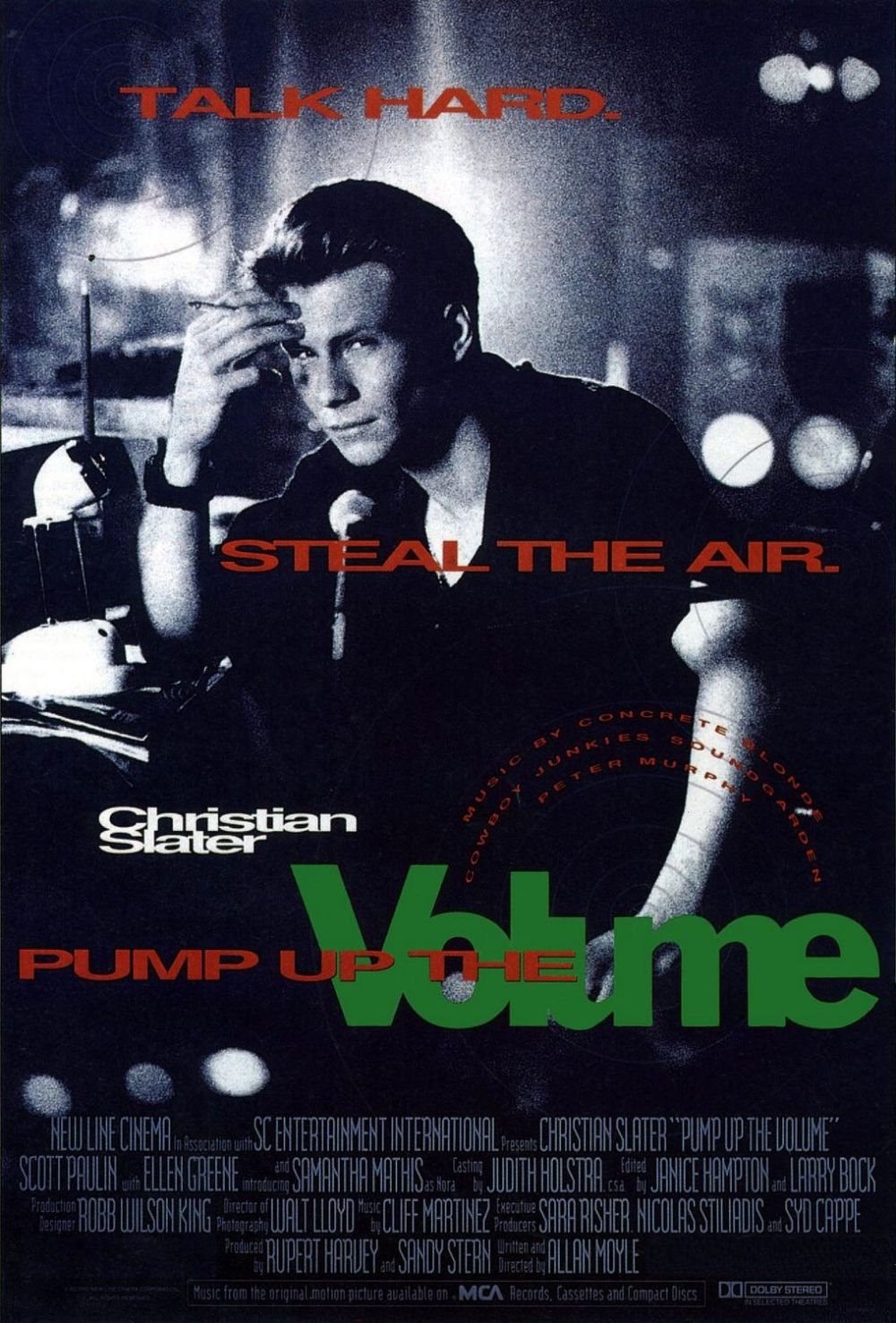
Pump Up The Volume movie poster

Of all the movies I have seen about being a teenager, “Pump Up the Volume” is still far and away my favorite. It is also the one which hit me the hardest emotionally as, after seeing all these movies about nerds and jocks fighting each other on school grounds, this one had characters I could actually relate to. I grew up during the years of “Beverly Hills 90210” which infected us with a fantasy version of the high school experience where you could have your troubles as a teenager but would still come out of it with a smile, a cute boyfriend or girlfriend and some fancy, fancy clothes which made you look oh so incredibly cool. This movie does not exist in that fantasy world, thank goodness, and I would love to see Hollywood produce more movies like it.

Allow me to give you some background information about myself as it will inform how strongly I feel about this movie. My family had moved around quite a bit when I was a kid, but it actually didn’t bother me much until we moved from Southern California to Northern California. I lived in Thousand Oaks for five years, and at that point it was the longest I had ever lived in one place. For once I felt settled, and then my dad quit his job and got a new one up north in the Bay Area, and my whole life went into major upheaval as I had no choice but to move with my parents and away from a place which truly felt like home.

I had to start all over again making new friends, and even after all these years it still feels so unfair to have been put through this moving thing one time too many. I became very antisocial and withdrawn as I was so frustrated and depressed at this situation I was thrown into. For a while, it felt like I could not talk to anybody as I didn’t know what to say. In retrospect, the fact I got through adolescence in one piece seems like a miracle.

“Pump Up the Volume” features a character who went through something very similar. Christian Slater gives one of his all-time best performances as Mark Humphreys, a high school senior who has just moved with his family from New York to a suburb in Arizona which appears to be located in the middle of nowhere. He is a shy and withdrawn kid, clearly not happy about his situation. He can’t talk to anybody, not even to his parents who he feels completely alienated from. But by night he is Happy Hard On, a pirate radio DJ who operates an underground station in the basement of his parents’ new home. While Mark is very quiet in the classroom, he comes to life on the radio and rants about his new neighborhood and the world he is growing up in with complete abandon.

As time goes on, his radio program starts drawing in more and more listeners who relate to what he is going through. Chaos begins to reign at his high school and the adults work to control the situation, having no idea of what the kids are really going through. This scares Mark to the point where he wants to stop doing his show, but since this is one of his biggest outlets for the frustration and aggression he constantly feels, he can’t bring himself to stop. It’s through his venting that he suddenly becomes the voice everyone needs to hear, especially the kids.

“Pump Up the Volume” covers a lot of ground that other teenage movies don’t bother to, and it’s much more down to earth than others in the genre which, for myself, was a huge relief. I got so used to seeing movies about the classroom dork winning the girl of his dreams or beating out the jocks that made him believe he was so uncool. Watching movies like those when I was a teenager just made me feel more ostracized than I already did, so “Pump Up the Volume” was a godsend in how it had a main character I could actually relate to. Adolescents need movies like this to make them realize they are not the only ones going through rough times, and to make them see how being a teenager is not always what we expect it to be.

In one scene, Mark takes a call from a kid who admits he likes guys and ends up describing a truly humiliating situation he got trapped in. In another, he takes a call from a listener who has written him a letter saying he wants to kill himself, and when Harry asks him why, the listener says with tears coming out of his eyes, “I’m all alone.” But as Mark quickly admits, maybe it is okay to be alone sometimes, and that in the end we are all alone. It sucks, but there seems to be no real escaping this fact. Then again, I have no problem with anyone proving me wrong there. I can’t think of another teen movie before this one that dealt with such down-to-earth characters.

A lot of people have complained the adult characters are largely one-dimensional. While I can definitely see some validity in this argument, I also remember seeing these seem people at my high school. Believe me, these people do exist. Annie Ross plays Loretta Creswood, the principal of Hubert Humphrey High, and she is a true bitch in every sense. Loretta lives to see her students get the highest SAT scores in the state, and she has no time for troublemakers whom she sees as having no interest in education. I have friends of mine who are teachers, and they do not hesitate in telling me just how much they hate the principals they work with. The way they are described to me, they are just as bad as the one Ross plays in this movie.

Then you have Mark’s dad, Brian (played by Scott Paulin), who at first seems oblivious about how to deal with his son’s problems, but then he turns out to be the students’ savior when upon realizing they need to be heard, not talked down to. At the same time, Loretta doesn’t show the least bit of regret in expelling those students she feels are undeserving of an education. Paulin is terrific in making Brian seem like much more than the average parent, and he makes the character a heroic educator as we how much he values the fact everyone has the right to an education.

Another great performance comes from Samantha Mathis who plays Nora Diniro, a total rebel and a free spirit who never apologizes for who she is. Nora ends up befriending the terribly shy Mark, and she later comes to discover his secret identity. Nora eventually becomes Mark’s conscience as she makes him realize the powerful effect he has on the kids in the town and on her as well. When he wants to back out when things get too dangerous for him, she angrily reminds him he has a responsibility to the people who believe in him.

There’s a great scene where the two of them are outside in Mark’s backyard when he desperately wants to communicate to Nora, and she tries to make him as comfortable as possible. Nora even ends up taking off her sweater and stands in front of Mark with her breasts bared; forcing Mark to look into her eyes as they quickly make a connection not easily broken. Both Slater and Mathis have fantastic chemistry together, and Mathis creates the kind of free spirited character we all would have loved to have been like in high school.

“Pump Up the Volume” climaxes with the walls closing in on Mark as the adults try to figure out his real identity and shut him down for good. The fact he continues to be defiant even as the authorities get closer and closer to catching him was really inspiring to me. You want to see him, in the words of Jack Black from “School of Rock,” stick it to the man. Then Slater delivers this piece of dialogue which still stays with me:

“High school is the bottom. Being a teenager sucks, but that’s the point! Surviving it is the whole point! Quitting is not going to make you strong, living will. So just hang on and hang in there.”

“Pump Up the Volume” still resonates very deeply for me all these years later. It came out in the summer of 1990 which was, ironically the summer before I started high school. This movie became one of the things which kept me going through adolescence even when I got very, very depressed. Unfortunately, it was a box office flop on its initial release, but it has since gained a strong following on home video and DVD. It’s a following I hope will continue to grow, and maybe if we’re lucky, there will eventually be a special edition DVD and Blu-ray containing documentaries, trailers, audio commentaries and even music videos. Hey, Criterion Collection, are you listening?

“Pump Up the Volume” also contains one of my all-time favorite soundtracks. My only problem with it is it doesn’t have Leonard Cohen’s version of “Everybody Knows” which serves as the perfect song to open the movie with. Instead, we have the version by Concrete Blonde which comes on towards the end when Mark makes his last stand against the powers that be. I certainly don’t want to take away from their cover of the song as they did a great job on it, but Cohen’s version is perfect fit for Mark’s state of mind. It also would have been cool to get some of Cliff Martinez’s film score on the soundtrack as well as I really loved how it sounded. Still the soundtrack does have a lot terrific tracks from The Pixies, Soundgarden, Cowboy Junkies and Sonic Youth.

For me, “Pump Up the Volume” was a godsend. It gave me a character who was dealing with the same problems I dealt with when I was a teenager, and there were few, if any other, movies which contained individuals like him. Most teen movies back then just left me with a never-ending feeling of utter resentment as they featured kids who got to experience things I never did and felt robbed of. All the misfits, social rejects and those who felt dejected and rejected need and deserve a movie like “Pump Up the Volume.” After all these years, it remains very close to my heart, and I would not hesitate to recommend it to anyone.

* * * * out of * * * *

Exclusive Interview with Toby Regbo about ‘U Want Me 2 Kill Him?’

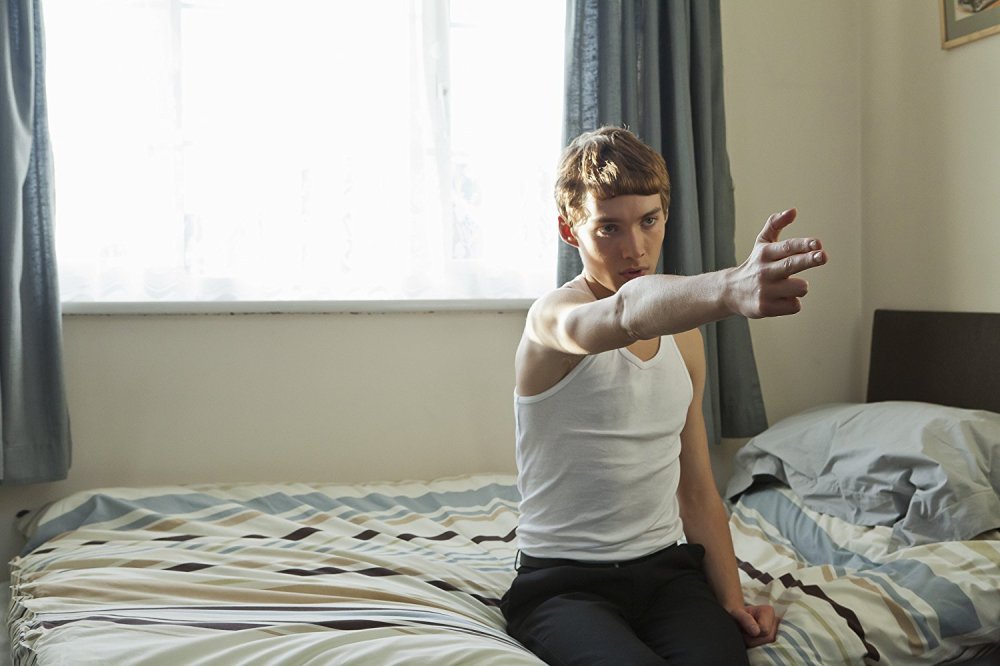
Toby Regbo in U Want Me 2 Kill Him

In “U Want Me 2 Kill Him?,” Toby Regbo gets one of his biggest and most memorable roles yet. The movie is based on a true story which was chronicled in Vanity Fair about a 16-year old schoolboy who gets arrested for attempted murder. His explanation was he was working under orders from an MI5 agent, but the truth of the matter ends up revealing something far more shocking.

Regbo plays John, a lonely boy who gets picked on at school and is later befriended by one of the most popular students there, Mark (Jamie Blackley). The friendship comes about because John’s sister Rachel (Jaime Winstone), whom Mark has developed an online relationship with, asked him to look out for John. But when Rachel is found murdered, both John and Mark in their devastation vow revenge against the person who took her life. What happens from there is not worth giving away, but it resulted in one of England’s most shocking crimes and showed us all how much of a threat the internet can be.

I got to speak with Regbo over the phone about his role back in 2013. During our conversation we talked about how his role reminded him of his years as a teenager, how much time he spends on the internet, the challenges of playing a character based on a real life person, and he even gave me an update on “Maleficent” which he was cast in.

U Want Me 2 Kill Him poster

Ben Kenber: Were you aware of the Vanity Fair article or the true-life story this film was based on before you got the script for it?

Toby Regbo: Not before I got the script. I read originally for Mark, the other character that Jamie Blackley ended up playing which is a good thing the roles ended up that way. But no, I didn’t know anything about it until I auditioned for it, and then once I got close to getting the part then I started looking further into it. I read the article and I also had some information that wasn’t in the article. I met the journalist who wrote the Vanity Fair Article (Judy Bachrach). In fact, she came to the set. But once you know the story, you want to know as much as possible about the case. It’s so mental that this happened.

BK: What appealed to you most about the role you ended up playing in the film?

TR: It’s hard to talk about the film without giving too much away.

BK: Yes, that’s true.

TR: I guess the interesting thing for me was trying to play the scenes in the movie without giving any tells to the ending. That was the key for me, trying to create something that was believable enough that you don’t see it coming I guess, at least for not a long way away.

BK: Yes, that must have been tricky because you read the script and wonder how you can keep from revealing everything. That must have been a challenge for everybody involved.

TR: We did a lot of rehearsals which is great. It’s the most rehearsal I’ve ever done before starting a film. Andrew Douglas, the director, and his wife Lenore sort of coached us (me and Jamie) through the movie. We did three or four weeks of rehearsals beforehand and working everything out. It was about just trying to keep them real, trying to find out exactly what motivated them. We did a whole bunch of work with sort of character objectives. We used this book called Ivana Chubbuck’s “The Power of the Actor” and we worked out what motivated our characters.

BK: Do you prefer to do a lot of rehearsal before you shoot a movie or does it depend on what movie you’re working on?

TR: It just depends on the whole vibe. I do like rehearsals, but at the same time the best stuff that ever happens is stuff that you don’t plan for. You can do things to death, but you just got to get out and do it for real. I’m doing this TV show and we’ve been shooting for like ten months now, and I’ve never shot that long before. It’s like a different process. You shoot like 8 pages a day, you get scripts like a couple of days beforehand, there’s not much preparation time and you just got to sort of go with it. It’s great training as an actor.

BK: I agree. The chemistry you have with Jamie Blackley onscreen is terrific and you two come across as very down to earth and really good friends. This makes the eventual unraveling of their friendship all the more painful to witness. How did you two develop that chemistry?

TR: It came to us naturally. Jamie is one of the easiest people to get along with that I ever met in my life. And also at the same time, when we started filming we both had fallen in love with girls at the same time, so we had that camaraderie on set. We were always talking about how long we should wait until we say I love you to a girl, so we both had that commonality. It worked out for Jamie, it worked out for me.

BK: Before you made this movie, did you spend a lot of time on the internet and in chat rooms?

TR: I’ve never been in a chat room before. There was a time where we used to go on MSN Hotmail a lot when I was like 14 which was a fucking nightmare. More than anything else, the social media revolution has helped kids talk shit about each other at an exponential rate. It’s been a lot of fun on there talking about who kissed who and what boy did what, and that was a great fucking waste of time for a couple of years. I’ve sort of grown away from it now. I thought I go and do a lot of other things than just waste all this time online.

BK: Were you able to do a lot of research on the person your character was based on? We find out at the end of the movie that a lot of information can’t be revealed due to certain laws in England.

TR: Yes, and I think that’s for the best. The character that I play, I based it on the script which was based on the Vanity Fair article. But I felt very distant from whoever this unknown boy, now a man, is. I don’t know the name, I don’t know who he is, I have no connection with him at all and I think that’s the way that it should be. On Demand on my TV earlier today I saw the trailer for the “Diana” movie. The story is about Diana and how the press ruined her life and how they like ended it. However you want to look at it, it was this terrible event that happened and now she’s dead, but they’ve made a fucking movie about it. I mean the hypocrisy of like saying oh look how terrible it is that the media ruined her life, and then they’ve made a movie about it. That doesn’t seem to make any sense. But I did feel a responsibility playing someone who is real. Although they did a very terrible thing, they shouldn’t have to have this film on their shoulders for the rest of their lives. It based on a true story, but there is this creative license in it.

BK: It’s interesting because with certain movies that are based on true stories, many actors feel the need to learn as much as they can about the real person they are playing to the point where they fall into the trap of impersonating them. I guess knowing less about the person your character was based on was probably more freeing for you because you weren’t shackled to that.

TR: Yeah, I mean I think for some actors they love that. They really want to get inside the heads of the real person, but I find it very, very strange to try sort of mesh this other person over the top of you especially when it comes to your voice and like doing an accent and that sort of thing. I think its dangerous territory where it can become an impersonation. I would always approach playing a real person with extreme trepidation, but in this case I felt like I was playing the character that was written on the page rather than this actual boy who is out there in the real world.

BK: I imagine you’re not far from the age of the character you play in this film. Did playing this role bring back any memories of being a teenager for you?

TR: I was 19 when we filmed it and I’m 22 now. Bringing back memories of a teenager would’ve only been one year. To be honest, being a teenager is fucking shit most of the time. Kids are really, really horrible, and I totally understand escapism that both of these boys are sort of trying to pursue through the power of the mundane inanity being a teenager growing up in the suburbs trying to have the “mad life” as Mark would put it.

BK: I see that you were cast in Disney’s “Maleficent” as the young Stefan. Can you tell us anything about that movie?

TR: Well I can tell you that I’m not in it (laughs). I worked two weeks on that and there was some studio nonsense. Basically they wanted the character that I was playing to be younger, much younger. We were doing this prologue to the film and they wanted 10 rather than 16, but they waited two weeks into filming before making that decision. I’m still glad that I got to be on that set. I’ve never done anything like that before, and I hope that it turns out well. It’s amazing what they are doing there, and I never been in something with such a big budget. Just the level of detail… There were these chests on the set, these like fairy chests or whatever, and you open them and they are like filled with all these intricate gilded swords and beautiful linens and stuff. The level of detail was amazing. I’m sad I’m not a part of it.

I want to thank Toby Regbo for taking the time to talk with me. “U Want Me 2 Kill Him?” is now available to own and rent on DVD, Blu-ray and Digital.

Soundtrack Review: ‘Patriot Games’ Extended Edition

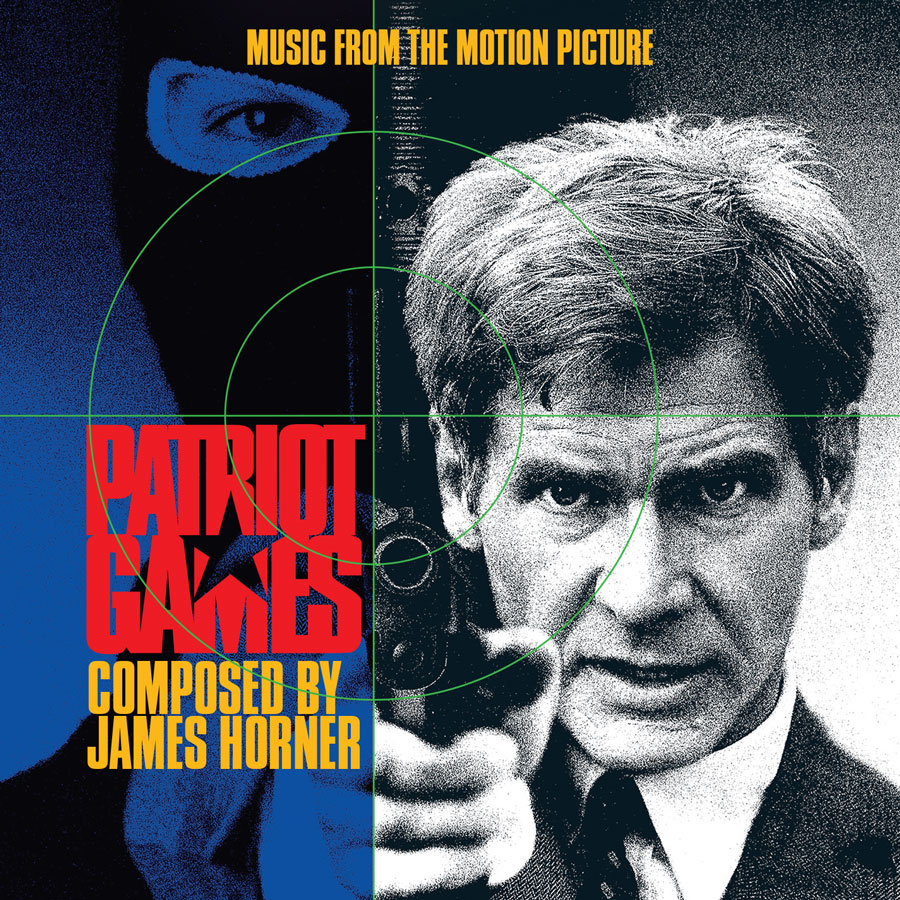
Patriot Games soundtrack

Patriot Games” was the second Tom Clancy novel adapted to the big screen after the huge critical and commercial success of “The Hunt for Red October.” But in the process of bringing Clancy’s heroic character Jack Ryan back for another adventure, many changes ended up taking place. John McTiernan stepped away from the director’s chair and Phillip Noyce came on board, Alec Baldwin was replaced by Harrison Ford, and Basil Poledouris stepped aside for James Horner who at the time was an A-list composer very much in demand.

La La Land Records has released a remastered and expanded soundtrack to “Patriot Games” which contains a lot of music never before released, source cues and the Clannad song “Harry’s Game.” The film has Jack Ryan stopping an IRA assassination attempt on the Royal Family, but this makes him the target of a renegade faction of terrorists, especially Sean Miller (Sean Bean) whose brother Ryan ended up killing. In scoring this action and suspense film, Horner creates a surprisingly understated score which features lovely Irish and Gaelic flavors, and he combines both electronic and orchestral music to highlight the movie’s action set pieces.

Now most action scores start off with a thunderous main title to get the audience all hyped up, but the main title for “Patriot Games” is surprisingly subtle and not the least bit bombastic. This turned out to be an excellent move on Horner’s part as this film proves to be a more personal one for Jack Ryan than “The Hunt for Red October.” Among my favorite tracks are “Attempt on the Royals” which underscores Ryan’s heroic save and the loss of Sean Miller’s brother, “The Hit” in which Jack rushes after his family to save them from the vengeful Sean, and “Assault on Ryan’s House” where IRA terrorists make their last effort to eliminate the brilliant CIA analyst. I’ve always been a sucker for adrenaline pumping film music, and Horner was one of the masters at composing it.

At the same time, I really liked the low-key music he comes up with like “Closing Credits” which is a piece of music great to fall asleep to. I kept thinking it was one of the singers from Clannad who did the backing vocals on this track, but it was actually Maggie Boyle whose voice is nothing short of heavenly. Horner is great at finding the humanity in the characters inhabiting an action movie, and his music can be both thrilling and highly emotional at the same time. Not many film composers can pull off such a feat.

Among the previously unreleased tracks, it was nice to see “Sean Obsessing in Jail” on this release as Horner gets at what is eating away at Sean whose obsession for avenging his brother’s death continues to grow and grow, and I also got a kick out of “Cooley Escapes” which follows a minor character in the film who suddenly discovers he is under police surveillance. As for the source cues, they include the “Washington Post March,” some traditional Irish music and some pieces composed by Mozart, I’m not sure how necessary they were to this edition of the “Patriot Games” soundtrack. At the same time, those additions prove just how serious La La Land Records is about giving fans the most complete soundtrack to a movie they could ever hope to have.

One interesting thing about this particular La La Land Records release is it doesn’t contain the original commercial release of the soundtrack. Other releases of theirs have had them on a second disc as a bonus for those who liked the original version. But in the end, I guess they decided not to include it because everything from the original release is on these two discs anyway. I do need to point out, however, there are two different versions of “Closing Credits” on this expanded version. One is listed as the film version, and the other is listed as the album version. The difference between the two is the film version is in English and the other one is not. Regardless of which version you find yourself liking more, it is great to have both of them here.

And like many La La Land Records releases, it does come with a booklet detailing the making of the soundtrack and the movie itself. The booklet is entitled “The Pluck of the Irish,” and was written by Jim Lochner who is the managing editor of FSM Online and the owner of the website FilmScoreClickTrack.com. Now I have reviewed several La La Land Records releases, but the booklet for “Patriot Games” is one of the best they have ever put together as Lochner covers just about every single detail about the movie more than ever before.

Among the memorable passages are why Neufeld didn’t bring McTiernan back for “Patriot Games,” how Baldwin reacted to not getting cast in the film, and how Clancy was constantly upset about the changes made in bringing his book to the big screen. In describing Horner’s score, Lochner writes it is a “subtle, understated score that percolates underneath the surface, conveying the tension of a family under siege and the terrorists’ patriotic Irish roots.” I think this is the perfect description for the music of “Patriot Games,” and Lochner, in writing about the other tracks, makes the case for why Horner should have received more attention for it when the movie came out in 1992.

Once again, La La Land Records has given film music fans another remastered and expanded soundtrack which is a must buy. In a career that has seen him create unforgettable film scores for “Titanic,” “Star Trek II: The Wrath of Khan” and “Glory,” Horner’s score for “Patriot Games” stands out as one of his most unique. It is at times an understated and at other times a pulse pounding listen, and the Irish elements he puts in reminds us of what a masterful composer he was. Now it has the soundtrack edition it has long deserved.

Click here to purchase the soundtrack.

Soundtrack Review: ‘Grand Canyon’ Extended Edition

Grand Canyon soundtrack cover

Anybody who knows me best knows I am a huge fan of film scores and soundtracks, and James Newton Howard’s score to “Grand Canyon” is one of my all-time favorites. I knew at some point this score would get an expanded and remastered soundtrack, and La La Land Records finally came through with this limited-edition release. While he is better known for his music to “The Prince of Tides,” “The Fugitive,” “Batman Begins” and “The Dark Knight” which he worked with Hans Zimmer on, “Grand Canyon” remains my favorite work of his as the music provides a soothing heartbeat to this movie.

The movie “Grand Canyon” came out in 1991 and was directed by Lawrence Kasdan and written by him and his wife Meg. Its story revolves around six different Los Angeles residents whose lives intertwine with one another over the course of a few days. It all starts when Mac (Kevin Kline), while driving home from a Lakers game, drives into a bad neighborhood where his car breaks down. Just when it looks like he’s about to be killed by a gang, tow truck driver Simon (Danny Glover) rescues him and the two end up becoming unlikely friends. Many called it “The Big Chill” of the 1990’s, but “Grand Canyon” more than stands on its own as it observes the lives of Los Angeles residents who are dealing with personal issues which are tearing them apart.

What I love about Howard’s score is how it combines so many different kinds of music, be it orchestra, electronics, rock, jazz or percussion, to create a film score so unique to where I have a hard time comparing it to any other. It captures the coldness of big city life while giving the characters stuck in it a sympathetic voice which understands how they feel. The “Main Titles” hooked me right away and made me feel so at ease even though I knew this movie was not going to be a fairy tale.

La La Land Records limited edition release of “Grand Canyon” includes twenty-five minutes of music not included on its original release. Soundtracks, back in the 1990’s, were limited to having only forty to fifty minutes of music on a compact disc, so a lot of great stuff got left out as a result. It’s been over twenty years since this movie came out, but the music remains as powerful as ever. In addition, there are some bonus tracks which are alternate takes on certain themes as well as some source music for a violent film which Davis (Steve Martin) has produced with an unrestrained glee.

As usual, La La Land Records has provided an informative booklet on the making of “Grand Canyon” and its music which is entitled “Scoring the City of Angels” written by Daniel Schweiger, soundtrack editor of AssignmentX.com and Filmmusicmag.com. Schweiger writes extensively about the making of the movie and of how Howard came up with the music for it, and I’m not sure we have had as much detailed information on the creation of this score previously. Each track on this disc gets an individual write up, and it’s nice to see someone, let alone anyone, give this soundtrack the attention it deserves.

If there’s any downside to this edition of the “Grand Canyon” soundtrack, it’s that it doesn’t include the song “Searching for a Heart” by the late Warren Zevon. Usually La La Land Records is able to get all the songs from a movie’s original soundtrack, but I guess there was an issue with the rights this time around. It would have also been great to have the other Zevon song featured in this movie, “Lawyers, Guns and Money,” included as well. Mac plays it while he’s driving home from the Lakers game, and the lyrics turn out to be quite prophetic for him.

“Grand Canyon” is truly one of the unsung cinematic masterpieces of the 1990’s, and what’s sad is most people don’t know about this movie today. This proved to be my introduction to the work of James Newton Howard, and it is one of the main reasons why this movie is so great. I am thrilled to see La La Land Records has taken the time to make Howard’s score sound better than ever before. While he didn’t get an Oscar nomination for his work here (he was instead nominated that same year for “The Prince of Tides”), there’s no doubt in my mind this remains his most memorable film score to date.

This limited edition has only 2000 units available, so be sure to order yours before it goes out of print.

Exclusive Interview with Leslie Zemeckis about ‘Bound by Flesh’

Leslie Zemeckis headshot

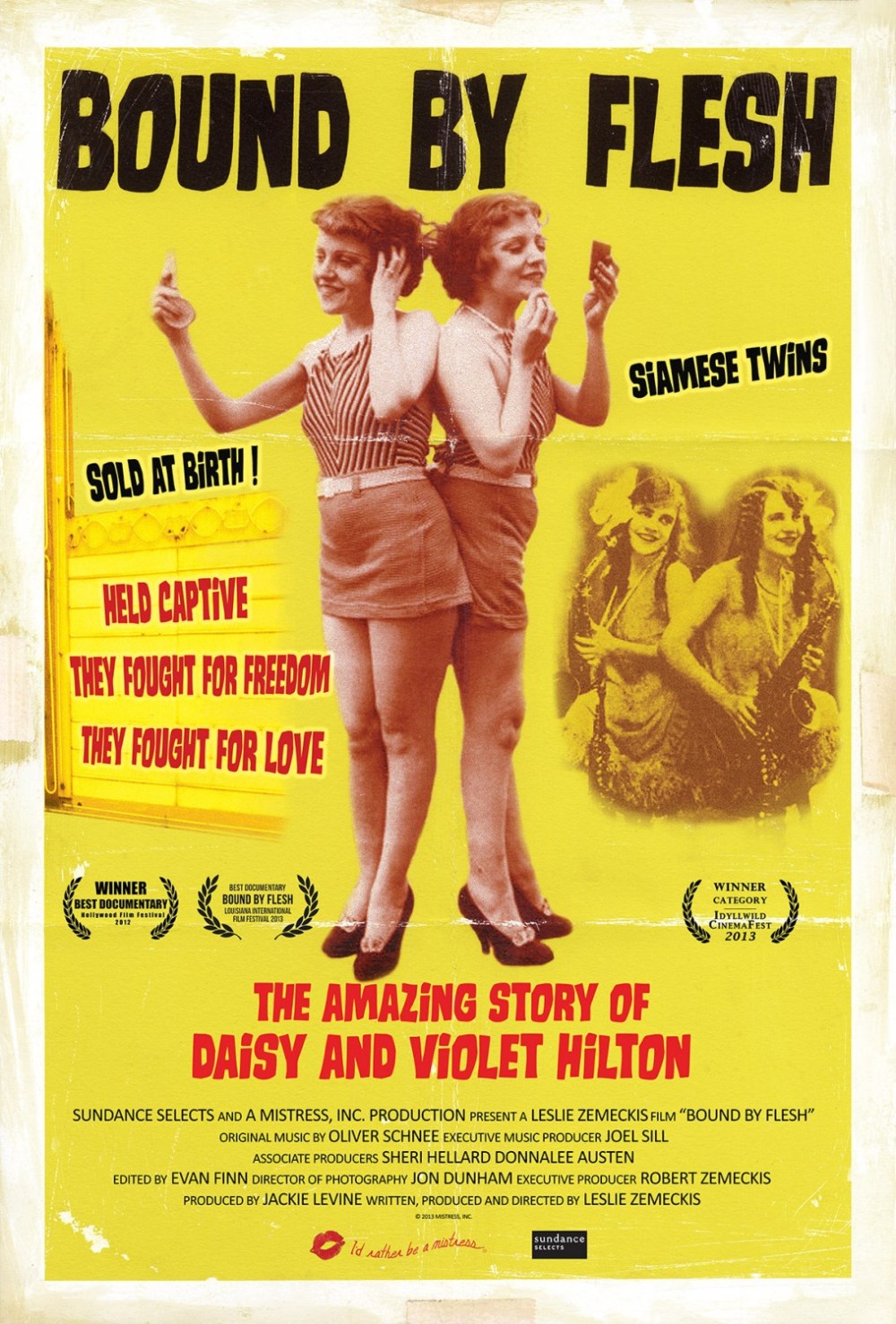
With her documentary “Bound by Flesh,” Leslie Zemeckis has reopened a part of history many have either forgotten about or never knew about. It focuses on Daisy and Violet Hilton, conjoined twins who became stars in sideshows and were generally viewed as freaks of nature. Throughout their lives they were subjected to abuse by their handlers and kept out of public view in fear of losing their monetary value. But when they finally got their freedom, life became even worse for them as they didn’t know how to deal with the ways of show business, and they eventually lost everything and entered a life of poverty.

What’s great about Zemeckis’ documentary is how it forces you to look at the Hilton sisters as human beings as opposed to oddities to be gawked at. I got to talk with Zemeckis over the phone about “Bound by Flesh,” how she first became aware of Daisy and Violet, and of the research she did.

Bound By Flesh documentary poster

Ben Kenber: This is a fascinating documentary. I didn’t know about the Hilton sisters at all, and they suffered through quite a miserable existence. “Bound by Flesh” deals with them as “freaks,” but it also deals with them as human beings which I really liked. What they go through is not unusual for people who don’t know the ways of show business.

Leslie Zemeckis: Good, I like that.

BK: How did you first find out about the Hilton sisters?

LZ: When I was doing my first documentary, “Behind the Burly Q” about burlesque I had read someplace that they were in burlesque briefly, so that kind of intrigued me and I put a little bit about them in the first film. Then I read Dean Jensen’s biography about them (“The Lives and Loves of Daisy and Violet Hilton: A True Story of Conjoined Twins”), and just over time, while I was editing my other film, I kind of became obsessed by their story. But also taking into context of the time they lived and what the carnival was and what circus life and sideshows were, we don’t have that today. There’s really almost no animals even left in the circus, so we’re kind of bringing to light and exploring what that world was that they lived in.

BK: In regards to the historical footage that you were able to include in this documentary, how did you go about researching this subject?

LZ: Every which way I could. I did the research myself so that I’m familiar with the names and dates, and I knew that they were, in their day, photographed a lot. They were interviewed and they had done a lot of newsreels, so I actually went to a news real company in New York and I sorted through their files, and because I knew the names that they were involved with, I found some footage that hasn’t been seen since the 30’s. It probably never would’ve (been discovered) because it doesn’t have their names on that little 3 x 5 index card. I found that within 10 minutes of searching.

BK: On the surface and outside the fact that they were conjoined twins, Daisy and Violet really looked like normal people and very innocent in a sense.

LZ: Well they were. It was a double-edged sword by them being so protected and kept away from other people that they were innocent. But then when they were out on their own they didn’t have the skills to deal with people or their career or money really, and that’s why they were taken so badly advantage of.

BK: You find yourself rooting for the twins to get freedom from their handlers, but once they do get their freedom they are thrust into a world they don’t have any control over. They are not prepared for it at all.

LZ: Yeah, it was a little bit of a curse maybe to get their freedom.

BK: I got a big kick out of the logos because they look like they came out of a schlocky B-movie from the 50’s. Who designed the logos?

LZ: Well it was my idea because they were in B-movies like “Chained for Life” and their story, when you talk about it, is so headline; kept in chains and held captive and all that. So I wanted to add an element of that for fun, but there really is a deep story behind it and my editor Evan Finn designed all that because he’s brilliant.

BK: Regarding the sound clips, were they created for this documentary or was it a combination of archival footage and actors redoing them?

LZ: It was actors redoing them, but that was their (the twins’) words. In both “Behind the Burly Q” and then this, I wanted the sisters to tell the story. I want people to tell their story instead of me imposing on it for the audience, so I used their words. I didn’t write those words. Those were what the sisters said.

BK: It definitely felt like their words. Who were the most fun or most informative to talk to when it comes to your interview subjects?

LZ: Well I just thought it was a little amusing that I had James Taylor and Phillip Morris (laughs). We would just laugh about it. I mean where else are you going to find “characters” like this? But they were all very charismatic, knew their history and I loved and loved talking to them and they loved it too. They loved that era, they loved the sideshow and they love the circus.

BK: Was there anything that you wanted to include in this documentary that you were not able to for one reason or another?

LZ: No. I would’ve liked to of had more footage of them, but I am super happy with what I found. I wanted people to see their movement. I don’t believe there’s any footage of them performing live in vaudeville, but I was really pleased with what I did find.

BK: The Hilton sisters did appear in “Freaks” which is now considered a classic, but when it first came out it was treated as very controversial and off-putting. It’s interesting to see how people initially reacted to the movie when it was first released.

LZ: It’s a disturbing movie, but what’s funny is that the twins actually aren’t in it as much as you would think. But the film has value; it’s in the National Archives. It’s just a world that is no longer.

BK: Are there still any sideshows still performing today?

LZ: Not really. There’s so little “born freaks,” but to me I equate it, and it’s not PC of course to go stare at people, with watching reality TV. Everybody sits in their home and it’s okay to watch the Kardashians comment on their physicality, and I think we still have a form of the sideshow. It’s just changed to reality TV. All forms of entertainment just change. They stay but they change. We just now do it from our home.

BK: There’s something to be said for the twins living as long as they did because the lifespan of conjoined twins is not good.

LZ: Right and they were generally very healthy throughout their lives.

BK: The choice of music was interesting because some of it goes outside of the times the Hilton sisters went through. How did you go about choosing the music, or did you just leave that to your composer (Oliver Schnee)?

LZ: No, I don’t leave anything to anybody (laughs). It’s too much of my baby. I certainly didn’t compose it. He (Oliver Schnee) was brilliant, but I didn’t want it to feel like you’re just watching this period piece that has nothing to do with today. It’s still hip, they were hip, and I wanted the music to reflect that.

BK: Going back to the voice cues, those were done by Lea Thompson and Nancy Allen. How did you manage to get them involved in this documentary?

LZ: Well I knew them so I was familiar with their voices, and they both have a similar quality with each other which I felt would work with the sisters. They also have a very light, optimistic voice. I was so lucky to get them. They were similar enough that I thought they sounded like sisters.


A big thank you to Leslie for taking the time to talk with me about “Bound by Flesh” which opens us up to a part of history that has been forgotten for far too long. It is now available to own and rent on DVD, Blu-ray and Digital.


‘Ready Player One’ Revels More in the Virtual World Than in Reality

Ready Pkayer One movie poster

Ernest Cline’s “Ready Player One” is a novel I could see a lot of directors being ever so eager to turn into a motion picture. Edgar Wright, Guillermo Del Toro, Robert Zemeckis and even (gasp) Michael Bay would have had a blast bringing to life the virtual world Cline wrote about to where the possibilities of what they could bring to the silver screen seem infinite. In the end, it makes perfect sense Steven Spielberg was the one to adapt it as no other filmmaker has captured our collective imaginations as much as he has.

The year is 2045, and Earth has long since become consumed by pollution, corruption and climate change (which is real folks, don’t let anyone tell you different), and its inhabitants, those situated in the middle or lower classes, are consigned to mobile trailers which are stacked on top of one another. While this cannot be mistaken for a glamorous lifestyle, many clueless politicians and wives of U.S. Presidents would be quick to describe them as FEMA luxury suites. Looking at how barren their existence has become, it’s no wonder these characters prefer a virtual reality as opposed to the one they are forced to live in and endure on a daily basis.

Everyone, and I mean everyone, manages to escape their depressing reality in the OASIS (Ontologically Anthropocentric Sensory Immersive Simulation), a VR world which allows its users to engage in activities of either an educational, entertaining, or a profitable kind. You can be any avatar you want to be whether it’s Freddy Krueger or Godzilla, and you go into it believing it will allow you to be a somebody instead of a nobody. But eventually, even its most devoted users need to find a way to better deal with the real world as a line between the two needs to be drawn.

One of the OASIS’ most devoted users is Wade Watts (Tye Sheridan), an 18-year-old who lives in the slums of Columbus, Ohio with his aunt. It’s no surprise how quick he is to dive into this virtual world, but his reasons for doing so run much deeper than we initially realize. We learn the OASIS was created by James Halliday (Mark Rylance), an eccentric computer genius with an incredible love for 80’s pop culture. Halliday has since passed away, but he has left behind a trail of bread crumbs in the form of Easter eggs for his fans to discover. The first to find all these eggs is promised full ownership of the OASIS among other desirable gifts. Of course, there is a corporation, or a video game conglomerate if you will, named Innovative Online Industries (IOI) which is determined to gain ownership of the OASIS before anyone else. Will the rebellious users beat the greedy corporation to the finish line? Well, the answer might have seen obvious in the past, but these days it looks like the bad guys get away with far too much in the real world.

“Ready Player One” is essentially a combination of “Willy Wonka and the Chocolate Factory” and “Tron” as our protagonists are on the search for something which will fulfill their wildest dreams, but they have to find it in a world where the laws of nature do not necessarily apply. And when it comes down to it, the winner will not be someone who is the best at gaming, but someone with a good heart who wants to do the right thing, and who has a strong spirit. Finding someone like that in this day and age, let alone in the future, is an ambitious task as everyone appears susceptible to greed and corruption, but the filmmakers went into this project with the full belief such a person still exists, and a world without hope is not one we should be quick to live in.

The challenge Spielberg has with “Ready Player One” is balancing out the real world with the wondrous virtual world the characters are ever so eager to inhabit. But with all the tools he and his fellow filmmakers had at their disposal, it is easy to see how lopsided the balance is here. Spielberg clearly revels in amazing visual effects he can put onscreen. Watching this movie just once is not enough as there are an infinite number of Easter eggs to discover and acknowledge. While you may easily recognize such pop culture artifacts like Freddy Kruger and the DeLorean time machine from “Back to the Future,” there are so many others to acknowledge here to where you will be very surprised at what Spielberg and company were able to fit into a PG-13 movie.

When it comes to the real world, I feel Spielberg could have done more to distinguish it from the OASIS. This man did give us “Jaws,” “Close Encounters of the Third Kind,” “Raiders of the Lost Ark” and “E.T.,” movies which exceeded anything our imaginations could conjure up. Years later, however, he gave us “Schindler’s List,” “Saving Private Ryan” and “Munich,” films which did not shy away from the horrifying reality people are forced to endure. Surely Spielberg would be able to balance out the real world from the imaginary one to where we can see the difference between them or at least determine which one is more important to live in, right?

Well, “Ready Player One” functions a lot like the original “Jurassic Park” in that the spectacle gets the majority of attention while the human element suffers in comparison. But like “Jurassic Park,” Spielberg still has us captivated with incredible visual effects which leave us in complete awe. As the movie goes on, the avatars of the main characters start to look and feel more real than I expected, and this makes up for the limited character development they receive throughout. Cline co-wrote the screenplay with Zak Penn, but it feels like everyone could have gone a bit deeper with the material.

On a personal note, I loved how Spielberg digs deep into 1980’s nostalgia. Being a child of this decade, I still very much enjoy the music and movies which came out of it. To his credit, Spielberg doesn’t reference his own movies here, regardless of the fact they play a big part in Cline’s book. It’s also great to hear the music of Alan Silvestri here as his themes from the 80’s, particularly those from “Back to the Future,” never grow old. Silvestri’s score here references a number of pop culture classics, and I’m sure you will recognize many of them.

Tye Sheridan has turned in terrific performances in “The Tree of Life,” “Mud” and “Joe,” and he fits comfortably into the role of the typical young Spielberg hero who is wise beyond his years and smarter than the average adult. Olivia Cooke is a wonderful and strong presence as Samantha Cook, a fellow OASIS player whose avatar goes by the name of Art3mis. Ben Mendelsohn also shows up as Nolan Sorrento, the infinitely greedy CEO of IOI who is determined to gain full control over the OASIS. It’s a lot like the character Mendelsohn played in “The Dark Knight Rises,” but this time he is playing someone who believes they are in charge and actually is.

But if there is one performance worth singling out here, it is Mark Rylance’s as James Halliday, the main creator of the OASIS. Rylance makes Halliday into a wonderfully eccentric character whose social skills could use a bit of work, but whose heart shines through in everything he has created and accomplished. Not once does this Oscar-winning actor make Halliday into a caricature of Steve Jobs and instead presents us with a human being desperate to find someone in this world who has not been completely corrupted by the powers that be.

“Ready Player One” will not go down as one of Spielberg’s best movies, but it is far from being one of his worst. The visuals alone are worth the price of admission and watching it once will not be enough as there are so many Easter eggs to identify. Heck, if you close enough, you can even spot a poster with Wil Wheaton on it. While its message of how important it is to spend more time in the real world than the virtual one might seem a bit hypocritical, this movie was directed by a man who knows the difference between the two to where he doesn’t have to prove to us that he knows this. Still, on a story and character level, this could have dug deeper beneath the surface.

* * * out of * * * *


Exclusive Interview with Andrew Douglas about ‘U Want Me 2 Kill Him?’

U Want Me 2 Kill Him poster

U Want Me 2 Kill Him?” is yet another in a long line of movies “based on a true story.” But after watching it, you have to believe it’s true because no one could make a story like this up. Based on the Vanity Fair article by Judy Bachrach, it stars Jamie Blackley as Mark, a very popular high school student who ends up getting into a relationship with his online girlfriend Rachel. Mark ends up becoming so hopelessly in love with Rachel to where he’s willing to do anything to win her favor, and she soon has him befriending her lonely younger brother John (Toby Regbo) who gets picked on at school every day. As a result, Mark and John develop a strong friendship which soon leads them down some very dark paths that will have them doing things they never believed they were capable of. It all leads to one of the most shocking and baffling crimes in England’s history.

The movie’s director is Andrew Douglas who is best known for making the acclaimed documentary “Searching for the Wrong-Eyed Jesus” and for helming the 2005 remake of “The Amityville Horror.” I got to speak to him about “U Want Me 2 Kill Him?” which I felt served as a reminder of how threatening technology is in this day and age, and of how the emotions of a teenager are always simmering just beneath the surface. Douglas talked about the long road it took to get this movie financed and made, how familiar he was with the real-life story, and he also gave me an update of what’s happened to Mark and John since the movie’s release.

WARNING: THIS INTERVIEW DOES CONTAIN SPOILERS.

Ben Kenber: I was not at all aware of the true story this movie was based on. Were you aware of this story or the Vanity Fair article it was based on before you got the script?

Andrew Douglas: I’m not a big magazine reader anymore because of the internet, but for some reason I did look at that magazine and I did see the article. Ever since “The Amityville Horror” I’ve always got a weather eye out for projects. I didn’t know at the time what it could be or what it might be, but it just seemed such an extraordinary story. Being in America and finding a story from back home was also very appealing, and then it took a couple of years (to get it off the ground). It had a funky journey because uncharacteristically I tried to buy the rights to the story. It wasn’t something I’m used to, but I did have an agent and I reached out to try to buy the rights to that story thinking it was so extraordinary that I got to be able to do something with this. In the meantime, Bryan Singer of all people had also reached out and snagged the rights. So, a year went by or maybe six months, and a script came out based on that story which Bad Hat Harry, Bryan Singer’s company, had produced and it was pretty good and I took a meeting on it. It went into the air as what’s called an open directing assignment, so I managed to arrange a meeting on it. In the meeting I pitched a slightly different interpretation of the same material, and then another year went by during which the studio the project was with, Warner Independent Pictures, went down the tubes taking the script with it. So, all of a sudden that material was untouchable, so Bat Hat Harry got in touch with me and said, “Remember the take that you had on this story?” I said, “Yeah.” They said, “Well could you come in and re-pitch it to Bryan?” So, I did and they really liked it and they felt it was sufficiently different from where they’ve been in order to start again with the same thing. Over the next year I developed up the script and I found a young English writer who had a great voice for authentic youth, and I presented it to Bad Hat Harry and got my commercial company, Anonymous Content, involved a little bit as well to pony up some money, and all of a sudden, we had a film. Interestingly, right around the time I was shooting, there was also in London an opera based on the same article. I went to see it and it was kind of very operatic and it couldn’t be more different from the film, but it was very interesting to me that here’s a story that grabbed at least three different people in three different ways. The first script was quite documentary in the sense that they presented the kids from a kind of adult perspective, and really to me it was a story of how weird the world is. The opera was told from the police woman’s point of view, so to some extent the story was really about a police woman being puzzled by the internet and by the strange landscape of the internet. My take on it was here’s this weird world, here’s this odd landscape that we haven’t really explored in literature or in film yet, but I’m going to approach it from the point of view of one of the inhabitants of it. The idea was to see if I could find a way through the perplexing nature of what Mark does. What was interesting to me as a kind of challenge was we have these two ordinary boys, more or less ordinary boys, who live in an ordinary town, horribly ordinary, who go to a regular school. They are not project kids, they are not kids who are used to knives or used to violence. How do they make the journey that they made? That was really a kind of interesting challenge to me, and I felt as though it would be best served by really taking on the point of view of one of the kids. It could’ve been either of them funny enough, and John certainly makes an interesting journey as well. But I thought Mark was slightly the more difficult journey to explain; a regular kid who’s handsome and good at football and popular with the girls. What is missing in his life that he needs this thing so badly, that he needs to go as far as he goes? And I just thought that was both interesting in a conventional drama, but also interesting in the context of this new landscape of the internet.

BK: Yes, absolutely. These days people seem to be more open with one another on the internet than in real life when they are face-to-face.

AD: Yeah, I think that’s true, and also not necessarily honest as well of course. One of the things that internet provides then and now, even though we have cameras now which we didn’t have in the wild west of 2003, is the secret language of texting. So, I might be projecting on this, but there is still something very alluring, hopefully not with my kids, about what is called the dark room. Being able to go into a dark room where nobody knows you and nobody can really see you and you can be anything. Maybe it was two years ago that there was a floater piece about young gamers with their avatars. They had a real portrait of the gamers and then right next to them was their avatars, and it was so interesting and, in many ways, it was like a pageant. You get for example a disabled person or another person or the most extreme avatar who is everything that they weren’t, and it was very interesting and moving to see that article. I think to some extent this is what we do and this is what my film’s about. The film doesn’t judge them. Mark says early on to John, “I want a mad life like you have,” and John gives him one. He so does for six months there; he gets a very, very mad life. John on the other hand, he’s just sort of like a brother or somebody to look out for him, and you get that. So, I try not to judge the kids and say they’re weird or they’re bad. I just try and say that in a funny way both kids got what they needed and what they weren’t getting from home. And I thought the judge was very cool. I copied the dialogue straight from the court transcripts, so when the judge says that each boy is an extension of the other, that’s actually what the judge said. I thought that was like one of the coolest judgments. You’ve got to expect courts to be that smart, and I just thought that was really interesting because it was something that nobody had really seen before. It was a new crime so John was accused of organizing his own death, and Mark equally was accused of stabbing him. So, for the judge and for all the generations of the legal institution, it was very perplexing which could have been another take on the movie of course. This is material that has many different points of view on it. Somebody else could’ve taken it from the point of view of the trial and try to figure that out. You know how cool “The Social Network” was? It was all based around those court hearings. That could have been another way to go, but you just make your choices and I am pretty happy with how it came out. There are moments where it has to kind of stretch credibility. I had Mike Walden (the movie’s screenwriter) write the characters as realistically as I could bear, but still when you look back from the end of the film they’re melodramatic. They’re still not quite real and that was kind of intentional. The film is almost more fun watching it the second time. A film like “The Usual Suspects” or “Fight Club,” when you watch these kinds of films a second time you see all the tricks, and it’s very satisfying the see how the filmmakers flirted with showing you everything.

BK: This is definitely a movie that needs to be watched at least twice to see how the characters managed to accomplish all that they did. “U Want Me 2 Kill Him?” also reminded me of what it’s like being young and how the emotions of a teenager are just simmering below the surface to where they don’t know how to deal with certain things.

AD: Right, and the stakes for a kid dealing with those emotions are always so high. So, here’s this person online who he never met. He has a girlfriend of sorts, although that other girlfriend in the real world is just kind of messing him around, but here’s this girl he’s never met and he knows the stakes are so high somehow, and that kind of felt true. You’re absolutely right in what you just said. You have a feel as though one meeting and he loves somebody, and then they die and then you have to seek revenge. Teenage emotions, they run so big really.

BK: Yes, they do. It’s almost easy to believe that a young teenage boy could do what he did, and that’s scary too because when you’re that young and you feel the need to do something, you can get easily manipulated. The other thing I found fascinating, even though we know what happens at the end, is how the movie shows the power women can have over men.

AD: Yeah, it’s all about sex in a way. What John is so instinctively clever about is that every kind of invention is really about sex or power. So, to create Rachel or somebody you talk about, but also somebody who is also in danger and in jeopardy… I didn’t really invent that, I kind of refined it. I was very careful to stay pretty close to the instant messaging transcripts, so all those characters come right from the source. So, John was kind of preternaturally clever in understanding that Mark is going to fall for both the damsel in distress and the sex, and this is going to be too alluring for him. Each time he loses Mark’s attention, he has to up the stakes to invent something even bigger. So finally, he invents the spy woman, and again the relationship is very kind of sexual. It’s funny in that there are so many ideas there and a film can only tackle a few without getting too dense. You’re right, that’s so interesting.

BK: At the movie’s end it is said that only so much can be revealed about these two boys because of their age, and they were ordered to never contact each other ever again. Since the making of the movie, has there any other news about these two boys?

AD: No, and it’s so disappointing. When I was doing screenings in London, I was so hoping that in the audience was one of them. I was so hoping that one of them would come out. I always imagined it was going to be John. My interpretation of his character was that he was kind of very proud of what he did. I tried to capture that when he’s proud of that scar. And I felt as though Mark might be more humiliated by the whole thing and that he might well disappear and use the anonymity of the court much more than John. But I felt that John would continue being a con man which is why I do that thing at the end where he’s still conning. That felt as though the con man as a character… We know now as grown-ups that they use people and that they always have to romance us and exaggerate, so the con man as kind of archetype, it’s hard to break that. But sadly, I never found out about them, and I really wish I could. Remember that film “The Fighter” that Christian Bale was so good in as the messed-up boxer? At the end of the movie you get this real satisfaction that you see the real guy (that his character was based on). I’d love to have been able to do that because it just kind of completes the circle, and it also nails down that this extraordinary thing you just saw is real. I would’ve loved to have done that. I would’ve loved to have been able to show pictures of them now. It would’ve been very satisfying to do that but no, not a glimpse.

BK: This is not a story you could easily make up. It definitely feels like it came from real life.

AD: I know, it’s too extraordinary isn’t it? Sometimes during the filming, I was going, “Oh man I wish I could put ‘based on a true story’ several times through the movie because otherwise people are just going to think I’m crazy to expect people to believe this.” But since I made this film, there was a big event here in America with that Heisman Trophy winner with that Hawaiian name. It just shows you what people will believe like Christianity or something like Mormonism. People believe what they need to believe, I think, at every kind of level. It’s almost as if the internet is like a new country or a new landscape, and I’m a bit surprised that there aren’t more movies about it. One of the things that occurred to me is that I think maybe studios are scared of films where the danger is all going to happen on the computer. I know that was certainly true for myself when I was trying to get financing for the movie. They said, “Oh is it all going to be on computer?” That’s why I kind of invented that thing where often times they are talking, so it doesn’t feel as though it’s all written onscreen. I’m just a bit surprised there aren’t more films coming out (on this subject).

BK: Yeah, it’s been a while. If you look back over the years, it’s kind of been an ongoing theme here and there like with movies such as “WarGames” from the 1980’s.

AD: Oh yes Ben, you’re absolutely right. I had forgotten about that.

BK: It’s interesting to see how technology has evolved over time. Even back then it was a threat, but technology is even more of a threat today than ever before.

AD: Right, right. I think that there was one moment in the film when the police are interviewing Mark’s parents in his bedroom and his dad says he just sits on that thing and points at the computer, not understanding that the computer is a door. It is a door to a place that the dad knows nothing about. That wasn’t kind of forefront in my mind as a parent or anything. It wasn’t meant to be a cautionary tale. It was meant to be a roller coaster to be honest. It’s really true that parents don’t quite understand that this technology is a back door, so who knows what?

BK: How did you go about casting the actors in this movie? They are all really good and very natural.

AD: Yeah, they’re terrific. It was just a normal process really. It started by trying to get real people cast. I really like Shane Meadows’ films like “This is England” and he always tends to use real people. But I quickly found that the script and the ideas and the characters were actually too complicated for real people to kind of be able to layer it, and so I went back to more conventional casting. It took a while. It took a lot of backwards and forwards with like 40 or 50 kids. Jamie was a stretch because that boy had to shave every hour (laughs). He’s got a real heavy beard. While everybody else would be having lunch, we sent him off to shave again.

BK: Much of the movie looks like it was shot handheld.

AD: That was intentional. There was a limited budget, but also it felt that the film would be best served if it looked very realistic because the story is so unrealistic. I felt if I shot it as realistically as possible, not quite documentary but very handheld and very real, I thought as though that would create a tension within the story.

BK: I liked that because you watch this movie and it just washes over you. It does feel like you’re being invited into these kids’ private lives in a way you wouldn’t necessarily be invited otherwise. In some cases, people might view this story as being rather convoluted, but it is based on a true story and the realism of it aids the movie very well.

AD: Oh good, I’m glad to hear you say that.

BK: Well thank you for your time Andrew, it has been very interesting to talk with you and I thank you for your time.

AD: Not at all. I appreciate your liking this film. Independent films need help; they need champions so it’s really great that you’re supporting independent films. It’s also easy to just go for the big studio films, but then I think we lose something. I’m a big fan of all kinds of movies. Along with everybody else I’ll be there watching the Superman or the Spiderman and I’ll be there on the first day, but equally I just love independent cinema and I love the way it deals with often times more grown-up ideas. It’s all great.

BK: I agree. My hope is that independent cinema goes through another renaissance really soon.

AD: Oh, I know, absolutely because you see films like “12 Years a Slave” or even “American Hustle” and they are very independent in spirit and they do so well. So, it just feels as though we don’t just want to watch tent pole movies. It’s just not enough because that’s too simplistic and sometimes you feel as though all you are is a consumer. You’re just consuming a kind of product. And with big movies they have less and less dialogue because they travel more easily like a “Transformers” movie. There’s not any dialogue in them anymore because that way they can just export it all over the world, and you just feel like a sucker sometimes.

“U Want Me 2 Kill Him?” is now available to own and rent on DVD, Blu-ray and Digital.

Veronica Cartwright Talks About ‘The Right Stuff’ at New Beverly Cinema

The Right Stuff movie poster

Filmmaker Brian McQuery asked New Beverly Cinema to program it, and his wish came true on July 4, 2013 when the revival theater screened “The Right Stuff” in honor of its thirtieth anniversary. Philip Kaufman’s adaptation of Tom Wolfe’s non-fiction book on the Mercury Seven astronaut program and Chuck Yeager was not a box office success when it first came out, but it did find its audience on video, cable and Digital. Seeing it again on the big screen was a real treat, and the audience got an even bigger one when McQuery welcomed actress Veronica Cartwright to the stage.

Cartwright played Betty Grissom, wife to Gus Grissom who was the second American to fly into outer space. Gus’ flight, however, ended on a controversial note after he landed in the ocean and the hatch on his spacecraft suddenly exploded and came off. This caused the spacecraft to sink, and the whole incident left NASA feeling embarrassed. Gus was later found to be not at fault for what happened.

Cartwright had previously worked with Kaufman on his remake of “Invasion of the Body Snatchers,” and he told her he had written the part of Betty Grissom with her in mind. Still, Cartwright had to convince to the movie’s producers she was the right person for the role, but there was one thing which threatened to derail her interview with them.

Veronica Cartwright: I had been in a car accident in 1981 where I broke my leg in 35 places. Then this interview came up and I was six months in a cast, and I had nine screws and an 8-inch plate in my ankle. I had just gotten out of my cast and my mother had to drive me to the interview, and I dressed in red, white and blue. I thought this was the appropriate thing to do. As I got up the stairs and I walked, Phil came out. Well I had a bit of a limp at this point so I thought, oh my god if he sees me limping… So, I went, “Hey Phil! What’s happening?” And I danced the whole length of the hallway.

Despite the shape her leg was in, Cartwright still got the part. In fact, she didn’t even tell Kaufman or any of the producers her leg was broken until after shooting wrapped. However, she did have to wear high heels for a scene three months after her leg came out of the cast which was anything but comfortable.

Cartwright’s character is of course based on a real person, but she admitted she never got to meet Betty Grissom before, during or after making the movie. This was due to a big lawsuit going on after Gus died aboard Apollo 1 which caught fire before it took off, and Betty was not in a good state of mind to assist with the production of “The Right Stuff.” As a result, Cartwright had to rely on other ways to get into character, and she talked about how she prepared to play Betty.

VC: We looked at the archival footage and we were all given backgrounds of where the characters were born and how they met their husbands and how they got involved in the whole space program. When you’re doing a real character, I think it’s a little scarier because you want to do that person justice. It’s not coming off of your own imagination. It’s coming off of reality so you have to be careful. I hope I justified her. I always write myself a biography so I know where I came from and stuff like that. Of course, a lot of that was supplied because of her being an actual person. If I know who the person is, just from however I created them, then the lines come like that because I have become that person. I believe you need to have enough background and stuff so that, say something improvisational comes up, you would act according to what your character would do. It’s become ingrained as part of your character. I do a lot of homework before I do something, and I always found that it works for me.

During filming, Cartwright said the actors hung out with the actors while the actresses hung out with the actresses. She remarked how they were “separate entities” as a result which in a weird way was what the movie was about. Everyone in the cast, however, became a close-knit group by the end of filming, and Cartwright pointed out how this showed in the big barbecue scene where their characters are given a huge banquet in Texas courtesy of Vice President Lyndon B. Johnson. The scene was actually shot at the Cow Palace in San Francisco with hundreds of extras, and she remembered the shooting of it quite vividly as the meat being barbecued was not as tasty as it looked.

VC: We were in the Cow Palace for five days and those sides of beef weren’t very pretty after five days. We kept hearing, “DO NOT EAT THE MEAT! DO NOT EAT THE MEAT!” Oh my gosh! They would bring in thousands of McDonald’s burgers. Bags of McDonald’s were handed out because they kept saying, “DO NOT EAT THE MEAT!” They would be over there with that blowtorch and putting that glaze all over the beef and it was disgusting. But it was a wonderful experience (filming that scene), it was really great.

In talking about Kaufman, Cartwright described him as a great, lovely person. Since “The Right Stuff” is such a big ensemble piece, everyone had major rehearsals to get the blocking right, but Kaufman did allow for improvisation. Cartwright also admitted the scene in the hotel where Betty gets upset with Gus because they were not invited to the White House after his space mission took a whole day to shoot.

The screenplay for “The Right Stuff” was to be written by William Goldman, but Goldman wanted to leave out the Chuck Yeager story and focus solely on the astronauts. Kaufman disagreed with this decision as he felt Yeager’s story was a very important part of the film because, even though he didn’t go into space, the future of space travel really began with him. Goldman ended up withdrawing from the film and Kaufman wrote the screenplay himself. Cartwright lauded his work.

VC: I thought the script was brilliant because the book is sort of like a train of thought and things that are said but not spoken out loud. What Phil did was he took that book and made all those thoughts reality. I think very rarely can books translate into the movies and the movies be as good as the books were, and in this case, he was right on.

The cinematographer for “The Right Stuff” was Caleb Deschanel who received an Oscar nomination for his work. He was also nominated for his work on the films “The Natural,” “Fly Away Home,” “The Patriot” and “The Passion of the Christ.” Of course, these days he is known as the father of Emily and Zooey Deschanel who have become successful actresses in their own right.

VC: He’s very meticulous. The lighting was amazing. He didn’t have standard lights. Everything had these big shrouds of silks over the top of them. The whole Cow Palace was lit and it would be on gimbles where they could just move the lighting, but it took hours to set up. It was pretty intense. And it’s so funny to see Zooey now because she was three-years old during the making of the movie, and Emily had just been born. Thirty years is a long time!

Actually, the most fascinating story Cartwright told that evening involved how Kaufman and his crew filmed the flying sequences. Until “Top Gun” came along, “The Right Stuff” had some of the best and most convincing aerial footage of any movie I had ever seen. So it was a big surprise when Cartwright revealed to us what kinds of planes and special effects were used to create those moments.

VC: When you see the planes going up and down, those were all Japanese models and they (the filmmakers) stood on the top of a very tall building and chucked them off (laughs). That was the CGI! They just sort of painted them and Phil said “oh my God it was incredible! We just go up on the top of the building and throw the plane off and see what happens!” So when you’re watching the movie tonight, you can figure out that it’s a little Japanese air model. It was hysterical!

Veronica Cartwright ended her Q&A with Brian McQuery by saying “The Right Stuff” was a wonderful movie and that she loved the sense of drama and comedy and how it was a wonderful blend of the two. Thirty years after its release, we couldn’t have agreed more. “The Right Stuff” remains one of the greatest movies to come out of the 1980s, and it has lost none of its power to excite and entertain those who watch it. Some movies don’t age well, but this one has.