‘Bohemian Rhapsody’ Takes Us Back to When Queen was King

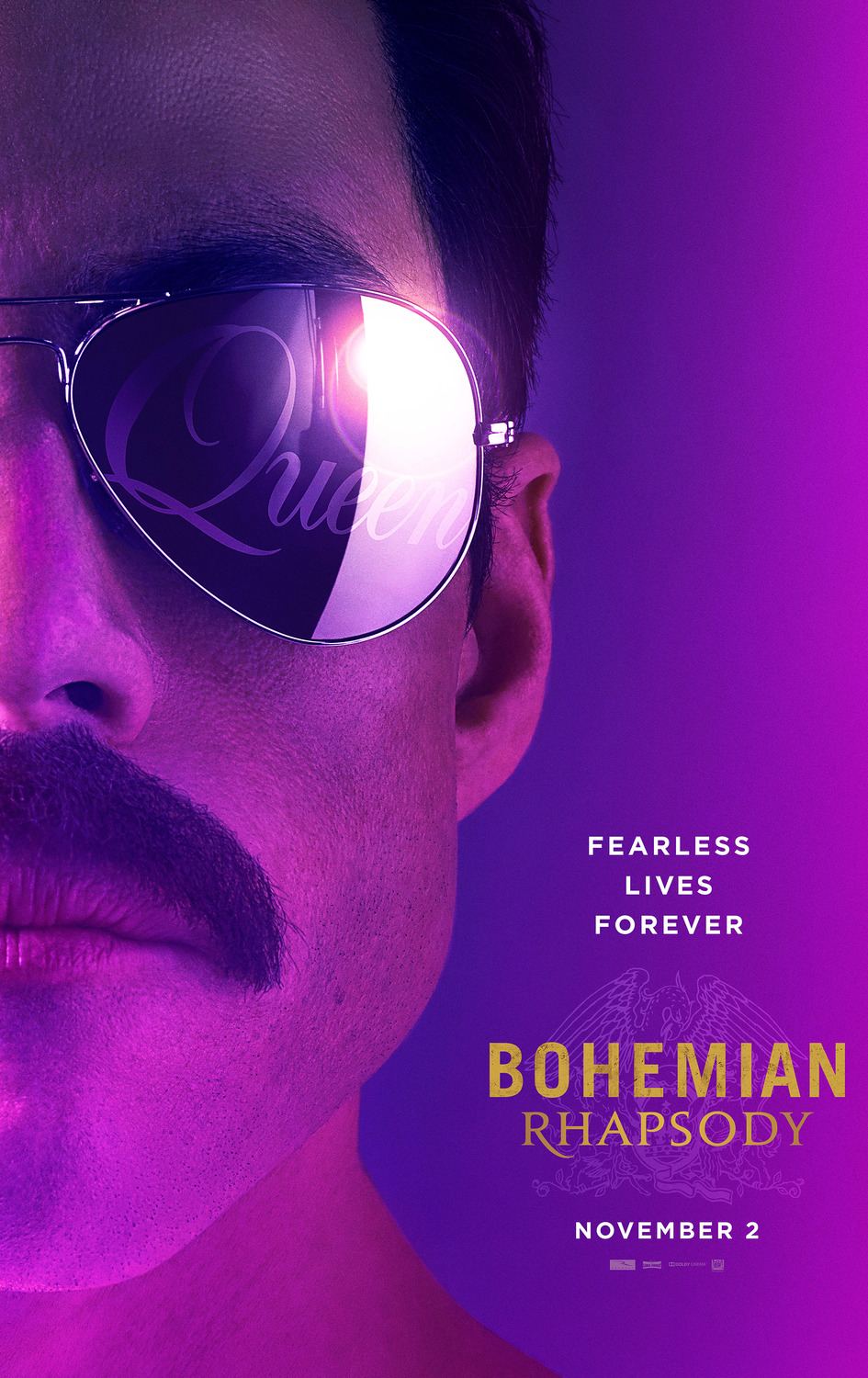
Bohemian Rhapsody poster

Many will say this in their reviews of “Bohemian Rhapsody,” and I have to as well: Freddie Mercury was a one-of-a-kind performer. Whenever he was onstage, he had a commanding presence only a handful of artists could ever hope to equal. Nothing seemed to ever hold him back as he rocked us in a way few others, if any, ever could. Watching him and Queen perform in front of thousands of fans also had a cinematic quality to it, and I went into this biopic hoping Bryan Singer (and Dexter Fletcher who replaced him as director) could capture the exhilaration of their live performances. Could such a thing even be possible?

Well, right from the start when Queen performs their own kick-ass version of the 20th Century Fox fanfare, “Bohemian Rhapsody” proves to be an exhilarating ride. While there were times when I thought the filmmakers could have dug even deeper into Freddie’s life and the lives of his fellow bandmates, Brian May, Roger Taylor and John Deacon, it proves to be a biopic which takes you back in time to when Queen was the biggest thing in music, let alone in the world. But at its center is an iconic singer who is on a long journey not to stardom, but finding respect for himself.

When we first meet Freddie, we learn his birth name was Farrokh Bulsara and that he was the child of a Parsis couple, something I was previously unaware of. His mother Jer (Meneka Das) proves to be a loving presence, but his father Bomi (Ace Bhatti) doesn’t even try to hide his disappointment over the lackadaisical way in which his son lives his life. By day he works as a baggage handler at Heathrow Airport, and he spends his nights at a local club where a band named Smile performs to an enthusiastic audience. When the lead singer quits, Freddie seizes the opportunity to grab the job, but Brian and Roger feel his overbite will easily upstage him. That is, of course, until they hear him sing.

“Bohemian Rhapsody” at times speeds through the history of Queen to where I wished they would slow down a bit and focus on bits and pieces which haven’t been covered as much in the past. I kept hoping there would be a sequence on the making of the “Flash Gordon” soundtrack, one of the best soundtracks ever. The filmmakers don’t even get around to dealing with the songs they did for “Highlander,” and that was a real bummer. Still, we get to learn about the beginnings of some of their most famous songs like “Another One Bites the Dust” which features one of the greatest bass lines in the history of music, and the immortal rock anthem that is “We Will Rock You.”

One of the movie’s centerpiece’s is the creation of the song “Bohemian Rhapsody” which allowed Queen, as the Beatles did with “Sgt. Pepper’s Lonely Hearts Club Band,” to push the boundaries of mainstream music to create something truly unique. This all leads to a scene where the exasperated EMI executive Ray Foster (a priceless Mike Myers) explains how no radio station is about to play a six-minute song, especially one which features opera in it. While it is seen as one of the greatest rock songs ever created, this doesn’t stop the filmmakers from throwing out initial reviews of it which showed anything but admiration. It’s only over time that something can ever be truly considered a classic.

Looking at Freddie’s life overall, it does seem deserving of an R-rating. But for a PG-13 movie, I felt “Bohemian Rhapsody” dug deep enough into the man’s life in ways I usually expect a PG-13 movie to avoid. Some may say this is a sanitized biopic, but I was surprised at how willing the filmmakers were to portray Freddie’s debauched lifestyle and of the underground worlds he chose to delve into. The scene in which Freddie learns he has AIDS is especially devastating, especially when scored to the song “Who Wants to Live Forever.” There is even video footage of people with AIDS, and seeing Freddie watching it is especially heartbreaking as it gives him a glimpse as to what is in store for him.

When it comes to music biopics, I keep thinking of ones like Oliver Stone’s “The Doors” and “I Saw the Light” and of how they kept their main subjects at a distance. This proved to be especially frustrating as I felt like I never got to know more about their main characters, Jim Morrison and Hank Williams, and even wondered why anyone would bother to spend time with them. “Bohemian Rhapsody” doesn’t make this same mistake nor does it hide from Freddie’s flamboyant lifestyle which alienated many of his closest friends. It’s not afraid to make the singer unlikable at times, but it also pays him the respect he deserves especially when he humbly reunites with his bandmates who, unlike other musicians, were never afraid to tell him no.

Rami Malek gives a truly phenomenal performance as Freddie Mercury. If you are still wondering what this movie would have been like had Sacha Baron Cohen not dropped out, Malek will silence those thoughts immediately. It’s as if the actor is possessed by Freddie’s spirit as he inhabits the role with a fearlessness and a gusto to where it is impossible to think of someone who could have been better suited to play the lead singer of Queen. Malek owns the movie from start to finish, and you can’t take your eyes off of him.

Malek also does a brilliant job of letting you see Freddie’s inner turmoil as he struggles with who he is and his sexuality. In many ways Freddie was a social outcast before he came to be the lead singer of Queen, but he becomes even more of an outcast at the height of his fame. Seeing him in almost near isolation from the rest of humanity is distressing, and it reminds me of what the late Robin Williams said in “World’s Greatest Dad:”

“I used to think the worst thing in life was to end up all alone. It’s not. The worst thing in life is ending up with people who make you feel all alone.”

Kudos also goes out to Lucy Boynton who proves to be a fetching presence as the love of Freddie’s life, Mary Austin. Boynton, whom you may remember from “Murder on the Orient Express,” makes you believe how Mary was a huge lifeline to Freddie, especially when he became deluded and was ruthlessly manipulated by those who never had his best interests at heart. Even as their loving relationship was torn apart, they remained the best of friends, and I believe Freddie when he was quoted as saying how Mary was really his one true friend in the world.

But if you need only one reason to buy a ticket to “Bohemian Rhapsody,” it is Singer’s (and Fletcher’s) recreation of Queen’s epic performance at Live Aid in 1985. I’m sure you have all seen footage of this concert on YouTube, but I was enthralled at how the filmmakers made us feel like we were right there in Wembley Stadium where the band played to the largest crowd any band could ever play to. This recreation proves to be one of the most exhilarating sequences I have seen in any 2018 movie, and it is the perfect way to cap off this biopic.

Could a better movie have been made about Freddie Mercury and Queen? Perhaps, but I find it tiring to think of what could have been and would much rather deal with what ended up on the silver screen. “Bohemian Rhapsody” proved to be an immersive cinematic ride which brings back to life an amazing performer who left the land of the living far too soon, but whose role in music history will never ever be forgotten.

Regardless of who deserves the most credit, we owe Dexter Fletcher many thanks as he managed to bring this chaotic production to the finish line and oversaw it during post-production. Without him, I wonder if this movie would have ever been completed.

* * * ½ out of * * * *

David Gordon Green Captures an Authentic Reality in ‘Joe’

Joe movie poster

One of 2014’s most underrated and overlooked movies was “Joe.” Directed by David Gordon Green, who just directed the incredibly successful reboot of “Halloween,” it stars Nicolas Cage in one of the best performances as Joe, an ex-convict and a foreman for a small tree removal crew in Texas. One day, Joe is met by Gary (Tye Sheridan), a 15-year-old drifter who has just moved into town with his wayward family, and he ends up giving the young man a job on his crew. However, Gary’s father is an alcoholic bastard who beats up everyone and anyone in his path, and this presents Joe with the choice of finding redemption in his life or meeting his maker by putting an end to this vicious situation Gary has been tragically caught up in.

For Green, “Joe” represents a return to his independent roots where he made his mark with films like “George Washington” and “All the Right Girls.” As a result, he ends up capturing a reality of life which is not easily captured in other movies as we watch characters native to the state they live in trying to get by in life. Green ended up hiring non-actors to play certain roles as he wanted to capture the realism of the environment these people live in.

I was lucky enough to attend the press junket for “Joe” held at the Four Seasons Hotel in Los Angeles, California for the website We Got This Covered, and I asked Green what it was like capturing the authenticity of these people and where they live. More importantly, I was interested in finding out if capturing this authenticity was easier or harder to accomplish in this day and age where we are bombarded with an endless number of “reality shows.”

David Gordon Green: That’s a good question. We live in a world with reality television so it’s less surprising to see a camera on the street corner to see a production. Certainly, a lot of us who frequent the Los Angeles area don’t even bat an eyelash at some production that’s closing down a street and taking us on a detour. I kind of like that the production element can be that much more intimate because the mystery has been dissolved a little bit. When I was a kid you would watch a behind-the-scenes documentary about the making of a movie and it would blow your mind learning the steps of folly and the art form behind it. Now I think everyone has a good, clear concept of that. There’s not that obsession with that. It’s also a world where people know where the lines of documentary, reality TV and fiction/narrative filmmaking are starting to blur a little bit. I actually think there are a lot of values there. Some of the great performances are documentary performances. You see a movie like “Grizzly Man” and you’re like, if only I could take Timothy Treadmill, I could make an amazing script for him. In that way it’s become a lot easier and it’s just about trying to market a film to be appealing to an audience. Trying to get a movie that emotionally connects with an audience and invites them into a world that does have an authenticity. It does take you to difficult places but has enough of an emotional honesty and levity to be able to be something that you want to look at and an attractive quality within the cinematography and music that brings you in and makes you feel fulfilled. All of these technical elements that come in make it a rewarding experience and not just the dramatic hammer coming down to tell you their melodrama, but really to open up insight into the characters and their revelations to each other.

With those comments, I hope audiences take the time to discover “Joe” as it is a movie deserving of a bigger audience than it ended up getting in 2014. While many think Cage makes nothing but bad movies these days, this one reminds you of what a great actor he can be given the right material.

David Gordon Green’s ‘Halloween’ is the Sequel We Have Been Waiting For

Halloween 2018 theatrical poster

Why do filmmakers constantly insist on doing a retcon of the “Halloween” franchise? Every once in a while, the continuity of the series is tossed to the wayside, usually for profit and greed, but perhaps deep down there are those out there who remain infinitely eager for another and more fulfilling showdown between Laurie Strode and Michael Myers. We thought we got it in 1981’s “Halloween II,” but even Michael couldn’t stay down after being burned beyond recognition. Then there was “Halloween H2O: 20 Years Later,” but that was really a “Scream” movie disguised as a “Halloween” movie, and what resulted did not feel particularly compelling.

But just when you thought it was time to lay this long-running franchise to rest, along comes the simply titled “Halloween” which wipes the slate clean to give us the true sequel fans of the series have been waiting 40 years for. Once again, Michael Myers breaks free and heads back to Haddonfield, Illinois for a bloody homecoming. But this time, Laurie Strode is ready and waiting, and she is not about to take any prisoners. As this “Halloween” unfolds, you will see what Sylvester Stallone meant when he said, while in pursuit of Wesley Snipes in “Demotion Man:”

“Send a maniac to catch a maniac.”

In this alternate timeline, Michael did not escape at the end of John Carpenter’s “Halloween,” but was instead captured and sent back to Smith’s Grove Sanitarium and has remained there for the last 40 years. His latest psychiatrist, Dr. Ranbir Sartain (Haluk Bilginer), insists Michael can talk but chooses not to, but this doesn’t stop a pair of true-crime podcasters, Aaron Korey (Jefferson Hall) and Dana Haines (Rhian Rees), from trying to make him say something, anything. But once Aaron pulls Michael’s old mask out of his bag, we know it won’t be long before they are reminded of what curiosity did to the cat.

This particular “Halloween” was directed by David Gordon Green and co-written by him, Jeff Fradley and actor Danny McBride, and the respect they have for Carpenter’s 1978 horror classic is on display throughout. They even bring back the serif font from the original’s credits as they are determined to make us accept this is a direct sequel to the one which started it all. I admired how the credits started off with a pumpkin which looks to have been stomped on one too many times and which reforms slowly but surely. It’s almost like a metaphor for this franchise as many continue to resurrect Michael, or “The Shape” as he is often referred to, with varying results.

Green is one of those filmmakers who can go from making independent films like “All the Real Girls” and “Joe” to more mainstream fare such as “Pineapple Express” and “Stronger” with relative ease. With his “Halloween,” he gives a slow-burn thriller which thankfully doesn’t peak too soon. Many horror movies give us their best moments far too early these days, so it’s nice to see Green not making this same mistake here as he gives us a deeply suspenseful thriller which builds up and up to its much-anticipated climax.

I also have to give Green and his collaborators credit for giving us characters we care about. It is impossible not to relate to them in one way or another as we remember having their same needs and desires when we were their age. Many of the “Friday the 13th” sequels kept giving us characters we couldn’t wait to see get killed off as we were made to hate them, but when the residents of Haddonfield are killed off, you cannot help but feel for them, and not just because they never got the chance to lose their virginity.

The real big news, however, about this “Halloween” is John Carpenter is back. It marks his return to the franchise he created for the first time since “Halloween III: Season of the Witch.” I imagine money was a big motivating factor, but I do believe Carpenter when he said how enthusiastic he was about Green and McBride’s pitch for this movie. In addition to acting as executive producer, Carpenter also scored the movie along with his son Cody Carpenter and Daniel Davies, and they give the brutal proceedings here an extra hard kick in the ass (click here to check out my review of the soundtrack).

But let’s face facts, the real star of this “Halloween” movie is Laurie Strode. Jamie Lee Curtis returns to her iconic role with a real vengeance, and she plays Laurie to the hilt in this installment. When Curtis first played Laurie, she was a kind, shy and innocent young woman. 40 years later, Laurie is a shell of her former self as her life has been severely undone by PTSD, alcoholism and agoraphobia. She has spent the past few decades training to be a survivalist as her life is now dedicated to removing Michael from the face of the earth, and it has all come at the expense of caring for her own family.

Curtis has always put in a great performance in each movie she appears in, be it a good or a bad one, but she really hits it out of the park here. She succeeds in turning Laurie Strode into a bad ass warrior who is never determined to suffer in the same way she did before, and at times she threatens to be more frightening than Michael herself. Just check out the scene when Laurie breaks into her daughter Karen’s (Judy Greer) house and reminds her bluntly of how unprepared she is for the oncoming slaughter.

Moreover, Curtis really makes us sympathize with Laurie Strode throughout. We know all what she has been through, and to see the effect it has on those closest to her is heartbreaking. We learn she has been divorced twice, and her daughter Karen wants little to do with her and constantly begs her to get help. Even when Laurie absent-mindedly takes a drink from a glass of wine like as it it were was an automatic impulse, we feel for her as no one can see Michael Myers as being the embodiment of pure evil the way she can.

Watching Curtis as Laurie here quickly reminded me of a line the late Natasha Richardson said in “Patty Hearst:”

“I finally realized what my crime was, I lived. Big mistake. Very messy.”

The cast overall does really good work, and they are made of very likable and dependable actors which include Judy Greer and Will Patton who make their characters seem very down to earth in a way you want them to be. One real standout here is Andi Matichak who plays Allyson, Laurie’s granddaughter and the only one capable of having a meaningful relationship with her. Matichak proves to be a very appealing presence here, and she makes Allyson into a strong and defiant young woman who is not about to suffer fools in the slightest.

As “Halloween” builds up to its inevitable climax, Green keeps increasing the tension throughout. He smartly leaves Michael in the shadows, and you can’t help but wondering when he is going to jump out next. Green also leaves you wondering if we might actually see Michael’s face or even hear him speak. Does he? Wouldn’t you like to know?

This “Halloween” is not at all groundbreaking, but then again neither was Carpenter’s film. The 1978 “Halloween” owed a lot to the works of Alfred Hitchcock among others, but it also managed to give a freshness to the horror genre in the same way “Psycho” did years before. With any “Halloween” follow-up, we can only hope for it to be as good, if not better, than the original. There’s no way you can top what Carpenter pulled off 40 years ago as none of us saw Michael Myers coming. But with this “Halloween,” we get the true sequel the original never quite received, and it proves to be well worth the wait.

There is also something very cathartic about watching this one in the midst of the #MeToo movement. Essentially, we are watching a woman take revenge on a man who thoughtlessly ruined her life years before, and seeing her do battle with him makes this “Halloween” especially thrilling. Lord knows women have been forced to be silent for far too long, so seeing one get her revenge feels much, much overdue.

By the way, I think I’m going to start calling this one “Halloween: 40 is the New 20.” It seems appropriate, don’t you think?

* * * ½ out of * * * *

WRITER’S NOTE: A lot of people have been getting mad at Jamie Lee Curtis recently. We see her wielding many different weapons and firearms in this movie as Laurie Strode, but some have been quick to call her a hypocrite for doing so as her stance on gun control and the need for it has been well-documented. Why is she appearing in this movie armed to the hilt and yet complaining about gun violence in real life? Ladies and gentlemen, what Curtis is doing in this movie is called ACTING. SHE IS PLAYING A CHARACTER. Whatever happened to make believe anyway? Not all actors are out to put their political issues into each movie they do. Do yourself and everyone else a favor and stop blurring the line between fiction and non-fiction. That is all.

Soundtrack Review: ‘Halloween’ (2018)

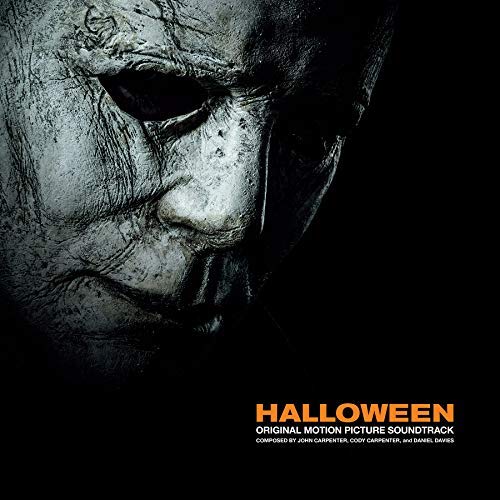
Halloween 2018 soundtrack cover

As I write this, I have not yet seen David Gordon Green’s “Halloween,” the movie I am looking forward to the most this fall season. I was, however, lucky enough to get a copy of its soundtrack while at the “Halloween: 40 Years of Terror” convention this past weekend in Pasadena, California. I had preordered the soundtrack on iTunes, but anyone who knows me has no doubt of what a die-hard fan I am of Carpenter’s music as well as his movies, so of course I had to purchase a physical copy even if it meant spending more money.

This 2018 “Halloween” movie marks Carpenter’s return to this undying horror franchise since “Halloween III: Season of the Witch,” and it is also the first film score he has composed since 2001’s “Ghost of Mars.” With this score, he joins forces with his son Cody Carpenter and godson Daniel Davies to not only build on the themes he made famous back in 1978, but to give us new ones as well. What results is a highly effective score which I have been listening to endlessly ever since I purchased it.

The “Halloween Theme” is a musical piece impossible for most to ever get sick of, but listening to it on this soundtrack reminds me of how no one can play it better than Carpenter. Along with Cody and Daniel, he makes this theme as potent as ever especially with its ticking sound in the background which spells out how evil will be arriving in Haddonfield before we know it.

“Laurie’s Theme” sounds much different this time around. Whereas her theme in the 1978 “Halloween” and 1981’s “Halloween II” highlighted Laurie’s innocence and lack of awareness of the horror she would be forced to endure, this version acknowledges how haunted she remains after Michael Myers almost killed her 40 years ago. As we should all know by now, Green’s “Halloween” serves as a direct sequel to Carpenter’s 1978 original, wiping the slate clean of all the other sequels and reboots. So, the Laurie Strode we see here as long since become hardened by her terrifying encounters with pure evil to where it appears she only lives for revenge.

Carpenter does bring back some of his old musical stings which are always welcome, but there are other stings which come at us more furiously than ever before. There is an unrelenting edge to tracks like “Michael Kills” or “The Shape Kills” which go far beyond the original “Halloween’s” simplistic musical design. Evil sounds even more furious than it did previously, and the driving rhythms of the music here promises us a thrilling good time at the movies.

John Carpenter once said he can play just about any keyboard but that he cannot read or write a note. Regardless, nothing has stopped his growth as a musician or a film composer. His son, Cody Carpenter, has since proven himself to be a very talented musician in his own right, and his additions to this score only heighten the tension in it. Daniel Davies sounds like he is having so much fun experimenting with guitar sounds, and they add a real edge to a score which proves to be anything but an exercise in nostalgia.

The soundtrack concludes with the track “Halloween Triumphant” which is an epic piece of film score as it combines John’s unforgettable “Halloween” theme with the musical additions of Cody and Daniel who help update his themes for a new generation. Listening to it brings a smile to my face as the three men have composed what feels like an ode to the enduring legacy this 1978 horror classic continues to have on filmgoers everywhere, and it sounds like a victory march in more ways than one.

When John Carpenter composed the original “Halloween” score in just three days, it is clear how he and his collaborators had more time to develop one more multi-layered for Michael Myers latest cinematic onslaught. This is not just a return to the musical themes John made famous years ago, but it is also an opportunity to expand on them as the filmmaker and composer is clearly not content to just give us the same old thing. Along with Cody and Daniel, he gives us a superb soundtrack which I find myself listening to endlessly as the music proves to be more complex than I expected it to be.

The 2018 “Halloween” soundtrack is a must buy, and I encourage you to buy it when it is released on October 19, 2018.

‘Bad Times at the El Royale’ Invites You to Peel Back its Many Layers

Bad Times at the El Royale poster

Bad Times at the El Royale” is one of those movies I have really come to deeply admire as it is like an onion you keep peeling at continually to see what’s underneath. Just when I thought I knew where things were heading, the story heads in another direction to where what we were initially introduced to is not all what it seems. As Bo Diddley once sang, you can’t judge a book by looking at the cover, and while this movie’s poster tells us what we need to know before going into the theater, there is more to discover than we could ever anticipate.

The El Royale of the movie’s title is a hotel which, at one time, was one a glorious place to visit, but it has since fallen into disrepute. The first sequence shows a man entering a room there, digging beneath its surface to play a bag of money beneath it. He is later greeted by another man who he kindly welcomes in, but who quickly shoots him dead with a shotgun. It’s a wonderfully elaborate sequence which brings us into a motion picture which promises not to be the usual mainstream fare.

We then move to 10 years later when a number of visitors arrive at the El Royale to stay for a night or two. They include the kindly priest Father Daniel Flynn (Jeff Bridges), aspiring singer Darlene Sweet (Cynthia Erivo), vacuum cleaner salesman Dwight Broadbeck (Jon Hamm), and a young hippie named Emily Summerspring (Dakota Johnson). All of them are greeted by the hotel’s concierge and apparently its only employee, Miles Miller (Lewis Pullman), who gleefully illustrates the location’s history and amenities for all of those willing to hear him out.

Revealing more from here would spoil one too many surprises as we discover not everyone is who they appear to be, but I can tell you the characters soon find themselves on a road to hell as their sins rise to the surface for everyone around them to see. In one way or another, everyone is either trying to escape their past or reclaim it in a way which offers no promises, and not everyone is going to make it out of their predicament in one piece.

“Bad Times at the El Royale” was written and directed by Drew Goddard who wrote the screenplays for the highly-entertaining “Cloverfield,” “World War Z” and “The Martian,” the one Ridley Scott movie in recent years which we can all agree on (in that it was great). Goddard also wrote and directed the horror comedy “The Cabin in the Woods,” a movie I should have seen already, but anyway. He composes this movie in vignettes just as Quentin Tarantino composes his with chapters out of a novel. Each one allows us to learn more about the characters and what brought them to this once glorious resort. The question is, do they all know about the valuables buried beneath one of the rooms?

I enjoyed how Goddard kept peeling away at each of these characters’ identities as we learn more about them in ways which are both illuminating and shocking, and it kept me guessing as to where things were going to go next. There’s even a scene of shocking violence involving a wine bottle which just comes out of nowhere, and it slammed me back into my seat in a way such a scene has not in recent years.

The movie, however, does suffer as it goes on. You should have heard the collective gasp from the audience at the press screening I attended when they were told the running time would be two hours and 21 minutes. Most Hollywood studios these days would never dare to let one of their releases last more than 90 or 100 minutes, so the amount of freedom Goddard got here seems astonishing in retrospect.

I have nothing against movies which last over two hours as long as they are able to justify their length. It is far too easy for a filmmaker to become self-indulgent. In retrospect, “Bad Times at the El Royale” could have used some tightening in the editing room as the story slowly drags towards its conclusion which involves a charismatic cult leader named Billy Lee (Chris Hemsworth, taking a much-needed break from the Marvel Cinematic Universe) and his much-too devoted follower, Rose (the wonderfully possessed Cailee Spaeny). By the time we finally arrive at the ending, it feels like everything is concluding on the wrong note. This could have been an even more frustrating ending than the one in “The Matrix Revolutions,” but saying so is a little too punishing.

Still, there is much to admire here such as the cinematography by Seamus McGarvey, the terrific set and art direction and, of course, the great cast that tears into their roles with great gusto. Jeff Bridges continues to remain one of our finest actors as he inhabits his role of Father Daniel Flynn in a way few others could. Cynthia Erivo proves to have quite the vocal chops here as her singing left the audience I saw this movie with in almost total silence. Dakota Johnson, finally freed from those god-awful “Fifty Shades of Grey” movies, gets to show an enigmatic side of her acting that makes it clear how we have no business dismissing her as just another pretty face. As for Jon Hamm, he is as charming as ever, and watching him hustle the other characters almost effortlessly makes me believe he will be the next Batman.

“Bad Times at the El Royale” is a flawed movie, but for me, its strengths more than outweigh its weaknesses. I am curious to see how audiences end up reacting to this as it is coming out in a cinematic time dominated by superheroes. Goddard’s film definitely stands outside the norm, but my hope is audiences will take the time to discover something a little different from what they are used to.

Whatever you think of “Bad Times at the El Royale,” you have to admit it allows Jeff Bridges to utter one of the best lines of dialogue in recent years:

“Shit happens… Get the whiskey.”

* * * out of * * * *

‘Pet Sematary’ Remake’s First Trailer is Unearthed For All to See

Pet Sematary 2019 Teaser Poster

The cinematic adaptations of Stephen King’s novels have been a mixed bag, but ever since the phenomenal success of “It,” Hollywood has been desperate to adapt his works more than ever before. But moreover, they are also not afraid to remake those films which have already been made from them like “Carrie,” “The Shining” and “Salem’s Lot.” It was only a matter of time, and an eventual escape from development hell, that we would get a remake of “Pet Sematary,” and now its first trailer has been unearthed for all to see.

To be honest, I never cared much for the 1989 version of “Pet Sematary” directed by Mary Lambert. Some of the performances were rather weak, and King, who wrote the screenplay, ended up cramming too much of the novel into the movie to where not all the plot threads were tied up in a satisfying way. Having read “Pet Sematary” myself, I can confirm it is one of King’s scariest works which left me unnerved, especially with its wonderfully ambiguous ending. Now that we are finally getting its latest cinematic incarnation, I cannot help but be intrigued.

From its trailer, it is clear directors Kevin Kolsch and Dennis Widmyer (“Starry Eyes”) are intent on making this version their own. The sight of children marching to the beat of a drum through the cemetery while wearing animal masks is a scary sight even if one of them reminded me of the rabbit mask from “Donnie Darko.” Granted, it starts off in a routine fashion with Louis and Rachel Creed (Jason Clarke and Amy Seimetz) driving their kids to their new home in Maine. As they get their first glimpse of it, a truck comes roaring by without warning as if a gale force wind suddenly swept by, leaving trees shaking endlessly. It’s a strong moment as we are reminded of the terrible tragedies which will eventually befall these characters.

This trailer doesn’t spell out the story for its audiences, and we only glimpses of other characters like Church and Victor Pascow. Interestingly enough, these proceedings are dominated by John Lithgow who plays Jud Crandall, and he speaks his dialogue in an increasingly ominous tone and without a New England accent. It’s great to see Lithgow here as his presence lends much to what we see here. He does, however, have to contend with the shadow of the late Fred Gwynne who played Jud in the original. Whatever you may have thought about the 1989 film, there’s no denying Gwynne was perfectly cast and the best thing about it.

Overall, this trailer left me intrigued at the possibilities the remake has to offer. It features Clarke who, whether he’s in “Dawn of the Planet of the Apes,” “Knight of Cups” or “Chappaquiddick,” is one of the most dependable actors working in movies today. However, I have to say the trailer for the original was much more frightening, especially with Dale Midkiff standing in the middle of his kitchen yelling into his phone, “WHAT DID YOU DO??!!” Even more chilling was hearing Gage’s voice saying, “Now, I want to play with you.” My hope is the next trailer for “Pet Sematary” is even more chilling than this one. My other hope is that the filmmakers will get to retain the ambiguous ending of the novel in this version. Thanks to test screenings, the 1989 movie was denied this, and I am still annoyed to this day at its conclusion.

“Pet Sematary” is set to open in April 2019. Please check out the trailer below.

Wes Craven’s ‘The Last House on The Left’ Remains a Highly Disturbing Cinematic Experience Years Later

The Last House on the Left 1972 poster

“To avoid fainting keep repeating,

It’s only a movie

…Only a movie

…Only a movie

…Only a movie”

Exploitation movies, or “video nasties” as they are called in certain countries, have a power most do not have. They shock even the most jaded and seasoned of movie fanatics, and they burn into your subconscious in a way which cannot be undone. A lot has been written about Wes Craven’s “Last House on The Left” and of the impact it had on audiences upon its release. Like Gaspar Noe’s “Irreversible,” it’s a movie I was bound to see at some point. Many would prefer to stay far away from movies like this, but I don’t want to be like everyone else. I don’t want to be put off watching a movie just because it shocks more than half the world. Who am I to talk or criticize a particular movie if I haven’t seen it anyway?

“The Last House on the Left” was Craven’s directorial debut, and he made it with future “Friday the 13th” director Sean S. Cunningham on a very low budget. While many of Craven’s later movies deal with horror on a fantasy level like “A Nightmare on Elm Street,” this one deals with the horrors of real life. It deals with real people and situations any of us could fall victim to. While it was made back in 1972, it still has the power to completely unnerve anyone who sits through it to this very day. Even though I had a pretty good idea of what was in store, this movie proved to be a true endurance test more than others of its genre. And like many horror movies of the past, it just had to be remade years later.

To dismiss “The Last House on The Left” as pure exploitation is not altogether fair. There is extreme violence, naked bodies and a lot of blood and gore, but there is more going on here than what we see on the surface. Throughout Craven’s long career, he has made movies which work on an intellectual level as well as a visceral one, and this one is no exception. Craven said he made this movie in response to the Vietnam War which was going on at the time. I can certainly see that, but I think it also deals with the death of the 1960’s as well as the destruction of innocence. This film also deals with humanity at its most depraved and animalistic and of how no one can ever go back to who they once were. Everything is changed when the movie is over, and so are we for having watched it.

This movie’s story is somewhat inspired by Ingmar Bergman’s “Virgin Spring,” and it follows two teenage girls, Mari and Phyllis, as they head into the city to go to a concert. While in town, they decide to score some grass and go to a total stranger named Junior who ends up taking them back to his place. But what the ladies find instead are a couple of escaped convicts and their girlfriend who proceed to torture them to their last dying breath. You can see why the tagline fits the movie so perfectly. You have to keep reminding yourself this is only a movie as everything we are forced to witness is all too evil to process right away.

As this twisted family of psychos viciously rape and torture the two girls in the woods right near where one of them lives, it is intercut with scenes of one of the girl’s parents baking a cake and preparing a birthday party for her. There is an innocence on display in these scenes with the parents, and it serves to make all the sheer brutality even more disturbing to sit through. You don’t watch a movie like “The Last House on The Left” as much as you experience it, and movies don’t get much bleaker than this one.

Once the group has finished their dirty work, their car breaks down and they end up staying as guests of one of the girls’ parents who just welcome them into their home, completely unaware of who they actually are. They even take the time to make dinner for their guests and give them wine to drink. You would never ever see that happening today, ever. Perhaps it was the custom of people in the 1960’s to be hospitable to total strangers.

During the evening, however, the wife discovers a necklace one of their guests is wearing as being the same one she and her husband gave to their daughter before she went off with her friend. This leads to her discovering bloody clothes in one of their suitcases, and she and her husband rush off to the lake where they find their daughter dead. From there, both carry out bloody revenge against their guests, and it leads to one of the bloodiest conclusions ever in a motion picture.

To watch a movie like “The Last House on The Left” is to witness how brutal human nature can get, and it makes you wonder how someone could do something so incredibly. It’s easy to see why Craven saw this movie as a response to the Vietnam War. We went into that country and raped it without much thought of what would happen to us, and this conflict bled deeply into our country and its citizens. This war been covered in many movies like Brian De Palma’s “Casualties of War” and “Redacted” as well as Oliver Stone’s “Platoon.”

You have to give the actors a lot of credit here as they don’t play their characters as much as they inhabit them. Medals of bravery should be given to both Sandra Cassel and Lucy Grantham who play Mari and Phyllis as both are forced to suffer indignities no human being should ever endure. They are beaten, humiliated, stripped naked and violated in the worst ways imaginable.

But it’s not just the girls who die, the killers do as well, but not just in the literal sense. There is a perverse ecstasy they take in degrading their hostages, but killing them off leaves them with nothing much in the way of emotion. Seeing the looks on their faces after killing the girls proves to be one of the most fascinating moments in “The Last House on the Left” as we can see how each has lost any chance at redemption they could ever hope to get.

The late David Hess gives us one of the most despicable and vile villains in movies as Krug Stillo. There is no redeeming value to this character, and he sinks even deeper into a moral black hole when you realize he controls his son, Junior, through the use of drugs. Hess also did the music score which, to put it mildly, sounds utterly bizarre.

One other important thing to note is this is not the kind of movie where you cheer on the good guys. When the parents get their revenge, there is no joy to be taken in it and you are as emotionally drained as they are when the screen fades to black. Many people complain about the unspeakable violence in this movie, but then they go out to see the latest action extravaganza which features dozens of exploding limbs and severed body parts (not that there’s anything wrong with that). Don’t get me wrong, I like those movies as well, but it is hypocritical to get furious at one violent movie while excusing another one.

I should also add that one of idiotic cops we see in this movie is played by Martin Kove, the same actor who would go on to play Kreese in “The Karate Kid” movies. Kove seems to have been the only actor here to come out of this movie with a successful acting career.

With all the unpleasantness surrounding “The Last House on The Left,” why would I give it a positive review? Because it stands out from the average exploitation fare of the time, and there was a good deal of thought put into it. No, it is not enjoyable to sit through, but not all movies are meant to be enjoyed. Craven doesn’t hold anything back, and he gets to the ugliness humanity has to offer the innocent and the unsuspecting.

It says a lot about a movie when it can still retain its power to shock and unnerve audiences even decades after its release. “The Last House on The Left” belongs in the same company with the original “Texas Chainsaw Massacre” as neither have lost any of their visceral power. You don’t like unpleasant movies? Stay miles away from this one. For those willing to endure it, just remember it’s only a movie …Only a movie …Only a movie …Only a movie …With an utterly bizarre music score!

* * * ½ out of * * * *

All-Time Favorite Trailers: ‘The Last House on the Left’ (1972)

Even in this day and age, people still complain of how Hollywood doesn’t do enough to warn them of how infinitely disturbing certain movies are. Regardless of the specific descriptions the MPAA lists in an R-rated movie such as graphic violence, nudity, blood, and gore, many still insist more needs to be done to warn audiences, and that’s even though they were warned extensively beforehand. Heck, you can have the whole movie spoiled for you when you visit its Wikipedia page as it often contains a plot synopsis of everything which happens. Regardless, parents still drag their children to movies they have no business watching at such a tender age just because they won’t spend the money to hire a babysitter.

I bring this up because the trailer for the 1972 exploitation horror movie “The Last House on the Left” does what most trailers these days never bother to do; warn prospective audiences of a seriously disturbing motion picture which will arrive in a theater near them very soon. The narrator speaks ominously of how the house rests on “the very center of hell,” and the musical stings are enough to send shivers down the spines of the most jaded filmgoer. And of course, there is the line of, “To avoid fainting keep repeating, it’s only a movie, only a movie, only a movie.” These days, this refrain may seem laughable, but when it comes to this cult classic, this is a really good piece of advice to keep in mind.

It’s a relatively short trailer, but it shows how Wes Craven, who made his directorial debut with this one, shot “The Last House on the Left” in a documentary style to where it felt like we were watching something real and not staged. The only actors we see here are Sandra Cassel who played Mari Collingwood and Lucy Grantham who portrayed Phyllis Stone. These characters are put through absolute hell, but we do not see the full extent of their hell in the trailer. Instead, we get glimpses of the pain and torture they are put through, and it forces us to imagine the worst things they have been forced to experience. For myself, this trailer made me infinitely intrigued to check this movie out as it seemed like the kind most audiences would be quick to avoid. Having seen it, I can assure you this is not the easiest cinematic experience to sit through in the slightest, and you have to give credit to those who put this trailer together as even they were more than willing to make this point very clear to even the most adventurous of movie goers.

I love how “The Last House on the Left” trailer does an effective job of warning its prospective audience about how disturbing a movie this will be for them. These days, I tempted to think any studio releasing it would be much more focused on starting a cinematic universe regardless of its highly disturbing material. Just think of what could have been: “The Next to Last House on the Left,” “The Last House on the Right,” “The First House on the Left,” “The Last House to be Demolished on the Left,” etc. The possibilities may be disturbing, but they are also endless.

The Last House on the Left 1972 poster

‘Venom’ is a Mixed Bag But Never Boring

Venom movie poster

My feelings about “Venom” are decidedly mixed. On one hand, I came out of it thinking a better movie could have been made out of this material. On the other, I cannot deny I found what ended up onscreen to be very entertaining. There are times where I wanted filmmakers to realize how less is more and how silence can be golden, but you don’t go into a comic book movie like this expecting a Terrence Malick film, and its tagline of “the world has enough superheroes” serves as a way to make it stand out among others of its genre. With this one, we can expect a little more nastiness than usual, albeit of the PG-13 variety.

The character of Eddie Brock and his alter ego of Venom has been begging for a proper cinematic treatment ever since he made his debut in the highly disappointing “Spider-Man 3.” In that ill-fated sequel, Venom was introduced almost as an afterthought to where it seemed like the bosses at Sony and Columbia Pictures forced Sam Raimi to add the character into a movie which was already overflowing with them. Well, this time Venom gets his own movie which feels long overdue, and he is played by the great Tom Hardy who has played his share of larger than life characters to where he is right at home with this one.

“Venom” starts off like the average “Predator” movie does, with a spacecraft of some kind crashing down violently on planet Earth and introducing a foreign organism, in this case a symbiote, which will soon wreak havoc on humanity. This, however, doesn’t stop Carlton Drake (Riz Ahmed), a brilliant inventor, from experimenting on them with the help of desperate human subjects who just want a place to sleep and food to eat.

Meanwhile, we are introduced to Eddie Brock, an investigative journalist who is infinitely determined to get to the truth no matter what the cost. Eddie has a nice apartment in the great city of San Francisco and a loving girlfriend in district attorney Anne Weying (Michelle Williams, who looks lovelier in each movie she appears in), but all of this disappears when he goes after Carlton in an effort to expose his corruption. But with greed taking precedence over ethics, Carlton succeeds in ruining Eddie’s life and gets him fired from his job, and Anne breaks up with him upon learning he got into her email which contained confidential information. It makes you want to smack Eddie for not realizing he could have clicked on the “mark as unread” button to cover his tracks.

“Venom” then moves to several months later where Eddie is now living by himself and lamenting his present state where, when someone asks if he is Eddie Brock, he responds he used to be, a cliché which has been used one too many times. However, he gets a chance to be an investigative reporter again when the ethical and concerned Dr. Dora Skirth (Jenny Slate) informs him of the experiments Carlton is doing with the alien symbiotes. But when Dora sneaks Eddie into the Life Foundation which Carlton oversees, he ends up getting infected by a symbiote and inherits superpowers no mere mortal can easily handle.

It takes a bit for “Venom” to get things going as the filmmakers are not quick to see Eddie get infected by a symbiote. Once he does get infected, it provides Hardy with an interesting acting challenge as he has to play someone inhabited by another personality. Steve Martin did this to perfection in “All of Me,” and it is never as easy as it looks. As Eddie struggles to maintain some semblance of sanity while Venom seeks to dominate his body and soul, Hardy illustrates this uneasy balance with believability and a good dose of humor. Seeing him dive into a lobster tank in a restaurant just to bring down his temperature is a gas, let alone watching him eat constantly and not look like he’s gaining weight.

I was also surprised at how good Hardy’s American accent is here. The trailers for “Venom,” which did not do this movie many favors, made Hardy’s accent sound bizarre and out of place, so it’s a relief to see him pull it off without any hitches. In addition, the actor provides a perfectly ominous voice for Venom which comes close to equaling the one he gave Bane, and it is fun to watch Hardy essentially talk to himself as he races through the streets of San Francisco and reaching heights Steve McQueen never did in “Bullitt.”

The story reflects present day events as we have watched the most ethical of reporters get hammered by certain people who have made the terms “fake news” and “alternative facts” unforgivably popular. Fake news may just be smoke, but for some it is thick enough to hide behind. It’s also interesting to see Riz Ahmed play his villainous character of Carlton Drake as if he were a variation on Elon Musk. Ahmed portrays Carlton not so much as an evil mastermind, but instead as someone whose ambition cannot be reigned in, and it gets to where all sense of morality is lost to him as he convinces himself he is the one to save humanity from certain destruction.

“Venom,” however, does get bogged down a bit by needless clichés which I could have done without. As we watch Eddie drink away his sorrows in a lonely bar, someone asks if he is Eddie Brock. His answer of “I used to be” is a piece of dialogue I have heard far too many times. After watching “The Predator” in which Shane Black laid waste to a number of action movies clichés, I came into this one hoping Ruben Fleischer, the director of “Zombieland,” would inject a bit more freshness into these proceedings than he did.

Also, is it just me, or does Scott Haze, who plays evil henchman Roland Treece, look like Billy Corgan? Haze doesn’t get much of a chance to make Roland more than the average bad guy, and I kept waiting for Eddie to tell Roland he liked him better as the lead singer of Smashing Pumpkins. No such luck though.

The movie climaxes in a chaotic fashion with loud noises and explosions, and there are a couple of post-credit scenes which do deserve your attention. One of those scenes promises a follow-up with a character who aims to be as brutal as his name. There’s also a kick ass theme song done by Eminem in which the artist continues to spit out rhymes at lightning speed, although it might have been cooler to see it put at the movie’s beginning instead of being played during the end credits. I also could have done with more of Jenny Slate in the movie. She disappears from it way too soon.

Again, I left “Venom” with mixed feelings as I felt a better version of this material could have been brought to the silver screen. Still, what I did see was never boring, and watching Tom Hardy taking on such an iconic role was alone worth the price of admission. How you feel about the movie may depend on how familiar are with this comic book character. I myself never really read many comic books as a kid, so I am unsure how the most die-hard of fans will react to this finished product. My hope is more of them will get a kick out of it than not, but they can be infinitely critical to no end.

* * * out of * * * *

‘Love, Gilda’ Shows How the Late ‘SNL’ Comedienne Never Really Left Us

Love Gilda poster

You cannot help but fall in love with Gilda Radner. Even in death, her spirit radiates with a power nothing can destroy. Her smile stretched for miles whenever she appeared on “Saturday Night Live,” and it never faded from our sight even as she fought a tough battle against ovarian cancer. When she passed away on May 20, 1989 at the age of 42, it really felt like a national tragedy, and I remember Steven Martin paying tribute to her on the “SNL” stage while on the verge of tears. After showing a video of him dancing with Gilda, he said the following:

“You know when I look at that tape I can’t help but think how great she was and how young I looked. Gilda, we miss you.”

It’s now been almost 30 years since Gilda died, and she is still missed. But with the documentary “Love, Gilda,” she is brought back to life for a time, and we get to see sides of her many have not seen previously. Granted, her life has been documented endlessly on various shows and in numerous books, but we get to see home movies of her youth and journal entries, most of which were previously unseen. Whether or not you think this documentary touches on anything new, just the chance to spend time in her company makes it a must see.

Among the most memorable images we get of Gilda are in home movies made when she was a child. Even back then she had a big smile on her face and a zest for life which never faded. We also see how she was overweight as a child to where she talked of how kids at school teased her viciously. One family member told her to make a joke about her weight if they made fun of her again, and this proved successful. From there, I think it’s safe to say comedy was Gilda’s weapon of choice for all the obstacles life would throw at her.

It’s a treat to watch “SNL” regulars like Amy Poehler, Maya Rudolph, Bill Hader and Cecily Strong among others reading from Gilda’s journals as it is clear on their faces the love they had for her work, and of the effect she had on theirs. Poehler even admits many of the characters she created on “SNL” were essentially B-versions of Gilda’s characters, but her work still stands on its own regardless. I envied these celebrated performers as they got a glimpse of Gilda’s actual handwriting which gives a glimpse into her wonderful mind.

As “Love, Gilda” moves on, we see her reflecting on the fame she achieved through “SNL” and the overall effect it had on her. I believe her when she reveals how she was unaware of how famous she had become until the cast visited New Orleans. We also come to see how fame at times served to keep her chained to a certain place in life, and of the pressures it brought on which made her eating disorder even worse. Once again, comedy becomes her weapon as she finds ways to make fun of being famous as her spirit remains strong. While she came to fame in a time before the advent of social media and cell phones, being in the public’s eye probably wasn’t much easier.

This world can really beat you down to where we become overcome with disappointments and bitterness, and many often feel like happiness is a commodity far out of their reach. So, it’s always great to know that one person who maintains a strong spirit and a wonderful view of life in the face of personal tragedies. Even as we watch Gilda Radner in her most harrowing moments, going through chemotherapy and losing the ability to bear children, she still has a big smile on her face and an infinitely strong spirit which never faltered even in her dying moments. She also had the love of her life, the late Gene Wilder, at her side through it all. I can only hope to be as lucky.

Could director Lisa D’Apolito, who had the privilege of appearing in my all-time favorite movie, Martin Scorsese’s “Goodfellas,” have dug deeper into Gilda’s life? Perhaps. Some parts are given short shrift like her brief marriage to guitarist G.E. Smith and her movie career which ended after the critical and commercial failure of “Haunted Honeymoon.” D’Apolito also uses audio of Radner reading from her autobiography “It’s Always Something,” which remains one of my favorite books ever. Anyone who has read it can testify just how revealing Radner is about her struggles, and it threatens to make this documentary pale in comparison.

Regardless, D’Apolito does excellent work in making us see what a strong human being Gilda Radner was, and of how her spirit and influence remain incredibly strong even years after her death. The “SNL” cast member was made to endure terrible things in her life and left us at far too young an age, and yet she came out fighting and left us laughing hysterically. She even found humor in her cancer battle and demonstrated this when she guest starred on “It’s Garry Shandling’s Show,” and her entrance was one full of victory. Nobody dared to make jokes about cancer back then, but she showed no fear in making fun of the most hideous of diseases. Even if it feels like there could have been more to this documentary than what we are shown, D’Apolito makes us see how Radner lives on in many ways.

Wilder founded “Gilda’s Club,” an organization where people with cancer can meet to build emotional and social support, after her death, and there are now over a dozen of them throughout America. Her book “It’s Always Something” is still in print, and I cannot recommend it more highly. And, of course, you can always catch her in “SNL” reruns which continue to entertain audiences of many generations. She may be gone, but “Love, Gilda” shows she never really left us. With a spirit as strong as hers, she never will.

* * * ½ out of * * * *