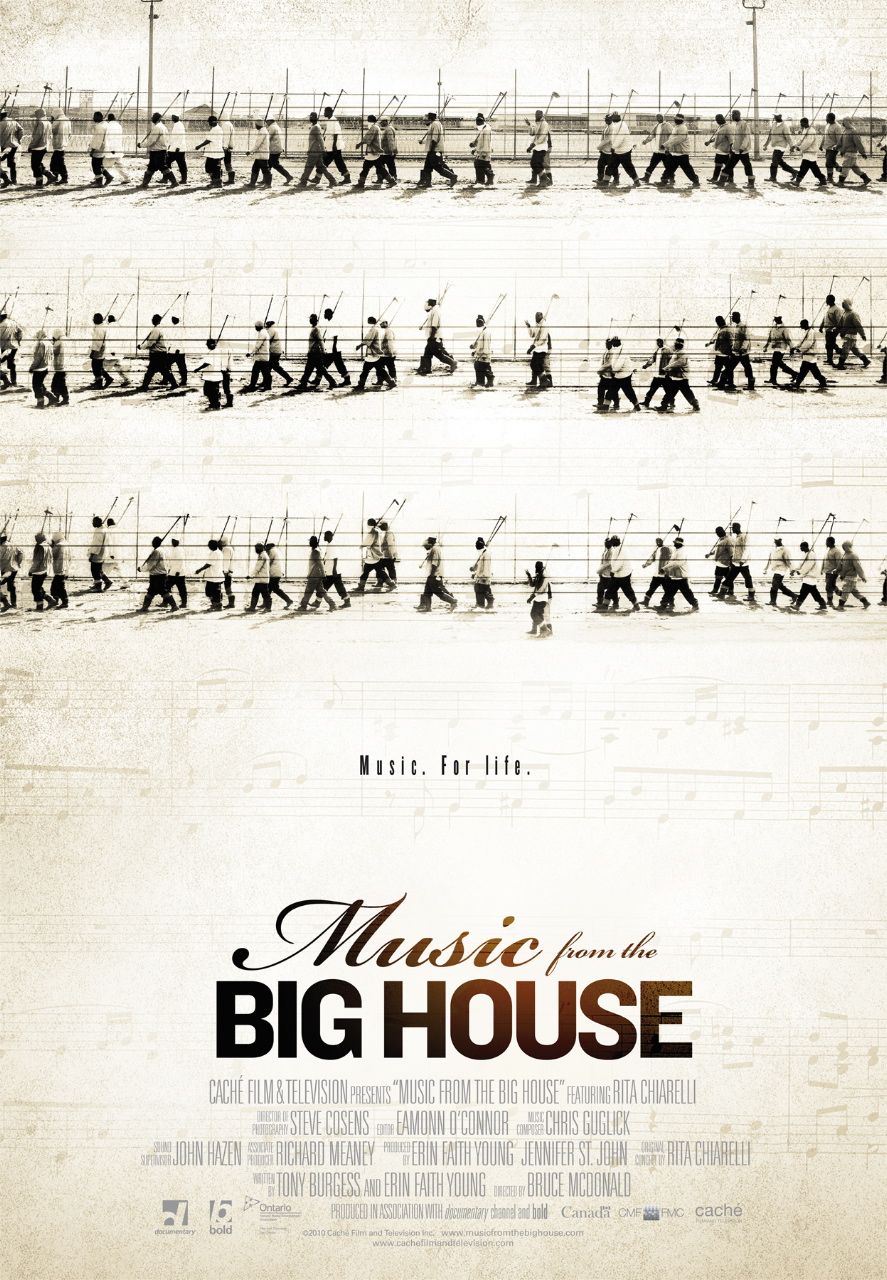
Bruce McDonald’s documentary “Music from the Big House” has blues singer Rita Chiarelli visiting Louisiana State Maximum Security Penitentiary (a.k.a. Angola Prison) where she puts on a concert with the inmates there. What results is a tale of spiritual uplift and redemption as these prisoners serving sentences of ten years to life show a love of music which helps get them out of the dark place they were once stuck in. On top of that, it produces a fantastic soundtrack which is a must buy even for those who have not seen this documentary. Whether you are a fan of blues music or not, this soundtrack will have you up on your feet and clapping along with the rhythm.
Starting off this album is a piece of the film score by Christopher Guglick called “Rita’s Journey” which illustrates the solemn nature hovering over her visit to a prison once known as the bloodiest in all of America. Before we get inside the prison walls, we get a good luck at the surrounding area, and the music Guglick creates captures the stark and sad nature surrounding this penitentiary which reeks of death even on the outside. Another piece entitled “Convicted” illustrates the emotional nature of the crimes these convicts have committed and which put them behind bars. This piece also marks the first time we get specifics on what they had done.
For those not familiar with Chiarelli, she has been called the “Goddess of Canadian blues” and her passion is thrilling to take in here. Her first song on this soundtrack is “These Four Walls” which she wrote after making this documentary. It illustrates deeply the time she spent with these convicts and the bleak nature of life in prison. She wails like few others do, and you will be pinned back in your seat at how powerful of a singer she is. Listening to her will make you wonder why more people don’t know about her in America.
The music featured here, however, is not restricted solely to the blues as there are bits of church and country music to be found throughout. One standout band is The Jazzmen who will get you all riled up with their rendition of “Mississippi Boy” which is just boundless in its energy and joy. Among the other bands performing here are Pure Heart Messenger who bring the house down on “Glory Glory” and “Rain on Me” which has lyrics speaking to the salvation these inmates have found through music.
I also enjoyed the prison yard rehearsals featured here as Chiarelli works on getting the harmonizing just right. The tracks “Rest My Bones” and “Rain on Me” show how serious they all take this music and I am a sucker for all the melodies they come up with.
Like any great soundtrack to a musical documentary or concert movie, “Music from the Big House” really makes you feel like you’re in the room with these musicians as they perform their hearts out. Even if you don’t have the opportunity to see this great documentary, you owe it to yourself to buy the soundtrack which is as powerful as any which came out in 2012.
NOTE: Part of the proceeds from the purchase of this soundtrack will go to the Angola Prison Music Program so that they can buy the equipment they need. It does not go directly to the inmates as this is not allowed.
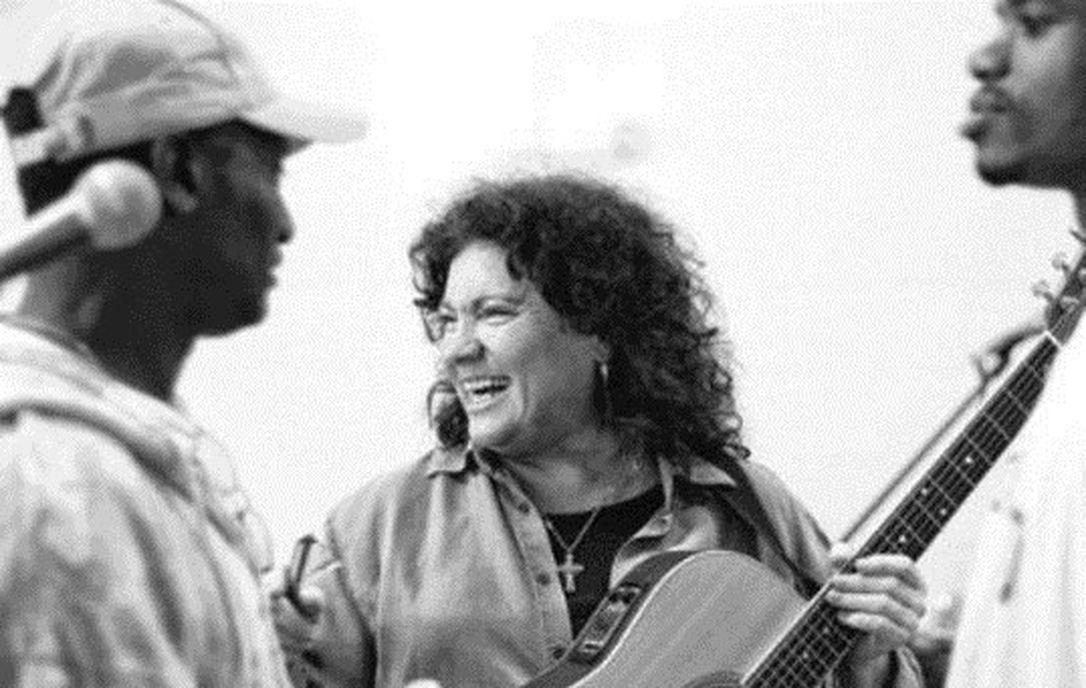
“Music From The Big House” follows Rita Chiarelli, or “the goddess of Canadian blues” as she is known, as she visits what is considered to be the birthplace of blues music: Louisiana State Maximum Security Prison (a.k.a. Angola Prison). What she finds once there is a number of inmates who have long since found solace through their love of music, and this leads her to stage a concert at the prison with them. But unlike when Johnny Cash did his performance at Folsom Prison, Chiarelli performs with the inmates instead of just for them.
Cinematographer Steve Cosens originally filmed this documentary in color, but the decision was later made to show it in black and white which suits this documentary perfectly. McDonald goes over the history of this prison which was at one time known as the bloodiest in America. The descriptions given to us of how it operated years before gives you a picture of what hell on earth must seem like. The fact the filmmakers and Chiarelli were allowed access inside this prison is amazing to say the least, and it almost seems like a miracle they made it out of there as well.
We get a chance to meet the individual inmates who end up playing in the concert, and they are a fascinating bunch. It is not until the very end when we are told what crimes they have committed which got them sentenced to time behind bars, and this was a smart move on the part of the filmmakers. By not learning of their crimes right at the start, we are forced not to judge them ahead of their musical performances. Some of them do allude to their crimes without too many specifics, and one in particular hints at how he isn’t apologizing for what he did because he’s not sure he is yet.
Some might consider this project to be a self-serving one for Chiarelli so she can get good press and sell a lot of records, but that is not the case. Her love for blues music is never in doubt, and those who have seen her perform live can verify what a powerful musical presence she can be. Those not familiar with her work will be blown away by her performances, and there is no forgetting her once the lights go up. There are also moments where Chiarelli questions why she is doing this concert as she’s not blind to what these felons have done to earn long prison sentences. Still, none of it deters her from performing with them in what turns out to be a joyous occasion, and the kind many do not expect to see from hardened inmates.
Speaking of the concert, we do get to see a lot of it here. The musical numbers are utterly invigorating, and the audience I saw this documentary with couldn’t help but clap along with the music. They even applauded at the end of the songs and for good reason; the music is incredibly thrilling to take in even if you are not a fan of the blues. I haven’t been to many movies over the years where the audience really got into what was onscreen, so this is not a cinematic experience I am going to forget any time soon.
“Music From The Big House” is one of those small movies, let alone documentaries, which deserves a bigger audience than it has already received thus far. While you could just get away with buying the soundtrack (and please do buy it), this documentary invites more than one viewing, and it would make a wonderful double feature with the Talking Heads concert film “Stop Making Sense.” You will not be able to keep your feet still while watching either film, nor should you.
WRITER’S NOTE: This article is about a screening which took place on June 13, 2012.
Canadian blues artist Rita Chiarelli made a special appearance at the Aero Theatre in Santa Monica to talk about the documentary “Music From The Big House.” Directed by Bruce McDonald, it follows Chiarelli as she goes inside the Louisiana State Maximum Security Penitentiary to perform with inmates who share her love of music. Chiarelli’s appearance was part of her tour with the documentary which has her traveling to 60 cities in 70 days for post-screening Q&As and performing the blues, and she blew us away with what she had to say as well as her music.
Moderating the Q&A was Richard Matson of Matson Films, the company distributing “Music from the Big House” in the United States. His first question for Chiarelli was how she managed to persuade the prison to let her in, and she said she had to be “very charming.” She admitted to having many meetings with the warden and other prison officials in Louisiana and managed to gain their trust over time. Putting it very bluntly, she said, “They let me in… and they also let me out.”
One audience member asked why the documentary was shot in black and white, and Chiarelli said cinematographer Steve Cosens originally shot it in color. However, it was decided later on to take the color out as everyone thought this was really how the movie should be seen. The way Chiarelli says she saw it, black and white “carried the story more” and made it “truer to its meaning.”
Chiarelli also added how the whole documentary was shot in just two and a half days and that everything done “was a first take.” Everything we saw on screen was “totally how it went down.”
Another person asked why the prison had so many African-Americans and young men incarcerated there. Chiarelli responded that 80% of the population in Louisiana is black and added “whatever that speaks to, that’s what’s going on.” She also said the laws in Louisiana are “very strict” and that it is the only state in America which still operates on the Napoleonic Code which allows more in the way of judgment calls than anything else.
One thing I wondered about, as did others, was why the crimes these inmates convicted of and serving time for were listed at the end of the documentary. We don’t know exactly what they had done to be behind bars while watching, but we do get hints at times of what landed them there. Chiarelli stated this was done so we “wouldn’t judge them before meeting them.” She and McDonald wanted us to meet the inmates first, get so see them in their present state and show how their love of music elevated their souls, and then we got what she called the “nitty gritty” of their crimes.
Chiarelli said she found it hard to ask the inmates what they did as it felt “rude to ask.” Her hope was they would eventually “open up by choice” and they would trust her and the filmmakers to tell their story.
Chiarelli finished her evening at the Aero Theatre by performing some songs from “Music from the Big House” live, specifically “Rest My Bones” and “These Four Walls” which she wrote after the making of the documentary was completed. She certainly has a great set of pipes on her, and her passion for blues music is beyond measure. It is this same passion which is shared by the inmates onscreen, and it makes for one of the most exhilarating musical documentaries you could ever hope to see.
Kenneth Branagh, the director of movies like “Thor” and “Jack Ryan: Shadow Recruit” is best known for bringing the works of William Shakespeare to the silver screen. With movies like “Henry V,” “Much Ado About Nothing” and “Hamlet,” he has succeeded in opening up the works of this famous playwright to new generations of actors and artists. Considering how passionate he is as an actor and filmmaker about Shakespeare’s comedies and tragedies, I always wondered what his first experiences of reading and performing them was like. He gleefully told us about his introduction to Shakespeare when he visited the Aero Theatre in Santa Monica back in 2011.
Born and raised in Belfast, Northern Ireland, Branagh said his family had no interest in Shakespeare, and that there were no books in the house. Then the family relocated to Reading, Berkshire where Branagh said he got bullied a lot. As a result, he withdrew into himself and became fascinated with literature, and he soon found himself developing a love for words. He even recalled buying his very first book, but his father didn’t understand why he was so excited and asked him, “What did you buy that for? Why not just go down to the public library?”
His first exposure to Shakespeare came in a class where everyone read from “The Merchant of Venice.” Branagh remembered being terrified to perform it out loud, and he also freely admitted that he “didn’t understand the language.” But regardless of his fear, he ended up surviving the experience and was soon bitten by the acting bug.
When he did a school production of “Romeo & Juliet,” Branagh recollected how the director played “You Are Everything,” a song sung by Marvin Gaye and Diana Ross. When the song was finished, the director told everyone, “The song was about sex, it’s a mating call. Now that you know what ‘Romeo & Juliet’ is about, open up your text and let’s read!”
Through all the yelling and screaming during the rehearsal, Branagh said the play was actually not hard to understand. It came down to this gang hating that gang, of two young people in love, etc. From there, the words of the Bard enthralled him like nothing else, and he has since made vastly entertaining movies which clearly reflect his infinite passion of Shakespeare’s literature.
Kenneth Branagh said that he would like to do more Shakespeare in the future. While he is a number of years off from playing “King Lear,” but I would love to see him adapt another Shakespeare play in the future like “Macbeth” or even “Twelfth Night.” He even portrayed Shakespeare in the 2018 film “All is True” which he also directed. We still have “Death on the Nile,” the sequel to his version of “Murder on the Orient Express” to look forward to, but hopefully he will tackle one of the Bard’s favorite texts sooner rather than later.
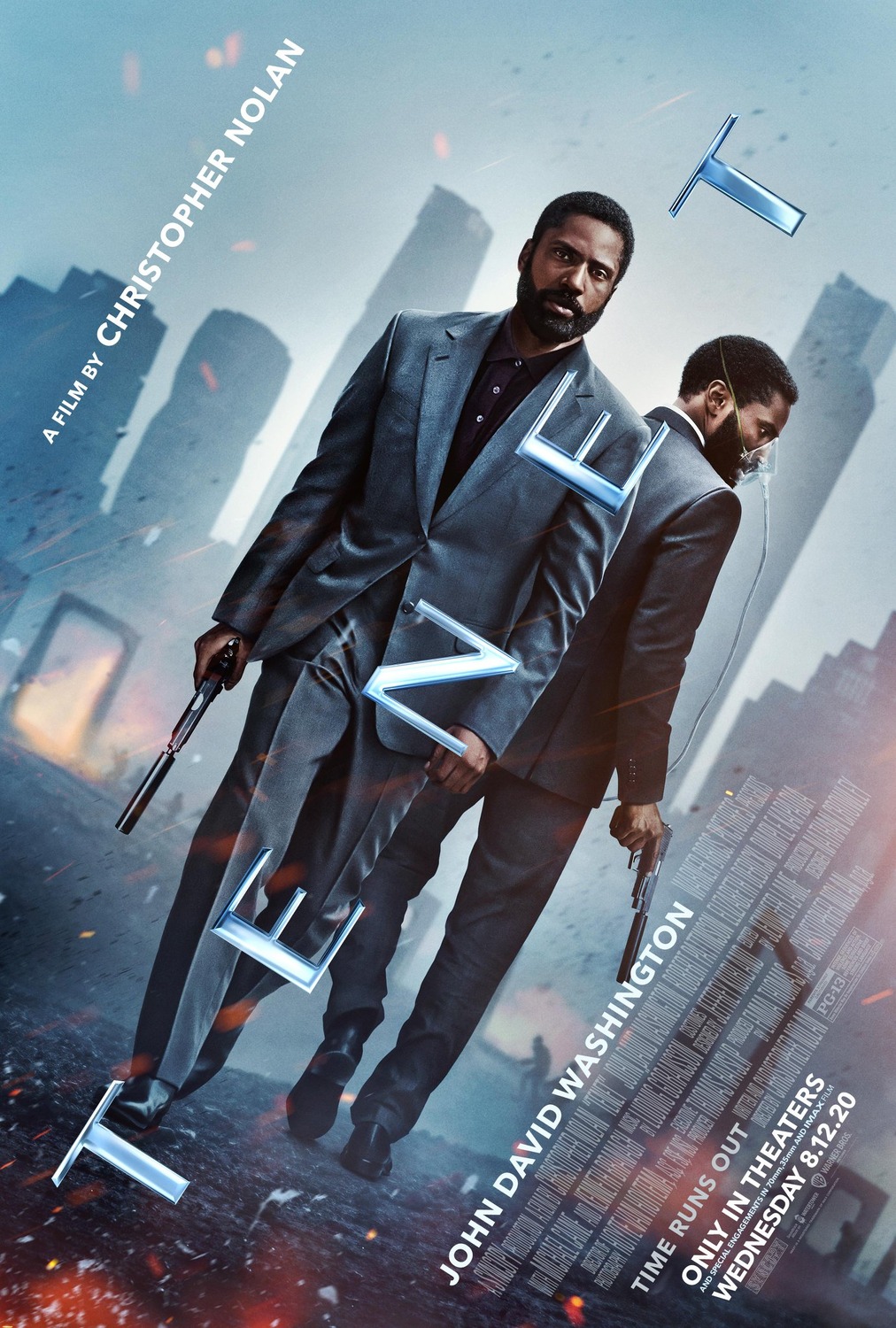
“Tenet” is a film which should come with Cliff’s Notes or its equivalent as it is more challenging than the average Hollywood blockbuster. Thankfully, I was able to follow the gist of the story which has the good guys fighting the bad guys in an effort to prevent World War III, but I am at a loss for explaining how the characters learn to manipulate the flow of time. I imagine it all makes perfect sense to writer and director Christopher Nolan and his good friend, theoretical physicist Kip Thorne, but I have already watched this film twice and I still cannot fully understand all of which happened. While “Inception” and “Interstellar” did make a good deal sense over the course of a few viewings, it will take a few more for me to completely decipher all of which “Tenet” has to offer.
“Black Klansman’s” John David Washington stars as a CIA agent who is only known as the Protagonist, and “Tenet” opens with him taking part in an extraction mission which ends up going awry as he is captured and ends up sacrificing himself after an extended torture session. But instead of arriving in the afterlife, he finds himself in bed and informed by his boss, Fay (Martin Donovan), that he has been recruited by an organization called Tenet which, as a word, can open the right doors and some of the wrong ones too.
The Protagonist’s meeting with scientist named Barbara (Clémence Poésy) helps him to learn about technology with inverted entropy, meaning technology which moves backward in time. At this point, I found myself digging this premise as it is always fascinating to find characters wondering if they exist not in the present, but instead a past which has been far removed from what is considered to be the future. It also calls into the question the concept of free will as the Protagonist is made to wonder if we are part of a story with a pre-determined ending. I love it when free will is dealt with as I am always rooting for it to be shown as real even in a work of pure fiction.
The rest of “Tenet” acts as Nolan’s version of a spy movie as the Protagonist seeks to infiltrate the treacherous realm of Russian oligarch Andrei Sator (Kenneth Branagh) who communicates with the future and is planning to give Earth a fate worse than nuclear Armageddon. In the process, he comes to meet Andrei’s wife, Katherine (“Widows’” Elizabeth Debicki), as well as Neil (Robert Pattinson), his partner in all things inverted or otherwise.
It is tempting to label “Tenet” as a time travel film, but Nolan has made it clear it is not. While Marty and Doc Brown can travel from one point in time to another in the “Back to the Future” trilogy, the characters here do not have the same power of instantaneous travel. To get to a certain point, they have to travel backwards in the past to get to it, and it is never an easy trip as the challenges prove to be quite draining physically. Keep in mind, this is one of the few motion pictures you will see where a character is saved from certain death thanks to hypothermia.
Like I said, I have already seen “Tenet” twice and still cannot explain all that goes on in it. We watch as characters live through moments portrayed both forwards and backwards in time, and the concept of inversion remains the kind of puzzle I am not quick to put together. With this film, Nolan may have bitten off far more than he can chew as the concepts here prove to be more cerebral than the first “Star Trek” pilot known as “The Cage.” Having said this, the film proves not to be too heady for me as such films can drive me to complete insanity or make me fall asleep while watching them. In the end, I am glad I did not come out of “Tenet” in the same way the average filmgoer came out of Darren Aronofsky’s “mother!,” desperate to make a lick of sense out of the cinematic chaos they just witnessed.
Nolan employs many of his regular collaborators here such as cinematographer Hoyte van Hoytema and production designer Nathan Crowley, and they provide us with visuals which would have been great to see on the big screen or in IMAX had any theater in Los Angeles been open a few months ago. This is the first film from “The Dark Knight” director which I have been forced to watch on my television due to the never-ending Coronavirus pandemic, and it feels like such a missed opportunity to not have viewed it on the silver screen. Once movie theaters open up again, hopefully I will get another chance.
One Nolan’s newest collaborators on “Tenet,” other than editor Jennifer Lame, is composer Ludwig Göransson who won an Oscar for scoring “Black Panther.” Hans Zimmer was unavailable due to his commitment on scoring Denis Villeneuve’s “Dune,” but Göransson comes up with something as propulsive and percussive as what Zimmer would have likely given us. In many ways, his music is as much a character as any other in “Tenet,” and this is one of those music scores which deserves a more in-depth study than it has already received. Like Nolan, Göransson presents his music to us both forward and backward motions, and the result is endlessly fascinating to take in.
Right now, “Tenet” may likely be seen as lesser Nolan as its plot is more complicated than he would ever care to admit, but even the least of his works prove to be more ambitious and original than much of what Hollywood puts out on a regular basis. Even though I was a bit frustrated in trying to understand everything which unfolded before me, I was still deeply enthralled in what Nolan had to offer this time around.
When it comes to making sense out of this particular film, please keep a few things in mind: the word tenet is a palindrome, and the term Sator Square gave this film its title and is a two-dimensional word square which contains a five-word Latin palindrome. If you want to learn more, go online and find out for yourself. As much as I would like to explain everything for you, it is best you discover certain definitions on your own. The actor Andre Braugher once said that “if your vocabulary is limited, then your thoughts are limited.” Be like Braugher and don’t be limited.
“Let The Right One In” did not need a remake. The 2008 Swedish film was a brilliant atmospheric piece of cinema, and I find it endlessly frustrating when American audiences can’t embrace foreign movies more often. Do subtitles really have to be an impediment when they come across so much better than dopey English dubbing?
Regardless, its American remake “Let Me In” turns out to be a big surprise. Just when I was convinced Hollywood studios would simply dumb the story down to attract a youthful demographic, Matt Reeves’ take on John Ajvide Lindqvist’s novel, which in turn inspired Tomas Alfredson’s movie, is amazingly respectful to its source material. Moreover, you can see throughout how the story deeply affected Reeves and how he personalized the actions of the characters on screen.
The story remains the same, but the characters’ names have been changed to protect the original. The setting has been moved to Los Alamos, New Mexico which, amazingly enough, appears to be as snowy as Sweden. The year is 1983 and Ronald Reagan is President of the United States, talking about the “evil empire” on television. The advantage of this film being set in the 1980’s, however, is that the characters don’t have to worry about not getting any cell phone reception because they don’t own cell phones. This makes it especially lucky for the filmmakers because they won’t have to make any stupid excuses for cell phones not working.
Owen (Kodi Smit-McPhee) is a 12-year-old boy who lives with his alcoholic mother (we never get a clear view of her face) and has no real friends to speak of. At school, he is constantly harassed by bullies who thoughtlessly subject him to even more humiliating tortures than what Oskar dealt with in “Let The Right One In.” Eventually, he comes in contact with Abby (Chloë Grace Moretz), a girl who looks to be around his age, who has moved into his apartment building next door to him. Although she tells Owen they can’t be friends, a strong bond soon forms once he gives her his Rubik’s Cube to play with. She ends up solving it in a way which doesn’t involve cheating. My brother would have just taken the stickers off the cube and put them back on with the colors altogether.
I really do mean it when I say the humiliations Owen endures here are even worse than what Oskar went through to where I came out of this remake believing Oskar had it easy. Reeves, who has directed “Cloverfield,” “Dawn of the Planet of the Apes” and “War of the Planet of the Apes,” really captures how kids can be utterly cruel to one another, and it will bring back memories for those of us who were humiliated in ways which left a wealth of psychological scars. Seeing him practice his revenge on the bullies all by his lonesome makes made me sadder as what we imagine doesn’t always jive with reality. While the kids at times put up a tough façade, their vulnerability is clearly evident in their eyes.
As the movie goes on, the fact Abby is a vampire, or a bloodsucker if you want to call her that, becomes a side issue. She and Owen are just two kids, one whom is older than they appear, who are struggling through the painful awkwardness of growing up. When they come in contact, they for once have someone they can relate to. Both Kodi Smit-McPhee and Chloë Grace Moretz are perfectly cast, and each has moments where their faces say more than words ever could.
McPhee previously starred in for “The Road” where he played Viggo Mortensen’s’ son, and he inhabits Owen with all the isolation and helplessness the role has to offer. Chloë Grace Moretz did this after her amazing breakout performance in “Kick Ass,” and as Abby shows a strong maturity beyond her years. But I really have to applaud the adult actors who, while they don’t have as much screen time as their younger colleagues, give depth to characters that could have just been simple clichés. Richard Jenkins, still one of the most dependable character actors, plays Abby’s guardian, Thomas. Through his scenes with Moretz, he shows a caring man whose relationship with this girl has lasted longer than we could ever imagine. Jenkins makes us sympathize with this man even as he commits horrible acts for the sake of Abby’s survival. When we first meet Thomas, he has become wearier with the passing of time and the dark deeds which have weigh heavy on his soul.
Equally impressive is Elias Koteas who plays a police detective whose name never gets mentioned. The beauty of his acting here is how incredibly subtle he is to where he fully inhabits his character with what seems like relative ease. This could just have been the typical policeman whom the audience is manipulated into despising, doing all the stupid things cops do in movies. But Koteas instead gives the character a deep humanity to where you respect him even as you fear what he will do this Romeo & Juliet couple in the making. This is just a regular guy doing his job, and this makes his eventual fate all the more tragic.
“Let Me In” is not your typical jump-out-of-your-seat horror movie. There are a few jump scares, but the horror comes out of what cruelty people are subjected to, be it on the playground or anywhere else in town where you get your blood drained (and not by the Red Cross mind you). It also comes from where the line between what’s right and wrong becomes blurred as we ask ourselves if we can pull away from the people we love so much just to set things straight. What would we give up in the process?
As an American remake of a foreign film, I figured Hollywood would just change the story to where the good guys get the bad guys and justice wins out in the end. You know, the typical kind of plot designed to make us all feel good. To my astonishment, Reeves never veers in that direction once, and he has made a film whose climax is left up to the viewer to interpret. Nothing is ever easily spelled out for the audience, and I admired him for staying true to the source material.
If there is a drawback to “Let Me In,” it’s that in being respectful to “Let The Right One In,” not much has changed. For those who loved the 2008 movie as much as I did, there is much to admire but few surprises to be had. Many of the situations remain the same as before while certain characters in the background get more or less depth than they previously did. And there is all that snow like before, but it looks very beautiful and it’s a character of sorts in this movie. While Reeves doesn’t break new ground with this interpretation, we can see how deeply he relates to Lindqvist’s novel and its characters. In the end, “Let Me In”’ is not a vampire movie as much as it is one about childhood and how rocky a road it is for some more than others, especially for those who don’t grow old. It’s Reeves’ depth of feeling which informs this film, and it gives this remake a power I never expected it to have.
Oh yeah, there is 1980’s music to be heard throughout, but I kind of wished they put some more of it in here. I still love listening to music from that crazy decade, and it would have been cool to see some bloodletting done to the music of REO Speedwagon, Hall & Oates, or even Journey. How about something by Air Supply or Chicago? Oh well…
Like so many, I grew up watching “The Lone Ranger” on television and listening to the old-time radio show as well. John Reid, whether he was wearing a mask or not, was a paragon of justice, and seeing him and his faithful sidekick Tonto defeat the bad guys was always deeply satisfying. I was reminded of how much I liked this character while watching Gore Verbinski’s “The Lone Ranger” because I kept asking myself, who is this buffoon that has no business being around a horse during this movie?
Hollywood has had little luck in getting a respectful version of “The Lone Ranger” up on the silver screen, and this supposed 2013 summer blockbuster is the latest example. At two and a half hours, this film is a bloated mess which could have easily been shortened. It sticks its talented cast with a bland story, an uninteresting villain, and it can never seem to figure out if it wants to be a lighthearted adventure or a deadly serious film. Sadly, it is not until the last half hour when this “Lone Ranger” finally comes to life.
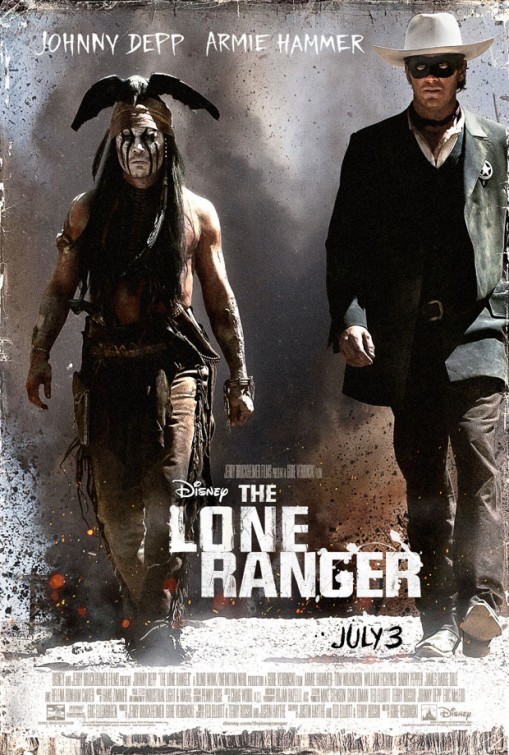
This “Lone Ranger” is yet another origin story about how this iconic character and Tonto first met and joined forces to bring justice to the American Old West. John Reid (Armie Hammer) is a lawyer and former Texas Ranger who joins up with his brother, Dan (James Badge Dale), to recapture the ruthless outlaw Butch Cavendish (William Fichtner) who has just escaped. In the process of tracking Butch down, John and Dan are ambushed by him and his law-breaking friends, and he mercilessly takes Dan’s life as well as another part of his body from him. John is assumed to be dead, but Tonto (Johnny Depp) finds his body and nurses him back to health so they can avenge Dan’s life and defeat Butch before he does more harm.
Look, I try to enjoy movies for what they are as opposed to what I want them to be, but I found myself wanting to see a much different version of “The Lone Ranger” because the iconic character is not given the respect he deserves here. I came out of this film feeling sorry for Hammer who is a very good actor and was terrific as the Winklevoss twins in “The Social Network,” but he is forced to portray John Reid as a buffoon and wimp who has no business trying to bring any bad guys to justice. Hammer has some funny moments, but the screenplay by Justin Haythe, Ted Elliott and Terry Rossio robs his character of many of the heroic qualities we love the Lone Ranger for having.
Come on, this is a movie about the Lone Ranger, so why not make it about the character we know him to be? Just like “The Green Hornet” which Seth Rogen and company really messed up, this is a film that blatantly forgets what makes its well-known characters so special. Regardless of the current controversies Hammer is currently enduring, his acting career has fared much better than Klinton Spilsbury’s did after he starred in ill-fated “The Legend of the Lone Ranger.”
As expected, Johnny Depp gets top billing even though he is playing the sidekick in this film because, well, he’s Johnny Depp. While he may be the best thing about “The Lone Ranger,” his performance is a bit problematic. Depp said he chose to play Tonto so he could right the wrongs of the past in terms of how Native Americans are portrayed in the media. While I really want to say he succeeded, I’m not sure he did. He is clearly having a lot of fun playing Tonto, but the character threatens to come off as a comical caricature than a believable Indian. I have no doubt that Depp has Native American blood in him, but it would have made much more sense to get a full-blooded Native American to play Tonto instead.
But in the midst of such comical mischief between the Lone Ranger and Tonto, we get to learn about Tonto’s backstory which involves tragedy and Native American genocide. It is at this point when the movie’s tone becomes completely erratic as it can’t seem to decide whether it wants to be funny or serious. While I would never dare to gloss over the damage we did to Native Americans, this grim history belongs in another movie and not this.
“The Lone Ranger” also starts off with another side story which has a young boy named Will (Mason Cook) visiting a San Francisco county fair where he runs into an elderly Tonto who proceeds to tell him about his adventures. The movie keeps coming back to these two time and time again, and this ends up slowing its already sluggish pace down to a grinding halt. These scenes could easily been cut out of the film because they really serve no good purpose and only make us wish this was much shorter.
William Fichtner remains one of the most dependable character actors working today, but he is unfortunately saddled with portraying a bore of a villain in Butch Cavendish. The character’s makeup basically spells out how this is one very bad dude who never visits the dentist, and it’s almost like Fichtner is letting the makeup do all the work. There’s really not much to this character other than he’s just another evil outlaw, and this gives Fichtner no real opportunities to make him the least bit interesting.
As for the other actors, Ruth Wilson gets to play Dan Reid’s obligatory love interest, Rebecca, and she is given little to do other than be in constant danger. Tom Wilkinson is a welcome presence as railroad tycoon Latham Cole, but it’s no surprise to see what his character ends up becoming. And while it is cool to see Barry Pepper as U.S. Calvary Officer Jay Fuller, his character is just another one of those clichéd corrupt military characters who is just asking to get beaten up. As for Helena Bonham Carter, she is wasted in a bit part as brothel madam Red Harrington. While I love seeing Carter pop up in one role after another, this movie does not deserve her.
Verbinski runs into many of the same problems which undid “Pirates of the Caribbean: At World’s End” as it goes on for far too long, contains characters we never fully care about, and it doesn’t take long for us to give up on trying to understand the plot. While he is indeed a talented filmmaker, and the first “Pirates of the Caribbean” movie really was fantastic entertainment, I thought after “At World’s End” he would rein things in more than he tried previously. That he did not accomplish this makes this cinematic experience all the more frustrating.
Regardless, I have to admit that I loved the movie’s last half hour where Verbinski executes a number of brilliantly staged action sequences. Once the “William Tell Overture” music started blasting through the speakers, I found myself being immensely entertained. This was “The Lone Ranger” movie I wanted to see, the one where I was genuinely thrilled by this masked man’s crime fighting ways. This proved to be so much fun, but while this spectacle went on, I could not help but ask myself why the rest of this motion picture could not be this entertaining.
“The Lone Ranger” was not the worst movie of 2013, but it was still pretty close to being the biggest stinker of all. While it was not as boring as “The Great Gatsby” nor as abysmally bad as “The Hangover Part III,” this should have delivered far more bang for the buck. Westerns have taken a big hit over the years with poorly received duds like “Wild Wild West” and “Jonah Hex,” and this film is not going to help matters any. This was the first Lone Ranger movie in over 30 years, and now it looks like we’ll have to wait twice than long for the next one to be made.
Pole dancing has long been associated with strip clubs, but it has since expanded from that realm to dance studios where it is taught as a form of aerobic exercise. Still, there is a strong stigma to this form of dancing as it most people refuse to see it as anything other than pornographic and debasing. But with the new documentary “Strip Down, Rise Up,” female instructors use pole dancing as a way to help women deal with traumas and body-image issues which have plagued people for far too long. Through sensual movement, the participants find themselves transforming to where they succeed in reclaiming their self-esteem and sexuality, and they find a power within themselves which can never be lost.
The director of “Strip Down, Rise Up” is Oscar-nominated filmmaker Michèle Ohayon, and her cameras capture a diverse group of women from various walks of life. Among them are Evelyn who has lost her husband and trying to deal with her grief, the successful businesswoman Patricia who is uncomfortable in her own skin, and the very brave Megan who was sexually abused and ended up testifying against her abuser. We also get to see instructors like Sheila Kelley, Amy Bond and Jenyne Butterfly whose methods differ from one another in fascinating ways.
Ohayon hails from North Africa, and she has said her films are largely about transformations. In addition to “Strip Down, Rise Up,” her work includes “Colors Straight Up” which is about at-risk youth in Los Angeles who turn their lives around through the performing arts, the hidden homeless women documentary “It Was a Wonderful Life” which had the privilege of being narrated by Jodie Foster, and the docu-comedy “Cowboy del Amor” about a cowboy who becomes a matchmaker. Her inspiration for “Strip Down, Rise Up” came about when she and her daughter attended a pole dancing class as a way to explore a new form of exercise.
I got to speak with Ohayon recently, and this marks my first ever video interview done via Zoom, so please bear with me as the video quality is a bit different from what we are all used to.
“Strip Down, Rise Up” debuts on Netflix on Friday, February 5, 2021. Please check out the interview above and be sure to check this documentary out when it drops.
I have never really been a fan of Jean-Claude Van Damme. He has the moves, but he has never been much of an actor. I still vividly remember watching “Cyborg” with my brother and a friend of his on the family VCR years ago. My dad even watched it with us, and he could not stop bagging on Van Damme throughout the whole monstrosity which was made by those creative geniuses from Cannon Pictures. This is some of what he said:
“This is the single worst actor I have ever seen in my life! His face is completely immobile! He’s like Stonehenge!”
Oh, the memories! You’d figure after us seeing “Cyborg” that none of us would ever bother watching a Van Damme movie ever again, but he was everywhere for much of the late 80’s and early 90’s. “Bloodsport” was nothing extraordinary, but those fight scenes were pretty awesome.
“Death Warrant” was one I only saw because my best friend from high school wanted to check it out. It was alright, but this is probably being generous. I got a little pissed when that nerdy kid with glasses wanted to watch “Star Trek,” but the hot lady played by Cynthia Gibb did not want to bother. She would rather be screwing Van Damme’s character while he was taking a break from working undercover in a prison to catch a killer. Seriously, not all “Star Trek” fans are this geeky!
But following the commercial failure of “Universal Soldier: The Return,” Van Damme went from being a Hollywood star to being thrown into the hard to escape realm of straight to video movies, and he also went through drug problems and several divorces. I always wondered how people like him or Steven Seagal deal with going from big Hollywood action movies to direct to video crap which continues to define their careers to this day. I imagine they are not happy being in this movie star limbo. On one hand, they are still making a living, but at the same time I keep thinking they must miss where they were before Hollywood abandoned them in the wake of several box office disappointments.
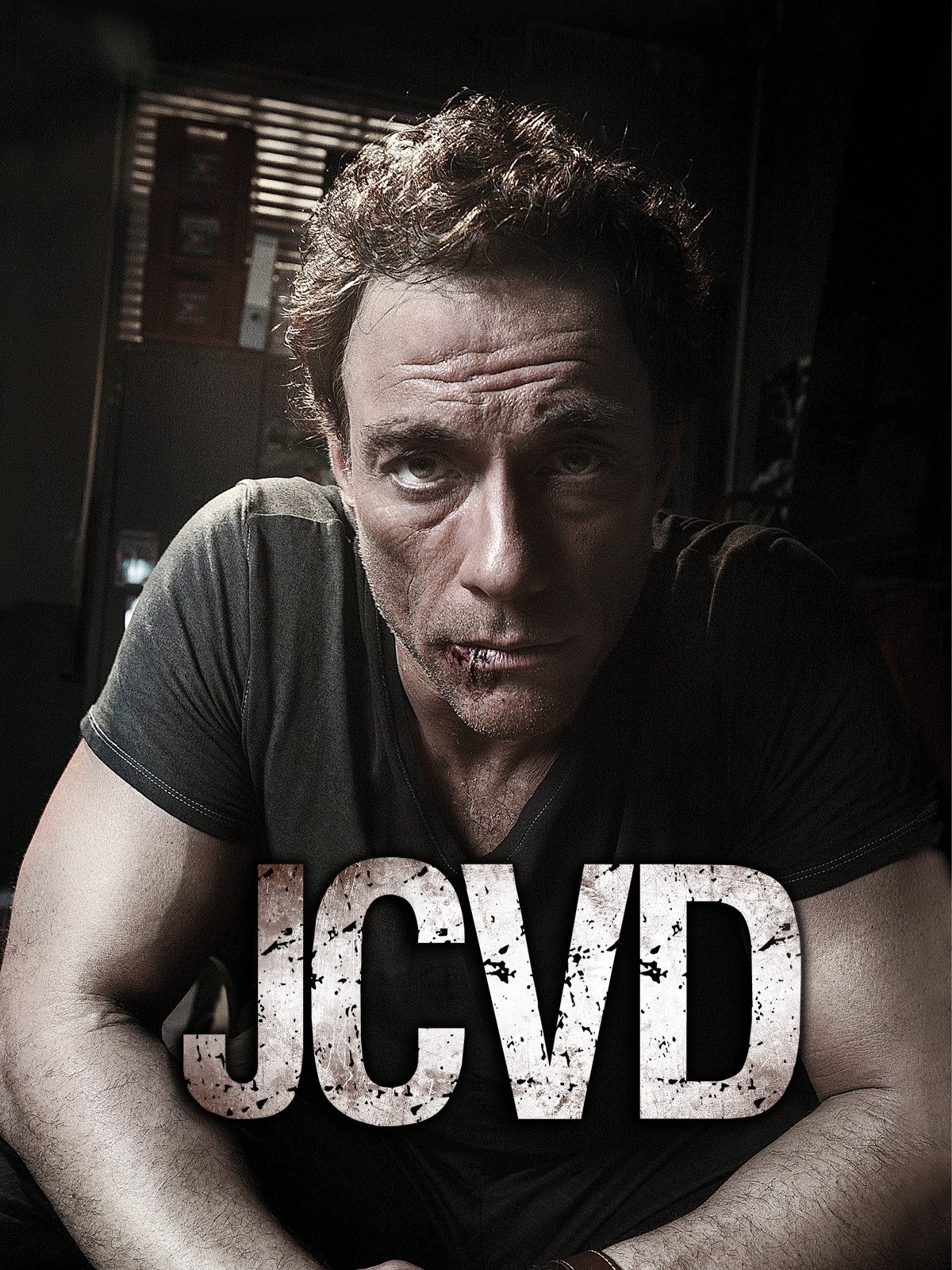
“JCVD” is a fictionalized answer to this question, and is not your typical martial arts ass kicking epic. Van Damme plays himself, and we can what years of drugs, court battles, and many B movies, most of them lousy, have done to him and his face. As the movie opens, we see him arguing with the director of his latest movie, but the director is more interested in throwing darts at a postcard with the Hollywood sign on it then in listening to a man whose only distinction is getting John Woo to come to America and make “Hard Target.”
We see Van Damme at court fighting for custody of his daughter (played by Saskia Flanders), and his ex-wife’s attorney presents his movies as arguments against him as a person. They pile up so high to where he excuses himself to go to the bathroom while the titles are still being read off. His problems keep mounting as he can’t get cash out of the ATM, and his lawyer calls saying he still owes him money. Then his custody suit hits an impasse when his daughter says she doesn’t want to live with him because, whenever a movie of his is on television, she gets picked on by all the kids at school. Even worse, he just lost a film role to Seagal just because he offered to cut off his ponytail.
So, Van Damme heads back to Belgium to reconnect with his roots and where he came from (hence his nickname “The Muscles from Brussels”). He is still treated as a big star and a hero back home, and as a man who helped put the country and its people on the Hollywood map. But soon after, a hostage situation erupts at a nearby post office and, yes, all hell breaks loose. At first, it looks like he is robbing the post office, but events are seen from different perspectives, and it turns out he has arrived at the wrong place at the wrong time. This time, he can’t rely on his martial arts moves to get him out of this situation. Van Damme is not seen as an action hero here, but as a regular man who is caught up in a situation not of his making.
“JCVD” is presented as a comedy/drama hybrid, and while the tone is a bit uneven, there are some very funny moments. We see one of the robbers buddy up with Van Damme and talk to him about his movies, and he even gets him to show off one of his classic moves. While the other robbers couldn’t care less, this one wants his autograph. In the meantime, the townspeople have come out in force to support the fallen celebrity for what he is doing. In many ways, the movie is a look at the crazy nature of fame and a celebrity is forever trapped in a prison because of it.
The big question I had when I went out to see “JCVD” was this; has he gotten any better as an actor. Even Los Angeles Times film critic Sam Adams in his review of this movie said that “most of the acting in Van Damme’s films takes place below the neck.” Surprisingly, the answer is yes, he has. In fact, in “JCVD” he is really good playing a fictionalized version of himself. My dad’s description of him as “Stonehenge” does not apply to him here, and while he will never be Laurence Olivier or Sean Penn, this movie is a big step up for him creatively speaking.
The movie has one tremendous moment of pure raw emotion from Van Damme when he suddenly rises above the film set and starts talking directly to the audience. His monologue lasts for several minutes, and he talks about how he always wanted to be a movie star. All these years later, he feels as though he is being punished for it. Granted, he admits to his mistakes like taking drugs, and I felt like he is still paying a price for his usage even while he is staying clean. The star never fakes a moment during this scene, and the scene is alone worth the price of admission. Van Damme has said doing this movie was like therapy for him, and I have no doubt about that.
The concept of “JCVD” is by no means original. We have seen many movie stars play themselves and have jokes played at their own expense to show they have a healthy sense of humor about their image. But while we have them take this route like John Malkovich did in “Being John Malkovich,” I can’t think of any others who have put themselves on the line like this. I can’t see Chuck Norris doing this as I am certain he would rather do an action movie where Mike Huckabee is President and he has to rescue him from being held hostage by pro-evolution terrorists.
If there was one big problem I had with “JCVD,” it’s that its subtitles were at times almost impossible to read. The movie, directed by Mabrouk El Mechri, is shot in a grungy style which is very close to black and white but not quite. As a result, the subtitles which are presented in white lettering almost blend completely into the background, and I had to keep leaning forward to better see what was being said. Considering how many of my friends hate subtitles and would rather watch movies dubbed in English, this certainly does not help.
You really have to give Van Damme a lot of credit here. Not many action stars would even risk being seen like he is shown in “JCVD.” Here, he lays himself bare to show us the man he has become through many mistakes and bad movies. I came out of it with a renewed respect for him, and it makes me want to see him get better. “JCVD” is not a great movie, but it is fun and kept me enthralled throughout its running time. Where he goes from here remains to be seen, but hopefully some good will come out of his performance here.
WRITER’S NOTE: This article was written back in 2011.
Jason Reitman completed his guest programming at New Beverly Cinema with a screening of Wes Anderson’s directorial debut, “Bottle Rocket.” This film also marked the movie debuts of Luke and Owen Wilson, the latter who co-wrote the screenplay with Anderson. Before seeing this movie, Reitman admitted he was actually scared of becoming a filmmaker especially because he was the son of a famous one (Ivan Reitman). He did see all the great movies of the 1990’s like “Clerks,” “Slacker,” and he checked out all of Quentin Tarantino’s movies, but he said none of them had the same effect on him as “Bottle Rocket” did. For Reitman, this was the movie which made him want to direct films. And of discovering Anderson, he said, “This is the voice that I am going to follow forever.”
Joining Reitman for this special screening was actor Luke Wilson, and it was nice to see him take a break from all those AT&T Wireless commercials he has been doing endlessly. Ironically, the movie Reitman showed the same evening before it was “Breaking Away,” and Wilson said he is actually good friends with one of that movie’s stars, Dennis Quaid. Quaid was away in Hawaii so he was unable to attend the screening with fellow co-stars Dennis Christopher and Daniel Stern. This coincidence did, however, allow Wilson to talk about how Randy Quaid told Dennis he already made the family name and suggested he change his. Dennis ended up asking his brother, “How about McQuaid?”
Anyway, Luke told the audience Wes and Owen originally wanted to shoot “Bottle Rocket” guerilla style so they could shoot it cheaply as Richard Linklater had done the same thing with “Slacker.” However, they ended up meeting a producer who told them about the Sundance Film Festival and advised them to start off by making a short film they could take there. So they made the short and got it entered into Sundance, but nothing happened and they didn’t win anything for it. Despite that, they managed luckily to get hooked up with a producer named Polly Platt who had worked on such movies as “The Last Picture Show” and “Terms of Endearment” among others.
The project went on from there as Platt brought the Wilson brothers and Anderson to the attention of famed writer/producer/director James L. Brooks. Anderson ended up getting everyone to do a read thru of the script at some office in Texas during the summer. Turns out the air conditioning there wasn’t working all that well, and they were reading a screenplay which was two hundred pages long. Luke said he ended up sweating profusely throughout the whole read, and this made Owen glare at him as if to say, what the hell are you doing?
Luke also took some time to talk about Brooks who became one of the chief supporters of “Bottle Rocket,” and he described him as being very nice. However, he also said Brooks can immediately “cut to the truth and be painfully funny.” Of course, Brooks was going through problems of his own. While working on “Bottle Rocket,” he was also busy with his film musical “I’ll Do Anything” with Nick Nolte. For those who remember, it ended up getting released without any of the music as the movie tested poorly (and that’s being polite).
Reitman went on to talk about how he related to the voice of the film and how it had a “strange innocence” to it. Luke replied the film’s voice came from Anderson and Owen, but he said he never got the feeling he was working on anything special. Columbia Pictures, which distributed the movie, wanted to make “Bottle Rocket” but with different actors. When it was all shot and in the can, the studio didn’t like or knew what to make of it. Looking back, Luke said bluntly he was “stunned that the movie got made.”
When it finally came to making “Bottle Rocket” as a feature length film, Luke remarked Wes knew exactly how movies were made. He and Owen, on the other hand, did not. They didn’t understand certain jobs the crew on set had like the boom mike guy. Luke said he and Owen wondered out loud, “How can that guy just stand around like that?”
Also, Anderson did not want the actors to watch dallies of the day’s work, but this didn’t matter much because neither Owen nor Luke wanted to watch them anyway. Luke says he still doesn’t understand what compels actors to watch dallies as he feels it will likely mess you up in terms of how you go about developing your character.
The cast and crew also had the fortune of working with James Caan who had a bit role in “Bottle Rocket,” and Luke recalled he was going through a rough patch at the time, but that he did warm up to the rest of the cast during shooting. At one point Luke, Owen and Wes asked Caan what it was like working with the late Marlon Brando on “The Godfather.” To this Caan replied, “It’s like you guys working with me.”
“Bottle Rocket” did go through the rather unnecessary realm of test screenings. For a movie like this, it must have felt like a waste of time because this is not one which just sells itself to mainstream audiences, but the studio executives decreed that Anderson screen the movie for focus groups nonetheless. So, there was a test screening done in Santa Monica, and out of a crowd of 250 people, 75 walked out. The ones who stayed through the whole thing, as Luke remembered it, wrote nothing but shit about the movie. To date, it remains the one movie with the worst test screenings in the history of Columbia Pictures. Luke said he, Owen and Anderson were convinced they would never get to make another movie ever again.
Despite all that, “Bottle Rocket” did get discovered by audiences through cable, video and DVD. Luke says he still sees it on cable every once in a while, and Reitman remarked it became the “touchstone for those who want to make movies.” Martin Scorsese ended up naming it as one of the best movies of the 1990’s. Still, everyone involved with this little film had a hard time getting over it feeling like a failure. But when these guys got around to making the brilliant “Rushmore,” they found themselves re-energized and have since gone on to make one great movie after another.





 The Ultimate Rabbit