Exclusive Interview with Justin Chon about ‘Seoul Searching’

Seoul Searching poster

In Benson Lee’s “Seoul Searching,” Justin Chon plays Sid Park, a rebellious teenager and a punk rocker whose truancy and defiance of adult authority knows no bounds. Sid is one of many teenagers forced to spend the summer of 1986 in Seoul at a camp for “gyopo” or foreign born teenagers where they can learn more about their homeland, Korea. It’s no surprise that he doesn’t want to be there and he tries numerous ways to get kicked out, but eventually his tough guy persona is broken through by a teacher who sees that Sid yearns for the acceptance of his father. What results is the most important summer Sid will ever have in his young life.

Chon is one of the most prolific Asian-American actors working in movies today, and he is best known for playing Eric Yorkie in the “Twilight” series. His career started in 2005 when he appeared in such television shows as “Jack & Bobby” and “Taki & Luci,” and he became known to audiences worldwide when he played Peter Wu in the Disney Channel film “Wendy Wu: Homecoming Warrior.” Chon also starred as Sonny, an immigrant who becomes a notorious gangster, in “Revenge of the Green Dragons” which was executive produced by Martin Scorsese. In addition, he has also directed several digital shorts that are featured on his YouTube page.

I spoke with Chon recently while he was in Los Angeles to promote “Seoul Searching.” While he was a student at USC, he spent time abroad in South Korea and explained how he was able to draw on that experience for his role. He also talked about the 80’s song he wished the movie’s director, Benson Lee, had included on its soundtrack, and he makes it clear why “Seoul Searching” deserves to be seen as more than just an Asian-American movie.

Check out the interview below, and please visit “Seoul Searching’s” website to find out where the movie is playing near you.

’10 Cloverfield Lane’ is an Infinitely Intense Thriller

10 Cloverfield Lane poster

A few hours after watching “10 Cloverfield Lane,” I found my nerves were still fried by what I had just witnessed. It feels like it has been ages since a movie made me feel that way, so that’s quite the compliment. Billed as a “spiritual successor” and a “blood relative” to the 2008 monster movie “Cloverfield,” this one works best if you know very little about it when you go inside the theater. Alfred Hitchcock would have gotten a kick out of this as the filmmakers play with your expectations and leave you in a suspended state of suspense throughout. It would be wise to see the movie before reading this review because it is that riveting.

The movie opens on Michelle (Mary Elizabeth Winstead) hurriedly packing her things and moving out of the apartment she shares with her fiancé Ben. While driving through rural Louisiana, she ends up getting into a very serious car accident which renders her unconscious, and she later wakes up to find herself in a concrete room chained to the wall. Eventually she meets Howard (John Goodman), a survivalist who tells her he saved her life and is nursing her back to health. However, Howard also tells her that a deadly attack has taken place and that everyone outside is dead or dying.

They end up occupying an underground bunker which Howard built himself as he always suspected that America was going to be attacked somehow, and along with fellow survivor Emmett (John Gallagher Jr.) they try to live normally by watching videos, doing puzzles, playing board games and occasionally playing a song on the jukebox. But things are never what they appear to be, and soon the bunker won’t be big enough for the three of them.

“10 Cloverfield Lane” marks the feature film directorial debut of Dan Trachtenberg whose previous work includes a short film entitled “Portal: No Escape” which caught the eye of producer J.J. Abrams. It’s a heck of a debut as Trachtenberg puts us right into Michelle’s shoes as we come to have as much an idea of what’s going on as she does. Was there really an attack? Is Howard really worth trusting? Should they stay in the bunker until it’s alright to come out? Questions keep coming up as we try to stay one step ahead of the characters, but anything is possible and nothing can be left to chance.

Trachtenberg is also well served by a strong screenplay from Josh Campbell, Matt Stuecken and “Whiplash’s” writer/director Damien Chazelle which gives us characters who are complex and easy to relate to. These three people are not cardboard idiots out to make the dumbest mistakes possible but instead complex individuals trying to navigate through their own personal issues while attempting to adjust to a possibly post-apocalyptic world. This only adds to the very palpable tension which escalates throughout as does the sharp cinematography by Jeff Cutter, the efficient editing by Stefan Grube and the pulse-pounding music score by “Battlestar Galactica” composer Bear McCreary.

Mary Elizabeth Winstead has long since proven to be a terrific actress thanks to her unforgettable turns in movies like “Live Free or Die Hard,” “Scott Pilgrim vs. The World” and in the criminally underrated “Smashed.” She is a revelation here as Michelle as her character goes from running away from trouble to being forced to confront it head on. It’s great to see Winstead portray Michelle not as some ordinary action heroine, but instead as someone trying to stay one step ahead of those who might not have her best interests in mind.

John Gallagher, Jr. is perhaps best known for his work onstage in the rock musicals “Spring Awakening” and “American Idiot” as well as for appearing on “The Newsroom.” For a moment it looks like his character of Emmett is going to be some clichéd southern dude, but Gallagher never falls into that trap as he reveals Emmett to be a man whose best days may have passed him by, but who is not about to give up on life and those he cares about.

But after coming out of “10 Cloverfield Lane,” I kept wondering if audiences realize just what a great actor John Goodman is. He has delivered one terrific performance after another for years, but has his talent been taken for granted? After serving time on “Roseanne,” he delivered a stellar performance as the seriously disturbed insurance salesman Charlie Meadows. I was reminded of that performance while watching him here as Howard as this is a character who cannot be simply described as a good or bad guy. Goodman makes him into a complex human being and one who is driven by fear more than anything else, and this makes the actions he commits all the more unnerving.

It may still be early in 2016, but Goodman most definitely deserves Oscar consideration here. He proves what a masterful actor he is in that he never has to move a muscle in certain scenes to generate severe unease in the other characters as well as the audience. Just a glare from his eyes will have you on edge as Howard is a man desperate to control his surroundings as well as the people living with him. It’s a frightening performance as Goodman makes Howard terrifyingly unpredictable in his actions. At one point Howards seems agreeable, and in the next he finds himself in a rage. If you are not convinced that Goodman is one of the best actors working in movies today, watching him here should change your mind.

Like I said, “10 Cloverfield Lane” has been described as a “blood relative” or a “spiritual successor” to “Cloverfield.” Those descriptions are very appropriate as it differs quite a bit stylistically to the 2008 movie. None of the characters from “Cloverfield” appear here, and this one is not a found footage film which means no shaky cam. In fact, it’s highly likely that “10 Cloverfield Lane” doesn’t even exist on the same timeline as “Cloverfield.” Still, this movie does share a number of thematic elements that were prominent in its predecessor. To say just how many of them it shares, however, would ruin many of the surprises in store for the audience.

While most sequels or follow ups try to outdo their predecessors by giving us something even bigger, this follow up is instead more simplistic in its approach and shows how less can be more. Trachtenberg makes you experience every claustrophobic and nerve wracking moment to an infinite degree, and it makes “10 Cloverfield Lane” blow “Cloverfield” right out of the water.

2016 has so far given some good movies and others that will be forgotten in no time at all, but “10 Cloverfield Lane” is one of the first great movies I have seen so far in this early year. It takes you on a rollercoaster ride filled with sharp turns, and keeps you guessing all the way to the end.

Copyright Ben Kenber 2016

* * * * out of * * * *

Save

The Duel

The Duel poster

“The Duel” is one of those movies that wants to generate tension you can feel simmering below the surface, but it doesn’t come to life until it is much too late. It’s a shame because it features a pair of mesmerizing performances that are offset by a weak one, and its last half really does keep you on the edge of your seat. Everything leading up to that, however, is undone by a dullness that infects the whole proceedings.

The movie starts off in the year 1866 as young David Kingston watches his father get killed in a knife duel by Abraham Brant (Woody Harrelson), and then it moves to 20 years later with David (now played by Liam Hemsworth) a man and serving as a Texas Ranger. David gets assigned to investigate a series of murders and disappearances that have taken place in an Old West frontier town named Helena, and he reluctantly brings along his wife Marisol (Alice Braga) who doesn’t want to wait for him to return home. It is there that he becomes reacquainted with Abraham who is the town’s preacher and manages to keep the people there in a fearful grip. You should have a pretty good idea of where the story will go from this description.

The setup of the story is reminiscent of Martin Scorsese’s “Gangs of New York” which had Leonardo DiCaprio avenging his father’s death at the hands of Daniel Day Lewis, and “The Duel” looks to travel that same path. The problem is that director Kieran Darcy-Smith and screenwriter Matt Cook are not entirely sure how to reach the expected climax with David and Abraham fighting to the death. There are also many questions the movie raises and never answers in a satisfying way, and it really should not have taken long for Abraham to realize who David really is. As a result, the movie never comes to life until we get past the halfway point.

The best thing about “The Duel” is Woody Harrelson who, at this point in his career, can play just about any character he wants to whether it’s in a comedy or a drama. Right from the start, he is a menacing presence as he stares down into everybody’s soul and manages to put the town under a hypnotic spell. Harrelson has played his share of bad dudes before in movies like “Natural Born Killers,” “Out of the Furnace” and “Rampart,” and Abraham Brant is another he can add to his ever-growing resume. Harrelson may have made his Hollywood breakthrough playing a dim-witted bartender on “Cheers,” but watching him in “The Duel” makes that seem like such a distant memory.

Another strong performance comes from Alice Braga as Marisol, David’s wife who falls under Abraham’s spell to where you really want to kick David for leaving her alone so much. Braga is riveting as she takes Marisol from a strong-willed woman to one who is under the grip of something she is desperate to get control over. This is not some stock female character that can be found in your typical western movie, and Braga makes that very clear throughout.

But then there’s Liam Hemsworth who is simply miscast as David Kingston. It’s not that he isn’t believable as a Texas Ranger, but that he shows no real acting range in the role. In many ways he gives an emotionless performance, and it would have been better if another actor equal to Harrelson were cast in his place. Hemsworth just doesn’t bring much to the part, and the movie suffers considerably as a result.

For what it’s worth, Darcy-Smith does a very good job of transporting the audience back to the 1880’s as everything we see feels authentic to the era. He also jacks up the tension considerably in the last half as David and Abraham try to outsmart one another in the barren fields outside of town, and there’s a taut scene where the two face off in the town’s bar. It’s a very effective moment as the anticipation of guns going off becomes unbearably strong, and we can’t be sure of who is going to walk out of there alive.

Indeed, there are many things to like about “The Duel” from its production values to its performances, so it is frustrating to say that it really disappoints. The filmmakers may have wanted to emulate the great and gritty westerns of the past like “The Wild Bunch” or any starring John Wayne, but it can’t hold a candle to them. They are many who say that the western is dead, but no genre ever really dies. But after watching “The Duel,” it does feel like it needs a lot of reenergizing.

Copyright Ben Kenber 2016.

* * out of * * * *

Exclusive Interview with Benson Lee about his film ‘Seoul Searching’

Seoul Searching poster

It took him 16 years, but writer and director Benson Lee finally succeeded in bringing his most personal film, “Seoul Searching,” to the silver screen. The film is largely autobiographical as it is based on his own experience of being part of a summer school camp in Seoul, South Korea which proved to be one of the best summers of his life. What he attended was a special summer camp for “gyopo” or foreign born teenagers where they could spend their summer in Seoul to learn about their motherland. The intentions of this program were more than honorable but the activities of the teens were not, and we watch as controversies and revelations unfold for the teens and the adults.

Lee is an award-winning Korean-American filmmaker who has worked in drama, documentary and commercial production for many years. His first feature film, “Miss Monday,” made him the first Korean-American filmmaker to be accepted to the Dramatic Competition of the Sundance Film Festival where he earned a Special Grand Jury Prize. His first documentary, “Planet B-Boy,” proved to be one of the top-grossing theatrical documentaries of 2008 in the United States. With “Seoul Searching,” Lee gives audiences something close to his heart as he shares his own experiences from when he was a teenager, and the film resonates with many universal themes.

I was fortunate enough to speak with Lee while he was in Los Angeles to promote “Seoul Searching,” and he could not have been nicer to talk with. Lee described how this project came about, the challenges of getting many 1980’s songs into it, and of whether he had to stay true to the events he experienced or instead to see where those events took him in a dramatic fashion. Furthermore, he made me realize how Hughes’ “The Breakfast Club” affected him on a subconscious level before he even realized it.

Check out the interview below, and be sure to check out the website for “Seoul Searching” (www.seoulsearchingthemovie.com) for more information.

Check out the Star Wars Intro Creator!

Star Wars The Force Awakens scroll

This past weekend we have seen the “Star Wars Celebration” take place in Europe which featured new footage from the upcoming “Rogue One: A Star Wars Story,” a trailer for season 3 of “Star Wars Rebels,” Alden Ehrenreich being introduced as the new Han Solo, and then news that “Star Wars Episode VIII” will begin right where “The Force Awakens” ended. Of course, there was the issue of the new “Rogue One” trailer that we were promised but did not get. The fans were not happy about that, and when “Star Wars” fans are not happy you have to take their dissatisfaction very seriously.

But in the midst of all this hoopla, I came across the Star Wars Intro Creator on the internet. Basically it allows you to create your Star Wars scroll like the ones we have seen at the beginning of the (so far) seven movies which always fill us excitement about the space adventure we are about to be taken on. This fun little tool was developed by Bruno Orlandi and Nihey Takizawa, and it is based on the work of Tim Pietrusky.

I took a lot of joy in putting my together my own “Star Wars” scroll, and I invite you to check it out. Furthermore, you can create your own very easily, although downloading it may take a while.

Check it out below!

Star Wars Intro Creator

Ghostbusters (2016)

Ghostbusters 2016 poster

After being stuck in development hell for much longer than it took to get “Independence Day: Resurgence” to the silver screen, the new “Ghostbusters” movie is now playing in theaters everywhere. The filmmakers should get an award for actually getting this movie made as we spent years hearing news that production was on again and off again, that Bill Murray wasn’t interested in playing Dr. Peter Venkman again, and whether Ivan Reitman or Harold Ramis was going to direct. Well, it’s just as well we never got a “Ghostbusters 3” as the reasons to not make it kept piling up. Instead we have this reboot which proves to be a lot of fun for fans and a new generation eager to prove they ain’t afraid of no ghost.

We meet Dr. Erin Gilbert (Kristen Wiig), a teacher at Columbia University who is ever so eager to get tenure. The problem is that her former friend, Abby Yates (Melissa McCarthy) is once again promoting a book they wrote together that deals with the existence of ghosts and paranormal activity. This book, however, proved to be unpopular and Erin has tried to distance herself from it ever since. But upon meeting Abby at her laboratory where she works with eccentric engineer Dr. Jillian Holtzmann (Kate McKinnon), they get word of a ghost sighting at a haunted museum that is actually haunted, and from there they start their own paranormal business that Erin calls the Department of the Metaphysical Examination. Of course, we all know they will be blessed with a catchier name before they know it.

This “Ghostbusters” starts off following the same path as the 1984 original as our heroes get tossed out of the world of academia as their love of the paranormal makes them untrustworthy and frauds in the eyes of non-believers everywhere. But being cast out of “normal society” forces them to go into business for themselves, and they set up shop in an office on the second floor of a Chinese restaurant. From there, the movie takes on a tone all its own to where it cannot be considered a shot-for-shot remake.

I found myself laughing a lot as the jokes came at a rapid pace, and if the pace ever slackened the actresses were quick to pull it back up. My only real issue with the humor is that it threatens to be too broad throughout. The 1984 original was very funny, but it was nowhere as broad because Reitman kept the characters grounded in a reality that separated them from the ghosts they pursued. Director Paul Feig doesn’t have that same success here as things are played up a little too much. Still, I can only complain about that so much.

Many are still apoplectic about this being an all-female “Ghostbusters” movie as if it were some of sacrilege that should be hidden from moviegoers everywhere. Frankly, the gender reversal is welcome as it gives this reboot an energy and a freshness it would not otherwise have. It was also a smart move not to have them playing the same characters from the original as those actors are irreplaceable.

Now let’s talk about this cast as they are not just female; they also have names. You really can’t go wrong with “SNL” veterans like Kristen Wiig, Kate McKinnon and soon to be 5-timer “SNL” host Melissa McCarthy. Wiig brings her wonderfully unique sense of humor to Erin Gilbert and combines it with a vulnerability which gives us a vivid picture of the rough childhood Erin had to endure. McCarthy remains a comedic fireball, busting down everything in her path for the sake of a good joke. And then there’s McKinnon brings that same crazy energy that makes her impersonations of Hillary Clinton and Justin Bieber so hilarious to the role of an engineer who seriously loves her work.

Also in the cast is Leslie Jones who steamrolls her way into becoming a Ghostbuster without any hesitation. As her work on “SNL” has proven, you better stay out of her way if she has a good punchline coming. Her street savvy character of MTA worker Patty Tolan is more than just the female Ernie Hudson of this movie. Jones makes her an unapologetic hero ready to do battle with ghosts dumb enough to get in her path. That is, unless one of those ghosts is resting on her shoulders.

Are these actresses believable as scientists and paranormal experts? Does a movie like this need them to be? Did we wonder if the male actors from the original were believable as scientists? If the cast of this reboot was instead male, would we even be asking that question?

But as terrific as this cast is, they almost get upstaged by Thor himself, Chris Hemsworth. He is simply hilarious here as Kevin Beckman, the Ghostbusters’ receptionist who is as sexy as he is dim-witted. Hemsworth proves to have great comic chops, and he steals every scene he has as he fumbles about his duties while trying to look cool. Be sure to stay through the end credits as he leads the NYPD and the FBI in a most hilarious dance sequence.

Feig peppers “Ghostbusters” with a number of artifacts from the original, and even the 1984 cast (with the exception of Rick Moranis) took the time to cameo in it. Still, he manages to make this “Ghostbusters” stand on its own. It has terrific special effects which look even better in 3D (I can’t believe I just said that), and even Slimer makes a return to the franchise and has a blast at everyone’s expense. The only other issue I have is with the movie’s villain, Rowan, a geeky hotel clerk and an occultist eager to open a portal to the ghost dimension. Neil Casey does good work, but Rowan is nowhere as threatening as Zuul, Gozer or even that old dude in the painting from “Ghostbusters II.” Had this movie featuring a more dangerous and despicable villain, it would have been even better.

There’s no way this “Ghostbusters” could have equaled or surpassed the original in terms of laughs or freshness, but I pretty much considered that a given when I sat down to watch it. All that matters is that this movie is a lot of fun and I think kids will get a huge kick out of it as well. In a dreary summer season where most blockbuster movies have failed to deliver, this one delivers enough to keep us riveted to our seats. For those who still fear that this reboot will “rape” your childhood, stop saying that. No one can rape your childhood, not even George Lucas.

* * * out of * * * *

Copyright Ben Kenber 2016.

Mad Monster Celebrates The 25th Anniversary of ‘Star Trek VI’ in Hollywood


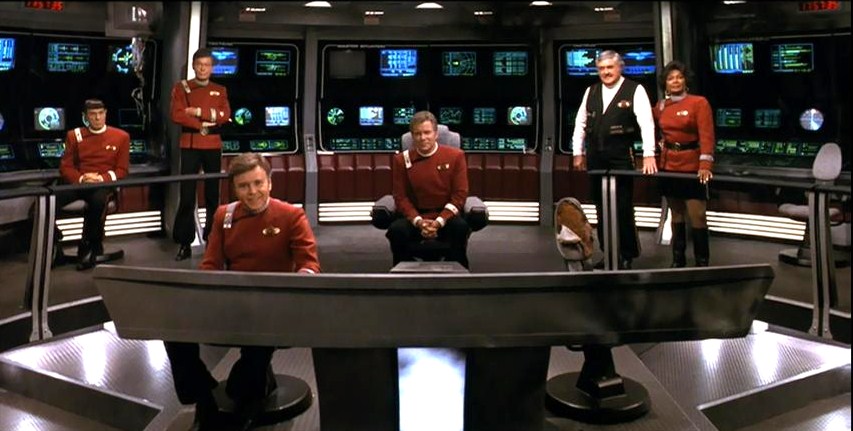
Yes, ladies and gentlemen, it has now been 25 years since “Star Trek VI: The Undiscovered Country” arrived in movie theaters. I still remember watching it with my parents at Blackhawk Cinemas like it was yesterday, thrilled that the original crew of the starship Enterprise managed to get one last adventure in space. For a time, it looked like that would not happen as “Star Trek V: The Final Frontier” almost killed the franchise, but thanks to Leonard Nimoy taking on executive producing duties and Nicholas Meyer returning to the director’s chair, Kirk, Spock, McCoy and the rest of the crew got a wonderful sendoff as they struggled to bring about a truce with their longtime enemies, the Klingons.

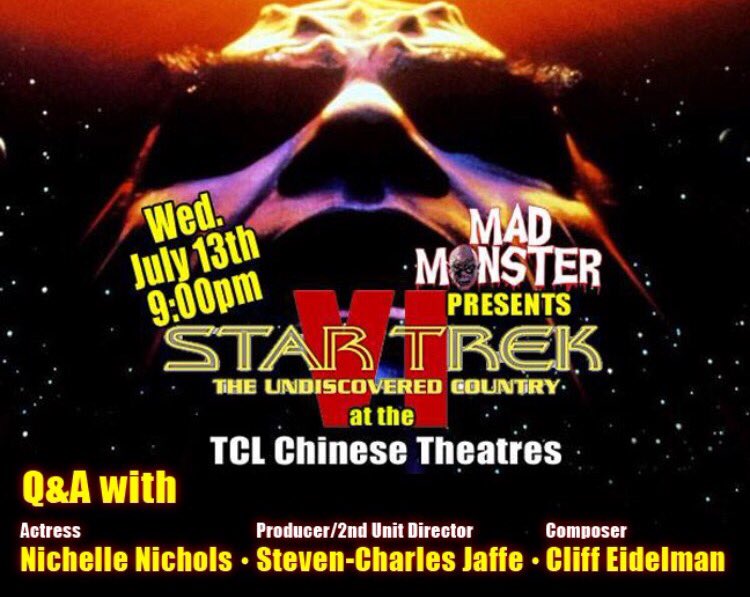
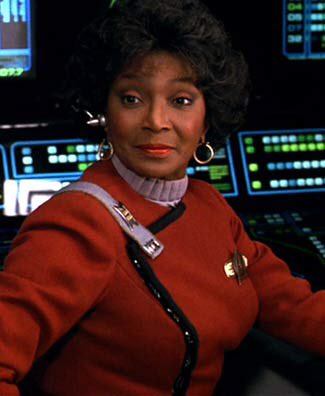
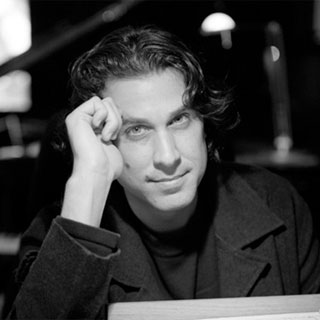
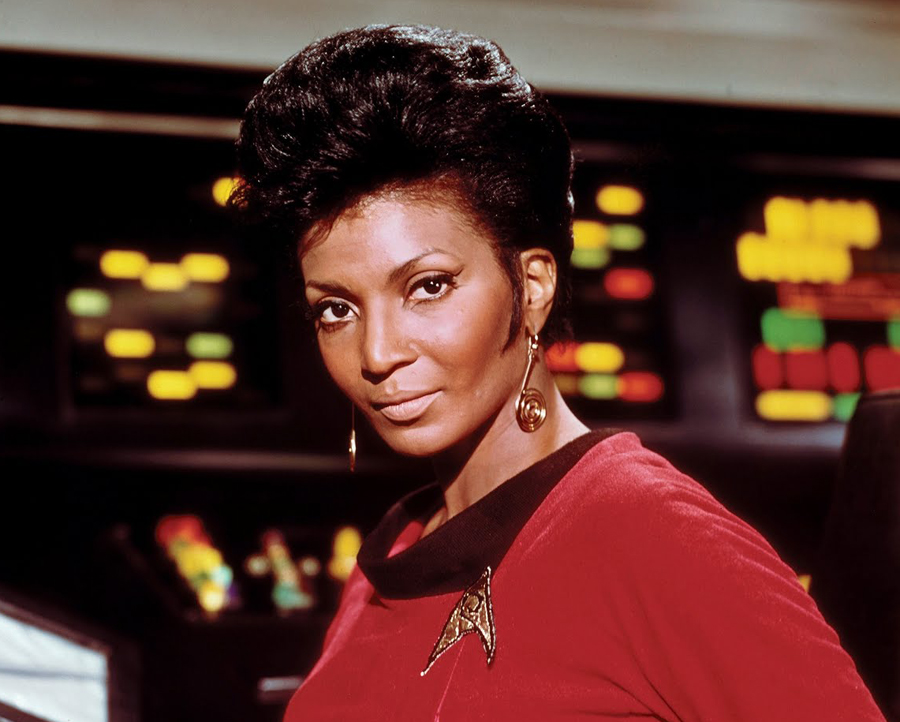
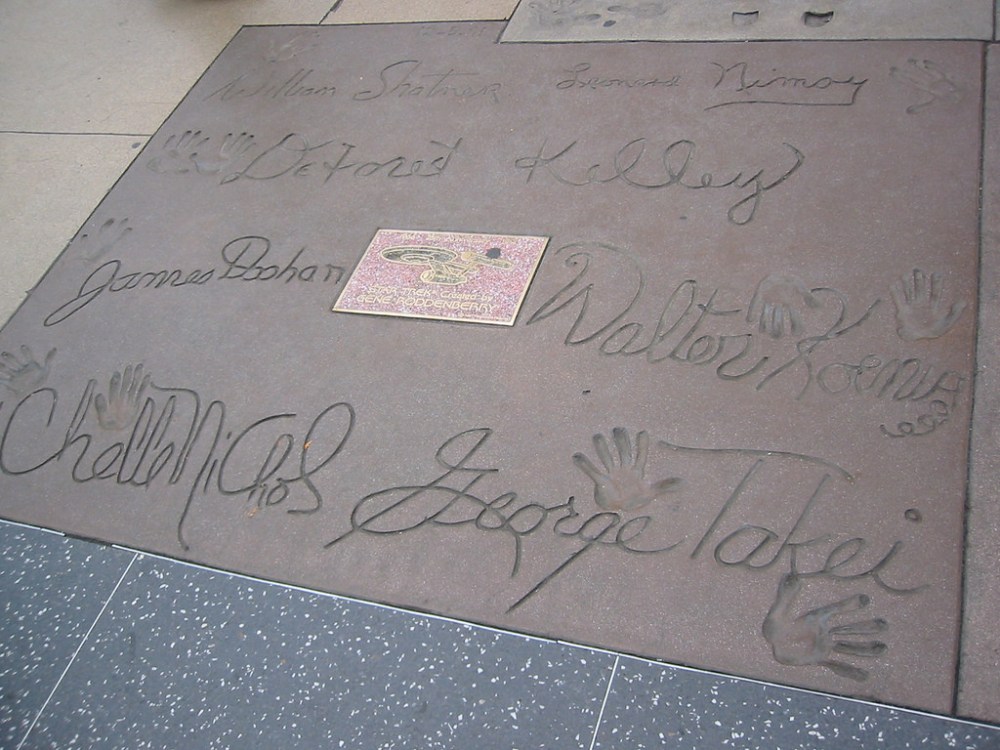
On July 13, 2016, Mad Monster hosted an anniversary screening of “Star Trek VI” at the TCL Chinese Theatres in Hollywood. It was the perfect place for this screening as “Star Trek VI” had made its debut at Grauman’s Chinese Theatre next door, and the cast got to write their names in the cement outside of it. Appearing for this screening were producer Steven-Charles Jaffe, composer Cliff Eidelman, and Nichelle Nichols whom we all know and love for playing Lieutenant Uhura.
Star Trek VI Nichelle Nichols

Nichols was asked how she first got cast as Uhura on the original “Star Trek” television series, and she said that she didn’t remember as that this character has been with her for so long and that she likes “the gal” and described her as “nice company.” When it came to getting cast in this iconic role, she replied that she was “just lucky I guess.”

Steven Charles Jaffe

Jaffe pointed out that he previously produced “Ghost” and that Whoopi Goldberg told him if it weren’t for Nichols, she never would have become an actress. Goldberg had watched the original series and felt Nichols was such an inspiration to her and many generations of young actors as her role really represented racial diversity. Jaffe was also eager to add the following:

“The last week of shooting this movie, I was on the bridge of the Enterprise and we were setting up a shot and I was looking at the original cast, including Nichelle, and I had this very interesting flashback of being a little boy in Stanford, Connecticut in my pajamas watching ‘Star Trek’ on television with these same people, and here I am producing this movie and thinking what a lucky guy I am. I don’t know how this happened, but how special was that?”

To this Nichols added, “I was the lucky one.”
Cliff Eidelman

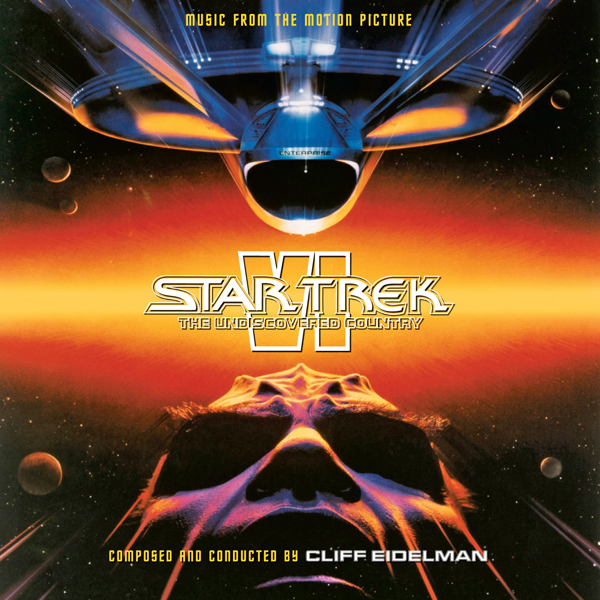
Eidelman’s score to “Star Trek VI” remains one of the most haunting of the franchise and helped propel the composer to new cinematic heights. But it turns out that Meyer wanted Eidelman to adapt Gustav Holst’s orchestral suite “The Planets” as opposed to creating an original score. Eidelman said he had studied that piece “a little” in college but lied to Meyer and said he studied it a lot. However, Eidelman had something else in mind.

“The truth is I didn’t want to adapt ‘The Planets,’” Eidelman said. “As a young composer I wanted to write an original score that would be original for this project, but I didn’t say that to Nick and I kind of played along. Not long after we started talking about it I started writing original themes, and at some point I think the people at Paramount started to inquire about the cost of licensing ‘The Planets’ from the Holst kids. I think the cost was apparently very expensive. But anyway, you (pointing to Jaffe) came by my apartment along with some people from Paramount and Nick, and I started to play these themes of mine on my old upright piano, and I was humming what the strings would do and what the brass would do. And at some point I think Ralph Winter or somebody turned and said, ‘Well why are we licensing ‘The Planets’ when we’ve got this theme?’ So that was the end of ‘The Planets’ and I was able to go off and write my own score.”
maf7117booklet.indd

Nichols spoke at length about Gene Roddenberry, the man who created “Star Trek” and set the whole franchise in motion.

“I knew Gene before I went on the show, and he told me what he was planning and what it was going to be and that it would be on television,” Nichols said. “He wanted me to be a part of it, and I got nervous (laughs) because I loved working for him and he is very particular. But I think that was why I liked working for him because you didn’t have to guess what was going on and you didn’t have to guess what you were going to do. If you had something that you wanted to give beyond what you thought he was talking about, he was very open to listen to it and say yes or no just like that. Fortunately, he said yes more than he said no to me.”

In addition to producing “Star Trek VI,” Jaffe was also the movie’s second unit director. He said he has directed second unit on every movie he ever produced and that this started on Meyer’s first movie, “Time After Time.” The first thing Meyer had Jaffe shoot on “Star Trek VI” was the ice planet in Alaska, and in the process he said he experienced “premature global warming.”

“I went up to Alaska on this glacier three weeks before we started filming,” Jaffe said. “I storyboarded everything, I had every shot, every location I thought locked down, and three weeks later I came back with a full crew and several helicopters and everything was gone. They said, ‘Well, glaciers do move.’ And I said, ‘They don’t move that quickly.’”

“My job was to not stand out,” Jaffe continued. “It was weird because I had never shot second unit before the movie began, and I was very nervous because the studio would see my dailies before anybody’s. I figured somebody is probably doing this to get me fired off this movie really quick. Fortunately, Leonard (Nimoy) who was one of the producers and the studio liked what I did, and that was that.”

Jaffe also talked about how he and Meyer had finished making a movie in Germany before “Star Trek VI” (“Company Business”) when the Berlin Wall came down. Unfortunately, the studio they did it for was having a hard time and the movie got a horrible release. The two of them were hanging out at Meyer’s house in London when Nimoy called and told Meyer, “I got a new idea for ‘Star Trek;’ the wall falls down in outer space!” Jaffe said Meyer hung up on Nimoy and that they were both very drunk at the time, and Jaffe encouraged Meyer to call Nimoy back.

“Wait a minute, you don’t get this opportunity too many times,” Jaffe remembered telling Meyer. “It isn’t the same movie, but it’s the same theme as the film we just made. ‘Star Trek’ will get a release. We’re crazy not to do this.”

Before the Q&A ended and the movie began, Nichols had the last word of the evening as she talked about her most important addition to the character of Uhura before the cameras were rolling on the original “Star Trek” show.

“They hadn’t named her yet and I said, ‘What about Uhuru?’ And they looked at me funny and I said, ‘It means freedom.’ They said, ‘Well it’s kind of harsh.’ And I said, ‘Well, make it Uhura.’ And he (Roddenberry) says, ‘I like that.’ And I said, ‘I do too!’ And I became then and there for the rest of my life Uhura, and I’m glad to be here with you.”
Nichelle Nichols orginal Star Trek

Technically, the 25th anniversary of “Star Trek VI: The Undiscovered Country” doesn’t occur until December 5, 2016, but it’s never too early to celebrate. This “Star Trek” movie succeeded in rejuvenating the movie franchise and helped give the original Enterprise crew the sendoff they richly deserved. After all these years it remains one of the best in the series as its themes of war, peace and change still resonate deeply in our everyday affairs. With “Star Trek Beyond” coming soon to theaters and a new “Star Trek” television series on the way, there is no doubt that this franchise will continue to live long and prosper from one generation to the next.
Star Trek Chinese Theatre

Star Trek VI last show of the crew

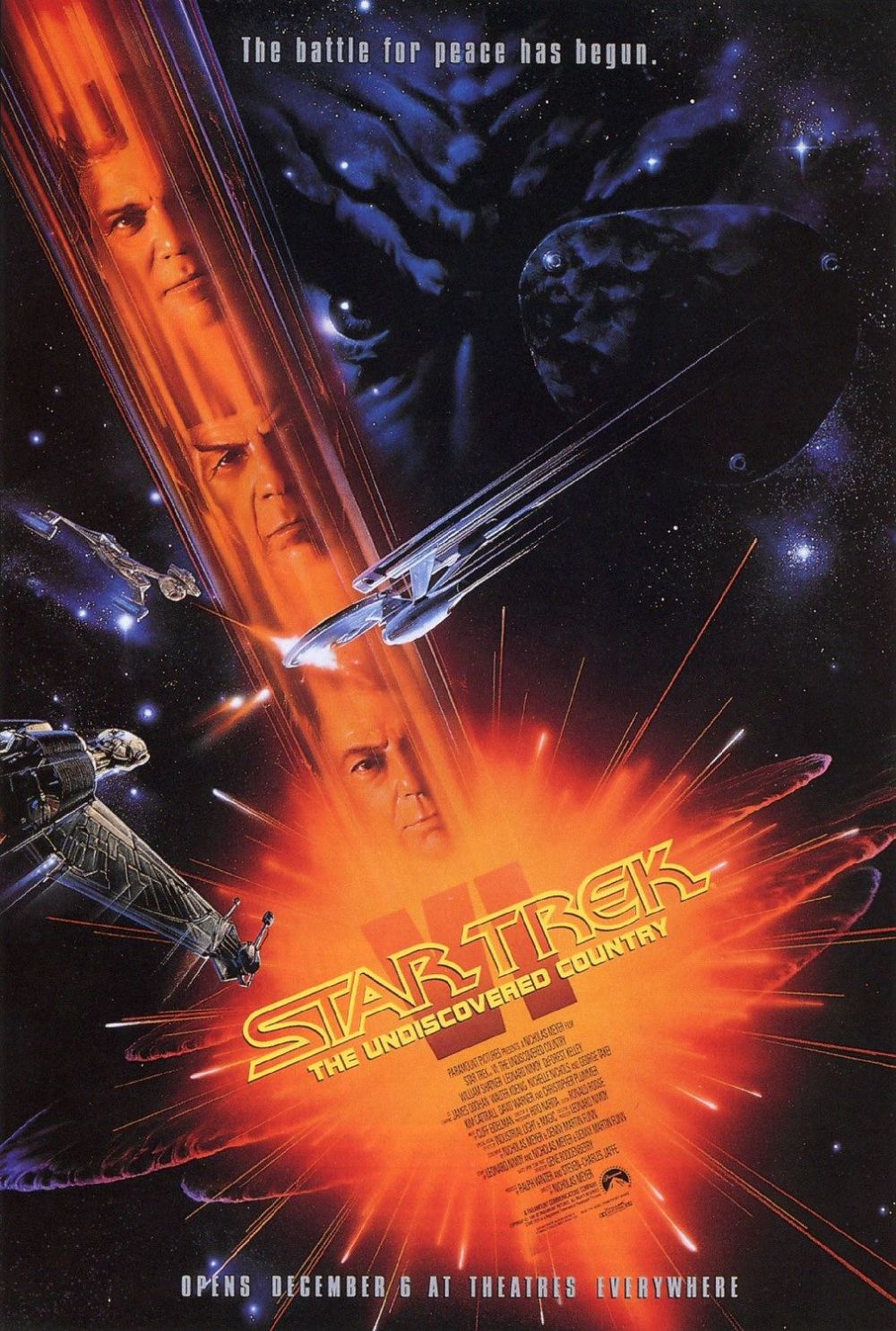
Star Trek VI poster

The Infiltrator

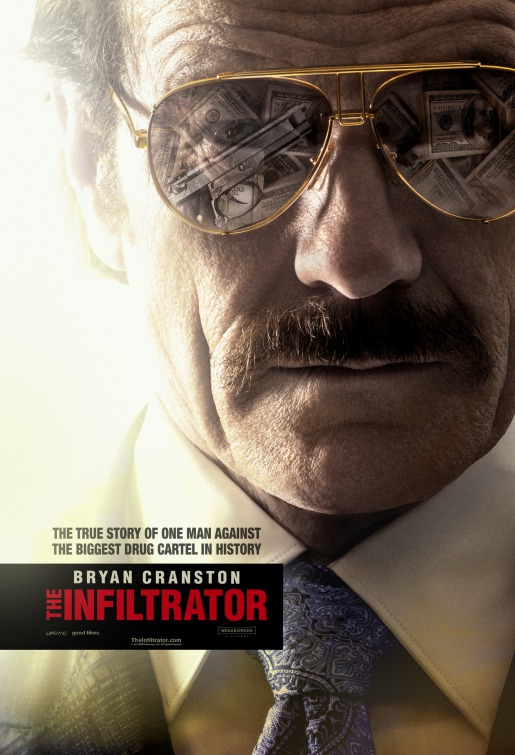
The Infiltrator poster

It’s very tempting to call this movie “Breaking Bad” meets “Donnie Brasco” especially with Bryan “Heisenberg” Cranston starring in it. “The Infiltrator” is about a U.S. Customs Service special agent, Robert Mazur, who goes, as Eddie Murphy put it in “Beverly Hills Cop II,” “deep, deep, deep, deep undercover” to infiltrate one of the world’s largest drug cartels. But more importantly, getting inside this particular drug cartel leads him to the money laundering operation run by the infamous Pablo Escobar who was once called “the king of cocaine.” Yes, this movie is “based on a true story,” but don’t let that dissuade you from seeing it.

“The Infiltrator” takes us back to the year 1985 when the internet didn’t exist, “Miami Vice” was on the air and the “Just Say No” anti-drug campaign was the subject of every other commercial we watched on television. Mazur has just come off a mission where he suffered a potentially career-ending injury, but he’s invited to participate in one more mission before retiring for good. Of course, we all know that the last mission will always be the most dangerous one that will test him more than ever before, and we do get the obligatory scene of the hero washing his face and staring at himself in the mirror as he silently questions himself. Also complicating issues is the fact that Mazur has his wife Evelyn (Juliet Aubrey) and two kids waiting for him back at home, and his wife can take only so much more of her husband’s work as every time he walks out the door might be the last time she sees him.

I couldn’t help but think of “Donnie Brasco” as I watched “The Infiltrator” as both films deal with undercover officers with families of their own who get so deep into their work that they cannot help but feel for the criminals they are trying to take down as they get too close to them in the process. This movie never comes across as the kind of undercover movie we haven’t seen a number of times before, but director Brad Furman still manages to keep the intensity strong and tight as Mazur and his colleagues face life or death situations more often than not.

Furman has previously directed “The Lincoln Lawyer” which starred Matthew McConaughey as the defense attorney of many Michael Connelly novels, Mickey Haller. Now that movie managed to be a very entertaining legal thriller while bringing nothing new to genre, and Furman does the same thing here with “The Infiltrator.” There are scenes which remind us of many other movies we have seen before, but Furman manages to tweak those familiar situations to where we are forced to expect the unexpected. Just when you think you have seen everything an undercover movie has to offer, along comes this one which really fries your nerves at certain moments.

It also helps that Furman has quite the cast to work with here. Cranston has been on a roll ever since playing Walter White on “Breaking Bad,” and it is fascinating to see him play the kind of character whose mission it is to take down the Walter Whites of the world. It’s a complicated character as Mazur is dedicated to his job and his family, but not always in the same order. Cranston makes us empathize with a man whose priorities get tangled up as he descends deeper into the drug cartel world. Just watch him in the scene where he has to “audition” to meet one of the cartel’s leaders. Cranston makes you feel the frightening predicament of a man who may have gone one step too far, and he imbues the role with an integrity few other actors are capable of doing.

Cranston is also surrounded by a terrific cast of actors like John Leguizamo who brings his uncontainable energy to the role of Emir Abreu, Mazur’s partner. Leguizamo has one of the movie’s most unnerving scenes as he is forced to defend himself against another person who attempts to blow his cover, and watching the actor play it cool under such intense circumstances is thrilling to watch.

Then there’s Benjamin Bratt who plays Roberto Alcanio, Mazur’s contact and Escobar’s top lieutenant. Bratt makes Roberto into a man as charming as he is ruthless as well as someone far more interesting than the usual clichéd drug dealer we see in movies like these. You want to hate Roberto, but Bratt keeps you from doing that as you become as deeply involved in his family’s plight as he makes this character seem like a cool, down to earth dude even though he is also a vicious drug dealer.

There’s also Amy Ryan (“Gone Baby Gone”) who plays Mazur’s chief officer, Bonni Tischler. She’s a real fireball from start to finish as she barks out orders at her colleagues and has no interest in wasting time on frivolous matters. Ryan makes Bonni into a no-nonsense character who you do not want to mess with as she is not about to let those who work for her take advantage of a situation unless it is for a really, really, really good reason.

Also terrific is Diane Kruger who plays Mazur’s partner and undercover fiancée, and she really hold her own opposite Cranston as her character of Kathy plunges headlong into an assignment she initially seems fully unprepared for. Much like the German actress she played in “Inglorious Basterds,” Kruger (no relation to Freddy) shows a fearlessness as she unveils the many talents Kathy has to get close to the criminals, and she also portrays the perils of undercover work as her emotions threaten to get in the way.

“The Infiltrator” is nothing new or groundbreaking in movies, but it does get the job done thanks to terrific performances and some truly intense scenes that really leave you guessing as to what will happen. It also provides us with a main character who is as interested in taking down bankers who launder drug money as he is in going after drug dealers. With the “War on Drugs” continuing to be fought in a futile manner, watching this movie made me think of something George Carlin once said:

“Drug dealers aren’t afraid to die. They’re already killing each other every day on the streets by the hundreds. Drive-bys, gang shootings, they’re not afraid to die. Death penalty doesn’t mean anything unless you use it on people who are afraid to die. Like… THE BANKERS WHO LAUNDER THE DRUG MONEY!”

* * * out of * * * *

Copyright Ben Kenber 2016.

Cell

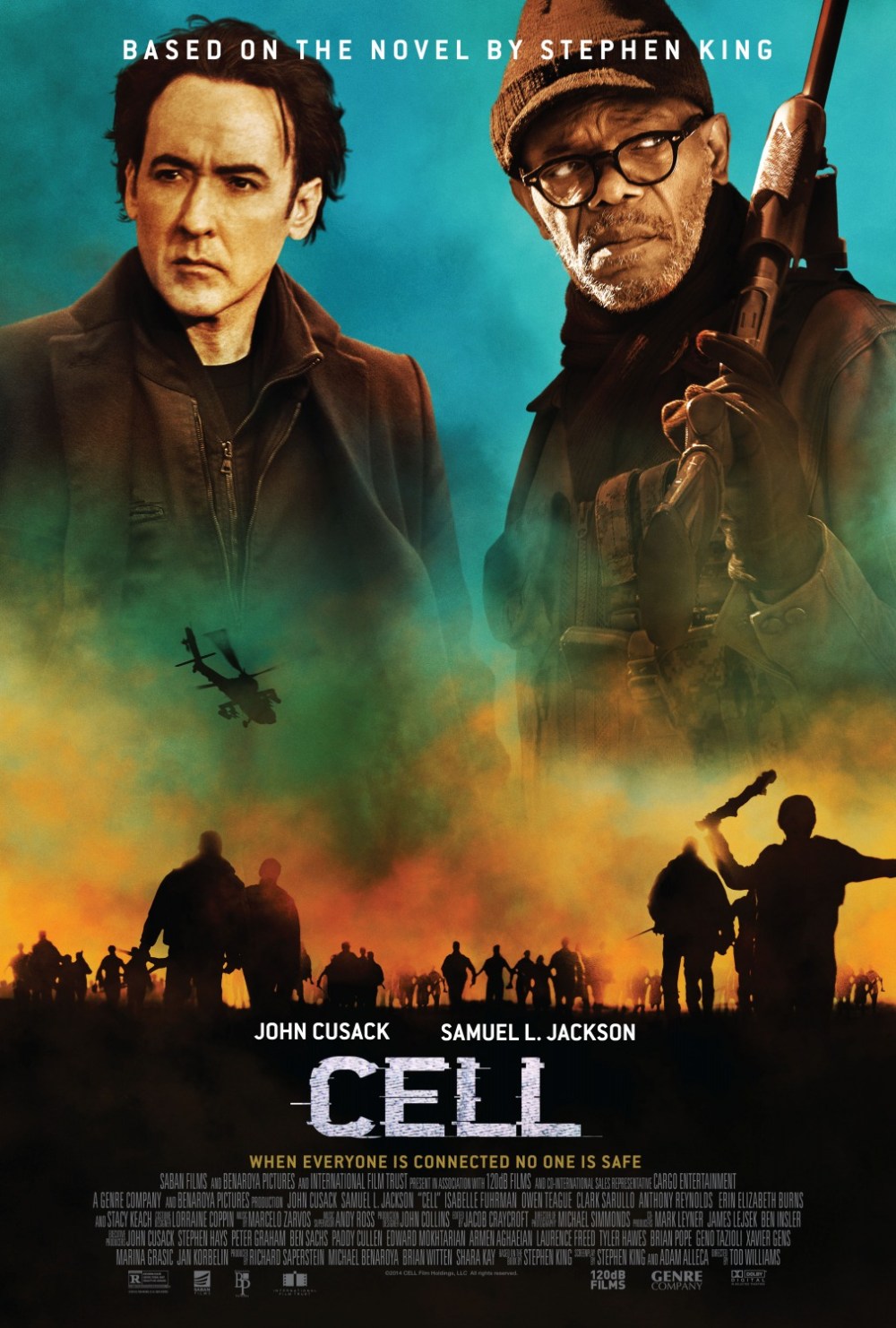
Cell movie poster

I did have the opportunity to read Stephen King’s “Cell” while I was on vacation in Hawaii. It’s not one of King’s best novels, but it was an entertaining read as it delved into our increasing obsession and dependence on technology, in particular cell phones. When the novel was released in 2006, cell phones still had a bit of a ways to go to get to where they are today; devices that can do just about everything and anything in our daily lives except make coffee. But now it’s 2016 and we have long since reached that point where we can’t bear to live without our cell phones and are a slave to them.

A movie adaptation of “Cell” had been in the works for years and Eli Roth was originally going to direct it, but that didn’t work out. Now it has finally arrived in theaters and can be quickly added to the garbage heap of terrible Stephen King adaptations like “Maximum Overdrive” and “The Mangler.” While its subject matter is still timely, “Cell” quickly devolves into just another zombie movie where the clichés are rampant to where we know exactly what to expect to where any suspenseful moments it hoped to have are rendered moot. In short, it is an uninspired retread of “28 Days Later,” a movie this one can only dream of being as terrifying as.

“Cell” opens up on Clayton Riddell (John Cusack) getting off his flight which has brought him back home, and he is eager to reconnect with his wife and son, both of whom he has been estranged from for too long. But it doesn’t take all that long for all the fellow travelers around him to start losing their minds and convulse to where they start attacking everyone and everything in sight. Clayton manages to escape the airport and teams up with subway worker Tom McCourt (Samuel L. Jackson) and Alice Maxwell (Isabelle Fuhrman) to find a safe haven away from those infected with the cell phone virus that controls the actions of everyone infected by it.

The movie gives us sights and sounds we have seen endlessly in one apocalyptic movie after another. We see scenes of cities in utter ruins, cars turned over, survivors travelling through empty roads and fields, etc. All this does is remind me of other movies that are far scarier and more unnerving to where it’s tempting to turn off “Cell” and watch them instead. There’s almost nothing to separate this film from others of its genre, and it becomes a glum and languid bore of a motion picture that feels too long even at 98 minutes.

Watching John Cusack here made me feel sorry for him. After suffering through a number of bad movies these past few years, he delivered a truly great performance as the elder Brian Wilson in “Love & Mercy” which proved he still has much to give to the world of acting. But here in “Cell,” Cusack just looks bored and barely interested to be a part of this particular Stephen King adaptation. His character is just another father trying to get to his child to ensure his safety, and the actor just goes through the motions with little to show for it.

Samuel L. Jackson fares a little better here as Tom McCourt as he gives a performance that is subtle instead of bombastic. The “Pulp Fiction” actor effortlessly turns his character into an everyman who has seen far too much in this lifetime to where this apocalyptic situation is no different to him than being a soldier in a foreign land. Jackson has been in countless movies over the years, many of them flat out bad, but there is no doubt that he will survive this critical catastrophe to give us great performances in the future.

What’s especially galling is that both Cusack and Jackson starred in another Stephen King cinematic adaptation almost ten years ago, “1408,” and that proved to be a scary time at the movies. Why they couldn’t bring the same enthusiasm they clearly had on that one to “Cell” almost feels like a mystery.

But then again, we shouldn’t be blaming the two stars as much as we should be blaming the director of this uninspired mess, Tod Williams. Back in 2004 he gave us the blistering drama “The Door in the Floor” which starred Jeff Bridges and Kim Basinger as a couple forever torn apart emotionally by the death of their sons. It was a breakthrough feature for Williams as he got some of the best performances out of Bridges’ and Basinger’s careers, and he dug deep into the lives of unlikable characters whose psychological wounds were too deep for us to look away from. A few years later he directed “Paranormal Activity 2,” a sequel which proved to be as terrifying as the original. And considering how terrifying the original was, that’s saying a lot.

Those two movies show Williams to be a huge talent behind the camera, so it is very hard to understand why he couldn’t make “Cell” the least bit scary or unnerving. King’s novel dealt with material that was familiar to him, but the writer made “Cell” more than just another exploration into the end of civilization as we know it. Williams doesn’t bother to do that here as he simply throws out one tired cliché after another at us, and some scenes are so badly lit to where it’s impossible to figure out what is going on. This is also not to mention the horrible CGI effects on display which illustrate how this low budget horror movie had an even lower budget than others.

This all leads to a climax which is not at all satisfying, and an ending that is unforgivably confusing. King’s conclusion to “Cell” was a bit anticlimactic and too ambiguous for many readers, but it was still a haunting conclusion that Williams doesn’t bother to include here.

Adapting Stephen King novels to the silver screen has always been tricky as filmmakers have to balance out their attention to both the gory aspects of his stories and the characters which inhabit them. Perhaps Williams tried to do both here, but he’s not able to shock us or care about the protagonists at the center of “Cell.” What we get instead is a very below average genre movie that isn’t worth anyone’s money or time. That should more than explain the studio’s decision to dump it in a handful of theaters this past weekend for a limited release. Do audiences even know “Cell” is out in theaters this weekend? Well, even if they do, I can’t blame them for not caring.

* out of * * * *

Copyright Ben Kenber 2016. All Rights Reserved.


‘Zero Days’ Interview with Eric Chien


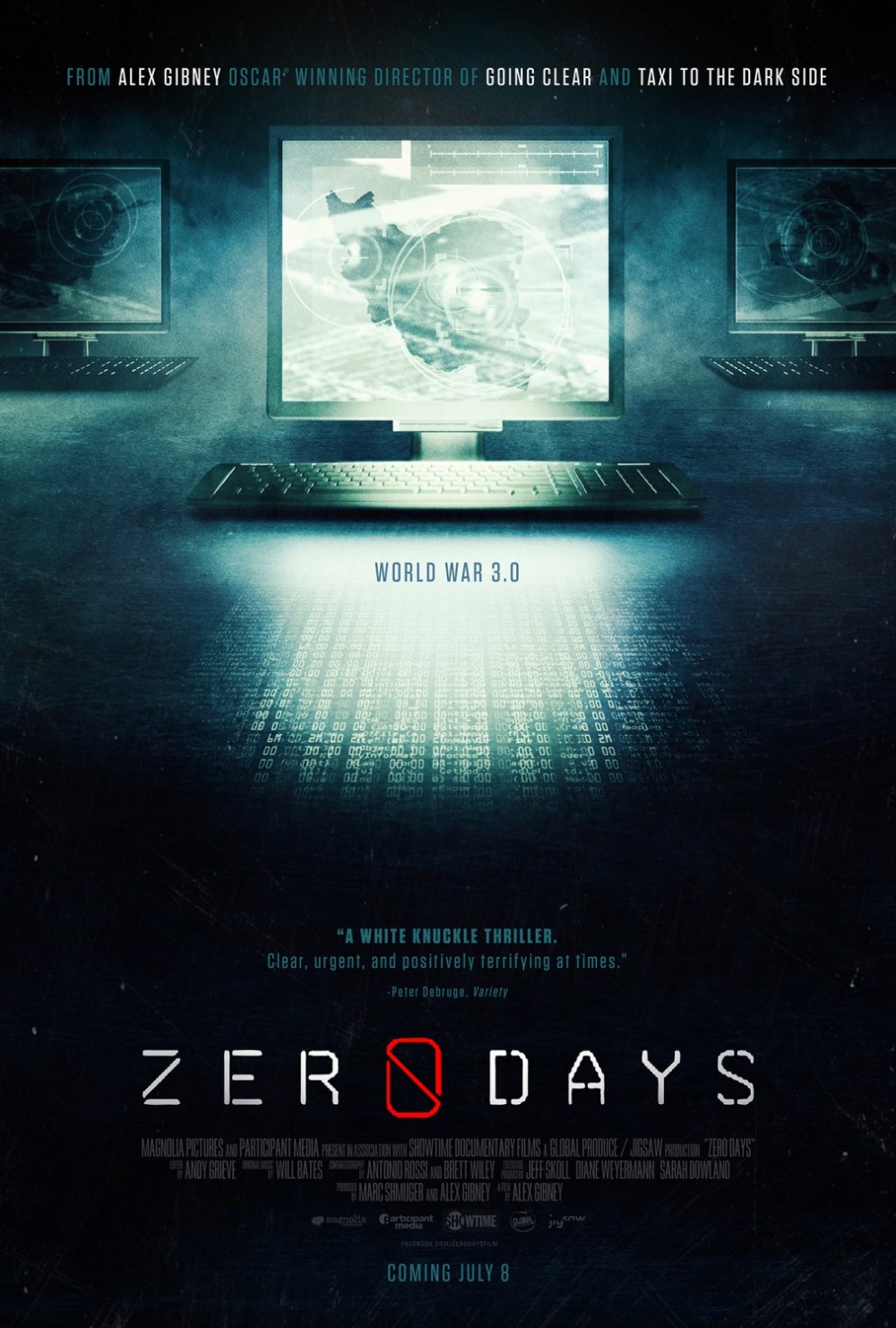
Zero Days poster

Alex Gibney is the most prolific documentarian working in movies today, and his latest documentary, “Zero Days,” may prove to be his scariest yet. Its main focus is on Stuxnet, the self-replicating computer virus invented by the United States and Israel to infiltrate and sabotage the Iranian nuclear centrifuges at Natanz. This movie reveals that the virus was part of a massive clandestine operation which involved the CIA, the NSA, the United States military and Israel’s intelligence agency Mossad to build and launch secret cyber bombs that could plunge the world into a devastating series of attacks which could shut down electricity, poison water supplies and turn cars, planes and trains into deadly weapons. But what’s especially terrifying is how the use of this virus could happen without anyone, even our own government, knowing who is responsible.

I recently got to speak with Eric Chien, one of the people Gibney interviewed extensively for “Zero Days.” Chien is a Distinguished Engineer and the Technical Director of the Security Technology and Response division at Symantec. He was one of the lead authors of Symantec’s groundbreaking research on the Stuxnet virus and has since become one of the foremost authorities on it. I first asked him about how the virus relates to a number of devices or programs we have seen in various science fiction movies.

Zero Days Eric Chien

Ben Kenber: When I look at the Stuxnet virus, I can’t help but think about Skynet in the “Terminator” movies or the black box in “Escape from L.A.” or Joshua/WOPR in “War Games.” These things came to mind especially one I was told that the Stuxnet virus is autonomous, meaning that no operator commanded it to attack in that it attacks on its own without human intervention. What are companies like Symantec doing to contain this virus, and is it even possible to contain this virus?

Eric Chien: There is no such thing as 100% security. If anyone else comes to you that is trying to sell you something and they say you are 100% protected, you should just run away. The thing is it’s a cat and mouse game. And to be honest it’s not even the most sophisticated and complex things that can have the biggest impact. Some things that can actually be very trivial and totally unsophisticated can have a huge impact. We’ve seen, especially coming out of North Korea, a lot of wiping attacks, and what that means is that they get a piece of malicious software in your machine and they just erase all your data. This is a very simple piece of malware to create. It could literally be 10 lines of code to get on and wipe your machines, and that could have a huge impact. We saw it have a huge impact in Saudi Arabia where their networks were totally wiped. Basically South Korean broadcasters and all their biggest banks, all wiped all at the same time. Obviously it was North Korea. 99% of all the malicious software we get is cybercrime, people trying to make money essentially. Right now we are seeing a huge uptake in what we call ransomware, and they are not even going after individuals anymore like they used to. Now they are going after corporations or entities, in particular hospitals. Hollywood Presbyterian got hit by a ransomware attack where the attackers got in with a simple program that basically just encrypted all their files, and they said if you want your files back you have to pay us. They held their data for ransom. They (the hospital) paid $17,000 and had to close their hospital, they had to transfer all the patients out, all their MRI machines, nothing was working and they lost all their patient data. So that’s why they had to pay because they didn’t have the backups.

BK: How much did you work with Alex Gibney on the documentary?

EC: Alex and his team, a guy named Javier Botero was his co-producer and a main research got, came in and I sat for five hours for a one on one interview. Then Liam (O’Murchu) came afterwards, five hours, one-on-one interview. And that was it, and then he produced all of that. We have done things where I have sat for 10 hours and got way less out of it, so we were actually quite impressed. They came in very well-prepared. At one point I was talking about something and Javier said, “Oh but that’s Stuxnet .5, isn’t it? The earlier version?” And I was like, “Oh yeah, that’s .5. They were just really, really well prepared and they knew the right questions to ask, and obviously even when I said something wrong at one point he reminded me that I was not talking about the right thing. All the graphics you see of code on the screen are not random pieces of code. They are exactly the pieces of code that we are talking about at the time that they are displayed. After we had done our interviews they came back asking for this and that, and it was really interesting to see how meticulous they were being.

BK: I visited the Symantec office in Culver City and noticed they have a War Room there. Did you ever go in that room to discuss the Stuxnet virus?

EC: Yeah. We were in that War Room, but we actually have a War Room you probably haven’t seen which allows us to do encrypted communications with other offices, and we call it our Halo Room. Basically it’s… It’s hard to describe. Imagine you cut this table in half so you have kind of a half table, and there’s this really big screen that kind of curves in front of you like this and it’s like full HD. The other office has half a table on their side, and so it looks like they really are there. All the sound and audio is all directional, so someone over here you hear them over there. So we use that room more frequently because in our other War Room that we have, it’s just classic teleconference which is great, but this room obviously affords much more interaction.

“Zero Days” opens in Los Angeles and will be available to watch on iTunes starting July 8. I want to thank Eric Chien for taking the time to talk with me.

Click here to visit the “Zero Days” website.