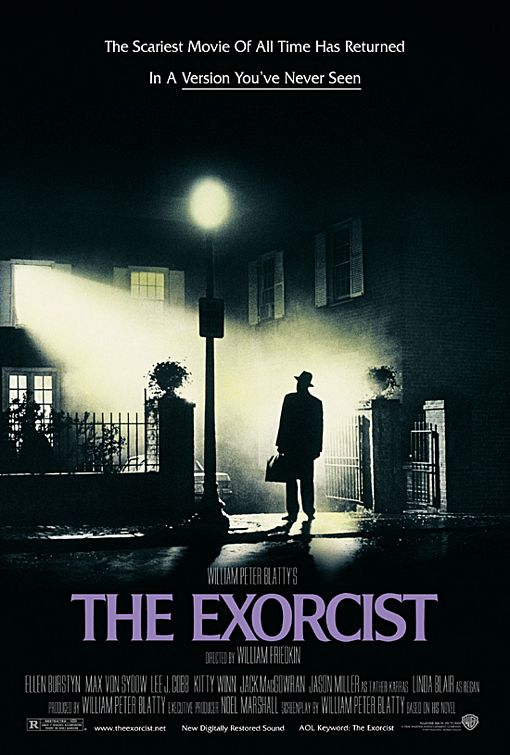
There are several trailers out there for William Friedkin’s “The Exorcist” which are very memorable, but the one which stands out for me is the one made for its rerelease back in the year 2000. In some ways, it is a huge surprise that this trailer was not treated like a red band trailer as the film remains ever so shocking after all these years. Regardless, it does a great job of reminding audiences, old and new, of what an incredibly unnerving and unforgettable experience this 1973 film was when it first came out, and how it remains so all these years later. Even if there was no new footage made for this release, this trailer made seeming it back on the silver screen an offer no movie buff could ever refuse.
I have to tell you, seeing this version on “The Exorcist” at a celebrated movie theater in Westwood, California provided me with one of the best cinematic experiences I ever had. On top of this film never having lost any of its power, as it contains scenes no studio would allow any filmmaker to capture on film today, the theater had the most extraordinary sound system which made watching it all the more adrenaline-inducing, exhilarating and enthralling to sit through. This trailer gave me such a great reason to check it out on the biggest silver screen in my neighborhood.
To date, there has yet to be an “Exorcist” sequel or prequel which can at the very least equal Friedkin gave us half a century ago.
Please check out the re-release trailer down below.
William Friedkin’s “The Exorcist” was such a singular cinematic experience, let alone a singular horror film like few others, that making a sequel to it had to seem like a truly insane prospect. “The Exorcist II: The Heretic” proved to be as hideous piece of celluloid as the original was a brilliant one, “The Exorcist III” was undone by needless studio interference which made it look pitiful for no good reason, and the attempts to make a prequel got so messed up to where two versions of it were made, both of which proved to be quite flawed. Looking at this franchise, one which is quite accidental, it seems like one driven by profit more than anything else. Granted, sequels are generally made because the original was a big box office hit, but not all of them exist simply because of financial benefits for everyone involved.
Now we have “The Exorcist: Believer” which comes to us from David Gordon Green and his fellow filmmakers who gave us the recent “Halloween” trilogy which proved to be worthy sequels to a celebrated classic. And yes, I do include “Halloween Ends” which many despised. Like those films, this “Exorcist” installment serves as a direct sequel to Friedkin’s original, it completely ignores the other sequels to create its own cinematic path. What results is a motion picture which is not terrible, and I went into it refusing to expect it to be any equal to the original, but it still proves to be inconsequential and unnecessary as Friedkin’s film continues to be extremely difficult to make a sequel to.
We are introduced to professional photographer Victor Fielding (Leslie Odom Jr.) who is raising his daughter, Angela (Lidya Jewett), as a single parent following the tragic death of his wife. One day, Angela asks her dad if she can go over to her friend Katherine’s (Olivia O’Neill) to study. That’s okay, Victor says, but she needs to be prompt about returning home for dinner. When Angela fails to do so, and she and Katherine go missing, the whole town goes looking for them. Eventually, they are found alive 30 miles away from their home addresses, but both are convinced they were only gone for a few hours.
As you can expect, both Angela and Katherine turn out to be possessed, and Victor turns to others to help the girls before any more lasting damage can be inflicted. Among them are Ann (Ann Dowd), a nurse at a local hospital and a fallen Catholic, and Chris MacNeil (Ellen Burstyn), an actress turned exorcism researcher who has since become renowned for her studies and her best-selling book on the subject. From there, we know we are in store for an exorcism, albeit one which cannot possibly be as intense as the one Friedkin gave audiences half a century ago.
Now you cannot go into “The Exorcist: Believer” expecting something along the lines of Friedkin’s original film as that is asking to be severely disappointed in the process. None of the sequels or prequels could touch it as the 1973 film is a cinematic experience not easily duplicated. But even with reserved expectations, “The Exorcist: Believer” just doesn’t work. It has some strong performances from Odom Jr. and Dowd, and there are some clever jump scares, but there is not enough to justify this as a significant follow-up to a celebrated classic.
The big news with this one is that Ellen Burstyn returns as Chris MacNeil for the first time since the first “Exorcist” film. But while Jamie Lee Curtis’ character of Laurie Strode was a major component of the recent “Halloween” trilogy, Chris MacNeil’s presence in “The Exorcist: Believer” feels like an afterthought, and while Burstyn is great as always, the character does not feel especially necessary to this installment. While it may give this film some legitimacy, Burstyn is barely in this film and does not get a lot to do.
When it comes to the climactic exorcism which the film’s title and its trailers have promised us, it is no surprise to find it utterly lacking in tension. Sure, there is some suspense as the adult characters are forced to make a choice no one wants to make, but it all feels lacking in the long run. As much as I wanted to view this film on its own instead of in comparison to the classic original, I could not help but be reminded of how intense and unnerving Friedkin’s film was. I wanted this exorcism to have the extreme intensity of what came before, and I knew that was not going to be the case which made this direct sequel all the more frustrating.
David Gordon Green is a terrific filmmaker. In addition to his “Halloween” trilogy, he has also directed films in various genres. He has given us “George Washington,” “Pineapple Express,” “All the Real Girls,” and “Joe” which features not only one of Nicolas Cage’s best performances, but also one of his most subtle, and that is saying a lot. I cannot help but wonder what made him, Scott Teems, Danny McBride, Jason Blum and all of Blumhouse were hoping to accomplish here. Were they hoping to make something which could stand alongside the original proudly, or at least be considered its equal?
For a moment, I thought Green might have some luck as the opening scenes in Haiti do have a documentary feel to them like the original did. But after a bit, it just felt like I was watching a movie. This is the biggest problem with “The Exorcist: Believer;” you watch it more than you experience it. You can see how the screws go in, and it does not help that the CGI effects utilized here are not all that great. Then again, I have long since been spoiled by the visual wonders of “Avatar: The Way of Water,” so nothing else can possibly compare.
Making a sequel or any kind of follow-up to “The Exorcist” is no different than anyone trying to make one to “The Texas Chainsaw Massacre.” Both those horror classics gave audiences a cinematic experience like few others, and they still remain enthralling and greatly unnerving so many years later. And yet, there are those who have turned these movies into franchises which may succeed financially, but never critically. They will forever be shadowed by a predecessor which can only make the best efforts look ever so pale in comparison, and yet people keep trying futilely to give us something worth watching. The fact that no one has succeeded in doing so should not come as a surprise.
Nevertheless, another “Exorcist” movie is set to be released in 2025, and the best way to look at this situation is to say Green and company have nowhere to go from here but up. Perhaps if they played around with the formula, they could audiences something more original which will stand on its own. Until then, I wonder if the ghost of William Friedkin will haunt Green just like he promised.
It has been a bit, but I finally made the time to walk the picket line in support of the SAG/AFTRA strike. The WGA strike concluded after 148 days after a tentative agreement with the AMPTP was reached, but many of their members still took the time to join the picket line in continued support of the union’s efforts to gain a fair contract. While I have traveled to different strike locations in the past, this one had me returning to Warner Brothers Studios in Burbank, California. This is because I do not often get over the hill (figuratively speaking) to the other side where the valley is.
Actually, this day, October 2, 2023, is a very significant one as the SAG/AFTRA negotiators are set to meet with the AMPTP in an attempt to end this long-running strike once and for all. In the meantime, we still marched up and down Barham Street to make our presence known. The sun was still shining brightly in the sky, but the temperatures have cooled down a bit and there was a nice breeze going on which we really could have used during July and August.
For me, this day allowed me to catch up with friends I have not seen in the longest time (thanks for nothing COVID). It was fantastic running into Madonna Cacciatore and Robin McWilliams, both of whom have been doing fantastic work as strike captains, making sure everyone crosses the street safely and no one gets hurt. In the past, the three of us trained together for the Los Angeles Marathon as part of Team to End AIDS. More importantly, we ran it in 2011 which became forever known as the monsoon marathon as the rain kept pouring down on us with a vengeance.
I also ran into a former neighbor of mine, a screenwriter whose career has unfortunately taken a hit due to the work stoppage. Fortunately, his wife has a big job which has proven to be all consuming, and this allows him to be a stay-at-home dad to his children. Of course, he would like to get back to work soon.
But even as the SAG/AFTRA strike could be reaching an end, another one is set to begin as the union has a authorized a strike against video game companies. I included a quote near the end of this video I edited about my day on this picket line from Ralph Garman, a longtime voiceover artist and host of “The Ralph Report,” who voiced his frustrations with doing video game work, and his remarks speak volumes about how performers are endlessly being taken advantage of.
Please check out the video below and be sure to make a donation to those artists in need.
It has been a bit, but I am now back with another “Homicide: Life on the Street” commentary track. This time it is for “Son of a Gun,” the fourth episode of the first season. This episode contains several plot threads as the detectives furiously investigate the shooting of Officer Chris Thormann (Lee Tergesen), Tim Bayliss (Kyle Secor) and Frank Pembleton (Andre Braugher) continue to investigate the murder of Adena Watson, Stanley Bolander (Ned Beatty) goes out on a date with Doctor Carol Blythe (Wendy Hughes), and there is also the case of Calpurnia Church (Mary Jefferson) who has murdered many people for the insurance money. This is a lot for any hour-long drama to handle, but everyone involved seems to find the right balance to where nothing feels superfluous.
“Son of a Gun” was directed by Nick Gomez who helmed a couple of indie crime dramas back in the 1990’s: “Laws of Gravity” and “New Jersey Drive.” It marked the first appearances of Sean Whitesell who portrays Dr. Eli Devilbiss, Edie Falco who portrays Chris Thormann’s wife, Eva, and Walt McPherson who plays an patrolman who may or may not be Roger Gaffney, the most odious and bitter character in the “Homicide” series.
This episode was the first thing I ever saw Edie Falco in, and she previously appeared in Gomez’s “Laws of Gravity.” From here, Falco would go on to play a role in Tom Fontana’s HBO prison drama “Oz,” and she would eventually make her breakthrough a few years later on “The Sopranos.”
There are also other memorable performances to be found in this episode. The great Luis Guzman appears as Bolander’s next door neighbor, Lorenzo “Larry” Molera, who has quite the love for wood. Then there is the late Wendy Hughes who plays a potential girlfriend to Bolander in Carol Blythe, and seeing her and Beatty together provides this episode with the series’ more intimate moments.
Check out the commentary below. The complete series of “Homicide: Life on the Street” is currently available to purchase from Shout Factory. To this date, it is still not available to stream on any service. This is likely due to music rights.
“Billy Jack” is a movie I have heard about time and time again, and it was on July 30, 2012, when I finally got to see it for the first time. Billy Jack is a half-Indian Green Beret Vietnam veteran whose experiences have molded him into this protector who is out to defend those who cannot defend themselves. Tom Laughlin, who played Billy Jack and directed all the movies this character was in, seems inseparable from Billy Jack as both are out to protect those individuals who were sworn by their government to protect them, but which have failed to do so. While no more “Billy Jack” movies have been made in the longest time, Laughlin still fought for the rights of others throughout his life.
The character of Billy Jack was first introduced to audiences “The Born Losers” which was inspired by the real-life incident where members of the Hell Angels got arrested for raping five teenage girls. “The Born Losers” proved to be the first of Laughlin’s movies which was embedded with a layer of social criticism and an anti-authority tone which remained constant throughout each “Billy Jack” film ever made.
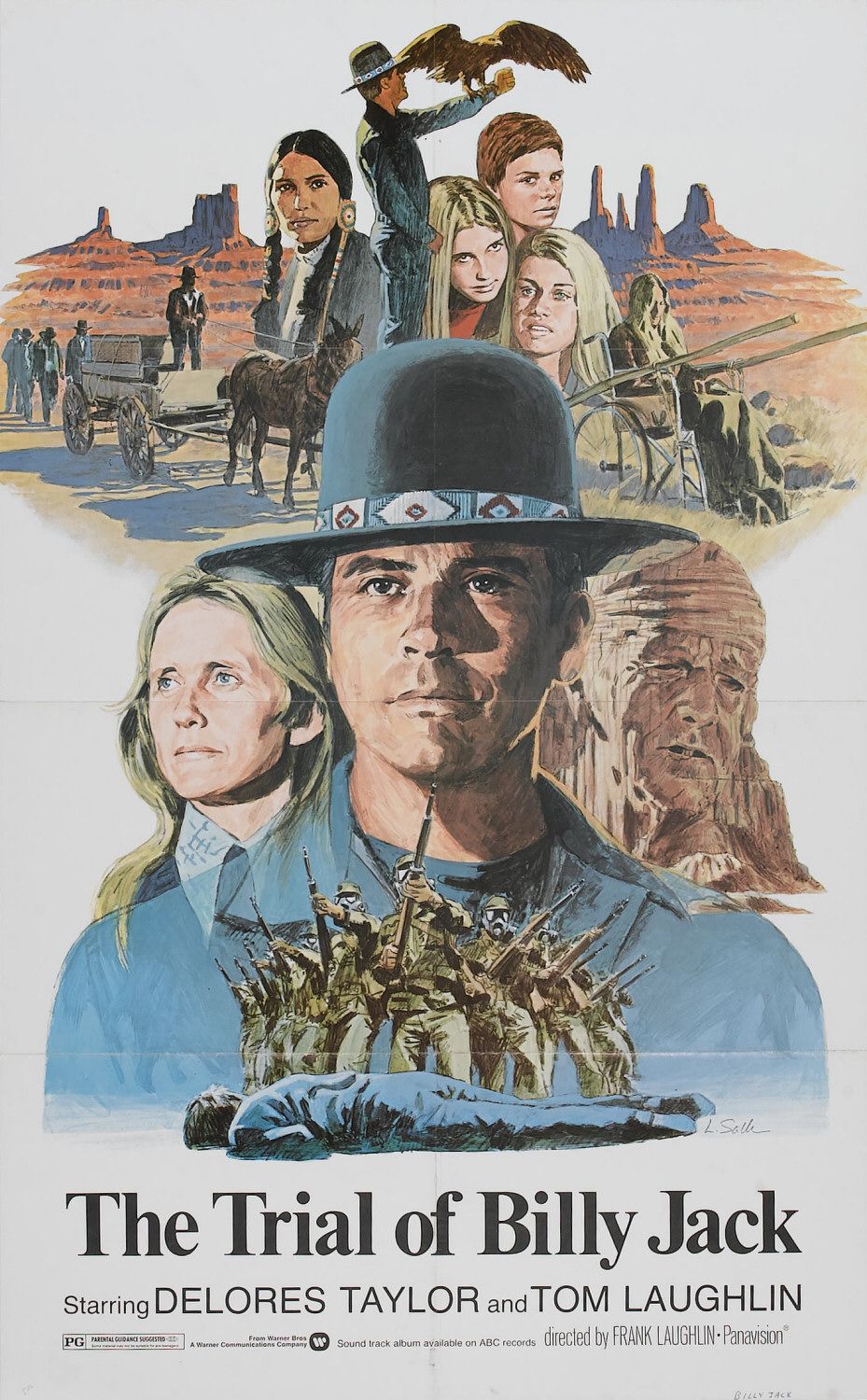
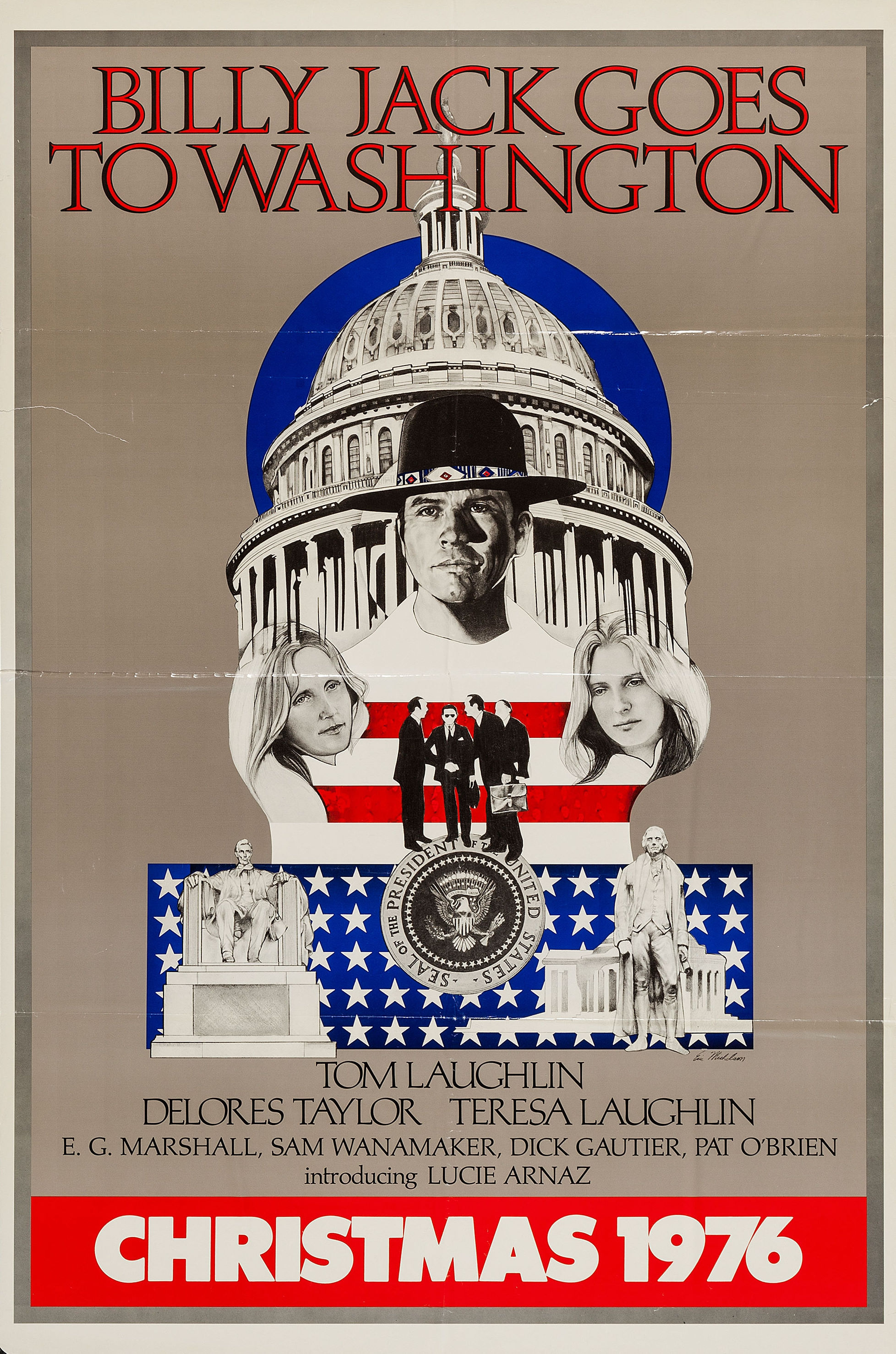
The movie “Billy Jack” came after “The Born Losers,” and it was a response to the conflicts Native Americans often found themselves caught up in. Its sequel, “The Trial of Billy Jack,” was a comment on the anti-war protests which were met by violence from the National Guardsmen who fired upon those protesters, and its follow up, “Billy Jack Goes to Washington,” has the title character battling against senators who are more interested in representing the interest of those representing nuclear power than the people. Even his unfinished sequel, “The Return of Billy Jack,” had political overtones as Billy went to New York to fight those supporting child pornography.
Taking this into account, Laughlin appears to be the first liberal action movie hero as his politics played a big part in each film he made. Then again, calling him a liberal may not be entirely fair as he has gone from one political affiliation to another over the years. In the end, he does not need a particular political label as his goals remain the same; fighting for the rights of ordinary Americans who are not always heard in the way they should be.
All these political and human rights interests greatly informed each movie Laughlin did, and this of course led to many conflicts between him and movie studios. When it came to “Billy Jack,” the movie’s original distributor, American International Pictures (AIP), refused to release it unless Laughlin removed all the political references featured in it. Laughlin, of course, refused to remove them, and he and his wife Delores Taylor, who played Jack’s girlfriend and schoolteacher Jean Roberts, ended up stealing the movie’s sound reels and held them hostage until AIP gave them back their movie.
Warner Brothers ended up releasing “Billy Jack” in 1971, but it failed at the box office and Laughlin sued the studio to get back the rights as he was upset at the way it was promoted. He ended up re-releasing the film himself, and it ended up grossing over $40 million at the box office against a budget of $800,000. Adjusted for inflation, it remains one of the highest grossing independent films ever made.
“Billy Jack,” however, was not without controversies as critics assailed its apparent hypocrisy. In his review of the movie, Roger Ebert said that “Billy Jack seems to be saying that a gun is better than a constitution in the enforcement of justice. Is democracy totally obsolete, then? Is our only hope that the good fascists defeat the bad fascists?” Leonard Maltin ended up saying about the movie that “seen today, its politics are highly questionable, and its ‘message’ of peace looks ridiculous, considering the amount of violence in the film.”
Still, many embrace Billy Jack as a character and the movies he appears in, and this was proven by the large turnout at New Beverly Cinema which cheered him on as soon as he made his first entrance in the movie which is named after him. Seeing Billy grimace at and intimidate the bad guys who were foolish enough to end up in his path had us endlessly entertained, and this remains the case so many years after the film’s initial release.
Laughlin ended up leaving Hollywood to found a Montessori preschool in Santa Monica, California which later became largest school of its kind in the United States. He would eventually turn his attention to politics and psychology as they became the tools with which he could fight injustice. Looking at his life back then and now, it becomes clear how Laughlin and Billy Jack are in many ways the same person as they fight for those whose rights are in danger of disappearing.
Laughlin passed away in 2013 in Thousand Oaks, California at the age of 82. Back in 2007, he announced he was planning to make another film featuring Billy Jack, but this did not happen for a number of reasons. Still, had he made another film with that character, I have no doubt many filmgoers would have welcomed it with open arms.
WRITER’S NOTE: This article is about a screening which took place in 2012.
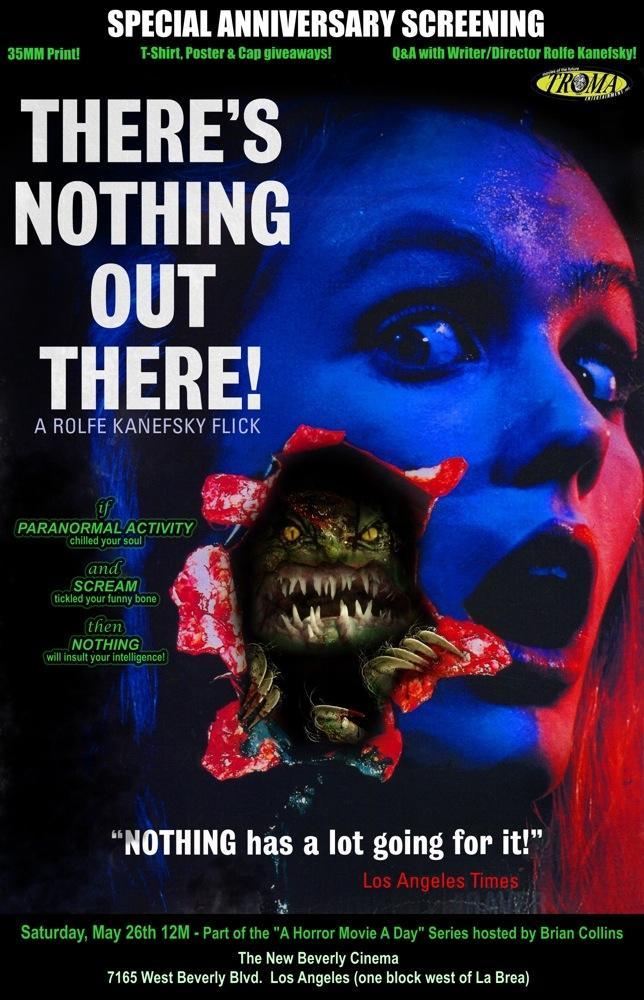
Writer and director Rolfe Kanefsky appeared at New Beverly Cinema where Brian Collins of the Horror Movie a Day website presented a special midnight screening of his directorial debut, “There’s Nothing Out There.” Joining him for this screening were two of the film’s crew members, still photographer Dave Shelton and assistant director Michael Berily. It tells the story of a group of teenagers, one of them a horror movie fan, spending spring break at a cabin in the woods, and it pre-dates Wes Craven’s “Scream” in making fun of the clichés horror movies always deal with.
Kanefsky spoke with audiences about what got him into movie making, and of what spurred the idea for this particular film of his:
Role Kanefsky: I’ve wanted to make movies since I was four years old. As I got older, I watched every horror movie that was ever made which got me to thinking about why people keep making the same mistakes in this genre over and over again. I wrote the script when I was in high school, but no one really liked it.
Kanefsky then went to college where he wrote several scripts, but then he came back to the one he wrote for “There’s Nothing Out There” after he graduated. It was 1988 when he started looking for the money to make it, and he was able to get a few private investors to help him out. He even told the audience his parents helped by selling their house, and after that he had a budget of around $150,000. One audience member asked him if his parents ever got to buy their house back with the profits and he responded:
Rolfe Kanefsky: You don’t get into movies to make money. You get into them because you love to make them.
When asked about the house used in the film, Kanefsky said a friend of his from college found it for him. It was located right near the border of New York and New Jersey, and he described what it was like filming in and around the house:
Rolfe Kanefsky: It was owned by two women who were a couple, and one of them was a sound artist which came in very handy for us. We did, however, have to use three different houses for the interior, and this forced us to cheat certain shots so that everything matched up in the end.
When it came to specific influences, Kanefsky looked mostly to 1950’s monster films, and he made several nods to them throughout. But he was also looking to make fun of the overused clichés in horror movies like the one where a cat jumps out at characters from nowhere, and of how one person warns of the danger ahead while everyone else ignores their advice. Kanefsky did, however, make one thing very clear to us:
Rolfe Kanefsky: It was never my intention to mock the (horror) genre, but instead the lazy filmmaking that has overwhelmed it.
One unique thing about “There’s Nothing Out There,” when compared to other horror movies of the time, is that what’s stalking the characters is not a deranged serial killer, but instead a monster from another planet. Keep in mind, this film was made long before the advent of CGI effects, so there was a lot of puppeteering involved in bringing this creature to life. Kanefsky was specific in what he was looking for:
Rolfe Kanefsky: I didn’t want a guy in a suit for the creature because I wanted to do something different. The way I saw it, the creature was half alligator and half octopus. I also intentionally made it a dumb creature, and you can tell it was not the smartest as there was a big learning curve going on with it. We ended up having to use crowbars just to move its tentacles around.
Kanefsky then invited his fellow crew members to share their experiences of making “There’s Nothing Out There.” Dave Shelton still has very vivid memories of how it all started:
Dave Shelton: I was working at Nickelodeon at the time and there weren’t many things being shot in New Jersey back then. When I met with Rolfe and he talked about his script, I knew right away what his vision was. He also said that no one is getting paid to make this movie and knew it was going to be good as a result. We got a lot of family and friends to be extras in the movie and we improvised a lot of stuff. Not everything worked, but we did the best with what we had. This was such a fun project to be a part of.
Michael Berily was originally hired to be the second assistant director on the set, but things changed for him very quickly:
Michael Berily: The first AD left three days into shooting, so I took over and spent a lot of time yelling and screaming at people because I didn’t know what I was doing. Still, it was an incredible experience working on it, especially when it came to raising the money. Rolfe was very ambitious then as he does a lot of set ups in one day.
Kanefsky attributed his working style of numerous set-ups a day, far more than what most Hollywood productions are able to accomplish, as he and his crew had a twenty-four-day shooting schedule. He has since made over twenty movies since “There’s Nothing Out There,” and to date it still has the longest shooting schedule of any movie he has made.
Horror Movie A Day’s screening of “There’s Nothing Out There” at New Beverly Cinema was certainly a historic one as it marked the first time a 35mm print of the movie had been shown in twenty years. Kanefsky said there were a number of reasons why this was the case:
Rolfe Kanefsky: When we showed it to studios and critics, they were all ambivalent about supporting it because they saw it as too funny to be scary and too scary to be funny. The movie ended up getting a small theatrical release back in 1992, and we managed to get some good reviews from newspapers like the Los Angeles Times. After that it began building up more and more of an audience through midnight screenings… and then the L.A. Riots (following the Rodney King verdicts) happened, and that destroyed us because no one went to the movies for a long time after that.
Kanefsky has attributed its ongoing success to cable and video and now sees this movie as an underground film which people found over the years. The studio which released “There’s Nothing Out There” never really got behind it, he said, and it really found its audience through word of mouth.
Before the evening ended, audience members asked Kanefsky if there would ever be a sequel or a Blu-ray release:
Rolfe Kanefsky: Blu-ray? Maybe, but right now it doesn’t make financial sense to do that and neither does the sequel. We do have the capabilities and original elements to remaster the movie in high definition, but the special edition DVD hasn’t sold enough copies to justify us doing that.
He does however have a title for the sequel:
Rolfe Kanefsky: ‘There’s Still Nothing Out There.’ The tagline for it is, ‘if you were afraid of nothing before, its back!’
Well, hopefully we will get to see a Blu-ray release and a sequel become a reality. There is no doubt “There’s Nothing Out There” was a passion project for Kanefsky and his crew when they made it, and it is clear everyone involved in it worked really hard to make it a reality. That people are still talking about it twenty years later makes it a triumphant motion picture which survived in a marketplace where many other horror movies get swept under the rug, never ever making it to the silver screen.
WRITER’S NOTE: This article was written back in 2013.
Filmmaker Joe Swanberg has been a major figure in the Mumblecore movement, a subgenre of American independent film which is characterized by low budget production values and naturalistic dialogue. Among his films is “Hannah Takes the Stairs” which stars Greta Gerwig and was actually shot without a script. The way Swanberg works, he gives his actors an outline of the plot of what he wants to film, and they improvise their scenes from there. This way of filmmaking offers actors the opportunity to take a lot of risks and make the kind of movie Hollywood studios do not want to right now.
Swanberg’s latest film, “Drinking Buddies,” stars Olivia Wilde as Kate, an employee at a Chicago craft brewery who spends her days flirting with her co-worker, Luke (Jake Johnson). They would make the perfect couple, but Kate is already going out with Chris (Ron Livingston) while Luke is seeing Jill (Anna Kendrick). But when their significant others are out of town one weekend, both Luke and Kate begin to wonder if the feelings they have for one another will eventually come to the surface.
As with “Hannah Takes the Stairs,” “Drinking Buddies” was shot without a script, and the actors improvised all their scenes. Swanberg took the time to talk with us about the experience of making the movie while at the Four Seasons Hotel in Los Angeles, California as well as the fascinating world of craft beers.
What would you say is the difference between a microbrew and craft beer?
Joe Swanberg: Same thing, different terminology. The way that the world is soused out is basically in terms of how many barrels a year that places are outputting between micro-breweries and macro breweries. I would argue that you’re either there because you’re passionate about it, or you’re there because it’s a job, and that’s the difference between the two.
You mentioned “Bob & Carol & Ted & Alice” as one of your influences on this film, and that was a studio comedy with an adult point of view. Your films always have that great point of view and you keep going back to that well time and time again. What keeps you going back there, and what was your motivation to do this film?
Joe Swanberg: Well, a lot of it has to do with operating in a space where I can carve out a little area for myself to play in. Sadly, complex contemporary adult movies, there aren’t many of them. I’ve always been allergic to just doing what everybody else was doing, so it’s kind of just remained a place where there aren’t that many other things happening. I don’t have to be nervous that we’re sort of recycling the zeitgeist or anything like that, then it’s also just one I’m fascinated by. I think if you were to catch me most days of the week and asked me what I was thinking about, it would be a conversation my wife and I had about making time for each other to both be able to do our creative things, or some friend of mine who’s going through a breakup or something. I’m interested in people in that way, how we interact with each other. It’s very easy for me to continue to generate stories that are based around that because it’s kind of always on my mind anyway.
What would you say was your favorite scene in “Drinking Buddies?”
Joe Swanberg: My favorite sequence in the movie is Jake and Olivia playing cards, he’s playing blackjack with her, and Ron and Anna are hiking in the woods. Just the start of the back-and-forth of seeing these two couples we’ve established in terms of each other sort of swapping a little bit and feeling out how to flirt with someone else. I feel like I have this experience in my own life within the context of my relationship with my wife where I’ll just be with another woman and you just sort of get to play make-believe for 45 minutes or something of “oh this is what it would be like if we were together and we went to get lunch or something. This is how we would relate to each other,” and it’s different than the relationship you’re in. These little daydream scenarios, that scene in particular is really fun to me to see play out. I also love listening to Jake and Olivia on the porch. Anna has fallen asleep and they sneak out. I’ve had a lot of those nights in my life where the floodgates open and you just start being really honest and it starts feeding into the other person’s honesty. Before you know it, you’re just talking about things you’ve never told anybody with someone you hardly know. It was fun to try get something like that into the movie and to let them share stories with each other, and I just get to bear witness to it.
Did you have this great cast in mind from the beginning?
Joe Swanberg: No. Usually I’m working with friends of mine so I do know exactly who is going to play the parts before I gear the thing up, but this was one where I just sort of had broad stroke ideas about who the characters were. It’s the first time I’ve ever done a casting process where I met with a lot of actors and try to think about chemistry and placing different people in different roles.
Why did you film in Chicago? Why not Boulder, Colorado?
Joe Swanberg: Well, I live in Chicago, so that’s a big reason. Also, there’s a specificity that I can give the movie because I know what kinds of apartments these people live in and what bars they would drink at. So, every choice gets be a real choice because I know them and I’m friends with them. I’ve been to places I’ve never been to before and done the same process, but then I either have to take somebody else’s word for it like where the hipsters drink, or where it’s just not specific at all. I’m just like choosing places that look nicer something. It was fun to do something at home where I could use the city is an indicator of certain things. Also, I have a kid now so traveling is way less appealing than it used to be. Going to sleep in my bed every night was a huge bonus.
Was the backpack scene in the woods between Ron and Anna when they have that awkward moment completely improvised?
Joe Swanberg: Yeah. It’s the first film that I’ve done where I had an art department and a props master and all these people, so it was really fun as a director to show up to the production office every day and have somebody bring in four different backpacks that I could choose from. It was just too funny to pass up. It says a lot about her (Anna Kendrick). It’s a really great use of a prop.
Beer wise, what are you drinking now especially after you’ve had this little bit of education?
Joe Swanberg: I’m still leaning on the hoppy IPA side of things, but it’s interesting because I didn’t drink at all until I was 25. On my honeymoon I had a beer. I guess I must’ve felt like “alright, I’m here,” so it’s new to me. It’s really been something that I’ve just gotten into in the last five years. It’s interesting because I remember drinking a really hoppy beer early on and just thinking it tasted disgusting, and now I really like the flavor so I’m really curious as to where my taste buds will lead me in terms of the stuff. I find that I go through cycles with it. There was a period of time where I just wanted to drink stouts and dark beers, and then I got into Belgian stuff and then went to the hoppy stuff so I don’t know what the next wave will be.
Any brands you like?
Joe Swanberg: Sure, but too many to even name. I’ll stick to the Midwest: Revolution Bar where we shot, Three Floyds, and Half Acre. We are very spoiled in Chicago. I think twelve new breweries opened this year. It’s a nice time to be in Chicago right now.
“Drinking Buddies” is available to own and rent on DVD, Blu-ray and Digital.
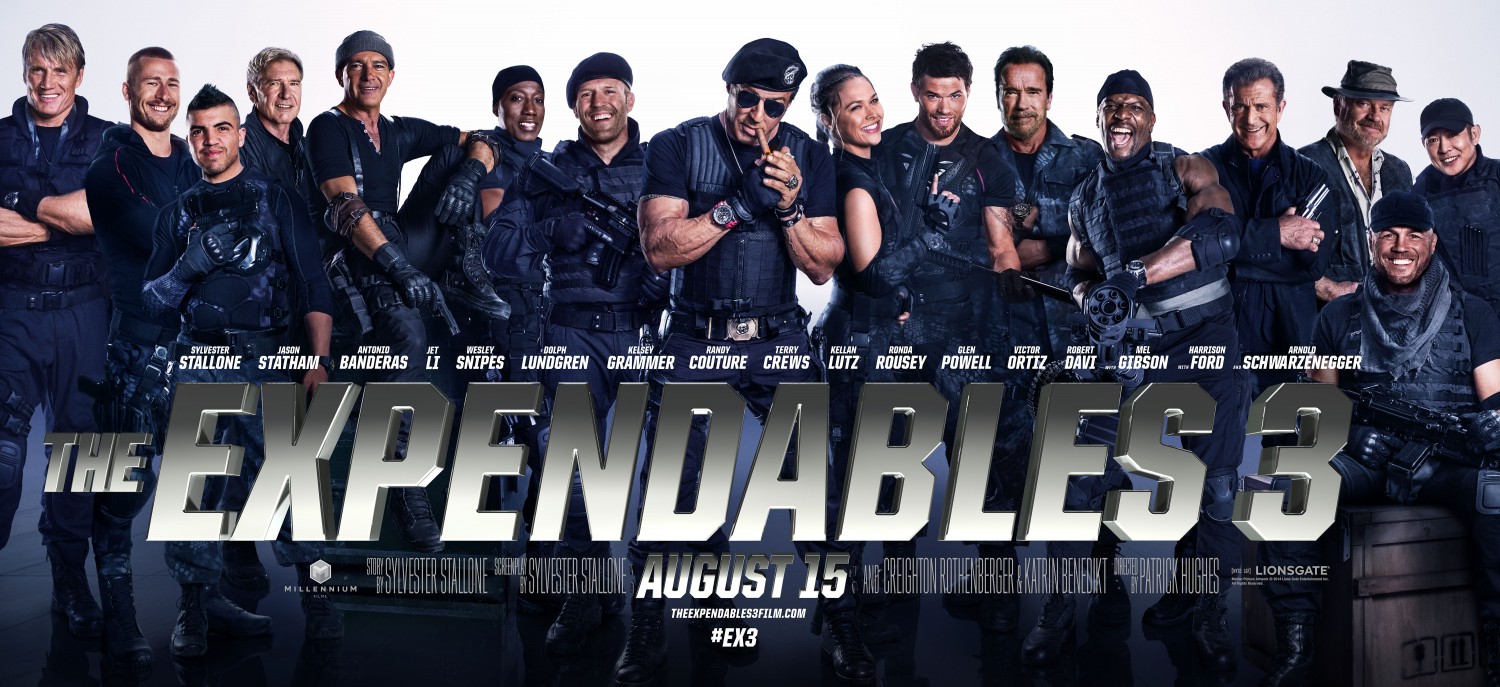
With “The Expendables 4,” or “Expend4bles” as the studio cleverly calls it, about to be released, I wanted to reflect on its predecessor which came out nearly a decade ago. As disappointed as I was with “The Expendables 3” to where my opinion would be no different if it were rated R instead of PG-13, I still adore its teaser trailer which I still find myself watching quite often. It is short and sweet as we are introduced to the cast of the sequel to the tune of Malcolm Arnold’s theme to “The Bridge on the River Kwai.” There is something thrilling about seeing all these actors and movie stars coming together on the silver screen to this famous piece of film music, the same one the actors of “The Breakfast Club” whistled at one point while losing an entire Saturday for whatever it was they did wrong.
Like the teaser trailer for “Transformers: Revenge of the Fallen,” this is a great one for a movie I really cannot stand. While I am happy to revisit “The Expendables” and “The Expendables 2,” “The Expendables 3” is one I would prefer to believe never existed in the first place. But yes, we always have this delightful teaser trailer to it.
I was really looking forward to the third “Expendables” movie ever since I saw the teaser trailer which was scored to the theme for “Bridge on the River Kwai.” None of the films in this franchise will ever be mistaken for high art, but they bring about a much-needed nostalgia workout which many of us have for the action movies from the 1980’s. Watching “The Expendables 3,” however, reminded me of how the third movie in a franchise is where everything falls apart due to a reliance on formula and clichés which don’t work the way they used to. While I have a hard time saying how the actors look tired here (and that’s because they don’t), the story gets boring quickly, the dialogue is cruddy and not even the action sequences could lift me out of my utter frustration with something that is not nostalgic enough nor exhilarating or adrenaline-pumping in the slightest.
“The Expendables 3” starts off with the team rescuing one of its long-lost members, Doctor Death (Wesley Snipes), from being sent to a military prison. The scene where he’s being rescued is cool, but the thrill we get from watching it feels a bit muted, and this becomes a sign that everything else following the movie’s opening will be equally exhilarating, which is to say not at all. Either that, or “The Raid 2” truly spoiled me to where no other action film being released these days can come even remotely close to that sequel’s brilliance.
After rescuing Doctor Death, the team heads off to Somalia to intercept a shipment of bombs being sent to a warlord, of course. In the process, they come face to face with former member and Expendables co-founder Conrad Stonebanks (Mel Gibson) who had betrayed the team by profiting off of illegal weapons dealings. When he shoots Hale Caesar (Terry Crews) to where he is left in a precarious medical state, Barney Ross (Sylvester Stallone) gets all shaken up and decides to disband the veteran members of the Expendables as he feels they have all run their course, and they should all get out while they still have a pulse.
When Barney does this, I knew this sequel was going to be in serious trouble. Barney ends up recruiting a whole bunch of younger Expendables with the help of retired mercenary Bonaparte (Kelsey Grammer), but I knew from there that those “old guys” will eventually return to help save the day. Stallone, who has always been the major creative force behind the “Expendables” movies, always writes screenplays where the main character suffers a personal tragedy and seeks redemption in order to right what he did wrong, and he’s basically been writing the same damn screenplay since the original “Rocky.” Frankly, I think it’s time Stallone opens his eyes to see how this storyline is now as old as the Declaration of Independence.
Look, I don’t care how old Jason Statham, Wesley Snipes, Randy Couture and Dolph Lundgren are because they can all still kick ass after all these years, but putting them all on the back burner for this entry proves to be very foolish. You know that Barney will eventually realize he needs their help, and the movie takes way too long for him to reach this conclusion. Instead, it wastes a lot of time introducing us to a new generation of Expendables, and most of them are inescapably tame to where it’s easy to understand why this sequel got a PG-13 rating instead of an R.
Kellan Lutz ends up showing the same range as an actor that he showed earlier in the horrifically bad “The Legend of Hercules,” and that is not a compliment. As for Glen Powell and Victor Ortiz, they don’t leave much of an impression here. Things fare much better though for Ronda Rousey who plays the highly athletic nightclub bouncer, Luna. Don’t even ask if she holds her own with the male action stars because you can quickly tell she can even before she starts kicking ass. While her co-stars won’t linger in the mind long after you’ve endured “The Expendables 3,” Rousey makes you eager to see a female version of this franchise sooner rather than later.
Antonio Banderas shows up as Galgo, the soldier who won’t shut up. It’s like he’s doing a version of his “Puss in Boots” character on acid, and it’s a kick to see how much energy the Spanish actor still has at his age. Harrison Ford is also on board as Max Drummer, the CIA dude who manages the Expendables. It’s fun seeing Ford join the party, but it doesn’t take long to see that he is playing the same character Bruce Willis played in the last two films. All the writers have done here is change the name to protect the greedy “Die Hard” movie star.
Granted, there are some nice in-jokes throughout “The Expendables 3” which show the cast having a good sense of humor about themselves. I have to give Snipes credit as even he pokes fun at his felonious past, and there’s a nice line of dialogue regarding Willis’ disappearance from the franchise. But while the cast is clearly having fun, that fun never translates over to the audience. On top of being saddled with a weak story and crappy dialogue, this sequel makes you feel like you are a guest at a party where you’re not really party to the party.
Looking back, this movie could have used a lot more of Schwarzenegger in it as he proves to be the one who gives us all the 1980’s action nostalgia we could ever possibly want. Seeing him spout off classic one-liners from “Predator” provided me with the most enjoyable moments this misbegotten sequel had to offer. Indeed, he’s always had a good sense of humor about himself and is always determined to give audiences what they want. To see him reduced to a series of cameos here does “The Expendables 3” a major disservice.
Actually, the best and most enjoyable performance here is, in my humble opinion, Mel Gibson’s who plays the ruthless arms dealer Conrad Stonebanks. Playing a crazed villain has become the kind of role Gibson typically plays these days, and this is one of the most gleefully psychotic bad guys he has played thus far. That crazy energy he displayed in the “Mad Max” and “Lethal Weapon” movies is put to great use here, and he makes Conrad the kind of bad guy we seriously love to hate.
“The Expendables” movies have been about reviving the old days of 1980’s action flicks, but this third entry misses the whole point about what made them so much fun; even with the thinnest of plots, they were about something. “The Expendables 3” feels like it barely exists, and I came out of the theater feeling empty and depressed. Those 1980’s action classics always got my adrenaline pumping, but this one almost put me to sleep despite an especially loud climax. After two fun action movies which made me nostalgic for what I grew up on cinematically, here we have with a sequel which reminded us of why so many in this genre suck nowadays.
“The Expendables 3” was directed by Patrick Hughes, an Australian filmmaker who is said to be helming the American remake of “The Raid: Redemption.” Now it is bad enough anyone is remaking that infinitely awesome flick, but I hope he has better luck with that one than he did with this lousy sequel.
“The Expendables 2” is the kind of dumb action movie fun we have come to expect from the likes of Sylvester Stallone, Arnold Schwarzenegger and Bruce Willis among others famous in this particular genre. Clearly everyone involved in its making was simply out to give action fans what they want, and while there are no real surprises in store, it is still fun for those who just want to enjoy the R-rated carnage being inflicted onscreen without analyzing this sequel’s threadbare plot. It’s also nice to see a lot of these action movie icons come together in the same film, and it helps to make “The Expendables 2” more memorable than its predecessor.
This sequel opens like gangbusters as the Expendables blast their way through a village to rescue someone who looks rather familiar (I’ll leave it to you to find out who it is). Those who survived the first movie, or proved to be nowhere as expendable as the film’s title suggested, are back, and seeing them lay waste to a foreign army made me wonder if these were the soldiers John Rambo forgot to eviscerate in “Rambo.”
Afterwards, Barney Ross (Sylvester Stallone) is greeted by the secretive Mr. Church (Bruce Willis) who gives Ross a mission he is in no position to turn down; recover an electronic device that can help retrieve a dangerous substance which cannot fall into enemy hands. It turns out that this substance is plutonium, and the gang is met by an especially villainous character appropriately named Jean Vilain (Jean-Claude Van Damme) who plans to sell it to the highest weapons making bidder. This leads to the Expendables losing one of its members in unforgivably cold-blooded fashion, and that ends up making this particular mission especially personal.
Stallone once again has the lead role and co-wrote the script, but he has turned the directing duties over to Simon West, the filmmaker responsible for “Lara Croft: Tomb Raider,” “The General’s Daughter” starring John Travolta, some remakes which vary in degrees of quality (“When A Stranger Calls” and “The Mechanic”), and perhaps the best Jerry Bruckheimer guilty pleasure to date, “Con Air.” While I have no problem defending Stallone as a director, having West take over proved to be a good move. The action scenes are more cohesive, the editing is not all over the place, and everything we see onscreen remains appropriately LOUD.
By the way, those who complain about how loud “The Expendables 2” is, just shut up. All the action movies released in summer 2012 are just as loud, so we should expect the increase in volume by now. Next time bring yourself some ear plugs if you want to preserve what’s left of your hearing!
Now Stallone and Schwarzenegger are definitely showing their age here (Schwarzenegger especially), but it is great to see them still kicking ass even as they have long since become senior citizens. In an industry which continues to be increasingly youth-based, these action movie veterans prove the odds against them are more expendable than they are. Seeing Schwarzenegger handle a machine gun is especially fulfilling as it shows he has not lost aim after getting caught up in the realm of politics as Governor of California.
Jason Statham, who returns as knife specialist Lee Christmas, almost looks like a kid compared to the rest of the cast. Liam Hemsworth, who portrays former military sniper Billy the Kid, practically resembles an infant next to Stallone which probably makes the majority of the cast feel jealous as a result, and Terry Crews still knows how to rock a nasty looking gun as weapons specialist Hale Caesar (nice name). Randy Couture returns as demolitions expert Toll Road, but he does not much to do here. The same goes for Jet Li who plays combat expert Yin Yang as he ends up disappearing from this sequel far sooner than I would have anticipated. As for Dolph Lundgren, who reprises his character of the volatile Gunner Jensen, he actually grew on me a bit this time around.
There are some “new” cast members who team up with the Expendables this time, and they prove to be welcome additions. Nan Yu adds that needed touch of estrogen to this testosterone dominated franchise as Maggie, a CIA agent who provides some of this sequel’s few surprises as she proves to be an expert in more ways than one. The previously mentioned Liam Hemsworth gives “The Expendables 2” that youthful feel of someone who has yet to become as cynical as his hard-bitten colleagues, and he gives a strong performance as a soldier eager to steer his destiny in a new direction.
One action star, however, who I was happy to see here was Chuck Norris who portrays a “lone wolf” retired military operative named Booker, an homage to the character he played in “Good Guys Wear Black.” Now while I can’t agree with Norris’ political beliefs in real life, seeing him appear onscreen had me applauding. Norris has always had a strong and memorable presence in the movies I have seen him in, and he has one of this movie’s best lines regarding a snake.
But one actor I actually had more fun watching than I thought I would in “The Expendables 2” was Jean-Claude Van Damme. His limited acting skills prove to be a perfect fit for this sequel’s main villain, and he creates a perfectly detestable bad guy we want to see Stallone and company beat the crap out of. Now while he may be one of my dad’s favorite actors (just kidding), I have never cared much for him in movies other than “Hard Target” or “JCVD.” But here, Van Damme proves he still has those graceful moves as he dares his opponents to take him out minus the use of guns.
I guess I could complain more about “The Expendables 2” as it likely has more plot holes than anyone would notice upon first glance. But hey, in the end this is a movie which should be fun, and for me it was. I enjoyed seeing these action stalwarts come together in one place, and seeing them interact made for some exciting and funny moments. This sequel may not reach the exhilarating action movie heights of this year’s “The Dark Knight Rises” or even “The Raid: Redemption,” but it does get the job done. With something like this, that is usually the best you can hope for.