Underseen Movie: Michael Haneke’s Shot-For-Shot Remake of ‘Funny Games’
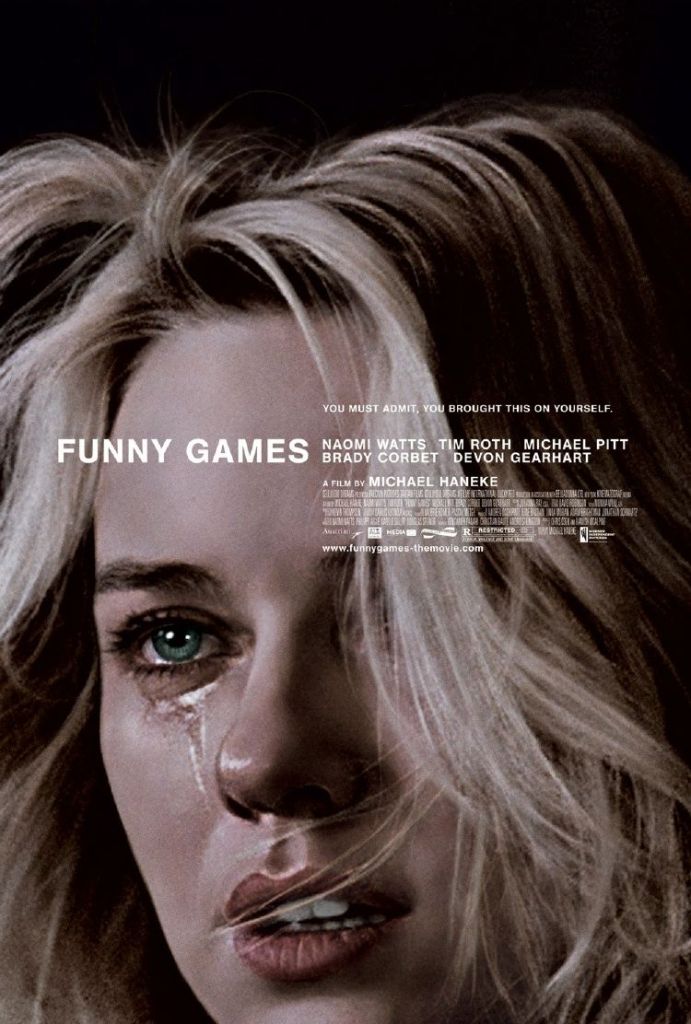
There is no in between with a film like this. You will either like or hate it with a fervent passion. Reviews for “Funny Games” have gone all over the place from praise to vicious hatred. Some will describe it as a completely immoral piece of work which revels in what it despises. Others will look at as very strong suspense film which does not hide from the ugly reality of violence. After seeing this film, I can’t help but think this is what director Michael Haneke wanted. Alfred Hitchcock was once quoted as saying, “I love playing the audience like a piano.” So does Haneke.

Truth be told, Haneke must be reveling in getting us into such an emotional state as he did the same exact thing in the past. “Funny Games” is a shot-for-shot remake of his original suspense thriller of the same name from 1997. I actually did not realize it was a remake until around the time it arrived in theaters. But since this is a virtual duplication of another film, I’m not sure how necessary it will be to see the original.

Haneke wanted to remake “Funny Games” for an American audience because he felt it was in essence an American story in which he sees its citizens being giddily in love with violence onscreen and in the media. While there is something rather condescending about him thinking this, he does have a point. Every once in a while, we need a film which reminds us of the brutality of violence. While we may fiend for gun battles on the big screen, violence in real life is scary and something we should be eager to avoid. “Funny Games” was the first ironically titled and truly polarizing movie of 2008. It is anything but entertaining, and in the end, it is not meant to be. Some movies are made to be experienced, and this is one of them.

“Funny Games” revolves around the married couple of Ann and George Farber (Naomi Watts and Tim Roth) whom we first see driving down the highway with their son Georgie (Devon Gearhart) and their sailboat in tow. When they finally arrive at their destination, they are met by two young men, Paul (William Pitt) and Peter (Brady Corbet), both of whom look like well-bred preppies equipped with very nice manners. Brady’s character comes to borrow eggs to give which Watts gives him kindly. But on the way out, he accidentally drops them and won’t leave until he gets some more. Soon, both husband and wife are trying to throw these two guys out, and then the two show their true intentions when they take a golf club and smash one of George’s kneecaps.

With the family held hostage, Paul and Peter reveal their heinous plan; they bet that in 12 hours, the whole family will be dead. From there, it becomes a game of survival for the family as the games these two force them to play get increasingly dangerous. One of the major criticisms I have heard leveled at the killers is they have no motive. Sometimes not knowing why people do the things they do makes things much scarier. When “Silence of The Lambs” was first released in theaters, we were never told why Hannibal Lecter was a cannibal. But here, these two evil schmucks do have a motive which is senseless and viciously cold: they are torturing this family for the thrill of it and for what one of them calls “the importance of entertainment.” The director has given us two psychos whose motives, as he puts it are not “easily explained by societal factors.” They look to enjoy the power they have over this helpless family.

This phenomenon of people getting a high off of violence and torture feels like it is growing at a horrifying rate. There have been movies like “Henry – Portrait of A Serial Killer” and “Menace 2 Society” that have moments where the characters commit violent acts which have been intentionally or unintentionally videotaped. We later see these same characters watching their hideous acts over and over. There was an episode of “Homicide: Life on The Street” which featured a scene with one man filming his friend as he goes over to a nearby bus stop and shoots an old lady to death. No reason is given, other than the fact they find the visual so incredibly entertaining.

Like those characters, Paul and Peter are utterly repellent individuals. But the thing is, you should be repelled at what these guys are doing. They are without morals, and the rules of society are nonexistent to them which makes them all the more threatening and dangerous. The comfortable conventions of the normal suspense thriller are thrown out here. If they are employed here, then it is only for us to see them overturned when we least expect them to be. Unlike other Hollywood thrillers, the violence here feels much more real than you would expect it to be.

Another interesting thing is while this is technically an ultra-violent movie, there is actually not a lot of violence shown onscreen. Most of the violence is committed offscreen, making it all the more terrifying. There’s another moment where Ann is forced to disrobe completely, but you never see her from below the neck. It’s a moment where Haneke dares you to wonder why the camera isn’t showing us more here. You may end up hating him for that, but you cannot deny your mind went down to that dark and dirty place.

Like “Cache,” Haneke likes to film shots in long takes. This succeeds in trapping the viewer in with this family as we wait to see if they can escape their fate. One shot lasts a good five minutes or so as Ann desperately tries to break free of the tape which binds her hands behind her back. There are a lot of static shots here which are free of overly clever camera moves, and they suck us in to the action while generating strong suspense. There are points where we are not sure when these two psychos threaten to strike next.

Haneke goes even further by having Paul break the fourth wall between the characters and the audience watching this movie. Many found this device to be annoying, but I wasn’t bothered by it because it made the movie seem even creepier than it already was. It probably would have been an unnecessary device had it been overused, but the director uses it sparingly and to a powerful effect.

There is also a moment a rewind of events is employed. It is as brilliant a move as it is done to completely frustrate the viewer as it completely eschews the formula of movies like these. Haneke doesn’t hesitate to subvert our expectations, and trap us into a reaction we cannot hide.

Whatever you think of the movie, there is no denying the superb work done by the cast here. Tim Roth does strong work, and I can’t remember the last actor who made the pain of broken bones feel so vivid. I also don’t want to forget Devon Gearhart who plays Georgie Jr. as he has a very unenviable role as a child caught up in the worst of situations. He is asked to do things we would rather not see a child actor do, and he makes his sheer terror seem all the more horrifyingly real.

Michael Pitt makes Paul into such a cleverly cold character to where some have compared Paul to Alex in “A Clockwork Orange.” This is a young actor who has made a strong impression in movies like “The Dreamers” and “Bully” among others. He excels in roles like this which play on his charm to an incredibly unsympathetic effect. Brady Corbett plays the seemingly Peter, and he also has done memorable work in “Thirteen” and “Mysterious Skin.”

But in the end, this movie really belongs to Naomi Watts who has long since proven to be one of the bravest actresses working today. She has portrayed characters so naked in their vulnerabilities onscreen to where I constantly wonder how she gets through these roles without having a nervous breakdown. Her performance in “Funny Games” is no exception as she puts herself in situations so difficult to make seem real, but she succeeds here in making us believe just how terrifying her ordeal is.

“Funny Games” is one of those movies which make me want to ready everyone’s reaction to it. Like I said, this is without a doubt a very polarizing motion picture which people will either admire or despise. The again, if many did not have a negative reaction, then Haneke would have failed in his mission to completely unnerve us. No, it is not an enjoyable movie, but it is an experience which cannot easily be ignored as you walk out of the theater. It is a thought-provoking as it in no way allows for a neutral opinion. For my money, it is a very strong exercise in suspense which never lets up throughout its two-hour running time.

While it is not the most disturbing movie I have ever watched in a theater (“Requiem for A Dream” takes the cake there), it sure does come close. The violence presented here is of a real kind, and it does not offer the typical feeling of escapist entertainment. The best advice I can give you is if you don’t want to subject yourself to a very disturbing cinematic experience, then don’t see “Funny Games.” You have been warned, so take the R-rating seriously.

* * * ½ out of * * * *

Underseen Movie: ‘MacGruber’ – The Best SNL Movie in Years

MacGruber movie poster final high resolution

When I went to see “MacGruber” at Grauman’s Chinese Theater in Hollywood back in 2010, I actually saw Jason Sudeikis while standing in line to buy a ticket. His impersonation of Joe Biden is a still a big hit with fans of the show, and he seemed like a very down to earth guy as he blended in with the crowd and talked with others.

Anyway, enough about him. Let’s get on with my review of this particular SNL sketch turned movie called “MacGruber.” About a decade before this one, movies from the long running comedy show were being released all the time, and many proved to be nowhere as funny as the sketches which inspired them. “The Ladies Man,” “Superstar,” or “A Night at the Roxbury” appeared to underwhelm audiences, and I wondered why none of them could come close to matching up with “Wayne’s World” or “The Blues Brothers.”

Now keep in mind, those movies were based on sketches which lasted 3 to 5 minutes on the average SNL episode. With “MacGruber,” we have a movie based on a sketch which typically lasts for a minute at most. We all know from watching this obvious spoof of “MacGyver” that they all end in the same way, with MacGruber failing to diffuse the bomb and it going off, blowing him and his whole team to smithereens. So therein lies the fascination of this movie; Can MacGruber keep himself from blowing up and killing everyone around him for more than a minute? Can he sustain a full-length motion picture when he can barely sustain himself in every control room known to man?

Well, it turns out he can and for around 99 minutes. Before it was released, “MacGruber” was bursting all over with reviews calling it the best SNL movie since “Wayne’s World.” I find this praise to be completely justified as it is consistently hilarious and filled with moments which had me laughing harder than anything I saw in the remake of “A Nightmare on Elm Street,” and that was supposed to be horrific and serious. But while the jinx on SNL movies finally came to an end with “MacGruber,” this same jinx has unfortunately not been broken at the box office. It ended up grossing only $9.3 million worldwide against a budget of $10 million, but it has since become a cult classic. Trust me, “MacGruber” is great fun and contains many gut-busting laughs, and it deserved a much bigger audience than it initially got back in 2010.

Like “Hot Shots Part Deux,” the movie opens with MacGruber (Will Forte) living a post-Rambo type existence in a monastery where he finds peace from all things explosive. But Col. Jim Faith (the late Powers Boothe) brings him back into service when it is discovered his old nemesis, Dieter Von Cunth (Val Kilmer gone wild), has acquired the X-5 nuclear missile and threatens to use it on a highly valuable target primed for utter destruction. Dieter also turns out to be the same man responsible for killing MacGruber’s fiancé, Casey (Maya Rudolph). To say this is all personal for MacGruber is pointing out the obvious. But seriously, what doesn’t this Inspector Clouseau of bomb experts not take personally? If you piss him off, please make sure he doesn’t memorize your license plate.

Forte never does quite convinces us that MacGruber is this great war hero, but that is part of the joke. He does, however, more than make us believe this character he has won more than a dozen purple hearts (how he earned all those is another story). No longer constricted by the dreaded FCC on network television, Forte really lets it loose here, getting away with stuff which would have had NBC and Lorne Michaels drop kicking him out of 30 Rockefeller Plaza if he pulled this off on live television. He also co-wrote the script, and he takes advantage of every opportunity for his character to make a supreme ass of himself while still remaining one you want to root for.

Plus, Forte does sex scenes here like no one else does in movies today, and I am certain no one has tried to match his acting in bed ever since.

Ryan Phillippe co-stars as MacGruber’s right hand man, Lt. Dixon Piper, a dedicated soldier who is of course infinitely brighter than him, and this causes a lot of violent resentment between the two of them. Phillippe does great work in playing the straight man to Forte’s idiotic lunatic. Had he tried to outdo Forte in terms of getting laughs, this pairing never would have worked. Lord knows MacGruber needs a partner, but he would never admit this unless he became incredibly desperate (and he does, so watch out). He also perfects that stony stare you get from some NFL star turned actor, and his funniest moments come when he reacts honestly to just how stupid this Miata-driving explosive expert truly is. Other actors would have overplayed this role, but Phillippe doesn’t thank goodness.

Kristin Wiig reprises her role as MacGruber’s assistant, Vicki St. Elmo. She is great as always, and MacGruber keeps stupidly putting her in such thoughtless situations where her life is in constant mortal danger. The scene in the coffee shop where she is disguised as MacGruber is nothing short of hilarious as she shivers in utter terror, having no clue what to do if things go bad. Still, you want to see Vicki get together with this clueless idiot because giving up this line of work for her music doesn’t make much sense, and this is especially the case when you listen to the songs she wrote.

Then you have Val Kilmer on board as the evil Dieter Von Cunth , and he gets to act all unhinged and crazy in a way he has not for some time. We know the only way MacGruber can defeat Cunth is through sheer luck, and Kilmer’s rubs in his character’s smug intelligence which he has in spades over this heroic douche bag. This represented a comeback for the actor, but it was sadly cut short due to his continuing battle against throat cancer.

“MacGruber” was directed by Jorma Taccone, one third of the Lonely Island comedy troupe which is responsible for all the “SNL Digital Shorts.” I was also surprised to learn he is actually the son of Tony Taccone, the former Artistic Director of Berkeley Repertory Theater. If you are ever in Northern California, be sure to check out a show there as they continue to challenge their audiences as much as entertain them. Anyway, Jorma keeps the proceedings going at a good pace, and he never lets the movie drag during its running time. While he doesn’t do anything groundbreaking with this movie or its formula driven plot, he does succeed in making this kind of satire feel fresh again. This genre has been so burnt out that we’re lucky if anything works as well as it does here.

The audience I saw “MacGruber” with at Grauman’s Chinese treated the whole thing like a rock concert, cheering when the title character first appeared on screen. It was a great crowd to experience this movie with, so it was surprising and depressing it got such a lackluster reception during its opening weekend. Even with competition from “Robin Hood,” “Iron Man 2,” and even “Shrek Forever After,” I figured it would still make a sizable dent at the box office. Still, it did eventually find its audience years later.

“MacGruber” is by no means a classic, and it is far from original, but it is certainly above average for this kind of movie. Saying it is the best SNL movie in years is faint praise. If you’re looking for a terrific comedy which emanated from the classic late-night show, then this is one you should check out. Even if you never laughed much at the skit on SNL, this movie will give you several belly laughs which we all live for. Just be sure not to eat any celery before you see it.

* * * ½ out of * * * *

Underseen Movie: The Interrupters – Trying to Stop Violence in America

“The Interrupters” is a truly brilliant documentary which explores violence in America, and of a group of people working desperately to stop it. It covers a period of a year in South Side Chicago, but the events we see could be happening in any other city where violence has long since engulfed its citizens. At its center is the non-profit group CeaseFire (now known today as Cure Violence) which treats violence like an infectious disease, and those employed by it work to stop the violence before it happens. While the description of this documentary sounds bleak, it is full of hope and redemption that most fiction movies can only dream of portraying honestly.

What makes CeaseFire an especially unique group is the workers have been on the wrong side of the law in the past. These are not just citizens wanting to live peacefully, but those who were once as bad as those gang members they are working with and trying to help. They are well-meaning and working to find redemption for their wicked pasts which could easily have destroyed their lives. Among them is Ameena Matthews, whose father, Jeff Fort, was a notorious gang leader. Through finding peace in her Muslim faith and having children, she turned her life around and started helping those who are travelling down the same path she once did.

The most compelling moments in “The Interrupters” involve the workers of CeaseFire themselves. We watch as Ameena struggles desperately to get through to a deeply troubled teenage girl who seems stuck in between going into a life of crime and seriously trying to find a way out of it. Seeing Ameena working with her is understandably exhausting emotionally; we all want the best for this person, but there is only so much that can be done.

Next there’s Cobe Williams who spent much of his years in and out of prison before joining CeaseFire. Cobe manages to get some footing with the toughest of people through his genuinely good nature and disarming sense of humor. Then we have Eddie Bocanegra, who served 14 years in prison for a murder which haunts him to this very day. His attempts in teaching art to children show how sincere he is in his efforts to help them avoid the mistakes he made, some of which can never be undone.

Directing “The Interrupters” is Steven James, the same filmmaker who is responsible for one of the greatest documentaries ever made, “Hoop Dreams.” Not once does Steven try to beat us over the head with statistics showing us how bad things are. We can tell the situation is bleaker than many of us could ever imagine. In capturing the memorials of those slain (most in their teens or early 20’s), we feel the innocence cruelly deprived just by looking at the names listed underneath them.

But perhaps the most powerful scene to be found here comes when a former gang member, now released from prison, visits the barbershop he robbed with friends to apologize for what he did. It is an amazing moment, and one I do not often expect to see (but certainly hope to). You can feel the raw emotions of the employees as they respond to this most unexpected of visits, and if this does not make you believe in the power of redemption, you have a heart made of stone.

“The Interrupters” is a must-see documentary which captures moments that cannot be found elsewhere, let alone in many Hollywood movies which boast about being “based on a true story.” This is real life being shown here, and it is the kind many of us do not see up close. The hope and redemption it captures is completely genuine, and it is a one of a kind cinematic experience in this or any other year. This is a must see!

* * * * out of * * * *

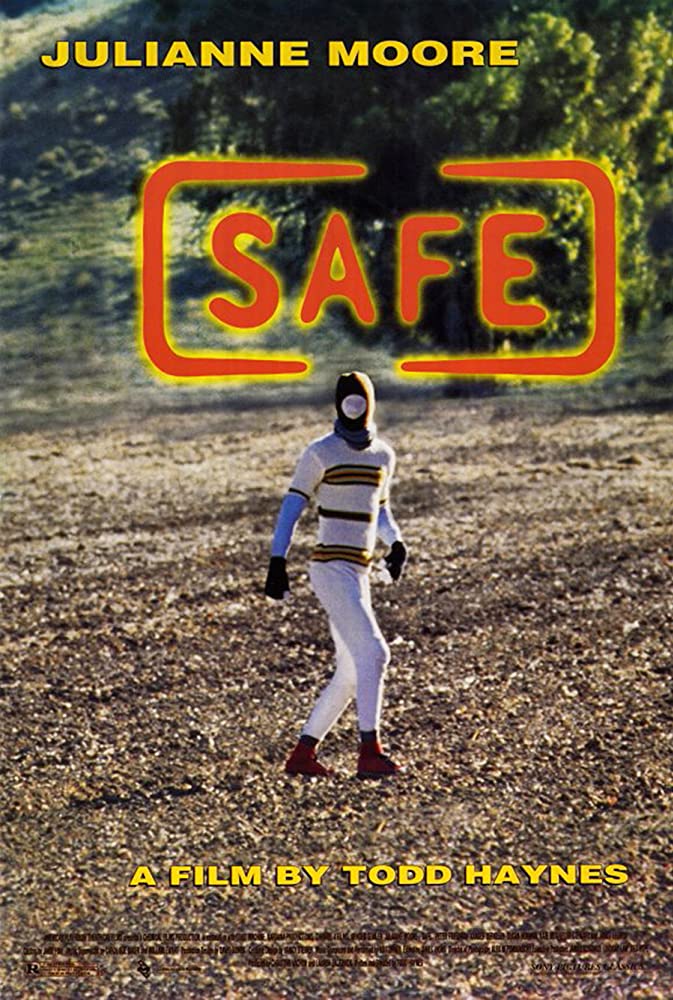
Underseen Movie: Safe – Directed by Todd Haynes and Starring Julianne Moore

I am thankful I live near New Beverly Cinema as it has long since proven to be a great film school for movie buffs like me, and it has allowed me to watch movies I might otherwise not have bothered to watch when they were first released. Case in point is the 1995 movie “Safe” which marked a huge breakthrough for its director Todd Haynes and lead actress Julianne Moore. I do remember when it was first released and of film critics like Roger Ebert singing its praises, and it came out during a time when movies like these played in cities far from where I lived, and getting out to see them was impossible. Even with a driver’s license, certain cinematic events were too far away for me to attend.

Anyway, Moore plays Carol White, a suburban homemaker who is comfortably married to Greg (Xander Berkeley), and she spends her days either doing things around the house, going to her local aerobics class, or having lunch with friends. But one day after driving down Olympic Boulevard, she finds herself coughing uncontrollably after traveling behind a big rig truck whose exhaust seeps right into her air conditioning system. This marks the beginning of an acute sensitivity to just about every chemical known to the human race, and things just get worse and worse for her from there. In addition to coughing uncontrollably, she later finds herself suffering from nose bleeds, she develops asthma-like symptoms, and she ends up convulsing at the local dry cleaners.

Carol is said to have developed multiple chemical sensitivity, otherwise known as MCS or the “Twentieth-Century Disease.” This is still seen as a very controversial diagnosis which remains unrecognized by the American Medical Association. “Safe,” however, is not out to prove if MCS is a real threat to us all or not. Instead, it looks at how a disease can forever change the way we look at ourselves and of how we view the world around us.

“Safe” also gets deep into that anxiety-ridden place in our psyche which goes haywire when our safety zone gets violated by forces beyond our control. We feel Carol’s agony throughout because we all collectively fear getting a disease which has no clear diagnosis or an immediate cure. When you end up going through lord only knows how many doctor’s appointments where it feels like nothing’s working, it really wears you and your loved ones down to the point of sheer desperation.

Things get even more horrifying from there when Carol travels to a resort in the New Mexico desert called Wrenwood. Designed to help those afflicted with MCS, it really seems more like a cult. Instead of finding ways to deal with this condition to where people can function normally in their daily lives, its leader Peter Dunning (the excellent Peter Friedman) subtly enforces his fear of the chemical world on his dutiful followers. Peter comes in the guise of a very friendly person with the best of intentions, but we all know where good intentions lead.

Haynes, working with a minimal budget, makes “Safe” feel all the more real as he portrays suburban life in the San Fernando Valley in ways which never come across as corny or the least bit campy. All the characters are complex and the kind we recognize from our own lives, and the agitation they experience feels unnervingly vivid. Adding to this sense of dread is an excellent ambient score by Ed Tomney which deftly illustrates the growing anxiety of the film’s main character. Haynes brings out the best in each of the actors, and he lets them become their characters instead of just playing them.

Moore’s performance in “Safe” proved to be a revelation as she sucks us right into her character’s dilemma, and we can never take our eyes off her as Carol turns further inward and isolates herself from the world at large. The whole movie rests on her shoulders, and she shows no vanity in her portrayal of Carol. She literally becomes the character before our very eyes to where she looks frighteningly emaciated and close to being completely incapacitated. It’s a deeply affecting performance which made me want to reach out and hug her, and I say this even though it would probably not be enough to save her character.

“Safe” ends on an ambiguous note, leaving it up to the audience to guess what will become of Carol White. This will drive a lot of the mainstream audience members crazy as they demand to have things explained in full detail, but a movie like this cannot and should not offer easy solutions. How can it? I got so caught up in Carol’s ordeal to where I felt I was in her shoes. Personally, I hope she finds a way to overcome her circumstances, but that may just be wishful thinking.

I am really glad I finally got to see “Safe,” and I hope more people take the time to check it out. It stays with you in a way few movies do. It also leaves us with a haunting image of a certain character seen from a distance, completely covered with clothing to where they are hiding every part of their body from the world at large. Arcade Fire may sing about the body being a cage, but what happens when we put another cage over it? This all reminds me of a lyric from a song by Peter Gabriel:

“The more we are protected, the more we’re trapped within.”

* * * * out of * * * *

WRITER’S NOTE: When I first saw “Safe” at New Beverly Cinema, it had been out of print on DVD and VHS for several years. The Criterion Collection, however, has since released a special edition of it on DVD and Blu-ray, and I could not recommend it more highly. Click here to find out more about this special edition.

Underseen Movie: Harry Brown in Which Michael Caine Gets His Own Version of Death Wish

Back in 2010, I was trying to remember the last time I saw Sir Michael Caine play the lead in a motion picture. Looking back, I think it was “The Quiet American” in which he gave what he thought, and I agree with him, was one of his very best performances ever. Since then, he has been the supporting actor of choice in movies like “The Dark Knight” and “Inception.” The big joke around Hollywood was if you can’t get Morgan Freeman for your movie, get Caine. Those two guys are in just about every other movie being made. Still, we need a reminder every so often of how truly great an actor Caine is. There are a number of good reasons why his career has lasted several decades after having survived critical disasters like “Jaws: The Revenge.”

But in 2009, Caine did get indeed get the lead in a movie many still have not seen, “Harry Brown.” I saw it as a double feature at the New Beverly Cinema along with a classic movie Caine starred in called “Get Carter.” Both these films have him playing characters where violence plays or has played a big part in their lives. With “Get Carter,” he played a professional killer who was almost completely amoral, and yet you couldn’t help but like him. It’s almost tempting to look at “Harry Brown” as kind of a sequel to “Get Carter” as it makes you wonder what Jack Carter would have been like had he grown up long enough to become a senior citizen. Even if he managed to put his past behind him, it is always bound to catch up with him as only so many bad deeds go unpunished.

From its trailer, “Harry Brown” certainly does look like the British version of “Death Wish,” one of the most unforgettable movies about vigilante justice. But you could also look at it as being to Caine what “Gran Torino” was to Clint Eastwood. Each movie involves a character so uncomfortable with the changes going on around them, and they are resistant, as is everyone, to any kind of change. There’s even a good dose of Eastwood’s “Unforgiven” thrown in for good measure as you wonder how deeply Harry was shaped by his experiences as a military officer.

Either way you look at it, “Harry Brown” takes the overused concept of a regular person who loses someone close to them, forcing them to take matters into their own hands when the police fail to help, and turns it into a very effective thriller which is truly unrelenting in the intensity it generates. Seriously, this is a very bleak movie which puts you into the main character’s mindset and never lets you go. It also takes place in a an environment which is all too real to those who live in it, and the consequences hit you like a swift kick to the gut. You may look at Brown’s surroundings and say to yourself no one could pay me enough to live in this environment, but we are stuck there for 103 minutes, and there’s no easy way out.

Caine plays the title character, a widowed North Ireland military veteran who finds his training coming back to him as he comes to confront those who murdered his best friend, Leonard (David Bradley) in such a cold and callous way. Following this, it becomes clear to Harry his days of being indifferent to the horrible goings on now are at an end, and he threatens to become even more lethal than those gang members he stealthily pursues. In the process, his training as a soldier is reawakened, and he uses it to his advantage. The way Harry sees it, he and his men fought for something important, but these kids today are instead fighting for their own depressing amusement.

Caine continues to make screen acting look effortless for him, and even the moments where he doesn’t speak a single word speaks volumes of what is going through his mind. We feel Harry’s pain over becoming so lonely without a soul to rely on, and we experience his state of mind completely thanks to Caine’s incredible performance. We have seen this kind of character a lot in movies, but Caine imbues Harry with a wounded humanity which keeps him for becoming completely cold blooded. Even as he descends into violent acts of raw vengeance, we can’t help but sympathize with Harry as we come to wonder what we would do if we unlucky enough to be in this situation. We never catch Caine playing on the clichés other actors would likely fall into, and it makes you wonder if there is another actor who could have played this role as well as him.

“Harry Brown” marks the feature length directorial debut of Daniel Barber whose only other project was the Oscar nominated short film “The Tonto Woman.” Filming at a council estate in South London, he creates an unrelentingly bleak atmosphere which feels even darker than anything David Fincher came up with in “Alien 3” or “Seven.” Just taking in the atmosphere which surrounds Harry and his fellow neighbors drains the soul pretty quick. Instead of prettying anything up, Barber captures the hopelessness of a people stuck in a crime ridden area so far out of their control, and of the frustration which drives the main character into action.

It is clear from the start that this will not be your average Hollywood vigilante flick, and the violence featured here is very brutal. The movie’s opening sequence features a very realistically staged gang initiation sequence where a new recruit is made to do drugs and then gets beaten up to within an inch of his life. This is later followed up by a highly unnerving scene where two gang members are riding along on a motorbike while filming their escapades, and one of them ends up shooting a young mother while she is pushing her baby in a stroller. From that point on, you never feel safe while watching this movie. You feel the gunshots when they go off here, and it all becomes a race to see how much longer Harry can stay alive.

Barber also proves to be masterful in setting up highly suspenseful scenes which are brimming over with excruciating tension. The best example of this comes when Harry meets with two young men to buy a gun, and both are clearly high on their own supply to where they are hopelessly paranoid. You feel like things could explode at any second, and I have to give a lot of credit to the two actors, Sean Harris and Joseph Gilgun, here as they make their drugged-up characters all the more frightening than they already were in the screenplay. Seriously, the scene between them and Caine is one of the most unnerving I have seen in a long time, and I will never be able to shake it.

There is also a very nice supporting performance here from the lovely Emily Mortimer who previously stole my heart in “Lars and the Real Girl” opposite Ryan Gosling. She plays Detective Inspector Alice Frampton who is at times empathetic to the suffering around her, and at other times very serious about the work she does. It’s not your typical tough as nails cop on display here, and I found this to be quite interesting. Frampton almost looks out of her league, but she quickly shows us how she keeps an open mind and considers every possibility without singling out anything based on preconceptions or stereotypes. Of course, being the smartest cop in the movie, no one listens to or takes her seriously enough. Then again, if they had, the running length of this film would be equivalent to that of “The Tonto Woman.”

“Harry Brown” is truly one of the bleakest movies I have ever seen, and while the trailers make you think we are traveling into familiar “Death Wish” territory, this is not the case in the slightest. All these years later, I still can’t get it out of my head as it affected me more than I anticipated. I was expecting a solid B-movie at most, but there was much more to the story than what I saw at first glance. It marks a very impressive debut for Barber, and it allows Caine to give us yet another great character and unforgettable performance to a resume which is overflowing with them.

* * * ½ out of * * * *

Steven Soderbergh Looks Back at King of the Hill

WRITER’S NOTE: The following article is about a screening which took place back in 2011.

In the midst of promoting “Contagion” in Los Angeles, California, filmmaker Steven Soderbergh dropped by the Silent Movie Theater where Cinefamily was screening one of his earlier and most underrated features, “King of the Hill.” Not to be confused with the Fox animated series, the film follows 12-year-old Aaron Kurlander (Jesse Bradford) who is forced to fend for himself in Depression era America after his parents leave him alone at the Empire Hotel in St. Louis. Aaron is forced to grow up a lot faster than any kid should ever have to, and he desperately searches for ways to avoid eviction from the family’s apartment. Soderbergh thanked the sold-out crowd for coming to the theater, and he started off by saying, “Why aren’t you guys going to see ‘Contagion’? This film is never going into profit!”

“King of the Hill” was Soderbergh’s third film after “Sex, Lies & Videotape” and “Kafka,” and it was released back in 1993. Based on the memoir of the same name by A.E. Hotchner, it was given to him as a gift by a friend. At the time he was looking for something different than “Sex, Lies & Videotape,” and he found Hotchner’s story to be just what he needed. He did, however, describe it as a “tricky adaptation” since he only had a budget of $8 million and 48 days to shoot the film, and it was a period piece. On the upside, though, he said Universal Pictures, which released the movie through its Gramercy Pictures division, was “hands off” during the production.

Watching it again, Soderbergh described it as the one movie of his he might change aesthetically. He felt the prettiness of the picture would help counteract the harsher parts of the story, but now finds the film to be “almost too pretty.” Most of the conversation he had in pre-production involved the overall palette color which he and cinematographer Elliot Davis wanted to remain within a certain range. Were he to film it today, Soderbergh said he would go out of his way to make it “less commercial.”

Soderbergh recalled doing three preview screenings of his movie, none of which went well. When finished with the project, he admitted feeling somewhat dissatisfied as the movie’s ending did not seem entirely satisfactory to him. Whatever problems he had, they did not stop him from trying to adapt Hotchner’s follow up memoir “Looking for Miracles” which focused on the writer’s relationship with his brother. Sadly, Soderbergh’s hopes were quickly dashed when “King of the Hill” did not find an audience upon its release.

Regardless of his feelings, the audience was in agreement that “King of the Hill” is a great film, and it truly is one of Soderbergh’s best works. The director also found a big fan in Sid Sheinberg, the famous entertainment executive, who, soon after seeing it, introduced him to Lew Wasserman. It also made Soderbergh how that he didn’t enjoy writing as much as he thought, but he did continue writing screenplays for his films “The Underneath,” “Schizopolis,” and his remake of “Solaris.” This was one of five films he did after “Sex, Lies & Videotape” which he openly admitted “did no business,” but perhaps they will eventually.

“King of the Hill” is not currently available on DVD (not in America anyway) or Blu-ray, nor is it available to stream on Netflix. Soderbergh remarked this is because “cult flicks are not marketable right now” and that “no one buys DVD’s anymore.” But with this director being so highly regarded in Hollywood, hopefully this third film of his will get the digital release it deserves so fans can discover it for the great movie it is.

UPDATE: “King of the Hill” has since been released by the Criterion Collection in a DVD/Blu-ray combo pack. It features a new restored 2K digital film transfer, interviews with Soderbergh and Hotchner, movie trailers, and Soderbergh’s fourth film “The Underneath.” To find out more about this release, click here.

Underseen Movie: The One I Love with Elisabeth Moss and Mark Duplass

The One I Love” is one of the harder movies to review because it really helps to go into it with an open mind. The less you know about what happens in it, the better the experience will be. Ever since its debut at the 2014 Sundance Film Festival, its most fervent admirers have been praising it and guarding its secrets as if they have the secret formula for Coca-Cola. What I can tell you is that it is an insanely clever romantic comedy, and it belongs to a genre I typically live to avoid.

Things start off with the married couple of Ethan (Mark Duplass) and Sophie (Elisabeth Moss) going through troubles which usually tear a couple apart permanently. They try to recreate their romantic spark by revisiting the house they snuck into when they first met and jump in the pool, but the magic isn’t there. In the process of visiting their therapist (played by Ted Danson), he suggests they spend the weekend in this cottage he knows about so they can work on their marriage. When they get there, they find the cottage is in a beautiful location I would personally love to visit sometime, and it proves to be a very relaxing place for a vacation. But when they start to explore the other parts of the house, things quickly get very trippy.

So that’s it. This is all I am going to tell you about the plot of “The One I Love.” It is very nice we have a movie like this one where film buffs are not investigating every little detail like they do with “Star Wars” or “The Matrix.” With big blockbusters, everyone is analyzing every single moment of the movie trailers, following news updates of who is being cast, and it gets to where they have a vision of what it is going to be like inside their heads. The problem is, going into anything with such lofty expectations will usually have you living very disappointed, and perhaps for the wrong reasons. It helps that “The One I Love” is a low budget feature which is coming in under the radar because people aren’t busy overanalyzing like this one.

It should also be noted how director Charlie McDowell and writer Justin Lader created this movie out of a 50-page document which contained the scene beats and the locations of the entire movie. The only thing this document did not contain was the dialogue, and the actors ended up improvising it themselves. Even though the actors were given ideas to work with, they pretty much drive this movie more than anyone else, and I applaud the challenges they face here and the risks they took with what they were given.

“The One I Love” serves as a terrific acting showcase for its stars Mark Duplass and Elisabeth Moss, both of whom get to explore different levels of their characters throughout the movie’s running time. Mark is, of course, well known for making and producing many offbeat films with his brother Jay Duplass like “Cyrus,” “Baghead” and “The Puffy Chair” among others. As an actor, he is perfectly cast in the role of an everyman husband who finds himself threatened with the various events he is forced to endure while staying at the cottage. As Ethan, we sense his desperation to save his marriage, and we also sense his desperation to not be second best at anything.

Moss has had quite the ride in recent years with her work on “Mad Men,” “Top of the Lake” and “The Handmaid’s Tale,” and she is currently experiencing great success on the silver screen in “The Invisible Man.” She once again proves just how wide her acting range is as Sophie. Like the movie, she is full of surprises and such a lovely presence to watch, and she renders every emotion you see Sophie going through as being totally genuine. Considering what the role has her doing, it is really quite a feat when you realize what Moss has accomplished here.

“The One I Love” is one of the few movies I have seen in recent years which takes turns I did not see coming, and I honestly have not been this riveted by a romantic comedy since “Four Weddings and a Funeral.” Seriously, you really need to check your expectations at the door when you go and see it because there will be no easy way to prepare you for what will unfold. I am always waiting to see a movie which constantly surprises me throughout, and this is one of them.

If there were any expectations I had with “The One I Lovie,” it was that I was to hear Stephen Still’s song “Love the One You’re With” play over the end credits. Once you watch this movie, you will understand why this would have been the perfect piece of music to end things on. After all, “The Simpsons” made great use of it on one of their “Treehouse of Horror” episodes.

* * * ½ out of * * * *

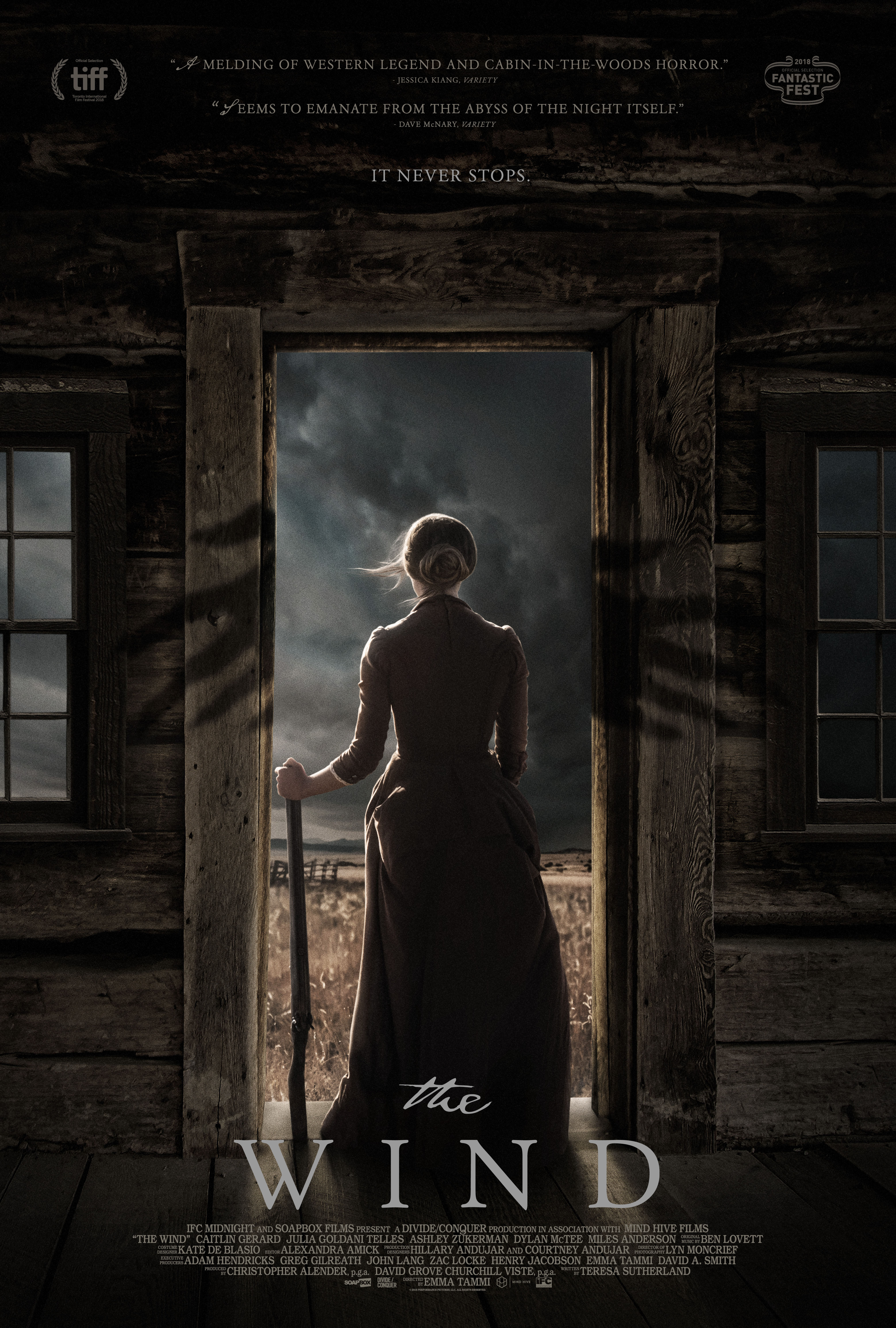
‘The Wind’ is a Menacing Horror Western Which Gets Under Your Skin

The Wind movie poster

Weather can be a formidable character in movies, especially those in the horror genre. We have “The Fog” (John Carpenter’s original, not the dreadful remake), “The Mist” (talk about an infinitely devastating climax), “The Wave” which proved to be the best disaster flick I have seen in a long time, and there’s even “The Day After Tomorrow” which dealt with climate change although in a highly unrealistic way.

Now we have “The Wind,” a horror western which takes us back to the untamed Western frontier of the 1800’s. The wind here has a supernatural force inhabiting it almost in the same way those ghosts inhabited “The Fog,” and you are left wondering how anyone can rise above such a common weather element especially when it is always around. In the process, we are sucked right into a horror movie which fearlessly turns a number of tropes on its head especially when it comes to female characters.

Lizzy Macklin (Caitlin Gerard) is forced to fend for herself in the lonely wilderness when her husband, Isaac Macklin (Ashley Zukerman), is forced to leave her and travel into the nearest town with their friend Gideon Harper (Dylan McTee) for reasons which will quickly become clear. From there, she is stuck in the loneliest of places and in a house which looks like something out of Clint Eastwood’s “Unforgiven.” The old west Lizzy resides in is not the least bit glamourous, but we quickly realize she is resilient and strong even after she is chased back into her house by a pair of ravenous coyotes.

The wind of the movie’s title first presents itself as a natural element, but it quickly becomes very ominous as it has hands reaching out at its victims who have little hope of escape. But after a while, one begins to wonder if Lizzy is really being attacked by a supernatural force, or if she is instead descending deeper and deeper into madness. Either way, you are in for an unsettling ride which won’t let you go.

The first thing I should single out is Caitlin Gerard’s performance. Right from the start, she holds our attention as she makes Lizzy into a formidable character who doesn’t necessarily need a man to see her through dangers of any kind. Furthermore, she has many scenes in which she doesn’t utter a word of dialogue and has to get things across with her face and body. It’s a lot to ask of an actor to communicate with just their face as they could easily fall into the trap of emoting to where they overdo it and turn in a performance which is inescapably laughable. Gerard, however, never falls into this trap as she almost succeeds in turning this movie into a one-woman show. Throughout, she succeeds in conveying so much while saying so little, and she completely sucked me into Lizzy’s horrifying predicament which could have easily done in a weaker character.

Co-starring alongside Gerard is Julia Goldani Telles who plays Emma Harper, Isaac’s pregnant wife who befriends Lizzy. Emma is pleasant at first, but she soon complains of how something is out to get her, and she becomes possessed by a force which does everything except turn her head 360 degrees. Telles also could have fallen into the same trap, but she makes Emma’s possession fierce and believable to where her transition from sane to insane is all the more terrifying.

From a distance, “The Wind” looks like a movie which will employ the usual variety of horror tropes such as the last woman standing, heroic and moronic male characters and a murderous villain looking for a long-running franchise which will eventually see a reboot. However, this horror western feels unique to many of its ilk, and it is great to see such strong female characters inhabiting it. Honestly, it feels like it has been a long time since I have seen a horror movie with female characters like these as they easily dominate the male characters without any doubt.

Director Emma Tammi makes her narrative feature debut here after having made several documentaries including “Fair Chase.” It is a very assured debut as she balances out all the cinematic elements in equal fashion. In addition to getting excellent performances from the cast, there is also beautiful cinematography from Lyn Moncrief and a terrific film score composed by Ben Lovett which sounds like something out of my childhood nightmares. The fact Tammi had only 30 days to film “The Wind” makes her work here all the more impressive.

If “The Wind” does run into any problems, it is in regards to its non-linear story which gives the movie a lot of power, but also generates some confusion. The screenplay by Teresa Sutherland is strong, but the more it shifts from one place in time to another, the more I lost track of where the characters were in the story. Granted, a lot of my confusion was rectified before the movie’s climax, but being thrown off like that did take away from my viewing experience.

I also have to say that the ending was a bit of a letdown. As much as I enjoy ambiguous conclusions, this was one I wanted spelled out for me. I usually hate it when filmmakers try to spell things out for audiences, but this time it would have helped as “The Wind” felt somewhat incomplete when the screen went to black.

Regardless, I very much taken in by “The Wind” and found it to be a highly unnerving horror film. It’s coming in under the radar and is easily being smothered by bigger movies, but I hope fans of the genre will give it a look. In the meantime, I will be waiting for the next weather disaster movie, “The Smog.” That one will be worth it just to hear its characters have the following exchange:

“You don’t understand! The smog is here and it’s trying to kill us!”

“Ahh, I see you are new to Los Angeles…”

* * * ½ out of * * * *