‘It’ Proves To Be one of the Best Stephen King Movies in a Long Time

It teaser poster

It” isn’t just one of my favorite Stephen King novels, it’s also one of my favorite books ever. On one hand, it is a terrifying tale of a malevolent force who takes the form of a clown and feeds on the fearful children living in Derry, Maine. On the other, it is a thoughtful and deeply felt examination of kids who are forced to endure a tougher childhood than anyone ever should. I read King’s massive novel (1,138 pages) back when I was a teenager, and it made me realize it was okay to be different than others. Looking back, it also reminded me of a line of dialogue from one of my all-time favorite movies, “Pump Up the Volume:”

“High school is the bottom. Being a teenager sucks, but that’s the point. Surviving it is the whole point.”

For those who have read this novel, you can see how it is more about the kids than it is about Pennywise the Dancing (not to mention incredibly vicious) clown. Thank goodness director Andy Muschietti realized this when he came on to direct the long-awaited film version of “It.” While Muschietti delivers the requisite thrills and chills a horror film like this one demands, he keeps a very observant eye on the kids and the conflicts they are forced to endure, and I don’t just mean Pennywise.

The film focuses on the book’s first half when the members of “The Losers’ Club” were suffering the slings and arrows of daily life at school. But while King set this half in the 1950’s, Muschietti moves things up to the 1980’s, a time of Ronald Reagan, calculator watches, New Kids on the Block, and movies like “Gremlins” and “Beetlejuice” which, like “It,” were released by Warner Brothers. This was a decade defined by greed, but for these kids, it was a time of innocence which would be destroyed for them far too quickly.

“It” was previously made into a wonderfully entertaining television miniseries by Tommy Lee Wallace, but Muschietti lets you know right from the start how the censorship of American television was not going to apply here. Little Georgie Denbrough suffers a most terrible fate when Pennywise bites his arm off and drags his body into the sewer, and even if you know this event is coming, it is still chilling to witness as this is the kind of thing movies typically avoid showing. From there, I couldn’t help but remain in a state of heightened anxiety as while I knew what was going to happen, the safety of network television was not around to reassure me about the horrors I was going to witness.

The misery and sufferings of The Losers’ Club feel much more unnerving on the silver screen than on television. It’s especially galling to see poor Beverly Marsh get wet garbage poured all over her in the bathroom as she has become the victim of unsubstantiated rumors that she is promiscuous. But judging from the moment she when she puts her backpack over her head for protection, she has been dealing with this stigma for a very long time. Or how about Ben Hanscom, the overweight new kid in town who has zero signatures in his yearbook, one of the saddest sights the audience is forced to take in here. While these kids’ sufferings don’t feel as raw as what Sissy Spacek endured in “Carrie,” it’s still easy to feel for these kids who have been cast out of what is perceived to be the realm of normal.

Heck, even their parents prove to be an emotionally distant, and if they are not, they instead prove to be ridiculously overprotective. Beverly’s father seems to care for her a little too much, and this care seems to imply crimes more insidious than our imaginations can ever handle. Eddie Kaspbrak’s mother is determined to keep him safe from any and every germ planet Earth has to offer, and at times she threatens to be as scary as Pennywise due her raising her son as if he is the reincarnation of Howard Hughes. As for William Denbrough, things will never be the same between him and his parents following the death of his brother Georgie.

There’s some passage in the Bible which says God only gives you what you can handle, but the members of The Losers’ Club have far more than anyone should ever be made to handle, and this is made clear before Pennywise begins to disrupt their unfairly depressing lives. As a result, they need each other to get from one day to the next, and the strength they have together allows them to be a formidable force against Pennywise. Muschietti’s attention to these kids’ struggles makes this film very effective as we come to care for them deeply, and this makes their stand against this homicidal clown all the more involving.

Speaking of Pennywise, Bill Skarsgard makes him into the freakiest clown and scarier than any clown Rod Zombie could come up with. Whereas Tim Curry’s Pennywise was at first approachable and then murderous, Skarsgard’s is vicious right from the get go whether the kids realize it or not. Even before those set of jaws come out, Skarsgard more than reminds the audience of how clowns have always been creepy, and he makes Pennywise into the clown who gleefully inhabits all our nightmares.

So where do I rank this particular Stephen King adaptation among the many already unleashed on the public? Hard to say. It is easily one of the best King adaptations in a while, but it is not as scary as “The Shining” or “Carrie.” This is not a motion picture filled with jump scares every 5 minutes as Muschietti is more in creating something which is infinitely chilling and suspenseful. What results is a highly entertaining movie which never feels like a simple remake of the miniseries. He is also blessed with a terrific cast of actors who are not afraid to embrace the depressing natures of their characters. I just hope none of them have to deal with this shit in real life.

I’m also thrilled no one tried to fit the whole book into one movie. There’s no way you could have done that without messing everything up. There was already talk of a sequel long before this movie even opened, and this is a sequel I am more eager to see than any “Star Wars” movie which has yet to be released. It’ll be interesting to see how The Losers’ Club will transition from childhood to adulthood as they attempt to put the past behind them. But as Peter Gabriel once sang, “Nothing fades as fast the future. Nothing clings like the past.”

* * * ½ out of * * * *

‘mother!’ Provides Audiences with a Vicious Roller Coaster Ride into Madness

mother! movie poster

After watching Darren Aronofsky’s “mother!” at Arclight Cinemas in Hollywood, a special behind the scenes featurette was shown where the filmmaker explained how he wanted to make a movie which would generate different reactions from its audience to where various interpretations could be formed over what they witnessed. Aronofsky has succeeded in doing exactly that as “mother!” does not have him spelling anything out for anyone, perhaps not even for the cast either. Maybe he does have an explanation for all the craziness which ensues in this, one of the freakiest psychological thrillers in some time, but he’s not about to let on what it is, and I am perfectly fine with that as to explain anything about the plot would dilute its power instantly.

The experience of seeing “mother!” was a lot like watching Lars Von Trier’s “Antichrist” as both movies feature a married couple who are nameless and staying in a secluded country home in the woods. Like “Antichrist,” “mother!” has polarized critics and audiences as many are desperate to discover what its director was attempting to accomplish here. The best advice I can give you is to approach Aronofsky’s film by leaving any and expectations you have for it at the door. It has been advertised as an homage to “Rosemary’s Baby,” but the only thing it has in common with Polanski’s classic is it’s also not a movie for new or expectant parents.

We meet Mother (Jennifer Lawrence) on a beautiful and sunny morning as she wakes up in the home she shares with Him (Javier Bardem), a well-regarded poet who is currently suffering from a frustrating bout of writer’s block. The two of them lead a peaceful existence in a home which has been lovingly restored after suffering much damage, but this existence is soon interrupted by an unexpected visitor (played by Ed Harris), an orthopedic surgeon who Him welcomes into their home even though Mother is perturbed that he would welcome a complete stranger in ever so easily.

Things become even more complicated when the unexpected visitor’s wife (played by Michelle Pfeiffer) comes by and becomes infatuated with knowing more about Mother and why she and her husband have no children of their own. Granted, this makes Lawrence’s character’s name of Mother hypocritical as she is not a mother at the movie’s start, but many surprises are in store for the characters and the audience as “mother!” takes a number of twists and turns you cannot see coming.

Revealing more about what happens would be detrimental as “mother!” is best viewed with little knowledge about it. Indeed, promoting this movie must have been a nightmare for Paramount Pictures as you can only say so much about it before you spoil everything. Then again, can you spoil this movie for others? Aronofsky has made something here which cannot be easily explained, but while this will baffle and infuriate many who sit through, it should enthrall those who are in the mood for something cinematically adventurous and a movie which forces you to think about what you just saw.

What I can tell you is things reach a frenzied fever pitch as “mother!” barrels towards a climax which comes close to equaling the frenzy of Ellen Burstyn being terrorized by her refrigerator in “Requiem for a Dream.” Aronofsky has said he applied “dream-logic” to “mother!,” and it certainly helps to know this going in as events keeping going by at a rapid pace to where you can’t help but feel like you are in a nightmare or a dream you are desperate to control, but can’t. It’s like being a car when the brakes have failed you, and the emergency brake ultimately doesn’t work either. You just keep getting thrust into a hellish realm as Lawrence and Bardem become trapped in their once peaceful home as the woods it is located in offers no escape. In fact, it all reminded me of what Charlotte Gainsbourg said in “Antichrist” at one point, “Nature is Satan’s church.” Well, Satan looks to be having even more fun here.

There are said to be a lot of biblical allegories to be discovered here, but the only one I could see was the reference to Cain and Abel as two brothers fight one another bitterly over an inheritance which benefits one more than the other. I am already very eager to see “mother!” as seeing it once is not enough to uncover all which Aronofsky wants us to discover. Now that I have experience this motion picture on an emotionally visceral level, I want to experience in a different way even though Aronofsky has warned us not to analyze “mother!” too deeply.

Jennifer Lawrence remains as luminous an actress as ever, and she looks to be put through the emotional wringer here as her character descends into a realm of inescapable madness. It turns out she even got so into character on set to where she was constantly hyperventilating and even cracked a rib, so there’s no doubt about dedication to playing a role. At this point, I am convinced Lawrence can play any role given to her, and she has this ageless quality to her appearance which matches her up perfectly with actors who are several years older.

Lawrence also shares a number of almost gleefully unsettling scenes opposite Michelle Pfeiffer, an actress we don’t see near enough of these days. As these two circle each other like cats ready to hiss at one another while guarding their precious territory, we are reminded of how brilliant Pfeiffer can be when given material which piques her interest.

As for Javier Bardem and Ed Harris, these are two actors you can never ever go wrong with, and they infuse “mother!” with a passion for acting they have never lost sight of since the start of their careers. Bardem, in particular, gives his character a loving presence as well as an ominous one. The latter is especially the case in a scene where he stares down Lawrence, and it’s a stare which lasts for what feels like an eternity and brings back memories of his Oscar-winning role as Anton Chigurh in “No Country for Old Men.” I kept waiting for him to explode as Bardem sits like a wild animal waiting to strike, and I was desperate for Lawrence not to let her guard down while in front of him.

Aronofsky continues to employ many of his regular colleagues to great effect like cinematographer Matthew Libatique, but what’s surprising is this movie’s lack of a music score. Instead of employing his longtime composer Clint Mansell, Aronofsky instead hired Johann Johannsson to come up with ominous musical themes. However, upon viewing an edit of “mother!,” they both agreed this movie didn’t need a score. It says a lot about “mother!” that it needs no music score to aid in the movie’s mission to generate almost unbearable tension. Few other filmmakers could get away with such a feat, but the intense sound design which, when viewed in the right theater, surrounds you to where you feel every bit as trapped as Lawrence is. As her predicament becomes more and more of a sonic assault, we feel her character’s agitation all too much.

In retrospect, I was tickled to death at the reactions the audience I saw “mother!” had. Several people laughed either out of derision or just plain nervousness as things went from a state of peacefulness to complete Armageddon, and others complained how this scene or another contained the only elements which made the least amount of sense to them. As I walked out of the theater, others said they couldn’t understand why people were laughing at certain moments. Many of my movie friends have said this movie is likely to end up on the lists of both the best and the worst films of 2017, and I couldn’t agree more. You will either love this motion picture, or you will hate it with a passion.

As for myself, I loved the visceral roller coaster ride “mother!” took me on. I never caught myself laughing much at what went on as I was completely gripped in Aronofsky’s vise as he continued to tighten the grip he had on me, and I was thrilled at the levels of “Requiem for a Dream” intensity he was able to generate with this one. Many will say he is simply out to torture his audience, but why can’t we have a torturous cinematic experience every once in a while, or at least one which is torturous in a good way? I show no hesitation in calling “mother!” one of the best movies I have seen so far in 2017 as it provided me with something incredibly unique in a time where the cinematic landscape is overfilled with superheroes.

Yes, the market research firm CinemaScore has given “mother!” an average grade of an F, a rare grade for movie to get from them. Then again, Steven Soderbergh’s “Solaris,” William Friedkin’s “Bug” and Richard Kelly’s “The Box” also received the same grade, and those movies are much better than their reputations suggest. And keep in mind, this is the same firm which gave an A+ to Dinesh D’Souza’s infinitely patriotic but poorly made, not to mention boring, documentary “America: Imagine the World Without Her,” so there’s no accounting for taste.

Seriously, I haven’t had this much fun taking in an audience’s reaction to a motion picture since “The Human Centipede 2.” Of course, “mother!” is much, much better than that one. When the exclamation mark appears a couple of seconds after the title does and then sticks around once the title disappears, you should know you are in for something completely different.

* * * * out of * * * *

Witness Mickey Rourke’s Career Resurrection in ‘The Wrestler’

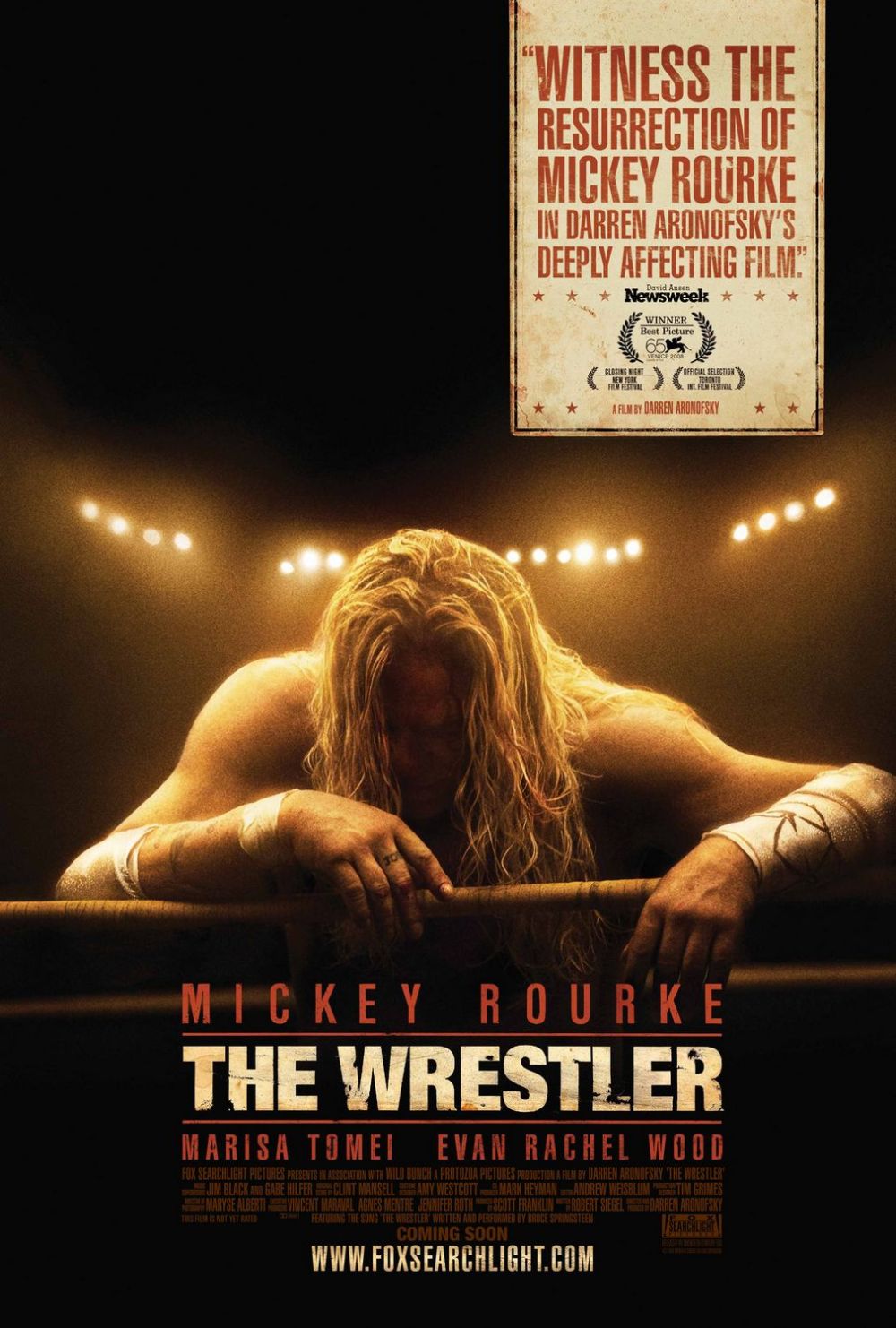
untitled

The Wrestler” is kind of a cross between “Rocky” and “Raging Bull” in that it deals with a man looking to continue making a name for himself long after his five minutes of fame, and who seems to be more at home in the ring than outside of it. Darren Aronofsky films this movie with a rough edge, and he doesn’t hide away from the harsh reality Randy “The Ram” Robinson, played by Mickey Rourke, and the rest of the characters inhabit. It also marks another in a long line of movies with characters hanging on by a little thread to their financial existence.

After one of his more vicious fights involving staple guns and barbed wire among other things (there is no flinching on the details here), Randy suffers a serious heart attack and later finds himself waking up in a hospital bed after an emergency bypass surgery. The doctor tells him that to wrestle again will kill him, and he is forced into retirement and ends up finding work at the deli counter of a local supermarket for whatever hours he can get. Despite his fame and the attention he gets in his trailer park home from the kids who live there, Randy’s life is a lonely one, and he has practically no close personal connections to lean on.

What goes on from there might seem predictable, but this is not your typical redemption story with everything turning rosy at the end. As his mortality looms over him heavily, Randy tries to get closer to those around him with limited success. Marisa Tomei gives a great performance here as Cassidy, a stripper who is very friendly to Randy while working at her club. Like Randy, she is also past her prime in her profession, and she doesn’t draw the big numbers like she used to. The two of them are relics of the 80’s, and their happiest days have been trapped in that time which was brought to an end by the advent of Kurt Cobain and Grunge which all but vanquished the days of long haired heavy metal icons. Ironically, as perfect as they seem together, it is their individual professions which keep them apart. The rules they are sworn to follow are also the ones they struggle with, and in the end these rules define who they are.

Years after her Oscar win for “My Cousin Vinny,” Marisa Tomei remains of the more vastly underrated actresses working today. Since her win, she has given great performances in movies like “In the Bedroom” and “Before the Devil Knows You’re Dead.” She continues to make leaps forward as an actress, and yet she remains at the fringes of fame. Perhaps she feels more comfortable doing independent films as they give her the best roles. All the same, part of me wishes she would get more respect because it doesn’t feel like she ever gets enough of it.

Evan Rachel Wood also co-stars as Randy’s long estranged daughter, Stephanie. They share some of the movie’s most emotionally raw and poignant moments together as Randy tries desperately to salvage any sort of connection he may have left with Stephanie. They share a nice walk together at the New Jersey shoreline where they reminisce about memories long gone, and Randy apologizes for not being there for her at all. Wood’s role is largely a reactive one, and she meets Rourke every step of the way when onscreen with him. Long after her emotionally searing performance in “Thirteen,” she is still not afraid of delving into the raw emotions held on to by the characters she plays.

Aronofsky is still best known for the mother of all anti-drug movies, “Requiem for a Dream” which was filmed with so many extreme camera moves and quick edits to where we were left with whiplash as we exited the theater. “The Wrestler,” however, does not have any of those flourishes. Instead, Aronofsky shoots the movie in a simple hand-held fashion and in 16mm to capture the rough and tumble realm these wrestlers exist in, and he makes you feel all the devastating hits, cuts and bruises these men are made to endure in the ring and when they are thrown outside of it as well. Like Paul Thomas Anderson, Aronofsky makes you experience the movie instead of just watching it passively.

I also loved how Aronofsky captured the camaraderie between these fellow wrestlers when they get together. We see them sharing the moves they will use with one another, and they always have the outcome figured out long in advance. We see the doctors attend to all the inflicted, let alone self-inflicted cuts, they get in the ring, and he makes you feel all the cuts which have long since torn away at their once perfect bodies. Aronofsky has never done things the clean way, and his work in “The Wrestler” continues this tradition unapologetically.

“The Wrestler” is not Aronofsky’s best movie (“Requiem for a Dream” still holds that title), but it is further proof of how he is one of the most exciting filmmakers working in this day and age. Some may have lost sight of this with “The Fountain,” but they shouldn’t after watching this. But in the end, this movie is really all about Rourke and how he and Randy interweave with one another to where you cannot tell if he is just acting or if he is just being the character.

Rourke makes you feel his character’s pain, both physical and emotional, throughout the movie. There is never a moment in this film where he fakes an emotion, and this is a performance coming straight from the heart. With his heartbreaking confession to his daughter, he takes what could have been a clichéd scene and fills it with pure emotion. It’s almost like he the actor is apologizing for not being better as an actor, and for squandering his potential with a lot of crap movies. Rourke has earned my forgiveness ever since he played Marv in “Sin City,” and his performance in “The Wrestler” completes what is a well-deserved comeback.

For those of you who have read my review of Clint Eastwood’s “Gran Torino,” you’ll remember how I talked about how certain parts need an actor whose face and body show a rough and tumble history, and that they have suffered through life’s most intense challenges. Rourke is not the pretty boy he used to be, but this makes him perfect for this role other than the fact he can still be a brilliant actor. Rourke sells the fact his character has a massive heart attack and that his body has been badly beaten (Rourke did briefly take up boxing when his acting career was almost gone). He sells how Randy now wears a hearing aid and glasses to read most things given to him. He also sells the fact he is deserving of another chance as a lead actor, and he knows he better not screw things up this time around.

“The Wrestler” is one of the most exhilarating and exhausting character pieces I have seen in some time. The movie is nothing short of a great triumph for its lead actor and its director, and it is topped off by a great theme song from Bruce Springsteen himself (who else could have done it?). In 2008, it was hard to think of another performance which could have been even more brilliant than Heath Ledger’s in “The Dark Knight,” but Rourke manages to top him here, and that was no easy feat.

* * * * out of * * * *

The Stars of ‘Repo Man’ Drop By New Beverly Cinema

Repo Man poster

More than 30 years after its release, Alex Cox’s cult classic “Repo Man” still holds up with its truly authentic punk attitude and black humor. This was proven to be the case when a special screening of the movie was held at the New Beverly Cinema which brought out many fans eager to see some of the actors who starred in it. Among them was the great character actor Harry Dean Stanton who plays Bud, the Mr. Miyagi or Yoda to Emilio Estevez’s Otto. Also there was Tracey Walter who played the philosopher of mechanics, Miller, Olivia Barash who played Otto’s would-be girlfriend, Leila, and Del Zamora as Lagarto, one of the Rodriguez brothers.

“Repo Man” is so defiantly punk and proudly refuses to fit into the realm of regular mainstream entertainment. Never politically correct, it delves into a highly exaggerated, not to mention intense, depiction of the life of a repossession agent. Watching it makes you realize there are not enough movies like this these playing at the local multiplex. We need something to balance out all these watered-down blockbusters which comes to us like McDonald’s Happy Meals from the world of corporate cinema. This movie was actually intended to be a UCLA student film, but somehow it managed to become something much bigger.

The actors came out immediately after the end credits concluded, and they looked really happy to be at the New Beverly. Stanton, however, looked like he was three sheets to the wind and occasionally spoke about things not really related to “Repo Man.” At one point he even asked, “Can I smoke in here?” The other actors sympathetically told him they weren’t sure the theater would allow him to smoke. “We can’t smoke in here?” Stanton said, “That’s fucking nonsense!” The crowd couldn’t help but laugh as Stanton looked like he was perfectly prepared to keep smoking for the rest of his days.

Stanton said he couldn’t remember exactly how he got involved in “Repo Man,” and added this lack of memory up to being one of his “senile” moments. Walter, however, said he got his role after having previously worked with producer Michael Nesmith on “Timerider.” Barash said she was originally encouraged not to do the movie on the advice of her agents as they didn’t know the people involved in it very well, and they thought it might be dangerous for her to even go to the audition. But Barash was and still is a huge punk rock fan, and she got immediately sold on “Repo Man” upon seeing that bands like Black Flag were going to be involved. She even told us Iggy Pop, who composed the movie’s theme song, was her neighbor in the apartment building she lived in back then.

Zamora didn’t say exactly how he got cast, but he did remember how Cox got Nesmith involved as a producer. Simply put, Nesmith’s car had gotten repossessed, so he could relate to those car owners who were not paying up on what they bought. Zamora also talked about how Cox got both Stanton and Estevez involved in “Repo Man.” Basically, Cox caught up with Estevez and told him Stanton was already connected to the movie even though he wasn’t at that point, and then he went to Stanton and told him Estevez was connected to the film even though he wasn’t. Suffice to say, both actors did become involved.

Stanton then went on to say he and Cox didn’t always get along. During the shooting of “Repo Man,” Cox got so sick and tired of Stanton telling the actors what to do and threatened to fire him on the spot. To this Stanton replied, “Kiss my ass! Fire me so I can get paid!” Later on, Stanton asked Zamora to let Cox, whom Zamora is still in touch with, know he’s not mad at him anymore and that he would welcome him as an honored guest the next time he saw him.

“Repo Man” also had an abundance of generic food and drink items on display, and the audience couldn’t help but laugh at just how openly generic they all were. Product placements are usually reserved for big budget movies which are more likely to be bland and inoffensive. Zamora said they really had no money so they did talk with companies who were willing to do product placements in the movie. And then they read the script… What they ended up using was a generic brand from Ralphs Supermarket, one of the most dominant of supermarket chains in Southern California today. Of course, had “Repo Man” been made today, Ralphs might not have been as inclined to be involved.

In the end, Zamora and Walter said the art directors did the majority of the work and succeeded in creating the world of the movie which was very convincing despite the low budget. Then Stanton spoke up again and asked who Zamora played in “Repo Man,” and Zamora told him he played Lagarto, one of the Rodriguez brothers, to which Stanton replied, “How many brothers were there?”

 Speaking of the Rodriguez brothers, Stanton’s character of Bud has this intense confrontation where he wields a baseball bat which he threatens to bash the brothers with. Stanton said Cox gave him a rubber bat to use, but he wanted to work with a real one instead, and this led to a fight between the two of them. Zamora remembered this moment on set and said Stanton was under control, but Stanton, who was starting to remember more of the filming, made it bluntly clear he was really crazy and didn’t have any idea of what he was doing.

Walter was asked about his famous “shrimp monologue” scene, and he said it was originally meant to be just an audition piece. It was never intended to be in the film, but Walter fought for it. Indeed, it makes for one of the most memorable moments in “Repo Man” as his character of Miller describes the way he sees things:

“A lot o’ people don’t realize what’s really going on. They view life as a bunch o’ unconnected incidents ‘n things. They don’t realize that there’s this, like, lattice o’ coincidence that lays on top o’ everything. Give you an example; show you what I mean: suppose you’re thinkin’ about a plate o’ shrimp. Suddenly someone’ll say, like, plate, or shrimp, or plate o’ shrimp out of the blue, no explanation. No point in lookin’ for one, either. It’s all part of a cosmic unconsciousness.”

To this day, Walter says that every once in a while he runs into someone who utters one of his signature lines from “Repo Man” like, “John Wayne was a fag!” But of course, the real signature line of “Repo Man” belongs to Stanton’s character of Bud who says, “The life of a repo man is always intense.”

One audience member asked the actors if they still talk to Estevez after all these years. Zamora and Walter said Estevez still works, but more as a producer and director these days because that’s where his passion lies. Estevez still acts occasionally, but it apparently doesn’t interest him as much as it used to.

Wrapping up the evening, the actors were asked if they knew they were making something special during the filming of “Repo Man.” Some of them believed they were, but Stanton bluntly said, “I didn’t give a shit if it was special while making it.” Despite his apparent demeanor and not being able to remember his entire experience on this particular movie, Stanton still had us laughing hysterically. Not once did he try to ruin the fans’ appreciation of “Repo Man.” Whether he realizes it or not, no one could have played Bud better than him.

Many were in agreement when Stanton said both “Repo Man” and “Sid & Nancy” were truly the peak of Cox’s directing career. We haven’t heard as much from him since then, but Barash said he just finished making a quasi-sequel called “Repo Chick” which she has a cameo in it. However, this has not stopped Universal Pictures from sending Cox cease and desist letters as they insist only they have sequel rights to “Repo Man.” Still, Cox has been showing it at festivals, so it looks like nothing is going to stop him.

Before everyone got up and applauded, another audience member asked a question which brought to mind one of Bud’s great lines from “Repo Man,” “Is there any good place around here to get sushi and not pay?” Stanton left us with his best answer of the evening, “That’s where we’re going right now.”


‘Black Swan’ is a Tour de Force for Darren Aronofsky and Natalie Portman

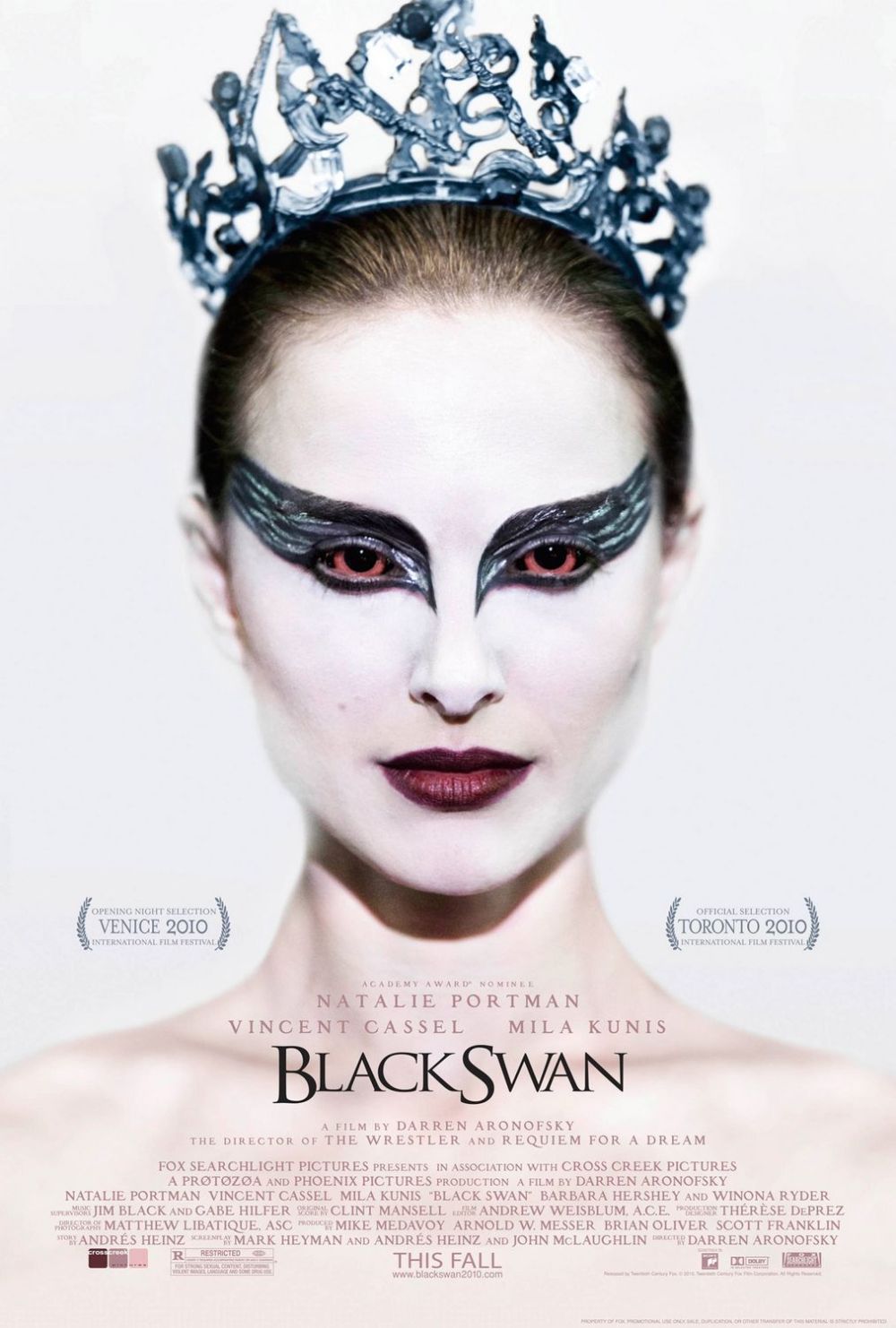
Black Swan movie poster

JESUS CHRIST!!! This was my immediate reaction after witnessing Darren Aronofsky’s “Black Swan.” A combination of “The Wrestler” and “Requiem for A Dream” with a dose of “Rosemary’s Baby” thrown in for good measure, it is a brilliantly over the top psychosexual thriller which continually ratchets up suspense and tension all the way to its horrifying climax. And unlike Mia Farrow’s character in “Rosemary’s Baby,” Natalie Portman has a really nice haircut.

Just as it was with “The Wrestler,” “Black Swan” serves as an expose sorts on the athletic arena it focuses on. The backstage world of ballet dancing is highly competitive, and the career of a dancer can easily be short-lived if an unexpected injury, either a big or small one, occurs. Many view ballet as being very boring and would rather tune into Monday Night Football. Try dragging kids to a production of “The Nutcracker” and watch how they run for the hills. This is the reaction I get from most people I know, although I’m sure there are exceptions.

But don’t let any preconceptions about ballet turn you off from seeing this film. It is anything but boring, and both Aronofsky and Portman brilliantly capture the physically and psychologically draining aspects of ballet to where you feel as wiped out and crazed as they do throughout. Like any other art form, ballet demands years of training in order to reach a level of perfection few can achieve. It is also shown to be an isolating career because, with so many people going after the same lead role, making friends is a struggle as you wonder what they are saying behind your back. With the bitterness level sky high, ballet threatens to be more damaging psychologically than physically.

Portman plays Nina Sayers, a member of a prominent New York City ballet company. After years of hard work, Nina gets her lucky break when she snags the lead role in “Swan Lake,” a show is as overdone as many of Neil Simon’s plays. This show has one of the most coveted roles in any show as it is incredibly challenging. Nina has to play the White Swan who is a creature of innocence, and also the Black Swan who is one of a sensual and dark nature. Basically, it is the dancer’s “Hamlet.” While her director Thomas Leroy (Vincent Cassel) thinks she is perfect as the White Swan, he has doubts about her ability to play the Black Swan as she is so technically precise in her movements, and the latter role requires her to lose herself in the passionately dark nature of the character.

Once we see Nina walk down the streets of New York past a woman who looks exactly like her, we are caught up in her downward spiral which she is helpless to stop. We watch as she encounters people and situations which feel real, but later turn out to be nothing more than hallucinations. There are times where she even looks like she is turning into a swan. While this may sound ridiculous on paper, it is brilliantly conceived visually from the rash on Nina’s back to those blood red eyes she develops. There are even points where she is dancing in front of a mirror, and her reflection turns around to glare at her malevolently.

The line between what is real and what is not becomes completely blurred, and neither the audience or Nina are able to tell the difference between the two. Many may be maddened at not being able to understand all of what is happening, but that’s precisely the point. Aronofsky puts you directly into Nina’s mindset, which has already proven to be an emotionally fragile place, and we are instantly caught up in her psychological disintegration. This makes “Black Swan” all the more visceral to experience. We are not just watching Nina go mad, we feel like we are going mad with her.

Portman does truly give the performance of her career here. She trained in ballet for a year or so, and her preparation really paid off. Throughout, she captures the sweet nature of Nina as well as the paranoia and resentment which overwhelms her the closer she gets to the opening performance. Watching Portman practice her dancing to no end is emotionally exhausting as it is for her physically, and she makes us feel like we are right on the edge of disaster with her. Portman has always been an amazing actress, but her work in “Black Swan” represents the culmination of a great career which is more than ready to head into adulthood.

Mila Kunis, looking even sexier here than she did in “Forgetting Sarah Marshall,” co-stars as another dancer, Lily. Unlike Nina, she is free with her body and mind, and what she lacks in precision she makes up for in unbridled passion. She’s at times friendly, wanting to break the ice between her and Nina, and her power of seduction is one Nina desperately wants to capture for herself. Kunis has become an increasingly fascinating actress, and seeing her go from sweet to a cold back stabber of a human being is made very believable by her work.

Oh yeah, there is a sex scene between Portman and Kunis which will have people checking out “Black Swan” for all the wrong reasons. Then again, any reason to get people to see this film might not be so bad. Furthermore, to dismiss this as a simple lesbian sex scene will only show how short sighted you are.

Aronofsky again employs his frequent collaborators to excellent effect. His director of photography, Matthew Libatique, almost makes this film look like a remake of “Suspiria” as the colors become overpowering once they become blacker and infinitely vicious. “Black Swan” is as much a sensory experience as it is a psychological one, just like “Requiem for A Dream” was. Libatique makes the special effects appear seamless in scenes where CGI is clearly utilized. As the background dancers pass by her, Nina sees her face in all of them. It’s such an eerie moment to where it doesn’t even feel like a special effect.

Then there is the fantastic Clint Mansell whose work on Aronofsky’s movies has become a main character in each of them. Mansell takes Pyotr Ilyich Tchaikovsky’s “Swan Lake” and breathes fresh life into it which is exhilarating to take in. His score becomes as intense as the images we see on screen, and I loved how visceral and thrillingly alive it all feels.

The movie also offers great performances from actresses we don’t see as much of on the silver screen: Winona Ryder and Barbara Hershey. Ryder clearly understands the frustration her character of veteran dancer Beth MacIntyre is going through, and she captures this deeply hurt and excessively bitter character perfectly. At once an empathetic and at other times a pathetic person, we see just how much Beth has lived for ballet, and now that it has been cruelly taken away from her, she has little else to devote her life to. To be placed on a pedestal so high only to be yanked from it leaves her with nothing but desperation and deep self-loathing which is hard to dig oneself out of.

As for Hershey, she remains a phenomenal actress as she has been for many years. In movies like “A World Apart” and “Portrait of a Lady,” she has created indelible female characters who are never easily forgotten. Her role in “Black Swan” is no exception as she takes the clichéd role of a stage mother and makes her a loving person as well as an overbearing one. When we come to see how her character failed at a dancing career, it becomes frighteningly clear how much of her happiness is based on how successful her daughter is at hers.

“Black Swan” once again shows how brilliant a director Aronofsky is as he mixes up different genres to create one hell of a movie going experience. Portman’s magnificent performance really is one for the ages, and few other characters have been as physically demanding for an actor as Nina is. Even as things get more and more horrifying, Aronofsky keeps your eyes focused on the screen to where looking away from it would feel like a crime. Is it more intense than “Requiem for a Dream?” No, but it sure does come close!

One thing’s for sure, this will not be a good recruiting film for dancers. They’ll want to go into accounting or dentistry after watching this one!

* * * * out of * * * *

Kimberly Pierce’s ‘Carrie’ Not Really Necessary, But Better than Expected

Carrie 2013 poster

“Carrie” was the first Stephen King novel ever published, and it’s the one people keep coming back to. Filmmakers had the hardest time, until recently that is, getting “The Dark Tower” made into a movie, and bringing “It” to the silver screen seemed to be an impossible challenge. This serves as a reminder of how development hell is still alive and well in Hollywood. “Carrie,” however, has been adapted into the horror classic Brian De Palma directed in 1976, turned into a musical that became famous for how long it didn’t run on Broadway, generated a sequel called “The Rage: Carrie 2” which disappeared from theaters not long after its release, and was later remade into a TV movie where the only saving graces were Angela Bettis as Carrie White and Patricia Clarkson as Margaret White. Now we have yet another remake of “Carrie” which would have been totally unnecessary were it not for Kimberly Peirce, the same filmmaker who gave us the brilliant and emotionally devastating “Boys Don’t Cry” which dealt with a human being cruelly cast out of regular society. As a result, this remake suddenly felt a lot more promising than I expected it to be.

Why do people keep coming back to this particular King novel? Well, with its themes of bullying, isolation and the pain of adolescence, “Carrie” proves to be as timely now as it was when the novel came out in the 1970’s. The story remains the same, but the tools of humiliation and anger have been slightly updated. Carrie White (Chloë Grace Moretz) still has her first period, but this time it is captured on an iPhone and posted on the internet with gleeful malice and a complete lack of sympathy. Granted, Carrie probably doesn’t have a Facebook page as her mother Margaret (Julianne Moore) has spent a lot of time homeschooling her daughter before being forced to send her to a public high school, and she remains as strictly religious as ever; locking her poor daughter into a closet to pray to a bleeding Jesus on a cross.

The main fault with this version of “Carrie” is it follows De Palma’s film a little too closely. For those who have seen the 1976 movie, not much has changed, so this may not seem as scary as before. At the same time, I found myself admiring what Peirce was able to convey with the characters, particularly the females. While certain characters end up coming off as a bit too generic, we get to see the different dimensions which make them more human than the average character we constantly get exposed to in horror movies.

Moretz successfully makes the character of Carrie White her own, and you never feel the shadow of Sissy Spacek’s performance hovering over her. She is able to bring more of Carrie’s rage we saw in King’s book, and we see her as a powder keg just waiting to explode. We all know her as Hit Girl from the “Kick Ass” movies, and it’s only a matter of time before she starts kicking some serious ass at the prom. Even though Moretz doesn’t quite match the description King made of Carrie in the book (she’s one of those actresses you can’t make look ugly), it’s clear from her performance how deeply she understands this horribly shy and alienated teenager inside and out. While this Carrie isn’t ugly by a long shot, she is made to feel ugly by everyone around her, and you can see this weighing heavily on her psyche.

Julianne Moore continues to put in one great performance after another, and her work here as Margaret White is very effective. Whereas Piper Laurie played Margaret as a deranged religious zealot whose devotion to Jesus was unwavering, Moore instead makes the character surprisingly empathetic. Margaret is still deranged, but Moore shows her to be a loving mother who does care ever so deeply about her daughter even if her love comes with a lot of mental anguish. Moore even shows Margaret engaging in self-mutilation which is painful to watch and adds another layer to this character which wasn’t in the book.

Actually, for me one of the most fascinating characters in “Carrie” is Chris Hargensen who is played here by Portia Doubleday. Chris hates Carrie with a passion and looks forward to humiliating her with a vengeance on prom night, but I found myself really getting caught up in how the character goes from being just another spoiled girl to someone who slowly gravitates towards the dark side. Chis initially shows some hesitation when her never do well boyfriend Billy Nolan (Alex Russell) kills the pig whose blood they will use to dump on Carrie, but once she starts cutting the dead pig’s throat, I found the look on her face to be one of the movie’s most horrifying moments. As she gets deeper into criminal activity, we see Chris starting to get both aroused and scared by it, and she doesn’t realize until it’s too late that there’s no turning back.

I was also glad to see Judy Greer playing PE teacher Miss Desjardin, and the role allows her to balance out her sweet side with a rougher exterior as she gets constantly exasperated by her students who show little signs of being the least bit sympathetic towards Carrie. I also have to give Ansel Elgort some credit as he makes Tommy Ross’ transition from not wanting to take Carrie to the prom to making sure the two of them have the best time possible very convincing. Then there’s the lovely Gabriella Wilde who plays Sue Snell, the popular girl who encourages Tommy to take Carrie to the prom. She’s very good in the role and shows us the inner turmoil going on as she sees her goodwill get dumped on, literally.

Look, there’s no way that Peirce could have topped De Palma’s “Carrie.” Having read the book, it would have been interesting to see it done as kind of a documentary as the book is told from various points of view where the townspeople share their memories of what happened on the night of the prom. Still, it’s Peirce’s approach to the characters which made her version of “Carrie” worth watching for me.

Was a remake of “Carrie” really necessary? Not really, but it happened anyway and not for the first time. Having Peirce behind the camera for this one gives this remake a reason for being, and she is blessed with a cast who did not let their memories of De Palma’s horror classic get in their way. If anyone else had directed this version, I’m not sure I would have bothered watching it. Peirce remains a filmmaker who understands how cruelly we can alienate someone for being different, but she never gets caught up in making this into a message movie. She is determined to have us rooting for Carrie even as she lays waste to a town and its inhabitants who have been relentlessly cruel to her. That’s why we go to the movies anyway, to engage in our fantasies.

Now let’s think about adapting some Stephen King novels which haven’t already been made into movies or miniseries. There are so many to choose from.

* * * out of * * * *

Click on the video below to check out the interviews I did with Chloe Grace Moretz, Julianne Moore, Judy Greer and Kimberly Pierce on “Carrie” for the website We Got This Covered.

Beyond Fest Returns with a Vengeance to Hollywood

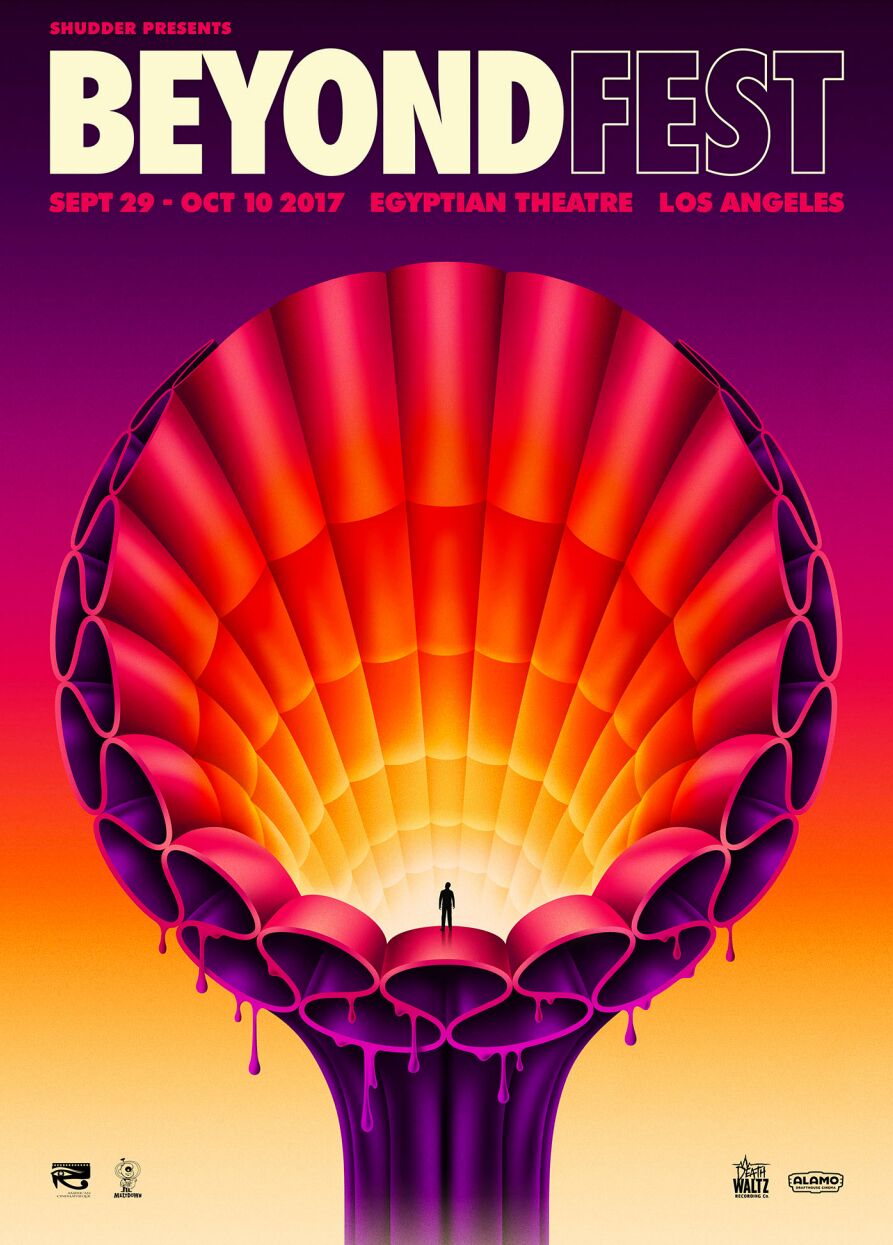
Beyond Fest 2017 Poster Art JPG

The most popular genre film festival in the United States, Beyond Fest, is finally back in Hollywood, and movie fans could not be more excited. Starting on September 29th and going through October 10th, Beyond Fest will be reveling in cinematic madness at the Egyptian Theatre in Hollywood with screenings of classic movies and West Coast premieres of new ones, so you can expect a great 12 days of wonderful mayhem featuring special guests and restored versions of movies which were always meant to be seen on the silver screen. Co-produced by Shudder, the festival aims to raise funds for the non-profit American Cinematheque.

Among the most anticipated events this year will be Dario Argento’s “Suspiria” which will be presented in both its 4K restoration and its 35mm Italian cut. Argento will be making an appearance for this along with Udo Kier and Barbara Magnolfi. Arnold Schwarzenegger will also be on hand for the 30th anniversary of two of his most famous films, “Predator” and “The Running Man.” Two of horror’s greatest directors who passed away this year, George Romero and Tobe Hooper, will be honored with screenings of their most famous movies, “Night of the Living Dead” and “The Texas Chainsaw Massacre.”

As for those new movies making their premiere at the festival, they include “Brawl in Cell Block 99” directed by S. Craig Zahler and starring Vince Vaughn, “The Killing of a Sacred Deer” which is Yorgos Lanthimos’ follow-up to “The Lobster,” and the first couple of episodes of the Amazon Prime series “Jean-Claude Van Johnson” which, of course, stars Jean-Claude Van Damme, the Muscles from Brussels.

Tickets are now available through American Cinematheque and Fandango, and you can keep up with the festival’s latest developments on Facebook, Twitter, and their website.

Here are the movies being shown at Beyond Fest 2017:

BABY DRIVER

Director: Edgar Wright

Country: USA

Runtime: 102 min.

Year: 2017

GUESTS: Edgar Wright & Walter Hill in Person


BAD BLACK (free screening)

West Coast Premiere

Director: Isaac Nawibana

Country: Uganda

Runtime: 60 minutes / Year: 2016


BATMAN: MASK OF THE PHANTASM

Directors: Bruce Timm, Eric Radomski

Country: USA

Runtime: 76 min.

Year: 1993

GUESTS: Andrea Romano plus voice actors TBA in Person


BEST F(R)IENDS

World Premiere

Director: Justin MacGregor

Country: USA

Runtime: 95 min.

Year: 2017

GUESTS: Tommy Wiseau, Greg Sestero and Justin Macgregor in Person


BRAWL IN CELL BLOCK 99

West Coast Premiere

Director: S. Craig Zahler

Country: USA

Runtime: 132 min.

Year: 2017

GUESTS: S. Craig Zahler, Vince Vaughn and Udo Kier in Person


DOUBLE IMPACT

Director: Sheldon Lettich

Country: USA

Runtime: 110 min.

Year: 1991 / 35mm

GUEST: Jean-Claude Van Damme and Sheldon Lettich in Person


THE DRIVER

Director: Walter Hill

Country: USA

Runtime: 90 min.

Year: 1978 / 35mm

GUESTS: Edgar Wright & Walter Hill in Person


HELLRAISER

Co-presented with Death Waltz Records + Friday Night Frights

Director: Clive Barker

Country: USA

Runtime: 94 min.

Year: 1987 / 35mm


ICHI THE KILLER – Digital Restoration

West Coast Premiere

Director: Takashi Miike

Country: Japan

Runtime: 129 min.

Year: 2001


HOWARD THE DUCK – 70mm

Director: Willard Huyck

Country: USA

Runtime: 110 min.

Year: 1986

GUESTS: Lea Thompson in Person


JEAN-CLAUDE VAN JOHNSON – Episodes 1 & 2

Presented by Amazon

World Premiere

Director: Peter Atencio

Country: USA

Runtime: 60 min.

Year: 2016

GUESTS: Jean-Claude Van Damme, Peter Atencio, Dave Callaham, Kat Foster, Moises Arias.


THE KILLING OF A SACRED DEER

West Coast Premiere

Director: Yorgos Lanthimos

Country: UK, Ireland

Runtime: 109 min.

Year: 2017


MAYHEM

West Coast Premiere

Director: Joe Lynch

Country: USA

Runtime: 86 min.

Year: 2017

GUESTS: Joe Lynch and cast in person


NAPOLEON DYNAMITE – THE BOOTLEGGED EDITION

Theatrical Premiere

Director: Jared Hess

Country: USA

Runtime: 96 min.

Year: 2004

GUESTS: Cast and crew in person


NIGHT OF THE LIVING DEAD – 4K Restoration

West Coast Premiere

Director: George A. Romero

Country: USA

Runtime: 96 min.

Year: 1968

GUESTS: Mick Garris & Masters of Horror in Person


OPERA (aka TERROR AT THE OPERA)

Director: Dario Argento

Country: Italy

Runtime: 100 min.

Year: 1987

GUESTS: Dario Argento in Person


PHANTOM OF THE PARADISE

Co-presented with Creature Features

Director: Brian De Palma

Country: USA

Runtime: 92 min.

Year: 1974

GUESTS: Paul Williams in Person


PREDATOR

Director: John McTiernan

Country: USA

Runtime: 107 min.

Year: 1987 / 35mm

GUESTS: Arnold Schwarzenegger in Person


RAWHEAD REX 4K Restoration

Co presented with Cinematic Void and Friday Night Frights

West Coast Premiere

Director: George Pavlou

Country: USA

Runtime: 89 min.

Year: 1986


THE ROOM

Director: Tommy Wiseau

Country: USA

Runtime: 99 min.

Year: 2003

GUESTS: Tommy Wiseau, Greg Sestero and Guests in Person


THE RUNNING MAN

Director: Paul Michael Glaser

Country: USA

Runtime: 101 min.

Year: 1987 / 35mm

GUESTS: Arnold Schwarzenegger in Person


SUSPIRIA – 4K Restoration

Los Angeles Premiere

Director: Dario Argento

Country: Italy

Runtime: 100 min.

Year: 1977

GUESTS: Dario Argento, Udo Kier, Barbara Magnolfi in Person


SUSPIRIA – 35mm Italian Cut

Los Angeles Premiere

Director: Dario Argento

Country: Italy

Runtime: 98 min.

Year: 1977

GUESTS: Dario Argento and Barbara Magnolfi in Person


THE TEXAS CHAINSAW MASSACRE

Director: Tobe Hooper

Country: USA

Runtime: 83 min.

Year: 1974

35mm

GUESTS: Mick Garris & Masters of Horror in Person


SHUDDER THEATRE (at Egyptian Theatre)

78/52 (Free Screening)

West Coast Premiere

Director: Alexandre O. Philippe

Country: USA

Runtime: 91 min.

Year: 2017


BEFORE WE VANISH (Free Screening)

West Coast Premiere

Director: Kiyoshi Kurosawa

Country: Japan

Runtime: 129 min.

Year: 2017


BETTER WATCH OUT (Free Screening)

West Coast Premiere

Director: Chris Peckover

Country: Australia, USA

Runtime: 85 min.

Year: 2016


COLD HELL (Free Screening)

West Coast Premiere

Director: Stefan Ruzowitzky

Country: Austria

Runtime: 92 min.

Year: 2017


THE GRAPES OF DEATH AKA Les Raisins de La Mort (Free Screening)

Director: Jean Rollin

Country: France

Runtime: 90 min.

Year: 1978


HAUNTERS: THE ART OF THE SCARE (Free Screening)

West Coast Premiere

Director: Jon Schnitzer

Country: USA

Runtime: 88 min.

Year: 2017


JAILBREAK (Free Screening)

West Coast Premiere

Director: Jimmy Henderson

Country: Cambodia

Runtime: 92 min.

Year: 2017


LES AFFAMES (Free Screening)

West Coast Premiere

Director: Robin Aubert

Country: Canada

Runtime: 100 min.

Year: 2017


MOHAWK (Free Screening)

West Coast Premiere

Director: Ted Geoghegan

Country: USA

Runtime: 91 min.

Year: 2017


MY FRIEND DAHMER (Free Screening)

West Coast Premiere

Director: Marc Meyers

Country: USA

Runtime: 107 min.

Year: 2017


REVENGE (Free Screening)

West Coast Premiere

Director:  Coralie Fargeat

Country:   France

Runtime:  108 min

Year:  2017


SEQUENCE BREAK (Free Screening)

West Coast Premiere

Director:  Graham Skipper

Country:   USA

Runtime:  108 min

Year:  2017

GUESTS: Graham Skipper, Cast and Crew in Person


THE SLUMBER PARTY MASSACRE (Free Screening)

Co-presented by Etheria and Cinematic Void

Director: Amy Holden Jones

Country: USA

Runtime: 77 min.

Year: 1982

GUESTS: Amy Holden Jones in Person

Double Feature with SLUMBER PARTY MASSACRE II


THE SLUMBER PARTY MASSACRE II

Co-presented by Etheria and Cinematic Void

Director: Deborah Brock

Country: USA

Runtime: 77 min.

Year: 1987

GUESTS: Deborah Brock in Person

Double Feature with SLUMBER PARTY MASSACRE

No, I Haven’t Seen It Until Now: ‘The Texas Chainsaw Massacre’

The Texas Chainsaw Massacre poster

Tobe Hooper’s “The Texas Chainsaw Massacre” is a movie I had heard a lot about over the years, and I have watched numerous documentaries about its making to where it felt like I had seen it even though I had not. It wouldn’t be until the year 2000, just after I graduated from college, when I sat down to watch it on my new 27-inch JVC television set. I just started my subscription with Netflix, and this was one of the first movies I rented from it.

“The Texas Chainsaw Massacre” came out in 1974, so I went into it thinking there was no way it could be as horrifying now as it was when first released. I sat down in front of my TV prepared to eat my dinner, a Cedarline Mediterranean Stuffed Focaccia, while watching this horror classic. One of the first images, however, was of a pair of rotting corpses draped over a gravestone in a cemetery, and I decided it would be better to turn off the TV and finish my dinner before continuing. Once I was done and tossed my plate into the dishwasher, I turned the set back on and continued watching, believing it would be a piece of cake to sit through this lauded horror classic.

It has now been over 40 years since the original “Texas Chainsaw Massacre” was unleashed on the world, but when I watched it on DVD, I had no idea it would prove to be one of the most unnerving and brutal motion pictures I ever sat through. I figured no movie going experience would ever be more intense than “Requiem for a Dream” was when I saw it in Hollywood with a sold-out audience, but then I watched Hooper’s horrifying masterpiece. After it was over, I wondered to myself if I could have possibly endured this film had I first watched it on the silver screen.

“The Texas Chainsaw Massacre” opens with a crawl, narrated by John Larroquette, stating it is based on a true story, but it turns out this was not the case. However, certain plot elements were inspired by serial killer Ed Gein whose acts of violence came to inform many other movies including Alfred Hitchcock’s “Psycho.” We are introduced to a group of two siblings and three of their friends as they travel out to Texas to visit the grave of their grandparents. As you can imagine, what they discover far surpasses any imagined fears anyone could have endured when they were young.

I knew I was in trouble when this group of kids picked up a hitchhiker (played by Edwin Neal). This guy looked like he hadn’t showered in weeks as his face and hair seemed much slimier than anyone else’s on planet Earth. Seeing him cut himself and one of the kids had my hair standing on end, and this was just the beginning. The horror this movie had to offer was just starting, and the intensity would only increase exponentially from there.

By the time everyone got to the house, I was already sweating. I hadn’t seen the movie, but I already knew what was coming. People don’t just die a horrible death in “The Texas Chainsaw Massacre,” they die a realistic one. When Leatherface (Gunnar Hansen) smashes one guy on the head with a hammer, the guy falls down and convulses horribly. Watching this sequence, I felt this is the way a person would react if bashed in the head with the hammer, and it showed me this would not be your average horror movie in the slightest.

What’s especially surprising about this film is it’s not as bloody or gory as you might expect. I figured there would be an ocean of blood on display, but instead it’s what I didn’t see which really messed with my head. We see Leatherface impale the beautiful Pam (Teri McMinn) on a meat hook, but we never see the hook go into her body. The expression you see on Pam’s face ends up feeling all the more unbearably real as a result because you can’t help but wonder how the hook went in and of how long she could hope to last before all her blood drained out.

In some ways, the powerful effect “The Texas Chainsaw Massacre” gives off was something of an accident. When making this movie, Hooper was aiming for a PG-rating and even talked with members of the MPAA to find out how he could earn such a rating for a horror film like this one. A lot of the advice het got was to not show any body penetration or the chainsaw slicing into human flesh, and of course, he needed to limit the amount of blood shown. But instead of getting the PG-rating, Hooper saw his film get an X as these guides he was given proved to have the opposite effect. The fact it managed to get an R seems astonishing even by today’s standards. Still, this seems as welcome an accident as the shark not working on the set of “Jaws” was.

This could have been nothing more than a mere horror flick of the exploitation kind, but there really is a lot of artistry on display throughout. The acting all around is never weak, cinematographer Daniel Pearl gives everything a dirty look which will make you want to take a shower quickly after this movie’s conclusion, and the sound design makes you feel like you are in a real-life slaughterhouse. Hooper may have had a simple mission in mind while making this horror classic, but it turned into something far scarier than he ever intended.

Leatherface remains one of the scariest villains any horror movie could ever hope to have, and it’s a real shame this was the only time Gunnar Hansen played this iconic character as he brought a lot of thought and an instinctual energy to the role. Seeing him wander around in that human flesh-made mask of his, I started to fear what Leatherface looked like without the mask.

But while I want to give credit to all the other actors, I have to single out Marilyn Burns who plays Sally Hardesty. While she has an easy time during the movie’s first half, the last half has her screaming endlessly to where you want to see her get a Purple Heart instead of an Academy Award for her work. She screams and screams and screams to where I wondered just how tortured she felt throughout shooting. The closeup of her eyes while she is a guest at the most devilish of family dinners had me staring at the screen in utter horror. Even though I knew exactly how this movie would end, I was still gripped as I became desperate for Sally to escape any and every which way she could.

The movie’s last half is a frenzy to where I wondered how I could have survived this had I first watched it on the silver screen. Watching it on my television set with the volume turned down was hard enough as I wanted Sally’s hellish experience to end sooner rather than later, but her torture dragged on longer to where I refused to believe “The Texas Chainsaw Massacre” is a mere 84 minutes long. When the screen finally went to black, it felt like such a welcome relief as I wondered just how much more I could have sat through had Hooper extended things out to two hours.

“The Texas Chainsaw Massacre” has long since earned its place alongside the greatest horror movies ever made, and the fact it hasn’t lost any of its power to unnerve and horrify the bravest of film buffs speaks to a power most filmmakers hope to have in their lifetime. The only other horror movies which equal this one’s power to terrify decades after their release are John Carpenter’s “Halloween” and William Friedkin’s “The Exorcist.” Some horror movies play better on the big screen than on television, but this one proves to be every bit as effective on both.

I still have yet to watch any of the sequels as I feel like I am still recovering from this cinematic experience over 10 years later. I did watch the Platinum Dunes remake, but the only thing about it which truly unnerved me was when Leatherface took off Eric Balfour’s face and made it into a mask for himself. As I write this review, the prequel “Leatherface” is about to released in theatres everywhere. Filmmakers can only hope to equal Hooper’s film, but it hasn’t stopped them from trying.

* * * * out of * * * *

No, I Haven’t Seen It Until Now: ‘Platoon’

Platoon movie poster

I think its use of “Adagio for Strings” by Samuel Barber is one of the reasons I stayed away from watching “Platoon” for the longest time. It still is one of the saddest pieces of music I have ever heard, although it would later be eclipsed by the even more emotionally devastating “Symphony No. 3” (subtitled “Symphony of Sorrowful Songs”) by Henryk Górecki which Peter Weir used to powerful effect in “Fearless.” Plus, the way the violence in “Platoon” was described to me by friends at school, like when a soldier gets his arms blown off by a bomb, filled my mind with horrible images which had no business infecting my mind at such a young age.

It took buying the 25th anniversary edition of “Platoon” on Blu-ray for me to finally sit down and watch it. I hadn’t even seen the movie yet, and here I am buying it at Costco for $11.99 By then, I had seen many Oliver Stone movies like “Born On the Fourth of July,” “JFK,” and “Natural Born Killers,” so I was long overdue to give this Best Picture winner a look.

Before “Platoon,” I had seen “Apocalypse Now,” “The Deer Hunter,” and “Full Metal Jacket” which viewed the Vietnam War from different perspectives. The one thing they had in common was they were directed by filmmakers who had never served in Vietnam. Stone, however, had served there, so “Platoon” is largely autobiographical for him. As a result, this is probably the first truly realistic depiction of the Vietnam War anyone could have ever hoped to see in a movie.

Charlie Sheen stars as Chris Taylor, and it’s interesting watching him here as this was long before his days on “Two and a Half Men.” Taylor serves as the narrator and most relatable character as, like him, we are coming into this war fresh-faced, naïve and innocent. The first scene where Taylor comes off a plane with a bunch of newbies is an omen of what is to come. Seeing body bags filled with fallen soldiers and crossing paths with those men who have seen the war up close quickly gives you a good idea of what Taylor will probably end up looking like at the movie’s end.

Sheen is perfectly cast as he makes Taylor go from being a newbie to an experienced combat veteran in little time. It’s a shame Sheen has since pissed away a good portion of his talent to where he’s pretty much playing a version of himself as some drunken womanizer, be it on a television show or a movie. His work here is a strong reminder of how good he can be as he is utterly believable in a role no one would cast him in today.

Seeing Taylor struggle on through the Vietnamese jungle after the opening scene is a quick indication of how unprepared he is for combat. Like many wars Americans have fought, it was on the soil of another country they were completely unfamiliar with. We see how this puts them at an immediate disadvantage as they look completely exhausted and depleted even at the start of the day.

When it comes to Vietnam, Taylor makes it clear he is a unique case as he tells everyone he dropped out of college to volunteer and serve in the war. This makes him seem like part of a generation raised to believe fighting in a war is both noble and infinitely patriotic, something to be proud of. Taylor also feels that not only poor kids should be sent to fight instead of the rich, but he soon learns the truths about war, one of which is given to him by King (Keith David) who tells him something which resonates strongly even today: “You got to be rich in the first place to think like that. Everybody know, the poor are always being fucked over by the rich. Always have, always will.”

The other two performances worth noting are given by Willem Dafoe as Sergeant Elias and Tom Berenger as Sergeant Barnes. Both figure prominently in Taylor’s tour of duty, and even he says these two were fighting for his soul. Dafoe is mesmerizing as the idealistic soldier who sees America’s involvement in Vietnam ending badly. The Christ-like pose he gets in, whether its holding a machine gun over his shoulders or as he runs from the Vietnamese soldiers, is no mistake. Elias ends up dying for the sins of his fellow soldiers while doing his best to protect them.

Berenger’s performance as Barnes ranks among his best ever. He succeeds in getting inside the head of someone who has been shot at so many times to where they are forever psychologically altered. Having seen death up close, Barnes acts as if he has surpassed it. In some ways, Berenger doesn’t need those makeup scars to show you how many firefights his character has been in as watching him walk through the jungle, completely unaffected by explosions going off around him as if he were Colonel Kilgore in “Apocalypse Now,” is more than enough proof of this.

Stone makes you feel the blood, sweat, tears and exhaustion these soldiers experience, and it’s all so vivid to where we come out of “Platoon” feeling like war veterans ourselves. It leaves all those other movies which make war seem like fun to utter shame. Coming from a filmmaker who has seen this particular war up close, we cannot deny the authenticity he puts on display.

“Platoon” also captures how quickly people can lose their moral bearings in the face of war. The scene in the village is by far the movie’s most unnerving moment as we watch Taylor and the other soldiers get overcome by their boiling anger and hatred. What’s so horrifying is that while you would like to believe you would have acted differently than they did, there’s no way you can be sure if you haven’t been in combat. The line between soldier and killer gets seriously blurred here, and it’s not hard to understand why.

Before filming began, the cast was treated to an intensive military training course under the tutelage of former Marine Captain Dale Dye who also served in Vietnam. They were made to dig foxholes and subjected to forced marches and nighttime ambushes which utilized explosions. This succeeded in breaking them down, and you can see and feel the weariness in them throughout. It more than adds to the sheer realism we see here.

There’s no victory to be found in “Platoon,” only death and destruction on both sides of the conflict. The movie gets at the truth of war which Danny DeVito talked about in “The War of the Roses” when he said, “There is no winning! There’s only degrees of losing!”

The violence and death portrayed may not seem quite as visceral as it did when the movie first came out. There have been many other war movies since like “Saving Private Ryan” which featured scenes of such brutal violence that no other filmmaker could possibly match. Plus, we all know about the Vietnam War in general and big a mistake it was for America for many years now. Still, “Platoon” is nothing less than powerful as its vision of the craziness and insanity of war is impossible to shake once you have seen it.

The Vietnam War may be a thing of the past, but the lessons we learned from it still need to be taught over and over again. America keeps fighting wars which, whether necessary or not, continually overstay their welcome and leave a lot of people feeling angry and betrayed. Oliver Stone certainly understands that, and he makes “Platoon” into a movie which shows the damage of war and why we can’t just let the past be the past.

* * * * out of * * * *

‘Encounters at the End of the World’ Takes Werner Herzog to Antarctica

Encounters at the End of the World poster

As a movie buff, I have to admit it is shameful on my part I have not seen more movies directed by Werner Herzog. I did see “Grizzly Man,” a brilliant documentary about Timothy Treadwell and his obsession with the grizzly bears, and like all brilliant documentaries made today, it did not get an Oscar nomination for Best Documentary. Thankfully, the Oscars did not ignore his documentary “Encounters at the End of the World” which is an endlessly fascinating look at his travels and discoveries in Antarctica. It is at times an incredibly beautiful look at an icy landscape, at others a bleak look at the inevitable end of the human race. At the same time, it also a rather humorous and interesting look at the people who risk their lives by living there to study the cutting-edge world of science.

Herzog narrates “Encounters at the End of the World,” and he allows us to go inside his head on how he views the icy wilderness of Antarctica, and of how he views the people and wildlife there. He makes it clear from the onset that when he was asked by Discovery Films to do this documentary, he agreed to it on the condition he would not be forced to do a “fuzzy” movie with penguins in it (a little jab at “March of the Penguins”). The first 10 or so minutes deal with the McMurdo Research Station which is full of buildings and tractors constantly moving all over the place. Herzog finds himself wanting to get away from McMurdo right away as he feels it is corrupting the Antarctic island with the inhabitants’ own self-interests as it is filled with horrors there like “yoga classes.”

Eventually, he ventures out of the encampment and into the far-off research facilities removed from the town. We see him and others there being put through safety drills and emergency preparations to deal with the worst of circumstances. The group leader speaks of how the wind can get so bad to where you can’t see even your hand in front of your face or hear yourself talk. This lends a chilling effect to an already chilled environment, and while it is exciting to be there, you feel the danger of it throughout.

The best part of this documentary, and the reason I wanted to see it, is the underwater footage where you follow divers underneath the glaciers of Antarctica. The visuals on display here are both beautiful and extraordinary to see, and there is a unique beauty to the underwater landscape you would be hard pressed to find anywhere else. This is all reminiscent of James Cameron’s documentary “Aliens from the Deep” in which he went with scientists in submersibles down to the bottom of the ocean to see what things live down there. But while Cameron’s documentary was fascinating, this one is not encumbered with 3D effects and of looks at where the future will take us. It deals with the world we exist in right now, and it doesn’t hide from how everything will disappear in the distant future.

I was also eager to find out how these scientists were able to dive down into waters which they would not be expected to stay alive in for more than 5 minutes. They wear special suits which are heavily insulated to protect them from the cold, and they wear gloves that threaten to make them look like aliens from another planet. Herzog says the water they are diving into is -2 degrees Celsius, and the divers go in with no ropes attached to their bodies as it will give them more room to move around. Still, this is very dangerous work they are doing, and if they get lost underneath the glacier, they will become a permanently frozen resident. You feel the danger of what they are doing, but you end up getting overwhelmed by the spectacular visuals they discover underneath it all.

Another fascinating moment comes when some scientists on the island play recordings of the sounds the local seals make underwater. The seals themselves steal some scenes from the human actors as they lie back lazily in the sun and look too tired to get up and acknowledge anybody. The underwater sounds of the seals seem so unreal, and I could not help but believe they were all computer generated. But they are indeed the real thing, and you experience the sounds along with Herzog and the scientists as they put their ears down to the ground and take it all in. It’s an amazing moment to witness.

The other thing I really loved was how it was just not another average science documentary filled with talking heads telling you all the things you need to know about the environments they are studying. There is science talk throughout the documentary which is fine, but Herzog also looks at the individual personalities he comes into contact with throughout his journey. Along with Herzog, you also wonder what could make all these people come to one of the most isolated places on the face of the earth and of how they stay there for so long.

Among the people Herzog meets throughout his travels are a philosopher who has a great quote at the end of the movie about how the universe is looking at itself through our eyes, and how we give life to everything in the way we view it. We meet one of the scuba divers who has a pensive moment where he takes in the fact he is about to making his very last dive into the icy depths. Then Herzog meets up with a Russian who had escaped the Soviet Union after the fall of the Iron Curtain, and the Russian almost loses it emotionally when he tries to describe to him how bad things were when he left. This Russian also has an escape plan at the ready with a big pack of supplies in case he needs to flee once again.

There are a couple of other people in the documentary who just talk and talk about themselves and the adventures they have been on. Herzog cuts them off in his narration by saying, “To make a long story short…”

“Encounters at the End of the World” does have a bleak view of humanity’s future, and the scientists are fully aware of this as temperatures continue to rise to where it is inevitable that ice will eventually melt completely in the future. This is also shown as we see a group of scientists watching “Them,” a 1950’s B-movie about radioactive ants which have grown to an enormous size. It turns out to be one of the many apocalyptic movies they show to each other from week to week. I wonder if they have ever gotten around to watching John Carpenter’s “The Thing.”

At the center of “Encounters at the End of the World” is not just Antarctica, but Herzog himself. His narration throughout could have been annoying, but it serves to illuminate what a funny and interesting person he is. Clearly, he is attracted to madness in various forms throughout the world as is shown here and also in “Grizzly Man.” I imagine this is a big theme in all of his movies. We discover all there is to see through his eyes, and of how he views the beauty of the ice and how it forms. As a result, it does make me want to see more of his movies.

Just remember what one of the men says in this documentary, and remember it always:

“Global warming is real.”

* * * * out of * * * *