Hello people. My apologies, I have not been writing much recently. I kind of hit a brick wall and have been a bit depressed about my current living situation. As a result, I am trying something a little different; I will be doing a movie review on camera. Sooner or later, it had to happen.
This review will be of Ridley Scott’s historical epic “Napoleon” which stars Academy Award winner Joaquin Phoenix as Napoleon Bonaparte, the French military commander and leader who came to prominence during the French Revolution, and his brutal military campaigns during the Revolutionary War are the tales of history which are impossible to forget, especially considering how it resulted in millions of lives lost. The movie focuses on Napoleon’s rise to power, and of his all-consuming relationship with Joséphine de Beauharnais, played in a fantastic performance by Vanessa Kirby (the White Widow in the “Mission: Impossible” franchise).
Scott’s “Napoleon” works best when it focuses on the tortured relationship between Napoleon and Josephine as Phoenix and Kirby make quite the acting pair whenever they are together onscreen. Watching them face off with one another is endlessly enthralling, and it helps to make up for Scott and company do not dig enough into Napoleon’s psychology. My problem is the film tends to keep him at an arm’s length distance, and I came out of it feeling like I could have learned more about the man. Nevertheless, Scott has crafted a four-hour cut of the film which will debut on Apple TV in the near future. That’s right, it will be streaming before we all know it.
Please check out the review below and subscribe to The Ultimate Rabbit You Tube channel if you have not already. It is not too long, and I did my best to make sure it only lasts a fraction of “Napoleon’s” running time which is 157 minutes.
The following review was written by Ultimate Rabbit correspondent, Tony Farinella.
In the interest of transparency, I must admit I either saw “The Nun” and it was so bad and I completely erased it from my memory, or I haven’t seen it at all. I’m leaning toward the latter. However, I’m pleased to report “The Nun II” was a very satisfying cinematic achievement. In fact, I need to go back and watch the original and see how I feel it holds up compared to this sequel. This is a film I went into with very low expectations, and it really impressed me with its visual style, its acting, and its effective use of mood and dread to tell a compelling story.
“The Nun II” opens with a scene that is sure to catch your attention and hook you right away. It’s a scene in which a priest is raised in the air and set on fire in a church located in Tarascon, France. This takes place in the late 1950’s. Our film then takes us to 1960 and the events following the original “Nun” film where we see Sister Irene (Taissa Farmiga) who is now located in Italy. From what I gathered through flashbacks, she survived a demon in the original film, so she’s well-versed in demon attacks and how to combat them. We also meet Maurice (Jonas Bloquet), a servant/janitor in France who is supportive and encouraging to a young student named Sophie (Katelyn Rose Downey) and her mother Kate (Anna Popplewell), a schoolteacher.
Sister Irene is called back into action when the Cardinal informs her of a number of deaths taking place all over Europe. He suspects they are at the hands of the demon Valak. Since Sister Irene survived the demon the last time, he believes she will be able to put a stop to this madness. She brings along Sister Debra (Storm Reid), as Debra is starting to question her beliefs and wants to see a real miracle. If there is anyone who can get her to believe, it is definitely Sister Irene.
While all of this is happening, the demon Valak keeps showing up and disappearing in visions and also in real life. I’m not a big fan of jump scares in cinema, but this film is very effective in knowing when and how to use them. They really got to me, which is not something that happens easily. In a lot of films, they tend to come across as premeditated, and you can see them coming from a mile away. Here, they really build up to and use them when you least expect. Director Michael Chaves also does a splendid job in creating a film which is moody, creepy and very unnerving. The film runs at 110 minutes, and they probably could have trimmed maybe 10-15 minutes off the running time to make it even better. Near the end, it feels like there were a few too many scenes thrown in there which weren’t entirely necessary. It’s still a good film, and a big part of that is the performance of Taissa Farmiga. She’s great at being vulnerable, tough and easy to like.
What I enjoyed most about this film is the fact it explained its backstory and history in great detail. In most horror films, they tend to leave out any backstory or character development. With Maurice, we understand why certain things are happening to him. We learn more about the demon Valak and his motivation for why he’s possessing and killing people. With Irene, we learn why she’s having visions of the demon. Even with Debra, we know why she has trouble believing in her faith and needs to see a miracle. The screenplay really knows the devil is in the details here (put intended), and in order to tell this story the right way, we need the protagonists and antagonists to be properly fleshed out.
All in all, people are going to see a movie like “The Nun II” because they want to be scared. As a scary movie, it succeeds because we are invested in the characters and seeing them succeed. There are high stakes here. They really took their time to build up to the jump scares and big moments. Lately, I’ve been finding myself more and more surprised by certain movies, which is always a delightful treat. This could have easily been a cash-in sequel, but they decided to make a worthwhile film that is worth your money and more importantly your time. Spooky season might be over, but you won’t be disappointed by the disturbing and eerie filmmaking on display in “The Nun II.”
* * * out of * * * *
4K Info: “The Nun II” is released on a single-disc 4K from Warner Brothers Home Entertainment. It also comes with a digital copy of the film. The film has a running time of 110 minutes and is rated R for action/violence, some bloody images, language and brief suggestive material.
4K Video/Audio Info: The HDR on this film is really, really potent. On darker films like this, it has a way of making the film look even scarier. There are tremendous spooky shadows throughout the film. It is also dark without being too dark. It’s one of the many things I love about 4K—even though this film looks bleak and otherworldly, it’s still a clean, flawless transfer. They didn’t overdo it by making it so dark and dreary you were unable to see what was happening on screen. We also get a really, really nice Dolby Atmos track, which pops during the jump scares. There are also subtitles in English, Spanish, and French. This is a top-notch release from Warner Brothers.
Special Features:
Demons in Paradise – featurette (5:35)
Handcrafter Nightmares – featurette (7:28)
Should You Buy It?
If you were a fan of the original “Nun” or even if you haven’t seen it, like myself, this is a great stand-alone release from Warner Brothers. There are moments where they stop and explain things if you haven’t seen the original, which is very helpful. The 4K is pitch-perfect with a really, really good Dolby Atmos soundtrack, and the picture quality definitely gets an A. There are only two special features here, and I would have certainly enjoyed a commentary track from the director. With all of that being said, if you are interested in buying this for the movie and for the 4K, I would absolutely recommend adding this film to your horror collection. I’ve always been a big fan of “The Conjuring” universe and their dedication to putting out quality horror films. While they don’t always succeed, they have way more hits than misses. This film has somewhat of an ambiguous ending, and I wouldn’t mind if they did a third film, as long as it’s done with the quality and care they devoted to this one. It’s truly remarkable what they have been able to do with all “The Conjuring” cinematic universe. They have a lot of interesting stories to pluck from, and they bring in creative and fresh writers and directors to bring unique perspectives to the series.
**Disclaimer** I received a copy of this film from Warner Brothers to review for free. The opinions and statements in the review are mine and mine alone.
The following review was written by Ultimate Rabbit correspondent, Tony Farinella.
For those of you who keep up with my reviews on this website, you are familiar with my feelings on most superhero films. It is not my favorite genre, but I’m always willing to give it a try and hope for the best. It hasn’t happened in a while, which is why I was so pleased to be completely enamored with “Blue Beetle.” I went into the film knowing absolutely nothing about it, and it ended up being one of the more enjoyable viewing experiences I’ve had this year. When you sit down to watch a movie, you truly never know what is going to transpire on screen. It’s the beauty of cinema.
Prior to seeing “Blue Beetle,” I had never even heard of this character in any shape or form. After watching this movie, I hope to see more of this character, especially if he’s played by the uber-talented Xolo Maridueña, who is terrific on “Cobra Kai.” However, after the low box office numbers, I wonder if it’s a realistic expectation.
Maridueña stars as Jaime Reyes, a recent college graduate with a degree in pre-law, who returns home to Palmera City to discover a plethora of problems for his family. They are struggling to keep their heads above water as the father had a heart attack, recently lost his job, and they are about to lose their family home. However, he believes if they stick together, they can find a way to make it work.
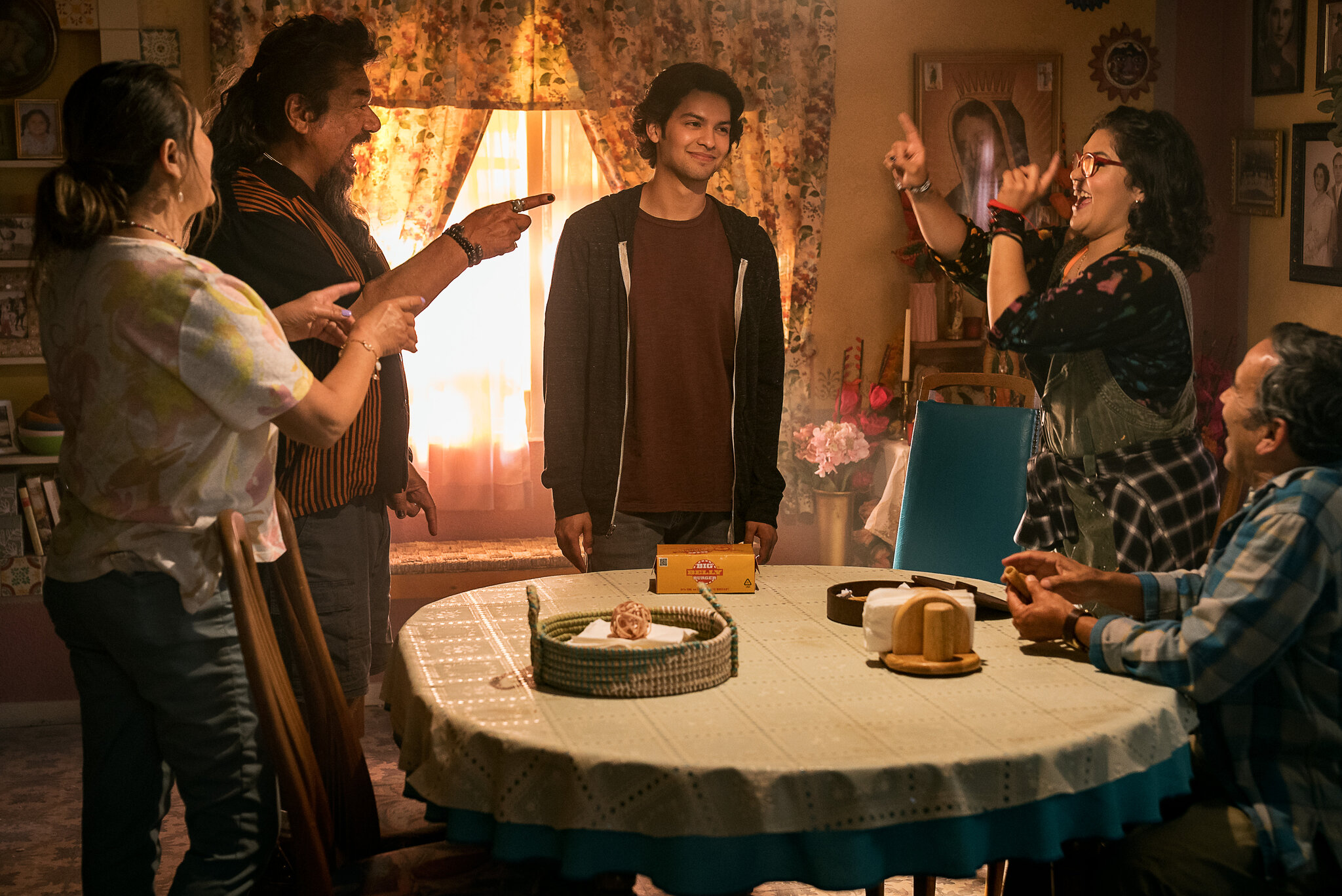
Family is at the heart of “Blue Beetle,” and the film has a big old heart attached to it which I absolutely adored. This is a family of fun, eccentric and entertaining characters. You have the wise-cracking sister, Milagro, played wonderfully by Belissa Escobedo. You have the tough, no-nonsense Nana Reyes played by Adriana Barraza. There is also the pot-smoking conspiracy theorist Uncle Rudy played by George Lopez. All of these characters are unique and fun in their own way. They feel like a real family as the chemistry between all of the characters on screen is off-the-charts.
When Jaime discovers that jobs are hard to come by after college, he gets one with his sister working for the CEO of Kord Industries, Victoria Kord (Susan Sarandon), at their mansion. After Jaime and Milagro end up losing their jobs when they are caught eavesdropping on a conversation between Victoria and her niece, Jenny (Bruna Marquezine), Jaime must figure out what to do next. Jenny was impressed by the way Jaime stuck up for her and might have a job opportunity for him. When he goes to meet up with her, she hands him the Scarab, an artifact which holds special powers. She tells him not to open it, but when his family opens it for him, he soon finds out that his life will never be the same again.
With this Scarab, it chooses you, you don’t choose it. It has chosen Jaime, and he has to figure out how to handle the responsibilities which come with it. He’s also dealing with a nosey family, a newly developing crush on Jenny, and having to fight off Victoria who wants to have the Scarab to create a series of One-Man Army Corps. He also learns that Jenny’s father was Ted Kord, a vigilante named Blue Beetle who left the family company because they were more interested in creating mayhem instead of working for the greater good. Victoria is also not pleased she was overlooked by her father in favor of her brother when it came time to take over Kord Industries.
“Blue Beetle” is a film I was able to follow with relative ease, which is a huge accomplishment considering I didn’t know anything about it or the character as previously mentioned. I do believe a comic book movie should be able to stand on its own two feet for first-time viewers and long-time fans. This film does this for first-time viewers, and I imagine fans of the “Blue Beetle” comic will not be disappointed. I was also quite pleased to see the film really lean into the ethnic dynamics of the family. It’s rare to see a film which is almost entirely composed of Latino actors. Even though I’m an Italian-American, I felt as though the film was accessible to everyone. Although, I imagine you will enjoy it even more if you are Latino as some of the jokes and TV shows they reference will be more in your wheelhouse.
This film is about 15-20 minutes too long, but it is never boring or uninteresting. Some of the scenes involving lasers, blades and various high-flying actions can be a little repetitive, but I thought the special effects looked terrific and they were still fun to watch. This is one of the best superhero movies I’ve seen in a while. As a matter of fact, it’s my favorite superhero movie I’ve seen since 2022’s “The Batman.” It has so much going for it: the cast, the love story, the backstory, the acting, and the fact it wears its big heart on its sleeve.
I like when my superhero movies are grounded in reality with a sense of wonder, and “Blue Beetle” knows all of the right notes to hit. Maridueña is perfect at getting his ass kicked and being a likable underdog to root for, as we have seen in this film and also in “Cobra Kai.” He’s incredibly likable, and he has the emotional elements of the character down pat along with the physical transformation as well. The family is hilarious, and I loved spending time with them. This is a fun superhero movie with a tremendous sense of humor. I really enjoyed “Blue Beetle,” and I hope it finds a second home with this physical media release.
* * * ½ out of * * * *
4K Info: “Blue Beetle” is released on a single 4K disc from Warner Brothers Home Entertainment. It has a running time of 127 minutes and is rated PG-13 for sequences of action and violence, language and some suggestive references. It comes with a digital copy of the film as well.
4K Video/Audio Info: Once again, we are treated to a tremendous Dolby Vision transfer. I loved the look of this movie on 4K. It has a gorgeous blue hue throughout, and when the suit lights up, it looks absolutely incredible. It’s an eye-popping transfer. The Dolby Atmos soundtrack also brings the film to life in your home theater. Subtitles are included in English, Spanish and French.
Special Features:
“Generations: Blue Beetle” – 4-part documentary
Told in distinct chapters, explore the journeys of actors and filmmakers bringing “Blue Beetle” to the big screen for the first time ever. Audiences will be immersed in the POV of filmmakers who showcase their experiences on set and in their creative studios making the story of this DC character a reality.
Nana Knows Best – featurette
Witness Nana’s transformation from an adorable ‘abuelita’ into a machine gun-wielding revolutionary, and stop in for a few of her most fun moments on set throughout production.
Scarab Vision – 2-part featurette
Xolo Maridueña hosts this series of scene study walk throughs that showcases how the scarab works and the role it plays in some of Blue Beetle’s most epic moments.
Should You Buy It?
I can’t tell you how pleased I was with “Blue Beetle” both as a film and as a 4K release with tremendous visuals and a powerful Dolby Atmos soundtrack. One of the greatest joys of being a film reviewer is when you are completely caught off guard by a movie in the best possible way. You go into most movies with an open mind and open heart, but certain movies you are more excited to watch and review than others. As soon as I finished this one, I couldn’t wait to write this review and spread the word to those who have not seen it to check it out. It’s a film which deserves a lot more attention than it has received so far. This is the kind of superhero film I truly enjoy and want more of in the future. The 4K was released on Halloween, and I think the Best Buy steelbook looks really, really cool. If you can pick that up, I’d recommend it. If not, the 4K slipcover is really good as well.
Do yourself a favor and check out “Blue Beetle.” It’s one of the most pleasant surprises of 2023.
**Disclaimer** I received a copy of this film from Warner Brothers to review for free. The opinions and statements in the review are mine and mine alone.
The following review was written by Ultimate Rabbit correspondent, Tony Farinella.
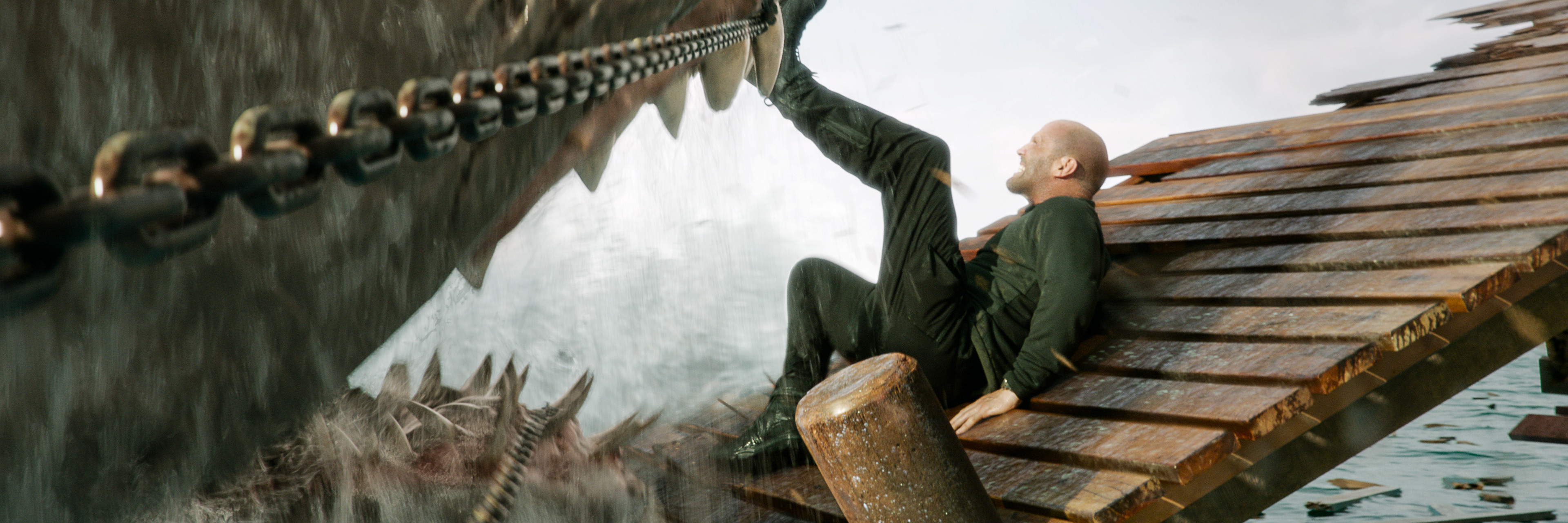
I haven’t seen 2018’s “The Meg”, but after watching the sequel, I don’t see myself seeking out the original. “The Meg 2: The Trench,” I thought, would be a fun little popcorn film to kick back and enjoy while I shut my brain off for 90 minutes or so. Instead, it is a film which is almost two-hours long and goes back and forth between being deadly serious and having silly over-the-top nonsense. The problem with the silly over-the-top nonsense is, by the time it kicks in, things have already lost its audience to where it is far too late for anyone to recover. Plus, the scenes do not feel natural or organic, and they seem to be in there saying, “See? Here is the stuff you came for: the killings, the mayhem, and random one-liners. Isn’t this movie fun?” “The Meg 2: The Trench” was a tedious viewing experience.
Jason Statham stars as Jonas Taylor, and if you have seen one performance from Statham, you have probably seen them all. However, I do enjoy when he collaborates with director Guy Ritchie, as there are darker elements to his characters in those films. In his other films, he’s the wise-cracking bad-ass who beats everyone up. That’s OK once in a while, but when you keep playing the same tune, it gets rather repetitive and dull. In this film, he plays an environmentalist with a heart of gold who is looking after Meiying (Shuya Sophia Cai) after her mother passed away, along with her uncle Jiuming Zhang (Wu Jing). She’s a teenager who is looking to explore and be adventurous while her two guardians are also trying to keep a close eye on her.
One day on a deep-dive mission, Jonas and Jiuming discover there is an illegal operation happening deep down below in the water. So, this time, not only do they have to fight off the megalodons, but they also have to fight off the attacks of greedy and avaricious mercenaries who are looking to make billions of dollars off of this illegal mining operation. Does any of this sound like fun? It wasn’t fun for me. It might have been fun if they kept the plot to 90-95 minutes, moved at a faster pace, and went with an R-rating. They play it a little too safe here, and it is dull, uninventive, and very uninteresting.
Another problem with the film is the other characters in it. There is nothing unique or original about them. They come and go with absolutely zero-character development or any significant reasons why we should care if they live or die. There are some nice scenes between Jonas, Meiying and Jiuming, and there are some pretty cool shark deaths, but by the time they finally make it to the screen, as mentioned, the audience has long since fallen asleep and lost interest in anything happening on screen. I popped up for a minute to remark, “Oh, that was cool. That was a sweet moment.” When your film is nearly two hours long, though, you need a lot more of those scenes instead of random characters in scuba gear you can’t even identify or care about.
This film also suffers from not having any silly or fun villains. The whole thing just felt like a cash-in sequel to me. It made a lot of money, so I’m sure no one who made the film or was involved in it is disappointed by that. There is also a wise-cracking supporting character played by Page Kennedy, and he’s trying way too hard to be funny. It’s almost like they added him specifically for the purpose of forcing comedy on us when it wasn’t there. As soon as he appears on screen, you are waiting for the one-liners instead of them happening naturally. It’s clear they were only thinking about the bottom line with this movie, and they had zero interest in making a film which could at least pass as escapist entertainment.
* ½ out * * * *
4K Info: “The Meg 2: The Trench” is released on a single-disc 4K from Warner Brothers Home Entertainment. It comes with a digital copy of the film as well. It is rated PG-13 for action/violence, some bloody images, language, and brief suggestive material. It has a running time of 116 minutes.
4K Video/Audio Info: One of the good things about this release is we get the film released on Dolby Vision with a Dolby Atmos soundtrack as well. As far as the transfer here, it’s a flawless transfer that is clean, crisp, and bright. The Dolby Atmos soundtrack is also a really good one, as it’s not too loud or in-your-face. Even though the special effects left something to be desired, I can’t deny how good the transfer looks and how good the film sounds. As a 4K, it’s one of the better transfers I’ve seen for a film released in 2023. It also comes with subtitles in English, Spanish, and French.
Special Features:
The Making of “Meg 2: The Trench” – Cast and crew revisit the making of the film and working with new and returning cast members, then highlight the beauty and challenges of working with a Meg they can’t see.
Up From the Depths: Even More Beasts – Director Ben Wheatley, cast and producers guide fans through the creation and design of the new creatures seen in “Meg 2: The Trench”
Should You Buy It?
If you enjoyed the original “Meg” and are a fan of Jason Statham films, you will probably want to add this one to your collection. However, I would say it’s a film you can wait to buy when it drops a little in price. If you did not enjoy the “Meg or haven’t seen the original, I don’t think there is anything here that will convert you to this sequel. It’s a shame, too, as the second half showed some promise and did deliver some cool kills. If they had trimmed the fat, stuck to a reasonable running time, embraced the absurdity of the film and had better looking sharks, we would have a good popcorn film here. Instead, we are left with a laborious viewing experience with only a few highlights. This one left a lot to be desired.
**Disclaimer** I received a copy of this film from Warner Brothers to review for free. The opinions and statements in the review are mine and mine alone.
WRITER’S NOTE: This review was written back in 2009 when this reboot was released.
What better way to spend Singles Awareness Day (a.k.a. Valentine’s Day) than with an old friend who butchers camp counselors because they didn’t keep him from drowning, or supposedly so? I somehow doubt you can call this latest slasher adventure of Jason Voorhees a remake. Each sequel to the original “Friday the 13th” was basically a reworking of the first sequel which introduced Jason as the main killer of the franchise. Watching each successive sequel has been like witnessing a perverted sports event. How is Jason going to kill off those promiscuous teenagers? What weapons will he use? Will the ladies be as cute as they were in the previous movie? Will the guys be every bit as gullible as before? I think this is what makes people keep coming back to this never-ending franchise. We are curious to see how Jason will dispatch his latest batch of victims before he gets laid waste to by the final girl. John Carpenter said evil never dies, and Jason Voorhees is proof of this.
This “Friday the 13th” comes to us from Platinum Dunes, Michael Bay’s film company which made such unnecessary remakes of “The Texas Chainsaw Massacre,” “The Hitcher” and “The Amityville Horror.” A lot of people complain about Bay the director, but I am more worried about Bay the producer. Still, the idea of bringing back Jason was too intriguing even for me to pass up.
In this particular “Friday,” Jason more threatening here than he has been in ages. For the last few movies, he has become a figure of such unbridled camp that he comes across as more of a joke. Here, he is as vicious as ever. This Jason does not just walk at lightning speed like he did in “Part VIII: Jason Takes Manhattan.” Here, he thrusts his weapons and impales his victims with sheer velocity. His mommy issues have never been more deeply rooted than they have been since the franchise first began.
The movie starts off more or less condensing the original, as it was Jason’s mother who was the brutal killer in that one. We see Jason’s mother, played by Nana Visitor from “Star Trek: Deep Space Nine” (never piss off a Bajoran), get decapitated by the one camp counselor, female of course, who she couldn’t kill. We all know how seriously pissed she was at the counselors who let her son Jason drown, and now Jason will carry on her vengeance. The prologue is much longer than I ever could have expected, and in it we meet a bunch of kids who are seriously interested in obtaining a huge quantity of marijuana. Jason, however, is there with a bag over his head, the iconic hockey mask gets introduced later, killing off potential profiteers. It made wonder if Jason was actually a drug dealer as he apparently lives near such a big farm of green.
These kids meet a gruesome end (is there any other kind?), and the movie then moves ahead a couple of months to introduce us to a new set of victims. These ones though are not there to be camp counselors, but instead to stay in a house by the lake to have a “relaxing” weekend. The house belongs to the father of a snobby little spoiled brat named Trent (Travis Van Winkle), and his name wreaks of snobbery whether he likes it or not. Along with him is his girlfriend Jenna (Danielle Panabaker) who has no business being with a guy like him, an Asian smarty named Chewie (Aaron Yoo) who has yet to get laid, and a couple others who, whether they get laid or not, will most likely not live through the weekend. You also have the sole black man, Lawrence (Arlen Escarpeta), who loves to mess with white people and their prejudices they are blind to. Arlen has one of the best lines of dialogue, and you will know it when you hear it.
What makes this particular “Friday the 13th” different from the others? Not much. It has the requisite killings and naked breasts. Sean S. Cunningham, the director of the original, is along for the ride as a producer, and he is intent on giving the audience what they expect from a movie like this. What makes this franchise reboot different is it is a lot bleaker and more unrelenting than the other sequels.
Marcus Nispel directed this installment, and he also directed the Platinum Dunes remake of “The Texas Chainsaw Massacre.” He gives it a washed out look, and it gives the proceedings a more realistic feel as well as a foreboding one. The tension is thick in the air, and even though the scares are pretty much where you would expect them to be. The killings are effectively brutal, but Nispel doesn’t dwell so much on the blood and gore as much as you might expect.
As for the characters, they really didn’t stick in mind for long after I left the theater. That’s the problem with movies like these. Not that I expect them to be in depth character studies, but it is clear these characters are presented as being ones who are quickly disposable. There are those who you want to live through the night, and there are others whose demise constantly root for, especially Trent. In the end, they are all fair sport for Jason who kills everything in his path. Having an Asian and a black character also shows how this masked killer knows no racial boundaries when it comes to slashing trespassers. After all these years, Jason Voorhees remains an equal opportunity murderer.
Jason is played in this incarnation by Derek Mears, an actor who played the Chameleon character in that awful sequel, “The Hills Have Eyes 2.” I liked how he gave Jason a fury we have not seen from in over a decade. Not that I want to take away from Kane Hodder, but Mears gives Jason a viciousness which makes him feel more dangerous than ever before.
Regardless of these positives, there is nothing particularly special to this “Friday the 13th.” Despite a higher standard of production values the other sequels never got, it still feels like an ordinary run of the mill slasher movie to where the one word I can best describe it as being is bland. It’s the kind of movie which doesn’t stay in the brain too long after you have seen it. While Jason may be more threatening than ever, it is not enough to make this movie seem altogether satisfying.
Also, I am really getting sick of this plot device in which cell phones do not work. I find it hard to believe there are places on this planet which do not have cell phone signals. Granted, the Hollywood Hills never seem to have them, but still, while this scenario worked fine in “The Hills Have Eyes” remake, this singular excuse to isolate these dumb characters continues to get weaker and weaker.
For what it’s worth, this is the first “Friday the 13th” movie I have ever seen in a theater. I always kept hearing about these movies as a kid, and I was fascinated with them even while Siskel & Ebert kept tearing them apart as “cynical filmmaking.” It took me a while to get around to actually watching them, and even then, I had the volume turned down. I also kept hearing from my friends how people reacted during them. One told me how, when he saw “Friday the 13th Part VII: The New Blood,” everyone started a chant when it looked like the most unlikable character, a horribly spoiled girl with no manners whatsoever, was about to get killed off. This led the audience members to start chanting:
“Kill the bitch, kill the bitch, kill the bitch, kill the bitch, KILL THE BITCH! KILL THE BITCH!! KILL THE BITCH!!! KILL THE BITCH!!!!!!”
That would have been fun to witness, and the fact that this “Friday the 13th” movie did not have it took away from the experience. While I admire how they made Jason more lethal, part of me missed the tongue in cheek qualities of this franchise. You know, the moments which reminded you it was just a movie, and how some critics take them way too seriously. Looking back, I feel like I missed out on something.
Jason should really engage in a group therapy session with Norman Bates because they have more in common than they realize. Of course, Jason doesn’t talk, but maybe Norman could get him to or perhaps teach him sign language. Hey, anything is possible, right?
WRITER’S NOTE: This article was originally written back in 2012.
Sir Anthony Hopkins has played real-life people in movies such as President Richard Nixon in “Nixon” and John Quincy Adams in “Amistad,” but he was initially hesitant about playing the brilliant filmmaker Alfred Hitchcock in “Hitchcock.” The master of suspense has been imitated so many times over the years to where it seems impossible to portray the man without it feeling like it is a joke. Hopkins, however, was won ever by the film’s director, Sacha Gervasi, who told him, “You’re not Alfred Hitchcock, you’re Anthony Hopkins playing him.” From there, Hopkins knew he would be portraying Hitchcock without ever having to do a mere impersonation of him.
Hopkins actually had the unique privilege of meeting Mr. Hitchcock while he was alive. It’s always great fun to hear from actors who have met the highly esteemed filmmaker as the majority of us have only seen him from a distance. We all wondered what Hitchcock was really like as his films generally delved into the pitch-black darkness of humanity, and that had many assuming he was a somewhat disturbed human being himself. Hopkins described the experience of meeting Hitchcock to Fox News.
“I met Hitchcock in Hollywood in 1979. He had just been awarded his knighthood and I was with my agent, and his agent in fact, George Chasen,” Hopkins said. “This was many years ago. I saw Hitchcock sitting in the restaurant and I said to my agent, ‘I’d love to meet him.’ He said ‘I’ll introduce you.’ So, we walked out of the restaurant after we finished our meal, and Hitchcock was sitting there drinking a large brandy. And George said ‘Congratulations Sir Alfred,’ and he said, ‘Thank you very much George. How are you?’ and George said, ‘This is my client Anthony Hopkins,’ and (Hitchcock) said ‘Charmed, I’m sure, very good luck to you.'”
For Hopkins, a key importance for him was getting the look of the famous filmmaker right. The fact is he is far slimmer than Hitchcock was, and Hitchcock famously known for being overweight. It was up to Academy Award-winning makeup artist Howard Berger to transform Hopkins into Hitchcock. In a conversation with Andrea Mandell of USA Today, Berger talked about doing six makeup tests with Hopkins before filming on “Hitchcock” began, and they experimented with all sorts of prosthetics to get the look right.
“I think the biggest challenge was finding the right combination of Alfred Hitchcock and Anthony Hopkins,” said Berger. “We knew from the get-go; we didn’t want to completely cover and disguise Tony. As Hopkins became more comfortable with the character, slowly we started to strip things away.”
Berger went on to describe the end result of his work as being a portrait of Hitchcock on Hopkins. The makeup process took two hours each day to complete, and this included applying a prosthetic jowl and neck pieces to Hopkins. In addition, Hopkins took to wearing a bodysuit and brown contact lenses, and he also shaved “a patch of hair at the back of his head to replicate the director’s hair pattern.” With the makeup done, it freed Hopkins to concentrate on the inner life of his role as opposed to the physical aspects of it. In the end, this is what actors need to focus on the most when playing any role.
But the one thing you will not find Hopkins doing during shooting is staying in character when the cameras are not rolling. Right now, the movie “Lincoln” is in theaters, and it stars Daniel Day Lewis as President Lincoln. Stories from that set have described Lewis as staying in character throughout the shoot to where other actors kept referring to him as Mr. Lincoln. In talking with Philip Sherwell of The Telegraph, however, Hopkins made it very clear how this method of acting is completely unnecessary for him.
“I think that’s a lot of crap,” Hopkins said. “I just don’t understand that. If actors want to do that, fine. If they want to be miserable, that’s up to them. I’m not interested. It’s a job. Who the hell wants to be with some miserable grump because he wants to get his performance right, so you have to call him this or call him that? It’s so boring. I’ve been with actors like that and… they’re unpleasant to work with and I don’t think they’re always that good either.”
With all the great performances he has given throughout his illustrious career in “Silence of The Lambs,” “Remains of the Day” and “Titus,” Anthony Hopkins doesn’t need to stay in character a whole day in order to give audiences a confident performance. His role as Alfred Hitchcock in “Hitchcock” is just the latest example of the kind of work we can always expect from an actor of his caliber. Hopkins never takes the easy way out with a role, and he understands it is the inner life of a character that the actor needs to work on. As for how he looks on the outside, that is someone else’s concern.
The following review was written by Ultimate Rabbit correspondent, Tony Farinella.
I went into “Barbie” with very little knowledge of the film beforehand. I was aware that it gained a lot of money at the box office, and I also knew it was the most talked about movie of the summer. It broke records at the box office, as stated, and it’s the rare film that has received positive reviews with critics and also with audiences as well. It’s an important film in today’s world. Of course, I heard of the Barbie brand name in my 38-years on this planet, but I didn’t consider myself the key demographic for this film. However, the expert direction of Greta Gerwig and the top-notch writing from herself along with her long-time partner, Noah Baumbach, made this a very, very enjoyable viewing experience. I also believe it can create healthy and meaningful conversations for families after they watch it together. It’s the power of cinema.
“Barbie” opens up by introducing us to Stereotypical Barbie (Margot Robbie) living in Barbieland. She sees a world populated by Barbies, Kens and other characters, even if it is full of mundane routines at times. One of the Barbies is even President (Issa Rae). One day, Stereotypical Barbie notices she has flat feet and is starting to think about her own mortality. This is met with confusion by those in Barbieland where everything, on the surface, is always sunshine, rainbows and lollipops. They tend to live in denial at times. The Kens like to hang out at the beach and seek approval from the Barbies. This most certainly applies to one Ken, played by Ryan Gosling. When Stereotypical Barbie meets Weird Barbie (Kate McKinnon), she realizes that someone has been playing with her and causing her to have bad breath, flat feet and even cellulite.
Ken insists on following her into the real world where he and Barbie are mocked, ridiculed and even thrown into prison. Barbie is not used to men making comments on her appearance and even groping her. Ken, on the other hand, likes it in the real world as he sees the opportunities and respect that come with being a man. He didn’t have those same privileges in Barbieland. Barbie meets young Sasha (Ariana Greenblatt) who lays into Barbie about how she has given young women unrealistic expectations of how they should present themselves in the real world. This is news to Barbie, who becomes quite depressed.
When the Mattel CEO (Will Ferrell) finds out that Barbie is running loose in the real world, he wants to ensure she is put back into her box, as he doesn’t like the fact that worlds are colliding. Barbie also learns more about what caused her to have problems in Barbieland. She wants to find out how to make things better not only for herself, but for everyone else. Since Ken is starting to feel overly confident and selfish, this puts Barbieland in serious jeopardy. It’s up to Barbie, Sasha, and Sasha’s mother, Gloria (America Ferrera), to make things right not only for all of the Barbie’s out there, but for the entire Barbieland as well, which includes numerous Kens and also Allan, played by Michael Cera.
For a movie about a collection of dolls, “Barbie” has a lot to say, and it says it quite well with humor, intelligence and a powerful sense of self-awareness. The filmmakers are also not afraid to take Mattel to task as well for some of their decision making. This is a film about change, growth, empowerment, and being the best version of yourself. It’s also a beautiful looking film with some of the best cinematography I’ve seen in a long time. It’s filled with color, vividness and life. At times, the film can be a little too on the nose and it does lag a little in the end, but this is a really, really good movie that is hugely entertaining while also having a strong message behind it at the same time. It’s really remarkable what Gerwig has achieved with this film. She took a lot of chances with this film, but nine times out of ten, they were the right chances to take.
“Barbie” is going to cause an uproar with certain groups of people and, quite frankly, that is their burden to carry around with them. As the old expression goes, “For those who understand, no explanation is necessary. For those who don’t, no explanation is good enough.” It’s fine if you don’t like the film, but if you are getting caught up in certain aspects of the film’s subject matter, you are missing the point entirely. “Barbie” is well-acted, well-made, incredibly funny, and it has a wit to it that I’m sure many audiences will appreciate.
Margot Robbie and Ryan Gosling are tremendous here, of course, and the rest of the cast is top-notch, featuring such actors as America Ferrera, Rhea Perlman, Issa Rae, Michael Cera, Simu Liu, and Will Ferrell. They know exactly how to hit all of the right notes with this material. Everyone has bought into the film here, and they know how to sell it just perfectly. This is sophisticated humor, and the actors are never too over-the-top or winking at the camera too much. Of course, there are moments where the movie is breaking the fourth wall, such as when its narrator, Helen Mirren, talks about it not being a good idea by the filmmakers to have Margot Robbie complain about being ugly, but those moments make sense because it shows the movie is right there with the audience in terms of what we are thinking.
All in all, “Barbie” was one of my favorite viewing experiences of 2023. As stated earlier, it is not perfect. At times, it is a little too self-aware for its own good, and the last thirty minutes or so tend to drag a bit. However, it is easy to see why this film garnered so much attention at the box office and with mainstream audiences. A movie about Barbie could have easily been banal and vapid. Instead, they trusted that audiences can be smart and they want something more out of a Barbie movie. I really enjoyed “Barbie,” and I can’t wait to watch it again.
* * * ½ out of * * * *
4K Info: “Barbie” is released on a single-disc 4K from Warner Brothers Home Entertainment. It also comes with a digital copy of the film. It is rated PG-13 for suggestive references and brief language. It has a running time of 114 minutes.
Video Info: The 4K look of this film is really, really on-point with its lively HDR and tremendous color palette. It is not so bright that it will hurt your eyes or cause any discomfort. It knows when to pop and when to shine and it always looks sharp, clear, and incredibly rich. It’s a visual feast for audiences. This movie was made for 4K.
Audio Info: The Dolby Atmos soundtrack is also vibrant and really consistent throughout the entire film. It has a nice bass to it, as there are tons of great songs sprinkled throughout the soundtrack of the film. Dialogue is easy to understand without any issues. Subtitles are in English, Spanish and French.
Special Features:
Welcome to Barbie Land – featurette
Becoming Barbie – featurette
Playing Dress-Up – featurette
Musical Make-Believe – featurette
All-Star Barbie Party – featurette
It’s A Weird World – featurette
Should You Buy It?
HECK YES!! I don’t care what age you are or what gender you identify as, if you have a sense of humor and heart, you will really, really enjoy Greta Gerwig’s “Barbie.” This is a great example of how to do a big studio film the right way while also making a ton of money at the box office. The audio and visual aspects are also top-notch and really, really well done. It’s a gorgeous looking transfer with an incredible Dolby Atmos soundtrack. We also get some pretty cool special features as well. “Barbie” is one of the biggest surprises of 2023, and it is the kind of film I love to see out of Hollywood. It comes out on 4K on October 17th, and it is a day-one purchase. I don’t know if there will be a steelbook edition at some point or not, but this is the kind of film you would not mind double dipping on in the future. This one comes highly recommended!
**Disclaimer** I received a copy of this film from Warner Brothers to review for free. The opinions and statements in the review are mine and mine alone.
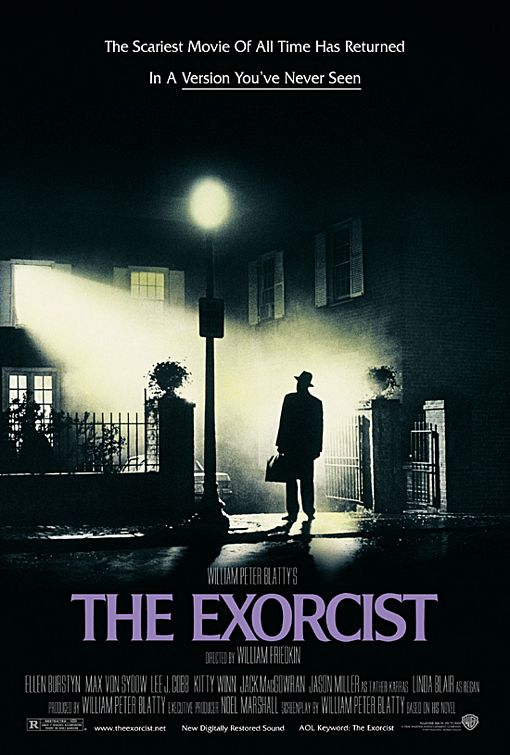
There are several trailers out there for William Friedkin’s “The Exorcist” which are very memorable, but the one which stands out for me is the one made for its rerelease back in the year 2000. In some ways, it is a huge surprise that this trailer was not treated like a red band trailer as the film remains ever so shocking after all these years. Regardless, it does a great job of reminding audiences, old and new, of what an incredibly unnerving and unforgettable experience this 1973 film was when it first came out, and how it remains so all these years later. Even if there was no new footage made for this release, this trailer made seeming it back on the silver screen an offer no movie buff could ever refuse.
I have to tell you, seeing this version on “The Exorcist” at a celebrated movie theater in Westwood, California provided me with one of the best cinematic experiences I ever had. On top of this film never having lost any of its power, as it contains scenes no studio would allow any filmmaker to capture on film today, the theater had the most extraordinary sound system which made watching it all the more adrenaline-inducing, exhilarating and enthralling to sit through. This trailer gave me such a great reason to check it out on the biggest silver screen in my neighborhood.
To date, there has yet to be an “Exorcist” sequel or prequel which can at the very least equal Friedkin gave us half a century ago.
Please check out the re-release trailer down below.
William Friedkin’s “The Exorcist” was such a singular cinematic experience, let alone a singular horror film like few others, that making a sequel to it had to seem like a truly insane prospect. “The Exorcist II: The Heretic” proved to be as hideous piece of celluloid as the original was a brilliant one, “The Exorcist III” was undone by needless studio interference which made it look pitiful for no good reason, and the attempts to make a prequel got so messed up to where two versions of it were made, both of which proved to be quite flawed. Looking at this franchise, one which is quite accidental, it seems like one driven by profit more than anything else. Granted, sequels are generally made because the original was a big box office hit, but not all of them exist simply because of financial benefits for everyone involved.
Now we have “The Exorcist: Believer” which comes to us from David Gordon Green and his fellow filmmakers who gave us the recent “Halloween” trilogy which proved to be worthy sequels to a celebrated classic. And yes, I do include “Halloween Ends” which many despised. Like those films, this “Exorcist” installment serves as a direct sequel to Friedkin’s original, it completely ignores the other sequels to create its own cinematic path. What results is a motion picture which is not terrible, and I went into it refusing to expect it to be any equal to the original, but it still proves to be inconsequential and unnecessary as Friedkin’s film continues to be extremely difficult to make a sequel to.
We are introduced to professional photographer Victor Fielding (Leslie Odom Jr.) who is raising his daughter, Angela (Lidya Jewett), as a single parent following the tragic death of his wife. One day, Angela asks her dad if she can go over to her friend Katherine’s (Olivia O’Neill) to study. That’s okay, Victor says, but she needs to be prompt about returning home for dinner. When Angela fails to do so, and she and Katherine go missing, the whole town goes looking for them. Eventually, they are found alive 30 miles away from their home addresses, but both are convinced they were only gone for a few hours.
As you can expect, both Angela and Katherine turn out to be possessed, and Victor turns to others to help the girls before any more lasting damage can be inflicted. Among them are Ann (Ann Dowd), a nurse at a local hospital and a fallen Catholic, and Chris MacNeil (Ellen Burstyn), an actress turned exorcism researcher who has since become renowned for her studies and her best-selling book on the subject. From there, we know we are in store for an exorcism, albeit one which cannot possibly be as intense as the one Friedkin gave audiences half a century ago.
Now you cannot go into “The Exorcist: Believer” expecting something along the lines of Friedkin’s original film as that is asking to be severely disappointed in the process. None of the sequels or prequels could touch it as the 1973 film is a cinematic experience not easily duplicated. But even with reserved expectations, “The Exorcist: Believer” just doesn’t work. It has some strong performances from Odom Jr. and Dowd, and there are some clever jump scares, but there is not enough to justify this as a significant follow-up to a celebrated classic.
The big news with this one is that Ellen Burstyn returns as Chris MacNeil for the first time since the first “Exorcist” film. But while Jamie Lee Curtis’ character of Laurie Strode was a major component of the recent “Halloween” trilogy, Chris MacNeil’s presence in “The Exorcist: Believer” feels like an afterthought, and while Burstyn is great as always, the character does not feel especially necessary to this installment. While it may give this film some legitimacy, Burstyn is barely in this film and does not get a lot to do.
When it comes to the climactic exorcism which the film’s title and its trailers have promised us, it is no surprise to find it utterly lacking in tension. Sure, there is some suspense as the adult characters are forced to make a choice no one wants to make, but it all feels lacking in the long run. As much as I wanted to view this film on its own instead of in comparison to the classic original, I could not help but be reminded of how intense and unnerving Friedkin’s film was. I wanted this exorcism to have the extreme intensity of what came before, and I knew that was not going to be the case which made this direct sequel all the more frustrating.
David Gordon Green is a terrific filmmaker. In addition to his “Halloween” trilogy, he has also directed films in various genres. He has given us “George Washington,” “Pineapple Express,” “All the Real Girls,” and “Joe” which features not only one of Nicolas Cage’s best performances, but also one of his most subtle, and that is saying a lot. I cannot help but wonder what made him, Scott Teems, Danny McBride, Jason Blum and all of Blumhouse were hoping to accomplish here. Were they hoping to make something which could stand alongside the original proudly, or at least be considered its equal?
For a moment, I thought Green might have some luck as the opening scenes in Haiti do have a documentary feel to them like the original did. But after a bit, it just felt like I was watching a movie. This is the biggest problem with “The Exorcist: Believer;” you watch it more than you experience it. You can see how the screws go in, and it does not help that the CGI effects utilized here are not all that great. Then again, I have long since been spoiled by the visual wonders of “Avatar: The Way of Water,” so nothing else can possibly compare.
Making a sequel or any kind of follow-up to “The Exorcist” is no different than anyone trying to make one to “The Texas Chainsaw Massacre.” Both those horror classics gave audiences a cinematic experience like few others, and they still remain enthralling and greatly unnerving so many years later. And yet, there are those who have turned these movies into franchises which may succeed financially, but never critically. They will forever be shadowed by a predecessor which can only make the best efforts look ever so pale in comparison, and yet people keep trying futilely to give us something worth watching. The fact that no one has succeeded in doing so should not come as a surprise.
Nevertheless, another “Exorcist” movie is set to be released in 2025, and the best way to look at this situation is to say Green and company have nowhere to go from here but up. Perhaps if they played around with the formula, they could audiences something more original which will stand on its own. Until then, I wonder if the ghost of William Friedkin will haunt Green just like he promised.
It has been a bit, but I finally made the time to walk the picket line in support of the SAG/AFTRA strike. The WGA strike concluded after 148 days after a tentative agreement with the AMPTP was reached, but many of their members still took the time to join the picket line in continued support of the union’s efforts to gain a fair contract. While I have traveled to different strike locations in the past, this one had me returning to Warner Brothers Studios in Burbank, California. This is because I do not often get over the hill (figuratively speaking) to the other side where the valley is.
Actually, this day, October 2, 2023, is a very significant one as the SAG/AFTRA negotiators are set to meet with the AMPTP in an attempt to end this long-running strike once and for all. In the meantime, we still marched up and down Barham Street to make our presence known. The sun was still shining brightly in the sky, but the temperatures have cooled down a bit and there was a nice breeze going on which we really could have used during July and August.
For me, this day allowed me to catch up with friends I have not seen in the longest time (thanks for nothing COVID). It was fantastic running into Madonna Cacciatore and Robin McWilliams, both of whom have been doing fantastic work as strike captains, making sure everyone crosses the street safely and no one gets hurt. In the past, the three of us trained together for the Los Angeles Marathon as part of Team to End AIDS. More importantly, we ran it in 2011 which became forever known as the monsoon marathon as the rain kept pouring down on us with a vengeance.
I also ran into a former neighbor of mine, a screenwriter whose career has unfortunately taken a hit due to the work stoppage. Fortunately, his wife has a big job which has proven to be all consuming, and this allows him to be a stay-at-home dad to his children. Of course, he would like to get back to work soon.
But even as the SAG/AFTRA strike could be reaching an end, another one is set to begin as the union has a authorized a strike against video game companies. I included a quote near the end of this video I edited about my day on this picket line from Ralph Garman, a longtime voiceover artist and host of “The Ralph Report,” who voiced his frustrations with doing video game work, and his remarks speak volumes about how performers are endlessly being taken advantage of.
Please check out the video below and be sure to make a donation to those artists in need.








 The Ultimate Rabbit