As soon as you see the above quote which opens “A Nightmare on Elm Street 3: Dream Warriors,” you know Wes Craven is back on board in some capacity. After directing the original, one of the all-time great horror classics, he bailed out of the first sequel which he felt betrayed the logic of Freddy Krueger’s character and how he existed in the realm of dreams. This third entry ended up defining the look of the rest of the series until “Wes Craven’s New Nightmare” came along. This one brought forth a Freddy who, while still scary, was more of a stand-up comic with one-liners flying out from his charred face in rapid succession.
“A Nightmare on Elm Street 3” starts off with the character of Kristen Parker (Patricia Arquette, in her film debut) having the first of many nightmares. Freddy’s attack on her is made to look like she tried to commit suicide, and it gets her thrown into a psychiatric hospital with others suffering from serious mental health issues. Of course, when doctors try to give her a sedative to help her sleep, she naturally freaks out and grabs a knife to fight off those who don’t have a clue as to what she’s really up against. This is where she meets up with Nancy Thompson, played once again by Heather Langenkamp.
We learn Nancy has since gone to graduate school where she studied extensively about the nature of dreams. Here she gets assigned to this psychiatric ward where young teenagers are being stalked by the man with razors for fingers. They are being cared for by Dr. Neil Gordon (Craig Wasson) who has long since gained their trust, but he has yet to realize how he can really help them. Nancy sees right away it has everything to do with Freddy, and when she shares this information with the kids they stand at attention and are shocked to realize they have all been dreaming about the same person.
With a budget of around $5 million dollars, the special effects are more impressive than you would expect them to be. It’s always a gas to see what people can do with very little money. There’s one great effect where Freddy comes to life as a marionette, and he immediately returns the favor to its creator by pulling out the veins in his arms to use as strings. Ouch! The sets never reek of cheapness, and the imagination put into this movie is always on display as we see the dreams of the different characters and the forms they each take.
Bringing Craven back to help write the screenplay was a smart move, and he changes the formula to keep it from being just another single kid being chased by Freddy. Also, these kids fight back to stay alive and prepare themselves a lot quicker than the others did in the previous films. One of the screenwriters on “Dream Warriors” is Frank Darabont who later made one of the greatest movies ever, “The Shawshank Redemption.” There is a good amount of work done with the characters here to where they are not your usual one-dimensional horny teenagers which make up the average “Friday the 13th” movie.
The movie also digs deeper into Freddy’s past to make us see how he came to be. Before this film, we knew he was a child murderer who was brought to court but got off on a technicality, and he was later burned by the parents of the town. Dr. Neil Gordon is visited by a mysterious nun who informs him Freddy’s mother, Amanda, was accidentally locked in an insane asylum with the most mentally unstable people one could ever find, or hope to avoid, on the face of the earth. Amanda was raped over and over, and this led to the conception of Freddy who, as the nun puts it, is “the bastard son of a hundred maniacs!” This would make a great title for a movie.
Unlike other horror movies, you care about the characters and what happens to them. Most of these slasher movies have stock characters you hate and root for to die. In all fairness, it makes watching them more fun to watch in a theater, but here the characters, while dealing with obvious stereotypes, are interesting in their own way. Some are geekier than others (don’t get me started on the “Wizard Master”), but they are more real than your average teenagers dealing with ballistic hormones.
“Dream Warriors” is also proof of how wet dreams never end the way we want them to. One of the characters has an understandable crush on a nurse, and he ends up getting seduced by her. Some people get so lucky, but not this kid. What happens to him gives new meaning to the term “tongue-tied.”
Also in the cast is Laurence Fishburne who did this movie before “Boyz N the Hood.” He plays male nurse Max who is one of the more down to earth characters you could ever hope to find in a horror movie. The great John Saxon also returns as Nancy’s father, Lt. Donald Thompson. His character figures prominently in the film’s climax as they find that the only way to defeat Freddy is by burying his remains in consecrated grounds.
It’s hard to believe this was Patricia Arquette’s first film. She has since gone on to a successful career and appeared in great movies like “True Romance,” David Lynch’s “Lost Highway” and “Boyhood” which won her the Oscar for Best Supporting Actress. She creates one of the more sympathetic heroines in a horror movie who has a mother that, of course, does not understand what her daughter is actually going through. No one does initially, but if they did, there wouldn’t be a movie.
And, of course, we have Robert Englund returning as Freddy. In many ways, this was the last “Nightmare” movie where Freddy felt like a truly threatening presence. Just the thought of him was scary, and you didn’t need to show much of him to prove that. After this movie, he became more of a standup comedian than anything else. We had to wait until “Wes Craven’s New Nightmare” for him to come across as a viciously scary presence again. Still, Englund embodies this character in a way no one else could.
While Freddy ended up having an artistic downslide from here, “A Nightmare on Elm Street 3: Dream Warriors” is still one of the best movies in this long-running franchise, and it’s always fun to revisit this entry whenever it is showing on cable.
Okay, let me get it out of the way now; “X-Men: Days of Future Past” is not only the best “X-Men” movie since “X2,” but it is also the most entertaining and emotionally powerful film of the franchise to date. For a while, it seemed like the series peaked as the succeeding sequels and prequels were critically maligned to where you wondered if this particular superhero franchise had finally overstayed its welcome. But with Bryan Singer, having been led away by Superman and a giant slayer among others things, back behind the camera again, everything feels fresh and invigorating again, and it’s hard to think of another “X-Men” movie which can top this one.
“X-Men: Days of Future Past” starts off in a very bleak future where sentient robots known as Sentinels have exterminated most of the mutants as well as those humans who have helped them. Not much is left which leads me to believe that in the process of protecting humanity, humans ended up destroying themselves by creating the Sentinels. Time is running out for the remaining X-Men which include Charles Xavier/Professor X (Patrick Stewart), Erik Lehnsherr / Magneto (Ian McKellen), Ororo Munroe / Storm (Halle Berry), Kitty Pryde / Shadowcat (Ellen Page), Bobby Drake / Iceman (Shawn Ashmore) and of course Logan / Wolverine (Hugh Jackman), and they hide away in a Chinese monastery and prepare to use the only method they can to save all of humanity: time travel.
Charles explains to Logan of how they need to prevent the assassination of Bolivar Trask (Peter Dinklage), the military scientist who created the Sentinels, by Raven Darkhölme / Mystique (Jennifer Lawrence). While it is completely understandable for any mutant to hate Bolivar with a passion, his assassination ends up making him a martyr and Raven gets captured and experimented on to where the analysis of her mutant powers help to make the Sentinels all the more effective. So Logan, with the help of Shadowcat, ends up traveling back to the year 1973 to stop Raven from killing Bolivar as he is the only one of the group who can withstand the rigors of time travel. But just when you think this is going to turn into the usual time-travel flick, it becomes anything but.
What I love about the “X-Men” movies are how they focus on character as much as they do on visual effects. The mutants are treated as the outcasts of society, and we feel their pain at being excluded for who they are. Singer understands this pain, and it makes his return to the franchise all the more welcome. Also, there’s something bigger at stake than changing the course of events in time, and that’s preserving hope. While Morgan Freeman said in “The Shawshank Redemption” of how hope is a dangerous thing as it can drive a man insane, the mutants (the good ones anyway) thrive on it because they know no one can live any other way. Even in the darkest of times, they strive to make the world a better place for all of humanity. You feel the weight of the choices they are about to make, and it produced moments which truly left me on the edge of my seat.
After playing Wolverine for so many years, I figured Hugh Jackman would be sick of the character as he remained a moody son of a bitch in. But the great thing about Wolverine this time around is how he and Charles Xavier essentially trade places. In the previous films, Charles was always trying to get Wolverine to look past his anger and bitterness to embrace a better path in life, and now Wolverine has to do the same for Charles. When we catch up with the younger Professor X (this time played by James McAvoy) in 1973, he is a broken man who has regained the ability to walk (don’t worry, there is an explanation) and has become more comfortable being a functioning alcoholic instead of being a teacher. His school is now empty since the Vietnam War took away many of his students, and he spends his days hanging out with Hank McCoy/Beast (Nicholas Hout) who tends to his needs.
In some ways, Jackman looks really invigorated this time around as Wolverine proves to be the source of hope the other characters desperately need. He still remains the Wolverine we all know and love, and it’s a lot of fun watching him interact with the cast members of “X-Men: First Class.” Both McAvoy and Michael Fassbender, who plays the younger Magneto, once again make these iconic roles their own without the shadows of Stewart and McKellen hovering over them. It’s also great to see Hout and Jennifer Lawrence back as well as both actors make Beast and Mystique more than just a couple of mere supporting characters.
It’s also great to see a lot of veteran “X-Men” actors here as I was afraid we would never see them together again in the same movie. Stewart, McKellen, Berry, Page and Ashmore make their welcome returns count for every second of their screen time. And yes, Anna Paquin does make an appearance as Marie/Rogue. She’s only in the movie for a little bit, but at least she didn’t get cut out of it completely.
The screenwriter of “X-Men: Days of Future Past” is Simon Kinberg, and it is based on the famous comic book by Chris Claremont and John Byrne. For a time, I thought this was going to be your typical time travel movie where everything hinges on a pivotal moment in human history, but Kinberg has a few surprises in store for us as the story doesn’t stop at the moment we expect it to. The characters are acutely aware of the ripple effects they can cause in the history of things, and there’s no time wasted on showing how out of place they are in the 70’s as they always seem to be out of place in everyone’s eyes regardless of the decade.
There are also a bunch of new mutants joining the party this time around, and the one which stands out the most is Pietro Maximoff /Quicksilver who is played by Evan Peters. Peters is a gas to watch as his character moves at supersonic speeds around everyone, and he injects a good dose of humor into the proceedings. Singer also features Quicksilver in one of the movie’s most ingenious sequences which is scored to the most unlikely of songs. Seriously, I don’t want to spoil it for you, but it has to be seen to be believed.
Another standout performance in “X-Men: Days of Future Past” is Peter Dinklage’s as Bolivar Trask. Like any good actor, Dinklage keeps Bolivar from becoming another one-dimensional villain as he infuses the character with an arrogance and blind ambition which makes him all the more dangerous. Bolivar believes deeply in what he is doing as he feels it is right, and you come out of the movie pitying him. This is a character who has struggled all his life to get the respect he feels he deserves, and he never gives much thought to the consequences of his actions.
I also got to give kudos to Richard Camacho who plays President Richard Nixon. After watching Frank Langella portray this American President in “Frost/Nixon,” I wasn’t sure I ever wanted to see another actor play Nixon again as anyone else would have simply played him as a caricature. But I was surprised to see how good Camacho was because he didn’t give us the usual Nixon as this movie would have suffered as a result.
But in many ways, the biggest star of this “X-Men” movie is Singer himself. Regardless of his current legal predicament (I’m not even going into that here), he makes a comeback of sorts with this entry as his last few efforts have seen him lose his touch as a filmmaker. No, I haven’t seen “Jack the Giant Slayer,” but I have yet to hear my friends say anything good about it. But just as he did with the first “X-Men” movies, he does a terrific job of balancing out the visual effects with character development, and what results is the most emotionally satisfying comic book blockbuster I’ve ever seen. “Captain America: The Winter Soldier,” which was really good, set the bar high, but Singer surpasses it by a wide margin with this installment.
After watching “X-Men: Days of Future Past,” you will agree that “X-Men: Apocalypse” can’t come soon enough. Seriously, “The Amazing Spider-Man 2” only dreamed of being this good.
Watching “Logan” is especially thrilling if you have been keeping up with the “X-Men” movies since the first one came out in the year 2000. While the previous installments played by a certain set of rules, this one smashes through them to create something unique in the long-running franchise. No longer shackled by the PG-13 rating, Hugh Jackman is given free rein to show just how bloody Wolverine can get when you piss him off, and he gives this character, which made him into a movie star, the swan song he deserves.
While the “X-Men” movies were largely science-fiction, “Logan” plays more like a western, and this will become abundantly clear even before characters sit down in a hotel room to watch “Shane.” We catch up with Wolverine, a.k.a. James “Logan” Howlett, in a future not too distant from our own where mutants have long since become an endangered species. Wolverine is now past his prime and works as a limo driver in an effort to save money to buy a boat which he and the ailing Professor Charles Xavier (Patrick Stewart) can sail away in from all of humanity. While he can still kick ass, he is now hobbled by a bad leg and a dependency on alcohol which eases the pain of surviving in this world for far too long.
The same goes with Xavier who now suffers from a neurodegenerative disease which has turned his telepathic abilities from a blessing into an unstable force people would be best not to be in the vicinity of. When he has an episode, the world around him is threatened in a highly unsettling way, and only Wolverine can give him the medication he needs to stop him from becoming a true weapon of mass destruction.
Then into the picture comes Laura (Dafne Keen), a young mutant who has more in common with Wolverine than he would care to admit or realize. Like the miraculously pregnant woman in “Children of Men,” Laura represents the next step in human evolution, and she needs to be taken to a safe haven for mutants which may or may not exist. On her trail are Reavers, a team of criminal cyborgs hell-bent on wiping mutants off the face of the earth, led by the gleefully sadistic Donald Pierce (Boyd Holbrook) who is not about to let his fandom of Wolverine get in the way of his mission.
What I especially admired about “Logan” is how it dealt with the effects of aging and of people now past their prime. This is s0mething superhero or comic book movies, let alone most Hollywood movies, usually avoid dealing with as the powers that be wish to keep everything looking and feeling youthful. But we are forced to look at Wolverine and Xavier at a point in their lives where they are more vulnerable than ever to their enemies and especially their own mortality. Once they were powerful, but now they are pretty much off-warranty. How does one deal with arriving at a point in life where their bodies start working against them? “Logan” dares to deal with this question, and it does so in a way which is more character driven than ever before but still action packed as ever.
Jackman intends “Logan” to be his last “X-Men” as he has played Wolverine now for over a decade, and he has certainly given the character quite the exit. He even took a pay cut in order to ensure this film would get an R-rating, and it was certainly worth it as it gives him the freedom to make this iconic comic book character a far more blunt and brutal instrument than ever before.
Life is suffering, and no one knows this more than Wolverine who has lived more lifetimes than anyone else around him. Jackman has been brilliant at letting us see the inescapable vulnerabilities which are just beneath the surface of his tough and rugged exterior. Seeing him portray Wolverine at his most wounded is brave as he shows how even the most powerful of superheroes can reach their limit and yet still fight the good fight.
The movie also proves to be a perfect swansong for Patrick Stewart’s interpretation of Charles Xavier as he too portrays this character in a way we never expected. The professor was once a man of significant intelligence and insight, and now he has become a victim of the cruelties of aging none of us are eager to experience. Stewart shows no fear at portraying Xavier in his most disabled state, and while it is painful to see this once great character reduced to a mere shell of who he once was, the great actor is priceless in giving us a man who clings on to the mere gifts afforded to him in a way we all take for granted. It’s a heartbreaking performance, and Stewart plays it without a single faked emotion.
There are also a number of terrific supporting performances here, and the most impressive of the bunch comes from Dafne Keen as the young and deadly mutant, Laura, who befriends Wolverine and Professor X. At the tender age of 11 or 12 years old, Keen is forced to play most of her scenes with no dialogue whatsoever, but she still speaks so many words with even the smallest of facial expressions. It’s a lot to ask of an actor of any age to accept such an acting challenge, but she is more than up to it and gives us a riveting portrayal of a child who has been made to become something no child should ever be made into.
I also admired Stephen Merchant’s performance as Caliban, an albino mutant who can sense and track other mutants. This could have easily been the kind of wimpy character who goes through the usual scenarios of betraying others for his own selfish purposes, but Merchant makes him into much more than that as we see how heavy the consequences of his actions weigh on his conscience. In the hands of another actor, this could have been a throwaway role, but Merchant is too good to let something like that happen.
Boyd Holbrook makes a perfectly hateful yet charismatic villain out of Donald Pierce, Eriq La Salle has some strong moments as a family man who helps out Wolverine and his friends, and Frank Gallegos figures prominently in a small role as a Federale Lieutenant who ends up in the wrong place at the wrong time. Please believe me when I say Gallegos is concrete proof of how actors in the smallest of roles can make quite the impression, and he more than does that here.
Directing “Logan” is James Mangold who directed the previous “X-Men” spinoff “The Wolverine” which was easily better than its predecessor, “X-Men Origins: Wolverine.” Mangold’s films have mostly been studies in empathy about people who have been severely damaged by life, but who still have yet to meet their greatest challenge. Whether it’s Sylvester Stallone’s disabled police officer in “Copland,” the emotionally unstable women portrayed by Winona Ryder and Angelina Jolie in “Girl, Interrupted,” singers Johnny Cash and June Carter in “Walk the Line,” or even Tom Cruise’s eccentric spy in “Knight and Day,” the characters who occupy his films have suffered deep emotional wounds which they will be eventually forced to confront and make peace with whether they want to or not. “Logan” definitely fits in with the themes Mangold has explored throughout his films, and he makes this comic book/superhero an especially enthralling one as we are thrilled as much as we are moved emotionally.
Mangold also breaks free of the rules and conventions the “X-Men” movie franchise has laid out for its various filmmakers, and as a result, it really does feel like a true spin-off compared to the others before it. He gives “Logan” a very gritty feel, but as brutal and bleak as this movie is, it is also filled with hope. While history does repeat itself more often than we would like to admit, we are left with the strong possibility that the next generation of mutants will find a better way to exist in a world with those who have yet to fully trust them.
Seriously, I found “Logan” to be a thing of beauty as it dares to take characters we have grown up watching and put them in situations no filmmaker would have dared to put them in 10 years ago. I came into it thinking it would be the “Alien 3” of the “X-Men” movies as the use of Johnny Cash’s cover of Nine Inch Nails’ “Hurt” in the teaser trailer implied this would show Wolverine and Xavier at the darkest points in their lives. It certainly does, but it doesn’t leave us in a state of utter depression at its climax. We have come too far to give up on these mutants, and there’s no giving up on them now.
“Logan” proves to be one of the best “X-Men” movies as well as one of the best comic book movies ever made. With this gripping installment, this franchise has found its own version of “The Dark Knight,” and 2017 has already found one of its best motion pictures in only its third month.
I was racing to the movie theater, one of the smaller ones in the Los Angeles area, trying to get there before the movie started. My friends were all there waiting on my slow ass, and as usual, I had left my apartment at the last possible minute. Cursing myself and the slow ass drivers placed in my path, I hurried while risking the possibility of getting pulled over. With the economy now being located in the center of the earth while we slowly dig towards it, the police are handing out more tickets than ever. Heaven forbid I make some sort of unnecessary donation to them and miss the film.
Anyway, with an enormous stroke of luck, I managed to make it to the theater just as the trailers were about to start. I was thankful to find my friends who managed to save a seat for me, and I was even more thankful to miss out on all those stupid commercials AMC Theaters feels the need to inflict on us. It is an addictive thrill to get to where you are going just in the nick of time and a hard one to get over (it would help if I did, though). Thank god for Japanese machinery, especially with it having almost 200,000 miles on the odometer.
I bring this up because my maddening drive to get to the theater on time turned out to be far more exciting than the movie I ended up seeing: “X-Men Origins – Wolverine.” It is the fourth movie in the “X-Men” franchise, and the first big movie of summer 2009. But more importantly, it is also summer 2009’s first big disappointment. This has been the case for the past couple of years, with the first big summer movie not meeting expectations.
“X-Men Origins: Wolverine” takes place years before the first “X-Men” movie, and we get to see the pivotal character of Wolverine as a young boy who ends up committing a violent act he can never take back. As a result, he runs away from home with his half-brother Victor Creed (later to be known as Sabretooth). From there, we get a spectacular opening sequence in which we see the both of them fight in just about every major war they were exposed to throughout their endless lifetimes. From the American Civil War to the Vietnam War, we see them fighting with the other side, taking their hits, and they come out of it all relatively unscathed. Of course, when Wolverine and Sabretooth end up being played by Hugh Jackman and Liev Schreiber, they stop aging for good. Very convenient for the box office, wouldn’t you say?
With this being a prequel, a lot of the suspense is sucked out right there because we all know Wolverine is going to survive this adventure and go on to experience many more. Granted, some prequels can be exciting and leave you hanging on the edge of your seat (“Indiana Jones and the Temple of Doom” is a perfect example), but it takes a really good script and precise direction to suck you into the present tense of the movie you are watching. The more you as an audience member are sucked into the moment, the more you forget about the film which chronologically comes after it. But since this franchise has been around since the early part of the 2000’s, we have come to know these characters all too well. We know what will happen to them eventually, and we end up spending too much time trying to connect the dots between this and the other “X-Men” movies. It makes this origin movie a lot less exciting as a result.
Seriously, this is “X-Men” meets “The Punisher” when you take a close look at the story. We see Wolverine working as a lumberjack after having left special ops six years ago, and he lives with his girlfriend Kayla Silverfox (the lovely Lynn Collins) in a secluded cabin up in the hills of Canada, but the past, of course, catches up with him like we expect it to. Logan (Wolverine’s real name) is approached by William Stryker (Danny Huston playing the same character Brian Cox played in “X-Men 2”) to get back into action because Victor/Sabretooth is on the loose. Logan says no, and this had me rolling my eyes because we all know Kayla is going to get murdered by Victor, and this will make Wolverine become thirsty for revenge. In doing so, he will be forced to alter his body to where he will become the indestructible animal we already know him as through the previous installments.
One of the movie’s real stumbling blocks is both Wolverine and Sabretooth are presented as indestructible. No matter how many bullets are shot at them or how many times they get stabbed, we know they will get back up and heal themselves in a matter of seconds. This knowledge affects the movie’s big action sequences because, regardless of whether or not they get the bad guys, we know they will come out of it all unscathed. We also know Sabretooth is not going to get his due justice at the end of this story. It gets to where you expect either of these characters to start singing “Shoot Me Again” by Metallica. You know how that one goes, right?
“Shoot me again, I ain’t dead yet!”
In terms of performances, Hugh Jackman still delivers the goods as Logan/Wolverine. If you think his successful stint as host of the Oscars might have softened him, you needn’t worry. Even with a script which deals with elements we have seen in other movies like this one, he gives this comic book hero a real heart and soul just as he did before. Starting off an “X-Men” prequel series with this character wasn’t a bad idea, but it’s a shame the filmmakers did not give him a more original and compelling story.
Liev Schreiber also does solid work here as Victor Creed/Sabretooth. While the script could have given the character a little more dimension, Schreiber makes the character an effectively dangerous rival with a never-ending bloodlust, and he keeps our interest along with Jackman throughout the movie’s two hour running time.
The other actors don’t fare as well. Danny Huston’s portrayal of William Stryker lacks the complex nature Brian Cox brought to the role previously. The fact Stryker’s son is a mutant is brought into this film as an afterthought, and it leads to one of the character’s more ludicrous moments. Stryker’s fate at the end of the film doesn’t make much sense either because you can’t help but wonder how he managed to become such a powerful military leader by the time we see him in “X-Men 2.”
Ryan Reynolds plays Wade Wilson/Deadpool, and it is same kind of character he played in the dreadful “Blade: Trinity.” While I got a kick out of Reynolds’ sardonic wit and lightning speed with swords, his appearance in “Wolverine” feels like a wasted opportunity. Reynolds ends up disappearing from the movie too quickly, and we don’t see him again until much later. This leaves us with mutants who are nowhere as interesting as the ones we met in the previous “X-Men” movies. Characters like Agent Zero (played by Daniel Henney) are so one-note, they cease to be interesting almost immediately.
In fact, this is my biggest beef with “X-Men Origins: Wolverine;” it has an utter lack of character development. The three previous films gave us characters to care about as soon as they appeared onscreen. Bryan Singer, who directed the first two films, really took the time to make us feel what these characters were going through as they were cruelly branded as outcasts. We sympathized with their struggles as they worked with Professor Charles Xavier to co-exist peacefully with humans. This made the action sequences all the more exciting; we worried about these characters getting hurt. It was like we got hurt along with them.
But with this newest “X-Men” movie, these characters cease to be as interesting as they once were. They exist here as a means to an end, to guide Wolverine to the point where we first met him. We get introduced to some cool characters like Gambit, but it feels like he is being given only a test run here to see if he will be popular enough to include in future installments. More attention is paid here to the spectacle than anything else, and it shows. There are some great visuals to be found here for sure, but without stronger characters, they just come across as empty. There is no visceral feeling to them, and not much risk is on display.
“X-Men Origins: Wolverine” was directed by Gavin Hood who previously directed the Oscar-winning “Tsotsi” as well as “Rendition” which starred Reese Witherspoon and Jake Gyllenhaal. I’m not sure how much of the blame he should take for this one. Word is the production was troubled and that executive producer Richard Donner took over directing duties for a few scenes, and the script was constantly being rewritten (no surprise there). I guess by bringing in an indie director like they did with Singer, the producers were hoping to bring a fresh new perspective to the long-running franchise. But Hood’s direction is not exemplary here in the way Singer’s was, and he makes this nothing more than an average action movie. There is nothing really special he accomplishes here which could have made this particular comic book movie more unique.
Indeed, there are many twists towards the end which serve to define the character of Wolverine. But the more they came, the less I believed them. There are gaps in logic I am willing to forgive in movies, but once I start thinking about them while watching what unfolds onscreen, I will undoubtedly have some serious issues. Some plot twists would have required years of preparation for the characters to pull off, and I can’t see any of them thinking that far into the future. Much more attention should have been paid to the script, and the characters should have been given top priority. They also should have given this film a much different story than an average one of a man scorned by the loss of love and the need for vengeance. The conflicted hero act worked for a while, but now it feels old, old, old.
It’s hard to dissuade you “X-Men” fans from seeing this movie, so I’m not going to try. Granted, I’ll be interested to hear what you all think of it. You may end up enjoying it far more than I did. Jackman is great as always, but his performance is not enough to save this scripted mess. “X-Men Origins: Wolverine” should serve as a warning for future origin movies in how they should and should not be made. Seeing Wolverine before he goes on his Jason Bourne-like mission takes many of the character’s mysteries away and renders him far less intriguing. Sometimes it is better to not know so much about where certain people come from.
It was a huge shock to learn Bill Paxton just passed away at the age of 61 due to complications following heart surgery. He was an actor who was always working and never seemed to be lacking for jobs in front of or behind the camera. His sudden passing sent shock waves through Hollywood and movie fans everywhere, and we are all mourning the actor who was unforgettable in “Aliens,” “Apollo 13,” and the HBO series “Big Love.” The following article is one I wrote after I attended a screening of vampire movie he was gleefully fantastic in, “Near Dark.”
Bill Paxton and Jenette Goldstein stopped by New Beverly Cinema on Thursday, May 6, 2010, to introduce a screening of “Near Dark.” The cult classic was a vampire western horror hybrid made back in 1987 by Kathryn Bigelow, and it was being shown as a double feature with her Oscar-winning triumph, “The Hurt Locker.” It was not a sold-out screening, but this ended up making it all the more intimate for those who showed up. Paxton looked especially happy to be there as he was astonished there was actually a print of this movie still in existence.
When Paxton and Goldstein made “Near Dark,” they were just coming off of James Cameron’s “Aliens.” Paxton played Hudson, the soldier who thought he was so bad ass, and later turned into perhaps the single most annoying coward in cinematic history. Goldstein played Private Jenette Vasquez, one of the fiercest soldiers you could ever hope to meet and who, unlike Hudson, remained just as fierce when things got worse. Bigelow, who would later marry and divorce Cameron, called him to ask if it was okay to use some of his “Aliens” actors for “Near Dark.” Clearly, he said yes, so Paxton and Goldstein, along with Lance Henriksen, got parts in Bigelow’s movie. Paxton even said in one scene from “Near Dark,” the man who ends up sticking his hand out the car and giving him the finger was Cameron himself.
Having gone through what Paxton described as the “baptism of fire” with Cameron on “Aliens,” he, Goldstein and Henriksen formed a strong family unit as a result which made the making of “Near Dark” feel like a homecoming. When someone asked what the difference was in directing styles between Cameron and Bigelow, Paxton said bluntly, “No one else is like Cameron.”
As for Bigelow, Paxton described her as the prettiest director he has ever worked with. According to him, she absolutely loves actors and encouraged them to come up with stuff for their characters throughout the shoot. Goldstein went on to talk about how the actors did an improvisation on how they would block out the sun in the car while driving around town in broad daylight. They came up with the idea of putting aluminum foil on the windows which blocked out the rays that would have immediately broiled their fragile skin and reflected them away so they could live on to do what they did best, suck the blood out of clueless human beings. The way Paxton saw it, most of “Near Dark” was improvised, and he said it was great to work with a director who was so excited to work with actors.
In regards to Henriksen, Paxton described him as “a guy you could never really read.” Back then, Henriksen had these intense finger nails which he had to cut off as Paxton described it, and Paxton even went on to talk about the time he and Henriksen were driving down the highway and got pulled over by the police. As the police officer was getting out of his patrol car, Paxton said Henriksen looked at him and said, “Should we take this guy out?”
Actually, that led to Paxton telling a story which Henriksen just loves to tell about “Near Dark.” During the times they were shooting at night, Paxton, who was made up in his gory vampire makeup as though half his face was chopped off, kept going up to people driving through town, telling them he had just been in a horrible car accident. This little prank always ended with Henriksen saying, “If you think he looks bad, you should see the other guy!”
Paxton said he saw “Near Dark” as a “Bonnie & Clyde” vampire movie. Tangerine Dream composed the movie’s score which is fantastic, and the movie is filled with other memorable musical selections. There was a great cover of “Fever” by The Cramps which was used in the pivotal bar scene where everything gets turned into a bloodbath. But Paxton said his favorite piece of music used was “Naughty, Naughty” by John Parr as it really sets the scene for when the vampires end up depriving a saloon in the middle of nowhere of its customers and employees. Apparently, Bigelow ended up paying for the rights to the song out of her own pocket.
One audience member asked Paxton and Goldstein if they had any Tim Thomerson stories to tell us. Thomerson played Caleb’s father in “Near Dark,” but he is best known for portraying Jack Deth in “Trancers” and its numerous sequels. Both actors said they had many great stories about Thomerson to tell us but basically summed him up as a great guy to hang out with who did so many great impersonations, his best being of John Wayne forcing himself on Walter Brennan.
In regards to character, Paxton saw his character of Severen as a Billy the Kid kind of vampire, wild and reckless in how he conducted business. He also said “Near Dark” owes a great debt to Anne Rice and her Vampire Chronicles which includes the books “Interview with A Vampire” and “Queen of The Damned.” To get into character, Paxton said he read Rice’s books throughout the shoot.
Goldstein said she saw her character of Diamondback as someone out of the Depression era or “The Postman Always Rings Twice,” someone who got by and survived any which way she could. She was perfectly cast in the role as very few actresses back then were allowed to play tough female characters who didn’t need a man to defend them at all.
Another audience member told Paxton he was a big fan of “Frailty,” his directorial debut from a few years back, and wanted to know if he was planning to direct again. Looking back on “Frailty,” Paxton said he had a great experience making it and would love to direct again if he can ever get out of “this damn show” he’s on (you may have heard of it – “Big Love” on HBO). Currently, he is looking over a few projects he is interested in helming and hopes to work behind the camera again really soon.
It was great to see Paxton and Goldstein come out and speak with the fans. Surprisingly, a large portion of the audience had never seen “Near Dark” before, so neither of them wanted to keep the audience waiting too long to see it on the big screen. “Near Dark” may not have been a big hit when first released, but it has more than earned its cult following especially in light of Bigelow’s deserved Oscar win, something which was a long time coming.
Actually, my favorite moment of the evening happened as Paxton and Goldstein were on their way out of the theater when an audience member brought up the subject of another HBO show, to which Bill replied, “Fuck ‘True Blood!’ We were doing this 20 years ago!”
I want to start off first by applauding director Mel Gibson for using the term “A True Story” as opposed to “Based on a True Story” when he starts off “Hacksaw Ridge.” You all know how much I have come to despise the term “Based on a True Story” as it has long since lost its meaning, and I have to give credit to Gibson for altering this phrase here. As a director, you know he’s not about to take the easy way out or give us something which feels emotionally false. This continues to be the case with “Hacksaw Ridge,” his first directorial effort in ten years.
This movie tells the story of Desmond Doss, a Seventh-day Adventist Christian who joined the Army in World War II to serve as a medic. The only thing is, he joins as a conscientious objector and refuses to carry a weapon of any kind into the battlefield. At the Battle of Okinawa, he succeeded in rescuing 75 wounded soldiers without firing a single shot, and he was later awarded the Medal of Honor for his acts which went above and beyond the call of duty.
Desmond is played as a young adult by Andrew Garfield, and he is very deserving of the Oscar nomination he received for his performance. From start to finish, the British-American actor imbues Desmond with an unshakable faith in a higher power, and I never saw this faith waiver for a single second. Seeing him square off with a fellow soldier who assumes he is a coward for not picking up a rifle is fascinating as Garfield’s eyes emit a hard-won bravery the others around him only think they possess. This even comes across as he pursues Nurse Dorothy Schutte (the luminous Teresa Palmer) as obsessively as Dustin Hoffman chased Katherine Ross around town in “The Graduate” to where you wonder if anything could stand in Desmond’s way at all.
We all know Gibson is a devoutly religious person, and not just because he made “The Passion of the Christ.” Indeed, “Hacksaw Ridge” could have easily looked silly if it took its subject far too seriously or tried to indoctrinate us or push some agenda, but Gibson doesn’t make those mistakes. The director treats Desmond with the respect he deserves, and he was clearly determined not to make him look like a joke. Desmond was the real deal, and he found the perfect actor to portray him in Garfield.
Gibson also wades through a wealth of war movie clichés which do take away from the final cut, but the scenes are elevated by a number of strong performances from a well-chosen cast. Hugo Weaving of “The Matrix” and “Lord of the Rings” fame (“Welcome to Rivendale, Mr. Anderson”) is a big standout as Desmond’s father, Tom. Being a war veteran himself, Tom has seen the vicious damage it has done to the soul and the psyche. Weaving makes Tom more than the average abusive drunk you see in cinema as he shows his character’s pain over the memories he can’t drink away, and of the terror he wishes to keep his sons from experiencing themselves.
Rachel Griffiths provides the yin to Weaving’s yang in her performance as Desmond’s mom, Bertha, who enforces in her son the importance of God’s commandments, especially the one which states “thou shalt not kill.” She also gives Bertha a strong gravitas which Garfield benefits richly from as the movie goes on, and you can see how her presence remained a strong one in Desmond’s life.
Then there’s Vince Vaughn who gives his best performance in quite some time as Army Drill Sergeant Howell. While his work may pale in comparison to R. Lee Ermey’s brutal performance in “Full Metal Jacket,” at least Vaughn invests Howell with a strong dose of human you wouldn’t often expect characters like these to have in war movies.
But the real meat of “Hacksaw Ridge” comes in the last section during the battle sequences. Now Gibson might not be able to match Steven Spielberg’s powerful realism when it came to those unforgettable opening minutes of “Saving Private Ryan,” but he tops him when it comes to bloody carnage. Bullets fly everywhere, limbs are blown off and guts are laid out for rats to chew on. This should be no surprise as this movie comes from the director of “Braveheart,” “The Passion of the Christ,” and “Apocalypto,” and like those movies, it features a protagonist who has to wade through body parts and blood in order to receive any kind of salvation.
Along with director of photography Simon Duggan, Gibson gives us some of the most visceral and best war movies I have seen in a long time as he shows you the damage war leave in its wake as well as what it does to the souls of those in the front line. It also gives a real-life superhero who selflessly risked his life to help those who could no longer help themselves. While certain sections are undone a bit by an innate corniness which comes with unavoidable clichés, Gibson gives us a war movie for the ages which, in the wrong hands, could have become silly and heavy-handed, but in his, it becomes a celebration of a man who saved so many without even firing a bullet.
“Hacksaw Ridge” had been in development hell for 14 years, and the rights to it were at one point in the hands of Walden Media which wanted to turn Desmond’s story into a PG-13 movie. Something tells me this would have been a mistake as sanitizing the struggles of war would have been an insult to those who fought for our freedoms. Yes, this is an ultra-violent motion picture, but for good reason. Could we have appreciated what Desmond without having a clear view of the chaos he and other soldiers put themselves into? I think not.
The nearly simultaneous purchase and sale of securities or foreign exchange in different markets in order to profit from price discrepancies.
The purchase of the stock of a takeover target especially with a view to selling it profitably to the raider.
“Arbitrage” looks like the average thriller better suited to the usual made for TV movie on network television or the Lifetime Channel. However, it turns out to be a brilliant thriller which takes a seemingly simple story and spins it into a complex one filled with characters that seem easy to figure out but prove to be anything but. Just when you think this will be a film about what’s right and wrong, it becomes one in which everyone finds their moral values permanently compromised no matter how good their intentions are.
Richard Gere stars as Robert Miller, a hedge-fund magnate whose every inch of his being oozes success like it’s supposed to. Robert looks to have all the money he ever needs, a loving family, a loyal wife, grandkids and the whole nine yards. We soon find, however, that he is deeply immersed in fraudulent practices which could tear his whole empire down if exposed. Robert’s only salvation is to sell off his trading empire to a major bank before his wall street crimes are revealed so he may pay off all his debts for good.
But things get seriously complicated for Robert when he is driving to upstate New York with his mistress Julie (Laetitia Casta) and their car flips over on the road. The crash ends up killing Julie and leaves Robert in a serious predicament as he cannot report what happened to the police. If he does, it will seriously delay the sale of his company which could put him and his family on the brink of financial disaster. The walls continue to close in when NYPD Detective Michael Bryer (Tim Roth) is assigned to the case and finds circumstantial evidence implicating Robert in Julie’s death. The question is, how much longer he can keep up this moral duplicity before it undoes him permanently?
“Arbitrage” marks the directorial debut of writer Nicholas Jarecki whose work deals with larger than life characters and morally ambiguous themes of industry, power, and corruption. What I loved about his direction here was how naturalistic everything seemed, be it the acting or the setting. No one in the cast overdoes their performance which makes for a more invigorating cinematic experience than we typically get.
Jarecki also gives us some brilliantly conceived characters who appear to represent right and wrong very clearly, but as the story goes on, we find they are not immune to moral compromises. Even the police detective who represents working class Americans sick of being screwed over by the rich proves he is not above bending the rules to get a conviction. All this time, Julie becomes less of a human being and more of a bargaining chip for everybody involved.
I was listening to an interview with Gere and NPR’s Audie Cornish who remarked how she’s always rooting for the actor no matter what character he plays. Whether he’s playing a slick defense attorney who lives for self-promotion in “Primal Fear” or as a seriously corrupt cop in “Internal Affairs,” Gere comes across as strangely likable even when his characters are jerks to say the least. His role as Robert Miller is further proof of how brilliantly he portrays the kind of people we love to hate in these endlessly difficult economic times.
Robert is at his heart a slick manipulator and a liar; he deceives his children, cheats on his wife, is knowingly committing fraud, and is not about to accept any responsibility for his mistress’ death. Throughout “Arbitrage’s” running time, Gere is riveting as he tries to stay one step ahead of the law, and we find ourselves rooting for him to do so. We should despise this man and his morally duplicitous ways, but you have to admit Robert is a very smart guy who has managed to stay afloat despite some bad decisions.
Although his New York accent sounds a little weird, Tim Roth is also excellent as NYPD detective who becomes bent on taking Robert down. His character of Michael Bryer is on the side of law and justice, but he proves to be as ruthless as Robert while he pursues witnesses relentlessly, and he has no problem threatening their livelihoods in order to get a conviction.
Nate Parker plays Jimmy Grant; a family friend of Robert’s who helps him out of and then finds himself in the middle of his problems. Jimmy is a familiar character in that he is caught between doing the right thing and keeping his mouth shut and we see so many of them in movies. But Parker does great work in conveying Jimmy’s inner turmoil to where this character seems like anything but a cliché, and he makes you feel what it’s like to walk in his shoes.
Brit Marling is wonderful as Robert’s daughter and heir-apparent Brooke, and seeing her transition from loyal daughter to one whose trust is forever shattered is heartbreaking. Her scene with Gere will remind those of us who have been put into impossible situations we cannot easily extricate ourselves from, and the look on her face is one which never goes away.
But it’s Susan Sarandon who almost steals the show as Robert’s wife Ellen, and she reminds us what a powerhouse of an actress she can be. Sarandon portrays Ellen as loyal almost to a fault, but she reveals vulnerabilities throughout which indicate she knows more about what’s going on than Robert realizes. Sarandon’s final confrontation with Gere is a knockout as she comes up with an extra strategy which is as brilliant as the one Katie Holmes pulled on Tom Cruise.
In addition, there’s also a wealth of beautiful cinematography by Yorick Le Saux and a music score by Cliff Martinez which fits this material like a glove.
I was stunned at how much I liked “Arbitrage,” and it really is one of the best movies I saw in 2012. It’s the kind of film you can’t quite prepare yourself for how good it will be because it came cloaked in trailers and advertisements which make it look ho-hum. Jarecki, however, gives us a film which is anything but average, and I thank him for that.
I remember the first time I listened to Amy Winehouse’s album “Back to Black.” It transported me to another time and place that had long ceased to exist as her music sounded like something out of the 60’s. I actually found her album at my local library and downloaded it onto my iPod with the hopes of listening to it one day. Once I did get around to listening to it, I couldn’t turn it off as I was too captivated by her amazing vocals and heartfelt lyrics.
It was profoundly sad to see Winehouse’s life get cut short at the age of 27 from alcohol poisoning. In some ways, her death wasn’t a huge surprise as she had endured a lot of substance abuse and paparazzi harassment in the years leading up to her death. She had become a tabloid punchline as it appeared as though she had no desire to hide her debaucheries from the public eye. Many of us rooted for Winehouse to pull herself out of her downward spiral and struggled to understand why she would self-destruct on such a public level, but it only goes to show just how much we know about being famous. One person described her as being an old soul in a young woman’s body, and this became even more the case as time went on.
The documentary “Amy” succeeds in giving us a very intimate look at Winehouse not just as a public figure, but as the person she was before and after she achieved worldwide fame. Many who knew her personally are interviewed here, and it gives us a picture into a life which became irrevocably damaged by fame and substance abuse. But even though we know how her story will end, the documentary brings her back to life for a short time, and it feels like she is still with us.
“Amy’s” first image will forever burn in my memory as we see the singer at her best friend’s 13th birthday party. We see her sing the song Happy Birthday and can’t take our eyes off of her as she does such an amazing job of belting it out. This proved to be the best way to start this documentary as we see right then and there a star has been born. Listening to her makes you wish she would sing at your next birthday party, seriously.
The documentary is full of never before seen home videos and footage which helps to give her more complexity and dimension than the media ever could while she was alive, and this makes seeing “Amy” all the more necessary. The singer has long sing joined the ranks of Janis Joplin and Billie Holiday, famous singers whose lives were cut short at such an early age, and like them, she deserves to be known for more than her vices.
What “Amy” shows is how Winehouse was a woman who got into music as a form of survival. Having been a child of divorce and suffered from depression, music and singing offered her an outlet from all the psychological damage life kept inflicting on her. She never saw herself having a career as a singer, and she admits early on she didn’t set out to become famous because she didn’t think she could handle it. Those words soon prove to be prophetic.
It was great to see all the home footage of Winehouse as it gives us a side of her the public never got to see until now. She appears for a time to be a fun-loving girl eager to spend her days with friends and smoke weed, but like any famous artist she was a tortured soul whose eagerness to sing was more about getting negative energy out of her system than making millions of dollars.
The fact “Amy” is such an intimate documentary isn’t a huge surprise to me as it was directed by Asif Kapadia, the same filmmaker who gave us one of the very best documentaries of the last few years with “Senna.” Just as he did with “Senna,” Kapadia invites us to spend time with a celebrity who we previously saw through the distorted lenses of corporate media.
It also gives you an up close and personal view of how damaging fame can be. One scene has Winehouse going up to the stage to accept an award, and the noise of the audience and fans quickly becomes deafening, illustrating how her life had become a fish bowl which cut her off from everyday reality. It’s not hard to feel for her as the prying and voyeuristic eyes of the media render her private life nonexistent.
Her addictions included alcohol and hard drugs like cocaine and heroin, but perhaps her biggest drug of all was the tempestuous love affair she had with Blake Fielder-Civil. The fact she and Blake didn’t meet the same fate which greeted Sid Vicious and Nancy Spungen seems amazing considering how deeply intertwined they were in each other’s lives and vices. Woody Harrelson in “Natural Born Killers” said “love beats the demon,” but for Winehouse, love may have proven to be her biggest demon even as it fueled some of her most unforgettable songs.
“Amy” also calls into question how we deal with celebrities whose lives are spinning out of control. Winehouse became a punchline for comedians as her woes continued endlessly, and what might have seemed funny while she was alive now seems cruel in retrospect. Perhaps we are numbed to the suffering of celebrities as we have many examples of famous peoples’ lives getting cut short from one generation to the next, but it also shows the pleasure many took in her self-degradation. Now you may say she brought this all on herself, but did she really?
It’s horrifying and ultimately heartbreaking to see Winehouse in her last days as such a gaunt and unhealthy looking person. Many have called her a nasty diva but, as Kapadia shows here, she was really trying to escape the constant glare of the media and attention she never set out to get. At the last concert she did before her death, one she did not want to do, she refused to sing a single note even as the crowd mercilessly booed her. From a distance this looks like the antics of a spoiled pop star, but it was an act of defiance on her part as she was struggling to escape the famous persona which had been thrust upon her. Sadly, she found the escape through death.
Now I may be making “Amy” sound like a truly depressing cinematic experience, but while it is heartbreaking, it is also joyful as well. Winehouse was an exceptionally gifted singer, and hearing her voice when it is not being backed up by a band is jaw-dropping to witness. She really did have one hell of a voice. Also, Kapadia pays close attention to the lyrics she wrote and how autobiographical they proved to be. After watching “Amy,” it will be impossible to look at any of her songs the same way again.
There are wonderful moments when Winehouse performs in London for the Grammys after getting clean and sober, and it’s great to see her excitement when Tony Bennett comes onstage. When she ends up winning a Grammy, the theater she’s in bursts into applause and cheers, and it’s exhilarating to see everyone’s reactions as all the hard work paid off in a great way. Of course, this moment is also tinged with sadness as we know this will be the last true moment of happiness in Winehouse’s life.
Granted, “Amy” has been dealing with some controversy as her family has blasted the documentary as being inaccurate. Her father, Mitch, has been especially critical as he feels the filmmakers portrayed him in a very negative light. Mitch, in all fairness, has a right to feel this way, but Kapadia has given us an objective look at him and everyone else featured in a way which doesn’t moralize or demonize anyone. Any faults of Mitch shown onscreen are his to own up to, but at least the movie doesn’t show him as being completely absent throughout his daughter’s life.
For what it’s worth, Mitch comes off a lot better than her daughter’s ex-husband, Blake Fielder-Civil, who openly admits to introducing Winehouse to crack cocaine and heroin. The fact he admits this to Kapadia in an interview is astonishing, and it makes clear he is the one with the higher price to pay for Winehouse’s demise.
I’ve watched a number of documentaries recently which have been very entertaining, but many of them dig only so deep or touch at the surface of their subject’s life. It’s like there’s something missing which makes the whole endeavor seem like a loss opportunity when you look back on it. But “Amy” proves to be one of the very best documentaries in the past few years as it examines its subject objectively and without fear, and it leaves no stone unturned as it uncovers the many aspects of this troubled singer’s personality.
Just as he did with “Senna,” Kapadia has made “Amy” as a way to get to know this famous personality in a way we never had before. It’s like he has brought her back to life for a short time to where it feels like she never left, and it is nice to see her portrayed in such a way more befitting to who she was as an individual instead of how she was as a worldwide famous celebrity.
It was nice to meet you, Ms. Winehouse. Sorry you couldn’t stay with us a little while longer.
“A Most Violent Year” takes us back to the New York City of 1981 which was statistically the most dangerous year in the city’s history. It was just before crazy hairdos, Madonna, “Miami Vice,” and MTV became a reality, and it was also a time where doing business in the Big Apple became fraught with unbearable tension. Many people fled to the safety of the suburbs as immigrants arrived who were searching for the American dream, and I don’t just mean Tony Montana. In some ways, the movie’s title is misleading as this is not one filled with wall-to-wall violence. Instead, it’s more about the violence hiding beneath the surface which is just waiting to burst out as one immigrant in particular looks to start a legitimate business, but he soon discovers that the road to success is paved with devious intentions.
Oscar Isaac stars as Abel Morales, and this movie starts with him putting a down payment on a piece of land in Brooklyn where he looks to expand his small heating-oil business to a significant degree. Abel has a strong business partner in his wife, the straight out of Brooklyn Anna (Jessica Chastain), whose father, a known gangster, he bought the business from. Abel makes it no secret that he intends to run this business in a legitimate fashion, but it doesn’t take long to see how incredibly difficult that will be for him.
Just as Abel’s plans look to be coming together, he finds himself dealing with competitors who are ever so eager to snag a bigger share of the market. On top of that, thieves keep attacking his drivers, stealing his fuel and selling it to illegitimate markets, and Assistant District Attorney Lawrence (David Oyelowo) is investigating Abel’s accounting practices which just might reveal that he’s not the law abiding citizen he constantly claims to be. Suffice to say, this man has a lot on his plate and he now has only three days to finalize his deal on the land he wants to purchase.
What’s fascinating about “A Most Violent Year” is how all the characters are stuck in a morally gray area throughout. The difference between right and wrong is impossible to sort out because the overriding concern for Abel and Anna is to close the deal before everything falls apart and their dreams are destroyed. The movie really puts you in Abel’s shoes to where you get a full sense of his desperation to keep his head above water. What he comes to discover is that he cannot depend on others in the business community to help him with his escalating troubles. In his attempt to expand his business, he finds that he’s living in a time where it’s every man for himself.
I loved watching Isaac as he imbues Abel with such a strong aura of confidence (some may say overconfidence) as he tries to gain the trust of those who are in a position to help him. To be honest, it’s that kind of confidence I would love to exude in my own life. As “A Most Violent Year” goes on, we see that confidence start to slip ever so slightly which leads to a number of intense moments Isaac has no problem delivering on. This is the same actor who so memorably broke through into our consciousness with his performance in the Coen brothers’ “Inside Llewyn Davis,” and with “A Most Violent Year” he shows just how far his range as an actor goes. Even when his character becomes desperate in his attempts to make his business expansion a reality, Isaac maintains a commanding presence throughout.
But as good as Isaac is, he almost gets the movie stolen out from under him by Jessica Chastain. Her performance as Anna is a scorcher as she makes clear who the better businessman is in the family, and Chastain molds her into a Lady Macbeth-like character who is far cleverer than anyone will ever give her credit for. Knowing she’s a native of Northern California, I thought casting her as someone born and raised in Brooklyn might be a mistake. Well shame on me for thinking that because Chastain once again proves why she is a talent to be reckoned with.
“A Most Violent Year” was written and directed J.C. Chandor who also gave us “Margin Call” and “All is Lost.” All of his films to date have dealt with people caught up in crisis situations that continue to spiral out of their control, and this one proves to be every bit as enthralling. Chandor gives us a highly specific view of 1981 that never feels clichéd or obvious to the decade, and he takes us on a very tense journey with someone who may dress far better than I ever will, but who also exhibits the same anxieties and concerns we all do. His attention to character is exemplary, and he leaves on the edge of our seats in more ways than one.
It would be so nice to do business without having to go against the things we were taught to believe in, but we eventually learn business in general is never fair (and I don’t just say this because I live in Los Angeles). I found myself never quibbling too much about the things Abel ends up doing in “A Most Violent Year” because I have a very nasty feeling I wouldn’t approach his situation all that differently. Back in a time where the established way of doing business ceased to exist, I imagine I would have made the same compromises Abel is forced to make here. Whether one can live with that is a whole other story, and “A Most Violent Year” tells it in a very compelling manner that holds your attention throughout.
Kyle Patrick Alvarez’s “The Stanford Prison Experiment” takes us back to the year 1971 when psychology professor Philip Zimbardo (played in the movie by Billy Crudup) conducted the infamous experiment which had 24 students playing the roles of prisoners and guards in a makeshift prison located in the basement of the school’s psychology building. Things start off well, but the experiment soon goes out of control when the guards become increasingly abusive to the prisoners, and Zimbardo is unwilling to stop their brutality as he is infinitely curious to see what it will produce. Zimbardo was out to test his hypothesis of how the personality traits of prisoners and guards are the chief cause of abusive behavior between them. The experiment was supposed to last fourteen days, but it ended after 6.
What results is one of the most intense moviegoing experiences from the year 2015 as a cast of actors including Ezra Miller, Tye Sheridan, Michael Angarano, and Logan Miller find themselves caught up in the experiment’s grip to where the line between reality and fiction is completely blurred. Whereas previous films have observed this experiment from an academic standpoint, this one observes it from an emotional one.
I got to talk with Kyle while he was in Los Angeles to promote “The Stanford Prison Experiment.” His previous films as writer and director were “C.O.G.” in which a cocky young man travels to Oregon to work on an apple farm, and “Easier with Practice” which tells the tale of a novelist going on a road trip with his younger brother to promote his unpublished novel.
Ben Kenber: “The Stanford Prison Experiment” is one of the most movies you don’t watch as much as you experience.
Kyle Patrick Alvarez: I’m finding that out, yeah (laughs).
BK: There are only so many movies you can say that about. “Deliverance” is a good example of that.
KPA: I was really humbled. When the movie first played I think the first question at the Q&A was, “Did you feel like this movie was an experiment on the audience?” I was so taken aback by the question not in a negative way, but because no one had seen the movie before. I was actually working so hard to not overburden the audience with the story. We even tempered it down a lot. They were stripping guys by the end of day one. I think by the end it’s supposed to become burdensome to watch, and I embrace it now that that’s the reaction, but I didn’t know that that was going to be the case. So the first time the movie screened I was like. okay, it is playing this way to people and I know I can just embrace that now which is good. I hope not every movie I make is like that, but hopefully the movie earns it and then people appreciate the challenge of the experience of watching it.
BK: I remember hearing about this particular experiment while I was in a psychology class in college, and we even watched a documentary about it as well. The one thing that stood out to me the most was when the prisoners started saying “prisoner 819 did a bad thing,” and they kept saying it over and over. I kept waiting for that moment to come up in this movie.
KPA: Oh yeah. I felt like that was one of the really iconic things that you hear. You can hear it over and over and over again in your head, and I think we even joked at one point that they could release a teaser that was just that over and over again. That was interesting to me. As I read the script I had all these things that seemed larger than life, and when you read about it or saw the footage you’re like oh these things really did happen. The Frankenstein walk, to me, is so bizarre and so odd, yet it’s a real thing. To try to make a film that embodies that sort of spirit was hopefully the aim.
BK: This movie is “based on a true story,” but you didn’t use that phrase at the start of it. I was glad you didn’t because this phrase has long since lost its meaning.
KPA: I kind of fought for that a little bit actually. My whole argument was that marketing is going to say it no matter what. I’m a firm believer that you want the movie to stand on its own regardless of marketing, but at the same time I just don’t know anyone that would go to a movie called The Stanford Prison Experiment and not know anything about it and not know it was based on a true thing. I talked about it when I first got involved in the film that “based on a true story” means nothing anymore. The movie I was using for an example was the one where Eric Bana plays a cop who is hunting demons in New York City (“Deliver Us from Evil”), and the trailer says it was “based on a true story.” There are demons in New York; we know this as fact, right? There are not people who hunt demons in New York. Maybe there’s someone who said he does once, but that doesn’t mean it is based on a true story. So, it just doesn’t mean anything to people anymore and it doesn’t carry any weight or value. I tried to think of some other vernacular it could be. I didn’t want it to be like this is a true story because then that says everything in it is true, which is a lie. As soon as you make a movie on anything, nothing in it is true anymore.
BK: With movies based on real events there are dramatic liberties taken, but with this one it sounds like that wasn’t entirely the case.
KPA: I think we reduced the dramatic liberties quite a bit. I think if you look at a movie, for example, like “Lincoln” which takes voting public record and changes it. I don’t mean to slam the film, I like the film quite a bit, but when they’re voting they change the numbers to make it more suspenseful. I don’t think we took any liberties anywhere near that extreme. Maybe some people who were in the experiment could argue that it wasn’t really that intense or something like that. Others may argue that the intensity comes from putting the camera in their faces or the artistic representation of it. Two of our biggest liberties are when Ezra (Miller) and Brett (Davern) escape the prison. In real life the guy really did take a panel off. He was a guitar player and took the panel off with a sundial, broke the lock and I think they tried to open a door, but a guard was there and admonished them and told them that they had to fix the lock. We added an extra couple hundred feet. When we were doing that we said that we were gonna add this chase sequence because the movie needs to breathe and open up a bit. I thought Tim (Talbott) had done a really good job with that in the script. But then when Phil (Zimbardo) comes around and the other guys, there’s a reason we never see them touch them because they didn’t. That was where we were embellishing a little bit for the sake of the narrative, but we’re not abandoning the fundamentals of what this experiment was about. Those guys did not touch them or physically harass them so we didn’t show that, and having Phil involved was a really good and constant reminder of what those fundamentals are that we shouldn’t change. The ending, when they called it off, actually Phil and Christina kind of said that they needed to call this off and they came up with a plan to do it professionally. For me, you show that and there is an anti-climactic nature to that. I think the emotions are real and that they were being felt, and we just put them in at different times for the ending. I was really interested in making a film that could hold up. If you sit down and watch the documentary “Quiet Rage,” you will go oh, that is actually pretty similar. I didn’t want to make a movie that would replace that or replace “The Lucifer Effect.” I wanted to make a film that would work in tandem with those where it would feel like you could gain something a little more emotional and different than if you just did the academia side.
BK: The actors are all fantastic in the movie and they each give very intense performances. Watching them made me wonder if the movie was an experiment on them.
KPA: In a weird way, I almost wish I had this story to make interviews more exciting about these kids became their characters and I became like Zimbardo. But the truth was I think I was actually overtly aware of that potential, and actually it would have worked so hard against us. If you ask any of the guys, they will say that they had a lot of fun. You only have two options: either go down the path where everyone has fun and everyone gets along, or you gotta push it to go really extreme. I am not a big manipulator. If an actor wants me to manipulate them I will work with that, but on this film it was one of those things where it’s like when the camera’s rolling we’re on, and when it’s off be respectful. Some guys might need more space and might want to stay in character a little bit more, but it never took on the form of the experiment. We did spend two and a half weeks in that hallway, and we were sick of the hallway. We were ready to be done. Sure, some feelings were created, but I told them everyone every day that this is like a soccer game where we all shake hands at the end. So if something is going on that you’re not comfortable with, just say it. I said that probably more to the guards than the prisoners, but once it came down to doing those few physical things in the movie the actors loved it. Nick and Ezra had worked together before so they already respected each other, and they would just run through their scenes and had such a blast. For me, in a weird way we actually worked against that, and I think consequently the actors look back on it very fondly. I also think we got, for the nature of the movie and the tight shooting schedule, better stuff from them because they just felt more invigorated. I would just love to be able to build a career out of actors having good experiences. That’s my favorite party of the process, working with actors. I admire what they do so much because I never could, so it’s honoring that by working to each person. But this is the first time I ever did an ensemble piece and it was a little more about telling them hey this is what it’s going to be like, hey it’s not going to get out of control, guards you are going to follow the script and if you want to push something a little bit more than we’ll talk about it as opposed to unleashing them. There have been previous iterations of this project where that had been the aim where they try to create this potboiler environment where the actors really lose it, but I think what you get with that is more of a machismo quality. I jokingly refer to it as the David Ayer effect. I like his movies so it’s not a slam on them at all, but he’s making testosterone and there’s no doubt about it. I actually was more interested in making the inverse of that. The set was like a frat house, but the aggression was coming from a more complicated place. There wasn’t any actual physical violence. When you look closely at the movie there is no drop of blood other than one or two moments. No one was physically hurt, and so we were really careful to honor that while still creating tension.
BK: One interesting scene is when Ezra Miller’s character gets arrested as part of the experiment. He treats it like it’s no big deal at first, but then the cops slam his head on the car and his mood changes instantly.
KPA: They really did get real cops and they said arrest these guys like they are really criminals. This is something we didn’t have the money to shoot, but they actually took them to the police station and fingerprinted them and booked them and took photos of them and everything. They really put them through this simulation and it really got to them. The cops were really putting paper bags on their heads. Someone criticized the film once saying that they used too much on the nose imagery from Abu Ghraib, specifically referring to the bags. I was like no, no, no, Abu Ghraib just did the same exact thing.
BK: It seems like certain audience members need to be reminded that the Stanford Prison Experiment took place long before Abu Ghraib.
KPA: Oh yeah. It’s one of those stories that’s too bizarre to be true. It’s hard to accept that it was true. I knew there was no way to succeed 100% on this but I tried to work the hardest to make a film that didn’t just always say, “Well it really did happen.” That’s not enough of an answer when you make a movie like this because you have to make the audience feel like it could have happened. I wanted it to be like, “Well I understand why it happened.”
BK: By the time the movie gets to day three, it feels like we have been with these guys for a month.
KPA: Yeah (laughs), that’s how they felt too. They really did not know how many days had passed. They weren’t sleeping which I think was the biggest thing. You can go 36 hours without sleep when you start to legitimately lose your mind, and I think that’s a huge part of what happened.
BK: The Stanford Prison Experiment was supposed to last two weeks, but it ended up being shut down after 6 days. Some have said that it wasn’t because the experiment wasn’t successful, but that it was too successful. Would you say that was the case?
KPA: I think once you talk about success of the experiment you start to bring into the question its true purpose and its ethics. I was really interested in pushing questions of things like that in the movie. At the same time, I didn’t want to fall into the question of, was this okay? People are still arguing the exact same things, so I figured we are never going to solve this. 40 years later people are still arguing whether this experiment succeeded or not or whether it should have never have ever been done in the first place. What we do know now is that the experiment would never be allowed to happen today. It was military financed. Partly because of the experiment, there are so many more checks and balances in place. When I first sat down with Billy (Crudup), one of the things he said was, “How could everyone be so naïve to not realize this would happen?” And I said, “Well of course, they could have because it hadn’t happened yet.” Now it’s easier for us to go, “Well, of course, it would have gone wrong. What were they thinking?” They were doing experiments like this all the time; simulations or recreations. This was just part of what psychologists were doing at the time. This was the time it just really imploded.
BK: That’s a good point. Ever since then we have a better understanding of the power dynamic between prisoners and guards more than ever before.
KPA: Yeah, and that’s why I added a line at the end when Billy is talking to the camera. He says, “There was no sense of precedent. We didn’t know this was going to happen.” I thought that was a really important element.
I want to thank Kyle Patrick Alvarez for taking the time to talk to me. “The Stanford Prison Experiment” is now available to own and rent on DVD, Blu-ray, and Digital.
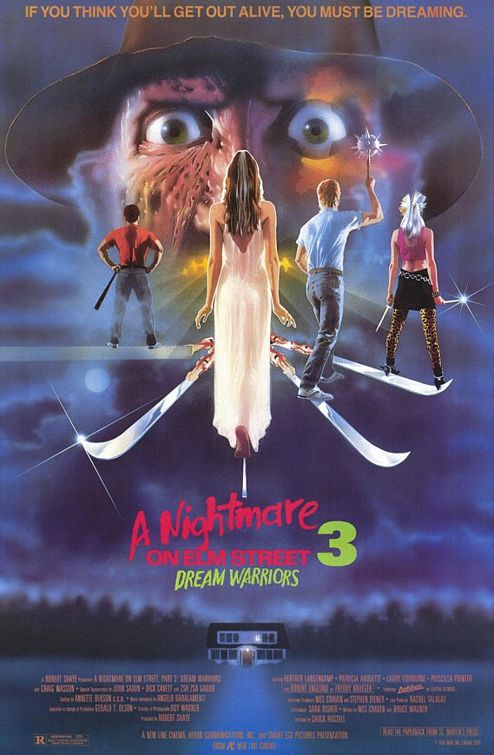


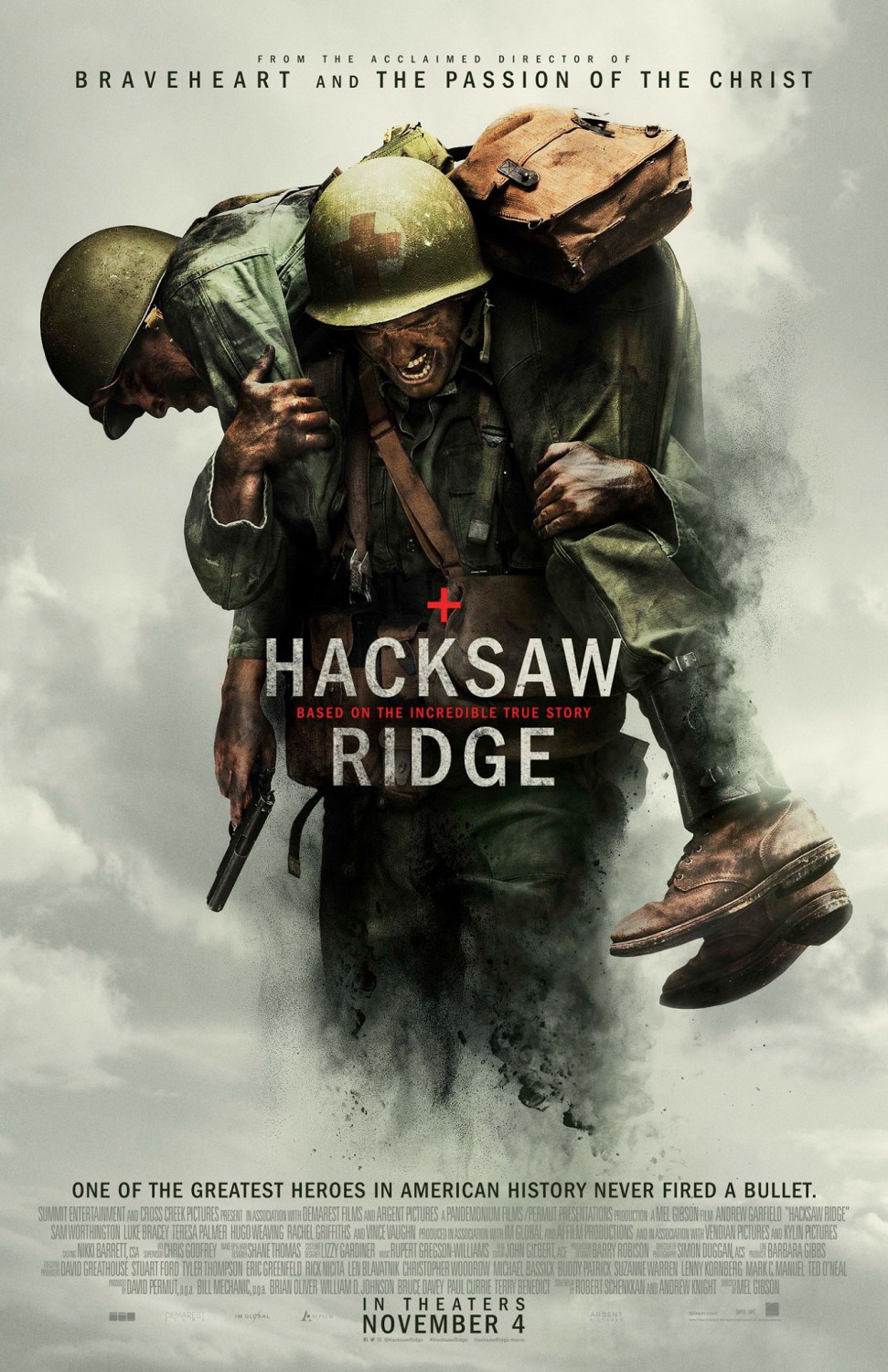


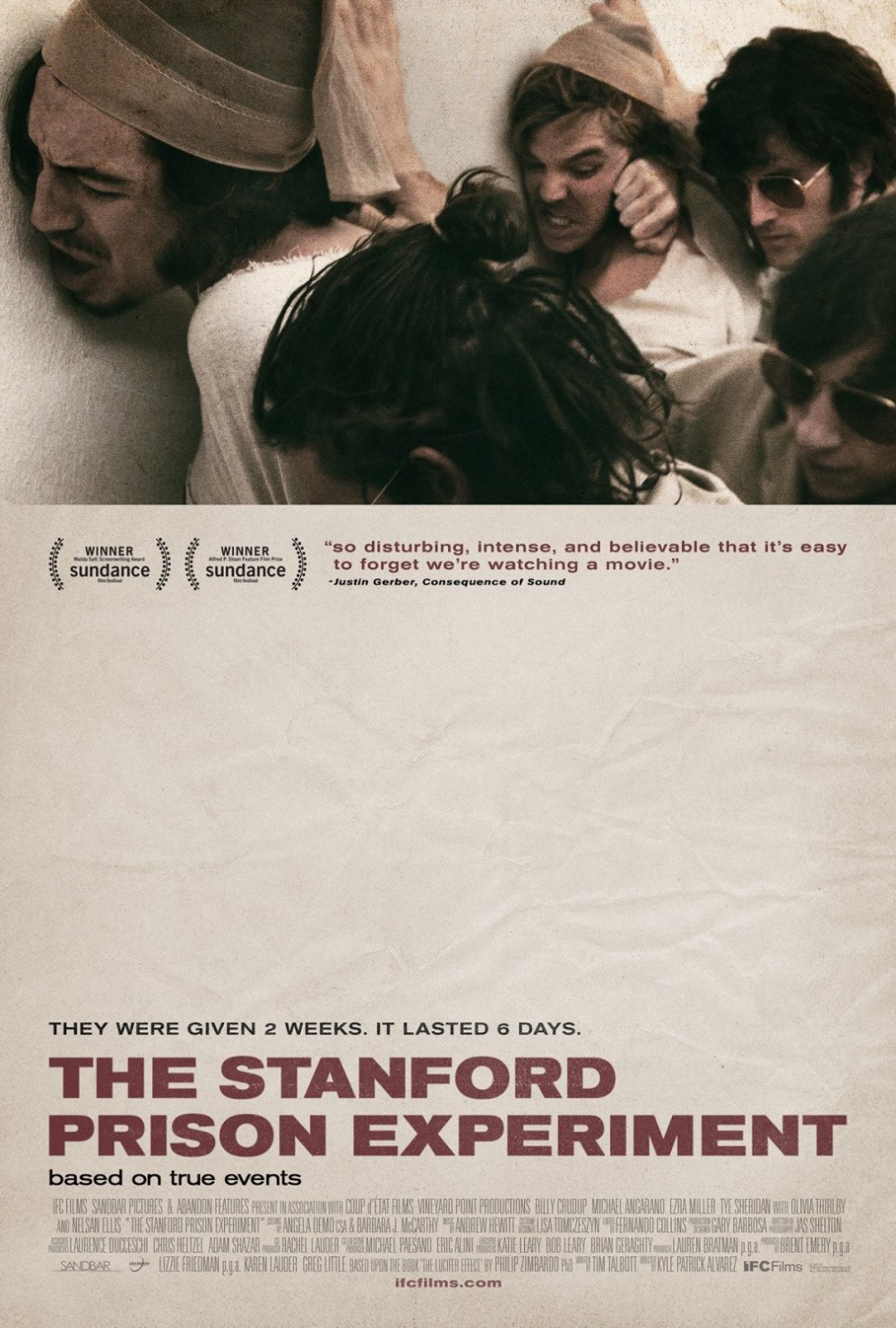
 The Ultimate Rabbit