It has been a bit, but I am now back with another “Homicide: Life on the Street” commentary track. This time it is for “Son of a Gun,” the fourth episode of the first season. This episode contains several plot threads as the detectives furiously investigate the shooting of Officer Chris Thormann (Lee Tergesen), Tim Bayliss (Kyle Secor) and Frank Pembleton (Andre Braugher) continue to investigate the murder of Adena Watson, Stanley Bolander (Ned Beatty) goes out on a date with Doctor Carol Blythe (Wendy Hughes), and there is also the case of Calpurnia Church (Mary Jefferson) who has murdered many people for the insurance money. This is a lot for any hour-long drama to handle, but everyone involved seems to find the right balance to where nothing feels superfluous.
“Son of a Gun” was directed by Nick Gomez who helmed a couple of indie crime dramas back in the 1990’s: “Laws of Gravity” and “New Jersey Drive.” It marked the first appearances of Sean Whitesell who portrays Dr. Eli Devilbiss, Edie Falco who portrays Chris Thormann’s wife, Eva, and Walt McPherson who plays an patrolman who may or may not be Roger Gaffney, the most odious and bitter character in the “Homicide” series.
This episode was the first thing I ever saw Edie Falco in, and she previously appeared in Gomez’s “Laws of Gravity.” From here, Falco would go on to play a role in Tom Fontana’s HBO prison drama “Oz,” and she would eventually make her breakthrough a few years later on “The Sopranos.”
There are also other memorable performances to be found in this episode. The great Luis Guzman appears as Bolander’s next door neighbor, Lorenzo “Larry” Molera, who has quite the love for wood. Then there is the late Wendy Hughes who plays a potential girlfriend to Bolander in Carol Blythe, and seeing her and Beatty together provides this episode with the series’ more intimate moments.
Check out the commentary below. The complete series of “Homicide: Life on the Street” is currently available to purchase from Shout Factory. To this date, it is still not available to stream on any service. This is likely due to music rights.
Continuing on with my series of audio commentaries, I have decided to take a break from “Homicide: Life on the Street” and do one on another show, the infamous HBO prison drama “OZ.” I became aware of this show when I found out that, like “Homicide,” it was executive produced by Tom Fontana and Barry Levinson. It was created by Fontana who originally sought to create a show about a minimum-security prison which he would have called “Club Med,” but he opted instead to do one on a maximum-security penitentiary once he got permission to do so from the head of HBO Original Programming.
It needs to be noted that “OZ” was the first hour-long drama ever produced by HBO. Most people forget this as “The Sopranos” came on a year or two later and quickly upstaged this groundbreaking show. Like “Homicide,” “OZ” never got much love from the Emmys or other major awards show, but it laid a solid path for the hour-long drama to exist on HBO. Shows like “The Sopranos” and “Game of Thrones” would possibly never have existed without the success of this show.
This commentary is on the premiere episode of “OZ” which is entitled “The Routine.” Written by Fontana and directed by Darnell Martin (“I Like It Like That”), it perfectly sets up the visual style which would quickly define the show and introduced us to a plethora of actors and actresses including Edie Falco, J.K. Simmons, Eamonn Walker, Harold Perrineau, and Kirk Acevedo. This episode also demonstrates quite dramatically how not a single character we see here will ever be safe. Anyone could die at any time, and this continually filled me with endless anxiety as a viewer.
Please check out the audio commentary below. “OZ” is available to stream on Max (formerly HBO Max) and to own and rent on DVD.
I am back with my latest audio commentary on an episode of “Homicide: Life on the Street,” and the one on display here is “Night of the Dead Living,” a nice little play on words on the title of the classic horror film, “Night of the Living Dead.” It was directed by Michael Lehmann who gave us one of the greatest black comedies ever made, “Heathers” which starred Christian Slater and Winona Ryder. Lehmann also directed “Hudson Hawk” which starred Bruce Willis and proved to be a critical and commercial bomb, but has since become a cult classic of sorts. The teleplay was written by Frank Pugliese who won a WGA Award for his work on this episode. Pugliese is a writer and playwright, and his plays include “Aven’U Boys” which an Obie Award, and he wrote the screenplay for the 2006 film “Infamous.”
“Night of Dead Living” was the third episode of “Homicide’s” first season, but NBC decided to air it as the season finale due to its slow pace and the fact they were trying hard to “woo” more viewers for this show which was already suffering a decline in ratings. For me and many others, the airing of this episode in this order was confusing as hell as it looked as though Tim Bayliss and Frank Pembleton had another chance at closing the Adena Watson case. Watching it now, it feels like the cruelest of teases.
What I love about this particular episode is how unusual it is for “Homicide” let alone any other police drama as it is one without any murders or crimes committed. The detectives are working the night shift during a hot summer night, and Lieutenant Al Giardello is furious because the air conditioning is off in the office and everyone is sweating like crazy to where they are taking off their ties. That is, except for Frank Pembleton who remains as cool as can be despite the heat.
Please check out the commentary track below and let me know what you think about this episode.
So here I am with another commentary track for an episode of “Homicide: Life on the Street.” This one is titled “Ghost of a Chance,” and it is the second episode of the first season. The story is by Tom Fontana, the teleplay was written by Noel Behn, and the episode was directed by Martin Campbell. Campbell would later go on to direct to James Bond films, “Goldeneye” and “Casino Royale.” After the brilliance of “Gone for Goode,” I wasn’t sure the next episode would be anywhere as good. Thankfully, it was.
“Ghost of a Chance” starts off with the murder of Adena Watson, the first case for rookie detective Tim Bayliss (Kyle Secor), and the one case which would haunt him the most throughout this series. There are also some other plotlines explored here. John Munch (Richard Belzer) and Stanley Bolander (Ned Beatty) investigate the death of Thomas Doohen whose widow, Jessie (Gwen Verdon), cannot wait to be rid of him, Kay Howard (Melissa Leo) and Beau Felton (Daniel Baldwin) work to find much-needed evidence in a murder case, and Bolander develops a crush on Carol Blythe (Wendy Hughes) which has him acting rather awkwardly.
We are also introduced to Officer Chris Thormann (Lee Tergesen), a character who will become especially important in later episodes.
So here I am with another commentary track after the one I did for “Pump Up The Volume.” But this time, it is for an episode of one of my favorite television shows of all time, let alone of the 1990’s, “Homicide: Life on the Street.” Specifically, the commentary is on this show’s very first episode, “Gone For Goode,” which did a brilliant job of introducing us to various Homicide detectives, and also showed how it was not going to be your usual cop show. Instead, it was initially designed to be one without onscreen violence, something which executive producer and showrunner Tom Fontana thought was crazy, and he quickly signed up with the show as a result.
What hooked me onto this show was the fact it was being developed by Barry Levinson, the Oscar winning filmmaker of “Rain Man.” He also directed the “Gone For Goode” episode and introduced its cinematic style which no other director could direct their way out of.
With this commentary track, I express my thoughts on this episode and the show at large. Upon watching “Gone For Goode,” I was immediately hooked into what this groundbreaking series had to offer, and I did my best to provide as much trivia about its making as I could. I’m not sure there will ever be a perfect commentary track to anything unless it is done by Martin Scorsese or Bruce Campbell, but I would like to think this one comes close. If you say it does, it will do wonders for my fragile ego.
Please feel free to listen to the commentary track below as you watch this episode on your DVD player. At this time, “Homicide: Life on the Street” is not available to stream, most likely due to music rights, but you can purchase the complete series on DVD from Shout Factory. It was previously available in a box set from A&E Home Video, but it has long since gone out of print.
I guess it was inevitable that David Chase would eventually revisit the world he created with “The Sopranos,” one of the greatest television shows ever. Vince Gilligan did the same with “El Camino,” the sequel to his acclaimed series “Breaking Bad,” and now Chase gives us “The Many Saints of Newark,” a prequel to “The Sopranos.” But while “El Camino” proved to be excellent, this prequel ends up being nowhere as enthralling as even the average “Sopranos” episode. As much as I wanted to like it, I came out of it feeling rather disappointed.
“The Many Saints of Newark” comes with the tagline “Who Made Tony Soprano?” But while Tony is a major character, this movie focuses more on a violent gang war which takes place during the 1960’s and 1970’s in Newark, New Jersey. The main character of this piece is Dickie Moltisanti (Alessandro Nivola), a soldier in the DiMeo crime family who is also Tony’s uncle. As the story begins, Dickie and Tony are welcoming Dickie’s father, “Hollywood Dick” Moltisanti (Ray Liotta) who has just arrived back in America with his new Italian wife, Giuseppina. On the surface, everything and anything seems possible to all the characters, but we know eventually that everything will come crashing down upon them before they know it.
A pivotal moment occurs for Dickie at one point (you’ll know it when it comes), and he ends up visiting his dad’s twin brother, Salvatore “Sally” Moltisanti (also played by Liotta), in the hopes of doing some good deeds which will absolve his soul. It is during these conversations where Salvatore tells Dickie, “Pain comes from always wanting things.” This reminds me of what Mr. Spock once said on the original “Star Trek” series:
“After a time, you may find that having is not so pleasing a thing after all as wanting. It is not logical, but it is often true.”
Salvatore comes to discover this the hard way. While he is serious about doing good deeds, some of us may remember how the road to hell is paved with them, and this is certainly the case here.
The screenplay, which Chase wrote with Lawrence Konner, paints a rich canvas for everyone to work with as it confronts the racial strife in Newark back in the 60’s and 70’s. We watch as African Americans riot against the racist police who abused a black taxi driver just because he was black, and it serves as a depressing reminder of how many still will not learn from history as America remains engulfed all these years later.
At the same time, Chase, Konner and director Alan Taylor, who directed many of the best “Sopranos” episodes, have given themselves too much to work with. While they have vividly captured a turbulent past, the screenplay lacks a center for which to hang everything on, and the movie ends up dragging far too often. As a result, I found my attention wandering in a way I never would have during any “Sopranos” episode.
There is a subplot involving Harold McBrayer (Leslie Odom Jr.) who has returned to Newark to start his own black-led crime operation. The actions of his gang lead to some moments of truly shocking violence which “The Sopranos” was known for, but this does little to alleviate the times where this prequel drags as no one seems to be able to balance out this subplot with all the other varying storylines.
I also got to say there are far too many obvious odes to “Goodfellas” throughout. Maybe I am a little biased because Martin Scorsese’s 1990 crime classic remains my all-time favorite movie, but seeing Ray Liotta getting his head smashed into a steering wheel several times over just takes me out of the story for no good reason.
For me, I was hoping “The Many Saints of Newark” would focus more on Tony Soprano as he is presented here as a young adult, and it was fascinating to see how intelligent he was even when he does not apply himself at school. A lot of this has to do with the performance of Michael Gandolfini, son of the late James Gandolfini who originated this iconic role. It is tempting to say Michael got cast because of resemblance to his father, but he did in fact had to audition which was smart. From start to finish, he does a tremendous job of showing Tony to be a confused kid who struggles to find meaning in his life as he is forced to deal with an absent father and an ineffectual mother. As a result, it is no wonder he looks up to his Uncle Dickie, the only one adult who seems to be looking out for him. Michael is terrific and, more importantly, he makes this role his own.
It feels like it has been far too long since I have seen Alessandro Nivola in anything. I still remember him best for being Nicolas Cage’s brother in “Face/Off” and for playing the guy dumb enough to steal some velociraptor eggs in “Jurassic Park III.” But he is excellent here as Dickie Moltisanti, a man who wants to do some good deeds after having performed a number of heinous ones. Still, Dickie is a man whose passions typically get the best of him, and Nivola is great at showing the constant struggles he endures while struggling with a lifestyle which could see him get killed at any moment.
Indeed, there are many great performances throughout. While some have no choice but to inhabit younger versions of “Sopranos” characters to where they offer mere impersonations of them, others are a bit luckier. Vera Farmiga is tremendous as Livia Soprano, the same role made famous by the late great Nancy Marchand, to where if she decided to utter “I wish the lord would take me,” I would have been perfectly fine with that. In addition, John Bernthal makes for a very tough Johnny Soprano, Corey Stoll is excellent as Junior Soprano, and it is fascinating to watch Michela De Rossi as she makes Giuseppina Moltisanti evolve effortlessly from one scene to the next.
I do have some reservations, however, when it comes to Liotta, or half of Liotta anyway. As “Hollywood Dick” Moltisanti, he overacts to a painful degree as he tries to look and sound older than he really is. Watching him as this character was a bit unnerving, and thankfully this character disappears from the proceedings early on.
But as the incarcerated Salvatore Moltisanti, Liotta brings an understated menace, the same kind he utilized in “Unlawful Entry,” which makes his performance one of the most compelling here as he dispenses advice which everyone around him would do best to take seriously. Plus, I love how the actor does not have to do much to show how serious Salvatore is about jazz. Seeing him stare at a Miles Davis vinyl record shows the kind of heaven this character seeks in life, and that’s even if it doesn’t bring a smile to his face.
And in a series where the dead characters are still hovering the lives of the living, I liked how Michael Imperioli returns to narrate this movie as Christopher Moltisanti as the character attempts to illustrate how Tony Soprano became Tony Soprano. There’s even a scene when Tony first meets Christopher as a baby, and it proves to be ahaunting sign of things to come.
Look, if you are a fan of “The Sopranos,” you are bound to see “The Many Saints of Newark” at some point. What we got here is not a bad movie, and I am thankful that it is not the kind of prequel which hurriedly tries to tie everything together to match up with the events of the show. Still, despite some strong writing and performances, this movie is unbalanced and is nowhere as enthralling as a “Sopranos” episode should be. It sucks to call this a missed opportunity, but it is what it is. There is a lot to admire, but not enough to enjoy.
And if you are interested, yes, Alabama 3’s “Woke Up This Morning” is featured here. It would be blasphemy for any “Sopranos” episode or movie to be absent of it.
* * ½ out of * * * *
WRITER’S NOTE: “The Many Saints of Newark” is the latest film to be released theatrically while simultaneously being given a month-long streaming release on HBO Max. I have long since found this form of release to be counter-productive as, while it may benefit HBO Max, it completely devalues the theatrical experience. While the COVID pandemic is still a big thing, I truly believe this type of release is one of the main reasons as to why “The Suicide Squad,” “Cry Macho,” “Malignant” and this prequel are dying quickly at the box office. I shudder to think what this will do to “Dune” and “The Matrix Resurrections” as they are being released in the same way, and these two movies demand to be seen on the silver screen. The sooner this simultaneous release pattern ends, the better.
In my review of “The Assistant,” I wrote about how the Human Resources department is the place people should go to if they feel threatened or uncomfortable in their working environment. The fact HR failed the film’s main character of Jane proved to be a devastating moment as the company she works at had long become knowingly complicit in its boss’ sexual harassment of aspiring actresses. But on Reddit, some schmuck called this scene accurate as he felt HR’s job is to protect the company above all else. I felt this was crap as they should be responsible to the needs and concerns of the employees as a healthy working environment is more beneficial than a toxic one. Then again, I have worked at companies where employee concerns were not always taken as seriously as they should have.
I bring this up because I found myself watching “Stalking Laura” (a.k.a. “I Can Make You Love Me”) on Amazon Prime which has just been given a 4K restoration. It features a scene in which Laura Black (played by Brooke Shields) goes to HR to report on one of her co-workers, Richard Farley (Richard Thomas), who has been endlessly harassing her. Instead, the HR director informs Laura of how her smiling at Richard may have invited such harassment and that she should watch how she acts around him. As the movie goes on, we see how the company is keen to protect Richard even after it has terminated his employment and given him a letter of recommendation to other workplaces.
“Stalking Laura” is a 1993 television movie which is, yes, based on a true story. Richard Farley was a software technician who worked at ESL Incorporated in Sunnyvale, California, and he became infinitely smitten with Deborah Black upon first seeing her. Richard asked her out many times, but Deborah felt any relationship the two of them would ever have should be professional more than anything else. For one reason or another, he believed Deborah was destined to be the love of his life, and he was determined to make her see this no matter what.
Deborah eventually filed a restraining order against Richard, and a court date was set for February 17, 1988 to make it permanent. But a day before this, Richard drove up to his old office loaded with a huge arsenal of weapons and bullets, and he laid waste to it and killed seven people and wounded four others including Laura. Richard eventually surrendered hours later and was later convicted of first-degree murder and has been living on death row at San Quentin ever since. As for Laura, she managed to make it out of the building after being shot in the left shoulder, and it took several surgeries for her to regain even partial use her shoulder.
“Stalking Laura” starts off with Laura leaving her family in Virginia and driving out to her new place of employment, Kensitron Electronics International (KEI, renamed for obvious reasons) in Silicon Valley, California. During a tour given to her by Chris (William Allen Young), she comes to meet Richard who is immediately smitten with her. After a nice lunch, he invites her to attend a sporting event with him as he just happens to have a couple of tickets on hand. Laura politely declines as she just met him, but this does not deter him from pursuing her further.
We watch as Richard spies on Laura during her aerobics class where she takes off her shirt to reveal the leotard she is wearing underneath, and we cringe as he continually tries to forge an undying connection to her even while she rejects his advances at every and any given opportunity. But when Laura appears to laugh at Richard as he watches her during a softball game, that’s when he really starts going off the rails.
Look, I have never been a big fan of television movies as they seem inevitably burdened by cliches and a formula they can never escape from. “Stalking Laura,” however, proved to be much better than the average TV movie as it does not present this true story in a shallow way. We see and understand just how brutal the harassment Laura is forced to endure. At one point, Richard gives Laura a small remote-controlled tractor as punishment for laughing at him as he feels the need to treat her like a child as a result. This makes Laura’s first scene with HR all the more infuriating as she is made to believe by the department director how she was the one who exacerbated the incident.
When it comes to Brooke Shields, her career as a model for a time seemed far more laudable than her work as an actress. While she received acclaim for performance in Louis Malle’s “Pretty Baby,” her work in “Endless Love,” “Sahara,” “The Blue Lagoon” (a film best appreciated with the sound turned off) and “Brenda Starr” were loudly disparaged. But in “Stalking Laura,” she gives a strong performance as a bright-eyed new employee who is forced to stand up for herself when a male co-worker harasses her to an endless extent. You cannot blame Laura for getting in the HR director’s face when the moment calls for it, and Shields makes it count for all it is worth.
Many know Richard Thomas from his work on “The Waltons,” but I remember him best for playing Bill Denbrough in the miniseries version of Stephen King’s “It.” Regardless, Thomas inhabits his character, also named Richard, with a frightening enthusiasm as he pursues Laura relentlessly even after she makes it perfectly clear she wants nothing to do with him. While Richard looks innocent and friendly at first glance, Thomas makes us see the cracks in his psyche which worsen to where his desperation leads him to resort to violence. The actor is especially chilling when he tells the HR director he is prepared to kill himself and his co-workers if he is fired from the company. Thomas makes you see how far Richard is willing to go, and it is infinitely chilling to watch him purchase 2,000 rounds of ammunition for his shotgun. Even the gun store owner is freaked out at this request, and someone like him is always looking to make a big sale.
The last half of “Stalking Laura” deals with Richard laying waste to his former place of employment while armed with a barrage of firepower. Being this is a television movie, the blood and gore are kept to a minimum, but the rampage is still pretty terrifying. Director Michael Switzer keeps the tension running high up until the last scene where we can finally take a breath as this desperate situation comes to a conclusion. The most unnerving moments come when the characters stuck in the building hear loud gunshots from a distance. This should give everyone an idea of how terrifying it is to be stuck in a school shooting or something equivalent as you cannot tell if it is safe to stay or go. Seeing your co-workers lying dead under fluorescent lights is brutal enough, but hearing guns going off close by is enough to make one hide under a desk, any desk.
Other things worth pointing out here are how the police characters introduced to deal with this shooting are given various dimensions even though they are not given much screen time. While they want to resolve this violent situation, they all know it may involve a sniper eliminating the shooter at any given opportunity. There is also a nice score composed by Sylvester Levay, and I say this even though his main theme to this film sounds like something out of a Cinemax skin flick.
We do not see many movies like “Stalking Laura” these days as shootings like the one portrayed here have become far too commonplace in America. The only other movie I can think of which covered a shooting like this was Gus Van Sant’s “Elephant” which served as a meditation on the events at Columbine High School. Watching something like this should serve as a reminder of how senseless shootings like these are as they accomplish nothing. But with these violence occurrences still happening at alarming numbers in America, one has to wonder if enough people will listen.
But hey, at least HR did the right thing by firing Richard. Of course, this was after Laura made them do something about her problem. And yes, the HR director did describe his termination as the result of poor work performance, and that’s even after he told the director he has weapons and would kill people. When it came to the restraining order, Laura had to get it herself as the company no longer had to deal with the situation since Richard was fired. So seriously, HR did attest to the needs of a certain employee, right? RIGHT?!
The tragic tale of Christine Chubbuck is one which many, including myself, cannot help but be morbidly fascinated by. She was a television reporter who, on the morning of July 15, 1974, reported on three national news stories and a shooting which occurred at a local restaurant named Beef & Bottle. When footage of the restaurant shooting jammed and could not be played, she said, “In keeping with Channel 40’s policy of bringing you the latest in ‘blood and guts’ and in living color, you are going to see another first—an attempted suicide.” She then pulled out a .38-caliber Smith & Wesson Model 36 revolver, placed it behind her right ear and pulled the trigger. She died of her self-inflicted gunshot wound 14 hours later.
Many have tried to seek out the footage of Christine’s final moments, but those closest to her have done their damndest to keep it out of everyone’s’ hands as they never want it to be seen on any television screen ever again. With the 2016 film “Christine,” audiences will get a chance to see how this on-camera suicide went down, but neither director Antonio Campos or screenwriter Craig Shilowich are looking to exploit this sad death in any way, shape or form. Instead, they are far more interested in looking into what could have led this talented young individual to take her life ever so suddenly.
We are transported back to Sarasota, Florida in 1974 where Christine Chubbuck (Rebecca Hall) works at a local television station at which she reports on human interest stories that present a positive look at the world in general. She appears to get along well with her colleagues which include camera operator Jean Reed (Maria Dizzia), and she has an unrequited crush on fellow reporter George Peter Ryan (Michael C. Hall). When she isn’t reporting, she’s performing puppet shows for mentally handicapped kids. But while she may appear happy on the surface, we quickly see she is suffering. Moreover, she is suffering in ways not everyone can easily see.
While Christine is determined to report on human interest stories, her boss Michael Nelson (the great Tracy Letts) demands she focus more on crime stories as they bring in bigger ratings. She protests as such stories seem purely exploitive to her, but the term “if it bleeds, it leads” has long since entered Michael’s lexicon, and neither he nor any other television station manager can get themselves to look away from this especially when it comes to ratings. Christine acquires a police scanner to find grittier stories, but her intention to please Michael comes up painfully short as what she comes up with is not nearly enough.
As for Christine’s personal life, it’s not fairing much better. She still lives with her mother, Peg (J. Smith-Cameron), but they appear a bit distant from one another. This distance grows even stronger when Peg finds a new boyfriend whom Christine has a hard time warming up to. Even when she gets a much-needed hug from Peg, it is not enough to comfort her during the perfect storm of her depression.
And then there’s the issue of the stomach pains she has been feeling for a while. Christine is eager to find a husband and have children, but she is dealt a vicious blow when her doctor (played by Morgan Spector) finds one of her ovaries may have to be removed, decreasing her ability to bear a child. It was at this point I kept waiting for the song “Born Under a Bad Sign” to start playing on the soundtrack as if she didn’t have bad luck, she wouldn’t have any luck at all. Of course, pointing this out would have been obvious and cruel.
At the center of “Christine” is Rebecca Hall who gives one of the most definitive performances of a character suffering from depression and borderline personality disorder. She makes you feel her character’s deepest longings as well as her visible discomfort in being around big crowds of people. I can relate to her wanting to get close to someone and yet suffering a fight or flight moment as she suddenly wants to get away from a situation she has long since become uncomfortable being in. It’s like you desperately want to belong, and yet you also find yourself wanting to run away. Depression is a serious disease which has those afflicted with it suffering from irrational fears to where making certain decisions can be much harder than it ever should.
Another performance worth singling out here is Michael C. Hall’s as George Peter Ryan. When I first saw Michael here, I figured he would be playing George as the average egotistical reporter who would be quick to spurn Christine’s advances at any given opportunity, but the “Dexter” actor instead plays to where he takes her to a place where she can be heard. This leads to one of the most unexpected scenes in the film as I figured things would lead to an inevitably heartbreaking moment, but the filmmakers were not about to give us something predictable.
In some ways, I wish “Christine” dug deeper into its main character and her sadly crippled state of mind. While it does not just skip over the surface, I wanted it to examine other elements of her life which may have led her to make a permanent solution to what we all should see is a temporary problem. We never get to learn of her life as a child or of previous relationships she had with others, and this may have given the audience a broader understanding of her state of mind.
But when all is said and done, “Christine” is a thoughtful portrait of an individual whose life deserves to be known for more than her final and fatal act. While her deadly decision to end her life in a very public way may make her existence a study in morbid curiosity, the filmmakers are intent on making us see the individual at the center of it all. No one should simply be remembered for one act they committed as there is more to a person than meets the eye.
When I think of Christine Chubbuck, I am reminded of a couple of songs by my favorite artists. One is Sarah McLachlan whose lyrics for her song “Black” left quite the impression on me:
“If I cried me a river of all my confessions
Would I drown in my shallow regret?
As the walls are closing in
And the colors fade to black
And my eyes are falling fast and deep into the sea
And in darkness all that I can see
The frightened and the weak
Are forced to cling to mistakes they know nothing of
At mercy are the meek.”
And then there’s Elton John’s title track from the album of the same name, “Too Low for Zero:”
“I’m too low for zero
I’m on a losing streak
I got myself in a bad patch lately
I can’t seem to get much sleep
I’m too low for zero
I wind up counting sheep
Nothing seems to make much sense
It’s all just Greek to me
You know I’m too low, too low, too low for zero
You know I’m too low, too low, too low for zero.”
It can be far too easy to fall into the state of depression before you know it, and my hope is you will never be afraid to ask for help. Christine’s problems happened during a time where I cannot help but think the world at large was unaware of how serious mental illness can be. For those of you watching this film today, I hope you know how serious it is and that there is no shame in asking others to assist you in lifting you out of an emotional dark hole. Christine deserved such assistance, and you do as well.
One of the opening scenes of the documentary “Belushi” features a packed audience at the Hollywood Bowl, waiting for the Blues Brothers to make their grand entrance. There was something about the size of this crowd which blew me away, and their excitement at seeing John Belushi and Dan Aykroyd come onto the stage as Joliet Jake and Elwood Blues was very palpable. When they do finally appear, it’s an exhilarating moment as Belushi in particular looks as though he was on top of the world, and back in 1978 he certainly was. But then we hear a voiceover from the late Harold Ramis who says about Belushi, “Knowing his appetites, I don’t think he’ll survive this.” As we all know, he didn’t.
Like another documentary about another “Saturday Night Live” star who left us way too soon, “Love, Gilda,” “Belushi” is at a disadvantage as we all know what happened to this beloved comedy icon and of how he died of a drug overdose at the Chateau Marmont in Los Angeles on March 5, 1982. Several books have been written and several movies were made which detailed his life and death, and Aykroyd once said how many of them were written by “unfeeling, unqualified personnel.” But with “Belushi,” writer and director R.J. Cutler takes the time to look at him not so much as a comedy icon, but as a man who had his passions and loves which deserve more of our attention than his excesses ever did.
Among the most interesting parts of “Belushi” come at the beginning as animation is used to illustrate his life as a young boy in the west side of Chicago. It was a kick to learn how he would sometimes go to homes of his neighbors to tell stories or do performances. Seriously, John was the kind of person William Shakespeare wrote about, and this is summed up perfectly in his line of “all the world’s a stage.”
To learn of John’s troubled relationship with his father, an Albanian immigrant named Adam Anastos Belushi, was a revelation of sorts as I am tempted to think this played a large role in his development not just as an artist, but as a person as well. Adam expected John to take over the family business which was the Fair Oaks Restaurant, but John was determined to become an actor. There is something about the last meeting between these two which seems to linger throughout the documentary to where I could not help but wonder how deeply this affected John throughout his life. Of course, I have to remember I am not a psychotherapist.
One of the benefits of “Belushi” is it contains interviews which are featured as voiceovers throughout. These interviews were conducted by Tanner Colby for his book “Belushi: A Biography,” and in this documentary we get to hear these interviews for the first time. Whether or not the thoughts of Aykroyd, Lorne Michaels, Carrie Fisher or John Landis surprise you in the slightest, I am thankful we get to hear their most specific thoughts about John as they help to fully describe a man who would have truly done anything to get a laugh from everyone and anyone.
But perhaps the most telling addition to “Belushi” is the participation of John’s widow, Judith Belushi-Pisano who shares, among other things, the letters John wrote to her over the years. In those letters, we see how John was hungry for success, that he did not want to be like his father, and how even he knew he was on a path to self-destruction. The one letter which stood out to me the most was when John confessed to Judith of how he didn’t know how to be comfortable with himself in life. This is a man who yearned to connect with other people, and the one thing he craved, success, kept him from do so.
There was a point where John was in the number one movie in America (“Animal House”), had the number one album in the country (the Blues Brothers’ “Briefcase Full of Blues”), and was starring on the television phenomenon “SNL.” While this may have seemed like a tremendous accomplishment, it is almost treated as though it were a death knell for John as he had nowhere to go but down. Lorne Michaels once said drugs did not kill John, fame did. After watching this documentary, I could not agree more.
Watching “Belushi” quickly reminded of other documentaries about other tremendous talents whose lives were cut far too short. There was Asif Kapadia’s “Amy” which gave Amy Winehouse the eulogy she never would have received from any other filmmaker, and we watched as she walked up to the stage in one scene to accept an award, and the applause from the audience kept getting louder and louder to where any cries for help were forever washed away from our collective consciousness. And then there was also “Kurt Cobain: Montage of Heck” which chronicled the life of the Nirvana front man, and the interview with his mother when she realized just how famous Kurt was going to end up being still haunts me as she quickly realizes he will not be able to handle in a healthy way. Like John Belushi, these are talented artists who the song “Shooting Star” by Bad Company was all about, and their lives were quickly swept up in the tsunami of fame.
Granted, there are some problems with “Belushi” as I was hoping this documentary would go a little deeper in certain areas. When it comes to movies like “Animal House” and “The Blues Brothers,” they deserve their own documentaries as their reputations remain very enthralling, but I would have loved to see Cutler examine John’s performance in “Continental Divide” a bit more as this was a movie in which he dared to go in a more serious direction. And yes, there is the issue of Cathy Smith being omitted from here. Cathy gave John the controlled substances which ended his life at the far too young age of 33. I am not saying Cathy deserves to be crucified, but her role in John’s death does deserve some more insight as it may allude to how certain people treat celebrities who are at their most vulnerable.
Regardless, “Belushi” represents the kind of documentary which digs deeper than the average showbiz expose ever does. So many movies on famous people like this one typically just skim the surface and focus on the most controversial moments at the expense of everything else, and this one does not. For that, I am very thankful as I have always been a big fan of John Belushi, and until Cutler’s film, I truly felt I never got to see him as an individual. Regardless of how you feel about him, John Belushi was a human being like the rest of us who craved love and respect, and he should still be with us all these years later.
Wow! This brings back so many memories! I still vividly remember watching these Peanuts specials when I was a kid. Sitting in front of the old Zenith television set in my pajamas, because I had to go straight to bed immediately after they ended, it was always a major event when Charlie Brown, Snoopy and the rest of the Peanuts gang made an appearance in their latest animated special. Of course, you could always count on Snoopy to steal the show from everybody no matter what holiday was being celebrated.
Sadly, we can only dream of ever having a dog as cool as Snoopy in our lifetime. Can you think of another dog that can cook dinner, be as enraged as John McEnroe during a tennis match, drive a motorcycle, or fly a doghouse in pursuit of the nefarious Red Baron? Cujo comes to mind, but he would be too busy terrorizing humans.
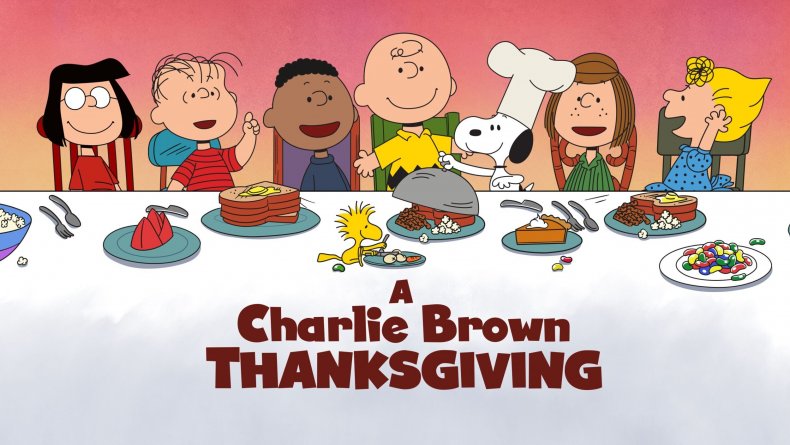
“A Charlie Brown Thanksgiving” is one of those specials I had not seen in the longest time, but on Thanksgiving evening in 2008, the show was passed on to another generation as my brother and I got his daughter to watch it in all its animated glory. She was originally more interested in watching some show on Nickelodeon which looked infinitely lame if you ask me, but we successfully managed to wrestle the remote control from her and turned it to ABC. She got a big kick out of the episode, especially when Snoopy and Woodstock are fighting with each other over preparing for Thanksgiving dinner. Then again, the three of us were in utter hysterics when a certain wooden chair began to attack Snoopy with a vengeance. It’s always great when people of all ages can appreciate the same material at the same level.
“A Charlie Brown Thanksgiving” is sandwiched between two of the most famous Peanuts specials, “It’s The Great Pumpkin Charlie Brown” and “A Charlie Brown Christmas.” As a result, it tends to get lost in the shuffle of other specials, but is still somewhat easier to find on television than “It’s The Easter Beagle Charlie Brown” (until 2020 anyway). This special revolves around Charlie Brown having to prepare a Thanksgiving dinner of sorts for his friends before he has to go to his grandmother’s place to have a more traditional Thanksgiving dinner. Peppermint Patty has somehow invited herself and her friends, Marcie and Franklin (the lone African-American character in the Peanuts universe), over to Charlie’s place, expecting a huge Thanksgiving dinner in the space of about an hour or so, as if such a thing were even remotely possible! My dad spent at least eight hours preparing our most recent Thanksgiving feast. Who does Peppermint Patty think she is anyway?
It’s interesting to reflect on how I viewed this special as a kid, and of how I view it now as an adult. I remember feeling sorry for Charlie Brown because I thought he was doing the best he could under terribly difficult the circumstances. Besides, he had Snoopy to back him up, and Snoopy buttered the toast as if he were a blackjack dealer opening a fresh pack of playing cards (the sound effects pretty much gave that one away). These days, he reminds me of myself when I was a teenager. Self-pitying and often quite hopeless, Charlie Brown is his own worst enemy. Watching him give in to Peppermint Patty’s demands makes me want to shake him and tell him to grow some balls. Stand up to Peppermint Patty. She may kick your bald ass at baseball, but not in the kitchen. But when it comes to Peppermint Patty, I think Charlie said it best:
“You can’t explain anything to Peppermint Patty!”
Indeed, Peppermint Patty has a one-track mind and cannot be easily reasoned with if at all. When she wants something, she seems to get it no matter what. At the same time, she can be so rude and oblivious to things she like good manners. Where does she get off inviting herself to other people’s houses? Why does she expect everyone to serve her needs? Doesn’t she have a clue? Inviting yourself to someone else’s house threatens to be rude and inexcusably imposing among other things… Actually, the more I think about it, the more I realize I was kind of like that as a kid. I did invite myself over to a friend’s house when I was 7 or 8. I wasn’t really thinking about how my friend might think. It’s kind of embarrassing to think about now. Well, judge not lest ye be judged!
Of course, you can always count on Linus to make everyone see the true meaning of the holidays. As in “A Charlie Brown Christmas,” he tells everyone how Thanksgiving Day came about when the Pilgrims and the Indians came together for a feast, and of how thankful they were for the strong friendship which formed between them. You have to be impressed with the amount of knowledge Linus had at his age. Maybe he had some sort of cheat sheet in that blue blanket he always carried with him. You don’t actually see his blanket here in this episode, but maybe Thanksgiving was one of his most favorite holidays to where he needed no reminding of what it was all about. Linus was always a great friend to Charlie Brown, and it was nice to see Charlie always had him as a friend who could help him through those tough times.
But you have got to love Snoopy in this animated special. He saves the day by making a Thanksgiving dinner of popcorn, buttered toast and pretzel sticks among other things. He also inhabits the funniest scenes as he and Woodstock have to get a table and chairs together for all the guests, and they get caught up in playing table tennis, something Snoopy fares much better in than real tennis, until Linus reminds them they have work to do. Then Snoopy ends up getting into a fight with a rouge folding chair which seems to have a life of its own. They fight each other over which way the chair should be set, and the fact that the chair wins is not a surprise.
There’s one other thing I have to point out in this special. At the end, Snoopy and Woodstock are left alone at Charlie Brown’s house as everyone else goes to grandma’s house, and this is despite the fact Snoopy seemed every bit as excited about going as well. Snoopy goes into his doghouse and constructs a wooden table and chairs for him and Woodstock, and he manages to cook a Thanksgiving turkey (why he didn’t do this earlier is best left unanswered) for the two of them, and they both sit down to eat it and even break a wishbone. Now here’s the thing; a turkey is a bird, and Woodstock is a bird as well. So, by eating the turkey, doesn’t this in fact make Woodstock a cannibal? I mean, he is eating his own kind! Doesn’t Woodstock even take this into account? What would his parents think? Plus, how does he get the better half of the wishbone? How can a little bird manage to overpower a beagle’s strength when he does not have as much to work with? This is the world of animation for you! Making the impossible seem possible even if it defies reasonable logic.
As I write this in 2020, the networks decided not to air “A Charlie Brown Thanksgiving” or “A Charlie Brown Christmas” for the first time in decades. This seemed sacrilegious to many, and after a major uproar from millions of people, both specials are now being aired on Apple TV and PBS. It would be unthinkable for either of these animated specials to not be broadcast for all to see. Then again, they are available on DVD, Blu-ray and assorted digital formats, so they are never easily out of our reach.
With “A Charlie Brown Thanksgiving,” I remembered of how certain things from childhood can remain ever so innocent from one generation to the next. Even if the Thanksgiving holiday is now seen much differently than before as people believe the Pilgrims laid waste to the Indians or instead observe this holiday as one where Native Americans (the Indians, mind you) fed a group of undocumented illegal aliens (the Pilgrims), this is still a celebrated time when families come together for a great feast. It’s all about togetherness, and this is one of the many things “A Charlie Brown Thanksgiving” preaches to great effect. Be sure to give this animated special another look when you get the chance. I don’t care how many times you have watched it because it is always worth watching again.


 The Ultimate Rabbit